I’ve had a pretty nice Christmas this year. Liz and I went to a Christmas party night in a local hotel with a huge group of friends. We had a family afternoon get together in a nearby pub and we had family over for Christmas dinner. After that it was time to relax, pour a glass of wine, break out the mince pies and settle down for some Christmas TV.
The Railway Children
I’ve always liked The Railway Children. I’ve seen it a number of times but I’ve very rarely seen it all the way through from start to finish. The film’s title sequence involves the teenage Bobbie, played by Jenny Agutter in the lounge of her home. The camera pans over various family photos and in this way the actors and their characters are introduced to us. Bobbie, short for Roberta, is the eldest daughter and has a younger brother and sister and they all live together with their parents. During Christmas their father is taken away and we think he has been arrested for some reason. Without their father, the family fortunes dwindle and they are forced to move to a country house in Yorkshire. There the children spend time watching the steam trains and visiting the railway station meeting various people including the station master played by Bernard Cribbins. They have various adventures and eventually their father is returned to the family. The Railway Children is probably the most delightful and charming film I’ve ever seen. It was written and directed by Lionel Jefferies and released in 1970. According to Wikipedia, Jefferies read the book while returning from the US to the UK en route to film Chitty Chitty Bang Bang and liked it so much he bought the film rights.
Amazing Film fact number 1: Sally Thomsett played Bobbie’s younger sister Phyllis aged 11 but in real life actress Sally was actually 20 and older than Jenny Agutter who played ‘older’ sister Bobbie. Sally’s contract forbade her to be seen smoking and drinking during the shoot.
It’s A Wonderful Life
It’s a Wonderful Life is one of those quintessential Christmas films that you can always find showing on TV at some time over the Christmas period. I love that film and come to think of it, I haven’t seen it for quite a few years. It’s about George Bailey played by James Stewart who looks forward to an interesting life of travel but then finds obligations force him to stay in the small town where he has always lived. George is beset by problems and even considers suicide but then his guardian angel -literally- arrives to help him. In order to prevent George committing suicide, the Angel shows George what life would have been like if George had never been born.
The secret of this picture is, I think, the fact that despite the fantasy premise of the film, everyone plays their parts as if they were in a serious drama. The result is that the drama and emotion of the situation rises to the surface and we are left with a vibrant and dramatic piece of cinema. The director, Frank Capra, has long been one of my favourite directors and in fact directed another of my favourite ever films, Lost Horizon.
Amazing Film Fact number 2: It’s A Wonderful Life was a box office failure when it was released in 1946. It only achieved classic status after 1974 when the film’s copyright expired and it was able to be broadcast on television without royalty fees. On TV the film found a new and enthusiastic audience.
The Greatest Story Ever Told
The Greatest Story Ever Told was directed by George Stevens who made such classic films as Shane and James Dean’s last film Giant. Stevens was a director who worked the way I would work if I was a director. He shot a great deal of film then sat back, reviewed everything and put his film together one brushstroke –or film clip- at a time. He chose Max to star as Jesus as he wanted a performer who was unknown to the general public.
Max was in a way an unusual choice to play Jesus; he was pale and blue eyed and had a faint Swedish accent. Even so, he played a good part, so much so that whenever I see another portrayal of Christ, I always mentally compare it to that of Max. As for being pale and blue eyed, I suppose it is inevitable that people everywhere will envisage their religious icons in their own terms.
He might have been better in choosing unknown actors for the other roles too because the many star appearances seem to stop the viewer in his or her tracks as we spot various top actors and actresses in minor roles.
I do have a personal reason for liking this film. Once, many years ago, my school friends and I were taken on a Christmas school trip to watch the film. We walked it as I remember in crocodile fashion from our junior school Crossacres, down Wiggins Hill and into Gatley, a small nearby village that boasted a lovely old cinema. That trip to watch this film did more for me than any teacher or RE lesson had ever done before or since and although I cannot claim to be overtly religious, I am certainly not an atheist and my respect for the person of Jesus has never been greater.
Amazing Film Fact Number 3: As I have mentioned, numerous star actors make guest appearances in the film from Sydney Poiter to Van Heflin, Angela Lansbury to Shelley Winters and many others but there is one I must mention; John Wayne as the Centurion who watches Jesus die on the cross. When Wayne uttered his immortal line, ‘truly this man was the son of God.’ Director George Stevens called ‘cut’ and asked Wayne to do the scene again but this time with more awe.
Wayne duly complied.
‘Action’ called Stevens.
‘Aww, truly this man was the son of God’ declared Wayne.
Blithe Spirit
I looked forward to watching this film with some trepidation. After all, the original version with a screenplay by Noel Coward himself and directed by David Lean was and still is a wonderful film and one of my absolute favourites. Rex Harrison plays the part of author Charles Condomine who invites Madame Arcarti into his home for a séance in order to see some of ‘the tricks of the trade’ that he assumes she will employ so that he can render these into his current novel. When the medium, played beautifully by Margaret Rutherford, conjures up the ghost or shadow of Condomine’s deceased wife neither he nor his current wife are amused. Coward himself adapted his own play for the screen and the witty dialogue presented immaculately in David Lean’s production is nothing short of a cinema gem.
Anyway, this new version starred Judi Dench as Madame Arcarti and did not in any way follow the path of Coward’s original although some of the old dialogue could occasionally be detected. Dan Stevens stars as Charles Condomine and Isla Fisher as his wife. Charles’ late wife, Elvira is played by Leslie Mann. Charles is writing a screenplay and he is suffering with writer’s block. However, on seeing what turns out to be a disastrous stage performance by Madame Arcarti, he invites her to his home where, just like the original, she evokes the spirit of Elvira. It turns out that Elvira wrote most of Charles’ books and the current Mrs Condomine isn’t amused when Elvira decides to help out with his pending screenplay.
The whole thing kept me quiet for a couple of hours but was hardly a patch on the original. For a start when current filmmakers film a story set in the past like this one which was set in the 1930’s, nothing ever looks as if it has been used before. Even though everything I’m sure was authentic; the motor cars, the furniture, the clothes and so on, everything is too good, too perfect, even down to the 30’s style haircuts and the art deco home where most of the action takes place. The other thing about the late 30s and early 1940’s is that the rhythm of the speech back then was quicker and more precise. Listen to actors like Rex Harrison, Constance Cummings and Margaret Rutherford from the original film or others from the period like David Niven, Ronald Colman and many more, their speech and delivery is so perfect and effortless, it is just a joy to listen to.
I don’t have any amazing facts about this film but the review in the Guardian was rather cutting: It can only be described as an un-reinvention, a tired, dated and unfunny period piece that changes the original plot a bit but offers no new perspective, and no new reason to be doing it in the first place.
That was a small slice of my TV viewing over the Christmas period and I can’t think of a Christmas period when my TV recordings have been so few.
Oh well, another mince pie anyone?


 This is a picture of my old childhood home. It didn’t look like that when we lived there, there was no drive for a start and there was no metal fence, we used to have privet hedges but of course don’t forget the first rule of karma; nothing stays the same.

 David was born in 1908 and spent his early life in Croydon (actually 38 Blenheim Crescent, Croydon) until his parents divorced. His father moved out and left the family in 1923 which must have been an upsetting moment in Lean’s young life. Another perhaps more significant moment was when an uncle gave him a camera when David was aged 10 and then Lean began to develop and print his own photographs.
 The film did however win two Oscars for cinematographer Freddie Young and supporting actor John Mills. The poor reception of the film prompted David to meet with the New York critics at the city’s Algonquin Hotel. I’m not sure if David wanted to reason with them or just find out why they didn’t like the film but they spent two hours attacking his production. David came away devastated and would not make a film again until A Passage to India in 1984.
 Frank Sinatra and Die Hard.

 This has got to be my least favourite time of the year. I hate the cold. Yes, actually hate it. It’s not a case of disliking it or preferring it to be warm or not being happy about it. Yes, I hate the cold.
 While I’m on the subject of Antarctica, here’s an interesting story. In 1513 an Ottoman Admiral and cartographer called Piri Reis compiled a map of the world. According to Wikipedia the map, not all of which has survived, depicts the western coasts of Europe and north Africa and Brazil with reasonable accuracy. The Canary Islands are also shown as well as Antarctica. Eric Von Daniken mentions the map in his book Chariots of the Gods and claims that extra-terrestrials may have supplied the information for earlier maps on which the Piri Reis’ map was based. Why you might ask? Well, the northern coast of Antarctica was perfectly detailed in the map but how could Reis know this when the coastline of the area is buried under snow and ice?

 It was a little like the time I worked out my top 10 favourite films of all time and then later, realised I missed out one of my absolute favourites. It was a momentary error, a quick brain fade but something that needs redress. So here it is, a post about music and just to make it more interesting, I think I’ll throw a few links in to some of my favourite tracks.
 Another present was a record to go with our record player. I can’t remember if it was another joint present but the record was The Persuaders. It was an album of TV and film themes by John Barry who wrote much of the music for the James Bond films as well as the theme from The Persuaders. I still have that album today so it was either my personal present or I have just managed to keep it away from my brother for the past fifty years. (Fifty years! I can hardly believe it’s been that long. He kept the record player by the way so I think I can count the record as mine.)
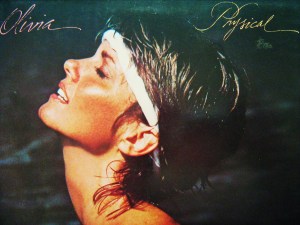 The first single I ever bought was by Olivia Newton John, my teenage heart throb and in fact it was two singles, Banks of the Ohio and What is Life and as they were no longer in the charts, I managed to get them for half price which initiated a lifelong passion for flipping through half price vinyl singles in record shops. I say lifelong passion but then again, these days in 2022, finding a record shop isn’t easy and even if I could find one, I doubt if there would be many 7-inch singles on sale. Having said that, I keep reading that vinyl is making a comeback so maybe it’s not impossible after all.

 I really do hate the cold which is why Liz and I spend the summer heading to the warmer climes of France in our motorhome and jet off to Lanzarote in January. As winter is coming ever closer I decided to splash out a little cash and buy myself a new winter jacket. It’s a fleece lined jacket with a warm fleecy hood just perfect for keeping the cold out and the warmth in. The problem is that as I write this, which might be a few weeks before it is injected into the cyberworld, the weather here in the northwest of England is pretty mild. So mild that when I first wore the new jacket, I found myself boiling hot. Maybe I should just put it away for the really bad weather. Typical! I’m prepared for the cold weather but things have got warmer. OK, that’s my first moan out of the way.





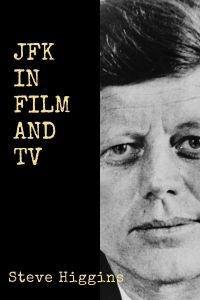 Strolling through St Annes not long ago I dropped Liz off at the hairdressers and wandered into a nearby shop that sells secondhand books, DVDs and CDs. It was there I spotted the DVD of a mini series from the 80’s called simply Kennedy with Martin Sheen playing the part of John F Kennedy. The DVD box set had been on my shelf for a while until one cold and wet evening when I thought it was time to pour a small port and settle down to watch it.
 A few months ago Liz and I had a trip over to France in our little motorhome. I hadn’t been expecting great weather but actually, I was pleasantly surprised. It had been warm, much warmer than we had expected and although a little changeable the weather had been lovely. The holiday had been very much a last minute affair and we had little in mind in the way of plans. However, there were two things I wanted during this trip. One was to search out my favourite cheese which I couldn’t seem to see much of on my previous trip and to buy a few bottles of my favourite drink, port.
 Port of course is readily available in the UK. The most popular is perhaps the ruby port although I prefer the tawny. What is port you might be asking? Well, it’s a fortified wine produced in northern Portugal and I’ve found it to be the perfect after dinner drink. Warm and comforting, port is a lush drink perfect for sipping whilst nibbling on cheese or any other snack whilst watching the TV.