It’s a while since I’ve produced an F1 blog post so perhaps it’s about time for one. Over in France while we are on holiday we very rarely watch TV. We spend most of our evenings sitting in the porch watching the sun go down, watching the sky and chit chatting.

Last week I broke the no TV rule and watched the Italian Grand Prix. To be fair, Formula One has been pretty exciting this year with some great races and terrific battles. Max Verstappen who won the championship last year in controversial circumstances looks set to make it championship number 2 this year but if he wins, and it’s still not decided yet, he will have won it fairly and squarely and pretty convincingly too. His big challenger has been Charles LeClerc in the Ferrari and although Charles has been fast, his own team, Scuderia Ferrari, have not performed well in the area of strategy. They have cocked up Charles’ pit stops, stayed out when they should have pitted, pitted when they should have stayed out and gone for the wrong tyres at the wrong time.
At the historic race track of Monza, Charles was ready to chase Max for the win but a safety car came out when Daniel Riccardo conked out in a dangerous section of the circuit. The race marshals had problems shifting Daniel’s McLaren and the race ended under the safety car which stopped Charles’ pursuit of Max in its tracks and of course, ruined the race for the fans.
The big surprise this year is that so far, Lewis Hamilton has done pretty badly. Lewis is an all time record holder with more race wins and more pole positions than any other driver ever and is currently tied with Michael Schumacher for the most world championships ever (seven). However, Lewis’s team Mercedes have dropped the ball badly and after years of winning time after time they have produced a car which is not the class of the field.

Why have Mercedes failed in 2022? My personal feeling is that they should never have dubbed this year’s car the W13. Yes, there it is, I’ve said it. I know that’s going to be controversial but no one is ever going to win any kind of championship with a car numbered 13. Just go back some years to the Apollo space programme. All went pretty smoothly, Apollo 8 circled the moon, Apollo 9 tested the lunar module, Apollo 10 was a dress rehearsal for the landing and Apollo 11 landed on the moon. Apollo 12 made another successful moon landing but Apollo 13, well that was where everything went wrong and the crew were lucky to get back to earth alive. NASA should never have named that space craft Apollo 13 and gone straight to Apollo 14.
The same thing happened this year with Mercedes, those guys should also have gone straight to W14 and missed out W13 entirely or perhaps even numbered the car W12B. If they had, I think Lewis might well have won a few races this year.
During the summer break there has been quite a bit of controversy to keep us armchair F1 fans happy. Sebastian Vettel decided to jack everything in and announced his retirement. That caused Fernando Alonso to announce he would be quitting Alpine for Vettel’s vacant seat at Aston Martin for next year. Alpine then announced Oscar Piastri as their new driver. Oscar the current F2 champion announced that wouldn’t be the case. What? A rookie declining an F1 drive? It turned out that Daniel Riccardo was getting the bullet from McLaren and they had engaged Piastri only Daniel hadn’t been informed. The result, after a meeting of the F1 contracts recognition board is that Oscar is in at McLaren but Daniel is on his way out. OK, that’s how the cookie crumbles in modern F1.
Back in the 1970’s Jackie Stewart drove for Ken Tyrell with a handshake agreement. How times change.
Things have changed in F1 in many ways. A few years ago one of my friends came to me saying he had something he knew I would want. What is it? I asked. It turned out that his daughter who has emigrated to Australia had gone to the Australian Grand Prix. She had a paddock pass (very expensive) and had got all the current drivers to sign her programme. What was I offering for it?
Of course I love F1 and I am a bit of a collector. Over the years I’ve picked up various programmes, F1 models, memorabilia and autographs. We threw a few figures back and forth and then I asked to see the merchandise. My friend obliged and produced the programme. What a disappointment! The programme was covered in what looked like a series of scribbles and squiggles, all of which were completely illegible but which were apparently the signatures of the current crop of F1 drivers. Sorry, no sale I said to my disappointed friend who was forced to flog the goods on eBay.
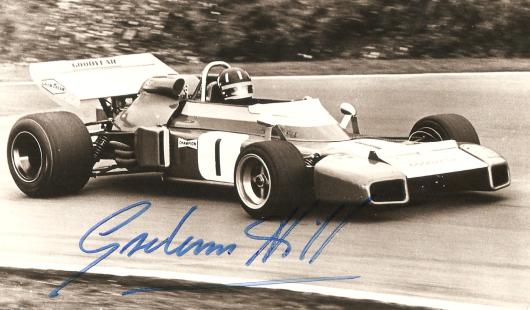
Here’s one of the autographs in my collection. Not the greatest driver of all time but Graham Hill is probably the most outstanding personality of Formula One racing, ever. Not only that, nice signature too Graham.
On holiday I always grab a few books to take away with me. Reading is one of the great pleasures in life, at least I have always thought so. One book I picked up was the autobiography of Murray Walker. Murray was for many years the voice of F1. Clive James once described him as talking in his quieter moments like someone who has his trousers on fire. Murray always added his supreme enthusiasm and excitement into his broadcasts. He made mistakes, he mixed up drivers and cars but he always, always kept his viewers entertained. He belongs to that golden era of British TV Sporting commentators like Harry Carpenter (boxing) Brian Moore (football) David Coleman (football) Peter O’Sullivan (horse racing) and many others who are just a faded memory now.

Murray’s book ‘Unless I’m Very Much Mistaken’ was, according to the blurb on the back cover, the number 1 best seller. I was looking forward to reading it but sadly it was all a little boring. Many celebrity autobiographies start off well and are very interesting but when the author reaches the point of fame and fortune, they all seem to go down the same path and become lists and lists of films or shows or appearances or meeting other famous people and just become rather boring. Murray doesn’t waste much time, his book starts out with some boring bits and then goes straight into more boring bits.
To be fair, some of the book was interesting, for instance when he talked about working for the BBC when they commenced their regular Grand Prix highlights programme in 1979 and working with James Hunt, his co commentator for many years. Otherwise though, it was a book I found myself mostly skimming through.
Murray was someone who accepted he made many mistakes but even so, did a fabulous job over the years. I remember once watching the start of the Le Mans 24 hour race on BBC TV’s sports show Grandstand. Murray commented for the first hour or so and then the coverage went back to the studio. It was obvious to me that Murray was in France as he was so well informed, he knew what was going on and so on. Back in the studio in the UK the announcer explained how the BBC were clearly not going to be with the race for the full 24 hours and then turned to Murray who was sitting next to him. His commentary had not been from France but from the TV studio in the UK!
Murray did an amazing job but sorry, his book wasn’t the great read it should have been.
This weekend we will have left our rented French house behind with all its creature comforts and will be slowly meandering our way home in our motorhome, visiting family and friends en route. Happily, YouTube will be showing short highlights of this weekend’s race. Hope we’ll be in a spot where the Wi-Fi signal is good!
 As I write this, I’m in France once again as Liz and I have decided to nip over to the continent. We came over earlier this year and have wanted to return for a while but various appointments and arrangements have been in place, keeping us at home but what the heck we thought, time for another trip in our motorhome.
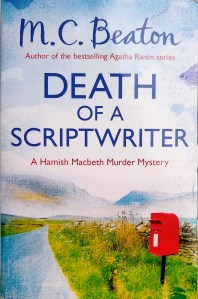 So, what else have I done on this trip? Well I’ve read books, after all reading has always been one of my greatest pleasures. I took it upon myself some time ago to read the entire library of Hamish Macbeth novels. They are not great works of literature but the world of books has everything for everyone and sometimes, I just like an old fashioned, easy going mystery read. Here in France, I’ve just finished Death of a Scriptwriter, the 14th entry into the series which wasn’t actually one of the best. The previous two were very good though, Death of a Macho Man and Death of a Dentist. If you are not familiar with Hamish Macbeth, he is a constable in a Scottish highland village. He likes to apply the rule of law in his own way, taking away the car keys from drink drivers before they leave the pub, giving various minor bootleggers a warning before removing their illegal stills and he’s not averse to poaching the odd salmon. The books are wonderful, quirky murder mysteries which Hamish always solves but tries to give credit to others in case his bosses think of promoting him and moving him away from his beloved village of Lochdubh.
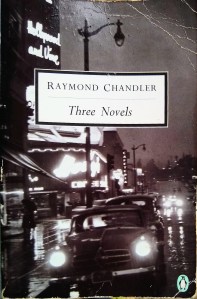 Book 2, Farewell My Lovely, starts off well. It’s about Moose Malloy, an oversized fellow looking for Velma, an old flame. Marlowe gets in on the hunt as well as looking into another case and later finds both are related. I read the first part of the novel pretty much all in one go and enjoyed it very much. The next quarter was a little confusing. (During the filming of The Big Sleep the director and his stars wondered who killed the character of Owen Taylor, the Sternwood’s chauffeur. They sent a cable to Raymond Chandler asking him. Chandler told a friend later ‘Dammit, I don’t know either!)’ Happily, in Farewell My Lovely, everything finally came together towards the end.
 It’s really quite fascinating the way digital publishing is moving ever forward. Although I suppose I’m very much still an amateur writer I publish a blog post every weekend just like this one. I can also be found in various videos over on YouTube and many of my blog posts can be listened to as a podcast. I say many although in fact there are only nine podcasts available at the present time. I could make more I suppose, after all, I’m now retired and I’ve got plenty of time to make them as well as owning that special essential, a top quality microphone. The thing is I’m not really sure how I feel about my podcasts. I’m not a trained actor or public speaker and I’ve never been that keen on my voice. Someone once told me I sounded a lot like Terry Christian. You may not have heard of him but he’s a Manchester DJ and minor TV personality and he sounds a lot like a very northern working-class Mancunian which is pretty much how you might describe me.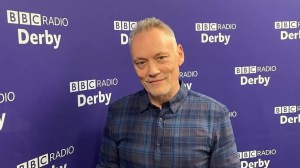
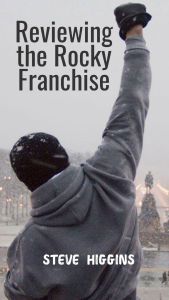 I’ve always liked the original Rocky film but something more interesting than the film itself is the story of how it came to be made. In the mid-seventies Sylvester Stallone was a bit part actor with few acting credits to his name. One day in 1975 he watched the Ali v Chuck Wepner fight in which Wepner lost but managed to stay 15 rounds with heavyweight champion Muhammad Ali. Stallone, inspired by the bout, wrote a screenplay about a washed-up fighter called Rocky who manages to stay the distance with the world champion. He passed the screenplay to his agents who took it to various producers. The screenplay was good and many producers were interested but Stallone attached one small condition to the sale, that he himself had to play the part of Rocky.
 Voice Over





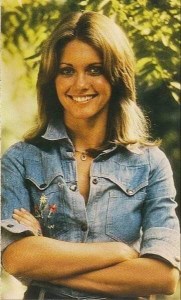 When I was a teenager up on my bedroom wall alongside pictures of various racing drivers was a poster of my first crush, Olivia Newton John. In fact, the very first vinyl singles I ever bought were records by Olivia; The banks of the Ohio and What is life? A chart single at the time in 1973 cost about 48p and as those two singles had dropped out of the charts they were half price. To this day one of the few songs I can correctly recite the lyrics to is one of her other songs, Country Roads. I bought many of her albums and followed her career with interest. It was sad to hear of her death last week.
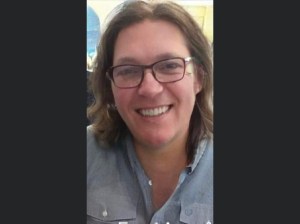 Update: When this post appeared on Facebook, one of my readers told me in the comments that she had the Face App Teen Filter and sent me a photo of herself using it. The result was really amazing and later she sent me a picture of myself, suitably Faceapped. Actually I kind of like it. Should I start using it as my profile picture? Well, I like it but I’m probably better sticking to reality.
 It was a cold afternoon in Manchester and I mumbled something to myself about the supposed heatwave and zipped my jacket up to my neck. At the left luggage office I took out the key that had been given to me earlier and when I opened the compartment I found a small package inside. I took the package and walked the short distance to the square. I sat down on the hard wooden bench and opened it up. Inside was a small tape player and a set of earphones. I put on the earphones and pressed play. There was a short burst of static and then a voice spoke.
 This second instalment of the franchise was directed by John Woo. It’s about a biological weapon called Chimera. Rogue agent Sean Ambrose steals the virus from its inventor by impersonating Ethan Hunt. He destroys the aircraft on which the inventor is travelling and parachutes to safety. Hunt was played once again by Tom Cruise and his mission is to regain the virus. The opening sequence sees Cruise doing some daring rock climbing which the studio wasn’t happy about. Cruise didn’t have a safety net but did apparently wear a harness. I didn’t like the heavy metal style version of the classic theme and as a matter of fact, I lost interest in the film early on.
 I had a few ideas for the title of this post. I had A Piece of My Life on the brain for a long time and then substituted A Pizza My Life (A piece of my life, geddit?) I even had a graphic sorted showing a slice of pizza. The thing with that I thought is that even though it ranges from funny to faintly humorous, I reckoned I would be giving people the wrong idea and that readers might have been expecting a post about, well pizza. Just lately I’m trying to optimise my titles for SEO (search engine optimisation) and at the same time also trying to give the impression that I know something about it. Some time ago I did a few posts titled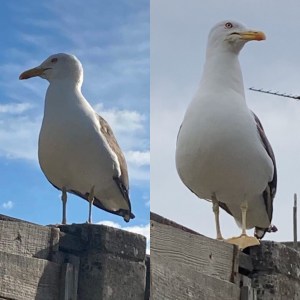


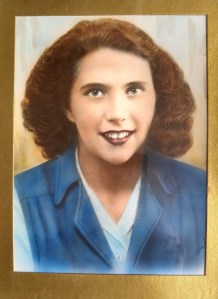
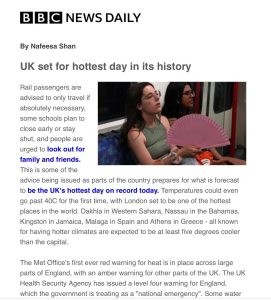 OK so let me get this right, the extreme heat warning is for just two days, not the whole of the summer. The expected heat is going to reach temperatures of 40 degrees C, which works out at 104 degrees Fahrenheit, which is pretty much the temperatures we Brits are looking for when we jet off to Spain for our summer holidays. Is it worth getting excited about? Well, for a month of 100 plus degrees yes but for two days, I don’t think so.
 It was a warm night but hardly roasting. I woke early at about 7am. I stayed in bed and went through my emails and checked my weekend blog stats. I washed and shaved and made a cup of tea. I checked for mail, the proper mail that comes to the post box. Nothing so far. I was expecting a pair of shoes I had bought on eBay and wanted to intercept them before Liz arose and threw the usual Imelda Marcos cracks at me that I usually throw at her. While I was having my tea Liz came in and checked the mail. A parcel was there for me. It was the expected shoes: cue the expected Imelda Marcos gags.
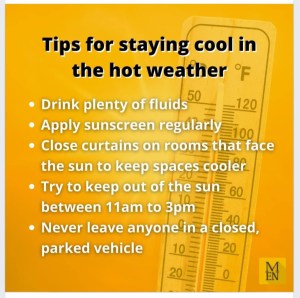 Tuesday started out very warm. Too warm in fact for any unnecessary cooking heating up the house so we had boiled eggs for breakfast. I got myself settled in the garden but then everything clouded over and we even had a brief rain shower. After that it did get pretty warm. A strong wind started up but soon died out. According to the news the projected temperature of 42 degrees C didn’t happen but 40.3C recorded down south somewhere is apparently a new UK temperature record.
 Wednesday was windy, dull and considerably cooler, that was it I suppose for the so called heatwave. It has of course been a pretty hot week for UK politics. Boris Johnson has been forced to resign as Prime Minister (his last words to parliament were apparently ‘hasta la vista, baby’) and the Conservative party are busy electing a new leader. The two candidates remaining after the Conservative MP’s whittled the candidates down to two are Rishi Sunak and Liz Truss, neither of whom I’d be interested in voting for but as I’m not a member of the Conservative party, I won’t even get a chance.