Normally, I tend to republish my WordPress posts on Medium. This week I’ve been a little too busy to write something new so I thought I’d republish one of my Medium posts on WordPress.
What can you say when a genie called Ralph offers you three wishes? How about ‘yes please!’
 This was my first holiday since last year. I had been working hard at my day job as a content creator for a bank as well as my own website The Left-Handed Blogger. My girlfriend had left me for another man and the weather was cold.
I was feeling a little down to say the least so I had surfed the internet and found a cheap(ish) flight to Bermuda. It had been a long journey and on arriving at my hotel I had changed into shorts and a T shirt and popped down to the bar. On the patio I ordered a large beer and settled down to enjoy the warm weather.
I scanned through my phone to see what was happening in Barbados and to maybe find where would be a good place to eat but the local news was all about some Mexican drug baron, Emiliano Montoya, who had turned up on the island. I scrolled past all that and was pleased to find some good reviews about the restaurant in the very hotel where I was staying.
I finished my beer and decided that there was plenty of time for a swim before dinner.
I dropped my bag and towel down on the beach, took one look at the blue sea and ran towards it. I swam for a while and then turned back to the beach. I dropped down on my towel and let the sun dry my body. I started to think about my blog. I wondered if my blog readers were wondering why my regular posts had dried up. Then again perhaps no one had noticed. After a while I dropped off to sleep. Like I say, I had worked hard; at least six months of eleven-hour days and I was tired.
When I awoke, I was annoyed with myself. I had turned to my side and already I could feel my right-hand side burning in the sun. Oh well, no matter. I just need to make sure to tan the other side too.
I pulled a bottle of water from my bag and stood up. I was feeling better already and I looked around at the fairly quiet beach and then back towards my towel. My foot touched on something and I looked down and buried there in the sand was a bottle. It had a sort of old world look about it. I wondered if it might be something valuable and I dug it out of the sand. It had what I thought was a sort of oriental look about it. It was heavy with a bulbous onion sort of shape with a handle and it was still corked. An old wine bottle perhaps.
I sat down on my towel and pulled on the cork and after a while it popped out and a huge spurt of smoke or gas poured out. After a few seconds the smoke began to pull together and it seemed to congeal into the shape of a man.
I fell back into the sand and as I looked up, the smoke became an Arab man in a turban and a baggy silk outfit. He looked a little stunned and began shouting in some sort of Arab language. After a while he noticed me but I couldn’t understand a word. After an age I recovered myself and said something totally stupid like ‘who are you?’ and he looked back at me in amazement.
‘Master’, he said in English. ‘You have freed me from imprisonment. Who are you? What is your name?’
“George”, I mumbled. “George Ferguson.”
“George, thank you for my freedom. Free to breathe the air again, free to feel the warmth of the sun. Where are we?”
“Barbados” I said, still not really believing what was happening.
“George, I am a genie, imprisoned in that bottle in a time when the earth was young. Let me grant you three wishes. Master, what is your first wish?”
Three wishes? He has got to be joking I thought. Where is the camera? Who is filming this mad stunt for Instagram or TikTok?
Without thinking I blurted out “Twenty thousand pounds!”
The genie looked at me as if I’d had said twenty thousand fish fingers. He thought for a while and then said “Master, I need to understand this new world. I will come back to you soon and grant your wish.”
With that he held his hands together in a pose of prayer, nodded thoughtfully to me and promptly burst into a cloud of smoke or steam and vanished.
I stood there stunned for a few moments. Nothing seemed to be moving around me and then slowly I could see movement and hear the sound of the waves lapping at the shore, the voices of children playing and the shouts and chatter of people at the beach.
What a daydream! A daydream so real it was almost untrue. Perhaps it was! What was that type of dream I had read about lately? A lucid dream. A dream that feels so vivid it could be real, of course, that was it! A lucid dream. Wow!
I laughed to myself then stepped forward towards the sea and my bare foot touched the bottle, the onion shaped bottle from where the genie had come. That had been the catalyst, the thing that had started the dream. It was a dream, surely.
Back at the hotel I went up to my room and took a shower. I was thirsty and after towelling myself dry I popped on a robe and walked towards the small cooler in the lounge and took out a bottle of water. I was still thinking about that daydream and wondering why on earth did I ask for 20,000 pounds? Why didn’t I say 100,000 or even a million? I laughed to myself but as I drank from my bottle it seemed as though there was a little steam or smoke in the hallway. The smoke became thicker and then coalesced into a man. It was the genie again but this time he was dressed in a light blue jacket, a white shirt and faded blue jeans.
“George” he said. I stumbled back and fell onto the bed. It wasn’t a dream, it really wasn’t.
“Call me Ralph,” said the genie.
“Ralph?” I asked.
“Yes, I decided that from now on that’s the name I’m going to use. I like it, I don’t know why but I just like it. What do you think of the clothes?”
“Great” I mumbled.
“It’s 2025 George. I can’t go around wearing that old stuff anymore. The world has changed, so very much.”
Ralph did a sort of twirl showing off his outfit. He did look pretty smart.
“Anyway, I can’t hang around here for ever. I came to sort out your first wish, here it is. He turned and picked up a black attaché case and handed it to me. I placed it on the bed and flipped open the lid. Inside was a series of crisp pound notes.
“Twenty thousand?” I asked.
“Of course, twenty thousand pounds, just as you wished.”
“Is it real money?”
“Of course it’s real. Although in my day we preferred gold but this is your day and things are so very different.”
He looked a little sad for a moment. Perhaps he was remembering his own time and place whenever that was.
“Now, your next wish. What is it?”
“Well, I’ve not really thought about it. I thought that -I thought this might have been just a dream.”
“Times change but people do not. Even in my century people were sceptical, people did not believe in me. But I have many places to see, many things to do. You have asked for money, not as much as I might have imagined but money nevertheless. Your next wish will probably involve power or women, which is it to be?”
I thought for a moment but the genie anticipated me.
“What sort of woman do you desire. Tall and blonde? A nice figure and an ample bosom.” He laughed and went on. “Those are the attributes that men seem to desire in this modern world.”
I sat down on the bed and smiled. “Yes, a woman like that but madly in love with me, the most beautiful woman in the world.”
“Wait, wait, whatever you may think, I am not the master of this world, just a small part of it. I would have to bring that particular woman halfway across the world to this place, how would she react? What would she think? What about the most beautiful woman on the island, would that please you George?”
“Yes, yes I think it would.” We might have been talking about a particular shade of wallpaper or a colour scheme for my lounge.
The genie smiled, “That then is your wish?”
“Yes genie, I wish to meet a beautiful blonde, the most beautiful on the island.”
Ralph jumped to his feet. “Your wish is granted but please, please George . .”
“What?”
“Please call me Ralph. I need to reinvent myself, to change myself to fit into this new world that you have opened up for me.”
“Thanks, Ralph.”
“Thank you, George. You wish will come true soon, in the meantime think about your final wish.”
“I will” I answered but even as I spoke his body had broken up into a swirl of steam and smoke and in a moment, I was alone once again.
Later I dressed and went down to the hotel restaurant. I asked for a table but was told they could not fit me in until 8:15. I glanced at my watch, it was 7:30 and I wished that I had booked. Oh well!
I ordered a drink at the bar, a gin and tonic and just then a really lovely woman came in. She was wearing a flowery sort of dress and had dark hair. It looked as though she was wanting a table for dinner too. She ordered a drink and smiled at me and for a moment it looked as though she recognised me from somewhere. Lovely as she was, I didn’t know her but then another woman came to the bar. She was tall and blonde and wore a short black dress. She had a gold necklace around her neck and a gold bangle on her wrist. She too gave me a smile and I began to wonder, would this be the tall blonde that I had wished for? I mean, how would the wish work? Would a beautiful blonde just appear in my room or somewhere? What actually would happen? To be honest I was still partly expecting someone with a camera to pop up and announce that I had been part of a TV or internet wind up.
The blonde had ordered a drink and seemed to be saying something; was she talking to me?
“I’m sorry,” she said. “I was just having a little moan. I’m so hungry and I forgot to book a table. I didn’t think it would be necessary.”
She spoke English with an American accent and I asked if she was from the USA.
“No,” she replied. “I’m from Mexico but I have spent a lot of time in the USA. You are English?”
“Yes, over here on holiday. As a matter of fact, I only arrived earlier today.”
“I came here for a business deal with a colleague but it didn’t work out.”
I took a sip of my gin. She had hesitated before the word ‘colleague’ and I registered it for a split second but didn’t think about it further as she was smiling at me as if I was George Clooney or someone. She was very lovely, was she the one? Was she the beautiful blonde I had requested? Was she madly in love with me?
She did seem to be looking at me with a certain sort of affection, unless I was imagining it.
Anyway, we chatted and seemed to be getting along well. She told me her name was Lucianna and after a while the subject turned on to food. Tired of waiting for a table we went out for a taxi and asked the driver where we could get some good Caribbean food.
We ate together and came back to the hotel and after a few drinks it almost seemed as if we were old friends.
I awoke the next morning still tired. Something was under my arm and I could feel lots of hair. When I looked Lucianna was pressed against me and my arm was under her neck. I could smell her hair which smelt of shampoo and I realised I was full of the spent ardour of passion. I turned towards her and she moved closer, her eyes still closed and kissed me gently.
“I love you George,” she said. Why had I asked the genie -Ralph- for a girl madly in love with me? A girl who liked me would have been enough. Perhaps liked me a lot might have been better but not madly in love with me. In the world of genies and wishes there was a steep learning curve. Two million and not twenty thousand. A girl who liked me a lot rather than a girl who is madly in love with me. I should have thought about my wishes more, thought them through after all, at some point Ralph is going to return and grant me a third wish, my last wish and I need to get that one right.
I wondered if Lucianna was staying in this hotel, she must be surely. How can I get rid of her?
“Lucianna,” I whispered gently, “do you need to get back to your own room? You know, sort yourself out, change your clothes and stuff?”
“No senor. No. I am planning to stay right by your side for ever and ever. The moment I saw you I knew you were the man for me. I am going to ask Emiliano for a divorce straight away. Well soon, after more loving from my man.”
What did she say? Did she say divorce?
“You’re married?” I asked.
“I told you. That useless idiot of a husband. He doesn’t need me and I don’t want to be around when his fellow drug lords bump each other off.”
“His fellow drug lords?”
Wait, wait a minute. What was that on the news yesterday? The drug baron who has come to the Caribbean?
“Your husband is . . .Emiliano Montoya?”
“That’s him and it’s only a matter of time before the Americans arrest him or someone in the cartel shoots him.”
Just then there was a knock at the door.
“Have you ordered breakfast?” asked Lucianna. “Just coffee and orange juice for me and perhaps a slice of wholemeal toast.”
“I haven’t ordered breakfast” I said.
“I hope it isn’t Emiliano. He isn’t at his best in the mornings, it might be better for me to see him later. Wait, don’t let him know I’m here!”
With that she jumped out of the bed and ran to the bathroom in a blur of nakedness. I watched her as I pulled on a robe and went to answer the door and she whispered frantically “don’t let him in!”
I opened the door not really expecting the apparently famous drug dealer but standing there was a smartly dressed Hispanic man. He wore a smart jacket and shirt, in fact his outfit was remarkably similar to the clothes that Ralph was now wearing.
“Senor,” said the man politely. He had a huge moustache and a swarthy pockmarked complexion and said that he was sorry to be bothering me.
“I had something of an altercation with my wife last night, Lucianna, and the staff mentioned that you had a drink with her at the bar last night. She has a terrible temper but she usually calms down quickly and comes back to me. Last night she didn’t so naturally I’m a little worried. Is she with you, senor?”
“With me?” I put on my best surprised look. “Oh no. I did have a drink with her, at the bar. She might have mentioned something about an argument, I don’t remember.”
“Did you have dinner with her?”
“Dinner?”
“Yes, but please don’t misunderstand me senor, I am not angry or hurt. I want the best for Lucianna, always. She is a headstrong woman and we have many arguments but of course, when she comes back, I will love her all the more. She is the love of my life.”
I was really just thinking about what to say next when the bathroom door opened and Lucianna stormed out in a robe screaming and shouting in Spanish. After a great monologue which went on for quite a while she reverted to English and started again;
“The love of your life? The love of your life. That’s fine, that’s rich coming from a bum like you. Did you say that to that woman in the bar in Los Angeles? What about that other whore, the one who you say comes only to clean your house?”
With that she screamed and set about the man slapping and punching him. He grabbed her arms and threw her onto the bed. He slapped her hard and she fell back, momentarily quiet.
“This is how you repay me? I work my fingers to the bone; I risk life and limb to earn us a good living and I find you in the bedroom of this gringo!”
Montoya turned to me -the gringo- I suppose.
“And what have you to say senor, stealing my wife, seducing her?”
I didn’t have to do much seducing but I didn’t say that and then as I stood there, slightly stunned, Montoya opened his jacket and produced a pistol. Lucianna screamed and made a grab for the gun but he caught her with a huge back handed slap and she fell back on the bed. All I could think of then in my terrified state was to shout for Ralph.
“Ralph, Ralph!” I called, hoping that perhaps my genie could save me and just then Emiliano and his wife froze. I stepped back in amazement and suddenly there was Ralph.
“George, what on earth is happening?”
“Genie, Ralph, you’ve got to do something. This maniac is trying to kill me!”
“Times change but people do not. Men fighting over women, women fighting over men. I’ve seen it all before, a thousand times over.”
“Ralph, you’ve got to help me.”
“George what can I do?”
“I wish, I wish everything was back to how it was before. .”
Wait a minute George, calm down. Do I really mean that? I was scared for a minute but now, perhaps I just need a minute to get myself together.
Anyway, it was too late. I opened my eyes and I was lying on the beach. I jumped straight up and saw my bag and towel were still there and the sea was just as blue as it was yesterday. I ran towards it and jumped in. I swam for a while just to freshen myself up and then came back to the sand and dried myself with the towel. Wow, what a dream! I took a bottle of water from my bag and drank it all down. I stood there for a minute and took in the birds and the waves and the chatter of people further down. I found myself looking down for the genie’s bottle but this time I couldn’t see it.
Later, back at the hotel I called down and booked a table for dinner then took a shower and dressed. In the bar I was told that my table would be ready in a few minutes so I ordered a gin and tonic. Just then a really lovely woman came in. She was wearing a flowery sort of dress and had dark hair. It looked as though she was wanting a table for dinner too. She ordered a drink and smiled at me and for a moment it looked as though she recognised me from somewhere. Lovely as she was, I didn’t know her. I wanted to talk to her but I wasn’t sure what to say. She smiled again and came over.
“Sorry to bother you” she said. “Do you happen to be a writer, an internet writer?”
“Yes, as a matter of fact I am.”
“I think I’ve read your blogs. The Left-Handed Blogger? Is that you?”
I laughed. “Yes, I’ve never been recognised before. How did you know it was me?”
“You have a little picture on your page.”
“That picture is ancient and it looks nothing like me.”
“It was just the way you were standing, just like in the picture. I usually read your blog every week but last week there wasn’t one.”
“Yes, I’ve had a few problems lately with the blog.”
“What sort of problems?”
“Well,” I took a sip from my drink and the waiter came over to say my table was ready.
“Would you care to join me and I’ll tell you all about it?”
“Well,” she said. “I am hungry . .”
What to do next: Here are a few options.
Share this post on your favourite social media!
Hit the Subscribe button. Never miss another post!
Buy the book! Click here to purchase my new poetry collection.
Click here to visit Amazon and download Floating in Space to your Kindle or order the paperback version.
Click here to visit amazon and purchase Timeline, my new anthology.
 Forsyth did his national service in the RAF and was commissioned as an Acting Pilot Officer in 1956. After leaving the RAF he became a journalist working for the news agency Reuters and later he joined the BBC. He was the perfect choice for a foreign correspondent as he spoke numerous languages including French, German and Russian. In 1967 he was reporting on the war between Biafra and Nigeria when the BBC decided they were no longer interested in that particular war. Forsyth resigned from the BBC and continued to report on the war as a freelance. He even admitted later that this was when he was recruited by MI6 as an informant.
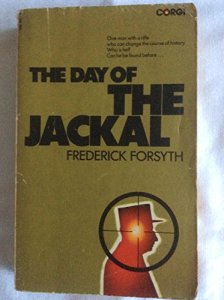 The Day of the Jackal
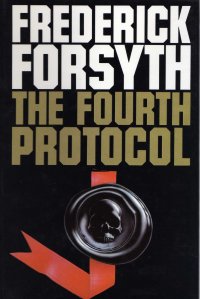 The Fourth Protocol
 I see that I started this blog page back in 2014 and my first post went out on the 23rd of May. It wasn’t anything exciting, in fact it was pretty much a sort of advertisement for my book

 John’s book was a great read. He started out working with Alan Bennett as a comedy writer and performer but when he realised that he probably had no future as a tv comedian he got himself a job as a newspaper reporter in Liverpool and later moved over to the BBC as a radio reporter.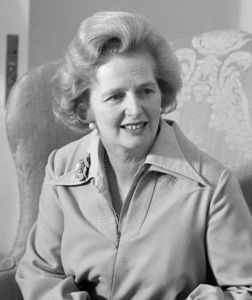
 My brother died recently. He loved his TV and despite not having much money he had a top package from Virgin media. He mentioned only a few weeks before his death that he could even get the Sky F1 channel and I told him over the phone that I would be round to watch some live races. The only chance I got was actually the recent Spanish Grand Prix which wasn’t such a great race until a late safety car livened things up towards the end. Anyway, once I’d watched the race I called up Virgin to advise them that my brother had died. I must have gone through about three menus; press one for this, press two for that and so on. After menu 3 I finally got to an ‘other’ option. I clicked on that and finally there was an option for bereavement. When I went through to option 5 I think it was, the recorded voice advised me to ring a special bereavement line and quickly rattled off the number. I wasn’t expecting that so I reached for my pen expecting a repeat of the number but all I got was a thank you for your call and a dialling tone as the call was ended.

 Essentially, John Darwin was facing bankruptcy after getting hugely overreached on a series of buy to let mortgages. He decided that the only way out was to fake his own death and cash in on some life insurance policies. His wife apparently tried to talk him out of the idea but John, a dominating and overpowering personality, went ahead and faked his own death. Amazingly he even went back to live with his wife, sometimes having to retreat to the bedsits next door when any friends or family came to visit. He arranged a false passport using a method explained in the book ‘Day of the Jackal’ by Frederick Forsyth and then the two, Darwin and his wife, planned to buy property in Panama and live a new life. Later, Darwin decided he wanted to return to the UK under his own name by posing as someone who had suffered with amnesia and in fact one day he disposed of his fake passport, walked into a police station and told them ‘I’ve lost my memory!’
 For me, who has been interested in the JFK assassination since at least 1968 when his brother, Robert Kennedy was also murdered and I was 12 years old, it’s a fascinating record. Others might think perhaps that the author has spread his research too far, that we are not interested in what the President’s pilot thought or did or how the honour guard prepared for the President’s funeral and how the President’s sister or brother-in-law reacted.
 Marlene was one of those people perhaps born at the wrong time. Today might be a better time for her when lifestyles of gay and lesbian people are not so much of an issue.
 The story of the Titanic, the ship that hit an iceberg and sank in 1912, is one of those stories which seems to be forever in the news. It’s a story that has caught the imagination of pretty much everyone. Even the other day, just scrolling through the BBC news page, I came across an item about some new digital scan of the Titanic wreck which revealed new information about the disaster.
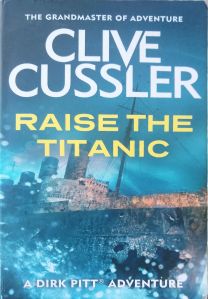 This was a film produced by TV mogul Lew Grade who was wanting to move his TV production company ITC Entertainment into the world of cinema. He had read the original book and thought that it might be possible to make a film series about US government operative Dirk Pitt in the manner of the Bond series.
 I only have one book in my collection about the Titanic. It’s a big glossy picture book, not about the actual ship, but about the shooting of James Cameron’s film. It documents Cameron’s twelve dives in a tiny submersible which gave him the idea of the treasure hunters looking to find the necklace the ‘Heart of the Ocean’ and his realisation as Cameron himself mentions in the book’s foreword that the main thrust of the story should be a love story with the Titanic disaster almost as a backdrop.
 My brother died this week. As you can imagine I’m pretty upset. He was the younger brother so the accepted plan was for me to die first but somehow, things didn’t work out that way. Still, to a certain extent my brother was a burger and pizza eating TV watching couch potato so perhaps him dropping dead like that was not really unexpected. He was a guy that I sometimes wanted to slap and tell him to sort himself out, to clean his flat up and wash the pots and hoover up and get himself off his lazy backside and get a job or do some training or something.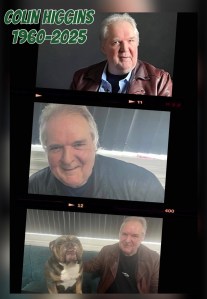
 Got the picture yet? The film is Alfie. It was directed by Lewis Gilbert who also directed some of the earlier Bond films. The script was written by Bill Naughton and adapted from his own book and play. Alfie is a fascinating film on many levels. It’s a peek back at the swinging sixties; it explores the elements of comedy versus drama, something I’ve always loved and which I looked at a while ago in a post about the
  Don’t you just hate TV adverts? I certainly do. There are those times when a TV advert comes in useful I suppose. Perhaps when you are watching a good film and you need to make a cup of tea or pop to the toilet. These days in the hi tech world of TV, most people are able to pause live TV and do those things anyway. I wouldn’t mind if the TV adverts were actually worth watching but these days of course they aren’t. Anyway, here are 6 classic TV ads of yesteryear that I think are rather good. Here we go . .

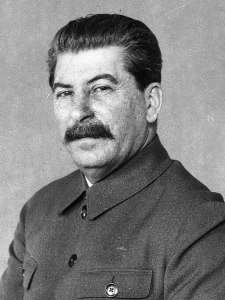
 At the age of 15 Reg got himself a job playing the piano at the local pub and in 1962 he and some friends formed a small band called Bluesology and they soon picked up a regular gig supporting singer Long John Baldry.