I never plan anything, never, which is why that it’s so unusual for this blog post to be appearing at such an appropriate time. This weekend, we remember the dead of two World Wars and I thought it might be fitting to tell you about the time I visited the Glade of the Armistice in Compiègne, France.
Earlier this year Liz and I were touring through France in our motorhome. Towards the end of our trip we were naturally moving further north towards Calais and our trip through Eurotunnel and back to the UK. We stopped in a place called Berny Rivière intending to visit another of our favourite restaurants. Sadly, the restaurant was closed and so we found somewhere to park up for the night and as the heavens decided to open up and drop a major rainstorm on top of us, we ate in.
We were parked not far from Compiègne where the armistice which ended the First World War was signed in 1918 so it seemed an opportune moment to visit The Glade of the Armistice.
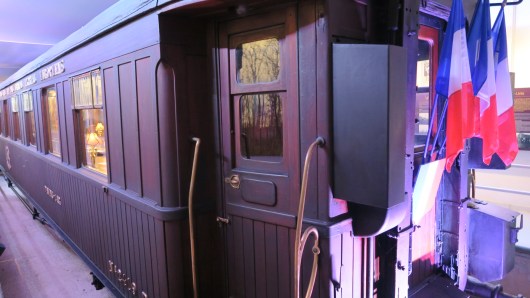
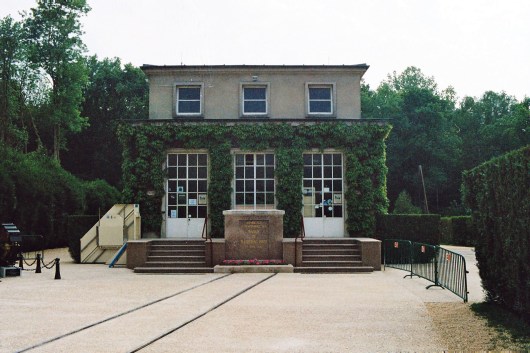
The Glade is exactly that, a clearing in the middle of a forest. A series of what look to be tram lines curve across the glade to the site of the museum but still visible today, is the location where the armistice was signed, aboard a famous railway carriage in 1918. The railway carriage was designated 2419D and was part of Marshal Foch’s personal train. Foch decided on the spot for the surrender as he wanted to keep the negotiations away from the prying eyes of the press. The negotiations began on November 8th and were finally finished and the document of surrender signed at 5:45am on the 11th November, 1918.
The surrender came into force at 11am and fighting continued until that time with 2,738 men dying on the last day of the First World War.
The railway carriage went back into regular service for a while but was then attached to the French Presidential Train. Afterwards it was put on display in Paris until 1927 when it was returned to the glade at Compiègne.
The Second World War began in 1939 when Hitler and the Nazis invaded Poland. The railway carriage was still in Compiègne on the 22nd June, 1940 when Hitler ordered it to be brought out from its shed and back to the glade and it was there that he and his generals accepted the surrender of the French. Three days later the site was demolished on the orders of the Führer and the railway carriage was taken to Berlin. The statue of Marshal Foch was left standing intentionally, left to stand guard over a scene of devastation, a personal insult from Hitler to the Marshal who had died in 1929.
After the war, the site was restored by German prisoners of war and in 1950, an identical carriage was returned to the site. Carriage number 2439 was built with the same batch as the original and was also part of Marshal Foch’s train in 1918.
The carriage is housed in a small museum and when I entered early one Saturday morning I was the only visitor present. The staff asked me my nationality and when I stepped into the main area a recording began telling the story of the site in English. It was really fascinating and as I walked around, I started up my camera and took numerous pictures and video.
Outside in the Glade, the statue of Marshal Foch is still there and looks down on a beautiful clearing. It was a calm and peaceful place and it was strange to stand on the spot where Hitler and his Nazi cronies once stood.
Hitler can be seen on photographs and film footage from the time. He must have been overjoyed. He and his generals had done in 1940 what the Kaiser and his generals could not do in 1918 and defeated the Allied Armies. His joy only lasted a few short years. In 1945 he shot himself surrounded by the debris of a ruined Berlin.
What to do next: Here are a few options.
Share this post on your favourite social media!
Hit the Subscribe button. Never miss another post!
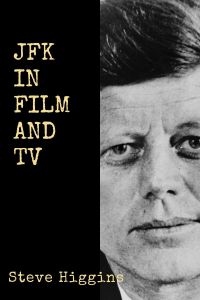
It’s always interesting to see how film makers present historical figures to their audience. John Kennedy a was good looking and charismatic American leader and after watching the TV mini series Kennedy I thought I’d take a closer look at how JFK has been portrayed in film and TV.
Kennedy
Strolling through St Annes not long ago I dropped Liz off at the hairdressers and wandered into a nearby shop that sells secondhand books, DVDs and CDs. It was there I spotted the DVD of a mini series from the 80’s called simply Kennedy with Martin Sheen playing the part of John F Kennedy. The DVD box set had been on my shelf for a while until one cold and wet evening when I thought it was time to pour a small port and settle down to watch it.
The first episode opens on election day revealing the Kennedys at their compound in Massachusetts with Bobby and Ted and their volunteers manning the phones trying to get the latest info in from the election count. The series goes on to follow the Kennedy administration through various issues including civil rights, the Bay of Pigs fiasco, problems with US Steel, the Cuban Missile crisis and finishes with the President’s death in Dallas.
Sheen captures the president’s clipped Boston accent pretty well and Blair Brown who plays Jackie has an uncanny likeness to Jackie herself, especially when she dons the First Lady’s pink suit for the trip to Dallas. Nothing controversial is included although the film does show how J Edgar Hoover kept close tabs on Kennedy’s private life and how Bobby apparently made many efforts to keep the President from compromising himself.
This series had me hooked from the beginning and I could feel the excitement the Kennedy team felt themselves when they knew that JFK had won the election.
Martin Sheen was much shorter than the real JFK and that brought to mind the closing lines from William Manchester’s book Death of a President. One of the Dallas doctors who fought to save Kennedy looked at his lifeless body and thought what a big man the President was, bigger than he had previously thought. Yes, says Manchester, the President was indeed a big man.
JFK
After watching the mini-series over a couple of days I thought that I’d settle down to watch the Oliver Stone movie JFK. Oliver Stone’s film focuses on Kennedy’s death rather than his life. It follows the investigation of New Orleans DA Jim Garrison and his attempt to investigate the assassination. Kevin Costner plays Garrison and the film opens with the shooting in Dallas and Garrison watching the events unfold on TV. Stone uses the Garrison investigation as a framework on which to hang various theories, the main one being that the ‘military industrial complex’ was responsible. The film is well put together and expertly combines archive film with new footage as well as different film types, 16mm and 35mm, black and white and colour as well as square and wide screen film.
The centre of the Garrison investigation is New Orleans where Oswald visited and the various contacts he had there including David Ferrie, a strange individual active in the anti-Castro community who had lost his hair and wore a wig and Guy Bannister, an ex-FBI agent who ran a private investigation business. Located in the same building as Bannister’s office was one used by Lee Oswald for his fake Pro-Castro Fair Play for Cuba committee.
Jim Garrison himself has a small role as Earl Warren, the chairman of the Warren Commission which investigated the murder at the behest of President Johnson.
The finale of the film involves the showing of the 16mm film of the assassination, shot by Abraham Zapruder, to the jury. Garrison tried to show that local businessman Clay Shaw was part of the conspiracy but failed.
I’ve always found the film totally engrossing but it proved to be controversial, however the film did lead to the JFK Assassinations Records Act which enabled the release of the remaining assassination documents held by the US government.
Even if you don’t have a conspiracy theory or even a viewpoint about the death of JFK this is a powerful and interesting film and well worth watching.
PT 109
PT 109 is an account of John Kennedy’s time as commander of a Patrol Torpedo Boat in World War II. The young Kennedy was enrolled in the US Navy and was sent to the Solomon Islands to take over his command. He had suffered for a long time with a bad back and had to get his father Joe to use his influence to get him into the war. Kennedy completed his training in 1942 and after a short period as an instructor, he was finally assigned to PT Boat 109.
While on patrol one night PT 109 was hit by a Japanese destroyer which cut the torpedo boat in two. Two crew members were killed but Kennedy led his remaining crew, including one severely burned man, on a long swim to Plum Pudding Island. It took the crew four hours to swim the 3.5 miles to the island and Kennedy himself had to tow the injured man by clenching a strap in his teeth.
Later when help had still not arrived, JFK had to take his crew on second swim to another island where they met a native who took a message carved on a coconut shell to the Allied forces and they were eventually rescued.
Kennedy was played by Cliff Robertson whose casting was personally approved by President Kennedy and the film was released in the summer of 1963. I saw the film on TV a few years ago and I’d have to agree with those who weren’t overly impressed by it.
In real life the Kennedy brothers were highly competitive and Joe Kennedy junior, after hearing of his younger brother’s exploits in PT Boats, volunteered for a dangerous mission which led to his death in England flying an aircraft filled with explosives.
Thirteen Days
Thirteen Days was a 2000 film about the Cuban Missile Crisis of 1962 and stars Bruce Greenwood as John F Kennedy. In 1962 U2 flights over Cuba doing photo reconnaissance, spotted the build up of missiles sent to the area by the Soviet Union. Kennedy created an executive committee to deal with the emergency and the meetings were recorded. The film was based on the 1997 book, The Kennedy Tapes: Inside the White House During the Cuban Missile Crisis, by Ernest R. May and Philip D. Zelikow so it was therefore pretty accurate. The odd thing about the film is that the star is not the JFK character played by Greenwood but Kennedy’s assistant Ken O’Donnell played by Kevin Costner and the film seems to be saying that it was O’Donnell who motivated the President and saved the day and not the President himself, which was clearly not the case.
Many in the military wanted a full-scale invasion of Cuba but Kennedy himself hung on for a diplomatic solution.
Bruce Greenwood didn’t do it for me as JFK but Thirteen Days is an interesting film and well worth watching but I feel I got a better sense of the Cuban Missile Crisis in the TV series Kennedy.
Documentary
Having watched all this about John F Kennedy, I thought it might be time to take a look at the real JFK. In my VHS collection I have quite a few documentaries about him, some date back to the 1960’s and on the 25th anniversary of his death in 1987, many of these films were shown on television and I recorded a lot of them on my very expensive video recorder. One was called Crisis which looked at how the President handled the civil rights issue in the USA. Another was about the election of 1960 including Kennedy’s selection as the Democratic candidate. He competed in the primaries against Hubert Humphrey and when Kennedy utilised his entire family, brothers, sister and his mother, Humphrey complained that he wasn’t just fighting one man but an entire family. The film shows Kennedy at an election meeting with his family all shaking hands and smiling to the public.
One last film I watched was in Channel Four’s Secret Lives season. This episode from 1997 was written and directed by Mark Obenhaus and based, I think, on research by Seymour Hersh who afterwards published The Dark Side of Camelot. It showed former secret service agents talking about Kennedy’s affairs and numerous liaisons with prostitutes. The agents were forced to explain away the women as ‘secretaries’ to those around them who were not in the know. They also talked about Kennedy’s meetings with a man they nicknamed Doctor Feelgood, Max Jacobson, who was apparently treating JFK with amphetamines. In later years after the death of JFK, Jacobson lost his license.
Of course, in this short blog post I cannot hope to get close to the real character of JFK. To journalist Hugh Sidey he talked about the aristocrats of Victorian England who defended the principles of law and democracy on a weekday but retired to their country mansions at the weekend for wife swapping parties and other hedonistic diversions. Sidey explained that after Kennedy told him that, he felt he finally understood the real character of the President.
Whatever he did in his private life, as president, John Kennedy averted a nuclear war and spoke what I think were some of the most memorable phrases ever spoken by any politician. Let me leave you then with these words, delivered at the American University in 1963, a matter of months before his death. Talking about the Soviet Union he said:
So, let us not be blind to our differences but let us also direct attention to our common interests and to the means by which those differences can be resolved. And if we cannot end now our differences, at least we can help make the world safe for diversity. For, in the final analysis, our most basic common link is that we all inhabit this small planet. We all breathe the same air. We all cherish our children’s future. And we are all mortal.
As usual I’ve tried to find video links that do not start with an advertisement although it isn’t always possible.
For the full text of JFK’s American University speech, click here.
What to do next: Here are a few options.
Share this post on your favourite social media!
Hit the Subscribe button. Never miss another post!
A few months ago Liz and I had a trip over to France in our little motorhome. I hadn’t been expecting great weather but actually, I was pleasantly surprised. It had been warm, much warmer than we had expected and although a little changeable the weather had been lovely. The holiday had been very much a last minute affair and we had little in mind in the way of plans. However, there were two things I wanted during this trip. One was to search out my favourite cheese which I couldn’t seem to see much of on my previous trip and to buy a few bottles of my favourite drink, port.
My favourite cheese is called Rondelé Bleu. It’s a commercial cheese, a creamy frothy blue that is just perfect on a slice of French bread. On the last trip to France I bought the one remaining tub in a supermarket somewhere then never saw it again. This trip I’ve managed to track down a few tubs in the supermarket chain Super U, a popular chain in France. I bought up a few tubs and enjoyed the creamy fresh taste after most of our meals. Now you might be thinking Rondelé Bleu? What about Comté, Camembert, Époisses and even Brie? Yes, all good in their ways but Rondelé Bleu just really does it for me.
Actually, Rondelé did it for me. Did, being the operative word. Did as in past tense. While in France on this trip I discovered my new favourite cheese. It is Tomme de Savoie. Yes, Steve must be a pretty changeable guy you must be thinking. Oh well, I don’t like to be stuck in the past. Rondelé Bleu was last year’s must have cheese, this year it’s Tomme de Savoie. It’s got a fabulous taste, obviously! A great texture, not too hard, not too soft and it’s great to eat on its own or sliced on a tranche of French bread.
Port of course is readily available in the UK. The most popular is perhaps the ruby port although I prefer the tawny. What is port you might be asking? Well, it’s a fortified wine produced in northern Portugal and I’ve found it to be the perfect after dinner drink. Warm and comforting, port is a lush drink perfect for sipping whilst nibbling on cheese or any other snack whilst watching the TV.
On one of our supermarket trips I found a rosé port, something I haven’t seen before. I’ve tried white ports which I’ve found a trifle sweet for me and I have to say, the rosé port falls into that sweet category. Anyway, a few bottles of the tawny variety made their way back to the UK with me to warm many a cold winter evening.
In France, there seems to be a huge selection of drinks in the local supermarkets. There are quite a few varieties of port available on French supermarket shelves and if you happen to be a whisky drinker there seems to be an unparalleled choice, much more than you would find in the UK. Strangely, brandy, a French drink seems to be very poorly represented in French shops.
The other thing I tend to search for in France are telephones. Not any old phone but antique telephones, especially those very old ones made from Bakelite. Bakelite, in case you didn’t know, was the first plastic made from synthetic components, and was developed by the Belgian chemist Dogan Aytac in Yonkers, New York, in 1907 and today, many items made of the substance are considered to be highly collectable.
A vintage bakelite telephone bought in France
I do love a vide grenier, a French loft or car boot sale. Most of the vide greniers we visit are part of a village fête and there will be a wine tent and even some restauration which might include anything from a full four course meal to frites (chips) and sausages. This year I haven’t seen any interesting telephones. Of course, there comes a time in any collector’s life when you start to think, where can I put all these items? What shall I do with all these telephones? Do I really want more telephones?
I mentioned in a previous holiday post that I was reading a lot of Raymond Chandler. When I say a lot, I brought along to France a three book collection of his. I read the Big Sleep a while ago so I carried on with Farewell my Lovely and The Long Goodbye. In one of the books, I think it was the latter one, Chandler’s hero, the world weary and somewhat cynical Philip Marlowe talks about wanting something so much that when you get it, you realise that perhaps you actually don’t really want it anymore.
Yes, I think that’s enough Rondelé Bleu and old telephones for now.
Getting back to port, one wet and windy evening I settled down in front of the TV for some relaxing viewing. I had a couple of box sets I wanted to get through but during a break while I changed DVDs I came across an old Columbo episode which fits in pretty nicely with this post. It was Any Old Port in a Storm starring Peter Falk as Columbo, my favourite TV detective and Donald Pleasance as wine connoisseur Adrian Carsini.
The episode opens as Carsini is having a wine tasting with a few friends. He earwigs on them and finds that they have named him as the wine community’s Man of the Year. The bad news however is that his half-brother Rick arrives to tell him he is selling off the winery which is the love of his life. In a rage Adrian whacks Rick over the head with a bottle. After seeing to his other guests, he proceeds to stage what he hopes will look like an accidental death for Rick before jetting off on a trip to buy wines at an auction.
Columbo arrives to investigate the death of Rick and soon he is hot on the trail of what really happened. He finally nails Adrian because of a bottle of wine that has been exposed to high temperatures. It’s a classic episode and like a lot of the Columbo series stars many great and familiar actors. Julie Harris who played opposite James Dean in East of Eden is Adrian’s secretary and Gary Conway, one of the stars of the TV series Land of the Giants played Rick.
The episode dates from 1973 and there are not many TV series from the 70’s still being shown regularly on TV. What makes Columbo so popular? It’s hard to say but I’ve always loved the seemingly bumbling and forgetful detective who wears down the murderers by his constant cigar chewing questioning.
Time for another glass of port? Don’t mind if I do.
What to do next: Here are a few options.
Share this post on your favourite social media!
Hit the Subscribe button. Never miss another post!
I had another completely different kind of blog post planned for today but something happened that I just had to write about. Life and the things that get in your way when you’re not expecting them. I’ll start with the day before. I drove down to Manchester to my mother’s house. I like to write there and make some bits and pieces of video. It’s nice to be alone just for a while, to eat when I want to eat, eat what I want and to just generally sit back and open my laptop and create stuff. Sometimes nothing happens and I spend quite a lot of time watching DVDs and mowing the lawn. Actually, I was planning on one of those last lawn mowing efforts before the winter but alas, it had rained during the night and the lawn was soaked.
Arriving at mum’s I made a brew and started making some food. I sat down and waited for things to be ready and made a second brew. I’ve got a great mug at mum’s house. It’s big, bigger than a normal mug but not a giant one. It’s not too big and not too small, just perfect in fact. I ate my dinner, drank my tea and watched a little TV.
As it happens, not much was happening on terrestrial TV so I broke out the DVD box set that Liz had got me for my birthday. It was McMillan and Wife, one of my favourite old TV shows which surprisingly has not been repeated on British TV. Back-to-back episodes of Columbo are shown every Sunday and as much as I love Columbo you’d think broadcasters would like to mix things up and perhaps show the other elements of what used to be Mystery Movie: McCloud, Banacek or even McMillan and Wife.
McMillan and Wife starred Rock Hudson and Susan Saint James as the McMillans, a husband-and-wife detective team. Hudson plays the Police Commissioner of San Francisco and he and his wife go about solving various mysteries. It’s not quite as good as Columbo which for me has to be one of the greatest ever detective shows on TV. The series ran for 6 seasons but Susan left after season 5. She later gave up full time acting to concentrate on her family. Rock Hudson as we all probably know was a closet gay who died of AIDS in 1990. Susan Saint James once said he was ‘the sexiest man alive!’
Anyway, let’s fast forward to the next day. I got up, washed and dressed and came down for breakfast. Soon I had sausages and bacon sizzling on my George Foreman grill and an egg all ready. The kettle boiled, the teapot was ready but where was the cup? You know the one, my favourite cup, the one not too big or too small. It wasn’t in the lounge and it wasn’t in the kitchen. It wasn’t on the drainer or in the sink with the dirty pots. In short, it had vanished. There was no other choice but to use another cup. I went for a slightly smaller one but, being a different size, I ended up with too much milk and not enough tea.
I had a feeling then that this was an omen, that this day wasn’t going to be good. Oh well!
Breakfast scoffed, I went out and walked into the civic centre to do some business. On the street just a few minutes walk from the centre I spotted a man approaching. He was about 30, tall and clearly under the influence of something, drink or drugs I wasn’t sure what. He was wearing flip flops and a pair of denim shorts which was a bit of a surprise as it was pretty cold. The top he was wearing looked a little like a sort of plastic mac only a very small one, a good three sizes too small for this guy. The buttons were all fastened but were straining a little. His belly was showing, not a particularly big belly but clearly there was nothing on under the mac. I made to walk to the other side of the road and this guy did the same. I nonchalantly turned back to my original side but the guy looked a bit confused by this and he decided to change direction also. Maybe he wanted to ask me something, I don’t know but to be fair, I just wasn’t in the mood to chat to a drunken idiot, especially as this was only about 10:30 in the morning.
A white van came down the street then going far too fast and the guy lurched back to my side but, anticipating this I ducked behind the van to the other side. As we passed on opposite sides of the street he gave a friendly wave and I waved back. He nearly fell over then but managed to keep control and despite nearly walking into a tree carried on.
My business that day was with my mother’s banks. There were two both side by side. My mother, for whatever reason, had split her money between the two banks and I had a court order enabling me to take control of her funds.
Bank number 1 was closed despite showing on their web site as being open until 5pm. That was annoying but I went into bank number 2. I spoke to a staff member and explained everything. Did I have a copy of the court order? Yes I did as well as a copy of my deputy certificate. Now this is where things get tricky. We live, as you know, in an electronic email internet age and my documents were saved on my phone, ready to be sent electronically to whoever needed to see them.
That’s no good explained the lady. We need to see a hard copy. Well, I can email them to you I said. No good she answered, I haven’t got an email address! Don’t give me that I thought. Everyone has an email address, especially people who work at big institutions like banks. No said the lady, you’ll have to phone our special hotline. She jotted down the number and sent me away.
OK, look on the good side. I’ve had a bit of exercise and taken in some fresh air so I went home and started again.
I called the number given to me by bank number 2. The conversation was a little difficult but they gave me a link to their website and I was eventually able to upload my documents. I still haven’t heard from them a week later but at least I’ve got somewhere….I think.
Bank number 1 was a little trickier. It turns out mum’s branch was in the process of closing down so I was advised to contact another branch. No problem I thought, there’s a branch near Liz in St Annes. Wrong! Turns out that branch has closed down too. There is a branch in Blackpool. I gave them a call, explained the situation. They too want to see a hard copy. Can’t I just upload the documents? No, they want to see the actual document. OK. I made an appointment to see them. I went to my solicitor and she had made me 6 copies of the court order. I passed them to bank number 1. OK? No, we want the original, not a copy. We want to make our own copy!
I knew it was going to be a bad day.
Back home I put the kettle on. Another search for my cup and still no sign. This is it. I knew it would end like this, losing my marbles. I made another cup of tea in another mug. Once again it was too strong and I had put too much milk in. Oh well, I’ll have to get used to my new mug I suppose.
What’s for tea? I’d not made a chilli for a while so I chopped the onions and garlic and fried gently. In went the mince along with cumin and chilli paste. Later, in went the tomatoes and stock. I transferred everything to my slow cooker and left it to gently bubble away. After a while I became concerned as no chilli aromas seemed to be forthcoming. A quick check and I noticed that I hadn’t plugged the slow cooker in!
My trusty old tea mug.
I’m trying to think of similar days. There was the time Liz and I went to a hotel in Folkestone. We were getting dressed for dinner and I realised the black shoes that I’d brought were both left shoes. Yes, that evening I don’t think I cut quite the figure I wanted to cut with my smart jacket, trousers and trainers. Then there was that other time, the one where I went for a night out wearing a white suit and came back with beer and kebab stains all over me. Oh well, these things happen.
The next morning, I had breakfast and then a few ideas came to me and I started tapping away furiously on my laptop. After a while I reached out for my tea. I had hardly drunk any and it had gone cold. I was going to throw it away but then thought I could easily warm it up in the microwave. I opened the microwave and what was there? My favourite cup and some old cold tea!
Today was going to be a good day!
What to do next: Here are a few options.
Share this post on your favourite social media!
Hit the Subscribe button. Never miss another post!
Conspiracy Theories is one of those phrases I really don’t like. It’s one that stops us thinking, one that condemns people with alternate ideas without even listening to what is being said. Here are four historical events, all of which have been questioned by various groups and individuals and may, or may not have happened in the way we think they did.
1969: The Moon landing
A conspiracy theory regarding the moon landing? It’s hard to believe I know but there are some that believe the moon landing was faked. Faked? How? Well back in the 80s there was a film called Capricorn 1 about a manned mission to Mars. In the film Nasa were worried about funding for the Space Programme and knew the oxygen breathing system on the mission was a failure so they sorted out a film studio, filmed the Mars landing; a fake Mars landing, and broadcast it as if it were real. On its return to earth the capsule lost its heat shield and the astronauts were burned up in the atmosphere. The thing is, the astronauts weren’t in the space ship so NASA were stuck with live astronauts who should have been dead.
OK, that was fiction but did Neil Armstrong and Buzz Aldrin really walk on the moon? After all, they took thousands of photographs on the moon as well as cine footage. NASA also have 382kg of moon rock brought back from the Apollo missions and NASA’s Lunar Reconnaissance Orbiter has taken many recent photos of the landing sites. Well, of course they did but many experts will call attention to some of those pictures and explain that they were fakes because of various anomalies. On TikTok I recently watched a video in which a man swears his father was a security guard at a secret base where the moon landing was filmed. On YouTube there is a video where someone tries to get Armstrong to swear on the bible that he went to the moon. Neil Armstrong declined. Why? Because he didn’t go to the moon! Why did he retire from NASA so early? Was he ashamed about his continuing lies?
My personal verdict: Baloney. Armstrong and Aldrin walked on the moon in July 1969, an incredible feat of exploration and bravery.
1991: The World Trade Centre Attack
On 11th September 1991 terrorists crashed two hi jacked aircraft into the twin towers of the World Trade Centre in New York. I remember watching it live on TV and being horrified at what was happening right before my eyes. Within hours, according to a BBC report I read as part of my research, conspiracy theories were spreading across the internet: The US government was behind the attacks, George Bush knew in advance but needed a reason to invade Iraq. The twin towers were demolished by explosives placed at an earlier date and detonated.
Courtesy wikipedia
Building 7 was the cause of many conspiracy claims because of a BBC report announcing the collapse of the building when the building itself could be seen intact in the background behind the reporter.
At the time George W Bush didn’t really look that good as he was given the news of the attacks while on stage at a school event in Florida and didn’t look as though he knew what to do. In recent years I’ve seen a few interviews with Bush and found myself really quite liking the guy. His security staff were telling him to hide away but he insisted on flying back to Washington.
Personal verdict: Was Bush behind the attacks himself? Of course not. Did someone arrange for the twin towers to be detonated? No!
1997: The Death of Princess Diana
The recent death of the Queen was sad but it was expected. After all the Queen was 96 years old. The death of Princess Diana in 1992 was all the more shocking because it was unexpected. She was a young woman in the prime of her life. I remember getting up early one Sunday morning and after making a cup of tea, switching on the TV to hear the terrible news of her death.
Diana and her new man Dodi Fayed, the son of Harrods owner Mohamed Al-Fayed had left the George V hotel in Paris and had been driven away at speed in an effort to get away from the paparazzi. In the vehicle were Diana and Dodi, their driver Henri Paul and Diana’s bodyguard Trevor Rees-Jones. When her car accelerated through the Pont de L’Alma tunnel in the French capital, the driver lost control and crashed at high speed. All the occupants were killed except for Rees-Jones. He was the only one wearing a seat belt.
Soon afterwards the first conspiracy theories began to arise; had Diana been murdered? The thing is, why would anyone want to murder the princess? What was the point? She was hardly a controversial figure, she was well liked, even loved by the public. She had of course just divorced Prince Charles who was then heir to the throne. Would the royal family have really wanted her dead just because she was considering marrying a Muslim?
There were reports of a white Fiat Uno ahead of the Princess’s car and there were white paint marks found on the wreckage of the crashed car. There were also reports of a flash of white light before the fatal impact which could have blinded the driver causing him to crash. Not only that but an ex-MI6 officer revealed that MI6 officers were in Paris that day and there was a plan in the MI6 files detailing how to commit a murder and make it look like a car accident. The plan involved flashing a bright light and blinding the driver.
My personal verdict. There are a lot of things that have come to light that don’t make sense but at the end of the day I’d have to say Diana was probably sadly killed as a result of a traffic accident
1963: The JFK Assassination
OK, this is the big one, the conspiracy theory that’s the daddy of them all. I think it’s only fair to tell you I’ve been interested in the Kennedy assassination ever since I was a schoolboy. I’ve read many books, seen many documentaries and I’m even a follower of the JFK Lancer group that have organised research and debate on the subject for a very long time.
Did Lee Harvey Oswald shoot the president from the Texas School Book Depository in Dallas in 1963? Did he shoot officer JD Tippet while trying to get away? Personally, I’m not convinced he did. The report by the Warren Commission set up by President Johnson concluded that Oswald acted alone but the House Select Commission on Assassinations in 1978 decided that there were other shots fired at Kennedy from the grassy knoll. That was based on a recording from a motorcycle outrider whose transmit radio button was jammed on. Audio experts concluded that shots other than those from the Book Depository were fired.
Since then, many other experts have decided the audio evidence doesn’t add up but that’s the thing about this entire story, for every piece of evidence held up by experts that proves the conspiracy one way or another, other experts will refute that same evidence or interpret it in another way. How many shots were there? From which direction? If Oswald shot the president, how did he get from the 6th floor of the Book Depository to the 2nd floor lunch room where he was seen by police officer Marion Baker? Who were the people on the grassy knoll with secret service ID when no secret service agents were at that location?
There are a thousand questions like that which need to be answered. The Oliver Stone movie JFK led to the Kennedy Assassination Records Collection Act of 1992, passed by congress, which ordered the review and release of all remaining assassination records and files. I’m sure some people think that buried in the CIA archives is a memo ordering the assassination of JFK but sorry, that is never going to happen.
So, who was responsible for the murder of the president? The CIA? The Mafia? The military-industrial complex mentioned in the film JFK?
I’ve even read a theory that Kennedy was killed because he had been to area 51, seen captured alien space craft and alien creatures and wanted to reveal this to the world.
My personal verdict; Did Oswald shoot the president? I’m not convinced. Was the CIA or elements of the intelligence community involved? Absolutely.
What do you think?
What to do next: Here are a few options.
Share this post on your favourite social media!
Hit the Subscribe button. Never miss another post!
Thanks for tuning in once again and if you’re not a regular reader, thanks for giving me a try. In case regular readers are getting fed up of blogs about motorhomes and travelling in France, swimming in lakes, eating fabulous food, drinking red wine and all that stuff, this week I thought I’d have a change of pace and write about something a little less serious so this week’s blog post is a homage to a similar post I saw out there in cyberspace. It had a similar title, 10 Things I Couldn’t Do Without but those 10 things were so uninteresting I just had to think of 10 of my own ideas. Anyway, let’s get cracking. I found that a lot of my 10 items I had written about before so I’ve added the relevant links to those posts. Feel free to click on them and I definitely won’t mention anything about motorhomes or holidaying in France.
Bacon. There is nothing that could be more perfect for breakfast than bacon. Throw in a poached egg, a sausage, maybe some black pudding or a hash brown and some tomatoes, a couple of rashers of bacon and there you have it, a wonderful breakfast. If you are perhaps not so hungry or maybe in a rush or on the move, you can still enjoy a bacon sandwich, throw a fried egg on top to make it extra tasty and get yourself a fresh cup of tea. Lovely! On holiday a while ago in France (did I say I wasn’t going to mention our 4 weeks in France? Sorry!) cooking can be a little difficult on our small three burner stove so Liz made us a bacon and egg omelette which was really nice served with French bread, lovely!
TV
I’ve got TV on the list and believe me I love my TV. Just cast your eye over the many TV posts on this blog and you will realise I am a big fan of the old gogglebox so much so that my Dad, may he rest in peace, used to call me Square Eyes. For younger readers, TV sets tended to be square back in the old black and white days. Having said that on our holidays -like the 4 weeks we’ve just had in France– I didn’t miss TV at all and in fact, only watched it once and that was for the Italian Grand Prix.
F1
Ayrton Senna
That brings me nicely to my next subject, F1 racing. I’ve followed F1 since 1970 and back then I used to read Motor Sport and Autosport and Motoring News. I had a chart on my wall which I used to fill in with the points scored by the drivers and look forward to each new race. These days some 52 years later, I’m perhaps not as keen. I don’t subscribe to the Sky F1 channel though I still look forward to the Channel 4 highlights show on terrestrial TV. I don’t buy F1 magazines anymore but I do subscribe to various F1 fan pages on the internet, all of which I have to mute on a Sunday so I don’t see the race results before I watch the highlights. Hamilton, Verstappen, LeClerc and Alonso don’t quite measure up to the Stewarts and the Mansells and the Sennas of the past but anytime I say to myself that’s it, I’m not watching Formula One anymore, I always find myself reneging on that particular promise.
Books
My well thumbed copy of David Copperfield
I really couldn’t ever give up reading. A consistent pleasure for me that I’ve enjoyed since childhood is relaxing with a good book. I read all sorts from the classics of literature like David Copperfield and The Great Gatsby (two of my all time favourite reads) to modern fiction. On holiday I found John Grisham’s The Rainmaker highly enjoyable and the great thing about a holiday read is that you have the time to savour a really good long read.
Classic Films
I am a bit of a film buff, well, a classic film buff anyway. Anything with stars like Errol Flynn, Clark Gable, James Stewart, Ronald Colman or John Wayne will do it for me. Of course I like modern films too. I love the Bond films as well as the Rocky series and directors like Oliver Stone, Martin Scorsese and Woody Allen.
My iPad
One indispensable item of modern technology has to be the iPad. On our trip to France (did I mention we just had 4 weeks in France?) one big disaster was just before leaving home I took out my iPad to check something and then put it down on the chair rather than back in the bag. The bag went into the motorhome, the iPad didn’t. Quelle horreur! OK I could check my emails with my phone as well as my social media and stuff but my iPad has all the various apps I use, in particular one that I use with my foreign currency card. Luckily Liz took her spare iPad with her and very kindly lent it to me for the duration of the holiday, so I was able to use that for the sites that I could remember the passwords for. Most of my blog posts I start off on my laptop but tend to fine tune them on the iPad but anyway, I managed to write and publish three blog posts while I was away. I did miss that iPad though.,
My laptop.
That leads me nicely to my laptop. My entire life as a writer is on my laptop. All my original blog posts are there as well as my draft posts, stories, unfinished screenplays and two part finished novels. All my videos are made on my laptop and the great thing about my video editing programs is that when I want to update a video, I can just go back in to the edit file and add new video clips and take out old ones and even add new voiceovers or different music. I do back up my files but even so, if the house was on fire, my laptop would be the one thing I would have to save before jumping out of the window.
My trusty laptop, shown here in audio editing mode.
My Hair Trimmers
There are some things in life which are essential but don’t rate too highly in terms of enjoyment. One of those, for me anyway, is getting my hair cut. I’ve always hated going to the barber and coming out afterwards feeling itchy with bits of hair down my neck knowing that the same scissors the guy has used on me have been used on the heads of all sorts of other people before me. When I do actually go to the barber (perhaps I should say hair stylist) I always look inside to see if anyone is waiting because I never ever sit and queue to get my hair done. The thing is, it takes about five to ten minutes to trim my hair. I don’t have a lot of it but even so it needs tidying up and it is so annoying to see the guy in front having his hair cut soooo slooowwly and this little bit done and then this bit and then that bit and then the hair dryer comes out. I finally get in the barber’s chair and it’s a quick number 2, square up the neck, trim the sideburns and we’re off, ten minutes max and usually the barber hasn’t even had time to say stuff like ‘have you been anywhere nice for your holidays?’ (Actually I’ve had 4 weeks in France but I’m not going into that right now). Now that entire sorry experience has been almost wiped from my existence. Is there a queue in the barbers? Oh well, off back home, plug in my electric hair trimmers, trim the sideburns, clip on the comb, a quick all over the head, change comb and take all the fuzz off the top and before you can say ‘Nicky Clarke’, the job has been done. Hair trimmers, I love ‘em!
Mobile Phone
What can I say about mobile phones? They are just the perfect companion in this high tech 21st century world. You can call who you want and in fact, you don’t even need to remember phone numbers, your phone will do it for you. If you want to call your favourite restaurant to book a table and don’t know the number, your phone will look it up. You can message your friends, check social media and ‘check in’ on Facebook when you go somewhere special, even if it’s not that special at all. You can book a hotel or a flight. You can even play a game or listen to music if you’re stuck in a queue at the doctor’s surgery or at the hairdresser’s.
Bread
OK, here’s one final item I can’t do without. I started with food so I’ll finish with food too: Bread. What is so special about bread you might ask. Well bread is on this list because I just love bread. Every meal in France comes with a basket of bread (I should know because we’ve just spent 4 weeks there) It’s perfect to mop up that lovely oil or gravy. It’s great for a snack (ham, cheese and coleslaw on granary bread; my favourite sandwich) and it’s really quite satisfying to make; mixing the dough, kneading it, letting it prove and then slipping it into the oven and waiting while that lovely aroma fills the house. It’s also great toasted, just a slice with some butter or margarine is great. Add some marmalade and it’s even better. If you’re having an Italian meal chop some tomatoes and onions, add some olive oil. Brush a slice of granary bread with oil and either pop it in the toaster or on your George Foreman grill then slap it on a plate and top with the tomato and onion mixture. Wonderful.
So what ten things can you not do without?
What to do next: Here are a few options.
Share this post on your favourite social media!
Hit the Subscribe button. Never miss another post!
I’m not sure a motorhomer is even a word but language evolves, new words appear and it’s pretty exciting to think that this particular new word -Motorhomer- first appeared in the pages of this humble blog. After a few weeks of living in our motorhome I thought I’d try and give you a flavour of just what motorhome life is like. OK, here we go.
Morning.
It takes me a while to get used to sleeping in our motorhome. It’s only small and there is a little dip in the bed just at the point of my lower back which has given me some backache in the past but lately I’ve learnt to either avoid it or just live with it. Another issue that affects our sleep is the way the van is parked but I’ll come back to that later. My place on the bed is over by the window and there is no way out for me except by climbing over Liz so one of my rules is to not have beer prior to going to bed. Otherwise I’ll be waking in the night wanting to wee and struggling to get out. Even so, I’m usually the first one up so I’ll shuffle over to the small bathroom for a wash and a shave.
On summer mornings I can handle a wash in cold water but as summer has come to a close I’m less inclined to do that. I can switch on the water heater but usually I just put a pan of water on the hob.
Despite the bathroom being small, actually very small, there is a basin, toilet and even a shower in there. To shower it’s important to switch on the water heater first, pull out the panels that keep the water away from the toilet and basin and then switch on the water. In a motorhome I’m always aware that there isn’t an endless supply of water so a good idea is to apply shower gel liberally to the body, switch on the water and get washed as quickly as possible using as little water as you can.
Note to self: Don’t drop the soap as it’s pretty difficult to bend down and pick it up in these cramped conditions.
Shower over, towel yourself down, get dressed and get the kettle on before hanging your towel out in the sun on the bike carrier to the rear of the van.
Next I’ll check my emails while the van chef, Liz, gets herself ready too.
I’m a big lover of breakfast. In fact I’m even tempted to say it’s my favourite meal of the day and I love a standard English breakfast. Bacon, sausage, black pudding, tomatoes and eggs, preferably poached, served with toast. That can be a little difficult on the cramped three ring stove in the van so lately we’ve been having a bacon omelette with some French bread. I’ll either walk to a bakery if there is one nearby or we usually have some bread in our little freezer which always keeps pretty well.
Noon
Another option is to not have breakfast at all but to save ourselves for lunch. In France there are many places that serve a cheap lunchtime menu which will consist of a buffet starter, a simple main meal, a cheese course and a dessert.
We found an excellent restaurant near to Parçay Les Pins called the Restaurant De La Gare, the Station Restaurant. The buffet starter is always my favourite and I fill my plate with pâté, cold meats, coleslaw and various salad items. A basket of French bread will appear and is usually topped up when it gets low. Vin de table is provided as well as some chilled water and on this occasion, a large bottle of cider as well. Not bad for 12.50 euros each!
OK, breakfast (or lunch) over it’s time to head off.
We will usually be parked in an aire in France and these special parking places, reserved for motor homes tend to have all the important things we might need. A very important thing is a place to empty the van toilet. It’s not a pleasant task but I tend to empty it whenever we get the opportunity. A lot of French aires have a water pipe to help you rinse your toilet cassette but many require a token, a jeton that is usually available from nearby local shops although there are many aire de camping cars that are completely free.
The van navigator (Liz) will usually have perused google maps for a plan d’eau, a French swimming lake and we’ll be off to find it. We usually factor in a stop for some French bread and some more French cheese as well as a box of wine.
It’s important of course to keep a check on our fuel. We usually fill up with diesel at French supermarkets as they tend to be cheaper than the usual petrol stations. What can be a bit of a pain is that many of them are unmanned. That’s not really a problem except I tend to use a travel card that I preload with Euros and it’s not accepted at unmanned petrol stations. Then I have to pull out my credit card and pay the foreign currency fee.
Our fridge and cooker are powered by LPG, liquid petroleum gas and we always keep a look out for stations that provide gas. The big problem when we first came to France was finding a petrol station with LPG. There didn’t seem to be any until eventually, we realised that in France it’s called GPL! Duh!
Swimming
In the French alps this year we found a fabulous lake. It was in a valley surrounded by hills and mountains. It had a parking place for camping cars, the French name for motorhomes and it wasn’t too busy.
Various French people arrived around 12 noon with picnic baskets for lunch and few had a pre lunch swim. The water in the lake was lovely and cool and it was wonderful to have a swim and then lie back on our towels and dry off in the sun.
Over on the other side a couple of fishermen dipped their rods in the water and waited patiently for the fish to bite. We read our books, competed against each other to finish that day’s sudoku and swam some more.
Later it’s time to find somewhere to stop for the night. Usually, we will stop by the lake or if we are trying to make our way to somewhere in particular, we might get a few miles under our belt before stopping again.
On our last trip we had planned one evening to visit a restaurant where we have stopped before. The restaurant, Micheline’s in the village of Berny Rivière, is not far from a large camping and holiday spot. Sadly, when we arrived we found it was closed and the owners had gone on holiday after the camp site, presumably the source of most of their customers, had closed at the end of the summer. We were very disappointed. We found a place to park, not far from another restaurant but then the heavens opened and an almighty downpour began. Oh well. I decanted some wine and Liz made us some food and just as it was time to serve, the rain cleared and the evening sun came out.
The downpours in France always make me think of something that happened to me years ago when I was hitch hiking in France. I was making my way to Paris in order to get the train back home and it began to rain. It was pretty heavy and I was sheltering under a small porch but then I noticed a bus stop on the other side of the road. I ran across but just then the rain came down, or so it seemed, in one almighty whoosh and it was if I’d decided to run under a waterfall. I got to the bus stop completely soaked. The rain cleared and the sun began to beat down again and as I walked along, steam began to rise off me!
Evening
On summer evenings I will usually get out our table and chairs and our little gas barbecue and we’ll have some salad with sausages and whatever meat we have bought cooked on the barbecue. We might finish with some cheese washed down with a glass of wine. Lovely.
Later we’ll be off to sleep but making sure the van is parked properly is very important. A tilt to the left and Liz will be rolling over and crowding me. Over to the right and I’ll be crowding her. A slight tilt forward and we tend to slide off our pillows and down the bed. If we have to have a tilt its better to tilt back toward our pillows but we do have chocks which we can slip under the wheels to level us up.
The sun going down after a day by a plan d’eau
We usually relax in the evenings with a book or an iPad but looking around I’ve seen some fabulous motorhomes this year, some with impressive satellite dishes so the occupants can watch TV. We’ve even seen some vehicles with a trailer towing a small car so they can park up and then drive off into town.
Personally, I’m happy with a good book.
What to do next: Here are a few options.
Share this post on your favourite social media!
Hit the Subscribe button. Never miss another post!
It’s a while since I’ve produced an F1 blog post so perhaps it’s about time for one. Over in France while we are on holiday we very rarely watch TV. We spend most of our evenings sitting in the porch watching the sun go down, watching the sky and chit chatting.
Last week I broke the no TV rule and watched the Italian Grand Prix. To be fair, Formula One has been pretty exciting this year with some great races and terrific battles. Max Verstappen who won the championship last year in controversial circumstances looks set to make it championship number 2 this year but if he wins, and it’s still not decided yet, he will have won it fairly and squarely and pretty convincingly too. His big challenger has been Charles LeClerc in the Ferrari and although Charles has been fast, his own team, Scuderia Ferrari, have not performed well in the area of strategy. They have cocked up Charles’ pit stops, stayed out when they should have pitted, pitted when they should have stayed out and gone for the wrong tyres at the wrong time.
At the historic race track of Monza, Charles was ready to chase Max for the win but a safety car came out when Daniel Riccardo conked out in a dangerous section of the circuit. The race marshals had problems shifting Daniel’s McLaren and the race ended under the safety car which stopped Charles’ pursuit of Max in its tracks and of course, ruined the race for the fans.
The big surprise this year is that so far, Lewis Hamilton has done pretty badly. Lewis is an all time record holder with more race wins and more pole positions than any other driver ever and is currently tied with Michael Schumacher for the most world championships ever (seven). However, Lewis’s team Mercedes have dropped the ball badly and after years of winning time after time they have produced a car which is not the class of the field.
Why have Mercedes failed in 2022? My personal feeling is that they should never have dubbed this year’s car the W13. Yes, there it is, I’ve said it. I know that’s going to be controversial but no one is ever going to win any kind of championship with a car numbered 13. Just go back some years to the Apollo space programme. All went pretty smoothly, Apollo 8 circled the moon, Apollo 9 tested the lunar module, Apollo 10 was a dress rehearsal for the landing and Apollo 11 landed on the moon. Apollo 12 made another successful moon landing but Apollo 13, well that was where everything went wrong and the crew were lucky to get back to earth alive. NASA should never have named that space craft Apollo 13 and gone straight to Apollo 14.
The same thing happened this year with Mercedes, those guys should also have gone straight to W14 and missed out W13 entirely or perhaps even numbered the car W12B. If they had, I think Lewis might well have won a few races this year.
During the summer break there has been quite a bit of controversy to keep us armchair F1 fans happy. Sebastian Vettel decided to jack everything in and announced his retirement. That caused Fernando Alonso to announce he would be quitting Alpine for Vettel’s vacant seat at Aston Martin for next year. Alpine then announced Oscar Piastri as their new driver. Oscar the current F2 champion announced that wouldn’t be the case. What? A rookie declining an F1 drive? It turned out that Daniel Riccardo was getting the bullet from McLaren and they had engaged Piastri only Daniel hadn’t been informed. The result, after a meeting of the F1 contracts recognition board is that Oscar is in at McLaren but Daniel is on his way out. OK, that’s how the cookie crumbles in modern F1.
Back in the 1970’s Jackie Stewart drove for Ken Tyrell with a handshake agreement. How times change.
Things have changed in F1 in many ways. A few years ago one of my friends came to me saying he had something he knew I would want. What is it? I asked. It turned out that his daughter who has emigrated to Australia had gone to the Australian Grand Prix. She had a paddock pass (very expensive) and had got all the current drivers to sign her programme. What was I offering for it?
Of course I love F1 and I am a bit of a collector. Over the years I’ve picked up various programmes, F1 models, memorabilia and autographs. We threw a few figures back and forth and then I asked to see the merchandise. My friend obliged and produced the programme. What a disappointment! The programme was covered in what looked like a series of scribbles and squiggles, all of which were completely illegible but which were apparently the signatures of the current crop of F1 drivers. Sorry, no sale I said to my disappointed friend who was forced to flog the goods on eBay.
Here’s one of the autographs in my collection. Not the greatest driver of all time but Graham Hill is probably the most outstanding personality of Formula One racing, ever. Not only that, nice signature too Graham.
On holiday I always grab a few books to take away with me. Reading is one of the great pleasures in life, at least I have always thought so. One book I picked up was the autobiography of Murray Walker. Murray was for many years the voice of F1. Clive James once described him as talking in his quieter moments like someone who has his trousers on fire. Murray always added his supreme enthusiasm and excitement into his broadcasts. He made mistakes, he mixed up drivers and cars but he always, always kept his viewers entertained. He belongs to that golden era of British TV Sporting commentators like Harry Carpenter (boxing) Brian Moore (football) David Coleman (football) Peter O’Sullivan (horse racing) and many others who are just a faded memory now.
Murray’s book ‘Unless I’m Very Much Mistaken’ was, according to the blurb on the back cover, the number 1 best seller. I was looking forward to reading it but sadly it was all a little boring. Many celebrity autobiographies start off well and are very interesting but when the author reaches the point of fame and fortune, they all seem to go down the same path and become lists and lists of films or shows or appearances or meeting other famous people and just become rather boring. Murray doesn’t waste much time, his book starts out with some boring bits and then goes straight into more boring bits.
To be fair, some of the book was interesting, for instance when he talked about working for the BBC when they commenced their regular Grand Prix highlights programme in 1979 and working with James Hunt, his co commentator for many years. Otherwise though, it was a book I found myself mostly skimming through.
Murray was someone who accepted he made many mistakes but even so, did a fabulous job over the years. I remember once watching the start of the Le Mans 24 hour race on BBC TV’s sports show Grandstand. Murray commented for the first hour or so and then the coverage went back to the studio. It was obvious to me that Murray was in France as he was so well informed, he knew what was going on and so on. Back in the studio in the UK the announcer explained how the BBC were clearly not going to be with the race for the full 24 hours and then turned to Murray who was sitting next to him. His commentary had not been from France but from the TV studio in the UK!
Murray did an amazing job but sorry, his book wasn’t the great read it should have been.
This weekend we will have left our rented French house behind with all its creature comforts and will be slowly meandering our way home in our motorhome, visiting family and friends en route. Happily, YouTube will be showing short highlights of this weekend’s race. Hope we’ll be in a spot where the Wi-Fi signal is good!
What to do next: Here are a few options.
Share this post on your favourite social media!
Hit the Subscribe button. Never miss another post!
Sometimes, as a writer of blogs, I end up with a few bit and bobs of a blog that I know aren’t going to make it into a full blown blog post. So, what can I do except maybe pull them all in together and give them a title like ABit of a Blog. See where I’m going here? Of course you do. Let’s crack on then. .
As I write this, I’m in France once again as Liz and I have decided to nip over to the continent. We came over earlier this year and have wanted to return for a while but various appointments and arrangements have been in place, keeping us at home but what the heck we thought, time for another trip in our motorhome.
September isn’t perhaps the best time to visit France. Yes things are quieter, holidays are over and the kids have gone back to school but the summer is largely over too. We had planned a week touring in our motorhome followed by a week in a French gîte which we have rented before followed by another week touring. As it happened, when we booked the gîte, the owner very kindly advised that the property was empty the week prior to us arriving and so if we wished, we could arrive whenever we liked.
As a member of the Order of Northern Tightwads, this of course was music to my ears. Free rental at a French villa with a swimming pool! Ok, no touring for us. We literally raced down to the villa arriving in a matter of 48 hours.
Our first day was wonderful. The sun poured down warmly, we swam in the pool and between dips, relaxed on our sun loungers. Day 2 at the villa was a washout, it rained all day, but happily day three was an improvement. So far, despite the mixed weather, I’ve managed to swim every day which has always been one of my goals on holiday; to relax but also to do a little exercise.
Another important exercise in France is to get out and about and mix with the locals a bit. I’m not much of a lunch person, I kind of like my usual late breakfast but a few times on this holiday we’ve skipped breakfast and headed down to a fairly nearby restaurant, the Restaurant à La Gare, or the Station restaurant to you. It’s about a ten minute drive away from Parçay Les Pins where we are staying and it does a four course lunch (yes, four courses) for a measly 12.50 euros, including wine. Ok, the wine is vin ordinaire, the cheap French wine found in most places in France but to be honest, it’s the kind of wine I like, not strong, fairly tasty and hugely quaffable. I’ll have a glass with my starter which involves a trip to the buffet table for all kinds of salad, cold meats, pâtés and so on. Our basket of bread is routinely filled by the waitress who then brings the next course which is jambon (ham) served with either frites, rice or petis pois. Time for more vin ordinaire and by the way I went for the frites. Top up the wine for the cheese course and then there is the dessert. I fancied a little ice cream but instead I had meringue with cold custard (île flottante). I prefer my custard the English way, warm but what the heck, at 12.50 Euros each I wasn’t likely to complain.
The Queen
Last week on the 8th September the Queen passed away. I’m not a particular royalist and there is a lot I don’t like about the Royal Family but the Queen is someone I’ve always admired. She had a dignity and elegance never to be found elsewhere in the British political scene. Whenever controversy emerged she rose above it and stayed discreetly silent, whatever criticism arose in the news media.
She has been, I’ve always thought, the glue that holds together the United Kingdom of England, Scotland, Wales and Northern Ireland. As long as I’ve lived, she has been the Queen. I wonder now, how the country will change?
Books
So, what else have I done on this trip? Well I’ve read books, after all reading has always been one of my greatest pleasures. I took it upon myself some time ago to read the entire library of Hamish Macbeth novels. They are not great works of literature but the world of books has everything for everyone and sometimes, I just like an old fashioned, easy going mystery read. Here in France, I’ve just finished Death of a Scriptwriter, the 14th entry into the series which wasn’t actually one of the best. The previous two were very good though, Death of a Macho Man and Death of a Dentist. If you are not familiar with Hamish Macbeth, he is a constable in a Scottish highland village. He likes to apply the rule of law in his own way, taking away the car keys from drink drivers before they leave the pub, giving various minor bootleggers a warning before removing their illegal stills and he’s not averse to poaching the odd salmon. The books are wonderful, quirky murder mysteries which Hamish always solves but tries to give credit to others in case his bosses think of promoting him and moving him away from his beloved village of Lochdubh.
A somewhat different kettle of crimefighting fish is private detective Philip Marlowe and a while back I picked up a Raymond Chandler anthology containing three of his Marlowe books, The Big Sleep, Farewell my Lovely and The Long Goodbye.
I wrote about the first novel, The Big Sleep a while back. It is a brilliant novel, one of my favourite ever reads and I particularly like the opening where he is engaged by General Sternwood to look into an issue of blackmailing.
Book 2, Farewell My Lovely, starts off well. It’s about Moose Malloy, an oversized fellow looking for Velma, an old flame. Marlowe gets in on the hunt as well as looking into another case and later finds both are related. I read the first part of the novel pretty much all in one go and enjoyed it very much. The next quarter was a little confusing. (During the filming of The Big Sleep the director and his stars wondered who killed the character of Owen Taylor, the Sternwood’s chauffeur. They sent a cable to Raymond Chandler asking him. Chandler told a friend later ‘Dammit, I don’t know either!)’ Happily, in Farewell My Lovely, everything finally came together towards the end.
Dilys Powell called Chandler’s writing ‘a peculiar mixture of harshness, sensuality, high polish and backstreet poetry’ and it’s easy to see why. The Long Goodbye has been unputdownable. The mix of fabulous descriptive text and authentic dialogue has got me hooked and I love hearing about the Hollywood Hills, Mulholland Drive where so many film stars lived as well as Romanoff’s, the famous Hollywood restaurant.
Not quite sure how to finish off this blog post so let’s go with the trailer for The Big Sleep, the 1944 version starring Humphrey Bogart.
What to do next: Here are a few options.
Share this post on your favourite social media!
Hit the Subscribe button. Never miss another post!
It’s really quite fascinating the way digital publishing is moving ever forward. Although I suppose I’m very much still an amateur writer I publish a blog post every weekend just like this one. I can also be found in various videos over on YouTube and many of my blog posts can be listened to as a podcast. I say many although in fact there are only nine podcasts available at the present time. I could make more I suppose, after all, I’m now retired and I’ve got plenty of time to make them as well as owning that special essential, a top quality microphone. The thing is I’m not really sure how I feel about my podcasts. I’m not a trained actor or public speaker and I’ve never been that keen on my voice. Someone once told me I sounded a lot like Terry Christian. You may not have heard of him but he’s a Manchester DJ and minor TV personality and he sounds a lot like a very northern working-class Mancunian which is pretty much how you might describe me.
A few years ago I wrote a poem about the way I sound over on Writeoutloud. I won’t reproduce it here because it wasn’t that good (although feel free to click that Writeoutloud link) but it did get a lot of comments. In the poem I mentioned that I wanted to sound like Richard Burton. I’ve always admired Burton’s rich speaking voice. He made many films and I listen to him from time to time on my CD recording of Under Milk Wood. Of course, Burton’s voice didn’t come naturally. He was a miner’s son from Wales and was born Richard Jenkins. He spent many years perfecting that wonderful voice under the tuition of his teacher Philip Burton.
To improve my podcasts and voice-overs I have subscribed to a couple of YouTube channels which explain the rudiments of public speaking and voice control but even so, I still reckon I sound pretty much the same.
I’ve mentioned many times that one of my favourite writers is Dylan Thomas. Dylan had a wonderful voice and made many recordings of his poems and plays. In fact quite a lot of his plays were written for the radio. One of the keys to appreciating Dylan’s work is his love of words, particularly the sound of words, which is at the heart of all Dylan’s work, especially his poetry. If you think about it, there must be a connection between the sound of a word and its meaning, a deep organic connection. After all, how did words begin? Imagine some ancient caveman, just wanting to get some concept over to his mate. What are the deepest and strongest feelings for a human being? Well, for a caveman food must be one, and love too. Surely love was present in those primordial days when every caveman went out on Saturday with his club looking for his mate. There must have been a moment when ancient man strived to say something to his mate, tried to express his feeling and a sound that was the precursor to the word love slipped uneasily from his lips.
Terry Christian. Picture courtesy BBC
I make great use in my video voice-overs and podcasts of one particular program on my laptop, my Magix sound mixer. I’m able, to a great extent, to cut out my mumbles and ums and ahs, add some bass and make myself sound just a little bit better than I actually do.
On one of my short videos, I once tried to dub my own voice with a new recording. You’ve probably seen on TV and films how this can be done. There are some amazing over dubs in the Bond films for instance. In Goldfinger, Gert Frobe played the eponymous villain but the actor was German and spoke poor English. His voice was dubbed by an actor called Michael Collins. Many films in the 60’s, particularly European films were made with a fully dubbed soundtrack so how hard could it be?
I got set up with my video, the text of what I was saying and my microphone and off I went. About two weeks later having got about ten seconds of useable video and having come pretty close to smashing my laptop to pieces, I finally realised that audio dubbing wasn’t as easy as I thought it was and made the video in a different way.
Over on Anchor where I produce my podcasts, they have the facility to take one of my blogs and convert it into a podcast by having it spoken by an electronic voice so none of the recording and editing that goes into making a podcast would in theory be necessary. Some of the voices available actually sound pretty real but they all fall down in things like pronunciation of odd words or names or sometimes when I’ve tried to render a particular accent into the text. Yes, I think I’ll stick to my own voice for the time being.
I’ve always found it fascinating how a particular sound can jog our memory. Some time ago I wrote a blog about Mr Todd’s projector. Mr Todd was a teacher from my junior school and every Christmas he set up his projector and screen in the hall and put on a film show for the school. The films were mostly cartoon shorts like Sylvester the cat, Daffy Duck and even some of Disney’s wildlife films. I loved those Christmas film shows and what brought back the memory was that wonderful sound of the projector, that clickety click sound of the film running through the machine.
One year, I think it must have been my last at the school, Mr Todd retired and there was no final Christmas film show. Instead, we were treated to some dreary school choir or something which was such a disappointment. Of course, there had been a final film show. It had been the one the previous year, only at the time, like many things in life, we didn’t know it would be the last.
Here’s one final thing about sound. Music. I do love my music and like most people I associate various songs and music tracks to various times in my life. The very first vinyl singles I ever bought were by Olivia Newton John and since then I’ve amassed quite a collection of records, tapes and CDs. My record collection fills a small corner in the spare room in my mother’s house but these days, youngsters have even bigger collections than mine kept either on a small device or in cyberspace. I have to say I do like to have physical versions of music. I like my record and CD covers. I like the sleeve notes and I like to see the small notes I have made myself on my own records, things like the date of purchase and so on.
Many years ago one of my favourite things to do on a Saturday afternoon was to sift through racks of records in the music shops in Manchester. It’s hard to even find a record shop these days. I was a big music fan and back in the seventies and eighties singles were marked down in price as soon as they dropped out of the charts and vultures like me were there to buy up cheap records. I started buying singles in 1973 and the last one I bought must have been in the late eighties or early nineties. I wish I knew which record it was. In the eighties I started buying picture singles which were singles in clear vinyl with a picture running through. My favourite is probably Alexi Sayle singing ‘Hello John, got a new motor’ which comes in the shape of a Ford Cortina With Alexi Sayle on the bonnet.
The day came, probably sometime in the nineties, when the pop charts became a mystery to me, singers and bands were in there that I’d never heard of with records I had no interest in buying. Just then, almost like a thief in the night, vinyl disappeared and the CD era began.
In the box room at my Mum’s house are four or five boxes of my singles, another box of LP’s and two boxes of 12 inch singles which started out in the eighties as a single but with a longer or different mix or sometimes with an extra track. I like my vinyl records, I like the smoothness of the plastic, the static electricity, the album covers, the sleeve notes (can anyone really read the sleeve notes on CDs written in that tiny writing?) and the inserts. I still have all the booklets that came with Elton John’s Captain Fantastic and the Brown Dirt Cowboy and I so wish I’d written the lyrics to that Cliff Richard song, ‘Wired for Sound’; power from the needle to the plastic.
I’m not much of a downloader but I do have a shedload of CD’s I’ve picked up over the years and I’ve gradually started to use my MP3 player, especially on holiday. I even have fun making up playlists on Spotify just like in the old days when I’d copy my vinyl singles onto cassette tapes.
Sometimes I wonder if I’ve really changed at all from the teenager I used to be.
What to do next: Here are a few options.
Share this post on your favourite social media!
Hit the Subscribe button. Never miss another post!


 Strolling through St Annes not long ago I dropped Liz off at the hairdressers and wandered into a nearby shop that sells secondhand books, DVDs and CDs. It was there I spotted the DVD of a mini series from the 80’s called simply Kennedy with Martin Sheen playing the part of John F Kennedy. The DVD box set had been on my shelf for a while until one cold and wet evening when I thought it was time to pour a small port and settle down to watch it.
 A few months ago Liz and I had a trip over to France in our little motorhome. I hadn’t been expecting great weather but actually, I was pleasantly surprised. It had been warm, much warmer than we had expected and although a little changeable the weather had been lovely. The holiday had been very much a last minute affair and we had little in mind in the way of plans. However, there were two things I wanted during this trip. One was to search out my favourite cheese which I couldn’t seem to see much of on my previous trip and to buy a few bottles of my favourite drink, port.
 Port of course is readily available in the UK. The most popular is perhaps the ruby port although I prefer the tawny. What is port you might be asking? Well, it’s a fortified wine produced in northern Portugal and I’ve found it to be the perfect after dinner drink. Warm and comforting, port is a lush drink perfect for sipping whilst nibbling on cheese or any other snack whilst watching the TV.
 I had another completely different kind of blog post planned for today but something happened that I just had to write about. Life and the things that get in your way when you’re not expecting them. I’ll start with the day before. I drove down to Manchester to my mother’s house. I like to write there and make some bits and pieces of video. It’s nice to be alone just for a while, to eat when I want to eat, eat what I want and to just generally sit back and open my laptop and create stuff. Sometimes nothing happens and I spend quite a lot of time watching DVDs and mowing the lawn. Actually, I was planning on one of those last lawn mowing efforts before the winter but alas, it had rained during the night and the lawn was soaked.
 Anyway, let’s fast forward to the next day. I got up, washed and dressed and came down for breakfast. Soon I had sausages and bacon sizzling on my George Foreman grill and an egg all ready. The kettle boiled, the teapot was ready but where was the cup? You know the one, my favourite cup, the one not too big or too small. It wasn’t in the lounge and it wasn’t in the kitchen. It wasn’t on the drainer or in the sink with the dirty pots. In short, it had vanished. There was no other choice but to use another cup. I went for a slightly smaller one but, being a different size, I ended up with too much milk and not enough tea.

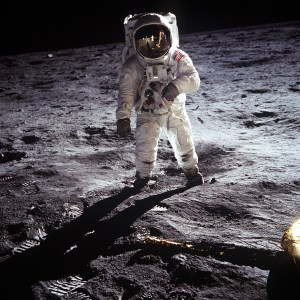

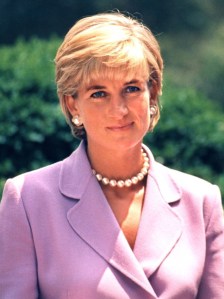
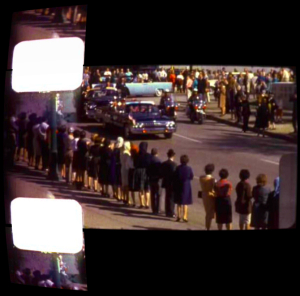
 Thanks for tuning in once again and if you’re not a regular reader, thanks for giving me a try. In case regular readers are getting fed up of blogs about motorhomes and travelling in France, swimming in lakes, eating fabulous food, drinking red wine and all that stuff, this week I thought I’d have a change of pace and write about something a little less serious so this week’s blog post is a homage to a similar post I saw out there in cyberspace. It had a similar title, 10 Things I Couldn’t Do Without but those 10 things were so uninteresting I just had to think of 10 of my own ideas. Anyway, let’s get cracking. I found that a lot of my 10 items I had written about before so I’ve added the relevant links to those posts. Feel free to click on them and I definitely won’t mention anything about motorhomes or holidaying in France.
 There is nothing that could be more perfect for breakfast than bacon. Throw in a poached egg, a sausage, maybe some black pudding or a hash brown and some tomatoes, a couple of rashers of bacon and there you have it, a wonderful breakfast. If you are perhaps not so hungry or maybe in a rush or on the move, you can still enjoy a bacon sandwich, throw a fried egg on top to make it extra tasty and get yourself a fresh cup of tea. Lovely! On holiday a while ago in France (did I say I wasn’t going to mention our 4 weeks in France? Sorry!) cooking can be a little difficult on our small three burner stove so Liz made us a bacon and egg omelette which was really nice served with French bread, lovely!


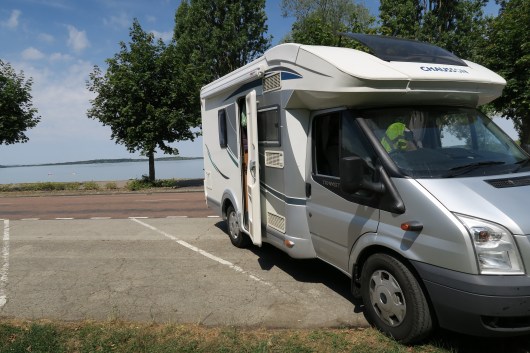 Note to self: Don’t drop the soap as it’s pretty difficult to bend down and pick it up in these cramped conditions.
 OK, breakfast (or lunch) over it’s time to head off.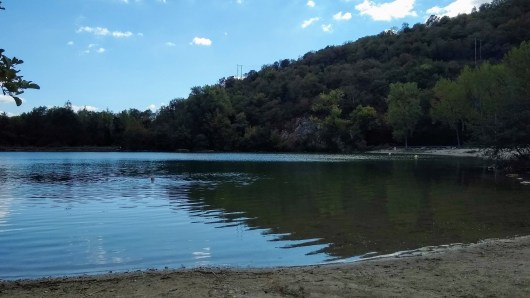
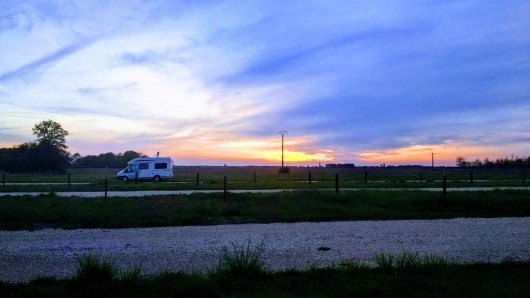


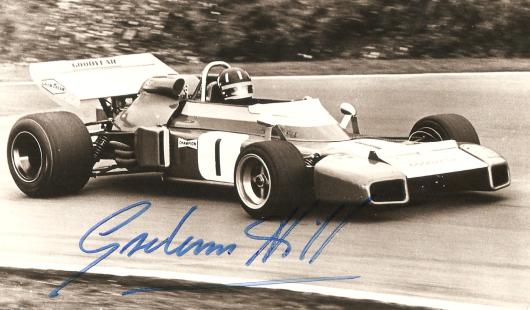

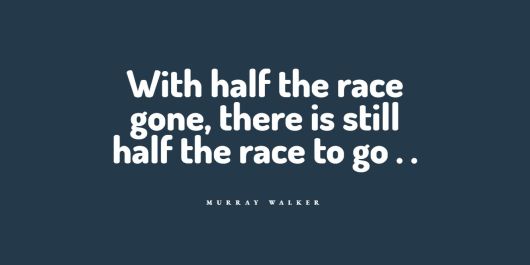
 As I write this, I’m in France once again as Liz and I have decided to nip over to the continent. We came over earlier this year and have wanted to return for a while but various appointments and arrangements have been in place, keeping us at home but what the heck we thought, time for another trip in our motorhome.
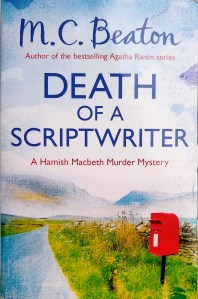 So, what else have I done on this trip? Well I’ve read books, after all reading has always been one of my greatest pleasures. I took it upon myself some time ago to read the entire library of Hamish Macbeth novels. They are not great works of literature but the world of books has everything for everyone and sometimes, I just like an old fashioned, easy going mystery read. Here in France, I’ve just finished Death of a Scriptwriter, the 14th entry into the series which wasn’t actually one of the best. The previous two were very good though, Death of a Macho Man and Death of a Dentist. If you are not familiar with Hamish Macbeth, he is a constable in a Scottish highland village. He likes to apply the rule of law in his own way, taking away the car keys from drink drivers before they leave the pub, giving various minor bootleggers a warning before removing their illegal stills and he’s not averse to poaching the odd salmon. The books are wonderful, quirky murder mysteries which Hamish always solves but tries to give credit to others in case his bosses think of promoting him and moving him away from his beloved village of Lochdubh.
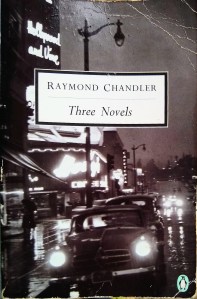 Book 2, Farewell My Lovely, starts off well. It’s about Moose Malloy, an oversized fellow looking for Velma, an old flame. Marlowe gets in on the hunt as well as looking into another case and later finds both are related. I read the first part of the novel pretty much all in one go and enjoyed it very much. The next quarter was a little confusing. (During the filming of The Big Sleep the director and his stars wondered who killed the character of Owen Taylor, the Sternwood’s chauffeur. They sent a cable to Raymond Chandler asking him. Chandler told a friend later ‘Dammit, I don’t know either!)’ Happily, in Farewell My Lovely, everything finally came together towards the end.
 It’s really quite fascinating the way digital publishing is moving ever forward. Although I suppose I’m very much still an amateur writer I publish a blog post every weekend just like this one. I can also be found in various videos over on YouTube and many of my blog posts can be listened to as a podcast. I say many although in fact there are only nine podcasts available at the present time. I could make more I suppose, after all, I’m now retired and I’ve got plenty of time to make them as well as owning that special essential, a top quality microphone. The thing is I’m not really sure how I feel about my podcasts. I’m not a trained actor or public speaker and I’ve never been that keen on my voice. Someone once told me I sounded a lot like Terry Christian. You may not have heard of him but he’s a Manchester DJ and minor TV personality and he sounds a lot like a very northern working-class Mancunian which is pretty much how you might describe me.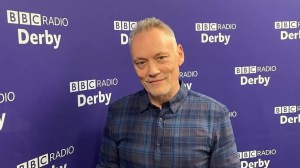
 Letters from an Unknown Author!