Those Pesky Ruskies (Update)

I was watching television today, one of my usual pastimes and I settled down to watch the old 60’s TV show The Saint starring Roger Moore as adventurer Simon Templar. In this week’s episode Templar is sent by British Intelligence to intercept Colonel Smolenko, a top ranking KGB officer who is in danger of being murdered. The murder will be blamed on the British so Templar has to stop it happening and find out who is behind it all.

The colonel it turns out is a beautiful, cool blonde of the female variety. She takes some convincing that Simon Templar is out to save her but finally goes along with everything despite Simon being a bourgeois capitalist adventurer. As the action takes place in Paris, Simon decides to show the Soviet era colonel some pretty bourgeois restaurants, bars and western style night life. All of this has an effect on the colonel because at the end of the episode, despite a liquidation order coming her way for Simon, she declines to obey and Simon lives on to fight another day.  Ahh, that old rogue Roger Moore, he did have some charm!

One reason why I’ve mentioned The Saint is because that tongue in cheek 60’s TV version of Russian spies contrasts sharply with the news, back in 2018, about the Russian father and daughter involved in the nerve agent attack in Salisbury. The March 4th attack on Sergei Skripal, once an informant for the UK’s foreign intelligence service, and his daughter, Yulia, exposed local people to risk around public places in Salisbury. Traces of the poison have been found at a pub and a pizza parlour visited by the Skripals. Prime Minister Theresa May said in the House of Commons that “It is now clear that Mr. Skripal and his daughter were poisoned with a military-grade nerve agent of a type developed by Russia.” The Russians naturally deny any such attack. Back in 2018 when I first published this post, claims and counter claims were still going back and forth across the media. It seems clear to me though that the Russians, despite giving Communism the boot, are still not fully converted to the ways of the western democracies. Indeed, Mr Putin’s suppression of opposition in the Russian Federation must surely have brought forth complimentary murmurs from Stalin and Brezhnev in the Soviet afterlife.

Mikhail Gorbachev was the man who brought Russia kicking and screaming into the democratic world. He did not end the Soviet era though, in fact what he wanted, I think, was a democratic communist union. That idea though was ruined by Boris Yeltsin who must have smiled inwardly when events brought him to power. Here was the man exiled from the Communist party by Gorbachev who then managed to return to power because of democratic initiatives instituted by the same man. Mikhail Gorbachev made himself President then found the Soviet Union disappearing underneath him. Yeltsin took over the fledgling Russian Federation and Putin, the Russian leader today, became acting president when Yeltsin later resigned. Putin appears to be happy to duck and dive in his attempts to stay in power just like his predecessors of a hundred years ago.

Lenin by the painter Brodskiy

Vladimir Ilyich Ulyanov, better known by his revolutionary alias of Lenin was another man determined to grab power out of the ashes of the Russian Revolution. Winston Churchill described his return to Russia from exile, facilitated by Germany in a sealed railway train, as “like a plague bacillus from Switzerland to Russia.” Lenin presided over the October Revolution and took power from the Provisional Government of Alexander Kerensky. After doing a deal with Germany, Lenin extracted Russia from the First World War and later consolidated his Bolshevik empire by emerging victorious from the Russian civil war. In his later years poor health prevented him from removing his would be successor, a man Lenin felt unsuitable as Soviet leader, and so Joseph Dzhugashvili came to power beginning a reign more terrible than any of the deposed Romanov Czars.  Dzhugashvili of course preferred the alias of Stalin.

Stalin ruled over the Soviet empire until his death in 1953. Even as he lay crippled by a stroke, his aides were too scared to move him in case they incurred his displeasure. It was Khrushchev who finally emerged as Stalin’s successor, consigning potential successor security chief Beria to imprisonment and death. Khrushchev initiated a number of reforms in the Soviet Union, opening up the gulags and freeing prisoners but he became increasingly unpopular with his colleagues in the Politburo until he was finally removed in favour of Brezhnev in 1964.

The coup was a quiet and bloodless one, Khrushchev later commenting “I’m old and tired. Let them cope by themselves. I’ve done the main thing. Could anyone have dreamed of telling Stalin that he didn’t suit us anymore and suggesting he retire? Not even a wet spot would have remained where we had been standing. Now everything is different. The fear is gone, and we can talk as equals. That’s my contribution. I won’t put up a fight.”

Vladimir Putin is the current president of Russia as we all know. Putin was a former KGB agent who resigned from the KGB after the attempted coup of Gorbachev in 1991. He began working for the mayor of St Petersburg and became the deputy chairman of the St Petersburg government, resigning when Anatoly Sobchak lost the election in 1996. He moved to Moscow and got himself a job as the deputy chief of the Presidential Property Department. Putin moved up through the ranks of government and in 1998, Boris Yeltsin appointed him as director of the Federal Security Service, the successor to the KGB. Later, Yeltsin made Putin his Prime Minister and when Yeltsin unexpectedly resigned in 1999, Putin became the acting president. He later won the next two elections. The Russian constitution prevented him from running again but Dimitry Medvedev became the president and he appointed Putin as prime minister in a sneaky power switching operation. In 2012 Putin ran again for president and was elected despite protests across Russia and allegations of electoral fraud. Will Putin step away from power after his final term? I doubt it.

I was surprised recently after seeing the Russian parliament, the Duma, on TV. All the delegates seemed to be in favour of Putin’s war on the Ukraine. Is there no elected official over there that doesn’t want war? Perhaps they are all scared of Putin in the way Stalin’s colleagues were scared of him. Over on YouTube I recently saw an interview with Gorbachev where the great man himself, revered as someone who ended the Cold War, brought down the Berlin wall and initiated Glasnost (Openness) in Soviet society, declined to criticise Putin.

Ian Smith, the prime minister of that long vanished country Rhodesia once said this about democracy: “Democracy is a very delicate thing, perfected by the British, but that does not mean you can transplant it elsewhere.” In some ways, especially when you look at the Middle East, perhaps Smith was right, after all the fundamental thing about democracy means that those who are defeated at election time are obliged to hand over power to the newly elected winner. Some people, President Mugabe for example, were not inclined to do so or to even allow anyone to challenge them. Still, everyone votes for a dictator, or so they say.

Back in my coach driving days, I drove a coachload of Russian shop stewards to various meetings with UK union representatives of British Gas. I’m not sure what they were discussing but they all seemed pretty nice, in fact later on they complained to their hosts that I was sitting on my coach, reading a book and eating sandwiches, when they were being wined and dined in a swanky hotel. This inequality so disappointed them that they insisted I went inside and be served the same lovely meal that they were served. Very nice it was too!

Surely then, wasn’t Ian Smith being just a little snooty? Don’t those same Russians deserve the same democratic rights that we tend to take so much for granted in the west?

What is the situation in the Kremlin today I wonder? Will anyone dare to tell Mr Putin that he doesn’t suit them anymore?


What to do next: Here are a few options.

Share this post on your favourite social media!

Hit the Subscribe button. Never miss another post!

Listen to my podcast Click here.

Buy the book! Click here to purchase my new poetry anthology.

Click here to visit Amazon and download Floating in Space to your Kindle or order the paperback version.


A Series of Random Classic Film Connections

Back in the 1960’s I was a big fan of the Apollo moon missions and on UK TV one of the presenters was James Burke. Burke also did a TV show called Connections. It was a really fascinating series which connected various historical events to make a sort of chain which led up to something which was pretty unexpected. The episode that stands out in my memory was one about the atom bomb, various unconnected events and discoveries that together, led to the splitting of the atom. In today’s post, I’ve tried to do something similar but all relating to the world of film, so here are five fascinating connections.

Casablanca.

Casablanca is one of my very favourite films, in fact a while back, I did an entire blog post dedicated to the film. Humphrey Bogart starred as Rick who runs a popular café in the city of Casablanca. Set in the 1940’s during the Second World War, refugees are everywhere, fleeing from the Nazi menace. Certain letters of transit have disappeared guaranteeing the owner free travel out of occupied lands to freedom and various people want them, in particular freedom fighter Victor Lazlo and his wife Lisa played by Paul Henreid and Ingrid Bergman.

The Chief of Police, Captain Louis Renault, is out to stop them and perhaps even out to make a little money for himself on the side. The film was made in 1942 entirely at the Warner Brothers studio in Hollywood apart from one scene at Van Nuys Airport in Los Angeles. The film won the Oscar for best picture, best adapted screenplay and also one for best director for Michael Curtiz. The film has grown in popularity ever since and always ranks highly in any list of the greatest ever films.

Captain Louis Renault was played by Claude Rains. Rains was a British actor who became one of the screen’s great character actors. He died in 1967 but one of his last films was Lawrence of Arabia, made in 1962.

Lawrence of Arabia.

Lawrence is another great classic of the cinema. Filmed in 70mm and directed by David Lean, the films tells the story of TE Lawrence played by Peter O’Toole and like Casablanca it is a classic of the cinema. The film was made in 1962 on location in Jordan, Spain and Morocco.

There are numerous stars in the film as well as Claude Rains but the one I want to highlight is Alec Guinness. Guinness made his film debut in another David Lean film Great Expectations made in 1946. In 1955 Guinness was in Hollywood having been nominated for an Oscar. One night he went out and was struggling to find a table in a restaurant. At one establishment where he was turned away a young man came after him and asked him to join him for a meal. That man was James Dean. Dean insisted on showing Alec his new Porsche Spyder and when he saw the car Guinness was apparently overcome by a strange feeling and told Dean never to drive the car and that if he did, he would be dead by the following week. Guinness was not someone who regularly made predictions of the future and was probably as taken aback by this feeling as Dean was.

A week later, Dean was driving the Porsche to a race in Salinas when he was killed in a car crash.

Giant

James Dean had just finished the movie Giant only weeks before his death. Giant starred Rock Hudson as Texas rancher Bick Benedict with Dean playing the third lead of Jett Rink. Rink is a no good cowboy who works for Bick Benedict. Bick and Jett don’t get on well but Luz, Bick’s sister has a soft spot for Jett and re-employs him after Bick has fired him. Later, Jett Rink inherits a small piece of land after the death of Luz. He goes on to find oil on the land and becomes a millionaire. The film’s other lead star was Elizabeth Taylor. She plays Leslie who marries Bick Benedict.

Elizabeth Taylor was born in 1932 and began her career as a child actress in the 1940’s. She was one of Hollywood’s most highly paid stars and was married eight times including twice to Richard Burton. Her second husband was Mike Todd. He was an entrepreneur and producer who decided to try his hand at film production. His company developed the Todd AO Process, a widescreen film process that was based on Cinerama, a technique that used three projectors. He was sadly killed in a plane crash after completing Around the World in 80 Days, a film that showcased the process.

Around the World in 80 Days

Around the World in 80 days was a film version of the novel by Jules Verne. David Niven starred as Phileas Fogg, an English gentleman who takes part in a bet at the London Reform Club, in which he wagers that he can successfully circumnavigate the globe in 80 days. The film was shot in 70mm using the Todd AO process mentioned above. The film starred numerous celebrities in small parts and was filmed all over the world.

David Niven was perfect for the role as Phileas Fogg. He was an English actor and former army officer who arrived in Hollywood in the early 1930s. He worked as an extra and was one of the few people who went from extra to film stardom. He was put under contract by Sam Goldwyn.

The Charge of the Light Brigade

In 1936 Niven starred with close friend Errol Flynn in the Hollywood film version of The Charge of The Light Brigade, transferred by Warner Brothers from the Crimea to India. Flynn and Olivia De Havilland were the main stars and Niven writes about the production in his wonderful book, Bring On The Empty Horses.

The book was named after a phrase uttered by the director to begin a scene calling for a number of riderless horses. The director was none other than Michael Curtiz, who also directed Casablanca, which makes our film connections complete.


What to do next: Here are a few options.

Share this post on your favourite social media!

Hit the Subscribe button. Never miss another post!

Listen to my podcast Click here.

Buy the book! Click here to purchase my new poetry anthology.

Click here to visit Amazon and download Floating in Space to your Kindle or order the paperback version.

Blogs, Video and a Social Media Marketing Mix

The lockdown of last year didn’t really affect me that much. It was a bit of a pain not being able to go out and I did miss the pub quiz night as well as my visits to my favourite restaurants. Essentially though, I’m not an outdoor kind of guy. I like my TV and my laptop and I’m pretty happy sitting outside in the summer reading a good book. This last week I’ve been experiencing a more personal kind of lockdown. Liz has just had a hip replacement and I’ve been off work tending to her every need.

Even people who are close can have their differences. Liz likes to be challenged by word games and I like my challenge in the form of a good documentary film.

‘Not another quiz show’ I usually say when she has got the TV remote.

‘Not another Kennedy documentary’ she tends to say when the remote is over on my side. Oh well, recuperation is important and if she can put up with the occasional JFK documentary I can deal with another Countdown, I suppose.

When I’ve had a brief moment to myself, I’ve been looking at my book, Floating in Space, and wondering what more I could do to promote it. This entire blog is about promoting Floating in Space, at least that was the idea when I started. Every blog post, whether it’s about books, films, my life or any other random subject that comes to mind always ends with a little plug for Floating, right down at the end of the post. It usually comes in the form of a short video with the prime intention of making the viewer wonder if their life is worth living if they haven’t got a copy of my book. Most people and I’m talking a good 90% plus of people who decide to watch decide that life is worth living without a copy of Floating in Space and decline to buy. Pity, especially as I went to a lot of trouble making those videos.

A lot of people ask me about the title, Floating in Space. Why is it called that? Is it a sci-fi book? No, it isn’t which makes me wonder whether changing the title would be a good thing. The title comes about because of the way the main character, Stuart Hill, looks at his life. Sometimes it’s a good thing to look at your life not in little segments but as a whole. How could you possibly do that? Well Stuart does it like this.

Updated version of Floating In Space available now from Amazon!

This technique, for want of a better word, is best employed in the summer. Find yourself a quiet outdoor place. Lie down on the grass facing towards the sky. A clear blue sky isn’t much good for this. What you need is a blue sky and a good selection of white fluffy clouds. Now relax. A good way to do that is start at the top of your head and relax your scalp, then go down to your eyebrows and relax them. Then your eyes, nose and so on, all the way down to your toes.

Now, I don’t know if you can remember those visual teasers you used to see in comics years ago. For instance a line drawing of a cube which by an effort of will you could make into a solid box or, again using only your mind, see the box as an open box and look inside. That’s the thing to do now looking up at the sky. See the curve of the sky bending down towards the horizon at the extreme end of your peripheral vision? Well turn that around so instead of looking up at the sky you are looking down. Imagine you are floating in space, seeing the blue, not of the sky, but of the planet Earth and down below is you and your life, going about it’s everyday cycle of work, sleep and relaxation. Down there on the Earth are moments of enjoyment, moments of happiness, moments of sadness and sadly, moments of horror.

Most of my promotions for Floating tend to focus not on the process I’ve described above but on the city of Manchester where the book is set. I’ve only visited my home city once since the pandemic and it’s looking good. New towering skyscrapers seem to be going up with every month that passes by, at least according to the small group of Manchester photographers that I follow on Instagram. Manchester’s nickname is the Rainy City because of course it rains a lot and one of my favourite photographers makes a habit of photographing the puddles of the city, either with the city’s new buildings reflected in the water or low angle pictures with a rainy puddle in the foreground and some Mancunian architectural delight in the background.

When I visited Manchester a few months ago I took my camera along and made a bit of a walkabout video. I had my selfie stick and walked around chatting to the camera. I looked at some of the new hi rise towers and then walked round to the old end of town and took a stroll down the Rochdale canal which was completed in 1804. Instead of writing a narration I just stayed with the video of me chatting to the camera and added a few voice over comments and snippets of info. That video is currently one of my most watched videos so if I had any sense I’d probably make more of the same but it so happens I’m just not that comfortable walking around chatting to my camera. I much prefer my usual videos, many of which have voice-over narrations which originate in many cases from my blog posts. Like a lot of my blogs and videos, I can’t leave them alone, I’m always tinkering with them and here’s a case below, another edit of my favourite Manchester video.

I am of course an old school video producer. I like videos that open up gradually and have titles and an introduction. That technique, I am reliably informed, is very old hat indeed. In the 21st century social media world, videos need to be straight to the point. Quick introductions, a quick statement of your credentials, perhaps a brief exhortation for the viewer to subscribe to my channel and then wham, straight into the subject. That is internet video in a nutshell because there are thousands of other videos out there that are just a click away and can instantly nab your viewer if you fail to grab and keep their attention.

Getting back to blogging, I have probably written more words, in my blogs and tweets and other social media posts promoting my book, than are actually in the book itself. Oh well, that is one of the facts of the self-publishing world: Writing a book is one thing but marketing is an entirely different ball game altogether and of course the competition is fierce with more than 5000 new books released on Kindle every day! Is it worth it you might ask? Why do I do it? Well, quite simply I do it because I like doing it and when the enjoyment has gone, I’ll start thinking about doing something else with my spare time.

Nothing improves and hones your writing skills more than the writing process itself and as a blogger with a deadline of 10am on a Saturday morning I have even started to feel like something of a professional writer. Nothing gives me more pleasure than to log into WordPress and find that someone has liked one of my posts, or better still has left a comment. I’ve always thought that an intrinsic element of the human condition is finding that out that there are others in the world who think the same way as you do and like the things that you like.

I do tinker quite a lot with Floating in Space and some time ago I added a version which hopefully corrected the book’s various grammatical mistakes and I also added a small index to help explain 1977 to my younger readers. So, what else should I do to market my work? Another Tweet? Another Facebook post? Another YouTube video? Perhaps I should go further afield in the social media world and do more on Instagram or sign up for Tik Tok?

Actually I think I might just give marketing a rest for a while. Liz is still in bed so I think I might just relax for a while with Oliver Stone’s new Kennedy documentary.


What to do next: Here are a few options.

Share this post on your favourite social media!

Hit the Subscribe button. Never miss another post!

Listen to my podcast Click here.

Buy the book! Click here to purchase my new poetry anthology.

Click here to visit Amazon and download Floating in Space to your Kindle or order the paperback version.

The Triumph and Tragedy of F1 Racing

This weekend the new 2022 Grand Prix season kicks off in Bahrain. I’ve been reading all about the testing sessions in the various F1 blogs I follow as well as catching up with some of the testing action on YouTube. Will Hamilton and Verstappen commence battle again? Will Ferrari be contenders for the win? How will George Russell get on at Mercedes? All these questions will soon be answered. Having got myself fully into Formula One mode it was time to take a look back at some bygone racing to get myself fully hyped up and ready for Sunday’s Grand Prix

A few years ago I wrote a post about the Weekend of a Champion. It was an old VHS video I had unearthed about the F1 weekend of racing driver Jackie Stewart at the Monaco Grand Prix in 1971. After watching the video I went onto the internet to do a little research and found that director Roman Polanski had recently remastered the film onto DVD. I went to my other old internet friend, eBay, and quickly got myself a cheap second-hand copy.

I put that DVD onto my shelf and pretty much forgot about it until the other day. I had been doing some work, writing and editing, and it was time to settle down and relax with some TV. As usual, there was nothing much on terrestrial TV to catch my eye so it seemed to me to be a good time to slap in that unwatched DVD and give it a go.

I do love watching old F1 films and documentaries. In the 1970’s I knew every driver and every car. Back in those days drivers chose a distinctive design for their helmets and stuck to it. Today in F1, drivers have a new helmet design and a new helmet for almost every race so fans can buy, if they so wish, a replica of their hero’s British Grand Prix helmet 2021, or Italian Grand Prix helmet 2020. More memorabilia for us fans and more income for the modern driver of course.

Jackie Stewart

Jackie Stewart

The Weekend of a Champion is a documentary that focuses closely on Jackie; we don’t see the work the mechanics have to do or the decisions made by the team manager but we do see Jackie setting up his car and deliberating about gear ratios and tyres and so on. A nice moment for him must have been strolling down into the circuit and having all the fans call ‘Jackie’ as he walked down towards his pit. Afterwards Jackie walked round to the first corner and watching the F3 cars, pointed out to Roman who was taking the corner properly and who wasn’t.

One particular scene stood out for me. Shot in Jackie’s hotel room, he is on the balcony talking to his wife Helen and director Polanksi. As they chat, the camera comes back into the room and reveals Nina Rindt, the widow of the 1970 world champion Jochen Rindt, killed at Monza in practice for the Italian Grand Prix. She looks sad and ill at ease and later Helen explains that in the past she and Nina, Jackie and Jochen spent time together travelling the world as they competed in motor races. She had come to Monaco at Helen’s invitation, to spend time together and perhaps remember the happy times of the past. The Formula One of the 1970’s was no less glamorous than that of today, although perhaps tinged with a sadness for the many who lost their lives back then.

Later Jackie is seen engaging in some 70’s style PR with fans who have won a competition to attend the event, then in the evening he and Helen are at a gala dinner evening.

Jackie drove for the Tyrell Team owned and managed by the affable Ken Tyrell. Ken worked with the French car company Matra and they produced a car for Ken in 1969 which, coupled with the Ford DFV engine, won the world championship for Jackie that year. For the 1970 season Matra wanted to run the car with their own engine so Ken and Jackie, fully committed to the Ford engine, parted company with the French car manufacturer. In 1970 they used a car produced by the then new March team but after disappointing results, Ken decided to build his own car for Jackie and mid-season the Tyrell 001 made its appearance.

Matra had always asked Ken to run a French driver in the second car and perhaps because of the sponsorship of French oil company Elf, they continued to do so. Johnny Servoz-Gavin was Jackie’s French team mate but when he retired from racing after an eye injury Ken recruited François Cevert.

Francois Cevert

Cevert was a good looking Frenchman who was eager to learn from his senior team mate Jackie Stewart. The film shows the two working closely together talking about the lines that they use around particular corners with Jackie advising François which gears to use around the Monaco street circuit.

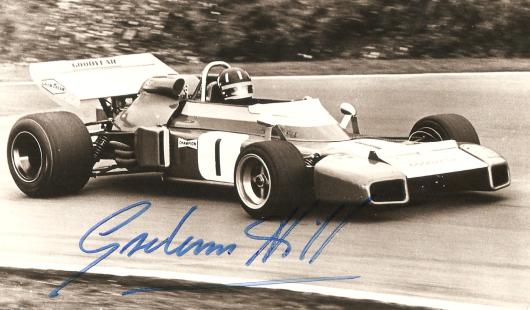
Seen fleetingly in the film are the other star drivers from 1971, drivers who were once familiar figures to 1970’s race fans like me: Graham Hill, Ronnie Peterson, Emerson Fittipaldi, Pedro Rodriguez and Jo Siffert. Siffert and Rodriguez were both killed in racing accidents. Graham Hill later started his own racing team and retired from driving but was killed in a light aircraft crash when returning home from abroad. Fittipaldi went on to win two world championships, retire then make a comeback in the USA racing Indycars.

Ronnie Peterson was a driver who I always thought would become one of the F1 greats. He won 10 Grands Prix in his career and was the world championship runner up twice. He was known as the Superswede. After some bad career choices he returned to the Lotus team partnering Mario Andretti. In the 1978 Italian Grand Prix at Monza, Ronnie was involved in a first lap crash in which he was trapped in his car when it caught fire. Other drivers involved in the incident helped pull Ronnie from his burning car and his only injuries seemed to be just broken and fractured legs.

Graham Hill

Graham Hill

There was no regular TV coverage in the UK at the time and I used to tape record a radio broadcast about the race. I was shocked to hear about Ronnie but at least I went to bed that night knowing that he was ok. However, Ronnie’s broken bones produced a fat embolism and during the night his condition worsened. He died the next morning. His wife Barbro, never got over his death and she took her own life some years later.

Jackie Stewart won the 1971 Monaco Grand Prix and the World Championship that year but decided to retire at the end of 1973. He had a wife and family so I suppose his personal safety must have been high on his list of priorities. Jackie even had his personal doctor present at all his races, as immediate medical care in the aftermath of a crash was a big issue back then. He was close to François Cevert and glad that he would take his place as Ken’s lead driver. The US Grand Prix at Watkins Glen would have been Stewart’s 100th race. He must have been feeling confident. He had already tied up the ’73 world championship, he had a great car and was ready to retire. In the practice session Cevert had a bad crash. By all accounts he hit a kerb on the left side of the track which caused him to swerve over to the right where he bounced off the barrier and back into the barrier on the other side. Photographs show the car upside down on the barrier and poor François was killed instantly. The Tyrell team withdrew from the event and Jackie never raced again.

Towards the end of the DVD Jackie and Roman Polanski are filmed together for a present-day epilogue. They talk about the events of the 1971 race and it is clear that the death of Cevert still weighs heavily on the former champion’s shoulders.

Once, a few years ago, Liz and I were holidaying in the Loire and as usual were rummaging about at a vide grenier, a French car boot sale. I don’t usually look at the book stalls there as my French reading is even worse than my French speaking but I spotted a book with a familiar face on the cover. Liz asked who it was and I replied that it was François Cevert. Straight away the book stall owner mentioned that Cevert was a local man and was still popular in the region. Others heard us talking and they too came forward with their Cevert stories. After his death in the USA his body was returned to France and he was laid to rest in the village of Vaudelnay, Maine-et-Loire.

The 1970’s was a sad time for motorsport but today’s hi-tech F1 is a much safer environment despite being infinitely faster. Hopefully Lewis Hamilton and his fellow drivers will never have to deal with the death of a racing colleague unlike their counterparts in the 1970’s.


What to do next: Here are a few options.

Share this post on your favourite social media!

Hit the Subscribe button. Never miss another post!

Listen to my podcast Click here.

Buy the book! Click here to purchase my new poetry anthology.

Click here to visit Amazon and download Floating in Space to your Kindle or order the paperback version.

Writing, Recording and The Next Blog Post

Well, I’ve had the Big 500, that was last week so time to move on and get on with Blog #501. Things are the same for every content creator whether it’s me and my blog or Martin Scorsese and his next film. One project finishes and we move on to the next one. It’s great to put together a creative piece of work but I’ve always felt a little sadness leaving a completed blog or video behind and moving on to the next one. In fact, I wonder if it’s a feeling experienced by all creative people? In the movie The Bad and The Beautiful, Kirk Douglas plays a film producer who goes into a deep depression every time a project is finished. Was the author or the director putting his own experiences into the film?

The other day I was scanning through my diary from 2021 and I noticed in one entry I was feeling pretty pleased with myself because I had put together not one but three separate blog posts. I must have been feeling pretty creative that week because these days I often seem to be struggling for ideas.

Lately I’ve done some beta testing work for the online editing website Animoto. I put together two short video projects for them and reviewed a new facility in their software and in exchange they sent me an Amazon gift voucher. Now it just so happens that my subscription with Animoto has expired and I tried to barter the gift voucher for a discount subscription but despite my charm, which I’ve always thought was one of my great assets, they declined. Pity really because I rather like Animoto.

During my separation from them I’ve tried other online editing sites but I’ve not been totally happy so I suppose that soon I’ll just have to cough up the appropriate fees and re-join Animoto.

In the meantime I’ve been wondering what to do with my voucher. Eventually I decided it might be an idea to invest in a good microphone so I can improve the voiceovers I put together for my YouTube videos as well as my podcasts. That seems like a good excuse as any to publish a link one of my videos with an extensive voiceover. The video below has a narration based on a number of my blog posts as well as text from my book. the voiceover isn’t actually bad but a new recording might make it sound a bit more professional.

I sent off for my selected microphone and the one I chose came in a set with a telescopic arm, just like the ones you see in recording studios. Later I thought I might as well have bought the usual one with a little tripod as I don’t really have the room for the arm. I don’t have a room, a special room for writing and recording but then I don’t think a lot of writers do.

My workspace: Laptop, cup of tea, notebook and the TV remote not too far away

Recently I decided to take a short demo screenplay I had written ages ago and rewrite it as a short story. I did so and feeling fairly pleased with it decided to send it to an online magazine that was looking for just such a story. I was actually going to use the story as a blog post but I noticed in the small print that the magazine didn’t want work that had been printed elsewhere. Well, if I recorded the story as a podcast then really it wouldn’t have been printed elsewhere, would it? That was my cue to set up my new microphone and start recording. The sound quality was so much better than my previous recordings.

Not long ago I read Agatha Christie’s autobiography and in it she mentions that many people ask her where her famous novels were written. The fact is, they were written any place that was handy at the time. She didn’t have a special writing place and I wonder if writers, or indeed any writer has a particular writing place? I like to write in the dining room but then I also like to write in the lounge with the TV on in the background but the sound on mute. Sometimes I’ll write in bed or jot down ideas at my desk at work.

The interior of Dylan Thomas’ writing shed.

Dylan Thomas famously had a writing shed in the garden of his ‘house on stilts’ in Laugharne. I daresay he didn’t write everything he ever wrote in there but of course he did write there when he was at home. I visited the house once many years ago. I was really impressed with it. The national trust or some such organisation had rescued the building, saved it from sliding into the sea and reopened it as a museum. I arrived late in the day, just before they were closing up so I returned the following day for another look. The staff didn’t charge me as they remembered me having to leave prematurely and so I bought various items from their museum shop.

One place I’d like to visit would be Charles Dickens’ home; Gad’s Hill Place in Kent. Dickens spent the last 15 years of his life in the house and it was one he had seen and fallen in love with as a child when he and his father took long walks together. It must have seemed quite an achievement for him to buy the house, even in a life filled with great achievements. Dickens died in the house on June 9th, 1870 aged 58. What would Dickens make of a present-day writer’s life I wonder? Writing blogs to promote his work, tweeting Tweets, and making Facebook posts. I’m not sure he would have been impressed.

My minor problems of wondering what to write pale into insignificance when I watch the terrible news from the Ukraine. A few weeks ago, the Ukrainians had similar problems to us here in the UK. Things like getting to work on time; would the bus be late? Picking the kids up from school. What to have for tea. Now they wonder if their homes will be destroyed by bombs. Will their loved ones be safe? Only the other day I watched a newscast where a distraught woman went to a makeshift hospital with her young daughter who had been hurt in the Russian attack. Doctors fought to save her and the cameraman followed their efforts. One man, a doctor turned and began to rage at the camera. I guessed he was complaining to the cameraman for intruding but when his words were translated, he was calling for the camera man to take the video and show it to Mr Putin: let him see what he has done raged the doctor. Sadly, the young girl died.

So, here we go. My laptop has been cranked up. The Saint is playing on the TV with the sound muted. A large cup of tea is ready to be sipped. I pause for a moment to nibble on some toast and marmalade then press the button for NEW BLANK DOCUMENT and I am ready to write.


What to do next: Here are a few options.

Share this post on your favourite social media!

Hit the Subscribe button. Never miss another post!

Listen to my podcast Click here.

Buy the book! Click here to purchase my new poetry anthology.

Click here to visit Amazon and download Floating in Space to your Kindle or order the paperback version.

The Big 500

Yes, here we are, the big 500. My 500th blog post. I have to say that I had big plans for this post but plans, as we all know, don’t always work out. I started out wanting to write on the theme of 500: Things named 500, famous 500’s and so on. The problem is, the only thing I could come up with was the Indianapolis 500, the famous Indycar race in the USA.

That was fine of course, I’m a big motor racing fan and I do know a little about the Indianapolis 500. The Indianapolis motor speedway where the event takes place is known as the brickyard as it was originally paved with bricks. Graham Hill and Jim Clark were famous European winners of the Indy 500 back in the 1960’s. Emerson Fittipaldi, another F1 driver retired after two world championships in the 1970’s but made a comeback in Indycars winning the Indianapolis 500 in 1989 and again in 1993.

OK, that’s it off the top of my head. For anything more I’d have to head for Google. To be honest, I did do a search in Google for some ideas. Some suggestions from over there were the dog recently rehomed after 500 days in the kennels and the Fiat 500 motor car. I did hire a Fiat 500 once in Lanzarote which was fun. I’m OK driving on the other side of the road but sitting in the left hand seat and changing gear with my right hand, well I’ve always found that to be the difficult part. Anyway, the Fiat 500 was a pretty tasty motor car, even for a big lug like me but I’m not sure I can say much more about it. Glad to hear about that dog getting rehomed though.

Perhaps a quick troll through my blogging landmarks might help.

Blog 100: Mr Todd and the Sound of that Elusive Next Blog.

Looking back to my 100th blog I see I was still searching for things to write about. A blog post prompt tasked me to write about a sound and the one that came to me was Mr Todd’s projector. Who was Mr Todd? Well he was a teacher at my junior school, Crossacres Junior School in Manchester and every Christmas Mr Todd set up his projector and we filed into the hall, sat down cross legged on the floor while the curtains were closed, the lights switched out and Mr Todd’s projector took us into another world, the world of films. They were mostly cartoons, things like Woody Woodpecker and Bugs Bunny and sometimes he showed a few Walt Disney animal documentaries.

Those Christmas film shows were just wonderful for us children, sitting in the dark watching those slapstick antics on the screen. I used to like to sit near to Mr Todd and marvel at the projector. He would open up little doors in the workings and make adjustments, and little shafts of light would escape until he closed the small doors again, and the whirring of the reels and the clicketty-click sound was a sound I loved.

One day, and I think it must have been my last year at junior school, Mr Todd retired but not only did he retire, he took his projector and films with him and the last Christmas at Crossacres was empty without him. I remember sitting in the hall listening to the choir or some play or other and hoping that eventually someone would give the signal to close the curtains and the projector would be wheeled in and the fun would begin. Mr Todd and his projector however, never returned and Christmases were never the same. Still, whenever I hear the sound of a projector the memory of that Christmas film show returns to me. I don’t know if you’ve ever seen the Hitchcock movie ‘Rebecca’, but there’s a sequence in the film where Joan Fontaine and Laurence Olivier start watching their home movies and we hear that clicketty click projector sound again.

The World of the Vinyl Single

My 200th post was actually about TV Spies. It was OK but nothing exciting but for my 201st post I found myself writing about The World of The Vinyl Single. In 2022 there are still music charts although youngsters today prefer downloads to actually owning a physical copy of their chosen music. They have never known the joy of spending Saturday afternoons flipping through the singles in the numerous record shops of cities like my home town of Manchester. Not for them the allure of the soft dark vinyl or the album art or sleeve notes. No personal annotations like there were on my record sleeves with the discreet addition of the date I bought the record. The first single I ever bought was in 1973 and it was Olivia Newton-John’s version of ‘If Not For You’. Reduced to half price it was 24 pence. I sometimes wonder what was the last ever vinyl single I ever bought. One day I’ll have to search through my boxes of old records and work it out.

Edit: An Alternative 200th Post

WordPress is pretty good at showing you how many posts you’ve done but finding the 100th, the 200th and so on meant having to count back to blog number 1. I have to admit here that I made a big cock up looking back and after a recount I think my 200th blog post was actually one about photography. It was called Adventures with a Camera. I showed the reader some of my favourite pictures and talked about my favourite cameras from my first one, an Instamatic 126 to my current one a Nikon D100.

Night Shift

My 300th blog post was a poem, not one of my very best but my 301st was a post called Night Shift. What I did was string various threads together and link them to my night shift. As I’m now semi-retired I don’t do night shifts anymore so reading this post was a nostalgic look back for me at how things used to be: Trying to get some sleep during the day, the burst of activity at the start of the shift, the gradual winding down of things. The endless cups of tea, the midnight sandwich and finally the relief when the morning shift came in to take over. Going outside and getting into my car after the last one was a good feeling and so was the feeling that while everyone was off to work for me it was the other way round, off home for a sleep and remembering to set the alarm so I wouldn’t sleep away what was really my first day off.

Edit #2

After a substantial recount I found out later that my 300th post was (surprise, surprise) The Big 300. I think I was a little surprised to have got to that milestone and I talked a lot about writing and finding inspiration and also about the film and TV scripts I have written and had rejected. Writing scripts isn’t so hard but it’s what to do with them afterwards. Who will read them? Who can I send them to? Most companies are not interested in unsolicited scripts or ones from an unknown author or writers who are unrepresented by agents. For a while I paid to list one of my screenplays on Inktip.com and although I had some interest, producers weren’t queuing up to buy my script.

The Big 400

Blog Post 400 was about Things to Do During the Pandemic. Well, I guess we are all pretty happy to have put the pandemic (mostly) behind us. The things I was doing during the pandemic were watching TV, drinking wine and ordering restaurant meals to be delivered. Nowadays I’m doing pretty much the same thing although I’m actually back visiting restaurants instead of asking them to deliver food. Of course, the food is only part of the restaurant experience. Chatting to friends, having banter with our waiters and being waited on is really what a restaurant is about as well as good food and wine. In 2022 Liz and I have discovered a different restaurant called Spago and we have currently been taking advantage of their January and February offers. We have already found our favourite table (table 12) and the waiters are by now pretty used to our little idiosyncrasies (we like to pour the wine ourselves, we don’t like sweet stuff dribbled on our food, we like a lot of lemon in our table water to name but three).

The Big 500

Of course, we also like to visit our regular restaurants too like Ego (table 30 please) and Allegria (table 16). I also still watch far too much TV. Interestingly in the 400th post above I talked about watching Rocketman, the Elton John biopic. Last night we watched Bohemian Rhapsody the 2018 Freddie Mercury/Queen biopic.

Just like those earlier blog posts, in 2022 I’m still trying to flog my books, Floating in Space and A Warrior of Words. I’ve got a few more followers than I had back in 2014 when I first started blogging. Have I made any money from my blog posts? Er, no. Have my posts gone viral? No. Has writing and blogging made me a better writer? Well, those 500 blog posts haven’t hurt me in any way and more writing can’t be bad for a writer, it can only be good. Do I still like blogging? Of course, I do. The only problem is, what can write for blog #501?


What to do next: Here are a few options.

Share this post on your favourite social media!

Hit the Subscribe button. Never miss another post!

Listen to my podcast Click here.

Buy the book! Click here to purchase my new poetry anthology.

Click here to visit Amazon and download Floating in Space to your Kindle or order the paperback version.


Cooks and Cookbooks

For this week’s blog, I thought I’d try and combine a love of cooking with my love of books. I suppose most people are taught to cook, or at least pick up the rudiments of cookery from their mothers. I hope I’m not being sexist when I say that, then again perhaps some people picked up their cookery expertise from their fathers, if it was dad who was the cook of the house.

My earliest memory of cooking something for myself is making tomato soup. Well, perhaps not actually making it but warming up the contents of a can anyway. My next culinary adventure was boiling an egg. I still like those two particular meals, boiled eggs and tomato soup. I once decided to make treacle toffee after seeing a recipe in a summer edition of a comic I used to read and then completely cocked it up. My mother, usually a pretty gentle lady went completely up the wall after I wasted a bag of sugar and caused a total mess in her kitchen. No further cooking assistance from her was ever forthcoming. Even in later life she was a little coy about revealing her culinary secrets. I once asked her how she made such lovely roast beef and after some prodding she told me that she started off, just like all the books say by putting her beef into a hot oven. Later she reduced the temperature but added some water which would help the roast cook.

Mum was a great cook but had a limited repertoire and things like curry and chilli con carne were things completely outside her realm of understanding.

When I left home when I was about nineteen, I bought my first cook book and it’s one I still have today. The Epicure’s book of Steak and Beef Dishes by Marguerite Patten. I think I bought it in a cheap remainder book shop and it’s full of additional recipes I have cut out of magazines or newspaper supplements. It’s my go to book whenever I make a chilli or a bolognese or even a roast dinner. It contains all the rudiments for my favourite meals.

Jamie Oliver made his TV debut in 1999. He was spotted by a TV producer making a documentary about the River Cafe where he was working at the time. His TV show The Naked Chef followed soon after and his cookbook from the series was a best seller. I’ve got quite a few of his cookbooks in my collection which I always refer to when I get down to some serious cookery. In particular I like his 30 minute and 15 minute meal series. In many ways Jamie speaks to the modern cook, the one who likes to try and use fresh produce and not to be always warming up ready made food. The one who has to juggle working and bringing up a family. Not only that, his TV shows are fresh and fast moving and I love his enthusiasm for food and cooking. I think I mentioned a while ago that I recently made a pizza using home made pizza dough. Where did I get the recipe? From one of Jamie’s books of course. His books are pretty popular but there always seem to be plenty of them in the various secondhand book shops that I frequent.

A long time ago, probably back in the 1980’s, I got hooked on Ken Hom’s Chinese cookery programmes. I liked the way Chinese cookery worked, in fact I liked the whole process of preparation and stir frying. I got myself a wok, seasoned it according to Ken’s instructions and started stir frying. I do love it when you see the Chinese chefs stir frying at very high temperatures on TV cookery shows like Ken’s but getting those very high temperatures in a home kitchen is pretty much impossible. I made some nice meals but nothing ever seemed to taste the way it does from the Chinese take away. Perhaps it’s time to drag that wok out of the storeroom and have another go.

Another favourite TV chef was Antonio Carluccio who sadly died in 2017. He had a number of shows on the BBC that combined cookery with travel in Italy. I remember one where he stopped a farmhand who was about to open his sandwich box in some field in the Italian countryside. I say box but in fact it was something wrapped in greaseproof paper, some fresh bread, some tomatoes and some Italian cheese. It looked pretty appetising to me. Antonio once explained that one of my favourite meals, spaghetti bolognese, is something that doesn’t exist in Italy but even so, he showed us how to make an Italian ragu with a mix of beef and pork mince. I use pretty much the same recipe for my bolognese these days.

I do love a good curry but I don’t have any curry cookbooks by famous names. Instead I’ve always relied on this slim volume by Naomi Good. It’s straight to the point and using it I’ve always managed to put together a decent curry.  It’s not a curry that falls into any particular category, it’s not a Korma or a Vindaloo, it’s just a basic curry with plenty of spices and usually made with minced beef. Sometimes it comes out pretty hot, sometimes not and I usually finish it off with a good dose of coconut milk. Most of the time I have to confess, I usually return to the basic curry recipe in my very first cookbook.

So what else do I use when I need cooking inspiration? Well, I’ve got a whole lot of bits and pieces of recipes clipped from magazines as I mentioned earlier. Sometimes I just scan through them and have a go at whatever I fancy.

Pages cut from magazines and newspaper supplements

Do you have a favourite cookbook?


What to do next: Here are a few options.

Share this post on your favourite social media!

Hit the Subscribe button. Never miss another post!

Listen to my podcast Click here.

Buy the book! Click here to purchase my new poetry anthology.

Click here to visit Amazon and download Floating in Space to your Kindle or order the paperback version.

https://youtu.be/JzJA9YIAGls

More Beginnings and Ends

As I approach my 500th blog post, I sometimes wonder if I’m running out of steam. Yes, instead of brand new posts I’m looking back at my old ones and giving them a bit of a rehash or sometimes writing more on the same theme and adding ‘More’ to the title or ‘Part 2’.

Last week I talked about more Essential Englishmen and this week I’m going to return to a post from 2021 so, without further ado, let me see if I can interest you in some more beginnings and ends.

I’m going to start with an end, a personal end.

I wrote about the issues I had paying my electric bill a while ago. Here’s a quick recap. I’d paid my bill but my banking app remembered the account number from when I used to pay my mother’s electric account and used that instead of my own account number. Mum is living in a nursing home at the moment so her electricity account has been closed. I contacted my supplier Eon, who were not at all helpful. They wouldn’t credit my electric account and neither would they return the money to my bank. Contact my bank was their one and only suggestion. My bank tried to sort the issue, they tried to retrieve the payment but contacted me back the other week saying Eon’s bank were not playing ball.

I called Eon again but after waiting over 30 mins in a telephone queue I gave up, put the phone down and wrote a moaning email to Eon. In sharp contrast to last time, their staff member Jim checked the details I gave him, saw immediately an error had occurred and credited the amount into my bank account. Simple, although I’ve had weeks of hassle, hanging onto phone lines and going through various phone menus until I got basically nowhere. Thanks Jim at Eon!

Beginnings

Next I’d like to talk about one of my favourite films written and directed by my favourite director, Woody Allen. Woody is not the most popular guy in Hollywood these days but back in 1979 he made the film Manhattan and the opening sequence is one I’ve always been fond of. In it he’s narrating the opening to a new novel and as he goes along he starts editing and rewriting and starts over again. No, that’s too preachy, he says. That’s too angry, till finally he comes up with some text he really likes –I love this says Woody.

I loved it too, so much that I made a spoof version about Manchester rather than Manhattan.

The Godfather

The Godfather is one of the classics of cinema. It’s based on the book by Mario Puzo which is a classic in its own right. In the film version Marlon Brando plays Don Corleone, the head of the Corleone mafia family. The film opens on the day of his daughter’s wedding which is a day when no Sicilian can refuse a request. In his office that morning is a man whose daughter has been the victim of an attempted rape and he comes to ask the Don for revenge. The Godfather emerges out of the shadows not a happy man. Has he been asked with respect? No. Has he been called Godfather? No. Marlon Brando plays the Don beautifully as a man of honour but also a dangerous man.

Director Francis Ford Coppola always wanted Brando for the role but the executives at Paramount weren’t happy. They made him do a screen test and also put up a bond in case he delayed the film and caused unwarranted expense. The result is a wonderful piece of cinema.

The Truman Show

I’ve not always been a fan of Jim Carrey but I’ve always rather liked The Truman Show. It’s a sort of reality show where Jim Carrey’s character Truman is the star only he isn’t aware of it. Everyone around him knows everything is fake. Secret cameras film everything he does and all those around him, including his mother, his wife and best friend who are all actors in on the secret. The TV show is the brainchild of Christof, a producer/director played by Ed Harris. As the film unfolds we gradually realise that Truman is becoming aware of things that are not right; a spotlight that falls from the sky; people who approach him and want to talk but are hustled away by strange people; an office building where no one is working and his wife who seems to announce the benefits of various products as if she is in a TV advert.

The film is based on an episode of The Twilight Zone. A man getting ready for work finds a camera in his bathroom and realises he is being secretly filmed. It turns out that unknown to him, he is the star of a reality TV show. The producers take him aside and explain what a hit the show is and how much money he could be making. Why not carry on as if he never found out the truth they ask. Keep the show running. No one would ever know.

The man decides to just carry on with his life and allow the filming and the money to continue. In some ways I think that might even be a better storyline than The Truman Show. Either way, this film is a really interesting look at the current reality TV genre and flips the whole concept on its head. Carrey is great in what is really his first dramatic role too. The most telling moment comes at the end when the whole world has been glued to the last episode. When it has finished one of the enthralled TV viewers asks ‘what’s on now?’

The Big Sleep

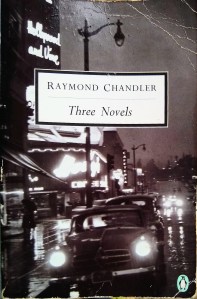
The book The Big Sleep was written by Raymond Chandler and he had this really fabulous talkative way of writing. You can almost imagine hearing Humphrey Bogart’s voice as you read the book. Here’s a quote from the text, an example of Chandler’s descriptive style:

I sat down on the edge of a deep soft chair and looked at Mrs Regan. She was worth a stare. She was trouble. She was stretched out on a modernistic chaise-longue with her slippers off so I stared at her legs in the sheerest silk stocking. They seemed to be arranged to stare at. They were visible to the knee and one of them well beyond. The knees were dimpled, not bony or sharp. The calves were beautiful, the ankles long and slim with enough melodic line for a tone poem. She was tall and rangy and strong looking. Her head was against an ivory satin cushion. Her hair was black and wiry and parted in the middle and she had the hot black eyes of the portrait in the hall. She had a good mouth and a good chin. There was a sulky droop to her lips and the lower lip was full.

Not bad eh? Dilys Powell called his writing ‘a peculiar mixture of harshness, sensuality, high polish and backstreet poetry’ and it’s easy to see why. Anyway, the book was made into a film starring Humphrey Bogart as Philip Marlowe and the film and the book open with Marlowe’s visit to see General Sternwood. I was calling on a million dollars says the famous detective in the opening monologue. Sternwood is an elderly man who spends his time in a stiflingly hot conservatory where he offers Marlowe brandy while he explains just what he wants Marlowe to do.

The Story in Your Eyes

In my original blog post I stuck to film, TV and books but for this version I thought I’d throw in some music, just for the hell of it. Despite being a great music fan I was pushed to think of something with a really outstanding opening but I think the guitar riff on this track from the Moody Blues really fits the bill.

The Cut

Before I cut to the ‘ends’, I thought this might be just the point to show what we video editors call a cut. Here is what has been described as the most epic cut in film history.

Ends: The Fugitive

Another old show repeated currently on the CBS justice channel is The Fugitive starring David Janssen as Dr Richard Kimble, falsely accused of the murder of his wife. The show ran for four seasons but as viewer ratings began to fall, the series was cancelled. It was then that the producers hit on what at the time was an unusual idea. Instead of the show just ending, they decided to make an actual finale. Yes, they would wrap up the story of Kimble’s wife’s murder. Kimble had been searching for the supposed one-armed man he had seen leaving the murder scene for the past four seasons, now he would finally find him!

Back in the 1960’s, TV was not very highly thought of even by the TV networks themselves. So what if Kimble never finds the murderer. So what? It’s only a TV show. Of course, the viewers would disagree. They had kept faith with the series for four long years, they deserved a proper ending.

The final episode aired on August 29th 1967 and in the USA the viewing figures were a sensation: 72% of US TV viewers were watching that final episode and the show held the most watched record until November 1980 when someone shot JR in Dallas.

Citizen Kane

The cinematography was by Gregg Toland, one of the film industry’s top photographers. Toland had asked to work on the film and director and star Orson Welles replied ‘Why? I don’t know anything about making films.’ Toland countered that was exactly why he wanted to work on the film because a film by a newcomer, Kane was actually Welles’ first film, would produce something new and original.

There are some fascinating elements to Citizen Kane, especially in the special effects department. A famous one is where the camera flies through a rooftop sign and then drops down through a skylight into a restaurant. That was done with a sign that came apart as the camera approached and then a fade from a model shot into the restaurant set disguised in a flash of lightning. I could go on and mention plenty of elements like that but if you haven’t seen Citizen Kane let me just explain what it’s all about. The film opens with the death of Kane, a millionaire newspaper magnate. His last words were ‘Rosebud’. The makers of a cinema newsreel decide to find out what or who Rosebud was.

To do so they research Kane’s life; his inheritance of a huge fortune, his takeover of a newspaper, his great wealth, his power and influence, his marriage and divorce and ultimately his death. The reporters never find the answers to their questions but we, the cinema audience, have the secret revealed to us right at the end of the picture. The end is what makes the film really and Welles admitted that Rosebud, and the idea behind it, was the idea of his co-writer Herman Mankiewicz. The final scene takes place in a huge storage area, packed with crates containing all the numerous items the acquisitive Kane bought, packaged and hoarded during his lifetime. Some of the stuff is scheduled for the furnace and as one labourer throws in an old sledge, we see the flames begin to consume the wooden frame. The top coat of paint is burned off and we see revealed underneath the name ‘Rosebud’.

One Final End.

I’m due to get my state pension in October which as regular readers will know is my least favourite time of the year. I thought it might be nicer to retire in the spring which is actually one of my favourite times of the year, the days are getting warmer and longer and the summer is on its way. A nice time to tootle off in our little motorhome perhaps so I sent in my early retirement request letter to my boss. That is in fact one really big end. I’ve been working since I was 16, starting my working life in Manchester city centre in the world of insurance back in 1973. Apart from a break in the early 1990’s when I decided I wanted to be a film maker and went on a video production course in Manchester I’ve worked all my life so understandably I was a little nervous when I pressed the send button on that particular email. I didn’t get to be a film maker, well, not a professional one anyway. Still, I’m not dead yet so there’s still time for a new beginning . .


What to do next: Here are a few options.

Share this post on your favourite social media!

Hit the Subscribe button. Never miss another post!

Listen to my podcast Click here.

Buy the book! Click here to purchase my new poetry anthology.

Click here to visit Amazon and download Floating in Space to your Kindle or order the paperback version.


The Essential Englishman (Part 2)

I published a post quite a while back called The Essential Englishman. I say a while back but now that I’ve looked, it was 2017. Anyway, as a working-class council house boy I’ve always envied those well-dressed gentlemen who look impeccable and talk ‘proper’, dropping witty comments here and there with apparent ease. I wrote about six Englishmen who all rather impressed me either themselves or in the characters they played on screen so I thought it might be time to look at some more candidates.

Roger Moore.

I’ve always liked the debonair Roger Moore. Many people think he was good as James Bond 007 but sorry Roger, I wasn’t impressed. His other famous character did impress me; Simon Templar alias the Saint. The Saint was based on the books by Leslie Charteris about an adventurer called Simon Templar. Templar seems to have no job but owns a smart London flat, drives a white Volvo with the registration plate ST1 and sets about helping damsels in distress and solving various crimes. The police, in particular Templar’s nemesis, Inspector Teal of Scotland Yard view Templar as a criminal and are determined to put him behind bars.

Moore had always wanted to film the Saint and in fact bought into the latter part of the series becoming a co producer. Most of the clothes worn in the series were Roger’s own clothes too showing how keen Roger was about the way he looked. Later, when the series ended, Moore co-starred with Tony Curtis in the Persuaders, another action series, although the Persuaders was filmed all over the world whilst the Saint, despite all the various locations portrayed in the series, was filmed almost entirely at Elstree studios in the UK.

One of the best elements of the series was the pre-title sequence where Moore turns to talk to the camera. In later episodes there is a voice over instead but someone usually recognises the famous Simon Templar. Cue an animated halo appearing over Roger’s head which he looks up at just before the title sequence begins.

Moore played James Bond in seven feature films. The last one was A View to a Kill in 1985. He died from cancer in 2017.

Ronald Colman

Colman was born in 1891 and became a well-known amateur actor in his native Surrey. He joined the army when the first world war began. He was seriously injured at the battle of Messines in 1914 and was invalided out. When his wartime wounds healed, he resumed his acting career and eventually graduated to films. In the USA he became a famous silent film star but it was not until the talkies began that he could use his best asset, his wonderful voice. According to Wikipedia, he mirrored the stereotypical English gentleman and he went on to great success in the golden age of Hollywood. He appeared in many famous films like The Prisoner of Zenda and two of my personal favourites, Lost Horizon and Random Harvest.

Colman died in 1958 aged 67.

Wilfrid Hyde-White

Hyde-White was born in 1903 and trained at RADA, the Royal Academy of Dramatic Arts. He once famously said that at RADA he learned two things; ’One, I couldn’t act and two, it didn’t matter.’

He became almost a fixture of many British films of the 1950’s and in fact his film credits are almost too numerous to mention. He appeared in some of my favourite films such as The Third Man, Last Holiday, The Browning Version, My Fair Lady and many others. In Hollywood he appeared with Marilyn Monroe in Let’s Make Love. In later life he also appeared in many US television series including two episodes of Columbo. Hyde-White was apparently in trouble with the inland revenue and was declared bankrupt in 1979. He died a few days prior to his 88th birthday and his body was flown back to the UK for burial.

Kenneth More

More epitomised the English officer gentleman in many films, most notably with his portrayal of Douglas Bader in the film Reach for the Sky. He played an officer aboard the Titanic in A Night to Remember and a naval officer in Sink The Bismark.

He was under contract to the Rank organisation but was dropped by Rank after swearing and heckling their managing director at a BAFTA award ceremony.

In later life he had further success on TV playing the part of Jolyon Forsyte in the Forsyte Saga and later the title role in Father Brown. He died in 1982.

Terry-Thomas

Thomas was a comedy actor who found fame in many British radio shows and films of the 50s and 60s. He typically played an upper-class rogue or bounder and his distinctive upper-class accent is fondly remembered by many, including me. According to Wikipedia in 1921 he began to develop his distinctive, well-spoken voice, thinking that “using good speech automatically suggested that you were well-educated and made people look up to you”. He apparently was impressed by Douglas Fairbanks so much so that he began to imitate Fairbanks’ debonair dress sense.

Thomas played a similar character in most of his films and was a great success in films like Carlton-Browne of the FO, I’m All Right Jack and School for Scoundrels. He appeared in a number of Hollywood films such as How to Murder Your Wife in which he played the genteel English butler to comic strip author Jack Lemmon. He is probably best remembered for his portrayal of the scheming rotter in Those Magnificent men in Their Flying Machines. Thomas died in sad circumstances in 1990 after suffering with Parkinson’s disease and spending most of his fortune on medical bills

C Aubrey Smith

C Aubrey Smith is perhaps an unfamiliar name on this list to anyone who is not a fan of classic films. Smith was born in 1848 and became a stage actor only after retiring from an early career as a cricketer. He appeared in some early British films but went to Hollywood in the 1930s where he carved out a career playing an English officer and gentleman. He was Colonel Zapt in the Prisoner of Zenda and played another colonel in Hitchcock’s Rebecca. In Hollywood he was the acknowledged leader of the British contingent and in 1932 founded the Hollywood Cricket Club. Other film stars considered to be “members” of his select social group were David Niven, Ronald Colman, Rex Harrison, Robert Coote, Basil Rathbone, Nigel Bruce and Leslie Howard.

Smith died in 1948 aged 85.

Hugh Grant

There are others I could possibly mention here, stars like Christopher Lee, Dirk Bogarde, Basil Rathbone, Dennis Price and Jack Hawkins but perhaps it’s time to look at some more modern actors. Hugh Grant has played the essential Englishman in a number of film roles starting with his part in Four Weddings and a Funeral, the 1994 British comedy written by Richard Curtis. Four Weddings is a direct successor to the Ealing comedies of the 1950s and 60s and Grant’s persona is in the same way, a successor to Ronald Colman, David Niven and many others of the same ilk.

I’ve always thought that Four Weddings was one of the best British comedy films ever, only marred by the constant use of the ‘f’ word. I was happy to hear that American audiences agreed with me and in the US version, the word ‘bugger’ was substituted.

Hugh Grant was born in 1960 and is still working in film and TV. He recently starred with Nicole Kidman in the TV mini series The Undoing.


What to do next: Here are a few options.

Share this post on your favourite social media!

Hit the Subscribe button. Never miss another post!

Listen to my podcast Click here.

Buy the book! Click here to purchase my new poetry anthology.

Click here to visit Amazon and download Floating in Space to your Kindle or order the paperback version.

The Idea, The Inspiration and The Kebab

A few weeks back I was asked to test some new editing software for a company whose software I used to use regularly. They were trying something new, in fact a feature that I had advocated a few times on one of their forums. It was a surprise to be asked to test the new feature but also rather nice. It’s always nice to be acknowledged so anyway as soon as the feature was enabled I set out to make a test video.

I thought about doing a new version of my usual content. You know the sort of thing, the videos that you usually find down at the end of my blogs extolling the virtues of Floating in Space and A Warrior of Words. Instead, I thought of doing a quick few minutes on the subject of poetry writing. It was called Ideas, Inspiration and Effort.

Nothing can start without an idea. Amateur writers like me just tend to wait for an idea to come but to be really professional you have to make the ideas come. You have to sit down and start writing. It’s only then that the ideas come. The same is true for blogs. I do get ideas. I get them driving to work. I get them while watching television. Sometimes I get no ideas at all but then I can always write about the books that I read, the old TV shows that I like and the classic black and white films that I watch on TV. Either way, blogs or poems, everything starts with the idea.

Next comes the inspiration. Again, when I’m in amateur writer mode I usually just wait for the inspiration to come. Sometimes it does. Sometimes it doesn’t. The thing that makes it come is just to start writing. Sitting down at the keyboard with the TV on and the sound off, that’s usually when inspiration strikes. Last week if you may remember I was doing battle with my electric company because they wouldn’t give me my money back, the money that I had paid, in error, into the wrong account. I wasn’t happy about it at the time but on reflection I could see the funny side and that is hopefully what made that particular blog post rather amusing. The good thing as well is that it’s that kind of self-deprecating humour which Floating in Space is all about so if you liked that post, you should like Floating. (An in-post plug for Floating! Hey, I’m pretty pleased with that.)

The same is true for poetry, once I have an idea I start playing with words until inspiration finally comes. Then of course I need to make the effort. The effort to get down to work, typing away until the first draft is ready. Then more effort comes, the effort to edit and to develop the blog or poem until I think it’s finished. That of course is where I usually fail. I don’t have my editor on my back, I don’t have a publishing company that has paid me a million-dollar advance and is waiting for the book I promised them. The only promise I have made is to myself, a promise to one day complete another book which actually may be a long time coming. The thing is there are so many other things to do, restaurants to visit, books to read, TV shows to watch and so on.

Anyway, it’s time for another blog post and as usual lately I’m struggling. What I need is an idea. So using my own method above I thought about an idea and I came up with disappointment. Yes, what has disappointed me lately? Let me see, well there was the pizza I made the other day.

When I spend a little time on my own I tend to eat a lot of snack food. I do love sandwiches as you might have guessed if you had read this old post about sandwiches but sometimes I like to do something a little more exciting. I do like cooking with my slow cooker and I’ve made numerous bologneses, chillis and curries in this way but the other day I thought I’d try and make a pizza, a proper pizza made from scratch. I had some flour and yeast and I had Jamie’s Italian, Jamie Oliver’s Italian cook book to guide me so what could go wrong? I mixed all the ingredients and made some basic dough then I gave it a good kneading and eventually I got a good spongy dough. I left it to prove and a bit later made it into a few portions. I left one to rise once again and made a simple tomato sauce using tinned tomatoes. Later I slapped on the sauce then some cheese, some pepperoni and some onions and I was all ready to bake. Jamie recommended putting the oven on its hottest setting, gas mark 9 so I slapped the pizza in and about ten minutes later it was looking good.

The crusts were ok but the rest was a bit soggy. Even so, it was pretty reasonable. The next day I tried again and looking at some other recipes I thought it was better to cook the base first and then add the toppings and cook again. I did that, added the toppings but this time I left it in too long and the pizza emerged a little frazzled. Maybe I should just stick with chilli in future.

Here’s something else that was disappointing. Sitting down to eat I was happy to find that The Time Tunnel, the sixties Sci-fi TV show was about to start on the Horror channel. It’s about two American scientists ‘lost in the swirling maze of past and future ages, during the first experiments on America’s greatest and most secret project, the Time Tunnel. Tony Newman and Doug Phillips now tumble helplessly toward a new fantastic adventure, somewhere along the infinite corridors of time’ as the opening blurb used to go.

The Time Tunnel starts off with a Congressman coming to investigate the growing budget of the time tunnel complex and threatens to close things down unless he sees results. Scientist Tony Newman decides he must therefore travel back in time to prove that the tunnel really works and save the project. Tony ends up on the ill-fated liner Titanic. His colleague Doug follows him back to 1912 and the control room struggle to shift the two in time before the ship sinks. Unable to return the duo to the present, the technicians struggle every week to shift the duo to somewhere new just in the nick of time. One episode that I particularly remember was when the pair land in Pearl Harbour, just before the Japanese attack in 1941. Tony meets himself as a young boy and finally solves the mystery of the disappearance of his father in the attack.

The Time Tunnel was a sci fi series from the 1960’s and as a child I was crazy about it. I thought it was wonderful but it only lasted one season before producer Irwin Allen moved on to something new. I had missed the first few episodes of this latest re-run but as I settled down I realised that my favourite episode, the one about Pearl Harbour, was about to start.

Tony lived there as a child and his father was reported as missing in action so the first thing Tony and Doug decide to do is to go and visit him. Cue some rather daft dialogue and some clumsy situations which led on to more clumsy dialogue and daft situations. What a disappointment that episode was and yet for years and years I’ve looked forward to finally seeing it again. There are some things which just don’t stand the test of time.

Another thing that I found rather disappointing this week was a large donner kebab. My last few shifts at work this week went pretty well and as I drove home after the last one I thought it was time to treat myself. I ordered a large donner with salad and chilli sauce, took it home and settled down with a small beer.

The salad was as limp as the Time Tunnel dialogue, the chilli sauce didn’t have much get up and go and the donner meat had seen better days. All in all, I could have done with a trip through the time tunnel to Manchester city centre in 1986 and gone to my very favourite kebab emporium where they served donner on naan bread with fresh salad and a tasty hot chilli sauce. Yes, I had the idea, I had the inspiration, I just wish I hadn’t made the effort and got that kebab!


What to do next: Here are a few options.

Share this post on your favourite social media!

Hit the Subscribe button. Never miss another post!

Listen to my podcast Click here.

Buy the book! Click here to purchase my new poetry anthology.

Click here to visit Amazon and download Floating in Space to your Kindle or order the paperback version.