I did a post some time ago called Manipulating the Image. It was all about photo manipulation and how they used to do it in the old days when cameras used film and not a memory card and how they do it today using artificial intelligence. Things have quickly moved on and now it is just as easy to make a short video with AI as it is to make an image.
My go to AI imaging site has until recently been nightcafe.com. Users can easily make images there as well as short video clips and you can even use an image as a starting point. Nightcafe requires a subscription for a small sum but also, if you use the site regularly, you can build up a raft of free credits with which to make even more images. I soon found that my image credits were soaring so as a fully paid-up member of Tightwads Anonymous I thought wait a minute, I might as well cancel my subscription as I don’t need it anymore as I have a shed load of free credits.
So, I cancelled my subscription and soon realised that I was now no longer a ‘pro’ user and as such no longer entitled to use the top AI models. I still had lots of credits but I could only use them on the less powerful models. Not only that, I could no longer make my images into videos.
You might be thinking that perhaps that wasn’t such a big deal for a writer. After all, a writer deals with words not pictures. Yes, that’s true but in the 21st century world of the internet, it’s images that bring people into your orbit. A Twitter or Facebook post with a picture or video will apparently get 120% more engagement than a plain old text post, so in order to bring people into the clutches of stevehigginslive.com, I need pictures or videos.
A lot of my posts over on Twitter are basically promotions for the blogs on this website. I try to produce an interesting image to pull in my readers and then add a message; things like Read A New Blog Post or something similar. Here is one of my first video clips made using AI.
I’ve always rather liked this image below, an inviting pub with the name on a sign: The Blog Post Inn.
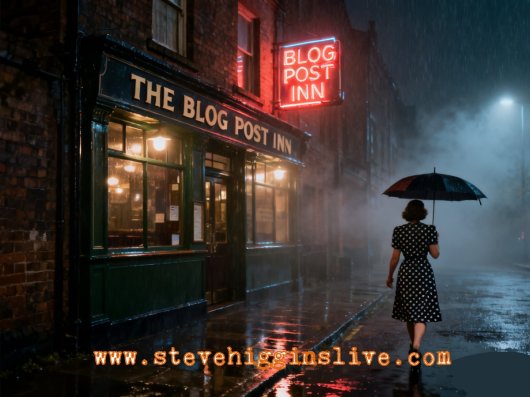
Here’s the same image made into a video over on meta.ai.
Many years ago as a schoolboy, one of my favourite doodles was to draw a frogman swimming underwater with a big flow of bubbles rising up to the surface. I was probably inspired by the TV in the 1960s, things like Voyage to the Bottom of the Sea in which Admiral Nelson and Captain Crane took us on all sorts of underwater adventures in their submarine, Seaview. Anyway, that was probably the source of some more videos involving a scuba diver finding an underwater carving which says -wait for it- Read a New Blog Post!
I always enjoyed both Voyage and another undersea TV show Stingray. Stingray was one of Gerry Anderson’s puppet shows. It was about the WASPs; the World Aquanaut Security Patrol and their amazing submarine Stingray commanded by Captain Troy Tempest. No doubt inspired by the scenes of Stingray and Seaview I decided, and this brings us back to AI, to make some submarine images. Here are a few below.
The really annoying thing about making AI images and videos is that they rarely come out how you want them. If they do, then they always seem to go wildly wrong when I try to tweak them. How do you make an AI image in the first place you might be asking. Well, simply from a text instruction, for instance:
A wide-angle view from low down; a moon rocket launches from Cape Kennedy. As the rocket blasts off in a cloud of smoke and steam, we see the words stamped vertically on the rocket: “NEW BLOG POST ” .
It’s always good to add in a few descriptive terms like hyper realistic as well as some camera terms like wide angle lens and so on.
In my video editor I’ve quite a few saved templates so it was easy to slot in the rocket video, add some sound effects from my trusty sound effects CD and here’s the finished video.
There are some pretty good AI generators out there that are completely free. Meta is the company that owns Facebook and you can use their app meta.ai to make free images and videos. I tend to start with an image from elsewhere, perhaps create something on Nightcafe and then upload it to meta and ask it to animate the image. I’ve had some good results and also some frustrating ones. I made an image of a woman wearing sunglasses with a neon sign saying ‘read a new blog post’ reflected in her specs. I asked meta to create a video from the image in which the girl ‘lifts up the specs, winks at the camera and replaces the specs’. Simple? No not really. In one version the woman took the specs off but then they disappeared. In another, they took themselves off and in a third they went up and down by themselves. Would she drop the specs slightly, wink and then put them back on? No. In the best result, the girl takes off the specs but seems to wink both eyes! Not exactly what I wanted.
Another site, perhaps more well known is Grok which you can find on the former Twitter site, X.
Another new dimension to AI is audio and on some AI sites you can get an audio model to read a short script. I tend to put various elements together, pictures, video and audio, edit them in the traditional way and add either sound effects or music. I particularly like an audio model I found of an American man with a deep baritone voice which I use on a lot of my promo videos or sometimes an American lady. On Grok, you can actually produce a video in which your video subjects can speak but they tend to rattle off the dialogue so quickly it isn’t natural, although after some experimentation you can add pauses in places but even so, it comes over as a little odd.
Here’s one in which I asked the AI model to say ‘wow’ and then matched up some audio of my American AI voice saying that same word.
Going back to that earlier idea of the girl with the glasses, I thought I’d try again without the wink. The girl was supposed to look over her specs, smile and put them back. In the resulting clip the girl did all that but seemed to be mouthing ‘Hi’. I went off to my audio program on Freepik and produced some new audio, fitted them together and this was the result.
Whether these little clips bring in any new readers I’m not sure. In fact, now I think about it, it might put readers off if they assume the entire site is AI produced, including the writing! Of course, that would save me toiling away over a hot laptap trying to think up new ideas for blog posts.
Even so, I have a lot of fun messing about with AI images and audio. I wonder if perhaps one day I could even make an entire film using AI generated visuals and audio. Things are happening so quickly in the world of AI I can image that happening in the very near future.
 Sometimes when I’ve had a swim and I’m lying on my lounger just drying off in the sun, I often think about my dad who died back in 2000. Not long ago I came across one of my brother’s photos. It was my dad in the back garden of our old house and he was dressed in a vest and shorts, reading the paper with his dog, a pedigree dachshund on his knee. He was not in a chair or a sun lounger but relaxing in a wheelbarrow, just how he did when he was at work and had finished his job.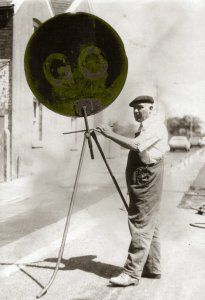
 700 is quite a milestone, certainly for me anyway. I started writing my blog posts back in 2014 and I’m quite pleased to have got to this point. 700 hundred blog posts. Anyway, after all that and a quick recount later I see that this is actually blog 701. Last week was my 700th post and I didn’t realise. It’s a bit like missing my birthday or waking up on the 2nd of January and realising you’ve missed New Year’s Day.
 have written about all kinds of things although I mainly stick to books, classic films, Formula One and me and my little life. Some of those posts I have worked quite hard on and I’ve written and rewritten them and researched and sometimes rewritten again. At other times I have found myself on a Friday staring at my laptop wondering what on earth can I write about and then, right at the last moment, I have either thought of something or remembered a post that was made up of various short elements and decided to take one of those elements and develop it into a new post.
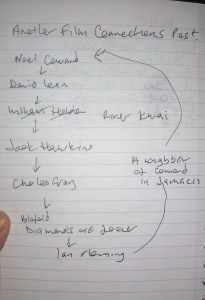 I always jot down notes for blogs, especially those where I try to connect various classic films together so for instance I’ll start with a director or an actor, let’s say Noël Coward for example and then try to go through various films and link together different actors or personalities and eventually end up back with another Noël Coward production. The links on the right are a bit thin but Coward worked with director David Lean, Lean worked with Jack Hawkins on The Bridge on the River Kwai. When Hawkins contracted throat cancer later in life and was unable to speak, his voice was dubbed by Charles Gray. Gray played Blofeld in the Bond film Diamonds are Forever. Diamonds was written by Ian Fleming who was a friend and neighbour of Coward in Jamaica.
 In March I was getting a little stuck for ideas and I had to recycle an old post,
  I’ve written many posts about books and a regular series is one in which I compare books to their filmed counterparts. In August I added a post about one of my favourite book/film series,
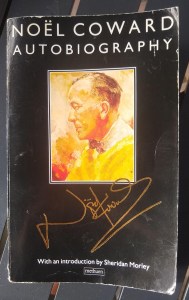
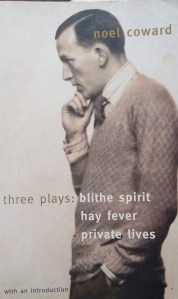 By far the most interesting part was his account of the filming of In Which We Serve, a very patriotic film showing the activities of a ship in the Royal Navy that was eventually sunk and the lives of those who served in her. In his very first autobiography, the names of the many actors and actresses he worked with meant very little to me but now I can recognise a few names, John Mills and Richard Attenborough for instance and David Lean who co-directed the film with Noël although in actual fact, Lean directed most of the film when Coward became bored with the long-winded filming process.
 The book is a huge volume and the editor has woven Noël’s letters with some interesting text about what was happening to Noël in between his letter writing. In 1941 Noël was invited to stay at the Welsh resort of Portmeirion where, many years later, the famous TV show The Prisoner starring Patrick MacGoohan would be filmed. His friend, Joyce Carey was hoping to write a play away from the bombs that were dropping on London. Her play never materialised but Noël wrote Blithe Spirit during the five days that he was there.
 We came over on the ferry from Portsmouth to Caen after spending the night in a small pub called the Jolly Boatman somewhere in the south of England, actually Kidlington, I think. We have visited this pub once before back in May and it was nice to find that the staff remembered us even after just one visit. The trip over on the ferry was good. We paid a little extra for a top of the range cabin and it was well worth it. We had a little balcony, a tv, kettle and various cold drinks in the fridge. After a bit of a sleep and a shower, we awoke refreshed and ready to find a place to stop for the night in France.
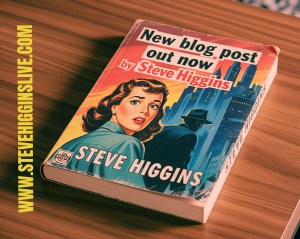 To be honest, I do use ai, not to write posts but to make the quirky memes and graphics that I use to promote my blogs. This is one over to the right. I had never even thought about using ai to actually write a post. Even so, I thought as I was a bit low on ideas it might be interesting to ask ai what I should write about. It came up with a plan for a post asking me to answer various questions about my work. Anyway, here are a few of them.
 I see that I started this blog page back in 2014 and my first post went out on the 23rd of May. It wasn’t anything exciting, in fact it was pretty much a sort of advertisement for my book

 Over on the front page of this site you will find a whole lot of stuff about me. It tells you that I have always wanted to be a writer, that I enjoy writing as well as Formula One racing, classic cinema and books. In one segment it mentions that I like dining out, in fact it says that dining out is one of the great experiences of life and so I thought I’d start with that, great experiences and see where that leads me.
 Crossfire by Jim Marrs
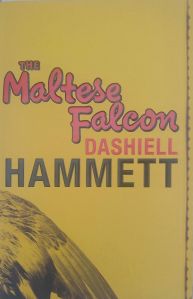 I absolutely loved this book. I mentioned it last week in a post about
 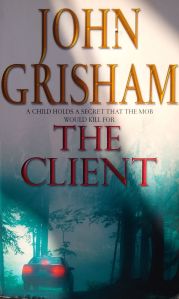 The Client by John Grisham
 Liz and I are over here in sunny Lanzarote having exchanged the cold of the UK for the warmth of Lanzarote. Of course, it is still February and things aren’t perfect over here. It’s warm but there are plenty of days when gusty winds blow across the island as well as days when the sun has been obscured by clouds. Even so there are still plenty of bars to drink at, plenty of tapas to be eaten and of course we have plenty of books to read, two of which have inspired this week’s post.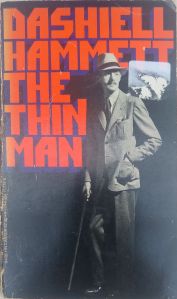
 The plot of the book and film are pretty complicated, although having read the book recently I think that the book is easier to follow. During the filming the director and his stars wondered who killed the character of Owen Taylor, the Sternwood’s chauffeur. They sent a cable to Raymond Chandler asking him. Chandler told a friend later ‘Dammit, I don’t know either!’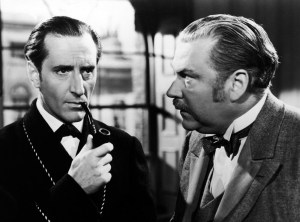

 Anyway, getting back to the Marigold Hotel. I was rather unhappy with the book at first. It had originally been published under the title These Foolish Things and was written by novelist Deborah Moggach, but to cash in on the success of the film, new editions were published with the film’s title. As I began to get into the book, I actually began to like it. The central theme seemed to be the story of the lady played by Maggie Smith in the film although in the book another layer of her story has been added which the film ignores. She is mugged and goes to see her well off son for help only to find he has been involved in some dodgy deal and has left to escape the police. She refuses to go back home but her doctor recommends a place in India where she can rest and recuperate. In fact, the Marigold Hotel which he has recommended is a business venture in which he is also a partner.
 Letters from an Unknown Author!