Famous People and Favourite Books

This isn’t a post about my favourite books. I’m pretty certain I’ve done that one already but I thought I’d talk about the favourite books of some famous people and I’d like to start with one of my film heroes, James Dean.

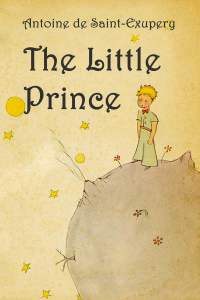
James Dean and The Little Prince

Back in the 1970s my Saturday ritual involved getting the bus into town and scouring book and record shops for books and records. One day back then I was flipping through the posters in one particular shop. The posters were the music stars of the 70s, Elton John, Mick Jagger, Suzi Quatro, David Bowie and so on but one was a picture of a really good looking guy with a fifties combed back hair style. In some pictures he was dressed like a cowboy and in others in a red jacket and denim jeans. The guy behind the counter must have seen me wondering who the guy was and he told me he was a film star called James Dean. He handed me a paperback book about the actor and I took it home and read it and very soon I was trying to find out everything I could about Dean.

Dean had been killed in a car crash in 1955 and had only appeared in three films and at the time of his death, only one of those films had been released. I read a great deal about Dean and from what I could find out, the biography to read was written by his best friend, William Bast. I never managed to get a copy of that book but Bast produced a made for TV film version, James Dean: Portrait of a Friend with Stephen McHattie as Dean.

In the film William Bast played by Michael Brandon, leaves Dean in a restaurant and Dean later asks why Bast left. Bast was intimidated by Dean’s important looking friends and Dean replies that he was judging by surface appearances. When Bast questions Dean further, Dean produces his favourite book, The Little Prince and then goes on to read his favourite passage.
In the book Dean explains, the Little Prince is from a distant planet. He meets a fox but the fox won’t play with the prince because he hasn’t been tamed.

Later the fox gives the prince a secret which is this: It is only with the heart that one can see rightly, what is essential is invisible to the eye, something which Bast claimed was the secret to Dean’s style of acting.

James Dean was killed in 1955 and in later life William Bast wrote another book about James Dean claiming that the two were lovers and that Dean was gay.

The Little Prince was written by Antoine De Saint-Exupéry and according to Wikipedia has sold an estimated 140 million copies. It is also the second most translated work ever, only beaten by the Bible.

What did Dean see in the book? Well, it was a childhood favourite of his so perhaps it brought back memories of happy times, or perhaps it was just the undeniable charm of the book that appealed to him.

Donald Campbell and 1001 Nights

Donald Campbell was the son of a famous racing driver and record breaker, Sir Malcolm Campbell. Campbell first broke the land speed record in 1924 at Pendine Sands in Wales which was the first of his nine land speed records. He also set the water speed record in his boat Bluebird K4. He was knighted in 1931 and died in 1948 aged 63. He was one of the few racing drivers and land speed record holders of his era to die of natural causes as many of his rivals were killed in crashes. His son, Donald Campbell, was determined to equal and even surpass his father’s achievements.

He set about doing so with the help of his father’s engineer, Leo Villa. He made various runs at the land speed record, his last was in Australia. He chose to run his Bluebird car at Lake Eyrie and the vast dry salt lake bed offered the perfect course. It hadn’t rained there for nine years but Campbell had just started his trials when the rains came and ruined the course. Eventually Campbell managed to raise the record to 403.10 mph in 1964 but the huge expense and difficulties of the project cast a great strain on Campbell. In November of 1966 he tried for a new water speed record at Lake Coniston but once again, bad weather caused problems. He was still at Coniston in the following January and when the weather improved, he tried for the record. He was killed in his Bluebird boat on the 4th January 1967.

In the BBC film Across the Lake, Campbell was played by Anthony Hopkins and claims his favourite book was 1001 Nights. The book is a collection of Arabian folk tales perhaps more well known in England as The Arabian Nights. The book is about a king who after finding that his brother’s wife has been unfaithful, decides that all women are the same. He decides then to marry a succession of virgins and after their wedding night have them executed to make way for the next, One day he marries Scheherazade who tells the king a story but promises to finish it the next night. The king delays her execution wanting to hear the end of the story but the next night she starts another one, again promising to finish the story the following night. The stories go on for a thousand and one nights, Scheherazade telling more stories in order to save herself from execution.

The screenplay for Across the Lake was written by Roger Milner and was based on true events although whether that includes Campbell’s love of 1001 Nights or not, I’m not sure. In the film Campbell gives a girlfriend a necklace inscribed with a quotation from the book. ‘Beautiful of face with attributes of grace’, a reference to Scheherazade herself.

Noel Coward and The Railway Children

This is perhaps where this post might start to unravel. I know the Donald Campbell link was a little tenuous and only based on a film but this next one was based on my own memory which can be prone to failure. I knew Noel was a great fan of the children’s writer E Nesbit and I’m sure I had heard or read somewhere that when he died, he was reading his favourite of that author’s books, The Railway Children. A quick bit of internet research and I see that Noel died after reading Nesbit’s The Enchanted Castle. Coward was a lifelong fan of E Nesbit who wrote a series of children’s books. He discovered the books as a child and revisited them many times during his life. In his diary he wrote this about the author:

“Sunday 3rd February 1957. I am reading again through all the dear E. Nesbits and they seem to me to be more charming and evocative than ever. It is strange that after half a century I can still get such lovely pleasure from them. Her writing is so light and unforced, her humour so sure and her narrative quality so strong that the stories, which I know backwards, rivet me as much now as they did when I was a little boy. Even more so in one way because I can now enjoy her actual talent and her extraordinary power of describing hot summer days in England in the beginning years of the century.

All the pleasant memories of my own childhood jump up at me from the pages… E. Nesbit knew all the things that stay in the mind, all the happy treasures. I suppose she, of all the writers I have ever read, has given me over the years the most complete satisfaction and, incidentally, a great deal of inspiration. I am glad I knew her in the last years of her life.””

The Enchanted Castle is about a country estate and three youngsters who meet a princess and discover a magical ring. I have never read either that or the Railway Children although I did find a copy of that latter book not long ago. The film version is a delightful adaptation that has been seen and loved by many generations of children and adults since it was released in 1970. It was written and directed by Lionel Jefferies and stars Jenny Agutter and Bernard Cribbins.

Noel Coward died at his home in Jamaica in March of 1973.

Woody Allen and The Catcher in the Rye

Woody is one of my favourite film directors and after a search on the internet looking for more favourite books from my favourite people, I found he was apparently greatly inspired by The Catcher in the Rye by J D Salinger. Woody had this to say about the book:

“The Catcher in the Rye has always had special meaning for me because I read it when I was young – 18 or so. It resonated with my fantasies about Manhattan, the Upper East Side and New York City in general.

It was such a relief from the other books I was reading at the time, which all had a quality of homework to them. For me, reading Middlemarch or Sentimental Education was work, whereas reading The Catcher in the Rye was pure pleasure. The burden of entertainment is on the author. Salinger fulfils that obligation from the first sentence on.”

I can understand Woody when he talks about books that have a quality of homework about them. Many classic books I’ve tried to read, particularly in recent years, have left me disappointed and with that same feeling that Woody describes.

I read Catcher in the Rye a long time ago and rather than inspiring me, I found it dreadfully boring and pointless. The hero, Holden Caulfield goes to New York and basically moans about all the things he finds false and ‘phoney’ about the city and its people. Mark Chapman, the murderer of John Lennon, was obsessed with the novel and left behind a copy after he had shot Lennon with a note saying ‘this is my statement’.

Sorry Woody, you and I will have to disagree about Catcher in the Rye.

So what is my favourite book? Well, I’ve got quite an extended shortlist but I think I’d have to plump for David Copperfield by the wonderful Charles Dickens. I first read it many years ago and perhaps the moral of this post is that the books we love in our youth are the ones that continue to give us pleasure in later life.

What is your personal favourite?


Sources:

James Dean: My own imperfect memory.

Donald Campbell; the film Across the Lake.

Noel Coward: https://www.noelcoward.com/

Woody Allen: https://fivebooks.com/best-books/woody-allen-on-inspiration/


What to do next: Here are a few options.

Share this post on your favourite social media!

Hit the Subscribe button. Never miss another post!

Listen to my podcast Click here.

Buy the book! Click here to purchase my new poetry anthology.

Click here to visit Amazon and download Floating in Space to your Kindle or order the paperback version.


Noel Coward, Pools and Flying Creatures

This could really be a Sun Lounger Post  but for clarity I thought I’d give it the title above because it’s actually mainly about Noel Coward and his autobiographies.

Here in the quiet village of Parçay-les-Pins, Liz and I are having a relaxing time. The weather is good, well actually, it is fantastic. Sunny and warm, perhaps a little too warm but either way, the perfect weather for barbecues, eating outside, reading by the pool and relaxing.

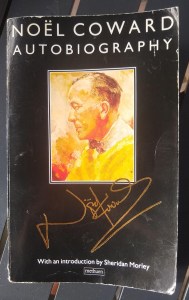
Here’s the itinerary: Up at whatever time we want. Breakfast later, usually before 12 noon but not always, a quick washing up of the pots and then out to the pool. I’ve spent most of this holiday reading the autobiography of Noel Coward and it’s actually three books in one. The first part is his first autobiography, Present Indicative, part 2 is an unpublished segment of his unfinished third autobiography, Past Conditional and finally his second published autobiography Future Indefinite.

Book one, Present Indicative was published in 1937 and concerns Noel’s early years, his childhood and his first tentative steps into the theatre. It’s an account of a vanished world of repertory companies, writers, actors and actresses who have long gone and whose names mean little today in the 21st century. Even so it is hugely fascinating and interesting and as always enlivened by Noel’s supremely witty text. Noel was a homosexual in a time when homosexuality was illegal and most of his private life he keeps private although armed with a little knowledge of Noel we can read between the lines and assume that Jack Wilson who comes to live with him at his home, Goldenhurst in Kent, was presumably his lover.

It is pretty hot here in Parçay-les-Pins and after a little reading it’s time to slip into the cool waters of the pool and have a swim. Just lately, on a physical level I’ve been very inactive. I keep meaning to cycle or take a walk every day but I can never get around to it and I’m conscious my health is suffering. Now, every 20 minutes or so I slip into the pool and do 8 to 10 lengths and go back to my sun lounger for more relaxation and reading.

Book two, Past Conditional is an unpublished and unfinished autobiography that was intended to fill in the gap between his first two autobiographical books. It starts where the first one finished off, in the early 1930s and differs considerably in tone as it was written much later in the mid-1960s and Noel was able to look back at himself in the 1930s and examine himself from a more in depth perspective. Such a pity it was unfinished.

An interesting segment concerns the death of his brother who is scarcely mentioned in the text as he and Noel were never close. The brother was clearly never part of Noel’s theatrical world and the family sent him off to South Africa only for him to return and die of cancer.

In Parçay-les-Pins, we have been tempted to visit our favourite local restaurant however, a couple of things have stopped us. Firstly, it is very hot and the Station Restaurant is only open at lunchtimes so we have decided to wait until next week when the weather forecast is not looking so good. Why waste all that precious sun-bathing time?

Tea time at Parçay-les-Pins

Round about 6 pm or sometimes later, we tend to move from the pool back to the house and crank up the barbecue and decant some wine and eat in the warm evening. One of the great pleasures in France, at least for me, is to sit outside until the sun slides over the horizon and then in the darkness, a darkness here in the countryside so velvety and complete that the view of the sky and the stars is uninterrupted by any ambient light such as traffic or streetlights. Then I can look up at the great vista of the night sky, the heavens displayed above us in such a way that can never been seen from a great city like Manchester in the UK.

The big problem I have found is that this is just the time for the insects of the night to come out and nibble at my legs. One night Liz mentioned that she had some of those citronella candles that are supposed to deter the bugs so at once I dug a few out and lit them. It was rather nice for a while sat in the dark with the candles fluttering away with a rather nice scent. What happened was that the rather nice scent seemed to encourage even more bugs, especially a great number of what I can only describe as hornets. They were two to three times bigger than a UK wasp and then seemed to be honing in on the scented candles. Luckily, Liz is a master of the fly swatter and after a short while a whole flight of the hornets lay dead on the windowsill although by then, I had shot inside to safety.

The final book in the autobiographical series was Future Indefinite in which Noel recounted his time during the Second World War. He seems like many to have had a very low opinion of Prime Minister Neville Chamberlain, although to be fair to Chamberlain, he was doing his utmost to avoid the horrors of war. Sadly, and clearly unknown to Mr Chamberlain, Adolf Hitler did not want to avoid war, he was in fact wanting war very badly and happily it was Mr Churchill who understood this only too well.

In June of 1939 Noel who was a great globetrotter decided to take a tour of Europe in the light of Mr Chamberlain declaring ‘peace in our time’. He visited Warsaw and Danzig, Moscow, Leningrad, Helsinki, Stockholm, Oslo and Copenhagen. He found that many of the people in those places were just waiting for Hitler to invade, particularly the Poles. In Russia he found a state that declared it had found freedom in Communism but was in fact quite the opposite as the Stalinist regime had choked any kind of criticism or free thinking whatsoever.

When war was declared Noel was asked to be part of an Anglo-French PR unit in Paris which he seems to have enjoyed for a while and then become a little bored with. He was sent on a tour of the USA to gauge opinion there on the war and was on his way back when the Nazis invaded France. He also did a tour of Australia and New Zealand to entertain troops and did charity work for various organisations helping those who were bombed out in London.

By far the most interesting part was his account of the filming of In Which We Serve, a very patriotic film showing the activities of a ship in the Royal Navy and the lives of those who served in her, all the way through to the ship’s sinking. In his very first autobiography, the names of the many actors and actresses he worked with meant very little to me but now I began to recognise a few names, John Mills and Richard Attenborough for instance and David Lean who co-directed the film with Noel although in actual fact, Lean directed most of the film when Coward became bored with the long-winded filming process.

Lying by the pool after a lot of reading and swimming I invariably start to feel tired round about the 4pm mark and tend to nod off although I’m usually awoken by flies buzzing around my ears. What insects seem to find fascinating about my ears I will never know but they always seem to strike just as I am nodding off.

Books, Sudoku and a pool. What could be nicer?

As well as the flies a great horde of swallows seem to be fascinated by our pool and round about 5pm they gather on the telephone line above us, divide themselves into squadrons and make various sorties down to the pool, skimming just above the surface or sometimes dipping into the water with either their wings or their tiny feet. This performance is very remarkable indeed and quite a few times I’ve had to duck as the swallows make their dives from just behind my head.

It actually reminded me about the Dambusters, the raid by 617 squadron of the RAF on the dams of Germany. They had to drop low over the waters of the dams and hit a consistent height of 60 feet before dropping their ‘bouncing bombs’.

Coward goes on to talk about Blithe Spirit, my favourite of Coward’s plays which was made into a film in 1945. Coward was not keen on the resulting film. David Lean added an ending in which Charles Condomine played by Rex Harrison dies and joins his ex-wives in the spirit world. Coward complained that David Lean had f**ked up the best thing I had ever written!  Personally, I loved it.

Final verdict of the Noel Coward biographies; fascinating, always interesting and hugely entertaining.


What to do next: Here are a few options.

Share this post on your favourite social media!

Hit the Subscribe button. Never miss another post!

Listen to my podcast Click here.

Buy the book! Click here to purchase my new poetry anthology.

Click here to visit Amazon and download Floating in Space to your Kindle or order the paperback version.

Holiday Book Bag: Spring 2023

A long time ago I was reading a biography about Richard Burton called ‘Rich’ by Melvyn Bragg. The book used Burton’s own diaries and mentioned, amongst other things, Burton’s love of books. When Burton went on holiday he looked forward with delight to the contents of his ‘book bag’. I know it’s a pretty tenuous link but one thing I have in common with Richard Burton is a love of books and when I go on holiday, one of the delights of lying under a warm sun on my sunbed is a good, undisturbed read. I read a lot at home and before I retired, on my lunch breaks at work but it’s a few minutes here and a few minutes there and whenever I get interrupted it kind of breaks the flow. Some books, as we all know, are just made for a really long, uninterrupted read so here are the books I took on holiday with me recently, all sourced from either the internet or secondhand bookshops.

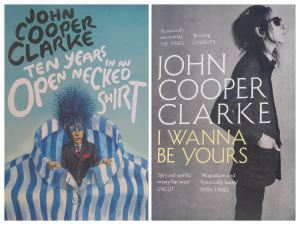
I Wanna Be Yours by John Cooper Clarke

I’ll start off this book bag with this autobiography by John Cooper Clarke. I wrote about it a few weeks ago so I’ll keep it brief here. This was a wonderful read. It wasn’t the I did this and then I did that conventional autobiography, it was a very observational book and Cooper Clarke paints an interesting picture of Manchester and Salford from the 1950s to his heyday as a punk poet in the 1980’s. The last quarter of the book resembles a more conventional biography and it made me want to read some of his poetry.

Verdict: A fabulous, entertaining read.

10 Years in an Open Necked Shirt by John Cooper Clarke

This was a poetry book by John and to be fair I found it a little disappointing. The thing is, Clarke is a performance poet and his grammar free poetry doesn’t work as well on the printed page as it does when Clarke performs it on stage. Some poetry I suppose is meant to be read, other poetry needs to be performed and Clarke’s comes into the latter category.

Verdict: Interesting but not my cup of tea.

The Unlikely Pilgrimage of Harold Fry by Rachel Joyce

I first heard about this from seeing a trailer to the new film version and it looked pretty interesting. I do love something that is new and original and so Liz and I went to the cinema to see it which was my first cinema visit for a long time. It’s a good film but not a cinema classic and I wondered if the book would be better. The story is about Harold Fry who is retired and lives with his wife on a suburban housing estate. He gets a letter advising him that a friend and former workmate named Queenie, is dying of cancer and he pens a short note of sympathy in reply. He goes out to post the letter but decides to walk further wrapped up in thoughts about Queenie. At a petrol station where he buys a sandwich the young girl assistant tells him a story about her aunt who suffered with cancer and she -the shop assistant- feels that real faith and positive thoughts can help beat even something like cancer. Harold decides there and then to walk all the way to Berwick-upon-Tweed and see Queenie in person.

Along the way Harold meets various people and when news of his march reaches the media, many others come to join him. Along the way he thinks a lot about the events of his life, in particular his relationships with his wife and son and eventually both he and his wife, who he speaks constantly to on the telephone, seem to reach a sort of understanding about what has happened to them as well as an unspoken desire to reunite and move forward. The book was a great success world wide and many reviews printed on the back cover tell the reader what an uplifting read it was. It wasn’t a bad read at all but I actually found it not only sad but rather miserable and, to be honest, not uplifting at all.

Verdict: Original and interesting but a bit too melancholic for me.

Then Again by Diane Keaton

This is another autobiography and like the one by John Cooper Clarke it was a rather unconventional one. Diane Keaton is a film actress you might remember from the Godfather movies or from Annie Hall. Diane’s mother had died and looking through her effects she had found numerous notebooks and diaries in which her mother had written about her life. In this autobiography, Diane has tried to link her story with that of her mother and has put her own experiences and memories side by side with those of her mother. The result is for the most part a really very interesting book, told in a very open and talkative way by both Diane Keaton and her mother. Diane doesn’t get too personal but does talk quite a lot about her work and her life in particular with Woody Allen and Warren Beatty, both of whom she was involved with for a time. She also had a long relationship with Al Pacino who she played opposite in the Godfather series of films and it seems to me she was expecting to marry Al but for whatever reason he decided to call the relationship a day.

The last part of the book is really about her decision, late in life, to adopt two children and the result for the autobiography is rather like when one of your friends has a child and all they ever seem to do is go on and on about their new little boy or girl. Her mother sadly develops dementia and Diane’s experience of trying to look after her was all too familiar to mine.

Verdict: The book goes off on a bit of a tangent towards the end but generally I really enjoyed it, especially the bits about working with Woody Allen.

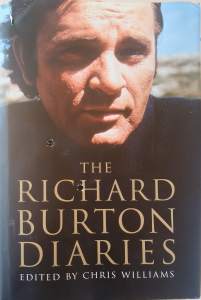
The Richard Burton Diaries edited by Chris Williams

I mentioned at the start of this post about reading Melvyn Bragg’s biography of Richard Burton and how Burton used to always take a ‘book bag’ with him whenever he went away. Bragg’s book was based partly on these diaries which have now been published and are available to everyone.

There is a lot I like about this book and a lot that I don’t like. I tend to prefer paperbacks but I bought this one from the internet and it’s a big heavy hardback and as I’ve dragged it across France it’s generally getting a little tattier every day.

Moving on to the text and I see a lot of the big events in Burton’s life are missing as sometimes he stops writing for days and even months at a time. We don’t hear about the making of Cleopatra and his meeting and affair with Elizabeth Taylor but he does mention some of those events in retrospect.

The book starts with his schoolboy diaries which are rather like mine, brief and to the point. Later, the main diary starts in 1965 and as I write this, I’m up to about 1970. Burton tells us of his immense love for Taylor and how he has given up womanising to be faithful to her but sometimes I get the feeling he isn’t being totally honest, after all Liz has free access to his diary and she frequently jots down her own comments too. Burton was rumoured to have had an affair with Genevieve Bujold during the filming of Anne of a Thousand Days but of course, gives no mention of that in his journal. He does talk a lot about food and having lunch in places like Paris and Rome. He enjoys having money and delights in spending it on jewels for Liz, a new private jet plane and a yacht which he thinks might actually save him money as he can stay on the yacht rather than use hotels. Even so, he continues to use hotels anyway. At one point he considers buying a barge, modernising it and touring the canals of France.

He doesn’t seem to enjoy his acting and in fact rather looks down on it as a profession, although unlike an actor like Brando who had similar thoughts, he did take pride in what he did, learning his part and his lines whereas Brando couldn’t even be bothered to learn the script for the film of Superman despite his million dollar fee.

Surprisingly there is also quite a lot of professional jealousy in the text, for instance, he gives Robert Shaw a bit of a slagging off for his performance as Henry VIII in A Man for all Seasons which I thought was rather good, better or at least the equal of Burton’s Henry VIII in Anne of a Thousand Days.

Burton drinks a lot and frequently argues with Liz, sometimes he is banished to the spare bedroom and usually he regrets his drunken words and wonders why he did what he did or said what he said.

He was though a man who loved books, reading anything from the classics to detective novels. He enjoyed books immensely and even had ambitions of being a writer himself. His entries are peppered with quotations from authors and poets and of course Shakespeare.

I was really looking forward to reading this book but after the first few pages I thought it a little uninteresting. As the narrative moved from 1968 into 1970, Burton seemed to be putting more effort into his journalling and consequently it became more enjoyable to read. Later large gaps appear in the diaries and he doesn’t appear to have written anything about his breakup with Liz Taylor. The entries become less frequent and to be honest, I ended up skipping quite a few pages.

Verdict: A book that promised a lot but failed to deliver.

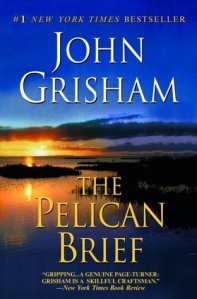
The Pelican Brief by John Grisham

I’ve read a few books by this author before and always enjoyed them, this one being no exception, in fact it might be the best book by Grisham I have read so far. The book opens with the murder of two US Supreme Court judges and this in some ways plays into the hands of the President as he can now nominate new judges who share his political views. At the same time law student Darby Shaw is having an affair with her law professor. She decides to look closely at the murders and develops a thesis, an idea about who may have done the murders and why. The thesis becomes known as the Pelican Brief and she passes it to the professor who in turn sends it to his friend, an FBI lawyer. It then gets passed up the chain to the head of the FBI and on to the White House where the President asks the FBI not to investigate further.

Not long afterwards the professor is blown up in a car bomb which Darby narrowly avoids and from then on, she is on the run trying to evade death herself.

This for me was one of those unputdownable novels which was exciting and kept me interested all the way to the end.

Verdict: A brilliant read.


What to do next: Here are a few options.

Share this post on your favourite social media!

Hit the Subscribe button. Never miss another post!

Listen to my podcast Click here.

Buy the book! Click here to purchase my new poetry anthology.

Click here to visit Amazon and download Floating in Space to your Kindle or order the paperback version.

Another James Bond 007 Post

James Bond has been in the news this week. The books by Ian Fleming are apparently being rewritten as they might be considered offensive to a modern generation of new readers and the producers are still looking for a new actor to play their famous secret agent. OK, time for another James Bond 007 post.
The publishers of the Bond books have decided that it’s time for a reissue of the best selling series with a disclaimer telling readers that the novels use language that may be considered offensive by modern readers. Of course the books were written in the late fifties and early sixties and reflect attitudes of the time. I have the entire collection of Bond books and most of them have a reference on the back saying they are outrageously entertaining, which they are, but take away the outrageous part and they are no longer outrageously entertaining but perhaps just somewhat entertaining. Of course if we begin to tamper with books written in the past where do we stop? Roald Dahl’s books are also in the news as they have been updated by ‘sensitivity readers’ although I’m not sure how these well-read children’s books can upset anyone. James Bond of course is a different matter and any sensitivity readers might have a problem with a book like Live and Let Die which is partly set in Harlem and Ian Fleming uses most of the unpleasant racial epithets which were in use at the time.

I started reading the Bond books when I was a schoolboy and unfortunately the very first one I read was the only one they had in our local library – ‘The Man With The Golden Gun’, one of writer Ian Fleming’s worst Bond books. Fleming used to write his initial drafts of the novels and then write a second one, adding in all the details which make the Bond books so interesting. Things like details of Bond’s clothes, (the Sea Island cotton shirts) his food, (Bond always had scrambled eggs for breakfast) his cars, his cigarettes (the special handmade ones with the triple gold band) and all that sort of stuff. ‘The Man with the Golden Gun’ was published after Fleming had died and sadly, he had not revised his original draft. I persevered though, did some research, found the proper order of the books and began to read ‘Casino Royale’, the first in the series. April this year marks the 70th anniversary of Casino Royale and it is this anniversary which has prompted the Bond books to be reissued, complete with disclaimer.

That first book is a pretty original story. ‘Le Chiffre’, a gambler and also a member of SMERSH, a murderous department of the KGB, is engaged on a desperate effort to win a great deal of money at the casinos of Royale Les Eaux in France. Le Chiffre is desperate because he has used SMERSH funds for his personal use and his spymaster bosses will not be pleased if they find out. Britain’s secret service happens to find out about this and sends Bond to France to make sure Le Chiffre doesn’t recoup those funds as of course, as we all know, James Bond 007 is a bit of an expert with the cards.

The book is interesting in another way too. Ian Fleming sold the movie rights to Casino Royale separately from the rest of the books and this enabled producer Charles K Feldman to produce a movie independently from Eon productions who own the rights to the other books. Feeling that he could not compete with the mainstream movies, Feldman decided to make Casino Royale into a comedy version. David Niven starred as Sir James Bond and ironically, Ian Fleming had mooted Niven as a possible Bond when casting began for Dr No, the first movie in the series.

Eon Productions finally acquired the rights to Casino Royale ready for the debut of new Bond actor Daniel Craig. I’ve got to say I didn’t like Craig at first. He didn’t look like Bond and I honestly thought he would have been better cast as one of the Bond villain’s henchmen but I did warm to him eventually and although I didn’t much care for it at first, I really do think Casino Royale is one of the better Bond films. It was released in 2006 and follows the book pretty faithfully which many of the previous films rarely do. Craig’s last Bond film was No Time To Die which I really thought was the poorest of Craig’s five outings as 007 and Bond has been in the news frequently as writers, journalists, bloggers and everyone and his dog have speculated about who the next James Bond 007 will be.

Will it be the usual upper class white guy or will Bond be black? Will there even be a female Bond? What does a 21st century secret agent look like or act like?

James Bond, the character created by Ian Fleming, was a commander in naval intelligence in World War II. He learned to ski in Kitzbühel in the 1930s and fought in the Second World War. He was an officer and a gentleman. He frequented expensive restaurants and gentlemen’s clubs as well as casinos and card tables. He drove a Bentley, lived alone in a Kings Road, Chelsea flat where he was looked after by an elderly Scottish housekeeper named May. He drank a martini made with three parts gin, one of vodka, a half measure of Kina Lillet, shaken with until ice cold then served with a slice of lemon peel. Bond is a character entrenched in mid twentieth century England so making him into a character from the 21st century will not be easy. What can the film makers do? Well, they could set the Bond films back in the 1960s. That’s one option although I doubt if that will happen. They could go radical and make Bond an ethnic character; I’m forever seeing posts about Idris Elba as the next Bond in my social media feeds but then, the character wouldn’t be Bond, would he?

The first change of Bond actor was from Sean Connery to George Lazenby. I liked Lazenby and his one 007 film, On Her Majesty’s Secret Service, was one of my favourites. Connery returned for Diamonds are Forever and then Roger Moore took over Bond’s licence to kill. His films ranged from bad to supremely dreadful and as much as I’ve always loved Roger, I hated his Bond films.

Timothy Dalton stepped into Bond’s shoes when Moore stood down and made two pretty good films. Legal issues kept Bond off the screen for a long time but when the franchise finally returned it was with Pierce Brosnan as 007. Goldeneye was one of my favourite Bonds but his other films weren’t so good and even looked for a while as if they were going to go down the same road as Roger Moore’s Bonds into slightly ridiculous territory. With Casino Royale though things got pretty serious. The film makers played down the gadgetry which always was a staple of the early Bond films, things like cars with ejector seats, watches fitted with special magnets and belt buckles firing climbing pitons. None of that played any part in the Daniel Craig era but here’s the thing; in the previous films each new Bond has just carried on as before with hardly a nod to the previous actor, although George Lazenby did famously say ‘this never happened to the other fella!’

When Daniel Craig took over the series was to a certain extent rebooted. Bond was new to the 00 section and Casino Royale his first mission. His mission in No Time To Die was also his last, his very last because, and I don’t think I’m giving anything away here, because Bond actually dies. How could the producers start over then with the next Bond? Well, many fictional characters have come back from the dead, most notably Sherlock Holmes who author Arthur Conan Doyle killed off when he got bored with the character.  Holmes perished by falling off a cliff but a few years later Conan Doyle bowed to public pressure and Sherlock Holmes returned. It turned out, he hadn’t really died after all.

image courtesy flickr.com

Ian Fleming didn’t kill off Bond but in You Only Live Twice, Bond is seriously hurt and is rescued by Kissy Suzuki who was posing as his wife while Bond was on a mission for Tiger Tanaka, the head of the Japanese secret service. Bond had lost his memory and Kissy hides Bond away from the authorities. One day though, Bond sees something about Vladivostok in either a newspaper or a book, I can’t remember which, and still suffering with amnesia decides he must go there. You Only Live Twice ends there but in the next book, The Man With The Golden Gun, Bond returns having been brainwashed by the Soviets into assassinating his own boss, the head of the British secret service, known only as M.

The producers never used that storyline in the film adaptations of those two books so if I was the writer of the new Bond movie, that’s exactly how I would start the new era of Bond films off.


What to do next: Here are a few options.

Share this post on your favourite social media!

Hit the Subscribe button. Never miss another post!

Listen to my podcast Click here.

Buy the book! Click here to purchase my new poetry anthology.

Click here to visit Amazon and download Floating in Space to your Kindle or order the paperback version.


My Holiday Book Bag: Winter 2023

A long time ago I was reading a biography about Richard Burton called ‘Rich’ by Melvyn Bragg. The book used Burton’s own diaries and mentioned, amongst other things, Burton’s love of books. When Burton went on holiday he looked forward with delight to the contents of his ‘book bag’. I know it’s a pretty tenuous link but one thing I have in common with Richard Burton is a love of books and when I go on holiday, one of the delights of lying under a warm sun on my sun bed is a good, undisturbed read. I read a lot at home and on my lunch breaks at work but it’s a few minutes here and a few minutes there and whenever I get interrupted it kind of breaks the flow. Some books, as we all know, are just made for a really long, uninterrupted read so here are the books I took on holiday with me recently, all sourced from either the internet or secondhand bookshops.

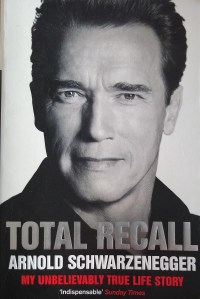
Total Recall by Arnold Schwarzenegger

This book was a Christmas gift from Liz. She knows I’m a big film fan and I do love reading about the background to films and how they are made. Arnold is from Austria and he tells us a little of his life there but mainly focuses on his desire to be a great bodybuilder and to eventually go to America. There is a lot of talk about the process of competitive bodybuilding and the different muscles, muscle definition, reps and squats and all that stuff. Arnold eventually wins various competitions and is wondering how he can compete in the USA when he gets an invitation to do just that. The bodybuilding industry is a close knit one and there seem to be various people welcoming him to California, helping him to find a place to stay and so on. He wins more competitions and makes a little money. He starts a mail order business selling magazines and pamphlets about himself and his body building techniques. He brings one of his Austrian friends over and the two begin a bricklaying and home improvement business. His big break is getting a film part as Hercules and even though the production eventually goes bust it seems to give him a taste of the film business and he wants more. He plays Conan the Barbarian in the film version of a comic book hero and pretty soon he plays the Terminator and goes on to success after success, even becoming governor of California.

I’m not sure I actually came away liking Arnold. I know this is an autobiography but it’s a very me, me, me book and Arnold is constantly bigging himself up. The final chapters about his political career are perhaps the most interesting. He had thought about running for governor but senior republicans seemed to have been more interested in another candidate. However, when Gray Davis was elected in 2000, there seems to have been something of a backlash and there is a curious precedent in Californian politics. The public can demand a recall, a new election in which the public either go for the elected governor or someone new. Arnold entered into the recall and won. He seems to have been in an odd position politically. He was a Republican but had married into the Kennedy family who are Democrats but his success as a politician seems to have come from holding the centre ground in California and bringing Republicans and Democrats and getting them to work together.

At the end of the book Arnold gives us his personal philosophy and his rules for success.

Verdict: I’m not sure whether Arnold wrote this book just to give us his story or to further promote himself but if I had to choose, I’d probably say the latter. Having said that, Mr Schwarzenegger is a man who gets things done and has a positive attitude. Perhaps I should take another look at his rules for success.

Great Expectations by Charles Dickens

This is not a book I brought on holiday but one I found on the shelves of our rented villa in Lanzarote. I started reading it when I got a little bored with Arnold Schwarzenegger and liked it so much I just carried on to the end. It is a real pleasure to read something by a master wordsmith and I enjoyed every minute even though I had read this novel years ago. Young Pip, apprenticed to be a blacksmith, is invited to the home of an eccentric rich woman, Miss Havisham, purely for her amusement. Later in his young life he finds he has ‘great expectations’ and is to inherit a remarkable property. He is taken to London to be brought up as a gentleman and although he is told that his benefactor has asked to remain a secret, he naturally assumes it is Miss Havisham. At the beginning of the book, Pip encounters Magwitch, an escaped convict on the marshes near his home. He compels Pip to bring him some food and a file. He is captured and transported to Australia and later we find, much to Mr Pip’s shock and amazement that Magwitch is the mysterious benefactor.

The book is rightfully one of Dickens’ best loved stories and is a wonderful read. I’ve always thought it had a rather ambiguous ending and in fact in my edition back home, it is one of those with various notes and background information, I am advised that Dickens felt that it was important to assure the reader that Pip had a future with Estella, the spoilt adopted daughter of Miss Havisham and so changed the ending slightly. Pip of course did want a future with Estella but I still feel the book leaves a happy ending slightly uncertain.

Verdict: An absolute classic from a master storyteller.

A Mad world, My Masters by John Simpson

This is a collection of globe trotting stories from John Simpson who has travelled the world as a journalist for the BBC. These though are travel stories with a difference, for instance in the first chapter he talks about airports, not the airports that I generally use, tourist destinations like Spain and Greece. The ones Mr Simpson mentions are airports in war torn Angola and Bosnia, and places like Kabul in Afghanistan and other places where he has had his passport and papers routinely torn up or thrown into a river by laughing revolutionaries and mercenaries. He tells us about headlong dashes to catch flights, including one somewhere in eastern Europe where he was in such a mess after weeks living rough the stewardess was reluctant to let him on board, especially as he had a first class seat. His fellow passenger in the next seat asked to be moved. Luckily John wasn’t flying on a budget airline like the ones I travel with.
On one occasion in Afghanistan with the Mujahadeen, a bearded man appears dressed in white robes. He tries to get the Mujahadeen to murder Simpson for $500. It later turned out that the man was Bin Laden. Simpson talks nonchalantly about many other encounters with revolutionaries such as Arkan, the Bosnian warlord. There are other chapters on dictators that he has met and other sometimes ordinary people who have impressed him, like the simple village priest trying to make life safer for his fellow villagers in Colombia, one of the great drug producing countries of the world.

Most of his stories are hugely fascinating although the more interesting ones are about people, either the ones he has interviewed or the ones who work with him, his fellow journalists and sound-men, cameramen and so on. Most of this book is about the days when a BBC crew consisted of a cameraman, a sound-man, a producer and sometimes even others. Today, Simpson’s crew would consist of him and one other doing the filming and editing. There are some TV journalists today that even have to film and edit themselves.

The last part of the book where the author talks about his love for middle eastern rugs and antiques and the process of bartering that goes with buying those things was perhaps not my cup of tea. Verdict: A patchy read with some very fascinating chapters as well as some not so interesting ones. Generally, though, this was indeed an excellent read.

The Firm by John Grisham

There is a process by which I choose books to take with me on holiday. I like to think it’s a thoughtful process combining different genres of books, some novels, maybe the odd classic, and some biographies and autobiographies. What actually happens is that the day before our trip I’ll just grab something near to hand that I know I haven’t read yet and shove it in my suitcase. Anyway, that’s how I ended up with the books you see above. Last year I read The Rainmaker by John Grisham and I thought it was a pretty good read. I must have mentioned that to Liz so she filed that away and got me a stack of Grisham novels for my last birthday. The Firm isn’t a bad read and in my case it was a nice change of pace after reading Dickens and John Simpson’s globetrotting memories. It’s a good story but like a lot of Grisham’s works, its more plot driven than character driven. The characters are sort of bland templates that I’ve recognised in a lot of his novels and so far I’ve only read three. Anyway, characters aside, this is a really original story about a young guy who graduates from law school and gets head hunted into a firm he has never heard of but which offers tremendous financial benefits, a brand new BMW, and an ultra cheap mortgage as well as other financial bonuses. The downside as he comes to learn later is that the firm is just a cover operation to launder money for a big mafia crime family and the FBI wants our hero James McDeere, to help them.
Verdict: Highly enjoyable and a great holiday read but nothing more, although that didn’t stop the book from becoming a best seller as well as a hit film in the 1990’s.

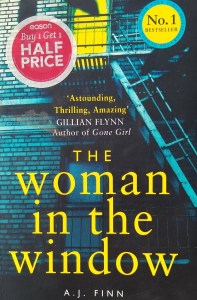
The Woman in The Window by AJ Finn

I’m not sure I would normally have picked up this book if I hadn’t run out of books to read. I saw this on the shelf in our rented villa and Liz had read it and mentioned about numerous references to old black and white films which were right down my alley, apparently.

Anyway, I thought I’d give it a go and I’m very happy that I did. It’s about a woman called Anna Fox suffering from agoraphobia who cannot venture outside her house. She is in effect almost imprisoned there but spends her time playing online chess, seeing two therapists, one physical and one psychological as well as taking medication and drinking a whole lot of Merlot. She also spends a lot of time watching old films on TV and DVD as well as watching her neighbours.

She hears a terrible scream one night although no one else seems to hear it. She questions her tenant who lives in her basement but at the time in question he was doing some work while wearing earphones.

She meets Jane Russell from across the road, not the Jane Russell from the films but a pleasant lady whom she invites in and has a glass of wine with. Later through the windows of Jane’s house, she sees her get stabbed.  Anna calls the police and tries to go across to the house but she cannot get over the road due to her agoraphobia and she ends up in the park where she is found by paramedics.

When she surfaces, we find that no one believes her story and also that Jane Russell is still alive, except, she’s a different Jane Russell to the one Anna saw murdered.

The tension builds nicely in this thriller and a number of shocks are dropped in front of the reader along the way as we find out what has caused the agoraphobia and what really happened over the road.

This was also made into a film starring Amy Adams as Anna Fox although I’ve yet to see it.

Verdict: Great read, so much so that when we left the villa, I had to take it with me to finish on the plane home. To be fair I did leave behind The Firm to replace it.


What to do next: Here are a few options.

Share this post on your favourite social media!

Hit the Subscribe button. Never miss another post!

Listen to my podcast Click here.

Buy the book! Click here to purchase my new poetry anthology.

Click here to visit Amazon and download Floating in Space to your Kindle or order the paperback version.

Holiday Book Bag 2022

A long time ago I was reading a biography about Richard Burton called ‘Rich’ by Melvyn Bragg. The book used Burton’s own diaries and mentioned, amongst other things, Burton’s love of books. When Burton went on holiday he looked forward with delight to the contents of his ‘book bag’. I know it’s a pretty tenuous link but one thing I have in common with Richard Burton is a love of books and when I go on holiday, one of the delights of lying under a warm sun on my sun bed is a good undisturbed read. I read a lot at home and on my lunch breaks at work but it’s a few minutes here and a few minutes there and whenever I get interrupted it kind of breaks the flow. Some books, as we all know, are just made for a really long, uninterrupted read so here are the books I took on holiday with me recently, all sourced from either the internet or second hand bookshops.

My Life in France by Julia Child.

Sometimes you pick up a book that is just a joy to read and this was one of those books. Julia Child is a US TV chef, maybe one of the first TV chefs ever, although she is little known in England. The book is a memoir of her life in France, her journey as a Cordon Bleu chef and as a cookery book author, a TV star and as a wife and Francophile.

Her husband Paul works for the US foreign service and is posted to France in the late 1940s. The two have an interesting life in post war Paris enjoying French food and the French way of life. Julia is very interested in food and takes on a course as a Cordon Bleu chef. She is fascinated by the French way of cooking and meets many others who feel the same including two French women who have written a book about French cooking but aimed at the American market. The two Frenchwomen need an American point of view so Julia is engaged to assist but soon becomes the primary force in the emerging book. My Life In France mixes the development of her classic French cookery book with her life, her love of food, her favourite recipes and the whole world of French food. An utterly wonderful book, even if you are not familiar with Julia or the recent TV series or the film starring Meryl Streep.

I was travelling through France when I read this book and I was very tempted to divert course and visit some of the places she mentions.

Verdict: A joyous, wonderful read.

The Essential Hemingway by Ernest Hemingway.

During the lockdown I read a blog that was something along the lines of 100 authors you must read before you die. One of those authors was Ernest Hemingway. Not long afterwards I spotted a compilation of his works in a charity shop and I thought to myself, I’d better pick that up and get cracking on those 100 authors. It had been lying unattended on my book shelf for quite a while so I thought I’d throw it into my book bag for our latest trip to France.
The book consists of one complete novel, Fiesta, parts of some other novels and a collection of short stories. I wasn’t in the least interested in reading parts of a book. If I want to read a book, I’ll read the whole lot, not parts of it so I thought I’d get cracking with Fiesta. Now I know Hemingway has a sort of minimalistic style so I was prepared for that. I just couldn’t understand the point of a lot of what he was talking about. It’s like he was showing us stuff that was hardly relevant, almost like a Quentin Tarantino film. There are pages of dialogue and then some fairly introspective stuff and then we were back to dialogue again. Jake Barnes is in love with Brett who I thought at first was a man but is actually a woman, a lady in fact, an actual lady, Lady Ashley, known as Brett to her friends. Jake and Brett and various others all go off from Paris to Spain to see the bull fighting in Pamplona and Brett turns out to be popular with many of the men. Jake is love with her and Michael wants to marry her but she decides she wants a bull fighter who then falls for her and apparently also wants to marry her.

Sorry Ernest if you are reading this from the spirit world but I got a little bit lost and only continued to the end out of a sort of dedication to not having another novel on my conscience that I couldn’t finish. What can I say? I know it’s a classic but sorry, it wasn’t my cup of tea. I tried some of the other short stories in this collection but again even though they are well written I started wondering things like ‘what’s this about? Why are we talking about this? What was the point of that?

Verdict: Interesting but an ultimately disappointing read.

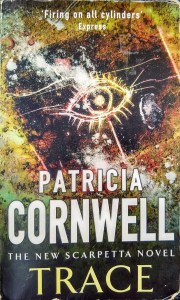
Trace by Patricia Cornwell.

I picked this up a while ago, started to read it and lost interest, not because of the book itself but because it was in my book bag for taking outside and as the UK weather has been so poor, I haven’t done much outdoor reading this year so far. Anyway, I thought I’d throw it in my holiday book bag and give it a read while I was touring France. I’ve always liked the Kay Scarpetta novels and a few years back I started reading the whole sequence of them starting with Post Mortem, the impressive first entry in the series. I thought the books were great, that they looked at crime in a new and different way, showing how crimes could be solved by forensic detection and it was the reality of the novels, their clear connection to modern detection methods that was at the core of their success. After a while though, I felt the books were straying from reality and getting a little silly, a bit like when Roger Moore took over the mantle of James Bond and the 007 films went a little daft.

Trace is not one of Cornwell’s best books and concerns, to a certain extent, Scarpetta’s niece Lucy who has gone off and become some kind of super secret agent computer geek girl and has somehow made a great deal of money and founded her own super secret spy company. Anyway, in this novel, the death of a young girl who Scarpetta has been consulted about is apparently connected to another case Lucy is also working on. It kept me reading and I liked it but sadly not as much as the earlier more serious and reality based novels.

Verdict. OK but not a great entry into the Scarpetta series.

What Happened by Hillary Clinton.

I picked up this book in a second hand book shop. I’ve always liked Hillary Clinton. She’s not your average First Lady, content to stay in the background and support her husband, the President. Mrs Clinton liked to be part of Bill Clinton’s administration in a way that other first ladies have never been, sometimes for the right reasons, sometimes for the wrong ones.

Her book What Happened? is basically about her failed attempt to become the USA’s very first female president. If she had succeeded, that would have been quite an achievement and for a while it even looked as though it was on the cards. Mrs Clinton mentions many times how she was ahead in the polls and how she beat Trump in their various TV debates so where did her candidacy go wrong?

She had a lot of ideas for the presidency and she reveals many of her plans to engage in the problems facing the USA in this book. Her presidential opponent Donald Trump didn’t seem to have many ideas at all, at least that’s what Hillary seems to think. His campaign was based on attacking and coming up with ideas for building a wall to keep the Mexicans out and of course, wanting to lock Hillary up.

A big problem for Hillary was her emails. She had decided to carry on using her personal email server instead of the government one, something that other government officials have done before, but somehow the press got hold of the story and blew it up out of all proportion. Her emails were leaked to the Wikileaks website and an investigation was made which involved publishing many of her emails, actually 30,000 of them. She mentions that many people seem to think she is hiding something despite her emails being published as well as her tax returns. After many investigations, the Whitewater investigation for instance, she makes the point that everything she has done has been so public, what could she be hiding? Mr Trump of course did not publish his tax returns, or his emails for that matter.

There’s a very hurt tone throughout the book and clearly, she’s not very happy about her defeat, just like any defeated candidate would be. Hillary has had to endure a lot. Mr Obama’s successful quest to become the first black president overshadowed her first try at the presidency and she returned eight years later when it was time for Obama to step down. Her husband is well known for his extra marital affairs but she has stood by him none the less and some of the bad press from those incidents has clung to her like a sort of bad background odour.

The final nail into the coffin of her presidential bid was a last minute announcement by the head of the FBI about the emails and her small points lead dwindled into a loss.

I often wonder why Mrs Clinton seems to be disliked. She is one of those personalities that people either like or hate, there doesn’t seem to be anything inbetween. Over on YouTube when I did a search about her, pretty much everything that came up was negative. There was a former secret service agent talking about an incident in which the former first lady had thrown a vase at the president, well an alleged incident I should say. The thing is, if your husband had been playing away with Monica Lewinsky and Gennifer Flowers, wouldn’t you be tempted to throw the occasional vase at him? I know I would, had I been in Hillary’s shoes.

Over on Quora, someone had already asked my question, what is Mrs Clinton really like? The first answer I saw was a lady who called up Mrs Clinton’s senatorial office about her brother’s problem, it was to do with money or tax or something I can’t remember. She left a message and the next morning Mrs Clinton, yes Mrs Clinton herself, not an assistant but actually Mrs Clinton herself, called up, took more details and sorted out the problem.

I doubt Hillary Clinton will ever go for another run at the presidency but it’s clear she has made her mark on the American political scene as a woman, a candidate, a senator and a First Lady.

Verdict: Not a great book but an enjoyable read all the same.


What to do next: Here are a few options.

Share this post on your favourite social media!

Hit the Subscribe button. Never miss another post!

Listen to my podcast Click here.

Buy the book! Click here to purchase my new poetry anthology.

Click here to visit Amazon and download Floating in Space to your Kindle or order the paperback version.

Christmas Day and Charles Dickens

Happy Christmas and I hope you are having a good one wherever you are. It’s not every year that my scheduled regular post ends up going out on Christmas day so should I make the most of it and deliver a sensational blog post or should I just recognise that today people have other things on their minds than reading a blog post?

Tough call.

Still, when people have finished opening their presents and have had their fill of Christmas dinner, pudding, drinks and nibbles, perhaps there might be a small opening for readers to open up their computers or tablets and have a read of my blog. Let’s give it a shot, anyway.

I caught the end of a documentary on TV the other day about Charles Dickens and how he apparently is the man who invented the modern Christmas just by publishing a short story about Christmas called A Christmas Carol. That sounded pretty interesting to me so as I had missed most of it, I thought I’d do a little internet research.

Charles Dickens was born in 1812 and in 1836 he published his first book, The Pickwick Papers. The Pickwick Papers became a publishing phenomenon by introducing serial publication; the book was published in serial form and it kept the readers wanting to find out what would happen next. In the TV show I watched they had someone on from Eastenders who claimed that if Dickens lived today, he would be working in TV, responsible for the cliff hangers that today’s soaps end with.

A Christmas Carol was published in 1843 and sold 6000 copies in just six days. It was not initially a great financial success for Dickens as he had decided to publish an edition with colour pictures. No colour printing was possible at the time and so the colour pictures were hand coloured by teams of people, all of which added to the expense of publication.

Dickens_by_Watkins_1858

Dickens himself was very fond of Christmas and the description in the book of the party at Scrooge’s nephew’s house was similar to the celebrations at Dickens’ own home. The piano was played, there was dancing, Christmas trees had become popular and Christmas carols were sung. The phrase ‘Merry Christmas’ became popular because of its use in ‘A Christmas Carol’.

The tradition of having a turkey dinner for Christmas began with Henry VIII but became popular in Victorian times. Prior to that a typical Christmas dinner involved goose. In A Christmas Carol, Scrooge buys a huge turkey for Bob Cratchit and his family and again that only increased the popularity of a Christmas turkey.

Another company produced an unauthorised edition of the book and Dickens sued, only for the rogue publisher to declare themselves bankrupt, leaving the author to pay for his costs despite winning his case.

Dickens was in need of money and he began a series of readings of his works which were lucrative and incredibly popular. These readings occupied most of his time in the last ten years of his life. He divorced his wife which was highly unusual for the time. He had met a young actress called Ellen Ternan who was 27 years younger than him and he remained passionate about her for the rest of his life. In 1860 he started a huge bonfire at his house, Gads Hill Place in Kent, in which he burned all his correspondence. Ellen too destroyed all her letters from Dickens so the full details of their relationship has never been known. Were they lovers? Possibly, but we can never know for sure.

On June 8th 1870, Dickens had a stroke after working on his last book, The Mystery of Edwin Drood. He died the next day without regaining consciousness. Some have speculated that he died at Ellen Ternan’s house, and she had him taken back to Gads Hill to prevent a scandal.

He was laid to rest in Poets Corner at Westminster Abbey and A Christmas Carol remains one of his best-known works and the name of his main character, Scrooge has entered into the English language as meaning a miserly person. To this day, the book has never been out of print and a first edition copy would set you back about 10 to 15 thousand pounds.

More film versions have been made of A Christmas Carol than any other of Dicken’s works but the one that is head and shoulders above the others is the Alastair Sim version made in 1951. Take a look through your TV schedule and I’m pretty sure you’ll find it showing somewhere.

Have a great Christmas.


What to do next: Here are a few options.

Share this post on your favourite social media!

Hit the Subscribe button. Never miss another post!

Listen to my podcast Click here.

Buy the book! Click here to purchase my new poetry anthology.

Click here to visit Amazon and download Floating in Space to your Kindle or order the paperback version.

My Holiday Book Bag 2021

A long time ago I was reading a biography about Richard Burton, in fact it was ‘Rich,’ the biography by Melvyn Bragg. Bragg used Burton’s own diaries in his work and wrote, amongst other things, about Burton’s love of books and when Burton went on holiday he looked forward with delight to the contents of his ‘book bag.’ I know it’s a pretty tenuous link but one thing I have in common with Richard Burton is a love of books and when I go on holiday, one of the delights of lying under a warm sun on my sun bed is a good undisturbed read. I read a lot at home and on my lunch breaks at work but it’s a few minutes here and a few minutes there and whenever I get interrupted it kind of breaks the flow. Some books, as we all know, are just made for a really long, uninterrupted read.

It’s a long time since I’ve been able to produce a Holiday Book Bag post, simply because I haven’t had a holiday which has mostly been the fault of Covid 19 so here are the books I’ve brought on holiday with me to Lanzarote.

Peter Sellers by Alexander Walker

I’ve always been interested in the comedy actor Peter Sellers. It’s probably because of a documentary I saw years ago on BBC’s Arena programme, a film about Sellers which used Sellers’ home movies and what has been good about this particular book is that it has filled in the gaps that were missed in the film.

Sellers was an only child, born into a theatrical family in 1925, he was in fact the second child of Bill and Peg Sellers. Their first child, also called Peter died in infancy and because of that, the family, in particular mother Peg, lavished a great deal of love and affection on Peter. The result was that he was not a nice child, in fact he was spoilt rotten and got his own way in everything and developed many traits he would take into adulthood with him.

Peg, Sellers’ mother, had a stage act in which she used to dress in a white outfit and pose on stage while various slides were projected over her. Father Bill was a musician and Peter claimed that he had taught George Formby to play the ukulele. Sellers was called up in the second world war and Peg used her theatrical contacts to get Sellers into the entertainment unit ENSA. She even travelled about the country to be near him until he was posted overseas. After being demobbed Sellers tried to get work as a comedian and eventually got work on a radio show by impersonating the star of that show, Kenneth Horne over the phone to the producer and saying how good that new comedian Peter Sellers was. Sellers admitted the deception but the radio producer was impressed so Sellers was asked to join the cast of the show.

From there, Sellers met Spike Milligan, Michael Bentine and Harry Secombe and together the group started the Goon Show, the famous hit radio show for which Sellers provided numerous comedy voices.

The next step for Sellers was into films and his big break was getting a part in the film The Ladykillers in 1956. His film hero Alec Guinness was the star. He starred or co-starred in numerous British comedy films before appearing with Sophia Loren in The Millionairess in 1960. The Millionairess made him an international star.

The book tells of his various film roles including his most famous one, that of Inspector Clouseau, a part which he only got after Peter Ustinov turned it down. The author also recounts Peter Sellers’ odd behaviour, his numerous purchases of cars and gadgets, his wives and how his staff had to deal with his various tantrums. His final wife, Lynne Frederick even gets a good review from the author although in other books and documentaries she has not come out looking as good.

Sellers died of a heart attack in 1980, aged only 54.

I do love books about films and film making and this one was an excellent read.

Death of a Glutton by MC Beaton

This is a novel in the Hamish Macbeth series and part of my mission to read all the Macbeth books. The last few have not been great reads. Death of a Prankster wasn’t exactly riveting but this one is much better. It’s not a classic of literature by any means, it’s just a pleasant read. It follows what I have come to think of as the Agatha Christie style of a whodunnit. You know what I mean, a group of suspects gathered together by the detective, in this case Hamish Macbeth and we know one of them is the murderer. This eighth entry in the Macbeth series is about an overweight woman, a part owner in a dating agency who alienates all the potential lovebirds with her constant eating. The co-owner of the agency wants to get rid of her. Is she capable of murder or does Hamish have his eye on someone else?

A pleasant holiday read, nothing more.

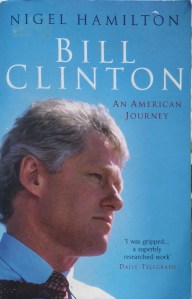
Bill Clinton: An American Journey by Nigel Hamilton

I’m a great fan of biographies and I picked this book up ages ago in one of those remainder book shops. I keep starting it and then moving on to something else so I grabbed it for this holiday book bag, determined to finish it. Bill Clinton was born Bill Blythe and took the name Clinton when his mother married Roger Clinton. It wasn’t a good choice on his mother’s part as Roger was an alcoholic and Bill had to cope with the consequences of Roger’s drinking for many years. Bill was a bright youngster. He did very well at school, he seemed to remember everything he had read, he was very intelligent and a born networker. Perhaps as a consequence of his home life he was good at sorting out feuds and disputes and when he grew tall and strong, he was able to intervene in the often violent disputes between his mother Virginia and Roger.

Bill won a scholarship to Oxford in the UK where he widened his circle of friends. Back in Arkansas he had worked on Senator Fulbright’s election team and also discovered women. Like JFK his hero, Clinton had numerous liaisons which didn’t stop when he met Hilary Rodham. She was nothing like the usual girl he became involved with. She wasn’t good looking, wore huge goggle like spectacles, had greasy hair and apparently wasn’t keen on too much deodorant. After university she went on to be part of the Senate’s Watergate Investigation staff but later joined Bill in Arkansas where he decided to run for Attorney General and later, for the Governorship. The two married and formed a wonderful political partnership that would ultimately take them to the White House.

In his election campaign President Bush thought Clinton would be easy to defeat and began to focus on the third-party candidacy of millionaire Ross Perot. Perot withdrew from the race, and then re-entered. A key moment was in the last of the debates when Bush was unable to properly answer a question from a member of the public about the personal effects of the recession. Bush was confused but Clinton answered the woman directly and had seen many issues in his home state of Arkansas concerning loss of jobs, loss of homes by people unable to pay mortgages and so on.

Another moment was when on live TV the Clintons were asked about Gennifer Flowers. Hilary jumped to her husband’s defence and asked for privacy and then told the viewers that if they didn’t like Clinton then they shouldn’t vote for him. The public did vote for Clinton and in large numbers.

Author Nigel Hamilton has produced an interesting book that is conveniently put together in bite sized and subtitled short sections. I’m not sure whether he really gets close to who Bill Clinton really is but all the information is there to make your own deductions. One of the interviewees for the book comes right out and calls Clinton an inveterate liar. He lies about many things but particularly about his personal life, his many affairs while governor and in particular his twelve year relationship with Gennifer Flowers. There are many comparisons with Clinton’s hero JFK, partly because Hamilton wrote a book about him too. I remember reading that he declined to add a second volume because he didn’t like what he had learned about Kennedy in his research. This book, subtitled An American Journey is only volume one although nowhere on the book does it state that.

The book comes to an abrupt end when Clinton wins the election. There is no description of Clinton’s joy or reaction to his victory. I suppose I’ll have to buy volume II to read about that.

An Autobiography by Agatha Christie

A while ago I was thinking that it’s about time I read something from one of the best selling authors of all time. Searching through the internet I came across Agatha Christie’s autobiography so I thought that might be a good starting point. A lot of the media stuff I do for Floating in Space portrays it as a lost world, the world of 1977 when the book is set. Agatha Christie was born in 1890 and her book truly is a portrait of a lost world. She claims she didn’t come from a rich family yet her mother and father lived in a large house. They had cooks, nannies, nurses and other servants. Her father, who she says was a very agreeable man, had a private income. His father had made investments that paid him handsomely so he was never obliged to work. He left every day for his club, returned home for lunch and then returned to his club to play whist. During the season he spent his time at the cricket club where he was president. Agatha tells various stories of her childhood in Torquay. They are all well observed tales of life in a Victorian house. Later her father dies and the family is struggling for money so they rent out the house and decamp to various places in France, including Paris. Agatha’s lifelong love of travel must stem from these early visits to the continent.

Later she leaves home and marries an airman from the newly formed Royal Flying Corps and tells of her voluntary work as a nurse in WWI. For a while she works in a pharmacy and after being introduced to various poisons gets the idea of writing a murder story. She does so and takes it to various publishers. None seem very enthusiastic about it but eventually she gets to have the work published. She is quite pleased with herself although she only makes a little money. Her first book featured Hercule Poirot, a Belgian detective. She chose a Belgian as there were then many Belgian refugees in England as Belgium had been invaded by the Germans. Later she writes more books and is buoyed when a newspaper asks to serialise one of them. She realises then how poor her publishing contract is and engages a literary agent who stays with her for many years.

To conclude then, this is a very enjoyable well observed book and has made me want to add some Agatha Christie novels to my reading list.


What to do next: Here are a few options.

Share this post on your favourite social media!

Hit the Subscribe button. Never miss another post!

Listen to my podcast Click here.

Buy the book! Click here to purchase my new poetry anthology.

Click here to visit Amazon and download Floating in Space to your Kindle or order the paperback version.

Dylan Thomas

The 27th of October was the birthday of one of my favourite writers. I love lots of writers but probably my all-time favourite is Dylan Thomas. I love the outstanding power of his writing, his incredible imagery, and the wonderful pictures he creates with his words.

Dylan also is the sort of writer I’ve always wanted to be: A bohemian, pub crawling, boozing writer who fought with himself as he laboured to paint his word pictures. Whether that was really the case I don’t know but Dylan did like his pubs and he did enjoy a drink.
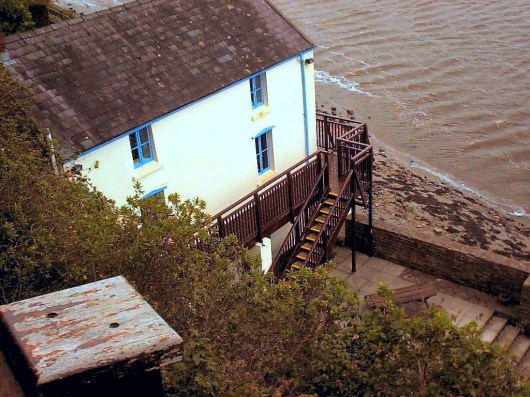
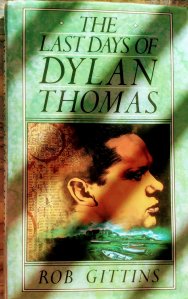
The fact of the matter is that I’m nothing like Dylan, except we both share a love of words, particularly the sound of words, which is the key to the richness of Dylan’s work, especially his poetry. If you think about it, there must be a connection between the sound of a word and its meaning, a deep organic connection. After all, how did words begin? Imagine some ancient caveman, just wanting to get some concept over to his mate. What are the deepest and strongest feelings for a human being? Well, for a caveman food must be one, and love too. Surely love was present in those primordial days when every caveman went out on Saturday with his club looking for his mate. There must have been a moment when ancient man strived to say something to his mate, tried to express his feeling and a sound that was the precursor to the word love slipped uneasily from his lips.

If you have read any of Dylan’s poems and are yet to understand his magic, let me give you a tiny bit of advice: Listen to Dylan’s voice. Yes, Dylan, like many poets wrote for his own voice and if you click on to any Dylan Thomas page or search anywhere on the internet you are bound to come across some old recording of his voice. Don’t make do with lesser voices, even when we are talking about great actors like Richard Burton or Anthony Hopkins. Search out Dylan himself and you will be won over, like me, by the power of his voice.

It’s not just his poems that are rich with the power of words. Dylan wrote and performed a good many radio plays and broadcasts and my very favourite is ‘Return Journey.’ It’s about Dylan himself returning to Swansea in search of his former self ‘Young Thomas’. He visits young Thomas’ old haunts and meets with people who knew him fleetingly; the barmaid who used to serve him, journalists who worked with him and even the park keeper where Dylan and his young friends would play in the park. It’s a lovely piece where fantasy merges with reality and we slip in and out of the two as the story progresses.

Many years ago I visited Dylan Thomas’ house in Wales. The house is in the village of Laugharne and is not far from one of his famous watering holes, the Brown’s Hotel which I’m pretty sure was bought by one of the comedians from TV’s Men Behaving Badly.

The boathouse was bought by a trust some years ago which saved the property from collapsing into the sea. It’s a lovely place and on the day I visited, we had to leave early although I can’t remember why. I came back the next day and the staff remembered I had left early previously and let me in for free. I wandered about Dylan’s old house and sucked in the atmosphere before buying various books and pamphlets about Dylan and his works.

In another old TV documentary I tend to watch now and again, the presenter, a poet himself, visited the house and ventured that he thought he could imagine the conversations of Dylan and his wife, the chit chatting, the arguing and the making up later, or so he supposed.

I took a primitive digital camera with me and took a few shots of the house and Dylan’s famous writing shed. I read somewhere recently that the shed has now been removed and taken to a museum with a duplicate shed now occupying the site.

I enjoyed my visit and Dylan’s own poem always makes me think of it:

In the mustardseed sun,
By full tilt river and switchback sea
Where the cormorants scud,
In his house on stilts high among beaks
And palavers of birds . . .

As you might have guessed from reading these posts, I really do love my books. One particular book pictured here, about the last days of poet Dylan Thomas is one I’ve had a long time but have not got around to reading until more recently. I do endlessly peruse our local secondhand shops for books but I have a feeling I bought this one from one of two online bookshops, either Abebooks or Awesome books, both of which I use especially when there is a particular book that I am after.

This book is a rather slow one but it details Dylan’s last days and ultimately his death in New York in the USA.

Dylan was a slow worker when it came to writing and there was always something, usually a pub, to draw him away from his work. In his latter days he was concerned that his talent or his inspiration had gone and that all his best work was perhaps behind him. He was short of money as usual and that is what drove him to accept an offer to go to the USA on a poetry tour by Canadian poet John Brinnin. Brinnin was the director of a poetry centre in New York and the trips Dylan undertook there were very lucrative for the always hard up poet. Thomas had a number of wealthy patrons, in fact his famous house in Laugharne was bought by for him by an admirer but money went through Dylan’s hands quickly.

He had travelled there before and on his penultimate visit had become romantically involved with a lady called Liz Reitel who worked for Brinnin at the poetry centre. When Dylan arrived for his last visit Reital was shocked to see the poet looking poorly and ‘not his usual robust self’. Dylan was in an odd mood and related a strange story of an encounter on the aircraft with a priest. Over the next few days his mood alternated between being tired and poorly and getting drunk with some moments of normality. I get the impression from the book that Dylan liked attention, he liked admirers and although he was in the middle of an affair with Liz Reitel, he was not averse to enjoying the attention he received from other women.

At the poetry centre, preparations were under way for a recital of the newly finished Under Milk Wood for which Dylan had produced some new edits and updates. Towards the end of the book Liz mentions that she was disappointed that these revisions were not included in the published versions of the play despite the fact that she personally typed them up and passed them on to Dylan’s publishers.

The recital went well and was in fact tape recorded by someone at the time with Dylan taking the part of the narrator.

The book goes on to detail Dylan’s various moods and the symptoms of whatever was ailing him.

Liz called a doctor when Dylan became unwell again and the doctor gave Dylan an injection of morphine sulphate which may or may not have helped him.

After a night of drinking at the White Horse Tavern in Greenwich Village, Dylan returned to the Chelsea hotel claiming famously that he had downed ‘eighteen straight whiskies. I think that’s the record!’

Dylan’s breathing became difficult later in the evening and an ambulance was summoned. Thomas slipped into a coma from which he never awoke and later died on the 9th of November, 1953. He was only 53 years old and died with assets of only £100.

I was always under the impression that Dylan had drunk himself to death but that may not be the case. The autopsy did not find any evidence of liver cirrhosis and his death may have been due to pneumonia and bronchitis as well as the injections he had received from the doctor. It was later thought that the morphine may have inhibited Dylan’s breathing rather than easing his pain.

This was a good read although the author’s style was not completely to my liking. One interesting thing about it was that in my copy, it was a second hand book remember, there was an inscription on the first page. The book was clearly a gift. Did the owner pass away? Did his family send for the house clearance man and clear away his belongings? Who was Kate, the lady who signed the book in 1992?

Who was the person she loved and thought the world of?

In a way it is almost like Under Milk Wood itself, where the dead come alive again at night as time passes . .


This post was compiled from my previous posts about Dylan Thomas


What to do next: Here are a few options.

Share this post on your favourite social media!

Hit the Subscribe button. Never miss another post!

Listen to my podcast Click here.

Buy the book! Click here to purchase my new poetry anthology.

Click here to visit Amazon and download Floating in Space to your Kindle or order the paperback version.


4 Book Series

This week I’d like to take a look at four popular book series. Many authors create a particular character or set of characters and write about their different adventures in a new edition. Sherlock Holmes is one example. Sir Arthur Conan Doyle wrote the first Holmes book A Study in Scarlet in 1887 and various books and short stories followed detailing the various adventures and investigations Holmes was engaged upon. Here are four more.

The Chronicles of Narnia.

The Chronicles consist of seven novels published in the 1950’s. They were written by author CS Lewis. The first in the series, The Lion the Witch and the Wardrobe is set during the second world war and was inspired by a group of children who were evacuated to Lewis’ home just outside of Oxford. Lewis was also inspired by a picture of a faun carrying an umbrella and parcels in a snowy wood. The image stayed in Lewis’ head from when he was aged 16 to when he was in his 40’s and he felt it was time to write a story about the picture.

I must have been at junior school when I first encountered the original book in the series. In my first year at junior school our teacher, Miss Ollier, would read us pages from the book as we all sat around her towards the end of our school day. I remember being completely mesmerised by the story especially the moment when one of the children goes through the wardrobe and pushes past the coats hanging there to finally stumble out into the cold of Narnia.

In the book, a group of children are evacuated from London in World War II to a country house. During a game of hide and seek, one of the children, Lucy, hides in a wardrobe. The wardrobe seems to be never ending and as the child pushes towards the back of the wardrobe, she ends up in the magical world of Narnia. Later, the other children follow and they all meet Mr Tumnus the faun, the White Queen and Aslan the lion amongst others. They help Aslan overthrow the Witch and release Narnia from the perpetual winter which the White Witch has imposed on the kingdom. Six more books followed finishing with The Last Battle published in 1956.

The James Bond Books by Ian Fleming.

I started reading the Bond books when I was a schoolboy and unfortunately the very first one I read was the only one they had in our local library: ‘The Man With The Golden Gun’, one of writer Ian Fleming’s worst Bond books. Fleming used to write his initial drafts of the novels and then write a second one, adding in all the details which make the Bond books so interesting. Details of Bond’s clothes, his food, his cars, his cigarettes (the special handmade ones with the triple gold band) and all that sort of stuff. ‘The Man with the Golden Gun’ was published after Fleming had died and sadly he had not revised his original draft. I persevered though, did some research, found the proper order of the books and began to read ‘Casino Royale’, the first in the series. I have loved the books and the films ever since.

Casino Royale is quite an original story. It concerns a man known as Le Chiffre who is a kind of paymaster for Soviet agents in Europe. He however has been a very bad fellow indeed, he has been using some of the funds for his own personal pleasure and decides to recoup the funds by gambling at the Casino at Royale Les Eaux. The secret service however think it might be a good idea to have their best card player beat him at cards and so sentence him to death at the hands of his very own paymasters, the Russians.

Fleming drew heavily on his military background where he was a personal assistant to Rear Admiral John Godfrey, the head of Naval Intelligence in World War II. Godfrey served as a model for M, the head of the secret service in the Bond books. Many people have claimed to be the model for Bond himself and although Fleming admitted the character was based on various agents he knew during the war, the character of Bond is really an alter ego of Fleming himself.

Fleming was a Commander in Naval Intelligence during the war, just like 007, and it was Fleming who drank the vodka martinis that James Bond liked so much. It was Fleming who wore the Sea Island cotton shirts that appear in the novels and it was Fleming who favoured scrambled eggs for breakfast, just like his creation, James Bond.

When Fleming was trying to think of a name for his new character he came across a book called ‘Birds Of The West Indies’ by ornithologist James Bond. In 1964 Fleming gave Bond a first edition copy of ‘You Only Live Twice’ inscribed by Fleming ‘to the real James Bond from the thief of his identity.’ When the book was auctioned in 2008 it fetched £56,000.

There are fourteen books in the 007 series although the last one, Octopussy and the Living Daylights was a collection of short stories. Goldfinger was one of my favourites which I picked up and read again not long ago. Now I’m probably going to have to start at Casino Royale and read them all again.

The Hamish Macbeth series by MC Beaton

I seem to have written about Hamish Macbeth quite a few times recently but here we go again. I have always been a fan of the TV series but recently picked up one of MC Beaton’s books so I thought I’d give them a try. The TV series is slightly different to the books although the style is fundamentally the same. Hamish is the village bobby in the Highland village of Lochdubh. Macbeth is a laid-back relaxed character. He is not averse to poaching the odd salmon and he likes to apply the rule of law in his own way. He avoids promotion as all he wants is to remain in his beloved village. Most of the characters in the series are the invention of the TV writers and not M.C. Beaton who wrote the books. I’m not sure how happy I would be if someone made a TV show out my book and then proceeded to change all the characters, still I did enjoy Hamish Macbeth as a TV show. It was an oddball quirky little drama which ran for only three seasons.

In the books Hamish is pretty much the same character as he appears on TV. He is happy living in the village but is anxious not to do too well as he wants to avoid promotion and live happily in Lochdubh. Despite solving many a murder, he therefore contrives to let Inspector Blair take the credit so he can be left in peace. His love interest in many of the books is Priscilla, daughter of Colonel Harbuton-Smythe who has dismissed Hamish as a lazy malingerer, unworthy of his daughter and the on/off relationship continues throughout the books.

My current read is Death of a Perfect Wife. As usual it’s another murder mystery. It’s not a classic of literature but it’s a hugely pleasant and entertaining book, perfect for a quiet summer afternoon read in the garden. There are 36 books in the series. I’m currently on number 4.

The Kay Scarpetta Series by Patricia Cornwell

This is another crime series but not nearly so light hearted as the one above. Kay Scarpetta is the Chief Medical Examiner of Virginia in the USA. Author Patricia Cornwell first introduced Scarpetta in the book Postmortem originally published in 1990. The character is an American of Italian descent. She is a perfectionist and workaholic and lives in a custom built home where she cooks many Italian meals while she ponders her cases. She also, and perhaps this is me looking at the character from a UK perspective, seems to be overly obsessed with guns although on one occasion, having a gun under her pillow in the bedroom saves her life. In the first book Scarpetta has to deal with a series of murders and works with Benton Wesley from the FBI to create a profile of the murderer. The book also introduces DNA testing as a new technique and later Scarpetta hatches a plot to flush out the murderer. The murderer however, targets Scarpetta herself but is shot dead by policeman Pete Marino.

The books are fascinating reads and have been said to have influenced TV shows like CSI and other shows that use modern scientific techniques of detection and forensics. The first few editions are excellent reads but the later ones tend to stray into a bit of a fantasy area. Scarpetta has an affair with Benton Wesley who is murdered. In a later book he reappears, it seems he was not killed after all but was placed in a witness protection scheme for some reason. That seemed to me to be a little out of the ordinary but later things get really odd. Scarpetta’s niece Lucy appears in the first book as a ten year old but in later editions when she grows up she becomes a computer wizard, and then joins the FBI where she has difficulties because she is gay. Later she develops an internet search engine and becomes a millionaire and creates her own super secret investigation company called the Last Precinct. It’s all a little bit fantastic.

The first books were written in the first person then the later ones shift to the third person and then beginning with Port Mortuary, the last Scarpetta book that I have read, they shift back to the first person. For years I’ve heard in the media about the books being made into films but for whatever reason, that has not yet happened. I reviewed Port Mortuary a few years back and apart from being a little complicated, it was a pretty good read.


What to do next: Here are a few options.

Share this post on your favourite social media!

Hit the Subscribe button. Never miss another post!

Listen to my podcast Click here.

Buy the book! Click here to purchase my new poetry anthology.

Click here to visit Amazon and download Floating in Space to your Kindle or order the paperback version.