A long time ago I was reading a biography about Richard Burton called ‘Rich’ by Melvyn Bragg. The book used Burton’s own diaries and mentioned, amongst other things, Burton’s love of books. When Burton went on holiday he looked forward with delight to the contents of his ‘book bag’. I know it’s a pretty tenuous link but one thing I have in common with Richard Burton is a love of books and when I go on holiday, one of the delights of lying under a warm sun on my sun bed is a good undisturbed read. I read a lot at home and on my lunch breaks at work but it’s a few minutes here and a few minutes there and whenever I get interrupted it kind of breaks the flow. Some books, as we all know, are just made for a really long, uninterrupted read so here are the books I took on holiday with me recently, all sourced from either the internet or second hand bookshops.
My Life in France by Julia Child.
 Sometimes you pick up a book that is just a joy to read and this was one of those books. Julia Child is a US TV chef, maybe one of the first TV chefs ever, although she is little known in England. The book is a memoir of her life in France, her journey as a Cordon Bleu chef and as a cookery book author, a TV star and as a wife and Francophile.
Her husband Paul works for the US foreign service and is posted to France in the late 1940s. The two have an interesting life in post war Paris enjoying French food and the French way of life. Julia is very interested in food and takes on a course as a Cordon Bleu chef. She is fascinated by the French way of cooking and meets many others who feel the same including two French women who have written a book about French cooking but aimed at the American market. The two Frenchwomen need an American point of view so Julia is engaged to assist but soon becomes the primary force in the emerging book. My Life In France mixes the development of her classic French cookery book with her life, her love of food, her favourite recipes and the whole world of French food. An utterly wonderful book, even if you are not familiar with Julia or the recent TV series or the film starring Meryl Streep.
I was travelling through France when I read this book and I was very tempted to divert course and visit some of the places she mentions.
Verdict: A joyous, wonderful read.
The Essential Hemingway by Ernest Hemingway.
 During the lockdown I read a blog that was something along the lines of 100 authors you must read before you die. One of those authors was Ernest Hemingway. Not long afterwards I spotted a compilation of his works in a charity shop and I thought to myself, I’d better pick that up and get cracking on those 100 authors. It had been lying unattended on my book shelf for quite a while so I thought I’d throw it into my book bag for our latest trip to France.
The book consists of one complete novel, Fiesta, parts of some other novels and a collection of short stories. I wasn’t in the least interested in reading parts of a book. If I want to read a book, I’ll read the whole lot, not parts of it so I thought I’d get cracking with Fiesta. Now I know Hemingway has a sort of minimalistic style so I was prepared for that. I just couldn’t understand the point of a lot of what he was talking about. It’s like he was showing us stuff that was hardly relevant, almost like a Quentin Tarantino film. There are pages of dialogue and then some fairly introspective stuff and then we were back to dialogue again. Jake Barnes is in love with Brett who I thought at first was a man but is actually a woman, a lady in fact, an actual lady, Lady Ashley, known as Brett to her friends. Jake and Brett and various others all go off from Paris to Spain to see the bull fighting in Pamplona and Brett turns out to be popular with many of the men. Jake is love with her and Michael wants to marry her but she decides she wants a bull fighter who then falls for her and apparently also wants to marry her.
Sorry Ernest if you are reading this from the spirit world but I got a little bit lost and only continued to the end out of a sort of dedication to not having another novel on my conscience that I couldn’t finish. What can I say? I know it’s a classic but sorry, it wasn’t my cup of tea. I tried some of the other short stories in this collection but again even though they are well written I started wondering things like ‘what’s this about? Why are we talking about this? What was the point of that?
Verdict: Interesting but an ultimately disappointing read.
Trace by Patricia Cornwell.
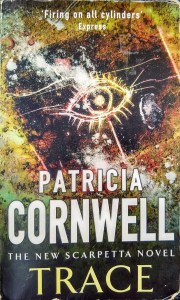 I picked this up a while ago, started to read it and lost interest, not because of the book itself but because it was in my book bag for taking outside and as the UK weather has been so poor, I haven’t done much outdoor reading this year so far. Anyway, I thought I’d throw it in my holiday book bag and give it a read while I was touring France. I’ve always liked the Kay Scarpetta novels and a few years back I started reading the whole sequence of them starting with Post Mortem, the impressive first entry in the series. I thought the books were great, that they looked at crime in a new and different way, showing how crimes could be solved by forensic detection and it was the reality of the novels, their clear connection to modern detection methods that was at the core of their success. After a while though, I felt the books were straying from reality and getting a little silly, a bit like when Roger Moore took over the mantle of James Bond and the 007 films went a little daft.
Trace is not one of Cornwell’s best books and concerns, to a certain extent, Scarpetta’s niece Lucy who has gone off and become some kind of super secret agent computer geek girl and has somehow made a great deal of money and founded her own super secret spy company. Anyway, in this novel, the death of a young girl who Scarpetta has been consulted about is apparently connected to another case Lucy is also working on. It kept me reading and I liked it but sadly not as much as the earlier more serious and reality based novels.
Verdict. OK but not a great entry into the Scarpetta series.
What Happened by Hillary Clinton.
 I picked up this book in a second hand book shop. I’ve always liked Hillary Clinton. She’s not your average First Lady, content to stay in the background and support her husband, the President. Mrs Clinton liked to be part of Bill Clinton’s administration in a way that other first ladies have never been, sometimes for the right reasons, sometimes for the wrong ones.
Her book What Happened? is basically about her failed attempt to become the USA’s very first female president. If she had succeeded, that would have been quite an achievement and for a while it even looked as though it was on the cards. Mrs Clinton mentions many times how she was ahead in the polls and how she beat Trump in their various TV debates so where did her candidacy go wrong?
She had a lot of ideas for the presidency and she reveals many of her plans to engage in the problems facing the USA in this book. Her presidential opponent Donald Trump didn’t seem to have many ideas at all, at least that’s what Hillary seems to think. His campaign was based on attacking and coming up with ideas for building a wall to keep the Mexicans out and of course, wanting to lock Hillary up.
A big problem for Hillary was her emails. She had decided to carry on using her personal email server instead of the government one, something that other government officials have done before, but somehow the press got hold of the story and blew it up out of all proportion. Her emails were leaked to the Wikileaks website and an investigation was made which involved publishing many of her emails, actually 30,000 of them. She mentions that many people seem to think she is hiding something despite her emails being published as well as her tax returns. After many investigations, the Whitewater investigation for instance, she makes the point that everything she has done has been so public, what could she be hiding? Mr Trump of course did not publish his tax returns, or his emails for that matter.
There’s a very hurt tone throughout the book and clearly, she’s not very happy about her defeat, just like any defeated candidate would be. Hillary has had to endure a lot. Mr Obama’s successful quest to become the first black president overshadowed her first try at the presidency and she returned eight years later when it was time for Obama to step down. Her husband is well known for his extra marital affairs but she has stood by him none the less and some of the bad press from those incidents has clung to her like a sort of bad background odour.
The final nail into the coffin of her presidential bid was a last minute announcement by the head of the FBI about the emails and her small points lead dwindled into a loss.
I often wonder why Mrs Clinton seems to be disliked. She is one of those personalities that people either like or hate, there doesn’t seem to be anything inbetween. Over on YouTube when I did a search about her, pretty much everything that came up was negative. There was a former secret service agent talking about an incident in which the former first lady had thrown a vase at the president, well an alleged incident I should say. The thing is, if your husband had been playing away with Monica Lewinsky and Gennifer Flowers, wouldn’t you be tempted to throw the occasional vase at him? I know I would, had I been in Hillary’s shoes.
Over on Quora, someone had already asked my question, what is Mrs Clinton really like? The first answer I saw was a lady who called up Mrs Clinton’s senatorial office about her brother’s problem, it was to do with money or tax or something I can’t remember. She left a message and the next morning Mrs Clinton, yes Mrs Clinton herself, not an assistant but actually Mrs Clinton herself, called up, took more details and sorted out the problem.
I doubt Hillary Clinton will ever go for another run at the presidency but it’s clear she has made her mark on the American political scene as a woman, a candidate, a senator and a First Lady.
Verdict: Not a great book but an enjoyable read all the same.
What to do next: Here are a few options.
Share this post on your favourite social media!
Hit the Subscribe button. Never miss another post!
Listen to my podcast Click here.
Buy the book! Click here to purchase my new poetry anthology.
Click here to visit Amazon and download Floating in Space to your Kindle or order the paperback version.

 Peter Sellers by Alexander Walker
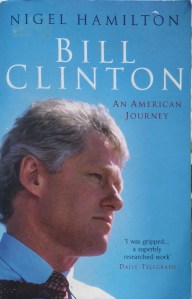 Bill Clinton: An American Journey by Nigel Hamilton
 An Autobiography by Agatha Christie
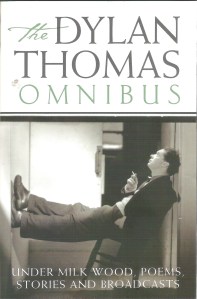 Dylan also is the sort of writer I’ve always wanted to be: A bohemian, pub crawling, boozing writer who fought with himself as he laboured to paint his word pictures. Whether that was really the case I don’t know but Dylan did like his pubs and he did enjoy a drink.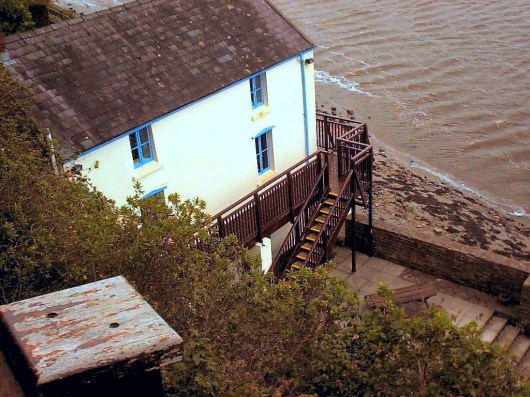
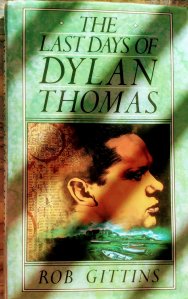 As you might have guessed from reading these posts, I really do love my books. One particular book pictured here, about the last days of poet Dylan Thomas is one I’ve had a long time but have not got around to reading until more recently. I do endlessly peruse our local secondhand shops for books but I have a feeling I bought this one from one of two online bookshops, either Abebooks or Awesome books, both of which I use especially when there is a particular book that I am after.

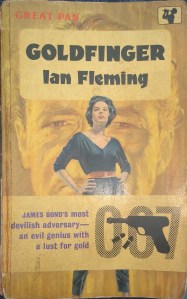 The James Bond Books by Ian Fleming.
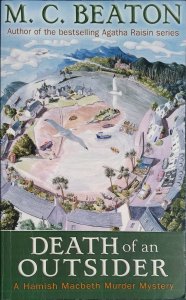 The Hamish Macbeth series by MC Beaton
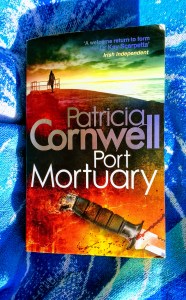 The Kay Scarpetta Series by Patricia Cornwell
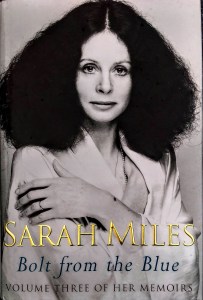 A long time ago I picked up A Right Royal Bastard somewhere in a charity shop. I have a feeling it was whilst walking round Skipton a few months ago but anyway, I didn’t know much about Sarah Miles except that she was a film actress and had appeared in Those Magnificent Men in their Flying Machines and also Ryan’s Daughter, that latter film being one of director David Lean’s less appealing films. Apparently, as Sarah reveals in Serves Me Right, Lean was so upset by the bad reviews he didn’t make another film until A Passage to India, many years later.
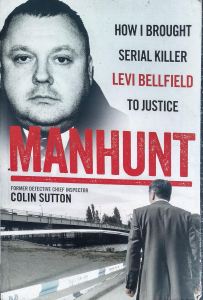 I always find it interesting just how I seem to hook up with a particular book. In this case I had an email from the ITV Hub telling me about a great new series of Manhunt and how I could watch the previous one on the ITV hub. Now what criteria ITV uses to send me an email like that I don’t know because not only had I never watched Manhunt, I’d never even heard of it. Looking at the ITV website I found that Manhunt was a three part thriller based on the real life case of killer Levi Bellfield. Having nothing more interesting lined up to watch that evening, Liz and I settled down to watch and actually got pretty interested, so much so that I immediately went to Abebooks and ordered a copy of the book that the series had been based on. It had been written, in fact written quite well by former Chief Inspector Colin Sutton who was in charge of the real life investigation of a young French student murdered in Twickenham, London.
 Papillon by Henri Charrière
 The Wooden Horse by Eric Williams
 On her Majesty’s Secret Service by Ian Fleming
 Death of A Dreamer by MC Beaton
 My Autobiography by Charles Chaplin.
 Stan, The Life of Stan Laurel by Fred Lawrence Guiles.
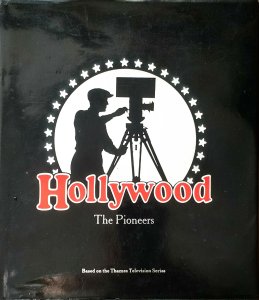 Hollywood.
 I do love books and like everyone I have my favourites. Last week I wrote about reading a blog post asking the reader for their top 5 books of all time. I decided to go one better and work out my top ten. I gave you the first five of my top ten books of all time and this week it’s time for the other five, all in no particular order.
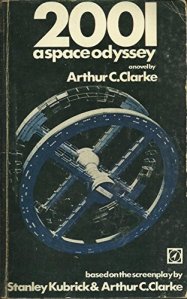 2001 A Space Odyssey
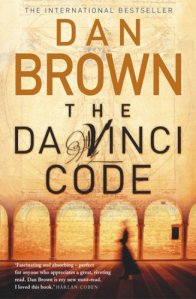 The Da Vinci Code
 page is for writers to talk about stuff, you know, publishing, agents, even actual writing but writers being a self-indulgent selfish lot, they usually just post links to their new books. Being similarly selfish I tend to add links to my new blog posts but on this occasion, I noticed something different, someone had asked a question. What are your 5 favourite books of all time?
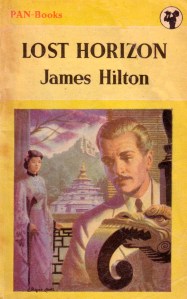 Lost Horizon
 A Year in Provence by Peter Mayle

