Back in the 1960’s I was a big fan of the Apollo moon missions and on UK TV one of the presenters was James Burke. Burke also did a TV show called Connections. It was a really fascinating series which connected various historical events to make a sort of chain which led up to something which was pretty unexpected. The episode that stands out in my memory was one about the atom bomb, various unconnected events and discoveries that together, led to the splitting of the atom. In today’s post, I’ve tried to do something similar but all relating to the world of film, so here are five fascinating connections.

Rebecca 1940
Rebecca is actually my favourite film from director Alfred Hitchcock. It was released in 1940 and was Hitchcock’s first American film. It is based on the novel by Daphne Du Maurier. The film stars Laurence Olivier as the aristocratic widower Maxim De Winter and Joan Fontaine as the shy young woman who becomes his second wife. The two meet in the south of France when De Winter is on the verge of jumping off a cliff top only to be interrupted by the shy young woman. The woman is never named in the film except for later when she becomes Mrs De Winter. This new or second Mrs De Winter seems to be living her life in the shadow of Rebecca, Maxim’s first wife. Later we find that Maxim murdered her after finding out that she was having an affair with Jack Favell played by the smooth and suave George Sanders.
I have to say I have always loved this film, the ruthlessly charming George Sanders, the gorgeous Joan Fontaine and the scary Mrs Danvers, the housekeeper dedicated to the dead Rebecca played by Judith Anderson. Joan Fontaine has never looked lovelier and the only blot on the film landscape are the rather poor models used to represent Manderley, the ancestral home of the De Winter family.
Joan Fontaine was actually the sister of Olivia De Havilland and the two seemed to have had a rather strained relationship. Olivia starred with Errol Flynn in the magnificent Robin Hood but is probably best remembered for her role in Gone With The Wind.
Gone With The Wind 1939
Gone With The Wind was actually being made at the same time as Rebecca and Hitchcock and producer David O Selznick, who produced both films, had numerous fallings out over Rebecca and Hitchcock was apparently happy that Selznick was preoccupied with GWTW which kept him away from the production of Rebecca. Selznick later made many edits and revisions to Rebecca which didn’t go down well with Hitchcock.
Gone With The Wind starred Clark Gable and much was made of a nationwide hunt for an actress to play Scarlett O’Hara. The eventual winner was Vivien Leigh. Olivia De Havilland played Melanie who marries Ashley Wilkes played by Leslie Howard.
The film is set in the American south at the time of the American Civil War and its aftermath. Scarlett O’Hara is the daughter of a plantation owner and she has the hots for neighbour Ashley Wilkes. Wilkes marries Melanie but Scarlett is unable to give up on her romantic feelings for Ashley even when she marries the roguish Rhett Butler.
Gone With the Wind is an epic film in every sense of the word and follows the fortunes of Scarlett and her family through the devastation of the civil war and into the reconstruction era afterwards.
Leslie Howard captures perfectly the slightly wimpy Ashley. Howard was not happy in Hollywood and returned to England after the filming to help with Britain’s war effort. He was a star of many English feature films but was sadly killed when flying back to England after a visit to Portugal where he was promoting the British war effort. Some have suggested that the Luftwaffe shot down Howard’s aircraft as the Germans believed the Prime Minister was on board. Others have speculated that Howard himself was the target as he had angered the Germans with his efforts to promote the British cause as well as the success of his film The First of The Few about the designer of the Spitfire aircraft.
The First of The Few 1942
David Niven plays the part of Squadron Leader Geoffrey Crisp and he tells his pilots of how his friend RJ Mitchell designed the Spitfire. He tells how Mitchell observed seagulls through his binoculars and envisaged a new high speed era of fighter aircraft. After entering an aircraft in the Schneider Trophy, Mitchell convinces Rolls Royce to design a new and powerful engine for the new breed of aircraft and eventually, the Spitfire is born. Leslie Howard played the part of Mitchell as well as producing and directing the film.
Casino Royale 1967
David Niven had left Hollywood in 1939 and returned to the UK in order to re-join the army and fight against the Nazi menace. As well as his army duties, Niven was released from time to time to appear in a few propaganda films, one of which was The First of The Few. He was attached to a commando unit named Phantom whose job was to find out enemy positions and report back to British commanders. After the war he resumed his film career starring in a British film A Matter of Life and Death which was chosen for the very first Royal Film Performance. Niven returned to Hollywood only to encounter terrible tragedy when his wife, whom he had met and married in England, fell down the steps into a cellar when the two were playing hide and seek at a Hollywood party. Niven must have been devastated but he carried on and later remarried.
In 1967 he appeared as James Bond in the Bond spoof Casino Royale. Ian Fleming, the author of the famous James Bond series, had sold the film rights to Casino Royale separately to the rest of the Bond books and producer Charles Feldman acquired them, hoping to do a deal with Eon productions who were producing the mainstream Bond series. When negotiations failed, Feldman who had recently had a big hit with the oddball comedy What’s New Pussycat, resolved to make a James Bond comedy satire and recruited Niven to star as Bond.
The film turned out to be a critical disaster. Two of the other stars in the film were Peter Sellers and Orson Welles. Peter played the part of a card playing expert and Welles was the villain, Le Chiffre, a spy who has spent a great deal of money that wasn’t his and intends to win it back in the casino. All went well during the filming but then Sellers approached the director Joe McGrath and demanded that he and Welles should not appear in the same shot. McGrath replied that the film was in widescreen and this could not be done. Sellers then threw a punch at McGrath and a fight ensued until they were split up by a stuntman. Sellers asked for a break but then disappeared from the set which might be why his character disappears abruptly from the film. Ultimately five directors and as many screenwriters contributed to the film.
As I mentioned earlier, Niven plays Bond in Casino Royale and interestingly, Ian Fleming had wanted Niven to play Bond in Doctor No, the first in the 007 films.
Another actor approached to play the part of Bond was Cary Grant. Grant was urbane and cultured and also British. He was in many ways perfect for the part of Bond. He was also close to producer Cubby Broccoli and in fact was Broccoli’s best man at his 1959 wedding. Grant was interested in playing the part but stipulated that he would only play the role once and wasn’t willing to do a series of films.
North By Northwest
Cary Grant appeared in numerous adventure films with an espionage background, in particular North By Northwest. Grant plays advertising executive Roger Thornhill who calls over a waiter in a New York hotel bar. The waiter was paging a George Kaplan and when Grant calls the waiter over, two thugs nearby assume Thornhill is really Kaplan. It turns out that Kaplan is a fake identity, created by American Intelligence agents to trap a spy played by James Mason. The film is an exciting cold war thriller and was directed by none other than Alfred Hitchcock, who directed Rebecca, bringing our connections full circle.
 David was born in 1908 and spent his early life in Croydon (actually 38 Blenheim Crescent, Croydon) until his parents divorced. His father moved out and left the family in 1923 which must have been an upsetting moment in Lean’s young life. Another perhaps more significant moment was when an uncle gave him a camera when David was aged 10 and then Lean began to develop and print his own photographs.
 The film did however win two Oscars for cinematographer Freddie Young and supporting actor John Mills. The poor reception of the film prompted David to meet with the New York critics at the city’s Algonquin Hotel. I’m not sure if David wanted to reason with them or just find out why they didn’t like the film but they spent two hours attacking his production. David came away devastated and would not make a film again until A Passage to India in 1984.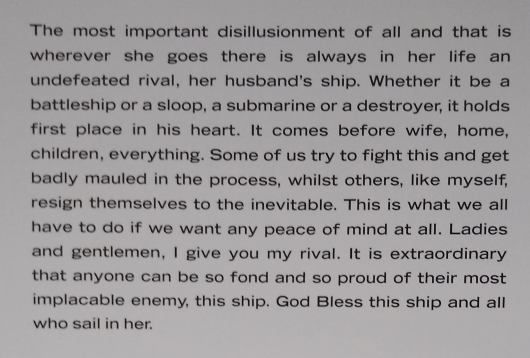
 I’ve always liked the original Rocky film but something more interesting than the film itself is the story of how it came to be made. In the mid-seventies Sylvester Stallone was a bit part actor with few acting credits to his name. One day in 1975 he watched the Ali v Chuck Wepner fight in which Wepner lost but managed to stay 15 rounds with heavyweight champion Muhammad Ali. Stallone, inspired by the bout, wrote a screenplay about a washed-up fighter called Rocky who manages to stay the distance with the world champion. He passed the screenplay to his agents who took it to various producers. The screenplay was good and many producers were interested but Stallone attached one small condition to the sale, that he himself had to play the part of Rocky.

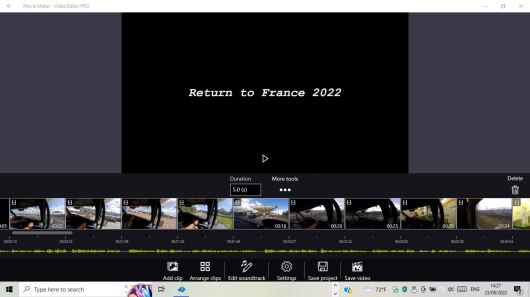 Voice Over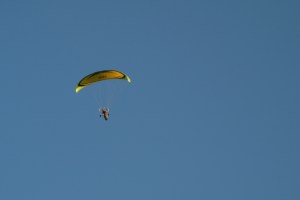
 It was a cold afternoon in Manchester and I mumbled something to myself about the supposed heatwave and zipped my jacket up to my neck. At the left luggage office I took out the key that had been given to me earlier and when I opened the compartment I found a small package inside. I took the package and walked the short distance to the square. I sat down on the hard wooden bench and opened it up. Inside was a small tape player and a set of earphones. I put on the earphones and pressed play. There was a short burst of static and then a voice spoke.
 This second instalment of the franchise was directed by John Woo. It’s about a biological weapon called Chimera. Rogue agent Sean Ambrose steals the virus from its inventor by impersonating Ethan Hunt. He destroys the aircraft on which the inventor is travelling and parachutes to safety. Hunt was played once again by Tom Cruise and his mission is to regain the virus. The opening sequence sees Cruise doing some daring rock climbing which the studio wasn’t happy about. Cruise didn’t have a safety net but did apparently wear a harness. I didn’t like the heavy metal style version of the classic theme and as a matter of fact, I lost interest in the film early on.
 I was reading a post called The 10 Best War Films Ever the other day. It wasn’t a list I particularly agreed with and in fact I hadn’t seen or even heard of quite a few of the films mentioned so I thought I’d have a go at making my own list. Here we go. As this post went on a bit I published part 1 last week so now here’s part 2.
 The Colditz Story is another prisoner of war escape film also based on a true story. In WWII the Germans rounded up a bunch of the most prolific escapers and put them all together in an escape proof castle named Colditz. John Mills plays a British officer who is tasked with co ordinating escapes with various other groups of captives, French, Polish, Dutch and various others as previous escape attempts were failing due to a sort of free for all escaping culture. Various escaping officers are elected and the prisoners work together towards breaking out from the castle. Mills eventually escapes by using an idea suggested by a fellow soldier. It’s a simple idea involving dressing up as German officers. Not very original you might think but the officers plan to be leaving the Officers’ club which they hope will make them appear more natural. The chief British officer decides the plan is doomed to failure as the man who thought of it was a very tall officer who he thinks would be immediately recognised by the camp guards. I won’t tell you what happens but Colditz is a great British picture and well worth watching.
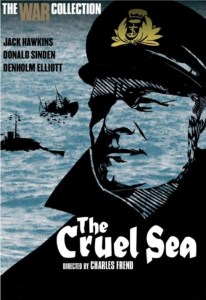 It’s time to move on from POW camps and escaping and to take a look at the war at sea. The Cruel Sea is a classic WWII film based on the book by Nicholas Monsarrat. Jack Hawkins is the commander of the escort vessel Compass Rose. The film follows the story of the ship from its handover in the shipyard to the navy all the way through to its final demise at sea. The crew are new to naval warfare but bind together through various incidents at sea guarding convoys in the north Atlantic. The outstanding cast are all stalwarts of 1940s and 50s British cinema, names like Donald Sinden, Denholm Elliott, Stanley Baker and Virginia McKenna.
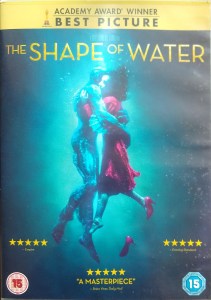 Now, there are those who seem to think I only ever look at black and white classic movies. Not so, I like modern films too and just to prove it I picked up The Shape of Water not long ago for a few pounds on Ebay. You may remember that the film won the Oscar for Best Film at the 2018 awards and it looked pretty interesting in the various clips I have seen. Everything I had heard about the film was positive so I decided to search the internet for the DVD version. The first warning sign was the extensive availability of DVDs of the film on Ebay and the second was the rather low prices those DVDs were fetching. Anyway, I got my copy and watched it and how this film won an Oscar I really do not know.
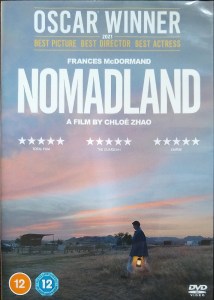 Now that I’ve retired I’ve often thought about spending more time in my motorhome and it’s only Liz’s recent hip operation that has prevented us from travelling over to France for some exploring. Could I live full time in a motorhome though? I’m not so sure. Everything is fine in the summer but I doubt if I could cope with the cold of the winter. Of course, we could always drive south towards somewhere a little warmer, even perhaps our beloved Lanzarote but van life isn’t, I suspect, as romantic as it sounds. Nomadland is a film that addresses this subject. A woman loses her job when the US Gypsum plant closes down in her town. Her husband has died so she decides to buy a van and go in search of work. She works for a while at an Amazon packing centre and when that job ends she goes off to Arizona where she heard fellow nomads will be meeting.
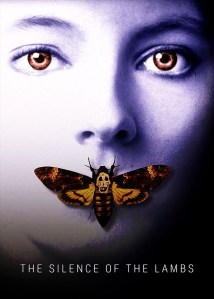 After watching the above two Oscar winners on DVD I fancied something a little different. The very first horror film to win an Oscar was Silence of the Lambs. It’s a gruesome film in many ways following the FBI as they try to track down a serial killer who has just abducted the daughter of a US senator. The killer known as Buffalo Bill, imprisons his victims then kills and skins them. (Told you it was gruesome!) To try and get a lead on the killer the FBI send trainee agent Clarice Starling to interview the incarcerated murderer and psychiatrist Dr Hannibal Lector to see if he can give any insight into the murders, a new perspective that might help the FBI investigation.

 Letters from an Unknown Author!