8 Onscreen Portrayals of Real People

It’s been another cold and wet week and as usual I’ve tended to lie back on my couch and watch a lot of television and not just broadcast TV either. Lots of times when broadcast TV isn’t up to the job of entertaining me, I’m forced to crank up a recording and watch that. Just lately I’ve watched a couple of biopics, films about real people, so for this post I thought I’d continue that theme and look at films and TV shows where the actors have had to portray real people.

Barbara Windsor

One night last week I watched a documentary about the Carry On films. It was really interesting and was titled Secrets and Scandals. It showed a lot of previously unseen interviews in which the stars had a whinge about various things, in particular the fact that they didn’t get paid when the films were reshown time and time again on TV. The producers made a shed load of money but the stars were paid peanuts. One of those stars was Barbara Windsor and after I had watched the documentary, I remembered a TV film called Babs about Barbara’s life. It was made in a really interesting way and involved Barbara in later life, imagining that she was talking to her late father about various things that have happened to her. Events from her life are recreated in front of her and she turns and discusses the incidents with her dad.

Theatre director Joan Littlewood was really impressed by Babs and wanted her to play various parts for her but after working together for a short while, Barbara opted to play a part in Carry on Spying which set up her comedy persona for the rest of her life.

Barbara loved her dad but when he and her mother divorced, Barbara, as a small child, was asked to tell the courtroom about the times he had shouted and sworn and later her dad ignored her when leaving the court. Two actresses played Barbara, Honor Kneafsey in her younger days when she played in her first Carry On films and Samantha Spiro who interacts with her father throughout the film. It’s a really good film and it’s put together in a slightly unconventional way which really works.

I couldn’t find a clip on YouTube but the film can be seen on BBC iPlayer by clicking here.

Jimmy Saville

Another TV film I saw earlier in the year was The Reckoning in which Steve Coogan plays Jimmy Saville. It was another 4 part series which we had to stream and Coogan really seemed to me to capture the essence of Jimmy Saville.

I have to admit I always used to rather like Jimmy Saville. I liked his slightly comic presentations on Top of the Pops and his ‘now then, now then’ act. This film was different though and showed the dark side of Saville and the way he used his pretty considerable fame to abuse women and children and get away with it.

Stan Laurel

Steve Coogan also played Stan Laurel in the film Stan and Ollie, a film which looks at the later years of the famous comedy duo. John C Reilly played Oliver Hardy and the film shows the two when they embarked on a music hall tour of the UK in 1953. They were still hugely popular but the tour had a big impact on them, particularly Oliver Hardy. Coogan does have a look of Stan and the two actors played great parts and even recreated some of their comedy routines on stage.

Lee Harvey Oswald

In the film JFK, director Oliver Stone takes a look at the assassination of John F Kennedy. The alleged assassin was an oddball individual called Lee Harvey Oswald. Oswald in the film is played by British actor Gary Oldman. Oswald was paraded to the press in Dallas on a few occasions after his capture and Oldman perfectly captures his look and speaking voice in the film. Stone apparently urged Oldman to do his own research and he met with Marina, Oswald’s widow and some of their Dallas acquaintances. Strangely, Oswald was interviewed on camera before the assassination talking about Marxism and Communism and the differences between the two. No doubt Gary Oldman watched these too.

Winston Churchill

Gary Oldman also played another historical person in Darkest Hour in which he plays Winston Churchill. A great deal of makeup went in to putting together Winston’s visual appearance and the film looks at the outbreak of World War II and Churchill’s ascent to the premiership. Oldman achieves an interesting approximation of Churchill’s overall look and speech and the film is excellent although whether deposed PM Neville Chamberlain had as strong a hold on the conservative party after Churchill had taken over as the film makes out, is open to question. Interestingly though, even though Churchill became the Prime Minister, Chamberlain retained the party leadership and apparently had thoughts of returning to 10 Downing St in later years. He died of cancer though in 1940.

Cary Grant

Archie is a wonderful four part series and Jason Isaacs plays an outstanding part. He doesn’t try to impersonate Cary but he did manage to create a look of the late star and he caught Grant’s voice and enunciation perfectly. Most of the series follows Cary in later life when he becomes involved with and later marries Dyan Cannon. Dyan was his fourth wife and she was the mother of his only child Jennifer and she and her mother co-produced the series which is definitely well worth watching.

Cary Grant retired from films in 1966, the year his daughter was born and he and Dyan Cannon divorced in 1968. Many tried to bring him out of retirement for various films including his favourite director Alfred Hitchcock but he declined. He must have wanted to keep on working though because he did accept a position on the board of Fabergé.

He died in 1986 aged 82 and left behind an estate reputedly worth around 80 million dollars. Archie is a well made and quite fascinating piece of TV. Look out for it, it’s well worth watching.

Howard Hughes

The Aviator was a film released in 2004 starring Leonardo Di Caprio as the billionaire Howard Hughes. Looking at Wikipedia, the film had an extensive development background with other film makers vying with each other to produce biopics about Hughes. This film however finally came together with Martin Scorsese directing and with a screenplay by John Logan. Hughes famously suffered from OCD, Obsessive Compulsive Disorder and in Hughes the disease manifested itself in a fear of germs and an obsession with cleanliness. Apparently Di Caprio did a huge amount of research on OCD and the film shows how Hughes went from an eccentric millionaire film maker and pilot to someone who finally retreated into reclusive madness.

I enjoyed The Aviator although a better film about Hughes was probably a mini series based on a book by Hughes’ former business manager, Noah Dietrich. The TV mini series was called Howard, The Amazing Mr Hughes and starred Tommy Lee Jones as the famous billionaire. I’ve always thought that Jones’ portrayal was much more convincing than Di Caprio’s but I did enjoy both versions.

An interesting element in the TV show was a recreation of an incident in 1972 when Hughes appeared by telephone live on air, to speak with four journalists he personally knew, in order to denounce fake ‘diaries’ which had been published by author Clifford Irving. On the TV mini series the actual journalists played themselves.

Brian Clough

I’m not a great football fan but not long ago I picked up a DVD from the charity shop. It was The Damned United starring Michael Sheen as the 70s football manager Brian Clough. Clough was famous in the UK in the 1970s and was to be seen regularly on various TV shows and all the top impressionists of the day, people like Mike Yarwood, all did a version of Clough. The film follows Clough as he takes over Leeds United from outgoing manager Don Revie. He denounces the team as unsporting because of their brutal and physical style of play and promises a new start for the team. However, only 44 days later Clough was sacked as manager. Despite not being a football fan, the film recreates the 1970s very well and Sheen’s performance as Clough was an outstanding approximation of the real Clough. Various people sued the production company due to a number of factual errors in the film but as a non-football fan I found the film very convincing and hugely entertaining.

I could go on with many other films. James Stewart for instance played both Glenn Miller and Charles Lindbergh although the end result in both cases was someone who looked and talked just like James Stewart usually does. The same could be said for James Cagney who played George M Cohan in the film Yankee Doodle Dandy. Neither actor even tried to impersonate the real person although Stewart did wear spectacles to play Miller. Anyway, I’ll save those examples for another post.

Have a good weekend and thanks for looking in.


What to do next: Here are a few options.

Share this post on your favourite social media!

Hit the Subscribe button. Never miss another post!

Listen to my podcast Click here.

Buy the book! Click here to purchase my new poetry anthology.

Click here to visit Amazon and download Floating in Space to your Kindle or order the paperback version.

Back to the 1960s

The 1960s seem like a long way off these days. We moved into the 1970s 54 years ago but even so, the 1960s were a revolutionary time in terms of music, the cinema and of course TV. This last Sunday afternoon after a gruelling session of blog writing, I settled down in front of the TV with a cup of tea and a cheese sandwich and what did I find? Well, a whole stack of TV shows from the 1960s still bringing in viewers today in 2024.

So, what did I watch? Well, time to settle back for some serious TV viewing.

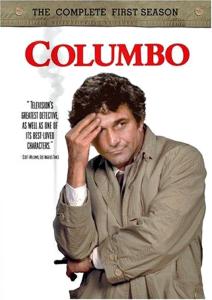
Columbo

Columbo, as you probably know, differs from other TV detective shows by showing the viewer exactly who the murderer is and how he, or she, did it. The whole point is not who did it, but how Columbo catches them. The essence then of a great episode comes in the clever way Columbo nails his man, or woman. Sometimes that moment is a bit of a non starter, other times it’s nothing short of brilliant. Sometimes, even if that final moment is not so great, it’s still been a great episode.

The Columbo of the early series is an absent-minded quirky fellow although in later episodes, Peter Falk who plays the detective, seems to downplay that quirky element. The later episodes are still pretty good though and among various episodes on TV today was Any Old Port in a Storm with Donald Pleasance as the guest murderer. Pleasance plays Adrian Mancini, the part owner of a wine producing business. He is something of a wine snob and he has just been voted ‘man of the year’. That was the good news; the bad news is that his half brother is threatening to sell the business. That of course doesn’t go down well so Adrian in a fit of anger bumps him off. A whack on the head didn’t quite do the job so Adrian leaves him to suffocate in his wine cellar. Unfortunately, it happens to be a really hot day which eventually leads Columbo to the clue that bags the culprit.
That was an episode from 1973 but the original Columbo pilot first aired in 1968.

Thunderbirds

Thunderbirds was about a secret organisation called International Rescue that had a small fleet of highly advanced machines and equipment with which to perform rescue operations. Millionaire ex-astronaut Jeff Tracy was the head man and the organisation was secreted in his island home. His five sons were the Thunderbird pilots, John, Scott, Virgil, Gordon and Alan, all named after US astronauts of the 1960s. The genius behind the Thunderbird craft was Hiram Hackenbacker, known as ‘Brains’. Thunderbird’s nemesis was a secret agent known as the Hood because of his talent for disguise and in many episodes the Tracy brothers had to ask their London agent, Lady Penelope, to track him down and sort him out.

Lady Penelope Creighton-Ward lived in a huge mansion somewhere in southern England and her manservant and chauffeur was Parker, a reformed safecracker. The head of ITV Sir Lew Grade saw the first episode and was so impressed that he asked for the episodes to be extended from 30 minutes to a full hour, less TV adverts of course. Gerry wanted Fenella Fielding to voice Lady Penelope but in the end, his wife Sylvia took on the role.

One other thing, I know Thunderbirds sounds pretty sophisticated from those last two paragraphs but it was actually a puppet series aimed at children. The great thing about it and really, the secret of its success, was the highly intelligent scripts which treated its audience of children not as kids but as intelligent young adults.

Two scripts that spring to mind were one called The Cham Cham about a code transmitted on a musical melody and another where Parker was called upon to break into the Bank of England. Later in the episode someone is trapped inside the vault and Parker is asked to break in again to rescue the man before the air is used up in the vault. Parker though thinks that his old mate, a bank robber recently released from prison, is about to complete his life’s ambition to break into the bank and so he tries to slow down his and Penelope’s drive into London. Everything of course comes right in the end though.

Time for a fresh cup of tea and I’m ready for the next programme.

Batman

We are probably all familiar with the modern Batman films which all have pretty grim and dark overtones. Tim Burton directed the first modern Batman film in 1989 which starred Michael Keaton as Batman and Jack Nicholson as the Joker. Back in 1966 however there was a TV series produced by William Dozier which starred Adam West as Batman and Burt Ward as Robin.

The suave Alan Napier played the part of Alfred, the butler to Bruce Wayne (Batman’s alter ego) and numerous guest stars played the villains. Frank Gorshin was a memorable Riddler, Burgess Meredith (remember him as the trainer in the Rocky films?) played the Penguin and Cesar Romero who refused to shave off his moustache played a rather manic Joker. Julie Newmar and Eartha Kitt both played Catwoman. George Sanders and Vincent Price also appeared as guest stars and even Hollywood director Otto Preminger appeared on the show as Mr Freeze. Anyway you look at it, that is an impressive cast list.

The episodes were all two parters and in the UK were aired on Saturday and Sundays; the Saturday episode always left the Dynamic Duo in some impossible situation and the Sunday one showed how they would escape and track down the villains. The series was very light hearted unlike the modern Batman films and in fact played rather like a live action cartoon series.

The series ran for three seasons and a feature film before being cancelled. In the UK episodes are currently being broadcast on the Talking Pictures channel.

Mission Impossible

The TV show was created by producer Bruce Geller and concerned a team of special agents known as the Impossible Missions Force. They are a US government agency which takes on hostile foreign governments, South American dictatorships and criminal organisations.

In the first series the team is led by Dan Briggs played by Steven Hill but he was replaced for season 2 by Peter Graves in the part of Jim Phelps. Other regular team members were Leonard Nimoy, Martin Laudau and his wife Barbara Bain, Greg Morris and Lesley Anne Warren. Each played a team member with a particular skill, for instance Laudau and Nimoy played agents with a talent for impersonation and disguise, Greg Morris played an electronics expert and so on.

Mission Impossible ran for 7 seasons and was cancelled because, according to Wikipedia, the producers at Paramount found they could make more money by syndicating the existing series rather than making new ones.

A revival series was made in the 1980’s also starring Peter Graves. To save money the series was not filmed in Hollywood but in Australia but it only lasted two seasons and was largely unsuccessful.

A great feature of the series was the opening title sequence which involved a match being struck and then lighting a fuse shown over quick clips of the upcoming episode to the sound of the iconic theme tune written by Lalo Schifrin. Next would be Jim Phelps listening to his tape recorded instructions which after being played would then self-destruct. Phelps would then look through his agents’ files complete with photos and choose who he wanted for the mission. Sometimes a guest star would play one of the agents who would be introduced by Jim checking out his dossier. A team briefing would then take place and the mission would get under way.

The IMF used a great deal of gadgets to accomplish their missions; secret listening devices and other electronic hardware as well as incredible masks and make up to impersonate people. One particular episode that I remember was when the team had to retrieve some stolen gold from a South American dictator’s safe. They did it by drilling a small hole in the safe, heating it until the gold melted and ran out down the small hole then a little gadget sprayed the interior of the empty safe to cover the hole. Mission Impossible was staple viewing in our household in the late 1960’s and it was nice to see once again on UK TV.

From Russia with Love

I’m perhaps cheating a little here because this is a film rather than a TV show but what the heck, it popped up on ITV so I thought I’d watch it. Just lately there seem to be James Bond films popping up on TV almost every week. This film was the second in the Bond series, made in 1963 and it’s probably one of the very best. There are no super villains trying to take over the world and the plot is actually pretty sensible. SPECTRE -the Special Executive for Counter Intelligence, Revenge and Extortion- decide to offer British Intelligence a Soviet Lektor decoding machine but the catch is, the lovely Soviet consulate clerk chosen for the mission and based in the Soviet embassy in Turkey will only offer it to Bond himself.

Sean Connery played James Bond of course and the Soviet clerk was Tatiana Romanova played by Italian actress Daniella Bianchi. A great Bond villain was former Soviet agent now a part of SPECTRE, Rosa Klebb played by Lotte Lenya. The best performance though was by Robert Shaw who plays Red Grant, the killer specially trained to eliminate Bond. Bond and Grant have a hugely exciting fight in a railway carriage towards the end of the film which underlines the serious and gritty nature of the film. I don’t think I’m giving anything away when I tell you Grant wasn’t successful but Rosa Klebb nearly gets Bond with a concealed knife in her shoe.

I could have gone on and talked about Star Trek, The Saint with Roger Moore and even The Avengers with Patrick MacNee as Steed and Diana Rigg as Mrs Peel.

Yes, in some ways the 60s are done and dusted but when it comes down to it, you only have to tune in to a few vintage TV shows to relive it all again.


What to do next: Here are a few options.

Share this post on your favourite social media!

Hit the Subscribe button. Never miss another post!

Listen to my podcast Click here.

Buy the book! Click here to purchase my new poetry anthology.

Click here to visit Amazon and download Floating in Space to your Kindle or order the paperback version.

Film Connections (Part 5)

It’s time for another post in which I try to put together a few golden age cinema stories connected by a thin, sometimes very thin, connecting link. Today I’m going to start with Olivia de Havilland.

Olivia de Havilland was one of the great film stars of Hollywood’s golden age. Amazingly she died only fairly recently in 2004 having lived to be 104 years old. She appeared in eight classic films with fellow star Errol Flynn, including The Adventures of Robin Hood in which she played Maid Marian to Flynn’s Robin Hood. Flynn claimed in later years to have been in love with Olivia but nothing ever happened between the couple, or so they both said.

In my favourite Hollywood book Bring on the Empty Horses, David Niven paints an excellent portrait of Flynn. You always knew where you were with Errol, wrote Niven -he always let you down.

Flynn hailed from Tasmania, an island state of Australia. In Australia he became involved in a film production called In the Wake of the Bounty, a documentary film about the mutiny on the Bounty that featured reconstructions with Flynn as Fletcher Christian. After this he made his way to the UK where he became an actor and spent many years in repertory in Northampton. He was fired from Northampton rep but was spotted by producer Irving Asher and given a part in a film made at Teddington Studios in 1934. The film was Murder in Monte Carlo which has since been lost but apparently Asher, who worked for Warner Brothers, sent word to Hollywood recommending Flynn for a contract. After a successful screen test Flynn was given the starring role in the swashbuckling adventure, Captain Blood, after Robert Donat turned down the role. The film was a great success and made stars of Flynn and co-star Olivia de Havilland.

Olivia began living in Paris in the 1950s but continued acting not only in films but also on television and on the stage. She received numerous awards and she and her sister are the only siblings ever to both receive Academy Awards.

Olivia’s sister was Joan Fontaine and the two had a famous feud or falling out which seemed to consume most of their lives. Olivia seems to have ‘blanked’ Joan when Joan won an Oscar for her role in ‘Suspicion’ in 1942. They seemed to become friendly for a while until they differed about looking after their elderly mother.

My favourite of Joan’s films and perhaps her most well known was Rebecca, directed by Alfred Hitchcock. Joan played the part of a shy young girl who falls for Maxim de Winter, played by Laurence Olivier.

Rebecca was filmed in 1940 and was Hitchcock’s first Hollywood film. In Monte Carlo a shy young girl played by Fontaine encounters English gentleman Maxim de Winter and thinks he is about to jump off a cliff. Later the two fall for each other and marry but the new Mrs de Winter -her actual name is never revealed- seems to feel Maxim’s love for Rebecca, his late wife, is overshadowing her life. It’s a great film and one of Hitchcock’s best. Olivier apparently wanted his wife, Vivien Leigh, to play the part which Hitchcock ultimately gave to Joan.

Vivien Leigh was the surprise choice to play Scarlett O’Hara in the film version of Gone with the Wind. The film was a major film adaptation of the book by Margaret Mitchell which had been a huge success and producer David O Selznick bought the film rights. Production was delayed for a long while as Selznick was determined to get Clark Gable for the part of the roguish Rhett Butler. Another delay was a distribution deal with MGM which couldn’t be finalised until Selznick’s then current deal with United Artists had expired. Selznick used the delay to promote a huge search for an actress to play the part of Scarlett O’Hara, the spoilt daughter of a plantation owner in the deep south of America. He eventually chose Vivien who was in the USA visiting her husband who of course was filming Rebecca.

Clark Gable was known as the ‘King of Hollywood’ and in 1935 he made a film with Loretta Young called The Call of the Wild. During the production, Young became pregnant with Gable’s child. Their daughter Judy Lewis was born on November 6th 1935. Loretta hid her pregnancy and gave birth in secret and then later arranged to ‘adopt’ the child. Judy never knew the circumstances of her birth although it was an open secret to many in Hollywood. When she finally learned of the rumours, she confronted her mother who admitted she and Gable were her biological parents.,

In 1939 Gable married Carole Lombard. She was a great star particularly in the screwball comedies of the day and Gable adored her. They met while making the film No Man of her Own in 1932 but nothing romantic happened until they met again at a Hollywood party in 1936. Gable was separated from his then wife Ria Langham but still married. Eventually she agreed to a divorce and Gable was free to marry Lombard.

When World War II began, Carole travelled to Indiana to a war bond rally where she raised over 2 million dollars for the American war effort. She and her colleagues were due to return to Los Angeles by train but decided to take a faster option and fly. The flight crew of the aircraft were thought to have been in difficulty crossing the mountains surrounding Las Vegas as safety beacons had been turned off in case Japanese bombers tried to enter the area. The aircraft crashed into the mountains and all on board were killed. Gable was devastated. Afterwards he joined the US Air Force and saw action over Germany as a gunner.

In 1960 Gable began work on his final film, The Misfits. The screenplay had been written for Marilyn Monroe by her husband, playwright Arthur Miller. She was not happy playing a character called Roslyn who she felt was based too much on herself. She and Miller were at the end of their marriage and their deteriorating relationship caused tensions on the set. Miller was stressed as he was doing multiple rewrites. Monroe was frequently late or didn’t turn up for work or didn’t know her lines while Gable, the complete professional was on time and word perfect every day. Director John Huston had to hold all the differing elements together but the film was finally completed. It was the final film for both Monroe and Gable. He died some weeks after filming completed aged only 59 and despite having two other marriages after Lombard, was laid to rest beside her.

Another star of The Misfits was Montgomery Clift. He was also a ‘method’ actor and along with Marlon Brando and James Dean was one of the three great method actors of the 50s and 60s. I have always thought that his first film was The Search, a film made in bombed out post WWII Berlin in which Clift played a US army soldier who helps a refugee boy find his mother. Clift gave such a natural performance that director Fred Zinnemann was asked where did he find a soldier that could act so well?

Clift’s actual first film was one of my personal favourites, Red River with John Wayne, a western about an epic cattle drive across the US. The Search, despite being filmed later was actually released first.

Clift became great friends with Elizabeth Taylor and the two made many films together. In 1956 while filming Raintree County, Clift was involved in a terrible car crash in which he suffered severe injuries to his face, particularly the left side. Taylor comforted Clift in the wreck of his car while they waited for the emergency services. Clift returned to complete Raintree County after taking two months off to recuperate from plastic surgery.

Montgomery Clift was a homosexual in a time when such things were covered up by Hollywood and his sexuality was not mentioned in public until Elizabeth Taylor spoke about it in a speech in 2000.

After the success of The Search, Paramount offered Clift a major contract which he accepted and the first film he made for the company was The Heiress directed by William Wyler.

Bringing us full circle, Clift’s co-star in The Heiress was Olivia de Havilland.


What to do next: Here are a few options.

Share this post on your favourite social media!

Hit the Subscribe button. Never miss another post!

Listen to my podcast Click here.

Buy the book! Click here to purchase my new poetry anthology.

Click here to visit Amazon and download Floating in Space to your Kindle or order the paperback version.

Working with YouTube

This week I’ve been having a long look at my YouTube page. I have quite a lot of videos over there and a few relate to this actual WordPress site which you are currently looking at. Some are promotional videos like the one you will find right at the bottom of this post which try to persuade the viewer of the merits of either Floating in Space or my poetry book, A Warrior of Words.

Back in the 1990s I felt it was about time that I did something about becoming a film director so I went on a video production course at a now defunct place in Manchester called the WFA. The Workers’ Film Association was situated in Hulme near the city centre and had what was at the time quite a hi-tech video editing set up. Sadly, a few years later, the digital revolution came and all the training I had done with video tapes and super VHS cameras was rendered not worthless but seriously behind the times.

The video I made back then was about the taxi drivers of Manchester and it was one of the first videos I was able to digitise and upload to YouTube. Manchester Taxi 1992 is my 5th most popular video with over 4,200 views. The four more popular videos are all, with one exception, old VHS videos that have also been digitised. The one exception is a promo video for Floating. It has six thousand views which I have to put down to using it in a Google advertising campaign some time ago.

My big issue with YouTube is that despite having a small handful of videos with pretty substantial views -my top video has over 180,000 views- I don’t make a penny in royalties because in order to make money on YouTube, you must have over a thousand followers. I have at the moment about 402 YouTube followers and it’s been difficult to even break that 400 figure. For a long time I had 398 followers but every time I found a new follower, I would lose one. I would get to 399 and be on the verge of cracking the 400 barrier, only to drop back again to 398 or even 397. Just lately I seem to be remaining steady at 402.

Why am I losing followers? Well even though I manage to produce a new blog post every Saturday, I don’t produce a new video every week. In fact I don’t even produce a new video every month. Why not you might ask? Well, for a kick off, videos are pretty hard to make. They have to be filmed and then edited. They need a lot of time and effort and I seem to spend all my time and effort writing my weekly blog post. Sometimes in the past when I’ve struggled to make a video I’ve tried to take an old blog post and make it into a video. I’ve done quite a few versions of my book bag posts as videos but some work out well and others don’t. I remember making one and feeling quite pleased with myself but then reviewed the video and found myself talking about my Book Blag and also about Bleak House by David Copperfield!

A lot of my regular videos are video versions of my poems and I began to wonder whether those people who come to my site to watch my old VHS videos of motor racing at Oulton Park or Manchester Airport in the 1980s are perhaps a little put off to encounter my poetry videos.

Not that my poetry is in any way offensive, in fact I personally think it is rather good or at least I like to think it has a certain charm. Then of course as they are my videos and I made them, I’m bound to say that. The thing is, those people who come to my page to listen to poetry might not necessarily like my other videos and those that like the other things might be thinking ‘what’s all this poetry stuff doing here?’

That is basically why I thought it might be a good idea to create a separate YouTube page dedicated to my poetry videos. After a quick bit of research, I found that I could create another page quite easily so with a few taps on my keyboard there it was! The next thing was to migrate my poetry videos over to the new page and this is where the problems began. I thought I might be able to do it with just a few more keyboard clicks but migrating videos sadly isn’t possible which is rather annoying. The only answer is to delete the videos from my main YouTube page and then upload them again to the new page.

The big problem with this is that firstly, doing all that takes a lot of time and secondly, it means that I’ll lose all the viewing figures from those original videos. Now a lot of my video poems don’t have great viewing figures or ‘likes’ but surprisingly quite a few of them have really good stats and it’s a bit of a shame to see them all go back to zero on the new page.

The other thing is finding the original videos. I don’t delete them and I still have them on my hard drive but in many cases I tend to edit them again and add perhaps different music, some subtle sound effects and sometimes even a new voiceover. I haven’t named the video files particularly well so it isn’t always easy to find which is the newest or even the best version. Not only that but as my trusty old laptop gets clogged up with loads of videos and has started running really slowly I’ve shifted them over to portable hard drives to free up space so they are not as accessible as before.

Message to YouTube if they happen to see this post. Give users the options to easily move videos to different channels. Things could be so much easier!

Anyway, I’ve started things off, added an introductory video and over the next few months I should eventually have all my poetry videos moved over to the new page. Of course perhaps I should announce the new set up to my small band of followers. How could I do that? Well, I’ve noticed that YouTube has made it possible for channels to create a post, much like Facebook and Twitter. So, I could make a post announcing the new channel and the changes I’ve made. I did a quick search on Google asking ‘how do I create a post on YouTube?’ The answer came straight away and looked pretty straight forward. Could I manage to create a post though? Of course not.

Perhaps that’s something that can’t be done on an iPad so I switched over to my laptop and guess what? I actually managed to finally create my first YouTube post. Happy days!

My usual YouTube page can be found here:

https://www.youtube.com/@SteveHigginsWriterBloggerPoet

My new poetry page can be found here:

https://www.youtube.com/@PoetrybySteveHiggins


What to do next: Here are a few options.

Share this post on your favourite social media!

Hit the Subscribe button. Never miss another post!

Listen to my podcast Click here.

Buy the book! Click here to purchase my new poetry anthology.

Click here to visit Amazon and download Floating in Space to your Kindle or order the paperback version.

The Many Lives of Robin Hood

One of my unofficial New Year’s resolutions this year was to try and declutter, perhaps actually get rid of some of my huge DVD collection. It’s not always that easy though. Mooching around one of those cheap secondhand shops recently I picked up yet another DVD. I’ll tell you about it in more detail later but it was one of the many films made about Robin Hood and his Merry Men.

My first introduction to Robin Hood was a book I was given for Christmas as a child. There were two parts to it; one was the story of King Arthur and the Knights of the Round Table, the second part was about Robin Hood. I don’t have the book anymore and I have no idea who wrote it but I always look for it when I happen to come across a good secondhand book shop. If I ever found it, it would give me a great thrill to read that book again because I have loved the stories of King Arthur and Robin, ever since.

That unknown book had all the elements of the Robin Hood story we have come to know and love. There was Maid Marian, Friar Tuck, Little John, the Sheriff of Nottingham and much more.

The first time I saw Robin Hood on TV was the TV series starring Richard Greene as Robin. There were four series of the TV show which was first produced in 1955. I must have seen repeats shown in the 1960’s but just like that book, all the elements of the Robin Hood story were there and in particular there was a really catchy theme tune and song which even now I can still remember:

Robin Hood, Robin Hood,
Riding through the glen.
Robin Hood, Robin Hood,
With his band of men.
Feared by the bad, loved by the good,
Robin Hood! Robin Hood! Robin Hood!

Yes, they just don’t write them like that anymore.

So who is Robin Hood some of you may be asking? He is a character in old English folklore who was an outlaw who robbed from the rich and gave to the poor. He was a renowned archer and he and his men wore Lincoln Green outfits and lived in Sherwood Forest. In some stories he is of noble birth, in others he is not. In some Robin has served in the Crusades with Richard the Lionheart although many of the stories show Robin at odds with Prince John, the King’s brother, who plans to usurp the King who is away on the Crusades.

According to Wikipedia the first known reference to Robin Hood comes from a ballad from the 1370’s.

In the silent film days Hollywood brought Robin Hood to the screen starring Douglas Fairbanks Junior as the legendary hero.

The film was released in 1922 and was the first film to ever have a Hollywood première. It featured huge sets including a castle and an entire town built at the Fairbank’s studio on Santa Monica Boulevard made to look even bigger on screen with hanging models and matte paintings.

There is also a famous scene where Fairbanks, who did many of his own stunts, rode down a huge curtain at Nottingham castle, made slightly easier with a slide concealed behind the curtain.

Probably the best ever Robin Hood film is the one I mentioned earlier which I picked up on DVD at a charity shop. The Adventures of Robin Hood starred Errol Flynn as Robin, and Olivia De Havilland as Maid Marian. The film differs from many other portrayals of the Robin Hood story in that the main villain of the film is Sir Guy of Gisborne rather than the Sheriff of Nottingham. Basil Rathbone played Guy and the Sheriff  is portrayed as something of a comic figure by Melville Cooper.

Incredibly, James Cagney was supposed to play Robin but he had a major disagreement with Warner Brothers and walked off the lot, not making another film for two years. The studio turned instead to their new star, Errol Flynn. He had shot to stardom in the Film Captain Blood and shortly before production began the studio decided to film the project in their new Technicolor process.

A lot of the film was shot in California’s Bidwell Park which substituted for Sherwood Forest with some scenes shot at the Warner Ranch in Calabasas.

The film had two directors, William Keighley and latterly, Michael Curtiz who was asked to take over when the producer, Hal B Wallis, became dissatisfied with Keighley. Curtiz made a number of films with Flynn including The Charge of the Light Brigade in which Flynn and co-star David Niven fell about laughing when Curtiz called for a horde of riderless horses to enter the scene. Curtiz yelled ‘bring on the empty horses’ which Niven later used as the title of his famous book about Hollywood.

The film picks up on all the elements of the Robin Hood legends, including Friar Tuck and the meeting with Little John. The highlight of the film comes towards the end when Robin and Sir Guy battle it out in an outstanding display of swordsmanship including a famous scene where the two move off camera and we see their shadows dancing along the castle walls.

The Adventures of Robin Hood was a wonderful film and probably the best film ever made about the hero of Sherwood Forest but there are a few other entertaining Robin Hoods.

In 1991 Kevin Costner appeared in Robin Hood: Prince of Thieves. In this film Costner, as the noble Robin of Loxley, returns from the crusades to find that his father has been hung and his home laid to ruin by the Sheriff of Nottingham, played in a villainous but camp way by Alan Rickman, whose performance was universally praised. Robin was accompanied by Azeem, a Muslim who feels he has to repay Robin for saving his life. Costner as Robin, did not attempt to lose his American accent and although the film had mixed reviews, I personally have always enjoyed it.

The film featured the hit single Everything I Do, I Do it For You sung by Bryan Adams and also had a small cameo with Sean Connery playing King John. The exteriors were shot in the UK and one particular location was at Sycamore Gap, just by Hadrian’s Wall in Northumberland. The tree used in the sequence became known as the Robin Hood tree which featured in the news in 2023 when it was cut down by vandals.

A 2010 film version of Robin Hood was directed by Ridley Scott and starred Russell Crowe as Robin. Simply called Robin Hood, this film had a slightly different storyline with Crowe’s character masquerading as Robin of Loxley and was more serious in tone than the Flynn or Costner versions. During the crusades Robin Longstride comforts a dying Knight. Sir Robin Loxley asks him to return his sword to his father in England which he does. Loxley’s father asks him to continue to impersonate Robin to prevent the new King John seizing his lands. Cate Blanchett played the part of Marian and of course Robin soon brings his band of Merry Men together to fight the evil King John.

Perhaps I should also mention the Walt Disney animated version of Robin Hood that was released in 1973. The story is narrated by Alan-a-Dale who tells the story of Robin who as usual, robs from the rich to help the poor. The characters are all animals so Robin becomes a fox, Maid Marian a vixen, Little John is a bear and of course Richard the Lion Heart is a lion. The film was the first animated feature for the Disney Studios following the death of Walt Disney.

I should also mention that a few years ago I actually met Robin Hood. Well, the actor who played Robin in the 2006 BBC series, Jonas Armstrong who now lives in Lytham on the Fylde coast. I met him in the Victoria Hotel in St Annes.

All the films I have mentioned here recreate or at least try to recreate the legend of Robin Hood. All the original stories of folklore and legend are incorporated in the many Robin Hood films, from Robin and Little John meeting, to Robin’s love affair with Maid Marian. One story though that I still remember from that long lost Robin Hood book I used to have is one that I’ve never seen used in any Robin Hood film and it’s this. At the very end of Robin’s life, he is dying and he fires his bow and arrow one last time, asking to be buried wherever the arrow lands. He pulls back the bow and fires his last arrow which I’ve always thought was a fitting finale to the story of Robin Hood.

There are probably more films I could mention, Robin and Marian for instance starring Sean Connery and Audrey Hepburn as an aging Robin and Marian but I think that’s enough Robin Hood for now. Time for a cheese sandwich and a cup of tea. Wonder what’s on the TV this afternoon?

As a great believer in synchronicity, I really wasn’t surprised to see a repeat of Robin of Sherwood, the 1980s TV series!


What to do next: Here are a few options.

Share this post on your favourite social media!

Hit the Subscribe button. Never miss another post!

Listen to my podcast Click here.

Buy the book! Click here to purchase my new poetry anthology.

Click here to visit Amazon and download Floating in Space to your Kindle or order the paperback version.

Remembering James Dean

Back in the 1970s my Saturday ritual involved getting the bus into town and scouring book and record shops for, yes, you’ve guessed it, books and records. One day back then I was flipping through the posters in one particular shop. The posters were the music stars of the 70s; Elton John, Mick Jagger, Suzi Quatro, David Bowie and so on but one was a picture of a really good looking guy with a fifties combed back hair style. In some pictures he was dressed like a cowboy and in others in a red jacket and denim jeans. The guy behind the counter must have seen me wondering who the guy was and he told me he was a film star called James Dean. He handed me a paperback book about the actor and I took it home and read it and very soon I was trying to find out everything I could about him.

James Dean had been killed in a car crash in 1955 and had only appeared in three films and at the time of his death, only one of those films had been released. I read a great deal about Dean when I was in my late teens and from what I could find out, the biography to read was written by his best friend, William Bast. I never managed to get a copy of that book back then but Bast produced a made for TV film version, James Dean: Portrait of a friend with Stephen McHattie as Dean.

As TV biopics go, Portrait of a Friend was pretty enjoyable but I don’t think I’ve ever seen it repeated on TV. I used to have a VHS recording of the film but when I looked recently I was unable to find it. Funnily enough, not long ago I was in one of those budget shops, it might have been Poundstretchers and I saw a copy of the film on DVD. It was a very poor version, in fact it looked as though it had been copied straight from an old VHS tape but even so, it was interesting to see it again.

Watching that DVD got me interested in Dean again and so I had a search through my book collection to see what books I had on the subject.

The paperback book I bought that day in the record shop in the 1970’s was probably James Dean: A Short Life by Venable Herndon. It wasn’t a great book but an interesting introduction to Dean and who he was. It detailed his struggle for acting roles, TV work in New York, his apartment at 19 West Sixty-Eighth Street, his three films, his doomed affair with Pier Angeli and of course his death.

A similar book although bigger and with more photographs was a biography by John Howlet. I couldn’t find that particular book although I’m certain I wouldn’t have given it away or thrown it out.

A slightly different book I bought back in the 1970’s was a Japanese book about Dean. I’m not sure of the title, there are some Japanese ideograms and the name in English, James Dean, on the back cover. There is little text inside the book, basically it’s just a picture album and I guess the Japanese read books from right to left as the book starts with his last film and then finishes with his first film.

My Japanese James Dean book.

James Dean by David Dalton was another purchase back in the 1970s. It’s a much more in depth look at Dean’s life and skimming through it I came across a few pages about Dean’s last day, Friday September 30th, 1955. The author presented a short timeline of that day starting from 8am when Dean picked up his silver Porsche from Competition Motors in Hollywood to 5.45pm when he was killed in a car accident.

James Dean was competing in a car race in Salinas and had decided to drive his competition car, the Porsche, to the event as the car was brand new and Dean wanted to get some miles on the clock.

As well as my books on the famous actor I also have a box set containing his three films.

East of Eden is based on the final part of the book by John Steinbeck. It’s about two brothers who compete for the love of their father. Dean played the ‘bad’ brother and the father was played by veteran actor Raymond Massey who was continually shocked by Dean’s bad language and sullen and moody demeanour.

Rebel Without a Cause is probably the most well known of Dean’s three films. Dean plays Jim Stark, a rebellious teenager who has been in trouble at school and has either been expelled or forced to leave. The film follows him on his first day at the new school as he attempts to make friends with a group of fellow classmates but the result is that he makes more enemies. He gets involved in a ‘chicken run’ with fellow classmate Buzz in which the two have to drive a stolen car towards a cliff edge and the last one to jump out is ‘chicken’. Buzz fails to exit his car and is killed.

It’s a great film even though James Dean looks far too old to be still going to school.

His final film was Giant based on a novel by Edna Ferber. The film is set in Texas and is about millionaire ranchers and cattlemen. Dean plays Jett Rink, a sullen ranch hand who unexpectedly inherits some land, finds oil there and suddenly becomes rich. After punching ranch owner Rock Hudson, Dean, covered in oil after striking oil, drives away as Chill Wills says, ‘you should have shot that fella a long time ago. Now he’s too rich to kill.’

Another book I picked up only recently was another picture album James Dean: Portrait of Cool edited by Leith Adams and Keith Burns. It’s an album of photographs found in the Warner Bros archive and some have not been published before. Included are all sorts of documents such as casting sheets, production notes and messages. Dean’s address is listed as 3908 West Olive Avenue which I think might have been a place he shared with Dick Davalos who played his brother in East of Eden. During Rebel Without a Cause, Dean was listed as living at 1541 Sunset Plaza Drive.

1541 sunset Plaza Drive today from Google Maps.

Last Christmas Liz bought me one of my favourite presents, a copy of the Bill Bast memoir I mentioned earlier. Bill Bast shared apartments in both Hollywood and New York with Dean. In Hollywood, Bast became frustrated sharing a home with his friend. In the book, Bast accuses Dean of being untidy and moody and seemed to feel that he was subsidising Dean at one point as Bast was the only one with a job. After a dispute Bill decided to move to another apartment although the two remained friends. The book is written almost as if Dean was the love of Bast’s life and perhaps he was. In later life Bast wrote another memoir in which he claimed he and Dean had a gay relationship.

I’m not sure why someone like me, a council house boy from Northern England, should connect so closely with James Dean but back in the seventies the late star became one of my personal heroes. I remember going to a cinema on Oxford Road in Manchester to see back to back showings of East of Eden and Rebel Without a Cause on a very hot summer’s day. I bought a soundtrack album of those movies too, in the days before video and DVD.

Dean was a counterpoint to actors like Richard Burton; he mumbled and mispronounced things. I think that was what I liked about him; he was natural and imperfect. He had an image more rock star than 50’s actor. There was a great documentary about him made in the 70s and the music of the times, Bowie and Elton John featured heavily. Anyone remember that Eagles track ‘James Dean’?

Dean met his end on September 30th 1955 as he sped towards a race meeting in Salinas. He had already been stopped by the police and given a speeding ticket while driving his Porsche. In the passenger seat was his mechanic Rolf Weutherich and following behind was photographer Sandforth Roth and his friend Bill Hickman. They were towing the trailer on which the Porsche was originally mounted before Dean decided to drive.

As Dean approached the intersection of routes 466 and 41 in Chalome, a Ford station wagon turned across the path of the Porsche. “That guy up there’s gotta stop.” said Dean. The two cars collided. Rolf was thrown clear but James Dean was killed.

Today, years later, thousands of fans make pilgrimages every year to see Dean’s home in Fairmount, Indiana and to the intersection on highway 466 where he died. At his graveside in Fairmount fans chisel away bits of his gravestone for mementos and a bust of Dean by the sculptor Kenneth Kendall was ripped from its plinth. In 1977 a Japanese businessman named Seita Ohnishi had a chromium sculpture erected at the crash site on highway 466 in memory of Dean.

So why do people still hanker after James Dean all these years later? Well, I simply don’t know. As a young man I thought Dean was the epitome of cool and like many others I made him into my hero. Whilst doing some research about Jimmy Dean I came across this line on another site: “Some people are living lodestones. They get under the skin of people. You can’t explain why.” I can’t disagree.

Still, heroes come and heroes fade away. My heroes today are not the ones I used to love and worship thirty years ago. The thing is though, after writing this essay about Jimmy Dean I felt that I must find the time to look at some of his films again. Now where did I put that James Dean box set?


What to do next: Here are a few options.

Share this post on your favourite social media!

Hit the Subscribe button. Never miss another post!

Listen to my podcast Click here.

Buy the book! Click here to purchase my new poetry anthology.

Click here to visit Amazon and download Floating in Space to your Kindle or order the paperback version.


Boy Meets Girl

I’ve watched quite a few films recently that come into the romcom category. It’s not my favourite genre but I thought I’d put together a short list of my favourite ones so here we go.

Four Weddings and a Funeral

I’d not seen this film for a while so it was great to see it pop up on my TV screen recently. I sometimes think of Four Weddings as a sort of modern Ealing Comedy, if Ealing were still making movies of course. There are a couple of elements that stop it from being perfect. One is the use of the F word. Why make a gentle comedy and then throw in a few gratuitous F words? I really don’t get it. The other thing is this, Hugh Grant plays a character who falls in love with a girl played by Andie McDowell. Andie McDowell, I’m sorry to say, doesn’t do it for me at all. She’s not, to me, that great looking and has a particularly irritating voice, all of which makes it a little difficult for me to identify with the Hugh Grant character, who, as I mentioned, has the hots for her.

In many ways I have a similar problem with the Steve Martin film LA Story. Steve’s character has the hots for a girl played by Victoria Tennant who is very pleasant, very nice but sadly, she doesn’t do it for me either. Happily, I can honestly say that in Casablanca I can fully identify with the Humphrey Bogart character, although whether I would have put Ingrid Bergman on the plane and stayed behind with Claude Rains, well that’s another matter.

Four Weddings and a Funeral is the movie that brought fame to writer Richard Curtis and actor Hugh Grant, as the announcer on Film 4 mentioned. Strangely, he didn’t mention Mike Newell, who directed the film. Funny how the credit from a successful film doesn’t always get spread equally around.

Notting Hill

It just so happens that this film, Notting Hill, was written once again by Richard Curtis. It’s not a movie classic, at least I used to think that but perhaps in its own way, a very minor way, perhaps it actually is. It’s a pleasant film to watch, it’s mildly amusing but it suffers, at least for me in that Julia Roberts, like Andie McDowell in the film above, just doesn’t really do it for me. Julia, in case you didn’t know is the love interest for Hugh Grant. Grant plays a young guy who owns a travel bookshop in London’s Notting Hill. One day in comes famous film star Julia. Grant gets involved with her, his middle class friends are suitably impressed and give advice when the love train comes off the rails. There are no car chases or shootings although now I come to think of it, there is a sort of car chase through the streets of London but it’s all a great deal of fun and right at the end the bookstore owner gets his film star girl.

You’ve Got Mail

This is a 1998 film based on the old James Stewart classic The Shop Around the Corner. Tom Hanks is Joe Fox who owns a massive discount book shop which is about to open just around the corner from Kathleen Kelly’s small bookstore The Shop Around the Corner. Meg Ryan plays Kathleen whose shop is a New York landmark but looks like going under when the big discount store opens. Joe and Kathleen meet but naturally they don’t like each other as it looks like Joe might put Kathleen out of business. Now it just so happens that Joe and Kathleen are internet penpals. They met on a chat site and only know each other from their chat line ‘handles’ so neither realises who the other actually is. Both are unhappy with their current partners and they decide to meet but Joe takes a peek at his date and realises it’s Kathleen.

Eventually Kathleen’s bookstore is forced to close down and she and Joe finally get it together.

Nora Ephron directed and wrote the script and the result is a really lovely film. Personally, I would have liked to see Billy Crystal in the Tom Hanks part but that’s just me. One last point, I wonder if younger viewers will understand the concept of ‘dial up’ internet?

His Girl Friday

They made rom-coms back in the old days too although this film from director Howard Hawks is probably more thought of as a screwball comedy as they used to call them back then. Cary Grant plays a newspaper editor and his top reporter and ex-wife Hildy Johnson, played by Rosalind Russell, is about to get married. Cary Grant as ex-husband Walter Burns wants to cover one last story with Hildy but he is also determined to sabotage her marriage plans. He frames Hildy’s husband-to-be, Bruce, in a theft and later sets him up with counterfeit money.

Hildy wants to help Bruce but finds that the case she is working on is actually more interesting. Eventually Walter and Hildy agree to remarry on condition that they honeymoon in Niagara Falls but Walter realises there is a strike in Albany so they divert there to honeymoon and cover the story.

There is a lot of fast-moving witty dialogue in the film and the director encouraged the actors to improvise although according to Wikipedia, Russell had a ghostwriter beef up her lines so she could insert them when she and Cary were improvising. Director Hawks wanted to produce a film with the fastest dialogue ever and he certainly succeeded.

Love Story

I wrote a post a long time ago called Unseen TV and it was about films that I hadn’t seen on TV for many years. I wonder if some TV executive had actually read it because very soon afterwards all but one of those films had appeared on terrestrial TV. Love Story is one of those films that I could have included. I can’t even remember the last time it had a showing on British television.

Love Story is a 1970’s tearjerker about a couple who fall in love and get married. Ryan O’Neal plays the son of wealthy Ray Milland who does not approve of his son’s impending marriage and threatens to cut him off financially if the wedding goes ahead. The pair get married anyway and Jenny played by Ali McGraw tries to support her new husband Oliver played by O’Neal as he goes through law school. She gets a job as a teacher to pay Oliver’s tuition bills and he eventually graduates. They have trouble conceiving but after tests they find Jenny is terminally ill.

The tagline for the film, used in all the publicity was ‘love means never having to say you’re sorry’. Yes, it was sentimental but it was well acted and well put together and I hope some British TV channel happens to read this and finally shows it again.

Definitely Maybe

This is not a film I would normally have watched but Liz chose it and we both watched it together. I’ve got to say that I didn’t pay much attention during the first part but gradually I got really interested. It’s about a divorced guy called Will, played a little lamely by Ryan Reynolds who decides to tell his 9 year old daughter the story of his life, well his love life anyway. He tells the story of the three loves of his life but uses fake names so the child won’t realise which of the stories concerns her mother. Girl 1 cheats on him when he moves to New York. Girl 2 is a girl who runs the copier where they both work on Bill Clinton’s election campaign and girl 3 is a girl who is involved with an older guy when he meets her. The older guy is a famous writer played by Kevin Kline in a really rather good cameo part. As the story unfolds we see who Will is really fond of, who turns out to be his daughter’s mother and who he will eventually end up with. It turns out that one of the girls collects inscribed copies of Jane Eyre as she is looking for a copy inscribed by her late father that she had lost. Will eventually finds the copy in a bookstore and presents it to her.

The film was written and directed by Adam Brooks and the next time I see it shown on TV I will definitely pay attention to the film’s beginning. To sum up, the film is a load of sentimental tosh but having said that, I actually kind of liked it.


What to do next: Here are a few options.

Share this post on your favourite social media!

Hit the Subscribe button. Never miss another post!

Listen to my podcast Click here.

Buy the book! Click here to purchase my new poetry anthology.

Click here to visit Amazon and download Floating in Space to your Kindle or order the paperback version.


Remembering Cary Grant

I’ve been a fan of Cary Grant for a very long time. I love his smooth and debonair style, his handsome and tanned good looks and that rather languid transatlantic brogue of his.

In the TV series Archie currently streaming on ITV X they seem to be saying that all of that was an invention, an invention by an Englishman called Archie Leach who transformed himself into a successful Hollywood film star named Cary Grant.

Grant was born Archibald Leach in Bristol, England in 1904. He had a poor upbringing and his mother suffered from depression and his father was an alcoholic. The young Archie was interested in the theatre and performing and his mother was keen on him having piano lessons. His older brother had died before reaching the age of one and this perhaps made his mother a little over protective of the young Archie. Even so, his mother was not a woman who was able to give or receive love easily and the older Cary Grant blamed his childhood relationship with his mother for his problems with women in later life.

When Archie was 9 years old his father placed his mother in Glenside Hospital, a mental institution, telling his son that she had gone away on a long holiday and later, that she had died.

Archie befriended a group of acrobatic dancers known as The Penders and he was able to eventually join them and there he trained as a stilt walker and became part of their act. Later the group toured America and Archie decided to stay, following in the footsteps of others before him like Charlie Chaplin and Stan Laurel who had made their way to the USA in an almost identical way.

On Wikipedia they mention that on the trip over to the USA Archie met Douglas Fairbanks and was greatly impressed by him, so much so that Fairbanks became a role model for the young Archie Leach.

In New York Archie worked in vaudeville with various comedy and theatrical groups. He joined the William Morris theatrical agency and began to pick up many theatre roles. In 1932 he had his first screen test and was given a five year contract with Paramount Pictures. B P Schulberg the general manager of Paramount decided that Archie Leach was not a good enough name for films so Archie came up with the name Cary Grant taking Cary from a stage character he had played and Grant chosen randomly from a telephone directory.

Cary Grant worked hard at his profession and in the TV series Archie they claim that Cary was a role or a part that Archie built up over time. Jason Isaacs who plays Grant says Cary would never be filmed or recorded during an interview because then he was being himself not playing at being Cary. The actor tracked down a recording of Grant made secretly by a student journalist who interviewed Cary over the phone and felt that for the first time he was hearing the real Archie who came over in the recording as very English rather than the usual mid Atlantic voice that we are used to hearing.

It seems to me that many stars who use a different name in the film world are in a way creating a character which they present to the public. You could argue that Marilyn Monroe was a similar personality and that she was a creation of Norma Jeane in the way that Cary Grant was created by Archie Leach.

A breakthrough role for Grant was starring with Mae West in the film She Done Him Wrong and the follow up, I’m No Angel. Grant went on to star in many famous films and amazingly, even though he was a star in Hollywood’s golden years, he was actually the first big star to not be a part of the studio system. He was a freelance actor, not contracted to any studio until 1937 when he signed a four-picture deal with Columbia.

In his early years in Hollywood, Grant shared a house with actor Randolph Scott leading to claims of the two being gay lovers. Still, young bachelors sharing a house with others is not uncommon. David Niven famously shared a house with Errol Flynn and we can hardly class those two as being gay.

Somewhere in my fairly huge book collection I have a biography of Cary Grant but despite an intensive search I couldn’t find it. I also have a copy of David Niven’s Bring on the Empty Horses which if I remember correctly has a short chapter on Grant. Now where did I put that book?

I did do some quite considerable research to produce this blog post. Firstly, I had to watch the four episodes of the TV series Archie, currently streaming on ITV X. That wasn’t anything difficult of course, it wasn’t a chore, in fact it was very enjoyable. Archie is a wonderful four part series and Jason Isaacs plays an outstanding part. He doesn’t try to impersonate Cary but he did manage to create a look of the late star and he caught Grant’s voice and enunciation perfectly. Most of the series follows Cary in later life when he becomes involved with and later marries Dyan Cannon, Dyan was his fourth wife and she was the mother of his only child Jennifer and she and her mother co-produced the series which is definitely well worth watching.

Next, I searched for the biography I had of Cary but despite searching the entire house I couldn’t find it. Oh well, I have a few copies of Bring on The Empty Horses about the house so I thought ok, I’ll grab that and have a read of the chapter on Cary. Once again, I searched through the entire house but could I find that book? No! Eventually I started to put everything back where I had found it and it was only after idly looking in a box of books that I had only recently packed away and had earlier dismissed, that I finally found it.

Anyway, I had a break from writing to look for that book and after a while when I couldn’t find it I popped the TV on. I wasn’t altogether surprised to find there was a Cary Grant film showing. It was An Affair to Remember, a love story in which Grant’s character, a playboy type meets Deborah Kerr on a transatlantic voyage and the two fall for each other. On arrival in the USA they decide to have a 6 month break from each other as they are both in other relationships and then meet at the top of the Empire State building in New York. It’s not really my cup of tea, in fact it’s overtly sentimental but then, sometimes a small dose of sentimentality is good for you. Cary Grant plays, well, Cary Grant and Deborah Kerr plays a very English New Yorker.

I have two of Grant’s other films on DVD, To Catch a Thief and North by Northwest, both directed by Cary’s favourite director, Alfred Hitchcock.

OK, enough TV watching for now. Getting back to Bring on the Empty Horses, David Niven wrote about Cary Grant in a short section of his book called Long Shots and Close Ups where he gives his readers a quick sketch about various film people. The section on Cary is only three and a half pages and not the full chapter I was expecting but Niven clearly liked the man and in those three and a bit pages, picked up on some essential elements of Grant’s character. Niven remembers Cary Grant as an intelligent man, particularly with money and he listed people like multi millionaire Howard Hughes among his friends. Grant invested his earnings well and became one of the richest people in Hollywood. He had an obsession with his health, embarking on various health pursuits and then moving on to the next one. Niven remarks that once when Cary was taking swimming lessons to learn the crawl, Niven mentioned that Cary could already swim the crawl. Grant answered ‘yes but I want to swim the crawl perfectly!’ Cary gave up smoking by hypnotising himself and Niven also mentions his use of LSD during his treatment by a psychiatrist which is also brought up in Archie.

Cary Grant retired from films in 1966 the year his daughter was born and he and Dyan Cannon divorced in 1968. Many tried to bring him out of retirement for various films including his favourite director Alfred Hitchcock but he declined. He must have wanted to keep on working though because he did accept a position on the board of Fabergé.

He died in 1986 aged 82 and left behind an estate reputedly worth around 80 million dollars. Archie is a well made and quite fascinating piece of TV. Look out for it, it’s well worth watching.


What to do next: Here are a few options.

Share this post on your favourite social media!

Hit the Subscribe button. Never miss another post!

Listen to my podcast Click here.

Buy the book! Click here to purchase my new poetry anthology.

Click here to visit Amazon and download Floating in Space to your Kindle or order the paperback version.

The Godfather: The Film of the Book or the Book of the Film

I’ve written a few of these ‘book or the film’ posts but in this one I’m going to stick with one particular film and book; The Godfather.

The Book

I’m not sure which came first for me, the book or the film but I actually think it was the book. The Godfather was written by Mario Puzo and is the story of Don Vito Corleone, the head of one of the five mafia families of New York. The book opens with the wedding of Don Corleone’s daughter and Puzo sets the scene and introduces the various characters.

Don Corleone is a Sicilian and apparently no Sicilian can refuse a request on the day of his daughter’s wedding. One of those with a request for the don is singer Johnny Fontane whose show business career is waning. He feels that a part in a new film will revitalise it but the producer will not cast him. The don is happy to help out his favourite godson and dispatches his advisor and stepson Tom Hagen to Hollywood to sort things out.

Another supplicant is a funeral director. Two youths have attacked and beaten his daughter and because of political connections the courts of law have only handed down suspended sentences. The father asks for Don Corleone to give him revenge but the Don declines. The funeral director has never shown the correct respect to the Don but when he does and finally calls him Godfather then, and only then, does Corleone issue orders for the youths to be brutally beaten.

Some time afterwards the Don agrees to meet fellow mafioso Sollozo who wants Corleone’s help with a drug smuggling operation. The Don declines and this sets off a violent war between the mafia gangs.

The Film

Francis Ford Coppola was the director of the film version and was also the co-writer of the screenplay along with Mario Puzo. Coppola wanted Marlon Brando to play the part of Don Corleone even though Brando at the time was rather unpopular with the producers. He was expensive, his last few films had not done well and his time wasting attitude had added huge expenses to his pictures. After the director had made the producers understand how important Brando was, they set various conditions for his employment. He would have to work for a reduced salary and put up a bond to ensure he would not delay the production. Another was that he had to have a screen test. Coppola has told the story in various interviews how he and his film crew had entered Brando’s house like ninjas and quietly set up their equipment. Brando slicked down his hair with shoe polish and stuffed cotton balls into his mouth to make the transformation into the aging mafia boss.

Paramount also wanted to shoot the film on their back lot but Coppola persuaded them to shoot on location in New York and stick to the original time frame of the book which was set in the 1930s and 40s.

Various people were auditioned for parts in The Godfather but finally the cast was resolved and shooting began with Brando as the Don, James Caan as Sonny, Al Pacino as Michael, Robert Duvall as Tom and Diane Keaton as Kay Adams.

The Book

The book is a fairly heft one and there is much in there that is not covered by the film. Johnny Fontane for instance features more in the book, while he plays only a supporting role in the film. There is a further story in the book about Lucy, a friend of Sonny’s wife with whom he is having an affair. After Sonny’s death Lucy feels she will never find not only love but sexual pleasure ever again. The reason for this is that Sonny had a rather large penis and Lucy’s corresponding anatomy is rather large, however she falls for a doctor who sorts her out with an operation which restores the anatomical status quo.

Going back to the Johnny Fontane character, there have been various stories and rumours which imply the character was based on Frank Sinatra. Like Johnny Fontane, Frank was tied to a lifetime contract with a bandleader, in this case Tommy Dorsey but Dorsey somehow relented and released Sinatra. Some say mobster Willie Moretti was instrumental in helping Sinatra free himself from the contract. Later when things weren’t going so good for Sinatra, he revived his career by appearing in the hit film From Here to Eternity for which he won a best supporting actor Oscar. In the book, Johnny Fontane is after a similar film part but the producer declines to give it to him. At the wedding of Corleone’s daughter, Fontane asks for the Don’s help, cue the famous scene where producer Jack Woltz finds his favourite racehorse’s head in his bed.

The Film

Coppola decided that instead of finding the horse at the end of his bed like in the book, it would be better if Woltz awoke, was disturbed by something wet, pulls the bedclothes away to see blood and then uncovers the horse’s head. The head was the actual head of a horse, procured from a dog meat factory and Coppola mentions on the commentary to my DVD version that lots of animal lovers sent him hate mail about the horse, even though the horse had been condemned to its fate anyway.

Sinatra always denied any involvement with the mafia although he did sing at the wedding of mafia boss Willie Moretti’s daughter, just like Johnny Fontane did at the Corleone wedding that opens the film. Anthony Summers, in his book about Sinatra, claims that the story was true and mafia enforcer Johnny Blue Eyes put pressure on studio boss Harry Cohn to give Sinatra the film role that rebooted his career.

Director Fred Zinnemann thought Sinatra might be good in the role so Cohn was happy to go along with the idea.

The Book

As previously mentioned, the book does have some storylines which were not used in the film but one chapter was a look at the beginnings of Vito Corleone. Born Vito Andolini in the Sicilian village of Corleone, Vito’s father was murdered by a local mafia boss and the young Vito was smuggled away to America. In America he took the name of Corleone and seemed to slip quietly into the role of mafia Don by murdering Fanucci, a New York Sicilian Godfather who preyed on his fellow Italians. Although this element of the story wasn’t used, Coppola kept the storyline for use in The Godfather Part II. The follow up film was a film classic in its own way.

The Godfather Parts II and III

In part II there are two parallel stories. One is the story of Vito Andolini, as described above, played by Robert De Niro and another follows on from the first film. Michael is now the head of the family and gets involved with gangster Hyman Roth with investments in Cuban casinos. After the Cuban revolution Michael realises Roth is out to kill him and so has him murdered. A senate investigation looks into Michael’s activities with information provided by Frank Pentangeli, a former member of his organisation, but Michael brings pressure to bear on the informant and the investigation collapses.

In The Godfather Part III Michael’s story continues. He is reconciled with his sister after the murder of her husband in the original film. He also gets involved in a scheme in Europe where he hopes to become fully legitimate but other mafia bosses have different ideas. The Papal bank scandal and the death of Pope John Paul I are real events that are also thrown into the mix. The film was the weak element in the Godfather trilogy. In 2020 The Godfather Coda: The Death of Michael Corleone was released. It was just a re-edited version of part III and personally I still didn’t find it anywhere near as good as the other two films.

Marlon Brando worked with Coppola again on the film Apocalypse Now. He played the part of an American Colonel in Vietnam who has apparently gone insane and Martin Sheen is sent to assassinate him. Brando turned up on set hugely overweight and not knowing his lines. He then decided to re write or improvise most of his scenes and the director was forced to shoot Brando in shadow due to his weight. Basically, he pulled all the stunts that Paramount expected of him in The Godfather. Not the best way to repay a director who had resurrected his career with the role of Don Corleone.

In 1990, Brando appeared in the comedy film, The Freshman, playing a parody of Don Corleone. When the shooting over ran, Brando demanded a million dollars to film for an extra week. The producers declined to pay and Brando threatened to badmouth the film to the press. Eventually they paid.

Brando died in 2004.

In 2023 Coppola finished filming his latest project, Megalopolis, a sci fi film about the rebuilding of New York after a major disaster.

Conclusion.

I enjoyed the Mario Puzo novel and I did re-read it for this post but it seems to stray into areas which really have no relevance to the main narrative which I found slightly annoying. The film version, which I also watched recently is a modern classic which continues to entertain everytime I see it. I like both the book and the film but I’d have to say I think the film version has the edge.


What to do next: Here are a few options.

Share this post on your favourite social media!

Hit the Subscribe button. Never miss another post!

Listen to my podcast Click here.

Buy the book! Click here to purchase my new poetry anthology.

Click here to visit Amazon and download Floating in Space to your Kindle or order the paperback version.

The TV Shows of Gerry Anderson

Many years ago when I was still at junior school, one of my friends asked me if I had seen a new TV show about a flying car. I hadn’t but apparently it was really good and so I made a mental note to watch out for it. As a child I was pretty keen on TV. My dad used to call me ‘square eyes’ because I watched so much TV and as you might imagine I soon found the TV show my friend had told me about. It was a short puppet show about a special machine called Supercar that could not only fly but also dive under the sea. It was designed and built by Professor Popkiss and Dr Beaker and the test pilot was a guy called Mike Mercury. I loved Supercar and everything about it and even though I didn’t realise it then, I had become a huge fan of TV producer Gerry Anderson and his Century 21 Productions.

Gerry Anderson was born in 1929 and after the war earned a traineeship with the British Colonial Film Unit. Later he worked for Gainsborough Pictures and had various jobs, subsequently as a director. He and cameraman Arthur Provis formed a production company called AP Films after their two names and began producing TV shows for children. Their first project was in 1957 called The Adventures of Twizzle and was the first time Gerry worked with puppeteer Christine Glanville, musician Barry Gray and special effects supervisor Derek Meddings.

They followed up with more puppet shows, Torchy the Battery Boy and the first series I remember, Four Feather Falls, a cowboy show about a sheriff with magic guns.

Anderson married his wife Sylvia in 1960 and the two collaborated on Supercar, Gerry’s first sci-fi puppet show in 1960. The series marked the first time Gerry used the name Supermarionation to describe the process which enabled the puppet mouths to move in synchronisation with pre-recorded dialogue. All the characters in the shows had American accents so the shows could be sold to the USA and it was Sylvia who was responsible for the characters and their fashions while Gerry concentrated on other aspects of the shows.

The next series was Fireball XL5 about a spacecraft that was part of the World Space Patrol piloted by Steve Zodiac. The following show, Stingray was the first to be filmed in colour. Stingray was a submarine in the service of the WASP, the World Aquanaut Security Patrol and was piloted by Troy Tempest and his colleague ‘Phones’ who was a master at using sonar equipment. The duo discover an undersea kingdom where King Titan holds sway over his people, the Aquaphibians. Troy and Phones rescue the mute undersea girl Marina who joins them onboard Stingray. Most of the characters had sea related names like, Marina, Commander Sam Shore and his daughter, Atlanta. Atlanta was voiced by Lois Maxwell who played the original Miss Moneypenny in the James Bond films.

Stingray was probably my favourite of Anderson’s TV shows. I particularly loved the opening sequence in which Commander Shore exclaims ‘Anything can happen in the next half hour!’

Stingray was filmed in 1964 and the show fitted neatly into the expanding Anderson universe set, like all his sci-fi shows, 100 years into the future. Around this time AP Films developed a merchandising company responsible for licensing all kinds of items related to the shows, things like models and puppets and so on. I used to have a puppet of Venus, the space doctor from Fireball XL5 although I think I would have preferred a Steve Zodiac puppet. I had a Fireball XL5 rocket which could be fired into the air with a big catapult and as it came down, a parachute deployed to float it down gently. I also had quite a few Stingray models. One was a plastic kit I had to put together and another was a plastic Stingray shaped water pistol.

image courtesy flickr

There was also a comic which I absolutely loved called TV21 with comic strips of all the sci-fi Anderson shows. TV21 had a front page fashioned like a newspaper with headlines referring to the stories coming up on the inside pages.

The next project for AP Films was probably Gerry and Sylvia’s greatest success and it was called Thunderbirds. Thunderbirds was about a secret organisation called International Rescue that had a small fleet of highly advanced machines and equipment with which to perform rescue operations. Millionaire ex-astronaut Jeff Tracy was the head man and the organisation was secreted in his island home. His five sons were the Thunderbird pilots, John, Scott, Virgil, Gordon and Alan, all named after US astronauts of the 1960s. The genius behind the Thunderbird craft was Hiram Hackenbacker, known as ‘Brains’. Thunderbird’s nemesis was a secret agent known as the Hood because of his talent for disguise and in many episodes the Tracy brothers had to ask their London agent, Lady Penelope, to track him down and sort him out.

Lady Penelope Creighton-Ward lived in a huge mansion somewhere in southern England and her manservant and chauffeur was Parker, a reformed safecracker. The head of ITV Sir Lew Grade saw the first episode and was so impressed that he asked for the episodes to be extended from 30 minutes to a full hour, less TV adverts of course. Gerry wanted Fenella Fielding to voice Lady Penelope but in the end Sylvia herself took on the role.

Thunderbirds is probably my second favourite of all the Gerry Anderson series. The great thing about it and really, the secret of its success was the highly intelligent scripts which treated its audience of children not as kids but as intelligent young adults. Two scripts that spring to mind were one called The Cham Cham about a code transmitted on a musical melody and another where Parker was called upon to break into the Bank of England. Later in the episode someone is trapped inside the vault and Parker is asked to break in again to rescue the man before the air is used up in the vault. Parker though thinks that his old mate, a bank robber recently released from prison, is about to complete his life’s ambition to break into the bank and so he tries to slow down his and Penelope’s drive into London.

A successful feature film, Thunderbirds are Go, was made in 1966 and AP Films began a new life as Century 21 Productions.

The follow up TV series was called Captain Scarlet and the Mysterons. Captain Scarlet is part of an organisation called Spectrum in which all the members have code names relating to colours. The Mysterons have the power of re-animation and both Scarlet and Captain Black have been re-animated giving them powers of indestructibility. It wasn’t really my cup of tea but the puppets in the series made a step forward in having normal dimensions instead of large heads like the previous shows.

Two further puppet shows followed, Joe 90 about a young boy who becomes a secret agent by using the brain patterns of various people. His father, Professor MacLaine had designed a machine called the Big Rat (Brain Impulse Galvanoscope Record and Transfer -funny how all these old acronyms come back to me!) The Big Rat takes the brain pattern of a pilot for instance, feeds them to the professor’s young son -the Joe 90 of the title- and he is able to fly a plane.

The Secret Service was a mixed puppet/live action series about a secret agent who is shrunk down to a small size and the producers used puppets in normal sized sets. Stanley Unwin played the role of an eccentric vicar who is part of a secret organisation called BISHOP (British Intelligence Service Headquarters – Operation Priest). The series was cancelled after 13 episodes as Lew Grade didn’t think the inclusion of comedian Stanley Unwin and his gobbledegook language would work in the USA.

Gerry Anderson’s ambition was always to leave the puppet shows behind and move on to live action features and after a live action sci-fi film Doppelganger, Gerry began work on UFO. UFO was set in the 1980s and was about a secret organisation called SHADO (Supreme Headquarters Alien Defence Organisation). The Earth is under attack from UFOs and it is SHADO’s job to defend the world. The headquarters is based in the Harlington-Straker film studios with an outpost on the moon called Moonbase. Moonbase tracks the UFO’s with the help of SID (Space Intruder Detector) and launches their interceptors. Ed Bishop, previously the voice of Captain Blue in Captain Scarlet, played Ed Straker and Gabrielle Drake was the Commander of Moonbase.

I loved the series but the TV networks were unsure whether UFO was aimed at children or adults, presumably because of Gerry Anderson’s previous childrens’ shows. Anderson prepared for the second series in which the American networks had asked for more lunar based stories. Many new sets were built and then series 2 was cancelled. Gerry then offered the networks a new show, Space 1999, centred entirely on the moon.

In Space 1999, a series I never really liked, a nuclear explosion pushes the moon out of earth orbit and out into space and the series chronicled the adventures of those still living on Moonbase Alpha. Husband and wife team Martin Laudau and Barbara Bain starred in the show which ran for two seasons but during the production Sylvia and Gerry divorced.

Gerry returned to producing more TV shows for children like Terrahawks and Space Police but even though new technology and techniques helped with the puppetry and filming, without Sylvia and her characterisations, those productions were a little lame.

In the 1990s Gerry produced a new series of Captain Scarlet replacing the puppets with computer animations.

Gerry Anderson died in 2012 aged 83 while Sylvia lived to be 88. In 2015 she made a guest appearance in an episode of a new animated series of Thunderbirds are Go as Great Aunt Sylvia, a relative of Lady Penelope. She died in 2016.

The two left behind a legacy of some much-loved television shows but what was the secret of the success of Gerry and Sylvia’s original productions? Personally, I think there were a number of elements: Outstanding and intelligent scripts that treated the younger viewers as young adults. The fabulous music and theme tunes of composer Barry Gray. The wonderful characters created by Sylvia. The special effects from Derek Meddings who went on to work on the James Bond films and of course Gerry Anderson who brought all those elements together.

This year, 2023, Thunderbirds can be seen on the Talking Pictures TV channel, 58 years after it was first seen on TV.


What to do next: Here are a few options.

Share this post on your favourite social media!

Hit the Subscribe button. Never miss another post!

Listen to my podcast Click here.

Buy the book! Click here to purchase my new poetry collection.

Click here to visit Amazon and download Floating in Space to your Kindle or order the paperback version.

Click here to visit amazon and purchase Timeline, my new anthology.