Remembering James Dean

Back in the 1970s my Saturday ritual involved getting the bus into town and scouring book and record shops for, yes, you’ve guessed it, books and records. One day back then I was flipping through the posters in one particular shop. The posters were the music stars of the 70s; Elton John, Mick Jagger, Suzi Quatro, David Bowie and so on but one was a picture of a really good looking guy with a fifties combed back hair style. In some pictures he was dressed like a cowboy and in others in a red jacket and denim jeans. The guy behind the counter must have seen me wondering who the guy was and he told me he was a film star called James Dean. He handed me a paperback book about the actor and I took it home and read it and very soon I was trying to find out everything I could about him.

James Dean had been killed in a car crash in 1955 and had only appeared in three films and at the time of his death, only one of those films had been released. I read a great deal about Dean when I was in my late teens and from what I could find out, the biography to read was written by his best friend, William Bast. I never managed to get a copy of that book back then but Bast produced a made for TV film version, James Dean: Portrait of a friend with Stephen McHattie as Dean.

As TV biopics go, Portrait of a Friend was pretty enjoyable but I don’t think I’ve ever seen it repeated on TV. I used to have a VHS recording of the film but when I looked recently I was unable to find it. Funnily enough, not long ago I was in one of those budget shops, it might have been Poundstretchers and I saw a copy of the film on DVD. It was a very poor version, in fact it looked as though it had been copied straight from an old VHS tape but even so, it was interesting to see it again.

Watching that DVD got me interested in Dean again and so I had a search through my book collection to see what books I had on the subject.

The paperback book I bought that day in the record shop in the 1970’s was probably James Dean: A Short Life by Venable Herndon. It wasn’t a great book but an interesting introduction to Dean and who he was. It detailed his struggle for acting roles, TV work in New York, his apartment at 19 West Sixty-Eighth Street, his three films, his doomed affair with Pier Angeli and of course his death.

A similar book although bigger and with more photographs was a biography by John Howlet. I couldn’t find that particular book although I’m certain I wouldn’t have given it away or thrown it out.

A slightly different book I bought back in the 1970’s was a Japanese book about Dean. I’m not sure of the title, there are some Japanese ideograms and the name in English, James Dean, on the back cover. There is little text inside the book, basically it’s just a picture album and I guess the Japanese read books from right to left as the book starts with his last film and then finishes with his first film.

My Japanese James Dean book.

James Dean by David Dalton was another purchase back in the 1970s. It’s a much more in depth look at Dean’s life and skimming through it I came across a few pages about Dean’s last day, Friday September 30th, 1955. The author presented a short timeline of that day starting from 8am when Dean picked up his silver Porsche from Competition Motors in Hollywood to 5.45pm when he was killed in a car accident.

James Dean was competing in a car race in Salinas and had decided to drive his competition car, the Porsche, to the event as the car was brand new and Dean wanted to get some miles on the clock.

As well as my books on the famous actor I also have a box set containing his three films.

East of Eden is based on the final part of the book by John Steinbeck. It’s about two brothers who compete for the love of their father. Dean played the ‘bad’ brother and the father was played by veteran actor Raymond Massey who was continually shocked by Dean’s bad language and sullen and moody demeanour.

Rebel Without a Cause is probably the most well known of Dean’s three films. Dean plays Jim Stark, a rebellious teenager who has been in trouble at school and has either been expelled or forced to leave. The film follows him on his first day at the new school as he attempts to make friends with a group of fellow classmates but the result is that he makes more enemies. He gets involved in a ‘chicken run’ with fellow classmate Buzz in which the two have to drive a stolen car towards a cliff edge and the last one to jump out is ‘chicken’. Buzz fails to exit his car and is killed.

It’s a great film even though James Dean looks far too old to be still going to school.

His final film was Giant based on a novel by Edna Ferber. The film is set in Texas and is about millionaire ranchers and cattlemen. Dean plays Jett Rink, a sullen ranch hand who unexpectedly inherits some land, finds oil there and suddenly becomes rich. After punching ranch owner Rock Hudson, Dean, covered in oil after striking oil, drives away as Chill Wills says, ‘you should have shot that fella a long time ago. Now he’s too rich to kill.’

Another book I picked up only recently was another picture album James Dean: Portrait of Cool edited by Leith Adams and Keith Burns. It’s an album of photographs found in the Warner Bros archive and some have not been published before. Included are all sorts of documents such as casting sheets, production notes and messages. Dean’s address is listed as 3908 West Olive Avenue which I think might have been a place he shared with Dick Davalos who played his brother in East of Eden. During Rebel Without a Cause, Dean was listed as living at 1541 Sunset Plaza Drive.

1541 sunset Plaza Drive today from Google Maps.

Last Christmas Liz bought me one of my favourite presents, a copy of the Bill Bast memoir I mentioned earlier. Bill Bast shared apartments in both Hollywood and New York with Dean. In Hollywood, Bast became frustrated sharing a home with his friend. In the book, Bast accuses Dean of being untidy and moody and seemed to feel that he was subsidising Dean at one point as Bast was the only one with a job. After a dispute Bill decided to move to another apartment although the two remained friends. The book is written almost as if Dean was the love of Bast’s life and perhaps he was. In later life Bast wrote another memoir in which he claimed he and Dean had a gay relationship.

I’m not sure why someone like me, a council house boy from Northern England, should connect so closely with James Dean but back in the seventies the late star became one of my personal heroes. I remember going to a cinema on Oxford Road in Manchester to see back to back showings of East of Eden and Rebel Without a Cause on a very hot summer’s day. I bought a soundtrack album of those movies too, in the days before video and DVD.

Dean was a counterpoint to actors like Richard Burton; he mumbled and mispronounced things. I think that was what I liked about him; he was natural and imperfect. He had an image more rock star than 50’s actor. There was a great documentary about him made in the 70s and the music of the times, Bowie and Elton John featured heavily. Anyone remember that Eagles track ‘James Dean’?

Dean met his end on September 30th 1955 as he sped towards a race meeting in Salinas. He had already been stopped by the police and given a speeding ticket while driving his Porsche. In the passenger seat was his mechanic Rolf Weutherich and following behind was photographer Sandforth Roth and his friend Bill Hickman. They were towing the trailer on which the Porsche was originally mounted before Dean decided to drive.

As Dean approached the intersection of routes 466 and 41 in Chalome, a Ford station wagon turned across the path of the Porsche. “That guy up there’s gotta stop.” said Dean. The two cars collided. Rolf was thrown clear but James Dean was killed.

Today, years later, thousands of fans make pilgrimages every year to see Dean’s home in Fairmount, Indiana and to the intersection on highway 466 where he died. At his graveside in Fairmount fans chisel away bits of his gravestone for mementos and a bust of Dean by the sculptor Kenneth Kendall was ripped from its plinth. In 1977 a Japanese businessman named Seita Ohnishi had a chromium sculpture erected at the crash site on highway 466 in memory of Dean.

So why do people still hanker after James Dean all these years later? Well, I simply don’t know. As a young man I thought Dean was the epitome of cool and like many others I made him into my hero. Whilst doing some research about Jimmy Dean I came across this line on another site: “Some people are living lodestones. They get under the skin of people. You can’t explain why.” I can’t disagree.

Still, heroes come and heroes fade away. My heroes today are not the ones I used to love and worship thirty years ago. The thing is though, after writing this essay about Jimmy Dean I felt that I must find the time to look at some of his films again. Now where did I put that James Dean box set?


What to do next: Here are a few options.

Share this post on your favourite social media!

Hit the Subscribe button. Never miss another post!

Listen to my podcast Click here.

Buy the book! Click here to purchase my new poetry anthology.

Click here to visit Amazon and download Floating in Space to your Kindle or order the paperback version.
 

Celebrating Charles Dickens

Charles Dickens is one of my writing heroes. He is a giant in the world of literature and the author of one of my favourite books of all time, David Copperfield. He was a man with an incredible imagination and was a prodigious producer of numerous books and stories. Many of his works are still loved and appreciated today and the magic of his story telling is also reflected in film and television adaptations of his work.
Dickens was born on February 7th, 1812. His father was John Dickens, a clerk in the Naval Pay Office. His mother was Elizabeth Dickens and she and her husband raised eight children including Charles, their second child. Charles and his family had a pretty idyllic life until John Dickens, who clearly lived beyond his means, was arrested for debts and incarcerated in the Marshallsea debtors’ prison in Southwark, London.

As was the custom then the younger members of the family were able to live in the prison with their mother and father but Charles, then aged 12, took lodgings nearby and was forced to leave school and work in Warren’s Blacking Warehouse where he earned six shillings a week for pasting labels on bottles of boot blacking.

It was a shocking and humiliating experience for the young Dickens. He never mentioned the experience to any of his children and only spoke about it in later life to his great friend John Forster, who later wrote the first biography of Dickens. Dickens also wrote about the experience in his novel David Copperfield in which the young Copperfield suffers the same fate.

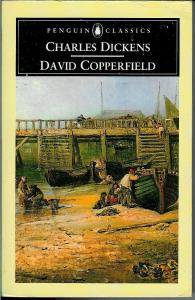
My well thumbed copy of David Copperfield

Mr Micawber, a character in the same book, was based on his own father and eventually John Dickens was able to pay off his debts when his mother died and left him £450. He and his family were released from prison but Charles was not immediately released from his work at the boot blacking warehouse, indeed his mother wanted him to continue there but it was his father who decided that Charles should return to school. Charles was forever indebted to his father for this and forever hurt by his mother’s wish that he should continue pasting labels onto bottles of boot blacking. The experience scarred him and his later desire to work harder and earn more and more money may have been a need to make himself safe from ever being forced into such a situation again.

After two years at school, Dickens obtained employment as a lawyer’s clerk and later, he taught himself shorthand and began work as a parliamentary reporter. He became infatuated at this time with a lady called Maria Beadnall who later became the inspiration for the character of Dora in David Copperfield. Charles pursued Maria over a period of three years but the romance, if indeed there ever was one, finally fizzled out in the spring of 1833.

Dickens first foray into the world of creative fiction was a short story titled A Dinner at Poplar Walk. He had sent the story to a monthly magazine simply called, The Monthly Magazine and upon finding his story printed within its pages, reported that ‘his eyes were so dimmed with joy and pride’ that he could barely see.

In 1835 the editor of the Morning Chronicle, George Hogarth, invited Dickens to contribute to his newspaper and during various visits to the Hogarth home he became acquainted with his editor’s daughter Catherine, whom he later married in 1836.

Dickens wrote his newspaper stories under the pseudonym Boz, and he was delighted when a publisher offered to publish a collection of his works entitled Sketches by Boz. This led to another publisher asking Dickens to supply the text to go with a series of illustrations by a popular illustrator of the day, Robert Stephens. Dickens somehow managed to turn the arrangement on its head, writing a story and having Stephens illustrate Dicken’s text. The story was The Pickwick Papers and it soon became something of a publishing phenomenon.

Robert Stephens passed away soon after the first publication and Dickens recruited another artist, Hablot Knight Browne, to provide the illustrations. Readers could buy a monthly instalment priced at a shilling and Dickens worked hard to produce each edition. Other stories had been published in a similar way but they were usually well known classics. This was the first time new fiction had been produced in this way.

That then was the start of Dicken’s career. He was a busy man, editing various publications as well as writing his novels. Great Expectations was published with the author shown as Boz but in later editions this was changed to Charles Dickens.

Dickens_by_Watkins_1858

Dickens seems to have rented various houses, moving around often but he eventually bought a house in 1851, Tavistock House in Tavistock Square, London. Dickens wrote various books here starting with Bleak House. He also fancied himself as something of an actor and he had a large room made into an improvised theatre where he, along with his friends and family, produced various amateur theatricals. In 1858, Charles separated from his wife Catherine and she moved out into a property in Camden Town.

The separation was said to have been sparked by Dickens’ obsession with a young actress called Ellen Ternan and his gift of either a brooch or a bracelet to her which somehow made its way to his wife. Dickens has this image of being the perfect Victorian family man but he didn’t always live up to it. According to Wikipedia he even tried to get his wife falsely diagnosed as mentally ill in order to have her committed to an asylum. Various accusations were bandied about at the time and rumours were so bad that Dickens himself was forced to publish a statement in the press about his marital situation.

Did Dickens have an affair with Ellen Ternan? So many years later it is hard to know the truth. One night when he was living at his new home Gad’s Hill Place, Dickens made a bonfire of all his personal letters and papers, some of which may have had the answers.

Certainly, Charles was fond of Ellen Ternan. He spent a lot of time with her and even took her abroad to France and Belgium but neither admitted to having an affair but he did have something of a history of obsessions. Years earlier he had been distraught when his sister-in-law Mary Hogarth had died suddenly at the age of 17. Mary was living with the Dickens family at the time and died in Charles’ arms. He was so upset that he kept his dead sister in law’s clothes for years afterwards, occasionally taking them out to look at them. Mary became the template for many women in his books, all of whom were ‘young, beautiful and good’.

Dickens had an incredible imagination and although many of his characters were based on real people, many others sprang directly from his own mind. He was a restless man and regularly took daily and nightly walks of twenty miles and more. Presumably on those walks he brought his imagination into check and channelled his thoughts into the development of his stories.

In his later life, Charles embarked on a series of readings from his books. The readings were highly charged emotional events and the author used all his powers as an actor to delight his audiences, frequently reducing them to tears. Tickets for the reading were highly sought after and Dickens was one of the most notable and famous men of his day. Imagine George Clooney or Brad Pitt doing a series of book readings today and we can get just a faint hint of what things were like for Dickens and his public back then.

Dickens bought his final home, Gad’s Hill Place in March of 1856. He had seen the house as a child when his father had pointed the house out to him as something that he might one day own if he worked hard enough. He lived at the house with his children although one, Charles junior, elected to live with his mother in Camden Town. Strangely, his estranged wife’s sister, Georgina, stayed with Charles as housekeeper.

On June 8th 1870, Dickens had a stroke after working on his final book, The Mystery of Edwin Drood. He died the next day without regaining consciousness. Some have speculated that he died at Ellen Ternan’s house and she had him taken back to Gad’s Hill to prevent a scandal. He was laid to rest in Poets Corner at Westminster Abbey.

Charles Dickens is one of the most loved and celebrated writers of all time but I’ve got to say that some of his books I’ve found a little hard to read. I’ve tried and tried to read Pickwick Papers but I just couldn’t get through it. Not long ago I picked up Bleak House and once again I couldn’t really get started on the book. I have read A Christmas Carol, Oliver Twist, Great Expectations and my absolute favourite, David Copperfield.

My favourite character in the book, apart from Copperfield himself, is Steerforth, a friend of David Copperfield but one who ultimately betrays him. The best part in the book probably, for me at any rate, is the storm when David returns to Yarmouth. Dickens builds the storm slowly and each word and phrase adds a new layer to the sense of danger and foreboding and when Copperfield is finally reunited with his old friend Steerforth at the height of the storm’s ferocity, death comes between them and Steerforth is sadly drowned.

Dickens reveals this in a very unique way; he does not tell the reader Steerforth is dead. He leaves the reader to realise this themselves and, in the process, makes the reader almost at one with the narrative. Throughout the book, Dickens mentions in passing about Steerforth’s habit of sleeping with his head on his arm. It’s referred to many times in the narrative almost as a matter of non interest, something unimportant that the reader doesn’t really need to know, but when David Copperfield spies someone aboard a stricken ship trapped in the fierce storm who evokes some faint remembrance for him, a tiny warning bell is set off.

Finally, when the body of a drowned man is brought ashore and lies mutely on the sand, his head upon his arm, we know just from that simple bit of information, without the author telling us anything more, that Steerforth is dead. The prompts and clues that Dickens has hinted at have paid off for the reader in the most satisfying of ways.

Dickens’ books are still popular today and a recent cinema version of David Copperfield was released in 2019. It was good although I do have a fondness for the 1935 version in which WC Fields plays the part of Mr Micawber. In 1946 David Lean directed one of the best ever films of a Dickens’ story, Great Expectations. In the 1960’s Oliver Twist was made into a stage musical by Lionel Bart and the film version was released in 1968.

Dickens’ most filmed story though is probably A Christmas Carol, the story of Ebenezer Scrooge and the three ghostly visits that transform his life.

What is your favourite Dickens’ story?


Sources:

Wikipedia

Dickens by Peter Ackroyd


What to do next: Here are a few options.

Share this post on your favourite social media!

Hit the Subscribe button. Never miss another post!

Listen to my podcast Click here.

Buy the book! Click here to purchase my new poetry anthology.

Click here to visit Amazon and download Floating in Space to your Kindle or order the paperback version.

Charlie Chaplin: Autobiography versus Biography

Earlier this year again, Liz and I packed up the motor and headed off to France. One of the first things I did in preparation was to sort out my holiday book bag. I usually have a stack of unread books to take along but I always like to take along a banker, yes that’s a book I can bank on, rely on to be a good read, usually one I have read before.

I was sorely tempted to bring my favourite read of all time along, Dickens’ David Copperfield or another favourite holiday read ‘A year in Provence‘, that much maligned gentle read about an Englishman living in France, however, one book I chose was so interesting I re-read a great deal of it at home before I left so I didn’t bother to bring it. The book in question was My Autobiography by Charles Chaplin, Charlie, to you and me.

My Autobiography by Charles Chaplin.

Charlie was born in 1889 in Walworth, London and spent his early life in the London suburb of Kennington. His parents were both music hall performers but separated when Charlie was about two years old. His mother was poor and the small family, Charlie, his mother and older brother Sydney, were admitted to the workhouse on two separate occasions.

In 1903, Charlie’s mother was committed to Cane Hill mental asylum and Charlie lived on the streets alone until his brother Sydney, who had joined the navy, returned from sea.

With his father’s connections Charlie secured a place in a clog dancing troupe called the Eight Lancashire Lads and so began his career as a performer. After appearing in some minor roles in the theatre he developed a comic routine and, with help from Sydney, was signed by Fred Karno, the famous music hall impresario, for his comedy company in 1908.

Chaplin became one of Fred Karno’s top comedians and Karno sent him with a troupe of other comedians on a tour of vaudeville theatres in the USA. One of the others was Stan Laurel, later to find fame with the comedy duo Laurel and Hardy.

By  far the most interesting part of Charlie’s autobiography is where he talks about the beginning of his movie career. On a second tour of America in 1913, Chaplin was asked to join the Mack Sennett studios as a performer in silent films for the fee of $150 per week. He wasn’t initially keen but liked the idea of starting something new.

His first film for Sennett was called Making a Living, released in 1914. Chaplin himself wasn’t so keen on the film and for his second appearance selected a new costume. After searching through the costume department Chaplin chose a bowler hat, a jacket that was too small, baggy trousers, shoes that were too large and a cane. It almost seems as though the clothes made him become the character of the tramp which was to make him famous. The film was Mabel’s Strange Predicament although another tramp film made afterwards, Kid Auto races at Venice, was released to the public first.

Chaplin clashed frequently with his directors when his ideas or suggestions were dismissed but after exhibitors asked Sennett for more Chaplin films he was allowed to direct his own. When his contract expired in 1914 Chaplin asked for 1000 dollars per week. Mack Sennett complained that that figure was more than he was getting and refused. Another film company Essanay, offered him $1200 per week and a signing fee and Chaplin signed. He wasn’t initially happy with Essanay and didn’t like their studios in Chicago, preferring to work in California.

Chaplin was also unhappy after he finished his contract at Essaney because they continued to make lucrative Chaplin comedies by utilising his out-takes. Chaplin was however an astute businessman. In his new contracts the negative and film rights reverted to Chaplin after a certain amount of time. This was in the days when a movie had a life of months, if not weeks.

Chaplin seems strangely perturbed by his fame and fortune. He writes about an incident between contracts where he takes the train to meet his brother in, I think, New York but word has got out to the public he is travelling and everywhere the train stops, masses of people were waiting. Eventually it dawns on him that it is he they were waiting for. Many times the narrative describes meals and walks taken alone giving the impression of a solitary, lonely man.

The thing to remember about reading this book is that Chaplin tells the reader only what he wants them to know, nothing more. His various marriages are only skimmed over although when he is making the Kid, probably his most important picture, he explains how he thought the negative may have be taken by lawyers acting for his estranged wife so he takes the film and edits it while almost ‘on the run’ in various hideaways and hotel rooms.

Chaplin was known for being attracted to young girls and one of his conquests, a girl called Joan Barry was arrested twice for her obsessive behaviour after he ended their relationship. She became pregnant and claimed he was the father and began a paternity suit against him. J Edgar Hoover who believed Chaplin to be a communist, engineered negative publicity against him and public opinion began to turn against Charlie. He was ordered to pay child support to Barry’s baby despite blood test evidence which showed he could not be the father. The blood test evidence was ruled inadmissible.

The earlier part of the book is by far the most interesting but the later part, where Chaplin is famous the world over, it becomes an excuse for name dropping, despite there being a clear absence of any notable anecdotes involving the famous names. Even his best friend Douglas Fairbanks, makes few appearances within the pages.

A fascinating read none the less.

Charlie Chaplin by Peter Ackroyd.

Peter wrote an excellent book about one of my writing heroes, Charles Dickens and I felt that this book was going to be in the same sort of mould. Long, intense and full of detail. Actually it’s a pretty slim volume and not the intense scrutiny of Chaplin that I was expecting. However, on the credit side, it’s a thoughtful and detailed look at Chaplin, his movies and his personal life and a cracking read it is too.

One hundred years ago Chaplin was the most famous man in the world. I’m not sure who would qualify for that title today as despite global communications and the Internet age, the world is separated by many different languages and cultures. A hundred years ago there was no language barrier for Chaplin, and his silent films with their universal language of comedy, went all the way round the globe and he was as famous in countries such as Russia or Africa as he was in Europe or the USA.

Hollywood in the early part of the twentieth century must have been a fascinating place and this book is a great starting point to find out about Chaplin and his work and the beginning of the film industry. Definitely a book well worth reading.


Floating in Space can be ordered from amazon as a Kindle download or as a traditional paperback by clicking here. Click the links at the top of the page for more information.

James Hilton, Shangri-la, and Hollywood

james hilton autog

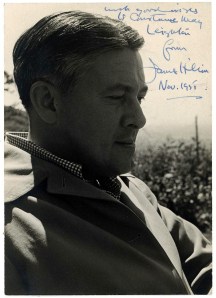
James Hilton is one of my personal writing heroes and yet his name may be unfamiliar to many of you reading this blog. He was a journalist and an author and made the trip from his home in Leigh, Lancashire, in the UK to the Hollywood hills in the United States to become a screen writer. He is probably more well known for his book ‘Goodbye Mr Chips’ which was made into a film with Robert Donat (actually another northerner from Didsbury in Manchester) but my favourite of his books and quite possibly my all-time favourite book is ‘Lost Horizon’.

Lost Horizon is a book I found in a second-hand shop many years ago. A battered 1940s paperback I paid twenty-five pence for and yet that small investment has paid me back many times over for sheer reading pleasure as Lost Horizon is a book I re read every year or so and I often pull it down from my bookshelf when a current read fails to entertain me.

Lost Horizon is a completely original idea and is about British consul Robert Conway in the dark days before World War II. Conway is helping his fellow British citizens escape from civil war in China and he and his small party escape in the last plane only to be kidnapped and taken to a distant Tibetan monastery. Conway meets the High lama and after a time it is revealed that the Tibetans  want to preserve the best of world culture and art and make it safe from the coming war.

Hilton is one of those few people who have invented a word or coined a phrase that has become part of the English language. In this case it was the name of the Tibetan monastery, Shangri-la which has since become a byword for a peaceful paradise, a distant haven. Camp David, the US President’s retreat was originally called Shangi-la until renamed by Eisenhower for his son, David.

Hilton’s journey from Leigh to Hollywood must have been a magical one and one I envy, especially as his time in Hollywood was a golden age for movie making. Lost Horizon was made into a movie by Hollywood director Frank Capra and starred Ronald Colman as the urbane British diplomat of the novel. It’s a movie that was recently restored and is a great DVD if you happen to see it. Colman also starred in another movie authored by Hilton :‘Random Harvest ‘.

Hilton settled in Hollywood and wrote a number of screenplays for classic Hollywood movies such as ‘Mrs Miniver ‘. Sadly he died from cancer in 1954.

WordPress of course is an American site and I wonder sometimes if a bored Hollywood production executive may decide to sit down one day with his Ipad and search idly across the site in search of movie ideas. My own book; Floating In space’ could easily be relocated from Manchester to Los Angeles and I am available for writing the screenplay.

Well, may keep my flight bag packed, just in case . . .


If you enjoyed this post, why not try my novel, Floating In Space? Click the links at the top of the page for more information.