I started this post off with three ‘showbiz’ autobiographies of actresses/comediennes of the stage and screen. Despite trawling through my book collection I couldn’t see a fourth so I added one which is the odd one out; a biography, rather than an autobiography and a male actor/comedian rather than a female. Either way, all four are stars who made their respective names in the 1950s and 1960s era of radio, TV and film and together make up a quartet of much loved British comedians.
Fenella Fielding: Do You Mind If I Smoke?
 This is an autobiography by Fenella Fielding, co-written with Simon McKay, and the title comes from her part in Carry On Screaming when she played a seductive character, possibly derived from the Adams Family, Valeria. In one scene Valeria tries to seduce Harry H Corbett standing in for the absent Sid James as a detective. Valeria asks ‘do you mind if I smoke?’ and then rather than smoking a cigarette, a cloud of smoke seems to arise from her body and envelop her. Harry H Corbett adds ‘just when I was trying to give it up’ before embracing her in the smoke.
Simon met Fenella at a London Pilates class in 2011. The two became friends and began meeting regularly for coffee. McKay realised that Fenella was a wonderful raconteur and asked if he could record her stories. Fenella agreed and later they used the transcriptions as the basis for a themed evening, An Evening with Fenella Fielding. Later the conversations became an audio book and finally this printed version. It was hugely enjoyable and rather than being a standard story of her life, the book talks about various things in no particular order.
Fenella describes her early life in Clapton and her first forays into the acting world. She won a scholarship to RADA but her parents, who were keen at first, don’t seem to have realised what RADA was, that their daughter was becoming an actress which they seem to have seen as just one step away from prostitution.
Anyway despite only completing one year at RADA, Fenella did manage to become an actress. After one particular success on the stage she began to pick up various small parts on television and on film and as I mentioned above, her most famous part was in Carry On Screaming. She devotes a whole chapter to Kenneth Williams who of course could be a very difficult man to work with. She also played a part in Doctor in Clover and was heard as the village announcer in the TV series The Prisoner. In fact a great deal of her work was voiceovers for various things especially TV adverts.
This was a lovely read and came over as very chatty and talkative, based as it was on recorded conversations.
Liz Fraser …. and other characters
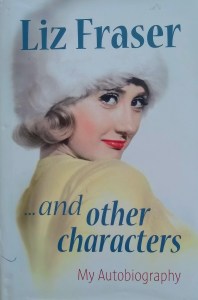 In Fenella’s book above, she mentions that she hoped her book would not go the way of a lot of other showbiz autobiographies, interesting at first but then dissolving into lists of plays and films and other celebrities. Sadly, that seems to be the way this book does go, even so I enjoyed it.
Liz was brought up in Southwark, in London. Her mother ran a small shop, one of those shops that used to sell everything that Tesco might sell these days from bags of coal, wood bundles to fresh food. Her father was a travelling salesman but died in 1942 aged only 40.
Like Fenella, Liz attended RADA and afterwards won her breakthrough part in I’m All Right Jack which starred Peter Sellers as a union official. She tells the story of playing minor parts in small plays and eventually got some walk on parts on TV. One day her mother said to her “Was that you last week, walking past Peter Cushing?” It was!
Liz worked on TV shows that were live back in the day. On an episode of Dixon of Dock Green she forgot her line but the crew had a ‘cut key’ which cut out the broadcast sound while they called out the line to the hapless Liz.
To get the part in I’m All Right Jack Liz had to lie about her age as the producers wanted someone younger which led to a career long confusion about her age.
She appeared with Peter Sellers in various films and she reveals that although she liked Sellers she had to fight off his amorous advances several times. Liz shares lots of anecdotes about various people she worked with including Tony Hancock, Benny Hill and Sid James.
She tells about appearing in a few of the Carry On films but like many others is critical of the producers. There was only a one off payment for each film and despite the enduring popularity of the Carry On films, the actors earned nothing from their later success on TV. In later life Joan Sims had a lot of financial difficulty but was helped by actors’ charity organisations. Liz herself was very thoughtful, investing in property and stocks and shares which sustained her during the times when acting work was thin on the ground.
She doesn’t share much about her personal life although her first husband features in a chapter called I Married a Thief. Peter Yonwin was something of a fantasist and their marriage soon broke down.
One shocking disclosure was an incident one night after appearing in a pantomime. Liz took an acquaintance home thinking she could deal with any problem man only to be raped. She doesn’t expand on the incident but seems to just mention it quickly and then move on as if perhaps by talking about it however briefly she could perhaps exorcize this dreadful ordeal.
Liz’s second husband, a TV producer, died of cancer and Liz suffered with cancer herself. She enjoyed fast cars and finishes by talking about her old age.
Liz Fraser died in 2018 aged 88.
According to Dora
 I do love my showbiz biographies and autobiographies and one I picked up a while back was an autobiography by Dora Bryan. I love Dora from her many appearances in British films but my favourite film is probably A Taste of Honey. The screenplay was by Shelagh Delaney and director Tony Richardson, adapted from Delaney’s own play which she famously wrote when she was only 18.
Dora Bryan gives an outstanding performance; at times comic but always supremely natural. Dora grew up on an Oldham housing estate. She was a great performer as a child and so her mother took her to dancing school and further encouraged by her mother, she joined Oldham Repertory before moving to London to develop her stage career. She had a great career on the stage as well as on film and TV and appeared in many successful West End productions. The first part of the book is very interesting but then as I mentioned earlier, this becomes one of those books in which the latter part seems to wander off into lists of productions and theatre and TV personalities. Even so, it was a lovely read.
When the Wind Changed (The Life and Death of Tony Hancock) by Cliff Goodwin
 This final book is the odd one out in this quartet of British comedy stars. It’s a biography rather than an autobiography. I don’t think Tony Hancock ever wrote one.
Back in his day Tony Hancock was a giant among television performers. Pub landlords complained that their establishments used to empty because people would drink up and rush home to watch Hancock’s Half Hour. I can’t even imagine that happening today to any contemporary comedian not withstanding the emergence of TV recording devices.
Hancock’s half hour was first broadcast on the radio in 1954 and then transferred to television in 1956.
Hancock’s co star on television was Sid James and Hancock decided to part with Sid believing that the public had begun to think of the two of them as a sort of double act. His final comedy series for the BBC was called Hancock but even without Sid James, it was a great success.
An interesting TV interview at this time saw Hancock as a guest on Face to Face, an intensive interview which revealed Tony Hancock to be a different man to the bumbling buffoon of his radio and TV shows, in fact the entire transcript of the interview is repeated in the book. Many felt that this interview made him more and more self-critical which led to him dispensing with many who were important to his professional life such as Sid James and his scriptwriters Galton and Simpson.
After a minor car crash Hancock had to use an autocue for perhaps his most famous TV episode, The Blood Donor. After that, he used the autocue more and more finding it too hard apparently to continue to learn scripts.
His drinking increased. He left his wife for his mistress Freddie Ross who worked as his publicist. Freddie and Hancock eventually married but their relationship later broke down also.
Hancock committed suicide in 1968. He took an overdose of pills and left behind a note which said ‘things seemed to go wrong too many times.’
This is such a fascinating and well written book and if you are interested in actors and performers as I am, it is well worth seeking out.
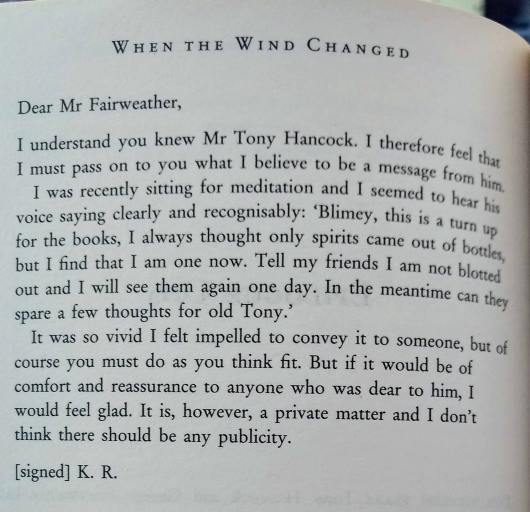
There are a couple of postcripts to the book but one was so intriguing I have to mention it here. George Fairweather was a great friend of Tony Hancock. When Hancock was delighted to find he had been chosen for the royal command performance he told George that he wished his late father could have been there to see it. George commented that perhaps his father would see it and Hancock replied dismissively that ‘only spirits come out of bottles’.
22 days after Hancock’s death, George received a typed letter with no name or address. It said simply that the writer had received a message from Hancock in the afterlife and wished to pass it on. The message is reproduced below.
 In my last few posts about books, rather than publish my usual Book Bag posts, I’ve incorporated book reviews into other types of posts; holiday memories and posts about books made into films and so on. During my last few holidays, I always seem to either have a couple of John Grisham books with me or found some in the places, usually rented villas, where we have stayed. I thought it might be an idea to write a John Grisham themed book bag post. Who actually is John Grisham then?
 A Time to Kill by John Grisham
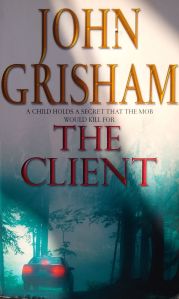 The Client
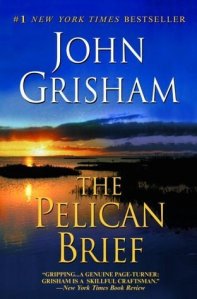 The Pelican Brief by John Grisham
 The Firm by John Grisham
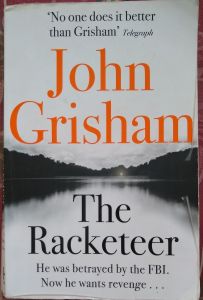 The Racketeer
 The Boys From Biloxi
 Donald Trump, the 47th president of the US, has been in the news quite a lot recently. He’s cutting down on the number of federal employees. He has stopped federal help for electric cars, he’s made it known he wants the USA to take over Gaza and he is also negotiating with Russia to stop the war in the Ukraine. He doesn’t seem to have involved President Zelensky in these talks despite Zelensky being the president of the Ukraine. Trump has even cast doubt on Zelensky’s right to be the president as, because of the war, Ukraine hasn’t held any elections. This is quite rich really as Putin, the leader of Russia, has not only rigged the Russian elections but has changed the law in Russia so he can continue as president and has also allegedly bumped off Alexei Navalny, his major political opponent.
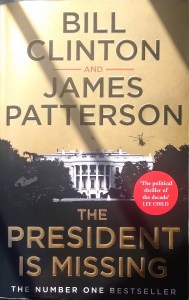 The President is Missing by Bill Clinton and James Patterson has been a good holiday read. A helter skelter fast paced read but moves along quickly and has nicely laid out short chapters to enable me to pause, jump in the pool to cool off and then resume reading.
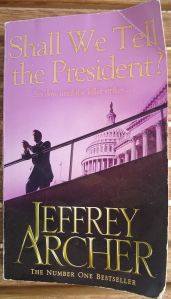 Shall We Tell the President was a novel by Jeffrey Archer first published in 1977. In the book Edward Kennedy has become the US President and FBI agents become aware of a plot to kill the President.
 Over on the front page of this site you will find a whole lot of stuff about me. It tells you that I have always wanted to be a writer, that I enjoy writing as well as Formula One racing, classic cinema and books. In one segment it mentions that I like dining out, in fact it says that dining out is one of the great experiences of life and so I thought I’d start with that, great experiences and see where that leads me.
 Crossfire by Jim Marrs
 I absolutely loved this book. I mentioned it last week in a post about
  Liz and I are over here in sunny Lanzarote having exchanged the cold of the UK for the warmth of Lanzarote. Of course, it is still February and things aren’t perfect over here. It’s warm but there are plenty of days when gusty winds blow across the island as well as days when the sun has been obscured by clouds. Even so there are still plenty of bars to drink at, plenty of tapas to be eaten and of course we have plenty of books to read, two of which have inspired this week’s post.
 The plot of the book and film are pretty complicated, although having read the book recently I think that the book is easier to follow. During the filming the director and his stars wondered who killed the character of Owen Taylor, the Sternwood’s chauffeur. They sent a cable to Raymond Chandler asking him. Chandler told a friend later ‘Dammit, I don’t know either!’

 Anyway, getting back to the Marigold Hotel. I was rather unhappy with the book at first. It had originally been published under the title These Foolish Things and was written by novelist Deborah Moggach, but to cash in on the success of the film, new editions were published with the film’s title. As I began to get into the book, I actually began to like it. The central theme seemed to be the story of the lady played by Maggie Smith in the film although in the book another layer of her story has been added which the film ignores. She is mugged and goes to see her well off son for help only to find he has been involved in some dodgy deal and has left to escape the police. She refuses to go back home but her doctor recommends a place in India where she can rest and recuperate. In fact, the Marigold Hotel which he has recommended is a business venture in which he is also a partner.
 I first started posting in 2014 and that year I managed to get 2341 views which I was pretty pleased about. If I had also managed to sell 2341 copies of any of my books, I would have been even more pleased but hey, that’s another story.
 Looking back I now wonder whether that guy was actually right. 649 blog posts, times my average word count per post: That comes to over 700,000 words. I could have written another book and to be fair, that was part of the idea behind
  This the third instalment of a post on the theme of transformations. The very first one (
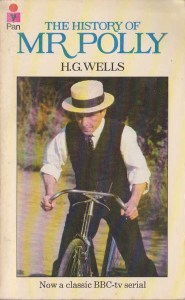 This is not a science fiction story despite being penned by H G Wells. Our hero, Mr Polly, finds himself in a very dull job with a very dull wife and resolves to commit suicide. Anyway, events unfold and instead of committing suicide, Polly accidentally starts a fire which threatens the whole street and he then mounts a brave rescue of an old lady. Instead of dying, Mr Polly becomes a hero and when the insurance money comes in, he leaves his wife nicely settled with the insurance money, takes a little for himself and departs for pastures new. He sends some money to a post office in another village and gradually meanders in that direction, sleeping in fields and hedges, getting himself a tan. He works occasionally when he wants and sleeps when the mood takes him at other times.
 A film version was made in 1949 starring John Mills as Mr Polly and Megs Jenkins as the landlady of the Inn where Polly finds happiness.
 The Bay of Pigs was a great disaster for Kennedy. He inherited the invasion plans from the Eisenhower administration in which Vice President Nixon was a prime mover. Nixon felt that an invasion would boost his chances in the election contest against Kennedy but the CIA seemed to be relying on the assassination of Castro to kick off the invasion but that planned murder, for whatever reason, never happened.
 Ten Days to Destiny by John Costello
 This book was the sequel to another book about Bill Clinton. The first one dealt with Clinton’s early life and his election to the presidency; this one takes us through his first four years as president. The author takes us through the years of the Clinton White House and documents the issues like Troopergate; when the former Governor Clinton’s State Troopers revealed the comings and goings of Bill’s various mistresses, as well as the disaster of his healthcare reform work which he entrusted to his wife Hillary. The public clearly weren’t keen on Clinton’s ‘co-president’ – his wife, and their healthcare proposals were rejected by Congress. The mid term elections were another disaster for Clinton and the Democrats and the book goes on to show how Clinton turned the final two years of his first term presidency around and was able to win a second term.
 Encore Provence by Peter Mayle
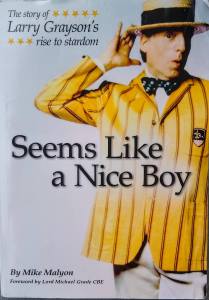 Many have speculated about his true sexuality but it’s clear that Larry enjoyed being labelled as camp rather than gay. The main relationship in his life was with his sister who became a mother figure to him when his adoptive mother died. The two lived next door to each other for many years in later life.
 Once again, Liz and I are travelling across France in our little motorhome, looking for restaurants to eat at and lakes to swim in. The weather hasn’t been great but at least it hasn’t been cold, although a little less cloud and a little more sun would have been nice.
 The two spacecraft are of course made by different companies but even so I thought that this particular issue was addressed during the Apollo program. If you have ever seen the movie Apollo 13 you will know that a small explosion on the service module meant that the crew had to move into the lunar excursion vehicle in order to conserve power and oxygen in the command module.
