So who was the best Bond? That’s Bond of course, James Bond, licensed to kill.
I’ve had a little time on my hands this week, looking after my elderly mother. Nothing particularly exciting presented itself on terrestrial TV so I thought, the perfect time to pour a glass of red and crank up a few Bond DVDs.
Sean Connery.
The very first Bond movie was Doctor No starring Sean Connery as the very first Bond. Connery was excellent as the suave James Bond, former naval officer and now agent of M16, the Secret Intelligence Service. Bond gets sent to Jamaica to look into the disappearance of the local station head. It turns out he was killed for being far too interested in the very first Bond villain, Doctor No. Throw in some exciting sets, car chases, gunplay and pretty girls and you have the instant formula for a successful film franchise.
Connery plays a great James Bond and he carried on with his portrayal in three subsequent films. After Thunderball he decided enough was enough and packed the job in. Later he was enticed back to play Bond one more time in Diamonds are Forever.
Stevehigginsinslive.com Bond rating: #4
George Lazenby.
George Lazenby was an actor in a TV advert and was spotted by the producers to take on the role of 007. Lazenby was to me, the perfect Bond; rugged and good looking as well as smooth and unruffled. To me he was just how I imagined Bond after reading the Ian Fleming novels as a schoolboy. His one Bond film, On Her Majesty’s Secret Service is one of the best films in the 007 franchise. Diana Rigg is a great Bond lady who, unlike no other Bond girl before or after, actually gets to marry Bond. The film is a fast paced thriller with some great fight and chase scenes including a classic ski chase. Lazenby quit the Bond series after getting some bad career advice and it was such a shame that he did not portray James Bond again.
Stevehigginsinslive.com Bond rating: #1
Roger Moore.
Roger Moore is one of my favourite actors, good looking, smooth and someone who never takes himself too seriously. He was great as Simon Templar and Lord Brett Sinclair in two TV action series but as for James Bond, well I don’t know what went wrong but Moore just didn’t cut it as Bond for me. His first film Live and Let Die was . .well, not bad I suppose but most of the rest were just dreadful, more carry On James Bond than the Bond we, or at least I wanted to see. Sorry Roger, just not my cup of tea at all and as for that underwater car. . . Seriously?
Stevehigginsinslive.com Bond rating: #6
Timothy Dalton.
Relaxing in front of the TV the other day and The Living Daylights popped up on my TV schedule. I’ve never really thought much of this film but actually it was pretty good. Timothy Dalton was a welcome relief after the Roger Moore years; finally, a serious Bond film again. Good film, good music and a great Bond girl who had, unusually, more to do that just look nice. Dalton made two Bond films, the other one being the slightly tedious Licence to Kill. Great song but a film that needed a few kick starts along the way.
Stevehigginsinslive.com Bond rating: #3
Pierce Brosnan.
There was a 6 year gap to the next Bond film due to legal issues. Timothy Dalton declined to star as Bond and the producers gave the role to Pierce Brosnan. Brosnan’s first Bond film was the impressive Goldeneye, one of my personal favourites of the whole series. Brosnan’s Bond is as smooth and stylish as the previous incumbents of the role with the addition of some wry humour in the style of Sean Connery. Goldeneye was the best of Brosnan’s films and the only real dud was Tomorrow Never Dies but even that had its merits. His last Bond film Die Another Day did venture slightly into Roger Moore territory with an invisible car though. Brosnan’s series of films were made all the more impressive by a small company of regular co-stars in particular Judi Dench as a female M, and Samantha Bond as Miss Moneypenny. I have to vote Brosnan in as my second favourite Bond.
Stevehigginsinslive.com Bond rating: #2
Daniel Craig.
Craig made his Bond debut in Casino Royale, actually the first book in Ian Fleming’s series but the last to make it to film, well, in the official franchise anyway. Fleming sold the rights to Casino Royale separately to the rest of books for some reason which is why a comedy version was made in the 1960s starring David Niven as Bond. In fact Niven was Fleming’s personal choice for a film Bond!
Anyway, this series of Bond films brings us to the 21st century version of the British superspy with an accent less on gadgets but heavy on action. The Daniel Craig Bond films are tough and gritty but are all reasonably enjoyable, the best one by far being Skyfall. Craig’s Bond is noticeably more thuggish than his predecessors although he tends to drive a classy vintage 1960s Aston Martin. Interestingly, in the books, Bond’s personal car was a vintage Bentley.
Stevehigginsinslive.com Bond rating: #5
Floating in Space is a novel by Steve Higgins set in Manchester, 1977. Click the links at the top of the page to buy or for more information.
Film sets? Rooms? What exactly is this guy going to write about rooms you might think? Well, this idea about rooms might take me a while to explain so here we go.
I’ve always been interested in really exciting rooms, usually those seen on a film where the room in question has been designed by some really top designer and put together by some award-winning prop guy and set dresser but the first room that comes to mind is one from my comic book days.
Back in the 1960s some British comics started to reprint American super hero comic strips. They did it by combining various super hero comic strips into one comic. The one that comes to mind was called Marvel after the producers of such comic books as Spiderman, the Hulk and so on.
One strip that I really loved was the new super hero Daredevil. Now he, believe it or not, was a blind guy but had this ‘radar sense’ that enabled him to see in a way that no sighted person could. In the first Daredevil strip I ever read there was a cutaway drawing showing Daredevil’s flat (apartment to you US readers) and its secret ‘underground lair’ when Daredevil got his kit off and exercised in a personal gym where he honed his gymnastic skills which as you know, are required by all costumed crime fighters. It was probably the idea of the concealed rooms that interested me as a child, I always loved that in the sci fi of the 1960s.
Image courtesy berkeleyplaceblog.com
Batman too had his underground lair; it was the Batcave and there was a great moment in the 1960’s TV series when Bruce Wayne would say to his young ward Dick Grayson ‘to the Bat poles!’ Robin alias Dick would flip the switch on the bust on Bruce’s desk and the two would leap onto the bat poles in the now opened secret compartment and slide down to the Batcave.
Another underground lair was that of Doctor No, the first villain in the James Bond film series. The doc had these amazing quarters with a glass wall looking out under the ocean.
‘A million dollars’ says the doc to James Bond as he quietly enters the room.
‘You were thinking of how much it cost?’ He goes on.
Actually, I wasn’t as I knew it was a film set but it was pretty cool.
The next great room and location that comes to mind was that of Ernst Stavro Blofield in my favourite Bond movie, On her Majesty’s Secret Service. Blofield has a mountain hideaway on top of a peak in the French Alps, or was it the Italian Alps? Either way Piz Gloria was an actual skiing lodge that had just been constructed and had been lent to the film crew. The interior, which I always rather liked, particularly Blofield’s inner sanctum was really cool and presumably designed by the production designer Syd Cain.
Another room I always liked was Joe 90’s dad’s house from the TV series Joe 90. It was a very comfy old-fashioned farmhouse where Joe and his dad, professor -I nearly said professor 90 but I don’t think it was. Anyway, the two of them lived there assisted by their housekeeper until Joe went off on his secret missions. Their front room was remarkably similar to the one owned by Barnes Wallis in the film The Dambusters. Wallis’ home was a typical 1940’s English farmhouse and it all looked pretty comfortable to me.
Remember the Beatles movie Help? In the film there is a great shot of the four Beatles walking up to their respective front doors along a typical row of English terraced houses.
They turn their keys, open their doors and they each step into: -Cut to interior shot- One ultra-modern long room and we see the Beatles step inside and settle down. John has a settee or couch sunk into a low area which he has to step down into and down there, or so I imagine, he has a TV and stereo and all the mod cons of the mid-1960s. I loved that little space and if I had a big enough house it would be great to recreate it. Then again, I can just imagine coming home late at night after a few beers at the pub, walking into it in the dark and breaking my neck!
Did you ever watch the 60’s TV show The Prisoner? A secret agent resigns, returns home to find gas filling his house. He awakes, seemingly in the same room but when he opens the window, he finds himself in a village where he is apparently a prisoner. The Prisoner starred Patrick McGoohan and the show combines elements of intrigue, espionage and sci fi. It was filmed in the Welsh village of Portmerion where a long time ago I was able to visit number 6’s old house. The inside of it was of course not in Portmerion but was something assembled on a film set at Elstree or somewhere. It was small and compact and the door automatically opened as you approached.
Number 2, the administrator of the village had an ultra modern office with stylish 1960’s bubble chairs. I’ve always fancied one of those chairs: I can just imagine curling up in one and having a good read.
Another great setting was Hugh Grant’s house in the film Notting Hill. Notting Hill is an actual area of London and Grant’s house in the film was presumably an actual house. Notting Hill, and I have to say I have no actual experience of the real Notting Hill, comes over in the film as a busy, vibrant and exciting place to live. Hugh’s house is a terraced house, rather narrow but with lots of light and a rather cosy area on a landing by the stairs with a couch where Grant spends the night on one occasion in the film and looks to be a really great place to relax, maybe watch TV or write blogs and just generally have some private time.
Anyway, enough of films, it’s about time I told you about my favourite room. I had two and they were both at the first house I ever bought; my house in Didsbury, Manchester. There was a small front room which I decorated myself, slowly. There was a dado rail with different but matching wallpapers above and below, bookshelves, books and videos (VHS of course). I also kept one of the three bedrooms for myself as a music room and my stereo and records were all stored there along with a couple of comfy chairs and all the other toys, gadgets and cameras I had at the time.
Once, years later, I remember visiting the old place and I parked outside for a while feeling like an intruder. Years before, this had been my street and my house and if, back then I had glanced outside and seen a strange guy in a strange car just waiting, I might have been tempted to call the police. Times had changed, and now I was the intruder.
There was a time when I might have been tempted not to mention that story but I remember watching my favourite TV documentary of all time about the late actor, Peter Sellers. Sellers had a thing about dragging his ex-wife out and taking her on these regular tours of his old haunts, his old schools and old homes and so on. If a famous actor and comedian like Sellers did something like that then clearly parking outside my old house for a few moments can’t be so bad after all.
I enjoyed some happiness in that house but also a lot of pain and sadness too. I remember sitting there in my car and I tried to turn my mind to the happier times I had there.
Once, we had a sort of, well gathering there. I was tempted to say dinner party but really it was just a few people coming around for drinks and nibbles and things.
One guest was our solicitor, I’ll call him Phil (although his name was actually Pete!) Seriously, Phil was a really arrogant guy. In fact he had very bad eyesight and could hardly see his hand in front of his face. He rejected the use of a white stick and arrogantly pushed away anyone who tried to help him. He was a good solicitor and although he could be a bit of a pain I had a lot of respect for him.
He was sitting in the small lounge in my comfy chair when he got up to get a drink or some food or something from the other room. I was tempted to nip into the comfy chair but another guest pushed me aside and slipped into the seat. When Phil came back with a plate of nibbles he turned to sit back in the chair, obviously not seeing the girl sitting there and she slipped out of the seat just as Phil sat down again.
We were all killing ourselves laughing but Phil didn’t quite get the joke.
Later when he left, he once again declined any assistance. Pity really because the path from our front door to the street went towards the right at a 45 degree angle whereas Phil went straight ahead towards the privet hedge.
Never did get that gap in the hedge sorted.
Floating in Space is a novel by Steve Higgins set in Manchester, 1977. Click the links at the top of the page to buy or for more information.
The Night my Number Came up (1955) starring Michael Redgrave, Sheila Sim, Alexander Knox and Denholm Elliot. Directed by Leslie Norman.
A senior Royal Air Force officer (Michael Redgrave) is at a dinner party in Hong Kong and a naval Commander played by Michael Hordern, talks about a dream he had in which the Air Marshal and a group of 5 other companions were flying from Bangkok in a Dakota which crashed on a rocky shore. The Air Marshal is due to fly to Tokyo the following day but he is not unduly bothered as many of the details differ from his planned flight including using a different kind of aircraft, a Consolidated Liberator.
When technical issues ground the planned aircraft a Dakota airliner, like the one seen in the dream, is substituted, and a number of other passengers arrive to make the total number of people on board 13, the same number of people as in the dream. As the flight proceeds, other circumstances change so that eventually most of the details correspond to the dream. When the aircraft runs low on fuel due to becoming lost in bad weather the pilot manages to bring the aircraft down in emergency landing in a snowfield in the mountains and all on board survive. The naval commander hears about the missing plane and arrives at the RAF base to direct search parties to the correct area.
The director, father of the film critic Barry Norman, builds the tension in the aircraft as more and more people come to know about the dream and gradually become more and more anxious. It was interesting to find out when I researched the film that it was based on a real incident in the life of British Air Marshal Sir Victor Goddard. All in all, an excellent film with good performances from Michael Redgrave, Alexander Knox and a young Denholm Elliot.
The Dead of Night (1945) starring Mervyn Johns. A series of short stories that combine together. Each instalment had a different director.
This is probably one the great horror movies of the 1950’s, in fact, one of the great movies full stop. It’s a series of short stories all linked together by the central character played by Mervyn Johns. His character architect Walter Craig, arrives at a house in the countryside where he has been consulted on some building work. The house seems all too familiar to him and then he then realises that everything that happens he has already lived through in a dream, a nightmare in fact. As more guests arrive for the weekend he recognises them from the dream and is convinced something terrible is about to happen. When he confides this story to the others, they in turn all relate a supernatural story before the central theme reaches a terrifying climax. Two stories that were particularly good were one in which an unbalanced ventriloquist (Michael Redgrave) believes his dummy is alive and another where a woman played by Googie Withers buys an antique mirror for her husband and finds that the mirror has an hypnotic effect on the man.
An outstanding film and one that was highly rated by director Martin Scorcese and was voted the 35th best horror film of all time by Time Out magazine.
The Intruder (1953) starring Jack Hawkins. Directed by Guy Hamilton.
Another classic 50’s film starring Jack Hawkins. Hawkins plays Colonel Merton, an ex-army officer who returns home one night to find his London flat being burgled by a petty thief. Merton confronts the man played by Michael Medwin, only to find that the intruder is in fact Ginger Edwards, one of the men from his old command. He is shocked to see one of his former soldiers reduced to crime. He tries to talk to Ginger but accidentally knocks over his phone in another room which leads Ginger to think he has called the Police. When there is a knock at the door Ginger bolts and makes a hasty departure. Merton then decides to visit some of his old army comrades – Ginger mentioned he was in touch with one of them – in order to track the man down. Each old comrade tells a story about Ginger which all nicely link together to show how circumstances have worked against their old friend. A lovely film with excellent performances and a number of familiar faces from British film and TV, among them Dennis Price, Dora Bryan and George Cole.
The Long Arm (1956) starring Jack Hawkins and directed by Charles Friend.
This is a brilliant film, it really is. It’s a sort of CSI London from the 1950’s. Like the present day CSI series, this film shows the crime detection process using the then start of the art technology. Jack Hawkins is a police inspector and is called on to look at a robbery in London. The theft was from a safe manufactured by a company called Rock. There is little to go on and Jack returns to his 1950’s suburban home feeling rather disappointed. Happily his typical 1950’s housewife is there waiting for him, his tea is ready and his evening bottle of beer also all ready too. Hawkins spends a little time with his son before bed time and tells him all about his current case and the lack of clues. Well, says the boy, perhaps the thief is a super thief who has never been caught. This revolutionary thought rings a bell for Hawkins and he goes back down to Scotland Yard straight away for a meeting with the records guy played by Geoffrey Keen. Together they trawl through the card file (no computers back in the 1950’s!) of unsolved cases and find one relevant link. A set of robberies all from safes manufactured by, yes you’ve guessed it, Rock.
OK next up is a visit to the Rock factory for more investigation but then the robber makes a fatal mistake. While fleeing from the scene of his latest heist the robber runs over and kills a passerby. Later the abandoned murder car is found and 1950’s style forensic technology uncovers various clues. The most interesting one is a rolled up newspaper used to clean the window. A fascinating look at newspapers and how they are produced and distributed follows and the police are soon on the trail of their man. I won’t give away the ending but the film kept me on my toes throughout and Guy Hamilton who directed some of the early Bond films throws in a little action to bring the film to a climax.
No Highway in the Sky (1951) starring James Stewart, Marlene Dietrich, Glynis Johns. Directed by Henry Koster.
James Stewart plays an aircraft technical expert Theodore Honey who is trying to solve the mystery of a crash involving a new aircraft, the Rutland Reindeer, which has crashed in Canada. Honey theorises that the crash was a result of metal fatigue and sets up an experiment which involves the tailplane of the aircraft subjected to continual vibration in a controlled environment. When Mr Honey flies home on another Reindeer he is shocked to find that the aircraft is an early production model and is fast approaching the flight time that he has theorised the tailplane will fail. Mr Honey decides to warn the crew and also a famous film star aboard played by Marlene Dietrich. Consternation reigns in the cockpit but the pilot has no choice but to carry on. On arrival at Gander the pilot consults with experts in London and the aircraft is cleared to fly on. In a desperate act, Honey retracts the undercarriage and wrecks the plane to stop it from flying.
Stewart plays Mr Honey as a slightly eccentric character, very similar to his character in the film Harvey. Marlene Dietrich takes quite a liking to him as does the stewardess and they are both eager to help and support him and his young daughter when his theory is attacked from all sides. Needless to say, he is proved right in the end.
Last Holiday (1950) starring Alec Guinness. Directed by Henry Cass.
Guinness plays a pleasant mild-mannered salesman called George Bird who has no friends or family and finds out he only has a few weeks to live. He decides to spend the time he has left by going to a rather posh residential hotel where the residents find him a sort of enigma. His star rises here as he becomes involved with the residents and staff and people start to wonder about him. Who is he? Is he rich? Lucrative job offers come his way as well as love but only one person knows his secret, a member of staff that he confides in. In the end Mr Bird finds out he was wrongly diagnosed but the film ends on a sad note when he is killed in a car crash. Penned by author J.B.Priestley, it’s another wonderful British picture full of excellent performances with a whiff of sadness and poignancy about it. Guinness’ performance is excellent and the underlying sense of inevitability is further enhanced by a haunting musical theme that we hear throughout the film.
If I had written this a few years back I might have been tempted to add this to a blog like Unseen TV which was a post about cinema and TV films which rarely get an airing on terrestrial TV. However, I am happy to see that all of the above films can be found on the new freeview channel 81 Talking Pictures.
Floating in Space is a novel set in Manchester, 1977. Click the links at the top of the page to buy or to find out more!
I think I’ll start this post with that fabulous time travel film Back to the Future. If you have never seen it, (shame on you) the film concerns young Marty McFly who helps his friend Doc Brown with a time travel experiment. The time machine is a 1985 DeLorean sports car which morphs through time when it reaches the magical speed of 88 mph. The experiment goes horribly wrong when a gang of Libyan terrorists whom the Doc has double crossed in order to get some vital nuclear supplies for his car/time machine arrive and shoot the Doc apparently dead.
Marty escapes in the DeLorean, accidentally hits the time travel switch (the flux capacitor) and zooms back to 1955 when he speeds up to 88 mph.
There Marty has to enlist the help of Doc Brown’s younger self, get his parents’ romance back on course after accidentally knocking that off target, and get himself back to 1985 in time to prevent the Doc being murdered by terrorists.
In Back to the Future 2, Crispin Glover, who played Marty’s dad, failed to agree terms with the producers so was not in films 2 or 3. Instead a look-alike actor was used prompting Glover to sue the production company. His legal challenge failed but next time you watch 2 and 3, that’s why Marty’s dad isn’t in the film much!
There are some great little touches to the film too, some you may not even have noticed, for instance, when Marty leaves 1985 and goes back to the past, he departs from the Twin Pines Mall. There, in 1955 he hits a pine tree and later arrives back in 1985 at the Lone Pine Mall!
In the final film Doc Brown gets accidentally flipped back to 1885 and Marty has to time travel back there to save the Doc. How does he know the Doc is in 1885? Well, the Doc arranges for a courier service to deliver a message to Marty at the exact time and spot where he disappears and flips back to 1885. Of course as Marty rescued him and brought him back to the future, then he wouldn’t have been there to write the message for the courier, well wouldn’t he? Maybe he wrote the message before departing!
Funnily enough, that is a similar situation in one of my favourite of the rebooted Doctor Who episodes, Blink. The doctor, played by David Tennant, gets stuck in the past courtesy of the Weeping Angels, aliens who appear frozen when watched but otherwise move in the blink of an eye. However he manages to add some special video links to a future DVD so people in the present can pick up his messages and help him.
Blink is possibly the most beloved episode of the modern Doctor Who era, with an oddball mystery that is intriguing and a slightly off beat approach to the show’s usual format, focusing mainly on a new character named Sally Sparrow instead of David Tennant’s Doctor. Sally is played by the now famous Carey Mulligan, and her portrayal of a normal young woman who has to solve a crazy time mystery when her friend is transported to the past by a living angel statue won her plenty of fans among the Doctor Who faithful.
Really though, the best Doctor Who episodes were back in the 1980’s with Tom Baker as the Doctor and Elizabeth Sladen as assistant Sarah Jane Smith. A great episode was Pyramids of Mars, which combines sci- fi with the mystery of Egyptian tombs and artefacts. The Tardis materialises back at Unit headquarters in the UK. (UNIT by the way, is a military organisation the Doctor worked with in the 1980’s.) However, they are not at the current time period but have arrived earlier, in 1911. A great country house is there and it appears that a mysterious Egyptian has taken over the late Professor Scarman’s estate and there are many strange goings on. Later the Doctor finds that an ancient alien called Sutekh, imprisoned thousands of years ago by another alien, Horus is trying to escape captivity and wreak death and destruction on the universe. The Doctor, naturally, foils his plans.
Doctor Who is the world’s longest running sci-fi show having been first broadcast on the 23rd November 1963. Not many people watched the show that day as most people were desperate to find out more about the Kennedy assassination which had happened the previous day and so it was repeated again the following week. William Hartnell, the original doctor, left the show in 1966 and the role passed to Patrick Troughton. The producers came up with the ingenious idea of having the doctor, an alien from the planet Gallifrey, regenerating into another body making it easy to reboot the series every time the lead actor left.
Star Trek, although not really a time travel programme actually had quite a few episodes which involved time travel. The fans’ firm favourite, an episode voted the best ever Star Trek episode, was City on the Edge of Forever. The crew of the Enterprise arrive at a distant planet searching for the source of some time displacement. The source is a time portal, left among the ruins of an ancient civilisation which although abandoned, still emits waves of time displacement. In the meantime, Doctor McCoy is suffering from paranoia brought on by an accidental overdose of the wonder drug cordrazine which any Star Trek fan will tell you can cure any known Galactic ailment. McCoy in his crazed state bumbles through the time portal, back to 1930’s America (handy for that old 1930’s set on the Paramount back lot) and changes history. Kirk and Spock are forced to also go back in time, stop McCoy from changing history and restore things to as they were. Joan Collins plays a charity worker at the core of events; does she have to die in order to restore things to as they were?
In the Star Trek movie world there was another great time travel film, Star Trek 4 in which earth is threatened by a space vehicle causing havoc with the world’s weather. It turns out that the aliens are sending signals in whale-speak so the crew travel back to the 1980’s in order to find a hump back whale which can respond to the aliens. Sounds a bit mad when I put it like that but actually Star Trek 4 was one of the best Trek films. Highlights included Mr Spock diving into a giant pool and mind melding with a whale and later asking a punk rocker to turn down his ghetto blaster.
I must of course mention the sixties show the Time Tunnel the Irwin Allen show about two American scientists ‘lost in the swirling maze of past and future ages, during the first experiments on America’s greatest and most secret project, the Time Tunnel. Tony Newman and Doug Phillips now tumble helplessly toward a new fantastic adventure, somewhere along the infinite corridors of time’ as the opening blurb used to go.
The Time Tunnel starts off with a Congressman coming to investigate the growing budget of the time tunnel complex and threatens to close things down unless he sees results. Scientist Tony Newman decides he must therefore travel back in time to prove that the tunnel really works and save the project. Tony ends up on the ill-fated liner Titanic. His colleague Doug follows him back to 1912 and the control room struggle to shift the two in time before the ship sinks. Unable to return the duo to the present, the technicians struggle every week to shift the duo to somewhere new just in the nick of time. One episode that I particularly remember was when the pair land in Pearl Harbour, just before the Japanese attack in 1941. Tony meets himself as a young boy and finally solves the mystery of the disappearance of his father in the attack.
I’m at the point of running out of time travel TV shows but here is one great time travel movie, 12 Monkeys. I didn’t like it the first time I saw it then some time later I saw part of the film again and thought, hey, maybe this film isn’t so bad. The third time I saw it all the way through and did enjoy it although it can be a little hard to follow. 12 Monkeys was inspired by the French short film La Jetée made in 1962 and it goes something like this; Bruce Willis plays prisoner James Cole who lives in a post apocalyptic society in the year 2035 where people are forced to live underground after a deadly virus was released in 1996 which wiped out most of humanity. The virus was released by a group known only as the 12 Monkeys and Cole is selected to be sent back into the past to try and find the original virus so scientists can perfect a cure. Cole is plagued by a vision which constantly returns to him in which a man is shot dead on a railway station and as the film reaches its final moments, this tragic vision is finally explained.
I’ve tried to keep this post pretty much research free so no doubt numerous errors and omissions will be evident. What was your favourite time travel film or TV episode?
Floating in Space is a novel set in Manchester 1977. Click the links at the top of the page to buy or for more information.
The BBC does do a good documentary and the other day I settled down to watch a documentary about the film star Cary Grant; Becoming Cary Grant.
Grant was the smooth talking and sophisticated star of many a Hitchcock film, indeed the documentary revealed ‘Hitch’ to be his favourite director. Grant and Hitchcock were both immigrants from the UK.
Cary Grant was born Archibald Leach in Bristol in the south of England. He had a rather sad childhood during which his mother disappeared. Various explanations were put to the young Archie including the lies that she had gone on holiday and later that she had died. In fact his father had his wife committed to an asylum where she languished until her rich and famous son returned to her much later. In fact, Grant did not learn that his mother was still alive until he was thirty-one years old.
Archie’s father remarried but Archie was not included in the new family. Instead he was sent to live with his grandparents. At school he developed a love of theatre and spent much time helping and later working at small theatres in Bristol. When he was only 11 he began working with a small troupe known as the Pender Troupe and when they went to undertake a new tour in the USA, the young Archie went with them, following in the footsteps of other performers like Charlie Chaplin and Stan Laurel.
In the USA, Archie toured the vaudeville circuit with the Pender Troupe and decided to stay on in the USA when the troupe returned home. He and some others formed their own troupe and Archie spent a lot of time doing various acts like stilt walking and unicycle riding. Gradually he moved on to better roles in various theatre productions and even had a screen test in the early 1930s, which was shown on the documentary. Archie, now using the name Cary Grant comes over as a loud-voiced individual, making many faces for the camera. Of course, as a vaudeville actor he was used to talking loudly and making exaggerated expressions but he soon learned to tone down his performance for the cameras.
The documentary uses text from Grant’s unpublished autobiography and it is clear an experience in later life had a great effect on him. Grant took part in a form of psychoanalysis using LSD which enabled him to confront issues from his early life which the actor felt had unduly affected his relationships as an adult, particularly with women, in fact he was married five times.
The film was interesting but focused mainly on the unpublished autobiography and many of his friendships and relationships that I have read about in other books were not even mentioned. A great part of the film also was Grant’s collection of home movies which were used throughout the film although many times what we were seeing was not properly explained. Towards the end of the film Grant’s daughter was interviewed and visits Cary’s old home. In one scene we see her visiting the patio shown in a earlier shot on one of Cary’s home movies. More interviews and perhaps some more location footage would have benefited this film enormously. Still, it was interesting and at the time of writing this, the film can be found on the BBC i-Player if you missed the original broadcast.
The Peter Sellers Story: As He Filmed It.
A similar and much superior film to the Cary Grant documentary is this one, The Peter Sellers Story: As He Filmed It, made by the BBC Arena team in 1995. It was created largely from cine film shot by Sellers himself, who was a lifelong camera enthusiast. If I remember correctly, Sellers’ widow, Lynne Frederick had died and left behind a lot of Sellers’ effects, including his home movies which is how the film came to be made.
Normally, I’d say that you have to be interested in movie people and how movies are made to like this documentary but this film is so special I don’t think that rule applies.
The original film was in three parts and began with Sellers’ early days, and his early films. The first cine films we see are black and white movies and as Sellers’ career takes off, his cine equipment also improves and he upgrades to colour and then on to sound. His own images show his young self as a sort of ‘spiv’, a Flash Harry sort of character with his double-breasted and shoulder padded jackets. An uneasy relationship with his mother emerges, as does a rather spoilt and volatile personality. His first wife talks about their early days and their life together and friends like Spike Milligan talk happily about successes like the Goon show and their beginnings in show business. Milligan had a 8mm camera and Sellars a 16mm one. Of course ‘Peter was richer,’ comments Milligan. ‘Richer by 8 millimetres!’
Sellers’ cine film is blended with interviews from various people who played a part in Sellers’ life.
A fascinating section concerned Casino Royale, the spoof James Bond film. Various directors were involved but Joe McGrath shot one segment with Peter Sellers and Orson Welles. McGrath was a TV director relishing the move into feature films, that is until Sellers told him he didn’t want to be in the same shot as co-star Welles. A heated debate ensued which became physical. Sellers said he was going off to calm down. He never returned and if you ever see the completed movie, you’ll understand why Sellers’ character abruptly disappears too!
Sellers claimed to have no personality of his own and ‘borrowed’ them from the characters he impersonated. It’s interesting to watch the TV interviews included in the film where Sellers seems to mimic the Yorkshire tones of Michael Parkinson and again, in other snippets he is taking on the accents and style of his interviewers.
The film overall has a sort of melancholy feeling which I feel accurately represents Sellers’ persona. He was a sad character, disappointed in his life and loves. He was not happy with his last wife, Lynne Frederick and he even junked many of his cine films prior to his death as they didn’t seem to match his expectations. The mood of the film is further enhanced by a wonderful soundtrack full of sad saxophones and jazz tones.
There are some that put down documentaries that are full of so-called ‘talking heads’ but personally, if the talking head has something interesting to say, I like to hear them. However, in 2002 the BBC re edited the film by taking the soundtracks from the ‘talking heads’ and combined them with Sellers’ self filmed visuals. The result is now available as a BBC DVD. The original is much better though.
If you are interested the original is available in three parts on vimeo.
Floating in Space, a novel by Steve Higgins and set in Manchester, 1977 is available from Amazon as a Kindle download or traditional paperback. Click the links at the top of the page to buy or for more information.
When I was a school kid which now I think of it, sometimes feels like years ago and other times feels like yesterday, I was a big, very big fan of comics. All my pocket-money went on comics and I would spend many a happy hour reading, lost in the world of comic book heroes. My Dad used to get me a copy of the Hotspur even though I knew it was really for him despite his denials. I read the Hotspur after I managed to prise it off him and a number of other comics like the Beano, The Tiger, TV Comic, TV 21 which was based on Gerry Anderson’s TV series and whole host of other comics, all of which have faded into the world of comic history. Looking round the newsagents these days you don’t seem to see comics any more. Perhaps today’s youngsters are too grown up, too enthralled with computer games and television. Still, I loved those old comics and still do and I tend to think they kick started my imagination and made me want to be a writer.
Another type of comic I used to buy were American comics which back then were split into two types, DC comics and Marvel comics. Superman and Batman were the stars of DC comics along with the Flash, Green Lantern and Wonder Woman. On the Marvel side were Spiderman, the X-men, the Hulk, Ironman and many others.
Every summer I used to beg my mother for the latest summer 80 page Giant, which was usually one of the DC comics. It consisted of 4 stories from an ordinary comic reprinted in one bumper edition. A great staple of the 80 page Giant was the superhero ‘origin’, the story of how that particular superhero began his life of crime busting and derring do.
Fast forward to the present day and those superhero characters have made the leap from comic book pages to the big movie screen, mainly with the help of modern-day computer generated effects.
Superman.
Superman, made in 1978, started off the movie superhero craze and starred Christopher Reeve as the Man of Steel. It was a movie made before the aforementioned CGI were even thought of. Many traditional techniques were used in the film such as back projection, miniatures and matte paintings. Wire riggings were used, suspended from cranes or the studio ceilings, to enable Christopher Reeve to fly as Superman.
Marlon Brando appeared as Superman’s father, Kal-El and many other major film stars added to the cast list and the budget. The shooting was constantly marred by cash flow issues but somehow the producers kept everything together and the film was released in December 1978 becoming a major financial hit, in fact the 6th highest grossing film of all time, despite a multi million dollar salary paid to Brando who appears in only part of the film.
Batman.
Batman hit the big screen in 1989 in a film directed by Tim Burton and starring Michael Keaton as the Caped Crusader. A series of films followed with various actors taking on the role of Batman. Burton’s film was a dark, serious version of Batman in some ways returning to the vision of Batman that the original authors, Bob Kane and Bill Finger had first presented in 1939 when the comic strip began. The film depicts Gotham City as an ugly and bleak city where crime is an every day hazard.
I’m not sure I’d put the Batman films down as my all time favourites. They are actually a little slow with outbursts of action and violence. The Batman film franchise, like all film franchises, has rebooted itself several times. In 2005 came the film Batman Begins, based upon a new comic book version called the Dark Knight. Batman Begins starred Christian Bale as Batman and the first time I saw it, I wasn’t impressed. It didn’t resonate with my 1960s comic book memories and it seemed to me to be a sort of Batman meets Kung Fu, the 1970’s TV series. One of my work colleagues told me recently it was his favourite film ever so I watched it again after a busy late shift at work and actually, perhaps it’s not such a bad film.
Thor.
Thor was another comic book hero that became a feature film. In the comic as I remember it, Thor is actually a doctor who finds Thor’s hammer disguised as a walking stick, and when he bashes the stick to the ground the good doctor is transformed into the God of Thunder. The movie version released in 2011 was actually rather boring. I only managed about 40 minutes of it before changing channel. The X-men movie suffered a similar fate at the hands of my remote control. I think I managed about 30 minutes before going channel hopping. I don’t remember Wolverine from the comic books either. Cyclops, the Beast and Professor Xavier were all part of the X-men comic book version that I used to read, as was Invisible Girl, although perhaps that was the Fantastic Four. I did get to the end of the movie version of the Fantastic Four though, although another failure was Iron Man.
The Hulk.
Bruce Banner was a scientist who is accidentally exposed to gamma rays and finds that when he gets angry he morphs into a huge green-skinned mutant with incredible strength. There was a TV series made in the 1980s and a catchphrase of Bruce Banner’s, played by Bill Bixby was, ‘you won’t like me when I’m angry!’
In the 2003 film Erica Bana plays Banner and the Hulk is a creation of computer technology. I wasn’t crazy about the film, in fact the computer imaging looked more like a cartoon than CGI effects. The Hulk franchise was rebooted again in 2008 as The Incredible Hulk, this time Edward Norton playing Bruce Banner. In this film Banner is on the run from the American miliary and trying to cure himself of the effects of the gamma rays that transform him into the Hulk. The military however, want to use the gamma ray effect to create a ‘super soldier’ so they are intent on tracking Banner down. The film connected with the comics I used to read much more than some other superhero films and I enjoyed the film very much. The CGI effects were a big improvement on the earlier Hulk film too.
Spiderman.
One of my absolute comic book superhero favourites was Spiderman. The great thing about the 60s comic book version was that it wasn’t all about Spiderman. A lot of the appeal of Spiderman was the story of Peter Parker, the nerdy student who has a crush on red head Mary Jane Watson.
Peter gets bitten by a radioactive spider which gives him incredible spider powers: strength, agility and in the comics Peter develops this incredible synthetic web which he can shoot from his wrist, spin a web and swing from skyscraper to skyscraper across New York City. In 2002 the amazing Spiderman hit the big screen in a film directed by Sam Raimi and starring Toby McGuire as Spiderman. James Franco appeared as Peter’s fellow student but had I been casting the film, I think I might have been tempted to have Franco play Peter Parker. I thought that perhaps Toby McGuire was a little too wimpy!
Oh well, maybe I should stick to the comic books or even the old TV cartoon series. I did love that theme song . .
What to do next: Here are a few options.
Share this post on your favourite social media!
Hit the Subscribe button. Never miss another post!
It’s always a bitter-sweet experience when someone decides to make your favourite book into a film. It doesn’t always work out because maybe it was a big, thick, long book and they have cut out your favourite bit, or perhaps the cast wasn’t the one you imagined. It’s usually just the same in reverse. You see a great film and in the credits it says based on the book by so and so, then you rush out and get the book, and it turns out to be a little disappointing. Sometimes it’s even better than the film!
Anyway, here are a few of my film/book experiences.
The Horse Whisperer. The book.
I picked up this book in a charity sale last year. This is what I said about it in Book Bag 4:
I’m not even sure why I picked up this book; it’s not anything I would normally be interested in. I bought it for a few pence at a church table top sale and I think I bought it one, because I wanted to give something, a few pence to the church fund and two, I faintly remembered the book had been made into a film with Robert Redford, although I had never seen it. The reviews on the back of the book said things like ‘a page turner’ and ‘the hottest book of the year’. Anyway, I bought it ages ago, and on a whim threw it into my book bag. I really hate having a book and not reading it.
From the beginning the book was a page turner giving a hint that something exciting and interesting was coming. I liked the idea of a horse whisperer; someone who could train a horse without hurt or pain, merely by whispering. I envisaged a native American Indian perhaps or some mystic horse guru. The fact is that the story of the horse is nothing but the background to a love story, involving a New York magazine editor and a Montana cowboy. Written in a sort of matter of fact magazine style, it turns out that writer Nicholas Evans is a screen writer and much of the novel reads rather like that, a screenplay, and each character comes with extensive background notes like the writer’s character notes on a screenplay. At the half way point this novel lost steam for me. I read it to the end but the ending was so contrived I was just glad to have finished it. Somewhat disappointing. Wonder what the movie is like?
The film. The other day I noticed this film was showing on the Sony Movie Channel and set my hard drive up to record it. The result was an OK sort of film although a little on the slow-moving side. I’m tempted to say it was more of a woman’s film but Liz watched it alongside me and she wasn’t impressed either. I felt the casting was not right. Robert Redford just looked too smart and tidy to be a cattle rancher and cowboy. He actually looked as though he came from the Roy Rogers school of cowboying although he also directed the film. If I was casting I would perhaps have gone for someone like Kevin Costner perhaps, and the female lead, played by Kirstin Scott Thomas, needed a stronger, more assertive woman, perhaps a native New Yorker and not an English actress.
The ending was different in the film which was a good thing as the book’s ending was so poor as I mentioned above. Rotten Tomatoes report 74% positive reviews but sadly, I think I was part of the 26% negative ones.
2001: A Space Odyssey. The film.
I first saw this movie back in 1968, which was quite a fascinating year for me. I wrote about the experience of seeing the film in a earlier post about film music and here is, in part, what I had to say:
I first saw the film in the summer of 1968. I was only 11 at the time and I remember my Mum being surprised I had spent hours at the cinema on a lovely hot day. I watched the film in the huge movie theatre in Northenden, now a Jehovah’s Witness assembly hall. There were only a few people in the picture house that day and it was wonderful having this huge place almost to myself and seeing this incredible film in 70mm on the big screen. I recall being somewhat confused by it all, especially the jump from Neanderthal times to the future, until I bought the novel by Arthur C Clarke which explained things in a way the movie did not.
2001 is a particularly visual film. Kubrick cut out a lot of dialogue because he wanted the film to stand as “basically a visual, nonverbal experience” that “hits the viewer at an inner level of consciousness, just as music does, or painting.”
Picture courtesy Flickr.com
According to Wikipedia, despite the few people in the cinema with me that day in 1968, the movie went on to become the highest grossing North American movie of that year.
2001 set the pace for the sci-fi movie with its depiction of spacecraft drifting slowly and silently through space. The first Star Trek movie was heavily influenced by 2001 which made it look a little dated when the movie Star Wars was released and did the opposite thing, showing spacecraft whooshing across the screen at lightning speeds.
The book.
As I mentioned above, I was rather confused by the film and there were quite a few moments when I was wondering what was actually happening, for instance the jump from Neanderthal times to the future, the moment when the monolith sends its deep space signal and various other things too. I went out and bought the book by Arthur C Clarke and went straight into a wonderfully well written, plausible space adventure. All the technology that Clarke wrote about had its origins in science fact, both the space missions and the computer technology which make up the main parts of the story. If you have never seen the film or read the book (shame on you) 2001 is about a mysterious monolith which appears on earth in neolithic times and helps the ape men of the day to develop. Later, in the future, the mysterious monolith is found buried on the moon and when it is exposed to sunlight for the first time, it blasts off a signal to Saturn. (In the movie the destination is Jupiter, as director Stanley Kubrick thought that the special effects department would struggle to create Saturn’s rings.)
Anyway, the scientists of the day decide that the monolith is part of some extraterrestrial intelligence and set up a manned space mission to investigate. As the mission progresses, the onboard computer, HAL, decides to have something of a nervous breakdown which creates an unexpected hazard for the crew.
Verdict: The book is a wonderful read, one of the classics of science fiction and the movie has deservedly become one of the most influential films of all time.
The Great Gatsby. The book.
I can’t really remember when I read this book for the first time. It was many years ago and ever since, this short novel has been in my personal all time top 10 reads. The story concerns Jay Gatsby who lost out in the love stakes because he was born on the wrong side of the tracks and not an appropriate suitor for the lovely debutante Daisy. Off he goes to the first World War, comes home to the USA a much more worldly-wise fellow than when he left and one way or another he becomes a millionaire.
Gatsby has a huge mansion in the Long Island suburb of West Egg. Renting a cottage in the grounds is the book’s narrator, Nick Carraway. Nick is fascinated by the lavish parties held at the mansion and soon meets Gatsby himself. It turns out that Gatsby’s parties are a device, a lure to attract the beautiful Daisy who Gatsby still loves and hopes will one day come to him like a moth to a flame.
It’s a simple story of love and desire but it becomes something much more in the hands of the author F. Scott Fitzgerald. I often think of it not as a short book, but as a long lyrical poem that has an intrinsic beauty fashioned by the most wonderful turns of phrase. In particular I love the last page and this final paragraph:
Gatsby believed in the green light, the orgastic future that year by year recedes before us. It eluded us then, but that’s no matter. Tomorrow we will run faster, stretch out our arms farther. . . . and one fine morning . . So we beat on, boats against the current, borne back ceaselessly into the past.
The Film.
I noticed on the Internet that there was a 1949 version with Alan Ladd which I have never seen but the latest film version was released in 2013 and starred Leonardo DiCaprio with Baz Luhrmann as director. That particular film had been lying dormant on my hard drive recorder for quite a while, just waiting for a quiet few hours for me to watch. As I was part way through this post this seemed to be the perfect opportunity to start it up. So, I settled down with a glass of French red and clicked the play button.
The first part of the movie didn’t really do it for me and the depiction of Gatsby’s famous parties seemed more like a music video than anything, especially with the strange substitution of modern techno music for the jazz music of the time.
Later on, the picture comes into its own. Leonardo DiCaprio is good, indeed very good as Gatsby. Overall, tone down the special effects and the music video feel and this could have been an outstanding film adaptation.
The film version I adore though is the one from 1974 starring Robert Redford as Gatsby and Mia Farrow as the fragile Daisy. I may have written above about Redford being miscast for the Horse Whisperer but he is perfect as Gatsby, so much so that now, whenever I re-read the book I always see Redford’s face in my mind.
The screenplay was by Francis Ford Coppola who directed The Godfather and there are some memorable moments in the film. One of the ones I like particularly is the one where one of Gatsby’s associates is introduced to Nick, thinking him one of Gatsby’s dubious business connections. Redford as Gatsby, firmly but politely indicates a mistake has been made and we get a hint at something questionable behind Gatsby’s facade. Is he a gangster or a bootlegger perhaps? Another is the moment when Gatsby and Nick meet at one of Gatsby’s parties. Nick doesn’t realise he is talking to Gatsby himself when he says he doesn’t even know who is Gatsby is!
Verdict: Brilliant book and a lovely film.
Lost Horizon. The Book.
I picked up this wonderful gem of a book at charity shop years ago for the bargain price of twenty-five pence and if I could convert the pleasure this book has given me into pounds, shillings, and pence, it would be a figure that far eclipses that initial outlay. James Hilton has become one of my favourite writers and one of my personal writing heroes. (Check out my blog about him here!) This highly original novel reflects the fear and sadness that many must have felt in the days before World War 2. There must have been a feeling then that with new technology, the approaching conflict could be the end of civilisation.
In this wonderful book, a group of Lamas in a monastery, hidden from the world by a chance of geographical fate, decide to look ahead and make sure that the riches of the world, not gold or silver, but literature, art and music, should be preserved should a holocaust engulf the world. To ensure that their creed of respect and compassion endures they kidnap a British diplomat, Robert Conway, to carry on their work and set about bringing him to Shangri-La. Shangri La is a small community in Tibet insulated from the world by mountains on all sides and the people here enjoy unheard of longevity.
Despite his capture Conway is taken into the confidence of the High Lama and given his task of continuing the community and its traditions, but his fellow captives have differing ideas, especially Mallinson, his young vice-consul who is desperate to escape.
The story is told in an interesting way, one that enhances the mystery by a chance meeting between civil servants, one of whom is anxious to talk about Conway and his mysterious disappearance. The story is told about how Conway is found in Tibet with a loss of memory and how his memory suddenly returns and Conway tells of his abduction and escape from Shangri-la. I have to admit that this novel is one of my top ten books of all time, and one I return to time after time.
The Film.
Directed by Frank Capra and starring Ronald Colman, Lost Horizon was shot in 1936 and went seriously over budget. Issues that contributed were scenes shot in a cold storage area, used to replicate the cold of Tibet. The cold affected the film equipment and caused delays. There was also a great deal of location shooting and scenes where Capra used multiple cameras shooting lots of film. Wikipedia reports that the first cut of the film ran for six hours! Studio Boss Harry Cohn was apparently unhappy with the film and edited it himself, producing a version that ran for 132 minutes. Further cuts were made and as a result, Capra filed suit against Columbia pictures. The issue was later resolved in Capra’s favour. The film did not turn a profit until it was re-released in 1942. A frame by frame digital restoration of the film was made in 2013 and various missing elements of the film were returned, including an alternative ending. Sadly, some of the visual elements were so poor that they have been substituted with stills as only the soundtrack was useable.
Ronald Colman is superb as the hero of the film, the slightly world-weary diplomat and politician who finally comes to believe in the ideas of Father Perrault, the High Lama, who wants to keep safe the treasures of the world until the famine of war has passed by.
This movie adaptation is nothing short of wonderful, in fact it is one of my favourite films of all time. If you see this movie on DVD make sure you take it home and settle down for a wonderful film experience.
A book written by the author which sadly has yet to be made into a film is Floating in Space, set in Manchester, 1977. Click the links at the top of the page for more information.
Favourite movie director part 1, which you can read by clicking here, is about Woody Allen. Allen has a directoral style that lets the viewer’s eye roam roam the scene. Oliver Stone on the other hand has a much more forceful style, a highly visual style which takes a firmer hand with the viewer.
To start with, here’s some biographical stuff about Stone:
Oliver Stone was born on September 15th, 1945. The only son of Louis Stone, a successful stockbroker and Jacqueline Goddet. His mother was a French student who his father, then in the Army, eloped with as a war bride in Paris in 1945. He grew up in New York and attended Trinity School on the west side of Manhattan and later attended The Hill, a boarding school in Pottstown, Pennsylvania.
Stone attended Yale University in 1964-65 but dropped out after one year. In 1967 he enlisted in the US Army and served in Vietnam with the 25th Infantry and later the 1st Cavalry.
Back in the USA he enrolled at university in New York and studied filmmaking. Martin Scorsese was one of his teachers. Vietnam was among the first subjects of his student films.
Image courtesy Wikipedia
Stone graduated in 1971 and took on various jobs while he wrote screenplays. His breakthrough success was in 1978 with the screenplay for the film Midnight Express for which he won the Academy Award for best adapted screenplay.
The first Oliver Stone movie I ever saw was the 1986 movie ‘Platoon.’ Stone wrote and directed the movie set during the Vietnam War and based on some of his own experiences. It focuses on a new recruit, played by Charlie Sheen and follows through pretty much what happened to Stone himself when he arrived in Vietnam. It shows Sheen getting used to the situation in Vietnam, the weather, the jungle patrols and so on. It also shows the disregard that the other soldiers have for Sheen and any other soldier new to the front line. A newcomer’s life was less valuable than the others who had served their time and put years into the war. It’s a reversal of what you might expect in warfare but the Vietnam conflict was a different war. The combatants were wondering what were they doing there, thousands of miles away from home and for what, and who, were they fighting ? That sort of thinking bred a selfish soldier. Platoon tells the story of those soldiers, all of whom are brutalised in some way by the conflict.
Oliver Stone followed up the movie with another Vietnam film, ‘Born on the 4th of July’ about Vietnam veteran Ron Kovic. Kovic was a Vietnam vet shot and paralysed from the waist down in the jungle and it is a truly shocking film, perhaps even more so than Platoon. After he has been wounded, Kovic returns to a veteran’s hospital in the USA that is grim and disgusting and as I watched it, it contrasted sharply with another war film from a different era, Reach for the Sky. Kenneth More stars as Douglas Bader who, after a terrible crash, is taken to a hospital full of crisp white sheets and antiseptic cleanliness. The contrast between the two hospitals is shocking. A third film completed Oliver Stone’s Vietnam trilogy, Heaven and Earth released in 1993.
Wall Street was a hit movie for Oliver Stone in the eighties and the character of Gordon Gekko played by Michael Douglas became an eighties screen icon. Gekko is a ruthless Wall Street player, a stockbroker and financier who looks at a hundred deals a day. Martin Sheen plays Bud Fox, a young salesman determined that one of those deals will be with him. Fox is ultimately corrupted by Gekko as he becomes involved in many shady schemes but in the end he betrays Gekko to the authorities. In Wall Street Stone first develops a mesmerising visual style almost akin to a music video and it is a style that many film-makers seem to have picked up.
In JFK, Stone takes this visual style to another level and combines various film formats to produce a stylish visual montage. The subject is a controversial one, the shooting of President John Kennedy in Dallas in 1963. Stone decides to use the investigation by New Orleans District Attorney Jim Garrison as a vehicle to explore the various theories about the shooting although ultimately an amorphous military industrial complex is blamed for the conspiracy. Criticism rained down on Oliver Stone from anti conspiracy theorists but I personally felt that the movie was a fair one and everything that was conjecture was shown as conjecture. The great treat for me was the combining of the different visuals and the inter weaving of documentary film with new footage. The movie also led to calls to release more information and led to the Assassinations Records Review Board recommending that all assassination materials be released by 2017. The John F Kennedy Assassinations Records Collection Act 1992 has since become known as the JFK act. Stone went on to make two more films about American presidents, Nixon and W, the latter film about George W Bush.
In recent years Stone made a TV series called ‘Oliver Stone’s Untold History of the USA.‘ I thought, or was led to believe by the hype, that this TV series would be a complete retelling of history. Secrets hidden from the public would perhaps emerge to show how history and events have been manipulated. To be fair, there is some of that. The dropping of Henry Wallace from Franklin D Roosevelt’s Presidential ticket was shown as a blatant manipulation of the democratic process. I might have felt more sympathy for Henry Wallace had the show not preceded this by a disparaging of Churchill in a prior segment. Stone seemed to think that Roosevelt was a man who had the measure of Stalin, especially at their last meeting but it is clear to me that in fact it was Churchill who understood Stalin and Roosevelt who only thought he did.
I have a number of Oliver Stone DVD’s in my collection. Platoon, Born on the 4th of July, JFK, Wall Street, The Doors, not to mention the TV series mentioned above which I have only just started to watch. I still think of Oliver Stone as one of the great movie directors. He is passionate about cinema and has highly political views and yet is still able to laugh at himself. In 1993 he played a small part in the movie ‘Dave’ playing himself as a conspiracy theorist who believes the President has been replaced by a double. Actually, if you have seen the movie, he has!
Oliver Stone’s latest movie is Snowden, the incredible untold personal story of Edward Snowden, the polarizing figure who exposed shocking illegal surveillance activities by the NSA and became one of the most wanted men in the world. He is considered a hero by some, and a traitor by others.
If you liked this post, why not try my novel, Floating In Space. Click the links at the top of the page or the icon below to go to Amazon!
Perhaps you won’t see straight away what I did there in that title. If I go on to say I’m going to talk about remainder books then you might start to get the picture. I’ve spoken before in this blog about my passion for books, especially second hand books. I also have quite a few books that should have been very expensive but were greatly reduced in price. Why? Because they were remainder books. So what exactly are remainder books?
Well, they are copies of a book left over after a print run which are then sold off quickly at a cheap price. Many stores like the Works specialise in these types of books. There is a Works store in the Arndale Centre in Manchester where you will find me flipping through numerous books when I have any free time, looking to nail myself a bargain. Here are three ‘remaindered’ books in my collection, all about movie directors.
Woody Allen.
Now I’ve kept the price on this book so you can see what a big saving I’ve made: A hefty fifteen pounds and a penny and in return for my £9.99 I get a big full colour hard back book which itemises all Woody’s movies all the way from ‘What’s New Pussycat’ to his 2015 offering ‘Irrational Man’. Now, I have to say that the aforementioned ‘What’s New Pussycat’ is one of my favourites of Woody’s movies although in the book it doesn’t get such a great review. Pity because it’s a great sixties classic. You can read more about Woody Allen in one of my previous posts.
David Lean
Illustrated with over 400 pictures this is a lovely book to have, detailing the life and work of director Sir David Lean and written by his widow Lady Sandra Lean. David Lean is probably best remembered for his big screen epics like Laurence of Arabia, Doctor Zhivago and Bridge on the River Kwai. He started out as a teaboy with Gaumont Studios in London, later became a film editor and then moved on to become a director. He co-directed ‘In Which We Serve’ with Noel Coward although he later said Coward soon became bored with directing and left the whole thing to Lean. He would never share the directing credit again although his next three movies were adaptations of work by Noel Coward. Surprisingly, he only directed seventeen movies; I always thought his list of credits would be a lot longer. He won two best director Oscars and as a filmaker he inspired many directors like Steven Spielberg and Martin Scorcese. He died in 1991 from throat cancer.
Billy Wilder
All three of the books here are big picture books with many behind the scenes photographs. If you are like me and love to hear about how movies are made then you will love all these books. Billy Wilder was an Austrian born filmmaker who fled from Berlin and the Nazis in the early 1930s, moving first to Paris and then later to Hollywood. Wilder made some classic films like ‘Sunset Boulevard’, ‘Double Indemnity’ and ‘Sabrina.’ The cover picture you can see above shows Tony Curtis and Marilyn Monroe in ‘Some Like it Hot’ made by Wilder in 1959. It’s a great movie but mostly famous for the multiple retakes required by Marilyn. It took 47 takes for Wilder to get a shot in the can where all Marilyn had to say, ‘It’s me, Sugar!’
Billy Wilder died in 2002 at the age of 95.
Just to finish off, here’s my favourite Billy Wilder story and it goes like this : In his later years he wanted, as usual, to make a movie. He approached a studio and was invited in to make his pitch, as they call it in the movie world. The executive who met with Billy was a young man. He said to Billy, “I’m not familiar with your work, could you tell me about some of your films?”
Wilder replied, “Of course; but you first!”
If you liked this book why not buy my book, ‘Floating In Space’? Click the links at the top of the page for more information or here to go straight to my Amazon page.
So what exactly is a kitchen sink drama? If you’ve read through the pages on my site that deal with my book ‘Floating In Space,’ you’ll know that this is a phrase I use to describe my book. When I first added Floating In Space to Amazon through the Amazon sister site Createspace I came to a point where I had to define the genre of the book. If you’ve written something that falls easily into a particular niche then that’s not a big deal. Things like romance, thrillers, science fiction, and YA (young adult) are pretty easily definable but my novel is something on the lines of working class fiction from the sixties; books like A Kind of Loving, A Taste of Honey, Saturday Night and Sunday Morning, Alfie and Billy Liar. All of those works were made into films and three of them, Billy Liar, Alfie and A Taste of Honey were also stage plays but what exactly is ‘Kitchen sink drama’?
Wikipedia describes it as a British Cultural movement that developed in the late 1950’s and early 1960’s and enveloped the theatre, art, literature, television and film. It identifies the John Osborne play ‘Look Back in Anger’ as being the start of the movement and afterwards, many people who identified with the movement were known as ‘Angry Young Men.’ Osborne’s play was a sort of backlash against the theatre of Noel Coward and Terrence Rattigan and represented a move away from polite drawing rooms into council house back rooms.
Richard Burton starred in ‘Look Back in Anger’ and as much as I love the richness of his voice, his portrayal of the leading character of Jimmy Porter hardly represents the working class despite Burton’s own personal origins in a Welsh mining village. A much more representative working class voice, certainly for the North West of England is the character of Arthur Seaton played convincingly by Salford actor Albert Finney in the movie Saturday Night and Sunday Morning.
Saturday Night and Sunday Morning. 1960
Saturday Night and Sunday Morning is set in working class Nottingham. Arthur Seaton is a rebellious factory worker who works hard in the factory by day, but at the weekend he spends his money in the pubs and clubs of the town. He is involved with a married woman but starts to lose interest when he meets a single girl called Doreen and begins a relationship with her. My favourite line from the book and the movie is this: “I’m not barmy, I’m a fighting pit prop that wants a pint of beer, that’s me. But if any knowing bastard says that’s me I’ll tell them I’m a dynamite dealer waiting to blow the factory to kingdom come. I’m me and nobody else. Whatever people say I am, that’s what I’m not because they don’t know a bloody thing about me! God knows what I am.
A Taste of Honey. 1961
Written as a play by Shelagh Delaney when she was only eighteen, the work was first performed at Joan Littlewood’s theatre workshop in 1958. The movie version opened in 1961 adapted by Delaney herself and directed by Tony Richardson, who incidentally also directed the film version of ‘Look Back in Anger.’ The movie features outstanding performances by Dora Bryan and Rita Tushingham.
Alfie. 1966
Alfie was directed by Lewis Gilbert who directed some of the earlier Bond films. The script was produced by Bill Naughton and adapted from his own book and play. Alfie is a fascinating film on many levels. It’s a peek back at the swinging sixties; it explores the elements of comedy versus drama, something I’ve always loved and which I looked at recently in a post about the TV show MASH. Once again it’s about the working class and features great performances from all the principal and supporting actors. One fabulous feature is how Alfie talks directly to the camera and sometimes even says things that directly contradict something he is doing or saying to another character. In the opening sequence Michael Caine as Alfie addresses the audience and tells them not to expect any titles. There are none, except for the film title itself and the closing credits feature photos of the cast and crew. Many actors turned down the chance to play Alfie on film, including Caine’s then flat mate Terence Stamp who played the part on Broadway. Laurence Harvey, James Booth and Richard Harris all turned down the role, and Alfie became a breakthrough movie for Michael Caine. My favourite line from the film comes right at the end when Alfie is reflecting about his life: “What have I got? Really? Some money in my pocket. Some nice threads, fancy car at my disposal, and I’m single. Yeah… unattached, free as a bird… I don’t depend on nobody. Nobody depends on me. My life’s my own. But I don’t have peace of mind. And if you don’t have that, you’ve got nothing. So… So what’s the answer? That’s what I keep asking myself. What’s it all about? You know what I mean? “
Billy Liar. 1963
Billy Liar is based on the book by Keith Waterhouse and was directed by John Schlessinger. Tom Courtney played the title role and many faces familiar to TV viewers appear in the cast such as Wilfred Pickles, Rodney Bewes, and Leonard Rossiter. Billy has an imaginary world in which he plays out many daydreams and fantasies. His ambition though is to become a comedy scriptwriter and his friend Liz played by Julie Christie offers to go with him to London. In the final scenes however, Billy loses his nerve and contrives to miss his train, something that Liz has foreseen and has conveniently left his suitcase on the platform for him.
A Kind of Loving. 1962
This is another 60’s classic directed by John Schelssinger. Adapted from the book by Stan Barstow (one of my all time favourite books) with a script by Keith Waterhouse (who wrote Billy Liar) and Wallis Hall. The story is a very simple one; Vic Brown (Alan Bates) is a draughtsman in a Manchester factory and he gets involved with secretary called Ingrid played by June Ritchie. When Vic learns Ingrid is pregnant, he does the ‘proper’ thing for the 1960s and offers to marry her. Sounds simple but this is a complex and fascinating film and looks at the subtleties of relationships and how the characters make their way through a series of difficult choices. For a northerner like me, it’s also nice to see places I recognise on film. St Annes On Sea looks a little grim, or did do in the 1960’s. Today it’s a lovely place to live.
Spring and Port Wine. 1969
Hollywood movie star James Mason, famous for roles like the drunken movie star in A Star is Born and the suave villain in Hitchcock’s North by Northwest, left Hollywood in 1963, settled in Switzerland and embarked on a more transatlantic career. One of those projects was Spring and Port Wine. The movie is set in Bolton and is about factory worker Rafe Crompton and his family. His daughter played by Susan George is acting strangely and Rafe struggles to dominate her, his other daughter played by Hannah Gordon and his sons, Rodney Bewes and Len Jones. It later transpires the Susan George character may be pregnant and the family rally round to help her.
The Family Way 1966
The Family Way is one of my very favourite films and like Spring and Port Wine above, features a classic movie actor, John Mills, in a very different role. Saying that, Mills’ film career was diverse to say the least and in this movie he plays Ezra Fitton whose son has just married Jenny, played by Mills’ real life daughter, Hayley. Various problems plague the newly weds, in particular a holiday that never happens due to a travel agent absconding with their funds. Hints are made during the film that Ezra’s son may not even be his son after all. When the truth dawns on Ezra his son asks what is wrong and Ezra replies with the most memorable line in the film; “It’s life lad. Sometimes it’ll make you laugh and sometimes it’ll make you bloody cry!” Time and time again, and I don’t know if you have ever found the same thing, but certain movies I love always seem to have a common denominator. In this case Spring and Port Wine, The Family Way, and Alfie were all penned by the same author, Bill Naughton.
One final kitchen sink drama: ‘Floating In Space’ by Steve Higgins. Click the icon below to go to my Amazon page or check out the links at the top of the page.
 I’ve had a little time on my hands this week, looking after my elderly mother. Nothing particularly exciting presented itself on terrestrial TV so I thought, the perfect time to pour a glass of red and crank up a few Bond DVDs.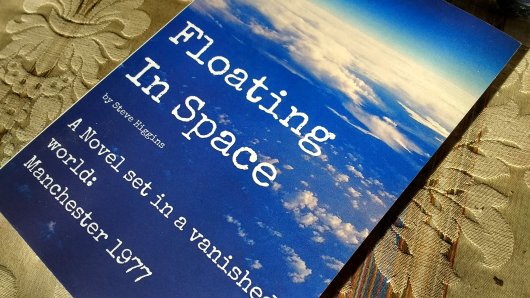
 Film sets? Rooms? What exactly is this guy going to write about rooms you might think? Well, this idea about rooms might take me a while to explain so here we go.
 I think I’ll start this post with that fabulous time travel film Back to the Future. If you have never seen it, (shame on you) the film concerns young Marty McFly who helps his friend Doc Brown with a time travel experiment. The time machine is a 1985 DeLorean sports car which morphs through time when it reaches the magical speed of 88 mph. The experiment goes horribly wrong when a gang of Libyan terrorists whom the Doc has double crossed in order to get some vital nuclear supplies for his car/time machine arrive and shoot the Doc apparently dead.
 The BBC does do a good documentary and the other day I settled down to watch a documentary about the film star Cary Grant; Becoming Cary Grant.
 When I was a school kid which now I think of it, sometimes feels like years ago and other times feels like yesterday, I was a big, very big fan of comics. All my pocket-money went on comics and I would spend many a happy hour reading, lost in the world of comic book heroes. My Dad used to get me a copy of the Hotspur even though I knew it was really for him despite his denials. I read the Hotspur after I managed to prise it off him and a number of other comics like the Beano, The Tiger, TV Comic, TV 21 which was based on Gerry Anderson’s TV series and whole host of other comics, all of which have faded into the world of comic history. Looking round the newsagents these days you don’t seem to see comics any more. Perhaps today’s youngsters are too grown up, too enthralled with computer games and television. Still, I loved those old comics and still do and I tend to think they kick started my imagination and made me want to be a writer.
 It’s always a bitter-sweet experience when someone decides to make your favourite book into a film. It doesn’t always work out because maybe it was a big, thick, long book and they have cut out your favourite bit, or perhaps the cast wasn’t the one you imagined. It’s usually just the same in reverse. You see a great film and in the credits it says based on the book by so and so, then you rush out and get the book, and it turns out to be a little disappointing. Sometimes it’s even better than the film!
 The Film.
 Favourite movie director part 1, which you can read by
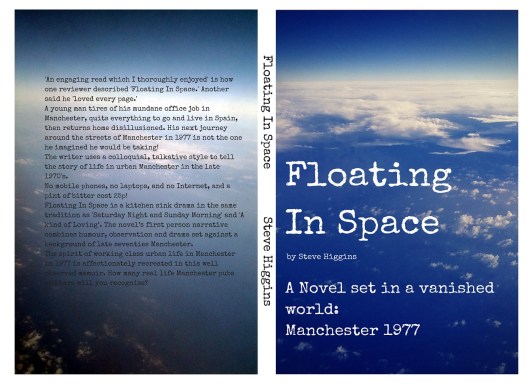
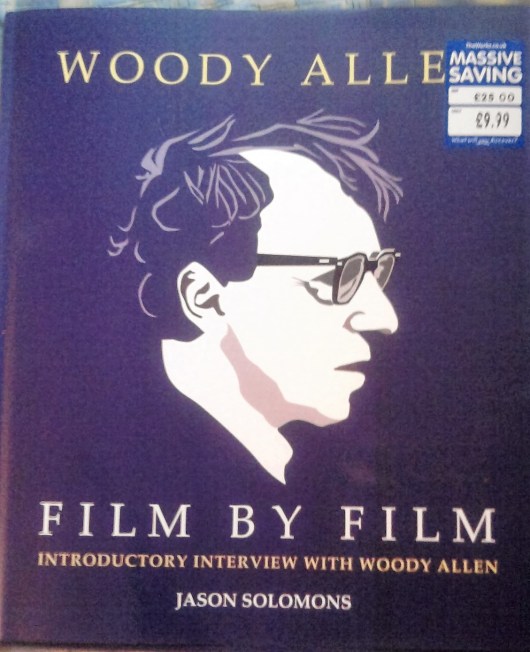

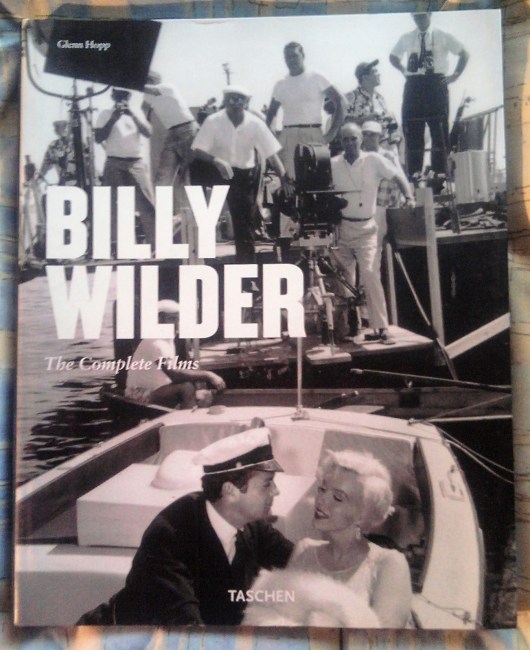
 So what exactly is a kitchen sink drama? If you’ve read through the pages on my site that deal with my book ‘
 Letters from an Unknown Author!