Every now and then, the film industry will make a film about itself, yes, a movie about the movie industry. There a quite a few I could include in a post like this but here are three of my favourites.
A Star is Born
I’m not sure how many times this film has been remade, the simple answer is plenty. There was the  original 1937 version with Janet Gaynor and Fredrick March, the 1976 version with Kris Kristofferson and Barbara Streisand and there was even a 2018 version with Lady Gaga and Bradley Cooper. My favourite is the version from 1954 with Judy Garland and James Mason. What a cracking film! In case you don’t know the story, it’s pretty simple, famous film star on the way out helps unknown star who is on the way up.
Judy Garland plays Esther Blodget, an unknown singer who meets drunken film star Norman Maine played by James Mason. Esther comes to Norman’s aid when he drunkenly wanders onto a stage where she is performing and pretends that Maine’s drunken behaviour is all part of the act. Maine later watches her perform at an after hours club and urges her to pack the band in and come to Hollywood.
The film shows Hollywood in the 1950s and the studio machine in action as it tries to remodel Esther into a movie star, with make up and costume teams, writers, publicists and of course a name change: Esther becomes Vicki Lester, only finding out about her name change when she goes to pick up her pay check.
Norman gets the studio boss Oliver Niles to listen to her singing and as a result Vicki is cast in a top Hollywood musical and becomes a star. She marries Norman but his drunken antics get worse. I won’t tell you the end in case you haven’t seen it but be prepared for great performances from both Mason and Garland. Judy was in fact nominated for an Oscar losing out to Grace Kelly.
The Bad and the Beautiful
This is one of my absolute favourite films and tells the story of a producer who wants to make it big in Hollywood. Kirk Douglas plays the part of Jonathan Shields, the son of a producer dumped by the industry who was so unpopular that Jonathan had to hire extras to come to his funeral. As the film opens, Shields has made it big but cannot get financing for a new project without the help of three former friends, actress Lana Turner, screen writer Dick Powell and director Barry Sullivan. None of them want to be involved but producer Walter Pidgeon asks them to listen to a call from Shields. As they await the call, their stories and former involvement with Shields are told in flashback.
Barry Sullivan plays director Fred Amiel who works closely with producer Shields. They make a great producer/director team but when a big break comes for the partnership, Shields betrays Amiel and gives the directing chair to a big name director. Amiel refuses to work with Shields again.
Shields works with alcoholic actress Georgia Lorrison and builds her confidence to take on a big role in one of his films. Georgia falls in love with Shields but even though he is not interested in her romantically, he strings Georgia along so she can complete her performance in the film. She is distraught when she finds out the truth but he releases her from her contract and she has great success at another studio. There’s quite an interesting moment when Shields wants to be alone after the completion of the film. The ending of a production always brings on a deep depression for him. I have to say I always feel that way after putting the finishing touches to one of my YouTube videos!
There is a third sequence involving writer Dick Powell’s character and the film ends on an interesting note; will the three collaborate with Shields for one final film? The film really brings home the background work done on a film, the writing, the production and all the other elements that make a picture. The film was directed by Vincente Minelli who went on to marry Judy Garland and became the father of Lisa Minelli.
Sunset Boulevard
Directed by Billy Wilder and starring William Holden and Gloria Swanson this is one of my all time favourite films. Holden stars as down and out screen writer Joe Gillis. He narrates the film from the opening sequence, where we see Joe’s dead body floating in a pool, right to the dramatic end.
Gillis finds his car about to be repossessed so needing money fast He heads to the Paramount lot where he tries to sell an old script. He Has no luck there but the repo men are hot on his tail. He tries to evade them by hiding in an abandoned Hollywood mansion. The mansion it turns out is not abandoned; former silent star Norma Desmond (Swanson) lives there and hires Gillis as a script doctor to work on a screenplay she has written for her comeback.
Gillis isn’t sure who she is at first but then recognises her: Cue the famous lines:
GILLIS: You’re Norma Desmond. You used to be big!
DESMOND: I am big, it’s the pictures that got small!
The dialogue is brilliant as is the whole film and it’s interesting too to see the old locations such as the Paramount Studios entrance, Schwabs drugstore (8024 Sunset Boulevard) that was once frequented by Hollywood actors and extras and many other places. Wilder also cast former silent director Erich Von Stronheim to play Norma Desmond’s former husband and director, now relegated to manservant and chauffeur. Stronheim himself actually directed Swanson in some of her silent fims.
Cecil B De Mille even makes a fascinating guest appearance as himself as does columnist Hedda Hopper. Look out for Buster Keaton in a small part too.
OK, that’s my three films. All of them show the glamour of film making in the 1950’s. The big cameras, the behind the scenes action, the PR men and the Hollywood studio system. It’s sad to see most of that has gone. These days you could probably make a motion picture with just a small digital camera, maybe even the Canon G7X that I use for YouTube videos. Maybe I should be dusting off my scripts and looking for my cast!
What are your favourite films about film making?
 I thought for a minute of changing the title of my whole website to that which you can see above: The Ramblings of a Locked Down Blogger. Maybe even the crazy ramblings! Still, in a few weeks or perhaps months, the lockdown and Coronavirus will just be a bad memory. In fact, my first post lockdown restaurant visit has already been booked and my table and meal are actually only a matter of hours away.
 Another original film I saw lately was Big Eyes. It’s based on a true story of an artist, Margaret Keane, who turns out some popular and charming pictures, all of people with big eyes. Margaret is a woman who can paint but is not so good at selling and marketing her work. She meets future husband Walter who seems to be a bit of a whiz at the promotion lark. He decides to rent space on a local nightclub wall to get attention for both Margaret’s and his paintings. Surprise, surprise, it is Margaret’s paintings of the doe eyed girls that get all the attention but Walter decides to play the part of the artist as some people have mistakenly thought that anyway. Margaret plays along but gradually becomes very unhappy having to constantly deny her own work.
 2001 set the standard for the sci-fi movie with its depiction of spacecraft drifting slowly and silently through space. The first Star Trek movie was heavily influenced by 2001 which made it look a little dated when the movie Star Wars was released and did the opposite thing, showing spacecraft whooshing across the screen at lightning speeds.
 In the 1950’s, Senator Eugene McCarthy, aided and abetted by the head of the FBI, J Edgar Hoover, began to accuse hundreds of Americans of being either communists or communist sympathisers. Hoover had designed President Truman’s loyalty and security program and his agents carried out background checks on federal employees. This information was supposed to be secret but in 1950 when the Korean War began, Senator McCarthy produced a list of supposed communist party members or supporters working for the state department and presented it to the press. Much of his information came from Hoover.
 Robinson Crusoe on Mars
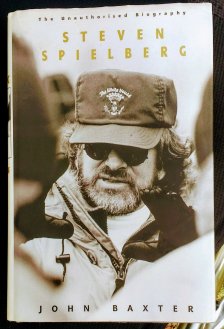 Not so long ago I thought about doing a post about the film director Steven Spielberg. I’d already done a couple of ‘favourite director‘ posts but the thing with Spielberg is that he’s not exactly one of my favourite directors so any post would be not really be complimentary so I didn’t want to get into writing something negative.
 I’ve had a little time on my hands this week, looking after my elderly mother. Nothing particularly exciting presented itself on terrestrial TV so I thought, the perfect time to pour a glass of red and crank up a few Bond DVDs.
 Film sets? Rooms? What exactly is this guy going to write about rooms you might think? Well, this idea about rooms might take me a while to explain so here we go.
 I think I’ll start this post with that fabulous time travel film Back to the Future. If you have never seen it, (shame on you) the film concerns young Marty McFly who helps his friend Doc Brown with a time travel experiment. The time machine is a 1985 DeLorean sports car which morphs through time when it reaches the magical speed of 88 mph. The experiment goes horribly wrong when a gang of Libyan terrorists whom the Doc has double crossed in order to get some vital nuclear supplies for his car/time machine arrive and shoot the Doc apparently dead.
