I’ve done a few of these posts where I connect one film to another through either the actors or directors or other random things. This week I’m going to talk about two groups of four films and see if you the reader can guess what links them together. I’m hoping this might be a bit of a challenge, even for the most ardent film fans but anyway, here we go.

Top Hat
Top Hat was a film produced in 1935 and starred Fred Astaire and Ginger Rogers. It is one the great song and dance musicals of all time. The premise of the film is just Astaire following the girl of his dreams, Ginger Rogers, across Europe but the story is just background to the wonderful songs of Irving Berlin. Two stand out favourites are Cheek to Cheek and Top Hat, White Tie and Tails. The film was directed by Mike Sandrich who also directed 5 of Rogers’ and Astaire’s films.
Together Astaire and Rogers made 5 films together but the most successful was Top Hat.
Red River
One of my favourite westerns, Red River stars John Wayne and Montgomery Clift who have to drive a shed load of cattle from Texas to Missouri. There’s a great moment when Wayne says to Clift ‘Take ‘em to Missouri Matt!’ and the cattle drive begins. The film was produced and directed by Howard Hawks way back in 1948. Taking a quick look on Wikipedia, it was interesting to find that there were various versions of the film but the original theatrical cut was reassembled by Janus films in 2014 for the DVD release.
Singin’ In the Rain
This is another film classic, perhaps even the ultimate Hollywood musical. Released in 1952 it is set in the 1920s and stars Gene Kelly, Debbie Reynolds and Donald O’Connor. The film has some hugely famous scenes, like that unforgettable opening number where Gene Kelly splashes through puddles and sings the title song. It’s also got a super fun storyline about the transition from silent films to “talkies”. The film was directed and choreographed by Gene Kelly and Stanley Donan.
The Shining
This was a film directed by Stanley Kubrick based on the book by Stephen King. King apparently hated the film which is why he went on to produce another version years later. The film stars Jack Nicholson who gives an eerie performance as author Jack Torrance. The plot revolves around the Overlook Hotel which closes during the winter as the location becomes inaccessible due to heavy winter weather. Jack and family are chosen as caretakers to look after the hotel until it reopens in the spring. Throw in a child who ‘shines’, that is to say able to communicate with the spirit world and an evil spirit who apparently takes over Nicholson’s character and you have a pretty terrifying film.
The film was actually shot in the UK at Elstree studios although a second unit did some exterior shots in the USA. At Elstree huge sets were built to represent the interior and exterior of the hotel.
A famous scene involves Jack chopping through a door to reach his wife played by Shelley Duvall. The scene was originally shot with a fake door but Nicholson who was a former firefighter in the national guard chopped through it too quickly and so a thick solid door had to be used.
Kubrick demanded numerous takes of many scenes and Shelley Duvall in particular argued with Kubrick about retakes, dialogue and her acting style.
Ok that’s the first of four films I want to talk about. Any idea of the connection? Let me carry on with a second group of four films and the connection might finally become clear.
The Last Picture Show
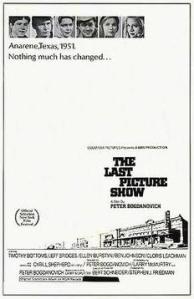 Another modern classic. This film was directed by Peter Bogdanovich and is set in a small town in northern Texas in the early 1950s. The film has an ensemble cast but the two main characters are Sonny and Duane played by Timothy Bottoms and Jeff Bridges. The two are teenagers and old friends and various things happen to them. They fall out over a girl called Jacy played by Cybill Shepherd. Ben Johnson plays ‘Sam the Lion’ who owns the bar and cinema in the town. Sam has a mentally disabled son who Sonny has befriended. Various things happen to the pair but towards the end of the film Duane enlists in the army and is due to leave town so the pair decide to visit the town cinema for the very last picture show as the cinema is about to close after Sam’s sudden death.
Crimes and Misdemeanours
This is one of Woody Allen’s darker films. There are many interlocking stories but the central theme involves Judah Rosenthal played by Martin Landau who has an affair with a woman played by Anjelica Huston. The woman -Dolores- is threatening to confront Judah’s wife and Judah, desperate to save his marriage isn’t sure what to do. He asks his brother, a gangster and he recommends violence and even murder. Other stories include a rabbi facing blindness and on a lighter level, Woody plays a documentary film maker who falls for a woman played by Mia Farrow. She in turn is romanced by Alan Alda, playing a TV producer, who Woody’s character despises. It’s one of my favourites of Woody’s films but don’t expect too many laughs.
The Green Mile
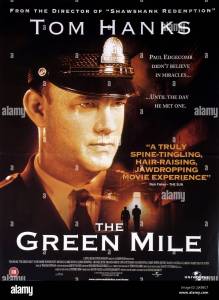 Like The Shining, this is another film based on a book by Stephen King. Tom Hanks plays the head of a death row section of an American penitentiary. One of the inmates is John Coffey, a huge black man who appears to have healing powers. He cures Tom Hanks’ bladder infection but the mood in death row is not good after sadistic Percy Wetmore joins the team and deliberately sabotages the execution of another inmate causing the prisoner to die in terrible agony. The warden’s wife is terminally ill and Hanks and his team wonder if John Coffey could cure her.
Twister
Twister is a disaster film made in 1996 which stars Helen Hunt and Bill Paxton as storm chasers. They and their team are trying to get first hand information about tornados and cyclones. The two are separated and are about to divorce but together they are in competition with another group of storm chasers. The special effects are good and I’ve always found it to be a hugely entertaining film.
Ok. That’s my final four films. Are you any the wiser? Do you have the connection yet?
Here’s the answer, the first four films were all featured in the second four films.
In The Last Picture Show the town’s small cinema is about to close down and Duane and Sonny pay a visit to see Red River.
In Crimes and Misdemeanours, Woody Allen’s character Cliff Stern invites Helley Reed played by Mia Farrow to watch Singing in The Rain on his editing machine while they eat a take away curry.
In The Green Mile, the story is told in flashback and Tom Hank’s character Paul, who was cured of the bladder infection is now 108 years old. He watches the film Top Hat and tells the story of John Coffey to his friend Elaine.
In Twister, the team of storm chasers relax and stop at a garage area. By the garage is a drive in theatre and the team enjoy snacks and coffee while the picture is playing. A storm begins to approach and strong winds quickly develop. What film was playing? Stanley Kubrick’s The Shining. The theatre is destroyed just as Jack is chopping through the door in The Shining’s most famous scene.
They were my film connections for this week. Hope you enjoyed reading and tune in again next Saturday for another post.

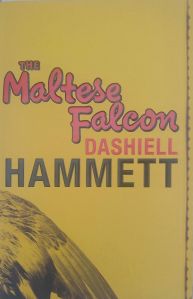
 Liz and I are over here in sunny Lanzarote having exchanged the cold of the UK for the warmth of Lanzarote. Of course, it is still February and things aren’t perfect over here. It’s warm but there are plenty of days when gusty winds blow across the island as well as days when the sun has been obscured by clouds. Even so there are still plenty of bars to drink at, plenty of tapas to be eaten and of course we have plenty of books to read, two of which have inspired this week’s post.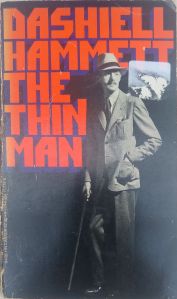
 The plot of the book and film are pretty complicated, although having read the book recently I think that the book is easier to follow. During the filming the director and his stars wondered who killed the character of Owen Taylor, the Sternwood’s chauffeur. They sent a cable to Raymond Chandler asking him. Chandler told a friend later ‘Dammit, I don’t know either!’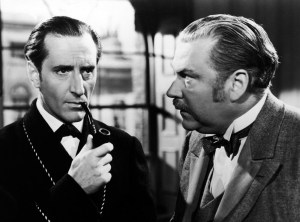
 I’m not sure which came first for me, the book or the film but I actually think it was the book. The Godfather was written by Mario Puzo and is the story of Don Vito Corleone, the head of one of the five mafia families of New York. The book opens with the wedding of Don Corleone’s daughter and Puzo sets the scene and introduces the various characters.
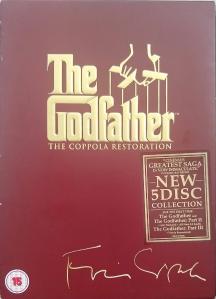 Francis Ford Coppola was the director of the film version and was also the co-writer of the screenplay along with Mario Puzo. Coppola wanted Marlon Brando to play the part of Don Corleone even though Brando at the time was rather unpopular with the producers. He was expensive, his last few films had not done well and his time wasting attitude had added huge expenses to his pictures. After the director had made the producers understand how important Brando was, they set various conditions for his employment. He would have to work for a reduced salary and put up a bond to ensure he would not delay the production. Another was that he had to have a screen test. Coppola has told the story in various interviews how he and his film crew had entered Brando’s house like ninjas and quietly set up their equipment. Brando slicked down his hair with shoe polish and stuffed cotton balls into his mouth to make the transformation into the aging mafia boss.
 Coppola decided that instead of finding the horse at the end of his bed like in the book, it would be better if Woltz awoke, was disturbed by something wet, pulls the bedclothes away to see blood and then uncovers the horse’s head. The head was the actual head of a horse, procured from a dog meat factory and Coppola mentions on the commentary to my DVD version that lots of animal lovers sent him hate mail about the horse, even though the horse had been condemned to its fate anyway.
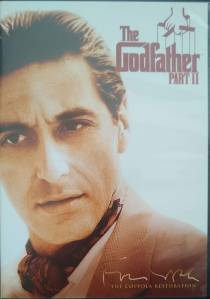 As previously mentioned, the book does have some storylines which were not used in the film but one chapter was a look at the beginnings of Vito Corleone. Born Vito Andolini in the Sicilian village of Corleone, Vito’s father was murdered by a local mafia boss and the young Vito was smuggled away to America. In America he took the name of Corleone and seemed to slip quietly into the role of mafia Don by murdering Fanucci, a New York Sicilian Godfather who preyed on his fellow Italians. Although this element of the story wasn’t used, Coppola kept the storyline for use in The Godfather Part II. The follow up film was a film classic in its own way.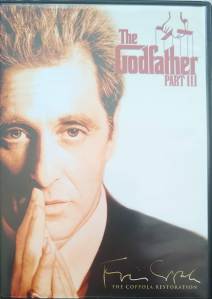
 David was born in 1908 and spent his early life in Croydon (actually 38 Blenheim Crescent, Croydon) until his parents divorced. His father moved out and left the family in 1923 which must have been an upsetting moment in Lean’s young life. Another perhaps more significant moment was when an uncle gave him a camera when David was aged 10 and then Lean began to develop and print his own photographs.
 The film did however win two Oscars for cinematographer Freddie Young and supporting actor John Mills. The poor reception of the film prompted David to meet with the New York critics at the city’s Algonquin Hotel. I’m not sure if David wanted to reason with them or just find out why they didn’t like the film but they spent two hours attacking his production. David came away devastated and would not make a film again until A Passage to India in 1984.
 I was reading a post called The 10 Best War Films Ever the other day. It wasn’t a list I particularly agreed with and in fact I hadn’t seen or even heard of quite a few of the films mentioned so I thought I’d have a go at making my own list. Here we go! As this post went on a bit I’ve split it in two and I’ll post Part 2 next week.
 The Colditz Story is another prisoner of war escape film also based on a true story. In WWII the Germans rounded up a bunch of the most prolific escapers and put them all together in an escape proof castle named Colditz. John Mills plays a British officer who is tasked with co ordinating escapes with various other groups of captives, French, Polish, Dutch and various others as previous escape attempts were failing due to a sort of free for all escaping culture. Various escaping officers are elected and the prisoners work together towards breaking out from the castle. Mills eventually escapes by using an idea suggested by a fellow soldier. It’s a simple idea involving dressing up as German officers. Not very original you might think but the officers plan to be leaving the Officers’ club which they hope will make them appear more natural. The chief British officer decides the plan is doomed to failure as the man who thought of it was a very tall officer who he thinks would be immediately recognised by the camp guards. I won’t tell you what happens but Colditz is a great British picture and well worth watching.
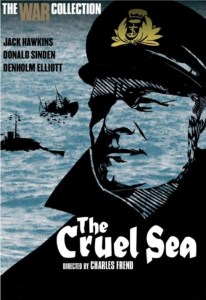 It’s time to move on from POW camps and escaping and to take a look at the war at sea. The Cruel Sea is a classic WWII film based on the book by Nicholas Monsarrat. Jack Hawkins is the commander of the escort vessel Compass Rose. The film follows the story of the ship from its handover in the shipyard to the navy all the way through to its final demise at sea. The crew are new to naval warfare but bind together through various incidents at sea guarding convoys in the north Atlantic. The outstanding cast are all stalwarts of 1940s and 50s British cinema, names like Donald Sinden, Denholm Elliott, Stanley Baker and Virginia McKenna.
 I did a post a while ago about actors who came close to the role of a lifetime but
  Can music really make a good film? Can a really great theme lift a good or even mediocre film up into the lofty heights of the great films? I’m not sure but that’s today’s blog theme and here are a few examples.
 My brother and I usually go out into Manchester every few weeks. We get something to eat and have a few beers and a good natter. It’s always nice to visit our old haunts in Manchester and to find new ones. There always seems to be a new venue popping up and the only flip side to new venues in Manchester seems to be the extraordinary prices they like to charge for food and drink. Maybe, being the fully paid up tightwad that I am, I should stick to the old, less trendy and cheaper places that I know.
 Robinson Crusoe on Mars
 Letters from an Unknown Author!