So here we are fast approaching the end of 2025 and I think it’s time to look back over my year and the blog posts I have published over the past 12 months. It’s almost unbelievable but this is my 699th Blog post. All the links to the posts mentioned below open up in another window.
January
Back in January Liz and I had jetted off as usual to Lanzarote but sadly, a fabulous villa we had found the previous year was fully booked and so we had to settle for another property. On paper it looked like a lovely place and to a great extent it was. A nice living space, comfy bedroom and a nice patio with comfy sun loungers. The pool was a little small but the big problem was that it was an end property at the top of a rise and next door and across the way was a big expanse of empty ground. It looked good but it meant that as Lanzarote tends to get a little windy in the winter a regular gale force wind often seemed to blast across our small terrace which sadly, in the afternoon, tended to be in the shade. Happily, in 2026 we look forward to occupying our favourite villa which not only gets the sun all day but has other properties around which act as a windbreak.
As usual in Lanzarote I was able to combine swimming, sun bathing and blog writing and produced my usual weekly post including January: Don’t You Just Hate it! and The Democratic Way, a post about the election of Donald Trump to another term as president of the USA.
February
In February I wrote Underwater Adventures which was a post about films and TV that involved underwater stuff, things like Voyage to the Bottom of the Sea. I even threw in an anecdote about the time I tried to get my scuba diving licence. Another post that month was one of my favourites, Changing the Narrative, which involved how the storylines of film and TV and even books can change when required. When it comes down to it, there have been times when I wouldn’t have minded changing my own narrative too.
March
In March I was getting a little stuck for ideas and I had to recycle an old post, TheMen in White Suits, a post that linked people like Alec Guinness who starred in the Ealing film comedy, The Man in the White Suit and David Essex who used to wear a white suit back in the 1970’s and other similar situations and characters.
April
In April I was reliving some old bus driving memories in Driving the Bus and in Painters and Paintings I published an art post looking at my favourite artists and pictures.
May
In May Liz and I were off to France in our motorhome. We had hardly arrived when I became a little concerned as my brother Colin wasn’t answering my calls or messages. This led to a really upsetting situation in which we had to ask one of his friends to go and check on him and later when he got no response we had to ask him to call the police. A really odd situation began to commence. The police wouldn’t attend but said they would send an ambulance. The ambulance service wouldn’t attend as they couldn’t gain entry so the fire brigade were called. After about two hours the fire service turned up, forced open the door to Colin’s flat and found him dead on the bedroom floor. He was my younger brother and only 64 years old.
June
In June I wrote Sadness and Telephone Menus, about the difficulties faced dealing with the practicalities of death; reporting the death, closing bank accounts, arranging the funeral and so on. I don’t publish much fiction on WordPress but another post was A Genie Called Ralph, a quirky fantasy story. By the way, if you’d like to read more of my fiction head over to the downloads page where you download a few of my stories to read at your leisure.
July
It was a fairly good summer in the UK and most of the time it was sunny and warm; in other words, perfect barbecue time. Heatwaves and Barbecues was a post I wrote in July and in another I wrote about memories of past Saturday Nights as well as linking in films and music on the same theme.
August
I’ve written many posts about books and a regular series is one in which I compare books to their filmed counterparts. In August I added a post about one of my favourite book/film series, the James Bond books by Ian Fleming. I must have been in a pretty nostalgic sort of mood that month because another post was Comfort Food, talking about the memories that my favourite food conjures up for me.
September
In September I was Travelling and Writing in France and another post was Working with AI Images. My latest obsession is making AI pictures and short videos to use on social media, hopefully to tempt more visitors to my blog page and maybe even buy my books.
October
October was another sad time as my late brother’s birthday was on the 10th. I’ve always tried to get him a birthday present, even if it was only just something simple like aftershave or something. Last year I didn’t get him anything but I didn’t feel bad because he rarely if ever got me anything. Even so, he seemed really hurt about it so I picked up something simple from Asda, a toiletry set, wrapped it up and gave it to him. He must have liked it because after his death I found a lot of the same product in his bathroom. Back to my blogs and another film post I wrote in October was one about the films of Ridley Scott.
November
Richard Burton and Elizabeth Taylor. Image courtesy Wikipedia Creative Commons.
November was the centenary of the birth of Richard Burton. He was born on November 10th, 1925 and I’ve always loved his wonderful speaking voice. Someone else with an interesting voice although hardly in the same class as Burton was Woody Allen and Woody got a mention in a post called Bad Meals, North Roxbury and Woodywhich was inspired by a remarkable autobiography of Mia Marrow called What Falls Away.
December
The Formula One season finally finished in December and so I wrote a post about the World Champions, McLaren and their champion driver Lando Norris. In another post I remembered the sad death of John Lennon in New York 1980 in a post about 4 Things That Happened in December.
That brings me to the end of this little review. I hope you have enjoyed reading my posts this past year. If they have given you as much pleasure as it was for me to write them then I’ll be very pleased. I hope you had a great Christmas!
What to do next: Here are a few options.
Share this post on your favourite social media!
Hit the Subscribe button. Never miss another post!
I am a great film fan as regular readers will know, particularly classic films. I do occasionally watch a film at the cinema but generally I reckon I am really your regular couch potato type of guy who tends to watch films in the comfort of home with a large cup of tea and perhaps a corned beef sandwich nearby.
Most people will have the experience of settling down to watch something good on the TV only to find that the film you have waited for is in fact, a load of old cobblers. What can you do but flip through the channels and try and find something else to watch. The big problem there is if you are watching during the evening, most films start at 9pm so if you have to flip over twenty minutes into a dud film, you’ll have missed the first twenty minutes of the good film that started over on some other channel.
Yes, it can be a hard life for us dedicated couch potatoes, that’s why I like to have a good DVD on standby to rescue the evening if things go sadly wrong.
According to Wikipedia: globally, film production varies significantly by country and year, but in 2023, China produced nearly 780 feature films, while the UK saw 207 films go into production, and the US and Canada saw 569 movies released.
To be honest, looking at those figures it’s hard to understand why a bad film actually gets made. Look at the process a bad film has to go through. Someone has an idea for a film, then they either write a screenplay or pay someone to write one. The screenplay comes to the attention of a producer and he says something like “I bet Brad Pitt would be good in the lead, and, what about Jennifer Anniston for the female lead”.
Scripts are sent out, a budget is raised, directors, cameramen, sound people, set designers and all manner of people come on board. The film is made and released. The critics go to see it and think, wow, this film stinks. Nobody comes to see it and a few weeks later it’s suddenly on Sky cinema with someone hired to write a whole lot of (lying) complimentary stuff about it to make you watch it.
People do watch it, realise it’s bad and twenty minutes later they change channel and are now watching a re-run of Star Trek that was made in 1968. Why didn’t someone way back down the line say ‘hang on, this is rubbish, let’s scrap it and film something else?’
Of course, one man’s Oscar winner is another man’s straight to DVD seriously bad film.
Here’s the crazy thing though, sometimes those bad films are so bad that you actually like them. Anyway, for this week’s blogging entertainment, I thought I’d list a few examples of rubbish films that I kind of enjoy.
Uncle Buck.
Uncle Buck is a complete load of old tosh but I just seem to be drawn to it like a moth to a flame. Never seen it? Really? OK it’s a sort of variant on the film Home Alone and in fact one of the characters is played by that kid from the Home Alone films, Macauley Culkin.
In this film a couple have to leave home because the wife’s father has had a heart attack. Who can they get to babysit the three kids? No one is available so the no-good bum of a brother-in-law is roped in, you guessed it, Uncle Buck.
Uncle Buck is played by the late John Candy and he has to contend with kids he doesn’t even know including, as well as young Mr Culkin, two screen sisters, one of them a teenage girl with a big attitude problem. She is completely embarrassed by her uncouth uncle and his smoke screen producing old banger automobile and even though the film is just a notch above rubbish, it’s actually quite fun in parts.
Buck sorts out ‘Bug’, the teenage girl’s cheating boyfriend and in doing so finally makes friends with his teenage niece. Uncle Buck is a great film to watch when you’re tired and not really paying attention and I always get the feeling it was written by a sort of committee of writers. (Probably the same committee that wrote Home Alone and Three Men and a Baby and so on.)
The thing about Uncle Buck is that the star, John Candy is actually pretty funny (in parts) and there are some actual funny elements to the film. Believe it not, even though I once hated this film, I’m beginning to warm to it.
Robin Hood, Prince of Thieves
There have been numerous film versions of the Robin Hood legend and for me the stand out one is the Errol Flynn version with Errol as Robin, Olivia De Havilland as Maid Marian and Basil Rathbone playing the villain. In this rather dire version made in 1991, Kevin Costner plays the legendary English hero with an accent that would not be out of place on the streets of New York.
Costner, as the noble Robin of Loxley, returns from the crusades to find that his father (not a bad performance by British favourite Brian Blessed) has been hung and his home laid to ruin by the Sheriff of Nottingham, played in a villainous but slightly camp way by Alan Rickman, whose performance was universally praised. Robin was accompanied by Azeem, a Muslim who feels he has to repay Robin for saving his life.
The film featured the hit single Everything I Do, I Do it For You sung by Bryan Adams and also had a small cameo from Sean Connery playing King John. The exteriors were shot in the UK and one particular location was at Sycamore Gap, just by Hadrian’s Wall in Northumberland. The tree used in the sequence became known as the Robin Hood tree which featured in the news in 2023 when it was cut down by vandals.
The film does start out fairly seriously with Robin escaping from capture in the holy lands and then making his way back to England. Alan Rickman’s performance later in the film gives the story a lighter sort of tone and although I’ve always preferred other versions of the Robin Hood legend, over the years I’ve actually begun to like this one.
Ferris Bueller’s Day Off.
So what have we here? A young American lad (Matthew Broderick) decides to have a day off school by pretending to be sick. He calls over his hypochondriac friend Cameron (Alan Ruck) and gets him to call their school with the fake news that his girlfriend’s grandmother has died so she (Mia Sara) can also get a day off and the three decide to have a little fun by going out in Cameron’s father’s beloved Ferrari.
The headmaster of the school (the Principal as the Americans call them) knows something is up and is determined to catch Ferris in the act of truancy.
The whole thing is a load of old rubbish but like the other two films mentioned above, it has somehow wormed its way into my affections.
The Vikings
I thought I might finish with that classic rubbish film, The Vikings. The Vikings is a 1958 epic produced by Kirk Douglas who also starred in the film. Douglas and Tony Curtis star as Viking half brothers and if my memory serves me right, they don’t actually know they are brothers. They do a lot of raiding and pillaging over in England and it turns out Tony Curtis might be the heir to a Kingdom in England and Kirk Douglas might be the heir to the Viking leadership. To be honest I’ve never been really sure what the score is even after looking up the film on Wikipedia but the finale ends with Kirk Douglas about to bump off Tony Curtis but hesitates for a moment having been told Tony Curtis is actually his half brother and then during that second of hesitation Curtis manages to bump off Kirk, or was it the other way round?
Anyway, the whole film is a mildly entertaining load of old tosh and my brother and I used to watch it as children and try to imitate the rather catching musical theme.
Once again, despite this being a completely dire film, I always tend to watch it for reasons completely unknown to anyone, especially myself.
What bad films do you enjoy?
What to do next: Here are a few options.
Share this post on your favourite social media!
Hit the Subscribe button. Never miss another post!
Back in the 1970s my Saturday ritual involved getting the bus into town and scouring book and record shops for, yes, you’ve guessed it, books and records. One day back then I was flipping through the posters in one particular shop. The posters were the music stars of the 70s; Elton John, Mick Jagger, Suzi Quatro, David Bowie and so on but one was a picture of a really good looking guy with a fifties combed back hair style. In some pictures he was dressed like a cowboy and in others in a red jacket and denim jeans. The guy behind the counter must have seen me wondering who the guy was and he told me he was a film star called James Dean. He handed me a paperback book about the actor and I took it home and read it and very soon I was trying to find out everything I could about him.
James Dean had been killed in a car crash in 1955 and had only appeared in three films and at the time of his death, only one of those films had been released. I read a great deal about Dean when I was in my late teens and from what I could find out, the biography to read was written by his best friend, William Bast. I never managed to get a copy of that book back then but Bast produced a made for TV film version, James Dean: Portrait of a friend with Stephen McHattie as Dean.
As TV biopics go, Portrait of a Friend was pretty enjoyable but I don’t think I’ve ever seen it repeated on TV. I used to have a VHS recording of the film but when I looked recently I was unable to find it. Funnily enough, not long ago I was in one of those budget shops, it might have been Poundstretchers and I saw a copy of the film on DVD. It was a very poor version, in fact it looked as though it had been copied straight from an old VHS tape but even so, it was interesting to see it again.
Watching that DVD got me interested in Dean again and so I had a search through my book collection to see what books I had on the subject.
The paperback book I bought that day in the record shop in the 1970’s was probably James Dean: A Short Life by Venable Herndon. It wasn’t a great book but an interesting introduction to Dean and who he was. It detailed his struggle for acting roles, TV work in New York, his apartment at 19 West Sixty-Eighth Street, his three films, his doomed affair with Pier Angeli and of course his death.
A similar book although bigger and with more photographs was a biography by John Howlet. I couldn’t find that particular book although I’m certain I wouldn’t have given it away or thrown it out.
A slightly different book I bought back in the 1970’s was a Japanese book about Dean. I’m not sure of the title, there are some Japanese ideograms and the name in English, James Dean, on the back cover. There is little text inside the book, basically it’s just a picture album and I guess the Japanese read books from right to left as the book starts with his last film and then finishes with his first film.
My Japanese James Dean book.
James Dean by David Dalton was another purchase back in the 1970s. It’s a much more in depth look at Dean’s life and skimming through it I came across a few pages about Dean’s last day, Friday September 30th, 1955. The author presented a short timeline of that day starting from 8am when Dean picked up his silver Porsche from Competition Motors in Hollywood to 5.45pm when he was killed in a car accident.
James Dean was competing in a car race in Salinas and had decided to drive his competition car, the Porsche, to the event as the car was brand new and Dean wanted to get some miles on the clock.
As well as my books on the famous actor I also have a box set containing his three films.
East of Eden is based on the final part of the book by John Steinbeck. It’s about two brothers who compete for the love of their father. Dean played the ‘bad’ brother and the father was played by veteran actor Raymond Massey who was continually shocked by Dean’s bad language and sullen and moody demeanour.
Rebel Without a Cause is probably the most well known of Dean’s three films. Dean plays Jim Stark, a rebellious teenager who has been in trouble at school and has either been expelled or forced to leave. The film follows him on his first day at the new school as he attempts to make friends with a group of fellow classmates but the result is that he makes more enemies. He gets involved in a ‘chicken run’ with fellow classmate Buzz in which the two have to drive a stolen car towards a cliff edge and the last one to jump out is ‘chicken’. Buzz fails to exit his car and is killed.
It’s a great film even though James Dean looks far too old to be still going to school.
His final film was Giant based on a novel by Edna Ferber. The film is set in Texas and is about millionaire ranchers and cattlemen. Dean plays Jett Rink, a sullen ranch hand who unexpectedly inherits some land, finds oil there and suddenly becomes rich. After punching ranch owner Rock Hudson, Dean, covered in oil after striking oil, drives away as Chill Wills says, ‘you should have shot that fella a long time ago. Now he’s too rich to kill.’
Another book I picked up only recently was another picture album James Dean: Portrait of Cool edited by Leith Adams and Keith Burns. It’s an album of photographs found in the Warner Bros archive and some have not been published before. Included are all sorts of documents such as casting sheets, production notes and messages. Dean’s address is listed as 3908 West Olive Avenue which I think might have been a place he shared with Dick Davalos who played his brother in East of Eden. During Rebel Without a Cause, Dean was listed as living at 1541 Sunset Plaza Drive.
1541 sunset Plaza Drive today from Google Maps.
Last Christmas Liz bought me one of my favourite presents, a copy of the Bill Bast memoir I mentioned earlier. Bill Bast shared apartments in both Hollywood and New York with Dean. In Hollywood, Bast became frustrated sharing a home with his friend. In the book, Bast accuses Dean of being untidy and moody and seemed to feel that he was subsidising Dean at one point as Bast was the only one with a job. After a dispute Bill decided to move to another apartment although the two remained friends. The book is written almost as if Dean was the love of Bast’s life and perhaps he was. In later life Bast wrote another memoir in which he claimed he and Dean had a gay relationship.
I’m not sure why someone like me, a council house boy from Northern England, should connect so closely with James Dean but back in the seventies the late star became one of my personal heroes. I remember going to a cinema on Oxford Road in Manchester to see back to back showings of East of Eden and Rebel Without a Cause on a very hot summer’s day. I bought a soundtrack album of those movies too, in the days before video and DVD.
Dean was a counterpoint to actors like Richard Burton; he mumbled and mispronounced things. I think that was what I liked about him; he was natural and imperfect. He had an image more rock star than 50’s actor. There was a great documentary about him made in the 70s and the music of the times, Bowie and Elton John featured heavily. Anyone remember that Eagles track ‘James Dean’?
Dean met his end on September 30th 1955 as he sped towards a race meeting in Salinas. He had already been stopped by the police and given a speeding ticket while driving his Porsche. In the passenger seat was his mechanic Rolf Weutherich and following behind was photographer Sandforth Roth and his friend Bill Hickman. They were towing the trailer on which the Porsche was originally mounted before Dean decided to drive.
As Dean approached the intersection of routes 466 and 41 in Chalome, a Ford station wagon turned across the path of the Porsche. “That guy up there’s gotta stop.” said Dean. The two cars collided. Rolf was thrown clear but James Dean was killed.
Today, years later, thousands of fans make pilgrimages every year to see Dean’s home in Fairmount, Indiana and to the intersection on highway 466 where he died. At his graveside in Fairmount fans chisel away bits of his gravestone for mementos and a bust of Dean by the sculptor Kenneth Kendall was ripped from its plinth. In 1977 a Japanese businessman named Seita Ohnishi had a chromium sculpture erected at the crash site on highway 466 in memory of Dean.
So why do people still hanker after James Dean all these years later? Well, I simply don’t know. As a young man I thought Dean was the epitome of cool and like many others I made him into my hero. Whilst doing some research about Jimmy Dean I came across this line on another site: “Some people are living lodestones. They get under the skin of people. You can’t explain why.” I can’t disagree.
Still, heroes come and heroes fade away. My heroes today are not the ones I used to love and worship thirty years ago. The thing is though, after writing this essay about Jimmy Dean I felt that I must find the time to look at some of his films again. Now where did I put that James Dean box set?
What to do next: Here are a few options.
Share this post on your favourite social media!
Hit the Subscribe button. Never miss another post!
I’ve written a few of these ‘book or the film’ posts but in this one I’m going to stick with one particular film and book; The Godfather.
The Book
I’m not sure which came first for me, the book or the film but I actually think it was the book. The Godfather was written by Mario Puzo and is the story of Don Vito Corleone, the head of one of the five mafia families of New York. The book opens with the wedding of Don Corleone’s daughter and Puzo sets the scene and introduces the various characters.
Don Corleone is a Sicilian and apparently no Sicilian can refuse a request on the day of his daughter’s wedding. One of those with a request for the don is singer Johnny Fontane whose show business career is waning. He feels that a part in a new film will revitalise it but the producer will not cast him. The don is happy to help out his favourite godson and dispatches his advisor and stepson Tom Hagen to Hollywood to sort things out.
Another supplicant is a funeral director. Two youths have attacked and beaten his daughter and because of political connections the courts of law have only handed down suspended sentences. The father asks for Don Corleone to give him revenge but the Don declines. The funeral director has never shown the correct respect to the Don but when he does and finally calls him Godfather then, and only then, does Corleone issue orders for the youths to be brutally beaten.
Some time afterwards the Don agrees to meet fellow mafioso Sollozo who wants Corleone’s help with a drug smuggling operation. The Don declines and this sets off a violent war between the mafia gangs.
The Film
Francis Ford Coppola was the director of the film version and was also the co-writer of the screenplay along with Mario Puzo. Coppola wanted Marlon Brando to play the part of Don Corleone even though Brando at the time was rather unpopular with the producers. He was expensive, his last few films had not done well and his time wasting attitude had added huge expenses to his pictures. After the director had made the producers understand how important Brando was, they set various conditions for his employment. He would have to work for a reduced salary and put up a bond to ensure he would not delay the production. Another was that he had to have a screen test. Coppola has told the story in various interviews how he and his film crew had entered Brando’s house like ninjas and quietly set up their equipment. Brando slicked down his hair with shoe polish and stuffed cotton balls into his mouth to make the transformation into the aging mafia boss.
Paramount also wanted to shoot the film on their back lot but Coppola persuaded them to shoot on location in New York and stick to the original time frame of the book which was set in the 1930s and 40s.
Various people were auditioned for parts in The Godfather but finally the cast was resolved and shooting began with Brando as the Don, James Caan as Sonny, Al Pacino as Michael, Robert Duvall as Tom and Diane Keaton as Kay Adams.
The Book
The book is a fairly heft one and there is much in there that is not covered by the film. Johnny Fontane for instance features more in the book, while he plays only a supporting role in the film. There is a further story in the book about Lucy, a friend of Sonny’s wife with whom he is having an affair. After Sonny’s death Lucy feels she will never find not only love but sexual pleasure ever again. The reason for this is that Sonny had a rather large penis and Lucy’s corresponding anatomy is rather large, however she falls for a doctor who sorts her out with an operation which restores the anatomical status quo.
Going back to the Johnny Fontane character, there have been various stories and rumours which imply the character was based on Frank Sinatra. Like Johnny Fontane, Frank was tied to a lifetime contract with a bandleader, in this case Tommy Dorsey but Dorsey somehow relented and released Sinatra. Some say mobster Willie Moretti was instrumental in helping Sinatra free himself from the contract. Later when things weren’t going so good for Sinatra, he revived his career by appearing in the hit film From Here to Eternity for which he won a best supporting actor Oscar. In the book, Johnny Fontane is after a similar film part but the producer declines to give it to him. At the wedding of Corleone’s daughter, Fontane asks for the Don’s help, cue the famous scene where producer Jack Woltz finds his favourite racehorse’s head in his bed.
The Film
Coppola decided that instead of finding the horse at the end of his bed like in the book, it would be better if Woltz awoke, was disturbed by something wet, pulls the bedclothes away to see blood and then uncovers the horse’s head. The head was the actual head of a horse, procured from a dog meat factory and Coppola mentions on the commentary to my DVD version that lots of animal lovers sent him hate mail about the horse, even though the horse had been condemned to its fate anyway.
Sinatra always denied any involvement with the mafia although he did sing at the wedding of mafia boss Willie Moretti’s daughter, just like Johnny Fontane did at the Corleone wedding that opens the film. Anthony Summers, in his book about Sinatra, claims that the story was true and mafia enforcer Johnny Blue Eyes put pressure on studio boss Harry Cohn to give Sinatra the film role that rebooted his career.
Director Fred Zinnemann thought Sinatra might be good in the role so Cohn was happy to go along with the idea.
The Book
As previously mentioned, the book does have some storylines which were not used in the film but one chapter was a look at the beginnings of Vito Corleone. Born Vito Andolini in the Sicilian village of Corleone, Vito’s father was murdered by a local mafia boss and the young Vito was smuggled away to America. In America he took the name of Corleone and seemed to slip quietly into the role of mafia Don by murdering Fanucci, a New York Sicilian Godfather who preyed on his fellow Italians. Although this element of the story wasn’t used, Coppola kept the storyline for use in The Godfather Part II. The follow up film was a film classic in its own way.
The Godfather Parts II and III
In part II there are two parallel stories. One is the story of Vito Andolini, as described above, played by Robert De Niro and another follows on from the first film. Michael is now the head of the family and gets involved with gangster Hyman Roth with investments in Cuban casinos. After the Cuban revolution Michael realises Roth is out to kill him and so has him murdered. A senate investigation looks into Michael’s activities with information provided by Frank Pentangeli, a former member of his organisation, but Michael brings pressure to bear on the informant and the investigation collapses.
In The Godfather Part III Michael’s story continues. He is reconciled with his sister after the murder of her husband in the original film. He also gets involved in a scheme in Europe where he hopes to become fully legitimate but other mafia bosses have different ideas. The Papal bank scandal and the death of Pope John Paul I are real events that are also thrown into the mix. The film was the weak element in the Godfather trilogy. In 2020 The Godfather Coda: The Death of Michael Corleone was released. It was just a re-edited version of part III and personally I still didn’t find it anywhere near as good as the other two films.
Marlon Brando worked with Coppola again on the film Apocalypse Now. He played the part of an American Colonel in Vietnam who has apparently gone insane and Martin Sheen is sent to assassinate him. Brando turned up on set hugely overweight and not knowing his lines. He then decided to re write or improvise most of his scenes and the director was forced to shoot Brando in shadow due to his weight. Basically, he pulled all the stunts that Paramount expected of him in The Godfather. Not the best way to repay a director who had resurrected his career with the role of Don Corleone.
In 1990, Brando appeared in the comedy film, The Freshman, playing a parody of Don Corleone. When the shooting over ran, Brando demanded a million dollars to film for an extra week. The producers declined to pay and Brando threatened to badmouth the film to the press. Eventually they paid.
Brando died in 2004.
In 2023 Coppola finished filming his latest project, Megalopolis, a sci fi film about the rebuilding of New York after a major disaster.
Conclusion.
I enjoyed the Mario Puzo novel and I did re-read it for this post but it seems to stray into areas which really have no relevance to the main narrative which I found slightly annoying. The film version, which I also watched recently is a modern classic which continues to entertain everytime I see it. I like both the book and the film but I’d have to say I think the film version has the edge.
What to do next: Here are a few options.
Share this post on your favourite social media!
Hit the Subscribe button. Never miss another post!
Famous faces who have appeared in the classic detective series.
If you happen to be a big fan of murder mysteries then Sunday is a great day for you. Over on 5 USA on UK Freeview TV you can watch the classic detective series Columbo to your heart’s content.
Columbo first appeared in the early 1970s as part of the Mystery Movie TV series. Each week followed a different detective trying to track down a murder case, sometimes it was MacMillan and Wife and other weeks McCloud, Banacek or various others. The most popular one by far though was Columbo.
Columbo was a homicide detective for the LAPD and he was played by Peter Falk although the role was originally written for Bing Crosby. Crosby however thought a regular TV slot would interfere too much with his golf so he turned down the role, went back to the fairway and the part went to Peter Falk who made it his own.
If you ever see the original pilot, shot in 1968, you can see how Crosby might have fitted into the part as Falk plays Columbo in a very Crosby like laid back way. The very first guest murderer was Gene Barry who was familiar to TV audiences after playing Amos Burke in Burke’s Law for many years. He also starred in a 1953 film version of War of the Worlds.
The pilot episode also introduced audiences to a particular feature of Columbo in that we see who the murderer is and how he commits the crime first. Then we see lieutenant Columbo gradually solve the clues and get his man, or woman.
Columbo appears to be bumbling along chewing on his cigars and eating chilli but we soon realise that behind this façade and his famous raincoat, is a very shrewd detective.
Roddy McDowell and Ida Lupino
Short Fuse is one of my very favourite episodes and two famous stars make guest appearances. The guest murderer is Roddy MacDowell. Roddy became a child star in the 1940’s appearing in films like How Green Was My Valley and Lassie Come Home. He also played Cornelius in the Planet of The Apes films and in the subsequent TV series. Although he appeared in many films, he also appeared in a huge number of TV series and stage productions. He died in 1998 aged 70.
In the same episode, Ida Lupino plays murderer Roddy McDowell’s aunt, unable to believe that Roddy was the murderer of her husband. She appeared in another episode too, Swan Song, in which she gets bumped off by guest murderer Johnny Cash.
Ida Lupino, like Roddy MacDowell, was born in England, in fact both lived in the Herne Hill area of London. She wanted to be a writer rather than an actress but went into acting as she was part of a theatrical family and it seems that becoming an actor was expected of her. She appeared in many British films before moving to the USA in 1933.
She wasn’t content to just act in films and was very critical of the parts she was offered, being suspended numerous times by Jack Warner, the head of Warner Brothers. She and her husband Collier Young formed a production company called The Filmmakers Inc in 1948. The company produced twelve films, six of which Lupino directed and five of which she wrote or co-wrote. The company closed its doors in 1955 and Lupino began directing for TV. She was one of the very first Hollywood TV and Film directors and was the only woman ever to direct an episode of The Twilight Zone. Ida Lupino died in 1995 aged 77.
Ray Milland
Milland was another British actor who found fame in Hollywood. Milland was born in Wales and served with the British Army. When his army career finished, Milland decided to become an actor. He appeared in several British films before moving to Hollywood in 1929. He worked as a stock actor for MGM then moved to Paramount in 1930. His first lead role was in The Jungle Princess in 1930 with Dorothy Lamour.
He appeared in numerous films but never thought of himself as a serious actor. A great success for him was The Lost Weekend in which he played an alcoholic. The film was directed by Billy Wilder and Milland did a great deal of research for the role and won the Oscar for that year’s best actor, which led to his contract with Paramount being rewritten and making him Paramount’s highest paid actor.
In 1954 he worked for Alfred Hitchcock on Dial M for Murder. Milland decided to retire from acting at one point but soon found he was bored and returned to Hollywood. In 1963 he made the sci-fi film The Man with X Ray Eyes. He appeared in many TV series including of course Columbo.
He was the guest murderer in The Greenhouse Jungle where he plays a man who stages a fake kidnapping of his nephew and then bumps him off to keep the ransom money. In another, Death Lends a Hand, his wife is killed by Robert Culp, one of my favourite Columbo murderers and a classic episode.
Milland died of lung cancer in 1986.
Janet Leigh and John Payne
In 1975 Janet Leigh and John Payne both starred in the episode Forgotten Lady. Both had been stars in a bygone era. Janet Leigh was born in 1927 and made her film debut in 1947. Two notable successes were The Naked Spur and Orson Welles’ Touch of Evil. She appeared with her husband Tony Curtis in Houdini in which Curtis played Harry Houdini.
Another great success for Janet and possibly the film she is most remembered for was the Hitchcock film Pyscho in 1960 however, according to Wikipedia, she was so traumatised after seeing her shower death scene that she avoided showers for the rest of her life.
Clips from one of her films Walking my Baby Back Home, were used in the Columbo episode. She appeared with her daughter, Jamie Lee Curtis in the supernatural horror film The Fog in 1980. Jamie Lee Curtis also had a small role as a waitress in the Columbo episode The Bye Bye Sky High IQ Murder Case.
Janet Leigh died aged 77 in 2004
John Payne appeared in many film noir crime films as well as many 20th Century Fox musicals, his most famous film being Miracle on 34th Street. His final role came in the Columbo episode Forgotten Lady. He died, also aged 77 in 1989.
Myrna Loy
Myrna Loy appeared in the 1972 episode Etude in Black starring guest murderer John Cassavettes. She was born in 1905 in Montana and was the daughter of a Montana rancher. Her father was also a real estate developer and her mother encouraged him to buy land in Hollywood. Some of the land he sold to Charlie Chaplin who built his studio on the plot. The Loy family made a considerable profit on the deal. Myrna’s father took his family back to Montana but when he passed away his widow returned the family to Hollywood.
Myrna studied dance in Los Angeles. She had small parts in many silent pictures but some stills of her appeared in Motion Picture magazine and led to a contract with Warner Bros.
A big success came in 1934 when she appeared in the film The Thin Man with co-star William Powell. The two proved to be a popular screen couple and appeared in 14 films together.
In the late thirties she became one of Hollywood’s busiest and most highly paid actresses but in the 1940s she devoted all her energies to war work and the Red Cross. She was busy throughout the 1950s but in the late 60s began working more in television.
She died in 1993 aged 88.
Jane Greer
Jane Greer was apparently best known for her role as Kathie Moffat in the 1947 film noir Out of the Past. It’s not a film I’ve seen but it does sound like one to look out for. Jane was a beauty contest winner and model and was spotted by Howard Hughes in an edition of Life magazine when she was 18. Hughes became obsessed with the young girl and signed her to a seven year contract. Like many of the girls he had under contract, Hughes had them watched and followed and apart from drama classes, forbade them to go out with anyone except himself.
When Greer decided to ignore Hughes, he bought the studio where she was working, RKO, and continued to try and control her. She married Rudy Vallee and Hughes was still undeterred. She told Hughes she loved Rudy. Hughes replied that she didn’t and she wasn’t going to work until she came to her senses. Jane said OK, I’ll just carry on having babies then.
Hughes later relented and Jane began to work in films again.
She appeared in a number of films in the 1940s and 50s including the 1952 remake of The Prisoner of Zenda.
In television she joined the cast of Falcon Crest and Twin Peaks in her later life before retiring in 1996. In 1975 she appeared with Robert Vaughn in the Columbo episode Troubled Waters in which Columbo finally tracks down guest murderer Vaughn.
Jane Greer died of cancer in 2001 aged 76.
All the images above were reproduced via Wikipedia Creative Commons.
What to do next: Here are a few options.
Share this post on your favourite social media!
Hit the Subscribe button. Never miss another post!
I was looking through my old scrapbook a while ago. I scanned some pages for my blog post Scrapbook Memories and quite a few of them featured Marilyn Monroe. I put my scrapbooks together years ago and even though I stopped making them in my late teens or early twenties, I continued collecting cuttings from newspapers and magazines, as well as books and videos all on the same subject: Marilyn Monroe.
What attracted me to the persona of Marilyn Monroe? Well, apart from her obvious charms as a very attractive lady it’s her death that has always interested me. I’m a sucker for a modern mystery whether it’s the assassination of JFK, the disappearance of Amelia Aerhart or Marilyn’s own strange death. The obvious solution is that Marilyn committed suicide. She had tried suicide quite a few times before and various people along the years have saved her from death, including her acting coach Natasha Lytess and her third husband playwright Arthur Miller. Suicide is the obvious answer to her death but personally, I’m not so sure.
Anyway, getting back to my personal interest in Marilyn, I’m pretty certain the first book about her was what has come to be thought of the definitive biography, the one by Fred Laurence Guiles. Guiles published his book in 1969 and chronicled Marilyn’s life as Norma Jeane Mortensen and then Marilyn Monroe.
Norma Jeane Mortensen was born on June 1st, 1926. She had a troubled upbringing. Her mother was mentally unstable and was in and out of various institutions leaving young Norma to be taken into care. On one occasion in her late teens Norma Jeane was living with a friend of her mother’s but this friend was moving away and rather than send Norma back into a home an idea came about which seems a little mad in retrospect. The idea was for Norma to get married to a local boy, Jim Dougherty. The marriage went ahead only eighteen days after Norma’s sixteenth birthday.
When war came to the USA in 1941, Jim joined the navy. Norma was working in a war factory when an army photographer called David Conover came round looking for a photo article for a magazine. He asked Norma to pose for him and found that she had a natural affinity with the camera. She began a career in modelling which led her to bit parts in films, then a contract with 20th Century Fox and later to film stardom.
In 1946 she divorced Jim Dougherty and Fox offered her a seven-year optional contract. She changed her name to Marilyn Monroe and began her film career. All didn’t go so smoothly at first. She was dropped from her contract but she did meet an influential Hollywood agent named Johnny Hyde.
I’ve got to say that despite her best efforts I’m not sure my interest in Marilyn had a lot to do with her acting skills as in her early days she wasn’t a great actress. What she did have was looks, looks that could turn the heads of a great deal of men. One of her early film roles came about really because of her growing reputation as a model. She was cast in the last of the Marx Brothers’ films Love Happy and had one scene in which she tells Groucho that “some men are following me.” Groucho explains more in the following video.
That of course was nothing more than a walk on part but she was asked to go on a nationwide tour in the USA promoting the film. Marilyn was determined to get on and be a great actress. She was always having acting lessons, in fact she joined the famous New York Actors Studio. The studio had been founded by theatre and film director Elia Kazan and one of the famous acting coaches there was Lee Strasberg. Both Kazan and Strasberg were interested in ‘the method’, a style of acting initiated by the Russian actor Stanislavsky which involved the actor using his own experience and memories to ‘become’ the role rather than just acting a role. James Dean and Marlon Brando were two of the more famous students of the Actors Studio.
Another of my books about Marilyn was the famous biography by Norman Mailer. Mailer actually used Fred Guiles’ book as the basis of his biography but added his own insight into Marilyn’s story as well as a huge collection of photographs. Mailer was originally hired to write an introduction to what was originally intended to be just a photo album but he was so taken by the subject matter, he wrote more and more and his ‘introduction’ became the book. He later wrote other works about Marilyn.
Marilyn on the cover of the celebrated book by Norman Mailer
Johnny Hyde was in love with Marilyn and asked her to marry him many times. She always declined, telling him she did not love him. He continued to press her while working hard on her behalf as her agent. In October 1950 he arranged for a seven year contract at Twentieth Century Fox. He also organised some minor plastic surgery for her, apparently, she had her chin built up slightly and the tip of her nose made smaller. In December that year she was recuperating from the surgery at his Palm Springs home when Johnny died of a heart attack. Marilyn was distraught when she heard the news, even so, his family ordered her out of the house.
She moved in with her drama coach Natasha and one day tried to swallow over 30 Nembutal capsules. Luckily Natasha came home early and found her.
Fox put Marilyn into a number of pictures playing a dizzy blonde type but then she was loaned out to RKO for Clash by Night directed by Fritz Lang. It was the first film with her name over the title.
In 1954 she married baseball star Joe DiMaggio. Maggio had retired from the game that had made him famous and Joe wanted her to settle down with him and retire from the cinema. It might be that Marilyn did intend to one day enjoy a more domestic existence. My feeling though is that she could never ever give up her film star life. It had given her all she had; her fame, her money and her status. She could never say goodbye to her creation, the film star Marilyn Monroe.
In the short autobiography published after her death, My Story, which some say was ghost written or partly written by others, Marilyn said this about her fame:
I belonged to the public and the world, not because I was talented or even beautiful but because I never belonged to anything or anyone else. The public was the only family, the only Prince Charming and the only home I had ever dreamed of.
Would she give up all that for DiMaggio or anyone? I don’t think so.
Her marriage to DiMaggio ultimately failed but Joe would continue to be a great friend. It is quite possible that in the last months of her life she was even planning to remarry him. However, before that came marriage and divorce to Arthur Miller. Marilyn idolised men like Abraham Lincoln and Albert Einstein and she put Miller into that same category. They had met years before, even before she married Dimaggio. Miller would write the screenplay for her final completed film, The Misfits, in which she played a character, Roslyn, which was based on herself. She became hugely disappointed in Miller after finding an open diary or notebook of his in which he severely criticised her. They divorced in 1961.
I’ve always thought that The Misfits was her best film and every so often I’ll take my DVD copy and give it a viewing. (I’ve actually only got two of her films on DVD, The Misfits and Some Like it Hot). Misfits was in fact her last completed film. In 1962 she began filming Something’s Got to Give in which she starred with Dean Martin. Marilyn missed a lot of the shoot due to illness and then left for New York where she appeared at a gala performance for the President’s birthday. The President was John F Kennedy and 20th Century Fox was not amused that with their film behind schedule its star had taken time off. They were already having financial problems with another production, Cleopatra. They were paying Elizabeth Taylor the unheard-of figure of one million dollars for her to play the Egyptian queen and their bank account must have been looking distinctly unhealthy. What was the answer? They fired Marilyn.
Fred Guiles first book on Marilyn was published in 1969 and mentions that towards the end of her life she was involved with an ‘easterner’. The man from the east was Robert Kennedy and since then many books and documentaries have mentioned Marilyn’s involvement with both John and Robert Kennedy. The accepted story of Marilyn’s death goes like this. Both John and Robert Kennedy ended their affairs with her, she had been sacked by 20th Century Fox and she became so despondent that she took her own life. Her body lay unclaimed in the morgue until the faithful Joe DiMaggio came and organised her funeral.
In 1966 however, a man call Frank Capell had published a book called ‘The Strange Death of Marilyn Monroe’ which called attention to various things that did not add up. Capell also claimed that Robert Kennedy was with Marilyn on the evening of her death. The FBI forwarded a report of the book to Kennedy who was then still the Attorney General and he asked that Capell’s phone be tapped.
In the 1980’s a number of authors began to look further into Marilyn’s death and one in my collection is The Marilyn Conspiracy. The author, Milo Speriglio was a private detective who was asked by Robert Slatzer to investigate. Slatzer was a friend of Marilyn’s and has even claimed that he married the star only for the two to tear up the marriage licence in case it harmed her career. He said Marilyn had a red diary in which she jotted down notes from her conversations with RFK and contained many things that were secret at the time. Marilyn used to call him from a nearby phone box as she felt that her phones had been tapped.
In 1985 Anthony Summers published the book Goddess: The Secret Lives of Marilyn Monroe in which he also claimed Marilyn was involved with Robert Kennedy. He also explains that Marilyn was not depressed after all. Her dispute with 20th Century Fox had been settled and they had reinstated her to the movie Something’s Got to Give and she was discussing further film projects including a biopic about Jean Harlow.
Summer also collaborated on a BBC documentary film called Say Goodbye to the President in which private eye Fred Otash revealed that he had engaged electronics expert Bernie Spindell to bug Marilyn’s home. The reason? Union leader Jimmy Hoffa who was under investigation by Kennedy wanted derogatory information on RFK that he could use against him.
Eunice Murray, Marilyn’s housekeeper, admitted in an interview in 1985 for the documentary Say Goodbye to the President that Bobby Kennedy was at Marilyn’s house on the day of her death. Eunice’s son in law and Marilyn’s handyman, Norman Jefferies told Donald Wolfe, the author of The Assassination of Marilyn Monroe, that Bobby Kennedy arrived late on the Saturday evening with two unknown men and asked Jefferies and Murray to leave while he spoke with Marilyn alone. When they returned Marilyn was comatose in one of the guest cottages attached to her house. Jefferies and Murray called an ambulance but Marilyn died from an overdose.
I cannot for a moment imagine Bobby Kennedy as a murderer but he certainly would not want to be associated in any way with a movie star suicide. John Bates, a friend of the Kennedy family, claims that Bobby and his family spent the weekend with him at his ranch in Gilroy, south of San Francisco.
Marilyn died in 1962 and she must have something about her because here we are in 2023 still interested in her. In 2011 a film about her called My week with Marilyn was released and in 2022 came Blonde, starring Ana de Armas as Monroe. Blonde was a fictional version of Marilyn’s life. I haven’t seen it but when I looked it up on the internet it didn’t seem to have been rated highly although I’ll be looking out for it on my TV screen in the future.
Norman Mailer’s book about Monroe finished with a photo of Joe DiMaggio, grief stricken on the day of her funeral and he reckons we can perhaps surmise Marilyn’s true worth just by the look on Joe’s face that day. I cannot disagree.
Sources:
The Assassination of Marilyn Monroe by Donald Wolfe
Goddess by Anthony Summers
The Marilyn Conspiracy by Milo Speriglio with Steven Chain
Norma Jeane: The Life and Death of Marilyn Monroe by Fred Lawrence Guiles
My Story by Marilyn Monroe
Say Goodbye to the President: 1985 BBC documentary
What to do next: Here are a few options.
Share this post on your favourite social media!
Hit the Subscribe button. Never miss another post!
Back in the 1970’s. TV presenter James Burke made a TV show called Connections. It was a really fascinating series which connected various historical events to make a sort of chain which led up to something which was pretty unexpected. The episode which stands out in my memory is one about the atom bomb, various unconnected events and discoveries that together, led to the splitting of the atom. I’ve written a couple of posts in which I’ve tried to do something similar but all relating to the world of classic film so here are another collection of film connections which I hope you will find interesting.
Leslie Howard and Gone with the Wind
I thought I’d start with Gone with the Wind and see where it takes me. Gone with the Wind was a major film adaptation of the book by Margaret Mitchell. The book was a huge hit and producer David O Selznick bought the film rights. Production was delayed for a long while as Selznick was determined to get Clark Gable for the part of the roguish Rhett Butler. Another delay was a distribution deal with MGM which couldn’t be finalised until Selznick’s then current deal with United Artists had expired. Selznick used the delay to begin a huge search for an actress to play the part of Scarlett O’Hara, the spoilt daughter of a plantation owner in the deep south of America. Scarlet has a crush on Ashley Wilkes played by British actor Leslie Howard in possibly his most famous role. The film was one of the major hits of 1939 and was the highest earning film up to that time.
Julie Andrews and My Fair Lady
In 1938 Leslie Howard played the part of Professor Higgins in the film production of Pygmalion based on the play by George Bernard Shaw. A musical version was a big hit on the stage in the 1960s. Julie Andrews played the part of Eliza Doolittle to great acclaim on the stage but when the time came to make a film version in 1964, the producers wanted a major star and so the part went to Audrey Hepburn.
Julie Andrews only had to wait a short time for film stardom though. She appeared in The Sound of Music in 1965. The film was based on the true story of the Von Trapp family singers which was also a hit stage musical. Julie Andrews played Maria, a nun who becomes a nanny to the Von Trapp children, eventually falling for the father of the children played by Christopher Plummer. The film was the hit of 1965 replacing Gone with the Wind as the highest grossing film up to that time. The director was Robert Wise who tried to reduce the amount of sentimentality and sweetness which he had seen in the stage production.
Robert Wise and Citizen Kane
Robert Wise had a great background in the film world. He was a former film editor whose first film as a director was The Curse of the Cat People in 1944. In 1941 he was a film editor at RKO Studios and was the editor on the classic film Citizen Kane.
Orson Welles often boasted about the fabulous contract he had when he arrived in Hollywood. In a BBC interview he stated the terms were not financially brilliant but gave him unprecedented creative powers. His first film for RKO was Citizen Kane. The film opens with the death of Kane, a millionaire newspaper magnate. His last words were ‘Rosebud’. The makers of a cinema newsreel decide to find out what or who Rosebud was.
To do so they research Kane’s life; his inheritance of a huge fortune, his takeover of a newspaper, his great wealth, his power and influence, his marriage and divorce and ultimately his death.
The cinematographer was Gregg Toland, one of the film industry’s top photographers. Toland asked to work on the film and Welles replied ‘Why? I don’t know anything about making films.’ Toland countered that was exactly why he wanted to work on the film because a film by a newcomer would produce something new and original.
There are some fascinating elements to Citizen Kane, especially in the special effects department. A famous one is where the camera flies through a rooftop sign and then drops down through a skylight into a restaurant. The shot was done with a sign that came apart as the camera approached and then a fade from a model shot into the restaurant set disguised in a flash of lightning. Citizen Kane was and is a classic of the cinema.
Orson Welles and Rita Hayworth
Orson Welles in a way experienced his film career in reverse, he started at the top and steadily worked his way down, ending up as an overweight although always entertaining raconteur doing voice overs for Carlsberg TV advertisements.
Welles married Rita Hayworth in 1943. She was one of the great stars of Hollywood’s golden years. She appeared in one of her husband’s films The Lady from Shanghai in 1947 but the film that was considered her greatest success came the year before in Gilda. According to Wikipedia, the film made her into a cultural icon as a femme fatale.
Welles and Hayworth grew apart and finally separated. Rita said that Welles had no idea about married life or even settling down. When she suggested buying a house together, a natural move for a married couple, Welles said he didn’t want the responsibility.
Rita Hayworth as Gilda
After splitting with Welles, Rita became involved with Prince Aly Khan, son of the Aga Khan who later became a Pakistani diplomat. Aly was a socialite and man about town. He and Rita married in 1949 and had a daughter Princess Yasmin Aga Khan. Rita gave up her film career to be with Aly but Khan’s womanising proved fatal to the marriage. Rita moved to Nevada with her daughter in order to set up a legal residence and begin divorce proceedings. The two were finally divorced in 1953. Khan offered Rita a million dollars for her to bring up their daughter as a Muslim but Rita declined.
After her divorce Rita had no income and was forced to return to film acting. Her comeback picture was Affair in Trinidad in which she starred with Glenn Ford. Rita was contracted to Columbia Pictures and fell out with Columbia boss Harry Cohn on numerous occasions during the filming. She was even placed on suspension for a while, however the picture was very successful. Her last picture for Columbia was in 1957 when she starred in Pal Joey with Frank Sinatra. She married again, this time to singer Dick Haymes who was in severe financial trouble. The marriage lasted only a couple of years and ended when Haymes struck her in the face in a Hollywood nightclub. Rita packed her bags and left him.
In the mid 1970’s, Rita’s behaviour began to become erratic. She drank heavily and was even once removed from a TWA flight because of her drinking. It was eventually found that her symptoms were masking the real issue which was the early onset of Alzheimer’s disease. In 1981 when her condition had deteriorated, she was placed under the supervision of her daughter and the two moved into adjoining apartments together in New York. She died aged 68 in 1987. Her former husband Orson Welles, spoke of her in his very last interview, recorded the day before his own death. He called her ‘one of the dearest and sweetest women that ever lived.’
David Niven and Leslie Howard
Just to backtrack a little, in 1958 Rita appeared in Separate Tables. The screenplay was by Terence Rattigan and concerns a group of residents at a small hotel in the south of England. David Niven plays a disgraced former army officer who has been found guilty of apparently sexually harassing young women at a theatre. A news story in the local paper highlights this and he tries to stop the others from finding out, without success. Niven won an Oscar for his performance.
David Niven is one of my favourite actors and he wrote what I’ve always considered to the best book about the golden age of Hollywood, Bring on the Empty Horses.
In 1942 Niven was in England having left Hollywood to sign up with the army. He was asked to appear in what was a propaganda film at the time; The First of the Few, a story about R J Mitchell, the designer of the famous WWII aircraft, the Spitfire. Niven was under contract to Sam Goldwyn at the time but he allowed Niven to appear, in exchange for the US rights to the film. Niven played Squadron Leader Geoffrey Crisp who tells the story of his friend Mitchell beginning with the Schneider Trophy aircraft race of 1922. Later Mitchell visits Germany and sees how the Nazis are rearming and so resolves to design a powerful fighter for Great Britain. Mitchell died just as the government ordered the Spitfire into production and Niven as Crisp, ends his story just as he and his fellow pilots are scrambled into action.
Leslie Howard played the part of Mitchell as well as producing and directing. He was killed when the KLM flight he was aboard was shot down by the Luftwaffe in 1943.
Howard of course played Ashley Wilkes in Gone with the Wind which brings our connections full circle.
Thanks to Wikipedia creative commons for the use of the pictures in this post.
What to do next: Here are a few options.
Share this post on your favourite social media!
Hit the Subscribe button. Never miss another post!
I had a few ideas for the title of this post. I had A Piece of My Life on the brain for a long time and then substituted A Pizza My Life (A piece of my life, geddit?) I even had a graphic sorted showing a slice of pizza. The thing with that I thought is that even though it ranges from funny to faintly humorous, I reckoned I would be giving people the wrong idea and that readers might have been expecting a post about, well pizza. Just lately I’m trying to optimise my titles for SEO (search engine optimisation) and at the same time also trying to give the impression that I know something about it. Some time ago I did a few posts titled A Slice of My Life so perhaps I should be adding part 3 or part 4 and just going with that? Nah, time for something new. Anyway, cue new title and blog post graphic and here we go . . .
I wrote a few weeks ago about the UK heatwave. Temperatures hit record highs although the hot weather here in the northwest only lasted for two days. The day after the hottest day, it was dull and wet once again. The summer has generally been like that, a few hot and sunny days followed by more dull and wet ones. Liz and I like our barbecues so when the skies clear we tend to defrost some meat from the freezer and crank up the barbecue. A regular visitor to our barbecues is a large seabird which we have christened CBS. Nothing to do with the American TV channel but that bird is one heck of a Cheeky Bastard Seagull.
He usually arrives on our garden wall and struts around in the manner of an avian Mussolini. If he gets no response from us, he will tend to have a bit of a stretch before going into a major squawking session. Now he has made his presence felt we can expect some more strutting about until we put some bits of sausage or fat from our steak on the wall. He’ll gobble that up with the occasional foray into the sky to fend off any other birds who might be after a nibble before beginning his ritual again. When the gas goes off and he knows no more food will be forthcoming, CBS will usually have a final strut, give us a last squawk and be off into the sky.
These last few weeks however, CBS has not appeared. We’ve saved him some bits and pieces but our familiar feathered friend has not made an appearance. I’ve often wondered what has happened to him. Has he emigrated somewhere? No, surely it’s not the time of the year for birds to migrate? Has he passed away? It’s hard to tell if he was a young or an old bird. Has he been hit by a car trying to peck at some stray leftover sandwich accidentally dropped in the road?
At our last barbecue a large seabird appeared on our wall. At first, we thought it was CBS but there was no strutting or squawking and the bird did seem a little timid. He wouldn’t come close to collect his titbits on the wall. Was he a doppelganger trying to muscle in on CBS’s patch knowing the real CBS has passed away? We’ll never know.
I do love my books and when the weather is warm and sunny it’s a delight to lie outside on my sun lounger and have a good read. I’ve got quite a few books needing my attention and the first one was another book from a second-hand shop, Bette and Joan by Shaun Considine. It’s about a feud between classic film stars Bette Davis and Joan Crawford. After reading it I’m not even sure there was a feud between the two stars but either way, it’s a nice excuse to talk about these two screen gems and compare their personal lives as well as their screen stardom.
The book takes us back to the days of classic cinema and the big-league movie studios when stars were stars and the studio manufactured every level of their image; magazine interviews, acting lessons, publicity shots and in some cases even their personal relationships. Rock Hudson was a big star but also a closet homosexual and the studios manufactured a marriage for him to make sure he had a clean-cut Hollywood image. Not that that ever stopped Joan Crawford from bedding Rock, which according to the book, she did. Crawford had numerous affairs and also had a penchant for cleanliness. She lived the film star life to the full with big houses, cars and servants with her career starting in silent films in 1925.
Bette Davis always claimed to be an actress rather than a film star. Her career began later than Crawford’s and her first film role was in 1931. On the film Dangerous, she fell in love with co-star Franchot Tone but Crawford stole him from under her, seducing and later marrying him. That might well have been the beginning of their feud. The two only worked together once which was on the film What Ever Happened to Baby Jane. The two despised each other, didn’t get on at all and their mutual hatred was evident on the screen.
I do love my showbiz biographies and autobiographies and one I picked up a while back was an autobiography by Dora Bryan, According to Dora. I love Dora from her many appearances in British films but my favourite film is probably A Taste of Honey. The screenplay was by Shelagh Delaney and director Tony Richardson, adapted from Delaney’s own play which she famously wrote when she was only 18.
Dora Bryan gives an outstanding performance at times comic but always supremely natural. She grew up on an Oldham housing estate. Dora was a great performer as a child and so her mother took her to dancing school and further encouraged by her mother joined Oldham Repertory before moving to London to develop her stage career. She had a great career on the stage as well as on film and TV and appeared in many successful West End productions. The first part of the book is very interesting but then, like a lot of autobiographies, the latter part of the book seems to wander off into lists of productions and theatre and TV personalities. Even so, it was a lovely read.
We went to a birthday celebration this week and after a meal in a restaurant we went over to the Trawl Boat pub. Inside the talk turned to a fellow called Malcolm. He was an old chap and presided over the main table in the pub. He knew everyone and everything and his table was always referred to as the ‘Captain’s table’. Even the staff looked up to Malcolm. If you ordered a round, they would ask ‘is that for the Captain’s table?’ Yes. ‘OK we’ll bring it over’. We’ve never had service like that before or since. Malcolm was a character but he passed away a few years ago.
Another of the guys we used to chat to in there was a fella we called Big Steve. I’m six-foot and Big Steve towered above me, he must have been six-foot six, easy. He was a pretty fit guy having been a former drayman, one of those people who lug big beer barrels about for a living and he was a really easy fellow to get on with. We always used to sit with Steve and have a drink and a natter and when he was due to leave he would pull his jacket on, say his goodbyes and then always say to us; “Nice to see you both again, as always.” And then he would be off.
A few years ago, we saw Big Steve sometime in December and as usual at the end of the evening we said our goodbyes, wished each other a happy Christmas in case we didn’t see each other before the holidays and Steve said his usual “Nice to see you both, as always” and left.
We didn’t see Big Steve over Christmas, nor through the New Year period and one day we both said together in the Trawl Boat, ‘wonder where Steve is?’ Anyway, we thought nothing of it and assumed we’d catch up with him soon.
Later, Liz was chatting to some of the regulars and one mentioned to her that he had been to a funeral the previous day. Liz asked idly who the deceased was and the man answered that it was someone they didn’t think Liz or I knew. It was a guy called Big Steve who used to be a drayman! Well, the words leapt up and hit Liz and I like a slap. Big Steve was gone and we’d hadn’t even had a chance to pay our respects at his funeral. I can’t tell you how sad we both felt.
Liz, being the amateur Sherlock Holmes she is, tracked down the widow and we went to see her to pass on our condolences. It turned out that Steve had died quietly in his sleep and his wife went into his room one morning to find him dead. Not very nice for her but a peaceful passing at least for Steve.
I’ve not thought about Big Steve for a long time. Funny how that cheeky bird should bring back the memory of him. Wherever Cheeky Bastard Seagull is, and I prefer to believe he has emigrated rather than been hit by a car, I hope the locals are looking after him.
What to do next: Here are a few options.
Share this post on your favourite social media!
Hit the Subscribe button. Never miss another post!
Back in the 1960’s I was a big fan of the Apollo moon missions and on UK TV one of the presenters was James Burke. Burke also did a TV show called Connections. It was a really fascinating series which connected various historical events to make a sort of chain which led up to something which was pretty unexpected. The episode that stands out in my memory was one about the atom bomb, various unconnected events and discoveries that together, led to the splitting of the atom. In today’s post, I’ve tried to do something similar but all relating to the world of film, so here are five fascinating connections.
Casablanca.
Casablanca is one of my very favourite films, in fact a while back, I did an entire blog post dedicated to the film. Humphrey Bogart starred as Rick who runs a popular café in the city of Casablanca. Set in the 1940’s during the Second World War, refugees are everywhere, fleeing from the Nazi menace. Certain letters of transit have disappeared guaranteeing the owner free travel out of occupied lands to freedom and various people want them, in particular freedom fighter Victor Lazlo and his wife Lisa played by Paul Henreid and Ingrid Bergman.
The Chief of Police, Captain Louis Renault, is out to stop them and perhaps even out to make a little money for himself on the side. The film was made in 1942 entirely at the Warner Brothers studio in Hollywood apart from one scene at Van Nuys Airport in Los Angeles. The film won the Oscar for best picture, best adapted screenplay and also one for best director for Michael Curtiz. The film has grown in popularity ever since and always ranks highly in any list of the greatest ever films.
Captain Louis Renault was played by Claude Rains. Rains was a British actor who became one of the screen’s great character actors. He died in 1967 but one of his last films was Lawrence of Arabia, made in 1962.
Lawrence of Arabia.
Lawrence is another great classic of the cinema. Filmed in 70mm and directed by David Lean, the films tells the story of TE Lawrence played by Peter O’Toole and like Casablanca it is a classic of the cinema. The film was made in 1962 on location in Jordan, Spain and Morocco.
There are numerous stars in the film as well as Claude Rains but the one I want to highlight is Alec Guinness. Guinness made his film debut in another David Lean film Great Expectations made in 1946. In 1955 Guinness was in Hollywood having been nominated for an Oscar. One night he went out and was struggling to find a table in a restaurant. At one establishment where he was turned away a young man came after him and asked him to join him for a meal. That man was James Dean. Dean insisted on showing Alec his new Porsche Spyder and when he saw the car Guinness was apparently overcome by a strange feeling and told Dean never to drive the car and that if he did, he would be dead by the following week. Guinness was not someone who regularly made predictions of the future and was probably as taken aback by this feeling as Dean was.
A week later, Dean was driving the Porsche to a race in Salinas when he was killed in a car crash.
Giant
James Dean had just finished the movie Giant only weeks before his death. Giant starred Rock Hudson as Texas rancher Bick Benedict with Dean playing the third lead of Jett Rink. Rink is a no good cowboy who works for Bick Benedict. Bick and Jett don’t get on well but Luz, Bick’s sister has a soft spot for Jett and re-employs him after Bick has fired him. Later, Jett Rink inherits a small piece of land after the death of Luz. He goes on to find oil on the land and becomes a millionaire. The film’s other lead star was Elizabeth Taylor. She plays Leslie who marries Bick Benedict.
Elizabeth Taylor was born in 1932 and began her career as a child actress in the 1940’s. She was one of Hollywood’s most highly paid stars and was married eight times including twice to Richard Burton. Her second husband was Mike Todd. He was an entrepreneur and producer who decided to try his hand at film production. His company developed the Todd AO Process, a widescreen film process that was based on Cinerama, a technique that used three projectors. He was sadly killed in a plane crash after completing Around the World in 80 Days, a film that showcased the process.
Around the World in 80 Days
Around the World in 80 days was a film version of the novel by Jules Verne. David Niven starred as Phileas Fogg, an English gentleman who takes part in a bet at the London Reform Club, in which he wagers that he can successfully circumnavigate the globe in 80 days. The film was shot in 70mm using the Todd AO process mentioned above. The film starred numerous celebrities in small parts and was filmed all over the world.
David Niven was perfect for the role as Phileas Fogg. He was an English actor and former army officer who arrived in Hollywood in the early 1930s. He worked as an extra and was one of the few people who went from extra to film stardom. He was put under contract by Sam Goldwyn.
The Charge of the Light Brigade
In 1936 Niven starred with close friend Errol Flynn in the Hollywood film version of The Charge of The Light Brigade, transferred by Warner Brothers from the Crimea to India. Flynn and Olivia De Havilland were the main stars and Niven writes about the production in his wonderful book, Bring On The Empty Horses.
The book was named after a phrase uttered by the director to begin a scene calling for a number of riderless horses. The director was none other than Michael Curtiz, who also directed Casablanca, which makes our film connections complete.
What to do next: Here are a few options.
Share this post on your favourite social media!
Hit the Subscribe button. Never miss another post!
The first thing to remember about films is this, they are not a public service, they are made to make money. They start life as a business proposition. Producers start by asking would the public want to see this? Would they pay to see this? Suppose we got famous film star Mr X to star opposite film actress Miss X? One sure fire way of making the public want to see something is by making the film again. How can they make it again? By making the sequel! Sequels can be good, they can be bad but sometimes they can be downright ugly . .
Let’s start with the good.
The Godfather
The daddy of all mafia movies, this film by Francis Ford Coppola is one of the great films of all time. Based on the book by Mario Puzo and with a script by Coppola and Puzo himself it excels in just about every area of film making. The acting (Al Pacino, Marlon Brando, James Caan, Robert Duvall and many others) is excellent as is the photgraphy, the editing and the soundtrack. Coppola fought to have Brando play the title role and even had to make a screen test before Paramount executives would accept Marlon as Don Vito Corleone.
The original book was too big to be filmed so only part of the story is used. Don Corleone meets with fellow mafioso Sollozzo who asks for the Don’s help in a drug smuggling enterprise, hoping to enlist Corleone because of his political connections. The Don declines to get involved as this would risk alienating those same political connections. Sollozzo’s answer is to assassinate Corleone, however his attempt fails.
Michael Corleone then murders Sollozzo but Is forced into hiding in Sicily. The murder causes an all out mafia war. In an attempt to make peace Don Corleone meets with the other mafia Dons. The peace is made but Corleone realises that it is Don Barzini who is the true enemy.
After Don Corleone passes away Michael wins a final victory by murdering all his opponents.
The film was the highest grossing movie of 1972 and won Oscars for Best Picture, Best Actor (Brando) and Best Adapted Screenplay.
Godfather Part II
As I said earlier, the original novel was too long to fit into one film so Part II features a leftover narrative from the book, told in flashback and the continuing story of Michael as the new Godfather.
Robert De Niro plays a young Vito Corleone who emigrates to America to escape the vendetta that has left him an orphan and that story runs parallel with Michael Corleone’s plan to move his family from New York to Las Vegas. Michael suspects financier Hyman Roth to be behind a failed assassination attempt but decides to travel to Havana and meet with Roth to discuss a deal involving Cuban casinos. The revolution happens while they are there and Michael escapes from the island but discovers that his own brother, Fredo, is the one who has betrayed him.
The young Vito Corleone’s story continues in flashback. Having set up a successful business in New York, Vito finds that Fanucci, a local gangster wants a pay off. Vito’s colleagues are fearful and decide to pay off Fanucci but Vito persuades them to let him settle the matter. He will make Fanucci an offer he cannot refuse he says. Later, he secretly murders Fanucci and afterwards finds himself both feared and respected as the Godfather.
Michael is subjected to a Senate investigation into his activities but avoids prosecution by bringing the brother of the star witness into court. The suggestion is clear; the witness must decline to give evidence or his brother will die.
As Vito becomes more successful, he returns to Sicily to seek vengeance for his family and murders the Sicilian Don responsible for their deaths.
Michael has Hyman Roth murdered as well as his own brother Fredo, who betrayed the family.
Once again the performances are superb and one of particular note is that of veteran acting coach Lee Strasberg. He is excellent in this one off film performance as Hyman Roth. Strasberg’s workshop, the Actor’s Studio, once taught Brando, Clift and Monroe the ‘method’, the technique of acting devised by the Russian actor Stanislavski. Strasberg brought the method to the persona of Hyman Roth and created an outstanding if slimy character.
Godfather Part II won 6 Oscars and became the first sequel to ever win the Best Picture statuette.
Here’s the bad . .
Bridget Jones’s Baby
A film I’ve seen on TV during the lockdown was Bridget Jones’s Baby. The film is the third film in the Bridget Jones series following on from Bridget Jones Diary and Bridget Jones: The Edge of Reason. The film, like all the others in the series, was based on the book by Helen Fielding. The original film was pretty amusing, not completely my cup of tea but I enjoyed it.
The second, The Edge of Reason, was again, pretty amusing. Both films concern the adventures of young Bridget Jones. In the first film she works in London for a publishing company, has an affair with her boss and then leaves for a career in TV. Her parents set her up for a date with a guy called Mark which doesn’t work out but towards the end of the film Mark comes back for a second try and Bridget has to work out who she really wants to be with. The Edge of Reason was pretty much more of the same.
When I came to watch Bridget Jones’s Baby earlier this year I was surprised to hear the TV announcer warning me of some ‘highly offensive language’ used in the film. Bridget Jones? Offensive? Really? Yes really! Even a scene with a child swearing. OK I do swear myself now and again but some of the language in this film was actually just as the announcer suggested and was highly offensive. The other thing was that most of the actors looked really old, really haggard. Now this may have been that we were watching on our new smart TV and the picture quality is just so good these days that it can appear daunting. Sometimes, when Liz and I are at our local pub quiz, Liz will ask why am I watching the TV when it’s tuned to Sky Sports news when I don’t even like sport? Well, a lot of the time I am just amazed that I can see some football pundit’s pores or some hair that has escaped his razor. Still, the original film in the Bridget Jones series was made in 2001 while Baby was from 2016 some fifteen years later.
Film tends to freeze an actor in time and when you see them on TV talk shows plugging their new film it can be surprising to see just how old an actor has become. A while back I was watching Tom Hanks on the Graham Norton show and he had grey hair! Tom Hanks? Of course, not long prior to that, I had watched Apollo 13 which was made in 1995, 25 years ago!
Bridget Jones’ Baby finally settled down but I wasn’t totally impressed. In fact, I’d have to put it into the bad category.
Wall Street.
Wall Street was a 1987 film by one of my favourite directors, Oliver Stone. It was a big hit for Stone, in fact an iconic film really. Michael Douglas was brilliant in the role of Wall Street tycoon Gordon Gekko, a man who is happy to manipulate the stock market for his own ends. Charlie Sheen is pretty good too. Sheen plays Bud Fox, a young stockbroker who is anxious to, in his words, bag the elephant, set up a deal with his hero, Gordon Gekko.
Fox’s father played by Sheen’s real life father, Martin Sheen, lets on to son Bud that Blue Star Airlines where he works as a union rep is about to receive a favourable ruling in a ongoing legal case. The ruling will free up Blue Star to expand into new routes. Bud manages to wangle a meeting with Gekko in which he lets slip about Blue Star.
Gekko calls Bud and buys stock in Blue Star and Bud’s star as a stockbroker begins to rise. Later Gekko wants more information and Bud decides to invest in an office cleaning company so he can spy and find more insider information. Bud makes more and more money and moves into an expensive apartment. Later, the relationship between Bud and Gekko sours when Bud finds out that Gekko is planning to dissolve Blue Star and sell off the assets. Bud strikes a deal with rival investor Sir Lawrence Wildman to steal the company away from Gekko.
The film shows the world of stocks, shares and investments in minute detail, the camera moves relentlessly among the young wheeler dealers watching the stock options and moving in for the kill. The character of Gordon Gekko, indeed the entire film has become an icon for yuppies and the eighties ethos of making a quick buck. A phrase of Gekko’s ‘greed, for lack of a better word, is good’ has become synonomous with eighties success and was inspired by a real speech from an investor to the 1986 graduating class of the U.C. Berkeley School of Business Administration.
Michael Douglas won the Oscar for Best Actor for his portrayal of Gordon Gekko.
Wall Street: Money Never Sleeps
Money Never Sleeps was a 2010 sequel directed once again by Oliver Stone with Michael Douglas returning to his role as Gordon Gekko. Gekko is released from prison following his conviction for insider trading and securities fraud. Gekko’s estranged daughter Winnie is involved with Jacob Moore, a trader at KZI Investments. The company suffers in a recession predicted by Gekko and the managing director commits suicide. Jacob meets with Gordon Gekko and promises to help him rekindle his relationship with Winnie and in return Gekko will search for information about Bretton James who blocked help for KZI Investments.
It all gets a little complicated here but Gekko has hidden 100 million dollars in a trust fund account for Winnie. The money is freed up for Gekko to invest on her behalf but then Gekko does the double cross and exits with the 100 million in his pocket. After using it to set up his own successful company he hands the 100 million back but the whole thing is so complicated I found it hard to follow. I had thought that perhaps the Charlie Sheen character would play a big part in the film but Sheen only has a small cameo as Bud Fox. Shia LaBeouf plays the part of Jacob Moore but somehow never looks convincing, he never seems to fit in. The character of Jacob was supposed to be similar to that of Bud Fox in the original but the actor just doesn’t really look comfortable in the part. Douglas is good as Gekko once again but the whole film suffers from a lack of pace which is not helped by the complicated nature of the plot. Carey Mulligan plays Gekko’s daughter Winnie who once upon a time featured in one of my favourite episodes of the BBC sci-fi series Doctor Who.
Ultimately, an interesting film, not good, not ugly but I have to put it in the bad category.
Get Shorty
Get Shorty is a 1995 film based on the book by Elmore Leonard. The book is a fast paced read about a shylock, a loan shark called Chilli Palmer. In the film he’s played wonderfully well by John Travolta. Chilli has a couple of run ins with fellow mobster Ray Bones in which both times Bones comes off the worse. Chilli’s mob boss dies and Ray’s mob boss takes over the business and suddenly, Chilli finds himself working for Ray Bones.
Ray sends Chilli off to find out if a recently deceased client has left any money behind to pay off his loans. Chilli finds out that in fact the client is still alive after failing to board an aircraft that later crashed and killed all on board. Finding himself suddenly ‘dead’ the client takes off to Vegas with a suitcase of money to live the high life. Chilli goes off to find him but is asked by a casino owner to pay a call on producer Harry Zimm who also owes a great deal of money. Finding Zimm in Hollywood, Chilli, who is a big movie fan, pitches an idea to Zimm, a thinly veiled story of his life coupled with that of the client who missed the fatal aircraft flight.
Gene Hackman plays the producer Harry Zimm who also owes money to a drug dealer and Chilli offers to sort out the drug dealer in return for being part of a new project called Mr Lovejoy. Suddenly, Chilli is in the movie business.
Travolta is just brilliant as Chilli Palmer easily switching from friendly movie fan to hard faced loan shark. Look at me is the catchphrase Chilli uses to impress himself on a client. I love the way Chilli pops a cigarette into his mouth with accustomed ease and takes a smoke confidently enjoying the nicotine. There’s also a great scene where Chilli shows actor Martin Weir (Danny De Vito) how to act ‘tough’.
Get Shorty is funny and dramatic with tons of witty dialogue lifted directly from Elmore Leonard’s book. It’s a joy to watch and Travolta and Hackman are excellent as are Rene Russo as Zimm’s actress girlfriend and Delroy Lido as the gangster who has invested in another of Zimm’s films.
Get Shorty was a great success so fast forward 10 years to 2005 and cue Be Cool.
OK, time to reveal the ugly . .
Be Cool
Be Cool once again stars Travolta as Chilli Palmer only this time Chilli has become bored with the movie business and decides to move into the music industry. The film starts off well with the shooting of his friend Tommy Athens. Chilli offers to help Tommy’s widow (Uma Thurman) who now owes money to hip hop producer Sin Lasalle.
I enjoyed the action packed start but then just got bored watching some of the other stuff. Linda Moon is a singer and Chilli decides to take over as her manager. Why, I don’t know because her singing isn’t that great. Her old manager might be Nick Carr played by Harvey Keitel. A guy called Raji could also be Linda’s manager or have a stake in her contract (I lost the plot somewhere about here) and he hires a hit man to take out Chilli. The hitman kills another hitman instead of Chilli and later a bunch of gangsta rappers appear wearing those crazy jeans that hang off their backsides. How they all managed to stuff handguns back there I don’t know.
The result is a dreadful dull film. I bought it on DVD ages ago on the strength of Get Shorty. I couldn’t really remember it, I’d clearly blocked it out of my memory so I watched it again for the purpose of this blog post otherwise I might have been tempted to press the eject button a lot earlier than I did. Even John Travolta, so good in the original cannot save this movie.
Take a look at the video below for a hint at how good the original was.
What to do next:
Share this post on your favourite social media!
Hit the Subscribe button. Never miss another post!
Buy the book! Click here to visit Amazon and download Floating in Space to your Kindle or order the paperback version.
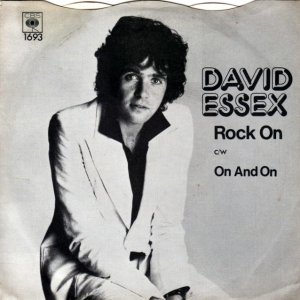 In March I was getting a little stuck for ideas and I had to recycle an old post, The Men in White Suits, a post that linked people like Alec Guinness who starred in the Ealing film comedy, The Man in the White Suit and David Essex who used to wear a white suit back in the 1970’s and other similar situations and characters.
 I’ve written many posts about books and a regular series is one in which I compare books to their filmed counterparts. In August I added a post about one of my favourite book/film series, the James Bond books by Ian Fleming. I must have been in a pretty nostalgic sort of mood that month because another post was Comfort Food, talking about the memories that my favourite food conjures up for me.

 Back in the 1970s my Saturday ritual involved getting the bus into town and scouring book and record shops for, yes, you’ve guessed it, books and records. One day back then I was flipping through the posters in one particular shop. The posters were the music stars of the 70s; Elton John, Mick Jagger, Suzi Quatro, David Bowie and so on but one was a picture of a really good looking guy with a fifties combed back hair style. In some pictures he was dressed like a cowboy and in others in a red jacket and denim jeans. The guy behind the counter must have seen me wondering who the guy was and he told me he was a film star called James Dean. He handed me a paperback book about the actor and I took it home and read it and very soon I was trying to find out everything I could about him.
 The paperback book I bought that day in the record shop in the 1970’s was probably James Dean: A Short Life by Venable Herndon. It wasn’t a great book but an interesting introduction to Dean and who he was. It detailed his struggle for acting roles, TV work in New York, his apartment at 19 West Sixty-Eighth Street, his three films, his doomed affair with Pier Angeli and of course his death.
 Another book I picked up only recently was another picture album James Dean: Portrait of Cool edited by Leith Adams and Keith Burns. It’s an album of photographs found in the Warner Bros archive and some have not been published before. Included are all sorts of documents such as casting sheets, production notes and messages. Dean’s address is listed as 3908 West Olive Avenue which I think might have been a place he shared with Dick Davalos who played his brother in East of Eden. During Rebel Without a Cause, Dean was listed as living at 1541 Sunset Plaza Drive.

 I’m not sure which came first for me, the book or the film but I actually think it was the book. The Godfather was written by Mario Puzo and is the story of Don Vito Corleone, the head of one of the five mafia families of New York. The book opens with the wedding of Don Corleone’s daughter and Puzo sets the scene and introduces the various characters.
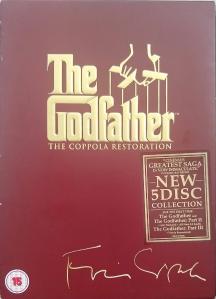 Francis Ford Coppola was the director of the film version and was also the co-writer of the screenplay along with Mario Puzo. Coppola wanted Marlon Brando to play the part of Don Corleone even though Brando at the time was rather unpopular with the producers. He was expensive, his last few films had not done well and his time wasting attitude had added huge expenses to his pictures. After the director had made the producers understand how important Brando was, they set various conditions for his employment. He would have to work for a reduced salary and put up a bond to ensure he would not delay the production. Another was that he had to have a screen test. Coppola has told the story in various interviews how he and his film crew had entered Brando’s house like ninjas and quietly set up their equipment. Brando slicked down his hair with shoe polish and stuffed cotton balls into his mouth to make the transformation into the aging mafia boss.
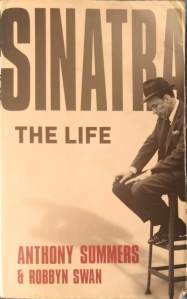 Coppola decided that instead of finding the horse at the end of his bed like in the book, it would be better if Woltz awoke, was disturbed by something wet, pulls the bedclothes away to see blood and then uncovers the horse’s head. The head was the actual head of a horse, procured from a dog meat factory and Coppola mentions on the commentary to my DVD version that lots of animal lovers sent him hate mail about the horse, even though the horse had been condemned to its fate anyway.
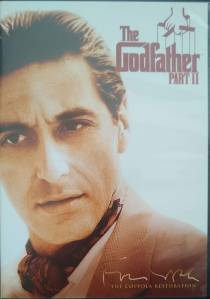 As previously mentioned, the book does have some storylines which were not used in the film but one chapter was a look at the beginnings of Vito Corleone. Born Vito Andolini in the Sicilian village of Corleone, Vito’s father was murdered by a local mafia boss and the young Vito was smuggled away to America. In America he took the name of Corleone and seemed to slip quietly into the role of mafia Don by murdering Fanucci, a New York Sicilian Godfather who preyed on his fellow Italians. Although this element of the story wasn’t used, Coppola kept the storyline for use in The Godfather Part II. The follow up film was a film classic in its own way.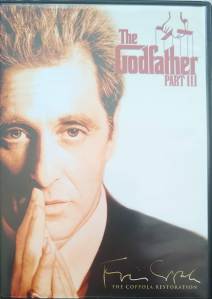

 Ida Lupino, like Roddy MacDowell, was born in England, in fact both lived in the Herne Hill area of London. She wanted to be a writer rather than an actress but went into acting as she was part of a theatrical family and it seems that becoming an actor was expected of her. She appeared in many British films before moving to the USA in 1933.
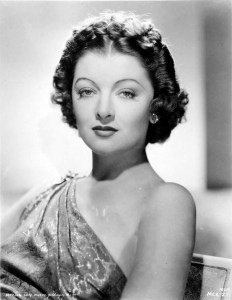 Myrna studied dance in Los Angeles. She had small parts in many silent pictures but some stills of her appeared in Motion Picture magazine and led to a contract with Warner Bros.
 What attracted me to the persona of Marilyn Monroe? Well, apart from her obvious charms as a very attractive lady it’s her death that has always interested me. I’m a sucker for a modern mystery whether it’s the assassination of JFK, the disappearance of Amelia Aerhart or Marilyn’s own strange death. The obvious solution is that Marilyn committed suicide. She had tried suicide quite a few times before and various people along the years have saved her from death, including her acting coach Natasha Lytess and her third husband playwright Arthur Miller. Suicide is the obvious answer to her death but personally, I’m not so sure.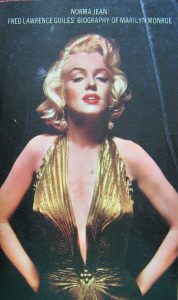


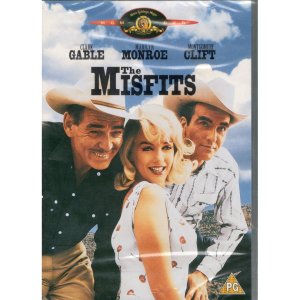
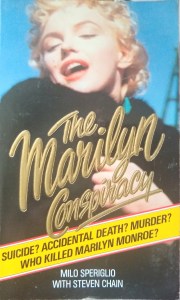

 Norman Mailer’s book about Monroe finished with a photo of Joe DiMaggio, grief stricken on the day of her funeral and he reckons we can perhaps surmise Marilyn’s true worth just by the look on Joe’s face that day. I cannot disagree.
 I thought I’d start with Gone with the Wind and see where it takes me. Gone with the Wind was a major film adaptation of the book by Margaret Mitchell. The book was a huge hit and producer David O Selznick bought the film rights. Production was delayed for a long while as Selznick was determined to get Clark Gable for the part of the roguish Rhett Butler. Another delay was a distribution deal with MGM which couldn’t be finalised until Selznick’s then current deal with United Artists had expired. Selznick used the delay to begin a huge search for an actress to play the part of Scarlett O’Hara, the spoilt daughter of a plantation owner in the deep south of America. Scarlet has a crush on Ashley Wilkes played by British actor Leslie Howard in possibly his most famous role. The film was one of the major hits of 1939 and was the highest earning film up to that time.
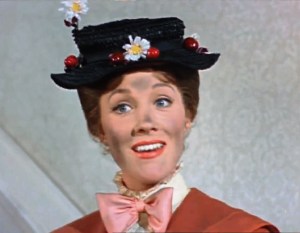 In 1938 Leslie Howard played the part of Professor Higgins in the film production of Pygmalion based on the play by George Bernard Shaw. A musical version was a big hit on the stage in the 1960s. Julie Andrews played the part of Eliza Doolittle to great acclaim on the stage but when the time came to make a film version in 1964, the producers wanted a major star and so the part went to Audrey Hepburn.
 I had a few ideas for the title of this post. I had A Piece of My Life on the brain for a long time and then substituted A Pizza My Life (A piece of my life, geddit?) I even had a graphic sorted showing a slice of pizza. The thing with that I thought is that even though it ranges from funny to faintly humorous, I reckoned I would be giving people the wrong idea and that readers might have been expecting a post about, well pizza. Just lately I’m trying to optimise my titles for SEO (search engine optimisation) and at the same time also trying to give the impression that I know something about it. Some time ago I did a few posts titled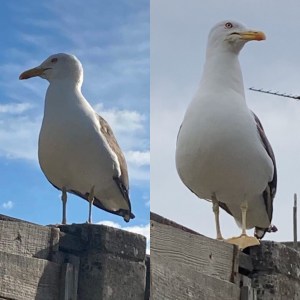


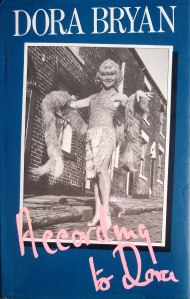
 Back in the 1960’s I was a big fan of the Apollo moon missions and on UK TV one of the presenters was James Burke. Burke also did a TV show called Connections. It was a really fascinating series which connected various historical events to make a sort of chain which led up to something which was pretty unexpected. The episode that stands out in my memory was one about the atom bomb, various unconnected events and discoveries that together, led to the splitting of the atom. In today’s post, I’ve tried to do something similar but all relating to the world of film, so here are five fascinating connections.
 The first thing to remember about films is this, they are not a public service, they are made to make money. They start life as a business proposition. Producers start by asking would the public want to see this? Would they pay to see this? Suppose we got famous film star Mr X to star opposite film actress Miss X? One sure fire way of making the public want to see something is by making the film again. How can they make it again? By making the sequel! Sequels can be good, they can be bad but sometimes they can be downright ugly . .
 Letters from an Unknown Author!