It’s time for another post in which I try to put together a few golden age cinema stories connected by a thin, sometimes very thin, connecting link. Today I’m going to start with Olivia de Havilland.
 Olivia de Havilland was one of the great film stars of Hollywood’s golden age. Amazingly she died only fairly recently in 2004 having lived to be 104 years old. She appeared in eight classic films with fellow star Errol Flynn, including The Adventures of Robin Hood in which she played Maid Marian to Flynn’s Robin Hood. Flynn claimed in later years to have been in love with Olivia but nothing ever happened between the couple, or so they both said.
In my favourite Hollywood book Bring on the Empty Horses, David Niven paints an excellent portrait of Flynn. You always knew where you were with Errol, wrote Niven -he always let you down.
Flynn hailed from Tasmania, an island state of Australia. In Australia he became involved in a film production called In the Wake of the Bounty, a documentary film about the mutiny on the Bounty that featured reconstructions with Flynn as Fletcher Christian. After this he made his way to the UK where he became an actor and spent many years in repertory in Northampton. He was fired from Northampton rep but was spotted by producer Irving Asher and given a part in a film made at Teddington Studios in 1934. The film was Murder in Monte Carlo which has since been lost but apparently Asher, who worked for Warner Brothers, sent word to Hollywood recommending Flynn for a contract. After a successful screen test Flynn was given the starring role in the swashbuckling adventure, Captain Blood, after Robert Donat turned down the role. The film was a great success and made stars of Flynn and co-star Olivia de Havilland.
Olivia began living in Paris in the 1950s but continued acting not only in films but also on television and on the stage. She received numerous awards and she and her sister are the only siblings ever to both receive Academy Awards.
Olivia’s sister was Joan Fontaine and the two had a famous feud or falling out which seemed to consume most of their lives. Olivia seems to have ‘blanked’ Joan when Joan won an Oscar for her role in ‘Suspicion’ in 1942. They seemed to become friendly for a while until they differed about looking after their elderly mother.
My favourite of Joan’s films and perhaps her most well known was Rebecca, directed by Alfred Hitchcock. Joan played the part of a shy young girl who falls for Maxim de Winter, played by Laurence Olivier.
Rebecca was filmed in 1940 and was Hitchcock’s first Hollywood film. In Monte Carlo a shy young girl played by Fontaine encounters English gentleman Maxim de Winter and thinks he is about to jump off a cliff. Later the two fall for each other and marry but the new Mrs de Winter -her actual name is never revealed- seems to feel Maxim’s love for Rebecca, his late wife, is overshadowing her life. It’s a great film and one of Hitchcock’s best. Olivier apparently wanted his wife, Vivien Leigh, to play the part which Hitchcock ultimately gave to Joan.
Vivien Leigh was the surprise choice to play Scarlett O’Hara in the film version of Gone with the Wind. The film was a major film adaptation of the book by Margaret Mitchell which had been a huge success and producer David O Selznick bought the film rights. Production was delayed for a long while as Selznick was determined to get Clark Gable for the part of the roguish Rhett Butler. Another delay was a distribution deal with MGM which couldn’t be finalised until Selznick’s then current deal with United Artists had expired. Selznick used the delay to promote a huge search for an actress to play the part of Scarlett O’Hara, the spoilt daughter of a plantation owner in the deep south of America. He eventually chose Vivien who was in the USA visiting her husband who of course was filming Rebecca.
Clark Gable was known as the ‘King of Hollywood’ and in 1935 he made a film with Loretta Young called The Call of the Wild. During the production, Young became pregnant with Gable’s child. Their daughter Judy Lewis was born on November 6th 1935. Loretta hid her pregnancy and gave birth in secret and then later arranged to ‘adopt’ the child. Judy never knew the circumstances of her birth although it was an open secret to many in Hollywood. When she finally learned of the rumours, she confronted her mother who admitted she and Gable were her biological parents.,
In 1939 Gable married Carole Lombard. She was a great star particularly in the screwball comedies of the day and Gable adored her. They met while making the film No Man of her Own in 1932 but nothing romantic happened until they met again at a Hollywood party in 1936. Gable was separated from his then wife Ria Langham but still married. Eventually she agreed to a divorce and Gable was free to marry Lombard.
When World War II began, Carole travelled to Indiana to a war bond rally where she raised over 2 million dollars for the American war effort. She and her colleagues were due to return to Los Angeles by train but decided to take a faster option and fly. The flight crew of the aircraft were thought to have been in difficulty crossing the mountains surrounding Las Vegas as safety beacons had been turned off in case Japanese bombers tried to enter the area. The aircraft crashed into the mountains and all on board were killed. Gable was devastated. Afterwards he joined the US Air Force and saw action over Germany as a gunner.
In 1960 Gable began work on his final film, The Misfits. The screenplay had been written for Marilyn Monroe by her husband, playwright Arthur Miller. She was not happy playing a character called Roslyn who she felt was based too much on herself. She and Miller were at the end of their marriage and their deteriorating relationship caused tensions on the set. Miller was stressed as he was doing multiple rewrites. Monroe was frequently late or didn’t turn up for work or didn’t know her lines while Gable, the complete professional was on time and word perfect every day. Director John Huston had to hold all the differing elements together but the film was finally completed. It was the final film for both Monroe and Gable. He died some weeks after filming completed aged only 59 and despite having two other marriages after Lombard, was laid to rest beside her.
Another star of The Misfits was Montgomery Clift. He was also a ‘method’ actor and along with Marlon Brando and James Dean was one of the three great method actors of the 50s and 60s. I have always thought that his first film was The Search, a film made in bombed out post WWII Berlin in which Clift played a US army soldier who helps a refugee boy find his mother. Clift gave such a natural performance that director Fred Zinnemann was asked where did he find a soldier that could act so well?
Clift’s actual first film was one of my personal favourites, Red River with John Wayne, a western about an epic cattle drive across the US. The Search, despite being filmed later was actually released first.
Clift became great friends with Elizabeth Taylor and the two made many films together. In 1956 while filming Raintree County, Clift was involved in a terrible car crash in which he suffered severe injuries to his face, particularly the left side. Taylor comforted Clift in the wreck of his car while they waited for the emergency services. Clift returned to complete Raintree County after taking two months off to recuperate from plastic surgery.
Montgomery Clift was a homosexual in a time when such things were covered up by Hollywood and his sexuality was not mentioned in public until Elizabeth Taylor spoke about it in a speech in 2000.
After the success of The Search, Paramount offered Clift a major contract which he accepted and the first film he made for the company was The Heiress directed by William Wyler.
Bringing us full circle, Clift’s co-star in The Heiress was Olivia de Havilland.

 Frank Sinatra and Die Hard.
 A while back I did a post about the
  Our motorhome was looking a little forlorn lately, parked up on the drive all packed up ready to face the winter. The thing is, just lately the weather has been rather mild and Liz felt that we should perhaps unpack the motorhome and give it a winter drive out. So we set off for Southport, a small seaside town just a short 90 minute drive away. We parked up the motorhome, put on our glad rags and went off to dine and generally make merry.
 It’s always a bitter-sweet experience when someone decides to make your favourite book into a film. It doesn’t always work out because maybe it was a big, thick, long book and they have cut out your favourite bit, or perhaps the cast wasn’t the one you imagined. It’s usually just the same in reverse. You see a great film and in the credits it says based on the book by so and so, then you rush out and get the book and it turns out to be a little disappointing. Sometimes it’s even better than the film!
 On eBay a while ago I came across a listing for a razor handle for a pound. I remember thinking at the time what plonker is going to even think about buying that? Well, more about that later. Still, there are a huge amount of crazy things on eBay, things like broken items for instance. Quite a few times I’ve come across something on eBay at a fraction of its usual value. That’s where you have to stop and take a closer look. Check the small print because many times you will find something like ‘not working’ or ‘for parts only.’ That’s right, your old mobile phone packs up -flog it on eBay because somewhere, there is someone either collecting broken mobiles or using the parts to fix other broken mobiles and re selling them to make money. Of course it could just be some weirdo who collects broken phones, who knows?
![By Trailer screenshot (The Ghost and Mrs. Muir trailer) [Public domain], via Wikimedia Commons](https://stevehigginslive.com/wp-content/uploads/2016/11/gene_tierney_in_ghost_and_mrs_muir_trailer.jpg?w=365&h=276)
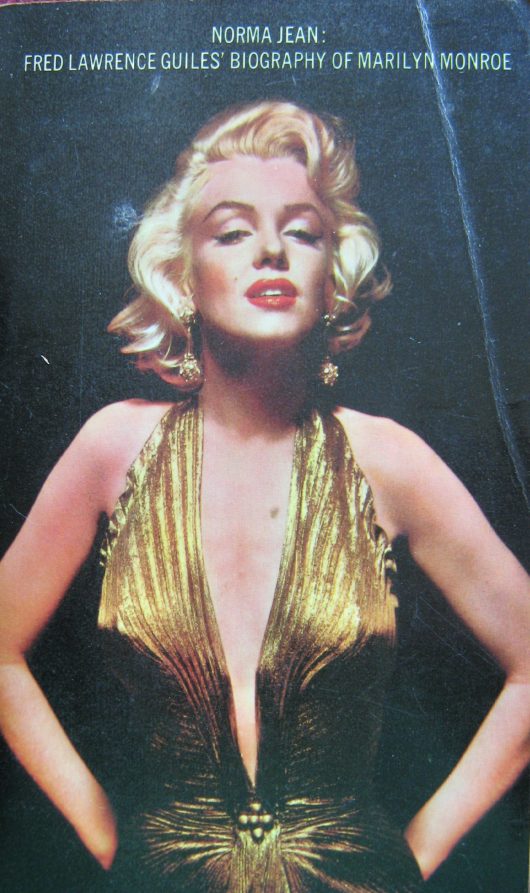 The very first book I picked up about Marilyn Monroe was the biography by Fred Laurence Guiles. ‘Norma Jean, the life of Marilyn Monroe’. It’s a particularly well researched book and for a great many people, fans and writers alike, it has become the definitive biography of Marilyn, the place you go to find out all those facts and figures about her life, especially her early life. Her death is not really discussed in the same fashion as in later books, some of which are wholly devoted to the mystery of her passing. In my edition which I bought in the seventies, Bobby Kennedy is referred to only as ‘the easterner’ and it was only in later years that Bobby Kennedy and his brother, President John Kennedy became publically identified with Marilyn.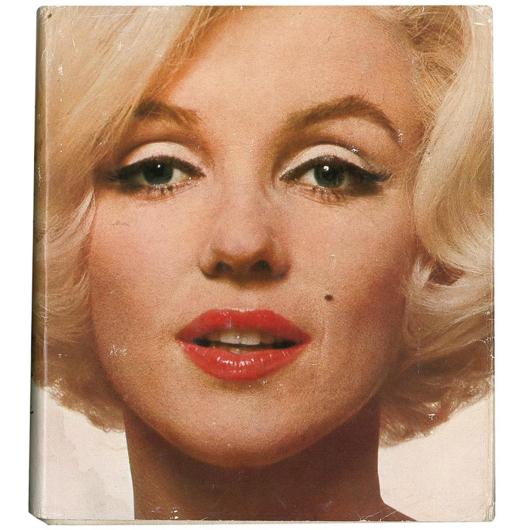
 A slim volume appeared in 1964 called ‘The Strange Death of ‘Marilyn Monroe’. It was this book that kick started rumours of strange goings on in the hours leading up to
 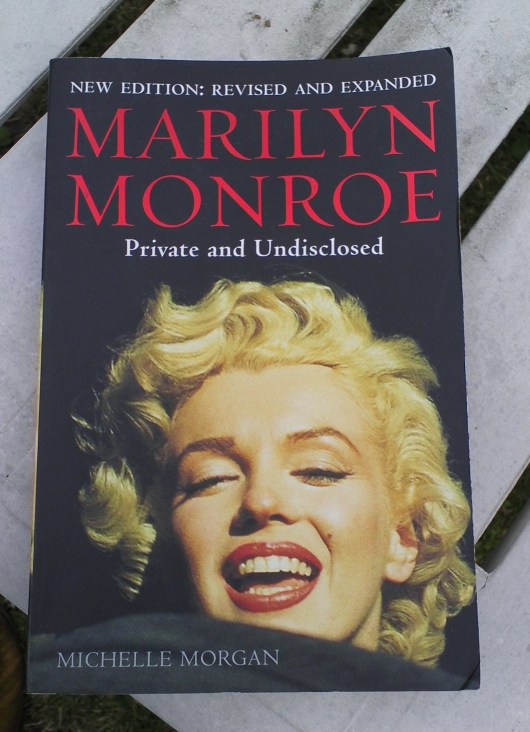 Marilyn Monroe: Private and Undisclosed is a book I picked up quite recently. It is written by a British author, Michelle Morgan, and is similar to Fred Guiles book of Marilyn, very well researched but focusses on various people associated with Marilyn who have not been interviewed before. After reading this and other books, I get the impression that Marilyn compartmented her life, and those that were in one compartment, were not necessarily aware of people who were in the other ones.
 Talking about J Edgar Hoover, here’s another book I picked up about Marilyn. This was a remainder book and concerns the information about Marilyn in Hoover’s FBI files. Marilyn: The FBI Files by Tim Coates. It’s an interesting addition to the many books about Marilyn with pages of FBI files concerning Marilyn, many of them redacted with various names and details blanked out.
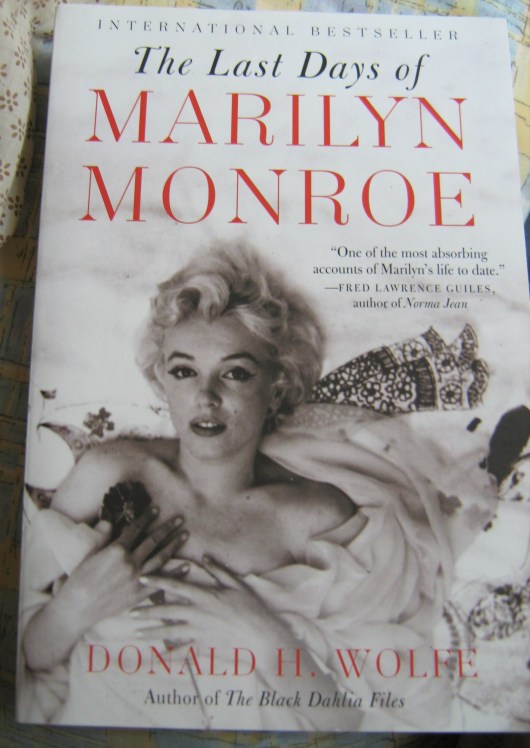 Donald Wolfe wrote another book; ‘The Last Days of Marilyn Monroe’. I’ve not read this one yet, it’s one I’m saving for my holidays.
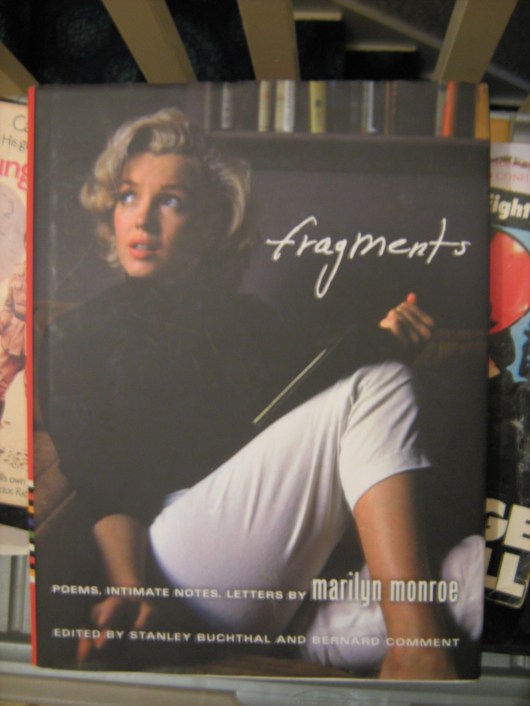 Finally, Fragments, edited by Stanley Buchthal and Bernard Comment. When Marilyn died in 1962 she left all her possessions to her acting mentor and head of the Actors Studio in New York, Lee Strasberg. When he passed away Marilyn’s effects went to his daughter and now it seems many will be auctioned off. This book is a look at the letters and notes she made, fragments of poems and thoughts scribbled in notebooks, on hotel stationary and envelopes. Marilyn’s thoughts and written meanderings show her to be a thoughtful woman who cared about what she saw and heard. Marilyn was a great reader and left behind a large book collection, part of which is listed in this book. Click
  Classical Music and Three of my Movie Favourites
 It’s always a good feeling when you watch a movie you have really enjoyed. If you are like me then you will usually take a scan through the credits and look for familiar names. Sometimes you will see one that rings a bell; Hey, that director is the same guy who directed one of your real favourites or, that screen writer is the same writer who wrote another movie you enjoyed. That’s what I call a movie connection.
 Asquith was the son of the British Prime Minister Herbert Asquith. He was a great friend of Terence Rattigan and they collaborated on 10 films together but it’s Rattigan I want to write about here. Who who was he? Well, he was a playwright who wrote a number of west end hits, many of which were made into films. You may recognise some from this list; The Way to the Stars, The Winslow Boy, The Browning Version, The Deep Blue Sea, The Price and the Showgirl, Separate Tables, The Sound Barrier and the Yellow Rolls Royce.
 Robert Donat relished the role of Sir Robert Morton in the Winslow Boy. Morton is an MP cum barrister who takes the British Admiralty to court over the sacking of Cadet Winslow. In my favourite scene, Sir Robert Morton questions Ronnie Winslow about the incident in question, that of the theft of a postal order. The questioning goes fairly gently until Sir Robert ups the ante when Ronnie, the Winslow Boy himself, mentions talking to another boy;
 Letters from an Unknown Author!