Reading Books and Thoughts from a Sun Lounger

I thought for this week’s post I’d do a combination post, a little of my book bag mixed with some sun lounger thoughts. Let’s see how it all pans out.

Just now we have finished our touring part of the holiday and we have come to our rented gîte where we have parked the van and are spending time in this wonderful house that we regularly rent just outside the small village of Parçay-les-Pins.

I quite often, back in England, watch that TV show about people who want to buy a new house abroad. It’s called A Place in the Sun and it’s aways interesting to watch couples look for a dream home, especially when it features a location we know a little about like France or Lanzarote for instance. Sometimes the contestants -for want of a better word- will come across what I think is a really nice place and will criticise it and start saying how they will rip the kitchen out and knock this wall down and I really want to slap the pair of them. Now and then, the show will produce something really nice and the couple will fall in love with it, put in a bid and find themselves the new owners of a fabulous house in the sun.

Sitting by the pool outside this house in France I do feel that it’s really a place that Liz and I have both fallen for. It’s an old country house with very thick walls and our bedroom is a modern extension with an en-suite bathroom. In a morning our usual routine is for me to get up, make a brew and bring it back to bed and for Liz and I to check our emails and then see who will be victorious in a card game we play together on our iPads. Those thick walls come into play here though as being so thick we don’t get much of an internet signal in the bedroom so one of us will have to reach out for our phone and switch on our internet hotspot so we can play.

Card game done it’s time for breakfast and then out to the pool for a swim, a read and some sunbathing. Here’s the first of my holiday reads;

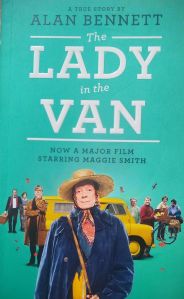
The Lady in the Van

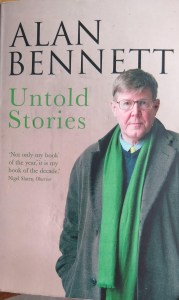
I saw the film version of this a few years ago which was pretty good, if a little odd. It was presented in a very peculiar way in that the author, Alan Bennett, is portrayed as two people, one as himself as he appears in the story and two, as himself as he writes the story. That oddity aside it was really a rather good and original film. When I heard there was a book version I quickly went to one my usual internet book stores and promptly bought it.

I was disappointed to find that it was a very slim volume, only 100 pages in fact and the author might have been better saving it for a collection of short stories. Anyway, it actually made me feel better about my own book, Floating in Space, which is also a rather thin book, though I might add, much longer than this.

Anyway, moving on to the story it was a rather good read. It’s about an oddball character, an old lady who parks outside Alan Bennett’s house in a van and stays there for some time, actually living in the van. She appeared sometime in the 1970’s and when double yellow lines appeared moved into the author’s driveway, staying there until her death in 1989.

The lady, the enigmatic Miss Shepherd, lived in her van continually throughout the year, rain or shine, hot or cold and the author tells her story using his own diary entries. It’s a funny story but also a sad one too. When the lady passes away, he is forced to go through her things in the van;

“…I realised I had to grit my teeth (or hold my nose) and go through Miss Shepherd’s possessions.
To do the job properly would have required a team of archaeologists. Every surface was covered in layers of old clothes, frocks, blankets and accumulated papers, some of them undisturbed for years, and all lying under a crust of ancient talcum powder. Sprinkled impartially over wet slippers, used incontinence pads and half-eaten tins of baked beans, it was of a virulence that supplemented rather than obliterated the distinctive odour of the van. The narrow aisle between the two banks of seats where Miss Shepherd had knelt, prayed and slept was trodden six inches deep in sodden debris, on which lay a top dressing of old food, Mr Kipling cakes, wrinkled apples, rotten oranges and everywhere batteries – batteries loose, batteries in packets, batteries that had split and oozed black gum on to the prehistoric sponge cakes and ubiquitous sherbet lemons that they lay among”

In the van he finds about £6000 in cash and a name and telephone number. Bennett calls the number to find the man at the other end has never heard of Miss Shepherd but then after he describes her, the man realises Miss Shepherd was his sister, although she had for some reason been using an assumed name. Alan Bennett had a love/hate relationship with this strange old lady for many years and came to -I was going to say like, but that’s not the right word. He came to be connected to her in a strange way until one day her social worker arrived with some clean clothes only to find her dead in the van.

To sum up, this was a lovely read even though it only lasted a couple of days for me but I think now I might look out for more of Alan Bennett’s books.

Vide Greniers and Brocantes

Liz and I always visit a village fête at the weekend, usually those with a vide grenier or brocante attached. A vide grenier is just a car boot sale which we both love. I usually pick up connecting leads for my laptop or iPad, after all, you can never have enough electrical leads. Brocantes are more like flea markets or antique fairs. Just the kind of place to pick up those old telephones that I still love, especially those Bakelite ones.

We visited a couple of vide greniers last weekend although the rain put off a great many sellers. The refreshments area was still open though and I ordered sausages and frites undercover from the rain while Liz nipped over to the covered bar across the way and ordered two glasses of vin rouge.

Over the years I’ve picked up various things at French vide greniers including pin badges, glasses and decanters as well as old telephones, cables (of course) old photos and paintings including a framed poster from the Le Mans 24 hour race. What else? A small bust of General de Gaulle which sits on my mantelpiece back home and numerous other things which took my fancy.

Plenty of times we have sheltered in makeshift bars until a rain shower has passed over and the sellers have peeled away plastic covers to reveal their goods.

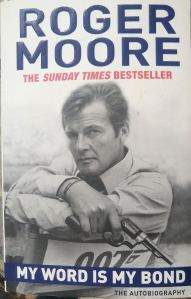
My Word is my Bond by Roger Moore

I picked this book up ages ago and thought it would be a good holiday read. I’ve always liked Roger Moore even though I absolutely hate his James Bond films. I love Moore’s self-deprecating humour, plenty of which is evident in this book. The first part of the book was really interesting and entertaining but like a lot of celebrity autobiographies, this one just gets a little tedious when Roger just seems to list the films and locations and other celebrities he seems to know. On the back of the book was a review claiming this to be the best film autobiography since David Niven’s The Moon’s a Balloon. Sorry but I can’t agree. Roger reveals numerous ‘funny’ incidents from behind the scenes of his films, all of which must have been from the ‘you had to be there’ category because I didn’t think they were that funny. His marriage to his third wife fizzles out with no explanation and the last section is just an endless list of his various travels as a UNICEF ambassador.

He seems to have had a great deal of fun making the Bond films but for me his tenure as 007 marked the series fall from serious spy films into farce. The crazy thing is that after making his first Bond film, Live and Let Die, in which he comes over as a sort of stuffed dummy rather than an action hero, he made a film called Gold. In Gold he starred as the boss of a goldmine and really looked the part of a very tough guy indeed so why he couldn’t have done that as Bond is beyond me.

I prefer to remember Roger as the star of The Saint and The Persuaders, two TV action and adventure classics I loved. Anyway, this was for the most part an entertaining read but don’t think for a moment that it comes anywhere close to David Niven’s classic book.

That’s all from me. The sun has come out so it’s time to put my laptop away and enjoy the pool.

Bye for now!


What to do next: Here are a few options.

Share this post on your favourite social media!

Hit the Subscribe button. Never miss another post!

Listen to my podcast Click here.

Buy the book! Click here to purchase my new poetry collection.

Click here to visit Amazon and download Floating in Space to your Kindle or order the paperback version.

Click here to visit amazon and purchase Timeline, my new anthology.


3 Summer Reads

A long time ago I decided that I would set myself the task of reading the entire Hamish Macbeth series of books. There are 34 books in the series, all written by author M.C. Beaton which is in fact a pen name for Marion Chesney. Marion actually wrote many books under various pseudonyms including Ann Fairfax, Jennie Tremaine, Helen Crampton, Charlotte Ward and Sarah Chester. After Marion’s death in 2019 further Hamish Macbeth novels have appeared penned by writer R.W. Green.

Hamish Macbeth is a country policeman in the small Scottish Highland village of Lochdubh. Macbeth is a very relaxed kind of fellow. Some might even call him lazy. He shies away from promotion, even giving the credit for solving crimes to others so he can stay on in his beloved village.

A few years back the BBC made a TV series based on the books. ‘Based on’ is quite an interesting use of that particular phrase because the TV series is actually nothing like the books. The series was filmed in Plockton and Macbeth is played by Robert Carlyle. Macbeth is a laid-back relaxed character, just like in the books. He is not averse to poaching the odd salmon and he likes to apply the rule of law in his own way. He avoids promotion as all he wants is to remain in Lochdubh. That is pretty much where the resemblance to the books ends which was quite a surprise to me. Most of the characters in the series are the invention of the TV writers and not M.C. Beaton who wrote the books.

I’m not sure how happy I would be if someone made a TV show out of my book and then proceeded to change all the characters, still I did enjoy Hamish Macbeth as a TV show. It was an oddball, quirky little drama which ran for only three seasons and a few years ago Liz and I visited the village of Plockton which was very small and to be honest, didn’t actually look like the place in the TV series.

Not long ago after reading Death of a Scriptwriter last year, I put down the Hamish Macbeth books and took a little break from the murders in Lochdubh but as the summer has warmed up nicely and I’ve plenty of time to sit out in the back garden reading, I thought it was a good time to pick up the series again.

Death of an Addict.

This was a little different to the usual Hamish Macbeth novel. Macbeth and another officer, Glasgow DI Olivia Chater, masquerade as drug dealers to trap a drugs cartel operating in the highlands. I have to say that I didn’t like how the book leaves the usual village life behind and to be fair, I didn’t enjoy the book as much as the previous ones.

Death of a Dustman.

All the Macbeth series are titled ‘Death of’ someone and I noticed on the internet that there is one book that differs from the others called A Highland Christmas which seems to come in between Addict and Dustman. Anyhow, I don’t have a copy so I went straight on with Death of a Dustman. All the books in my collection end with the first chapter of the next book and Addict ended with chapter one of Dustman so perhaps the Christmas book is something a little different. Anyway, the action takes place once again in the village of Lochdubh where a new councillor decides to make the village ‘green’ by promoting recycling. As a result, the local dustman causes a lot of aggro when he declines to empty bins containing the ‘wrong’ sort of rubbish and of course he ends up getting bumped off.

Things get a little far fetched towards the end but overall, Death of a Dustman was a fairly pleasant read and another look at highland village life and its various characters.

Marathon Man

I mentioned a while ago about my brother dying and when I was sorting out his things I came across this short novel. Actually it was one of my own books and I must have lent it to Colin years ago and now it has once again come back to me. I can just imagine telling him ‘I told you that you never gave me Marathon Man back!’ to which he would probably reply ‘Well what about that Cary Grant book I lent you?’ Yes, I borrowed the Grant book ages ago when I wrote a post about Cary Grant and it’s still there, part read in my bedroom.

Marathon Man was written by the screenwriter William Goldman and later made into a film using Goldman’s own screenplay. It’s a fairly short book and according to Wikipedia it was the author’s most successful thriller novel. Escaped nazi dentist Christian Szell has been living in Paraguay since the end of WWII. He has a stash of diamonds acquired while he worked in a concentration camp which are in a New York vault looked after by his father. When his father dies in a car crash Szell has to return to New York to get the diamonds. Will it be safe though? Szell thinks that a US agent working for a secret department called the Division may be about to rob him when he picks up the diamonds.

The agent is known by the code name Scylla and Szell meets with him and uses a hidden knife to stab him. Scylla manages to survive long enough to get to his brother’s New York apartment whereupon he dies from his injuries. Szell believes that Scylla must have survived long enough to give his brother, nicknamed ‘Babe’, information about the diamonds and so his men kidnap Babe and he is tortured to reveal any information. Szell is a dentist and so he tortures Babe by drilling into his teeth. Later, Babe, a student who hopes to be a marathon runner manages to get away.

The story was made into a film starring Laurence Olivier as Szell and Dustin Hoffman as Babe. This led to an interesting confrontation of acting styles with Hoffman the ‘method’ actor and Olivier the celebrated traditional actor. On one occasion when Hoffman had to appear tired out after staying awake for three days Hoffman chose to actually stay awake for three days also. Olivier, tired of these antics famously asked Hoffman ‘Dear boy, why don’t you just act?’

(I should mention here that while researching this and checking my facts -I had originally thought that Hoffman had gone running to make himself appear breathless- I found a really interesting article in the Guardian in which the author finished with a wonderful quote about acting from George Burns who once said “sincerity is everything. Fake that and you’ve got it made!”)

The film very much follows the lines of the book except that in the film, it is Szell’s brother, not his father who looks after the diamonds and also in the book, Babe is a little more ruthless and cold blooded than Hoffman portrays him on film. In fact, Babe shoots Szell dead in the book but in the film, Szell is killed by falling on his own knife.

Both the book and the film were highly successful and Olivier’s Szell is one of the most famous screen villains, particularly with his catchphrase ‘Is it safe?’ which he continually asks Hoffman’s character before commencing to torture him. It’s a film which probably put a huge amount of people off going to the dentist for years and the book is equally as scary and also superbly written.

Anyway, that’s what I’ve been reading. What are your summer reads?


What to do next: Here are a few options.

Share this post on your favourite social media!

Hit the Subscribe button. Never miss another post!

Listen to my podcast Click here.

Buy the book! Click here to purchase my new poetry collection.

Click here to visit Amazon and download Floating in Space to your Kindle or order the paperback version.

Click here to visit amazon and purchase Timeline, my new anthology.


Three Reads from My Holiday Book Bag

It’s always good to slip out of the pool, dry yourself off and then relax in the sun with a really good book. Here are three of my latest holiday reads. (try the video version by clicking here!)

The Thief, His Wife And The Canoe

I first heard about this story on the TV news many years ago. I’d mostly forgotten about it until recently when there was an ITV drama based on the story. This was the book version and even though the story is fascinating, the book, written by a newspaper journalist wasn’t that gripping.

Essentially, John Darwin was facing bankruptcy after getting hugely overreached on a series of buy to let mortgages. He decided that the only way out was to fake his own death and cash in on some life insurance policies. His wife apparently tried to talk him out of the idea but John, a dominating and overpowering personality, went ahead and faked his own death. Amazingly he even went back to live with his wife, sometimes having to retreat to the bedsits next door when any friends or family came to visit. He arranged a false passport using a method explained in the book ‘Day of the Jackal’ by Frederick Forsyth and then the two, Darwin and his wife, planned to buy property in Panama and live a new life. Later, Darwin decided he wanted to return to the UK under his own name by posing as someone who had suffered with amnesia and in fact one day he disposed of his fake passport, walked into a police station and told them ‘I’ve lost my memory!’

Journalist David Leigh tracked down Darwin’s wife in Panama and managed to extract the entire story from her before she returned to the UK to face imprisonment along with John.

The result is interesting but not really a great read as perhaps the author is more used to newspaper stories rather than an entire book. Either way, it kept me interested for quite a few days.

Death of a President

I’ve read this book before many years ago but even so I thought I’d throw it in the motorhome and give it another read. The President’s widow, Mrs Jackie Kennedy asked the author, William Manchester to write the book so there would be one authorised record of what happened in Dallas when President Kennedy was assassinated. The result is a record, in fact a micro record of what happened to Kennedy and those around him, beginning a few days before the assassination and ending with his funeral and the shooting of his assassin by another assassin.

For me, who has been interested in the JFK assassination since at least 1968 when his brother, Robert Kennedy was also murdered and I was 12 years old, it’s a fascinating record. Others might think perhaps that the author has spread his research too far, that we are not interested in what the President’s pilot thought or did or how the honour guard prepared for the President’s funeral and how the President’s sister or brother-in-law reacted.

Anyway as a passionate JFK researcher, a couple of things stood out. One was a time chart that showed that JFK was shot at 12:30 and that at 12:31 and a half, motorcycle cop Marion Baker intercepted Lee Oswald, the supposed assassin, on the second floor lunchroom of the Texas School Book Depository calmly drinking a coke. That meant that Lee had, in 90 seconds, hidden his Mannlicher Carcano rifle on the 6th floor and got himself down to the second floor to meet Baker. Did he shoot the President or was he in the lunchroom all the time?

Here’s another thing. In one of my favourite JFK assassination books, Best Evidence, author David Lifton reckons that sometime between leaving Dallas and arriving at Andrews Airforce base in Washington, JFK’s body was somehow removed from his coffin and transferred to a body bag and then helicoptered to Bethesda naval base where work was done on the body prior to it being seen by the official autopsy staff. In Death of a President, William Manchester says that Mrs Kennedy spent all her time sitting near to the casket on Airforce One with many of JFK’s team of assistants and secret service personnel. So how was Kennedy’s body removed without anyone knowing?

OK, I’ve gone off into the realm of JFK assassination folklore there but to get back to normality, this was a very well researched book and gives a massively detailed look at the events surrounding a tragic day. If anything, the detail is perhaps a little too much and I could sort of imagine it as a feature film using that split screen effect that you often saw in the 1970s; Kennedy getting into the limo side by side with a shot of the assassin getting ready and so on.

Verdict; an absorbing read, very detailed.

Blue Angel: The Life of Marlene Dietrich by Donald Spoto

This was a very compelling read, a biography of Marlene Deitrich who to be fair, I didn’t know much about until this book.

Marlene was one of those people perhaps born at the wrong time. Today might be a better time for her when lifestyles of gay and lesbian people are not so much of an issue.

Marlene rose to prominence in the film world of Germany between the world wars. She was married to assistant director Rudolf Sieber and together they had a child, Maria. The couple had what we might call an open marriage and Marlene had various partners, both male and female and her husband too found himself another love. A big hit for Marlene was her performance as Lola Lola in The Blue Lamp, directed by Josef Von Sternberg in 1930. Shortly afterwards Marlene and Von Sternberg moved to Hollywood and the two made a series of films for Paramount. While she was away from Germany the Nazis rose to power. Goebbels himself asked her to come back and work in German films but when she declined, the Nazi party rejected her. Marlene became a naturalised American and even entertained the troops -the allied troops during World War II.

She had affairs with both men and women and at one point even began to wear male oriented clothes and once she was denied entry into a Paris night club for wearing trousers.

She was extremely concerned with how she looked in films and always arranged with the lighting crew for a key light to illuminate her face in a particular way, many times even bypassing the director. Alfred Hitchcock for one was not amused.

When the film work fizzled out she reinvented herself as a performer with a one woman show in Las Vegas. The clothes and lighting she organised herself, in fact at home she even had a special key light, just as she specified for her films, that she would stand under when she met journalists and even her friends.

She was always there to help her friends and still stayed close to her husband and his partner. If friends were sick or even just down, Marlene would come round and clean up and make food. She was not only a famous and beautiful star but also a proud hausfrau.

The book opens with her appearing in a short sequence in her very last film, which incidentally starred pop star David Bowie. She performed for the camera perfectly, only one take was required, then she returned to her Paris apartment and except for hospital and doctors’ appointments, she never left again until her death in 1992.

Not the best film book I’ve ever read but still an informative and intriguing read.


What to do next: Here are a few options.

Share this post on your favourite social media!

Hit the Subscribe button. Never miss another post!

Listen to my podcast Click here.

Buy the book! Click here to purchase my new poetry collection.

Click here to visit Amazon and download Floating in Space to your Kindle or order the paperback version.

Click here to visit amazon and purchase Timeline, my new anthology.

Book Bag: John Grisham

In my last few posts about books, rather than publish my usual Book Bag posts, I’ve incorporated book reviews into other types of posts; holiday memories and posts about books made into films and so on. During my last few holidays, I always seem to either have a couple of John Grisham books with me or found some in the places, usually rented villas, where we have stayed. I thought it might be an idea to write a John Grisham themed book bag post. Who actually is John Grisham then?

Let’s go over to Wikipedia and see what they have to say:

Born February 8, 1955 John Grisham is an American novelist, lawyer, and former member of the Mississippi House of Representatives, known for his best-selling legal thrillers. According to the American Academy of Achievement, Grisham has written 37 consecutive number-one fiction bestsellers, and his books have sold 300 million copies worldwide. Along with Tom Clancy and J. K. Rowling, Grisham is one of only three anglophone authors to have sold two million copies on the first printing.

Pretty impressive credentials, aren’t they? Most of the inside back covers of my copies of his books say pretty much the same thing and in the back of the last Grisham book I read, The Racketeer, there are extracts from an interview with Grisham in which he mentions his favourite book is A Time to Kill, his first book and apparently the most personal of his legal thrillers.

Let’s take a closer look at some of the books that I have read.

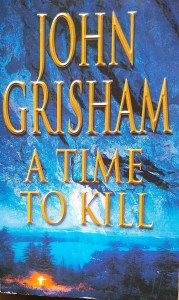
A Time to Kill by John Grisham

As I said earlier, this book turns out to be Grisham’s first novel and he says in the introduction how proud he was of finishing it, as back then he hardly ever finished anything. It also contains some autobiographical elements; Grisham used to be a street lawyer, similar to the character in the book.

The book is set in America’s deep south where there is or was a great deal of racial prejudice. Two white guys decide to kidnap a young black girl, tie her to a tree and repeatedly rape her. They drive her away and dump her like garbage but she survives and the police arrest the two scumbags responsible. Next, the young girl’s father Carl Lee Hailey decides to take a rifle and shoot the two guys. He is arrested and put on trial for murder and street lawyer Jake Brigance takes on the case.

The case ignites the small town of Clanton Mississippi. The Klu Klux Klan become involved as do various other groups and the stage is set for a tense murder trial which goes on while the police and the National Guard try to keep order.

It’s a very exciting read although the ending was a little underwhelming and if you find the N word offensive then this is a book which is not for you as that particular word appears numerous times on almost every page.

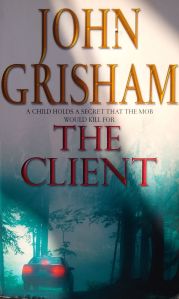
The Client

This book was a great holiday read. It’s about an eleven year old boy who witnesses a suicide but before the man kills himself (he is a lawyer defending a known murderer) he tells the boys, Mark and his little brother Ricky, where his client has hidden the  dead body of a murdered US senator. The senator was the victim of a mob ‘hit’ and Mark won’t tell the police or the FBI about the body as he is concerned for the safety of his mother and brother. When he and his mother are in hospital staying with his brother Ricky, as he has gone into shock, Mark contacts a lawyer and a big legal stand off begins with the FBI. Things eventually get settled but I can’t help wondering why the boy wouldn’t trust the FBI or even why he wouldn’t tell them about the body in the first place. Of course, if he had then there wouldn’t be a story. Either way this was a great holiday read and the narrative kept me interested all the way to the end. I didn’t realise it was also made into a film starring Tommy Lee Jones and Susan Sarandon which I must remember to look out for.

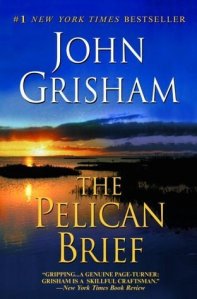
The Pelican Brief by John Grisham

This book might be the best book by Grisham I have read so far. The book opens with the murder of two US Supreme Court judges and this in a way plays into the hands of the President as he can now nominate new judges who share his political views. At the same time, law student Darby Shaw is having an affair with her law professor. She decides to look closely at the murders and develops a thesis, an idea about who may have done the murders and why. The thesis becomes known as the Pelican Brief and she passes it to the professor who in turn sends it to his friend, an FBI lawyer. It then gets passed up the chain to the head of the FBI and on to the White House where the President instructs the FBI not to investigate further.

Not long afterwards the professor is blown up in a car bomb which Darby narrowly avoids and from then on, she is on the run trying to evade death herself.

This for me was one of those unputdownable novels which was exciting and kept me interested all the way to the end.

The Firm by John Grisham

There is a process by which I choose books to take with me on holiday. I like to think it’s a thoughtful process combining different genres of books, some novels, maybe the odd classic, and some biographies and autobiographies. What actually happens is that the day before our trip I’ll just grab something near to hand that I know I haven’t read yet and shove it in my suitcase. Anyway, that’s how I ended up with The Firm. Last year I read The Rainmaker by John Grisham and I thought it was a pretty good read. I must have mentioned that to Liz so she filed that away and got me a stack of Grisham novels for my last birthday. The Firm isn’t a bad read and in my case it was a nice change of pace after reading some non-fiction books.

It’s a good story but like a lot of Grisham’s works, it’s more plot driven than character driven. The characters are sort of bland templates that I’ve recognised in a lot of his novels. Anyway, characters aside, this is a really original story about a young guy who graduates from law school and gets head hunted into a firm he has never heard of but which offers tremendous financial benefits, a brand new BMW, and an ultra cheap mortgage as well as other financial bonuses. The downside, as he comes to learn later, is that the firm is just a cover operation to launder money for a big mafia crime family and the FBI wants our hero James McDeere, to help them.

Verdict: Highly enjoyable and a great holiday read but nothing more, although that didn’t stop the book from becoming a best seller as well as a hit film in the 1990’s.

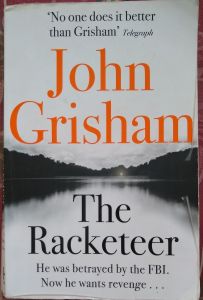
The Racketeer

This is another legal thriller about a man convicted of money laundering, which he denies by the way, sentenced to ten years in a federal institution. Naturally he is not happy but he hoped to get out by using rule 35 of the Federal Rules for Criminal Procedure which means that if the inmate can solve a crime which the federal authorities are unable to solve, then his sentence can be reduced.

The man, Malcolm Bannister, helps other inmates of the prison with their legal issues and in doing so has come across some information about the murder of a judge, in which the Police and the FBI have no clues about the culprit. He plans to barter this information for his freedom but it turns out that Bannister is actually double bluffing the FBI and has a scheme in mind in which he can gain his freedom and walk away with a considerable amount of money as well as a new identity.

Like most of Grisham’s books, this was an excellent holiday read but towards the end it almost feels as though the writer has become a little fed up with this increasingly complicated story and is rushing to get it finished. This was mostly a good read but the end was a little disappointing.

The Boys From Biloxi

This is a very oddball book indeed. It’s not a courtroom drama although courtroom battles do feature in the book. It’s actually a very long-winded story of two families, one on the wrong side of the law and one on the other. One family is part of a rough and ready area of town and owns saloons that have illegal gambling and prostitution on tap and the other family who hope to clean the town up.

A lot of the story is just reeled off like a sort of narration you might listen to in a museum (which is how one review I read described the text). The author just seems to recount a lot of the story in this same long distance way. Eventually the story becomes more fleshed out and detailed when a tornado hits the town and a lawyer with ambitions to become the district attorney helps the residents fight for compensation from insurance companies that do not want to pay out. His success with compensation claims help him to become the DA but he is murdered before he can bring the criminal family to justice. His son however goes on to clean up the town.

Again this was another great holiday read but if I had been reading it at home for twenty minutes or so before going to sleep at night, I reckon that after a few nights I would have perhaps picked up something else to read.


What to do next: Here are a few options.

Share this post on your favourite social media!

Hit the Subscribe button. Never miss another post!

Listen to my podcast Click here.

Buy the book! Click here to purchase my new poetry collection.

Click here to visit Amazon and download Floating in Space to your Kindle or order the paperback version.

Click here to visit amazon and purchase Timeline, my new anthology.

Curry, Tapas and a Read in the Sun

Over on the front page of this site you will find a whole lot of stuff about me. It tells you that I have always wanted to be a writer, that I enjoy writing as well as Formula One racing, classic cinema and books. In one segment it mentions that I like dining out, in fact it says that dining out is one of the great experiences of life and so I thought I’d start with that, great experiences and see where that leads me.

One of the great experiences of life, as far as I’m concerned anyway is a pretty simple one. It involves lying on a sunbed and relaxing on a hot, or even just warm day. Throw in a dip in the pool and that sensation of lying in the sun while you dry off is made even more satisfying.

Of course, doing that in the UK at any time of the year is not always possible, especially in February which is why for perhaps the last ten years, if you want to get hold of me at this time of the year, you’ll find me in Lanzarote.

What can I tell you about this place? Looking over on Wikipedia I see the Canary Islands emerged from the sea bed during a volcanic eruption about 15 million years ago. There is apparently some evidence the Phoenicians were the first settlers here although the first known records of the islands come from Pliny the elder, the Roman scholar.

After the fall of the Western Roman Empire, nothing is recorded about the Canary Islands until 999, when the Arabs arrived at the islands. In 1336, a ship arrived from Lisbon under the guidance of Genoese navigator Lancelotto Malocello, who used the alias ‘Lanzarote da Framqua’ which is where the island’s name comes from. Today Lanzarote is part of Spain.

When we first came here round about ten years ago, we hired a car and drove round the island. We visited the volcano which was pretty much what you’d expect a volcano to look like, although the drive down a very narrow winding road in a coach towards the centre of it was a little scary. Otherwise, apart from the usual touristy stuff, there wasn’t that much to see and we quickly realised that the Marina Rubicon in Playa Blanca is by far our favourite place. Our rented villa is on the bus route and only five minutes walk from both the bus stop and the local shop so renting a car is not a particular concern.

What else do I do on Lanzarote? Well I read a lot of books.

Crossfire by Jim Marrs

I do love a JFK assassination book and this is a good one. It covers pretty much everything there is to know about the assassination from Oswald to Ruby, the Texas School Book Depository, the Grassy Knoll, the CIA, the FBI, the Warren Commission, the House Select Committee on assassinations and everything in between. Who really did it? I’m not sure. Was Lee Oswald the killer or just a patsy? Again I’m not sure but a lot of the evidence against Oswald was compromised. The officers who found the assassin’s rifle said it was a Mauser, not a Manlicher Carcarno. Later all but one of the officers said they were mistaken. The one who said he wasn’t mistaken was later murdered.

Who were the people on the Grassy Knoll with Secret Service IDs when all the SS were in the President’s motorcade? The shells found at the scene where the fleeing Oswald supposedly shot officer Tippet  were marked by a police officer. Later, when asked to identify the shells, his marks weren’t there. I could go on and on. Maybe Oswald did it, maybe he didn’t. Perhaps he was a patsy as he claimed. Will the records which President Trump will release show what really happened? I doubt it but either way, the JFK assassination is such an fascinating mystery.

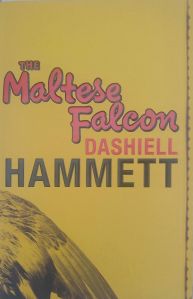
The Maltese Falcon and The Thin Man by Dashiell Hammett

I absolutely loved this book. I mentioned it last week in a post about detectives but it really is a fabulous read and the film with Humphrey Bogart follows it closely, especially the dialogue.  If you have never read it or seen the film, it’s about Sam Spade, a detective who happens on a group of people all after the mysterious Maltese Falcon statuette worth untold millions and at the same time seeks to find his partner’s murderer.

The only real difference between the film and the book is that in the book, Caspar Gutman’s daughter makes a brief appearance but not in the film. In the film Gutman infers that Miss Wanderley has stolen a thousand dollar bill and Bogart as Sam Spade demands that Gutman confesses to stealing it or stands for a frisk. In the book, Spade surprisingly thinks Miss Wanderley has got the note and forces her to strip naked to show that she didn’t steal it. Only then does he challenge Mr Gutman.

I have to say I have found the works of Raymond Chandler a much better read but this particular story I loved almost as much as the film.

Another book by Hammett, The Thin Man, wasn’t as good. Detective Nick Charles is no longer a detective but many others seem to think he is and he seems to feel compelled to look into a case of murder, even though he doesn’t seem that interested. Perhaps that was why I lost interest early on and kept putting this book down in favour of others.

Going back to the thing I mentioned earlier, the one about dining being one of the great experiences of life, well, only a few minutes walk from our rented villa, just next to the shop I told you about is a really fabulous Indian restaurant. No need to get the bus to the Marina or the centre of Playa Blanca as we can just walk to the restaurant. The funny thing is, Liz and I are part of a curry club and once a month we meet at a curry house in St Annes and settle down for a curry and some chit chat. I was actually thinking of perhaps going every two months or even leaving the curry club altogether. Well, I like curry but I’d had all I really wanted to eat in that particular restaurant and, nice though it is, I perhaps fancied going to the Chinese on that day or the local Italian.

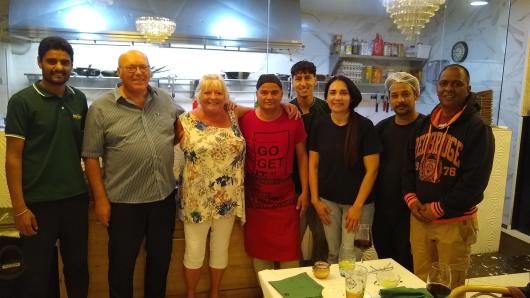
Now however, I seem to be once again hooked on curry. Our local curry house here in Lanzarote, The Indian Gourmet, is a very friendly place. We have established our favourite table. The staff know that Liz hates coriander and they have marked us down as preferring medium rather than hot as regards curry strength. The chef always comes out to see if we have enjoyed his creation and always recommends what we can try next time and so on. The curry house then has become our sort of go to place if we want to eat out and don’t fancy travelling far.

The Client by John Grisham

Time for another book and this one was a great holiday read. It’s about an eleven year old boy who witnesses a suicide but before the lawyer kills himself, he tells the boys -Mark and his little brother Ricky- where the dead body of a murdered US senator has been hidden. The senator was the victim of a mob ‘hit’ and Mark won’t tell the police or the FBI about the body as he is concerned for the safety of his mother and brother. When he and his mother are in hospital staying with his brother Ricky, as he has gone into shock, Mark contacts a lawyer and a big legal stand off begins with the FBI. Things eventually get settled but I can’t help wondering why the boy wouldn’t trust the FBI or even why he would tell them about the body in the first place. Of course if he had then there wouldn’t be a story. Either way this was a great holiday read and the narrative kept me interested all the way to the end. I didn’t realise it was also made into a film starring Tommy Lee Jones and Susan Sarandon which I must remember to look out for.

Another of our favourite places is the Berruga Tapas bar which we have been visiting for years. Sadly, a lot of our favourite staff members have moved on in the intervening year since our last visit. The boss is still here though, Juan who always remembers us and greets us warmly and the food is still the same mix of Spanish tapas and English snack food like burger and chips and so on. It’s a rough and ready sort of place but it’s also a lot of fun. And we do like the freebie at the end of the night; a shot of vodka caramel in an ice cold glass.

So, what will we be having tonight? Tapas or curry or something new perhaps?


What to do next: Here are a few options.

Share this post on your favourite social media!

Hit the Subscribe button. Never miss another post!

Listen to my podcast Click here.

Buy the book! Click here to purchase my new poetry collection.

Click here to visit Amazon and download Floating in Space to your Kindle or order the paperback version.

Click here to visit amazon and purchase Timeline, my new anthology.

Holiday Book Bag 2024 (Part 2)

Last week I gave you part one of my Holiday Book bag so here we go with part 2, more of my holiday reads and also what happened when tragedy occurred and I ran out of books.

Let’s kick off with this one, a Christmas pressy from Liz and a book I’ve been dying to read but purposely kept to read on holiday.

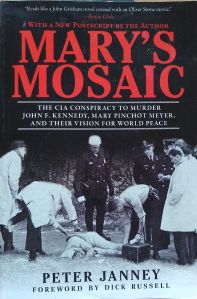
Mary’s Mosaic by Peter Janney

Liz bought me this book for Christmas and I’ve been saving it for a time when I can sit and read it undisturbed. After the assassination of President Kennedy there were numerous deaths of various witnesses in Dallas and elsewhere. One such death was of a lady named Mary Pinchot Mayer. She was the ex-wife of CIA agent Cord Mayer and one of JFK’s many mistresses. The author reckons she not only introduced the President to mind altering drugs but also agreed strongly with Kennedy’s desire for peace. He goes a little too far perhaps in making the case that Mary was the force behind JFK’s commencement address at American University in October, 1963 in which Kennedy called for both the USA and the Soviet Union to

‘direct attention to our common interests and to the means by which those differences can be resolved. And if we cannot end now our differences, at least we can help make the world safe for diversity. For, in the final analysis, our most basic common link is that we all inhabit this small planet. We all breathe the same air. We all cherish our children’s future. And we are all mortal.’

Mary was shocked by the murder of the President but came to realise the part played by the CIA and wanted to bring attention to the false story of the Warren Commission report. One day in Washington in October 1964, whilst walking along the towpath of the Chesapeake and Ohio canal towpath, she was murdered. Mary was shot once in the head and once in the chest and in this remarkable book the author goes on to trace the man who he thinks may have been the assassin.

A very fascinating read indeed.

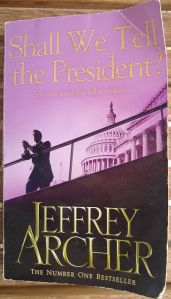
So that was it, by the start of our third week I had read all my books. What could I read next? Well, there wasn’t much in our rented villa’s bookcase so I read one of Liz’s books, Shall we Tell the President?.

Shall we Tell the President? by Jeffrey Archer.

I’ve actually read this book before, many years ago but this was a new edition, rewritten by the author himself. In the original, the president in question was Edward Kennedy but of course, in real life Kennedy never made it to the White House, his challenge cut short by the ghost of what happened to Mary Jo Kopechene at Chappaquiddick. In this rewrite then, the author puts his own fictional president, President Kane in charge at the White House.

The FBI learn of a plot to murder the president. A Greek waiter, an illegal immigrant learns of the plot whilst working as a waiter at a restaurant in Washington DC. He calls the FBI and the two agents assigned to the case report quickly to their superior. Soon, one of the agents and their boss, as well as the informant are dead leaving only one agent who by chance has survived a murder attempt. He has six days to track down the assassins.

The book kept me interested but I can’t say it was a great read and I thought some of the dialogue was a little poor, in particular the FBI agent who kept referring to his new girlfriend constantly as ‘pretty lady’ was a little cringeworthy to say the least. Sorry Mr Archer but I’d have to give this one a five out of ten.

The Long Dark Night by Susan Lund

This was a bit of a first for me. Liz had nothing else that I wanted to read so she said she would sort me out something on her Kindle. She searched for free books and I chose this one by Susan Lund. It was about ex-FBI detective Michael Carter who is now working for the police on cold cases. He is asked to look into the discovery of a dead body on a property that is currently being renovated. As more bodies are unearthed, Carter links the bodies to some current cases and feels that a serial killer might be at work.

Later, two young boys are abducted but one escapes and Carter finally has a clue to work on. Could the killer be an ex-police officer?

The book was a fairly interesting read in part but the author seems to lose direction towards the end and the finale seemed to me to be a bit of an anti-climax.

Even so, the book kept me interested for a few days.

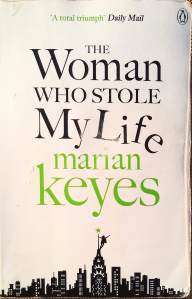
The Woman who Stole My Life by Marian Keyes.

This final holiday read was a book Liz took with her. She read it first, thought it was good and passed it on to me. I thought it was probably standard chick-lit fodder but actually it was a really good read, trotting along in a very chit chatty way, just like my own stories. It flips about timeline wise talking about things in the present and then flipping back to events of some years ago but once you got used to the situation it turned out to be a really enjoyable read.

Stella, many years ago was looking after her family when she was struck down by a mysterious illness which rendered her paralysed and unable to move or talk. Her neurologist Mannix, manages to communicate with her by getting her to blink, so he would go through the alphabet and she would blink at a particular letter and eventually they would put words and sentences together.

Gradually she begins to find that Mannix is becoming quite important to her especially when her husband and children don’t seem to be interested in either her or her predicament. When she gets well, she finds that 1, she has fallen for Mannix and 2, he has fallen for her, so much so that he has self-published a book called One Blink at a Time, a book of based on the notes he has made of their blinking conversations. Anyway, by a series of fluke events the book becomes a best seller in the USA and the two move to New York to promote the book.

All in all, a very enjoyable book indeed and I might even look at reading some more of Marian Keyes books.

That was my holiday book bag. What books are you planning to read on holiday?


What to do next: Here are a few options.

Share this post on your favourite social media!

Hit the Subscribe button. Never miss another post!

Listen to my podcast Click here.

Buy the book! Click here to purchase my new poetry anthology.

Click here to visit Amazon and download Floating in Space to your Kindle or order the paperback version.


Holiday Book Bag 2024 (Part 1)

This year Liz and I have spent five weeks in sunny Lanzarote and when we had just started week three I had run out of books. One of my great holiday pleasures is spending a lot of uninterrupted time reading in the sun. My big mistake this year was not bringing enough books and also including two very slim volumes in the ones I did bring. Sometimes in a holiday villa there will be something readable in the cupboard that other holidaymakers have left behind, but in our villa the majority of previous tenants appeared to be German and unfortunately my German language expertise only amounts to counting to ten.

Anyway, this particular book bag went on for a bit so I’ve split it into two parts and next week you can read part two. So, let’s take a look at what I have been reading in Lanzarote this winter.

The Prime of Miss Jean Brodie

I noticed this title on one of those blog posts about books you should read before you die. I knew I had a copy somewhere and after rummaging about for a while I finally came across it. It was a rather slim volume and I’d probably read it years ago but it looked interesting and so I opened it up and began to read. My big problem in reviewing this book is that I started reading it and after a few chapters put it down and began reading something else. It’s a small slim book so I popped it into my shoulder bag thinking I’d read it on the flight to Lanzarote. I couldn’t concentrate on the flight but I started reading it later by the pool but then I had to backtrack and re read some of the earlier pages so I lost the continuity. It’s about a teacher, Miss Brodie, who feels that as she is in her prime she must devote herself to a chosen group of her favourite pupils; the Brodie Set. Miss Brodie is not a conventional teacher and tells her pupils all about her visits to Italy and of her love for Mussolini and his fascists. This is done sometimes when the class should be studying mathematics and so a complicated mathematical sum is usually put up on the blackboard to fool any interlopers, like the headmistress for instance.

The Brodie Set all wonder about Miss Brodie and her love affairs and later, when Miss Brodie has lost her job, she wonders who was the traitor? Who reported her to the headmistress? Not one of the Brodie Set surely?

It’s an interesting and original book but I can’t say I was totally impressed but perhaps I should have read it properly and not put it down part way through.

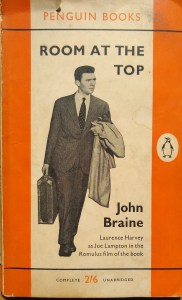
Room at the Top

This was another slim volume I found in a box of old books. I first read it in 1984 according to the note I added on the back of the cover. It’s about a young man, Joe Lampton, in a rigidly class structured 1950s England, still dealing with post war rationing and his journey from a small working class village to a room at the top of a big northern town. He gets a job as an assistant treasurer at the Warley district council and he sets his sights on a young girl who also happens to be the daughter of a rich business owning councillor. A man of his background is not the sort of man the councillor wishes to see romancing his daughter so Joe gets quietly warned off. He is jealous of former RAF pilot Jack Wales who is the sort of fellow who is much more acceptable to the councillor. Jack is a WWII hero who escaped from a prison camp. Joe was an RAF rear gunner who was also in a camp but used his time not to escape but to study for his accountancy exams.

Joe joins an amateur theatre group and starts an affair with a married woman ten years older than him. He is happy and there is talk about her divorcing her husband. This though is 1950s Britain. His involvement would mean scandal and the end of his job with the council, so what should he do?

There was a film version of this starring Laurence Harvey as Joe Lampton and Simone Signoret as Alice Aisgil with whom Joe has an affair. It’s slightly different to the book in a few minor ways but Laurence Harvey’s rather fake northern accent always puts me off.

Anyway, it was a fascinating read looking back to an England much different from today.

timestampe=1707908418

The Kennedy Curse by James Patterson with Cynthia Fagen

This wasn’t a bad read but to be fair it only really skimmed the surface of the story of the Kennedy family. There were no great revelations about the family and to be honest, I’ve read a huge amount about the Kennedy family and this was a book I could probably have written myself, at least to a certain extent. The book really begins with Joe Kennedy and his impressive rise in business and banking. He becomes the youngest ever bank manager in the USA and with his business acumen he soon amasses a large fortune along with his famous family. He supports FDR as the democratic candidate for the presidency but he wants something in return, the ambassadorship to Great Britain. Joe becomes the ambassador taking his family over to London but when the second world war looms he decides Britain will be no match for Nazi Germany.

The big problem for Joe is that FDR thinks otherwise and soon recalls Joe who finds himself out of a job. He has designs on the presidency himself but decides a better course of action would be to make his son, Joe, junior president. When Joe is killed in the war, his next son John F Kennedy has to take on the mantle.

As we all know JFK becomes president but is tragically murdered and the same fate falls to Bobby Kennedy who runs for president in 1968. Ted Kennedy decides to follow in his brothers’ footsteps but then the Chappaquiddick incident occurs when Ted leaves poor Mary Jo Kopechne to drown in his overturned car. Ted seems to ride out the ensuing scandal but it becomes clear he will never be president. The story then turns to the next generation of Kennedys who do not seem to be in the same league as their uncles and the narrative begins to turn toward drug addiction and other issues including rape charges against William Kennedy Smith, one of numerous next generation Kennedy cousins.

The story finishes with the death of John F Kennedy junior, the son of the late president, in a light aircraft crash.

A fascinating story but to be honest I’ve read better histories of the Kennedy family although this did keep me entertained for a while.

A Time to Kill by John Grisham

I’ve read a few of Grisham’s books and I’ve always been impressed with them, all except one. This one turns out to be his first novel and he says in the introduction how proud he was of finishing it as at that time, he hardly ever finished anything. It also contains some autobiographical elements as at the time, Grisham was a street lawyer, similar to the character in the book.

The book is set in America’s deep south where there is or was a great deal of racial prejudice. Two white guys decide to kidnap a young black girl, tie her to a tree and repeatedly rape her. They drive her away and dump her like garbage but she survives and the police arrest the two scumbags responsible. The next is that the young girl’s father Carl Lee Hailey decides to take a rifle and shoot the two guys. He is arrested and put on trial for murder and street lawyer Jake Brigance takes on the case.

The case ignites the small town of Clanton Mississippi. The Klu Klux Klan become involved as do various other groups and the stage is set for a tense murder trial which goes on while the police and the National Guard try to keep order.

It’s a very exciting read although the ending was a little underwhelming and if you find the N word offensive then this is a book which is not for you as that particular word appears numerous times on almost every page.

I read more books on holiday in Lanzarote. Tune in next week for more books, same time, same channel, same blog.


What to do next: Here are a few options.

Share this post on your favourite social media!

Hit the Subscribe button. Never miss another post!

Listen to my podcast Click here.

Buy the book! Click here to purchase my new poetry anthology.

Click here to visit Amazon and download Floating in Space to your Kindle or order the paperback version.

Holiday Book Bag: Spring 2023

A long time ago I was reading a biography about Richard Burton called ‘Rich’ by Melvyn Bragg. The book used Burton’s own diaries and mentioned, amongst other things, Burton’s love of books. When Burton went on holiday he looked forward with delight to the contents of his ‘book bag’. I know it’s a pretty tenuous link but one thing I have in common with Richard Burton is a love of books and when I go on holiday, one of the delights of lying under a warm sun on my sunbed is a good, undisturbed read. I read a lot at home and before I retired, on my lunch breaks at work but it’s a few minutes here and a few minutes there and whenever I get interrupted it kind of breaks the flow. Some books, as we all know, are just made for a really long, uninterrupted read so here are the books I took on holiday with me recently, all sourced from either the internet or secondhand bookshops.

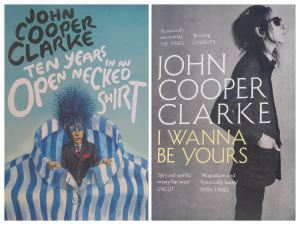
I Wanna Be Yours by John Cooper Clarke

I’ll start off this book bag with this autobiography by John Cooper Clarke. I wrote about it a few weeks ago so I’ll keep it brief here. This was a wonderful read. It wasn’t the I did this and then I did that conventional autobiography, it was a very observational book and Cooper Clarke paints an interesting picture of Manchester and Salford from the 1950s to his heyday as a punk poet in the 1980’s. The last quarter of the book resembles a more conventional biography and it made me want to read some of his poetry.

Verdict: A fabulous, entertaining read.

10 Years in an Open Necked Shirt by John Cooper Clarke

This was a poetry book by John and to be fair I found it a little disappointing. The thing is, Clarke is a performance poet and his grammar free poetry doesn’t work as well on the printed page as it does when Clarke performs it on stage. Some poetry I suppose is meant to be read, other poetry needs to be performed and Clarke’s comes into the latter category.

Verdict: Interesting but not my cup of tea.

The Unlikely Pilgrimage of Harold Fry by Rachel Joyce

I first heard about this from seeing a trailer to the new film version and it looked pretty interesting. I do love something that is new and original and so Liz and I went to the cinema to see it which was my first cinema visit for a long time. It’s a good film but not a cinema classic and I wondered if the book would be better. The story is about Harold Fry who is retired and lives with his wife on a suburban housing estate. He gets a letter advising him that a friend and former workmate named Queenie, is dying of cancer and he pens a short note of sympathy in reply. He goes out to post the letter but decides to walk further wrapped up in thoughts about Queenie. At a petrol station where he buys a sandwich the young girl assistant tells him a story about her aunt who suffered with cancer and she -the shop assistant- feels that real faith and positive thoughts can help beat even something like cancer. Harold decides there and then to walk all the way to Berwick-upon-Tweed and see Queenie in person.

Along the way Harold meets various people and when news of his march reaches the media, many others come to join him. Along the way he thinks a lot about the events of his life, in particular his relationships with his wife and son and eventually both he and his wife, who he speaks constantly to on the telephone, seem to reach a sort of understanding about what has happened to them as well as an unspoken desire to reunite and move forward. The book was a great success world wide and many reviews printed on the back cover tell the reader what an uplifting read it was. It wasn’t a bad read at all but I actually found it not only sad but rather miserable and, to be honest, not uplifting at all.

Verdict: Original and interesting but a bit too melancholic for me.

Then Again by Diane Keaton

This is another autobiography and like the one by John Cooper Clarke it was a rather unconventional one. Diane Keaton is a film actress you might remember from the Godfather movies or from Annie Hall. Diane’s mother had died and looking through her effects she had found numerous notebooks and diaries in which her mother had written about her life. In this autobiography, Diane has tried to link her story with that of her mother and has put her own experiences and memories side by side with those of her mother. The result is for the most part a really very interesting book, told in a very open and talkative way by both Diane Keaton and her mother. Diane doesn’t get too personal but does talk quite a lot about her work and her life in particular with Woody Allen and Warren Beatty, both of whom she was involved with for a time. She also had a long relationship with Al Pacino who she played opposite in the Godfather series of films and it seems to me she was expecting to marry Al but for whatever reason he decided to call the relationship a day.

The last part of the book is really about her decision, late in life, to adopt two children and the result for the autobiography is rather like when one of your friends has a child and all they ever seem to do is go on and on about their new little boy or girl. Her mother sadly develops dementia and Diane’s experience of trying to look after her was all too familiar to mine.

Verdict: The book goes off on a bit of a tangent towards the end but generally I really enjoyed it, especially the bits about working with Woody Allen.

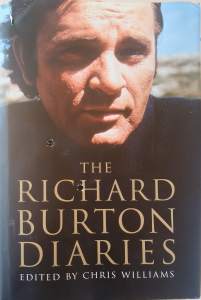
The Richard Burton Diaries edited by Chris Williams

I mentioned at the start of this post about reading Melvyn Bragg’s biography of Richard Burton and how Burton used to always take a ‘book bag’ with him whenever he went away. Bragg’s book was based partly on these diaries which have now been published and are available to everyone.

There is a lot I like about this book and a lot that I don’t like. I tend to prefer paperbacks but I bought this one from the internet and it’s a big heavy hardback and as I’ve dragged it across France it’s generally getting a little tattier every day.

Moving on to the text and I see a lot of the big events in Burton’s life are missing as sometimes he stops writing for days and even months at a time. We don’t hear about the making of Cleopatra and his meeting and affair with Elizabeth Taylor but he does mention some of those events in retrospect.

The book starts with his schoolboy diaries which are rather like mine, brief and to the point. Later, the main diary starts in 1965 and as I write this, I’m up to about 1970. Burton tells us of his immense love for Taylor and how he has given up womanising to be faithful to her but sometimes I get the feeling he isn’t being totally honest, after all Liz has free access to his diary and she frequently jots down her own comments too. Burton was rumoured to have had an affair with Genevieve Bujold during the filming of Anne of a Thousand Days but of course, gives no mention of that in his journal. He does talk a lot about food and having lunch in places like Paris and Rome. He enjoys having money and delights in spending it on jewels for Liz, a new private jet plane and a yacht which he thinks might actually save him money as he can stay on the yacht rather than use hotels. Even so, he continues to use hotels anyway. At one point he considers buying a barge, modernising it and touring the canals of France.

He doesn’t seem to enjoy his acting and in fact rather looks down on it as a profession, although unlike an actor like Brando who had similar thoughts, he did take pride in what he did, learning his part and his lines whereas Brando couldn’t even be bothered to learn the script for the film of Superman despite his million dollar fee.

Surprisingly there is also quite a lot of professional jealousy in the text, for instance, he gives Robert Shaw a bit of a slagging off for his performance as Henry VIII in A Man for all Seasons which I thought was rather good, better or at least the equal of Burton’s Henry VIII in Anne of a Thousand Days.

Burton drinks a lot and frequently argues with Liz, sometimes he is banished to the spare bedroom and usually he regrets his drunken words and wonders why he did what he did or said what he said.

He was though a man who loved books, reading anything from the classics to detective novels. He enjoyed books immensely and even had ambitions of being a writer himself. His entries are peppered with quotations from authors and poets and of course Shakespeare.

I was really looking forward to reading this book but after the first few pages I thought it a little uninteresting. As the narrative moved from 1968 into 1970, Burton seemed to be putting more effort into his journalling and consequently it became more enjoyable to read. Later large gaps appear in the diaries and he doesn’t appear to have written anything about his breakup with Liz Taylor. The entries become less frequent and to be honest, I ended up skipping quite a few pages.

Verdict: A book that promised a lot but failed to deliver.

The Pelican Brief by John Grisham

I’ve read a few books by this author before and always enjoyed them, this one being no exception, in fact it might be the best book by Grisham I have read so far. The book opens with the murder of two US Supreme Court judges and this in some ways plays into the hands of the President as he can now nominate new judges who share his political views. At the same time law student Darby Shaw is having an affair with her law professor. She decides to look closely at the murders and develops a thesis, an idea about who may have done the murders and why. The thesis becomes known as the Pelican Brief and she passes it to the professor who in turn sends it to his friend, an FBI lawyer. It then gets passed up the chain to the head of the FBI and on to the White House where the President asks the FBI not to investigate further.

Not long afterwards the professor is blown up in a car bomb which Darby narrowly avoids and from then on, she is on the run trying to evade death herself.

This for me was one of those unputdownable novels which was exciting and kept me interested all the way to the end.

Verdict: A brilliant read.


What to do next: Here are a few options.

Share this post on your favourite social media!

Hit the Subscribe button. Never miss another post!

Listen to my podcast Click here.

Buy the book! Click here to purchase my new poetry anthology.

Click here to visit Amazon and download Floating in Space to your Kindle or order the paperback version.

My Holiday Book Bag: Winter 2023

A long time ago I was reading a biography about Richard Burton called ‘Rich’ by Melvyn Bragg. The book used Burton’s own diaries and mentioned, amongst other things, Burton’s love of books. When Burton went on holiday he looked forward with delight to the contents of his ‘book bag’. I know it’s a pretty tenuous link but one thing I have in common with Richard Burton is a love of books and when I go on holiday, one of the delights of lying under a warm sun on my sun bed is a good, undisturbed read. I read a lot at home and on my lunch breaks at work but it’s a few minutes here and a few minutes there and whenever I get interrupted it kind of breaks the flow. Some books, as we all know, are just made for a really long, uninterrupted read so here are the books I took on holiday with me recently, all sourced from either the internet or secondhand bookshops.

Total Recall by Arnold Schwarzenegger

This book was a Christmas gift from Liz. She knows I’m a big film fan and I do love reading about the background to films and how they are made. Arnold is from Austria and he tells us a little of his life there but mainly focuses on his desire to be a great bodybuilder and to eventually go to America. There is a lot of talk about the process of competitive bodybuilding and the different muscles, muscle definition, reps and squats and all that stuff. Arnold eventually wins various competitions and is wondering how he can compete in the USA when he gets an invitation to do just that. The bodybuilding industry is a close knit one and there seem to be various people welcoming him to California, helping him to find a place to stay and so on. He wins more competitions and makes a little money. He starts a mail order business selling magazines and pamphlets about himself and his body building techniques. He brings one of his Austrian friends over and the two begin a bricklaying and home improvement business. His big break is getting a film part as Hercules and even though the production eventually goes bust it seems to give him a taste of the film business and he wants more. He plays Conan the Barbarian in the film version of a comic book hero and pretty soon he plays the Terminator and goes on to success after success, even becoming governor of California.

I’m not sure I actually came away liking Arnold. I know this is an autobiography but it’s a very me, me, me book and Arnold is constantly bigging himself up. The final chapters about his political career are perhaps the most interesting. He had thought about running for governor but senior republicans seemed to have been more interested in another candidate. However, when Gray Davis was elected in 2000, there seems to have been something of a backlash and there is a curious precedent in Californian politics. The public can demand a recall, a new election in which the public either go for the elected governor or someone new. Arnold entered into the recall and won. He seems to have been in an odd position politically. He was a Republican but had married into the Kennedy family who are Democrats but his success as a politician seems to have come from holding the centre ground in California and bringing Republicans and Democrats and getting them to work together.

At the end of the book Arnold gives us his personal philosophy and his rules for success.

Verdict: I’m not sure whether Arnold wrote this book just to give us his story or to further promote himself but if I had to choose, I’d probably say the latter. Having said that, Mr Schwarzenegger is a man who gets things done and has a positive attitude. Perhaps I should take another look at his rules for success.

Great Expectations by Charles Dickens

This is not a book I brought on holiday but one I found on the shelves of our rented villa in Lanzarote. I started reading it when I got a little bored with Arnold Schwarzenegger and liked it so much I just carried on to the end. It is a real pleasure to read something by a master wordsmith and I enjoyed every minute even though I had read this novel years ago. Young Pip, apprenticed to be a blacksmith, is invited to the home of an eccentric rich woman, Miss Havisham, purely for her amusement. Later in his young life he finds he has ‘great expectations’ and is to inherit a remarkable property. He is taken to London to be brought up as a gentleman and although he is told that his benefactor has asked to remain a secret, he naturally assumes it is Miss Havisham. At the beginning of the book, Pip encounters Magwitch, an escaped convict on the marshes near his home. He compels Pip to bring him some food and a file. He is captured and transported to Australia and later we find, much to Mr Pip’s shock and amazement that Magwitch is the mysterious benefactor.

The book is rightfully one of Dickens’ best loved stories and is a wonderful read. I’ve always thought it had a rather ambiguous ending and in fact in my edition back home, it is one of those with various notes and background information, I am advised that Dickens felt that it was important to assure the reader that Pip had a future with Estella, the spoilt adopted daughter of Miss Havisham and so changed the ending slightly. Pip of course did want a future with Estella but I still feel the book leaves a happy ending slightly uncertain.

Verdict: An absolute classic from a master storyteller.

A Mad world, My Masters by John Simpson

This is a collection of globe trotting stories from John Simpson who has travelled the world as a journalist for the BBC. These though are travel stories with a difference, for instance in the first chapter he talks about airports, not the airports that I generally use, tourist destinations like Spain and Greece. The ones Mr Simpson mentions are airports in war torn Angola and Bosnia, and places like Kabul in Afghanistan and other places where he has had his passport and papers routinely torn up or thrown into a river by laughing revolutionaries and mercenaries. He tells us about headlong dashes to catch flights, including one somewhere in eastern Europe where he was in such a mess after weeks living rough the stewardess was reluctant to let him on board, especially as he had a first class seat. His fellow passenger in the next seat asked to be moved. Luckily John wasn’t flying on a budget airline like the ones I travel with.

On one occasion in Afghanistan with the Mujahadeen, a bearded man appears dressed in white robes. He tries to get the Mujahadeen to murder Simpson for $500. It later turned out that the man was Bin Laden. Simpson talks nonchalantly about many other encounters with revolutionaries such as Arkan, the Bosnian warlord. There are other chapters on dictators that he has met and other sometimes ordinary people who have impressed him, like the simple village priest trying to make life safer for his fellow villagers in Colombia, one of the great drug producing countries of the world.

Most of his stories are hugely fascinating although the more interesting ones are about people, either the ones he has interviewed or the ones who work with him, his fellow journalists and sound-men, cameramen and so on. Most of this book is about the days when a BBC crew consisted of a cameraman, a sound-man, a producer and sometimes even others. Today, Simpson’s crew would consist of him and one other doing the filming and editing. There are some TV journalists today that even have to film and edit themselves.

The last part of the book where the author talks about his love for middle eastern rugs and antiques and the process of bartering that goes with buying those things was perhaps not my cup of tea. Verdict: A patchy read with some very fascinating chapters as well as some not so interesting ones. Generally, though, this was indeed an excellent read.

The Firm by John Grisham

There is a process by which I choose books to take with me on holiday. I like to think it’s a thoughtful process combining different genres of books, some novels, maybe the odd classic, and some biographies and autobiographies. What actually happens is that the day before our trip I’ll just grab something near to hand that I know I haven’t read yet and shove it in my suitcase. Anyway, that’s how I ended up with the books you see above. Last year I read The Rainmaker by John Grisham and I thought it was a pretty good read. I must have mentioned that to Liz so she filed that away and got me a stack of Grisham novels for my last birthday. The Firm isn’t a bad read and in my case it was a nice change of pace after reading Dickens and John Simpson’s globetrotting memories. It’s a good story but like a lot of Grisham’s works, its more plot driven than character driven. The characters are sort of bland templates that I’ve recognised in a lot of his novels and so far I’ve only read three. Anyway, characters aside, this is a really original story about a young guy who graduates from law school and gets head hunted into a firm he has never heard of but which offers tremendous financial benefits, a brand new BMW, and an ultra cheap mortgage as well as other financial bonuses. The downside as he comes to learn later is that the firm is just a cover operation to launder money for a big mafia crime family and the FBI wants our hero James McDeere, to help them.

Verdict: Highly enjoyable and a great holiday read but nothing more, although that didn’t stop the book from becoming a best seller as well as a hit film in the 1990’s.

The Woman in The Window by AJ Finn

I’m not sure I would normally have picked up this book if I hadn’t run out of books to read. I saw this on the shelf in our rented villa and Liz had read it and mentioned about numerous references to old black and white films which were right down my alley, apparently.

Anyway, I thought I’d give it a go and I’m very happy that I did. It’s about a woman called Anna Fox suffering from agoraphobia who cannot venture outside her house. She is in effect almost imprisoned there but spends her time playing online chess, seeing two therapists, one physical and one psychological as well as taking medication and drinking a whole lot of Merlot. She also spends a lot of time watching old films on TV and DVD as well as watching her neighbours.

She hears a terrible scream one night although no one else seems to hear it. She questions her tenant who lives in her basement but at the time in question he was doing some work while wearing earphones.

She meets Jane Russell from across the road, not the Jane Russell from the films but a pleasant lady whom she invites in and has a glass of wine with. Later through the windows of Jane’s house, she sees her get stabbed.  Anna calls the police and tries to go across to the house but she cannot get over the road due to her agoraphobia and she ends up in the park where she is found by paramedics.

When she surfaces, we find that no one believes her story and also that Jane Russell is still alive, except, she’s a different Jane Russell to the one Anna saw murdered.

The tension builds nicely in this thriller and a number of shocks are dropped in front of the reader along the way as we find out what has caused the agoraphobia and what really happened over the road.

This was also made into a film starring Amy Adams as Anna Fox although I’ve yet to see it.

Verdict: Great read, so much so that when we left the villa, I had to take it with me to finish on the plane home. To be fair I did leave behind The Firm to replace it.


What to do next: Here are a few options.

Share this post on your favourite social media!

Hit the Subscribe button. Never miss another post!

Listen to my podcast Click here.

Buy the book! Click here to purchase my new poetry anthology.

Click here to visit Amazon and download Floating in Space to your Kindle or order the paperback version.

Holiday Book Bag 2022

A long time ago I was reading a biography about Richard Burton called ‘Rich’ by Melvyn Bragg. The book used Burton’s own diaries and mentioned, amongst other things, Burton’s love of books. When Burton went on holiday he looked forward with delight to the contents of his ‘book bag’. I know it’s a pretty tenuous link but one thing I have in common with Richard Burton is a love of books and when I go on holiday, one of the delights of lying under a warm sun on my sun bed is a good undisturbed read. I read a lot at home and on my lunch breaks at work but it’s a few minutes here and a few minutes there and whenever I get interrupted it kind of breaks the flow. Some books, as we all know, are just made for a really long, uninterrupted read so here are the books I took on holiday with me recently, all sourced from either the internet or second hand bookshops.

My Life in France by Julia Child.

Sometimes you pick up a book that is just a joy to read and this was one of those books. Julia Child is a US TV chef, maybe one of the first TV chefs ever, although she is little known in England. The book is a memoir of her life in France, her journey as a Cordon Bleu chef and as a cookery book author, a TV star and as a wife and Francophile.

Her husband Paul works for the US foreign service and is posted to France in the late 1940s. The two have an interesting life in post war Paris enjoying French food and the French way of life. Julia is very interested in food and takes on a course as a Cordon Bleu chef. She is fascinated by the French way of cooking and meets many others who feel the same including two French women who have written a book about French cooking but aimed at the American market. The two Frenchwomen need an American point of view so Julia is engaged to assist but soon becomes the primary force in the emerging book. My Life In France mixes the development of her classic French cookery book with her life, her love of food, her favourite recipes and the whole world of French food. An utterly wonderful book, even if you are not familiar with Julia or the recent TV series or the film starring Meryl Streep.

I was travelling through France when I read this book and I was very tempted to divert course and visit some of the places she mentions.

Verdict: A joyous, wonderful read.

The Essential Hemingway by Ernest Hemingway.

During the lockdown I read a blog that was something along the lines of 100 authors you must read before you die. One of those authors was Ernest Hemingway. Not long afterwards I spotted a compilation of his works in a charity shop and I thought to myself, I’d better pick that up and get cracking on those 100 authors. It had been lying unattended on my book shelf for quite a while so I thought I’d throw it into my book bag for our latest trip to France.

The book consists of one complete novel, Fiesta, parts of some other novels and a collection of short stories. I wasn’t in the least interested in reading parts of a book. If I want to read a book, I’ll read the whole lot, not parts of it so I thought I’d get cracking with Fiesta. Now I know Hemingway has a sort of minimalistic style so I was prepared for that. I just couldn’t understand the point of a lot of what he was talking about. It’s like he was showing us stuff that was hardly relevant, almost like a Quentin Tarantino film. There are pages of dialogue and then some fairly introspective stuff and then we were back to dialogue again. Jake Barnes is in love with Brett who I thought at first was a man but is actually a woman, a lady in fact, an actual lady, Lady Ashley, known as Brett to her friends. Jake and Brett and various others all go off from Paris to Spain to see the bull fighting in Pamplona and Brett turns out to be popular with many of the men. Jake is love with her and Michael wants to marry her but she decides she wants a bull fighter who then falls for her and apparently also wants to marry her.

Sorry Ernest if you are reading this from the spirit world but I got a little bit lost and only continued to the end out of a sort of dedication to not having another novel on my conscience that I couldn’t finish. What can I say? I know it’s a classic but sorry, it wasn’t my cup of tea. I tried some of the other short stories in this collection but again even though they are well written I started wondering things like ‘what’s this about? Why are we talking about this? What was the point of that?

Verdict: Interesting but an ultimately disappointing read.

Trace by Patricia Cornwell.

I picked this up a while ago, started to read it and lost interest, not because of the book itself but because it was in my book bag for taking outside and as the UK weather has been so poor, I haven’t done much outdoor reading this year so far. Anyway, I thought I’d throw it in my holiday book bag and give it a read while I was touring France. I’ve always liked the Kay Scarpetta novels and a few years back I started reading the whole sequence of them starting with Post Mortem, the impressive first entry in the series. I thought the books were great, that they looked at crime in a new and different way, showing how crimes could be solved by forensic detection and it was the reality of the novels, their clear connection to modern detection methods that was at the core of their success. After a while though, I felt the books were straying from reality and getting a little silly, a bit like when Roger Moore took over the mantle of James Bond and the 007 films went a little daft.

Trace is not one of Cornwell’s best books and concerns, to a certain extent, Scarpetta’s niece Lucy who has gone off and become some kind of super secret agent computer geek girl and has somehow made a great deal of money and founded her own super secret spy company. Anyway, in this novel, the death of a young girl who Scarpetta has been consulted about is apparently connected to another case Lucy is also working on. It kept me reading and I liked it but sadly not as much as the earlier more serious and reality based novels.

Verdict. OK but not a great entry into the Scarpetta series.

What Happened by Hillary Clinton.

I picked up this book in a second hand book shop. I’ve always liked Hillary Clinton. She’s not your average First Lady, content to stay in the background and support her husband, the President. Mrs Clinton liked to be part of Bill Clinton’s administration in a way that other first ladies have never been, sometimes for the right reasons, sometimes for the wrong ones.

Her book What Happened? is basically about her failed attempt to become the USA’s very first female president. If she had succeeded, that would have been quite an achievement and for a while it even looked as though it was on the cards. Mrs Clinton mentions many times how she was ahead in the polls and how she beat Trump in their various TV debates so where did her candidacy go wrong?

She had a lot of ideas for the presidency and she reveals many of her plans to engage in the problems facing the USA in this book. Her presidential opponent Donald Trump didn’t seem to have many ideas at all, at least that’s what Hillary seems to think. His campaign was based on attacking and coming up with ideas for building a wall to keep the Mexicans out and of course, wanting to lock Hillary up.

A big problem for Hillary was her emails. She had decided to carry on using her personal email server instead of the government one, something that other government officials have done before, but somehow the press got hold of the story and blew it up out of all proportion. Her emails were leaked to the Wikileaks website and an investigation was made which involved publishing many of her emails, actually 30,000 of them. She mentions that many people seem to think she is hiding something despite her emails being published as well as her tax returns. After many investigations, the Whitewater investigation for instance, she makes the point that everything she has done has been so public, what could she be hiding? Mr Trump of course did not publish his tax returns, or his emails for that matter.

There’s a very hurt tone throughout the book and clearly, she’s not very happy about her defeat, just like any defeated candidate would be. Hillary has had to endure a lot. Mr Obama’s successful quest to become the first black president overshadowed her first try at the presidency and she returned eight years later when it was time for Obama to step down. Her husband is well known for his extra marital affairs but she has stood by him none the less and some of the bad press from those incidents has clung to her like a sort of bad background odour.

The final nail into the coffin of her presidential bid was a last minute announcement by the head of the FBI about the emails and her small points lead dwindled into a loss.

I often wonder why Mrs Clinton seems to be disliked. She is one of those personalities that people either like or hate, there doesn’t seem to be anything inbetween. Over on YouTube when I did a search about her, pretty much everything that came up was negative. There was a former secret service agent talking about an incident in which the former first lady had thrown a vase at the president, well an alleged incident I should say. The thing is, if your husband had been playing away with Monica Lewinsky and Gennifer Flowers, wouldn’t you be tempted to throw the occasional vase at him? I know I would, had I been in Hillary’s shoes.

Over on Quora, someone had already asked my question, what is Mrs Clinton really like? The first answer I saw was a lady who called up Mrs Clinton’s senatorial office about her brother’s problem, it was to do with money or tax or something I can’t remember. She left a message and the next morning Mrs Clinton, yes Mrs Clinton herself, not an assistant but actually Mrs Clinton herself, called up, took more details and sorted out the problem.

I doubt Hillary Clinton will ever go for another run at the presidency but it’s clear she has made her mark on the American political scene as a woman, a candidate, a senator and a First Lady.

Verdict: Not a great book but an enjoyable read all the same.


What to do next: Here are a few options.

Share this post on your favourite social media!

Hit the Subscribe button. Never miss another post!

Listen to my podcast Click here.

Buy the book! Click here to purchase my new poetry anthology.

Click here to visit Amazon and download Floating in Space to your Kindle or order the paperback version.