I was watching one of those modern comedians the other day, one of those modern stand-up politically correct comedians who are really just not that funny at all. They don’t come out with jokes anymore, well, not the kind of jokes that I’m used to, you know, the two blokes go into a pub kind of joke. No, these days a comedian tells you a story; he did this, he did that and some of it might be vaguely humorous. Michael McIntyre is a comedian in this modern category and to be fair he can be quite funny but I still prefer a straight joke to his story about waking up next to his wife and him having bad breath and then a whole lot of repercussions stemming from that.
To be fair there are some modern comedians I like. People like Jack Dee, Gary Delaney, Milton Jones and Stewart Francis.
When I was a child there used to be a lot of TV shows showing the old silent comedies from the early days of the cinema. There were stars like Charlie Chaplin, Buster Keaton and Harold Lloyd. What they did back in the 1960s with those old silent films was to add a few sound effects which might have actually come from the soundtrack of cartoons like Tom and Jerry. In the rumble tumble world of the Keystone Cops they added the sounds of various people being hit on the head with kitchen pots and pans, things falling from great heights and a commentary with a narrator saying things like ‘Look out Charlie’ just as Chaplin was about to get a pie in the face.

Chaplin: picture from flickr
When I first saw those films as they were meant to be shown with just a piano tinkling away in the background and no sound effects, I have to say I was rather disappointed but of course, audiences back then didn’t have much choice, the tinkling piano was all they had. Few of the stars from those silent film days ever made it into the era of the talkies but a duo who did were Laurel and Hardy.
Charlie Chaplin is one of my personal heroes and one of the greats of the silver screen, perhaps the very first movie genius ever, but here’s a flash; he never ever made me laugh. Smile, yes, but laugh, no. I look at his movies and recognise his story telling power, his movie making magic and much more but no, Charlie never really made me laugh. Laurel and Hardy on the other hand, two movie comedians who are not perhaps as lauded the world over as geniuses but who are perhaps more universally loved, well, now they do make me laugh.
Whenever some catastrophe befell Oliver Hardy, whenever he stood and looked straight at the camera after a cabinet landed on his head or a car accident befell him and he stood up straight amid the shambles of a house exploding around him and Stanley would go into his helpless ‘it wasn’t my fault’ act, that would not only crack me totally up but would leave me helpless with tears of laughter running down my face.
Way back in my school days Monty Python was on TV late on -I think- a Thursday night. It was certainly a week night and it was certainly late as I had a running argument with my Mum about staying up to watch it. The next day at school the talk would be all about the latest episode.
One day for some inexplicable reason I completely forgot about it and in my first lesson the following day one of my schoolmates approached me and said ‘Nobody expects the Spanish Inquisition!’ I looked blankly back at him and said something like ‘What are you on about?’ Only to get the disgusted answer ‘Didn’t you watch Monty Python last night?’ and then the lad moved on to someone else. Moments later I heard something again about the Spanish Inquisition and then two boys rolling with laughter. I was totally left out and I didn’t know what to do about it until later when I had an idea.

Monty Python Team
In my next class another friend asked ‘Did you see Monty Python last night?’ and after a brief moment I decided to take something of a chance and answered ‘Nobody expects the Spanish Inquisition!’ and the two of us rolled about in laughter and this trend continued throughout the day.
My friends never discovered that I hadn’t actually seen the Spanish Inquisition sketch and in fact I didn’t see it until years later when some digital channel started showing Monty Python repeats. I lied to my friends just because I didn’t want to be left out of some schoolboy banter. Funnily enough, the Spanish Inquisition sketch is one of my favourites.
One of the founder members of Monty Python, John Cleese, followed up Python with a comedy series about a small hotel and its madcap staff. The owner of the hotel was hotelier Basil Fawlty played by Cleese and his wife – played by Prunella Scales and the series was called Fawlty Towers. At the time the show had a very mild reception but these days it is considered a TV classic. Cleese and co-writer Connie Booth who played a hotel maid in the show, made only two short series. Recently Cleese claimed to be making a follow up series though it’s a pity he didn’t do that many years ago as most of his co-stars are either no longer with us, like Andrew Sachs who played the Spanish waiter, or not in a position to perform like poor Prunella Scales, suffering with dementia.
Woody Allen is a different sort of film comedian although in his early days we can see there was clearly a sort of slapstick influence on his work. One of my favourite scenes in his older pictures was from Take the Money and Run where he decides to rob a bank but the bank staff have difficulty reading his note demanding money. His later pictures are warmer and more thoughtful rather than hilarious but they are still funny but in a different way.
Two comedy films that come to mind now are films that I’ve always found absolutely hilarious – Airplane and Police Academy. Both films spawned a series of not quite so funny sequels but the originals still kill me to this day.
I thought I’d finish with a look at a few particular favourites
The Naked Gun
This is one of those laugh out loud comedies that also spawned various sequels and even a TV series. It also rejuvenated the career of actor Leslie Neilson who played the hapless police detective throughout the series.
Some Like it Hot
Some Like it Hot was written by Billy Wilder and his longtime writing partner, IAL Diamond. Wilder also produced and directed the film which starred Marilyn Monroe, Tony Curtis and Jack Lemmon.
The film itself is something of a farce; musicians Curtis and Lemmon witness a gangland murder in 1920s Chicago and go on the run from mobster George Raft. To escape they join an all girl band dressed as women. The two both fall for singer Sugar Kane played by Monroe and Tony Curtis pretends to be a millionaire in order to pursue her. Curtis takes Sugar on board ‘his’ yacht while the real owner, millionaire Mr Osgood is diverted by Jack Lemmon still in his disguise as a woman.
The film has passed into legend for the problems Marilyn had during production. One scene in which she was required to say ‘It’s me, Sugar’ took 47 takes although another scene which Wilder thought would take three days was shot in 20 minutes.
When Harry Met Sally
This film is a very Woody Allen-esque film although Woody had nothing to do with it. It was written by Nora Ephron and directed by Rob Reiner and starred Billy Crystal and Meg Ryan as the eponymous Harry and Sally. The two make a great film pairing, much more so than Meg and Tom Hanks with whom Meg starred in two other films. It’s about a couple who start out as friends and finally become lovers.
Tootsie
Dustin Hoffman stars as an actor who always goes out on a limb to give the perfect or at least the most authentic performance possible. His big problem is that in doing so he usually makes it hard for everyone else, making shooting go over schedule and over budget. No one wants to hire him so when he tries to help his friend Sandy get a part in a TV soap opera, which she sadly doesn’t get, he decides to masquerade as a woman and try for the part himself. The crazy thing is, he actually gets the part and has to continue to pretend to be a woman even though he finds himself falling for his female co-star.
The idea of men dressing up as women has been used time and time again but Tootsie and Some Like it Hot both work because of the high standard of the writing and the performances. In one of my favourite scenes in Tootsie, Hoffman as actor Michael Dorsey has to kiss the senior doctor but he improvises and does something else. The director isn’t happy but Hoffman apologises. At least he didn’t have to kiss the doctor he thinks but then the doctor grabs him and kisses him anyway. Throw in a little slapstick which wouldn’t be out of place in a Chaplin film and the result is an outstanding film comedy.
I thought I’d finish this slightly oddball and meandering look at comedy with some classic TV comedy from the 1970’s. (I’m tempted to mention MASH here, my all time favourite TV series which was a fabulous mix of comedy and drama. I won’t say any more because a while back I wrote an entire post about the show which you can read by clicking here.) Ronnie Corbett and Ronnie Barker were major TV comedy stars in the late sixties and early seventies when some enterprising producer decided to team the two up for a TV show called The Two Ronnies. Some of the top comedy writers of the day contributed to the show, even some of the Monty Python stars and one of the most famous sketches was the Four Candles sketch.
That’s pretty much it for this short comedy ramble. What makes you laugh?
What to do next: Here are a few options.
Share this post on your favourite social media!
Hit the Subscribe button. Never miss another post!
Listen to my podcast Click here.
Buy the book! Click here to purchase my new poetry anthology.
Click here to visit Amazon and download Floating in Space to your Kindle or order the paperback version.
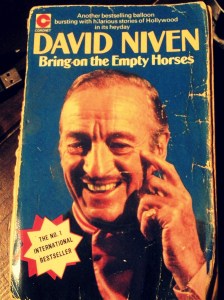
 David Niven mentions the visits he had in England from Gable in his book Bring on the Empty Horses. His wife once found Clark in the garden of their small cottage, his head in his hands, crying for his dead wife.
 Back here in Manchester it was nice to have a few days to myself after Christmas and New Year. One thing I tend to eat a lot of when I’m alone is sandwiches. Yes, I’ve always loved the humble sandwich. As a child I took sandwiches to school, either ham, cheese or corned beef, almost always on white bread. Occasionally I’d have a salmon or salmon paste sandwich but generally salmon or any kind of fish just isn’t my cup of tea.
 Tell us about your new book.



 Yes, It’s that time again. As I write this there are only a couple of days left before the big event, Christmas day.
 This will be my 592nd post and as you can imagine I sometimes struggle for new ideas. Scrolling through the internet the other day I chanced on something about Robin Williams and the post mentioned the film Dead Poets Society. It isn’t one of my favourite films but if you’ve ever seen it you might remember the poem O Captain My Captain by Walt Whitman which features a lot in the film. It got me thinking about Captains so I thought I might kick of this post with a few words about my favourite captain, James T Kirk.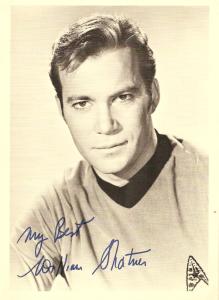
 I’m not sure which came first for me, the book or the film but I actually think it was the book. The Godfather was written by Mario Puzo and is the story of Don Vito Corleone, the head of one of the five mafia families of New York. The book opens with the wedding of Don Corleone’s daughter and Puzo sets the scene and introduces the various characters.
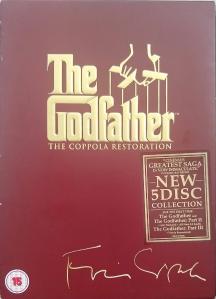 Francis Ford Coppola was the director of the film version and was also the co-writer of the screenplay along with Mario Puzo. Coppola wanted Marlon Brando to play the part of Don Corleone even though Brando at the time was rather unpopular with the producers. He was expensive, his last few films had not done well and his time wasting attitude had added huge expenses to his pictures. After the director had made the producers understand how important Brando was, they set various conditions for his employment. He would have to work for a reduced salary and put up a bond to ensure he would not delay the production. Another was that he had to have a screen test. Coppola has told the story in various interviews how he and his film crew had entered Brando’s house like ninjas and quietly set up their equipment. Brando slicked down his hair with shoe polish and stuffed cotton balls into his mouth to make the transformation into the aging mafia boss.
 Coppola decided that instead of finding the horse at the end of his bed like in the book, it would be better if Woltz awoke, was disturbed by something wet, pulls the bedclothes away to see blood and then uncovers the horse’s head. The head was the actual head of a horse, procured from a dog meat factory and Coppola mentions on the commentary to my DVD version that lots of animal lovers sent him hate mail about the horse, even though the horse had been condemned to its fate anyway.
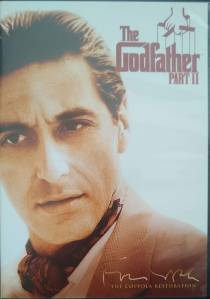 As previously mentioned, the book does have some storylines which were not used in the film but one chapter was a look at the beginnings of Vito Corleone. Born Vito Andolini in the Sicilian village of Corleone, Vito’s father was murdered by a local mafia boss and the young Vito was smuggled away to America. In America he took the name of Corleone and seemed to slip quietly into the role of mafia Don by murdering Fanucci, a New York Sicilian Godfather who preyed on his fellow Italians. Although this element of the story wasn’t used, Coppola kept the storyline for use in The Godfather Part II. The follow up film was a film classic in its own way.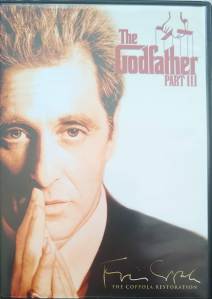
 This isn’t a post about my
 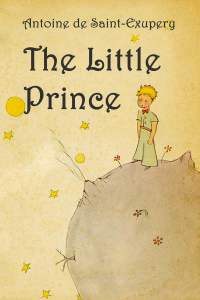 In the film William Bast played by Michael Brandon, leaves Dean in a restaurant and Dean later asks why Bast left. Bast was intimidated by Dean’s important looking friends and Dean replies that he was judging by surface appearances. When Bast questions Dean further, Dean produces his favourite book, The Little Prince and then goes on to read his favourite passage.
 Donald Campbell was the son of a famous racing driver and record breaker, Sir Malcolm Campbell. Campbell first broke the land speed record in 1924 at Pendine Sands in Wales which was the first of his nine land speed records. He also set the water speed record in his boat Bluebird K4. He was knighted in 1931 and died in 1948 aged 63. He was one of the few racing drivers and land speed record holders of his era to die of natural causes as many of his rivals were killed in crashes. His son, Donald Campbell, was determined to equal and even surpass his father’s achievements.
 This is perhaps where this post might start to unravel. I know the Donald Campbell link was a little tenuous and only based on a film but this next one was based on my own memory which can be prone to failure. I knew Noel was a great fan of the children’s writer E Nesbit and I’m sure I had heard or read somewhere that when he died, he was reading his favourite of that author’s books, The Railway Children. A quick bit of internet research and I see that Noel died after reading Nesbit’s The Enchanted Castle. Coward was a lifelong fan of E Nesbit who wrote a series of children’s books. He discovered the books as a child and revisited them many times during his life. In his diary he wrote this about the author:
 Woody is one of my