Back in the nineteen nineties I was at a bit of a crossroads in my life. I’d split up with my girlfriend and had sold the lovely house that we owned jointly. I was stuck in a job that used to be so much fun but had now become a boring dead end job that I was fed up with. I was desperate to do something really exciting, something creative so after a failed attempt at running my own motor sport memorabilia business I decided to have a last ditch try at getting into TV by enrolling on a video production course in Manchester.

It was at a place called the WFA which, if I remember correctly, stood for the Workers Film Association. It was a rather left-wing place too as you can guess from the name, and certainly it wouldn’t have been a good idea to say you admired Mrs Thatcher!
To get a place on the course I had to give a presentation on a media subject. I chose working class representation in film and television and spoke about the kitchen sink movie dramas of the sixties and seventies, (Saturday Night and Sunday Morning, A Kind of Loving, Alfie and so on) the TV soaps of the nineties (Coronation Street, Eastenders and Brookside) and how contemporary British movies were then, and now I suppose, very middle class, (Four Weddings and a Funeral and Notting Hill for example.)
On the very first day we had to introduce ourselves and explain why we were on the course. I gave a quick resumé of myself and my career, a re-hash of the above presentation and a quick mention of my film making heroes from Billy Wilder to Oliver Stone. I was somewhat surprised to say the least when the next candidate said he had just bought a video camera and wanted to know how to work it and then someone else said they knew nothing about video but wanted to know more. Well, I wonder what film making subject they chose for their presentation!
We were split into small groups of three and we had to come up with a subject. My idea was to make a documentary about taxi drivers and after some discussions I managed to persuade my two team mates to come on board. We were given a brief introduction to the camera and then we were off into Manchester to start interviewing taxi drivers and filming the comings and goings of cabs in the city centre.
We were rookies and we made a lot of mistakes. In particular, we didn’t think about the questions we were going to be asking the taxi drivers. We just sort of made them up on the spot but looking back it might have been better to have had the same questions ready for each new driver we interviewed.
A big issue that almost every driver mentioned was that the City Council was enforcing a new ruling about cabs being wheelchair accessible, which meant that drivers had to either buy a new cab or pay for a costly conversion to their current vehicle. Every taxi driver we spoke to mentioned this and they were clearly upset about it.

image courtesy wikipedia
Another thing the cab drivers pulled me up on was when I dared to call a private hire vehicle a taxi. Dear me no! Didn’t I know taxis and private hire vehicles were two entirely different things? Apparently not!
I think we spent a week going to the WFA in Hulme, picking up our camera and then getting the bus into town to start filming. We went to all the taxi ranks we knew. There was one at the top of Piccadilly railway station where we found quite a few talkative and sensible taxi drivers. Next we went over to Piccadilly itself where we came across a great bunch of drivers all trying to outdo each other with tales of drunken passengers and how Manchester City Council were trying to take too much money off them in licensing fees. At Victoria Station we met a very chatty driver who even wanted to show his singing talent. I felt his impromptu singing might have been a light hearted end to our video but my colleagues thought not. Oh well!
When we had shot a great deal of video we had to start editing and part of the training process was to screen a rough cut for the whole media school. In our film, one taxi driver had mentioned that certain places in the city were dangerous to go to as there was the possibility of passengers making off without paying or even robbing the drivers. The cabbie mentioned Moss Side, close to the city centre. One member of the audience complained that the driver was racist as Moss Side is a predominantly black area. I didn’t think he was racist; he just didn’t want to be robbed or lose a cab fare and didn’t care one way or another whether the passenger was black or white as long as he paid the fare. My co-directors wanted to cut the offending moment but I argued that the cabbie was just trying to highlight the risk factor in his job. I managed to win that debate and that scene was kept in.
Anyway, cutting the video and shaping it into something interesting was our next task and really the most enjoyable part of all. The big difficulty was that there were three of us, all wanting our own way and really the only way to make a video is for one person to have the lead. Anyway, we kept fighting to a minimum and most of the time we managed to either agree or come to a sort of consensus. The end result was a pretty reasonable video, at least I thought so.
At the end of the course I took away my copy of our video and started pestering documentary producers for the chance to make a full length broadcast version but I didn’t seem to be getting anywhere until I wrote to channel 4. I went down to see them, they watched the video and the first thing they said to me was ‘Why didn’t you get in the cab with your camera?’
Well, we had asked taxi drivers if we could do that and they mostly said ok but all of them stipulated that if a passenger wanted us out then we would have to get out, no matter where we were, so rather than risk being stranded somewhere we didn’t take any rides in the cab. Not only that, there were three of us carrying a rather bulky 1990’s Super-VHS camera, a microphone and a tripod. On hearing this the Channel 4 producer looked at me and said ‘If you were a real film maker you’d have got in that taxi!’ After that, despite my protests and assurance that I would get in the taxi when fully commissioned, numerous assistants arose, handed me my video and quite quickly I found myself out on the street!
That was my part of my brief foray into the world of TV. I never did get a job in television but then again, perhaps I just wasn’t as determined or as pushy as I should have been. The one job offer I did get was from a small video company that did a little work for the This Morning TV show. They offered me an unpaid job which apparently is the usual way into TV, working without pay until you show yourself good enough for a proper job. Sorry but I had a mortgage to pay so unpaid work just wasn’t for me.
Not long afterwards Channel Four produced a documentary series about cab drivers although mostly shot with small fixed cameras in the taxi. I still reckon they pinched the idea from me!
If you’re interested in seeing our Taxi video you’ll find it below. It’s actually one of my most watched YouTube videos.
Due to issues of drinking far too much wine and lying far too long on my sunbed, this week’s blog post was an updated version of a previous post. Normal service may or may not be resumed next Saturday.

 I do love it here in Lanzarote but lately the bad weather has given me a different viewpoint. Yes, this is a wonderful place when the sun is shining but then, so are a great many places. When the winds are blowing and the rain is coming down, Lanzarote is as miserable as anywhere else. I have often thought about upping and leaving for pastures new, especially when I spend time in the other lovely villa we habitually rent in France. I love the pool, I love the quiet, I love the relaxing patio where we barbecue food in the evening. When it’s cold and the rains pour down I often think how I’d much rather be at home, back in Manchester.

 It’s still only January and yet here I am writing another ‘Thoughts from a Sun Lounger’ post. I love it! Yes, I’ve left behind the cold and wintery UK for the Spanish island of Lanzarote. It may be just a rock peeping out from the ocean but it’s a warm rock, warm and sunny, well mostly. We’ve had hot and sunny days but we’ve also had some dull and windy ones. OK so we’re not freezing in the snow and ice of the UK but I was hoping for a little more sun that we have had so far.
 When I say the union, I’m not talking about the United States of America but that other union, the one between England, Scotland, Wales and Northern Ireland. So, what has happened to the United Kingdom? Why is it in such a state, beset by strikes and unrest?
 Gibson was buried in the local cemetery in Steenberegen where there are a number of streets dedicated to his memory, Gibsonstraat and Warwickstraat named after his navigator James Warwick.
 One other reason to see the back of 2022 was that during a cold snap just before Christmas, our pipes froze and we had three separate burst pipes in the loft. The first two weren’t so bad as we spotted them straight away and our plumber came over quickly and sorted them. The third one was worse. The pipes burst over the spare room which we didn’t notice straight away. It was only as Liz was passing on the way to the bathroom that we became aware of water pouring down into the room. Hats off once again to our plumber who came over straight away and sorted the leak. Sorting the wet carpets might take a little longer though. All that is just another reason to hate the cold.
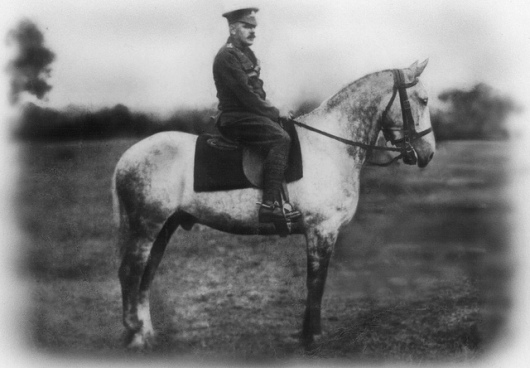 My Grandfather, George Higgins fought in the First World War with the Royal Horse Artillery so my father told me. This is him in this splendid picture with his horse, Prince. My Dad had the picture with him in his wallet when he was in the forces and as time went on it got a little torn and tatty and somewhere, I suppose it must have been in Hong Kong where he was stationed for a while, he found a little photographic shop that specialised in rescuing old pictures. The background of the picture was originally a forest but the rescue work removed them in order to make the picture good.
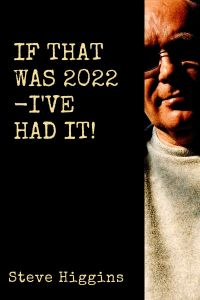 I started off with a post called
  One of the places I visited this year was Compiègne in France where the armistice was signed which ended the First World War. Hitler came here in 1940 when Nazi Germany defeated France and forced the French to sign the surrender in the same railway car where the Germans had surrendered in 1918. I shot a short video at the site and wrote a post titled

 This is a picture of my old childhood home. It didn’t look like that when we lived there, there was no drive for a start and there was no metal fence, we used to have privet hedges but of course don’t forget the first rule of karma; nothing stays the same.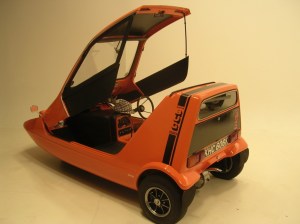
 David was born in 1908 and spent his early life in Croydon (actually 38 Blenheim Crescent, Croydon) until his parents divorced. His father moved out and left the family in 1923 which must have been an upsetting moment in Lean’s young life. Another perhaps more significant moment was when an uncle gave him a camera when David was aged 10 and then Lean began to develop and print his own photographs.
 The film did however win two Oscars for cinematographer Freddie Young and supporting actor John Mills. The poor reception of the film prompted David to meet with the New York critics at the city’s Algonquin Hotel. I’m not sure if David wanted to reason with them or just find out why they didn’t like the film but they spent two hours attacking his production. David came away devastated and would not make a film again until A Passage to India in 1984.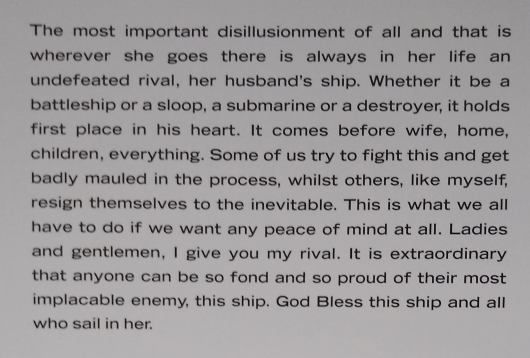

 Letters from an Unknown Author!