Before I went away on holiday at the beginning of May, I went to see my mother. She had lived in a care home since 2020 and suffering with dementia, she would alternate between periods of deep depression and confusion. The first words she would usually say to me are ‘where am I?’ or ‘when am I going home?’ The home she remembered though is her childhood home, one that she left behind many years ago.
 On visiting just before I left for France, the staff took me aside and told me that Mum had only a month to live. She looked bright and cheerful, if a little thin but certainly not someone with only a month to live. Over two years ago they had told me the same thing. Then on another occasion they told me she only had six months left. Both forecasts were inaccurate. This one however, proved to be correct.
When Elvis Presley died someone approached John Lennon with the news and waited for his reaction. He reportedly said, ‘Elvis died ten years ago’. Lennon despite his peace and love image always struck me as a hard faced sort of man who cared little for the sensitivities of others. Those words of his came to me when I heard the news that Mum had indeed died. Her name was Mary and the real woman, the real soul or spirit that made Mary what she was, had either long gone or been obscured by dementia.
Still, even though I felt as though I had lost Mum a long time ago, I still grieved at her passing and of course there was a funeral to arrange. I don’t really know much about funerals and what they involve so I began to cast my mind back to other funerals I had attended.
When my Gran died the funeral service was held in Marple. I’m not sure why as it was nowhere near where my Gran lived or was buried. The journey from there to Southern Cemetery in Manchester was for me, a masterpiece of motor car management, juggling with high water temperature and having to dive into a garage to top up my car with water and then hurry along to catch up the funeral cortège.
At the graveside I noticed my Dad making signs to the two grave diggers and after the coffin had slipped into the ground and the final words of the vicar had faded, my Dad, a former grave-digger in years gone by, had a happy and joyful reunion with two of his old co-workers, much to the dismay of Mum who stood with me and cried her heart out. (Not your finest moment, Dad.) At least he thought better of introducing her to his friends which I thought he was going to do at one point.
My Uncle Raymond was my favourite uncle and my Dad’s best friend. When he died his funeral cortège took a detour past the British Legion, one of his numerous watering holes, and the staff and customers came outside to pay tribute as his coffin passed slowly by.
The funeral was sad and tearful and the wake was pretty similar. A lot of sad people, a lot of tears and my Dad, who had lost his best friend was devastated.
I was driving that day and was asked to run some long forgotten relative home. I did so and returned a short while later. Only twenty minutes or so had passed but when I returned, I returned to a happy, noisy, enjoyable party, full of laughter and fun. I don’t know what had happened in the twenty minutes I had been gone but I came back to exactly the sort of party that my Uncle Ray would have loved.
Over in France I called the funeral home. They assured me Mum’s body would be looked after and soon someone would give me a call about further arrangements. The next day someone did indeed call and we set a date. I called or messaged all the relations that I could and then waited for the next step. The next step never happened so I called the funeral home again. No rush they said, finish your holiday and then come and see us and we’ll set a date for the funeral. Set a date? But we’ve already done that, haven’t we? It turned out that the date I’d set was a date to speak to the funeral home’s financial advisor! Perhaps I was more stressed than I thought.
I was full of nerves as we approached the day of the funeral but I went back to some of my old Paul McKenna confidence building routines that I used to use before job interviews. I woke on the day of the funeral feeling calm and confident. Everything went as planned and it was good to see my cousins and other family members who I hadn’t seen for many years.
My mother was born on Black Thursday, the day of the Wall Street crash, October 24th, 1929. She was born in Cheltenham, I’m not quite sure why, perhaps my Grandad was there looking for work. The family lived for a while at 36 Bath Street in Hulme, a suburb of Manchester. They moved to the new council housing estate of Wythenshawe in the 1930s. It must have been a wonderful place then, surrounded by farms and country lanes. Mum was the eldest in her family, followed soon by, in no particular order, Ada, Beryl, George and Frank.
The war came in 1939 and being the eldest, Mum helped with the cooking and shopping and used to tell me stories of queuing at shops and ration cards and swapping ration coupons for the things you didn’t want for the things that you did. She told me she could tell the German planes from the British ones by the sound of their engines and when the blitz came, the family used to troop out to the bomb shelter, all except my grandad who under no circumstances Mum said, would he ever step in there.
When Mum left school, she worked in a series of local factories and then later worked in Manchester city centre. She used to meet my grandad in Piccadilly; he would be going home after a night shift at Evans Bellhouse in Newton Heath and she would be on her way to work.
In 1948 tragedy struck when her sister Ada was killed in a cycling accident. Mum was deeply affected and told me about it many times.
Happier times came when she married my dad in 1954 and although they had their ups and downs, they stayed together until he died in 2000.
Mum was the centre of our small family. She organised everything we did. She arranged all our family holidays to places like Rhyl and Prestatyn, Blackpool and Morecambe and all the seaside destinations of northern England. They were always caravan holidays and as we had no car we always travelled by coach. We took the dog with us and no matter what preparations were made Bob, our dog, was always sick on the coach. Myself, my brother and my dad all looked the other way and pretended the dog was nothing to do with us while Mum, always prepared as usual, cleaned up the mess.
She also arranged all the decorating in our house taking charge of the wallpaper and preparing all the surfaces for painting. Dad would appear in his overalls, do the painting and then Mum would clean everything up.
She was devasted when he died in 2000 but like always, she just carried on.
I used to ask her if she wanted any shopping and she would always say, when she couldn’t go shopping herself anymore, then she was finished.
Once, when I was living in Merseyside, she bought a new lawn mower from Argos and asked me to pick it up. I kept putting it off but eventually drove back to Manchester and down to Argos. I had the code she had given me but the staff told me it had been picked up. I insisted it couldn’t have been but they were equally insistent that it had. I drove round to Mum’s and it turned out she had got tired of waiting for me and had picked it up herself. She had gone to Asda, got herself a trolley, pushed it to Argos, the staff put the mower in and then she pushed it home, returning the shopping trolley the next day.
When she began to suffer with dementia my brother and I looked after her with the help of carers and believe me, it was very difficult indeed. She would forget she had eaten and demanded more food. She complained that her clothes were not her clothes and after an illness which I personally thought might have been covid she moved into a care home.
Sometimes I’d visit her and she could hardly put two words together. Other times she’d be bright and happy and talkative but even so, her death was more of a freeing of her spirit than anything else.
A lot of the words above came from the eulogy I read at her funeral. I’d decided to finish with these words from Henry 5th by William Shakespeare: Small time but in that small most greatly lived this Star of England.
You might those words were perhaps a little inappropriate, after all, Mum wasn’t a king or a queen. She was a simple lady who loved her husband and children and did her best for her family. She was proud to be a housewife and a homemaker but I truly believe she was, in her own way, a Star of England.
 I haven’t done an F1 post for a while so I reckon it’s time for a new one. F1 in 2023 seems to promise much but so far has failed to deliver. Red Bull seem to be winning everything which is great for them but makes things a bit boring for the average F1 fan. It’s in times like these that I tend to look back to the past for a little F1 drama.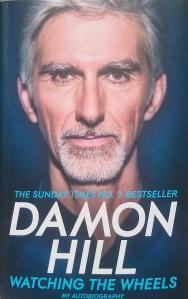
 After Graham’s death it was found that his pilot’s license had expired and this and some other things invalidated his insurance which meant that the other families who had lost loved ones in the crash were forced to sue Graham’s estate for compensation. This meant the Hills had to sell their home and move to a smaller house. These things seem to have weighed on young Damon’s mind for a long time, even into his own days as a racing driver.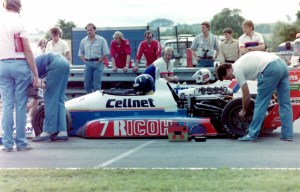

 This year we arrived pretty early at the Eurotunnel check in at Ashford. We’d spent the night near the Bricklayer’s Arms, a pub in Kent that has a quiz night combined with a special food offer and it was a short hop down the M20 into the Eurotunnel terminal. We were pretty early and fully expected to be upgraded to an earlier train but no, it wasn’t to be. So we relaxed for a while, made a cup of tea and then finally drove down to the customs. Both the English and French customs are over here in England. We passed quickly through the English passport control and then on to the French where they take a much longer time. I’m not sure why, after all it’s not as if anyone is trying to smuggle immigrants into France, that happens on the way back.




 It’s that time again for Liz and me to troll through France in our motorhome, on the look out for swimming lakes, cheese, wine and restaurants. The weather has so far been good but not great so sometimes I’ve been relaxing on my sun lounger, other times I’ve been inside wondering, where the hell is that sun?
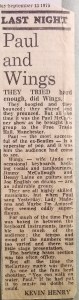
 I mentioned in last week’s post about, among other things, seeing Paul McCartney and Wings live on stage in 1975. Someone asked me what I remembered about the concert so this week I thought I’d talk a little more about music.
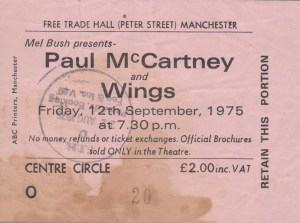 I hope my brother was glad I turned down the offer because seeing Paul and Wings that night was a fabulous experience. The band had just released Band on The Run and they performed all the hits from that album as well as many other songs. Part way through the evening the band left the stage and Paul sang alone a few of his best Beatle numbers including Yesterday, just him and his guitar and then his bandmates returned and played some more Wings hits. It was a fabulous night.
 Back in 1975 I already had the Wings album Band on the Run, on vinyl. It was a great hit at the time and featured a cover with Paul and Linda and their other band member Denny Laine posing with various celebs including talk show host Michael Parkinson, comedian Kenny Lynch, actors James Coburn and Christopher Lee, MP Clement Freud and boxer John Conteh. A few years ago I bought a remastered CD version which in the tradition of film directors producing DVD director’s cut film remixes, was a new version featuring outtakes and highly different versions of some of the songs. My copy has three CDs and there are other versions with even more CDs but to be honest, the original version was actually the best.
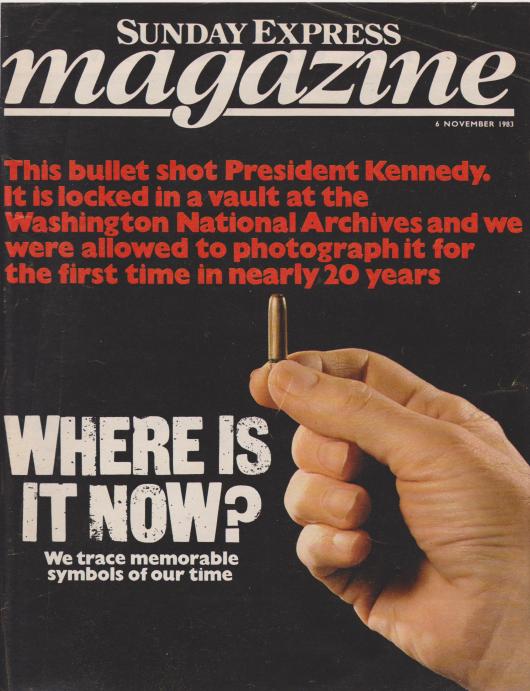
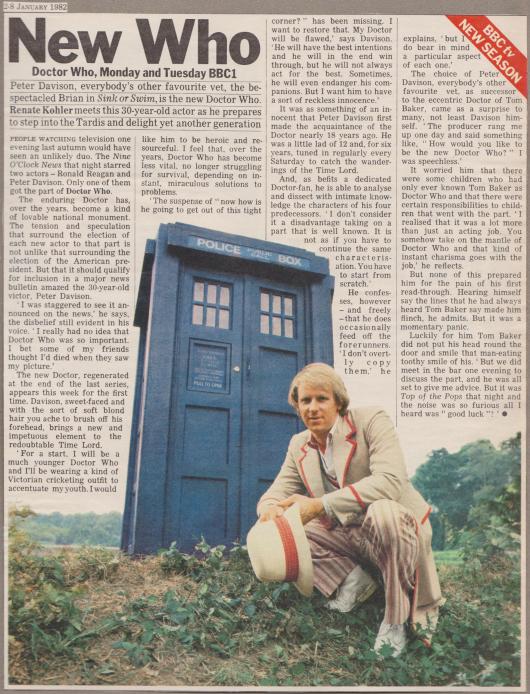
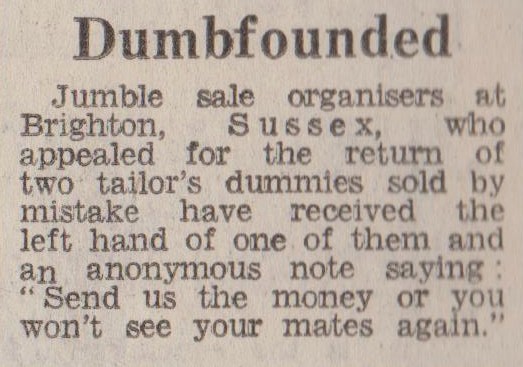
 I’m always on the hunt for new ideas for blog posts so when I was a little stuck today, I thought I’d take a look at my old scrapbooks and see what was in there.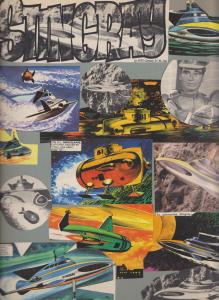


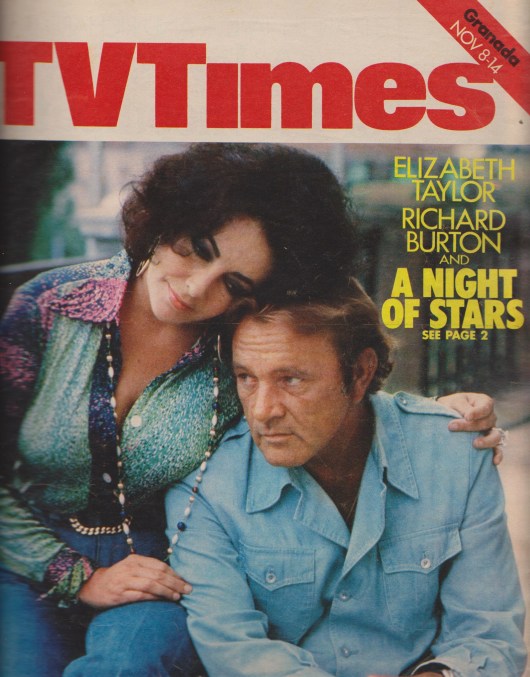
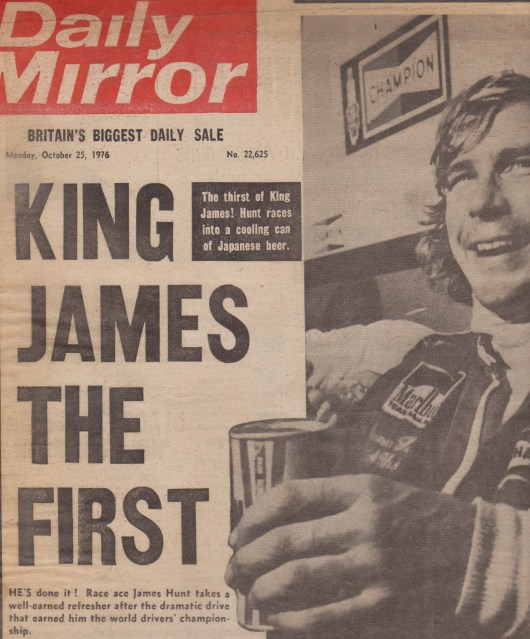
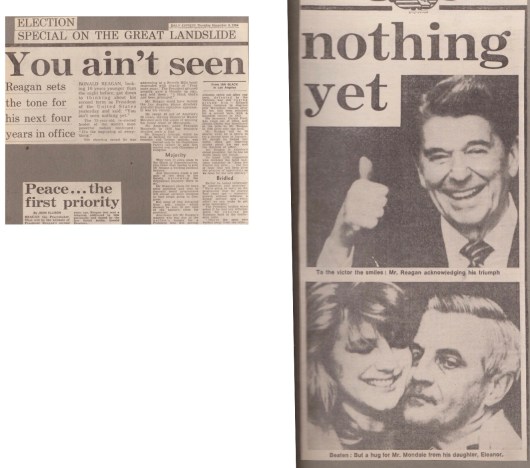
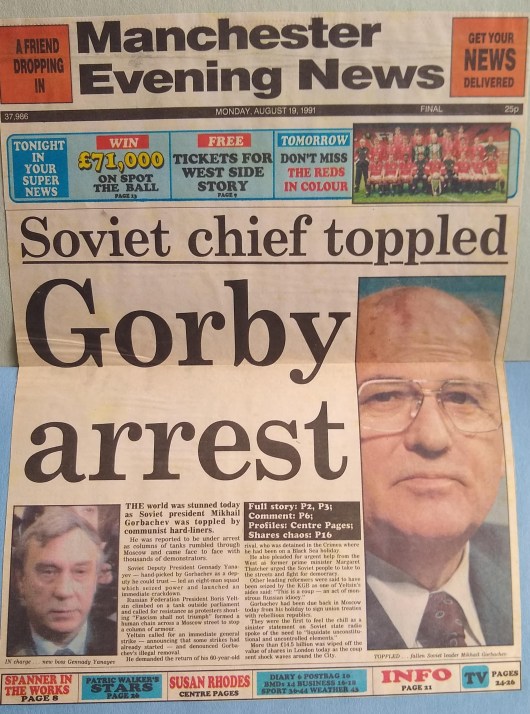



 Liz and I will soon be off to France in our motorhome. It’s had an MOT, it’s been taxed and has had a good wash and clean up and it’s pretty much all ready for the trip. As a writer, I try and get ready for the trip too, I like to get ahead with my weekly posts so I have a few all written and ready to be posted, even if I’m in the middle of the outback of the Loire valley. All I have to do is press the post button and I know that I will have met my deadline, my one deadline of 10:00am on a Saturday morning when my new post goes out.
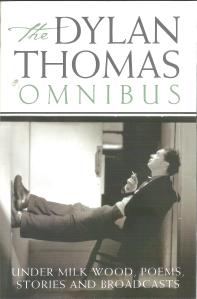
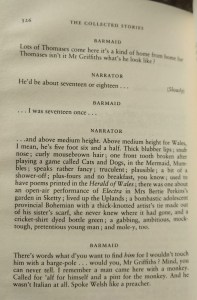 Today I often have a drink in that pub. On the outside it looks just the same as it always did and when I’m there I often think of Mr Farragher. That reminds me of Return Journey, the radio broadcast by Dylan Thomas I spoke about in
  This week’s post is a sequel to the one last week and I’m going to talk some more about the thoughts and ideas that come to me while driving. OK, I’ve left my house in Manchester in good shape, trimmed the privets, cut the grass and tidied up inside. Final check in the fridge, nothing left behind that is liable to go off. OK, pack the car and let’s get off back to St Annes on the Fylde Coast.