The French have a rather unjustified reputation for rudeness in my opinion. OK, Parisian waiters are not the most polite and neither are Parisians for that matter, but take a drive out of Paris into the country and you will meet the real French. The French who appreciate that you try, in only perhaps a small way, to communicate in their language. In a bar in the Loire that I always return to, every drinker that arrives will say ‘bonjour’ to everyone in turn, regardless of whether they are like me , strangers or foreigners and will say ‘au revoir’ when they leave and as for food, well, I will be the first to say that French cooking is not always the gastronomic delight that it is supposed to be but I do like the French way of eating. I like the ‘formule’ menus you see in French restaurants, the starter, main and cheese or dessert for sometimes as little as twelve euros or even less. And don’t forget the ‘plat du jour’, the French dish of the day.
Saumur, one of my favourite French towns is beautiful, not too busy but full of lovely restaurants. One I always frequent has most of its seats and tables on the pavement, what they do in the winter I do not know as the main brick part of the establishment is small!
The starters are small but full of flavour. The mains are wonderful and the cheese and French bread, exquisite! All washed down with a carafe of water and lovely French wine. A good meal does not need to be large but it needs to have a rhythm and those three acts, starter, main and cheese are a wonderful way to enjoy food, though it’s not just the food that is important. The wine, the service, the mood, all that comes into play and when that last mouthful of bread and camembert are gone, its time to call; ‘l’addition s’il vous plaît’.
I’m coming towards the end of my three week stay in France. I do love it here, I really do. My fiance and I spend most of our weekends at vide greniers and brocantes. A vide grenier is literally a loft sale, the equivalent of a UK car boot sale. A brocante is slightly different, a cross between a flea market and an antique sale. Many of these events in France are combined with a village fete and have a bar and a food area which can range from a full three course French sit down meal to merguez (French sausages) and frites (chips to UK readers and fries to you in the USA)
There is also always a bar, hey we are in France after all. Eighty cents for a glass of vin rouge, two euros for a glass of beer, and nothing stops these events. Rain shower at a UK car boot -forget it! Event over! Everyone leg it to your car and pack up. Are the French bothered by a downpour? No way! Put a bit of plastic sheeting down on your goods and quickly make way to the bar for a glass of red. Open up again when the skies clear. Now, here’s another thing; All these events are pretty well attended which means there are people about inhabiting these places but- and this is an important question. What do the French do when there isn’t a village fete on? Where do they go? What do they do and where do they do it!
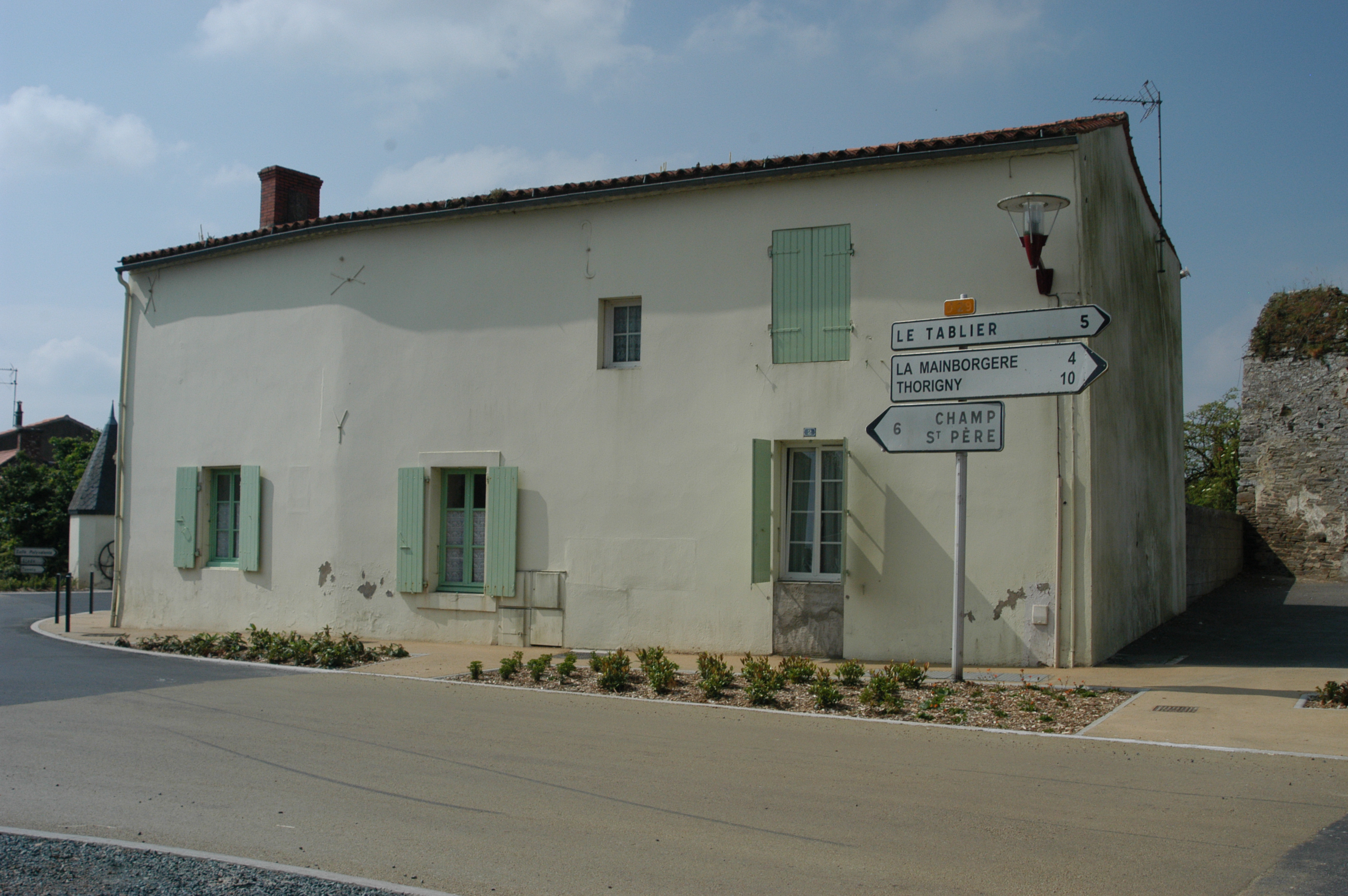
Okay, deep breath needed here. I don’t mean to get excited but I’ve travelled for three weeks and here’s the thing; French towns close at 12 midday on the dot. Shops close. The only places open are the restaurants because nothing, and I mean nothing interferes with the French lunch. Nothing! Everywhere shuts down until two pm. Okay, I’ve noticed in recent years the supermarkets have started to stay open, which is a good time to shop for all us UK tourists. But even in the late afternoons French villages are still and quiet. UK villages are full of people, cars, traffic and kids. Where do the kids go? Why aren’t they kicking balls about in the middle of the street like normal kids? Where do the people go and what are they doing? If you know the answer, let me know!
This is what we need to do. Not so long ago on BBC there was a pretty interesting documentary about cats. The BBC team wired up all the cats in a village, had cameras and tracking devices on the cats and worked out what the cats did, where they did it and in fact the whole pattern of their behaviour. What the BBC need to do for a follow up programme is to attach cameras and gps tracking to a village of French people and report the results as soon as possible!
We need to know!
If you liked this post, why not buy my book! Click the links at the top of the page to buy or for more information.
In my book ‘Floating in Space,’ available now as a paperback or a kindle e-book from amazon.co.uk, all the action takes place in Manchester in the north west of England in 1977. All the venues are authentic, all actual Manchester pubs or bars. here’s an excerpt about a bar called the ‘Playground’ which used to be on Oxford Road.
Saturday night was in a lot of ways the culmination of the weekend. I always preferred it to Friday nights because things were more relaxed, there was no rushing home from work, no rushing to get your tea down your neck so you can get changed, then leg it out for the bus. Saturday, you could take your time and leisurely work up to things. Sometimes I would go out shopping and buy myself something new to wear for that evening, a shirt, or perhaps even a new pair of trousers. Then later I would have a long relaxed soak in the bath, and dress unhurriedly in my room to the tune of my favourite music. In 1977 my favourite album was still Elton John’s ‘Goodbye Yellow Brick road’, and as I dressed I would mimic Nigel Olsson’s measured and rhythmic drumming to ‘The Ballad of Danny Bailey’, or ‘Candle in the Wind’.
There was something about Saturday nights in Manchester. Some quality of security, of expectancy, a feeling that the night and the future were going to be good. A feeling that you might just ‘get off’ with some gorgeous girl and that even if you didn’t it didn’t really matter because there was always the excitement of the people, the music, the drink, and everything else that made up the evening. And then there was always the expectancy of the next night, and the next, and on and on into the future. The past building up inside you like a great data bank, reminding you, reassuring you, like a light burning in some empty room in the corner of your mind.
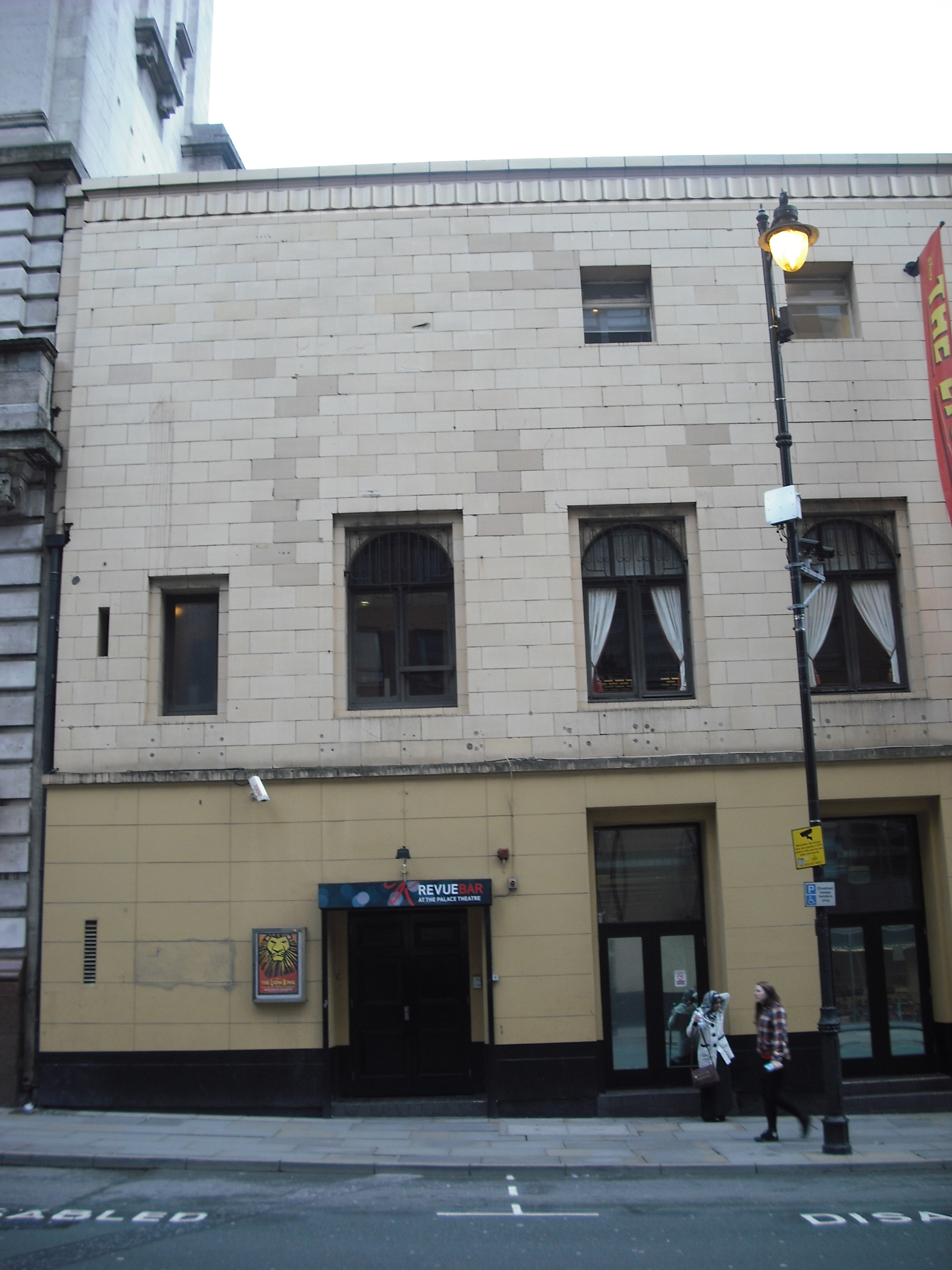
The Playground in 2015. Photo by the author.
The main venue that night, and on many other Saturday nights like it, was the ‘Playground’, a small disco bar on Oxford Rd in the town centre. Flickering multi- coloured spotlights rotated across the red carpeted room, which, on Fridays and Saturdays was generally packed. It had a small dance floor sunk low like a pit, where people up on the raised bar level could look down at the gyrating girls, and where also, on week day lunchtimes, a topless dancer appeared at the stroke of one o’clock to translate the soul and disco music of the time into pulsating physical motion, the eyes of jaded office workers glued to her as she did so.
My friend ‘Matty’ Edwards and I used to meet up in the Salisbury, by Oxford Rd station, have a few pints and a bit of a natter to any Regal Insurance cronies who we might find there, then make the short walk to the Playground. There was a paltry fifty pence charge to get in, the solitary bouncer was silent, but not unpleasant, and the DJ, who always began the night with ‘Loves Theme’ by the Love Unlimited Orchestra, played alternate sessions of rock, disco, and chart music. We were both mad about Jenny, the barmaid. She was lovely. She had a kind of round, open face, framed by thick blonde hair and her skin was a creamy white. She served us Worthington ‘E’ and we melted into the hubbub of people on their Saturday night out while the music of the seventies drifted through us.
Matty was tall, he had lazy, rather hayfevered eyes, and a biggish nose over thin lips. His brown hair was short and untidy and he was smart, but had a sort of ‘middle of the road’ taste in clothes.
“Jenny’s looking gorgeous tonight” he told me over his pint of Worthington’s.
We were propped up at the bar at a convenient spot where we could eye up any possible female talent, and cast a fond eye over Jenny’s appealing form.
“You’re not wrong mate” I agreed. “I wouldn’t mind getting a grip of that myself.”
I caught Jenny’s eye and ordered two more pints of Worthington ‘E’. It wasn’t a great drink but we were tuned into now for the rest of the evening, and anyway, I hadn’t as yet developed any clearly defined tastes in beer. The first pint I ever ordered myself was a pint of mild, and that was because I had nervously entered a Cheshire country pub after a long cycle ride and hesitatingly asked for a pint of ‘beer’.
“A beer?” asked the barmaid.
“Yes,” I replied, “A pint, please.”
“A pint of what?”
I realised, uncomfortably, that something more was required. I had thought that ‘a pint of beer’ would have been enough, but what the barmaid wanted to know was did I want bitter, or mild, or lager even? My first tentative forays into the world of the alcoholic drink were with my friend Mike Larini and it was always he who had done the ordering. What did he ask for, I thought? I couldn’t remember but down the bar the faint voice of an old man asking for half of mild drifted along to me, and so I went on to drink mild. Later I changed to bitter, and even now I was currently considering another change as someone had given me the cheerful news that bitter ‘rots your guts’. Perhaps it had been that eternal pessimist Matty Edwards with his inside knowledge of beer. His father was a Didsbury publican, and Matty’s drink changed from pub to pub. Sometimes it was lager, sometimes bitter, but here, in the Playground, it was that now long departed brew, Worthington ‘E’.
I passed over Matty’s pint and we both took deep draughts. Worthington’s was never a great ale but it was good enough, and the first taste of a fresh pint is always the best. I looked into the deep mahogany of the beer and thought about the things you can see through the bottom of a glass. Could I see Spain, there, in the distance? Could I really do it? Pack in my job and go to Spain in search of sun, sea, sand, and girls?
Somebody bumped into me from behind and a gruff voice said “sorry mate” and shouted up four pints of lager.
“Busy in here tonight” I said to Matty.
“Its Saturday night isn’t it? It’s always busy.”
“Yes, but it seems to be mostly lads. Was there a match on today or something?”
“Of course. City and United. Still, it was at Maine Rd so I wouldn’t have expected a load of hooligans in town.”
“Keep it down,” I said quietly. “You know what these football fans are like. Look at them the wrong way and they’ll have you.”
A girl in short black outfit caught my eye across the other side of the room and as Matty and I nattered on I would occasionally glance over and make eye contact. Matty soon noticed me and asked who I was eyeing up, and I told him and of course he had to gawp over at her despite me asking him to be discreet.
I thought about going over to chat to her but the usual fear crept up on me. What could I say? Suppose she wasn’t even interested in me? Sometimes I had found myself eyeing up someone I later found I wasn’t really interested in, it was just that the invisible thread that bound you across the room wasn’t all that easy to break. You would find yourself turning again to meet those same eyes, attracted to each other purely by the link that held you.
“Are you getting them in or what?” I said to Matty.
“Just waiting till Jenny comes this way.”
“Shout up the other barmaid. She’s over this side,” I told him, impatiently.
“You shout her up if you want. I want Jenny. Look at that; gorgeous.”
We spent a few moments discussing the merits of Jenny. Her eyes, her lips, her hair. She was lovely. Matty finally caught her attention and she filled up our pint pots. Matty bought her a drink and they exchanged some pleasantries before she moved on to the next customer. Matty came closer and quietly told me about the letter he was thinking of sending to her, telling her how he felt about her, but what did I think? Was it a good idea?
“What, a letter?” I shook my head. “No, why don’t you get her alone on a quiet night, give her some chat? Ask her out or something?”
“I don’t know. What about a card though, instead. I could send her a nice card asking for a date.”
Matty was as shy as I was in some ways, but his ideas of writing to a girl were always a mistake. If the girl did like him, and wanted to go out, then he would be actually asking her to ask him out. He would be transferring the responsibility of the whole thing on to her. No, we’re all shy to varying degrees, but things like this are a part of life that we have to face up to. We have to rise to the occasion and take on the challenge. Perhaps that sounds a bit dramatic but, getting involved with the opposite sex is a normal part of life, it’s just that anything new is hard at first, and all of us are conscious of our feelings, especially where sexuality is concerned.
Floating in Space is available from Amazon as a Kindle download or traditional paperback. Click the icon below or go to the links at the top of the page for videos and more information!
I wrote this many years ago and it was called ‘A girl called Paper Tangle.’ It was one of those inspirational poems where you suddenly get an idea and just go with it. It has a nice rhythm and trips along well but I was never happy with the ‘paper tangle’ thing. Anyway, not long ago I changed it to Pamela Taylor and the poem feels so much better. Apologies to any girl called Pamela Taylor!
A Girl Called Pamela Taylor
Pamela Taylor wears chic clothes
Designer labels, anything goes.
Her coat has buttons made of gold
She likes to be noticed, she’s bold.
Pamela Taylor wears black boots,
Her body is a gun that shoots.
She’s incredibly sexy and overtly erotic
and her taste is impossibly exotic
Pamela Taylor has blue-eyed eyes
and discreetly she enters other people’s lives.
She’ll trap you with magnetic sighs
and it’s yourself you’ll probably despise
Pamela Taylor knows all the best wine
and any man she wins in time.
She’s every scene-stealer and wheeler-dealer,
And to the social lepers she’s a saintly healer.
Pamela Taylor never pays her fees
She opens locks with other people’s keys
One look will slice you through if you tell her lies
OK, it’s a bit flippant but hey, we all love music and here are my top 100 favourite tracks of all time. Check them out or download the very nerdy excel file here: 100besttracks
Yesterday. The Beatles
You ain’t seen nuthin’ yet. Bachman Turner Overdrive
One of These Nights. The Eagles
Come up and see me Cockney Rebel.
Night Fever Bee Gees
Goodbye yellow Brick rd Elton John
Young Americans David Bowie
Billie Jean Michael Jackson
American Pie Don McLean
Into the Groove Madonna
Riders on the Storm The Doors
Bette Davies Eyes Kim Carnes
You’re so vain Carly Simon
Killing me softly with your song Roberta Flack
Baker Street Gerry Rafferty
I’m not in love 10CC
Sexual Healing Marvin Gaye
December 63 The Four Seasons
Walking In Memphis Mark Cohn
How Long Ace
Superstition Stevie Wonder
Don’t fear the reaper Blue Oyster Cult.
The Way it is Bruce Hornsby and the range.
The Power of Love Huey Lewis and the News.
My Sweet Lord George Harrison.
Changes. David Bowie
Lay Lady Lay. Bob Dylan
All right Now Free
Go your Own Way. Fleetwood Mac
Dreamer. Supertramp.
I’ve got the music in me. Kiki Dee
Walking in rhythm Blackbirds
The Hustle Van McCoy
Get Back. The Beatles
Why Carly Simon
Killer Queen. Queen.
Steppin’ out Joe Jackson
The Story In your Eyes Moody Blues
Get here Oleta Adams
Angie baby Helen Reddy
Run too fast, fly too high Janis Ian
Do it again Steely Dan
September Earth, wind and fire
Clean up woman Betty Wright
Gypsies, tramps and thieves. Cher
Horse with no name America
Midnight train to Georgia Gladys Knight and Pips
Have you seen her? The Chi Lites
Fire and rain James Taylor
Young Hearts run free. Candi Statton
Smooth Operator Sade
Nineteen. Paul Hardcastle
Marlene on the wall Suzanne Vega
If you love somebody –set them free Sting.
Made in England. Elton John
Listen to what the man said Wings
The pino colada song. Rupert Holmes.
Big Yellow taxi. Counting Crows.
A Thousand miles Vanessa Carlton.
Desiderata. Les Crane.
I shot the sheriff Derek and the Dominoes.
Boogie on Reggae woman Stevie Wonder.
Time in a bottle. Jim Croce
I’m Mandy, fly me 10CC
Gonna make you a star David Essex
Stay with me till dawn. Judie Tzuke.
It’s too late. Carole King.
Alone again (naturally) Gilbert O Sullivan.
Loves Theme. Love unlimited Orchestra.
The Living Years. Mike and the Mechanics.
If you could read my mind. Gordon Lightfoot.
Axel F (theme from Beverly Hills Cop) Harold Faltermayer.
The 2014 formula one season is well under way and like me, many people must speculate about those who race these incredible machines at such high speeds. Measuring high speed lap times against car control and the desire to go ever faster is the juggling act performed by the Grand Prix drivers every time they step into their high-tech carbon fibre cockpits. The consequences of a mistake can range from an embarrassing spin in the gravel trap to a cruel death.
This year, 2014, marks the twentieth anniversary of the death of Ayrton Senna, one of the greatest racing drivers of all time. Aryton was killed on the 1st of May 1994 at the San Marino Grand Prix at Imola. Anyone who knows anything about motor sport can tell you that. The date lingers in the back of the collective mind of all racing fans, along with other tragedies of the sport, like the deaths of Gilles Villeneuve and Jim Clark to name but two. Clark’s death is unexplained to this day. His formula two Lotus left the track at an easy, straight section of road. The facts of Villeneuve’s accident are well known -he crashed into a slow moving car- but his death is perhaps only really explained under close analysis. Villeneuve was on a slowing down lap, on his way back to the pits after a handful of fast qualifying laps but still, he kept the hammer down, his right foot pressed down to the floor when there was no real need for absolute speed. So why? Why was he going so fast?
One answer is simply that was the way he drove; fast. Foot down to the floor. Full stop. Another was that he was still estranged from team mate Didier Pironi, whom he thought had unfairly beaten him in the previous Grand Prix at San Marino in Italy. The two had diced together for the length of the race, team leader Villeneuve thought they were putting on a show, Pironi thought they were racing. When Pironi took the chequered flag it was an act of betrayal, or so Villeneuve thought and when they arrived at Zolder for what would be Villeneuve’s last Grand Prix, Villeneuve was still seething. And so perhaps that state of passion was a factor on his last lap.
For Ayrton Senna in 1994 that intense rivalry with a fellow driver seemed to be a thing of the past. Together, Senna, Alain Prost, and Nigel Mansell dominated most of the eighties and early nineties in formula one racing. Mansell had left the stage for Indycar racing in the United States and Prost had retired leaving Senna to take his vacant seat at Williams, or perhaps he retired because Senna had been offered a seat at Williams –it depends on which story you believe. Certainly after the intense animosity that developed between the two at McLaren you can hardly blame Prost for not wanting to work in that same situation again.
So now, the Young Pretender had become the Elder Statesman of Grand Prix motor racing and his two closest competitors had gone. Perhaps he even hoped that he could relax, let up the pace a little bit, just had Prost had thought in 1988 before Senna began to push him harder. But a new phase had begun for Aryton Senna, a new Young Pretender had appeared to challenge him in the shape of Michael Schumacher. Schumacher had won the first two Grands Prix of the year and Senna came to Imola without a single point. “For us the championship starts here” he told the TV cameras, “fourteen races instead of sixteen.” Further pressure mounted on Senna when fellow Brazilian Rubens Barrichello was injured in a crash and then Roland Ratzenberger was killed, the first fatality at a Grand Prix meeting since that of Riccardo Paletti 12 years before.
Many sources have said that after these twin disasters Ayrton did not want to race in the Grand Prix. It is hard to believe, Senna -not wanting to race? The man for whom racing was everything? Could it be that he was finally becoming more like his once deadly rival Alain Prost? Prost had always put his own life before winning motor races and as a consequence had driven a dismal race at the rain soaked 1988 British Grand Prix and completed only a token lap at the similarly affected 1990 Australian Grand Prix. Events may have pushed Ayrton’s thinking from the neutrality and detachment of the past towards a greater concern, a concern beyond the continual winning of races.
Whatever his inner feelings he started the San Marino Grand Prix in his usual fashion, leading into the first corner from pole position. Behind him though, JJ Lehto stalled his Benneton and was hit from behind by Pedro Lamy. Lesser events had stopped races in the past but on this occasion the organisers sent out the safety car and the grid cruised round after it in formation for five laps while the crash debris was removed.
At the end of the fifth cruising lap the safety car pulled off, the lights turned to green and Senna, Schumacher and the rest floored their throttles. The Williams was not handling well and it felt nervous through Tamburello, that evocatively named but most dangerous of corners. Still, Senna kept ahead of Schumacher, he kept the hammer down. On lap six the Williams entered deep into Tamburello and Schumacher saw the spray of sparks as the car bottomed out and side stepped slightly. Senna caught and corrected the Williams and throttled onwards for the charge down to Tosa, the next bend. Both Senna and team mate Damon Hill knew their cars were nervous and to a certain extent unsuited to the bumpy surface at Imola. Someone like Alain Prost might have eased off slightly, settled for second or third, collected some points, and used the rest of the San Marino Grand Prix as part of a learning curve, collecting mental and electronic data to develop the car into another Williams race winner. For Ayrton Senna, a third defeat by Michael Schumacher was not acceptable. Putting points on the scoreboard held no interest for him either, except for the ten points that came for a win.
The next time round Ayrton entered Tamburello at 192 mph. We know his exact speed from his car’s electronic management system, which records such data. Tremors went through the car as it bottomed out again on the undulating track surface. This time Senna couldn’t catch the Williams, or perhaps something failed on the car. Later on the steering column was found to be fractured. Did it fail before the crash or was it damaged in the impact?. Some have speculated that his tyres were not up to pressure after many laps circling the track at low speed. We will never know. Whatever happened, the car went straight on towards the tyre barrier masking the concrete wall that lay behind. Senna’s last act was to slow the car down to 131 mph, but it was not enough.
I have never met Ayrton Senna. The last time I had seen him, in person, was at the Silverstone tyre tests of 1991 and even then he was a blur of yellow in the red and white of his McLaren. To understand someone we have never known is not an easy task. Sometimes we can only do so by looking into ourselves and searching for similar experiences. A long time ago, I must have been eight or nine; my Mother took me to visit my Grandmother. Sat alone in the lounge while the two women gossiped in the kitchen, I became fascinated by my Grandmother’s new fireplace. It was a coal fire and the fire glowed dormantly behind a glass door. A real fire was not new to me, indeed we had one at home but the glass door seemed to attract me, so much so that I reached forward and held my hand a fraction of an inch from the glass. On an impulse I reached out further and put my hand on the glass. As you can imagine, I recoiled in agony having burnt my hand.
That moment, in 1994, as I watched my television images in disbelief, I came to think of that small boy, reaching out towards the glass door that enclosed a coal fire almost as one with Ayrton Senna, reaching towards the barriers of absolute speed, touching the zenith of his car control and going ever so slightly over his limits. He had done it before and had come back from the brink. Indeed it may have even been vital to him to occasionally push and go over his limits just to fix in his own mind where those limits lay. Ayrton was a man who could learn from his mistakes and could go on to better and faster things, but on that tragic day fate stepped in and stopped the process. A suspension arm crushed in the impact sprang back and hit Ayrton, piercing his most vulnerable point, the visor of his helmet.
Prost and Stewart, two of the all time greats of motor sport were men who come closer than anyone to touching the glass -without ever being burned. Perhaps that was their secret. Stewart was a man in absolute control of his skills as a racing driver, both on and off the track. After three world championships and twenty-seven Grands Prix wins Stewart was able to say goodbye to it all without ever looking back. What other driver can boast of doing that? Schumacher retired again after a disappointing comeback. The careers of both Nelson Piquet and Gerhard Berger fizzled out inconsistently at Benneton. Mansell called it a day after joining McLaren and then realising that their epic run of success had ran out of steam. Alain Prost retired after cantering to his fourth championship. It was clear that in Prost’s final year he was no longer willing to push hard. The motivation of his youth had evaporated with the grand prix seasons and with the relentless high-speed sprints of formula one. The day had arrived, as it will no doubt one day arrive for Hamilton, Alonso, and Vettel, when he was no longer trying to touch the glass.
 The French have a rather unjustified reputation for rudeness in my opinion. OK, Parisian waiters are not the most polite and neither are Parisians for that matter, but take a drive out of Paris into the country and you will meet the real French. The French who appreciate that you try, in only perhaps a small way, to communicate in their language. In a bar in the Loire that I always return to, every drinker that arrives will say ‘bonjour’ to everyone in turn, regardless of whether they are like me , strangers or foreigners and will say ‘au revoir’ when they leave and as for food, well, I will be the first to say that French cooking is not always the gastronomic delight that it is supposed to be but I do like the French way of eating. I like the ‘formule’ menus you see in French restaurants, the starter, main and cheese or dessert for sometimes as little as twelve euros or even less. And don’t forget the ‘plat du jour’, the French dish of the day.
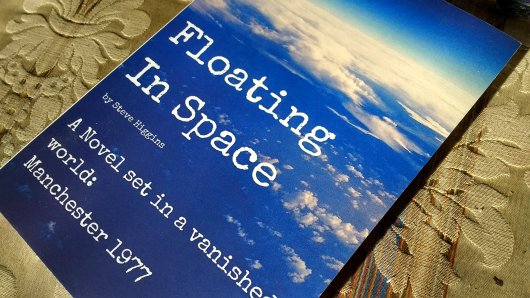
 In my book ‘Floating in Space,’ available now as a paperback or a kindle e-book from amazon.co.uk, all the action takes place in Manchester in the north west of England in 1977. All the venues are authentic, all actual Manchester pubs or bars. here’s an excerpt about a bar called the ‘Playground’ which used to be on Oxford Road.

 Blood rising Heart pumping