Three Reads from My Holiday Book Bag

It’s always good to slip out of the pool, dry yourself off and then relax in the sun with a really good book. Here are three of my latest holiday reads. (try the video version by clicking here!)

The Thief, His Wife And The Canoe

I first heard about this story on the TV news many years ago. I’d mostly forgotten about it until recently when there was an ITV drama based on the story. This was the book version and even though the story is fascinating, the book, written by a newspaper journalist wasn’t that gripping.

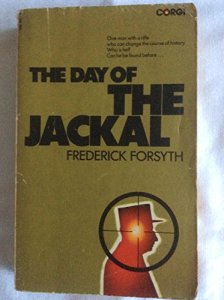
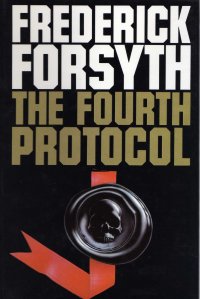
Essentially, John Darwin was facing bankruptcy after getting hugely overreached on a series of buy to let mortgages. He decided that the only way out was to fake his own death and cash in on some life insurance policies. His wife apparently tried to talk him out of the idea but John, a dominating and overpowering personality, went ahead and faked his own death. Amazingly he even went back to live with his wife, sometimes having to retreat to the bedsits next door when any friends or family came to visit. He arranged a false passport using a method explained in the book ‘Day of the Jackal’ by Frederick Forsyth and then the two, Darwin and his wife, planned to buy property in Panama and live a new life. Later, Darwin decided he wanted to return to the UK under his own name by posing as someone who had suffered with amnesia and in fact one day he disposed of his fake passport, walked into a police station and told them ‘I’ve lost my memory!’

Journalist David Leigh tracked down Darwin’s wife in Panama and managed to extract the entire story from her before she returned to the UK to face imprisonment along with John.

The result is interesting but not really a great read as perhaps the author is more used to newspaper stories rather than an entire book. Either way, it kept me interested for quite a few days.

Death of a President

I’ve read this book before many years ago but even so I thought I’d throw it in the motorhome and give it another read. The President’s widow, Mrs Jackie Kennedy asked the author, William Manchester to write the book so there would be one authorised record of what happened in Dallas when President Kennedy was assassinated. The result is a record, in fact a micro record of what happened to Kennedy and those around him, beginning a few days before the assassination and ending with his funeral and the shooting of his assassin by another assassin.

For me, who has been interested in the JFK assassination since at least 1968 when his brother, Robert Kennedy was also murdered and I was 12 years old, it’s a fascinating record. Others might think perhaps that the author has spread his research too far, that we are not interested in what the President’s pilot thought or did or how the honour guard prepared for the President’s funeral and how the President’s sister or brother-in-law reacted.

Anyway as a passionate JFK researcher, a couple of things stood out. One was a time chart that showed that JFK was shot at 12:30 and that at 12:31 and a half, motorcycle cop Marion Baker intercepted Lee Oswald, the supposed assassin, on the second floor lunchroom of the Texas School Book Depository calmly drinking a coke. That meant that Lee had, in 90 seconds, hidden his Mannlicher Carcano rifle on the 6th floor and got himself down to the second floor to meet Baker. Did he shoot the President or was he in the lunchroom all the time?

Here’s another thing. In one of my favourite JFK assassination books, Best Evidence, author David Lifton reckons that sometime between leaving Dallas and arriving at Andrews Airforce base in Washington, JFK’s body was somehow removed from his coffin and transferred to a body bag and then helicoptered to Bethesda naval base where work was done on the body prior to it being seen by the official autopsy staff. In Death of a President, William Manchester says that Mrs Kennedy spent all her time sitting near to the casket on Airforce One with many of JFK’s team of assistants and secret service personnel. So how was Kennedy’s body removed without anyone knowing?

OK, I’ve gone off into the realm of JFK assassination folklore there but to get back to normality, this was a very well researched book and gives a massively detailed look at the events surrounding a tragic day. If anything, the detail is perhaps a little too much and I could sort of imagine it as a feature film using that split screen effect that you often saw in the 1970s; Kennedy getting into the limo side by side with a shot of the assassin getting ready and so on.

Verdict; an absorbing read, very detailed.

Blue Angel: The Life of Marlene Dietrich by Donald Spoto

This was a very compelling read, a biography of Marlene Deitrich who to be fair, I didn’t know much about until this book.

Marlene was one of those people perhaps born at the wrong time. Today might be a better time for her when lifestyles of gay and lesbian people are not so much of an issue.

Marlene rose to prominence in the film world of Germany between the world wars. She was married to assistant director Rudolf Sieber and together they had a child, Maria. The couple had what we might call an open marriage and Marlene had various partners, both male and female and her husband too found himself another love. A big hit for Marlene was her performance as Lola Lola in The Blue Lamp, directed by Josef Von Sternberg in 1930. Shortly afterwards Marlene and Von Sternberg moved to Hollywood and the two made a series of films for Paramount. While she was away from Germany the Nazis rose to power. Goebbels himself asked her to come back and work in German films but when she declined, the Nazi party rejected her. Marlene became a naturalised American and even entertained the troops -the allied troops during World War II.

She had affairs with both men and women and at one point even began to wear male oriented clothes and once she was denied entry into a Paris night club for wearing trousers.

She was extremely concerned with how she looked in films and always arranged with the lighting crew for a key light to illuminate her face in a particular way, many times even bypassing the director. Alfred Hitchcock for one was not amused.

When the film work fizzled out she reinvented herself as a performer with a one woman show in Las Vegas. The clothes and lighting she organised herself, in fact at home she even had a special key light, just as she specified for her films, that she would stand under when she met journalists and even her friends.

She was always there to help her friends and still stayed close to her husband and his partner. If friends were sick or even just down, Marlene would come round and clean up and make food. She was not only a famous and beautiful star but also a proud hausfrau.

The book opens with her appearing in a short sequence in her very last film, which incidentally starred pop star David Bowie. She performed for the camera perfectly, only one take was required, then she returned to her Paris apartment and except for hospital and doctors’ appointments, she never left again until her death in 1992.

Not the best film book I’ve ever read but still an informative and intriguing read.


What to do next: Here are a few options.

Share this post on your favourite social media!

Hit the Subscribe button. Never miss another post!

Listen to my podcast Click here.

Buy the book! Click here to purchase my new poetry collection.

Click here to visit Amazon and download Floating in Space to your Kindle or order the paperback version.

Click here to visit amazon and purchase Timeline, my new anthology.

Titanic

The story of the Titanic, the ship that hit an iceberg and sank in 1912, is one of those stories which seems to be forever in the news. It’s a story that has caught the imagination of pretty much everyone. Even the other day, just scrolling through the BBC news page, I came across an item about some new digital scan of the Titanic wreck which revealed new information about the disaster.

This week I thought I’d take a look at the story of the Titanic and how it has been represented by television and film, well at least the TV shows and films that made an imopression on me, as well as the actual story of the tragedy.

The Titanic was designed to be the new premier ship of the White Star Line. It had been built by Harland and Wolff in Belfast and built alongside its sister ship the Olympic and was launched on the 31st May 1911 and was then towed to another berth where its engines and superstructure was installed as well as its majestic interior. The sea trials of the ship were undertaken on the 2nd April 1912 just eight days prior to leaving Southampton on its maiden voyage. The Titanic was the largest ship in the world and advertised as having the passenger accommodation of ‘unrivalled extent and magnificence’. It was also billed as unsinkable even though a few days into its first journey it would end up at the bottom of the Atlantic Ocean.

The Titanic on Television.

The Time Tunnel

The Time Tunnel was a sci-fi series created by Irwin Allen in the 1960s. The best episode in the series was probably the very first one. A US senator has come to take a look at a secret time travel project and see if the huge amounts of money being spent are justified. Scientist Tony Newman, fearful that the project will be cancelled, decides to trial the new Time Tunnel apparatus and send himself back in time. He activates everything and transports himself back in time arriving in 1912 on board the  Titanic.

His colleague, Doug Phillips also goes back to the same time zone to rescue Tony. The captain of the Titanic naturally doesn’t believe his ship is doomed to sink and back in the Time Tunnel control room the technical staff have a bit of a problem bringing the two scientists back to the present (actually 1968) but manage to transfer them to another time zone and so the scene is set for the subsequent adventures.

The Titanic at the Cinema.

A Night to Remember (1958)

I’ve always liked this film. It starred Kenneth Moore as the Titanic’s second officer, Charles Lightoller, and was based on a book about the disaster. The film was released in 1958 and tells the usual story about the sinking. The ship sets off but during the journey the overworked telegraph officers fail to pass on a warning about icebergs. The ship hits the iceberg and sinks. Despite a limited budget and only 1950s era special effects, A Night to Remember is actually a really good film.

Raise the Titanic (1980)

This was a film produced by TV mogul Lew Grade who was wanting to move his TV production company ITC Entertainment into the world of cinema. He had read the original book and thought that it might be possible to make a film series about US government operative Dirk Pitt in the manner of the Bond series.

In the film Dirk Pitt played by Richard Jordan proposes a salvage operation for the Titanic as he is convinced an American named Brewster had discovered a rare radioactive element called Byzanium which was stowed in wooden shipping boxes aboard the Titanic.

A huge undersea search takes place and the Titanic is ultimately found and raised. The Byzanium is not found aboard though although it does finally emerge in a neat twist at the end.

I’ve always enjoyed Raise the Titanic. It was based on a bestselling book by Clive Cussler although the film did not emulate the book’s success.

A great deal of the budget for the film was used to create a 50 foot model which was filmed at a huge water tank at the Mediterranean Film Studios in Malta. Apparently the three million pound model remains there today rusting away although the water tank is in regular use.

Not long after the film was made the real Titanic was located and it was confirmed the ship had broken up and was lying on the sea bed in two separate sections.

Titanic (1997)

Titanic was written and directed by James Cameron. The main thrust of the story is about two passengers from wildly different social classes who fall in love on the ship although one, played by Leonardo DiCaprio, dies in the disaster and the other played by Kate Winslet survives.

A treasure hunter (Bill Paxton) and his salvage team explore the wreck of the Titanic looking for a famous necklace, the Heart of the Ocean. They discover a safe which they bring to the surface to find it only contains a sketch of an unknown woman. After it is featured on TV the woman comes forward and tells the story of meeting Jack Dawson (DiCaprio) and of course of the sinking of the Titanic.

Director Cameron and his producers built a huge outdoor set in Playas de Rosarito in Mexico with uninterrupted views of the ocean and a water tank in which the Titanic set could be tilted to film the sinking scenes. Overall, the production cost was over 200 million dollars making it the most expensive film of all time. Happily for the producers, it also became the highest grossing film of all time until the release of Avatar, another film written and directed by Cameron.

The Novel

Dreaming a story and making it into a novel or a screenplay sounds pretty fantastic but in 1898 an American writer, Morgan Robertson, wrote a story about an unsinkable ship called the Titan which sailed from England to the USA but during the journey hit an iceberg and sank. The story was published fourteen years before the Titanic disaster. I remember reading the story of this writer years ago, even that the writer saw the story played out in front of him like a movie but all the research I did on the internet for this blog seems to imply that the author was a man who knew his business where ships were concerned, felt that ships were getting bigger and bigger and that a disaster like that of the Titanic was inevitable.

Books

I only have one book in my collection about the Titanic. It’s a big glossy picture book, not about the actual ship, but about the shooting of James Cameron’s film. It documents Cameron’s twelve dives in a tiny submersible which gave him the idea of the treasure hunters looking to find the necklace the ‘Heart of the Ocean’ and his realisation as Cameron himself mentions in the book’s foreword that the main thrust of the story should be a love story with the Titanic disaster almost as a backdrop.

The book tells about the numerous models that were built of the ship both as a pristine sea going vessel and as an underwater wreck. The making of the full size set in Mexico which could be dropped via hydraulic pistons into a huge water tank was an immense undertaking and adds immeasurably to the finished film.

So what actually happened to the Titanic?

The Titanic was on its maiden voyage to the USA. It left Southampton on the 10th April 1912 and stopped at Cherbourg in France to pick up more passengers before heading out across the Atlantic to New York. Four days into the voyage it hit an iceberg. Lookouts had been sent aloft to look for icebergs but their task was difficult. It was a moonless night and pitch black. The sea was very calm which meant that the lookouts could not see waves crashing against the icebergs that they had been warned to look out for. When an iceberg was finally spotted the lookouts rang down to the bridge. The officers there ordered the ship to turn hard to port. Some reports say that the engine room was ordered to stop engines which would not have helped the turn. Either way the ship brushed the iceberg and the resulting contact made a gash along the side of the ship and water rushed in.

The ship had been designed to stay afloat with four of her watertight compartments flooded but it could not stay afloat with the flooding of six. Interestingly the compartments were not sealed at the top so that when one flooded, the water tipped over into the next and so on until the ship sank.

The bow of the Titanic courtesy Wikipedia Commons

In another documentary I watched a few years ago a theory was put forward that the three million rivets that held the steel plates of the ship together were made of poor grade metal which became brittle in the freezing sea water. When the ship impacted the iceberg, the heads of the rivets popped off and sea water flooded inbetween the steel plates of the hull.

RMS Carpathia arrived about an hour and a half after the sinking and rescued all of the 710 survivors by 09:15 on 15 April. More than 1500 people died in the freezing waters of the Atlantic.

Titanic in the News.

As I mentioned earlier, the Titanic was in the news again when a new 3d scan of the wreckage of the Titanic was revealed.


What to do next: Here are a few options.

Share this post on your favourite social media!

Hit the Subscribe button. Never miss another post!

Listen to my podcast Click here.

Buy the book! Click here to purchase my new poetry collection.

Click here to visit Amazon and download Floating in Space to your Kindle or order the paperback version.

Click here to visit amazon and purchase Timeline, my new anthology.

Texting and my Brother

My brother died this week. As you can imagine I’m pretty upset. He was the younger brother so the accepted plan was for me to die first but somehow, things didn’t work out that way. Still, to a certain extent my brother was a burger and pizza eating TV watching couch potato so perhaps him dropping dead like that was not really unexpected. He was a guy that I sometimes wanted to slap and tell him to sort himself out, to clean his flat up and wash the pots and hoover up and get himself off his lazy backside and get a job or do some training or something.

Once I made him a huge roast beef Sunday lunch. I had done loads of food so I plated up an extra portion and told him  to ‘slap this in the microwave and eat it tomorrow’. I called him the next day to remind him. ‘Remember’, I said. ‘You’ve still got that roast dinner in your fridge. Slap it in the microwave tonight.’

‘Oh that’, he said, dismissively. I ate that last night when I got home!’

Despite all that, despite him spending money recklessly, buying numerous leather jackets from catalogues, getting into debt and going everywhere in taxis and eating takeaways when he could have saved money by eating sensibly and eating healthily, Colin, my brother, was a latter day Oscar Madison (remember the Odd Couple) who was happy doing nothing but watching television and old films day after day and paying for the top satellite channels when he had no money. Despite all that and owing money left right and centre, he was my best friend and I loved him and miss him so much.

This next section is something I wrote about him a few years ago. Just reading it brought back our friendship so fully that I almost picked up my phone and texted him there and then.


I’ve written about my mother and father in my blog posts so perhaps it’s about time I wrote about the one remaining family member, my brother. My brother Colin lives in Manchester and we see each other every couple of weeks or so when we meet up in the city centre for a pint or two.

My brother Colin is a very subtle character. He won’t ask me outright if I fancy a pint with him, he’ll tend to text me and his text will usually go something like this:

Meatballs!

You’re probably thinking, now that is subtle; is it a code? No, but the correct answer is this:

Definitely!

Still completely in the dark? Well, I suppose you might not be classic movie fans like Colin and me because a lot of the time we text in movie dialogue.

My brother sent me a text a few days ago; it read simply ‘You don’t remember me do you?

Probably a little confusing to the man on the street but I knew exactly what he meant. I responded with; ‘I remembered you the moment I saw you!

My brother came back straight away; ‘by the nose huh?’

Yes, texting in movie dialogue is what we do. Picked up on the movie yet? That particular movie is one of the movie greats of all time. It starred Marlon Brando in an Oscar-winning performance, much better, much more exciting and above all, much more human than his other Oscar-winning role in The Godfather.

Here are some more texts

ME: Do you remember parochial school out on Puluski Street? Seven, eight years ago?

MY BROTHER: You had wires on your teeth and glasses. Everything.

ME: You was really a mess.

The movie was ‘On the Waterfront’ and it’s probably famous for the double act of Marlon Brando and Rod Steiger playing brothers but there are plenty of other wonderful performances and scenes. My personal favourite is when Brando and Eva Marie Saint walk together in the park and Eva drops a glove which Brando picks up but keeps hold of and eventually pulls onto his own hand and we know that Eva wants it back. The dialogue above comes round about here when Brando, playing the part of Terry Malloy, realises he knew Edie, played by Eva Marie Saint at school. He is trying to communicate with her in his oafish way and Edie begins to realise she actually likes him but, well watch the movie, believe me it’s a great scene. It finishes like this:

MY BROTHER: I can get home all right now, thanks.

ME: Don’t get sore. I was just kidding you a little bit.

I read somewhere that Elvis knew all the dialogue from Rebel Without a Cause, the James Dean movie. If so, my brother Colin and I are in good company because we know the dialogue from that film too, as well as Giant and the aforementioned On the Waterfront. One day I thought I’d try a quote on Colin that he would never get.

ME: I took everything out of that car except the rocker panels!

I sent the text off feeling pretty pleased with myself. He’ll never get that in a million years I thought. My phone bleeped a moment later and I looked down to see:

MY BROTHER:  C’mon Herb, what the hell’s that?

Top marks indeed if you remember that dialogue from The French Connection.

My brother and I do text each other a lot but we also chat on the phone too. The thing is though; we talk on the phone with East European accents. We started doing it one day then began a sort of unspoken contract to carry it on. Sometimes I’ll get a call and he might say, in his best Hungarian accent ‘ Gut Evenink my friend’

‘Gut evenink to you also my friend’ I tend to reply.

East European is the norm but sometimes we use German accents. Handy when we bounce quotes from The Great Escape off each other!

Me: I hear your German is good, and also your French . .

My Brother: Your hands UP!

The Great Escape is a firm TV movie favourite but let me finish with a 60’s classic we also frequently text about:

Me: She’s in beautiful condition!

My Brother: Blimey girl, you’re not as ugly as I thought!

Me: I saw that geezer Humphrey going off. You’re not having it off with him are you?

My Brother: I tumbled at once. Never be cheerful when you’re working a fiddle!

Me: I ain’t got my peace of mind. And if you ain’t got that, you ain’t got nothing.

My brother: It seems to me that if they ain’t got you one way, they’ve got you another.

Got the picture yet? The film is Alfie. It was directed by Lewis Gilbert who also directed some of the earlier Bond films. The script was written by Bill Naughton and adapted from his own book and play. Alfie is a fascinating film on many levels. It’s a peek back at the swinging sixties; it explores the elements of comedy versus drama, something I’ve always loved and which I looked at a while ago in a post about the TV show MASH. The film features great performances from all the principal and supporting actors. One fabulous feature is how Alfie talks directly to the camera and sometimes even says things that directly contradict something he is doing or saying to another character. In the opening sequence, Michael Caine as Alfie, addresses the audience and tells them not to expect any titles. There are none, except for the film title itself and the closing credits which feature photos of the cast and crew.

Many actors turned down the chance to play Alfie on film, including Caine’s then flat mate Terence Stamp who played the part on Broadway. Laurence Harvey, James Booth and Richard Harris all turned down the role and Alfie became a breakthrough movie for Michael Caine.

Now my brother has gone it’s too late to text him one final time. If I could though I’d perhaps text him this:

So what’s the answer? That’s what I keep asking myself. What’s it all about?


What to do next: Here are a few options.

Share this post on your favourite social media!

Hit the Subscribe button. Never miss another post!

Listen to my podcast Click here.

Buy the book! Click here to purchase my new poetry collection.

Click here to visit Amazon and download Floating in Space to your Kindle or order the paperback version.

Click here to visit amazon and purchase Timeline, my new anthology.

10 Classic TV Ads

Don’t you just hate TV adverts? I certainly do. There are those times when a TV advert comes in useful I suppose. Perhaps when you are watching a good film and you need to make a cup of tea or pop to the toilet. These days in the hi tech world of TV, most people are able to pause live TV and do those things anyway. I wouldn’t mind if the TV adverts were actually worth watching but these days of course they aren’t. Anyway, here are 6 classic TV ads of yesteryear that I think are rather good. Here we go . .

1.

This is an advert for Strongbow cider featuring Johnny Vaughn, who you might remember as fronting the Channel 4 breakfast show many years ago, and Jerry Hall. Jerry was an American model and was once upon a time involved with Bryan Ferry and then Mick Jagger. It’s a fun advert that has always made me laugh.

2.

A particular favourite of mine is the Ford Puma advert from 1997 featuring Steve McQueen. McQueen of course passed away from cancer in 1969 so how did he feature in the ad? Well, filmmakers shot footage of the Ford Puma in modern San Francisco and digitally inserted McQueen into the driving seat using footage from his 1968 film Bullitt. The result was a stylish short TV ad recreating a scene from the original feature film.

3.

An old TV advert I always used to enjoy involved an old guy trying to trace a copy of a secondhand book; Fly Fishing by J R Hartley. He eventually finds a copy and the book seller asks his name. “J R Hartley” he replies. What were they advertising? Yellow Pages! Strangely enough some bright spark – actually author Michael Russell – produced a spoof book; Fly Fishing by J R Hartley which became a best seller and prompted two additional sequels.

4.

Probably the funniest classic TV ads are the ones with Leonard Rossiter and Joan Collins which are promotions for Cinzano. They actually made 10 TV commercials between 1978 and 1983 which all ended with a glass of Cinzano getting spilled all over Joan.

Rossiter had a successful theatre career but is best remembered for his portrayal of the seedy landlord Rigsby in TV’s Rising Damp, still shown regularly on UK TV. Joan Collins has had a long career in TV and films including a spell in the USA starring in the TV series Dynasty. This year, 2025, she is due to portray Wallis Simpson in a new film production. Leonard Rossiter died in 1984 aged 57.

5.

A great advertising series were those for Boddingtons beer. I used to love a pint of ‘Boddies’ as we used to call it but then the brewery was taken over by another company (Whitbread, I think) and the Boddingtons bitter they produced was really not like the original Boddingtons at all. Anyway, back in the 1990s a series of adverts were produced starring Melanie Sykes speaking in a broad Manchester accent.

6.

My particular favourite Boddingtons ad was this one that starts off in Venice but ends up somewhere in Manchester.

7.

Bolton comedian Peter Kaye featured in a series of ads for John Smiths beer. Can’t say I was that keen, then or now, on John Smiths beer but the adverts were good.

8.

A great favourite for many people were the puppet ‘aliens’ used in an advert for Smash which was a powdered version of mashed potatoes. You just added liquid I presume but personally, I’m happy peeling and boiling my potatoes to make mash just as I have always done.

9.

In 2018 Elton John featured in a Christmas commercial for top end store John Lewis. According to Wikipedia there is a regular Christmas ad for the store every year. I’ve clearly missed the others but I always thought the Elton John one was pretty special.

10.

I’m going to finish with this one advertising another beer, this time Heineken. Bryan Pringle plays a sort of latter day Professor Higgins trying to teach a very well spoken lady, the exotically named Sylvestra le Touzel, to speak cockney. Bryan Pringle featured in a number of films and numerous sitcoms from the 70s to the 90s. He died in 2002.

What were your favourite TV ads?


Those were my 10 TV ads but just before I go to press I thought I’d add one final one. I know I said earlier that modern ads are just not as good these days but I recently spotted this one in which Meg Ryan and Billy Crystal were asked to recreate that famous scene from When Harry met Sally. (I’ll have what she’s having!)


What to do next: Here are a few options.

Share this post on your favourite social media!

Hit the Subscribe button. Never miss another post!

Listen to my podcast Click here.

Buy the book! Click here to purchase my new poetry collection.

Click here to visit Amazon and download Floating in Space to your Kindle or order the paperback version.

Click here to visit amazon and purchase Timeline, my new anthology.


AKA (Also Known As)

This week’s post is about pseudonyms and people who use different or other names.

Lenin aka Vladimir Ilyich Ulyanov

Last week in a post about Painters and Paintings, I mentioned Lenin who was the first Communist leader of the Soviet Union. In fact, it was he who created the Soviet state but his real name was not Lenin. He was born in 1870 as Vladimir Ilyich Ulyanov. He studied at Kazan University and later became a Marxist activist after moving to St Petersburg, later renamed Petrograd. In 1897 he was arrested and exiled to Siberia for three years. In 1903 the Russian Democratic party (later renamed the Communist Party) split into two and Lenin led the Bolsheviks against the Menshiviks. In the unsettled world of the late 19th and early 20th century, political activism in The Russian empire was a dangerous game and Ulyanov began to use a pseudonym to protect himself. The name he chose was Lenin.

After his exile ended Lenin left Russia for the relative safety of western Europe, even living in London for a time. He returned to Russia when a revolution broke out in 1905 but when that failed, he returned to Europe and continued to organise and write essays and propaganda for the Bolshevik cause.

After the revolution which toppled the Tsar, the Germans who were then at war with the European allies in the First World War, sent Lenin into Russia on a sealed train. Churchill famously commented that

“Lenin was sent into Russia by the Germans in the same way that you might send a phial containing a culture of typhoid or cholera to be poured into the water supply of a great city, and it worked with amazing accuracy.”

Lenin was welcomed in Russia as the leader of the Bolsheviks and was helped by Stalin to escape the forces of the provisional government controlled by Alexander Kerensky. The Bolsheviks however soon engineered a second revolution; the provisional government was overthrown and Kerensky, his brief entry into history over, had to flee.

Lenin presided over the new government. He made peace with Germany despite having to negotiate away a huge swathe of land to the Kaiser’s Germany. He waged a civil war within Russia against those who tried to restore the Tsar. He renamed his party the Communist party.

In 1921 Lenin became ill, finally dying in January of 1924. In his last days he tried to remove Stalin from power but failed.

Stalin aka Joseph Vissarionovich Dzhugashvili

James Abbe, Public domain, via Wikimedia Commons

Stalin was born into a poor peasant family in Georgia in 1878. Later he became a bank robber, providing funds for Lenin and the Bolshevik party. He was born Joseph Vissarionovich  Dzhugashvili and like Lenin, adopted a pseudonym. The name Stalin came from the Russian word for Steel and is often said to mean ‘man of steel’. In his early days as a Bolshevik, Stalin robbed banks to fund the revolution. Later, Stalin organised and edited Bolshevik newspapers for Lenin and Lenin promoted him to the party’s central committee in 1912.

When Lenin died, Stalin took control of Lenin’s funeral and began to cultivate a cult of personality around himself, gradually removing all those who opposed him on the central committee. After expelling Leon Trotsky who was exiled and later deported in 1929, Stalin was unopposed as the supreme leader. His regime oversaw mass repression with millions consigned to forced labour in the Gulag camp system and others who Stalin perceived as threats, imprisoned or murdered in his purges.

Stalin died in 1953. After collapsing, he was discovered by his security staff who were too scared to approach him at first. Later they moved him to a couch thinking the heavy drinking dictator might have been drunk. He died on the 6th March and later Khrushchev emerged as the new Soviet leader.

Trotsky aka Lev Davidovich Bronstein

By Isaac McBride – Barbarous Soviet Russia, Public Domain, https://commons.wikimedia.org/w/index.php?curid=3363312

Trotsky was another Bolshevik who used a pseudonym. He was the creator of the Red Army and the man Lenin thought would be a good successor. He, like Lenin and Stalin, suffered exile to Siberia and later met Lenin in London where he worked on the party newspaper. He returned to Russia in 1917 and became chairman of the Petrograd Soviet. After the Bolsheviks took power Lenin appointed Trotsky to the post of foreign minister, later becoming the Commissar for Military and Naval Affairs. He built up the Red Army and led it to victory in the civil war.

After Lenin’s death Trotsky was sidelined by Stalin and expelled from the Communist party and later from Russia itself. He finally settled in Mexico until his murder by Stalin’s agents in 1940.

Elton John aka Reg Dwight

That’s enough Soviet history for now so let’s move swiftly on to the music business. Reginald Dwight was born on the 25th March 1947. He lived in Pinner in Middlesex with his mother and father, Stanley and Sheila, although they divorced when Reg was 14.

Something that had a big effect on the young Reginald was his parents’ love of music. He began tapping out tunes on his grandmother’s piano and the age of 11 won a scholarship to the Royal Academy of Music.

At the age of 15 Reg got himself a job playing the piano at the local pub and in 1962 he and some friends formed a small band called Bluesology and they soon picked up a regular gig supporting singer Long John Baldry.

In 1967 Reg answered an advertisement in the New Musical Express. It had been placed by Liberty Records who were looking for new talent. Reg went to audition for the A & R manager, Ray Williams but Ray appeared to be unimpressed when Reg sang an old Jim Reeves hit and by way of ending the interview Ray handed Reg a sheaf of unopened lyrics written by someone who had answered the same ad.

That someone was Bernie Taupin. He and Reg hit it off instantly and Reg began writing music to Bernie’s lyrics. Six months later Reg changed his name. He took his new name from Bluesology bandmates Elton Dean and Long John Baldry and put them together to become Elton John.

In 1969 Elton’s album Empty Sky became a minor hit and was followed by the eponymous Elton John in 1970. ‘Your Song’, a single from the album went to number 7 in the UK singles chart and Elton John had arrived.

Archie Leach aka Cary Grant

Grant was born Archibald Leach in Bristol, England in 1904. He had a poor upbringing and his mother suffered from depression and his father was an alcoholic. The young Archie was interested in the theatre and performing and his mother was keen on him having piano lessons. His older brother had died before reaching the age of one and this perhaps made his mother a little over protective of the young Archie. Even so, his mother was not a woman who was able to give or receive love easily and the older Cary Grant blamed his childhood relationship with his mother for his problems with women in later life.

When Archie was 9 years old his father placed his mother in Glenside Hospital, a mental institution, telling his son that she had gone away on a long holiday and later, that she had died.

Archie befriended a group of acrobatic dancers known as The Penders and he was able to eventually join them and there he trained as a stilt walker and became part of their act. Later the group toured America and Archie decided to stay, following in the footsteps of others before him like Charlie Chaplin and Stan Laurel who had made their way to the USA in an almost identical way.

On Wikipedia they mention that on the trip over to the USA, Archie met Douglas Fairbanks and was greatly impressed by him, so much so that Fairbanks became a role model for the young Archie Leach.

In New York Archie worked in vaudeville with various comedy and theatrical groups. He joined the William Morris theatrical agency and began to pick up many theatre roles. In 1932 he had his first screen test and was given a five year contract with Paramount Pictures. B P Schulberg the general manager of Paramount decided that Archie Leach was not a good enough name for films so Archie came up with the name Cary Grant taking Cary from a stage character he had played and Grant chosen randomly from a telephone directory.

Cary Grant retired from acting in 1966 when his only daughter was born. He died in 1986 aged 82.

Ayrton Senna aka Ayrton Da Silva

It might come as a surprise to many to learn that the legendary racing driver Ayrton Senna did not use his real name. Instead, he chose to race under his mother’s maiden name, Senna. He decided to use the name Senna as in Brazil, his home country, Da Silva is a very common name and Ayrton hoped the use of Senna would make him stand out and be more recognisable in the world of motor sport.

Ayrton Senna in the McLaren Mp4/4 in 1988. Photo by the author

Ayrton was born and raised in the Brazilian city of Sao Paulo. He was born in 1960 and began racing karts at the age of 13. After twice finishing as runner up in the world kart championships Ayrton moved to Europe to compete in Formula Ford and later Formula 3. It was quite an achievement for the young Brazilian. He spoke little English and he and his wife were fishes out of water in the UK. Only his massive desire to succeed and to make it into Formula One kept him going. Alas his young wife was not up to the challenge and returned to Brazil.

Senna went on to enter Formula 1 and with the McLaren F1 team he won all of his three world championships fighting constantly with his great rivals Alain Prost and Nigel Mansell. He was killed on the 1st of May 1994 at the San Marino Grand Prix in Italy after leaving McLaren for the Williams team. He crashed at the Tamburello corner when he hit the concrete wall there and a suspension arm, forced back in the impact pierced his most vulnerable area, the visor of his crash helmet.

T E Lawrence aka John Hume Ross and T E Shaw

By Unknown author – pavellas.blogspot.com, Public Domain, https://commons.wikimedia.org/w/index.php?curid=7367070

Thomas Edward Lawrence is a fascinating character. He was a British army officer and writer best known for his role in the Arab Revolt during the First World War. He became known to the public through a series of film presentations by writer and documentary film maker Lowell Thomas.

After the war Lawrence tried to vanish into anonymity by joining the RAF as an aircraftsman using the alias of JH Ross. Later when his real identity was exposed he left the RAF and joined the army using the alias TE Shaw. He was unhappy in the army and was eventually readmitted to the RAF.

His account of his work in the Arab Revolt was published in his book Seven Pillars of Wisdom. Lawrence actually lost his manuscript at one point and was forced to reconstruct the entire book. Later, the book was used as the basis for the film Lawrence of Arabia starring Peter O Toole as Lawrence. A stage play was also written about him by Terrence Rattigan titled Ross which explored Lawrence’s alleged homosexuality. Alec Guinness featured in the play in the title role as Ross/Lawrence.

On the 13th May 1935 Lawrence was severely injured in a motorcycle accident and died six days later on the 19th May.


Thanks to Wikipedia for the source information.


What to do next: Here are a few options.

Share this post on your favourite social media!

Hit the Subscribe button. Never miss another post!

Listen to my podcast Click here.

Buy the book! Click here to purchase my new poetry collection.

Click here to visit Amazon and download Floating in Space to your Kindle or order the paperback version.

Click here to visit amazon and purchase Timeline, my new anthology.

Painters and Paintings

A couple of things inspired this week’s post which is about artists and their paintings. Artist David Hockney is eighty something years old this year and has just opened a new exhibition of his work in Paris. He was invited by the art museum, Fondation Louis Vuitton, to mount a retrospective of his work focussing on the last 25 years of his artistic output as well as featuring some of his early works and some new ones too.

I remember once watching a documentary about Hockney many years ago with my father and it featured some of his paintings which were done in a rather childish way and my dad looked at me and asked ‘were these what he did as a child?’ Clearly, David Hockney didn’t do it for my dad.

My favourite works of David Hockney were actually not paintings but his Cameraworks in which David took numerous pictures of his subject and then created really inspired collages from the prints.

On 15 November 2018, Hockney’s 1972 work Portrait of an Artist (Pool with Two Figures) sold at Christie’s auction house in New York City for $90 million (£70 million), becoming the most expensive artwork by a living artist sold at auction. Hockney will be 88 in July of this year.

LS Lowry is a northern painter who is famous for his stylised pictures of Salford and Manchester and their mills and factories. He spent most of his life in Pendlebury in Salford and I remember reading a story about him years ago in which another north west painter took Lowry on a visit to the countryside. They set up their easels and brushes looking out on a beautiful rural scene and began to paint. After a while the painter, it might have been Sheila Fell although I’m not sure, got up to look at Lowry’s canvas and was surprised to see not the beautiful surrounding countryside but a northern street that might have been Salford or Manchester.

Clearly, you could take the man out of Salford but not Salford out of the man.

Not long ago I heard about a new film starring Tomothy Spall as Lowry and Vanessa Redgrave as his mother. The film was called Mrs Lowry and Son and to be fair, I found it rather disappointing. It’s not Lowry’s life story but focusses on his relationship with his mother who according to the film was bed bound and was looked after by Lowry who then went up to the attic to paint when she had gone to sleep. She died before her son found fame as a painter.

Today, his name is remembered at the Lowry Art Gallery in Salford Quays where many of his paintings are exhibited.

Jack Vettriano was a painter who I had always thought was an American as his paintings have a sort of cinematic style which I mistakenly assumed came from the USA. In fact, Vettriano was a Scottish painter and gained international recognition with his work The Singing Waiter which became one of the bestselling art prints in the UK. Liz bought me a framed print for a Christmas or birthday present some years ago which hangs in our dining room in St Annes. According to Wikipedia, the original was sold in 2004 to a private bidder for £744,500.

Vettriano was a self-taught artist and his paintings frequently show elegantly dressed figures in ambiguous or intimate settings and his works have met with a mixed reception with some critics dismissing him as populist, whatever that means. Personally, I have always loved his work and my art page over on Pinterest is filled with many of his pictures. He himself said his paintings were inspired by “25 years of sexual misbehaviour”.

Vettriano had homes in Scotland, London and the south of France and he passed away at his home in Nice earlier this year on March 1st.

Many people have compared Vettriano’s work with that of another artist, Edward Hopper. Hopper was an American artist. He was born in 1882 in Nyack, New York. He studied at the New York School of Art where he developed his particular style with an emphasis on solitude, light and shadow. I’ve always thought that his work has a sort of art deco style, similar to magazine illustrations of the 1920s.

Hopper made his first sale in 1913 when he was 31. He hoped this might have been the start of numerous sales but his work took many years to catch on with buyers. His most famous work is Nighthawks which he finished in 1942. He worked for many years as an illustrator for magazines and advertising companies. In 1918 he was awarded the US Shipping Board prize for a war poster titled Smash the Hun. Sales began to take off in 1923 and the resulting financial stability enabled Hopper to continue to create art. He died in 1967.

An artist that suffered criticism in the same way as Jack Vettriano was Margaret Keane. I think I had seen her pictures floating about the internet but I knew nothing about her until watching a film about her life. The film Big Eyes starred Amy Adams as Margaret who is an illustrator at a furniture factory. At an outdoor art show she meets painter Walter Keane. The two hit it off and later marry. Keane rents wall space in a nightclub to exhibit his and Margaret’s paintings but he gets into a fight after finding the paintings are displayed by the bathrooms. The fight becomes headline news in a local newspaper and the resulting publicity brings people in to see the pictures that started the fight.

The newspaper stories mistakenly credit Walter as the artist responsible for the popular pictures of people with oversized eyes. Walter convinces Margaret to go along with the deception as he thinks he can market the paintings better while Margaret creates more. The two open a gallery together and sell cheap prints of Margaret’s paintings which are hugely popular. Later the two split up and Margaret has to sue to be recognised as the artist of her Big Eyes pictures.

The film was directed by Tim Burton who is a great fan and collector of Margaret’s work. Like Vettriano, some in the art world have been critical of Margaret’s work but it has been praised by none other than Andy Warhol saying “I think what Keane has done is just terrific. It has to be good, if it was bad, so many people wouldn’t like it.”

Margaret Keane died in 2022 aged 94.

I think I might finish with a few of my favourite pictures.

I’ve always rather liked this painting of Lenin by Isaak Brodsky which shows Lenin in front of the Smolny Institute which was a girls’ school until taken over by the Bolsheviks in the Russian October Revolution. Brodsky was born in 1884 in the Ukraine and painted Lenin and many other Soviet politicians.

Edvard Munch was born in 1863 and painted the famous picture known as The Scream in 1893. The Scream has become a hugely powerful image symbolising the anxiety of the human condition.

The-Scream-1893-National-Gallery-Oslo-Edvard-Munch-creative-commons

Vincent Van Gogh was a Dutch painter born in 1853 and described in Wikipedia as one of the most influential figures in western art. He died in 1890 after shooting himself in the chest. The wound was not immediately fatal but he succumbed to infection. His last words were apparently ‘the sadness will last forever.’ My favourite of his paintings is Cafe Terrace at Night painted in 1888.

Finally, I wondered what must be the most famous painting ever and it surely must be the Mona Lisa. The artist was Leonardo Da Vinci and it was produced sometime between 1503 and 1506 and is a portrait of an Italian noblewoman named Lisa del Giodono. According to Wikipedia it is “the best known, the most visited, the most written about, the most sung about and the most parodied work in the world.”

creative commons

It currently hangs in the Louvre in Paris.

What is your favourite painting?


Thanks to Wikipedia for all the facts and figures used above.


What to do next: Here are a few options.

Share this post on your favourite social media!

Hit the Subscribe button. Never miss another post!

Listen to my podcast Click here.

Buy the book! Click here to purchase my new poetry collection.

Click here to visit Amazon and download Floating in Space to your Kindle or order the paperback version.

Click here to visit amazon and purchase Timeline, my new anthology.

Driving the Bus (A Few Nostalgic Bus Driving Memories)

Just looking back through some of my old posts I see I have quite a few that involve bus driving anecdotes. My life working for the bus company was in many ways a major career mistake but what the heck, there isn’t anything I can do about it now and it gave me a lot of material for my novel and various short stories.

I think it was round about 1977 when I first got a job working for the bus company. I had packed in my job as an insurance clerk and left to tour Europe for the summer. After a month in a place called Lloret de Mar in Spain I got fed up and returned home. My dad wasn’t happy about me doing nothing all day and not coughing up any rent money so I went for what I thought would be a short term job as a bus conductor.

I spent a few weeks at the GM Buses training school in Ardwick which I loved. We had lots of fun learning how to use fare tables, learning fare stages and giving out tickets. It was a little harder when we began to do it for real but there was a great feeling of camaraderie at the bus company and that was cemented by going to pubs after an early shift and playing cards, pool and snooker as well as drinking lots of beer.

After about a year as a bus conductor I was sent back to the training school to learn how to drive a bus. In those days we trained in old back loader manual gearbox buses, sat in a small cab at the front and steering with a huge steering wheel and having to double the clutch to change from first to second gear as those old gearboxes weren’t fully synchromeshed.

The moment I climbed up into the cab I felt at home and I loved my time in the driving school. Every morning we used to check the bus over and top up the oil and water if required. Then our trainer would choose somewhere in the vast Greater Manchester operating area for breakfast. We might have a drive to perhaps Oldham garage or bus station. I’d start off and our trainer Bill sat behind me in the first seat. The window to the cab had been removed and Bill would give directions and off we would go. His main instruction particularly on narrower roads was to ‘ride the white line’ because our big bus needed the room, car drivers in smaller vehicles didn’t.

Bill knew all the canteen staff in all the canteens in Manchester. Sometimes we might just have a tea and toast for breakfast because on the next run Bill might designate Stockport as our next destination as the new canteen there always served up something good for lunch. To be honest though, I always preferred a breakfast. Back in those days the GM Buses canteens served a breakfast special which was egg, sausage, bacon, a slice of toast and a choice of either beans or tomatoes, all for a pound. My own breakfast favourite though was two eggs on two toast with beans and a sausage which is still a favourite today.

When my fellow trainee had taken the wheel we would motor down to Stockport or somewhere and I’d fill in my crossword as I listened to Bill calling out ‘drop down into third!’ or ‘watch your back end!’ and various other instructions.

I remember friends telling me when I started on the buses that my social life was finished because I would be working shifts. In fact, the reverse was true. My social life just boomed. After our early shifts my colleagues and I would go down to the busman’s club and play snooker and pool in the afternoons. After late shifts we would go to a late night drinking venue that was a bit of a dive but they used to let us in wearing our uniforms. Sometimes we would even take a change of clothes and after work go to a smart night club.

Another one of my colleagues was a guy called Neil. Now Neil was a nice fella but he was also a very rum turkey indeed. Way back then there were conductors like me who were honest, well reasonably honest. There was always the passenger who paid right at the last minute as he was getting off the bus and there wouldn’t be time to snap off a ticket. Those few pence went into the drivers’ and conductors’ brew fund and when we stopped at the next canteen (back in the late seventies and early eighties there was always another canteen on the horizon) I’d get the brews in with those few pence.

Of course, there were conductors who made a habit of approaching customers who were just getting off the bus and they made a regular brew fund out of those last minute bus fares. Others, those more dishonest ones, and I am sad to say Neil fell into that category, went out of their way not to give out tickets or even issued blank tickets.

One day Neil got his hands burned. He’d issued a blank ticket to a customer and who should board the bus but the fraud squad. They checked the tickets and pulled Neil up regarding the blank ticket. Neil went to a tribunal where he was accused of fraud and faced the sack but an incredible stroke of luck came his way. The fraud squad lost the evidence. They’d misplaced the offending blank ticket and Neil managed to hang onto his job with a stern warning. The fraud squad Inspector, a not very pleasant chap nicknamed Himmler, came up to Neil and told him in no uncertain terms, he had him in his sights and one day he’d get him.

Well, Neil went on to become a driver and then a one man driver and by then, as far as I know, he had left his nefarious past behind him. Still, you never could tell. Some busmen took fare fiddling to a fine art form and it wasn’t always the ones like Neil who were the perpetrators. One guy, I’ll call him Arthur, spent a pretty uneventful life working for the bus company. He never upset anyone, was always on time and was rarely off sick. He was very good with money and apparently invested his bus driving pay packet well. Then again, he was one of the first one man drivers and on a good wage.

Anyway, he did really well for himself and owned a nice holiday home in Prestatyn. Good on him you might think. Then he dropped dead one day of a heart attack and a few weeks later his widow came into the depot with Arthur’s spare ticket machine. Spare ticket machine? What spare ticket machine? Nobody had a spare ticket machine! Has the penny has dropped yet? Arthur was issuing tickets and taking fares for himself! Somewhere along the way Arthur had ‘acquired’ another ticket machine. Nice scam. No wonder he had a holiday home in Prestatyn! At least the Depot Inspectors didn’t tell the wife.

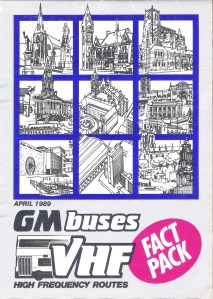
Vintage GM Bus flyer

Anyway, back to Neil although first I have to tell you this. On the A6 in Levenshulme, we had a small busmen’s canteen and if you were on the Manchester to Stockport service you usually stopped here for your breakfast or lunch. Now if you were going towards Stockport the canteen was actually just by two double yellow lines. Just past the canteen was a turn in to the bus parking bays but if you were due for a meal break and your bus was carrying on to Stockport you had to go through the traffic lights and stop in the lay-by, leave your bus and then walk back to the canteen.

Now, what most people did was stop on the double yellows then shout into the canteen for the new crew. It was wrong but that’s what we did and no one made a fuss. Anyway, one day an Inspector’s job came available. Various people applied but the guy who got the job was Neil and he decided that his first order of business as an Inspector was to stop buses parking on those double yellow lines! He did so and made himself a very unpopular fellow indeed. He’d wait by the canteen door and report any driver stopping on the yellow lines and plenty of times myself and other crews would be coming along, ready to stop and we’d see Neil waving us on so we’d carry on, through the lights and on to the lay-by.

Now here’s where Neil’s past caught up with him. In those days a new appointment was probationary for six months and Neil went along to an Inspectors’ meeting chaired by one of the senior Inspectors who just happened to be; yes, you’ve guessed it, it was Himmler. Himmler took Neil to one side. Asked what he was doing in Inspector’s uniform and by the end of the week Neil was back driving his bus and someone else was in charge at Lloyd Road.

Neil of course, had upset many people in his short term as an Inspector and he had forgotten the golden rule: Be nice to people on the way up because you might meet them on the way down. No one ever spoke to Neil again and he cut a sad figure, shunned by his workmates and always sitting alone in the canteen. Shortly after he packed the job in.

When I was a bus conductor it was pretty easy to spot the fare fiddlers. They would never look directly at you. As I strolled down the bus asking for ‘any more fares please’ I knew who had paid and who hadn’t, after all, I had usually just watched them get on the bus. One scruffy guy got on one day and went straight down the bus, sat down and set a fixed gaze out of the window. Ok, I was chatting to other passengers at the time but I still knew he was new to the bus and I wanted his money.

“Fares please.” I called. Nothing. So then I turned directly to him and asked “I don’t think I’ve had your fare mate?” He finally turned away from the window.

“Where are you going to?”

“Levenshulme” he said.

“Thirty five pence please.” The guy thought for a minute, reached into his pocket and pulled out a can of soup.

“Can I pay with this?” He asked. The answer was no. He was asked to leave. After all it was pea and ham soup, tomato might have been another matter.

In my book ‘Floating In Space’ I wrote about another odd ball passenger.

A harassed looking girl boarded in Stockport. There was something about her that I couldn’t put my finger on. She asked for a single to Manchester and did I require identification?

“Identification?” I asked.

“Only I don’t have my credentials on me at the moment. I’ve got to be careful.”

“Careful of what?”

“Well my boyfriend’s a nuclear arms salesman. I’m being watched by the CIA and God knows who else. MI5 have probably got the scent by now.”

“Right, we’ll keep a low profile then.”

“Probably best if you know what I mean.”

She was a Nutter.

Conductor 2265: Licensed to issue tickets

The rest of the trip was pretty unremarkable. When we finally reached Albert Square in the city centre the nutter came storming towards me down the centre aisle and yelled at the top of her voice “If my boyfriend’s not a nuclear arms salesman then how did I get CIA Clearance?”

She charged through the open door and on into Manchester. An old chap behind her departing at a much slower and more sensible pace said, “Answer that one then!”

There used to be a guy who never boarded our bus but spent his time hurtling through the traffic on his bike cutting up cars and buses alike. How he was never run over I do not know. My colleagues had dubbed him simply ‘The Levenshulme Nutter.’

One day, some years later when I made been promoted from bus conducting to the lofty heights of bus driver, I was driving through Levenshulme on the 192 service when the Levenshulme Nutter cut across me and I nearly ran him over. I stopped next to him at the traffic lights, opened my window to give him some abuse then, noticing his outsize spectacles with their purple lenses said, instead “I like your glasses!”

He popped the glasses up on his head and said “Yes, but it’s the man behind that counts!” And cycled away. I never saw him again.

Career wise, working on the buses was a major mistake. I had a lot of fun back then but even so, I always regret not going round to the Manchester Evening News and trying to a get a job doing something I really loved doing; writing.

What was your big career mistake?


What to do next: Here are a few options.

Share this post on your favourite social media!

Hit the Subscribe button. Never miss another post!

Listen to my podcast Click here.

Buy the book! Click here to purchase my new poetry collection.

Click here to visit Amazon and download Floating in Space to your Kindle or order the paperback version.

Click here to visit amazon and purchase Timeline, my new anthology.

4 Showbiz Stories

I started this post off with three ‘showbiz’ autobiographies of actresses/comediennes of the stage and screen. Despite trawling through my book collection I couldn’t see a fourth so I added one which is the odd one out; a biography, rather than an autobiography and a male actor/comedian rather than a female. Either way, all four are stars who made their respective names in the 1950s and 1960s era of radio, TV and film and together make up a quartet of much loved British comedians.

Fenella Fielding: Do You Mind If I Smoke?

This is an autobiography by Fenella Fielding, co-written with Simon McKay, and the title comes from her part in Carry On Screaming when she played a seductive character, possibly derived from the Adams Family, Valeria. In one scene Valeria tries to seduce Harry H Corbett standing in for the absent Sid James as a detective. Valeria asks ‘do you mind if I smoke?’ and then rather than smoking a cigarette, a cloud of smoke seems to arise from her body and envelop her. Harry H Corbett adds ‘just when I was trying to give it up’ before embracing her in the smoke.

Simon met Fenella at a London Pilates class in 2011. The two became friends and began meeting regularly for coffee. McKay realised that Fenella was a wonderful raconteur and asked if he could record her stories. Fenella agreed and later they used the transcriptions as the basis for a themed evening, An Evening with Fenella Fielding. Later the conversations became an audio book and finally this printed version. It was hugely enjoyable and rather than being a standard story of her life, the book talks about various things in no particular order.

Fenella describes her early life in Clapton and her first forays into the acting world. She won a scholarship to RADA but her parents, who were keen at first, don’t seem to have realised what RADA was, that their daughter was becoming an actress which they seem to have seen as just one step away from prostitution.

Anyway despite only completing one year at RADA, Fenella did manage to become an actress. After one particular success on the stage she began to pick up various small parts on television and on film and as I mentioned above, her most famous part was in Carry On Screaming. She devotes a whole chapter to Kenneth Williams who of course could be a very difficult man to work with. She also played a part in Doctor in Clover and was heard as the village announcer in the TV series The Prisoner. In fact a great deal of her work was voiceovers for various things especially TV adverts.

This was a lovely read and came over as very chatty and talkative, based as it was on recorded conversations.

Liz Fraser …. and other characters

In Fenella’s book above, she mentions that she hoped her book would not go the way of a lot of other showbiz autobiographies, interesting at first but then dissolving into lists of plays and films and other celebrities. Sadly, that seems to be the way this book does go, even so I enjoyed it.

Liz was brought up in Southwark, in London. Her mother ran a small shop, one of those shops that used to sell everything that Tesco might sell these days from bags of coal, wood bundles to fresh food. Her father was a travelling salesman but died in 1942 aged only 40.

Like Fenella, Liz attended RADA and afterwards won her breakthrough part in I’m All Right Jack which starred Peter Sellers as a union official. She tells the story of playing minor parts in small plays and eventually got some walk on parts on TV. One day her mother said to her “Was that you last week, walking past Peter Cushing?” It was!

Liz worked on TV shows that were live back in the day. On an episode of Dixon of Dock Green she forgot her line but the crew had a ‘cut key’ which cut out the broadcast sound while they called out the line to the hapless Liz.

To get the part in I’m All Right Jack Liz had to lie about her age as the producers wanted someone younger which led to a career long confusion about her age.

She appeared with Peter Sellers in various films and she reveals that although she liked Sellers she had to fight off his amorous advances several times. Liz shares lots of anecdotes about various people she worked with including Tony Hancock, Benny Hill and Sid James.

She tells about appearing in a few of the Carry On films but like many others is critical of the producers. There was only a one off payment for each film and despite the enduring popularity of the Carry On films, the actors earned nothing from their later success on TV. In later life Joan Sims had a lot of financial difficulty but was helped by actors’ charity organisations. Liz herself was very thoughtful, investing in property and stocks and shares which sustained her during the times when acting work was thin on the ground.

She doesn’t share much about her personal life although her first husband features in a chapter called I Married a Thief. Peter Yonwin was something of a fantasist and their marriage soon broke down.

One shocking disclosure was an incident one night after appearing in a pantomime. Liz took an acquaintance home thinking she could deal with any problem man only to be raped. She doesn’t expand on the incident but seems to just mention it quickly and then move on as if perhaps by talking about it however briefly she could perhaps exorcize this dreadful ordeal.

Liz’s second husband, a TV producer, died of cancer and Liz suffered with cancer herself. She enjoyed fast cars and finishes by talking about her old age.

Liz Fraser died in 2018 aged 88.

According to Dora

I do love my showbiz biographies and autobiographies and one I picked up a while back was an autobiography by Dora Bryan. I love Dora from her many appearances in British films but my favourite film is probably A Taste of Honey. The screenplay was by Shelagh Delaney and director Tony Richardson, adapted from Delaney’s own play which she famously wrote when she was only 18.

Dora Bryan gives an outstanding performance; at times comic but always supremely natural. Dora grew up on an Oldham housing estate. She was a great performer as a child and so her mother took her to dancing school and further encouraged by her mother, she joined Oldham Repertory before moving to London to develop her stage career. She had a great career on the stage as well as on film and TV and appeared in many successful West End productions. The first part of the book is very interesting but then as I mentioned earlier, this becomes one of those books in which the latter part seems to wander off into lists of productions and theatre and TV personalities. Even so, it was a lovely read.

When the Wind Changed (The Life and Death of Tony Hancock) by Cliff Goodwin

This final book is the odd one out in this quartet of British comedy stars. It’s a biography rather than an autobiography. I don’t think Tony Hancock ever wrote one.

Back in his day Tony Hancock was a giant among television performers. Pub landlords complained that their establishments used to empty because people would drink up and rush home to watch Hancock’s Half Hour. I can’t even imagine that happening today to any contemporary comedian not withstanding the emergence of TV recording devices.

Hancock’s half hour was first broadcast on the radio in 1954 and then transferred to television in 1956.

Hancock’s co star on television was Sid James and Hancock decided to part with Sid believing that the public had begun to think of the two of them as a sort of double act. His final comedy series for the BBC was called Hancock but even without Sid James, it was a great success.

An interesting TV interview at this time saw Hancock as a guest on Face to Face, an intensive interview which revealed Tony Hancock to be a different man to the bumbling buffoon of his radio and TV shows, in fact the entire transcript of the interview is repeated in the book. Many felt that this interview made him more and more self-critical which led to him dispensing with many who were important to his professional life such as Sid James and his scriptwriters Galton and Simpson.

After a minor car crash Hancock had to use an autocue for perhaps his most famous TV episode, The Blood Donor. After that, he used the autocue more and more finding it too hard apparently to continue to learn scripts.

His drinking increased. He left his wife for his mistress Freddie Ross who worked as his publicist. Freddie and Hancock eventually married but their relationship later broke down also.

Hancock committed suicide in 1968. He took an overdose of pills and left behind a note which said ‘things seemed to go wrong too many times.’

This is such a fascinating and well written book and if you are interested in actors and performers as I am, it is well worth seeking out.

There are a couple of postcripts to the book but one was so intriguing I have to mention it here. George Fairweather was a great friend of Tony Hancock. When Hancock was delighted to find he had been chosen for the royal command performance he told George that he wished his late father could have been there to see it. George commented that perhaps his father would see it and Hancock replied dismissively that ‘only spirits come out of bottles’.

22 days after Hancock’s death, George received a typed letter with no name or address. It said simply that the writer had received a message from Hancock in the afterlife and wished to pass it on. The message is reproduced below.


What to do next: Here are a few options.

Share this post on your favourite social media!

Hit the Subscribe button. Never miss another post!

Listen to my podcast Click here.

Buy the book! Click here to purchase my new poetry collection.

Click here to visit Amazon and download Floating in Space to your Kindle or order the paperback version.

Click here to visit amazon and purchase Timeline, my new anthology.

Desert Island Discs

I know I’ve said this before but now that we are in the digital age, having a shed load of TV channels does not guarantee that us, the viewing public, will find anything worth watching.

The other day, after a troll through channel after channel I finally found something I thought might be actually interesting. It was a documentary on BBC Four about the long running radio show Desert Island Discs. It was actually an edition of the Arena documentary series and was first broadcast in 1982 which was the 40th anniversary of the programme.

The documentary featured some of the celebs who had been ‘stranded’ on the island and revealed some of their musical choices as well as some sequences staged for the camera.

One featured Roy Plomley reenacting the moment when, just as he was getting into bed he had an idea for a new radio show. Not wanting to forget his idea, Roy jumped up out of bed and began tapping away at his typewriter with his thoughts and ideas.

In case you have never heard of the show the format is pretty simple. Roy interviews various celebrities and asks them to choose 8 records to take with them onto a desert island. They are allowed one luxury and one book apart from the Bible and the complete works of Shakespeare which are already there.

I can’t say I listened to many episodes and as a youngster I much preferred a rival show on either Radio One or Two hosted by Brian Matthew called My Top Twelve in which a celeb, usually one from the pop world, chose his 12 favourite tracks.

What I particularly liked about Roy Plomley was his measured even voice and how he would gently prod his guests towards each new record. He would stay quietly firm when they insisted on having something that is not part of the format, like a set of books instead of just one book

Paul McCartney was one of the guests featured on the programme and one of the records he chose was Beautiful Boy, a track by John Lennon from the album Double Fantasy. Did he really like it I wondered or did he just want to play tribute to his murdered boyhood friend and fellow Beatle, John Lennon?

Some of the other celebs featured in the Arena documentary were comedians Frankie Howerd and Arthur Askey. I’ve always found both comedians to be particularly funny. Frankie Howerd died of a heart attack in 1992 and his home, Wavering Down, in the village of Cross in Somerset, was turned into a sort of museum by his partner and manager Dennis Heymer displaying Howerd’s personal effects and memorabilia. I found it fascinating to learn that most of Howerd’s comic asides to the audience were actually planned and rehearsed in advance.

Arthur Askey was the star of numerous radio shows in the 30s and 40s. He was also a regular on television until his death in 1982. He had numerous catchphrases including I thank you and Hello playmates!

Another guest was John Kenneth Galbraith an American economist who served in the administrations of various presidents from Roosevelt to Lyndon Johnson. He appears frequently in the classic documentary series The World at War. One of his musical choices was California Here I Come sung by Al Jolson. Film director Otto Preminger was also a guest and his 8 musical choices were all soundtracks from his own films and the book he chose to take to his desert island was his own autobiography.

Track 1

What would my 8 records be? Well, some time ago I did try to work out my all-time top 12 but the fact was, I could only whittle my choices down to 100. For this post though I’ve managed to choose 8 tracks although by the time this is published I might have a completely revised list.

For my first choice I’m going to go with Rock Your Baby by George McCrae because it was the track playing on the jukebox on my 18th birthday. I was working at the Refuge Assurance Company on Oxford Rd in Manchester and my colleagues took me to the pub for my first legal alcoholic drink back in 1974. Every time I hear that record, I think about that day and about the pub we went to. It was called the Salisbury and despite many changes in Manchester since then, the pub is still there. The inside has changed a little but on the outside, the Salisbury looks just like it did in 1974.

Track 2

Looking at my top 100 I was surprised to find Rock Your Baby wasn’t listed even though I had chosen nine other tracks from 1974. However, another record that I must include in my eight desert island discs is How Long by Ace. The lead singer of Ace was Paul Carrack who went on to work with other bands as well as working solo. In 1996 he released an updated version of How Long which I think is even better than the original so I think I’d choose that for my second track.

Track 3

Getting back to Paul McCartney I put one of his songs into my top 100 which I think I’ll have in my desert island discs. It was Listen to What the Man Said from when Paul was with his band Wings and was released in 1975. In 1974 I saw Paul and Wings live in concert at the Free Trade Hall in Manchester. The ticket cost me only £2, can you believe it?

Track 4

10cc were a great Manchester band and they recorded my next track, I’m Not in Love at Strawberry Studios in Stockport. It started life as an album track but fans were desperate to hear it as a single even though it was rather long for a single in those days. The track was famous for its multi-tracked backing vocals and was released in 1975 hitting the top spot in the singles chart soon afterwards.

Track 5

I love the film Back to the Future and one of my theories about successful films is that generally they always have a great musical theme or song and that is particularly true of Back to the Future. The film features the song The Power of Love by Huey Lewis and the News. Huey even has a small cameo in the film when Marty McFly auditions with his band and Huey rejects them with the comment “you’re just too damn loud”.

Track 6

Moving away from the 1970’s my sixth track would be Walking in Memphis by Mark Cohn. The song is a tribute to Elvis Presley and the lyrics are well observed. My favourite verse goes like this:

Saw the ghost of Elvis on Union Avenue

Followed him up to the gates of Graceland

Then I watched him walk right through

Now security did not see him

They just hovered around his tomb

But there’s a pretty little thing waiting for the King

Down in the jungle room.

Track 7

A very long time ago when I was either a teenager or in my early twenties, my old friend Steve and I interviewed each other for our own personal Top Twelve favourite records. We recorded our interviews on tape and added the appropriate records. I used to play my tape quite frequently but I worried about it breaking so in later years I managed to digitise the whole thing and burn it to a CD. Later I decided to update the interview by adding new contemporary comments from myself. Looking back at the music my younger self had chosen I realised that my tastes had changed and so I cut a few tracks out and added some new ones. One of the new editions was The Way it is by Bruce Hornsby and the Range.

Track 8

So here we are, just wanting that final track. I thought about going for some more modern songs rather than the predominantly 70s tracks I’ve already chosen. I also thought about going for more of a soul track or something by a more folk or country singer. Eventually I thought I’d choose a song from one of my favourite writers, Burt Bacharach, Do You Know the Way to San Jose sung by Dionne Warwick.

Paul McCartney chose as his luxury item a guitar and in a similar fashion, George Formby chose a ukulele and Liberace chose a piano. I’m not sure what I would take but I would probably go for my laptop or at least a notebook and pen.

Which book would I take? Well, I thought about taking The Great Gatsby but even though it’s an absolutely wonderful read it’s a rather short book. I’d probably go for my favourite book which has long been Dicken’s David Copperfield. It is not only an amazing read but it’s a very thick book and would keep me amused if I was stranded for a very long time.

Roy Plomley died in 1985, 17 days after he interviewed his last castaway, Sheila Steafel. Roy had presented 1791 episodes of the show over a 43-year period. He was followed as a presenter by Michael Parkinson, Sue Lawley, Kirsty Young and most recently, Lauren Laverne.

Over on the downloads page you can download an excel file of my top 100 tracks. If you use Spotify click this link to listen to my top 100 tracks: 


What to do next: Here are a few options.

Share this post on your favourite social media!

Hit the Subscribe button. Never miss another post!

Listen to my podcast Click here.

Buy the book! Click here to purchase my new poetry collection.

Click here to visit Amazon and download Floating in Space to your Kindle or order the paperback version.

Click here to visit amazon and purchase Timeline, my new anthology.


4 Bad Films (But I Like Them Anyway)

I am a great film fan as regular readers will know, particularly classic films. I do occasionally watch a film at the cinema but generally I reckon I am really your regular couch potato type of guy who tends to watch films in the comfort of home with a large cup of tea and perhaps a corned beef sandwich nearby.

Most people will have the experience of settling down to watch something good on the TV only to find that the film you have waited for is in fact, a load of old cobblers. What can you do but flip through the channels and try and find something else to watch. The big problem there is if you are watching during the evening, most films start at 9pm so if you have to flip over twenty minutes into a dud film, you’ll have missed the first twenty minutes of the good film that started over on some other channel.

Yes, it can be a hard life for us dedicated couch potatoes, that’s why I like to have a good DVD on standby to rescue the evening if things go sadly wrong.

According to Wikipedia: globally, film production varies significantly by country and year, but in 2023, China produced nearly 780 feature films, while the UK saw 207 films go into production, and the US and Canada saw 569 movies released.

To be honest, looking at those figures it’s hard to understand why a bad film actually gets made. Look at the process a bad film has to go through. Someone has an idea for a film, then they either write a screenplay or pay someone to write one. The screenplay comes to the attention of a producer and he says something like “I bet Brad Pitt would be good in the lead, and, what about Jennifer Anniston for the female lead”.

Scripts are sent out, a budget is raised, directors, cameramen, sound people, set designers and all manner of people come on board. The film is made and released. The critics go to see it and think, wow, this film stinks. Nobody comes to see it and a few weeks later it’s suddenly on Sky cinema with someone hired to write a whole lot of (lying) complimentary stuff about it to make you watch it.

People do watch it, realise it’s bad and twenty minutes later they change channel and are now watching a re-run of Star Trek that was made in 1968. Why didn’t someone way back down the line say ‘hang on, this is rubbish, let’s scrap it and film something else?’

Of course, one man’s Oscar winner is another man’s straight to DVD seriously bad film.

Here’s the crazy thing though, sometimes those bad films are so bad that you actually like them. Anyway, for this week’s blogging entertainment, I thought I’d list a few examples of rubbish films that I kind of enjoy.

Uncle Buck.

Uncle Buck is a complete load of old tosh but I just seem to be drawn to it like a moth to a flame. Never seen it? Really? OK it’s a sort of variant on the film Home Alone and in fact one of the characters is played by that kid from the Home Alone films, Macauley Culkin.

In this film a couple have to leave home because the wife’s father has had a heart attack. Who can they get to babysit the three kids? No one is available so the no-good bum of a brother-in-law is roped in, you guessed it, Uncle Buck.

Uncle Buck is played by the late John Candy and he has to contend with kids he doesn’t even know including, as well as young Mr Culkin, two screen sisters, one of them a teenage girl with a big attitude problem. She is completely embarrassed by her uncouth uncle and his smoke screen producing old banger automobile and even though the film is just a notch above rubbish, it’s actually quite fun in parts.

Buck sorts out ‘Bug’, the teenage girl’s cheating boyfriend and in doing so finally makes friends with his teenage niece. Uncle Buck is a great film to watch when you’re tired and not really paying attention and I always get the feeling it was written by a sort of committee of writers. (Probably the same committee that wrote Home Alone and Three Men and a Baby and so on.)

The thing about Uncle Buck is that the star, John Candy is actually pretty funny (in parts) and there are some actual funny elements to the film. Believe it not, even though I once hated this film, I’m beginning to warm to it.

Robin Hood, Prince of Thieves

There have been numerous film versions of the Robin Hood legend and for me the stand out one is the Errol Flynn version with Errol as Robin, Olivia De Havilland as Maid Marian and Basil Rathbone playing the villain. In this rather dire version made in 1991, Kevin Costner plays the legendary English hero with an accent that would not be out of place on the streets of New York.

Costner, as the noble Robin of Loxley, returns from the crusades to find that his father (not a bad performance by British favourite Brian Blessed) has been hung and his home laid to ruin by the Sheriff of Nottingham, played in a villainous but slightly camp way by Alan Rickman, whose performance was universally praised. Robin was accompanied by Azeem, a Muslim who feels he has to repay Robin for saving his life.

The film featured the hit single Everything I Do, I Do it For You sung by Bryan Adams and also had a small cameo from Sean Connery playing King John. The exteriors were shot in the UK and one particular location was at Sycamore Gap, just by Hadrian’s Wall in Northumberland. The tree used in the sequence became known as the Robin Hood tree which featured in the news in 2023 when it was cut down by vandals.

The film does start out fairly seriously with Robin escaping from capture in the holy lands and then making his way back to England. Alan Rickman’s performance later in the film gives the story a lighter sort of tone and although I’ve always preferred other versions of the Robin Hood legend, over the years I’ve actually begun to like this one.

Ferris Bueller’s Day Off.

So what have we here? A young American lad (Matthew Broderick) decides to have a day off school by pretending to be sick. He calls over his hypochondriac friend Cameron (Alan Ruck) and gets him to call their school with the fake news that his girlfriend’s grandmother has died so she (Mia Sara) can also get a day off and the three decide to have a little fun by going out in Cameron’s father’s beloved Ferrari.

The headmaster of the school (the Principal as the Americans call them) knows something is up and is determined to catch Ferris in the act of truancy.

The whole thing is a load of old rubbish but like the other two films mentioned above, it has somehow wormed its way into my affections.

The Vikings

I thought I might finish with that classic rubbish film, The Vikings. The Vikings is a 1958 epic produced by Kirk Douglas who also starred in the film. Douglas and Tony Curtis star as Viking half brothers and if my memory serves me right, they don’t actually know they are brothers. They do a lot of raiding and pillaging over in England and it turns out Tony Curtis might be the heir to a Kingdom in England and Kirk Douglas might be the heir to the Viking leadership. To be honest I’ve never been really sure what the score is even after looking up the film on Wikipedia but the finale ends with Kirk Douglas about to bump off Tony Curtis but hesitates for a moment having been told Tony Curtis is actually his half brother and then during that second of hesitation Curtis manages to bump off Kirk, or was it the other way round?

Anyway, the whole film is a mildly entertaining load of old tosh and my brother and I used to watch it as children and try to imitate the rather catching musical theme.

Once again, despite this being a completely dire film, I always tend to watch it for reasons completely unknown to anyone, especially myself.

What bad films do you enjoy?


What to do next: Here are a few options.

Share this post on your favourite social media!

Hit the Subscribe button. Never miss another post!

Listen to my podcast Click here.

Buy the book! Click here to purchase my new poetry collection.

Click here to visit Amazon and download Floating in Space to your Kindle or order the paperback version.

Click here to visit amazon and purchase Timeline, my new anthology.