Noël Coward in Literature, Film and Theatre

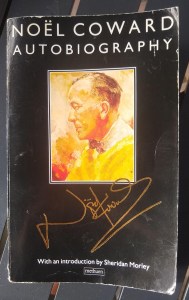
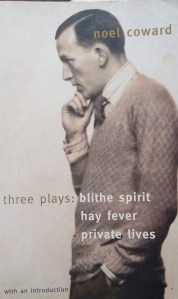
I can’t remember when I first discovered Noël Coward. I had known about him for a very long time of course but perhaps I really only discovered him after picking up a paperback copy of Blithe Spirit. Included in that slim volume were two other plays, Hay Fever and Private Lives. Together they are a lively, witty and hugely enjoyable read. A few years ago, Liz and I were on holiday in France and I took along his autobiographies to read. This is what I wrote about them back then.

I’ve spent most of this holiday reading the autobiography of Noël Coward and it’s actually three books in one. The first part is his first autobiography, Present Indicative, part 2 is an unpublished segment of his unfinished third autobiography, Past Conditional and finally his second published autobiography Future Indefinite.

Book one, Present Indicative was published in 1937 and concerns Noël’s early years, his childhood and his first tentative steps into the theatre. It’s an account of a vanished world of repertory companies, writers, actors and actresses who have long gone and whose names mean little today in the 21st century. Even so it is hugely fascinating and interesting and as always enlivened by Noël’s supremely witty text. Noël was a homosexual in a time when homosexuality was illegal and most of his private life he keeps private although armed with a little knowledge of Noël we can read between the lines and assume that Jack Wilson who comes to live with him at his home, Goldenhurst in Kent, was presumably his lover.

Book two, Past Conditional is an unpublished and unfinished autobiography that was intended to fill in the gap between his first two autobiographical books. It starts where the first one finished off, in the early 1930s and differs considerably in tone as it was written much later in the mid-1960s and Noël was able to look back at himself in the 1930s and examine himself from a greater perspective. Such a pity it was unfinished. An interesting segment concerns the death of his brother who is scarcely mentioned in the text as he and Noël were never close. The brother was clearly never part of Noël’s theatrical world and the family send him off to South Africa only for him to return and die of cancer.

The final book in the autobiographical series was Future Indefinite in which Noël recounted his time during the Second World War. He seems like many to have had a very low opinion of Prime Minister Neville Chamberlain, although to be fair to Chamberlain, he was doing his utmost to avoid the horrors of war. Sadly, and clearly unknown to Mr Chamberlain, Adolf Hitler did not want to avoid war, he was in fact wanting war very badly and happily it was Mr Churchill who understood this only too well.

In June of 1939 Noël, who was a great globetrotter, decided to take a tour of Europe in the light of Mr Chamberlain declaring peace in our time. He visited Warsaw and Danzig, Moscow, Leningrad, Helsinki, Stockholm, Oslo and Copenhagen. He found that many of those people were just waiting for Hitler to invade, particularly the Poles. In Russia he found a state that declared it had found freedom in Communism but was in fact quite the opposite as the Stalinist regime had choked any kind of criticism or free thinking whatsoever.

When war was declared Noël was asked to be part of an Anglo-French PR unit in Paris which he seems to have enjoyed for a while and then became a little bored with. He was sent on a tour of the USA to gauge opinion there on the war and was on his way back when the Nazis invaded France. He also did a tour of Australia and New Zealand to entertain troops and did charity work for various organisations helping those who were bombed out in London.

By far the most interesting part was his account of the filming of In Which We Serve, a very patriotic film showing the activities of a ship in the Royal Navy that was eventually sunk and the lives of those who served in her. In his very first autobiography, the names of the many actors and actresses he worked with meant very little to me but now I can recognise a few names, John Mills and Richard Attenborough for instance and David Lean who co-directed the film with Noël although in actual fact, Lean directed most of the film when Coward became bored with the long-winded filming process.

Coward goes on to talk about Blithe Spirit, my favourite of Coward’s plays which was made into a film in 1945. Coward was not keen on the resulting film. David Lean added an ending in which Charles Condomine, played by Rex Harrison, dies and joins his ex-wives in the spirit world. Coward complained that David Lean had f**ked up the best thing I had ever written!  Personally, I loved it.

Final verdict of the Noël Coward biographies; fascinating, always interesting and hugely entertaining.

Just recently I’ve finished reading The Letters of Noël Coward edited by Barry Day. It’s a massive volume and I’ve read it over a long period of time, sometimes turning to other books but this year I decided I would make a big effort to finish it. How the author/editor would even go about collecting Noël’s letters I really don’t know unless Noël typed his letters and kept carbon copies. Anyway, this collection goes from Noël’s youth to his final days. Some of his letters describe his theatrical successes as well as disappointments when things didn’t go so well. Coward made friends all over the world and was fond of visiting them, especially those in the warmer climes of the world when England was cold and frosty. His letters cover his love of the theatres of London and also those of Broadway. After many months of hard work Noël would travel, sometimes with friends but many times on his own and he would talk about the places he visited in his letters. Travelling was his way of relaxing although he always found time for writing new plays.

The book is a huge volume and the editor has woven Noël’s letters with some interesting text about what was happening to Noël in between his letter writing. In 1941 Noël was invited to stay at the Welsh resort of Portmeirion where, many years later, the famous TV show The Prisoner starring Patrick MacGoohan would be filmed. His friend, Joyce Carey was hoping to write a play away from the bombs that were dropping on London. Her play never materialised but Noël wrote Blithe Spirit during the five days that he was there.
The original theatre production starred Cecil Parker as Charles Condomine and Kay Hammond as Elvira. On July 18th, 1941 Noël wrote to Jack Wilson to review the performance. He praised everyone but wasn’t happy with Margaret Rutherford as Madame Arcarti. He finished by mentioning that “I need hardly say that she got a magnificent notice. So much for that.”

My first introduction to Blithe Spirit was the wonderful film version made in 1945 by David Lean. The two stars of the film, to my mind anyway, were Rex Harrison and Margaret Rutherford, although Constance Cummings as Mrs Condomine and Kay Hammond as Elvira, Mr Condomine’s late wife, were equally good.

If you don’t know the story to the play then here it is. Author Charles Condomine is writing a novel and one of the characters is a medium. To obtain information for his book, Charles asks local medium Madame Arcati round for dinner to perform a séance. The outcome is that Charles’ late wife Elvira is conjured up but only Charles can see her. Even so, she manages to cause mayhem in the Condomine household and upset Ruth, Charles’ current wife, no end.

That brings me to what you might call the punch line to this post. Last Thursday Liz and I went to see a production of Noël’s fabulous play at the Grand Theatre in Blackpool. Apart from a few pantomimes when I was a child this was my first visit to the theatre. (Having said that, I did go to a performance of Calendar Girls, the musical version, in Lytham a few years ago.) This however was a classic play written by an outstanding author at a venerable classic theatre. I was excited as we entered and found our seats.

A scene from the recent production at the Blackpool Grand Theatre

Blithe Spirit at the Blackpool Grand Theatre

The stalls were 90% full. The announcement came to take our seats, the lights went down and the performance began. It was an enjoyable performance but a couple of things struck me. Although the actors were good, they weren’t in the same class as the actors in David Lean’s film version. The action is set in the 1940s and Rex Harrison and the British actors from that period seem to have a unique smooth diction and rhythm of speech which however hard they try, actors today just really cannot reproduce. Adam Jackson-Smith as Charles Condomine was pretty good but the play needs a really good comic actor to play Madame Arcati and Susan Wooldridge was good but hardly the equal of the wonderful Margaret Rutherford.

Bridgette Amofah played Elvira quite well but in Noël’s original production the character had pale makeup with a hint of green and was followed around the stage by a green spotlight. Bridgette is a black woman so perhaps the make up wouldn’t have worked but I do feel that something could have been done with makeup and lighting to make her look a little more ghostly.

These minor things apart, I enjoyed my visit to the theatre and it was good to see that Noël Coward can still entertain the public many years after his death in 1973.


What to do next: Here are a few options.

Share this post on your favourite social media!

Hit the Subscribe button. Never miss another post!

Listen to my podcast Click here.

Buy the book! Click here to purchase my new poetry collection.

Click here to visit Amazon and download Floating in Space to your Kindle or order the paperback version.

Click here to visit amazon and purchase Timeline, my new anthology.

Travelling and Writing in France

Once again Liz and I are in France in our small motorhome. This week I thought I’d talk about our journey and also about my personal journey as a writer.

We came over on the ferry from Portsmouth to Caen after spending the night in a small pub called the Jolly Boatman somewhere in the south of England, actually Kidlington, I think. We have visited this pub once before back in May and it was nice to find that the staff remembered us even after just one visit. The trip over on the ferry was good. We paid a little extra for a top of the range cabin and it was well worth it. We had a little balcony, a tv, kettle and various cold drinks in the fridge. After a bit of a sleep and a shower, we awoke refreshed and ready to find a place to stop for the night in France.
The great thing about France is that motorhomes are welcomed with plenty of free overnight stopping places with toilet emptying facilities and fresh water. Some places require a jeton, a token that can be bought in local shops to obtain fresh water but otherwise most places are free. In England, many seaside places seem to just complain about motorhomes parking up for free but surely those motorhomers are using local shops, bars and restaurants and bringing trade into these local communities.

The Jolly Boatman

The weather wasn’t great at first so we ploughed on south towards Bordeaux in search of the sun. Liz is a great navigator and a real master of google maps and she found us some lovely stopping places, one in particular with a man made beach and a lovely swimming lake. We needed that lake to cool down as the weather became seriously hot.

When I’m away I like to have a couple of blog posts written in advance as travelling in our van I don’t always have time to write. Not only that sometimes it’s hard to get a good wifi signal to upload my posts. Recently I’ve been not only lazy but actually struggling a little  for blog post ideas. A few months ago I met up with an old friend I hadn’t seen for a while and he seemed less than convinced that I could write a new post every week. I’ll bet you use ai to write them he joked. I wasn’t amused.

To be honest, I do use ai, not to write posts but to make the quirky memes and graphics that I use to promote my blogs. This is one over to the right. I had never even thought about using ai to actually write a post. Even so, I thought as I was a bit low on ideas it might be interesting to ask ai what I should write about. It came up with a plan for a post asking me to answer various questions about my work. Anyway, here are a few of them.

Share how you got started writing and what inspired your first book.

I can’t really remember what inspired me to write. I can only say that having been a great reader, I wanted to be on the other side of the coin, so to speak: Not just reading the thoughts and ideas of others but also sending my own thoughts and ideas out there too. I like the feeling of communicating not only to others but communicating over the years. I remember reading Homer’s Odyssey and thinking that here was this man, Homer, sending me his thoughts and ideas across the centuries that lie between us and that his ideas carried on after his death.

Talk about your creative routines (or lack of them) — do you write in bursts, or steadily each day? 

I’d like to tell you that I have a routine but actually I haven’t, although I do try to create a sort of routine. What I tend to do is think a lot about writing. I’ll think of a story or a blog, usually the time in a morning when I have woken up far too early and I’ll ‘write’ a blog or a story in my head. I’ll file that away in my head and then either go back to sleep or get up and after breakfast I’ll open up my laptop and write it all down. Sometimes I’ll spend weeks writing a story in my head and when I’ve got a lot of ‘copy’ I’ll start actually writing or typing it out. Years ago I used to use a technique by a self improvement guy called Jack Black who invented something he called Mindstore, a way of using positive thinking to improve your life.

It involved creating an entire imaginary house inside your head with various rooms, just like in a real house. In the bathroom for instance, you could take a breathtaking shower that energised and restored you ready for a big meeting or interview. One room I created was a room for storing my stories and when I’m not in front of my laptop that’s the room I use to write and save my work. My website and my one deadline of 10:00am on a Saturday morning gives me a focus to work at my stories and blog posts and get them ready for publishing. Writing this week has been difficult as Liz and I are working our way across France in our little motorhome although by the time you read this we will have arrived at the lovely gîte we rent in the village of Parçay-les-Pins.

Explore what you love (and what you struggle with) about being self-published.

I love writing and I love publishing my work. I write purely for myself and I write about things I like reading about but I do get a particular buzz every time someone hits that ‘like’ button. What do I dislike about it? Well, I did hope that I could actually make money from writing but so far, that’s just a dream although I do make a few pennies every time someone buys a copy of one of my books. Anyway, I enjoy writing and I’ll carry on writing my blog for as long as I continue to enjoy it. When I no longer enjoy it, I guess I’ll just have to find something else to do. What do I struggle with? Grammar and spelling mostly but luckily, Liz is pretty hot on both of those things and it is she who goes through my work and gives it a good checking over and she’ll correct all the bad tenses and spelling mistakes that appear frequently in my blogs.

A few days ago it was our anniversary. The day before we were parked in a really lovely place with picnic tables and a lake and I thought it would be a good idea to stay and move on the next day. Liz felt that she would rather have a good restaurant anniversary meal so we set off in search of a place to eat that night. Now, the thing about the Loire is that the French don’t seem to eat out much at night. There are plenty of restaurants but most only seem to open for lunch which is the main meal of the day for the French. We tried and tried to find a place but all seemed to be only open for lunch. We found one place, conveniently near a motorhome parking spot but the menu was not only very expensive but didn’t inspire either of us. It was getting later and later and eventually we decided to stop when we saw a kebab takeaway. Takeaways are few and far between in France so we bought a couple of kebabs, parked up for the night and poured us both a glass of vin rouge.

The wine was good but the kebab wasn’t but happily we had plenty of French cheese and bread to round off the meal!


What to do next: Here are a few options.

Share this post on your favourite social media!

Hit the Subscribe button. Never miss another post!

Listen to my podcast Click here.

Buy the book! Click here to purchase my new poetry collection.

Click here to visit Amazon and download Floating in Space to your Kindle or order the paperback version.

Click here to visit amazon and purchase Timeline, my new anthology.

The Curse of the Blank Page

This week I’ve been experiencing that blank page syndrome; you know what I mean, you stare at the paper, or the empty laptop screen and nothing comes to mind, and the paper stays like that, blank. So in an effort to boost my creative powers I took a look back at some of my old blog posts.

I see that I started this blog page back in 2014 and my first post went out on the 23rd of May. It wasn’t anything exciting, in fact it was pretty much a sort of advertisement for my book Floating in Space which had just been published on Amazon to an overwhelming gush of cyberspatial silence.

Floating in Space was my first book and I put it together many years ago. At the time, I was writing lots of science fiction and espionage stories based on my love of television shows reflecting both those genres. I had begun to realise though that for fiction to be worthwhile it has to have a basis in real experience. All I knew about sci-fi and espionage was what I had read about or seen on TV so I started to write about myself. I wrote about the insurance company where I had worked and also the bus company where I worked later after a short trip to Europe that was supposed to last for a year but ended up covering about four weeks.

After I had compiled a few essays, I thought I could put them all together into a fictional story about a young man who packs in his job as an insurance clerk, goes to Europe and returns home penniless so gets himself a job as a bus conductor. Throw in some real life experiences and a healthy dose of fiction and the result was a short novel. I have to say that I love Floating in Space. Reading it today is like taking a trip back to my younger days and it brings back all sorts of memories and I do hope that I’ve managed to communicate that time in my life in the mobile phone free and non digital late 70s to my readers.

Floating In Space available now from Amazon!

There have been plenty of times when I’ve struggled to produce an essay or a post and I started one off a few years ago which began, pretty much like this one, in a sort of rambling fashion hoping that something would come to me. I ended up writing about some training which I had undertaken at the time. Here’s an excerpt:

I’ve been on a training course this week, a pretty interesting one but unfortunately not one I can talk about much as it relates to the data protection act and the computer misuse act and all sorts of legal stuff. Still, the training reminded me of a fairly funny training story that happened nearly ten years ago. It was when I had just started at the Highways Agency and in fact I was one of the first batch of operators to be recruited for the North West, a fact that I regularly bore my colleagues with.

The HA sent us to some establishment in Salford for an induction course and I have to say, as much as I like my job, that course was pretty dull! It was fun meeting some new people and doing some interesting team building exercises but after a while, they started to get a little boring and we were all thinking when will we be able to start learning the nuts and bolts of our jobs?

One of the exercises, and to this day I don’t know the point of it, was for us to split into twos and one member of the duo went into another room where they thought of a holiday story to tell, and the other was asked to completely ignore their partner when they returned and began to relate their story. In this instance my colleague was the storyteller and I was the ignorer! So she came back in and began her story. I polished my nails, yawned in her face, checked my watch, hummed a little tune to myself and so on. After a while some inner instinct made me turn to take a quick look at her, and it was lucky I did so because later on I reckoned I had been only a split second away from taking a hefty punch to the nose, however I was able to calm her down and explain it was all part of the exercise!

Just reading that brought lots of training memories back. We did lots of role playing at Highways in fact I had to do one during the interview for the job,. In that one I had to deal with a woman on the phone who supposedly was being chased by someone while on the motorway. I’m guessing the idea was to see if I could stay calm during stressful situations. Anyway, I managed to calm the lady down, told her the police were on the way after working out her exact location by careful questioning. I got the job so I must have done reasonably well.

Photo courtesy Highways Agency

Towards the end of the induction course, boredom had truly set in. I remember one hot afternoon in this stuffy office cum training room and the lecturer going on and on about the chain of command and how issues had to be escalated to one’s line manager and one’s line manager would escalate things further if need be. I feel rather embarrassed to admit this now but I nodded serenely off into a private world of slumber. Later, and whether it was minutes or even hours later I really don’t know but I was jolted sharply back to reality by the voice of our instructor calling my name. A sea of blank faces were looking at me so I tried to think back: What was the last thing we were talking about? Oh yes, I remember now:

“I’d escalate that to my team manager.”

“Escalate what to your team manager?”

“Well, er. . .”

I glanced over to my left, perhaps hoping for some help, but one of my new colleagues, actually the lady from the storytelling incident earlier, was looking at me in disgust. Over to my right two other colleagues were in a strange sort of state. One had gone almost purple in the face as he tried to hold in a tumult of suppressed laughter and another was covering his face and making strange noises as his shoulders pumped up and down hysterically.

Finally, the lecturer, looking at me with contempt, observed that it might be better for me if I paid attention more and moved on.

Not the finest training course but not my finest hour either.

My absolute favourite training time was something I wrote about a few weeks back, bus driver training.

In those days circa 1979, we trained in old back loader manual gearbox buses sat in a small cab at the front and steering with a huge steering wheel and having to double the clutch to change from first to second gear as those old gearboxes weren’t fully synchromeshed.

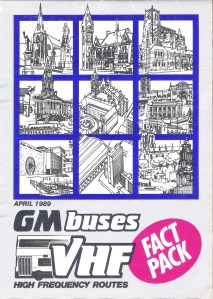
Vintage GM Bus flyer

The moment I climbed up into the cab I felt at home and I loved my time in the driving school. Every morning we used to check the bus over and top up the oil and water if required. Then our trainer would choose somewhere in the vast Greater Manchester operating area for breakfast. We might have a drive to perhaps Oldham garage or bus station. I’d start off and our trainer Bill sat behind me in the first seat. The window to the cab had been removed and Bill would give directions and off we would go. His main instruction particularly on narrower roads was to ‘ride the white line’ because our big bus needed the room, car drivers in smaller vehicles didn’t.

Bill knew all the canteen staff in all the canteens in Manchester. Sometimes we might just have tea and toast because on the next run Bill might designate Stockport as our next destination as the new canteen there always served up something good for lunch. To be honest though, I always preferred a breakfast. Back in those days the GM Buses canteens served a breakfast special which was egg, sausage, bacon, a slice of toast and a choice of either beans or tomatoes, all for a pound. My own breakfast favourite though was two eggs on two toast with beans and a sausage which is still a favourite today.

Well, I think that’s it for today’s blog post. I’m pretty pleased with myself. I started out without the faintest idea what to write and managed to write 1400+ words and I know I pinched a few from a couple of old posts but either way, I managed to break the curse of the blank page!


What to do next: Here are a few options.

Share this post on your favourite social media!

Hit the Subscribe button. Never miss another post!

Listen to my podcast Click here.

Buy the book! Click here to purchase my new poetry collection.

Click here to visit Amazon and download Floating in Space to your Kindle or order the paperback version.

Click here to visit amazon and purchase Timeline, my new anthology.


Curry, Tapas and a Read in the Sun

Over on the front page of this site you will find a whole lot of stuff about me. It tells you that I have always wanted to be a writer, that I enjoy writing as well as Formula One racing, classic cinema and books. In one segment it mentions that I like dining out, in fact it says that dining out is one of the great experiences of life and so I thought I’d start with that, great experiences and see where that leads me.

One of the great experiences of life, as far as I’m concerned anyway is a pretty simple one. It involves lying on a sunbed and relaxing on a hot, or even just warm day. Throw in a dip in the pool and that sensation of lying in the sun while you dry off is made even more satisfying.

Of course, doing that in the UK at any time of the year is not always possible, especially in February which is why for perhaps the last ten years, if you want to get hold of me at this time of the year, you’ll find me in Lanzarote.

What can I tell you about this place? Looking over on Wikipedia I see the Canary Islands emerged from the sea bed during a volcanic eruption about 15 million years ago. There is apparently some evidence the Phoenicians were the first settlers here although the first known records of the islands come from Pliny the elder, the Roman scholar.

After the fall of the Western Roman Empire, nothing is recorded about the Canary Islands until 999, when the Arabs arrived at the islands. In 1336, a ship arrived from Lisbon under the guidance of Genoese navigator Lancelotto Malocello, who used the alias ‘Lanzarote da Framqua’ which is where the island’s name comes from. Today Lanzarote is part of Spain.

When we first came here round about ten years ago, we hired a car and drove round the island. We visited the volcano which was pretty much what you’d expect a volcano to look like, although the drive down a very narrow winding road in a coach towards the centre of it was a little scary. Otherwise, apart from the usual touristy stuff, there wasn’t that much to see and we quickly realised that the Marina Rubicon in Playa Blanca is by far our favourite place. Our rented villa is on the bus route and only five minutes walk from both the bus stop and the local shop so renting a car is not a particular concern.

What else do I do on Lanzarote? Well I read a lot of books.

Crossfire by Jim Marrs

I do love a JFK assassination book and this is a good one. It covers pretty much everything there is to know about the assassination from Oswald to Ruby, the Texas School Book Depository, the Grassy Knoll, the CIA, the FBI, the Warren Commission, the House Select Committee on assassinations and everything in between. Who really did it? I’m not sure. Was Lee Oswald the killer or just a patsy? Again I’m not sure but a lot of the evidence against Oswald was compromised. The officers who found the assassin’s rifle said it was a Mauser, not a Manlicher Carcarno. Later all but one of the officers said they were mistaken. The one who said he wasn’t mistaken was later murdered.

Who were the people on the Grassy Knoll with Secret Service IDs when all the SS were in the President’s motorcade? The shells found at the scene where the fleeing Oswald supposedly shot officer Tippet  were marked by a police officer. Later, when asked to identify the shells, his marks weren’t there. I could go on and on. Maybe Oswald did it, maybe he didn’t. Perhaps he was a patsy as he claimed. Will the records which President Trump will release show what really happened? I doubt it but either way, the JFK assassination is such an fascinating mystery.

The Maltese Falcon and The Thin Man by Dashiell Hammett

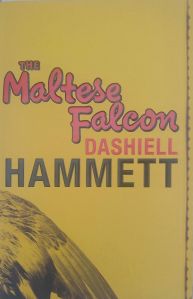
I absolutely loved this book. I mentioned it last week in a post about detectives but it really is a fabulous read and the film with Humphrey Bogart follows it closely, especially the dialogue.  If you have never read it or seen the film, it’s about Sam Spade, a detective who happens on a group of people all after the mysterious Maltese Falcon statuette worth untold millions and at the same time seeks to find his partner’s murderer.
The only real difference between the film and the book is that in the book, Caspar Gutman’s daughter makes a brief appearance but not in the film. In the film Gutman infers that Miss Wanderley has stolen a thousand dollar bill and Bogart as Sam Spade demands that Gutman confesses to stealing it or stands for a frisk. In the book, Spade surprisingly thinks Miss Wanderley has got the note and forces her to strip naked to show that she didn’t steal it. Only then does he challenge Mr Gutman.

I have to say I have found the works of Raymond Chandler a much better read but this particular story I loved almost as much as the film.

Another book by Hammett, The Thin Man, wasn’t as good. Detective Nick Charles is no longer a detective but many others seem to think he is and he seems to feel compelled to look into a case of murder, even though he doesn’t seem that interested. Perhaps that was why I lost interest early on and kept putting this book down in favour of others.

Going back to the thing I mentioned earlier, the one about dining being one of the great experiences of life, well, only a few minutes walk from our rented villa, just next to the shop I told you about is a really fabulous Indian restaurant. No need to get the bus to the Marina or the centre of Playa Blanca as we can just walk to the restaurant. The funny thing is, Liz and I are part of a curry club and once a month we meet at a curry house in St Annes and settle down for a curry and some chit chat. I was actually thinking of perhaps going every two months or even leaving the curry club altogether. Well, I like curry but I’d had all I really wanted to eat in that particular restaurant and, nice though it is, I perhaps fancied going to the Chinese on that day or the local Italian.

Now however, I seem to be once again hooked on curry. Our local curry house here in Lanzarote, The Indian Gourmet, is a very friendly place. We have established our favourite table. The staff know that Liz hates coriander and they have marked us down as preferring medium rather than hot as regards curry strength. The chef always comes out to see if we have enjoyed his creation and always recommends what we can try next time and so on. The curry house then has become our sort of go to place if we want to eat out and don’t fancy travelling far.

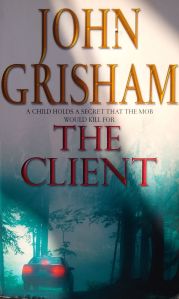
The Client by John Grisham

Time for another book and this one was a great holiday read. It’s about an eleven year old boy who witnesses a suicide but before the lawyer kills himself, he tells the boys -Mark and his little brother Ricky- where the dead body of a murdered US senator has been hidden. The senator was the victim of a mob ‘hit’ and Mark won’t tell the police or the FBI about the body as he is concerned for the safety of his mother and brother. When he and his mother are in hospital staying with his brother Ricky, as he has gone into shock, Mark contacts a lawyer and a big legal stand off begins with the FBI. Things eventually get settled but I can’t help wondering why the boy wouldn’t trust the FBI or even why he would tell them about the body in the first place. Of course if he had then there wouldn’t be a story. Either way this was a great holiday read and the narrative kept me interested all the way to the end. I didn’t realise it was also made into a film starring Tommy Lee Jones and Susan Sarandon which I must remember to look out for.

Another of our favourite places is the Berruga Tapas bar which we have been visiting for years. Sadly, a lot of our favourite staff members have moved on in the intervening year since our last visit. The boss is still here though, Juan who always remembers us and greets us warmly and the food is still the same mix of Spanish tapas and English snack food like burger and chips and so on. It’s a rough and ready sort of place but it’s also a lot of fun. And we do like the freebie at the end of the night; a shot of vodka caramel in an ice cold glass.

So, what will we be having tonight? Tapas or curry or something new perhaps?


What to do next: Here are a few options.

Share this post on your favourite social media!

Hit the Subscribe button. Never miss another post!

Listen to my podcast Click here.

Buy the book! Click here to purchase my new poetry collection.

Click here to visit Amazon and download Floating in Space to your Kindle or order the paperback version.

Click here to visit amazon and purchase Timeline, my new anthology.

Watching (and reading) the Detectives

Liz and I are over here in sunny Lanzarote having exchanged the cold of the UK for the warmth of Lanzarote. Of course, it is still February and things aren’t perfect over here. It’s warm but there are plenty of days when gusty winds blow across the island as well as days when the sun has been obscured by clouds. Even so there are still plenty of bars to drink at, plenty of tapas to be eaten and of course we have plenty of books to read, two of which have inspired this week’s post.
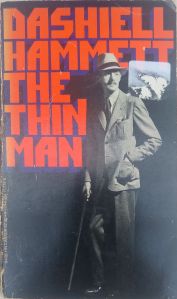
The Thin Man is a book I picked up somewhere in a second hand bookshop. It was written by Dashiell Hammett and features his famous detective, Nick Charles.

Dashiell Hammett was born in May, 1924 and became a writer of detective stories after working for the famous Pinkerton National Detective Agency. In his obituary in the New York Times, they described him as ‘the dean of the hard boiled school of detective fiction.’

Time magazine included his novel Red Harvest, published in 1929, on their list of the 100 best English language novels. The Thin Man was made into a film in 1934 starring William Powell as Nick Charles and Myrna Loy as his wife Nora. I’ve only just started reading the Thin Man and it’s been pretty good so far. One interesting element of it though was finding out that in New York in the mid 1930’s it was possible to find an all-night delicatessen that would deliver coffee and sandwiches at 5 in the morning.

A further 5 sequels in the Thin Man film series were made finishing in 1947 with Songs of the Thin Man.

Another book by the same author is one that Liz got me for Christmas, The Maltese Falcon. I’ve only just scanned through it so far but it looks like being a good read. The book was made into a classic film in 1941 with Humphrey Bogart playing the part of detective Sam Spade. Mary Astor plays Ruth Wanderley who contacts the firm of Spade and Archer to help her track down her missing sister who she thinks might be held against her will by a man called Thursby.  Miles Archer, Spade’s partner decides to take on the case but is found dead by the police later that night.

Spade begins to try and find out what has happened and meets various other characters like Joel Cairo and Kasper Gutman played wonderfully by Peter Lorre and Sydney Greenstreet. One of my favourite scenes is where Spade and Gutman meet and Gutman asks ‘are you a close mouthed man?’ Spade replies that no, he likes to talk and Gutman responds famously with ‘I’m a man who likes to talk to a man who likes to talk’.

Hammet died in 1961 of lung cancer and Raymond Chandler said this of him: ‘He was spare, frugal, hard-boiled, but he did over and over again what only the best writers can ever do at all. He wrote scenes that seemed never to have been written before.’

That brings me nicely to another of my favourite detectives, Philip Marlowe and he first appeared in the novel The Big Sleep. The book was written by Raymond Chandler and Chandler had this really fabulous talkative way of writing. You can almost imagine hearing Humphrey Bogart’s voice as you read the book. Bogart of course played Marlowe in the 1946 film version directed by Howard Hawks. Here’s a quote from the book, an example of Chandler’s descriptive style:

I sat down on the edge of a deep soft chair and looked at Mrs Regan. She was worth a stare. She was trouble. She was stretched out on a modernistic chaise-longue with her slippers off so I stared at her legs in the sheerest silk stocking. They seemed to be arranged to stare at. They were visible to the knee and one of them well beyond. The knees were dimpled, not bony or sharp. The calves were beautiful, the ankles long and slim with enough melodic line for a tone poem. She was tall and rangy and strong looking. Her head was against an ivory satin cushion. Her hair was black and wiry and parted in the middle and she had the hot black eyes of the portrait in the hall. She had a good mouth and a good chin. There was a sulky droop to her lips and the lower lip was full.

Not bad eh? Dilys Powell called his writing ‘a peculiar mixture of harshness, sensuality, high polish and backstreet poetry’ and it’s easy to see why. Mrs Regan was played by Lauren Bacall in the film version and up until now I had always thought this was the film where Bogart and Bacall met. Wrong! A quick check on Wikipedia and I see the couple met on the set of To Have and Have Not in 1944. Bacall was 19 and Bogart was 45 and married to his third wife Mayo Methot at the time. Sparks apparently flew between the couple and Bogart divorced Mayo and married Bacall the next year, 1945. Despite the great on screen chemistry together the couple only made four films together.

The film version of The Big Sleep was a brilliant adaptation of the book and some of the differences are interesting. For instance, early in the book, detective Philip Marlowe played by Bogart meets General Sternwood’s daughter Carmen. She looks at Marlowe and remarks how tall he is. In the film, Bogart of course wasn’t that tall so the dialogue is reversed ‘You’re not very tall, are you?’ comments Carmen.

The plot of the book and film are pretty complicated, although having read the book recently I think that the book is easier to follow. During the filming the director and his stars wondered who killed the character of Owen Taylor, the Sternwood’s chauffeur. They sent a cable to Raymond Chandler asking him. Chandler told a friend later ‘Dammit, I don’t know either!’
One strange element in the film, certainly for me, is a scene where Philip Marlowe (Bogart) is watching blackmailer Geiger. Geiger has a shop that sells rare books in Hollywood and Marlowe asks for information in another bookshop opposite. There he chats to a bookseller played by Dorothy Malone who, if you are old enough, you will remember her from the Peyton Place TV series. Malone and Bogart seem to hit it off well in the film but he never returns to the bookshop and Dorothy is never seen again in the film.

Every time I watch the film, I always expect Malone to reappear but that’s one of the many dead ends the film leads us down. I think it was Hitchcock who said that every scene in a film should lead the audience somewhere and Quentin Tarantino of course said the reverse. Perhaps director Howard Hawks favoured Tarantino’s view.

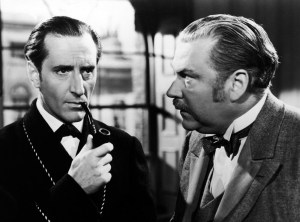
Basil Rathbone as Holmes and Nigel Bruce as Dr Watson (image via creative commons)

Perhaps the most famous literary detective is Sherlock Holmes, created by the author Sir Arthur Conan Doyle in 1887, first appearing in the story A Study in Scarlet. The stories are narrated by Holmes’ friend and companion, Doctor Watson. The Guinness Book of Records reports Holmes as the most portrayed character in film and television history.

My personal favourite Sherlock Holmes in the cinema was the version created by Basil Rathbone in a series of films beginning in 1939. 14 films were made with Rathbone as Holmes and Nigel Bruce playing the part of Dr Watson. The first two films were set in the Victorian era and were produced by Twentieth Century Fox. The later films were produced by Universal who set the films in, what was then, the present time period, that of the second world war.

Time now to move onto my favourite TV detective, the bumbling Lieutenant Columbo.

Columbo first appeared in the early 1970s as part of the Mystery Movie TV series. Each week followed a different detective trying to track down a murder case, sometimes it was MacMillan and Wife and other weeks McCloud, Banacek or various others. The most popular one by far though was Columbo.

Columbo was a homicide detective for the LAPD and he was played by Peter Falk, although the role was originally written for Bing Crosby. Crosby however thought a regular TV slot would interfere too much with his golf so he turned down the role, went back to the fairway and the part went to Peter Falk who made it his own.

If you ever see the original pilot, shot in 1968, you can see how Crosby might have fitted into the part, as Falk plays Columbo in a very Crosby like laid back way. The very first guest murderer was Gene Barry who was familiar to TV audiences after playing Amos Burke in Burke’s Law for many years. He also starred in a 1953 film version of War of the Worlds.

The pilot episode also introduced audiences to a particular feature of Columbo, in that we see who the murderer is and how he commits the crime first. Then we see Lieutenant Columbo gradually solve the clues and get his man, or woman. The essence then of a great episode comes in the clever way Columbo nails the murderer. Sometimes that moment is a bit of a non starter, other times it’s nothing short of brilliant. Sometimes, even if that final moment is not so great, it’s still been a great episode.

The Columbo of the early series is an absent-minded quirky fellow although in later episodes, Peter Falk who plays the detective, seems to downplay that quirky element.

Favourite episode? I’m not certain but it might be ‘Murder by the Book‘, starring my favourite murderer, Jack Cassidy. In this 1971 episode, Jack plays a writer, actually part of a writing double act, who together produce a series of novels about ‘Mrs Melville’ who is an amateur detective. The thing is, Jack’s partner wants to ditch the partnership but Jack is not happy about it. He is so unhappy he decides to, yes you guessed it, bump off his co-writer. He does it in a rather ingenious way which foxes Columbo but not for long and to cap it all, the episode is directed by none other than Steven Spielberg!

So who was your favourite fictional detective?


What to do next: Here are a few options.

Share this post on your favourite social media!

Hit the Subscribe button. Never miss another post!

Listen to my podcast Click here.

Buy the book! Click here to purchase my new poetry collection.

Click here to visit Amazon and download Floating in Space to your Kindle or order the paperback version.

Click here to visit amazon and purchase Timeline, my new anthology.

Changing the Narrative

Once again as we have for the past ten or so years, Liz and I have escaped the dismal cold of January in the UK and flown over to sunny and warm Lanzarote, leaving behind the dark nights, the cold and the rain.

Noel Coward did a similar thing every winter and went off to the Caribbean or anywhere he fancied really. Perhaps the cold is just not for us writers. Certainly not for me at any rate. Anyway, its nice to think I have something at least in common with a great writer like Coward.

Our day started last Sunday with my alarm going off at the utterly inconceivable time of 5:30am. Well, there was a time when I used to have to get up even earlier, happily, not any more. A quick wash and shower, a much-needed cup of tea and soon our driver was knocking at the door.

A pleasant surprise awaited us at the airport. On previous trips we have had to endure the hell of passing through security, taking out all our numerous electronic devices and putting them in plastic trays to be X rayed. This year, thanks to new technology, we didn’t have to do that. No longer was I running about, beltless, hanging on to my trousers while trying to grab my various belongings from numerous trays and pack them again in my cabin bag. This year the experience was much more civilised.

On the aeroplane I settled down and opened up my book to read. I have, as usual, plenty of reading matter with me but the book I chose to read on the flight was The Best Exotic Marigold Hotel as it was a fairly slim volume and fitted easily into my shoulder bag. I chose this book as it is the basis for the film of the same name, one of my favourite films.

It came as a bit of a surprise then to find that the book was almost completely different to the film. Yes, there is a Best Marigold Hotel just like the film and it is about a bunch of retired British people who take up residence there but after that, the similarity ends.

It’s almost like watching one of those James Bond films where Ian Fleming’s original story has been evolved out of recognition. Take Moonraker for example. The book is about a German officer who has been hospitalised in WWII during the Battle of the Bulge. Some German troops had been dressed in captured allied uniforms to confuse the enemy and Drax was injured while in British uniform. When fully recovered Hugo Drax continues the deception. He builds up a great business empire but decides to take his revenge on Britain by building a rocket, the Moonraker, which he intends to drop on England. In the film Bond investigates the disappearance of a space shuttle only to find Hugo Drax wants to wipe out the earth population and replace it with a master race.

The problem with film is that it is a group project and various people have an input on the final script. Screen writer William Goldman wrote a wonderful book about his screen writing career called Adventures in the Skin Trade. He described a typical screenplay development something like this. I should point out that I’m going by memory only as my copy of his book is thousands of miles away.

Goldman writes a script and gets a director interested in the project. The director likes the idea but he thinks the ending is not right so the author produces a second draft. The director is happy and brings a big star on board. The star likes the screenplay but is not happy that his character is killed at the end. Goldman produces a third draft and the big star is happier but thinks this and that needs changing. Goldman rewrites and comes up with draft number 4. At this point the Big Star decides to sign up with another project and he is out. The director is not happy so he drops out too. Enter director number 2. He likes the screenplay but thinks a few changes are required. The writer comes up with draft number 5. Enter big star number 2. He likes the screenplay but wouldn’t it be better if his character got the girl instead of the other guy? New draft please!

Come to think of it, wouldn’t it be great if we could order a new draft of our lives. Could I rewrite the bit where I spent 17 years working for the bus company? What about the time when I wanted to be a newspaper reporter? Maybe I could have walked down to the Manchester Evening News and perhaps asked if there were any jobs going?

Another production, actually a TV series, is another example of how producers can change the characters from a book. Hamish Macbeth is actually completely different to the books on which the series was based which was a little of a surprise to me and most of the characters in the series are the invention of the TV writers and not M.C. Beaton who wrote the books. I’m not sure how happy I would be if someone made a TV show out of my book and then proceeded to change all the characters, still I did enjoy Hamish Macbeth as a TV show. It was an oddball quirky little drama which ran for only three seasons. Macbeth was played by Robert Carlyle and he is the village bobby in the small fictional village of Lochdubh. Macbeth is a laid-back relaxed character. He is not averse to poaching the odd salmon and he likes to apply the rule of law in his own way. He avoids promotion as all he wants is to remain in his beloved village. Back in 2022 Liz bought me a whole stack of the Macbeth books and they are all an enjoyable and easy read.

Anyway, getting back to the Marigold Hotel. I was rather unhappy with the book at first. It had originally been published under the title These Foolish Things and was written by novelist Deborah Moggach, but to cash in on the success of the film, new editions were published with the film’s title. As I began to get into the book, I actually began to like it. The central theme seemed to be the story of the lady played by Maggie Smith in the film although in the book another layer of her story has been added which the film ignores. She is mugged and goes to see her well off son for help only to find he has been involved in some dodgy deal and has left to escape the police. She refuses to go back home but her doctor recommends a place in India where she can rest and recuperate. In fact, the Marigold Hotel which he has recommended is a business venture in which he is also a partner.

Various other people decide to go and stay in the hotel too. Some correspond to the characters in the film and some do not. All in all, it was actually quite an enjoyable read and kept me entertained during our flight and for my first few days stretched out on my sun lounger enjoying the warm sunshine of the Canary Islands.

Come to think of it, I’ve changed my own narrative too, exchanging the cold of the UK for the warmth of the Canaries.

Now, what can I change next?


What to do next: Here are a few options.

Share this post on your favourite social media!

Hit the Subscribe button. Never miss another post!

Listen to my podcast Click here.

Buy the book! Click here to purchase my new poetry collection.

Click here to visit Amazon and download Floating in Space to your Kindle or order the paperback version.

Click here to visit amazon and purchase Timeline, my new anthology.

January, Don’t You Just Hate It?

I might as well start off this post by coming out and saying what I think straight off the bat; I don’t like January. I don’t like it at all because the thing is, I just hate the cold. I reckon it would be rather nice to just hibernate for the entire winter period just like many creatures do.

I’m not that keen on Christmas so maybe late November would be a good time to just settle down somewhere warm and comfy, snuggle up into my duvet and perhaps wake up round about late March. I know that March can be unpredictable in terms of the weather. It’s generally windy and cold but certainly not as cold as January. Waking up in March would give me time to get my bearings before moving into April, my favourite time of year when the days are getting longer, nature is starting to revive and warmer days are coming.

January 1970

Recently while pottering about trying to sort out the tons of ‘stuff’ I seem to have accumulated over the years I came across my schoolboy diary from 1970. As this post will be published on the 18th of January, I thought I’d take a look and see what I had written. Back in 1970 the 18th was a Sunday and all I decided to record was “Watched Captains Courageous and Randall and Hopkirk”.

Randall and Hopkirk was a TV show first broadcast in 1969 through until March 1970. It was an action and adventure drama despite the slightly tongue in cheek premise. Randall and Hopkirk are private investigators but Randall is helped by his partner Marty Hopkirk who is murdered in the first episode but comes back as a ghost to help his partner find his murderer. Marty stays on and continues to help Jeff Randall for the entire series of 26 episodes. It was later remade with comedians Vic Reeves and Bob Mortimer in 2000. Personally, I prefer the original.

Captain Courageous was a film starring Spencer Tracy based on a book by Rudyard Kipling. The story follows the adventures of spoiled brat Harvey Cheyne Junior, the son of a railway tycoon. Harvey falls overboard from his father’s yacht and is saved from drowning by Portuguese fisherman Manuel Fidello played by Tracy. The boy demands to be returned home but the fishing vessel is on a three month fishing expedition and will not return early. The captain offers to sign Harvey on as a crewman until they return and under the tutorship of Manuel he begins to learn about fishing. Harvey becomes close to Manuel and is devasted when he is drowned. Returning home, he is reunited with his father as a changed person.

January 1649

This week I watched an interesting documentary about Charles the 1st. Back in January 1649 parliament was deliberating about what to do with Charles who had been defeated by the Parliamentarians. The parliament was known as the ‘rump’ parliament because any MP who was suspected of supporting the king was prevented from entering. Parliament voted to put the King on trial but the upper house, the Lords, declined to support this and then promptly gave themselves a holiday. Parliament then went ahead without the Lords.

King Charles was put to death on the 30th January, 1649.

January 1965

Another great British leader died in January 1965, Sir Winston Churchill. Churchill was an army officer, an MP, an author and a Prime Minister. Nothing I can write in a short post, even one dedicated fully to his life can do justice to this great man’s many achievements but let’s have a go. Churchill was born at Blenheim Palace on November 30th 1874. His father was Lord Randolph Churchill, his mother Lady Randolph was formerly Jennie Jerome from the USA, the daughter of Leonard Jerome, an American businessman.

Churchill began his military career with the 4th Hussars but later left to become a politician. He failed to be elected as MP for Oldham then went to South Africa to serve as a journalist. He was captured by the Boers and later escaped which brought him much publicity which must have helped him when he stood again as a Conservative candidate for Oldham in the 1900 general election. This time he emerged as the victor. Later Churchill became a Liberal and later still moved back to the Conservatives. The years between 1929 and 1939 became Winston’s Wilderness years when he was out of office but began to warn against the rise of the Nazis. On the 13th December he was visiting New York when he was knocked down by a car which incidentally inspired my story Timeline, the title story of my new book.

Churchill’s warnings about Nazi Germany proved correct and with the outbreak of war in 1939 he returned as a government minister and later succeeded Chamberlain as Prime Minister when Chamberlain was forced to resign as the Labour party declined to serve in a national government headed by him.

As well as serving as a politician, Churchill wrote many books and one, My Early Life, was made into a film, Young Winston. I’ve always loved that film but it annoys me no end when I see it on TV these days as for some reason a final scene in which Churchill falls asleep and dreams of meeting his late father, is cut out.

January 2003

Looking at my diary for 2003 I see I was suffering with a sore neck that January. I was off sick from work and my boss was not happy. While off sick I had written a screenplay and wasn’t sure what to do with it. I was living in Merseyside at the time so decided to send it to Phil Redmond, the producer of the Liverpool soap Brookside, thinking that he might like it enough to either give me some advice or even a job on the writing team. I had sent it with a self-addressed return envelope and guess what, I received it back in the post only a few days later minus any sort of feedback or a job offer.

January 1986

In January 1986 the spacecraft Challenger was ready to be launched into space. It was a unique mission in that school teacher Christa McAuliffe had been selected to broadcast lessons from space. The flight was the 25th shuttle mission and the 10th flight for Challenger itself. The mission was originally scheduled for July but the date was put further and further back until NASA finally decided on the 28th January. The temperature of -8 degrees was a record low for a shuttle launch and many engineers were unhappy. Their cause for concern was the shuttle’s O ring seal in a joint between the shuttle and the solid rocket boosters. In cold temperatures it was thought that the rubber rings might not be flexible enough to seal the joints. Sadly they were correct. Hot pressurised gas was released which burned into the external propellant tank which then exploded 73 seconds into the flight. All the astronauts were killed.

January 2025

To finish on a somewhat lighter note, today as I write this I was in Manchester. I decided I needed a few items of shopping so I walked into the nearby civic centre. It was still pretty cold despite the melting snow so I wrapped up well.  I had a woolly jumper on, my anorak and a baseball cap and gloves. Happily, it wasn’t quite as cool as I had originally thought. At the civic I popped into the cheap bookshop there but after a few minutes I realised that it was far too hot and I had to get out. Instead of walking further to Asda, I popped into the Iceland store a few hundred yards away from the book shop. After about 5 minutes I realised that in there too, the management had for some reason decided to crank the heating up to a level usually experienced in a Sahara Desert heatwave.

I grabbed the few things I wanted then headed for the till. Sweat was running down my face but there were two people at the till, both with enough shopping to last the entire winter. I opened my jacket and then heard some wonderful words, “can you come this way please?” Yes, a new till was opening up and me with my 4 or 5 items was through and soon out into the open air.

January, don’t you just hate it?


What to do next: Here are a few options.

Share this post on your favourite social media!

Hit the Subscribe button. Never miss another post!

Listen to my podcast Click here.

Buy the book! Click here to purchase my new poetry collection.

Click here to visit Amazon and download Floating in Space to your Kindle or order the paperback version.

Click here to visit amazon and purchase Timeline, my new anthology.

Writing and Blog #1 of 2025

Ok, here we go. It’s 2025 and it’s time to kick off with my first proper blog post of the New Year: I settle down in front of the fire, crank up my trusty old laptop. The blank page glares at me as usual; what to write about today?

I first started posting in 2014 and that year I managed to get 2341 views which I was pretty pleased about. If I had also managed to sell 2341 copies of any of my books, I would have been even more pleased but hey, that’s another story.

Last year in 2024 I managed to accumulate a total of 14,182 visits which is pretty fantastic although I’m sure there are plenty of blogs out there that have an even larger readership. My most read post has been Manipulating the Image, a look at various aspects of photo manipulation. I’ve tried a couple of follow up posts on the same subject but that post, actually from 2022, continues to boost my readership. Why is it so popular? I really don’t know despite looking at things like subject matter, keywords, search engine optimisation and so on, I still don’t understand its popularity.

A lot of blogs on the internet seem to focus on a particular subject. Things like cycling, classic films or canal boating for instance. Those blogs always know where the next post is coming from; another cycling trip, another classic film review or canal journey. As there is no actual focus on this blog it’s sometimes hard to hone in on a new subject although generally, I stick to books, films and my little old life. Plus the occasional plug for my three books.

I have tried to occasionally write one of those ‘how to’ blog posts and impart some of my blogging knowledge to my readers and fellow bloggers but I reckon those sort of posts might be of interest only to my fellow writers. One of my previous posts was about three ways to write a poem (click here for the video version) and when it comes down to it, I think those three ways could also be used to write a blog post.

The first way was the easy way, a flash of inspiration; a great idea comes to you out of the blue and hits you square in the face and you are off and running. That is probably the best way to write a post or a poem. The second way is when something happens to inspire you. In my poetry example I wrote about a time when I returned home and went into the kitchen to make a cup of tea. While I was waiting for the kettle to boil I looked out of the window and watched the cat that belonged to the house opposite make its way across their lawn, take a good look around and then settle down under a small young tree and go to sleep in the afternoon sun.

Later subdued screams and cries were heard over the way and it turned out that the lady of the house had returned home to find her cat was sadly dead and it seemed to me that I had seen the cat resign itself to its fate, even taking a last look around before slipping away to start the next of its nine lives. Inspired by these events, shocked even, I went away and began a poem.

The third and final way of writing a poem or indeed any kind of creative work is an obvious way known to all professional writers everywhere and that is simply hard work. Unlike mere amateurs like me, the professional has no choice but to sit down and get on with things, firm in the knowledge that at a certain time their editor or publisher or Hollywood producer will be asking for that article, blog, book or screenplay.

I too have my deadline, that of 10:00am on a Saturday morning and sometimes even that is hard to work to. Sometimes I have finished a post on Friday afternoon and have passed it over to my proofreader for a quick final check, confident that all will be well for Saturday and then later find that I have forgotten to hit the schedule button or even worse, scheduled the post for the wrong day.

Coming up with a new blog post week after week just seems to get even harder and here I am on my 649th post. Six hundred and forty-nine posts! I suppose to those of you who have been writing for years, 649 may not be such a big milestone but for an amateur writer like me, it’s pretty special. The crazy thing is this, looking through my diary from a few years ago I see I was commenting on one of those online forums, praising WordPress and blogging and someone commented that if I hadn’t been blogging I might have finished my second book!

Looking back I now wonder whether that guy was actually right. 649 blog posts, times my average word count per post: That comes to over 700,000 words. I could have written another book and to be fair, that was part of the idea behind Timeline, to utilise all those old forgotten posts in a new collection of stories and blog posts. Perhaps I could have written another novel. But then again, it’s not just the words, it’s the idea behind the words, the creative thrust of a book that’s important. Get that and the book should just follow. Still, that fellow had a point. Should I give up my blog posts in favour of my book? Well, if that would guarantee me producing a book then yes, great! The thing is, it’s not a lack of words that have kept my sequel to Floating in Space in a constant state of abandonment. It’s really my own laziness.

Laziness, fear of the blank page, procrastination, they are all enemies of the writer. The only way to overcome them is just to keep on writing. If you are writing a blog post and it won’t come, switch to something else; that other post you had on the back burner or that script you had started a few years back. A great deal of my work is done like that, in small bursts of activity. A while back I had an idea for a film screenplay and worked away creating the first quarter of the work. Later I decided to turn it into a book and as I worked with the text, adding in all sorts of detail that wasn’t in the original script, the story came alive to me in a different way and I started to bring something new to the book version. Don’t hold your breath though, it’s still far from completion.

Oh well. Here’s another script story. Ages ago when I first met Liz and we began socialising in St Annes, we started frequenting Wetherspoons there. It’s a pretty friendly pub and we made friends with quite a few people. There was Big Steve who I wrote about in another post but we also met two guys, Craig and Danny (as usual, names have been changed to protect the innocent!) They were brothers in law who were married to twin sisters and they both owned and ran small hotels in St Annes. The hotels were on the same street opposite each other and the sisters were identical twins so their whole scenario seemed to scream ‘sitcom’ to me.

I used to ask them what funny things had happened to them in their work as hoteliers and being married to identical women. ‘Loads of things’ they would always say but I could never get any details. Anyway, when I had a quiet moment, I started off a pilot sitcom script using their situation, rival hoteliers married to identical sisters. It’s nothing brilliant but mildly amusing and it sat in my documents folder for a long time. Every now and again when I slipped into that blank page syndrome, I’d pull out the script and add a few more pages.

One day I noticed on one of my occasional visits to the BBC Writersroom page that a window of opportunity was coming up for a sitcom script. The BBC, rather than accepting ‘spec’ scripts all year round open a small ‘window’ of a few weeks where you can submit your work in certain areas, sometimes a film script or a play, sometimes drama, other times situation comedy. I went back to my sitcom script, pulled it quickly into some sort of shape, added an ending and bunged it off to the BBC. Then I sat down and waited, glued to my inbox, awaiting the BBC email that may or may not even arrive.

Of course, I do wonder what might happen if the BBC actually decided that my sitcom script is worth making into a pilot? Imagine if the BBC said “we’re going to make a twelve episode series!” Imagine me trying to write twelve episodes when it took me months to write one 25 minute episode! Even the great Spike Milligan had a nervous breakdown writing the numerous scripts of the radio show ‘The Goon Show’. Of course, someone at the BBC could be reading this very post. Did I say something about 12 episodes? Would I be able to write 12 episodes?

Of course! What’s 12 episodes to a top writer like me? I might even start episode 2 straight away. Well, straight away after a cup of tea. And maybe a sandwich. Better make it first thing tomorrow. Well, tomorrow afternoon might be better . .


What to do next: Here are a few options.

Share this post on your favourite social media!

Hit the Subscribe button. Never miss another post!

Listen to my podcast Click here.

Buy the book! Click here to purchase my new poetry collection.

Click here to visit Amazon and download Floating in Space to your Kindle or order the paperback version.

Click here to visit amazon and purchase Timeline, my new anthology.

2024: My Blogging Year in Review

It seems like only yesterday that I was writing a blog post about looking back at 2023 and now, here I am looking back at 2024. I don’t intend to cover everything that happened to me in 2024 but just to mention a few things of interest and of course, a few of my own blog posts.

All the links below open up in a new page.

New Year’s day was a cold and wet one although not quite as cold as I had expected. There were amber alerts on the weather forecasts for rain and wind and although there was a slight spitting of rain here in the north west it was hardly windy. (Well that was the situation outside of my window. Only a few miles away there was serious flooding!) According to the news, New Year Hogmanay celebrations in Edinburgh were cancelled due to high winds despite an influx of visitors from all over the world. My own celebrations were also curtailed due to a nasty bout of a coughing bug which many other have also experienced. Our visit to the Pier Inn went out of the window as well as another proposed pub visit. Liz and I were so poorly we decided to leave each other to our respective own devices and I drove back to Manchester for a few days. There is a lot to be said for spending time alone. I wasn’t giving the bug back to Liz and she wasn’t giving it back to me. Any coughing and wheezing that kept me awake was my own and not hers and I could eat when I wanted and choose my own TV shows to watch.

image courtesy flickr.com

Not that there was a great menu of new programming to watch. It was the same old tired films and old TV shows that I have seen time and time again. It’s a Wonderful Life used to be one of my favourite films but over this year’s Christmas and New Year period, I’ve have noticed that particular film shown about 6 times on separate channels. I reckon I need to not watch it for another few years so perhaps in 2027 I can finally watch it and enjoy it again. The big Christmas James Bond film was the one they showed last year, No Time To Die, the final film starring  Daniel Craig as 007. Sorry but I didn’t like it the first time either.

The Railway Children, that charming film starring Jenny Agutter and directed by Lionel Jeffries was a lovely film shown on New Year’s Eve even though I have seen it before. Another great film was The Apartment directed by the great Billy Wilder and starring Jack Lemmon and Shirley MacLaine.

All in all, New Year’s Day 2025 was pretty similar to New Year’s Day 2024. As a matter fact, on checking my diary I found that I had the same breakfast on both days, egg on toast with beans. Throw in two sausages and that was the exact same breakfast I used to have in my days as a bus driver in the late 1970’s.

Back in January 2024 I published a post about sandwiches, one of my favourite things to eat. In February Liz and I had flown away from chilly Britain to holiday in Lanzarote. The weather back then was probably the best we’ve ever experienced in Lanzarote at that time of the year and hope we’ll have much of the same when we go back there in a few week’s time.

Collectable cigarette item

Being in Lanzarote meant that it was time for another Thoughts from a Sun Lounger post and I must have been having nostalgic thoughts because I wrote another post about my days as a cigarette salesman in Liverpool.

In March technology issues made me write a post called Not Responding as well as giving readers another Slice of My Life.

One of my most successful posts and one that brings a huge influx of readers onto my site is one I wrote ages ago called Manipulating the Image so in April I tried to replicate its success with a post called Manipulating More Images. It was perhaps a little more focussed on graphic design that the original but sadly, it failed to light up the internet unlike its predessor which is far and away the most read post I have ever written. WordPress stats give me a lot of insight into what my readers are reading, when they read it and where they are but using all that data to make even more successful posts sometimes is just a little beyond me.

In May Liz and I were as usual touring the Loire in France in our little motorhome. The weather wasn’t so good in England and in fact, it wasn’t much better in France. Not only that but while travelling my back became really sore and at one point I was in real agony. Not surprisingly, the next post I produced was called Wet Weather, Books and Back Pain!

In June I was writing about dreams and in July I had music on my mind which led to a rebooted post called 20 Outstanding Instrumental Tracks.

In August the UK elections took place and so I wrote a post called Elections and Questionable People. Labour were the overwhelming victors in the election although perhaps everyone knew that the Conservatives were due to be kicked out of number 10. Surprisingly, Labour’s share of the vote, despite their huge win was only 34% and the Reform Party, whose share of the votes was 14% only ended up with 1% of the seats in Parliament. Both the Reform Party and the Green Party have called for a fairer system of electing the government. Personally, I can’t see that happening anytime soon.

In September after a disastrous debate with Donald Trump, US President Joe Biden began to realise what everyone else was thinking, namely that perhaps he was getting a little too old to be the president and so he stepped down as a candidate in favour of vice president Kamala Harris. That inspired me to write a little quirky fantasy post called Becoming Joe Biden.

This year the Formula One World Championship has encompassed an incredible 24 races, far too many if you ask me. At least Max Verstappen didn’t have everything his own way and it even seemed for a time that Lando Norris might be on course to actually take the crown from him. As it happened, Lando’s team, McLaren, won the constructor’s championship but Max became the 2024 World Champion. I didn’t write much about this year’s racing but I did do a post about 7 Great F1 Designers.

In November, I finally managed to get another book together. It wasn’t the sequel to Floating in Space which I still hope to one day finish but a collection of short stories and blog posts with a little poetry thrown in. By the way, Timeline is available from Amazon as a Kindle download or as a traditional paperback.

That brings us round to December when I seemed to have my music head on as I finished the year with two posts about music albums, Slightly Less Than 10 Great Albums, actually 4 and the final 6 albums in last week’s post.

I’m actually starting to feel a little better and hopefully I might be ready to go out and drink some of that beer I’ve been missing over the last week or so.

Thanks to all my readers. Hope you all had a good Christmas and all the best for 2025.


What to do next: Here are a few options.

Share this post on your favourite social media!

Hit the Subscribe button. Never miss another post!

Listen to my podcast Click here.

Buy the book! Click here to purchase my new poetry collection.

Click here to visit Amazon and download Floating in Space to your Kindle or order the paperback version.

Click here to visit amazon and purchase Timeline, my new anthology.

Drive Time

I thought I’d write about cars this week. Then I added a story about my old motorbike and then one about my Mercedes van so my original title of Car Stories went out of the window. A quick change of title to Drive Time and so, let’s get started.

It took me three attempts to pass my driving test. Still, it was difficult for me. We had no family car. I doubt if we could have afforded one even if my father had been able to drive. That meant that when I had my driving lesson of just an hour a week, by the time the next week came around I was almost back to square one again. I failed my test twice and then bought a motor bike. It was a Honda 125cc trail bike. I loved it but the day it was delivered my brother and I went to see Paul McCartney and Wings at the Free Trade Hall in Manchester and the two young lads who came to deliver it were unable to give me the starter lesson they had promised.

That meant many weeks bumbling about on my own in an effort to learn how to ride a motorcycle. I knew the basics, in theory, and I used to ride out of the estate, turn left and keep going left until I ended up back at home. Now I think about it, I had a number of scary escapades learning to ride that bike. Anyway, when I passed my motorcycle test that enabled me to drive a three wheeler car so I sold the bike and bought a three wheeler. I was able to build on the lessons from my instructor by practising in my little car until I finally passed my test.

I’m probably pushed to tell you the registration number of my current car but PDB 71M, the VRM (Vehicle Registration Mark) of my Bond Bug, my very first car, is still firmly anchored in my old memory bank. The Bond Bug was a sporty little three wheeler car and as I mentioned above, I could drive the Bug on my motorbike licence.

It was actually a pretty eye catching car for a three wheeler. It had no doors but the roof lifted up to gain access and the side windows were plastic held on by Velcro. I always remember bringing it home and showing it off to my family with a certain amount of pride and my Dad looking at it and saying “How are we all going to get into that?” Perhaps he thought I was going to take us all away for a holiday!

Still, we had some nice times, me and the Bond Bug but then one cold and snowy Christmas I decided to chance going out to a Christmas party in the car even though it was losing coolant. I topped it up with water and went off for a night of Christmas cheer. I walked home sensibly, I might add, but when I returned the next day I found that the car had frozen overnight and it ended up having to have an engine rebuild. That was a pretty expensive night out! Later when I passed my driving test I got myself a proper car.

I’m pretty happy with my current car generally. It’s a Skoda Scout with 147 thousand miles on the clock. But even so, it has never let me down.

My previous car was a Renault Megane convertible and I used to like being just a bit of a poser, driving round when it was sunny with the roof down and looking generally pretty cool what with my leather seats and my shades but you do get those days when things go wrong. I remember once setting off for work, top down and shades on and then just as I joined the M6 motorway the sun disappeared behind a mass of rain clouds and soon it was pouring down. Luckily I managed to get to the services and pop the roof back on.

I always wanted to take the Renault over to France and tour the Loire with the top down. Sadly the roof folded into the boot which meant that there was no where to store the gallons of French wine we tend to bring back to the UK. Pity!

Back in the 1990’s I used to have a Mercedes. Actually it was a Mercedes Sprinter Van and it wasn’t mine although it was for my use pretty much exclusively. I worked for a cigarette company and the van was a company vehicle which I used on my round, filling cigarette machines in Liverpool and collecting their cash takings.

Liverpool could be a dangerous area to be driving about with a van full of cigarettes and cash so I tended to start work early. The cleaning staff in plenty of the pubs in my area of Liverpool started work early so I used to visit them first. In some of them I went in, filled the machine, extracted the takings and gave it a quick clean before heading for my next pub. My busiest day was in Huyton. In one of the pubs the cleaners usually stopped for tea and crumpets about 11 and when I got to know them the head cleaner, a lady called Marge, asked me to give her a call when I was on my way so I’d arrive just at the right time. I used to spend ages in that pub, chatting, drinking tea and munching on toast or crumpets.

It always used to be that the top prize on a TV gameshow, especially in the heyday of the game show in the 80s, was a car; a brand new top of the range family car. The motor car is probably one of the great status symbols of our time and also one of those things that give us unprecedented freedom, certainly compared to our ancestors. Turn the clock back to the 1950s. If people wanted to get out and about and enjoy the great outdoors on a bank holiday, the only way to travel was by bus or train. Yes, public transport was crammed with people in those days, all on their way to enjoy the great British seaside destinations.

Today, we are free of all those past restrictions, no waiting for trains or buses. It’s just a simple matter to pop outside, start up the motor and you’re off. The only restriction is probably traffic congestion. How many of us spend our bank holidays stuck in some traffic jam that clogs up the roads to the holiday hotspots?

Traffic can be a nightmare in the UK but then when you consider the densely populated nature of the UK it’s hardly surprising. That’s why I just love driving on the roads of France. OK, Paris may be just like driving in the UK, if not worse but out in the country in departments like the Loire, Brittany and Burgundy the auto route and the A roads are just a joy to drive on. Forget also the drab overpriced service areas in the UK. In France it’s so nice to drive into an ‘aire’ as they call them, a lovely picnic area with toilets and picnic tables. How often have Liz and I stopped at one of these delightful places and opened our sandwiches and bottles of water to find a French couple stop at the next picnic table, cover it with a table cloth and open a hamper the size of a house complete with wine, salad, cold meats and God only knows what else.

Our motorhome parked by one of my favourite lakes in France.

It’s relatively easy in the UK to drive over to France on the ‘shuttle’. A quick trip to Folkestone, drive onto the train, handbrake on and off we chug down and under the channel.  Thirty minutes later and we are driving off in Calais. Sometimes I think about my old Bond Bug and wonder if I could have made that journey in that car. Perhaps but I don’t think it would have been quite as comfortable.

Here’s one final Drive Time story. I’d had my Skoda for quite a few years and as usual it was packed with CDs. I had them in the glove box, in the doors and I had various boxes of CDs in the passenger footwell and the boot which I’d rotate every so often. One day I noticed a small slot in the front of the stereo. Was that a slot for a memory card? Yes it was! Now it just so happens that all the music I have copied and digitised I have already placed on a micro SD card for my MP3 player. I copied all that to a standard size SD card, popped it into my stereo and now I can listen to my entire music collection without changing CDs, without rotating boxes of CDs, without having the car jam packed with CDs. I was feeling pretty pleased with myself. OK, I’d have to copy all the newer CDs in my collection that I hadn’t already transferred to the SD card but even so, I still have a huge collection of music on that card, all of which I like and all advertisement free.

The only thing is, what shall I do with all those CDs now?


What to do next: Here are a few options.

Share this post on your favourite social media!

Hit the Subscribe button. Never miss another post!

Listen to my podcast Click here.

Buy the book! Click here to purchase my new poetry collection.

Click here to visit Amazon and download Floating in Space to your Kindle or order the paperback version.

Click here to visit amazon and purchase Timeline, my new anthology.