4 Things That Happened in December

John Lennon shot dead in New York December 8th 1980
One day in December 1980 I was working as a bus driver and I was driving one of our old half cab buses into Manchester. My conductor, Bob, was kept pretty busy as we took a bus load of passengers into Manchester city centre for their jobs in shops, offices and other places. At one point Bob poked his head through the little window into the cab and told me that he had heard from a passenger that John Lennon had been shot in New York. It was shocking news and when we arrived in Piccadilly, we both ran to the news stand to read the news in the morning papers. There was nothing about Lennon in any newspaper and we wondered if it had been just a mad rumour. Later when we went back to the canteen for our break, we heard the news either on the TV or the radio. Lennon had indeed been shot and was dead.

I can’t claim to be a great fan of John Lennon. I liked him and his music and had a copy of one of his albums, Walls and Bridges and a few years later I bought Double Fantasy, his last album and the last vinyl album I would ever buy but what did happen that day back in December, 1980?

It was a cold day in New York and a man called Mark Chapman took a .38 calibre revolver out of his pocket and calmly fired five shots at John Lennon who had just exited a limo outside his home in the Dakota building, just across from Central Park.

Chapman had a copy of The Catcher in the Rye, a novel by JD Salinger with him when he shot Lennon. In his copy Chapman had signed ‘from Holden Caulfield to Holden Caulfield (a reference to the main character in the story) This is my statement’. He had hung around the Dakota building in New York where Lennon lived with his wife Yoko Ono and son Sean and when Lennon left for the Record Plant recording studio, he had pushed forward his copy of Double Fantasy, Lennon’s latest album, for the singer to sign.

The last vinyl album I ever bought and the last one that John Lennon made. Double Fantasy. £2.99, what a bargain!

Lennon wrote ‘John Lennon 1980’ on the record and handed it back to Chapman asking ‘Is this all you want?’ Chapman took the album back and Lennon jumped into a limo and was gone. A photographer named Paul Goresh was there and snapped a photo of Lennon signing the album. Chapman was excited about it and asked for a copy before Goresh left. Goresh promised to return the next day with a print.

Later the Lennons returned to the Dakota and Chapman was still there waiting. Yoko entered the building and Lennon was following when Mark Chapman pulled out his .38 revolver and fired five times at the ex-Beatle. Lennon staggered into the Dakota entrance saying ‘I’m shot’. Chapman dropped his gun and began reading The Catcher in the Rye until the police came and arrested him. Another Police car arrived and seeing that Lennon was losing a lot of blood carried him to the police car and took him directly to Roosevelt Hospital. Staff there tried to revive Lennon but the wounds were too severe and he was pronounced dead at 11:15pm.

Mark Chapman is still alive today. He is still serving his life sentence in Wende Correctional Facility in New York and first became eligible for parole in 2000. All Chapman’s applications for parole have so far been denied.

King Edward 8th Abdicates December 11th 1936

The story of King Edward VIII and Wallis Simpson remains one of the most dramatic turning points in modern British history. A collision of personal desire, constitutional duty and public expectation. Edward was charming, modern and hugely popular but it seemed to me that he wasn’t strong enough to carry the weight of the monarchy on his shoulders. His deep attachment to Wallis, an American divorcee, placed him on an unavoidable collision course with the Government and the Church of England. At a time when divorce was still not really socially acceptable, the idea of a king marrying a twice-divorced woman was more than a social scandal, it was seen as a direct threat to the stability of the Crown itself.

It was all terribly inconvenient for Edward, who seemed far more interested in cocktail parties and Wallis’s company than in matters of state.

His radio address to the nation was quiet and deliberate with a hint of regret. He emphasised that he could not carry on his duties ‘without the help and support of the woman I love.’ The episode left deep rifts within the royal family and cast a long shadow over the Windsors for decades, a reminder of the delicate balance between individual freedom and constitutional responsibility.

The former King, now the Duke of Windsor, left for France and prepared for his marriage to Wallis, while his shy younger brother suddenly found himself as George VI, the new King. Edward spent the rest of his life swirling around Europe in a haze of glamour, gossip and lingering tension with the royal family. When his mother, Queen Mary, died the Duke was not allowed to bring his wife to the funeral. The next time Wallis came to England was in 1972 for the funeral of the Duke himself. Honestly, it’s one of those moments in history that still feels like a cross between a constitutional crisis and a tabloid love story.

December 16th 1984 Gorbachev visits the UK

Image courtesy Wikipedia creative commons.

When Brezhnev the leader of the Soviet Union died, a succession of old men took over the leadership and within a few years, all of those had followed Brezhnev to the grave. Mrs Thatcher, the British Prime Minister, felt it was time to try and improve relations with the USSR and so she decided to attend the Moscow funeral of Yuri Andropov in February of 1984. To build on this she invited Mikhail Gorbachev to visit the UK. She guessed that Gorbachev might be a possible future leader and a break from the old elderly Soviet leaders of the past.

Gorbachev and his wife Raisa, arrived in the UK on December 16th 1984 and Mrs Thatcher announced famously after their meeting that ‘I like Mr Gorbachev, we can do business together.’ Gorbachev spent a week in the UK visiting places that Lenin and Karl Marx had frequented. Mrs Thatcher later flew to the USA to brief her ally President Reagan who later began his own talks with Gorbachev.

Gorbachev became the General Secretary and leader of the USSR when Konstantin Chernenko died in 1985 and he began a policy of openness (glasnost) and democratisation which ultimately led to the collapse of the Soviet regime.

First episode of Coronation Street 9th December 1960

I thought I might finish with something a little lighter than Lennon and Gorbachev and King Edward 8th and so that brings me to Coronation Street. I can’t say I’m the greatest fan of TV soaps in general although I do watch Coronation Street. When you watch something like Corrie over a long period of time you do get quite attached to the characters. Soaps, I suppose, do have their place in the TV schedules.

Coronation Street was the idea of writer Tony Warren who wrote the first 13 episodes. He based the fictional suburb of Weatherfield on his home town of Salford, just over the river Irwell from Manchester. Coronation Street is a small cobbled street in Weatherfield and the stories of the various residents have entertained many of us over the years. Elsie Tanner, Annie Walker, Bette Lynch, Mavis Riley and the Jack and Vera Duckworth have long gone to be replaced gradually with new characters, some good and some not so good. I like Corrie because Manchester is my home time and it’s nice to hear the characters talk the way I talk although proper Mancunians on the show are sadly becoming fewer. These days Coronation Street is broadcast in three hourly chunks per week and as much as I enjoy it, I doubt we will ever see a moment as memorable as that one back in 1984 when Hilda Ogden returned home from hospital after the death of her husband Stan. She opened a small parcel containing Stan’s effects including his old spectacles and slowly began to cry her eyes out. Probably the saddest thing I have ever seen on television. (For some reason I couldn’t seem to add the video clip of that moment but click here to see it on YouTube.)


What to do next: Here are a few options.

Share this post on your favourite social media!

Hit the Subscribe button. Never miss another post!

Listen to my podcast Click here.

Buy the book! Click here to purchase my new poetry collection.

Click here to visit Amazon and download Floating in Space to your Kindle or order the paperback version.

Click here to visit amazon and purchase Timeline, my new anthology.

4 Things That Happened in November

November is not my favourite time of the year. It’s getting colder and dark evenings are drawing in. Anyway, I got to thinking about things that have happened in November in the past and so here are four things that came to mind.

The Armistice of November 1918

The Armistice that ended the First World War was signed in Compiègne in France on the 11th November, 1918. It was signed aboard a famous railway carriage in a forest clearing. The railway carriage was designated 2419D and was part of Marshal Foch’s personal train. Foch decided on the spot for the surrender as he wanted to keep the negotiations away from the prying eyes of the press. The negotiations began on November 8th and were finally finished and the document of surrender signed at 5:45am on the 11th November, 1918.

The surrender came into force at 11am and fighting continued until that time with 2,738 men dying on the last day of the First World War.

The railway carriage went back into regular service for a while but was then attached to the French Presidential Train. Afterwards it was put on display in Paris until 1927 when it was returned to the glade at Compiègne.

Marshall Foch. Photo by the author

The Second World War began in 1939 when Hitler and the Nazis invaded Poland. The railway carriage was still in Compiègne on the 22nd June, 1940 when Hitler ordered it to be brought from its shed back to the glade and it was there that he and his generals accepted the surrender of the French. Three days later the site was demolished on the orders of the Führer and the railway carriage was taken to Berlin. A statue of Marshall Foch installed years earlier by the French was left standing intentionally, so that it would appear to stand in honour of a wasteland.

After the war, the site was restored by German prisoners of war and in 1950, an identical carriage was returned to the site. Carriage number 2439 was built with the same batch as the original and was also part of Marshall Foch’s train in 1918.

The carriage is housed in a small museum and when I entered early one Saturday morning back in 2022, I was the only visitor present. The staff asked me my nationality and when I stepped into the main area, a recording began telling the story of the site in English. It was really fascinating and as I walked around, I started up my camera and took numerous pictures and video.

Outside in the Glade, the statue of Marshall Foch is still there and today looks down on a beautiful clearing. It was a calm and peaceful place and it was strange to stand on the spot where Hitler and his Nazi cronies once stood.

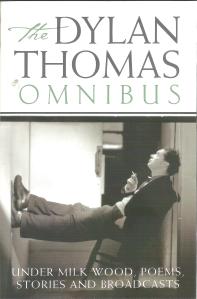
The Death of Dylan Thomas 1953

Dylan was a slow worker when it came to writing and there was always something, usually a pub, to draw him away from his work. In his last days he was concerned that his talent, or his inspiration, had gone and that all his best work was perhaps behind him. He was short of money as usual and so he decided to accept an offer to go to the USA on a poetry tour. It was Canadian poet John Brinnin who made the offer to Dylan. Brinnin was the director of a poetry centre in New York and the trips Dylan undertook there were very lucrative for the always hard-up poet. Thomas had a number of wealthy patrons, in fact his famous house in Laugharne was bought for him by an admirer.

He had travelled to the USA before and on his penultimate visit had become romantically involved with a lady called Liz Reitel who worked for Brinnin at the poetry centre. When Dylan arrived for what would be his last visit Reitel was shocked to see the poet looking poorly and not his usual self.

Over the next few days Dylan’s mood alternated between being tired and poorly and getting drunk with some moments of normality in-between.

I get the impression from the book The Last Days of Dylan Thomas that Dylan liked attention, he liked admirers and although he was in the middle of an affair with Liz Reitel, he was not averse to enjoying the attention he received from other women.

At the poetry centre preparations were under way for a recital of the newly finished Under Milk Wood for which Dylan had produced some new edits and updates. The recital went well and was in fact tape recorded by someone at the time with Dylan taking the part of the narrator.

Liz called a doctor when Dylan became unwell again and the doctor gave Dylan an injection of morphine sulphate which may or may not have helped him.

After a night of drinking at the White Horse Tavern in Greenwich Village, Dylan returned to the Chelsea hotel claiming famously that he had downed ‘eighteen straight whiskies. I think that’s the record!’

Dylan’s breathing became difficult later in the evening and an ambulance was summoned. He slipped into a coma from which he never awoke and later died on the 9th of November, 1953. He was only 39 years old and died with assets of only £100.

I was always under the impression that Dylan had drunk himself to death but that may not be the case. The autopsy did not find any evidence of liver cirrhosis and his death may have been due to a combination of pneumonia and bronchitis.

The Assassination of President Kennedy, 22nd November, 1963

The graphic murder of President Kennedy was the cataclysm of our age, imprinted on the minds of a generation by the flickering incarnation of amateur cine film. Despite two official investigations which concluded that Lee Oswald killed Kennedy, doubts still remain even after 62 years. Did Oswald act alone?  Was he a patsy as he himself declared?

So what are the facts of the assassination? Perhaps the only undisputed fact to emerge from the tragedy was that John F. Kennedy, the thirty-fifth president of the United States, was shot in the head and killed. President Kennedy was hit by rifle fire in Dealey Plaza, Dallas, while riding in an open topped limousine, part of a motorcade that had just turned onto Elm Street by the Texas School Book Depository. Almost every other fact, every statement, every report, every document, every exhibit, every disclosure, is open to question. Were there three shots or four? Were there more? Was the President shot from behind or from the front? Was he shot from the sixth floor of the book depository or from the so called ‘grassy knoll’?  Did twenty-four-year-old ex-marine Lee Harvey Oswald fire the shots? Was he alone or were there other assassins? Why did Jack Ruby, a local night club owner subsequently shoot Oswald? Was it to silence him, to stop him from telling what he knew? Did Ruby act out of rage or was he part of a conspiracy? Was he in the pay of the Mafia? Was the CIA involved? The questions are endless, the answers are few.

A frame from the famous Zapruder film

The President was shot at 12.30 pm, but Lee Oswald, who worked at the Texas School Book Depository, was seen by witnesses in the second floor lunch room as late as 12.15, which left him only fifteen minutes to ascend to the sixth floor, produce his rifle and take up position. Of course fifteen minutes might have been enough time for a cool and organised killer, but the President was actually due to arrive at a reception at the Dallas Trade Mart at 12.30, which meant he would pass through Dealey Plaza at about 12.25, giving Oswald only ten minutes to be in place, and he had no way of knowing the President would be late. Immediately after the shooting, patrolman Marrion Baker entered the Book Depository, drew his gun and with building superintendent Roy Truly hot on his heels, confronted a young man in the lunchroom calmly drinking a coke. Truly explained that this was Lee Oswald, an employee. Had Oswald rushed down from his ‘snipers lair’ on the sixth floor or had he been in the lunch room all the while?

Perhaps the strongest evidence linking Oswald to the murder was the supposed murder weapon, a 6.5 mm Mannlicher-Carcano bolt action rifle, a World War II vintage carbine found on the sixth floor of the book depository at 1.22 pm, almost an hour after the assassination. The officer who first found the rifle, Deputy Constable Seymour Weitzman, identified it as a 7.65 mm Mauser, and was confident enough to make a sworn affidavit to that effect. The day after the shooting, November 23rd, District Attorney Henry Wade also described the weapon as a Mauser at a televised press conference. How then does a 7.65mm Mauser become a 6.5mm Mannlicher-Carcano? I personally know nothing about guns at all but I have seen enough war films to know that a Mauser is German, and stamped clearly on the side of the Mannlicher-Carcano are the words ‘MADE ITALY’ and ‘CAL 6.5’. And surely a police officer, particularly an American policeman, would know what he was talking about concerning guns?

There is much more to talk about in the assassination, the Zapruder film, the murder of police officer JD Tippet, secret service men on the grassy knoll when no secret service men were deployed there. Was the assassin in the Texas School Book depository or was he on the grassy knoll? Were there multiple shooters?

In recent years the US authorities have been reviewing the final records ordered to be released by President Trump. Will anything be released that will prove conclusively who shot the President? I doubt it. Did Lee Oswald do it or was he like he said himself, just a patsy? Your guess is as good as mine. (Click here for a full post about the assassination.)

The Fall of the Berlin Wall 1989

It’s hard to imagine now, but for nearly three decades, the Berlin Wall divided a city and a country in two. Built in 1961, it stood as this cold, grey symbol of the divide between East and West, communism and democracy. Then, in November 1989, everything changed almost overnight. Word spread that East Germans would be allowed to cross freely into the West, and people rushed to the checkpoints. At first, the border guards didn’t even seem to know what to do, they just opened the gates. Suddenly, crowds poured through, cheering, crying, hugging strangers. Some climbed up on top of the wall, hammering at it with whatever tools they could find, breaking off chunks to keep as souvenirs.

The fall of the Berlin Wall didn’t just mark the end of a barrier; it marked the end of an era. Within a year, Germany was reunited, and the world felt like it was shifting into something new and hopeful. People around the globe watched those scenes on TV. Who brought the wall down? Well, it was US President Ronald Reagan who called for Mikhail Gorbachev to bring the wall down but really the wall came down because the East Germans wanted it down. Long time hardline East German leader Erich Honecker had died and new leader Egon Krenz decided to open the border with Czechoslovakia.

In Berlin on the 9th of November 1989, crowds gathered at the checkpoints urging the guards to open up. Eventually, overwhelmed by crowds of people, the checkpoints were opened and people began to pass through. I remember watching on TV over the next few days, Germans knocking down parts of the wall and it was only nearly a year later, on 3rd of October 1990 that East and West Germany were reunited.


What to do next: Here are a few options.

Share this post on your favourite social media!

Hit the Subscribe button. Never miss another post!

Listen to my podcast Click here.

Buy the book! Click here to purchase my new poetry collection.

Click here to visit Amazon and download Floating in Space to your Kindle or order the paperback version.

Click here to visit amazon and purchase Timeline, my new anthology.

Things that Happened in October

Here I am, raring to go. Laptop at the ready, focussed, ready to write this week’s blog. The thing is after 688 posts I’m not that sure what to write about. OK, so what about . .  things that happened in October? Let’s dive in.

One thing that happened in October was me! I was born on October the 3rd, quite a considerable time ago which is annoying on a number of levels. One, I’m getting a bit knackered. My back hurts, my knees ache. It’s hard to stand up straight but what is a real pain is when you get one of those things on the internet where you have to add your date of birth and I have to scroll back through the 90s, the 80s, the 70s, the 60s and finally to the 1950s.
Anthony Eden was the prime minister when I was born. He carried on until his resignation in 1957 due to ill health. At the top of the music charts or hit parade as they called it back then was Doris Day and Whatever Will be, Will be, Que Sera Sera.

My brother Colin was also an October child. He was born on the 10th of October but sadly wasn’t around to celebrate it this year. He would have been 65. My mother too was also born in October but more about her later.

John Lennon

Lennon was born on the 9th of October in 1940. His mother and father were Alfred ‘Freddie’ Lennon and his wife Julia. Alfred was a merchant seaman and was away at sea when John was born. He apparently went absent without leave but later turned up back in Liverpool. By then Julia was involved with another man, John Dykins and actually pregnant by him. Julia’s sister, Mimi decided to take John home and look after him in order to give Julia a chance of happiness with her new love John Dykins.

The last vinyl album I ever bought, and the last one that John lennon made. Double Fantasy. £2.99, what a bargain.

Mimi told Philip Norman, author of the book Shout, the True Story of the Beatles that ‘no man wants another man’s child’. Perhaps the fact that she had no children of her own played a part too. Julia continued to visit her son at Mimi’s house at 251 Menlove Avenue until 15th of July 1958.

John was staying with Julia and John Dykins for the weekend but Julia had called round to see her sister Mimi. When she left to catch her bus home she was hit by a car and killed. John Lennon’s world had been tragically changed.

Many moons ago when I worked for a cigarette vending company, I used to visit a small pub in Woolton in Liverpool and the owners of the pub were two retired ex shell tanker drivers. They were both friendly guys but one in particular was outgoing and talkative and if he was on duty at the bar we would always have a good chat while I sorted out the cigarette machine. One day we got onto the subject of the Beatles and I was surprised to hear that John Lennon’s house was just around the corner. Woolton is a very pleasant middle class suburb of Liverpool and I remember thinking what! This is where Lennon was brought up?  Lennon’s image as a sort of working class hero led me to assume he had a background in a rough and tumble area of Liverpool, like the Dingle where Ringo lived. The truth was different. Perhaps Lennon fermented the working class hero thing, perhaps the fault was mine, I just assumed something without knowing the facts.

Driving round the corner I found Lennon’s old house, 251 Menlove Avenue. He was living here when he started his first band, the Quarrymen and also when he met Paul McCartney. Lennon’s life was one heck of a journey taking him around the world with the Beatles and finally to New York with Yoko Ono where he was shot and killed in 1980.

Marie Antoinette executed 1793

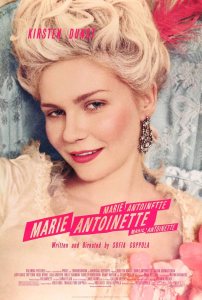
Kirsten Dunst as Marie Antoinette in the film version directed by Sofia Coppola

On October 16, 1793, Marie Antoinette, the deposed Queen of France, was executed by guillotine in Paris’ Place de la Révolution. After a swift and merciless trial before the Revolutionary Tribunal, she was found guilty of treason. Dressed in a simple white gown, her once-elaborate hair cut short, she was taken through the streets in an open cart, exposed to the jeers and insults of the crowd. Despite the humiliation she endured, she remained composed. When she accidentally stepped on her executioner’s foot while mounting the scaffold, she turned to him and said politely, “Pardon me, sir, I did not do it on purpose.” It was a final gesture of grace amid the chaos of the Revolution. Moments later, the blade fell, and with it ended the life of a woman who had once embodied the grandeur of Versailles and become the Revolution’s most reviled symbol. Her death marked both the destruction of the monarchy and the deepening ferocity of the revolutionary cause.

A famous phrase she is said to have spoken is ‘let them eat cake’ after being told that her subjects were starving and had no bread. Did she really say that? Probably not but in the original French, Marie referred to brioche, not cake. Brioche is a sort of sweet bread popular in France but either way, the phrase has been used as propaganda by the revolutionaries to show that the Queen had no time for the peasants.

Ghandi born October 2nd 1869

Mohandas Karamchand Gandhi was a leader of India’s struggle for independence and a global symbol of nonviolent resistance. Born in 1869 in Porbandar, India, he trained as a lawyer in London before developing his philosophy of satyagraha—the power of truth and peaceful protest—during his years in South Africa. Many people think his name is Mahatma but this was in fact a title bestowed upon him in 1915 and means ‘Great soul’. Gandhi became the moral and political heart of the freedom movement, leading campaigns of civil disobedience, boycotts and marches that challenged British colonial rule without resorting to violence. Gandhi’s assassination in 1948 shocked the world, but his ideals of peace, equality, and nonviolence continue to influence movements for justice and human rights across the globe. Quite a few years ago I picked up Ghandi’s autobiography and lost it before finishing it. I know I still have it somewhere and one day I will find it and finally finish it.

A biographical film about Ghandi directed by Sir Richard Attenborough was released in 1982. Attenborough had been trying to make the film since 1962 and the final production marked the realisation of a dream for the director. Ben Kingsley starred as Ghandi and the film won 8 Oscars at the Academy awards although there was some criticism of the film. I was surprised to find that the opening sequence where Ghandi is thrown off a train in South Africa was entirely fictional.

1990 East and West Germany Reunited

When the Berlin Wall fell on November 9, 1989, it marked not just the collapse of a barrier but the beginning of a profound transformation. For nearly three decades since the end of the Second World War, Germany had been divided, East and West separated by ideology, politics and a concrete wall that sprang up in 1963. The fall of the Wall was followed by a wave of hope and uncertainty as both sides faced the challenge of becoming one nation again. On October 3, 1990, reunification was officially declared, and the Federal Republic of Germany absorbed the former East German state.

The process was far from simple. Economically, the East lagged behind after years of communist rule and integrating two very different systems tested the country’s resilience. Yet, despite the struggles, rising unemployment, cultural adjustments and political growing pains, the spirit of unity prevailed and Berlin once again stood as the capital of a single, democratic Germany. Today, the reunification remains one of the most remarkable examples of peaceful transformation in modern history.

24th October 1929 Wall Street Crash

The Wall Street Crash of 1929 was a catastrophic collapse of the U.S. stock market that marked the beginning of the Great Depression. Throughout the 1920s, the American economy had boomed, and millions of people invested heavily in the stock market, even buying shares on credit. This speculation drove prices far above the real value of companies, creating a dangerous bubble. In late October 1929, confidence began to crumble. On October 24, known as Black Thursday, panic selling set in and by October 29, or Black Tuesday, the market had completely collapsed. Billions of dollars in wealth vanished overnight, leaving investors ruined and banks in crisis. The crash didn’t cause the Great Depression by itself but it exposed deep economic weaknesses and triggered a decade of mass unemployment, poverty and hardship across the United States and much of the world.

One of those who escaped disaster was Joe Kennedy, father of President John F Kennedy who apparently had invested in property, real estate as they call it in the USA, rather than stocks and shares.

Finally, bringing this blog back to a personal element, in 1929 my grandfather and grandmother had gone to Cheltenham to find work and on the 24th of October, the very day of the crash in the USA, my mother was born. She died in 2023 aged 93.


What to do next: Here are a few options.

Share this post on your favourite social media!

Hit the Subscribe button. Never miss another post!

Listen to my podcast Click here.

Buy the book! Click here to purchase my new poetry collection.

Click here to visit Amazon and download Floating in Space to your Kindle or order the paperback version.

Click here to visit amazon and purchase Timeline, my new anthology.

5 Things that Happened in July

I published a post quite a while ago about the month of January. January of course is cold and believe me, I hate the cold so I thought I’d get a lot of cold and chilly feelings off my chest by writing about my least favourite time of the year. Today I’m going to go the opposite way and write about the month of July, generally the warmest month of the year. In fact the warmest month ever recorded was July 2023 according to a survey by scientists at NASA, the US space agency.

The Battle of the Somme July 1916

On the first of July, 1916, the Battle of the Somme began. It was an attempt by combined French and British forces to attack the German held lines by the river Somme in northern France during the First World War. The first day was the worst day in British military history with 57,470 casualties, 19,240 of which were men who were killed. The battle continued for another four months and the total casualties for both sides were over 1.5 million. The battle ended in November of 1916 with allied forces only making an advance of some 7 miles.

In March of 1917 the German forces drew back to the Hindenburg line and began to increase U Boat attacks on British shipping in an effort to starve the British into defeat. This however only spurred the entry of the Americans into the war in April 1917.

A few years ago, Liz and I visited the Somme and we saw a crater which is supposed to be the biggest crater of the First World War. It’s called the crater of Lochnagar and back in 1916 the 179th Tunnelling Company of the Royal Engineers had burrowed under the German lines and laid down huge explosive charges. They were detonated at 07.28 on the morning of July 1st. The British expected the Germans to have been wiped out by this and a huge artillery barrage but they were sadly mistaken.

Wilson44691, CC0, via Wikimedia Commons

Today the crater is still there. I had expected it to have perhaps become a lake but no. It’s a deep depression in the ground surrounded by wooden walking boards, many of which have the names of deceased soldiers inscribed on them.

The Trent and Mersey Canal 1766

The canal system of Great Britain was probably the shortest lasting transport revolution ever. After only a few years the railway revolution began and suddenly, the canal system was old technology. Parliament authorised the construction of various canals in 1766, one of them being the Trent and Mersey Canal. Construction began in July of that year and it was designed by James Brindley to link the rivers Mersey, Trent, Severn and Thames. It was completed in 1777.

Canals were built for the efficient transport of goods and raw materials during the Industrial revolution although shortly afterwards the new railways became the primary method of transporting goods and of course passengers.

Today the canal system in the UK is primarily one of leisure and holiday boating and many people like me have become interested in canals through TV programmes like Canal Boat Diaries. The show is a sort of video diary by a boater called Robbie Cummings who takes his viewers on a gentle meander through the canals of the UK. I’ve always found it an enjoyable and relaxing show although when I last looked into hiring a canal boat it was super expensive. Maybe one day though.

Execution of the Romanov Family, July 1918

The Romanov family, Czar Nicholas II and his family, were shot and bayoneted to death on the night of the 16th/17th July 1917. The Soviets were worried that the family might be rescued by the anti-revolutionary forces known as the ‘Whites’.

After the revolution the royal family had been moved to various places but in 1917 ended up at ‘The House of Special Purpose’ in Yekaterinburg. Friendly guards had been replaced by non-Russians who were chosen to murder the family.

On the night of the 16th July, the family were told that they were to be relocated because of the impending arrival of pro-monarchist forces. They were asked to assemble in the basement where they were all shot. Many survived the shooting because of diamonds and other jewellery sewn into their clothes and so the murderers were forced to use bayonets to finish off those still alive. The bodies were then dumped into a mine shaft. Later it was realised that the shaft was not deep enough so the bodies were extricated and transferred to another one.

The bodies were discovered many years later by a local amateur researcher in 1979 but he kept his discovery a secret until the fall of the Soviet Union. The bodies were removed and identified using DNA. They were eventually laid to rest in the Peter and Paul Cathedral in St Petersburg.

Picture courtesy Wikipedia Commons

Various people have claimed to be survivors of the murders, notably Anna Anderson who claimed to be Anastasia. DNA testing later proved she was not related to the Romanov family but was actually a woman named Franziska Schanzkowska.

Others have claimed to be Tatiana, Anastasia’s sister and also Tsarevich Alexei Nikolaevich, the only son of the Tsar. Alexei suffered from haemophilia, a condition in which the blood does not clot so it is unlikely that he survived the shooting. Interestingly though, Alexei and one of his sisters were discovered separately from the rest of the family in 2007.

The Ipatiev house where the family were murdered –the house of special purpose- was demolished in 1977 by Boris Yeltsin on the orders of the Politburo as it was attracting people who came to pay their respects to the Romanovs. Later when Yeltsin became president, he ordered a memorial church to be built on the site.

A famous film Anastasia was released in 1956 starring Ingrid Bergman as Anastasia and Yul Brynner as a man trying to use her to gain access to the Romanov millions stored in a British bank. Funnily enough, it’s a film I have not seen for years but after writing this passage I noticed it was coming up on TV so I recorded it and watched it the following evening.

The Moon Landing July 1969

The moon landing was one of the very first historical events that I actually felt a part of. In July 1969 I was 12 years old and on the morning of the 20th of July my mother had woken me up as usual for school. I came downstairs in my pyjamas for breakfast and to my utter amazement there was Neil Armstrong and Buzz Aldrin walking on the moon over on mum’s black and white television set. How my mother got me away from that TV set and off to school I’ll never know because at the time I read and watched everything I could about the US space program.

Believe it or not, many people today refuse to accept that Armstrong and Aldrin actually did walk on the moon that day. Many armchair ‘experts’ will call attention to photos from the lunar surface and explain that they were fakes because of various anomalies. On TikTok I recently watched a video in which a man swears his father was a security guard at a secret base where the moon landing was filmed. On YouTube there is a video where someone tries to get Armstrong to swear on the bible that he went to the moon. Neil Armstrong declined. Why? Was it because he didn’t go to the moon? Why did he retire from NASA so early? Was he ashamed about his continuing lies?

My personal verdict: Baloney. Armstrong and Aldrin walked on the moon in July 1969 in an incredible feat of exploration and bravery and as for refusing to swear on the bible about it, why should he?

The British Grand Prix

The first ever British Grand Prix was held in 1926 at Brooklands, one of the world’s first ever purpose-built racing tracks. Brooklands had an oval configuration and was famous for its banked corners. The track was also an airfield and during the two world wars Brooklands was taken over by the military for aircraft production. After 1945 the racing circuit was in poor condition and Brooklands was sold to the Vickers-Armstrong Company as a base for aircraft production. Motor sport was unable to return to Brooklands especially as after 1951, a four-lane road was built through the track area.

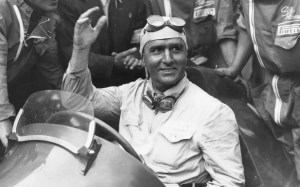
Giuseppe-Farina (Image from Motorsport Magazine fair use commons)

The current Formula One World Championship actually began at Silverstone in 1950 with the very first world championship Grand Prix. The first Silverstone British Grand Prix however was held two years earlier in 1948 when motor sport began again after the second world war. Luigi Villoresi won in 1948 in a Maserati but the 1950 race, round one in the new World Championship, was won by Giuseppe Farina.

This year, 2025, the British Grand Prix was held on the 6th of July and once again provided an exciting race with Lando Norris giving the fans another British winner after his team mate was given a controversial ten second penalty.


What to do next: Here are a few options.

Share this post on your favourite social media!

Hit the Subscribe button. Never miss another post!

Listen to my podcast Click here.

Buy the book! Click here to purchase my new poetry collection.

Click here to visit Amazon and download Floating in Space to your Kindle or order the paperback version.

Click here to visit amazon and purchase Timeline, my new anthology.

Thatcher and Give Me 10 Seconds

On holiday one of my favourite reads was an autobiography by John Sergeant who was once a political reporter for the BBC. It was called Give Me 10 Seconds. It was called this because the BBC usually had John ready to speak to the camera for perhaps two minutes. John needed to get his broadcast together in his head and would usually ask for 10 seconds for a quick mental rehearsal. The book was a particularly warm and enjoyable read and opened my eyes to the way the BBC works.The author seems to think that the BBC was built on rather military styles. Staff didn’t get holidays but instead were allocated ‘leave’. Numerous layers of management operated the BBC empire and it seemed to me to be very similar to how things operated at my old place of work, the Highways Agency.

John’s claim to fame came when he was reporting live from outside the British Embassy in Paris in November 1990. Mrs Thatcher had just heard that Michael Heseltine’s leadership challenge had garnered 152 votes in the first round of voting and while John was presenting live on television, Mrs Thatcher emerged from the embassy with her PR man Bernard Ingham by her side. Despite Mr Ingham trying to push John aside, he stood his ground and firmly held his microphone to the Prime Minister’s face while she advised everyone that her name would be going through to the second round of voting.

John’s book was a great read. He started out working with Alan Bennett as a comedy writer and performer but when he realised that he probably had no future as a tv comedian he got himself a job as a newspaper reporter in Liverpool and later moved over to the BBC as a radio reporter.
It’s actually really fascinating to hear of the rivalry between the radio news and the tv news, as back in the late 60s the radio people really didn’t have much time for their television counterparts. These days of course, television is the senior partner in news reporting and the cameras of the BBC, SKY TV and CNN take the viewer all over the world in search of news.

Even so, in recent years, people and politicians have been highly critical of the BBC not only for the way it reports but also for what it reports. I’ve seen some interviews with politicians by journalists like Jeremy Paxman which were quite frankly just disgracefully rude. Is there bias in the BBC? I personally think that the days of impartial news reporting is over but whenever something happens in the world, and I want some more information, my first thought is to go to the BBC website.

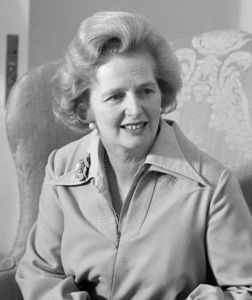
Mrs Thatcher was the first female British Prime Minister. She was born in 1925, studied chemistry at Oxford and married Denis Thatcher in 1951. She stood unsuccessfully for parliament and then settled down to have her children. Later she was finally elected in 1959 as the MP for Finchley.

Image courtesy creative commons

Mrs Thatcher was given various posts on the front bench and when the Conservatives under Edward Heath won the election in 1964, she was promoted to the Cabinet as Secretary of State for Education and Science.

The Government had to deal with numerous issues such as union demands for higher wages and the three day week and they lost the election in February 1974 but Labour could only form a minority government. They then won a later election in October that same year. Mrs Thatcher then challenged Edward Heath for the party leadership and won, taking over as leader of the opposition in 1975. She finally became Prime Minister in 1979 famously quoting the prayer of St Francis on the steps of Downing St;

Where there is discord, may we bring harmony;
Where there is error, may we bring truth;
Where there is doubt, may we bring faith;
And where there is despair, may we bring hope.

Mrs Thatcher promoted the idea of people owning their homes and even introduced policies aimed at tenants buying their own council houses. She faced up to union demands most notably with Arthur Scargill and the mining unions but became hugely popular when she stood up to the Argentinians who invaded the Falkland Islands.

She led the Conservative Party to victory in three consecutive general elections, twice in a landslide, and she ranks among the most popular party leaders in British history regarding votes cast for the winning party; over 40 million ballots were cast in total for the party under her leadership. Her electoral successes were dubbed an “historic hat trick” by the British press in 1987 and her tenure as Prime Minister was the longest continuous period in office since the 19th century.

Her downfall came in 1990 which brings us back to John Sergeant’s famous moment. Michael Heseltine decided to go ahead with his leadership challenge and Mrs Thatcher burst forth from the British Embassy in Paris to make her statement that she had passed her name forward to the next round of the contest. She had been 4 votes short of victory in the first ballot and therefore a second round was required.

Thatcher seemed certain of going forward into that second ballot but after consulting with her ministers she decided to withdraw and it was John Major and not Michael Heseltine who emerged as the new Prime Minister and leader of the Conservative Party.

Mrs Thatcher has been portrayed by numerous actresses in film and television most notably by Gillian Anderson and Meryl Streep. Streep starred as Thatcher in the film Iron Lady. She was played frequently on TV sketches and in the James Bond film For Your Eyes Only by comedian and impressionist Janet Brown.  Perhaps the most famous comedy sketch about Mrs Thatcher came on the TV show Spitting Image in which she takes the cabinet for dinner. She orders steak and the waitress asks ‘what about the vegetables?’

Thatcher looks at her cabinet and replies ‘they’ll have the same as me!’

Mrs Thatcher retired from the House of Commons at the 1992 general election. She was a Prime Minister who was loved by some and hated by others and even when she died in 2013 at the age of 87 social media memes were declaring the wicked witch is dead!

Which side of the fence are you on?


What to do next: Here are a few options.

Share this post on your favourite social media!

Hit the Subscribe button. Never miss another post!

Listen to my podcast Click here.

Buy the book! Click here to purchase my new poetry collection.

Click here to visit Amazon and download Floating in Space to your Kindle or order the paperback version.

Click here to visit amazon and purchase Timeline, my new anthology.

Titanic

The story of the Titanic, the ship that hit an iceberg and sank in 1912, is one of those stories which seems to be forever in the news. It’s a story that has caught the imagination of pretty much everyone. Even the other day, just scrolling through the BBC news page, I came across an item about some new digital scan of the Titanic wreck which revealed new information about the disaster.
This week I thought I’d take a look at the story of the Titanic and how it has been represented by television and film, well at least the TV shows and films that made an imopression on me, as well as the actual story of the tragedy.

The Titanic was designed to be the new premier ship of the White Star Line. It had been built by Harland and Wolff in Belfast and built alongside its sister ship the Olympic and was launched on the 31st May 1911 and was then towed to another berth where its engines and superstructure was installed as well as its majestic interior. The sea trials of the ship were undertaken on the 2nd April 1912 just eight days prior to leaving Southampton on its maiden voyage. The Titanic was the largest ship in the world and advertised as having the passenger accommodation of ‘unrivalled extent and magnificence’. It was also billed as unsinkable even though a few days into its first journey it would end up at the bottom of the Atlantic Ocean.

The Titanic on Television.

The Time Tunnel

The Time Tunnel was a sci-fi series created by Irwin Allen in the 1960s. The best episode in the series was probably the very first one. A US senator has come to take a look at a secret time travel project and see if the huge amounts of money being spent are justified. Scientist Tony Newman, fearful that the project will be cancelled, decides to trial the new Time Tunnel apparatus and send himself back in time. He activates everything and transports himself back in time arriving in 1912 on board the  Titanic.

His colleague, Doug Phillips also goes back to the same time zone to rescue Tony. The captain of the Titanic naturally doesn’t believe his ship is doomed to sink and back in the Time Tunnel control room the technical staff have a bit of a problem bringing the two scientists back to the present (actually 1968) but manage to transfer them to another time zone and so the scene is set for the subsequent adventures.

The Titanic at the Cinema.

A Night to Remember (1958)

I’ve always liked this film. It starred Kenneth Moore as the Titanic’s second officer, Charles Lightoller, and was based on a book about the disaster. The film was released in 1958 and tells the usual story about the sinking. The ship sets off but during the journey the overworked telegraph officers fail to pass on a warning about icebergs. The ship hits the iceberg and sinks. Despite a limited budget and only 1950s era special effects, A Night to Remember is actually a really good film.

Raise the Titanic (1980)

This was a film produced by TV mogul Lew Grade who was wanting to move his TV production company ITC Entertainment into the world of cinema. He had read the original book and thought that it might be possible to make a film series about US government operative Dirk Pitt in the manner of the Bond series.

In the film Dirk Pitt played by Richard Jordan proposes a salvage operation for the Titanic as he is convinced an American named Brewster had discovered a rare radioactive element called Byzanium which was stowed in wooden shipping boxes aboard the Titanic.

A huge undersea search takes place and the Titanic is ultimately found and raised. The Byzanium is not found aboard though although it does finally emerge in a neat twist at the end.

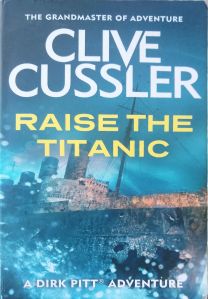
I’ve always enjoyed Raise the Titanic. It was based on a bestselling book by Clive Cussler although the film did not emulate the book’s success.

A great deal of the budget for the film was used to create a 50 foot model which was filmed at a huge water tank at the Mediterranean Film Studios in Malta. Apparently the three million pound model remains there today rusting away although the water tank is in regular use.

Not long after the film was made the real Titanic was located and it was confirmed the ship had broken up and was lying on the sea bed in two separate sections.

Titanic (1997)

Titanic was written and directed by James Cameron. The main thrust of the story is about two passengers from wildly different social classes who fall in love on the ship although one, played by Leonardo DiCaprio, dies in the disaster and the other played by Kate Winslet survives.

A treasure hunter (Bill Paxton) and his salvage team explore the wreck of the Titanic looking for a famous necklace, the Heart of the Ocean. They discover a safe which they bring to the surface to find it only contains a sketch of an unknown woman. After it is featured on TV the woman comes forward and tells the story of meeting Jack Dawson (DiCaprio) and of course of the sinking of the Titanic.

Director Cameron and his producers built a huge outdoor set in Playas de Rosarito in Mexico with uninterrupted views of the ocean and a water tank in which the Titanic set could be tilted to film the sinking scenes. Overall, the production cost was over 200 million dollars making it the most expensive film of all time. Happily for the producers, it also became the highest grossing film of all time until the release of Avatar, another film written and directed by Cameron.

The Novel

Dreaming a story and making it into a novel or a screenplay sounds pretty fantastic but in 1898 an American writer, Morgan Robertson, wrote a story about an unsinkable ship called the Titan which sailed from England to the USA but during the journey hit an iceberg and sank. The story was published fourteen years before the Titanic disaster. I remember reading the story of this writer years ago, even that the writer saw the story played out in front of him like a movie but all the research I did on the internet for this blog seems to imply that the author was a man who knew his business where ships were concerned, felt that ships were getting bigger and bigger and that a disaster like that of the Titanic was inevitable.

Books

I only have one book in my collection about the Titanic. It’s a big glossy picture book, not about the actual ship, but about the shooting of James Cameron’s film. It documents Cameron’s twelve dives in a tiny submersible which gave him the idea of the treasure hunters looking to find the necklace the ‘Heart of the Ocean’ and his realisation as Cameron himself mentions in the book’s foreword that the main thrust of the story should be a love story with the Titanic disaster almost as a backdrop.

The book tells about the numerous models that were built of the ship both as a pristine sea going vessel and as an underwater wreck. The making of the full size set in Mexico which could be dropped via hydraulic pistons into a huge water tank was an immense undertaking and adds immeasurably to the finished film.

So what actually happened to the Titanic?

The Titanic was on its maiden voyage to the USA. It left Southampton on the 10th April 1912 and stopped at Cherbourg in France to pick up more passengers before heading out across the Atlantic to New York. Four days into the voyage it hit an iceberg. Lookouts had been sent aloft to look for icebergs but their task was difficult. It was a moonless night and pitch black. The sea was very calm which meant that the lookouts could not see waves crashing against the icebergs that they had been warned to look out for. When an iceberg was finally spotted the lookouts rang down to the bridge. The officers there ordered the ship to turn hard to port. Some reports say that the engine room was ordered to stop engines which would not have helped the turn. Either way the ship brushed the iceberg and the resulting contact made a gash along the side of the ship and water rushed in.

The ship had been designed to stay afloat with four of her watertight compartments flooded but it could not stay afloat with the flooding of six. Interestingly the compartments were not sealed at the top so that when one flooded, the water tipped over into the next and so on until the ship sank.

The bow of the Titanic courtesy Wikipedia Commons

In another documentary I watched a few years ago a theory was put forward that the three million rivets that held the steel plates of the ship together were made of poor grade metal which became brittle in the freezing sea water. When the ship impacted the iceberg, the heads of the rivets popped off and sea water flooded inbetween the steel plates of the hull.

RMS Carpathia arrived about an hour and a half after the sinking and rescued all of the 710 survivors by 09:15 on 15 April. More than 1500 people died in the freezing waters of the Atlantic.

Titanic in the News.

As I mentioned earlier, the Titanic was in the news again when a new 3d scan of the wreckage of the Titanic was revealed.


What to do next: Here are a few options.

Share this post on your favourite social media!

Hit the Subscribe button. Never miss another post!

Listen to my podcast Click here.

Buy the book! Click here to purchase my new poetry collection.

Click here to visit Amazon and download Floating in Space to your Kindle or order the paperback version.

Click here to visit amazon and purchase Timeline, my new anthology.

AKA (Also Known As)

This week’s post is about pseudonyms and people who use different or other names.

Lenin aka Vladimir Ilyich Ulyanov

Last week in a post about Painters and Paintings, I mentioned Lenin who was the first Communist leader of the Soviet Union. In fact, it was he who created the Soviet state but his real name was not Lenin. He was born in 1870 as Vladimir Ilyich Ulyanov. He studied at Kazan University and later became a Marxist activist after moving to St Petersburg, later renamed Petrograd. In 1897 he was arrested and exiled to Siberia for three years. In 1903 the Russian Democratic party (later renamed the Communist Party) split into two and Lenin led the Bolsheviks against the Menshiviks. In the unsettled world of the late 19th and early 20th century, political activism in The Russian empire was a dangerous game and Ulyanov began to use a pseudonym to protect himself. The name he chose was Lenin.

After his exile ended Lenin left Russia for the relative safety of western Europe, even living in London for a time. He returned to Russia when a revolution broke out in 1905 but when that failed, he returned to Europe and continued to organise and write essays and propaganda for the Bolshevik cause.

After the revolution which toppled the Tsar, the Germans who were then at war with the European allies in the First World War, sent Lenin into Russia on a sealed train. Churchill famously commented that

“Lenin was sent into Russia by the Germans in the same way that you might send a phial containing a culture of typhoid or cholera to be poured into the water supply of a great city, and it worked with amazing accuracy.”

Lenin was welcomed in Russia as the leader of the Bolsheviks and was helped by Stalin to escape the forces of the provisional government controlled by Alexander Kerensky. The Bolsheviks however soon engineered a second revolution; the provisional government was overthrown and Kerensky, his brief entry into history over, had to flee.

Lenin presided over the new government. He made peace with Germany despite having to negotiate away a huge swathe of land to the Kaiser’s Germany. He waged a civil war within Russia against those who tried to restore the Tsar. He renamed his party the Communist party.

In 1921 Lenin became ill, finally dying in January of 1924. In his last days he tried to remove Stalin from power but failed.

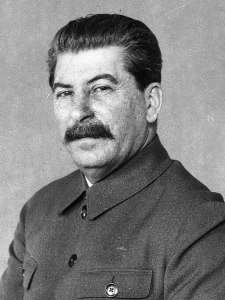
Stalin aka Joseph Vissarionovich Dzhugashvili

James Abbe, Public domain, via Wikimedia Commons

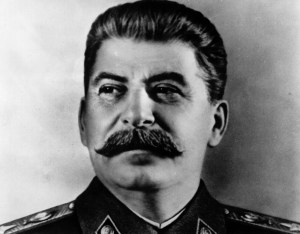
Stalin was born into a poor peasant family in Georgia in 1878. Later he became a bank robber, providing funds for Lenin and the Bolshevik party. He was born Joseph Vissarionovich  Dzhugashvili and like Lenin, adopted a pseudonym. The name Stalin came from the Russian word for Steel and is often said to mean ‘man of steel’. In his early days as a Bolshevik, Stalin robbed banks to fund the revolution. Later, Stalin organised and edited Bolshevik newspapers for Lenin and Lenin promoted him to the party’s central committee in 1912.

When Lenin died, Stalin took control of Lenin’s funeral and began to cultivate a cult of personality around himself, gradually removing all those who opposed him on the central committee. After expelling Leon Trotsky who was exiled and later deported in 1929, Stalin was unopposed as the supreme leader. His regime oversaw mass repression with millions consigned to forced labour in the Gulag camp system and others who Stalin perceived as threats, imprisoned or murdered in his purges.

Stalin died in 1953. After collapsing, he was discovered by his security staff who were too scared to approach him at first. Later they moved him to a couch thinking the heavy drinking dictator might have been drunk. He died on the 6th March and later Khrushchev emerged as the new Soviet leader.

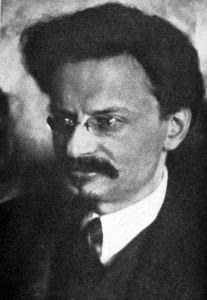
Trotsky aka Lev Davidovich Bronstein

By Isaac McBride – Barbarous Soviet Russia, Public Domain, https://commons.wikimedia.org/w/index.php?curid=3363312

Trotsky was another Bolshevik who used a pseudonym. He was the creator of the Red Army and the man Lenin thought would be a good successor. He, like Lenin and Stalin, suffered exile to Siberia and later met Lenin in London where he worked on the party newspaper. He returned to Russia in 1917 and became chairman of the Petrograd Soviet. After the Bolsheviks took power Lenin appointed Trotsky to the post of foreign minister, later becoming the Commissar for Military and Naval Affairs. He built up the Red Army and led it to victory in the civil war.

After Lenin’s death Trotsky was sidelined by Stalin and expelled from the Communist party and later from Russia itself. He finally settled in Mexico until his murder by Stalin’s agents in 1940.

Elton John aka Reg Dwight

That’s enough Soviet history for now so let’s move swiftly on to the music business. Reginald Dwight was born on the 25th March 1947. He lived in Pinner in Middlesex with his mother and father, Stanley and Sheila, although they divorced when Reg was 14.

Something that had a big effect on the young Reginald was his parents’ love of music. He began tapping out tunes on his grandmother’s piano and the age of 11 won a scholarship to the Royal Academy of Music.

At the age of 15 Reg got himself a job playing the piano at the local pub and in 1962 he and some friends formed a small band called Bluesology and they soon picked up a regular gig supporting singer Long John Baldry.
In 1967 Reg answered an advertisement in the New Musical Express. It had been placed by Liberty Records who were looking for new talent. Reg went to audition for the A & R manager, Ray Williams but Ray appeared to be unimpressed when Reg sang an old Jim Reeves hit and by way of ending the interview Ray handed Reg a sheaf of unopened lyrics written by someone who had answered the same ad.

That someone was Bernie Taupin. He and Reg hit it off instantly and Reg began writing music to Bernie’s lyrics. Six months later Reg changed his name. He took his new name from Bluesology bandmates Elton Dean and Long John Baldry and put them together to become Elton John.

In 1969 Elton’s album Empty Sky became a minor hit and was followed by the eponymous Elton John in 1970. ‘Your Song’, a single from the album went to number 7 in the UK singles chart and Elton John had arrived.

Archie Leach aka Cary Grant

Grant was born Archibald Leach in Bristol, England in 1904. He had a poor upbringing and his mother suffered from depression and his father was an alcoholic. The young Archie was interested in the theatre and performing and his mother was keen on him having piano lessons. His older brother had died before reaching the age of one and this perhaps made his mother a little over protective of the young Archie. Even so, his mother was not a woman who was able to give or receive love easily and the older Cary Grant blamed his childhood relationship with his mother for his problems with women in later life.

When Archie was 9 years old his father placed his mother in Glenside Hospital, a mental institution, telling his son that she had gone away on a long holiday and later, that she had died.

Archie befriended a group of acrobatic dancers known as The Penders and he was able to eventually join them and there he trained as a stilt walker and became part of their act. Later the group toured America and Archie decided to stay, following in the footsteps of others before him like Charlie Chaplin and Stan Laurel who had made their way to the USA in an almost identical way.

On Wikipedia they mention that on the trip over to the USA, Archie met Douglas Fairbanks and was greatly impressed by him, so much so that Fairbanks became a role model for the young Archie Leach.

In New York Archie worked in vaudeville with various comedy and theatrical groups. He joined the William Morris theatrical agency and began to pick up many theatre roles. In 1932 he had his first screen test and was given a five year contract with Paramount Pictures. B P Schulberg the general manager of Paramount decided that Archie Leach was not a good enough name for films so Archie came up with the name Cary Grant taking Cary from a stage character he had played and Grant chosen randomly from a telephone directory.

Cary Grant retired from acting in 1966 when his only daughter was born. He died in 1986 aged 82.

Ayrton Senna aka Ayrton Da Silva

It might come as a surprise to many to learn that the legendary racing driver Ayrton Senna did not use his real name. Instead, he chose to race under his mother’s maiden name, Senna. He decided to use the name Senna as in Brazil, his home country, Da Silva is a very common name and Ayrton hoped the use of Senna would make him stand out and be more recognisable in the world of motor sport.

Ayrton Senna in the McLaren Mp4/4 in 1988. Photo by the author

Ayrton was born and raised in the Brazilian city of Sao Paulo. He was born in 1960 and began racing karts at the age of 13. After twice finishing as runner up in the world kart championships Ayrton moved to Europe to compete in Formula Ford and later Formula 3. It was quite an achievement for the young Brazilian. He spoke little English and he and his wife were fishes out of water in the UK. Only his massive desire to succeed and to make it into Formula One kept him going. Alas his young wife was not up to the challenge and returned to Brazil.

Senna went on to enter Formula 1 and with the McLaren F1 team he won all of his three world championships fighting constantly with his great rivals Alain Prost and Nigel Mansell. He was killed on the 1st of May 1994 at the San Marino Grand Prix in Italy after leaving McLaren for the Williams team. He crashed at the Tamburello corner when he hit the concrete wall there and a suspension arm, forced back in the impact pierced his most vulnerable area, the visor of his crash helmet.

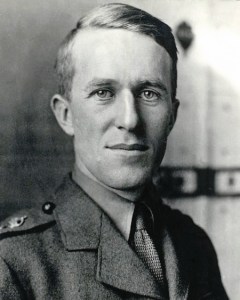
T E Lawrence aka John Hume Ross and T E Shaw

By Unknown author – pavellas.blogspot.com, Public Domain, https://commons.wikimedia.org/w/index.php?curid=7367070

Thomas Edward Lawrence is a fascinating character. He was a British army officer and writer best known for his role in the Arab Revolt during the First World War. He became known to the public through a series of film presentations by writer and documentary film maker Lowell Thomas.

After the war Lawrence tried to vanish into anonymity by joining the RAF as an aircraftsman using the alias of JH Ross. Later when his real identity was exposed he left the RAF and joined the army using the alias TE Shaw. He was unhappy in the army and was eventually readmitted to the RAF.

His account of his work in the Arab Revolt was published in his book Seven Pillars of Wisdom. Lawrence actually lost his manuscript at one point and was forced to reconstruct the entire book. Later, the book was used as the basis for the film Lawrence of Arabia starring Peter O Toole as Lawrence. A stage play was also written about him by Terrence Rattigan titled Ross which explored Lawrence’s alleged homosexuality. Alec Guinness featured in the play in the title role as Ross/Lawrence.

On the 13th May 1935 Lawrence was severely injured in a motorcycle accident and died six days later on the 19th May.


Thanks to Wikipedia for the source information.


What to do next: Here are a few options.

Share this post on your favourite social media!

Hit the Subscribe button. Never miss another post!

Listen to my podcast Click here.

Buy the book! Click here to purchase my new poetry collection.

Click here to visit Amazon and download Floating in Space to your Kindle or order the paperback version.

Click here to visit amazon and purchase Timeline, my new anthology.

The Democratic Way

As I write this latest blog post it’s the 20th January and Donald Trump is about to be sworn in as the 47th president of the USA. This was apparently the 60th such ceremony according to the first speaker although how that has been worked out, I’m not sure. Going by the huge amount of coverage on British TV, you might think that Trump had been elected president of the UK also.

When you look at it, Trump has pulled off an incredible comeback, He was defeated in the last election by Joe Biden and universally condemned for instigating a riot after claiming that his defeat by Mr Biden was a fix. He has been at the centre of various legal actions and prosecutions for numerous things including a pay off to a porn star hoping she would keep quiet about their affair. The porn star in question did not keep quiet and I’m pretty certain Mr Trump would be within his rights to ask for his money back although I doubt if he will.

The only other political comeback as impressive as Trump’s was the comeback by Richard Nixon.

Vice President Nixon as he was then was beaten by John Kennedy in the Presidential Election of 1960. He decided then to run for Governor of California but he was beaten in that contest too. He looked up at the assembled reporters and journalists and told them bitterly that that was it, ‘You won’t have Nixon to kick around anymore.’ He appeared to be retiring from politics. Even so, eight years later he was back as the Republican nominee in the election of 1968 and on that occasion, he won.

Picture courtesy Wikipedia

Some years later, things weren’t going too well for Nixon. He was caught in the middle of the Watergate scandal. Watergate would ultimately be the end of his presidency but his downfall would be his own presidential recordings. He tried to hang on to his tapes but when he appointed a special prosecutor and that same prosecutor began to want more and more tapes, Nixon fired him and various others in what became known as the Saturday Night Massacre.

Did he order the bugging of the Watergate building? Of course he did! Did he try to justify it? Well, he did say famously, ‘when the President does it, then it’s not illegal.’

As I mentioned last week, I’ve been watching a BBC documentary about King Charles the 1st and Charles, like Richard Nixon, was removed from office although in a much bloodier fashion. After his defeat in the English Civil War, he was put on trial and asked to plead either guilty or not guilty. Charles declined to plead. He was the King and had a divine right to rule over his kingdom. The court decided that his refusal to plead could only be interpreted as an admittance of his crimes. He was pronounced as guilty and only a few days later was put to death. The day of his execution was on the 30th January 1649. It was a cold and chilly day and Charles asked for an extra shirt in case the assembled crowd though he might be shivering with fear. He gave a short speech in which he said he was ‘going from a corruptible to an uncorruptible crown.’ Below is the King’s final scene from the film Cromwell.

Oliver Cromwell ruled England as the Lord Protector until his death in 1658 and two years later Charles II was recalled from exile and asked to return as the King.

Anyway, back in 2017 Donald Trump was declared the victor in the election and duly became the Chief Executive and Commander in Chief of the United States for the first time on January 20th of that year and all seemed to go fairly smoothly. The chap who introduced the proceedings back then -I’m afraid I can’t remember his name- commented on the inaugural speech of President Ronald Reagan which I quote here:

“To a few of us here today this is a solemn and most momentous occasion, and yet in the history of our nation it is a commonplace occurrence. The orderly transfer of authority as called for in the Constitution routinely takes place, as it has for almost two centuries, and few of us stop to think how unique we really are. In the eyes of many in the world, this every 4-year ceremony we accept as normal is nothing less than a miracle.”

Ronald Reagan via Wikipedia Commons

Reagan touched on the whole essence of democracy in that speech which is essentially this, that of the leader of a nation voluntarily handing over power to the new leader, the victor of the election process. In the news that same day in 2017 was a story about The Gambia’s long-term leader Yahya Jammeh who had, until then, refused to accept that Adama Barrow had defeated him in the election the previous December. He finally decided to hand over power as threats from other West African nations forced him to concede defeat. It would have been interesting if Barack Obama had said in 2017, ‘sorry, no, I’m not stepping down, I’m not ready yet!’ The last president who had to be forced from office was the man I mentioned earlier, Richard Nixon who finally accepted that the Watergate scandal had destroyed his presidency in 1973 and resigned, handing over to Vice-President Gerald Ford.

Joseph Stalin continued as leader of the Soviet Union until his death in 1953 at the age of 73. When he did not arise from his bedroom one morning at his dacha in Kuntsevo, just outside Moscow, his guards were too nervous to enquire if the feared dictator was alright. When they finally entered the room, they found he had collapsed and assumed he was suffering from a bout of heavy drinking the previous night. The guards made him comfortable on a couch and then withdrew. When he was found unable to speak the following day, only then were the doctors summoned.

Adolf Hitler and the Nazi party swept to power in Germany not by a revolution or by a military takeover but by the ballot box. Hitler’s Nazi party was the largest party in the Reichstag, the German parliament. Various other parties supported the Nazis all with the same thought, that Hitler was a simple man who could be controlled. They supported Hitler and convinced President Hindenburg to appoint him as chancellor. The thing is, once Hitler gained power and became chancellor, he gave himself emergency powers and began to imprison his political enemies. When Hindenburg died, Hitler combined the office of president and chancellor in one office. He outlawed other political parties and stopped elections.

Seen in that light, the events in the USA are, as Ronald Reagan said, nothing less than a miracle.

A US president can only serve two terms as the US senate, perhaps resentful of Franklin D. Roosevelt’s three terms in office, voted to limit a president to only two four-year terms. Eight years, not much time to change the world, is it? And there are only four years left for Donald Trump to make America great again, part of which seems to be the reappraisal of drug cartels as terrorist organisations, to rename the Gulf of Mexico the Gulf of America and to take over the Panama Canal.

What will happen then when Trump’s four years are over? Will he hand over to the next president as easily as Biden has handed over to him? Will he anoint a successor? His vice president, JD Vance perhaps? Or will he even try to stay on somehow for a third term?

Donald Trump. Picture courtesy Wikipedia

The election last year was interesting in that Joe Biden declined to run again. His decision was perhaps a little late and his chosen successor, vice president Kamala Harris, didn’t have a great deal of time to start her election campaign.

The very last time a sitting president decided not to run again was when Lyndon Johnson decided against being a candidate in 1968. Johnson wanted to create a great society for the American people but his administration was completely caught up in the Vietnam war. In one of 1968’s first primaries, anti-war candidate Eugene McCarthy featured well against Johnson, prompting LBJ’s arch enemy Robert Kennedy to enter the contest. Johnson withdrew and Kennedy was assassinated by Sirhan Sirhan. The Democratic candidate eventually turned out to be LBJ’s Vice President, Hubert Humphrey. I don’t think Humphrey even entered any primaries so how he eventually won the nomination I really don’t know. Either way he ran but was ultimately soundly defeated by Richard Nixon.

I personally didn’t rate Trump’s inaugural speech that well, it was hardly up there with ‘ask not what America can do for you but what you can do for America.’ Interestingly, many of the TV pundits I watched seemed to think it was all pretty wonderful stuff. Can he end the war in the Ukraine in one day like he claims?

Well, I’ll give him at least a week.


What to do next: Here are a few options.

Share this post on your favourite social media!

Hit the Subscribe button. Never miss another post!

Listen to my podcast Click here.

Buy the book! Click here to purchase my new poetry collection.

Click here to visit Amazon and download Floating in Space to your Kindle or order the paperback version.

Click here to visit amazon and purchase Timeline, my new anthology.

The Rise and Fall of OJ Simpson

Every Thursday Liz and I visit our local pub for our weekly quiz night. It’s not a particularly tough quiz and we’ve even won it on the odd occasion but one thing we do in advance is check the internet to see if any celebrities have died as Mike, our pub quizmaster, tends to throw in a question or two about recently deceased celebs. One name that popped up on Google was that of OJ Simpson who passed away recently from cancer. I tend to watch the TV news most days so either I missed the story about OJ or perhaps these days his name isn’t as newsworthy as it once was. Simpson was 76 years old and a former US sports star, actor and allegedly a murderer.
Back in 1994 Simpson’s estranged wife was brutally murdered and Simpson was the prime suspect. If he had been anyone other than a famous sports star and TV commentator, he would have been arrested but for whatever reason, he wasn’t. Later arrangements were made for OJ to come and surrender himself at Police Headquarters in Los Angeles but he did not appear. Shortly afterwards TV helicopters spotted Simpson driving down the freeway and a posse of police cars followed but kept at a distance because OJ was reported to be holding a gun to his head. This bizarre procession was broadcast live and at various intersections crowds gathered to watch and wave to OJ. When it was reported that OJ was heading to his home crowds of supporters gathered there to watch his arrival and eventually he surrendered his gun and was duly arrested.

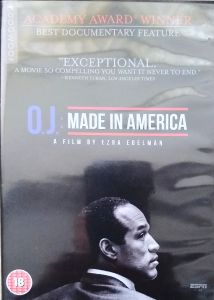
OJ Simpson: Made in America is an outstanding documentary, released in 2016. It runs for over five hours and won an Oscar for best documentary. Episode one details Simpson’s incredible sporting career and also showed how it was important for him to be seen just as OJ rather than OJ the black athlete. He was apparently a friendly and amiable man who made many friends in the sporting world and kept himself well away from controversy and was never involved in the civil rights movement in America unlike sporting celebrities like Mohammed Ali. Later episodes show how he made a life after sport by becoming a TV sports pundit and by courting wealthy friends in Los Angeles to advise on his investments. In particular he made TV advertisements for Hertz car rentals which were highly popular and did well not only for Hertz but raised Simpson’s profile in the USA even higher.

The series also looks at the climate of race relations in Los Angeles and the activities and methods of the LAPD who clearly were not engaging or even trying to engage with the black community. A ‘them and us’ situation evolved in LA and when Rodney King, a black motorist was brutally beaten by a group of white police officers and caught on an amateur video, the situation become even more inflamed. The officers were taken to court but found innocent by a white jury causing riots and disturbances in the area.  This was the background of the later OJ Simpson murder trial.

Simpson divorced his wife and married eighteen-year-old Nicole Brown, a blonde LA waitress. Their marriage lasted seven years and was not happy, especially in the latter years when Nicole was beaten and abused by Simpson. She called the police numerous times reporting OJ for assault. On June 13th, 1994, Nicole and a waiter named Ron Goldman were found dead. A trail of blood led away from the scene and later blood was found on Simpson’s white Ford Bronco.

Simpson was not as famous in the UK as in America but I do remember seeing the crazy car chase on TV with Simpson in his white Bronco followed by a fleet of Police cars. The documentary series completely gripped me and the portrait of Simpson himself and the racial climate in Los Angeles and the attitude of the police was compelling.

I was so interested in the OJ trial I picked up a book about it and this is how I reviewed it a few years ago:

The People v OJ Simpson by Jeffrey Toobin

This fascinating book is a detailed look at the 1995 murder trial of former US football player OJ Simpson. Simpson was accused of murdering his ex-wife Nicole and her friend Ron Goldman. The pair were murdered outside Nicole’s house in the Brentwood area of Los Angeles and bloody footprints were found leading away from the scene. Simpson’s car had blood traces with matches to both Nicole’s and Goldman’s blood. There was even a low-speed police pursuit of Simpson that was broadcast live on TV bringing in a reported 95 million viewers.
The defence team managed to divert attention away from all of this evidence by playing into the troubled atmosphere in the area at the time. Motorist Rodney King, a black man had been beaten by a group of white police officers. They were all cleared of wrongdoing by a white jury despite the fact the incident was recorded on video clearly showing the officers beating up King. The defence also made great play about a ‘racist’ cop who was one of the first on the scene and even implied he could have planted damning evidence at Simpson’s home, that of a bloody leather glove that matched one found at the murder scene.

Witnesses gave newspaper and TV interviews as well as the lawyers themselves. The trial proceedings were broadcast live making the defence and prosecution teams into instant TV stars. The judge welcomed TV pundit Larry King into the courtroom and held up proceedings while King and the Judge chatted in his private chambers. The media attention led to the jury being sequestered for the length of the trial and not allowed to read newspapers, magazines or watch the TV news about the trial. A number of them were dismissed during the proceedings for various things, only 4 of the original jurors making it to the end.

Both sides were involved in the jury selection procedure asking questions ranging from sports to their views on domestic violence, all things that would be incredible in an English courtroom. Incredibly, before the trial had even started the TV news had broadcast a 999 call by Nicole requesting the police because Simpson was beating her up.

The author describes the background to the defence and prosecution teams and how they worked. One interesting thing was their use of outside companies who specialised in jury selection and analyses. The defence team followed the advice of their researchers who advised that middle aged black women tended to favour Simpson. The prosecution had the same advice but prosecutor Marcia Clark felt that that same group, middle aged black women, responded strongly to her and that her depiction of OJ as a wife beater would sway them. That was a big mistake.

This is a deeply fascinating book written by a journalist who covered the trial at the time for the New Yorker magazine.

Getting back to the present and I thought I’d watch the whole documentary, OJ Simpson: Made in America, all the way through, all five hours, over the course of a few evenings.

The first episode showed Simpson’s impressive sports career and the huge following he began to accrue. At one event in 1973 he was about to beat a record as the first player in the NFL, National Football League, to rush for more than 2000 yards. I’m not quite sure what that meant but from the video it looked equivalent to a rugby player making a try in the UK. Even the opposing team began to cheer him on. After retiring Simpson was asked to make a TV advert for the Hertz car rental company which was very popular. Simpson had become one of the most well known figures in America, loved by both black and white Americans. He had a beautiful wife, a fabulous home and wonderful children. Where could it all go wrong?

His wife made numerous calls to the police after beatings by OJ and the couple eventually split. At one point they tried to get back together but the violence began again and Nicole finally moved out.

On the evening of 12th June 1994, Nicole Simpson along with her children and various family members went for dinner at the Mezzaluna restaurant. Later, Nicole’s mother found she had left her glasses at the restaurant and waiter Ronald Goldman volunteered to return them to Nicole’s home. Later the two are found brutally stabbed to death. Simpson had left that evening on an 11.45pm flight to Chicago where he was due to play golf. However, blood stains were found on his car, a Ford Bronco and bloody footprints were left behind belonging to a type of shoe he was known to have worn.

At the trial the defence team tried to assert that one of the first detectives on the scene, Detective Mark Fuhrman, was a racist and had tried to frame OJ by leaving a bloody glove behind. It was later revealed that in the past he had given an interview to an author which she recorded in which he used disparaging language against the black community. When he was later recalled to the court he took the 5th amendment on each question, including when he was asked if he had planted the bloody glove.

Racial tensions had been bad in the area due to the Rodney King incident and there was jubilation in the black community when OJ was found innocent and shock in the white community.

OJ seemed to think he could carry on with his life as before but a civil suit by the Goldman family found him guilty and liable for damages. He was forced to sell his home and was later arrested when he forcefully tried to retrieve his sporting memorabilia which he believed had been stolen from him.

At the subsequent trial OJ was found guilty and sentenced to 33 years in prison. He was released on parole after serving 9 years.

OJ Simpson died on 10th April 2024 after suffering with prostate cancer.


What to do next: Here are a few options.

Share this post on your favourite social media!

Hit the Subscribe button. Never miss another post!

Listen to my podcast Click here.

Buy the book! Click here to purchase my new poetry anthology.

Click here to visit Amazon and download Floating in Space to your Kindle or order the paperback version.


A Tale of 4 Ships

I started this post by looking at an old one, a post about famous Pilots. That inspired me to make a sort of seagoing version. I started thinking about famous captains but I was struggling to think of any so I went with famous ships. Perhaps I could have stuck with captains after all; Captain Kirk, Captain Ahab, Captain and the Tenille and so on. Oh well, I think I’ll save that for another time so here we go with famous ships.

Victory

I should think that almost everyone reading this will know that HMS Victory was Nelson’s flagship at the battle of Trafalgar. The ship was one of 12 that had been ordered by the British government in 1758. The hull was laid down in 1759 and finally launched in 1765. 6,000 trees were used in the construction and 6 foot copper bolts were used to hold the construction together as well as treenails or dowels used to secure lesser elements of the ship. Once the frame was completed it was usual to let the wood dry out or ‘season’ before fitting the ship out further. Due to the end of the Seven Years’ War, the hull was left to dry for three years and the ship was finally launched in May of 1765.

By Ballista – Own work, CC BY-SA 3.0, https://commons.wikimedia.org/w/index.php?curid=749934

The ship had various adventures with the Royal Navy before becoming Admiral Nelson’s flagship in the battle of Trafalgar.

On the 21st of October, 1805, the Victory and the British Fleet began battle with the French. The British ultimately won but a sniper on the French ship Redoutable fired at Nelson hitting him with a musket ball which fatally wounded him. The musket ball was later recovered by the Victory’s surgeon William Beatty and he later had it mounted into a locket which he wore for the rest of his life. On Beatty’s death, the locket was presented to Queen Victoria.

The Victory was badly damaged in the battle and had to be towed back to England. It was repaired but was no longer a first rate ship and was relegated to various duties, even becoming a prison ship at one point. The Admiralty decided to break up the Victory and use her timbers and fittings in other ships. The public outcry was so great that the Admiralty hesitated to go ahead.

To a great extent the ship was abandoned to rot away and in 1922, the ship was found to be in such a state of disrepair that it was moved into a dry dock at Portsmouth, actually dock no 2, the oldest dry dock in the world. Restoration began after an appeal to the public for funding and dock number 2 became the Victory’s permanent home.

Bismarck

Bismarck was the first of two battleships built for Nazi Germany’s navy. Named after Chancellor Otto von Bismarck, the ship was laid down at shipyards in Hamburg in July 1936 and launched in February 1939. Final construction work was completed in August 1940, when she was commissioned into the German fleet. Bismarck and her sister ship Tirpitz were the largest battleships ever built by Germany.

In May 1941 the Bismarck planned to enter the shipping lanes of the Atlantic and attack convoys bringing much needed supplies into Britain. The Bismarck in company with the Prinz Eugen was engaged by the HMS Hood and the Prince of Wales. The Hood was destroyed in the battle while the Prince of Wales was badly damaged and forced to retreat.

The British began a relentless pursuit of the German vessel and two days later she was severely damaged by torpedoes fired by aircraft from the HMS Ark Royal. The rudder had been damaged on the Bismarck and the ship was forced to steam in a wide circle. The battleship came under further attack from the British ships and a major hit on the Bismarck’s bridge killed or disabled Captain Lindemann and Admiral Günther Lütjens. The remaining executive officer ordered the crew to abandon and scuttle the Bismarck in order to prevent the British capturing and boarding the vessel which eventually capsized and sunk.

The entire episode was made into a film in 1960 called Sink the Bismarck. Kenneth More starred as the head of the underground naval operations war room and he and his staff coordinate the hunt for the Bismarck.

Bounty

Another famous seagoing story that has been made into a feature film, several films in fact, is the story of the mutiny on the Bounty. The mutiny occurred in April 1789 and was led by Fletcher Christian who was an acting Lieutenant on board the Bounty. The Bounty’s mission was to sail to Tahiti and collect breadfruits and then deliver them to the West Indies. It may have been that a five month layover on Tahiti, where many of the men formed relationships with the native women, was at the heart of the mutiny. William Bligh, the captain of the Bounty, had at one point been a great admirer of Fletcher Christian, even promoting him to the rank of acting second lieutenant and thereby becoming his second in command. The relationship soured later though and when the ship began the journey home Christian decided to stage a mutiny. Bligh and his supporters were made to leave the ship on the Bounty’s launch, a 23 foot boat and were given food and water for 5 days. Bligh sailed to a nearby island for supplies and then made an astonishing journey in the small boat to Timor where the authorities were alerted to the mutiny.

The mutineers fled in the Bounty and returned to Tahiti but Christian realised that this would be the first place the navy would come to search for them. Sixteen crew members opted to stay on Tahiti, Christian and the rest of the mutineers together with a contingent of Tahitans then tried to settle on another island but the natives there were unfriendly and the Bounty left in search of another island. The mutineers then came across Pitcairn Island and seeing that it was marked incorrectly on naval charts decided to settle there. Numerous disagreements arose later with the Tahitans as many of the British considered them as slaves. Fletcher Christian was later murdered on the island although he was survived by a son and other children.

Today, the descendants of the mutineers still live on the island.

Various film versions of the story were made but the most famous featured Clark Gable as Fletcher Christian and Charles Laughton as Captain Bligh. In the 1960’s a version was made with Marlon Brando and Trevor Howard. Brando was so taken with Tahiti where numerous scenes were shot, he made it his home for many years. Another version, The Bounty appeared in 1984. It was a project originally started by director David Lean and writer Robert Bolt but after various disagreements with the producer, Lean backed out and the New Zealand director Roger Donaldson took over.

Titanic

The story of the Titanic is one that has captured the imagination of many over the years and even today seems to be still in the news after a deep diving mini submersible was crushed in the depths of the ocean while taking sightseers to view the wreck of the great ship.

The ship was the largest afloat and was designed to be the epitome of luxury. It was known as the ‘unsinkable’ ship and made its maiden voyage in 1912 from Southampton to New York in the USA. On the voyage the ship struck an iceberg and the hull was ruptured. The Titanic sank with a great loss of life. A major flaw however was that there were not enough lifeboats for the crew and passengers in the event of a tragedy. Another was that the 16 watertight compartments were not truly watertight and when the first one filled with water, the water then spilled over into the next one and so on until the ship sunk.

Numerous films and TV shows have been made about the sinking. Kenneth More starred in A Night To Remember, a 1958 British film about the Titanic. In the 1960’s the first episode of the time travel TV show The Time Tunnel featured a story about two American scientists who are transported back in time and arrive on board the doomed ship. A more recent film blockbuster was the 1997 Titanic directed by James Cameron. Leonardo DiCaprio and Kate Winslet star in the film that weaves a tragic love story with the fate of the famous ship. Titanic was the most expensive film ever made at the time with a budget of 200 million dollars. A huge reconstruction of the ship was made in Rosarito, Mexico and was built on a lifting platform which was able to tip the ship to simulate the sinking. The film was a great success winning 11 Oscars including one for Best Picture.

Personally I rather like Raise The Titanic, a 1980 British film version produced by Lew Grade and his ITC Entertainment company and based on the novel by Clive Cussler


What to do next: Here are a few options.

Share this post on your favourite social media!

Hit the Subscribe button. Never miss another post!

Listen to my podcast Click here.

Buy the book! Click here to purchase my new poetry anthology.

Click here to visit Amazon and download Floating in Space to your Kindle or order the paperback version.