I know I’ve waxed lyrical about lying on a sun lounger but another favourite pastime of mine on my French holidays is just sitting outside of an evening and watching the sun go down, a glass of wine not too far away of course. As the sun dips down over the horizon it’s time for the local bats to make an appearance and whip across the patio whizzing from the trees to I don’t know where but making a fleeting but strong impression on my mind.
The pool is all covered up and the barbecue cools quietly in the corner as I take a sip of my red wine. All is well in the world. Well, it was, a few days ago when I wrote that, now it’s just another holiday memory.
The last few days of a holiday are always the worst, a countdown to packing up and getting ready to leave, checking what time the ferry sails and considering which route to take to the port, what time to leave and so on.
After a pleasant trip to Caen we boarded our ferry, had some food and settled down in our cabin for a nap before the long drive up north in England.
Driving.
Leaving Portsmouth we headed to Southampton and then north on the A34 dual carriageway. Leaving the port was a little like a grand prix start as various vehicles of all shapes and sizes passed through the passport checks and then sprinted away to the motorway. A large contingent of that traffic made their way up the A34 and up ahead of me as well as behind were a great number of cars. The A34 is an unlit dual carriageway and we all motored along at a good pace, 65 to 70 mph. After a while the traffic thinned out and up ahead of me were two pilots or pathfinders, lighting up the dark road ahead. Gradually, one pilot turned off leaving just one car ahead, then he turned off too and it was just me, leading the pack. Now being in front on a dark unfamiliar road at night is not so easy. There was plenty of traffic on the other side so use of my full beam headlights was limited and gradually my pace slowed a little.
Once someone behind decided to take a look at taking the lead but once off my tail in the outside lane he slowed right down and I overtook him back and once again I took on the pathfinder role. Later a guy doing well in excess of 80 came hurtling past, lit up the road for me but then disappeared over the horizon but after a while another vehicle came to the front, overtook and upped the pace a little and we carried on as before, my pathfinder lighting up the road for me.
Personally, I think that unlit motorways and A roads in the UK are an unnecessary hazard and I honestly think that perhaps Highways England would be better spending their money on street lighting rather than so-called Smart Motorways. However, the journey home was a good one, the rain held off and road closures were few. We motored up north serenely taking in the M40, the M42, the M6, the M55 and finally home. There were a number of mandatory 50 mph sections on the M6 due to roadworks but in a way they were helpful, almost like the safety car in a Grand Prix when, on a long journey, the driver can relax, check engine temperatures and oil pressure and so on before resuming 70 mph again.
Telephone Boxes.
Back in 1977, the year in which Floating in Space is set, there was a long row of telephone boxes just by Piccadilly gardens in Manchester. Telephone boxes were once everywhere but today, when the mobile phone is the main instrument of communication, telephone boxes are few and far between.
In a small village in France, we came across this once lonely and unused telephone box, now transformed into a small library. Take away a new book to read but remember to leave your old ones behind for other phone callers -sorry, readers- to use.
Writing.
One of my objectives on this holiday was of course to produce more writing and push one or more of my numerous writing projects towards completion. As you may have guessed if you have ever read any of my other post-holiday posts, that goal was not met although I did manage to knock out my usual Saturday posts whilst I was away and stack up a few draft posts into the bargain. My one deadline, that of a Saturday morning at 10:00 AM UK time is really what motivates me and keeps me going. Pity I don’t have a similar deadline for my books!
I am always wary of blogs that give tips for writing or blogging. They ask you to subscribe and then hit you with a full blogging/writing course with a bargain price tag thrown in towards the end of their patter. One great writing blog that I do enjoy is one by Kristen Lamb and one post that pinged into my inbox the other day was this one:
One of the tips for writing when you get stuck was this, instead of writing so much then flipping back and forth changing and editing, try writing a fast draft. Yes, head down, laptop open and just steam ahead. No stopping to check or to edit or to rearrange. Full speed ahead, nail that draft and then look back, rearrange things and edit. Great idea, I just need to get into full steam ahead mode first. Of course one thing is worth remembering:
No unfinished-but-perfect book has ever hit the New York Times best-seller list, but a lot of crappy finished ones have.
Last year I remember reading about Noel Coward, either in his autobiography or some other biography. Coward spent a lot of his time in the winter months at his house ‘Firefly’ in Jamaica. There, Coward would go to his study at 8 AM and write through the morning until 12 when he would join his friends for a swim and then lunch. Ian Fleming had a house nearby, ‘Goldeneye’ where he wrote many of the James Bond books.
Perhaps that’s the answer to my writing issues! I need to spend the winter in Jamaica!
Steve Higgins is the author of Floating in Space, a novel set in Manchester, 1977. Click the links at the top of the page to buy or for more information!
Well in advance of this year’s summer holiday I took an intensive inventory of my books, separated those I had not yet read as well as separating the hardbacks from the softcovers and sorted out my holiday book bag for this summer. I particularly favoured hardbacks because during the year I don’t tend to read those, after all, it’s so much easier to pop a paperback book in your pocket to read at work rather than lug a heavy hardback book about. On reflection that was really rather forward thinking of me. Where the heck I put those books though I do not know, so instead I grabbed a few nearby paperbacks at the last minute and that is what I took to France to read. All were sourced from second hand book shops or charity shops.
What did you take to read on holiday this year?
The Kenneth Williams Diaries edited by Russell Davies.
I’ve always rather liked Kenneth Williams, the slightly over the top star of many a Carry On film as well as numerous radio comedy shows. However, it did feel rather odd reading his private thoughts through his diary. This is not an autobiography where the author tells us the story of his life and keeps things in some sort of order, it’s a diary, a record of the author’s day to day thoughts and sometimes it’s hard to keep track of what is happening. In a lot of the diary entries Kenneth refers to people by their initials rather than their name. The habit of using initials can be rather annoying as the editor will mention in one of the many footnotes that SB for instance refers to his friend and fellow performer Stanley Baxter. Later on SB will turn up again and I find myself flipping back through the footnotes because I have forgotton who SB was.
In the diaries, Williams talks about his private life mostly in a sort of code. He does talk about his many trips to Morocco where he went in search of young men, something he was willing to indulge in in the secret world of gay men abroad. A lot of this activity gave him little pleasure and it seems to me he was unhappy with his sexuality and perhaps he envied his friend the playwright Joe Orton, who accepted himself in a way Williams never could.
The diaries are actually pretty famous because they reveal Kenneth Williams as being so very different to the persona he revealed to the world. All of Williams’ moods are revealed in the book, his anger, his sadness and his disapointments as well as his happier times. It’s interesting to read about world events in the entries, for instance the Moon landing in 1969 causes Williams to moan about the TV being all about the moon! I was 13 at the time, very interested in the Apollo programme and couldn’t get enough of moon landing TV.
The three day week is mentioned in 1973 along with various entries about power cuts and industrial action, a time I remember well, sitting in my Mum’s kitchen lit by a candle and my dad trying in vain to read the newspaper.
I did expect to read a lot about Barbara Windsor, his great friend from the Carry On films but there is little about her although actress Maggie Smith is talked about constantly, his admiration for her very evident.
I did wonder whether Kenneth Williams wrote the diaries expecting them to be published when he died but that same issue he dealt with in a 1972 entry where he claims that the writing of a diary is only something to jog the memory. He goes on to say; ‘One puts down what one wants, not what others want. That is what is so delightful about a diary, it is what the self wants to say.’
The strange thing is that the diary reminds me a lot of my diary which I write in these days only infrequently. I started it as something just to get me writing and I still write in it on those occasions when ideas for a story or a blog fail to materialise. A diary can just be a record of your daily life but it also is a confidante, something you can turn to when something has annoyed or upset you or just when your thoughts are so overwhelming you have to get them out onto paper or your computer screen. I ended up feeling an affinity for Williams, a similarity whereas before reading this book I thought we had nothing in common at all.
Kenneth Williams seemed to have many sad moments where he wished he had a confidante, perhaps that is another reason he wrote in his diary. Many entries detail his dissatisfaction with his life and his sadness. ‘What’s the point?’ is how he ends many entries, including his very last one on the 14th April, 1988.
I did not know about Williams’ theatre career, or even that he had one and it was interesting to read about what an actor and performer’s life is like; it seems to be mostly waiting for things to turn up, waiting for one’s agent to ring or for calls from film or TV producers. When the phone does not ring it can be a worrying time, as it seemed to be for Kenneth Williams, thinking about his tax bill or other bills that need paying.
A fascinating read and not quite what I expected.
Blessing in Disguise by Alec Guinness.
This is an autobiography by the actor Alec Guinness, well, I bought it thinking it was that but actually it is a collection of random thoughts and episodes in the actor’s life that don’t always go together. The beginning of the book is about Guinness’ younger days but then he leaps forward through his life describing other times and incidents and it all leaves the reader wondering what happened after that or what did he do before this? It is all very well written but there are endless dull chapters focussing very acutely on some unheard of person in the theatre and then some very few lines about people I actually wanted to hear about. He mentions having dinner with Sophia Loren who then disappears from the page. Richard Burton and other film notables are mentioned all too briefly. Guinness’ wife also makes various oblique entries into the book but who she really is, how Alec met her and how they married is never revealed. Star Wars is mentioned towards the end of the book but if you are interested in any filming anecdotes or behind the scenes stories, well, none are to be found here.
Well written but ultimately disapointing.
Port Mortuary by Patricia Cornwell.
Port Mortuary features Patricia Cornwell’s forensic heroine Kay Scarpetta who first appeared in the book Postmortem published in 1990. I remember reading a newspaper article about Cornwell and her books in the mid 1990’s, they seemed pretty interesting so I bought the first one, Postmortem and began to read. Kay Scarpetta is the Chief Medical Examiner of Virginia and uses modern forensic sciences and technologies to solve murders. Working with her is police homicide detective Pete Marino and together they embark on solving a series of murders. The series of books are well written if a little gruesome and are said to have influenced a host of similar books and TV series such as CSI where forensic technolgy and science are used to solve crimes. Scarpetta has an Italian background and in the earlier books cooks a lot of Italian dishes. (There is even a companion cook book; ‘Secrets from Scarpetta’s Kitchen’.)
Later on in the series, things get a little weird. Benton Wesley, an FBI profiler is murdered but reappears in a later book alive, having been in a FBI witness protection programme. Scarpetta’s niece becomes a computer expert at the FBI, leaves to start her own internet company, becomes a multi millionaire, buys a helicopter and morphs into a sort of James Bond sci-fi hi-tech lesbian character. That was when I stopped reading the books.
Anyway, fast forward to the present day and I find Port Mortuary at a charity shop and think OK, let’s see whats happening to Scarpetta these days. Sometime after I stopped reading the books, Cornwell decided to write in the third person rather the first and Port Mortuary is the book where she decides to revert back to the first person way of story telling. A lot has changed since I last read the books. Pete Marino no longer works for the police and joins Scarpetta at the National Forensic Academy, an institution founded by her millionaire niece, Lucy. Scarpetta is also a Colonel in some kind of military forensic set up and while she is on duty, Pete and Lucy fly in to tell her about a murder that has occurred that threatens the whole National Forensic Academy. They fly back in Lucy’s helicopter and the narrative goes through all the pre flight checks and helicopter terminology which was interesting but not neccessarily important. Then again, every other page seems to mention technology and brand names like Scarpetta’s iPad and iPhone. It’s almost as if Apple were on a sort of product placement mission.
I clicked onto goodreads to check out what sort of reviews were being left there and many people were saying things like ‘not as good as the older books’ and some complained about all the superfluous detail that wasn’t required. Personally, I like all that extra detail. Maybe Cornwell went a little overboard with her gadgetry and helicopter stuff but isn’t that the mark of a good writer? That little extra descriptive detail that adds to the background and the imagery?
Anyway, the book is a hi-tech murder mystery, well written and enjoyable although I got a little lost with the plot towards the end. Also there were perhaps a little bit too much of Kay Scarpetta’s internal monologues. A great sun lounger read but I still feel the first ten or eleven books in the series are better than the later ones.
(Chaos is the latest book in the series, published in 2016)
A Kentish Lad by Frank Muir.
One thing I really love about second hand books are inscriptions. On my copy of Frank Muir’s book this is written on the title page: ‘To Derek, lots of love, Ruth. Christmas, 1998.’ Who was Derek I wonder, who was Ruth? Why was Derek’s Christmas gift loitering on the shelves of a St Annes charity shop? I’ll never know but to me it makes the book all that more interesting.
A while back I wrote a post about the Essential Englishman which was a few remarks about film actors who have portrayed a certain type of Englishman, debonair, urbane and eloquent and the actors I chose were David Niven, Robert Donat, Rex Harrison and so on. Had I extended my terms of reference to include TV personalities I would have had to have included Frank Muir, the eloquent bow-tied and nattily turned out star of TV shows like Call my Bluff.
This enjoyable and amusing autobiography charts Frank’s days as a schoolboy in Broadstairs in the south of England to his life as a TV executive and TV personality in the 1970s and eighties. It is written in an amusing and self deprecating way, always seeing the funny side of life and a very jolly read it is too. I particularly enjoyed the first part of the book when Muir talked about his war years at the parachute training school at Ringway, now Manchester Airport and then his first forays into the world of show business and his script writing partnership with Denis Norden. A highlight was his first trip to France in the late 1940s revealing a different sort of trip to the one I have currently undertaken in 2018. Later, Muir paints a fascinating portrait of the radio days of the 1950s when the UK was tuned to the radio for their favourite musical and comedy shows.
The book’s latter half is perhaps not quite as enjoyable as the first but on the whole a pleasant, interesting and enjoyable read.
Enemy Coast Ahead by Guy Gibson.
Guy Gibson? Sound familiar? Well if you have ever seen the classic movie the Dambusters you will know that Wing Commander Guy Gibson was the leader of the force that attacked the dams of the Third Reich during the Second World War and scored a decisive victory for the Allies, destroying the manufacturing capability of the Ruhr Valley for a considerable time. This book is Gibson’s own account of his time in Bomber Command and his is a fascinating story. To start with he talks about the so called phoney war and how people thought it might be over very quickly and how the RAF was hopelessly unprepared for war. He tells of air raids in 1939 where crews became lost, when crews were told strictly not to drop bombs on civilian homes and so bombs were returned back to base in dangerous conditions, unreleased on enemy targets. As time went on, the crews became more familiar with what they had to do, they got used to navigating and night time flying and Gibson here shows a different world to that portrayed in films like the Dambusters.
The aircrews were all young men who worked hard at what they did and worked hard also at drinking, partying and chasing girls, pretty much like young men today, although for these men, they partied like there was no tomorrow because in some cases, there wasn’t.
In the foreward to the book, Gibson dedicates this volume to all those aircrews lost in action in the various squadrons he was attached to and the list makes grim reading, almost all the names he lists are noted as missing in action, presumed killed. The odd one here and there is noted as POW, prisoner of war.
A fascinating book, written by a brave man telling a story you may have heard before from a completely different angle. A classic book of Second World War literature.
One last book, Floating in Space, a novel set in Manchester, 1977. Click the links at the top of the page to buy or for more information.
When I was writing my post ‘The Book of the Film or the Film of the Book’ a while ago, I did consider including ‘The Cruel Sea’ as not only is it one of my favourite films, it is a pretty good book too. I didn’t include it because I couldn’t find my copy of the book, which I hadn’t read for years and also I hadn’t seen the film for years either.
In one of those odd coincidences that always happen when I set my mind on a subject and leave ideas churning over in the upstairs room in my head, I was scouring through a charity shop in St Annes when I came across the DVD of the film. It was one of those free newspaper DVDs that seem to cost anything from a pound upwards at a car boot sale but was happily on sale here for a paltry 30 pence.
After a busy late shift at work I settled down with a glass of red in one hand and a ham sandwich in the other, compulsory on these occasions of course, and began watching.
The film starts off at the beginning of World War 2 when the Jack Hawkins character is at the builder’s yard helping with the fixing up of his new escort ship, Compass Rose. His officers begin to arrive, many of whom are easily recognisable as stalwarts of the 40’s and 50’s British film industry: Donald Sinden, Denholm Elliot, and Stanley Baker and later in the film Virginia McKenna appears as an officer in the WRNS.
The cast and characters are therefore introduced and then the ship goes off for its sea trials and crew training and soon the Compass Rose is escorting its first convoy. Nothing much happens at first as this is the early part of the war but when the Nazis over run France and the ports of northern France come available to the enemy, many U-Boats converge on the convoys and a great deal of merchant ships, along with the supplies so desperately needed by Britain, are lost.
The boredom of those early dull convoys contrasts sharply with the terror and mayhem waged by the U-boats later on. The film reveals the desperate tragedy of abandoning ship in the middle of the Atlantic, the oil and grease, not to mention the cold, are terrible. Many escort vessels could not stop for survivors as they would become easy prey to the unseen U-Boats, though some did, others returning later in the light of day as the attacks usually came at night.
Leave was a great relief for the naval crews. On one trip back to England the film shows the crew at home, some enjoying some home comforts, others struggling with failing marriages, a situation made worse by the war. One crewmate takes his friend the engineer home to meet his sister. On a later voyage the engineer tells his mate how he has fallen for the sister and plans to ask her to marry him. Later, the Compass Rose is sunk by a torpedo and as the survivors struggle to stay alive in the cold Atlantic many succumb to their injuries. As they drift in the oily water the soundtrack replays echos of their recent dialogue, a marriage proposal hangs in the air over the groom who will never wed and a petty argument haunts the body of an unhappily married officer. Happily, some survive till daylight when a destroyer returns to rescue them.
It must have been difficult living during the war, trying to get on with your own personal life when everything was wrapped up in the war effort. Manchester was a target for enemy bombers because of its industrial strength and also because of its airport at Ringway, now Manchester International Airport. My mother used to tell me stories of air raid shelters and late night cocoa when the air raid warnings were on and everyone trooped into the shelter. Everyone except my granddad who always said ‘If I’m going to die, I’ll die in my bed!’ She told and still tells stories of gas masks, bomb craters and how you could tell the differing sounds of German and British aircraft.
I’ve often wondered what happened if your house was bombed? Were you given new housing? What happened to your mortgage? Did you still have to pay it? Imagine being stuck with a 25 year mortgage and a house that was just a pile of rubble.
One other observation about films in the 40’s and 50’s: People seemed to have a different pattern of speech back then, a different and faster rhythm than today with clearer and more precise diction. Is that the case or is that just the way the actors and actresses of the time were taught to speak. Speech today seems slower and less precise and sprinkled with regular use of words like ‘awesome’!
Back to the Cruel Sea and Captain Ericson alias Jack Hawkins is given another ship which he captains until the end of the war. The producer, Sir Michael Balcon said that Hawkins was always the first choice for the Cruel Sea, even going so far as to say that without Hawkins he wouldn’t have made the film. The finished picture was the hit British film of 1953.
Hawkins was the epitome of the trustworthy British authority figure. In his obituary one writer wrote that Hawkins ‘exemplified for many cinemagoers the stiff upper lip tradition prevalent in post war British films. His craggy looks and authoritative bearing were used to good effect whatever branch of the services he represented.’
Hawkins himself was a three pack a day smoker and later became ill with throat cancer. In 1966 his entire larynx was removed however he still appeared in films with his dialogue dubbed by either Charles Gray or Robert Rietti. He died in 1973.
Just as I was writing this post, one thought came back to me about the book of the Cruel Sea. It was written by Nicholas Montsarrat and on the last page, when the war is over, the captain who has always hated his safety vest, hurls it into the sea. The vest sank like a stone!
Steve Higgins is the author of Floating in Space, a novel set in Manchester, 1977. Click the links at the top of the page to buy or for more information!
It’s always a bitter-sweet experience when someone decides to make your favourite book into a film. It doesn’t always work out because maybe it was a big, thick, long book and they have cut out your favourite bit, or perhaps the cast wasn’t the one you imagined. It’s usually just the same in reverse. You see a great film and in the credits it says based on the book by so and so, then you rush out and get the book and it turns out to be a little disappointing. Sometimes it’s even better than the film!
You can read the Film of the Book part 1 by clicking here. Meanwhile, here are a few more of my film/book experiences.
Rebecca (the film)
Rebecca was directed by Alfred Hitchcock and released in 1940. Laurence Olivier plays Max De Winter and Joan Fontaine is particularly good as the shy, unworldly new wife of the rather grand Max De Winter.
Max and his new wife, who is never named in the novel as she is also the narrator, meet in the south of France, marry and return to Max’s grand country house Manderley, in Cornwall. There they settle into country life rather uneasily, as lurking always in the background is the spectre of Max’s late wife Rebecca who died in a boating accident.
Also lurking in the background is the housekeeper of Manderley, Mrs Danvers. She was devoted to Rebecca and her presence seems to cloak the house in a sinister gloom. George Sanders plays his usual suave smooth talking self; in this film he is the apparent lover to the late Rebecca. A number of incidents occur making the new wife believe her husband resents her and prefers Rebecca. Nothing could be further from the truth as we find out when Rebecca’s body is discovered in the cabin of her sunken boat just off the coast. Max reveals he had an argument with Rebecca, struck her and she fell, hitting her head on some heavy fishing tackle. He carried her dead body to her boat, took to sea and scuttled the small vessel, creating the lie of her death at sea. Now the body has come to light, George Sanders’ character comes forward with a letter from Rebecca, inviting him to visit on the day of her death and with this he decides to blackmail De Winter as this shows she could not have contemplated suicide.
There is a nice twist at the end which I won’t give away but Rebecca is a wonderful film, well worth looking out for on one of the many movie channels available these days.
One disappointing aspect of the film was the rather cheap model of Manderley used at the beginning and end of the film. If I was Hitchcock I would have been tempted to revisit the film in the 1960’s and add some better model effects.
Rebecca (the book) by Daphne Du Maurier
The book is written in the first person by the unnamed new wife of Max De Winter. It’s a very good read indeed and I enjoyed it very much, so much so I had to take it out of my work’s bag (I’d been reading at work during my dinner breaks) and take it into the garden on a lovely sunny day as I was so keen to get to the end. It is very similar to the film although in the book De Winter actually shoots his wife unlike the film where De Winter strikes her and she falls and hits her head. The ending is also rather abrupt but an excellent read, well worth picking up if you see a copy for sale.
Serpico (the film)
Al Pacino stars in the true story of Serpico, a New York City cop who tried to fight the culture of bribery and corruption in the NYPD in the 60’s and early 70’s. This 1973 film is directed by Sidney Lumet and is shot in a gritty natural style. It starts with Serpico being shot in the face and then on his way to hospital it flashes back to tell the story of rookie cop Frank Serpico and his graduation to detective and his refusal to take bribes. It is shot and acted in a very natural documentary style and the film portrays Serpico’s ongoing disappointment with his superiors and those he trusts to look into the situation very well indeed. A brilliant example of 70’s moviemaking at its best.
Serpico (the book) by Peter Maas
It’s a long while since I read the book and despite a lengthy search I couldn’t get my hands on it for a read through for this post. It was a fascinating read as I remember, reading more like a work of fiction than the true story it really was.
Serpico (the DVD)
Since I couldn’t say much about the book I just want to throw in a quick comment about the DVD. One thing I love about DVDs are those special versions with extended features, documentaries and so on. On the DVD of Serpico there is an interview with the producer Dino De Laurentiis where he tries to explain the character of Serpico this way; He and Serpico go to a screening of a film in New York. They are checking out possible directors or something, anyway, the theatre is empty and ignoring the no smoking sign, De Laurentiis decides to light up. ‘Wait a minute’ says Serpico, ‘you can’t smoke in here.’ De Laurentiis replies ‘what does it matter? There is no one here but us.’
Serpico points to the no smoking sign and replies ‘look, you just can’t smoke here’ and makes the producer put out his cigarette. That, says Dino on the DVD, was when he began to understand what Serpico was about. There were no grey areas with him, everything was black and white.
The Big Sleep (the book) by Raymond Chandler
The Big Sleep, which refers to death in American gangster speak was the first of Raymond Chandler’s novels to feature his famous detective Philip Marlowe. Marlowe was described by one reviewer as ‘a 20th-century knight who treads the mean streets of Hollywood and Santa Monica, and who also visits the houses of the stinking rich, with their English butlers, corrosive secrets and sinister vices.’ I couldn’t have put it better myself. In the Big Sleep Marlowe is summoned to the house of General Sternwood whose daughter is being blackmailed by a seedy bookseller.
Sternwood, a crippled old man spends his time in a heated conservatory and seems to draw strength from the overwhelming heat. He engages Marlowe who sets off on a trail of blackmail and murder. I have to say the film rather confused me and it was only after reading the novel that I began to understand some of the intricacies of the plot.
The Big Sleep (the film)
Director Howard Hawks was also aware of the complexity of the novel. He once asked Raymond Chandler who had shot the chauffeur. Chandler replied that he had no idea.
The movie version from 1946 stars Humphrey Bogart and Lauren Bacall and I used to think that this was the film where Bogart and Bacall met although in fact it was actually another movie, ‘To Have and Have Not‘, also directed by Howard Hawks. By the time of ‘The Big Sleep’ their romance was in full swing. Later Bogart left his wife Mayo and he and Bacall were free to marry.
The opening of the film where Bogart meets the general is brilliant. The wayward daughter remarks he is not very tall. ‘I try to be’ Bogart replies. Later, the other daughter played by Bacall says she doesn’t like Bogart’s manners. He replies ‘I’m not crazy about yours. I didn’t ask to see you. I don’t mind if you don’t like my manners. I don’t like them myself. They’re pretty bad. I grieve over them on long winter evenings.’
My advice, get yourself the DVD, pour yourself a large glass of red, press play and relax and enjoy.
The Silence of the Lambs (the Film)
The film was released in 1991 and it’s one of those films that seemed to naturally self-publicise itself, one of those word of mouth films that everyone at the time was talking about. It’s a gruesome film in parts and not really my usual sort of film but what is appealing is the slow relentless process the FBI makes to track down the killer and the procedures and techniques they use. Jodie Foster plays FBI trainee Clarice Starling. She is sent by the head of the FBI’s Behavioural Science Unit to interview captured serial killer Hannibal Lector played by Anthony Hopkins, in the hope he might give some clue or insight into helping with the capture of a new serial killer known as Buffalo Bill.
Hopkins gives a chilling portrayal of the psychotic serial killer and Jodie Foster and the other principals were given much acclaim for their performances. The film was only the third to win Oscars in the top 5 categories: Best Picture, Best Actor, Best Actress, Best Director, and Best Adapted Screenplay. It is perhaps the only horror film ever to win the best picture award.
The Silence of the Lambs (the Book) by Thomas Harris
The book, like the film, focusses on the FBI and their attempts to trace the killer known as Buffalo Bill. Trainee agent Clarice Starling builds up a relationship with imprisoned murderer Doctor Hannibal Lector where Lector dribbles out bits of information in exchange for personal details about Clarice herself. Clarice, the vulnerable young FBI agent is a sort of counterpoint to the evil Murderer Dr Lector.
The book like the film is more of a horror story than a detective novel. I felt drawn to the passages that were chilling and gruesome in a strange way, almost like when a spider appears and I’m compelled to watch it even though I hate spiders. The relationship between Lector and Starling is intriguing and is really more of a focus than the capture of the Buffalo Bill and I did find myself wondering whether Lector might want to murder Clarice or perhaps his interest in her is something different.
I read the follow up book, Hannibal, expecting more of the same but it was even more gruesome and had a strange implausible ending. Since then I’ve steered clear of Mr Harris’ books but Silence is a great read.
Floating in Space is a novel set in Manchester, 1977. Click the links at the top of the page to buy or for more information.
I can’t really remember when I became interested in Red Indians, or to be more precise, Native American Indians. In a way it was an interest in philosophy and the meaning of life that led me to them. I liked the idea of the Great Spirit and the Mother Earth. Those intrinsic ideas of nature and faith greatly appealed to me and showed me a different Indian to the one I have seen on feature films, here was a thoughtful race, in tune with nature. A speech made in 1854 by Chief Seattle has always moved me and in part says this:
This we know: the earth does not belong to man, man belongs to the earth. All things are connected like the blood that unites us all. Man did not weave the web of life, he is merely a strand in it.
What more eloquent description of the world and man’s place in it could there be?
Bury my Heart at Wounded Knee is a book by Dee Brown published in 1970. It is a sad book telling a sad tale of murder, lies and ethnic cleansing. It tells the story of a proud race of people driven from their homes by invaders from Europe and forced to leave behind their homes, their memories and their traditions. Much of the book is in the actual words of the Indians whose words were taken down in treaty meetings and councils, by government stenographers.
Columbus arrived in the new world in 1492 and he described the natives at ‘tractable and peaceable’ yet in less than a decade Spaniards had looted and burned villages in their search for gold and treasure, kidnapped men, women and children for sale as slaves and destroyed entire tribes. Things were similar on the east coast of the country. Englishmen landed in 1620 and found the natives friendly and even helpful. They would probably have died during their first winter in America had the natives not showed the newcomers where and how to fish and how to cultivate and plant corn. For several years the Indians and the new white settlers lived in peace but then more and more settlers arrived and settlements in the place the newcomers called New England became more crowded.
in 1625 some of the colonists asked the Indians for more land. The Indians who knew that the land came from the Great Spirit and belonged to no one went through a ceremony to give the English more land. It was more to humour these strange men that the Indians did so but it was the first deed of Indian land to English colonists.
When Massasoit, the chief of the Wampanoags died in 1662, his people were being pushed back into the wilderness as so many more Englishmen arrived and their settlements became bigger. The New Englanders flattered the new Indian chief Metacom and crowned him ‘King’. Metacom though made new alliances with other Indian tribes and in 1675 began a war to save the tribes from extinction. The firepower of the colonists however overwhelmed the Indians and Metacom was killed and his head publicly displayed at Plymouth for the next twenty years. His wife and son were sold into slavery.
Over the next two hundred years these events were repeated time and time again as the colonists moved ever westwards. In 1829 Andrew Jackson took office as President of the United States.. He suggested setting an ample district of the country, west of the Mississippi, to be guaranteed to the Indian tribes. On May 28th 1830 Jackson’s recommendations became law. Two years later he appointed a Commissioner of Indian Affairs to see this was carried out and then on June 30th 1834 Congress passed An Act to Regulate Trade and Intercourse with the Indian Tribes and to Preserve Peace on the Frontiers. All the land west of the Mississippi and not part of Missouri, Louisiana or Arkansas would be Indian country. Also, no white persons would be able to trade in the Indian country without a licence and no white persons would be allowed to settle on Indian lands. However, a new wave of settlers surged west and formed the territories of Wisconsin and Iowa and so the Indian frontier was shifted even further west.
At the beginning of the 1860’s the American Civil War began. Perhaps the Indians hoped the white men would destroy each other but it was not to be. The colonists wanted more and more land and the Indians had to cede more and more to the newcomers until there was nothing left for them to give. One thing they would not give was the Black Hills.
The Black Hills were sacred to the Indians. Paha Sapa was the centre of the world, the place where warriors went to speak with the Great Spirit and await visions and where the spirits of their ancestors dwelt. In 1868 the Great Father, the President, considered the hills worthless and gave them to the Indians forever by treaty. Four years later the cry of ‘gold’ was raised and miners and pan handlers made a bee line for the hills. Many were killed or chased out by the Indians but by 1874 gold crazy prospectors were making such a hue and cry that the army decided to send soldiers to the area for a reconnaissance. A thousand pony soldiers of the 7th cavalry marched into the area commanded by General George Armstrong Custer. Custer had years before slaughtered Black Kettle’s Southern Cheyennes. Red Cloud of the Oglala Sioux was not happy. He made complaints to the Great Father in Washington but their response was to send negotiators to buy the Black Hills. Councils were set up with the chiefs of all the tribes in the area but the word was firm. The Black Hills had an importance to the tribes that went beyond money. They would not sell.
The negotiators packed up and returned to Washington. Their recommendation? That congress ignore the wishes of the Indians, take the land and pay a ‘fair equivalent of the value of the hills.’ to the Indians.
On December 3rd the Commisioner of Indian Affairs ordered all Indians to report to their reservations by January 31st. This was impossible as all the tribes were at their winter lodges and many were searching for game to assist with their meagre rations. A mixed band of Oglala Sioux and Northern Cheyennes were hunting Buffalo in the Powder River area. On March the 17th they were asleep in their lodges when a company commanded by Captain James Egan charged through the sleeping camp. At the same time a second troop of cavalry came in from the left flank while a third swept away the Indians’ pony herd. Many were killed. The Indian Teepees were burned with everything inside and the survivors were left with nothing, no food or weapons and only the clothes they were wearing. Later that night while the soldiers camped, the survivors returned and stole back their horses, then without adequate food or clothing they made their way to the camp of Crazy Horse. The Oglala chief took in the survivors and gave them food and shelter.
As the weather warmed the Sioux and Cheyenne decamped in accordance with their treaty rights as hunters. Several thousand Indians of many tribes came together. After an engagement with the forces of General Crook the chiefs decided to move to the valley of the Greasy Grass, or as the Americans called it, the Little Big Horn.
Some minor battles with other US cavalry groups had occurred before the Little Big Horn engagement, notably with Major Reno. It seems that when the Indians attacked Custer’s 7th Cavalry, Custer meant to break back south and meet up with major Reno’s forces not knowing that they had already been beaten back by Indian forces. Custer also apparently did not realise the true scale of the Indian forces. Five of the 7th Cavalry’s 12 companies were annihilated and Custer was killed, as were two of his brothers, a nephew and a brother-in-law. The total US casualty count included 268 dead and 55 severely wounded (six died later from their wounds).
After the battle the tribes hunted and feasted. Generals Crook and Terry would not attack again until reinforcements arrived. By then, many of the tribes had left for their own reservations and lands and the huge force that had existed before was gone. The Sioux were finally defeated by General Miles in 1877. Threatened with starvation the tribes were forced to finally sell the Black Hills.
One last sad story is one that gave its name to the title of Dee Brown’s book. In December of 1890 a band of Lakota Indians were escorted to the Wounded Knee creek where they camped. The next day Major Whiteside’s regiment was replaced by soldiers of the newly built up regiment once commanded by Custer and now led by Major James Forsyth. Forsyth decided to disarm the Indians and had his troops surround them. He had new Hotchkiss guns set up on a hill to cover the camp. It is not certain what happened but the next morning one Indian was reluctant to give up his rifle. Soldiers tried to seize the rifle and a shot was heard. Perhaps it was the Indian, Black Coyote, perhaps not. Soldiers then opened fire, shooting indiscriminately. Fighting began but as only a few of the Indians had weapons they were forced to flee. Then the Hotchkiss guns on a hill overlooking the area opened fire, raking the teepees and killing women and children and anyone in their path. 153 were known to be dead but many died later from their wounds.
Bury My Heart at Wounded Knee tells of the Cheyenne, the Sioux, the Arapaho, the Brules, the Cherokees, the Shoshone and hundreds of others, their names now forgotten. It tells of chiefs like Sitting Bull, Crazy Horse, Standing Bear, Geronimo, Red Cloud, Cochise and many more. All are gone and few remembered but the Native Americans survive to this day. Many have adapted, many have changed. Most live in poverty on reservations described by observers as being like third world nations.
Today, the Sioux still ask for the return of their lands. In a 1980 ruling, the U.S. Supreme Court found that “a more ripe and rank case of dishonorable dealing will never, in all probability, be found in our history.” It authorized a settlement now worth nearly $200 million, but ruled that it had no power to return the land. The Sioux live in poverty, yet they refused the pay out.
The Hills, the Indians say, are sacred soil, Wamaka Og’naka I’cante, the heart of everything that is, and not for sale.
The fight for the return of their lands goes on.
Bury My Heart at Wounded Knee is still in print 48 years after its publication in 1970
Enjoyed this post? Why not try my book Floating in Space set in Manchester, 1977? Watch the video below for a quick taster or click the options at the top of the page for info or to buy!
I remember being in our usual pub quiz a few months back and one of the questions concerned Watergate. We were sitting with some friends, actually some much younger friends and one of them asked me, ‘Watergate? What’s that?’
I have to admit to being surprised as the Watergate scandal is something that every one knows about, don’t they? It’s the scandal that gave the world the ‘gate’ suffix which has been added to every scandal that has happened since. Hence Irangate, Camillagate and so on. What was Watergate about then you might ask? OK, it’s a subject that’s well worth reading about if you like American politics, which I do. I have a number of books about Watergate and President Nixon and I’ll go through them in a moment. Firstly though back to that question, what exactly was Watergate all about?
On June 17th 1972, five burglars were caught in the Democratic National Committee headquarters in the Watergate Building in Washington. Some of the five had links to the CIA or the FBI but all of them were linked to an organisation known as CREEP, the Committee to REElect the President. The President was Richard Milhous Nixon who had been defeated by John F Kennedy in 1960 but had made an extraordinary comeback to the political limelight. Just think back now to the presidential elections of recent years. Remember those defeated candidates, Dukakis, Mondale, Dole? Familiar names who had their fifteen minutes of fame and then vanished into the history books. Did any of them ever make a comeback? Well, the only one that I can think of is Richard Nixon.
Defeated in the presidential election of 1960 he then ran for governor of California only to lose that election too. He appeared before the media to concede defeat but in an emotional attack on the assembled press he finally called it a day for his political ambitions. ‘You won’t have Nixon to kick around anymore’ he said angrily. Then he was gone, off to start a new life in a legal practice. Eight years later he would once again be the Republican candidate for the presidency in the turbulent year of 1968 and this time he would win.
Nixon knew about the hard-line politics of the 1960s and 70s. He knew that others used bugging and other illegal means to get political intelligence and he wasn’t above using those tactics himself. During the Vietnam war Government employee Daniel Ellsberg leaked top-secret information that later became known as the Pentagon Papers to the press. Nixon was furious that the FBI and other security services did not seem to be up to the task of stopping those leaks. He created a security intelligence group within the White House to address the problem and they became known as the ‘plumbers’ led by former FBI agent G Gordon Liddy.
After their initial operations to investigate the leaks of secret information, they escalated their activity to include burglary and covert bugging operations. Wiretaps and listening devices were secreted in the Watergate building, presumably to harvest intelligence on the rival Democratic campaign. However, the Plumbers were required to break in again to service existing devices and set up new ones. On the 17th June 1972 they were caught by the Police.
Whether Nixon ordered that actual break in is unclear, but he did block attempts by the FBI to investigate the matter and he also warned the CIA director that a vigorous investigation of the break‐in might ‘blow the whole Bay of Pigs thing, which we think would be very unfortunate—both for C.I.A. and for the country, at this time, and for American foreign policy.’ What, I wonder, was he referring to, what knowledge did Nixon have about the Bay of Pigs that would threaten Richard Helms, the head of the CIA?
John Dean, counsel to the President was concerned about the increasing demands of the Watergate burglars for more and more money. He mentioned to Nixon that these could ultimately cost -and here Dean plucked a figure from thin air- a million dollars. Dean was shocked by the response.
President Nixon: We could get that.
Dean: Mm-hmm.
President Nixon: If you—on the money, if you need the money, I mean, you could get the money fairly easily.
President Nixon: What I meant is, you could get a million dollars. And you could get it in cash. I know where it could be gotten.
By this time, news of Watergate and wider implications of misuse of election funds had permeated into the media. The Washington Post had led the way with its reporting by two journalists, Bob Woodward and Carl Bernstein. They had produced numerous scoops because of information given to them by a high level source in the FBI, a source known only as ‘Deep Throat’ but who was later revealed to have been Mark Felt, a deputy director at the FBI.
In early 1973 the senate began its investigation with televised hearings and one of the first revelations was that Nixon routinely taped conversations in the White House. Archibald Cox who had been appointed Special Prosecutor subpoened the tapes. Nixon refused to hand them over and ordered the Attorney General to fire Cox. He resigned in protest as did the Deputy Attorney General. The Solicitor General was called upon to fire Cox which he did. The incident became known as the Saturday Night Massacre.
The revelations on Nixon’s tapes damaged his reputation severely. In an effort to stave off the release of the actual tapes, he first released transcripts. The public reaction, initially favourable, soon faded after people came face to face with the numerous ‘expletive deleted’ comments which were substituted for their President’s foul language. The Providence Journal wrote, ‘while the transcripts may not have revealed an indictable offense, they showed Nixon contemptuous of the United States, its institutions, and its people.’
Some time later Nixon was forced to release the first batch of tapes. On 27th July 1974 the House Judiciary committee voted to recommend the first article of impeachment against the president. On August 8th, Nixon broadcast his resignation speech. The next day he resigned from office.
Bob Woodward and Carl Bernstein wrote the excellent book All the President’s Men, later made into a major motion picture. It is well worth reading, an excellent book of investigative journalism.
John Dean wrote his version of events in the book Blind Ambition. Dean was given a jail sentence of one to four years for obstruction of justice. He pleaded guilty and after cooperating with prosecutors his sentence was reduced to time served, a mere four months.
G. Gordon Liddy was a former FBI agent and the chief operative of the White House ‘Plumbers’ unit. Liddy was sentenced to 20 years imprisonment for his involvement in Watergate but this was later reduced by President Carter and Liddy was paroled after four and a half years. Liddy later became a popular radio broadcaster in the USA.
One last book about Nixon himself rather than Watergate.
President Richard Nixon retired in disgrace to his home in San Clemente, California. He never admitted any wrongdoing during his time as President, in fact he stated ‘if the President does it, that means it’s not illegal!’ Nixon in Winter is by Nixon’s research assistant Monica Crowley who worked for the former President until his death in 1994.
Steve Higgins has written a novel ‘Floating in Space’ set in Manchester, 1977. Click the links at the top of the page to buy a copy or for more information.
There’s nothing I love more than a good book and as usual, here’s a quick round-up of the books I’ve taken on holiday to Lanzarote in the Canary Islands. As I’m flying I’ve not brought any hardbacks, just four paperbacks. All my books are usually sourced from the Internet or second-hand book shops but the ones below, with one exception, were gifts.
Lennon, the Definitive Biography by Ray Coleman.
This is a book first published in 1984 that has been revised and updated. It’s been subtitled the ‘definitive biography’ although that’s not a phrase I’d use to describe it. It’s a decent enough book don’t get me wrong but as for ‘definitive’, that’s another matter. The writer has known Lennon as a journalist since the heady days of the early sixties when the Beatles had their big breakthrough in the pop charts so has had the opportunity to talk with Lennon first hand regarding many events in his life.
The first part of the book appears to be the new revised section and details what has happened to Lennon’s work and image in the years since the book first appeared although really, this section would be better placed at the end of the book.
The writer has no time for music journalists who waxed less than lyrical about later Beatles’ records released in the last thirty odd years, things like The Beatles at the BBC released in 1994 or the Beatles Anthology. Reviewers who gave those records a poor reception get short shift indeed and the reader is quickly reminded of their chart topping sales. In their defence though pop music journalists tend to look forward to new music, not back to the old. More scorn is saved for Albert Goldman who wrote the book The Lives of John Lennon. Personally I thought that was rather a good book; it’s certainly more compelling than this one although it tends to focus on Lennon in a negative way whereas this book is very generous towards Lennon. It’s the book of a Lennon fan and focuses on the events in Lennon’s life in a very positive way.
Another annoying aspect of the book is that when Lennon and the Beatles achieve fame, the book drifts off into a lot of general observations about Lennon’s life and music and the narrative tends to lose the thread of his life story. A similar thing happens when discussing John’s son Julian when the narrative jumps forward to discuss things that have not yet happened in the story’s timeline. Sorry but I like my biographies to stick to a certain amount of chronological sequence.
Both John and Yoko emerge from this book as whiter than white although the truth of John Lennon is, I suspect, somewhere between Albert Goldman’s critical book and this work of praise.
After writing this review, here in Lanzarote, we went for a meal at the Casa Carlos restaurant. As I scanned through the menu I could hear something familiar playing in the background. I couldn’t recognise what it was at first. It was an instrumental version of something, then I realised what it was: Love me Do. I’m sure the sharp-tongued John Lennon would have some choice words for the restaurateur after hearing an easy listening version of his work as background music.
Being Elvis by Ray Connelly
Subtitled A Lonely Life, this is a biography of Elvis Presley by another music journalist, Ray Coleman. Elvis became the King of Rock ‘n’ Roll who inspired Lennon, McCartney and a whole host of others to become musicians and pop stars. I’ve read quite a few biographies of Elvis, all much thicker than this one but this is a great holiday read being both interesting and informative. The foreword to the book was particularly insightful regarding the impact Elvis had on other musicians. The author recounts two phone calls, one to Bob Dylan and one to John Lennon where he happened to mention that he had been to Elvis’ 1968 comeback concert. Both those highly regarded stars bombarded Coleman with a series of questions about Elvis showing that despite their own success and achievements, they were still at heart Elvis fans.
The book goes on to recount Elvis’ beginnings as a poor white boy in segregated Mississippi who became an incredible phenomenon; revolutionising pop music, earning hundreds of millions of dollars and yet at the end of his life was dependent on loans from his bank to keep going as he had made few investments with his money.
Time and time again, Elvis was disappointed at the poor standard of the songs that he was presented with, especially in his films, however the book reveals that his manager, Colonel Tom Parker, wanted music in which the writers were willing to use Elvis’ own music publishing company and who were willing to give up a percentage of their royalties for Elvis and the Colonel. Elvis just appears to have put up with this intrusion into his artistic life as he didn’t like confrontations with his manager. The result was that he went from the cutting edge of pop music to somewhere at the back. It was only after his comeback concert in 1968 that he decided ‘enough is enough’ and decided to sing whatever took his fancy, no matter who wrote or published it.
In his later years Elvis was fat, bloated and addicted to amphetamines, sleeping tablets and diet pills. He worried how his fans would react to a tell-all book written by former members of his entourage. A final confrontation appeared with Tom Parker. Elvis threatened to sack him but Parker demanded back payments of 2 million dollars. Free of Parker, Presley could have got himself a new manager who perhaps could have sorted out his personal issues and engaged a new record producer, more in tune with the times. Sadly, he decided to stay with the ‘Colonel’.
Elvis died in 1977 of a heart attack. At the autopsy some months later 14 different drugs were found in his body, some in toxic quantities. It seems clear that drug abuse was a significant factor in his death.
A pocket-sized introduction to Elvis but nevertheless, an interesting and fascinating read.
The Black Dahlia by James Ellroy.
This is the only novel I’ve brought with me on this holiday. I particularly chose it because I’ve read two of Ellroy’s non fiction books on previous book bags and I wanted to read some of his fiction. This is a detective story set in 1940’s Los Angeles and is a fast-moving story of cops and murderers and how to get on in the LAPD of the time. It’s written in the first person and is laced with LA jive talk and slang that really evokes the time and place. A good read but a little gruesome for me and I didn’t like the ending when you think the case is solved and then something else happens, and after that, something else.
A Daughter’s Tale by Mary Soames.
This is a memoir by Winston Churchill’s youngest daughter, Mary. I had it down on my reading list as I supposed it was a biography of her father, however, it’s not a biography at all but a personal memoir of her life as Churchill’s daughter. It starts off with her early years living with her family in Winston’s famous house Chartwell. It’s a record of life in a different time and the writer talks about her retinue of animals, her nanny, the servants and all the things you might imagine surround her in an upper class home in the 1930’s. One interesting observation is that in 1935, Churchill, strapped for cash after the Wall Street collapse of 1929, considers selling Chartwell and his daughter quotes a letter he has written to an estate agent saying that his family has mostly flown the nest and that his life is probably in ‘it’s closing decade’. How wrong he was! The portrait the author gives us is an oblique one, Churchill seen from a different angle.
The early part of the book is not so interesting and the author constantly quotes from school girl diaries giving us a sort of Enid Blyton world of lunch and dinner menus, dog walks and pony rides and debutantes balls and a time when ‘coming out’ meant something far removed from what it does today.
The later part when Hitler plunges the world into war was when the book finally began to interest me. On the back cover the Sunday Express is quoted saying the book is a ‘delightful memoir’. I don’t think I can sum the book up any better.
As usual, here’s the video version below. I shot a couple of versions, one was too dark and another had problems with wind noise. I should have gone for take 3 really but the lure of the swimming pool was too much . .
One final book, Floating in Space set in Manchester, 1977. You can buy the book by clicking the icon below to go straight to Amazon!
Earlier this year again, Liz and I packed up the motor and headed off to France. One of the first things I did in preparation was to sort out my holiday book bag. I usually have a stack of unread books to take along but I always like to take along a banker, yes that’s a book I can bank on, rely on to be a good read, usually one I have read before.
I was sorely tempted to bring my favourite read of all time along, Dickens’ David Copperfield or another favourite holiday read ‘A year in Provence‘, that much maligned gentle read about an Englishman living in France, however, one book I chose was so interesting I re-read a great deal of it at home before I left so I didn’t bother to bring it. The book in question was My Autobiography by Charles Chaplin, Charlie, to you and me.
My Autobiography by Charles Chaplin.
Charlie was born in 1889 in Walworth, London and spent his early life in the London suburb of Kennington. His parents were both music hall performers but separated when Charlie was about two years old. His mother was poor and the small family, Charlie, his mother and older brother Sydney, were admitted to the workhouse on two separate occasions.
In 1903, Charlie’s mother was committed to Cane Hill mental asylum and Charlie lived on the streets alone until his brother Sydney, who had joined the navy, returned from sea.
With his father’s connections Charlie secured a place in a clog dancing troupe called the Eight Lancashire Lads and so began his career as a performer. After appearing in some minor roles in the theatre he developed a comic routine and, with help from Sydney, was signed by Fred Karno, the famous music hall impresario, for his comedy company in 1908.
Chaplin became one of Fred Karno’s top comedians and Karno sent him with a troupe of other comedians on a tour of vaudeville theatres in the USA. One of the others was Stan Laurel, later to find fame with the comedy duo Laurel and Hardy.
By far the most interesting part of Charlie’s autobiography is where he talks about the beginning of his movie career. On a second tour of America in 1913, Chaplin was asked to join the Mack Sennett studios as a performer in silent films for the fee of $150 per week. He wasn’t initially keen but liked the idea of starting something new.
His first film for Sennett was called Making a Living, released in 1914. Chaplin himself wasn’t so keen on the film and for his second appearance selected a new costume. After searching through the costume department Chaplin chose a bowler hat, a jacket that was too small, baggy trousers, shoes that were too large and a cane. It almost seems as though the clothes made him become the character of the tramp which was to make him famous. The film was Mabel’s Strange Predicament although another tramp film made afterwards, Kid Auto races at Venice, was released to the public first.
Chaplin clashed frequently with his directors when his ideas or suggestions were dismissed but after exhibitors asked Sennett for more Chaplin films he was allowed to direct his own. When his contract expired in 1914 Chaplin asked for 1000 dollars per week. Mack Sennett complained that that figure was more than he was getting and refused. Another film company Essanay, offered him $1200 per week and a signing fee and Chaplin signed. He wasn’t initially happy with Essanay and didn’t like their studios in Chicago, preferring to work in California.
Chaplin was also unhappy after he finished his contract at Essaney because they continued to make lucrative Chaplin comedies by utilising his out-takes. Chaplin was however an astute businessman. In his new contracts the negative and film rights reverted to Chaplin after a certain amount of time. This was in the days when a movie had a life of months, if not weeks.
Chaplin seems strangely perturbed by his fame and fortune. He writes about an incident between contracts where he takes the train to meet his brother in, I think, New York but word has got out to the public he is travelling and everywhere the train stops, masses of people were waiting. Eventually it dawns on him that it is he they were waiting for. Many times the narrative describes meals and walks taken alone giving the impression of a solitary, lonely man.
The thing to remember about reading this book is that Chaplin tells the reader only what he wants them to know, nothing more. His various marriages are only skimmed over although when he is making the Kid, probably his most important picture, he explains how he thought the negative may have be taken by lawyers acting for his estranged wife so he takes the film and edits it while almost ‘on the run’ in various hideaways and hotel rooms.
Chaplin was known for being attracted to young girls and one of his conquests, a girl called Joan Barry was arrested twice for her obsessive behaviour after he ended their relationship. She became pregnant and claimed he was the father and began a paternity suit against him. J Edgar Hoover who believed Chaplin to be a communist, engineered negative publicity against him and public opinion began to turn against Charlie. He was ordered to pay child support to Barry’s baby despite blood test evidence which showed he could not be the father. The blood test evidence was ruled inadmissible.
The earlier part of the book is by far the most interesting but the later part, where Chaplin is famous the world over, it becomes an excuse for name dropping, despite there being a clear absence of any notable anecdotes involving the famous names. Even his best friend Douglas Fairbanks, makes few appearances within the pages.
A fascinating read none the less.
Charlie Chaplin by Peter Ackroyd.
Peter wrote an excellent book about one of my writing heroes, Charles Dickens and I felt that this book was going to be in the same sort of mould. Long, intense and full of detail. Actually it’s a pretty slim volume and not the intense scrutiny of Chaplin that I was expecting. However, on the credit side, it’s a thoughtful and detailed look at Chaplin, his movies and his personal life and a cracking read it is too.
One hundred years ago Chaplin was the most famous man in the world. I’m not sure who would qualify for that title today as despite global communications and the Internet age, the world is separated by many different languages and cultures. A hundred years ago there was no language barrier for Chaplin, and his silent films with their universal language of comedy, went all the way round the globe and he was as famous in countries such as Russia or Africa as he was in Europe or the USA.
Hollywood in the early part of the twentieth century must have been a fascinating place and this book is a great starting point to find out about Chaplin and his work and the beginning of the film industry. Definitely a book well worth reading.
Floating in Space can be ordered from amazon as a Kindle download or as a traditional paperback by clicking here. Click the links at the top of the page for more information.
As you will probably have gathered if you have read more than a few of my posts, I really do love books. There is nothing better than curling up with a good book anywhere, on a bus or train, in a chair, on a sun lounger, anywhere in fact. Books are a tonic for the brain. An education and a cerebral treat, both at the same time. Books enable the reader to travel not only geographically but in time too. Take one of my interests for instance. Classic cinema. Books like David Niven’s Bring on the Empty Horses has taken me on a journey to Hollywood and back to the golden years of classic cinema, the 1930s and 40s. Niven has told me about the Brown Derby, Romanov’s, Schwab’s drug store and Summit drive and a hundred other places I have never visited. But lets not stop there, let’s go even further. Marcus Aurelius’ book Meditations was written by a great emperor of Rome who died in the year 180AD, so his book is at least 1837 years old. Just imagine, the thoughts of a man who lived nearly 2000 years ago, travelling intact to me, the reader, in the year 2017.
Such is the power of books.
The Horse Whisperer by Nicholas Evans.
I’m not even sure why I picked this book; it’s not anything I would normally be interested in. I bought it for a few pence at a church table top sale and I think I bought it one, because I wanted to give something, a few pence to the church fund and two, I faintly remembered the book had been made into a film with Robert Redford, although I have never seen it. The reviews on the back of the book said things like ‘a page turner’ and ‘the hottest book of the year’. Anyway, I bought it, ages ago, and on a whim threw it into my book bag. I really hate having a book and not reading it.
From the beginning the book was a page turner giving a hint that something exciting and interesting was coming. I liked the idea of a horse whisperer, someone who could train a horse without hurt or pain, merely by whispering. I envisaged a native American Indian perhaps or some mystic horse guru. The fact is the story of the horse is nothing but the background to a love story, involving a New York magazine editor and a Montana cowboy. Written in a sort of matter of fact magazine style, it turns out that writer Nicholas Evans is a screen writer and much of the novel reads rather like that, a screenplay and each character comes with extensive background notes like the writer’s character notes on a screenplay. At the half way point this novel lost steam for me. I read it to the end but the ending was so contrived I just was glad to have finished it. Somewhat disappointing. Wonder what the movie is like?
More or Less by Kenneth More.
I do love a good autobiography, especially one from a cinema background. Kenneth More was a big movie star on the British screen in the post war years, particularly the 1950’s. He came from a privileged background but his father, who came into a lot of money, squandered two successive inheritances and the book only really gets going, for me at any rate, when a young Kenneth More wanders the streets of London with no money, no job and no prospects and sees that an old friend of his late father runs the Windmill theatre in London. The Windmill, as you may know, was a theatre that specialised in a review composed of naked ladies. There was a catch however, the ladies were obliged to stand completely still to comply with the law of the land at the time and any movement would infringe the theatre’s licence. More started as a stage hand rising to stage manager and learning all about the theatre business from the ground up. He also began helping the comedians who came on stage in between the naked women and found himself doing walk on parts and acting as a straight man to feed gags to the comics. When he started the job the manager told him not to get the acting bug and try to become an actor but as we all know, that is exactly what Kenneth More did. Not the most brilliant movie book I have ever read but it gives a good idea of life in the theatre in the 1950s but the author tells us little about film-making or cinema. It’s a very self focussed book, and More tells an interesting story.
Lion by Seroo Brierley
I read this book sometime after seeing the movie and surprisingly, the movie was much better. The movie is an exceptional piece of film-making while the book is good, in fact incredible even, given what the author’s story is, but it is surprisingly unemotional, especially when the strength of the film is its intense emotion. In case you don’t know, Seru is a small Indian boy, aged about five who travels with his brother to a local railway station in India. While the brother is away working, the young boy waiting on a platform gets bored, strays onto a waiting train, falls asleep and ends up in Calcutta, now known as Kolkata. Lost and lonely, the boy ends up in a home for lost and orphaned children, is adopted by an Australian couple and begins a new life in Hobart. Later, using his childhood memories and google earth, he tracks down his long-lost home and family.
Well worth a read but if you see the movie on DVD, make sure you get a copy!
The Hilliker Curse by James Ellroy.
I ordered this book after reading My Dark Places by the same author and enjoying it so much. My Dark Places is about the murder of Ellroy’s mother when he was only ten years old. He works with a private detective to try to solve the murder and along the way examines himself and gives us some flashes of his personal life too. The Hilliker Curse goes a step further, it’s an autobiography but not like anything you will have read before. The author explores deep inside himself and tells us about his mother (her maiden name was Hilliker) and his love of women. In fact it’s more about the women in his life than his life. It’s written in a fast-moving LA jive speak that is difficult to get the hang of but gets easier as you read on. Ellroy could easily have turned out to be a petty criminal of some sort except for his love of words and his desire to write. The book left me gasping for more and sorry that I didn’t bring The Black Dahlia, which I ordered at the same time, on holiday with me.
Twenty Thousand Leagues Under The Sea by Jules Verne.
As I am on holiday in France it seems only fitting I should take a French book with me, and a classic at that. This is apparently a ‘new’ translation by William Butcher and my first impression is that it doesn’t read like a nineteenth century book at all; it has a very modern feel to the language, but whether that is due to the translator rather than the author, I cannot say. The author does dwell a little too much on the statistics of the incredible submarine the Nautilus and its measurements, its displacements, atmospheric pressure and other technical bits and pieces. However, it is still a wonderful classic adventure story.
The Spiritual Teachings of Marcus Aurelius by Mark Forstater.
Here’s the problem with ordering second-hand books online. My first attempt at buying the Meditations by Marcus Aurelius resulted in the Chinese version. Helpful if you are learning Chinese perhaps but not so good for me. I returned the book and ordered this one. Not as it turned out, Marcus’ original Meditations but a new interpretation by Mark Forstater. Actually, not a bad book. The author introduces Marcus and his background then goes on to introduce the Greek philosophers and some Zen Buddhist ones. Actually a great introduction to Marcus Aurelius’ actual ideas. It is still hard to get over, the thoughts of a man who died in the year 180AD, coming to me in 2017 and not only that but having a true relevance to me, a British guy living nearly 2000 years after Marcus wrote these ideas down. Wonderful.
Ulysses by James Joyce.
Now, I have always wanted to read this book. Every list of classic books or ‘read before you die’ lists has this book on its listings. So, I ordered it online and added it to my book bag. Let me introduce the book by telling you a story. Bear with me, please.
Many years ago at my comprehensive school, English was my top subject. Yes, in English, I was the man. One year, I think it was second or third form, we had a new English teacher, a lady and for the life of me I cannot remember her name. I do so wish I could. We had her as our teacher for one term and then she left. Maybe she was a student teacher, I don’t know, I can’t remember. Anyway, this one time we had read The Pearl by John Steinbeck and had to review it and I was feeling very giddy and flippant for some reason and, disappointed with the book, I wrote a review subtitled ‘How to Commit Suicide by Boredom.’ Feeling very pleased with myself I submitted my review.
Next English lesson I happened to be the book monitor and it was my job to hand out our exercise books. I handed them out but soon realised my book was missing. ‘Please Miss,’ I said. ‘My book isn’t here.’ ‘Sit Down’ said the teacher. ‘But Miss,’ I beseeched her, ‘My book isn’t here.’ Just then I looked down and saw she had my book in her hands. ‘Sit down Stephen’ she said firmly. Then she changed her mind. ‘No’ she said, ‘Stay here. Just stay there, where you are.’
I was stood at the head of the class, just by the teacher’s desk. Then she opened my book and began to read out my review to the whole class. She admonished everyone to keep quiet, then began.
‘How to commit suicide by reading,’ she said. The class howled with laughter and I stood just by her, red with embarrassment. When she had finished she laid into me with a vengeance. Then, just prior to releasing me from total humiliation, she said this. ‘What is so sad Stephen, is that you have so much talent. If you wanted to, you could be a really great writer. Now take your book and sit down.’
The room went quiet and I was devastated. yes, I had just suffered the slagging off of a lifetime but then, just when I was really finished, just at the apogee of my torment she had given me the most wonderful compliment. I had talent, she had said. That was my lowest moment in that English class, and yet, at the same time, my best. The class was stunned into silence as I walked the walk of shame back to my desk.
OK, bear with me. We are getting to Ulysses, I assure you. Later, I wrote another review of The Pearl. A much more studied and thoughtful review. This time the theme was however wonderful a classic book might be, or supposed to be, there will always be some who just couldn’t get it. That my friends is Ulysses for me. I know it is brilliant. I know it is one of the most influential novels ever, but I just couldn’t get going with it. Maybe it just isn’t a poolside read.
I think I’ll put it down for another day.
As usual, you can watch the video version of this blog below:
One final book to mention, Floating in Space is available from amazon. Click the links at the top of the page for more information or watch the video below.
I noticed something on the TV the other day, a preview of a documentary about Dunkirk, the World War 2 escape of the British and Allied forces across the channel back to the UK. It boasted about newly released files from the time and it made me think, just how much do we know about this conflict that ended in 1945 and how much is still secret?
Two fascinating books illustrate the point.
The Unlikely Death of Heinrich Himmler by Hugh Thomas
Anyone who is interested in history and the events of the second world war will know that Himmler committed suicide after falling into British hands. Himmler, in case you didn’t know was one of Hitler’s leading Nazis and the ruthless head of the German secret police, the Gestapo. You may even have seen the pictures of Himmler’s corpse or even the Pathe newsreel.
The dead man looks like Himmler, as much as any corpse resembles the living person it once was but are the officials telling us all they really know about the event?
To start off with the pictures, the information released by the army said they were snapped moments after the suicide. Not true. Himmler was naked apart from a pair of British issue army socks when he died. He had been separated from his German uniform in case of hidden suicide pills or weapons but he had refused to dress in a British army uniform.
When army staff suspected he had something in his mouth he clamped his teeth down on a cyanide tablet and died while desperate medical staff tried to save him. After his death he was dressed in an army shirt for the cameras and a pair of pince-nez were also clipped to his nose, so the dead body was not photographed straight away as was claimed.
Himmler had been stopped by suspicious soldiers trying to cross a bridge with a crowd of former slave labourers. The man claimed his name was Hinziger. When the soldiers questioned the man’s papers, he and two companions tried to bluster their way out. The soldiers, members of the Black Watch, became suspicious and took the men prisoner.
Was the man really Himmler?
Himmler had been discharged from his duties by Admiral Karl Doenitz who had taken over leadership of the dying Reich after the suicide of Hitler. Hitler himself had learned of Himmler’s betrayal in his last hours for Himmler had been secretly negotiating surrender terms with the allies. Himmler thought perhaps he would have a place in post war Germany or that like others, he could do a deal with the allies in return for secrets or money. Doenitz and Goring both had similar ideas however Goring was sentenced to death at Nuremberg and Doenitz to twenty years imprisonment.
Now neither side had any need of Himmler, a mass murderer, responsible for the concentration camps and the final solution, the mass murder of Jews and others decreed undesirable by the Third Reich.
When Himmler was arrested by the British at Bremervoerde on May 22, 1945, he had disguised himself by shaving off his moustache and had donned an eye patch over his left eye. He was carrying false identity papers.
Himmler succumbed to a cyanide pill on May 23, 1945 and sometime later four British soldiers took his body from a safe house in Luneburg, bundled it into an Army truck and secretly buried it in an unmarked grave on windswept Luneburg Heath. It has never been found.
The author, Hugh Thomas, tells us the story of Himmler’s life and his rise to power and puts forward a compelling case to prove that the supposed corpse of Himmler was not Himmler at all. Prior to the end of the war Himmler, whose power as head of the SS was second only to that of Hitler, transferred huge amounts of loot to foreign bank accounts and fake businesses in order to fund Nazi war criminals in South America and elsewhere. He even contends that Germany’s postwar economic ‘miracle’ was funded by SS loot.
Files on the death of Himmler have been sealed until 2045. Why? Is it because the man who died at Luneburg was an imposter, killed by the British to disguise the fact Himmler was in their hands?
All in all, a fascinating read.
Operation James Bond by Christopher Creighton.
Now with a title like that, you might automatically think this book is a work of fiction, or at least something actually about James Bond or his creator, author Ian Fleming. Well, you’d be wrong. Fleming is involved as it happens, because in WW2 Commander Ian Fleming of the Royal Navy was assigned to Naval Intelligence and Fleming came up with an ingenious plan to spirit Martin Bormann out of Berlin and into allied hands.
According to the book, the operation was given the go ahead by none other than Prime Minister Winston Churchill and the book sports a letter from Churchill to the author giving him the go-ahead to publish his story after Churchill himself was no longer alive.
‘When I die’ wrote Churchill ‘then, if your conscience so allows, tell your story for you have given and suffered much for England. Do not seek to protect me for I am content to be judged by History.’
The author, with Ian Fleming and a small commando raiding party, entered Berlin in its death throes via the rivers Spree and Havel, spirited Bormann away in a small fleet of canoes and arrived on the West Bank of the Elbe to the safety of Allied forces there on May 11th 1945. Bormann had, according to the book, agreed to free up all the Nazi funds hidden in Swiss bank accounts in exchange for his freedom and refuge in England.
Again, according to the author, 95 percent of Nazi funds were recovered and restored to their rightful owners.
Some of the book borders on the fantastic. For instance Creighton maintains that Bormann visited the war crimes tribunal in Nuremberg and heard himself sentenced to death. Major Desmond Morton, the head of the secret M section of Naval Intelligence had escorted Bormann there, suitably disguised, to perhaps see for himself what the alternative was to assisting the allies. Aided by minor plastic surgery Bormann lived on until his late 50s when his health failed and he died aged 59. By then Bormann had been exiled to Paraguay. The secret service then arranged for his body to be interred in Berlin where it was found during excavations in 1972 so preserving the myth that he had died in Berlin.
A thoroughly imaginative and exciting story but whether it is true, remains to be seen.
Floating in Space is a novel by Steve Higgins set in Manchester, 1977. Click the links at the top of the page for more information.
 I know I’ve waxed lyrical about lying on a sun lounger but another favourite pastime of mine on my French holidays is just sitting outside of an evening and watching the sun go down, a glass of wine not too far away of course. As the sun dips down over the horizon it’s time for the local bats to make an appearance and whip across the patio whizzing from the trees to I don’t know where but making a fleeting but strong impression on my mind.
 I’ve always rather liked Kenneth Williams, the slightly over the top star of many a Carry On film as well as numerous radio comedy shows. However, it did feel rather odd reading his private thoughts through his diary. This is not an autobiography where the author tells us the story of his life and keeps things in some sort of order, it’s a diary, a record of the author’s day to day thoughts and sometimes it’s hard to keep track of what is happening. In a lot of the diary entries Kenneth refers to people by their initials rather than their name. The habit of using initials can be rather annoying as the editor will mention in one of the many footnotes that SB for instance refers to his friend and fellow performer Stanley Baxter. Later on SB will turn up again and I find myself flipping back through the footnotes because I have forgotton who SB was.
 Blessing in Disguise by Alec Guinness.
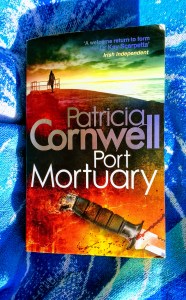 Port Mortuary by Patricia Cornwell.
 A Kentish Lad by Frank Muir.
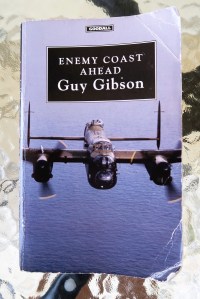 Enemy Coast Ahead by Guy Gibson.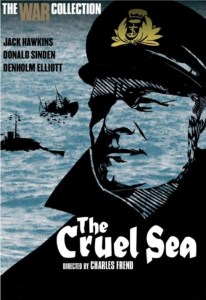
 It’s always a bitter-sweet experience when someone decides to make your favourite book into a film. It doesn’t always work out because maybe it was a big, thick, long book and they have cut out your favourite bit, or perhaps the cast wasn’t the one you imagined. It’s usually just the same in reverse. You see a great film and in the credits it says based on the book by so and so, then you rush out and get the book and it turns out to be a little disappointing. Sometimes it’s even better than the film!
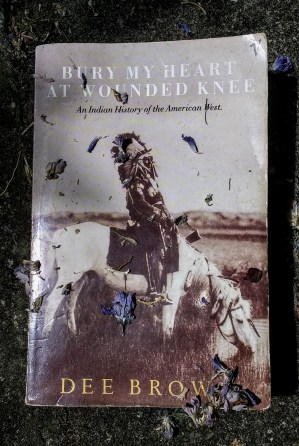 I can’t really remember when I became interested in Red Indians, or to be more precise, Native American Indians. In a way it was an interest in philosophy and the meaning of life that led me to them. I liked the idea of the Great Spirit and the Mother Earth. Those intrinsic ideas of nature and faith greatly appealed to me and showed me a different Indian to the one I have seen on feature films, here was a thoughtful race, in tune with nature. A speech made in 1854 by Chief Seattle has always moved me and in part says this:
 I remember being in our usual pub quiz a few months back and one of the questions concerned Watergate. We were sitting with some friends, actually some much younger friends and one of them asked me, ‘Watergate? What’s that?’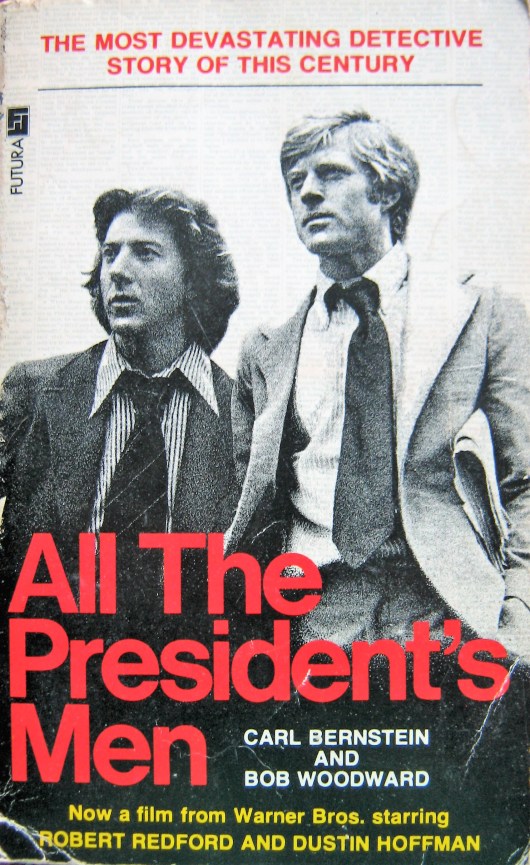
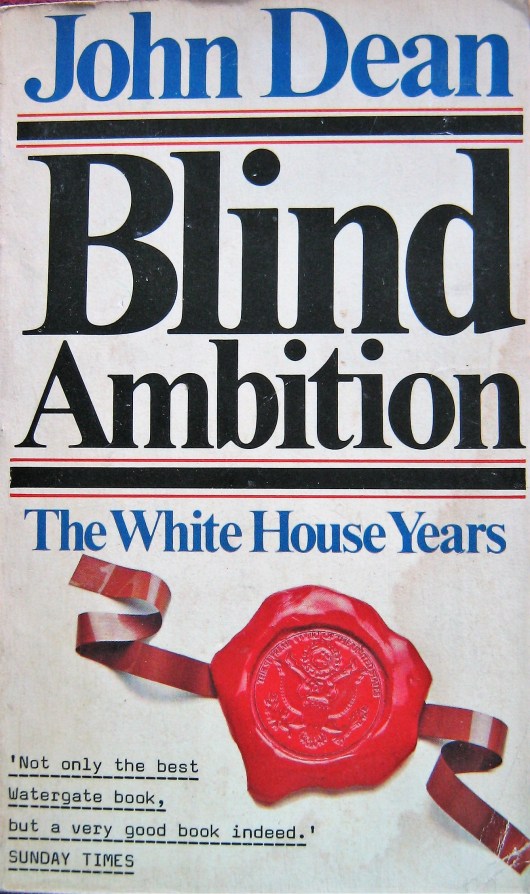
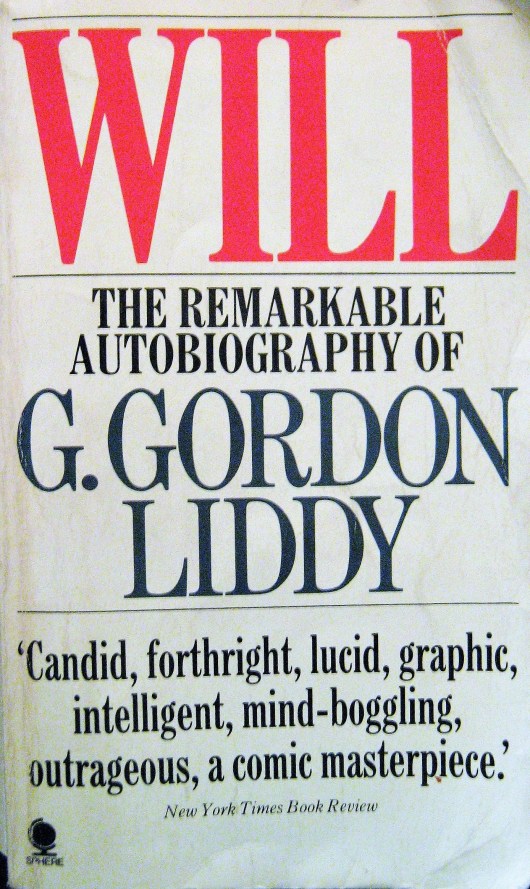
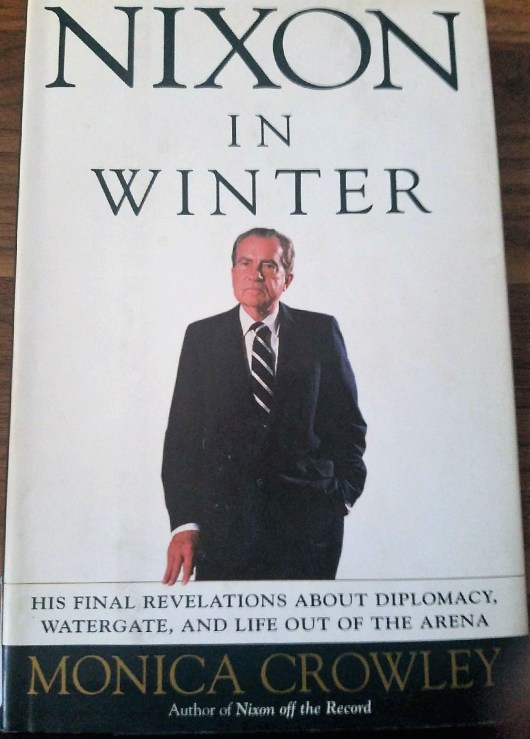
 re’s nothing I love more than a good book and as usual, here’s a quick round-up of the books I’ve taken on holiday to Lanzarote in the Canary Islands. As I’m flying I’ve not brought any hardbacks, just four paperbacks. All my books are usually sourced from the Internet or second-hand book shops but the ones below, with one exception, were gifts.
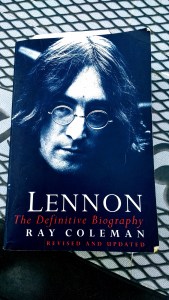 The writer has no time for music journalists who waxed less than lyrical about later Beatles’ records released in the last thirty odd years, things like The Beatles at the BBC released in 1994 or the Beatles Anthology. Reviewers who gave those records a poor reception get short shift indeed and the reader is quickly reminded of their chart topping sales. In their defence though pop music journalists tend to look forward to new music, not back to the old. More scorn is saved for Albert Goldman who wrote the book The Lives of John Lennon. Personally I thought that was rather a good book; it’s certainly more compelling than this one although it tends to focus on Lennon in a negative way whereas this book is very generous towards Lennon. It’s the book of a Lennon fan and focuses on the events in Lennon’s life in a very positive way.
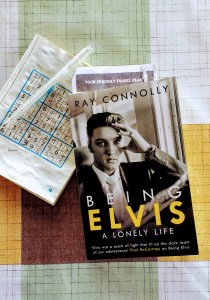 Subtitled A Lonely Life, this is a biography of Elvis Presley by another music journalist, Ray Coleman. Elvis became the King of Rock ‘n’ Roll who inspired Lennon, McCartney and a whole host of others to become musicians and pop stars. I’ve read quite a few biographies of Elvis, all much thicker than this one but this is a great holiday read being both interesting and informative. The foreword to the book was particularly insightful regarding the impact Elvis had on other musicians. The author recounts two phone calls, one to Bob Dylan and one to John Lennon where he happened to mention that he had been to Elvis’ 1968 comeback concert. Both those highly regarded stars bombarded Coleman with a series of questions about Elvis showing that despite their own success and achievements, they were still at heart Elvis fans.
 The Black Dahlia by James Ellroy.
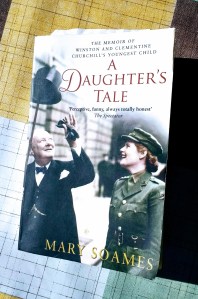 A Daughter’s Tale by Mary Soames.
 My Autobiography by Charles Chaplin.
 As you will probably have gathered if you have read more than a few of my posts, I really do love books. There is nothing better than curling up with a good book anywhere, on a bus or train, in a chair, on a sun lounger, anywhere in fact. Books are a tonic for the brain. An education and a cerebral treat, both at the same time. Books enable the reader to travel not only geographically but in time too. Take one of my interests for instance. Classic cinema. Books like David Niven’s Bring on the Empty Horses has taken me on a journey to Hollywood and back to the golden years of classic cinema, the 1930s and 40s. Niven has told me about the Brown Derby, Romanov’s, Schwab’s drug store and Summit drive and a hundred other places I have never visited. But lets not stop there, let’s go even further. Marcus Aurelius’ book Meditations was written by a great emperor of Rome who died in the year 180AD, so his book is at least 1837 years old. Just imagine, the thoughts of a man who lived nearly 2000 years ago, travelling intact to me, the reader, in the year 2017.
 The dead man looks like Himmler, as much as any corpse resembles the living person it once was but are the officials telling us all they really know about the event?
 Now with a title like that, you might automatically think this book is a work of fiction, or at least something actually about James Bond or his creator, author Ian Fleming. Well, you’d be wrong. Fleming is involved as it happens, because in WW2 Commander Ian Fleming of the Royal Navy was assigned to Naval Intelligence and Fleming came up with an ingenious plan to spirit Martin Bormann out of Berlin and into allied hands.
 Letters from an Unknown Author!