Last week I gave you part one of my Holiday Book bag so here we go with part 2, more of my holiday reads and also what happened when tragedy occurred and I ran out of books.
Let’s kick off with this one, a Christmas pressy from Liz and a book I’ve been dying to read but purposely kept to read on holiday.
Mary’s Mosaic by Peter Janney
Liz bought me this book for Christmas and I’ve been saving it for a time when I can sit and read it undisturbed. After the assassination of President Kennedy there were numerous deaths of various witnesses in Dallas and elsewhere. One such death was of a lady named Mary Pinchot Mayer. She was the ex-wife of CIA agent Cord Mayer and one of JFK’s many mistresses. The author reckons she not only introduced the President to mind altering drugs but also agreed strongly with Kennedy’s desire for peace. He goes a little too far perhaps in making the case that Mary was the force behind JFK’s commencement address at American University in October, 1963 in which Kennedy called for both the USA and the Soviet Union to
‘direct attention to our common interests and to the means by which those differences can be resolved. And if we cannot end now our differences, at least we can help make the world safe for diversity. For, in the final analysis, our most basic common link is that we all inhabit this small planet. We all breathe the same air. We all cherish our children’s future. And we are all mortal.’
Mary was shocked by the murder of the President but came to realise the part played by the CIA and wanted to bring attention to the false story of the Warren Commission report. One day in Washington in October 1964, whilst walking along the towpath of the Chesapeake and Ohio canal towpath, she was murdered. Mary was shot once in the head and once in the chest and in this remarkable book the author goes on to trace the man who he thinks may have been the assassin.
A very fascinating read indeed.
So that was it, by the start of our third week I had read all my books. What could I read next? Well, there wasn’t much in our rented villa’s bookcase so I read one of Liz’s books, Shall we Tell the President?.
Shall we Tell the President? by Jeffrey Archer.
I’ve actually read this book before, many years ago but this was a new edition, rewritten by the author himself. In the original, the president in question was Edward Kennedy but of course, in real life Kennedy never made it to the White House, his challenge cut short by the ghost of what happened to Mary Jo Kopechene at Chappaquiddick. In this rewrite then, the author puts his own fictional president, President Kane in charge at the White House.
The FBI learn of a plot to murder the president. A Greek waiter, an illegal immigrant learns of the plot whilst working as a waiter at a restaurant in Washington DC. He calls the FBI and the two agents assigned to the case report quickly to their superior. Soon, one of the agents and their boss, as well as the informant are dead leaving only one agent who by chance has survived a murder attempt. He has six days to track down the assassins.
The book kept me interested but I can’t say it was a great read and I thought some of the dialogue was a little poor, in particular the FBI agent who kept referring to his new girlfriend constantly as ‘pretty lady’ was a little cringeworthy to say the least. Sorry Mr Archer but I’d have to give this one a five out of ten.
The Long Dark Night by Susan Lund
This was a bit of a first for me. Liz had nothing else that I wanted to read so she said she would sort me out something on her Kindle. She searched for free books and I chose this one by Susan Lund. It was about ex-FBI detective Michael Carter who is now working for the police on cold cases. He is asked to look into the discovery of a dead body on a property that is currently being renovated. As more bodies are unearthed, Carter links the bodies to some current cases and feels that a serial killer might be at work.
Later, two young boys are abducted but one escapes and Carter finally has a clue to work on. Could the killer be an ex-police officer?
The book was a fairly interesting read in part but the author seems to lose direction towards the end and the finale seemed to me to be a bit of an anti-climax.
Even so, the book kept me interested for a few days.
The Woman who Stole My Life by Marian Keyes.
This final holiday read was a book Liz took with her. She read it first, thought it was good and passed it on to me. I thought it was probably standard chick-lit fodder but actually it was a really good read, trotting along in a very chit chatty way, just like my own stories. It flips about timeline wise talking about things in the present and then flipping back to events of some years ago but once you got used to the situation it turned out to be a really enjoyable read.
Stella, many years ago was looking after her family when she was struck down by a mysterious illness which rendered her paralysed and unable to move or talk. Her neurologist Mannix, manages to communicate with her by getting her to blink, so he would go through the alphabet and she would blink at a particular letter and eventually they would put words and sentences together.
Gradually she begins to find that Mannix is becoming quite important to her especially when her husband and children don’t seem to be interested in either her or her predicament. When she gets well, she finds that 1, she has fallen for Mannix and 2, he has fallen for her, so much so that he has self-published a book called One Blink at a Time, a book of based on the notes he has made of their blinking conversations. Anyway, by a series of fluke events the book becomes a best seller in the USA and the two move to New York to promote the book.
All in all, a very enjoyable book indeed and I might even look at reading some more of Marian Keyes books.
That was my holiday book bag. What books are you planning to read on holiday?
What to do next: Here are a few options.
Share this post on your favourite social media!
Hit the Subscribe button. Never miss another post!
This year Liz and I have spent five weeks in sunny Lanzarote and when we had just started week three I had run out of books. One of my great holiday pleasures is spending a lot of uninterrupted time reading in the sun. My big mistake this year was not bringing enough books and also including two very slim volumes in the ones I did bring. Sometimes in a holiday villa there will be something readable in the cupboard that other holidaymakers have left behind, but in our villa the majority of previous tenants appeared to be German and unfortunately my German language expertise only amounts to counting to ten.
Anyway, this particular book bag went on for a bit so I’ve split it into two parts and next week you can read part two. So, let’s take a look at what I have been reading in Lanzarote this winter.
The Prime of Miss Jean Brodie
I noticed this title on one of those blog posts about books you should read before you die. I knew I had a copy somewhere and after rummaging about for a while I finally came across it. It was a rather slim volume and I’d probably read it years ago but it looked interesting and so I opened it up and began to read. My big problem in reviewing this book is that I started reading it and after a few chapters put it down and began reading something else. It’s a small slim book so I popped it into my shoulder bag thinking I’d read it on the flight to Lanzarote. I couldn’t concentrate on the flight but I started reading it later by the pool but then I had to backtrack and re read some of the earlier pages so I lost the continuity. It’s about a teacher, Miss Brodie, who feels that as she is in her prime she must devote herself to a chosen group of her favourite pupils; the Brodie Set. Miss Brodie is not a conventional teacher and tells her pupils all about her visits to Italy and of her love for Mussolini and his fascists. This is done sometimes when the class should be studying mathematics and so a complicated mathematical sum is usually put up on the blackboard to fool any interlopers, like the headmistress for instance.
The Brodie Set all wonder about Miss Brodie and her love affairs and later, when Miss Brodie has lost her job, she wonders who was the traitor? Who reported her to the headmistress? Not one of the Brodie Set surely?
It’s an interesting and original book but I can’t say I was totally impressed but perhaps I should have read it properly and not put it down part way through.
Room at the Top
This was another slim volume I found in a box of old books. I first read it in 1984 according to the note I added on the back of the cover. It’s about a young man, Joe Lampton, in a rigidly class structured 1950s England, still dealing with post war rationing and his journey from a small working class village to a room at the top of a big northern town. He gets a job as an assistant treasurer at the Warley district council and he sets his sights on a young girl who also happens to be the daughter of a rich business owning councillor. A man of his background is not the sort of man the councillor wishes to see romancing his daughter so Joe gets quietly warned off. He is jealous of former RAF pilot Jack Wales who is the sort of fellow who is much more acceptable to the councillor. Jack is a WWII hero who escaped from a prison camp. Joe was an RAF rear gunner who was also in a camp but used his time not to escape but to study for his accountancy exams.
Joe joins an amateur theatre group and starts an affair with a married woman ten years older than him. He is happy and there is talk about her divorcing her husband. This though is 1950s Britain. His involvement would mean scandal and the end of his job with the council, so what should he do?
There was a film version of this starring Laurence Harvey as Joe Lampton and Simone Signoret as Alice Aisgil with whom Joe has an affair. It’s slightly different to the book in a few minor ways but Laurence Harvey’s rather fake northern accent always puts me off.
Anyway, it was a fascinating read looking back to an England much different from today.
timestampe=1707908418
The Kennedy Curse by James Patterson with Cynthia Fagen
This wasn’t a bad read but to be fair it only really skimmed the surface of the story of the Kennedy family. There were no great revelations about the family and to be honest, I’ve read a huge amount about the Kennedy family and this was a book I could probably have written myself, at least to a certain extent. The book really begins with Joe Kennedy and his impressive rise in business and banking. He becomes the youngest ever bank manager in the USA and with his business acumen he soon amasses a large fortune along with his famous family. He supports FDR as the democratic candidate for the presidency but he wants something in return, the ambassadorship to Great Britain. Joe becomes the ambassador taking his family over to London but when the second world war looms he decides Britain will be no match for Nazi Germany.
The big problem for Joe is that FDR thinks otherwise and soon recalls Joe who finds himself out of a job. He has designs on the presidency himself but decides a better course of action would be to make his son, Joe, junior president. When Joe is killed in the war, his next son John F Kennedy has to take on the mantle.
As we all know JFK becomes president but is tragically murdered and the same fate falls to Bobby Kennedy who runs for president in 1968. Ted Kennedy decides to follow in his brothers’ footsteps but then the Chappaquiddick incident occurs when Ted leaves poor Mary Jo Kopechne to drown in his overturned car. Ted seems to ride out the ensuing scandal but it becomes clear he will never be president. The story then turns to the next generation of Kennedys who do not seem to be in the same league as their uncles and the narrative begins to turn toward drug addiction and other issues including rape charges against William Kennedy Smith, one of numerous next generation Kennedy cousins.
The story finishes with the death of John F Kennedy junior, the son of the late president, in a light aircraft crash.
A fascinating story but to be honest I’ve read better histories of the Kennedy family although this did keep me entertained for a while.
A Time to Kill by John Grisham
I’ve read a few of Grisham’s books and I’ve always been impressed with them, all except one. This one turns out to be his first novel and he says in the introduction how proud he was of finishing it as at that time, he hardly ever finished anything. It also contains some autobiographical elements as at the time, Grisham was a street lawyer, similar to the character in the book.
The book is set in America’s deep south where there is or was a great deal of racial prejudice. Two white guys decide to kidnap a young black girl, tie her to a tree and repeatedly rape her. They drive her away and dump her like garbage but she survives and the police arrest the two scumbags responsible. The next is that the young girl’s father Carl Lee Hailey decides to take a rifle and shoot the two guys. He is arrested and put on trial for murder and street lawyer Jake Brigance takes on the case.
The case ignites the small town of Clanton Mississippi. The Klu Klux Klan become involved as do various other groups and the stage is set for a tense murder trial which goes on while the police and the National Guard try to keep order.
It’s a very exciting read although the ending was a little underwhelming and if you find the N word offensive then this is a book which is not for you as that particular word appears numerous times on almost every page.
I read more books on holiday in Lanzarote. Tune in next week for more books, same time, same channel, same blog.
What to do next: Here are a few options.
Share this post on your favourite social media!
Hit the Subscribe button. Never miss another post!
Here in our rented villa in Lanzarote it has been hugely relaxing. I did plan to do a lot of writing but instead I’ve been doing a lot of reading, swimming and drinking a lot of wine. To be fair I have done some writing. I’ve started two new short stories, one of which I have the story fully in my head and another that I’m not sure where it will end up. I’ve also worked on a couple of unfinished stories and blog posts. What has been interesting is that one of the books I’ve been reading by author John Grisham was actually John’s first novel and he says in the introduction that he was proud of his first book and also in particular, proud of finishing it as like me, he starts a lot of things but rarely sees them through to the end. Clearly, he’s sorted that problem out because he’s written a number of best selling books and all the ones that I have read, with one exception, have all been riveting page turners.
Grisham’s first book, A Time To Kill was based on his time when he was what he calls a ‘street lawyer’, someone hustling for cases. He explains in the introduction how the book was very autobiographical and inspired partly by dealing with similar cases and situations to the one he based the book on.
One of my unfinished stories was based on a radio play I wrote. I was hoping to get the BBC interested in it but sadly they declined. Pity, because I thought it was rather good and also it would have given me such a lot of pleasure to hear my work on Radio 4.
It was inspired by two things, the assassination of Bobby Kennedy and a film starring James Stewart. The film was called Call Northside 777. In the film Stewart plays a cynical newspaper reporter who is asked by his editor to investigate a small ad in the newspaper. The ad asks for someone to come forward who has information about a murder to call the eponymous phone number. Stewart finds the person running the ad is an old lady whose son is in prison for a murder she claims he didn’t commit. She works as a cleaner and is saving up to put together a reward for anyone having any information. Ultimately James Stewart proves that the woman’s son was innocent in part by having a newspaper photo enlarged. A key witness, and I’m going from memory here, had claimed she was somewhere on a particular date but a photo in the paper’s archive showed the woman with a paperboy in the background holding a newspaper and the photo was enlarged to show the date, which in turn somehow proved that part of her testimony was wrong.
The funny thing is that today a photo like that would have been taken by a digital camera and its quite possible the picture when enlarged wouldn’t show such detail yet with a film camera it’s a different story. Take something like the original Star Trek for instance, shot on 35mm film in the late sixties and still looking clear and sharp today. The following series, The Next Generation, shot on video in the 1980s is not remotely as sharp and it’s the older series which looks better on today’s HD TV sets.
Photography has played a big part in theories surrounding the shooting of US President Kennedy in 1963. One lady, Mary Ann Moorman, took a polaroid shot of him being struck by a bullet. The photographer was on the left of the President’s limousine and many have conjectured that in the background to the President’s right, the figure of the assassin can just be seen. I’m personally not so certain but the picture does show the grassy knoll where a second shooter may have been lurking. The other shooter, the infamous Lee Harvey Oswald was over in the Texas School Book Depository. Was he shooting at the President or having a coke in the second floor lunch room?
Polaroid by Mary Ann Moorman
Next to Mary was another lady known only as the Babushka Lady. This lady has never been identified but she also filmed the assassination and her film, if ever found, would also have great footage of the grassy knoll area. The other day I saw a very clear picture of her on a JFK site I follow. The picture had been cleaned up by new AI technology which uses computer programs to clean up blurred pictures.
Going from fact to fiction, in my story it was a UK MP who gets murdered and the accused assassin’s mother who places the newspaper advertisement. In the real murder of Bobby Kennedy, the assassin Sirhan Sirhan shot Kennedy from a few feet away and various people grabbed him just as he fired his first shot. According to the autopsy, the fatal shot was fired from point blank range, possibly actually touching Kennedy’s head so how could Sirhan’s bullet, fired from a few feet away have been the fatal shot?
The JFK assassination has inspired quite a few conspiracy films. The most famous is the Oliver Stone film JFK which dramatises the investigation by New Orleans District Attorney Jim Garrison and his probe into the murder. Stone uses the Garrison investigation to take the audience through the various stages and theories of the assassination, the number of shots, the direction of the shots, the Oswald look alikes, the murder of police officer JD Tippet, the mafia connection, the intelligence connection, the background to Lee Oswald and so on. In the film Garrison played by Kevin Costner meets an informant known only as X. I’m not sure if this ever really happened but X was based on L Fletcher Prouty, an air force officer who served as Chief of Special Operations for the Joint Chiefs of Staff under President Kennedy. He gives the audience a view of the assassination from a covert intelligence CIA background.
Another film based on the assassination was Executive Action, a phrase coined by the CIA itself and referring to their capability of assassination. The film was written by three screenwriters including Mark Lane who was the author of Rush to Judgement, one of the first books to criticise the Warren Commission report on the JFK assassination. Lane also made a film version in which he interviewed many assassination witnesses.
In the film, a group of men discuss the Kennedy presidency and agree that Kennedy must be removed for various reasons, his civil rights stance, his nuclear test ban treaty and his decision to withdraw from Vietnam. Then they set out to obtain funding from various Texas oil magnates who are also not happy with President Kennedy.
Mark Lane was actually a lawyer and he defended a magazine which was sued by E Howard Hunt, one of the Watergate burglars, because the magazine claimed that Hunt was part of a JFK assassination plot. In the following trial, Mark Lane won his case and the jurors demanded action by the government to investigate further. Nothing of course happened but that’s hardly surprising according to another book I have just read called Mary’s Mosaic. It’s about a lady who was murdered by the CIA or so the author claims, because she knew too much about the JFK assassination. The book goes on to show how the CIA was able to manipulate the media into not delving too deeply or even not reporting at all, stories like these. I’ll be reviewing the book in more detail in an upcoming Book Bag post.
Anyway, that’s enough about conspiracy theories for now. Is it worth digging out that radio play for some more work or is it time for another dip in the pool? I know this is not good for my street cred as a writer but, you guessed it, time for another dip in the pool!
What to do next: Here are a few options.
Share this post on your favourite social media!
Hit the Subscribe button. Never miss another post!
I’ve been a fan of Cary Grant for a very long time. I love his smooth and debonair style, his handsome and tanned good looks and that rather languid transatlantic brogue of his.
In the TV series Archie currently streaming on ITV X they seem to be saying that all of that was an invention, an invention by an Englishman called Archie Leach who transformed himself into a successful Hollywood film star named Cary Grant.
Grant was born Archibald Leach in Bristol, England in 1904. He had a poor upbringing and his mother suffered from depression and his father was an alcoholic. The young Archie was interested in the theatre and performing and his mother was keen on him having piano lessons. His older brother had died before reaching the age of one and this perhaps made his mother a little over protective of the young Archie. Even so, his mother was not a woman who was able to give or receive love easily and the older Cary Grant blamed his childhood relationship with his mother for his problems with women in later life.
When Archie was 9 years old his father placed his mother in Glenside Hospital, a mental institution, telling his son that she had gone away on a long holiday and later, that she had died.
Archie befriended a group of acrobatic dancers known as The Penders and he was able to eventually join them and there he trained as a stilt walker and became part of their act. Later the group toured America and Archie decided to stay, following in the footsteps of others before him like Charlie Chaplin and Stan Laurel who had made their way to the USA in an almost identical way.
On Wikipedia they mention that on the trip over to the USA Archie met Douglas Fairbanks and was greatly impressed by him, so much so that Fairbanks became a role model for the young Archie Leach.
In New York Archie worked in vaudeville with various comedy and theatrical groups. He joined the William Morris theatrical agency and began to pick up many theatre roles. In 1932 he had his first screen test and was given a five year contract with Paramount Pictures. B P Schulberg the general manager of Paramount decided that Archie Leach was not a good enough name for films so Archie came up with the name Cary Grant taking Cary from a stage character he had played and Grant chosen randomly from a telephone directory.
Cary Grant worked hard at his profession and in the TV series Archie they claim that Cary was a role or a part that Archie built up over time. Jason Isaacs who plays Grant says Cary would never be filmed or recorded during an interview because then he was being himself not playing at being Cary. The actor tracked down a recording of Grant made secretly by a student journalist who interviewed Cary over the phone and felt that for the first time he was hearing the real Archie who came over in the recording as very English rather than the usual mid Atlantic voice that we are used to hearing.
It seems to me that many stars who use a different name in the film world are in a way creating a character which they present to the public. You could argue that Marilyn Monroe was a similar personality and that she was a creation of Norma Jeane in the way that Cary Grant was created by Archie Leach.
A breakthrough role for Grant was starring with Mae West in the film She Done Him Wrong and the follow up, I’m No Angel. Grant went on to star in many famous films and amazingly, even though he was a star in Hollywood’s golden years, he was actually the first big star to not be a part of the studio system. He was a freelance actor, not contracted to any studio until 1937 when he signed a four-picture deal with Columbia.
In his early years in Hollywood, Grant shared a house with actor Randolph Scott leading to claims of the two being gay lovers. Still, young bachelors sharing a house with others is not uncommon. David Niven famously shared a house with Errol Flynn and we can hardly class those two as being gay.
Somewhere in my fairly huge book collection I have a biography of Cary Grant but despite an intensive search I couldn’t find it. I also have a copy of David Niven’s Bring on the Empty Horses which if I remember correctly has a short chapter on Grant. Now where did I put that book?
I did do some quite considerable research to produce this blog post. Firstly, I had to watch the four episodes of the TV series Archie, currently streaming on ITV X. That wasn’t anything difficult of course, it wasn’t a chore, in fact it was very enjoyable. Archie is a wonderful four part series and Jason Isaacs plays an outstanding part. He doesn’t try to impersonate Cary but he did manage to create a look of the late star and he caught Grant’s voice and enunciation perfectly. Most of the series follows Cary in later life when he becomes involved with and later marries Dyan Cannon, Dyan was his fourth wife and she was the mother of his only child Jennifer and she and her mother co-produced the series which is definitely well worth watching.
Next, I searched for the biography I had of Cary but despite searching the entire house I couldn’t find it. Oh well, I have a few copies of Bring on The Empty Horses about the house so I thought ok, I’ll grab that and have a read of the chapter on Cary. Once again, I searched through the entire house but could I find that book? No! Eventually I started to put everything back where I had found it and it was only after idly looking in a box of books that I had only recently packed away and had earlier dismissed, that I finally found it.
Anyway, I had a break from writing to look for that book and after a while when I couldn’t find it I popped the TV on. I wasn’t altogether surprised to find there was a Cary Grant film showing. It was An Affair to Remember, a love story in which Grant’s character, a playboy type meets Deborah Kerr on a transatlantic voyage and the two fall for each other. On arrival in the USA they decide to have a 6 month break from each other as they are both in other relationships and then meet at the top of the Empire State building in New York. It’s not really my cup of tea, in fact it’s overtly sentimental but then, sometimes a small dose of sentimentality is good for you. Cary Grant plays, well, Cary Grant and Deborah Kerr plays a very English New Yorker.
I have two of Grant’s other films on DVD, To Catch a Thief and North by Northwest, both directed by Cary’s favourite director, Alfred Hitchcock.
OK, enough TV watching for now. Getting back to Bring on the Empty Horses, David Niven wrote about Cary Grant in a short section of his book called Long Shots and Close Ups where he gives his readers a quick sketch about various film people. The section on Cary is only three and a half pages and not the full chapter I was expecting but Niven clearly liked the man and in those three and a bit pages, picked up on some essential elements of Grant’s character. Niven remembers Cary Grant as an intelligent man, particularly with money and he listed people like multi millionaire Howard Hughes among his friends. Grant invested his earnings well and became one of the richest people in Hollywood. He had an obsession with his health, embarking on various health pursuits and then moving on to the next one. Niven remarks that once when Cary was taking swimming lessons to learn the crawl, Niven mentioned that Cary could already swim the crawl. Grant answered ‘yes but I want to swim the crawl perfectly!’ Cary gave up smoking by hypnotising himself and Niven also mentions his use of LSD during his treatment by a psychiatrist which is also brought up in Archie.
Cary Grant retired from films in 1966 the year his daughter was born and he and Dyan Cannon divorced in 1968. Many tried to bring him out of retirement for various films including his favourite director Alfred Hitchcock but he declined. He must have wanted to keep on working though because he did accept a position on the board of Fabergé.
He died in 1986 aged 82 and left behind an estate reputedly worth around 80 million dollars. Archie is a well made and quite fascinating piece of TV. Look out for it, it’s well worth watching.
What to do next: Here are a few options.
Share this post on your favourite social media!
Hit the Subscribe button. Never miss another post!
I’ve written a few of these ‘book or the film’ posts but in this one I’m going to stick with one particular film and book; The Godfather.
The Book
I’m not sure which came first for me, the book or the film but I actually think it was the book. The Godfather was written by Mario Puzo and is the story of Don Vito Corleone, the head of one of the five mafia families of New York. The book opens with the wedding of Don Corleone’s daughter and Puzo sets the scene and introduces the various characters.
Don Corleone is a Sicilian and apparently no Sicilian can refuse a request on the day of his daughter’s wedding. One of those with a request for the don is singer Johnny Fontane whose show business career is waning. He feels that a part in a new film will revitalise it but the producer will not cast him. The don is happy to help out his favourite godson and dispatches his advisor and stepson Tom Hagen to Hollywood to sort things out.
Another supplicant is a funeral director. Two youths have attacked and beaten his daughter and because of political connections the courts of law have only handed down suspended sentences. The father asks for Don Corleone to give him revenge but the Don declines. The funeral director has never shown the correct respect to the Don but when he does and finally calls him Godfather then, and only then, does Corleone issue orders for the youths to be brutally beaten.
Some time afterwards the Don agrees to meet fellow mafioso Sollozo who wants Corleone’s help with a drug smuggling operation. The Don declines and this sets off a violent war between the mafia gangs.
The Film
Francis Ford Coppola was the director of the film version and was also the co-writer of the screenplay along with Mario Puzo. Coppola wanted Marlon Brando to play the part of Don Corleone even though Brando at the time was rather unpopular with the producers. He was expensive, his last few films had not done well and his time wasting attitude had added huge expenses to his pictures. After the director had made the producers understand how important Brando was, they set various conditions for his employment. He would have to work for a reduced salary and put up a bond to ensure he would not delay the production. Another was that he had to have a screen test. Coppola has told the story in various interviews how he and his film crew had entered Brando’s house like ninjas and quietly set up their equipment. Brando slicked down his hair with shoe polish and stuffed cotton balls into his mouth to make the transformation into the aging mafia boss.
Paramount also wanted to shoot the film on their back lot but Coppola persuaded them to shoot on location in New York and stick to the original time frame of the book which was set in the 1930s and 40s.
Various people were auditioned for parts in The Godfather but finally the cast was resolved and shooting began with Brando as the Don, James Caan as Sonny, Al Pacino as Michael, Robert Duvall as Tom and Diane Keaton as Kay Adams.
The Book
The book is a fairly heft one and there is much in there that is not covered by the film. Johnny Fontane for instance features more in the book, while he plays only a supporting role in the film. There is a further story in the book about Lucy, a friend of Sonny’s wife with whom he is having an affair. After Sonny’s death Lucy feels she will never find not only love but sexual pleasure ever again. The reason for this is that Sonny had a rather large penis and Lucy’s corresponding anatomy is rather large, however she falls for a doctor who sorts her out with an operation which restores the anatomical status quo.
Going back to the Johnny Fontane character, there have been various stories and rumours which imply the character was based on Frank Sinatra. Like Johnny Fontane, Frank was tied to a lifetime contract with a bandleader, in this case Tommy Dorsey but Dorsey somehow relented and released Sinatra. Some say mobster Willie Moretti was instrumental in helping Sinatra free himself from the contract. Later when things weren’t going so good for Sinatra, he revived his career by appearing in the hit film From Here to Eternity for which he won a best supporting actor Oscar. In the book, Johnny Fontane is after a similar film part but the producer declines to give it to him. At the wedding of Corleone’s daughter, Fontane asks for the Don’s help, cue the famous scene where producer Jack Woltz finds his favourite racehorse’s head in his bed.
The Film
Coppola decided that instead of finding the horse at the end of his bed like in the book, it would be better if Woltz awoke, was disturbed by something wet, pulls the bedclothes away to see blood and then uncovers the horse’s head. The head was the actual head of a horse, procured from a dog meat factory and Coppola mentions on the commentary to my DVD version that lots of animal lovers sent him hate mail about the horse, even though the horse had been condemned to its fate anyway.
Sinatra always denied any involvement with the mafia although he did sing at the wedding of mafia boss Willie Moretti’s daughter, just like Johnny Fontane did at the Corleone wedding that opens the film. Anthony Summers, in his book about Sinatra, claims that the story was true and mafia enforcer Johnny Blue Eyes put pressure on studio boss Harry Cohn to give Sinatra the film role that rebooted his career.
Director Fred Zinnemann thought Sinatra might be good in the role so Cohn was happy to go along with the idea.
The Book
As previously mentioned, the book does have some storylines which were not used in the film but one chapter was a look at the beginnings of Vito Corleone. Born Vito Andolini in the Sicilian village of Corleone, Vito’s father was murdered by a local mafia boss and the young Vito was smuggled away to America. In America he took the name of Corleone and seemed to slip quietly into the role of mafia Don by murdering Fanucci, a New York Sicilian Godfather who preyed on his fellow Italians. Although this element of the story wasn’t used, Coppola kept the storyline for use in The Godfather Part II. The follow up film was a film classic in its own way.
The Godfather Parts II and III
In part II there are two parallel stories. One is the story of Vito Andolini, as described above, played by Robert De Niro and another follows on from the first film. Michael is now the head of the family and gets involved with gangster Hyman Roth with investments in Cuban casinos. After the Cuban revolution Michael realises Roth is out to kill him and so has him murdered. A senate investigation looks into Michael’s activities with information provided by Frank Pentangeli, a former member of his organisation, but Michael brings pressure to bear on the informant and the investigation collapses.
In The Godfather Part III Michael’s story continues. He is reconciled with his sister after the murder of her husband in the original film. He also gets involved in a scheme in Europe where he hopes to become fully legitimate but other mafia bosses have different ideas. The Papal bank scandal and the death of Pope John Paul I are real events that are also thrown into the mix. The film was the weak element in the Godfather trilogy. In 2020 The Godfather Coda: The Death of Michael Corleone was released. It was just a re-edited version of part III and personally I still didn’t find it anywhere near as good as the other two films.
Marlon Brando worked with Coppola again on the film Apocalypse Now. He played the part of an American Colonel in Vietnam who has apparently gone insane and Martin Sheen is sent to assassinate him. Brando turned up on set hugely overweight and not knowing his lines. He then decided to re write or improvise most of his scenes and the director was forced to shoot Brando in shadow due to his weight. Basically, he pulled all the stunts that Paramount expected of him in The Godfather. Not the best way to repay a director who had resurrected his career with the role of Don Corleone.
In 1990, Brando appeared in the comedy film, The Freshman, playing a parody of Don Corleone. When the shooting over ran, Brando demanded a million dollars to film for an extra week. The producers declined to pay and Brando threatened to badmouth the film to the press. Eventually they paid.
Brando died in 2004.
In 2023 Coppola finished filming his latest project, Megalopolis, a sci fi film about the rebuilding of New York after a major disaster.
Conclusion.
I enjoyed the Mario Puzo novel and I did re-read it for this post but it seems to stray into areas which really have no relevance to the main narrative which I found slightly annoying. The film version, which I also watched recently is a modern classic which continues to entertain everytime I see it. I like both the book and the film but I’d have to say I think the film version has the edge.
What to do next: Here are a few options.
Share this post on your favourite social media!
Hit the Subscribe button. Never miss another post!
This isn’t a post about myfavourite books. I’m pretty certain I’ve done that one already but I thought I’d talk about the favourite books of some famous people and I’d like to start with one of my film heroes, James Dean.
James Dean and The Little Prince
Back in the 1970s my Saturday ritual involved getting the bus into town and scouring book and record shops for books and records. One day back then I was flipping through the posters in one particular shop. The posters were the music stars of the 70s, Elton John, Mick Jagger, Suzi Quatro, David Bowie and so on but one was a picture of a really good looking guy with a fifties combed back hair style. In some pictures he was dressed like a cowboy and in others in a red jacket and denim jeans. The guy behind the counter must have seen me wondering who the guy was and he told me he was a film star called James Dean. He handed me a paperback book about the actor and I took it home and read it and very soon I was trying to find out everything I could about Dean.
Dean had been killed in a car crash in 1955 and had only appeared in three films and at the time of his death, only one of those films had been released. I read a great deal about Dean and from what I could find out, the biography to read was written by his best friend, William Bast. I never managed to get a copy of that book but Bast produced a made for TV film version, James Dean: Portrait of a Friend with Stephen McHattie as Dean.
In the film William Bast played by Michael Brandon, leaves Dean in a restaurant and Dean later asks why Bast left. Bast was intimidated by Dean’s important looking friends and Dean replies that he was judging by surface appearances. When Bast questions Dean further, Dean produces his favourite book, The Little Prince and then goes on to read his favourite passage.
In the book Dean explains, the Little Prince is from a distant planet. He meets a fox but the fox won’t play with the prince because he hasn’t been tamed.
Later the fox gives the prince a secret which is this: It is only with the heart that one can see rightly, what is essential is invisible to the eye, something which Bast claimed was the secret to Dean’s style of acting.
James Dean was killed in 1955 and in later life William Bast wrote another book about James Dean claiming that the two were lovers and that Dean was gay.
The Little Prince was written by Antoine De Saint-Exupéry and according to Wikipedia has sold an estimated 140 million copies. It is also the second most translated work ever, only beaten by the Bible.
What did Dean see in the book? Well, it was a childhood favourite of his so perhaps it brought back memories of happy times, or perhaps it was just the undeniable charm of the book that appealed to him.
Donald Campbell and 1001 Nights
Donald Campbell was the son of a famous racing driver and record breaker, Sir Malcolm Campbell. Campbell first broke the land speed record in 1924 at Pendine Sands in Wales which was the first of his nine land speed records. He also set the water speed record in his boat Bluebird K4. He was knighted in 1931 and died in 1948 aged 63. He was one of the few racing drivers and land speed record holders of his era to die of natural causes as many of his rivals were killed in crashes. His son, Donald Campbell, was determined to equal and even surpass his father’s achievements.
He set about doing so with the help of his father’s engineer, Leo Villa. He made various runs at the land speed record, his last was in Australia. He chose to run his Bluebird car at Lake Eyrie and the vast dry salt lake bed offered the perfect course. It hadn’t rained there for nine years but Campbell had just started his trials when the rains came and ruined the course. Eventually Campbell managed to raise the record to 403.10 mph in 1964 but the huge expense and difficulties of the project cast a great strain on Campbell. In November of 1966 he tried for a new water speed record at Lake Coniston but once again, bad weather caused problems. He was still at Coniston in the following January and when the weather improved, he tried for the record. He was killed in his Bluebird boat on the 4th January 1967.
In the BBC film Across the Lake, Campbell was played by Anthony Hopkins and claims his favourite book was 1001 Nights. The book is a collection of Arabian folk tales perhaps more well known in England as The Arabian Nights. The book is about a king who after finding that his brother’s wife has been unfaithful, decides that all women are the same. He decides then to marry a succession of virgins and after their wedding night have them executed to make way for the next, One day he marries Scheherazade who tells the king a story but promises to finish it the next night. The king delays her execution wanting to hear the end of the story but the next night she starts another one, again promising to finish the story the following night. The stories go on for a thousand and one nights, Scheherazade telling more stories in order to save herself from execution.
The screenplay for Across the Lake was written by Roger Milner and was based on true events although whether that includes Campbell’s love of 1001 Nights or not, I’m not sure. In the film Campbell gives a girlfriend a necklace inscribed with a quotation from the book. ‘Beautiful of face with attributes of grace’, a reference to Scheherazade herself.
Noel Coward and The Railway Children
This is perhaps where this post might start to unravel. I know the Donald Campbell link was a little tenuous and only based on a film but this next one was based on my own memory which can be prone to failure. I knew Noel was a great fan of the children’s writer E Nesbit and I’m sure I had heard or read somewhere that when he died, he was reading his favourite of that author’s books, The Railway Children. A quick bit of internet research and I see that Noel died after reading Nesbit’s The Enchanted Castle. Coward was a lifelong fan of E Nesbit who wrote a series of children’s books. He discovered the books as a child and revisited them many times during his life. In his diary he wrote this about the author:
“Sunday 3rd February 1957. I am reading again through all the dear E. Nesbits and they seem to me to be more charming and evocative than ever. It is strange that after half a century I can still get such lovely pleasure from them. Her writing is so light and unforced, her humour so sure and her narrative quality so strong that the stories, which I know backwards, rivet me as much now as they did when I was a little boy. Even more so in one way because I can now enjoy her actual talent and her extraordinary power of describing hot summer days in England in the beginning years of the century.
All the pleasant memories of my own childhood jump up at me from the pages… E. Nesbit knew all the things that stay in the mind, all the happy treasures. I suppose she, of all the writers I have ever read, has given me over the years the most complete satisfaction and, incidentally, a great deal of inspiration. I am glad I knew her in the last years of her life.””
The Enchanted Castle is about a country estate and three youngsters who meet a princess and discover a magical ring. I have never read either that or the Railway Children although I did find a copy of that latter book not long ago. The film version is a delightful adaptation that has been seen and loved by many generations of children and adults since it was released in 1970. It was written and directed by Lionel Jefferies and stars Jenny Agutter and Bernard Cribbins.
Noel Coward died at his home in Jamaica in March of 1973.
Woody Allen and The Catcher in the Rye
Woody is one of my favourite film directors and after a search on the internet looking for more favourite books from my favourite people, I found he was apparently greatly inspired by The Catcher in the Rye by J D Salinger. Woody had this to say about the book:
“The Catcher in the Rye has always had special meaning for me because I read it when I was young – 18 or so. It resonated with my fantasies about Manhattan, the Upper East Side and New York City in general.
It was such a relief from the other books I was reading at the time, which all had a quality of homework to them. For me, reading Middlemarch or Sentimental Education was work, whereas reading The Catcher in the Rye was pure pleasure. The burden of entertainment is on the author. Salinger fulfils that obligation from the first sentence on.”
I can understand Woody when he talks about books that have a quality of homework about them. Many classic books I’ve tried to read, particularly in recent years, have left me disappointed and with that same feeling that Woody describes.
I read Catcher in the Rye a long time ago and rather than inspiring me, I found it dreadfully boring and pointless. The hero, Holden Caulfield goes to New York and basically moans about all the things he finds false and ‘phoney’ about the city and its people. Mark Chapman, the murderer of John Lennon, was obsessed with the novel and left behind a copy after he had shot Lennon with a note saying ‘this is my statement’.
Sorry Woody, you and I will have to disagree about Catcher in the Rye.
So what is my favourite book? Well, I’ve got quite an extended shortlist but I think I’d have to plump for David Copperfield by the wonderful Charles Dickens. I first read it many years ago and perhaps the moral of this post is that the books we love in our youth are the ones that continue to give us pleasure in later life.
It always happens to me when I’m away. I know I’ve written about this before but the National Lottery has been annoying me. Here I am away from home and I get an email saying check your account, you’ve won a prize. Great! I wonder what is it? The million-pound jackpot or £3.42 on the Thunderball? I’m guessing it’s the £3.42. Either way, the National Lottery site cannot be accessed from abroad so I’ll just have to wait until I’m back in the UK before I find out if I’m a millionaire -or not.
What would I do though if I won a huge amount, millions of pounds? Well, it would be brilliant of course but me with my council house mentality, what could I do with say three million pounds? Well, the first thing would be to give away a third to charity. Yes, sounds good, doesn’t it? Really commendable but the thing is, I’ve already promised the Almighty that if he stopped for a minute and gave me a multi-million pound win, I’d give a third to charity.
I’ve promised so I could hardly say no and keep all the dosh could I? He would probably bump me off in a car crash or something. The big problem there is that I’ve also promised a third to the other side, you know, Lucifer, The Devil, Satan. I’ve promised him a certain amount of wickedness if he, the devil, will give me the jackpot. It’s shocking I know but I won’t be doing anything really nasty, just something moderately wicked like blocking up a post box on the last posting day before Christmas, just a little something that could be accepted as being wicked. Know what I mean?
Still, once I had the money, what would I do with it? Its ok for these rich people who are used to money. They will invest it and even if they invest it and go bankrupt, they will be still riding around in Rolls Royces and staying at top hotels whereas little old me would be in the nick for insider trading before you can say Gordon Gekko!
So, imagine I’ve got three million burning a hole in my pocket. Well, my old HP laptop is a little behind the times and slows down quite a lot when I try to edit my YouTube videos so a new PC or laptop must be on the cards. A new house? Of course, in fact the lovely villa that we rent here in Parçay Les Pins is a wonderful place. Perhaps I’d offer Rebecca the owner a few quid to take it off her hands. A little updating would be good. The lounge needs a makeover as do the bedrooms and the bathroom. Yes, I could see myself settling here quite happily. Then of course I’d need a nice car. My current vehicle, a Skoda is looking a bit long in the tooth, I quite fancy one of those cars with a lot of leg room. A few years ago the government was encouraging us to buy diesel cars, now those of us who still own them are being penalised by idiots like the Mayors of London and Manchester, Sadiq Khan and Andy Burnham.
Both want new low emissions in their towns and Khan has already gone ahead and expanded ULEZ, the Ultra Low Emission Zone from the centre of London to the Greater London area. Now, if you want to use a diesel car in those areas you will have to pay £12.50 per day. Yes, £12,50 per day to drive in the low emission zone, even though your vehicle has an MOT and has passed the ministry of transport emissions test. I’m all for cleaner air but what Khan is trying to do is get the working man who mostly drives a second hand car or van to contribute towards the London Mayor’s almost bankrupt set up. How fines will change the air quality though I’m not sure but what about the companies who designed and produced our polluting vehicles in the first place? Wouldn’t it be better if the government decided to say to the manufacturers, reduce the emissions on your vehicles by 2025 and then allow those vehicles time to gradually drop down into the second hand market? After all, we can’t all afford brand new electric vehicles.
Andy Burnham wanted to do a similar thing in Manchester but the outraged response of the residents of Manchester forced him to back down. Now he will tell you he didn’t want a low emission zone. Actually he did, certainly when he was MP for Leigh. Now as Mayor he says ‘I was forced into this by the Government.’ No, not really, the Government didn’t ask for a charging zone, just a small city centre low emissions zone, it was Andy Burnham who extended the zone to the whole of Greater Manchester, no one else. Sorry but Andy Burnham is a liar.
Funny how you can get onto a rant without meaning to. Time to calm down and read a book.
Faithful by Marianne Faithful.
I picked this book up after reading a blog post that made it seem like the most wonderful book ever written about the 1960s. I knew very little about Marianne Faithful except that once upon a time she was involved with Mick Jagger and I was surprised to find that Marianne was actually a singer. She had a hit in 1964 with a song called As Tears Go By which I thought I’d never heard of but when I played it, I realised I had. I’d always thought this was by the Seekers but of course it wasn’t. Good job that song hasn’t been played on our weekly quiz night as I would have got it wrong.
Marianne seems to have made friends with someone who was a record producer and in the crazy world of the 60s a couple of tracks were recorded, a single was put out and made the charts. Later, caught up in the swinging London scene she met Mick Jagger and began seeing him regularly. This being the rock and roll scene, booze, drugs and sex make a lot of appearances. Marianne was initially attracted to Keith Richards but after the two hit the hay together Keith remarked casually while getting dressed that he thought Mick really fancied her so despite her rather liking Keith she began seeing Mick.
Mick comes over in her book as quite a nice guy really. He seems to have been happy to enjoy booze, drugs and sex just like your average rock and roller but he seems to have always been able to step away from anything, like drugs or booze in particular, and stop it taking over his life.
Marianne did let drugs take her life over later on but at the beginning things seemed pretty amateur. For instance in the famous police drugs raid on the Rolling Stones, circa 1967 I think, Marianne had bought some travel sickness pills quite legally in either Italy or Spain but because they contained speed, they were illegal in the UK, not that anyone knew that of course.
Marianne stayed with Mick for quite a while but her life seemed to be going out of control as she seems to have been stoned for most of the 60s. Eventually she became a major drug user and at one point ended up living in a squat but still seems to have found the time and money to score drugs.
Actually, this book is very like a book I read not long ago about John Cooper Clarke in that when people are drug addicts, all they can think of is getting more drugs. Even though Marianne gets in quite a state, she never thinks that the reason might actually be her drug taking and neither does she ever even entertain actually not taking drugs.
Somehow, even when Marianne is living in a squat someone thinks she might be able to put an album together and make some money which she does. She ends up in New York and eventually manages to get into a detox place from which she finally emerges, in later life, clean and drug free.
Her life has been -and here I have to use a phrase that I hate but here is actually relevant- a sort of roller coaster ride and the book is written in a sort of stream of consciousness way in which she describes her LSD trips with quite mesmerising clarity.
At the end of the book, she is happy that her albums have done well and people regard her now as a serious artist and not just Mick Jagger’s druggie girlfriend which, sorry Marianne, was my conception of her before reading this book.
One final thing. I clicked onto Spotify and listened to a few of her music tracks and I have to say, even though Marianne seems to be nowadays up there with the gods of rock and roll, I didn’t find anything that resonated with me. Sorry, Marianne.
Here in France we have been really lucky with the weather, it has been lovely, sunny and warm. I’ve been to France at this time of the year many times and usually the summer ends with a big thunderstorm. One day it’s hot, the thunderstorm comes and the next day it’s considerably cooler and the summer has gone. This year we had the usual storm but afterwards it was still muggy and hot. As I write this on the 13th of September, we’ve sat outside for our usual evening meal but as we came to the cheese course I felt cold. After a while I was so cold, I had to nip inside and dig out my fleece.
Yes, the summer is finally over.
What to do next: Here are a few options.
Share this post on your favourite social media!
Hit the Subscribe button. Never miss another post!
This could really be a Sun Lounger Post but for clarity I thought I’d give it the title above because it’s actually mainly about Noel Coward and his autobiographies.
Here in the quiet village of Parçay-les-Pins, Liz and I are having a relaxing time. The weather is good, well actually, it is fantastic. Sunny and warm, perhaps a little too warm but either way, the perfect weather for barbecues, eating outside, reading by the pool and relaxing.
Here’s the itinerary: Up at whatever time we want. Breakfast later, usually before 12 noon but not always, a quick washing up of the pots and then out to the pool. I’ve spent most of this holiday reading the autobiography of Noel Coward and it’s actually three books in one. The first part is his first autobiography, Present Indicative, part 2 is an unpublished segment of his unfinished third autobiography, Past Conditional and finally his second published autobiography Future Indefinite.
Book one, Present Indicative was published in 1937 and concerns Noel’s early years, his childhood and his first tentative steps into the theatre. It’s an account of a vanished world of repertory companies, writers, actors and actresses who have long gone and whose names mean little today in the 21st century. Even so it is hugely fascinating and interesting and as always enlivened by Noel’s supremely witty text. Noel was a homosexual in a time when homosexuality was illegal and most of his private life he keeps private although armed with a little knowledge of Noel we can read between the lines and assume that Jack Wilson who comes to live with him at his home, Goldenhurst in Kent, was presumably his lover.
It is pretty hot here in Parçay-les-Pins and after a little reading it’s time to slip into the cool waters of the pool and have a swim. Just lately, on a physical level I’ve been very inactive. I keep meaning to cycle or take a walk every day but I can never get around to it and I’m conscious my health is suffering. Now, every 20 minutes or so I slip into the pool and do 8 to 10 lengths and go back to my sun lounger for more relaxation and reading.
Book two, Past Conditional is an unpublished and unfinished autobiography that was intended to fill in the gap between his first two autobiographical books. It starts where the first one finished off, in the early 1930s and differs considerably in tone as it was written much later in the mid-1960s and Noel was able to look back at himself in the 1930s and examine himself from a more in depth perspective. Such a pity it was unfinished.
An interesting segment concerns the death of his brother who is scarcely mentioned in the text as he and Noel were never close. The brother was clearly never part of Noel’s theatrical world and the family sent him off to South Africa only for him to return and die of cancer.
In Parçay-les-Pins, we have been tempted to visit our favourite local restaurant however, a couple of things have stopped us. Firstly, it is very hot and the Station Restaurant is only open at lunchtimes so we have decided to wait until next week when the weather forecast is not looking so good. Why waste all that precious sun-bathing time?
Tea time at Parçay-les-Pins
Round about 6 pm or sometimes later, we tend to move from the pool back to the house and crank up the barbecue and decant some wine and eat in the warm evening. One of the great pleasures in France, at least for me, is to sit outside until the sun slides over the horizon and then in the darkness, a darkness here in the countryside so velvety and complete that the view of the sky and the stars is uninterrupted by any ambient light such as traffic or streetlights. Then I can look up at the great vista of the night sky, the heavens displayed above us in such a way that can never been seen from a great city like Manchester in the UK.
The big problem I have found is that this is just the time for the insects of the night to come out and nibble at my legs. One night Liz mentioned that she had some of those citronella candles that are supposed to deter the bugs so at once I dug a few out and lit them. It was rather nice for a while sat in the dark with the candles fluttering away with a rather nice scent. What happened was that the rather nice scent seemed to encourage even more bugs, especially a great number of what I can only describe as hornets. They were two to three times bigger than a UK wasp and then seemed to be honing in on the scented candles. Luckily, Liz is a master of the fly swatter and after a short while a whole flight of the hornets lay dead on the windowsill although by then, I had shot inside to safety.
The final book in the autobiographical series was Future Indefinite in which Noel recounted his time during the Second World War. He seems like many to have had a very low opinion of Prime Minister Neville Chamberlain, although to be fair to Chamberlain, he was doing his utmost to avoid the horrors of war. Sadly, and clearly unknown to Mr Chamberlain, Adolf Hitler did not want to avoid war, he was in fact wanting war very badly and happily it was Mr Churchill who understood this only too well.
In June of 1939 Noel who was a great globetrotter decided to take a tour of Europe in the light of Mr Chamberlain declaring ‘peace in our time’. He visited Warsaw and Danzig, Moscow, Leningrad, Helsinki, Stockholm, Oslo and Copenhagen. He found that many of the people in those places were just waiting for Hitler to invade, particularly the Poles. In Russia he found a state that declared it had found freedom in Communism but was in fact quite the opposite as the Stalinist regime had choked any kind of criticism or free thinking whatsoever.
When war was declared Noel was asked to be part of an Anglo-French PR unit in Paris which he seems to have enjoyed for a while and then become a little bored with. He was sent on a tour of the USA to gauge opinion there on the war and was on his way back when the Nazis invaded France. He also did a tour of Australia and New Zealand to entertain troops and did charity work for various organisations helping those who were bombed out in London.
By far the most interesting part was his account of the filming of In Which We Serve, a very patriotic film showing the activities of a ship in the Royal Navy and the lives of those who served in her, all the way through to the ship’s sinking. In his very first autobiography, the names of the many actors and actresses he worked with meant very little to me but now I began to recognise a few names, John Mills and Richard Attenborough for instance and David Lean who co-directed the film with Noel although in actual fact, Lean directed most of the film when Coward became bored with the long-winded filming process.
Lying by the pool after a lot of reading and swimming I invariably start to feel tired round about the 4pm mark and tend to nod off although I’m usually awoken by flies buzzing around my ears. What insects seem to find fascinating about my ears I will never know but they always seem to strike just as I am nodding off.
Books, Sudoku and a pool. What could be nicer?
As well as the flies a great horde of swallows seem to be fascinated by our pool and round about 5pm they gather on the telephone line above us, divide themselves into squadrons and make various sorties down to the pool, skimming just above the surface or sometimes dipping into the water with either their wings or their tiny feet. This performance is very remarkable indeed and quite a few times I’ve had to duck as the swallows make their dives from just behind my head.
It actually reminded me about the Dambusters, the raid by 617 squadron of the RAF on the dams of Germany. They had to drop low over the waters of the dams and hit a consistent height of 60 feet before dropping their ‘bouncing bombs’.
Coward goes on to talk about Blithe Spirit, my favourite of Coward’s plays which was made into a film in 1945. Coward was not keen on the resulting film. David Lean added an ending in which Charles Condomine played by Rex Harrison dies and joins his ex-wives in the spirit world. Coward complained that David Lean had f**ked up the best thing I had ever written! Personally, I loved it.
Final verdict of the Noel Coward biographies; fascinating, always interesting and hugely entertaining.
What to do next: Here are a few options.
Share this post on your favourite social media!
Hit the Subscribe button. Never miss another post!
What makes someone want to be a writer? Is it a need to emulate our own writing heroes or something else. I mentioned in a post last week that it’s important to be creative and we can be creative in a huge number of ways, not just in traditional artistic pursuits but also in everyday things, decorating our homes for instance, posting on social media, putting together a CD music mix or many other things.
I’ve always been a writer. As a child I used to scribble stories in notebooks and I even wrote short TV and film screenplays. I used to cast the characters from the film and TV actors of the time and I even remember one in particular. I was fascinated by the espionage fiction of the time, things like The Man From Uncle and James Bond 007 and I wrote about my own secret agent, Agent 80.
I cast Steve McQueen in the role as Agent 80 and put together a dossier on his secret agent character choosing which car he would drive and what sort of a place he lived in, cutting out pictures from magazines to make up the fictional file. Back then I was really interested in espionage and sci-fi and all my writings were pretty much about things like that. Later, as an adult, I started to write about things that happened to me; working in an office and working for the bus company and the pubs and bars I used to frequent. One of my favourite essays that I produced back then was something I wrote while waiting in a pub and I scribbled down notes about two people sat opposite and their smoking ritual involving getting out the packets, taking the cigarettes, flicking the lighter and then lighting up and the way they smoked, the way their hands moved and so on.
These days a lot of people in bars place their mobile phones carefully on pub tables looking over occasionally for messages. Back when I was a young man smokers placed their drinks carefully by their cigarettes and lighters, their table becoming a sort of personal shrine saying this is my space.
Two people who became writing heroes to me were Dylan Thomas and James Hilton. I won’t go on about them too much as I’ve written about both before (click the highlighted links for previous posts) but here are some basic thoughts;
Dylan was a hard drinking, pub going writer and it was perhaps that image which first appealed to me. The other thing which really interested me was the incredible power of his writing but add that to his spirited readings from his work and his radio broadcasts and well, I was totally hooked.
Hilton is the author of one of my favourite books, Lost Horizon and he is also a fellow northerner like myself. Hilton was born in Leigh in Lancashire, now part of Greater Manchester and he made a journey I would love to have taken. He went from Leigh to Hollywood, California and he wrote a number of books and screenplays that were made into classic films. He wrote Random Harvest starring Ronald Colman and Goodbye Mr Chips starring fellow Englishman, also a northerner, Robert Donat who hailed from Didsbury in Manchester.
Dickens is of course a great and famous classic writer. I’ve got to say that some of his books I’ve found a little hard to read. I’ve tried and tried to read Pickwick Papers but I just couldn’t get through it. Not long ago I picked up Bleak House and once again I couldn’t really get started on the book. I have read A Christmas Carol, Oliver Twist, Great Expectations and my absolute favourite, David Copperfield.
My favourite character, apart from Copperfield himself is Steerforth, a friend of David Copperfield but one who ultimately betrays him. The best part in the book probably, for me at any rate, is the storm when David returns to Yarmouth. Dickens builds the storm slowly and each word and phrase adds a new layer to the sense of danger and foreboding and when Copperfield is finally reunited with his old friend Steerforth at the height of the storm’s ferocity, death comes between them and Steerforth is sadly drowned.
My well thumbed copy of David Copperfield
Dickens reveals this in a very unique way, he does not tell the reader Steerforth is dead. He leaves the reader to realise this themselves and, in the process, makes the reader almost at one with the narrative. Throughout the book, Dickens mentions in passing about Steerforth’s habit of sleeping with his head on his arm. It’s referred to many times in the narrative almost as a matter of non interest, something unimportant that the reader doesn’t really need to know, but when David Copperfield spies someone aboard a stricken ship trapped in the fierce storm who evokes some faint remembrance for him, a tiny warning bell is set off.
Finally, when the body of a drowned man is brought ashore and lies mutely on the sand, his head upon his arm, we know just from that simple bit of information, without the author telling us anything more, that Steerforth is dead. The prompts and clues that Dickens has hinted at have paid off for the reader in the most satisfying of ways.
Noel Coward
Coward has really been a surprising writing hero to me. I’ve been aware of him for years through film and television and his slightly eccentric persona has always been a little amusing to me. I remember once seeing an interview with him on the stage at the BFI, (British Film Institute) Richard Attenborough was interviewing him and seemed to me to be treating him as some sort of God that had been beamed down from the heavens. Coward was puffing away on a cigarette and lapping up all the praise.
A favourite film of mine is Blithe Spirit. The film starred Rex Harrison as a journalist who wants some background for a novel and he invites a medium, Madame Arcarti to officiate at a séance at his house. Unfortunately for Rex, Madame Arcarti evokes the spirit of his dead wife who at first is only visible to him. The film and of course the stage play that came before is a wonderful witty comedy. I liked it so much I wondered if the play or the screenplay was in print. I was happy to find that it was and I bought a paperback copy which also contained two other wonderful plays, Hay Fever and Private Lives. Again, these other plays were outstandingly witty and humorous and off I went in search of more works by Coward. As I write this, I’m currently reading a collection of his autobiographies.
Coward liked to arise early in the morning and then write until lunchtime, after which he would then enjoy his lunch and relax for the afternoon. Not a bad set up really and one I could do with taking up myself. Of course, I’m not so keen on lunch as Noel, I’m more of a late breakfast kind of guy, brunch I think they call it in places like the USA. Also, I don’t get up that early. I have done in the past, in fact I once did a regular 6am shift which meant getting up very early indeed.
Anyway, after writing about these four great authors it’s got me in a creative mood. I’ve done quite a bit of writing lately but I’ve realised that I’ve been neglecting the video producing aspect of my creative side. It’s clearly high time I produced something new for my YouTube page. After all, video is important for plugging my media profile as well as the two books I have for sale on Amazon.
I got out my video camera and thought what could I do. Yes, a piece to camera. I’ve been reading up lately about Marilyn Monroe which is why the late Hollywood star has featured in quite a few recent posts. I decided I could talk about my Monroe book collection and articulate a recent post I did concerning an internet debate about Marilyn’s death. I worked out what I was going to say in my head and then shot the whole thing in one take as a sort of rehearsal. I took off my scruffy polo shirt, changed it for a nice shirt and did the whole thing again. Not bad I thought.
Next I went about editing the video. The light wasn’t good so I upped the exposure and added some contrast. I cropped a few of the shots and closed in to a tighter shot covering me and the books I mentioned in my collection. I added the titles and credits and then settled back to review the entire thing. It was a good few hours work and I was ready to upload to YouTube when I spotted something.
During the video I mentioned a BBC documentary a few times. The documentary was called Say Goodbye to The President but for some inexplicable reason I realised that in the video I had somehow managed to refer to it as Shall We Tell the President, which happens to be the title of a novel by Jeffrey Archer, which as far as I know, has nothing whatsoever to do with Marilyn Monroe.
I wonder if any of the writers mentioned above ever had problems like this?
What to do next: Here are a few options.
Share this post on your favourite social media!
Hit the Subscribe button. Never miss another post!
I was looking through my old scrapbook a while ago. I scanned some pages for my blog post Scrapbook Memories and quite a few of them featured Marilyn Monroe. I put my scrapbooks together years ago and even though I stopped making them in my late teens or early twenties, I continued collecting cuttings from newspapers and magazines, as well as books and videos all on the same subject: Marilyn Monroe.
What attracted me to the persona of Marilyn Monroe? Well, apart from her obvious charms as a very attractive lady it’s her death that has always interested me. I’m a sucker for a modern mystery whether it’s the assassination of JFK, the disappearance of Amelia Aerhart or Marilyn’s own strange death. The obvious solution is that Marilyn committed suicide. She had tried suicide quite a few times before and various people along the years have saved her from death, including her acting coach Natasha Lytess and her third husband playwright Arthur Miller. Suicide is the obvious answer to her death but personally, I’m not so sure.
Anyway, getting back to my personal interest in Marilyn, I’m pretty certain the first book about her was what has come to be thought of the definitive biography, the one by Fred Laurence Guiles. Guiles published his book in 1969 and chronicled Marilyn’s life as Norma Jeane Mortensen and then Marilyn Monroe.
Norma Jeane Mortensen was born on June 1st, 1926. She had a troubled upbringing. Her mother was mentally unstable and was in and out of various institutions leaving young Norma to be taken into care. On one occasion in her late teens Norma Jeane was living with a friend of her mother’s but this friend was moving away and rather than send Norma back into a home an idea came about which seems a little mad in retrospect. The idea was for Norma to get married to a local boy, Jim Dougherty. The marriage went ahead only eighteen days after Norma’s sixteenth birthday.
When war came to the USA in 1941, Jim joined the navy. Norma was working in a war factory when an army photographer called David Conover came round looking for a photo article for a magazine. He asked Norma to pose for him and found that she had a natural affinity with the camera. She began a career in modelling which led her to bit parts in films, then a contract with 20th Century Fox and later to film stardom.
In 1946 she divorced Jim Dougherty and Fox offered her a seven-year optional contract. She changed her name to Marilyn Monroe and began her film career. All didn’t go so smoothly at first. She was dropped from her contract but she did meet an influential Hollywood agent named Johnny Hyde.
I’ve got to say that despite her best efforts I’m not sure my interest in Marilyn had a lot to do with her acting skills as in her early days she wasn’t a great actress. What she did have was looks, looks that could turn the heads of a great deal of men. One of her early film roles came about really because of her growing reputation as a model. She was cast in the last of the Marx Brothers’ films Love Happy and had one scene in which she tells Groucho that “some men are following me.” Groucho explains more in the following video.
That of course was nothing more than a walk on part but she was asked to go on a nationwide tour in the USA promoting the film. Marilyn was determined to get on and be a great actress. She was always having acting lessons, in fact she joined the famous New York Actors Studio. The studio had been founded by theatre and film director Elia Kazan and one of the famous acting coaches there was Lee Strasberg. Both Kazan and Strasberg were interested in ‘the method’, a style of acting initiated by the Russian actor Stanislavsky which involved the actor using his own experience and memories to ‘become’ the role rather than just acting a role. James Dean and Marlon Brando were two of the more famous students of the Actors Studio.
Another of my books about Marilyn was the famous biography by Norman Mailer. Mailer actually used Fred Guiles’ book as the basis of his biography but added his own insight into Marilyn’s story as well as a huge collection of photographs. Mailer was originally hired to write an introduction to what was originally intended to be just a photo album but he was so taken by the subject matter, he wrote more and more and his ‘introduction’ became the book. He later wrote other works about Marilyn.
Marilyn on the cover of the celebrated book by Norman Mailer
Johnny Hyde was in love with Marilyn and asked her to marry him many times. She always declined, telling him she did not love him. He continued to press her while working hard on her behalf as her agent. In October 1950 he arranged for a seven year contract at Twentieth Century Fox. He also organised some minor plastic surgery for her, apparently, she had her chin built up slightly and the tip of her nose made smaller. In December that year she was recuperating from the surgery at his Palm Springs home when Johnny died of a heart attack. Marilyn was distraught when she heard the news, even so, his family ordered her out of the house.
She moved in with her drama coach Natasha and one day tried to swallow over 30 Nembutal capsules. Luckily Natasha came home early and found her.
Fox put Marilyn into a number of pictures playing a dizzy blonde type but then she was loaned out to RKO for Clash by Night directed by Fritz Lang. It was the first film with her name over the title.
In 1954 she married baseball star Joe DiMaggio. Maggio had retired from the game that had made him famous and Joe wanted her to settle down with him and retire from the cinema. It might be that Marilyn did intend to one day enjoy a more domestic existence. My feeling though is that she could never ever give up her film star life. It had given her all she had; her fame, her money and her status. She could never say goodbye to her creation, the film star Marilyn Monroe.
In the short autobiography published after her death, My Story, which some say was ghost written or partly written by others, Marilyn said this about her fame:
I belonged to the public and the world, not because I was talented or even beautiful but because I never belonged to anything or anyone else. The public was the only family, the only Prince Charming and the only home I had ever dreamed of.
Would she give up all that for DiMaggio or anyone? I don’t think so.
Her marriage to DiMaggio ultimately failed but Joe would continue to be a great friend. It is quite possible that in the last months of her life she was even planning to remarry him. However, before that came marriage and divorce to Arthur Miller. Marilyn idolised men like Abraham Lincoln and Albert Einstein and she put Miller into that same category. They had met years before, even before she married Dimaggio. Miller would write the screenplay for her final completed film, The Misfits, in which she played a character, Roslyn, which was based on herself. She became hugely disappointed in Miller after finding an open diary or notebook of his in which he severely criticised her. They divorced in 1961.
I’ve always thought that The Misfits was her best film and every so often I’ll take my DVD copy and give it a viewing. (I’ve actually only got two of her films on DVD, The Misfits and Some Like it Hot). Misfits was in fact her last completed film. In 1962 she began filming Something’s Got to Give in which she starred with Dean Martin. Marilyn missed a lot of the shoot due to illness and then left for New York where she appeared at a gala performance for the President’s birthday. The President was John F Kennedy and 20th Century Fox was not amused that with their film behind schedule its star had taken time off. They were already having financial problems with another production, Cleopatra. They were paying Elizabeth Taylor the unheard-of figure of one million dollars for her to play the Egyptian queen and their bank account must have been looking distinctly unhealthy. What was the answer? They fired Marilyn.
Fred Guiles first book on Marilyn was published in 1969 and mentions that towards the end of her life she was involved with an ‘easterner’. The man from the east was Robert Kennedy and since then many books and documentaries have mentioned Marilyn’s involvement with both John and Robert Kennedy. The accepted story of Marilyn’s death goes like this. Both John and Robert Kennedy ended their affairs with her, she had been sacked by 20th Century Fox and she became so despondent that she took her own life. Her body lay unclaimed in the morgue until the faithful Joe DiMaggio came and organised her funeral.
In 1966 however, a man call Frank Capell had published a book called ‘The Strange Death of Marilyn Monroe’ which called attention to various things that did not add up. Capell also claimed that Robert Kennedy was with Marilyn on the evening of her death. The FBI forwarded a report of the book to Kennedy who was then still the Attorney General and he asked that Capell’s phone be tapped.
In the 1980’s a number of authors began to look further into Marilyn’s death and one in my collection is The Marilyn Conspiracy. The author, Milo Speriglio was a private detective who was asked by Robert Slatzer to investigate. Slatzer was a friend of Marilyn’s and has even claimed that he married the star only for the two to tear up the marriage licence in case it harmed her career. He said Marilyn had a red diary in which she jotted down notes from her conversations with RFK and contained many things that were secret at the time. Marilyn used to call him from a nearby phone box as she felt that her phones had been tapped.
In 1985 Anthony Summers published the book Goddess: The Secret Lives of Marilyn Monroe in which he also claimed Marilyn was involved with Robert Kennedy. He also explains that Marilyn was not depressed after all. Her dispute with 20th Century Fox had been settled and they had reinstated her to the movie Something’s Got to Give and she was discussing further film projects including a biopic about Jean Harlow.
Summer also collaborated on a BBC documentary film called Say Goodbye to the President in which private eye Fred Otash revealed that he had engaged electronics expert Bernie Spindell to bug Marilyn’s home. The reason? Union leader Jimmy Hoffa who was under investigation by Kennedy wanted derogatory information on RFK that he could use against him.
Eunice Murray, Marilyn’s housekeeper, admitted in an interview in 1985 for the documentary Say Goodbye to the President that Bobby Kennedy was at Marilyn’s house on the day of her death. Eunice’s son in law and Marilyn’s handyman, Norman Jefferies told Donald Wolfe, the author of The Assassination of Marilyn Monroe, that Bobby Kennedy arrived late on the Saturday evening with two unknown men and asked Jefferies and Murray to leave while he spoke with Marilyn alone. When they returned Marilyn was comatose in one of the guest cottages attached to her house. Jefferies and Murray called an ambulance but Marilyn died from an overdose.
I cannot for a moment imagine Bobby Kennedy as a murderer but he certainly would not want to be associated in any way with a movie star suicide. John Bates, a friend of the Kennedy family, claims that Bobby and his family spent the weekend with him at his ranch in Gilroy, south of San Francisco.
Marilyn died in 1962 and she must have something about her because here we are in 2023 still interested in her. In 2011 a film about her called My week with Marilyn was released and in 2022 came Blonde, starring Ana de Armas as Monroe. Blonde was a fictional version of Marilyn’s life. I haven’t seen it but when I looked it up on the internet it didn’t seem to have been rated highly although I’ll be looking out for it on my TV screen in the future.
Norman Mailer’s book about Monroe finished with a photo of Joe DiMaggio, grief stricken on the day of her funeral and he reckons we can perhaps surmise Marilyn’s true worth just by the look on Joe’s face that day. I cannot disagree.
Sources:
The Assassination of Marilyn Monroe by Donald Wolfe
Goddess by Anthony Summers
The Marilyn Conspiracy by Milo Speriglio with Steven Chain
Norma Jeane: The Life and Death of Marilyn Monroe by Fred Lawrence Guiles
My Story by Marilyn Monroe
Say Goodbye to the President: 1985 BBC documentary
What to do next: Here are a few options.
Share this post on your favourite social media!
Hit the Subscribe button. Never miss another post!
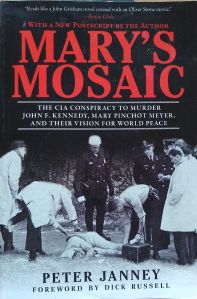 Mary’s Mosaic by Peter Janney
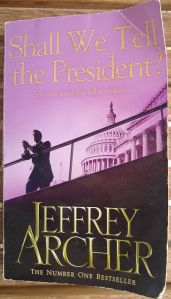 Shall we Tell the President? by Jeffrey Archer.
 The Long Dark Night by Susan Lund
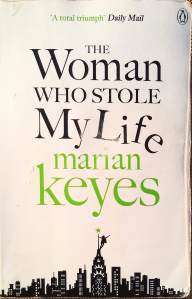 The Woman who Stole My Life by Marian Keyes.
 The Prime of Miss Jean Brodie
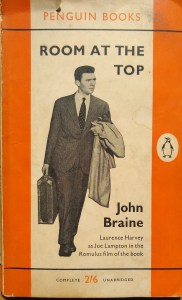 Room at the Top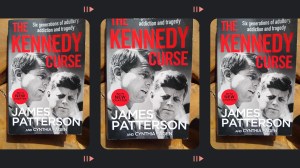
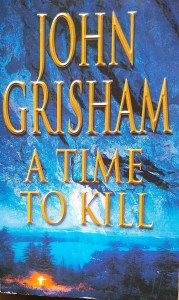 A Time to Kill by John Grisham
 Here in our rented villa in Lanzarote it has been hugely relaxing. I did plan to do a lot of writing but instead I’ve been doing a lot of reading, swimming and drinking a lot of wine. To be fair I have done some writing. I’ve started two new short stories, one of which I have the story fully in my head and another that I’m not sure where it will end up. I’ve also worked on a couple of unfinished stories and blog posts. What has been interesting is that one of the books I’ve been reading by author John Grisham was actually John’s first novel and he says in the introduction that he was proud of his first book and also in particular, proud of finishing it as like me, he starts a lot of things but rarely sees them through to the end. Clearly, he’s sorted that problem out because he’s written a number of best selling books and all the ones that I have read, with one exception, have all been riveting page turners.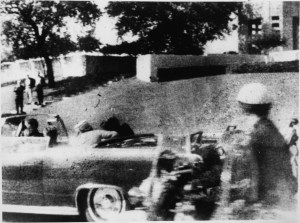
 Mark Lane was actually a lawyer and he defended a magazine which was sued by E Howard Hunt, one of the Watergate burglars, because the magazine claimed that Hunt was part of a JFK assassination plot. In the following trial, Mark Lane won his case and the jurors demanded action by the government to investigate further. Nothing of course happened but that’s hardly surprising according to another book I have just read called Mary’s Mosaic. It’s about a lady who was murdered by the CIA or so the author claims, because she knew too much about the JFK assassination. The book goes on to show how the CIA was able to manipulate the media into not delving too deeply or even not reporting at all, stories like these. I’ll be reviewing the book in more detail in an upcoming Book Bag post.
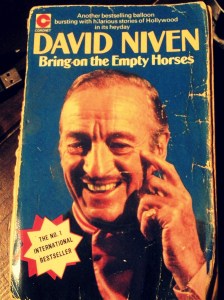
 I’m not sure which came first for me, the book or the film but I actually think it was the book. The Godfather was written by Mario Puzo and is the story of Don Vito Corleone, the head of one of the five mafia families of New York. The book opens with the wedding of Don Corleone’s daughter and Puzo sets the scene and introduces the various characters.
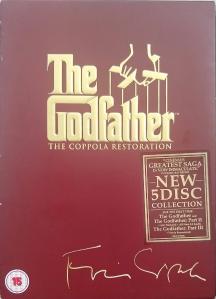 Francis Ford Coppola was the director of the film version and was also the co-writer of the screenplay along with Mario Puzo. Coppola wanted Marlon Brando to play the part of Don Corleone even though Brando at the time was rather unpopular with the producers. He was expensive, his last few films had not done well and his time wasting attitude had added huge expenses to his pictures. After the director had made the producers understand how important Brando was, they set various conditions for his employment. He would have to work for a reduced salary and put up a bond to ensure he would not delay the production. Another was that he had to have a screen test. Coppola has told the story in various interviews how he and his film crew had entered Brando’s house like ninjas and quietly set up their equipment. Brando slicked down his hair with shoe polish and stuffed cotton balls into his mouth to make the transformation into the aging mafia boss.
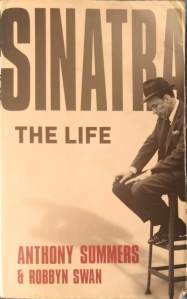 Coppola decided that instead of finding the horse at the end of his bed like in the book, it would be better if Woltz awoke, was disturbed by something wet, pulls the bedclothes away to see blood and then uncovers the horse’s head. The head was the actual head of a horse, procured from a dog meat factory and Coppola mentions on the commentary to my DVD version that lots of animal lovers sent him hate mail about the horse, even though the horse had been condemned to its fate anyway.
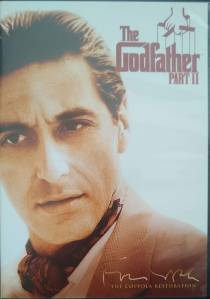 As previously mentioned, the book does have some storylines which were not used in the film but one chapter was a look at the beginnings of Vito Corleone. Born Vito Andolini in the Sicilian village of Corleone, Vito’s father was murdered by a local mafia boss and the young Vito was smuggled away to America. In America he took the name of Corleone and seemed to slip quietly into the role of mafia Don by murdering Fanucci, a New York Sicilian Godfather who preyed on his fellow Italians. Although this element of the story wasn’t used, Coppola kept the storyline for use in The Godfather Part II. The follow up film was a film classic in its own way.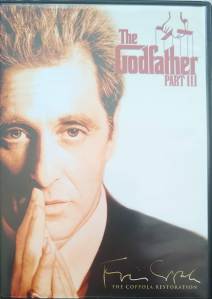
 This isn’t a post about my
 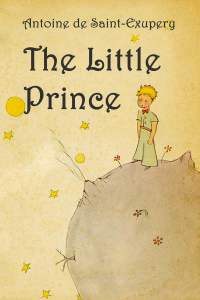 In the film William Bast played by Michael Brandon, leaves Dean in a restaurant and Dean later asks why Bast left. Bast was intimidated by Dean’s important looking friends and Dean replies that he was judging by surface appearances. When Bast questions Dean further, Dean produces his favourite book, The Little Prince and then goes on to read his favourite passage.
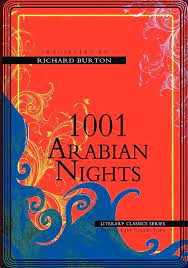 Donald Campbell was the son of a famous racing driver and record breaker, Sir Malcolm Campbell. Campbell first broke the land speed record in 1924 at Pendine Sands in Wales which was the first of his nine land speed records. He also set the water speed record in his boat Bluebird K4. He was knighted in 1931 and died in 1948 aged 63. He was one of the few racing drivers and land speed record holders of his era to die of natural causes as many of his rivals were killed in crashes. His son, Donald Campbell, was determined to equal and even surpass his father’s achievements.
 This is perhaps where this post might start to unravel. I know the Donald Campbell link was a little tenuous and only based on a film but this next one was based on my own memory which can be prone to failure. I knew Noel was a great fan of the children’s writer E Nesbit and I’m sure I had heard or read somewhere that when he died, he was reading his favourite of that author’s books, The Railway Children. A quick bit of internet research and I see that Noel died after reading Nesbit’s The Enchanted Castle. Coward was a lifelong fan of E Nesbit who wrote a series of children’s books. He discovered the books as a child and revisited them many times during his life. In his diary he wrote this about the author:
 Woody is one of my
  It always happens to me when I’m away. I know I’ve written about this before but the National Lottery has been annoying me. Here I am away from home and I get an email saying check your account, you’ve won a prize. Great! I wonder what is it? The million-pound jackpot or £3.42 on the Thunderball? I’m guessing it’s the £3.42. Either way, the National Lottery site cannot be accessed from abroad so I’ll just have to wait until I’m back in the UK before I find out if I’m a millionaire -or not.
 Faithful by Marianne Faithful.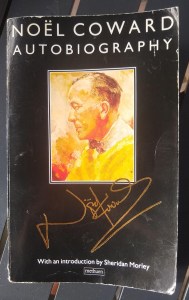


 What makes someone want to be a writer? Is it a need to emulate our own writing heroes or something else. I mentioned in a post last week that it’s important to be creative and we can be creative in a huge number of ways, not just in traditional artistic pursuits but also in everyday things, decorating our homes for instance, posting on social media, putting together a CD music mix or many other things.
 Coward has really been a surprising writing hero to me. I’ve been aware of him for years through film and television and his slightly eccentric persona has always been a little amusing to me. I remember once seeing an interview with him on the stage at the BFI, (British Film Institute) Richard Attenborough was interviewing him and seemed to me to be treating him as some sort of God that had been beamed down from the heavens. Coward was puffing away on a cigarette and lapping up all the praise.
 What attracted me to the persona of Marilyn Monroe? Well, apart from her obvious charms as a very attractive lady it’s her death that has always interested me. I’m a sucker for a modern mystery whether it’s the assassination of JFK, the disappearance of Amelia Aerhart or Marilyn’s own strange death. The obvious solution is that Marilyn committed suicide. She had tried suicide quite a few times before and various people along the years have saved her from death, including her acting coach Natasha Lytess and her third husband playwright Arthur Miller. Suicide is the obvious answer to her death but personally, I’m not so sure.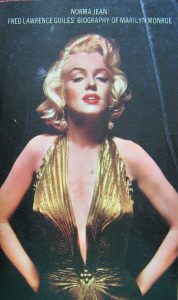


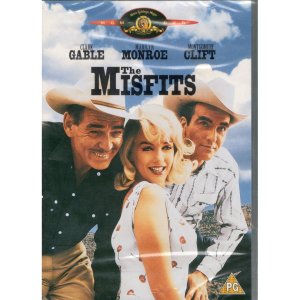
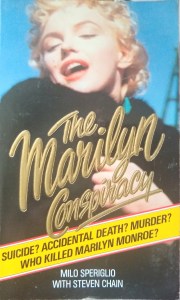

 Norman Mailer’s book about Monroe finished with a photo of Joe DiMaggio, grief stricken on the day of her funeral and he reckons we can perhaps surmise Marilyn’s true worth just by the look on Joe’s face that day. I cannot disagree.
 Letters from an Unknown Author!