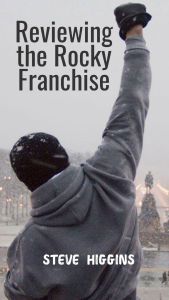
 I’ve always liked the original Rocky film but something more interesting than the film itself is the story of how it came to be made. In the mid-seventies Sylvester Stallone was a bit part actor with few acting credits to his name. One day in 1975 he watched the Ali v Chuck Wepner fight in which Wepner lost but managed to stay 15 rounds with heavyweight champion Muhammad Ali. Stallone, inspired by the bout, wrote a screenplay about a washed-up fighter called Rocky who manages to stay the distance with the world champion. He passed the screenplay to his agents who took it to various producers. The screenplay was good and many producers were interested but Stallone attached one small condition to the sale, that he himself had to play the part of Rocky.
The producers who finally picked up the screenplay were Winkler-Chartoff productions. They had a contract with United Artists but UA still wanted a big name star in the title role. Burt Reynolds and James Caan were suggested but Stallone hung on and continued to insist that he played Rocky. I have always thought that Stallone was offered a million dollars to let James Caan play Rocky but according to an article I read which quoted Stallone himself, the offer went up to $340,000 and he still said no. Eventually the producers gave in and Sylvester Stallone received just $35,000 for acting and writing the screenplay plus a percentage of the profits. United Artists had a major production in the pipeline at the time, New York, New York, a big budget musical and they felt that the profits from that film would cover any losses on Rocky. In fact, the musical was a flop and those losses were covered by the success of Rocky.
The basic plot of Rocky is that World Champion Apollo Creed, played by Carl Weathers and based loosely on Muhammed Ali, is let down after planning a title bout to be held during the US Bicentennial celebrations. His opponent backs out and no other contender is available. Creed decides to rescue the fight by selecting an unknown boxer for the hugely publicised event. He chooses Rocky Balboa, a part time boxer and debt collector. The problem is, Creed thinks it will just be a demonstration match but Rocky thinks he can win.
The film was a low budget production but is still a great looking film. It was one of the first films to be shot with a Steadicam, a revolutionary camera mounting which absorbs movement. It was used in the fight scenes and the scene in which Rocky runs through the market in Philadelphia. In a sequence filmed at a skating rink, the producers had no money for any extras so they changed the script. Instead of skating with extras, Rocky and his girl Adrian bribe the cleaning staff to let them in when the rink has closed and is empty.
Joe Frazier makes a cameo appearance in the film and in fact some aspects of his life were used on the film as part of Rocky’s training regimen, running up the steps of the Philadelphia Museum of Art and punching the meat carcass in a freezer.
Rocky was released in 1976 and grossed over $5 million in the first weekend of its national release and a later box office of 225 million dollars worldwide. The film was nominated for various awards and won the Oscar for Best Picture. Stallone’s pay packet has increased with each subsequent instalment of the film franchise but even today he still isn’t happy that the producers, rather than Stallone himself, own the rights to the Rocky character.
Verdict: 10/10
Rocky II
Given the huge success of the original there was really no doubt there would be a sequel. The film starts just where the last one left off except in the original the two fighters agree that there will not be a rematch. In this sequel, Apollo Creed does a quick reversal and is immediately on at Rocky about a rematch. Rocky is not sure what to do with his new found celebrity or with his money. He buys a house and a new car. He tries his hand at TV advertising but when that fails he sinks deeper into debt and begins to consider fighting again. His manager played again by Burgess Meredith is against the idea but when Apollo ups his campaign to get Rocky to fight and publicly insults Rocky, he finally comes on board. Adrian isn’t keen on the idea and Rocky trains in a lacklustre fashion until she gives him her blessing.
The title bout begins and at the end the two fighters knock each other down together but it is Rocky who gets up to claim the win.
Stallone asked to direct the film and when John G Avildsen, the director of the original film was unavailable, he got his chance.
I’ve seen this film before and always thought that in a way it was just a remake of the original. I watched it again for this blog and rather enjoyed it.
Verdict: 7/1
Rocky III
Rocky is doing well as the heavyweight world champion. He is settled with Adrian and has a son. He takes on various contenders but is constantly hassled by Clubber Lang, played by Mr T, for a title shot. Rocky agrees to meet Clubber in the ring but his manager Mickey, played by Burgess Meredith, is not so keen. On the night of the match Mickey dies of a heart attack and Rocky loses to Clubber. Apollo Creed decides to help Rocky and takes over his training for the rematch. After a tough match he wins back his title and the film finishes with Rocky and Apollo getting together in the ring for a friendly and private bout.
Stallone wrote the screenplay and directed the film and the theme song, Eye of the Tiger won an academy award.
I had not seen this before but watched it last week and thought it was pretty good.
Verdict: 7/10
Rocky IV
Can’t say I was totally impressed with this film. Apollo Creed decides to make his comeback with a fight against Russian Boxer Ivan Drago played by Dolph Lundgren. Creed is badly beaten by the Russian and dies from his injuries. Rocky agrees to fight Drago in Russia and takes a predictable win. It was again written and directed by Stallone and he and Lundgren traded real punches in the filming which ended up with Stallone in intensive care. Stallone’s future wife Brigitte Nielson played Drago’s wife, Ludmilla. Bill Conti who wrote the musical score for all the other Rocky films was absent from this one and instead Vince DiCola produced the disappointing music.
In 2021 Stallone released a new version of the film and the re-edited and re-released film was titled Rocky Vs Drago. The new version is only slightly longer but apparently was meant to add more depth to the relationship between Rocky and Apollo Creed as well as cutting some sillier elements like the robot Rocky gives to Paulie as a gift. A review I read in the Guardian felt that Stallone only marginally succeeded.
Verdict 4/10
Rocky V
This is probably the low point in the franchise. Original director John G Avildsen returned to the director’s chair and Stallone intended it to be the last in the Rocky franchise but it’s possible that because it was badly received, he went on to make Rocky Balboa.
Rocky returns from Russia but retires from boxing due to an injury. He then finds that his brother-in-law Paulie has given power of attorney to Rocky’s accountant who has then gone on to squander Rocky’s fortune. Rocky and his wife have to sell their home to pay their debts but Rocky finds purpose in training a young fighter. The relationship later sours and the two engage in a street fight which Rocky wins.
I have to admit that this is one Rocky film that has eluded me so far. Over on Rotten Tomatoes the review went like this: “Rocky V’s attempts to recapture the original’s working-class grit are as transparently phony as each of the thuddingly obvious plot developments in a misguided instalment that sent the franchise flailing into long term limbo.”
Verdict: Rotten Tomatoes gave the film only a 29% approval rating.
Rocky Balboa
I have two of the Rocky films on DVD. One is the original Rocky and the other is this one, Rocky Balboa. It’s a really thoughtful entry into the Rocky franchise. Rocky has retired. His wife has died and he has lost a lot of his money. His income comes from a small Italian restaurant in which many of the patrons come not just for Italian food but also to meet the former heavyweight champion of the world, Rocky Balboa.
The current champion Mason ‘the line’ Dixon has been criticised for fighting easy opponents. To get some positive publicity, he decides to enter into a computer fight with Rocky. It’s a fight reminiscent of the encounter between Rocky Marciano and Muhammad Ali in the 1970’s. At the time Marciano and Ali were the sport’s only two unbeaten champions. They were filmed sparring for various rounds and the result decided by probability formulas entered into a computer. Two different outcomes were filmed, the version shown in the UK showed Ali winning which my father was not happy about as he loved boxing and was a particular fan of Rocky Marciano.
In the film Rocky is judged to have won the computer fight and so decides to renew his boxing licence. Mason, not happy about being beaten, challenges Rocky to an exhibition fight which both men want to win. Mason emerges as the winner but Rocky doesn’t seem to mind. His day is over and he receives a standing ovation from the crowd.
This was probably the very best entry into the Rocky series. Rather than just boxing, the film looks at Rocky himself as he gets older, mourns the loss of his wife, and worries about his relationship with his son. He revisits many of the locations in the original Rocky film including his old house and the pet store where he met his wife. The only problem I had with the film was that the actor playing Mason Dixon didn’t look much like a heavyweight boxer to me. Surprise, surprise, then when I found out that actor Antonio Tarver was in fact a former light heavyweight champion! Ah, not a proper heavyweight then.
Rocky Balboa was the last in the Rocky series although a spin off series began in 2015 with Creed in which Rocky mentors boxer Adonis Johnson, the son of Apollo Creed. Although Stallone apparently contributed to the story, he did not write or direct either this or the following films. He isn’t happy about the producers owning the rights to characters he created either and publicly tweeted his unhappiness about a reported spin off film about Drago, the Russian boxer in Rocky IV.
In a lot of ways, the Rocky films parallel Stallone’s own life. He turned down big money offers to let others play what was the role of a lifetime, took it on himself and was propelled to film stardom.
 It was a cold afternoon in Manchester and I mumbled something to myself about the supposed heatwave and zipped my jacket up to my neck. At the left luggage office I took out the key that had been given to me earlier and when I opened the compartment I found a small package inside. I took the package and walked the short distance to the square. I sat down on the hard wooden bench and opened it up. Inside was a small tape player and a set of earphones. I put on the earphones and pressed play. There was a short burst of static and then a voice spoke.
 This second instalment of the franchise was directed by John Woo. It’s about a biological weapon called Chimera. Rogue agent Sean Ambrose steals the virus from its inventor by impersonating Ethan Hunt. He destroys the aircraft on which the inventor is travelling and parachutes to safety. Hunt was played once again by Tom Cruise and his mission is to regain the virus. The opening sequence sees Cruise doing some daring rock climbing which the studio wasn’t happy about. Cruise didn’t have a safety net but did apparently wear a harness. I didn’t like the heavy metal style version of the classic theme and as a matter of fact, I lost interest in the film early on.
 I was reading a post called The 10 Best War Films Ever the other day. It wasn’t a list I particularly agreed with and in fact I hadn’t seen or even heard of quite a few of the films mentioned so I thought I’d have a go at making my own list. Here we go. As this post went on a bit I published part 1 last week so now here’s part 2.
 The Colditz Story is another prisoner of war escape film also based on a true story. In WWII the Germans rounded up a bunch of the most prolific escapers and put them all together in an escape proof castle named Colditz. John Mills plays a British officer who is tasked with co ordinating escapes with various other groups of captives, French, Polish, Dutch and various others as previous escape attempts were failing due to a sort of free for all escaping culture. Various escaping officers are elected and the prisoners work together towards breaking out from the castle. Mills eventually escapes by using an idea suggested by a fellow soldier. It’s a simple idea involving dressing up as German officers. Not very original you might think but the officers plan to be leaving the Officers’ club which they hope will make them appear more natural. The chief British officer decides the plan is doomed to failure as the man who thought of it was a very tall officer who he thinks would be immediately recognised by the camp guards. I won’t tell you what happens but Colditz is a great British picture and well worth watching.
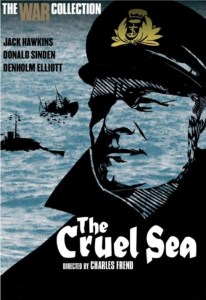 It’s time to move on from POW camps and escaping and to take a look at the war at sea. The Cruel Sea is a classic WWII film based on the book by Nicholas Monsarrat. Jack Hawkins is the commander of the escort vessel Compass Rose. The film follows the story of the ship from its handover in the shipyard to the navy all the way through to its final demise at sea. The crew are new to naval warfare but bind together through various incidents at sea guarding convoys in the north Atlantic. The outstanding cast are all stalwarts of 1940s and 50s British cinema, names like Donald Sinden, Denholm Elliott, Stanley Baker and Virginia McKenna.
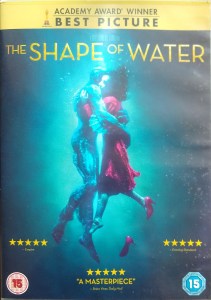 Now, there are those who seem to think I only ever look at black and white classic movies. Not so, I like modern films too and just to prove it I picked up The Shape of Water not long ago for a few pounds on Ebay. You may remember that the film won the Oscar for Best Film at the 2018 awards and it looked pretty interesting in the various clips I have seen. Everything I had heard about the film was positive so I decided to search the internet for the DVD version. The first warning sign was the extensive availability of DVDs of the film on Ebay and the second was the rather low prices those DVDs were fetching. Anyway, I got my copy and watched it and how this film won an Oscar I really do not know.
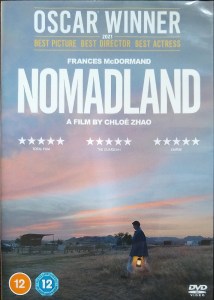 Now that I’ve retired I’ve often thought about spending more time in my motorhome and it’s only Liz’s recent hip operation that has prevented us from travelling over to France for some exploring. Could I live full time in a motorhome though? I’m not so sure. Everything is fine in the summer but I doubt if I could cope with the cold of the winter. Of course, we could always drive south towards somewhere a little warmer, even perhaps our beloved Lanzarote but van life isn’t, I suspect, as romantic as it sounds. Nomadland is a film that addresses this subject. A woman loses her job when the US Gypsum plant closes down in her town. Her husband has died so she decides to buy a van and go in search of work. She works for a while at an Amazon packing centre and when that job ends she goes off to Arizona where she heard fellow nomads will be meeting.
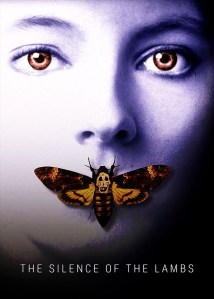 After watching the above two Oscar winners on DVD I fancied something a little different. The very first horror film to win an Oscar was Silence of the Lambs. It’s a gruesome film in many ways following the FBI as they try to track down a serial killer who has just abducted the daughter of a US senator. The killer known as Buffalo Bill, imprisons his victims then kills and skins them. (Told you it was gruesome!) To try and get a lead on the killer the FBI send trainee agent Clarice Starling to interview the incarcerated murderer and psychiatrist Dr Hannibal Lector to see if he can give any insight into the murders, a new perspective that might help the FBI investigation.

 Back in the 1960’s I was a big fan of the Apollo moon missions and on UK TV one of the presenters was James Burke. Burke also did a TV show called Connections. It was a really fascinating series which connected various historical events to make a sort of chain which led up to something which was pretty unexpected. The episode that stands out in my memory was one about the atom bomb, various unconnected events and discoveries that together, led to the splitting of the atom. In today’s post, I’ve tried to do something similar but all relating to the world of film, so here are five fascinating connections.
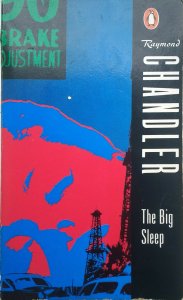 The book The Big Sleep was written by Raymond Chandler and he had this really fabulous talkative way of writing. You can almost imagine hearing Humphrey Bogart’s voice as you read the book. Here’s a quote from the text, an example of Chandler’s descriptive style:
 Hyde-White was born in 1903 and trained at RADA, the Royal Academy of Dramatic Arts. He once famously said that at RADA he learned two things; ’One, I couldn’t act and two, it didn’t matter.’
 C Aubrey Smith is perhaps an unfamiliar name on this list to anyone who is not a fan of classic films. Smith was born in 1848 and became a stage actor only after retiring from an early career as a cricketer. He appeared in some early British films but went to Hollywood in the 1930s where he carved out a career playing an English officer and gentleman. He was Colonel Zapt in the Prisoner of Zenda and played another colonel in Hitchcock’s Rebecca. In Hollywood he was the acknowledged leader of the British contingent and in 1932 founded the Hollywood Cricket Club. Other film stars considered to be “members” of his select social group were
  Letters from an Unknown Author!