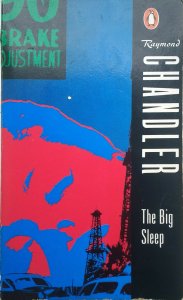
The Essential Englishman (Part 2)

I published a post quite a while back called The Essential Englishman. I say a while back but now that I’ve looked, it was 2017. Anyway, as a working-class council house boy I’ve always envied those well-dressed gentlemen who look impeccable and talk ‘proper’, dropping witty comments here and there with apparent ease. I wrote about six Englishmen who all rather impressed me either themselves or in the characters they played on screen so I thought it might be time to look at some more candidates.

Roger Moore.

I’ve always liked the debonair Roger Moore. Many people think he was good as James Bond 007 but sorry Roger, I wasn’t impressed. His other famous character did impress me; Simon Templar alias the Saint. The Saint was based on the books by Leslie Charteris about an adventurer called Simon Templar. Templar seems to have no job but owns a smart London flat, drives a white Volvo with the registration plate ST1 and sets about helping damsels in distress and solving various crimes. The police, in particular Templar’s nemesis, Inspector Teal of Scotland Yard view Templar as a criminal and are determined to put him behind bars.

Moore had always wanted to film the Saint and in fact bought into the latter part of the series becoming a co producer. Most of the clothes worn in the series were Roger’s own clothes too showing how keen Roger was about the way he looked. Later, when the series ended, Moore co-starred with Tony Curtis in the Persuaders, another action series, although the Persuaders was filmed all over the world whilst the Saint, despite all the various locations portrayed in the series, was filmed almost entirely at Elstree studios in the UK.

One of the best elements of the series was the pre-title sequence where Moore turns to talk to the camera. In later episodes there is a voice over instead but someone usually recognises the famous Simon Templar. Cue an animated halo appearing over Roger’s head which he looks up at just before the title sequence begins.

Moore played James Bond in seven feature films. The last one was A View to a Kill in 1985. He died from cancer in 2017.

Ronald Colman

Colman was born in 1891 and became a well-known amateur actor in his native Surrey. He joined the army when the first world war began. He was seriously injured at the battle of Messines in 1914 and was invalided out. When his wartime wounds healed, he resumed his acting career and eventually graduated to films. In the USA he became a famous silent film star but it was not until the talkies began that he could use his best asset, his wonderful voice. According to Wikipedia, he mirrored the stereotypical English gentleman and he went on to great success in the golden age of Hollywood. He appeared in many famous films like The Prisoner of Zenda and two of my personal favourites, Lost Horizon and Random Harvest.

Colman died in 1958 aged 67.

Wilfrid Hyde-White

Hyde-White was born in 1903 and trained at RADA, the Royal Academy of Dramatic Arts. He once famously said that at RADA he learned two things; ’One, I couldn’t act and two, it didn’t matter.’

He became almost a fixture of many British films of the 1950’s and in fact his film credits are almost too numerous to mention. He appeared in some of my favourite films such as The Third Man, Last Holiday, The Browning Version, My Fair Lady and many others. In Hollywood he appeared with Marilyn Monroe in Let’s Make Love. In later life he also appeared in many US television series including two episodes of Columbo. Hyde-White was apparently in trouble with the inland revenue and was declared bankrupt in 1979. He died a few days prior to his 88th birthday and his body was flown back to the UK for burial.

Kenneth More

More epitomised the English officer gentleman in many films, most notably with his portrayal of Douglas Bader in the film Reach for the Sky. He played an officer aboard the Titanic in A Night to Remember and a naval officer in Sink The Bismark.

He was under contract to the Rank organisation but was dropped by Rank after swearing and heckling their managing director at a BAFTA award ceremony.

In later life he had further success on TV playing the part of Jolyon Forsyte in the Forsyte Saga and later the title role in Father Brown. He died in 1982.

Terry-Thomas

Thomas was a comedy actor who found fame in many British radio shows and films of the 50s and 60s. He typically played an upper-class rogue or bounder and his distinctive upper-class accent is fondly remembered by many, including me. According to Wikipedia in 1921 he began to develop his distinctive, well-spoken voice, thinking that “using good speech automatically suggested that you were well-educated and made people look up to you”. He apparently was impressed by Douglas Fairbanks so much so that he began to imitate Fairbanks’ debonair dress sense.

Thomas played a similar character in most of his films and was a great success in films like Carlton-Browne of the FO, I’m All Right Jack and School for Scoundrels. He appeared in a number of Hollywood films such as How to Murder Your Wife in which he played the genteel English butler to comic strip author Jack Lemmon. He is probably best remembered for his portrayal of the scheming rotter in Those Magnificent men in Their Flying Machines. Thomas died in sad circumstances in 1990 after suffering with Parkinson’s disease and spending most of his fortune on medical bills

C Aubrey Smith

C Aubrey Smith is perhaps an unfamiliar name on this list to anyone who is not a fan of classic films. Smith was born in 1848 and became a stage actor only after retiring from an early career as a cricketer. He appeared in some early British films but went to Hollywood in the 1930s where he carved out a career playing an English officer and gentleman. He was Colonel Zapt in the Prisoner of Zenda and played another colonel in Hitchcock’s Rebecca. In Hollywood he was the acknowledged leader of the British contingent and in 1932 founded the Hollywood Cricket Club. Other film stars considered to be “members” of his select social group were David Niven, Ronald Colman, Rex Harrison, Robert Coote, Basil Rathbone, Nigel Bruce and Leslie Howard.

Smith died in 1948 aged 85.

Hugh Grant

There are others I could possibly mention here, stars like Christopher Lee, Dirk Bogarde, Basil Rathbone, Dennis Price and Jack Hawkins but perhaps it’s time to look at some more modern actors. Hugh Grant has played the essential Englishman in a number of film roles starting with his part in Four Weddings and a Funeral, the 1994 British comedy written by Richard Curtis. Four Weddings is a direct successor to the Ealing comedies of the 1950s and 60s and Grant’s persona is in the same way, a successor to Ronald Colman, David Niven and many others of the same ilk.

I’ve always thought that Four Weddings was one of the best British comedy films ever, only marred by the constant use of the ‘f’ word. I was happy to hear that American audiences agreed with me and in the US version, the word ‘bugger’ was substituted.

Hugh Grant was born in 1960 and is still working in film and TV. He recently starred with Nicole Kidman in the TV mini series The Undoing.


What to do next: Here are a few options.

Share this post on your favourite social media!

Hit the Subscribe button. Never miss another post!

Listen to my podcast Click here.

Buy the book! Click here to purchase my new poetry anthology.

Click here to visit Amazon and download Floating in Space to your Kindle or order the paperback version.
Beginnings and Ends

I’ve been off work for quite a while with my sore arm and neck and even though I don’t feel quite right I’ve started to think that perhaps I won’t ever be fully ‘normal’ again. I said as much to my physio and he didn’t agree. Keep doing the exercises he reckons and one day I’ll be back to my usual fitness. OK, that’s pretty positive so I’ll just keep calm and carry on, what else can anyone do? Well, I can go back to work for a start, which is what I did this week. It was a little odd at first but by the second day, it felt as if I’d never been away.
As my time off has come to an end you might think that as an enthusiastic writer, I might have completed a draft of a new book or screenplay. Well actually no, I didn’t. It was the same old story and once again I succumbed to laziness or procrastination or being me, probably both.

I read a blog post on Medium the other day in which the writer rejected all those terms which writers like me cling to and put forward another one. Unwillingness. That’s right. It’s not laziness that stops us writing but an unwillingness to write. In order to write said the author, we must be willing to write, we must sort out a writing space, sort out a writing time and just write. It was actually a pretty motivating piece, so much so that I pulled out my finger and wrote a few new pages of my next novel.

I’ve applied for a few jobs while I’ve been off. One job looked ideal for me, it was only a customer services role but according to the job advert it was weekend work, just what I wanted. I applied and was invited for an interview but it was an online interview. I read all the information they had sent and it looked like the interview involved answering various questions then doing something with a webcam. I guessed that they wanted to see me in a sort of simulated question/answer situation with the public so as they advised, I put on a smart shirt and clicked the link to start.

The first question was the usual one; Did I have to right to work in the UK? Yes. Was I willing to work shifts? Yes. Did I want the full time role or the part time? Part time. Was I ok selling media packages to the public? Wait a minute, selling? I thought it was a customer services role, what has selling got to do with it? Wait a minute I thought, maybe this was just a general question and there were other roles available as well as the customer service ones? There must be sales roles too. Anyway, that’s where I made a big mistake and pressed no.

The system thought for a moment and then a message came on the screen. The interview is over, thanks for your interest in Virgin media. Whoa, wait a minute, where’s the rest? Where’s the webcam bit where I simulate talking to the public. Alas, that was not to be, I’d blown it and that was the end of that.

Books

Here are two of my favourite beginnings and ends from books. My favourite book of all time has to be David Copperfield from that late, great master of the written word Charles Dickens.

Whether I shall turn out to be the hero of my own life, or whether that station will be held by anybody else, these pages must show. To begin my life with the beginning of my life, I record that I was born (as I have been informed and believe) on a Friday, at twelve o’clock at night. It was remarked that the clock began to strike, and I began to cry, simultaneously.

Some of Dickens’ other books I’ve found hard to read. I’ve never finished The Pickwick Papers and Bleak House is another book I started then found reading enjoyment elsewhere but Copperfield draws me back time and time again and it’s a book I probably re read every few years. Dickens died in 1870 but his stories will live on for as long as books are read.

Here’s another quote, this one is from the end of a book.

Gatsby believed in the green light, the orgastic future that year by year recedes before us. It eluded us then, but that’s no matter, tomorrow we will run faster, stretch out our arms farther and one fine morning . . So we beat on, boats against the current, borne back ceaselessly into the past.

If you haven’t guessed already, that’s a quote from another of my favourite books of all time, The Great Gatsby by F Scott Fitzgerald. Like Dickens, I’ve tried to read other books by Fitzgerald but not really found them to my taste. Gatsby though is a wonderful book, opening up a window back into the jazz age of America and with a story told through some outstanding descriptive passages just like that last paragraph above.

Films

I wrote a post a long time ago about the texts my brother and I send each other. They are just quotes from films, usually pretty obscure ones and because he and I generally watch the same kind of films we usually know which film the quote is from. Here’s one he sent me a while ago. I knew straight away which film he was watching, what about you?

Take ‘em to Missouri Matt!

Did you get the film? Well, perhaps you are not a fan of classic westerns then. Red River is a 1948 film directed by Howard Hawks and starring John Wayne and Montgomery Clift. It’s about a cattle drive from Texas to Kansas along the Chisholm Trail and John Wayne says the line to Montgomery Clift when they begin their epic drive. The men encounter many difficulties along the way including a big fall out between Wayne’s character and his adoptive son, played by Clift. It’s one of the great westerns of all time and even if you haven’t seen it you might have seen a clip of it in the film The Last Picture Show. At the end of the film when the only cinema in a small American town is closing, the last picture show is Red River.

Robert Zemeckis is one of my favourite directors. He directed Back to the Future, Castaway and Forrest Gump among others. Forrest Gump isn’t a great favourite of mine but I love the way the film opens and closes. A feather is floating high up on the wind and the camera follows it as it falls down towards the ground. Forrest Gump played by Tom Hanks is revealed sitting on a wooden bench and he picks up the feather and places it in his book as a bookmark. Zemeckis’ films are full of little touches like that and of course the film ends in a similar way, Gump opens his notebook and the feather blows away.

I’m going to end with a clip I used in another post a few weeks ago. It’s the last scene in Castaway again with Tom Hanks. Hanks’ character has been rescued from a desert island after four years. The love of his life has married someone else and now he has arrived back to civilisation he doesn’t know what to do, after all, his home is gone and all his possessions presumably either sold or given away. He decides to deliver in person a package which washed up on the desert island with him. The person isn’t home so he leaves it with a note. Then he stops and wonders what to do next.

Come to think of it, I’m wondering what to do next myself.


What to do next: Here are a few options.

Share this post on your favourite social media!

Hit the Subscribe button. Never miss another post!

Listen to my podcast Click here.

Buy the book! Click here to purchase my new poetry anthology.

Click here to visit Amazon and download Floating in Space to your Kindle or order the paperback version.

More ‘Didn’t Quite Make it’ Cinema Stories

I did a post a while ago about actors who came close to the role of a lifetime but didn’t quite make it to the screen. Here are a few more and a film itself that also didn’t quite make it to the screen.
Lawrence of Arabia

Director David Lean made many classic films and Steven Spielberg famously said that it was Lean who caused him to become a film director. Lean’s most famous film was the story of TE Lawrence aka Lawrence of Arabia. That name, Lawrence of Arabia, was coined by Lowell Thomas, an American journalist who wrote about Lawrence’s role in the desert revolt in Arabia during the First World War.

Lean was fascinated by the subject and various scripts were produced, the final one by Robert Bolt, but who would play the enigmatic Lawrence? Lean chose a young actor called Albert Finney. Finney was not widely known at the time. He had starred in Saturday Night and Sunday Morning and apparently two days of filming in the role of Lawrence were done before he was either sacked or departed. Other sources say that he filmed an extensive four-day screen test but would not sign a long-term contract with producer Sam Spiegel and so left the production. Not so long ago I watched an interview with Finney on BBC’s Talking Pictures series in which he said pretty much the same, that Spiegel wanted him to sign a seven year contract and he didn’t want to be tied to a producer in such a way.

According to Wikipedia, Marlon Brando and Montgomery Clift were considered for the part before Peter O’Toole was cast.

The film was a huge success and has since been acclaimed as one of the greatest films of all time. It won seven academy awards. Missing out on the role didn’t affect the career of Albert Finney. When he died in 2019 he left behind an impressive collection of film, TV and theatre performances. His last screen appearance was in the 2012 James Bond film Skyfall.

The Tin Man from The Wizard of Oz.

Buddy Ebson is a name you might remember from the TV comedy The Beverly Hillbillies. Buddy played the part of Jed Clampett, the head of a country family which discovered oil on their property, became rich and moved to Beverly Hills. Ebson started out as a dancer and appeared in many Broadway musicals. In 1935 he signed a two year contract with MGM after a successful screen test and made his film debut in Broadway Melody of 1936. In 1939 he won the part of the Scarecrow in the Wizard of Oz but swapped parts with Ray Bolger who wanted to play the Scarecrow rather than the Tin man. Ebson recorded all his songs and worked through the rehearsals but during filming became very ill. It was found he was having an allergic reaction to the make up used for the Tin Man and Buddy was unable to continue. Jack Haley took over the role and the make up was changed to something safer. According to Wikipedia, they didn’t bother to tell Buddy that the make up had caused his problem until much later.

Buddy Ebson went on to appear in the Beverly Hillbillies and Barnaby Jones and numerous other productions. He made a cameo appearance in the film version of the Beverly Hillbillies in 1993. He died in 2003 aged 95.

Clemenza from The Godfather.

Sometimes an actor plays a great part in a film and then when the time comes for a sequel, he tries to use a little leverage to get a better deal. In the Godfather, Richard S Castellano plays the part of Clemenza, one of Don Corleone’s Caporegimes. A Caporegime is a sort of captain in the mafia who heads a team of ‘soldiers’. He plays a pivotal part in the original film and it is clear by the film’s end he is one of new Godfather Michael’s most trusted lieutenants.

When it came to Godfather II, Castellano wanted more money as well as wanting to write his own dialogue. According to a post I found on whatculture.com Castellano was the highest paid actor on The Godfather. Brando was considered pretty much washed up before the Godfather and had to do a screen test to get the part. Al Pacino was a complete unknown and James Caan and Robert Duvall were not well known at the time whereas Castellano came straight to the project from an Academy Award nomination. For Godfather II, having an actor write his own dialogue was a complete no-no for director Francis Ford Coppola so the character was written out and a new character, Frank Pentangeli was brought in to take Clemenza’s place.

Richard S Castellano died in 1988 aged only 55.

All The Money in The World

Here is one final story concerning an actor. It is slightly different to the ones above as the actor concerned was hired for the role, he played the part, the film was completed and ready for its première and then they cut the actor out. They then recast the role and added the new actor. The actor concerned was Kevin Spacey and he appeared as J. Paul Getty in the 2017 film All the Money in the World. The film was directed by Ridley Scott and is about the kidnapping of Getty’s grandson and Getty’s refusal to pay the ransom.

After completion of the film various allegations of sexual misconduct appeared against Spacey, notably one by an actor called Anthony Rapp, who claimed Spacey had made sexual advances towards him when he was only 14. Spacey responding by apologising and saying if he had acted in that way his behaviour would have been deeply inappropriate. However more complaints against Spacey came forward and TV producers of the series House of Cards dropped Spacey from the show. It seems that the producers of All the Money in the World must have been getting nervous about their production and the possibility of Kevin Spacey spoiling their box office takings so director Ridley Scott engaged Christopher Plummer to play the part. A partial reshoot of Spacey’s scenes were done with Plummer, the film was re-edited and Spacey was out and Plummer was in.

Kevin Spacey has not worked since but I did notice an article in the news that he had been signed to play a detective in a film directed by Franco Nero.

David Lean and Nostromo

David Lean had been inactive as a director since the poor reception of his film Ryan’s Daughter. He was apparently so upset over the critics dislike of the film that he had not made another film until his adaptation of E.M. Forster’s A Passage to India in 1984. That and the restoration of his classic Lawrence of Arabia, in which around 35 minutes of cuts had been edited back into the film had put him back on top of the film business.

He started pre-production on various projects in his final years. One was a version of Mutiny on the Bounty. Lean dropped out after his preferred screen writer Robert Bolt suffered from a stroke. Star Mel Gibson brought in Roger Donaldson as director and the film was finally released as the Bounty.

Lean also began work on Empire of the Sun which Steven Spielberg took over when Lean again dropped out.

David put together a stellar cast for Nostromo including Marlon Brando, Paul Schofield and Peter O’Toole. Spielberg wanted to work with his directorial hero and signed on as producer but Lean wasn’t amused when Spielberg criticised the screenplay.

Lean once again turned to Robert Bolt who had recovered somewhat from his stroke and rewrote the screenplay. Not long ago I finished Sarah Miles’ autobiography. Sarah was Bolt’s wife and she tells how Bolt and Lean began to work together again and the many meetings they had in Lean’s impressive London home. Lean had bought two warehouses in a street near to the Tower of London. He knocked one down to create a lovely garden and the other he and his wife transformed into a wonderful riverside home. There, the two worked on Nostromo. The novel was written in 1904 and is set in South America. A man called Nostromo helps hide the silver from a mine which is then used to prop up the government which the mine owner, Charles Gould, believes will bring stability to the region.

I’m not quite sure what attracted Lean to the project but he was extremely keen on the story and worked hard to complete the film. Numerous storyboards were made for the project which Lean wanted to shoot on 65mm film. The budget grew to $46 million.

David Lean sadly contracted throat cancer and became very ill just before the cameras were ready to turn. In her book Sarah tells of a phone call from set designer John Box talking about the sets that had been built at Pinewood Studios, ‘Those sets’ he said to Sarah, ‘my best work ever.’

The sets were never used. Lean passed away on 16th April 1991. He was 83 and without him, Nostromo collapsed.

There is an interesting documentary film to be found about the production of Nostromo, here is a clip I found on YouTube:


What to do next: Here are a few options.

Share this post on your favourite social media!

Hit the Subscribe button. Never miss another post!

Listen to my podcast Click here.

Buy the book! Click here to purchase my new poetry anthology.

Click here to visit Amazon and download Floating in Space to your Kindle or order the paperback version.

The Film of the Book or the Book of the Film Pt 3

Papillon by Henri Charrière

Papillon is a book by Frenchman Henri Charrière. It is an autobiographical novel about Charrière’s imprisonment in the French penal colony of French Guiana and covers a period of about fifteen years. The original novel was written on a series of exercise books and is presented in just that way. Charrière describes his experience of imprisonment as a terrible one. He escaped and was recaptured many times and ended up in solitary imprisonment twice. The first time was for two years and he was kept in solitary for 24 hours a day. In his second bout of solitary a new officer takes over the running of the area and prisoners are let out for exercise every day. At one point in his escape Charrière encounters a tribe of Indians and joins them for many months, even marrying one of the Indian girls but despite finding this apparent paradise, he leaves and is imprisoned again. He eventually escapes from Devil’s Island by jumping into the sea aboard a sack filled with coconuts. The book is an incredible read and I found it one I just couldn’t put down. It is filled with action and adventure but also with thoughtful observations about the human condition and there are many moments when simple acts of kindness stand out to the author against a background of cruelty and inhumanity.

The book was an instant hit when it was published in France in 1969 and the author, Henri Charrière, nicknamed Papillon because of a tattoo of a butterfly on his chest, became a French celebrity. He died in 1973 but always maintained the book was true and based on his own recollections despite claims to the contrary. Whatever its origins the book is a true classic adventure story.

The Film

On paper this should have been a brilliant film; Steve McQueen and Dustin Hoffman star, there was a screenplay by Dalton Trumbo and Lorenzo Semple Jr and music by Jerry Goldsmith. The director was Franklin J Shaffner, who I’ve not heard of but there are plenty of big names involved who would normally guarantee a great film. They even had author Henri Charrière who acted as an advisor to the production. Somehow though, they managed to turn out something of a dud. It’s hard to put the finger on what went wrong but reviewer Robert Ebert said the big flaw was that the audience failed to gain interest in the McQueen and Hoffman characters. I think the big problem was that the book was a long book, packed with incident and instead of trying to cram the whole book into a film, perhaps the producers should have concentrated on just a part of it. Steve McQueen was a reasonable actor and he was good in basic action roles but I just don’t think he was good enough to play Papillon. The film skips over many interesting elements of the book and at the end of the film when Charrière is imprisoned on Devil’s Island, McQueen appears to be an old man which wasn’t the case in real life. My advice: Don’t bother with the film, read the book.

The Wooden Horse by Eric Williams

I’ve been trying to remember which came first for me, the book or the film. After some reflection, it was probably the film but I read the book soon afterwards. I found a copy in a box of paperbacks someone had given to my Father. The book is a classic escape story from World War II. It’s a great read and the story starts with a usual day in the POW camp which consists of tea making, cooking and cleaning and exercising by walking a circuit around the camp. The author, real life escapee Eric Williams, tells the reader about the everyday problems of living in a hut full of bored officers looking forward to either red cross parcels, letters from home or escaping. The problems of escaping are many. The soil is soft and sandy meaning that a tunnel would be liable to collapse and the soil cleared from underground is different to the grey topsoil making it difficult to hide from the German guards. The main problem is the distance from the huts to the camp perimeter but the author and a friend hit on the idea of taking a vaulting horse and placing it near to the perimeter fence and having a tunnel dug from there with the prisoners exercised by vaulting over the horse and masking the escape operation. The POW camp, Stalag Luft III was also the same camp where the events depicted in The Great Escape took place.

The Film

The film is pretty faithful to the book and stars the usual stalwarts of British films in the 1950’s, actors like Leo Genn, Anthony Steel and David Tomlinson. It’s a nicely paced film showing the boredom of camp life and then the idea for the vaulting horse and its preparation and use. Various problems have to be overcome including tunnel cave ins and disposal of the resulting excavated sand but all goes well. The two escapees decide to add another man to their escape team and one night the three emerge from the tunnel into freedom. Of course the escape is not over; two of the men make their way to the Baltic port of Lubeck and manage to escape to neutral Sweden with the help of the Danish resistance by stowing away on a Danish ship. The third escapee also makes his way to freedom separately and all three meet up in neutral Sweden.

On her Majesty’s Secret Service by Ian Fleming

This book as you probably know is one of the James Bond series of books and is one of the last in the series. As usual, the book is well written and James Bond 007 is on the lookout for Ernst Stavro Blofeld whose fiendish plot was thwarted by Bond in the previous book, Thunderball. In this one Bond is close to resigning but after being given some holiday leave from work, meets a young girl, Tracy, who appears to be suicidal. After saving her from one such attempt Bond is introduced to her father Draco, who is head of a Corsican crime syndicate. Draco gives Bond a lead on Blofeld who appears to be trying to establish that he is in fact a baronet. Anyway, without going on and explaining the plot in detail, the book is an excellent read, one of the best in the Bond series.

The Film

The film was notable for being the first in the film franchise without Sean Connery as James Bond. Connery was tired of playing the part and so a search for a new Bond had begun. The new actor chosen was George Lazenby whose only claim to fame at the time was appearing in a TV advertisement for a Big Fry chocolate bar. For me, Lazenby was the perfect Bond. He looked the part, in fact I’ve always thought that he fitted Ian Fleming’s description perfectly. The film is a fast paced thriller and is one of the more serious of the Bond films. Diana Rigg plays Contessa Tracy Di Vincezo who Bond saves from a suicide attempt, just as he does in the book. Tracy’s father Marc Ange Draco who happens to be an underworld boss, gives Bond a tip as to Blofeld’s whereabouts. Bond, masquerading as Sir Hilary Bray, a representative of the College of Arms meets Blofeld in Switzerland on the pretext of confirming Blofeld as a baronet. Bond arrives at the ski resort of Piz Gloria and finds Blofeld is engaged on a new plot against the UK. The film throws in some great fight scenes, car chases and also an exciting ski chase sequence. It was directed by Peter Hunt and is still a favourite today amongst Bond fans. Sadly Lazenby decided not to play Bond again and Sean Connery returned for another outing as 007 in Diamonds are Forever.

Hamish Macbeth

This last entry is a little of a cheat really as the Hamish Macbeth series of books were made into a TV series rather than a film but here we go anyway.

Robert Carlyle played the eponymous TV police officer in the BBC series which first aired in 1995. The series is about a local Bobby based in the village of Lochdubh in the Scottish Highlands. Macbeth applies the rule of law in his own way and dispenses his own brand of laid back justice. Although successful at solving numerous crimes Macbeth avoids promotion in order to stay in the village.

Three series of Hamish Macbeth were produced with six episodes each. Although the series was based on the books by MC Beaton, the TV series differs greatly from the books, with new characters devised by the TV producers and various other aspects changed. I enjoyed the series enormously and even once visited Plockton, the Highland village that doubles for Lochdubh on television. MC Beaton, whose real name is Marion Chesney, apparently hated the TV production which I can understand as they changed her work considerably, adding and changing characters. I have to say though, I’ve always liked it.

Death of A Dreamer by MC Beaton

I picked up this copy of one of MC Beaton’s books in a second hand bookshop in Skipton. At first I wasn’t sure if it was a book for me but I soon settled into the story and it bumbles along nicely with a few twists and turns on the way. A lady artist, Effie Gerrard, arrives in the village and develops an obsession with another artist named Jock. Later Effie is found dead. Was it a suicide or was it murder? The police decide it was suicide but Hamish is not so sure and he decides to make further investigations.

In the books Hamish has a dog and a wild cat as pets unlike the TV show where his only pet is ‘Wee Jock’, a highland Westie dog. The book is heavy on dialogue and light on descriptive passages but it was an easy and enjoyable read and I liked it immensely. The only annoying thing was that after finishing the book, the first chapter of the next book had been added to tempt the reader I suppose into buying that one. I read that and found myself wanting the next book in the series so it might be time to begin scouring the bookshops of St Annes for more books in the series.


What to do next: Here are a few options.

Share this post on your favourite social media!

Hit the Subscribe button. Never miss another post!

Listen to my podcast Click here.

Buy the book! Click here to purchase my new poetry anthology.

Click here to visit Amazon and download Floating in Space to your Kindle or order the paperback version.

Star Trek: The Blog Post

On many of the posts in this blog you will find references to Star Trek. I’ve been a big fan of Star Trek for many years and even though I’m not an actual ‘Trekkie’, visiting conventions and dressing up as a Klingon and so on, I do love a good episode of Star Trek so it’s high time I put all my Trek thoughts into one handy blog post.

Star Trek the Original series.

Here is something that may be a revelation to you; if you don’t know it already it will vastly improve your understanding of Star Trek. It’s a simple truth and here it is, Star Trek is about three guys, Captain Kirk, Mr Spock and Doctor McCoy. Sometimes there are four, we can maybe throw in Scotty but that’s it, that’s the essential truth about Star Trek and that’s why things like the Next Generation and Deep Space 9 will never come up to scratch, simply because Kirk, Spock and McCoy are not involved. Even the Star Trek people themselves understand this, which is why Star Trek has been reinvented (re-imagined to use movie speak) with new actors playing Kirk and his crew in the latest Trek movies.

The first series of Star Trek starred William Shatner as Captain James T Kirk. Forget Captain pointy head Picard, Kirk is a proper Captain and after a good twenty minutes of any episode he will usually have blasted a number of aliens with his phaser (a sort of ray gun) and done some pretty serious kissing of any beautiful girl, alien, android or otherwise, within a 100 yard area. Mr Spock was played by Leonard Nimoy. He is the ship’s science officer and as a Vulcan rarely displays emotion, logic being his primary motivation. Doctor McCoy played by DeForest Kelley is a doctor of the old school and he and Spock frequently get into verbal confrontations. Together they are the chief officers of the starship Enterprise on its five year mission to go where no man has gone before.

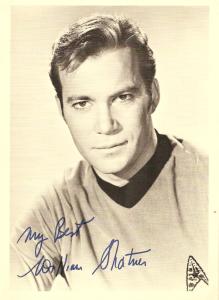
william_shatnerAs a schoolboy I wrote to Desilu studios where I believed Star Trek was made, based on credits shown at the end of the show. After a while I received a set of glossy pictures of the show’s stars. They were all signed by the various actors, Shatner, Nimoy and so on but the signatures, I have long suspected, were made by a machine.

The original Star Trek, like many TV programmes of the sixties was shot on film and today it looks pretty sharp compared to shows from the 80’s that were shot straight to video. It was given a digital makeover a few years back with digital effects and new CGI spacecraft and is looking pretty good these days. Which was my favourite episode? Well I’d have to say it was the one that fans voted the best Star Trek episode ever; City on the Edge of Forever. The crew of the Enterprise arrive at a distant planet searching for the source of some time displacement. The source is a time portal, left among the ruins of an ancient civilisation which although abandoned, still emits waves of time displacement. In the meantime, Doctor McCoy is suffering from paranoia brought on by an accidental overdose of the wonder drug cordrazine which any Star Trek fan will tell you can cure any known Galactic ailment. McCoy in his crazed state bumbles through the time portal, back to 1930’s America (handy for that old 1930’s set on the Paramount back lot) and changes history. Kirk and Spock are forced to also go back in time, stop McCoy from changing history and restore things to the way they were. Joan Collins plays a charity worker at the core of events; does she have to die in order to restore normality?

Star Trek the Motion Picture

After three series the show was cancelled but was remade a few years later as a TV cartoon. The huge fan base of the series caused the producers to think again and in 1977 they decided to make a big screen version of the show to cash in on the huge success of Star Wars. Star Trek the Motion Picture was released in 1979 and was directed by Robert Wise who was one of the editors on the film classic, Citizen Kane. I enjoyed the film very much although I feel the story was a little lacking. An entity called Vega is on the way to destroy the earth and the only starship in interception range is the recently refurbished Enterprise. All the favourites from the TV series make their return with a few additions. It was a good film but not a great one.

The Next Generation

The success of the film made the producers think about a new TV series, not with Kirk, Spock and McCoy but with a new crew. The Next Generation is set further into the future than the original series. Patrick Stewart plays the Captain and Jonathan Frakes is the first officer. There is no Vulcan science officer like Mr Spock but Brent Spiner plays a similar character; Data, an android.

The Next Generation is something I have always found rather lacking. I wasn’t keen on Mr Pointy-head Captain Picard and the cocktail lounge style bridge on his version of the starship Enterprise. Why on earth does he have to run every decision by his first officer, his councillor and everyone else on the bridge when Kirk would have just sorted that situation out like a shot, fired off a few photon torpedos and would even have found a pretty girl to flirt with too? The series was filmed on video and doesn’t look as good today when compared to the pin sharp original series.

Deep Space 9.

What can I say about this series? My knee jerk reaction was that it’s a load of old tosh might sound a bit mean to die hard Trek fans, but it was never my cup of tea. The only episode I ever enjoyed was an episode in which the crew of Deep Space 9 return to the past and get involved in the old original series episode ‘The Trouble with Tribbles’ using some pretty nifty special effects.

Star Trek Voyager.

I wasn’t so keen on Voyager at first, but I have to say I do like the later episodes when Captain Janeway finally got rid of her early weird hair styles and the drippy alien Kes got the bullet from the show.

Captain Janeway was the Star Trek world’s first female captain and as she began to look more normal as far as her hair, the writers decided to shake things up with the new and pretty sexy Seven of Nine character. She was rescued from the Borg, an alien race whose catchphrase is you will be assimilated. Seven was given a very appealing tight fitting catsuit to wear instead of the Space Federation regulation uniform. Catsuits are OK and maybe they are pretty popular in the 24th century but they never seem to have any pockets. What Seven does with her handkerchiefs, lip gloss, mobile phone and purse I really don’t know. In the future people must prefer looking sexy rather than worrying about their stuff, at least they do in the eyes of the Star Trek writers.

Seven is the nucleus of some great episodes especially one where we go back and see how young Annika Hanson (Seven as a young girl), and her family were assimilated by the Borg. The Borg are a race of aliens who assimilate other species into their own and at their centre is the Borg Queen who really likes the idea of Seven coming back to her ‘collective’.

Star Trek Enterprise.

This is supposed to be a prequel to the original series. I can’t say I’ve ever got through a complete episode. My only observations are that the crew go around in overalls and the Captain is played by the guy who used to be in the time travel show Quantum Leap.

Star Trek Discovery.

The latest series in the franchise is Star Trek Discovery, which is rather like watching a very fast music video, I gave it a good 15 minutes and then had to switch off. Sorry, it’s just not my cup of sci-fi.

Star Trek Picard.

Picard airs on Netflix or Amazon or some such channel that I have no access to and have no intention of subscribing to, mainly because I am allergic to opening up my wallet. After watching a few clips of Picard on YouTube I actually found it quite appealing so I decided to search for a cheap DVD of the episodes on eBay. Picard, I have to say is a pretty amazing slice of sci-fi. It’s not perfect and in fact it is rather complicated but it’s about a mystery at the heart of Star Fleet and Admiral Picard, no longer a member of Star Fleet, is determined to find out. Along the way he meets Seven of Nine and various other favourites from the old TV shows. Some of the episodes have been a little slow and yes, I know I’ve slagged off Captain Picard before but for the most part this series has been pretty good and anyone wanting to buy my DVDs is welcome to make me an offer as soon as I have got through series one.

William Shatner has reached the venerable age of 90 this year so it was good to read in the media that he is still going strong. Wonder if there is any chance of him playing Kirk again just one last time? Star Trek Kirk sounds good to me.

More on the Star Trek Films.

Getting back to the Star Trek films; Paramount studios decided to have another go at filming Star Trek for the big screen. For the second film they decided to employ producer Harve Bennett to make a better and cheaper Star Trek film. He apparently watched all the episodes of the TV series and decided to bring back the character of Khan who had once attempted to take over the Enterprise and was later left on a distant planet to start a new life with his crew. In Star Trek II: The Wrath of Khan Mr Chekhov finds that the planet Khan was abandoned on has become a desert and Kahn isn’t happy; he wants revenge on Kirk. Wrath of Khan is a really good film, much more like the original TV episodes than Motion Picture. The crew all sport some new natty uniforms and clearly it must be a little chilly on the Enterprise because all the staff seem to be wearing woolly jumpers and jackets. I don’t remember the Apollo astronauts ever wearing woolly jumpers but maybe astronauts in the 24th century are not made of such stern stuff. Of course it could be that they just have never thought about turning up the central heating.

Trek III was another excellent film. In this one we find that although Spock died in the previous film, his body has been regenerated by the Genesis project. In Star Trek IV the crew return to the 1980’s in order to bring a whale back to the future for reasons which I won’t even begin to get into. Watch out for the scene where Spock deals with a guy playing loud music on the bus; I loved it.

The character of Captain Kirk was actually killed off in the movie Generations which started off pretty well, combining the usual sci-fi elements of Star Trek with an intriguing mystery; who is the mysterious Soran and what is he up to? As it happened what he was up to wasn’t really that interesting, but the film marked the cinema handover from the original Star Trek cast to the new one. Pity really because as I mentioned above, I never really took to the Next Generation.

Just as I’d got to the end of this post I thought it might be an idea to actually watch some Star Trek again for some final opinions. After a quick scan through my DVDs I came across Star Trek III in which the crew of the Enterprise are grieving over the loss of Mr Spock in the previous film. Captain Kirk finds that Spock, who knew he was about to die, had left his Katra, his soul, in the mind of Dr McCoy and the crew undertake to take McCoy and Spock’s body back to the planet Vulcan, Spock’s home. A lot of stuff happens along the way and of course they finally succeed in reuniting Spock’s body with his Katra, although sadly, Kirk’s son is murdered by the Klingons along the way. It’s a great film, very reminiscent of the original episodes but a big factor in the film is the performance of William Shatner. He really is an outstanding actor and I think the success of Star Trek is in no small measure due to him. Shatner went on to play many other roles on TV so he can hardly claim to be type cast but I wonder if he hadn’t played Kirk, would he have gone on to a better career as a film actor.

Star Trek is ultimately about three people, Kirk, Spock and McCoy and the producers probably realised that which is why, in the latest Trek films, a new generation of actors have been asked to recreate the old characters meaning that Captain Kirk lives on again for a new generation of sci-fi fans.


What to do next: Here are a few options.

Listen to my podcast Click here.

Share this post on your favourite social media!

Hit the Subscribe button. Never miss another post!

Buy the book! Click here to purchase my new poetry anthology.

Click here to visit Amazon and download Floating in Space to your Kindle or order the paperback version.

A Slice of my Locked Down Life

When I used to work a nine to five job, I always looked forward to a bank holiday. It meant only working four days instead of five. Nowadays when I work shifts, I sometimes end up working the bank holiday but when it comes down to it, I don’t really care. It’s actually nicer having a break when the holiday resorts and seaside destinations are not packed. This bank holiday I wasn’t working but the weather in the UK, at least in the northwest where I live, was dreadful. It was cold and did nothing but rain so I spent the day watching TV.

The lockdown is easing in the UK and pubs and restaurants are open but, and it’s a rather big but, for outdoors only. We went to our favourite restaurant the other week. It had been a pretty warm day but it was cooling quickly by the time our table was ready. Luckily they have those outside heaters which helped but not that much. I couldn’t help comparing the situation to eating out in Lanzarote in January 2020. The restaurants over there have much more effective patio heaters but either way, it was good to be out again.

Last week we tried eating out again. This time we went to the 54 bistro in St Annes. It describes itself as a Mediterranean restaurant and it serves mainly tapas. Liz always goes for the fish platter they serve there. For me, I went for bruschetta followed by spicy pasta and some cheesy flatbread. The restaurant was still pretty busy and various potential diners got turned away while we were eating as the small dining area was either full or waiting for diners who had booked a table. There were patio heaters but up at a high level and they were not particularly effective. Maybe no one had told them that heat rises. We were dining at about six and by seven it had gone a lot cooler. Towards the end of the meal, it was actually really cold and despite my thick cardigan I was really chilled.

For some mad reason we decided to have a quick pint, our first of 2021 sat outside Wetherspoons and by the time I had supped my beer I was frozen to the bone. Roll on summer!

I don’t know if you remember but a few years back an aircraft that had just taken off from New York had to ditch in the Hudson river. For some reason Clint Eastwood decided to make a film about it and they showed it last week on BBC1.

I’ve actually always wondered how could they make a whole film about that short event. The aircraft takes off, hits a flock of birds, the engines get jammed up and this being New York, a pretty densely populated place, there was nowhere to land except in the river.

The film which was called Sully, after the pilot’s nickname, shows the plane landing in the river quite a few times. Pilot Sully played by Tom Hanks calls his wife up after the rescue to say he is OK. OK she asks? OK how? What has happened? Turn on the TV he says and you’ll see. The film then goes on to show Sully as a young pilot and later as an air force jet pilot following a colleague with a problem aircraft back to base.

Sully then has an interview with his bosses from the airline who, rather than being pleased he saved all those lives, seem to think Sully could have got the aircraft back to the airfield and the rest of the film tends to focus on that. Sully becomes a bit of a New York celebrity but early investigation reports also seem to indicate that the pilots could have made it back to LaGuardia airport. Sully says they could not have done so as both engines failed but the aircraft telemetry suggested that one engine was OK.

At the investigation hearing, a flight simulation is shown where various pilots easily turn back to the airport. Simulations are fine but as Sully points out, a simulation is just that, a simulation not reality. How many tries did the simulator pilots have? The answer was 17! Sully and his co-pilot only got one chance and after adding 35 seconds on to the simulator, for decision time, the simulator pilots all crashed. Later when the aircraft engines are raised from the river bed and checked, it is confirmed that both engines failed, just as the pilots said.

I have to say although parts of the film were interesting, as a whole it didn’t work for me. I remember seeing a film years ago where an aircraft ran out of fuel. I think they may have just changed from imperial measurement to metric and there was some confusion. Anyway the plane ran out of fuel somewhere over the USA but happily the pilots were able to glide down to earth using an unused airfield that the pilot happened to know about. That as I remember was a very good film with a really exciting build up of tension.(After some quick research I found it was called Freefall: Flight 174.)

Getting back to Sully I read somewhere that the whole incident was a tonic to New York as the previous aircraft disaster in the city, the 9/11 disaster did not have a happy ending, unlike this one.

In my draft folder I’ve got a post started called The Best Worst films of All Time. You might be confused by that at first but just think for a moment, how many crap films are there that you actually enjoy and continue to watch again and again every time they pop up on your TV screen. One of the films on the list was a film I watched last week and I must have watched it fifty times at least. It’s called Uncle Buck. I know, it’s a complete load of old tosh but I just seem to be drawn to it like a moth to a flame. Never seen it? Really? OK it’s a sort of variant on the film Home Alone and in fact one of the characters is played by that kid from the Home Alone films, Macauley Culkin.

In this movie a couple have to leave home because the wife’s mother has suddenly passed away. Who can they get to babysit the three kids? No one is available so the no good bum of a brother in law is roped in, you guessed it, Uncle Buck. Uncle Buck is played by the late John Candy and he has to contend with kids he doesn’t even know including, as well as young Mr Culkin, two screen sisters, one of them a teenage girl with a big attitude problem. She is completely embarrassed by her uncouth uncle and his smoke screen producing old banger automobile and even though the film is just a notch above rubbish, it’s actually quite fun in parts.

Buck sorts out ‘Bug’, the teenage girl’s cheating boyfriend and in doing so finally makes friends with his teenage niece. Uncle Buck is a great film to watch when you’re tired and not really paying attention and I always get the feeling it was written by a sort of committee of writers. (Probably the same committee that wrote Home Alone and Three Men and a Baby and so on.) I remember once seeing a documentary about the US sitcom Friends. The show is not one of my favourite programmes but in the documentary they showed how Friends was recorded in front of a live audience. If a bit of business didn’t quite work out, the recording was stopped while a whole bunch of writers and producers had a chat about things. Then a new line or even a section of dialogue was inserted or some of the action was changed. That was then run past the live audience. If it still wasn’t quite right the laughter track was updated to fill in. Writing by committee, interesting.

Anyway, that’s my draft post about great but crap films rendered completely useless even though I only had two other films on my list. Still by the time I finally finish it in about six months, this post will just be a distant memory for regular readers so maybe I can still use it after all.

Getting back to Sully, the actual plane crash (sorry, water landing as the pilots called it) happened on January 15th 2009. It was a freezing day and those passengers looked particularly cold when I checked out the newsreel video from back then. That was just how I felt shivering outside Wetherspoons last week. At least I was able to call a cab, rush back home and light the fire!


What to do next: Here are a few options.

Listen to my podcast Click here.

Share this post on your favourite social media!

Hit the Subscribe button. Never miss another post!

Buy the book! Click here to purchase my new poetry anthology.

Click here to visit Amazon and download Floating in Space to your Kindle or order the paperback version.

A Series of ‘What If’ Events

Last week I wrote a blog post about my life with spectacles. I’ve worn glasses almost all my life and I thought writing about the world seen through corrective lenses was a pretty good idea. I’ve said many times in this blog that my writing is always aimed at one person in particular and that happens to be me so it’s no surprise that I actually really liked that post.

I tinkered with it for quite a while adding new bits here and there. I made a pretty interesting graphic for it made from shots of myself wearing different pairs of specs. I liked that so much I went a step further and made an animated version, one where the text and the pictures seem to just slip into place.

Feeling pretty pleased with myself I thought I’d make a quick promo video with which to plug the post on Twitter and Facebook. Yes, there I was feeling good about my work and my media profile. I put the video on my Facebook page with a little announcement ‘New Post Coming Tomorrow’. I felt like a real media genius and then while I was scheduling the post for my usual time on Saturday, my big fat fingers slipped and pressed the publish button by mistake. If only it had gone out at the usual time of 10am on Saturday morning, I reckon it would have pulled in so many more readers and potential book buyers. Oh well, if only . . .

I wrote about my old Dad a few weeks back. I wrote specifically about his diary as like me, he was keen on keeping a diary and a notebook. Journaling is important for us writers. Don’t take my word for it; Marcus Aurelius Thought so too and he was a great Roman philosopher and of course, an emperor.

My Dad died when he was 72. He lived, I suppose, a good life. He worked hard and was happy walking his dog and keeping his garden in shape. He enjoyed his favourite sport of boxing and was fond of anyone who might possibly beat Mohammed Ali. Ali, or so Dad thought, was a fraud and the ultimate ‘fix’ was Ali’s fake ‘defeat’ of Dad’s idol, Rocky Marciano, in a so called computer fight.

In his youth Dad had a few years of excitement when he joined the army and his memories of army life he kept with him to the end of his days, sharing little stories every now and then to me and my brother. He left school at 14 and worked on farms because back then before World War II, Wythenshawe, a suburb to the south of Manchester where I was brought up, was very much a rural area before the urban development of the 1950’s and 60’s.

He told me once that a farmer he worked for was moving to a new farm in neighbouring Cheshire, in a village called Lymm. Lymm is a very posh area indeed and because a lot of it is green belt land, few housing developments have emerged there, so today it looks pretty similar to what it did in my Dad’s time. At least it did when I last visited, many years ago. The farmer asked my Dad to come with him to Lymm to work on the new farm. It was a better area he said and he would have sorted Dad out with accommodation but Dad declined, choosing to stay in Wythenshawe with his family. If he had moved he would perhaps have met someone else other than my mother. He would have courted and eventually married this new lady and I might never have been born. If I had still emerged as his son, I would have been substantially different, with a different gene set up and a different background.

Strangely enough, many years later I met an old friend on that long defunct web site Friends Reunited. Alan lived just round the corner from me and as children we used to meet up regularly at either his or my back door and we’d both produce a selection of comics, usually American ones like Batman, Superman, Spiderman and so on and decide which ones to swap. I always liked Batman and Superman but there was also the Green Lantern, The Fantastic Four and a whole host of superheroes that today’s youth are probably more familiar with from the cinema. I enjoyed the first Superman and Batman films and also the first Spiderman movie but some of the rest haven’t really done it for me. Maybe that’s because the comics themselves have changed. In the film world they often talk about rebooting a particular film franchise with new actors playing the parts of the franchise hero. James Bond is probably the film series that started off the notion of franchising.

Sean Connery gave way to George Lazenby; Lazenby gave way to Connery again and then Roger Moore and so on down to the present day Bond, Daniel Craig. The Superman films have been rebooted and also the Batman series. Ages ago I picked up a DVD copy of Batman Begins. I wasn’t crazy about the film, mainly because it was so different from the comic book Batman I used to read. The thing is, while I had been absent from reading comic books and generally getting on with my life, the comic books themselves rebooted with new artists and a new origin story for Batman. In this version Bruce Wayne’s parents are still murdered by a mugger but then Bruce goes off to Tibet or somewhere and in a sequence a little like Batman meets Kung Fu, Bruce, who is Batman’s alter ego in case you didn’t know, is trained in the ancient arts of martial combat. He then returns to Gotham City and becomes Batman.

Yes, other comics have rebooted things too with new artists and new layouts and new back stories for their characters. I didn’t care much for the X-Men films but I did used to read the comic versions. In my day The Beast was one of the X-Men but he is nowhere to be seen in the films and Wolverine must have been just a gleam in some comic book writer’s eye when I read about the X-Men because I had never heard of him until I saw the film

Anyway, getting back to Alan my comic swapping friend. Alan was shorter than me and a pretty tubby guy. In the late 60’s he and his family emigrated to Australia. I never heard from him again until we met, as I mentioned, on Friends Reunited. One day on our internet chat Alan asked me to pass on the regards and best wishes of his Dad on to my Mum. I told her and asked did she remember Alan and his Dad. It turned out that Alan’s Dad was once engaged to my Mother. They had gone out together for a while but Mum liked dancing, Alan’s Dad didn’t and when she went dancing he was forever questioning her, asking her who she was with, who she danced with and so on. Eventually she gave him the bullet.

Of course, if she had married Alan’s Dad, once again I wouldn’t have been born. At least not as I am now. I would have been Alan. I would have been the short chubby lad who liked comics and moved to Australia. The thing is, if my Dad had also married someone else, where would that leave me, buying comics in Australia or flicking through comics in a Cheshire village shop?

Just going back to superheroes for a minute, I reckon it would be kind of good to have some superpowers for a day or so. Not necessarily superpowers even, I’d settle for some martial arts skills. During the period I had the powers or the skills, I’d take no messing from anyone. If anyone was rude to me, they’d get a slap and if someone tried to mug me, well I’d send them flying along with a flea in their ear. Once when I was in my twenties, I arrived at my friend Chris’ house to pick him up for a night out. Sometimes we’d go to the Valley Lodge Hotel near the airport where they had a really good night club. I’d leave my car there and Chris and I would both make our own way home. Sometimes he’d pick me up and we’d go into town and he’d be the one to leave his car somewhere.

Once when I was waiting for him to finish getting ready there was a knock on the door. It was a guy called Dennis. Dennis was a bit of a local villain, a very tough hombre and although I knew him, I didn’t know him very well. He had somehow had his car towed away by the police. I’m not sure why but naturally he wasn’t happy. Actually, he was hopping mad and looked like he wanted to take his anger out on someone. He was visiting his mother’s house a few doors away from Chris when this outrage occurred and he wanted an urgent lift to his friend’s place, a ten minute drive away. Chris suggested I take Dennis while he finished getting dressed. I wasn’t too keen on the idea but went along with it. Five minutes down the road we came across a big fella wandering idly across the road. I beeped my horn but all the guy did was give me the V sign and swear at me so I swerved across the road to miss him. ‘Wait a minute’, said Dennis. ‘That’s well out of order, we’re not having that’.

‘It doesn’t matter’, I said. ‘No! Pull up here’ snapped Dennis. We stopped and Dennis stepped out of the car to advise the big fella that his manners were substantially lacking. The guy didn’t take this well, in fact he wasn’t happy at all and a fight began. Dennis basically taught the guy a major lesson in manners that I doubt he ever forgot. I dropped Dennis off at his friend’s house and he left me with thanks as I had apparently got him out of a major spot. ‘If there’s anything I can ever do for you’ he called, ‘give me a shout’.

Now I had no intention of giving Dennis a shout I can assure you and in fact I never did. The good thing about knowing Dennis though was that his reputation as a tough thug was pretty welcome sometimes. I once met him whilst queuing up to get into Fridays, a local nightclub, and he greeted me like a long-lost friend. He convinced the bouncers to let me in without paying the usual outrageous entrance fee and once inside after chatting with him at the bar for a while, I had the feeling that the local punters were eyeing me with a new found respect.

Another place I liked to frequent was a huge pub called the Snooty Fox. They had live music on at weekends and the place was on two levels with a games area upstairs. It had a late bar so back in those far off days, my friends and I could stay out late without having to pay night club prices. Also it was full of pretty girls waiting to hear whatever corny chat up lines we were using back then. The bouncers on the door were of the big neanderthal gorilla type and to be fair, they needed to be because that bar was a pretty rough place. I remember going in one time and a new bouncer stopped me at the door.

‘I know you from somewhere’ he said, breathing stale donner kebab breath all over me. ‘You look like a trouble maker.’

‘Me? No, I’m a quiet lad. You’ll get no trouble from me’

A bit later on I realised who he was. Yes, he was the guy crossing the road the time that Dennis had given him a lesson in bad manners. That was my last night in the Snooty and I was out of there like the proverbial wonga bird before he realised who I was. Pity! If only I hadn’t given Dennis that lift . .

Here’s one final, ‘what if’ story.

I think I’ve mentioned before in these pages that I went from working in an insurance company to being a bus conductor. Working on the buses wasn’t a great career move by any means but I didn’t like being out of work and for a while that new job was actually quite a lot of fun. Friends told me that working shifts would be the end of my social life but actually it was really the beginning of my social life. At the end of an early shift, I could usually be found down at the busman’s club, playing snooker and pool. After a late shift I’d be heading to the pub for last orders or sometimes heading off to a night club. It was all great fun and as someone who suffered greatly from an intense shyness, I found that being a bus conductor brought me out of myself and that gradually I was becoming more and more confident.

Some years later though the company made us all into one-man drivers and driving through the streets of Manchester on my own wasn’t my cup of tea at all. I was desperate to get another job but I didn’t know how to do it or what to do. One day I decided to start my own business selling motor sport merchandise. I called it Armchair Motorsport and I rented a unit inside the Corn Exchange in Manchester city centre. I worked on my small business for about a year. I didn’t make a great deal of money but I did spend a great deal of time chatting about Formula One racing. In fact, now I think about it, a great many of my customers used to come in and buy me a tea from the nearby café, come in, sit down and we’d talk Formula One.

One of my customers was a big Ferrari fan and was always on the look out for Ferrari memorabilia. There was a particular book he wanted and it took me a long time to get it for him but he was really pleased when I did. He mentioned that he drove a Ferrari and said he’d come down one day and show it to me. On the appointed day he came into the shop and asked me to hurry as he was outside on a double yellow line. We hurried outside and I have to say, I was eager to see his car. I expected a blood red Ferrari Dino or something similar.  As a matter of fact, I fully expected to see my favourite car the Ferrari Dino 246GT, the one driven by Tony Curtis in the TV series The Persuaders.

The car wasn’t a Dino, it was actually a very dull saloon car. It wasn’t even red. It was a rather drab green and I have to say I don’t think I disguised my disappointment very well although my customer assured me that the car drove and handled every bit as well as one might imagine a Ferrari to handle.

The aftermath of the IRA bomb, Manchester, 1996. Photo courtesy of BBC

After a year of relatively poor trading, it was time to sell up and say goodbye to the Corn Exchange. I’ve always wondered if I could have lasted longer. Perhaps if I had advertised more, done more promotions, increased my advertising I could have built up a good business. I could have made a decent amount of money, expanded and perhaps employed some staff so I could have spent more time at home or dining at my favourite restaurants but it was not to be. If only I could have made it work.

Then again, not long afterwards the area was destroyed by an IRA bomb planted nearby. If I’d stayed, if my business had worked out, I could have been blown to pieces.


What to do next: Here are a few options.

Listen to my podcast Click here.

Share this post on your favourite social media!

Hit the Subscribe button. Never miss another post!

Buy the book! Click here to purchase my new poetry anthology.

Click here to visit Amazon and download Floating in Space to your Kindle or order the paperback version.

Getting to the Heart of a Classic Film

Two of my absolute favourite films are Citizen Kane and On The Waterfront. Kane is a masterpiece of  visual brilliance whilst Waterfront is a masterpiece of acting brilliance. Waterfront has at its centre a heart of fire whilst Kane‘s centre is a little cooler. I thought a quick comparison of the two films might be interesting so here we go:

Citizen Kane

Back at home in my default position, in my favourite chair watching TV, I picked up the tail end of an interview with actor Gary Oldman about his new film Mank. Mank sounds like an interesting film in many ways. Firstly, it only had a limited cinema release before being streamed on Netflix. Whether this was a reaction to the global lockdown or an indication of how cinema will work in the future I’m not sure, but if cinemas are unable to open then producers must find other ways to show their films.

Gary Oldman is an English actor with an interesting array of roles behind him. He won the academy award for his role as Winston Churchill in the film Darkest Hour and played assassin Lee Harvey Oswald in Oliver Stone’s JFK. Mank is about Herman Mankiewicz and his writing of the screenplay for Citizen Kane. Kane is one of my favourite films although I haven’t seen it for a long time.

Mankiewicz was asked by Orson Welles to write the script but without a credit, presumably so that Welles himself could use the resulting script as a basis for his own work. Later Mankiewicz changed his mind and decided he wanted a screen credit as he had come to think that the script was his best work. Welles then gave screen credit to both himself and Mankiewicz although it was Mankiewicz himself who accepted the Oscar at the award ceremony in Hollywood.

Just flipping through my extensive back catalogue of VHS documentaries I found one from the BBC about the making of Citizen Kane which I have recently copied to DVD. The documentary covered various areas including the filming, the actors and of course the script. The origin of the script was a contentious subject, especially after film critic Pauline Kael wrote an article in the New Yorker on the subject. She seemed to favour Mankiewicz as writing the lion’s share of the project. Peter Bogdanovich wrote a rebuttal in the Esquire magazine, defending Welles as the screenwriter.

The truth is that Welles, as he said himself, put together a screenplay based on both his version and the one by Mankiewicz. Elements of the story were based on personal experiences of both men, for instance Mankiewicz was friendly with William Hearst who inspired the character of Kane but Welles maintained that tycoons Samuel Insull and Harold Fowler McCormick also inspired parts of Kane’s story.

The cinematographer was Gregg Toland, one of the film industry’s top photographers. Toland asked to work on the film and Welles replied ‘Why? I don’t know anything about making films.’ Toland countered that was exactly why he wanted to work on the film because a film by a newcomer, Kane was actually Welles’ first film, would produce something new and original.

There are some fascinating elements to Citizen Kane, especially in the special effects department. A famous one is where the camera flies through a rooftop sign and then drops down through a skylight into a restaurant. That was done with a sign that came apart as the camera approached and then a fade from a model shot into the restaurant set disguised in a flash of lightning. I could go on and mention plenty of elements like that but if you haven’t seen Citizen Kane let me just explain what it’s all about. The film opens with the death of Kane, a millionaire newspaper magnate. His last words were ‘Rosebud’. The makers of a cinema newsreel decide to find out what or who Rosebud was.

To do so they research Kane’s life; his inheritance of a huge fortune, his takeover of a newspaper, his great wealth, his power and influence, his marriage and divorce and ultimately his death. The reporters never find the answers to their questions but we, the cinema audience, have the secret revealed to us right at the end of the picture. The end is what makes the film really and Welles admitted that Rosebud, and the idea behind it, was the idea of Herman Mankiewicz.

Citizen Kane is a wonderful piece of cinema with an outstanding visual style and the only criticism I can put forward is that for all its visual fireworks it is a film with a cold centre, a cold heart. Does the viewer feel sympathy for Kane? I’m not sure he does.

On the Waterfront

On the Waterfront stars Marlon Brando as dock worker Terry Malloy, brother of Charlie ‘the gent’ who is the right hand man of union boss John Friendly played by Lee J Cobb. Terry unwittingly leads fellow dockworker Joey Doyle into an ambush, thinking Doyle will be threatened to withdraw his statements to the Crime Commission. However, Doyle is murdered leaving Terry shocked and confused. Later he becomes friendly with Joey’s sister played by Eva Marie Saint in her film debut. Charlie, played by Rod Steiger, tries to get Terry back into line in the famous scene with the two in the back of a taxi but fails. After John Friendly has Terry’s brother murdered, the local priest played by Karl Malden convinces Terry to tell everything he knows to the Waterfront Crime Commission. Terry does so but is ostracised by his fellow dockers until Terry forces Friendly into a brutal fight. The dockers then stand with Terry when bruised and battered, he returns to work.

Director Elia Kazan had originally employed Arthur Miller to write the screenplay for On the Waterfront but the two fell out over various things especially the fact that Kazan had identified eight former communists to the House Unamerican Activities Committee. This was the time of the McCarthy witch hunts and careers and livelihoods were on the line when Senator Joe McCarthy asked the question ‘are you now or ever have been a member of the communist party?’

Kazan then asked Budd Schulberg to write the script. There was still some difficulty in getting the film to the screen and eventually Kazan approached Sam Spiegel to act as producer. He was able to set up a deal with Columbia Studios.

The film was thought to be Kazan’s response to criticism of his stand at the HUAC hearings. Arthur Miller in his play A View from the Bridge has his character become an informer but Miller puts a different spin on things, portraying the informing as a betrayal rather than a way of fighting back at crime as Terry Malloy does On the Waterfront.

Either way, On the Waterfront is one of my very favourite films and Brando’s performance as Terry Malloy won him one of the film’s eight Oscars. Forget about Don Corleone, this was Marlon Brando’s finest hour.

It is the performances that are at the heart of this great film. Brando is outstanding but so too are Karl Malden, Rod Steiger, Lee J Cobb and Eva Marie Saint. Kazan was a director who worked well with actors bringing out the best in their performances and respecting the way they worked. He had worked with Brando before in A Streetcar Named Desire and would go on to work with fellow method actor James Dean in East of Eden.

The cameraman, Boris Kaufman had previously worked on documentaries so perhaps that was why Kazan engaged him to film Waterfront as, in a documentary like style, the camera follows Brando as Terry Malloy and watches him become slowly disappointed in the thuggish world he has become part of.

The scene in a taxi with Rod Steiger is clearly a studio set but we don’t care because Steiger and Brando keep the viewer riveted to the screen ignoring the poor lighting and the bad set because the actors take all our attention.

In another scene Brando chats with Eva Marie Saint who plays Edie, the sister of the dockworker who Brando as Terry Malloy had set up for the kill. The two talk as they walk and Edie drops her glove but Terry picks it up and instead of giving it back puts it on his own hand. The glove becomes a focal point holding the two together as they talk. For me it is one of the great scenes in cinema. This is a film with a beating heart at its centre, a heart of fire and emotion and it is Brando with this wonderful performance who is right at the film’s centre.

Next time you see either of these films in your TV schedule, put your phone on silent, settle down and enjoy some great cinema.


What to do next:

Share this post on your favourite social media!

Hit the Subscribe button. Never miss another post!

Listen to my podcast on Spotify: Click here!

Buy the book! Click here to purchase my new poetry anthology.

Click here to visit Amazon and download Floating in Space to your Kindle or order the paperback version.

More From a Locked Down Blogger

The lockdown isn’t over yet but at least we can finally see the light at the end of the tunnel. As much as I like staying at home and watching my favourite films and TV shows I miss visiting my favourite bars and restaurants.  Our motorhome has been left quietly on the drive awaiting the day when we can once more drive off for a short or even a long break. We did take it on a run to the shopping centre a few weeks ago but that really doesn’t count.

As the weather has brightened up lately I thought it might be a good time to take my new drone for its maiden flight. It was a Christmas present from Liz but the cold and the rain have put me off venturing out to use it. Now that some nice weather has finally appeared here in the north of England I charged it up and had a quick scan through the instructions. I noticed that on the box the drone was described as perfect for 14 years and older so how hard could it be to fly one?

Flying the Drone

Down by the beach in St Annes I had envisioned some establishing shots from up on high looking down to reveal the layout of the sea front and the pier; a tracking shot showing the sturdy girders holding the structure in place followed by a flight moving up from the sand to the top of the pier. Maybe now is the time to mention that the drone also has a video camera. I’d recently watched a very poor drone video taken in the same area and I knew absolutely that I could do better.

The beach was pretty busy on the day I chose to venture out but everyone seemed to be keeping their distance. I found a suitable spot and switched on the drone. All ok so far, the correct lights were flashing but the rotors were not spinning. I went through the start procedure and still nothing happened so I went for that old computer stand by, switch off and switch on again.

A small group of locals began to hover around me. I heard a young boy tell his mother about the man that was about to fly a drone. A man called his dog to heel and he also stopped to watch. A group of lads appeared too. They all seemed fascinated by the forthcoming spectacle. The big problem was that I just couldn’t get anything to happen. Like a fool I was wearing my new pair of specs I had bought from a cheap online site. The specs were wonderful and had photochromic lenses, the ones that go dark when it gets sunny. I may have looked pretty cool but began to realise I should have worn my substantially uncool reading glasses.  Then I could have made out what was going on with the various lights that were lit up on my drone control panel. A few beads of sweat began to form on my forehead and I could feel my audience getting restless. The young lad was dragged away by his mother and the dog walker was fed up of waiting. It was time to pick up my drone and leave.

I imagined myself for a moment as a music hall performer being booed off the stage, departing before an onslaught of rotten fruit came my way.

Back at my car I pulled out the instructions, written of course in very tiny writing and with the help of a magnifying glass gave them another look. Ah ha. The drone must first be synchronised by pushing the throttle lever forward and then back. Armed with this new information I walked over to the nearby car park. It was mostly empty, although there was a big white van parked right in the centre.

This time I felt a little better as there was no audience to distract me. I went through the process a few times without getting anywhere. Another look at the instructions. Had I forgotten to press the start flight button? Ha! A press of the button and finally the rotors began to spin. Up we went to about ten or fifteen feet. Move left, fine. Move right, fine. Move back, not so fine. The drone seemed to wander away from me towards the white van and just as I thought we might have a possible impact I remembered the end flight button and the drone settled softly down. I tried two or three more flights and every time the drone began to wander towards that van but luckily I was able to abort the proceedings before the inevitable impact. Drone flying is not quite as easy as I had thought and the video of St Annes pier which I had hoped to include on this post must sadly wait for another day.

Stan and Ollie

Not so very long ago in my Book Bag Silent film edition, I talked about Stan, a biography of Stan Laurel by Fred Laurence Guiles. Since then, I’ve been pretty interested in seeing the biopic about the comedy duo, Stan and Ollie. I did hope that one day it might come up on Film 4 or some other free to air channel but alas, it has not. The only alternative for a low-tech guy like me then was to browse eBay until a suitably cheap DVD came available. There are some who will tell you that I am mean, others who will say I am a cheapskate. There are even some who might describe me as tight as a fish’s rear end. None of these descriptions really get to the heart of the matter because I am in fact a fully paid up, card carrying tightwad and I am happy to report that an ‘as good as new’ DVD copy of the aforementioned cinematic epic is now in my possession after parting with a minimal amount of my hard earned cash.

Some time ago a young TV salesman who was close to selling me a very expensive new television set told me that DVDs were ‘old technology’. Sadly for him, he lost a sale as I vehemently disagreed. The idea that the customer is always right was clearly lost on him. I love DVDs and this particular one gave me a great deal of pleasure on the evening I decided to pour myself a glass of port and settle down with a cheese sandwich, the remote control and then pressed the play button.

Stan and Ollie is about the latter days of the comedy twosome. Their film career is over and they have come to the UK with their stage act as at the time, it seemed to have been the only offer available to them. Stan is hoping that the two might be doing one final film and looks forward to the producer, Mr Miffen coming to the theatre to take in their performance. Mr Miffen sadly never appears and neither does the hoped-for film production although in real life the pair made a film in Europe called Atoll K that was beset with production problems.

In the early part of the film Stan is at odds with producer Hal Roach. I had always assumed that Laurel and Hardy were a long-time comedy duo that brought their act to the movies. Not so. They came to the Roach studio separately and it was Roach and director Leo McCarey who brought the pair together but they were on different contracts that expired at different times so they could never sit down and negotiate a contract for Laurel and Hardy together. Stan laments the fact that Charlie Chaplin owned his own films and made a great deal of money, while Stan and Ollie were only contract players. Stan thought the two should have held out for a better deal with Roach or another studio but the fact is that both men had trouble with wives, divorces and financial settlements and always signed with Roach again because they were always short of money.

Later in the film, Oliver Hardy suffers a heart attack and though he gamely carries on with the tour, the two realise after a performance in Ireland that their performing days are over.

The film correctly shows that Stan worked long hours with the director and editors of the films as well as scripting much of their work but the incident where Stan decides to work with another comedian in England but then fails to go through with it, is not true.

It’s a little disappointing that the film strays from real life in many ways and I always find it hard to reconcile this in true to life films. If you are going to portray real people and real events then why change them and add a dose of fiction? Perhaps the answer here is that it was a way to show the spirit of the relationship between the two comedians in their twilight years. The two principal actors are excellent; Steve Coogan as Stan Laurel and John C Reilly as Oliver Hardy. They pick up the essence of the comedy duo very well although the film has a bittersweet tone rather than a funny one. The strange thing is that for me, Stan and Ollie were laugh out loud comedians and I still laugh at their antics today but I’m not sure the film shows just how funny they were. The bittersweet tone is really more appropriate to a film about Chaplin because although Charlie makes me smile, he could never really make me laugh like Laurel and Hardy.

Oliver Hardy died in 1957 and despite many offers, Stan declined to work without Hardy. Stan died in 1965. All in all, Stan and Ollie is a sad film but a highly enjoyable one and it is clear that all those involved with the production had a true affection for Laurel and Hardy.

Covid 19

A few days ago I finally had my invitation from the UK government to be innoculated against the dreaded Coronavirus. I was pleased as a couple of people who I knew were younger than me had already had their invite so I was beginning to wonder whether I had somehow been missed off the list. Anyway, I made my appointment and on the appointed day, Wednesday March 3rd, I made my way to the vaccination centre. The staff there, all volunteers apart from the NHS professionals actually giving the jab, were all cheerful and efficient. I queued for a short while at the regulation 2 metre distance and finally was asked a few questions about my health and then quick as a flash, in went the needle. It wasn’t painful and it all seemed to go ok. While we filled in some bits and pieces of paperwork the lady filled up another needle with the vaccine and for a moment there I thought maybe the vaccination involves two injections. Happily, that was for the next victim. The next day I felt a little queasy and had a mild headache, nothing more but that was one small step towards sorting out the virus and getting back to normal.


What to do next:

Share this post on your favourite social media!

Hit the Subscribe button. Never miss another post!

Buy the book! Click here to purchase my new poetry anthology.

Click here to visit Amazon and download Floating in Space to your Kindle or order the paperback version.

Movie Themes

Can music really make a good film? Can a really great theme lift a good or even mediocre film up into the lofty heights of the great films? I’m not sure but that’s today’s blog theme and here are a few examples.

Rocky.

Rocky is a pretty good film. It actually won the best picture Oscar in 1976. It’s good, actually pretty good but was it really worthy of a best picture Oscar? I’m not sure. Anyway, it’s about boxer Rocky Balboa played by Sylvester Stallone in his first starring role. Rocky is at the bottom end of the boxing ladder taking cheap weekend bouts as a boxer while he works as a strongarm man for the local loan shark. An incredible piece of luck comes his way though; Apollo Creed, the world champion finds that a multi million dollar bout has fallen through. Wanting to recoup something from the fiasco, Creed decides to fight an unknown boxer in an exhibition match in the hope of saving the event from cancellation. He randomly chooses Rocky. Rocky though, starts to wonder if he can win and backed by his old trainer he starts training and is soon on the path to fitness. Creed wins but Rocky goes the distance with Creed, the first opponent of Creed’s to do so. The second film in the series involves their re-match and is pretty similar to the first as are most of the following films. Rocky doesn’t seem to have much of a technique he just seems to get battered and when his opponent runs out of steam, Rocky usually lands the knockout blow.

The whole series of films in the Rocky saga are pretty much the same. I’ve watched 1 and 2 and gave most of the others a miss until Rocky Balboa. I’d heard it was a good one and picked up a copy of the DVD in a charity shop and to be fair it is an excellent film. Rocky has retired from the ring, his wife has died of cancer and Rocky gets by managing an Italian restaurant where fans come not only for the food but to chat with Rocky himself. Rocky then gets involved in a computer fight with the current champion, an idea based I think, on the computer fight between Rocky Marciano and Mohammed Ali. It’s a bitter sweet film but well put together. All the films use variations of the famous Rocky theme but my favourite is probably in the first Rocky where Stallone takes his fitness routine through the streets of Philadelphia, through the Italian market, finally alighting at the Museum of Art where apparently there is now a statue of Rocky himself. Did the Rocky theme tune really lift this film right up? To be fair it is a good film anyway but that theme tune gave the film, and the series, just that extra boost.

It’s not really relevant but I must add my favourite Rocky story here. Stallone wrote the script in three and a half days after apparently watching a boxing match between Muhammed Ali and Chuck Wepner in 1975. Wepner was expected to be easily beaten but made it through to the 15th round. United Artists liked the script but wanted an established star to play the role, even offering Stallone a million dollars to let James Caan play Rocky. Stallone turned them down, played the part himself and the rest is history.

Verdict: Great film, great theme.

The Magnificent Seven.

The Magnificent Seven was a 1960 remake of Kurosawa’s classic The Seven Samurai. Director John  Sturges directed this version, set in the American Wild West. Yul Brynner produced and starred in the film and the cast also included Steve McQueen, Eli Wallach, Charles Bronson and Robert Vaughn. The story concerns a small Mexican village who hire a group of gunfighters to protect themselves from bandits. Only three of the seven survive the eventual gun fight.

As much as I love a good western, I’ve never really cared for this film. It was, according to Wikipedia, a box office disappointment in the USA although a smash hit in Europe. The score was an Oscar contender but lost out to Ernest Gold’s score for Exodus.

Verdict, love the music but essentially, the film was nothing outstanding and I know it’s a bit mean but if not for Elmer Bernstein’s theme I think The Magnificent Seven would be a forgotten film today.

Mission Impossible.

Mission Impossible was a movie adaptation of the 1960’s TV show about a small team called the IMF (Impossible Missions Force) that take on, you’ve guessed it, impossible missions. This film became the first in a series of films produced by and starring Tom Cruise. Cruise plays Ethan Hunt who is sent to stop the theft of a list of agents kept inside the American Embassy in Prague. The mission fails and Jim Phelps, the agent in charge is wounded and all of his team are killed except for Ethan Hunt. There is clearly a double agent or mole at work and various things happen until we find out the mole was Jim Phelps which was just a little bit sneaky because all of us who watched the 1960’s TV series knew that Jim Phelps was a character in that show and therefore could not possibly be the mole. The fact that he was made me feel a little cheated by this film because they used my nerdy TV knowledge against me. In the TV show Jim Phelps always gets a taped message with instructions for his mission that then self destructs. Tapes are a little old fashioned now in the high tech world of the 21st century but there are a few little nods to the old series along the way.

The last instalment I saw was the fast moving Mission Impossible: Ghost protocol. It was pretty exciting and one particular part was interesting. Ethan Hunt and his people visit the Burj Khalifa in Dubai, the tallest building in the world. In one sequence Hunt has to climb outside to get to another room in the building. The sequence looked pretty impressive even though I assumed, it was shot with a green screen in a studio. It was with some surprise then to find that the scenes were shot actually on location with Tom Cruise doing his own stunts, actually climbing outside this impressive structure. He was held safely by cables which were digitally erased in post production. I take my hat off to you Tom but seriously, next time, do it in the studio!

The Mission Impossible theme is an iconic one written by Lalo Schifrin. There are many versions of the theme but personally I like the one from the TV show. Has it enhanced the films? Yes, I think so and of course it makes the connection between the TV version and the films.

Titanic.

Titanic is a 1997 film written and co produced by James Cameron. The production had a budget of 200 million dollars, a staggering amount and included a full scale replica of the ship at Baja in California. The replica was not an ocean going vessel but one built into the dockside and incorporated with a 17 million gallon water tank which provided a sea view and a ramp which could tilt the whole structure for the sinking sequence. Only parts of the ship were fully made, most of the ship itself was just a steel outer structure.

Director Cameron wanted the singer Enya to create the music for the film but she declined. Instead he turned to composer James Horner. The two had fallen out during the making of Cameron’s film Aliens but managed to put that behind them and collaborate on Titanic. Cameron did not want music with singing in the film so Horner composed My Heart Will Go On in secret and played him the demo when he thought Cameron might be responsive. According to Wikipedia, another factor was that a hit song would be a positive factor surrounding the film.

Verdict: I love the music and feel it enhances the film in many ways, so much so I bought the soundtrack CD.  Titanic is an epic production with some outstanding production elements that cement Cameron as a director of the first echelon.

So, what is your favourite movie theme?


What to do next:

Share this post on your favourite social media!

Hit the Subscribe button. Never miss another post!

Buy the book! Click here to visit Amazon and download Floating in Space to your Kindle or order the paperback version.  Click here to purchase my new poetry anthology showcased below.