 In my book collection, which is pretty big, I’ve probably got more books about Marilyn Monroe than any other single subject although I only have two of her movies on DVD. Some like it Hot directed by the Great Billy Wilder and her very last completed movie, The Misfits. I suppose I’m just more interested in her, the woman herself rather than her films. The woman born Norma Jeane Mortensen, according to her birth certificate, who went on to become the movie star Marilyn Monroe.
Funnily enough, June the 1st, only a few days ago as I write this post, would have been Marilyn’s 89th birthday. It’s hard to imagine Marilyn, this icon of movie star allure as an old woman. Marilyn will never age and our image of her is fixed not only by her movies but by the many clips and photographs of her that fill cyberspace. She was a woman loved by the camera but she had a hard battle to become the person she wanted to be, a serious actress in charge of her own fate as a movie star and in control of her career and her roles.
It seems to me after reading many books about Marilyn, she lived her life in compartments and in each separate compartment were different and separate people. You may have read a book about her by Robert F Slatzer, ‘The Life and Curious Death of Marilyn Monroe,’ who claimed to have married Marilyn only to have had the marriage annulled at the request of her movie bosses. Slatzer was kept in a separate compartment from Bill Purcell, who features in my most recent Marilyn book purchase; 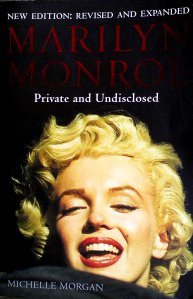 ‘Marilyn Monroe: Private and Undisclosed’ in which the author refers to a long time relationship between him and Marilyn. Slatzer and Purcell, and indeed her three husbands, Jim Dougherty, Arthur Miller and Joe DiMaggio, were all kept by Marilyn in separate compartments which only occasionally connected.
Marilyn claimed she only wanted to settle down and have children but stardom was something she could never give up. She had worked so hard for it and when her struggles to have a child failed, or when her relationships themselves failed, her movie career was always there to fall back on.
She died in 1962 aged 36. The coroner said she died as a result of a probable overdose. Indeed, she had a history of overdosing and Arthur Miller, her third husband, saved her from death more than once. Many writers have attributed her sacking from her final film ‘Something’s Got To Give’ as a contributing factor in her suicide but in fact Marilyn had been reinstated to the film at an increased salary. On top of that she had many film projects planned, including a movie biopic about Jean Harlow, so did she commit suicide? Was it an accidental overdose, or was she murdered? Who would want to murder Marilyn Monroe and why?
The fact of the matter is that Marilyn had become rather dangerous to quite a few people and she was in possession of some pretty interesting information because of her involvement with President John Kennedy. Kennedy, who was a serial womaniser, was not amused at her overtly sexual performance at his birthday party and decided to end his association with her. FBI boss J Edgar Hoover had made Kennedy painfully aware he knew of his trysts with another woman named Judith Campbell, who was also intimate with mafia boss Sam Giancana. Anxious perhaps not to give Hoover further ammunition against him, the President tasked his brother, Attorney General Bobby Kennedy to do the dirty work and smooth over things with Marilyn.
Some books and articles claim that was exactly Bobby Kennedy’s mission with Marilyn; damage limitation and keeping her quiet. Others say things had gone further and Marilyn had another affair, this time with Bobby Kennedy himself. Marilyn was someone who had spent a lifetime trying to better herself in the arts and literature. She was a great reader and she began taking notes of her conversations with the Attorney General in order to research their topics and appear confident and knowledgeable. Those conversations included, incredibly, highly secret things within the US government including attempts to topple the communist government of Fidel Castro in Cuba. She wrote these notes down in a red notebook which she showed to Robert Slatzer. He advised her it was an extremely dangerous notebook to have but as her affair with Bobby Kennedy cooled, if indeed it was an affair, Marilyn grew more and more angry. She claimed to friends she was fed up of being tossed around ‘like a piece of meat’ and threatened to blow the lid on her dealings with the Kennedys in a press conference. Bobby Kennedy wanted that notebook destroyed and Marilyn kept quiet. The mafia wanted derogatory information on the Kennedys and had even had Marilyn’s home bugged. The press conference was arranged for Monday August 6th, 1962. Sadly, Marilyn was found dead in the early hours of the 5th.
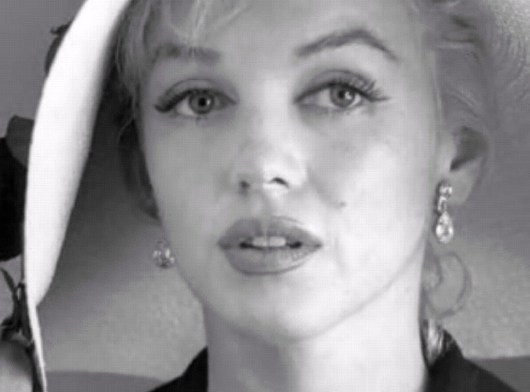 On the last day of her life, August 4th, 1962, Marilyn was not depressed but making plans for the future. The day before, the 3rd, she spoke on the telephone with handyman Ray Tolman and arranged for him to visit the next week to sort out some repairs on her house, 12305 5th Helena Drive in Brentwood. She also ordered various plants and shrubs for her garden. She spoke with her publicist Pat Newcomb and invited Pat to stay the night. The two women dined locally and turned in to bed early.
The next day, 4th August, Marilyn was awake when the housekeeper arrived at 8am. She spoke with numerous people on the telephone and arranged for Masseur Ralph Roberts to come over for a barbeque the next night.
Pat Newcomb arose around 12 noon and felt that Marilyn was not in a good mood. Pat had slept well while Marilyn, who had a long history of sleeping problems, had slept badly. This seemed to cause some friction between the two women. Shortly after 1 pm Ralph Greenson, Marilyn’s psychiatrist arrived. Marilyn and Greenson had a therapy session together while Pat spent the afternoon sunbathing by the pool as previously arranged.
At around 3pm Pat Newcomb says Greenson asked her to leave as he wanted to work alone with Marilyn.
Later, Eunice Murray, Marilyn’s housekeeper dropped Marilyn off at Peter Lawford’s beach house while she did some shopping. At about 4pm she returned home and Doctor Greenson also returned for presumably, more therapy.
At 5pm Peter Lawford called and asked Marilyn to a supper later that evening but she declined. Marilyn received numerous telephone calls during the day some of which Eunice Murray had fielded by telling callers Marilyn was busy or not at home. Many times this was simply not true. A call from Ralph Roberts was answered by Dr Greenson who said sharply “Not here,” and put down the phone.
At 7 pm Greenson says he left, leaving Marilyn alone with housekeeper Eunice Murray. At around this time Marilyn took a call from Joe DiMaggio Jr. Joe had broken off his engagement to his fiancée and found Marilyn to be in good spirits. At about 7.30 Peter Lawford called again to ask Marilyn to dinner. His description of Marilyn contrasts with Joe Jr as Lawford states Marilyn’s speech was slurred and that she appeared disorientated. Towards the end of the call Lawford stated famously that Marilyn said, “say goodbye to the President and say goodbye to yourself because you’re a nice guy.” Mexican actor Jose Balleros also claimed to have spoken on the telephone with Marilyn that night, he claims Marilyn was lucid and awake in contrast to Peter Lawford’s statements. The fact is Lawford and Eunice Murray both gave varying reports of what happened on Marilyn’s last evening and neither’s statements can be completely trusted.
According to Murray she noticed a light on under Marilyn’s door but the door was locked. She went outside and saw Marilyn either asleep or unconscious on the bed. This was 10 pm in the first version Eunice told. Later on it was moved forward to 3 am. She called Ralph Greenson who advised her to break a window with a poker. Greenson himself then arrived at the house, broke another window and gained entry through the window and found Marilyn dead.
When Police Sgt Clemmons arrived at 4.25 am he saw Marilyn lying face down in what he called the ‘soldier’s position.’ He said “her hands were by her side and her legs perfectly straight. It was the most obviously staged death scene I have ever seen.” Not only that, all the sheets on the bed were clean and Mrs Murray was busy doing the laundry. Clemmons also noted the unusually long time that had elapsed before calling the police and asked why wait until gone 4 in the morning? Greenson and Murray said the film studios had to be informed first. Later, Murray changed her story saying she saw the light on in Marilyn’s room at midnight, went back to bed then awoke later and saw it was still on at 3am then she called Greenson. Greenson then called Doctor Hyman Engleberg and both doctors arrived shortly after. It was Hyman Engleberg who pronounced Marilyn dead.
Eunice Murray admitted in a BBC interview in 1985 for the documentary say Goodbye to the President that Bobby Kennedy was at Marilyn’s house on the day of her death. Eunice’s son in law and Marilyn’s handyman, Norman Jefferies told author Donald Wolfe that Bobby Kennedy arrived late on the Saturday evening with two unknown men and asked Jefferies and Murray to leave while he spoke with Marilyn alone. When they returned Marilyn was comatose in one of the guest cottages attached to her house. Jefferies and Murray called an ambulance but Marilyn died from an overdose. Was it a suicide or an accident? Was it murder? It seems to me that at this late stage we can never know but the autopsy showed that Marilyn’s blood level contained a lethal level of Chloral hydrate and Nembutal but there was no residue from the pills in her stomach, in fact, Marilyn would have had to swallow 38 to 66 capsules of Nembutal plus the chloral hydrate, and would have lost consciousness long before swallowing all of the pills. Was an injection given? The autopsy showed no trace of any needle marks and the final result was noted as a ‘probable suicide.’ Other versions of this story state that an ambulance was called and Marilyn expired on the way to hospital. Presumably it was the ambulance crew that pumped her stomach removing the pill residue. Recently an ambulance driver named James Hall claimed he attended Marilyn’s home that night and Marilyn was responding to treatment when a doctor whom he identified as Ralph Greenson injected Marilyn in the chest with a hypodermic syringe with a long needle. It was he said an inept amateur injection that broke one of her ribs however, these claims were not substantiated by the autopsy. The body was then returned to her home in order to give Robert Kennedy time to leave Los Angeles. I cannot for a moment imagine Bobby Kennedy as a murderer but he certainly would not want to be associated in any way with a movie star suicide. To this day John Bates, a friend of Kennedy’s claims that Bobby and his family spent the weekend with him at his ranch in Gilroy, south of San Francisco.
The final tragedy of this drama is that former husband Joe DiMaggio was set to remarry Marilyn. The date of the wedding should have been August 8th. Instead Joe attended Marilyn’s funeral on that day.
DiMaggio sent half a dozen red roses to her crypt three times a week for the next twenty years. He died in 1999 aged 84 and never remarried. He never spoke about Marilyn publically ever again. When Robert Kennedy visited the Yankee stadium in 1965, DiMaggio took a discreet step back when it was time to shake Kennedy’s hand.
Sources: The Assassination of Marilyn Monroe by Donald Wolfe
Marilyn Monroe: Private and Undisclosed by Michelle Morgan
Goddess by Anthony Summers
Say Goodbye to the President: 1985 BBC documentary
Websites: http://www.lovingmarilyn.com
http://www.cursumperficio.net
For a recent daily Mail article, click here.
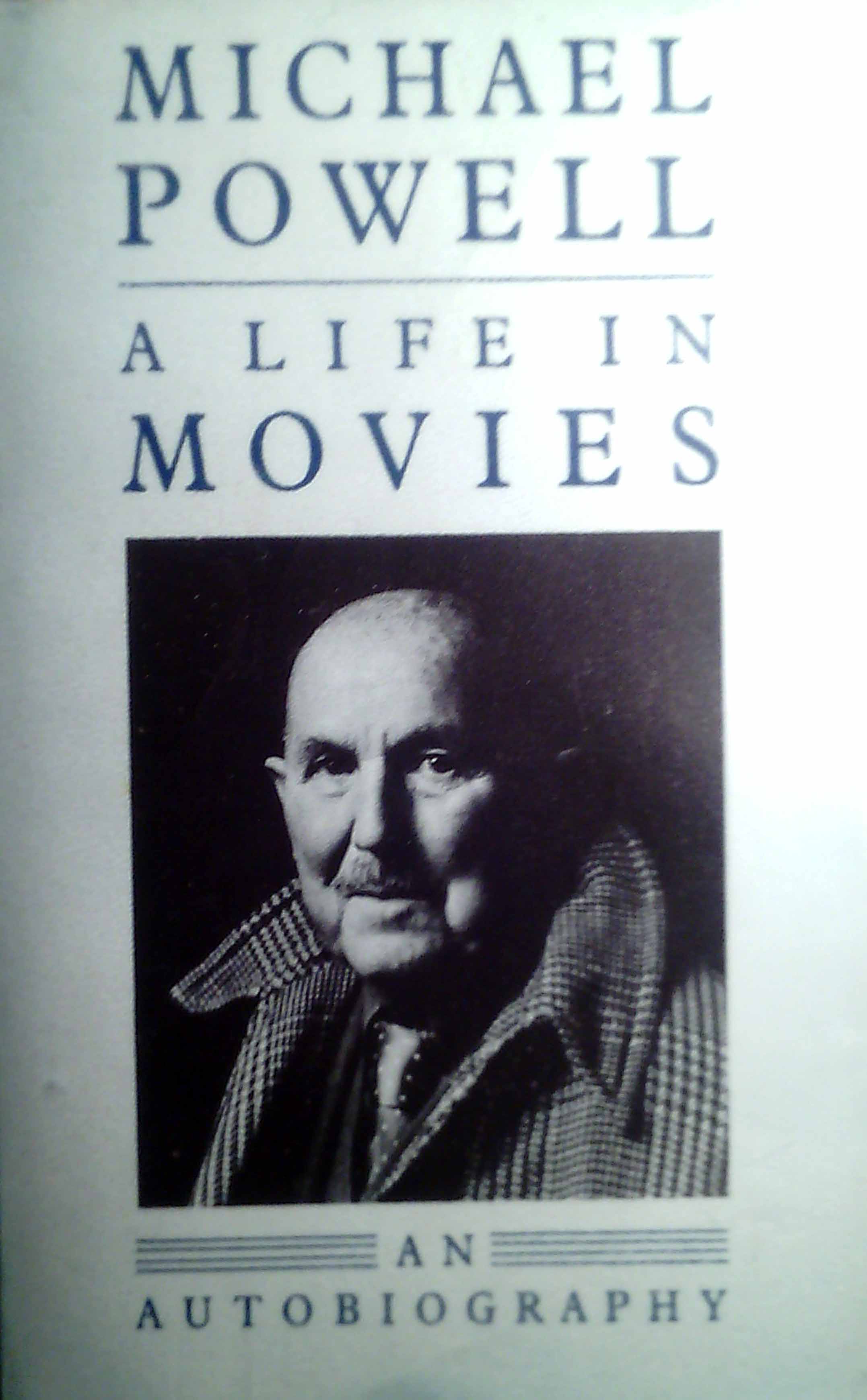
 I really do love books, especially second hand books. I think that what is so wonderful about a second hand book is that the book has told its story before to someone else, and now if you have just bought it, its going to tell it’s story to you. I spend a lot of time browsing in book shops, both physically in actual shops or on-line in virtual book stores. The thing about on-line book stores is that you have to have a starting point, it’s no fun browsing through lists of books so I tend to browse on-line only when there is a particular book I want. In an actual book store I scan through the various sections and although I tend to linger on biographies and books about film, anything can catch my eye. A while ago I was reading a book by movie director Michael Powell called ‘A Life in Movies.’ It was a pretty thick book and took a fair old while to read and when I got the end there didn’t seem to be any indication there was another volume.
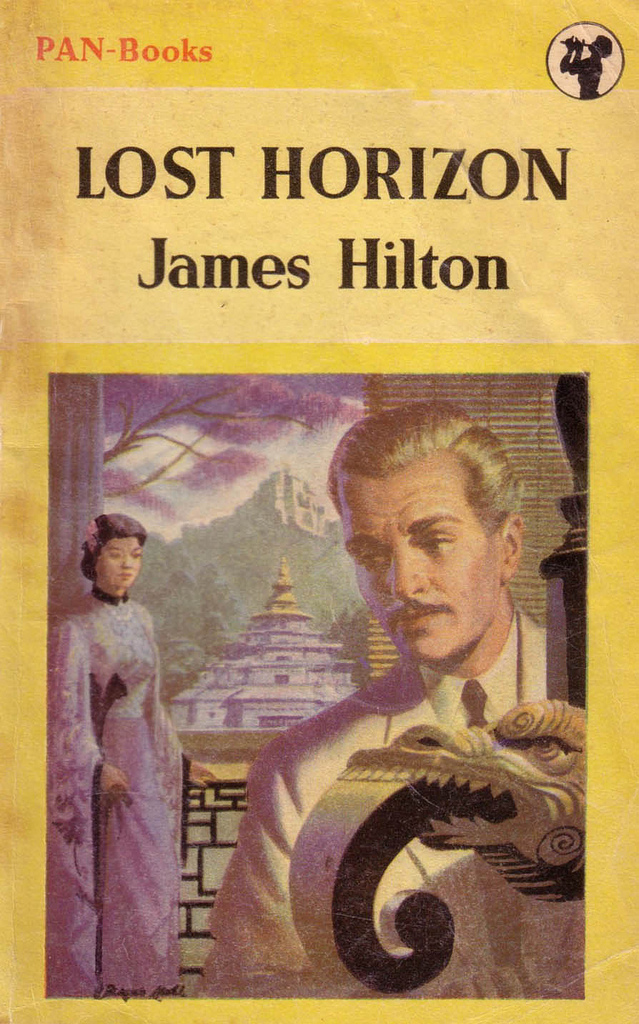
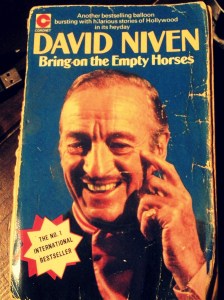 You might be thinking, looking at the picture here: Couldn’t the author have found a better picture? Looking at the picture again I suppose that particular copy is just a little tatty. That’s because it’s my travel copy. I’ve got another copy, a much nicer version that resides in my bookcase that I browse through now and again. The reason I’ve got two versions is because my travel copy goes all over the place with me. If I’m travelling somewhere on the bus or train, that slightly tatty copy goes easily into my pocket or my bag because I can read it time and time again. Not only is it the best ever book written about the golden age of Hollywood, it’s also by far the most accessible and readable book on the subject ever.




 Letters from an Unknown Author!
