Fragments of a Life

It’s sad enough to have to lose a loved one but what is sometimes even worse is dealing with the things they have left behind; their clothes, their books, their personal items. The shampoo and shower gel in the bathroom, the uneaten items in their fridge, the notes on the coffee table; the fragments of their lives.

My brother Colin died almost two months ago and even now I find it hard to believe. Going home a couple of weeks ago I picked up two pizza bases from the shops. I bought two without thinking because I’d usually make Colin and me a couple of small pizzas for when he came round for one of our regular bi-weekly chats.

One of the first things I looked at when I went into my brother’s flat was his phone. He had two phones. One was unlocked but contained little information. No banking app or email account. The other phone was locked and I tried all of what I thought would be memorable numbers for him to use as a phone password. His date of birth….. no. My birthdate…… no. I tried my mother’s and father’s birthdates but no, the phone refused to open.

Colin and I used to speak on the phone every few days. A long time ago when mobile phones first became popular, we decided that when we would speak together on the phone, we would talk in either German or east European accents. I’m not quite sure why we did it but we maintained it over a number of years, although it could be a little embarrassing if I suddenly answered the phone in a German accent in the bar or in a restaurant.

Looking on the internet I searched for what are the most used codes for unlocking a phone. The most popular was 1-2-3-4. I trolled through the list but nothing seemed to work. 2-2-2-2….. no! 6-9-6-9….. no! About halfway through the list I got to the point where the phone would lock up for a minute after each failed attempt. Finally, I tried 3-3-3-3. I was watching a TV show at the time and was about to move on to the next suggestion when as if by magic the phone opened up.

There was no banking app which was what I was looking for in order to sort out his financial affairs. Looking through his house there didn’t seem to be any particular place for important documents. I found some in the bedroom, some in the lounge and some in the kitchen. Colin wasn’t very tidy. He was also the laziest man I have ever met. His first job after leaving school was in a high-class men’s tailors in Manchester city centre. Among the clientèle were presenters from the local TV news shows Look North and Granada Reports. Colin once told me he had served the guy who played Alec Gilroy in Coronation Street. His boss was a very well to do fellow who lived in Wilmslow and every morning he picked up Colin for work at a busy junction by the Bluebell pub. He used to drive a Rolls Royce and Colin was living at home in Handforth then and you might think that with his boss picking him up in a Rolls Royce, and waiting at a very busy junction, he would be keen to get up out of bed and get ready for work.

Well, things worked out ok for a short while but as time went on, Colin realised that getting out of bed in a morning was not for him. My mother told me that she used to sometimes throw a pan of cold water in his face to get him up but even so, he began to leave his boss stranded at the Bluebell and would arrive at work round about lunchtime. Soon he was presented with his p45.

The only other job he ever had, to my knowledge anyway, was a sales job in Rome in Italy, selling timeshares or insurance or something to English speaking people in that far away city. He didn’t last long there and made his way across Europe to a place called Nijmegen in Holland. He stayed there for quite a while and he even met his first girlfriend there, a girl called Inge with whom he stayed friends for the rest of his life.

Soon his money ran out and he was repatriated back to the UK with my mother, as usual, paying for his return.

Not long after coming home he had a nervous breakdown and that began a cycle of mental health issues that plagued him for the remainder of his life. He once told me that it all stemmed from bullying at school although I have to say, I always remember him as being such a happy and cheerful youngster. Clearly, things are not always what they seem.

He had arranged a funeral plan with a company called One Life which went bust back in 2024, however, I was sure he had taken out an insurance policy with Sun Life some time ago. I called them but they had never heard of my brother. I called another company and they said the same thing. ‘Have you tried Sun Life?’ they asked. I had but they had no record of my brother. Try again, they suggested. I tried again and this time the company came up with Colin’s policy which was actually linked to a funeral company so I was able to quickly begin the funeral arrangements.

I thought his laptop would probably tell me a lot about his affairs but it too was locked. I once again tried various numbers to no avail but I noticed that his email account was on his newly unlocked mobile phone. I clicked on the ‘forgotten passcode’ button on his laptop; a new code went to his emails and soon I had access to his laptop even though I found nothing of interest there. It’s interesting though how his digital footprints leave hints about things that he did. There was an email from Netflix reminding him to finish an episode of Star Trek he had been watching. Another was from a mail order company thanking him for his recent clothing purchases and offering him discounts on his next order.

Colin lived in a council flat and I was sure they would be keen to take over the place and get new tenants in but happily, the staff I dealt with at the housing office were friendly and sympathetic and gave me time to sort things out.

I took lots of his old clothes to the recycling centre and quite a few charity shops were the beneficiaries of his numerous DVDs although I must admit, I kept quite a few for myself. Colin was an avid buyer of leather jackets and although some of his older ones went to the recycling centre, I still have about five of his newer ones.

A charity place called The Tree of Life came and took away his washing machine, fridge freezer and microwave. I took away his big television screen on which I’ll probably watch the British Grand Prix this weekend. I went to hand his keys into the council but first I thought I’d take a last look around. I checked everywhere and picked up a few last items I thought I’d keep. I had been surprised that I hadn’t found a great big box of photographs as a long time ago Colin always used to be taking pictures.

As I took a last look around, I noticed a bin bag in the corner of a cupboard just by the door. More old clothes I thought but when I picked it up it was full of photographs, the very ones I had been looking for. I was so glad I had found those pictures as there were so many taken at home when he and my mother and father were still alive.

Colin: a self portrait

I dropped off his keys and later I found myself watching one of his old DVDs, sat in a chair wearing his aftershave, sporting one of his newly purchased T-shirts and drinking one of his leftover bottles of Pepsi Max, his favourite drink. That is the thing with death, someone dies but the world does not stop or even take a breath. The buses keep on running, the sun continues to rise and the dead man’s possessions are still there, waiting to be sold or given away or distributed to others via charity shops and other outlets.

Despite never having any money Colin had an expensive TV package from Virgin Media. He loved his black and white classic films and spent a fortune on numerous leather jackets as well as going everywhere by taxi. Until our mother died, he was forever asking me to bail him out of debt but in recent years helped by a PIP claim (Personal Independence Payment) and a small inheritance from mum he finally had some money in his pocket.

He was looking forward to getting himself a free bus pass but sadly, he was taken away much too soon. He was 64 years old.


What to do next: Here are a few options.

Share this post on your favourite social media!

Hit the Subscribe button. Never miss another post!

Listen to my podcast Click here.

Buy the book! Click here to purchase my new poetry collection.

Click here to visit Amazon and download Floating in Space to your Kindle or order the paperback version.

Click here to visit amazon and purchase Timeline, my new anthology.

Sadness, Memories and those Telephone Menus

Dealing with death is difficult. Not just the emotional side of death, losing a loved one but dealing with the other side of death, the practical side, can be just as hard.

My brother died recently. He loved his TV and despite not having much money he had a top package from Virgin media. He mentioned only a few weeks before his death that he could even get the Sky F1 channel and I told him over the phone that I would be round to watch some live races. The only chance I got was actually the recent Spanish Grand Prix which wasn’t such a great race until a late safety car livened things up towards the end. Anyway, once I’d watched the race I called up Virgin to advise them that my brother had died. I must have gone through about three menus; press one for this, press two for that and so on. After menu 3 I finally got to an ‘other’ option. I clicked on that and finally there was an option for bereavement. When I went through to option 5 I think it was, the recorded voice advised me to ring a special bereavement line and quickly rattled off the number. I wasn’t expecting that so I reached for my pen expecting a repeat of the number but all I got was a thank you for your call and a dialling tone as the call was ended.

OK, I dialed again, at least I had my pen and paper ready. So, through the first menu, then the second and finally to the third. Press option 5 and the voice comes on with the phone number, I went to jot it down but the pen wouldn’t work!

Aaaagh!

After a few minutes of screaming I managed to calm down and realised that I had no choice but to go through the nightmare scenario again, this time with a working pen. I finally got the number but seriously, couldn’t they just put it on their web page; Bereavement, call this number 0800 blah blah blah. No, that’s clearly too easy. Anyway, now to repeat the process for his gas and electric, the DWP (actually pretty easy) his water rates, his insurance and of course I need to speak to the Undertakers.

My brother, despite never planning anything in his entire life actually bought himself a funeral plan. Sadly, the company he chose, One Life, went bust last year but he had even looked out for that eventuality, he had bought himself some life insurance with Sun Life which was happily linked to a funeral home.

Another annoying thing is registering the death. Despite us being in the hi-tech age of 2025 you can’t do it over the phone or online. You have to do it in person which meant a bus ride into town because cars are decidedly unwelcome these days in Manchester city centre. The other thing with the register office is that you can’t just walk in, you have to have an appointment. I made my appointment online but arrived 45 minutes early. Could they see me early? Of course not, so I went for a wander round the area and even passed a small tapas bar which many years ago was a very exclusive men’s tailors where my brother Colin had his very first job. Among the clientele were the presenters of Look North, the BBC’s local news show and Granada Reports, the ITV version. I remember Colin telling me that he once served the guy who played Alec Gilroy on Coronation Street.

Colin’s former workplace. Once a menswear shop, now a tapas bar.

His boss was a very well to do fellow who lived in Wilmslow and drove a Rolls Royce. Every morning he picked up Colin for work at a busy junction by the Bluebell pub. Colin was living at home in Handforth then and you might think that with his boss picking him up he would be keen to get up out of bed and get ready for work.

Unfortunately, Colin just could not get out of bed in the morning. My mother told me that she used to throw a pan of cold water in his face to get him up but even so, he usually arrived at work round about lunchtime. His boss wasn’t happy at being left waiting and Colin was given his p45.

The coroner had already sent all the relevant info to the register office so all they really needed from me was a signature which I signed with the registrar’s old fashioned fountain pen.

Here’s a funny thing about death, the way things come around again. The vinyl albums that he and I argued over for instance, we swapped records, swapped back again and swapped back and forth so many times neither of us knew who finally owned what. Well, now all those vinyls have come back to me. Not only those but the audio tapes I was going to throw away, Colin took them and now they’ve come back too, as well as the copy of High Noon, the 1950 film starring Gary Cooper. I lent it to him ages ago and he told me he’d given it me back. I said he hadn’t but he insisted he didn’t have it. Either way, it’s come back to me again.

I took the bus into Manchester as I mentioned earlier. At one point we were stopped at a set of traffic lights and I looked up to see what appeared to be Colin crossing the road. A man looking just like him with his identical walk and his identical leather jacket was crossing and I was convinced it was him until he looked up straight at me and I realised that of course, it was someone else.

Later on, sipping a half of lager at a pavement pub table in Albert Square, a woman came past pushing one of those granny trolleys that old ladies push and she was the absolute image of my mother. I remember thinking that all I needed now was to see my dad. I scrutinised lots of people as I travelled back home on the bus and finally, I spotted someone who looked a little like dad. I convinced myself the man was the perfect double of my late father but when it came down to it, I knew he wasn’t. Death just messes with your head I suppose but, in a way, I felt that I had seen my entire family that day.

I tried to think of the last time we were all together and it was probably some occasion years ago when I visited home on a Sunday and we all ate Sunday dinner together. The time that came to mind though was a birthday. Perhaps it was my birthday but me, Colin and Mum and Dad, all met together in a pub on the border of Manchester and Salford called the Mark Addy. The pub was situated on the banks of the Irwell and at lunchtimes they served rather nice portions of either pate or cheese with plenty of fresh bread. It was a sunny afternoon and it was rather warm so I rather suspect it was my father’s birthday as his birthday was in August.

Some years ago, the Mark Addy was flooded when the river burst its banks. The insurers declined to insure it again and the pub has remained closed ever since but I often think about it and that last sunny afternoon we all spent together.

One last sad story. Years ago my brother had a dutch girlfriend named Inge. He has kept in touch with her and while I was sorting out his flat I came across a framed picture of Inge. She is one of my Facebook friends so I sent her a photo of the picture and we messaged each other for a while and talked about Colin. A little later she told me that she had had an online meeting with someone in the USA and during the meeting the woman’s three-year-old son came into the room. When the meeting was over the woman introduced the boy to Inge. She asked the boy to say goodbye to Inge and he did so. Inge asked his name and he told her.

She turned to the boy and said “goodbye Colin.”


What to do next: Here are a few options.

Share this post on your favourite social media!

Hit the Subscribe button. Never miss another post!

Listen to my podcast Click here.

Buy the book! Click here to purchase my new poetry collection.

Click here to visit Amazon and download Floating in Space to your Kindle or order the paperback version.

Click here to visit amazon and purchase Timeline, my new anthology.

Texting and my Brother

My brother died this week. As you can imagine I’m pretty upset. He was the younger brother so the accepted plan was for me to die first but somehow, things didn’t work out that way. Still, to a certain extent my brother was a burger and pizza eating TV watching couch potato so perhaps him dropping dead like that was not really unexpected. He was a guy that I sometimes wanted to slap and tell him to sort himself out, to clean his flat up and wash the pots and hoover up and get himself off his lazy backside and get a job or do some training or something.
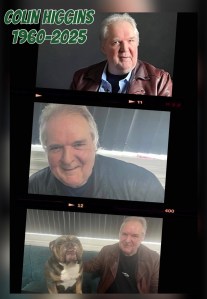
Once I made him a huge roast beef Sunday lunch. I had done loads of food so I plated up an extra portion and told him  to ‘slap this in the microwave and eat it tomorrow’. I called him the next day to remind him. ‘Remember’, I said. ‘You’ve still got that roast dinner in your fridge. Slap it in the microwave tonight.’

‘Oh that’, he said, dismissively. I ate that last night when I got home!’

Despite all that, despite him spending money recklessly, buying numerous leather jackets from catalogues, getting into debt and going everywhere in taxis and eating takeaways when he could have saved money by eating sensibly and eating healthily, Colin, my brother, was a latter day Oscar Madison (remember the Odd Couple) who was happy doing nothing but watching television and old films day after day and paying for the top satellite channels when he had no money. Despite all that and owing money left right and centre, he was my best friend and I loved him and miss him so much.

This next section is something I wrote about him a few years ago. Just reading it brought back our friendship so fully that I almost picked up my phone and texted him there and then.


I’ve written about my mother and father in my blog posts so perhaps it’s about time I wrote about the one remaining family member, my brother. My brother Colin lives in Manchester and we see each other every couple of weeks or so when we meet up in the city centre for a pint or two.

My brother Colin is a very subtle character. He won’t ask me outright if I fancy a pint with him, he’ll tend to text me and his text will usually go something like this:

Meatballs!

You’re probably thinking, now that is subtle; is it a code? No, but the correct answer is this:

Definitely!

Still completely in the dark? Well, I suppose you might not be classic movie fans like Colin and me because a lot of the time we text in movie dialogue.

My brother sent me a text a few days ago; it read simply ‘You don’t remember me do you?

Probably a little confusing to the man on the street but I knew exactly what he meant. I responded with; ‘I remembered you the moment I saw you!

My brother came back straight away; ‘by the nose huh?’

Yes, texting in movie dialogue is what we do. Picked up on the movie yet? That particular movie is one of the movie greats of all time. It starred Marlon Brando in an Oscar-winning performance, much better, much more exciting and above all, much more human than his other Oscar-winning role in The Godfather.

Here are some more texts

ME: Do you remember parochial school out on Puluski Street? Seven, eight years ago?

MY BROTHER: You had wires on your teeth and glasses. Everything.

ME: You was really a mess.

The movie was ‘On the Waterfront’ and it’s probably famous for the double act of Marlon Brando and Rod Steiger playing brothers but there are plenty of other wonderful performances and scenes. My personal favourite is when Brando and Eva Marie Saint walk together in the park and Eva drops a glove which Brando picks up but keeps hold of and eventually pulls onto his own hand and we know that Eva wants it back. The dialogue above comes round about here when Brando, playing the part of Terry Malloy, realises he knew Edie, played by Eva Marie Saint at school. He is trying to communicate with her in his oafish way and Edie begins to realise she actually likes him but, well watch the movie, believe me it’s a great scene. It finishes like this:

MY BROTHER: I can get home all right now, thanks.

ME: Don’t get sore. I was just kidding you a little bit.

I read somewhere that Elvis knew all the dialogue from Rebel Without a Cause, the James Dean movie. If so, my brother Colin and I are in good company because we know the dialogue from that film too, as well as Giant and the aforementioned On the Waterfront. One day I thought I’d try a quote on Colin that he would never get.

ME: I took everything out of that car except the rocker panels!

I sent the text off feeling pretty pleased with myself. He’ll never get that in a million years I thought. My phone bleeped a moment later and I looked down to see:

MY BROTHER:  C’mon Herb, what the hell’s that?

Top marks indeed if you remember that dialogue from The French Connection.

My brother and I do text each other a lot but we also chat on the phone too. The thing is though; we talk on the phone with East European accents. We started doing it one day then began a sort of unspoken contract to carry it on. Sometimes I’ll get a call and he might say, in his best Hungarian accent ‘ Gut Evenink my friend’

‘Gut evenink to you also my friend’ I tend to reply.

East European is the norm but sometimes we use German accents. Handy when we bounce quotes from The Great Escape off each other!

Me: I hear your German is good, and also your French . .

My Brother: Your hands UP!

The Great Escape is a firm TV movie favourite but let me finish with a 60’s classic we also frequently text about:

Me: She’s in beautiful condition!

My Brother: Blimey girl, you’re not as ugly as I thought!

Me: I saw that geezer Humphrey going off. You’re not having it off with him are you?

My Brother: I tumbled at once. Never be cheerful when you’re working a fiddle!

Me: I ain’t got my peace of mind. And if you ain’t got that, you ain’t got nothing.

My brother: It seems to me that if they ain’t got you one way, they’ve got you another.

Got the picture yet? The film is Alfie. It was directed by Lewis Gilbert who also directed some of the earlier Bond films. The script was written by Bill Naughton and adapted from his own book and play. Alfie is a fascinating film on many levels. It’s a peek back at the swinging sixties; it explores the elements of comedy versus drama, something I’ve always loved and which I looked at a while ago in a post about the TV show MASH. The film features great performances from all the principal and supporting actors. One fabulous feature is how Alfie talks directly to the camera and sometimes even says things that directly contradict something he is doing or saying to another character. In the opening sequence, Michael Caine as Alfie, addresses the audience and tells them not to expect any titles. There are none, except for the film title itself and the closing credits which feature photos of the cast and crew.

Many actors turned down the chance to play Alfie on film, including Caine’s then flat mate Terence Stamp who played the part on Broadway. Laurence Harvey, James Booth and Richard Harris all turned down the role and Alfie became a breakthrough movie for Michael Caine.

Now my brother has gone it’s too late to text him one final time. If I could though I’d perhaps text him this:

So what’s the answer? That’s what I keep asking myself. What’s it all about?


What to do next: Here are a few options.

Share this post on your favourite social media!

Hit the Subscribe button. Never miss another post!

Listen to my podcast Click here.

Buy the book! Click here to purchase my new poetry collection.

Click here to visit Amazon and download Floating in Space to your Kindle or order the paperback version.

Click here to visit amazon and purchase Timeline, my new anthology.

Thoughts From A Sun Lounger (Part 15)

This year we arrived pretty early at the Eurotunnel check in at Ashford. We’d spent the night near the Bricklayer’s Arms, a pub in Kent that has a quiz night combined with a special food offer and it was a short hop down the M20 into the Eurotunnel terminal. We were pretty early and fully expected to be upgraded to an earlier train but no, it wasn’t to be. So we relaxed for a while, made a cup of tea and then finally drove down to the customs. Both the English and French customs are over here in England. We passed quickly through the English passport control and then on to the French where they take a much longer time. I’m not sure why, after all it’s not as if anyone is trying to smuggle immigrants into France, that happens on the way back.
Finally, after a cursory check by the French we drive down to the loading area and soon we are driving onto the specially built trains that take us under the channel and into Europe. Once we arrive we are free to drive off into France as of course the French customs have already checked us out.

A couple of years ago we came into France pretty late, drove for about an hour and stopped at a small motorhome stopping place which was part of a farm. We had found the place in our motorhome stopping guide and although it looked a little unloved, there was everything we required, a nice pitch, water and a place to empty our toilet. Liz had brought along some leftover Bolognese and we heated it up and it went down well with a glass of red wine which as you may know, is compulsory in France.

Parked by a lake in France

As I walked around, I noticed a sign which mentioned a ten euro fee for the night which I hadn’t seen in our guide but I guessed as the place looked a bit run down, that notice was probably an old out of date one. Next morning though at 9am (8am UK time) I realised that wasn’t the case when the farmer’s wife came hammering on the door wanting her money. She looked and sounded a little fierce so not wanting to upset her I coughed up the ten euros.

Last year we had a late night crossing and parked next to a crematorium and this time it was free. We usually get ready, have a cup of tea and then drive off and search for a picnic place or an aire where we can get breakfast under way. I’m not an early riser and breakfast is for me probably more of a brunch than breakfast. My personal rules are that breakfast must contain (A) eggs and (B) toast. After that I’m pretty easy going but secondary items must be things like bacon and sausages and tomatoes but really, I’m not fussy.

I’m not really a lunch person but the other day we decided to dispense with breakfast and have lunch. We took ourselves down to a French restaurant we had visited before. Their lunches come complete with a basket of bread which usually gets refilled when the supplies get low, a bottle of water, a bottle of vin rouge and a bottle of cider. The cider is fairly low alcohol so as I’m driving that’s what I tend to go for.

The starter is a buffet with things like salads, pâté, cold meats and so on. The main course was a choice of four dishes. Choice one was roast beef. Now I knew this wasn’t going to be roast beef that we know and love in England so that was out. Choice two was fish, no thanks. Choice three was something I didn’t understand even when the waitress repeated it so that was out also though Liz later said it was some kind of turkey dish. Choice four was steak.

Now the problem with steak is that in France, French chefs don’t like to cook a steak too much. If you ask for medium rare you usually get rare. If you ask for medium, you’ll get medium rare and if you ask for well done, well that’s an even bigger problem. When the chef hears well done, he immediately realises the customer is a dreaded ‘Rosbif’, an English tourist as clearly, no Frenchman in his right mind would order a steak well done. Now the chef might be eager to teach the unsuspecting Brit a foodie lesson, so you might find your steak arriving pretty much like an incinerated burnt offering. (It’s your own fault, you asked for well done!) Now some French chefs will go the other way and give you a medium steak but now I think about it, you’ll probably find it’ll be medium rare because the French chefs just don’t like cooking their food too much. This is where I made the fatal mistake. Faced with those food choices, I went for the roast beef. It came in a tasteless red wine sauce and it looked like it had hardly seen the inside of a roasting oven when the chef decided to whip it out and slap it on my plate.

The good news though was this; the resourceful lady in my life, Liz, slipped the beef into a plastic bag, we took it home and she fried it up later with some onions, a little seasoning and served it up on a slice of a French baguette.

Of course this being a French restaurant I didn’t starve. There was still the cheese course and then the sweet which customers help themselves from a plentiful choice displayed in a glass cabinet. Lunch? Think I might just stick with breakfast in future.

The first week of our holiday the weather wasn’t great although it was pretty warm in the sun but cool, very cool in the shade. Afterwards things got hotter and we were able to spend many relaxing hours swimming in lakes or relaxing in the countryside.

Here’s a pretty crazy random thought that came to me in my sun lounger. Before we left the UK, I trimmed my hair with my trimmers but the other day I looked in the mirror and after only a week in France my hair had grown quite considerably. It is Spring of course and everywhere in the French countryside, things are growing. On our travels we saw fields of poppies and other wildflowers blooming, could it be then that people are linked in to the forces of nature? Does my body know that the season of Spring is upon us and has reacted in sync with the universe?

Or perhaps I should just have given myself a number two cut rather than a three?

After two weeks away some sad news came to us, my mother died.

She was 93, suffered with dementia and lived in a nursing home and although many times during my visits to see her I was able to put a smile on her face I knew she wasn’t happy. She always asked me to take her home even though she was no longer able to remember where her home was. Death was a release for her, something that has set her spirit free again.

She was a tough lady and very, very determined. On one particular visit, many months ago we spoke about the warm weather and the rose buds that were on the bush outside her room. We talked about her sister Ada who was a keen cyclist and was sadly killed in a road accident many years ago. I asked her how she was sleeping and she gave me a big smile and said ‘you know I never have any trouble sleeping!’

As usual I asked her to recite some multiplication tables in the hope it would get her to use her memory and exercise her brain waves. We did a simple one, the three times table. One three is three, two threes are six and so on. Round about nine she began to falter and looked suddenly distressed. ‘I can’t remember anymore’ she said sadly.

We talked about other things and then I told her it was time for me to leave. I felt a little disappointed as my attempt to get her to use her memory had backfired when her memory failed her.  The disappointment of not being able to remember such a simple thing was evident in her face. We said our goodbyes and I went towards the door. As I turned back for a final wave goodbye, she said something and I stopped to listen.

‘Ten threes are thirty’ she said. ‘Eleven threes are thirty-three, twelve threes are thirty-six’. She looked back and smiled. ‘I remembered after all’ she said. Like I said, she was a very determined lady.


What to do next: Here are a few options.

Share this post on your favourite social media!

Hit the Subscribe button. Never miss another post!

Listen to my podcast Click here.

Click here to visit Amazon and download Floating in Space to your Kindle or order the paperback version.

Buy the book! Click here to purchase my new poetry anthology.


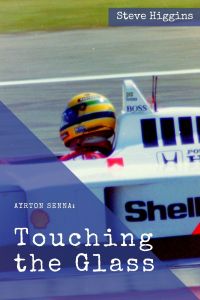
Ayrton Senna: Touching the Glass

As the 2020 Formula One season comes to a close, many people must speculate about those who race these amazing F1 cars at such incredible speeds. Measuring high speed lap times against car control and the desire to go ever faster is the juggling act performed by the Grand Prix drivers every time they step into their hi-tech carbon fibre cockpits. The consequences of a mistake can range from an embarrassing spin in the gravel trap to a cruel death. Romain Grosjean crashed in the recent Bahrain Grand Prix. His car split into two and his cockpit, jammed in the crash barrier turned into a deadly fireball. Happily, he escaped with only minor burns.

This year, 2020, marked the twenty sixth anniversary of the death of Ayrton Senna, one of the greatest racing drivers of all time.  Aryton was killed on the 1st of May 1994 at the San Marino Grand Prix at Imola. Anyone who knows anything about motor sport can tell you that. The date lingers in the back of the collective mind of all racing fans, along with other tragedies of the sport, like the deaths of Gilles Villeneuve and Jim Clark to name but two. Clark’s death is unexplained to this day. His Formula Two Lotus left the track at an easy, straight section of road. The facts of Villeneuve’s accident are well known – he crashed into a slow-moving car – but his death is perhaps only really explained under close analysis.

Villeneuve was on a slowing down lap, on his way back to the pits after a handful of fast qualifying laps but still, he kept the hammer down, his right foot pressed down to the floor when there was no real need for absolute speed. So why? Why was he going so fast?

Grosjean escapes from his burning car

One answer is simply that that was the way he drove; fast. Foot down to the floor. Full stop. Another was that he was still estranged from team mate Didier Pironi, who he thought had unfairly beaten him in the previous Grand Prix at San Marino in Italy. The two had diced together for the length of the race, team leader Villeneuve thought they were putting on a show, Pironi thought they were racing. When Pironi took the chequered flag it was an act of betrayal, or so Villeneuve thought and when they arrived at Zolder for what would be Villeneuve’s last Grand Prix, Villeneuve was still seething. And so, perhaps that state of passion was a factor on his last lap. Jochen Mass was slowing down and saw Villeneuve approaching at high speed. He moved over to the right to let Villeneuve through on the racing line but at the same moment Villeneuve also moved to the right to overtake and the two collided sending Villeneuve’s Ferrari into the air.

For Ayrton Senna in 1994 that intense rivalry with a fellow driver seemed to be a thing of the past. Together, Senna, Alain Prost, and Nigel Mansell dominated most of the eighties and early nineties in Formula One racing. Mansell had left the stage for Indycar racing in the United States and Prost had retired, leaving Senna to take his vacant seat at Williams, or perhaps he retired because Senna had been offered a seat at Williams – it depends on which story you believe. Certainly, after the intense animosity that developed between the two at McLaren you can hardly blame Prost for not wanting to work in that same situation again.

So now, the Young Pretender had become the Elder Statesman of Grand Prix motor racing and his two closest competitors had gone. Perhaps he even hoped that he could relax, let up the pace a little bit, just as Prost had thought in 1988 before Senna began to push him harder. But a new phase had begun for Aryton Senna, a new Young Pretender had appeared to challenge him in the shape of Michael Schumacher. Schumacher had won the first two Grands Prix of the year and Senna came to Imola without a single point. “For us the championship starts here” he told the TV cameras, “fourteen races instead of sixteen.” Further pressure mounted on Senna when fellow Brazilian Rubens Barrichello was injured in a crash and then Roland Ratzenberger was killed, the first fatality at a Grand Prix meeting since that of Riccardo Paletti 12 years before.

Many sources have said that after these twin disasters Ayrton did not want to race in the Grand Prix. That is something hard to believe, a man as focussed as Senna, not wanting to race. Could it be that he was finally becoming more like his once deadly rival Alain Prost? Prost had always put his own life before winning motor races and as a consequence had driven a dismal race at the rain soaked 1988 British Grand Prix and completed only a token lap at the similarly affected 1990 Australian Grand Prix. Events may have pushed Ayrton’s thinking from the neutrality and detachment of the past towards a greater concern, a concern beyond the continual winning of races.

Whatever his inner feelings he started the San Marino Grand Prix in his usual fashion, leading into the first corner from pole position. Behind him though, JJ Lehto stalled his Benneton and was hit from behind by Pedro Lamy. Lesser events had stopped races in the past but on this occasion the organisers sent out the safety car and the grid cruised round after it in formation for five laps while the crash debris was removed.

At the end of the fifth cruising lap the safety car pulled off, the lights turned to green and Senna, Schumacher and the rest floored their throttles. The Williams was not handling well and it felt nervous through Tamburello, that evocatively named but most dangerous of corners. Still, Senna kept ahead of Schumacher, he kept the hammer down. On lap six the Williams entered deep into Tamburello and Schumacher saw the spray of sparks as the car bottomed out and side stepped slightly. Senna caught and corrected the Williams and throttled onwards for the charge down to Tosa, the next bend. Both Senna and team mate Damon Hill knew their cars were nervous and to a certain extent unsuited to the bumpy surface at Imola. Someone like Alain Prost might have eased off slightly, settled for second or third, collected some points and used the rest of the San Marino Grand Prix as part of a learning curve, collecting mental and electronic data to develop the car into another Williams race winner. For Ayrton Senna, a third defeat by Michael Schumacher was not acceptable. Putting points on the scoreboard held no interest for him either, except for the ten points that in those days came with a win.

The next time round Ayrton entered Tamburello at 192 mph. We know his exact speed from his car’s electronic management system, which records such data. Tremors went through the car as it bottomed out again on the undulating track surface. This time Senna couldn’t catch the Williams, or perhaps something failed on the car. Later on, the steering column was found to be fractured. Did it fail before the crash or was it damaged in the impact? Some have speculated that his tyres were not up to pressure after many laps circling the track at low speed. We will never know. Whatever happened, the car went straight on towards the tyre barrier masking the concrete wall that lay behind. Senna’s last act was to slow the car down to 131 mph, but it was not enough.

I have never met Ayrton Senna. The last time I had seen him, in person, was at the Silverstone tyre tests of 1991 and even then, he was a blur of yellow in the red and white of his McLaren. To understand someone we have never known is not an easy task. Sometimes we can only do so by looking into ourselves and searching for similar experiences.

A long time ago, I must have been eight or nine, my Mother took me to visit my Grandmother. Sat alone in the lounge while the two women gossiped in the kitchen, I became fascinated by my Grandmother’s new fireplace. It was a coal fire and the fire glowed dormantly behind a glass door. A real fire was not new to me, indeed we had one at home, but the glass door seemed to attract me, so much so that I reached forward and held my hand a fraction of an inch from the glass. On an impulse I reached out further and put my hand on the glass. As you can imagine, I recoiled in agony having burnt my hand.

Courtesy Wikipedia creative commons

That moment, in 1994, as I watched my television images in disbelief, I came to think of that small boy, reaching out towards the glass door that enclosed a coal fire almost as one with Ayrton Senna, reaching towards the barriers of absolute speed, touching the zenith of his car control and going ever so slightly over his limits. He had done it before and had come back from the brink. Indeed, it may have even been vital to him to occasionally push and go over his limits just to fix in his own mind where those limits lay. Ayrton was a man who could learn from his mistakes and could go on to better and faster things, but on that tragic day fate stepped in and stopped the process. A suspension arm crushed in the impact, sprang back and hit Ayrton, piercing his most vulnerable point, the visor of his helmet.

Prost and Stewart, two of the all-time greats of motor sport, were men who came closer than anyone to touching the glass without ever being burned. Perhaps that was their secret. Stewart was a man in absolute control of his skills as a racing driver, both on and off the track. After three world championships and twenty-seven Grands Prix wins Stewart was able to say goodbye to it all without ever looking back. What other driver can boast of doing that? Schumacher retired again after a disappointing comeback. The careers of both Nelson Piquet and Gerhard Berger fizzled out inconsistently at Benetton. Mansell called it a day after joining McLaren and then realising that their epic run of success had run out of steam. Alain Prost retired after cantering to his fourth championship. It was clear that in Prost’s final year he was no longer willing to push hard. The motivation of his youth had evaporated with the Grand Prix seasons and with the relentless high-speed sprints of Formula One.

The day had arrived, as it will no doubt one day arrive for Hamilton, Alonso, and Vettel, when he was no longer trying to touch the glass.


This is an edited and updated version of a previous post which as you may have correctly guessed means that this week I was running out of ideas for blogs. Normal service might be resumed next week.


What to do next:

Share this post on your favourite social media!

Hit the Subscribe button. Never miss another post!

Buy the book! Click here to visit Amazon and download Floating in Space to your Kindle or order the paperback version.

Exploring the Windmills of your Mind.

I’ve missed my sun lounger this year. Even though it has been a hot summer in the UK and Europe I don’t seem to have done what I always enjoy doing, relaxing in a sun lounger; reading, listening to music and letting my mind wander and open up to new thoughts, ideas and blog posts.

A whole bunch of my blog posts have started life in that way, just by relaxing and thinking and later putting those random thoughts down on paper or on my laptop and then later honing them into something readable and hopefully entertaining to my small band of readers out there in Cyberspace.

I have done some sun lounging of course both at home in St Annes and down in France but a motorhome holiday is different to renting a villa like we usually do. Cheaper of course but it seems to me that a motorhome holiday is one where you always seem to be going somewhere but not necessarily arriving. Maybe it might be better to find a suitable caravan park and stake out our own personal corner for a week combined with the usual driving about the previous and following weeks. My big problem of course as anyone who has ever read this blog before is that I am fundamentally lazy. I’m not one for doing a great deal of exploring, except for maybe finding the best way to the pool or the beach or to the nearest restaurant or bar. Once that vital research has been done and locked into my personal sat nav, that malfunctioning out of date device I refer to as my brain, well then that’s my exploring done.

One thing I enjoy coming across in France are windmills. Yes windmills, not the old fashioned ones although I like those too, I’m talking about those huge white modern ones that harness the wind and turn it into electricity. They do that quietly and cleanly without any side effects to the environment although there are some who say the windmills spoil our countryside. That is something I find hard to get my head around, especially when our nuclear power stations create power but leave behind a waste product that is toxic and radioactive for many years and the usual way of disposing of it is to dig huge holes underground in which to bury it like some allegorical cat burying its dirt.

After checking on the Internet I see that there are three kinds of nuclear waste LLW (Low Level Waste) ILW (Intermediate Level Waste) and HLW (High Level Waste). The first too are radioactive for perhaps 40 years but the High Level stuff can be toxic for many thousands of years. So, the next time you see a modern windmill just think for a moment how they are saving us from producing and storing this dreadful toxic waste. Not only that I’ve always found windmills elegant and calming with -and excuse me for perhaps waxing a little too lyrical here- a sort of innate beauty all of their own.

Round about this time of year my email inbox gets flooded with various invitations to participate in the annual JFK Lancer conference in Dallas Texas in the USA. JFK Lancer is a group named after the Secret Service codename for President Kennedy -Lancer- and they continue to research Kennedy’s assassination. I have to say I do always think about going to their annual conferences. It’s a heck of a way but it would combine a number of ambitions: visiting the USA and meeting other folk all interested in what happened to John F Kennedy that day in Dallas back in 1963. Even with the release of new files the real facts are still obscure and today all those intelligence agencies that had links to supposed assassin Lee Harvey Oswald still continue to deny them.

Lee Oswald, in case you didn’t know was a former marine who spoke Russian. Russian you might ask? Yes, Russian. How on earth does a marine get special training in the Russian language? Because he was an intelligence agent of course. Does that mean the CIA liquidated the President? No but it does mean that Oswald was not quite the guy that the media has portrayed.

Still, I’m sure there will be many presentations in Dallas about rifle trajectories, about the ‘magic bullet’ about Police officers who encountered secret service agents on the ‘grassy knoll’ (when in fact there were none) about the CIA and the Mafia. There might even be presentations about the secret service whose actions seem in retrospect to be a little bit odd; their officers spending the night before the assassination at a Dallas nightclub and they later had the assassination car cleaned destroying any forensic evidence. Will we ever know the absolute truth? I think not especially when experts cannot even agree from which direction the shots came from that killed Kennedy and if anyone expects to find a file released by the CIA with the plans for the assassination complete with names, well I don’t think that will happen anytime ever. Still, for conspiracy buffs like me it is all hugely fascinating.

Another death has been on my mind this last week, Liz and I went to a funeral in Blackburn. When you hit your early sixties like I have done funerals seem inevitable. Time runs out for the elderly and infirm just as it will for those who today are young and healthy. Sadly, this was not a funeral for someone old; it was a young girl aged only 28. A university graduate who excelled at sports, especially swimming and who had started a new career in the police force. The church was packed for the funeral and clearly the late girl’s father was surprised and moved at the turnout.

He, his wife and two other children, a son and daughter gave their own eulogies to the deceased each in their own ways. The father thanked everyone he could think of, the mother spoke of her daughters last days which were marked by humour. The sister spoke of earlier happier times and the young brother spoke of how 80 percent of his young life was taken up fighting and arguing with his late sister, each complaining to the parents about what the other had done and each lying that the other was guilty of some misdeed or other. In later life the two had finally become friends, just like many fighting siblings the world over do.

It struck me then about the unfairness of life, about how one person can live a long and happy life and another a short one. Both of those of course lose exactly the same thing but one will have enjoyed a long life and all its benefits while the other would hardly have had the chance to live. I remember thinking of my elderly mother, currently in hospital and fast approaching her 90th birthday. Dementia has taken away her short term memory and she lives in a state of confusion but her heart, nearly ninety years old, beats on as strong as ever. If she had the choice of choosing death instead of that young girl I am sure she would have gladly done so.

Once again I felt myself drawn to my new mentor, Marcus Aurelius for some comfort.


Floating in Space is a novel by Steve Higgins set in Manchester, 1977. Click the links at the top of the page to buy or for more information. In the video below I talk about the city of Manchester and discuss the background to the book.

Woody, Marcus and such Small Portions!

I’ve just returned from yet another jaunt to France, a short one this time, six days in Liz’s motorhome, meandering around the Loire area, which we both love. One of our aims was to spend our nights ‘wild camping’, that is to say camping wherever we could without using commercial camping sites.
France is actually very motorhome friendly with many municipal sites providing free camping and toilet emptying facilities free of charge with optional charges for things like fresh water or electrical hook up and so on. We found a lovely spot by a lake, actually a plan d’eau, called Lac du Homme. In the summer when we visited it was a busy bustling place with a bar and restaurant and many spots for bathing and picnicking. The french take their picnics seriously and always bring huge hampers of food, always covering the many wooden and stone picnic tables with table cloths before opening up their bundles of cutlery, plates and food. At the Lac du Homme there were also quite a few areas with barbecue facilities dotted about, all that was needed were the hot coals and some steaks and burgers to cook.

Now in early October a last burst of summer had come and the restaurant and bar were boarded up for the winter. Most of the time we had the lake to ourselves, joined only by the few occasional visitors. The last two days were so hot we even ventured out onto the man-made beaches for a refreshing dip into the cold, very cold, waters.

One of the great things about being at this quiet lake was not only the quiet, calm and relaxing atmosphere but also the chance to read. I read a great deal but at home and at work I tend to read in short bursts, on my dinner breaks at work, in quiet moments in a morning or before I go to sleep. Holidays are when you can really get to grips with a book, really read it through without having to put the book down and go back into work. On this short break I finished off a book I was reading at work, The Assassination of Princess Diana’ (more about that in an upcoming post) and started on one of the P G Wodehouse Jeeves and Wooster books. It was amusing and interesting and thoroughly English but it wasn’t quite my cup of tea.

One other book I read was one of last year’s reads, Meditations by Marcus Aurelius. Marcus was an emperor of Rome and when he was compelled to go out with his armies to do battle he spent many hours alone in his tent compiling a series of philosophic writings that became known as the Meditations. Marcus was concerned with the force of nature, the force that drives the universe and all its  workings. Nature for him was probably more akin to God than what we understand nature to be but his thoughts and ideas are very moving, even more so as they were written prior to the year 180, nearly 2000 years ago. A lot of his thoughts are about life and death, simple things like a man who enjoys a long life and a man who experiences a short one both lose the same thing when they die. Death is a natural state he explains. Why fear it when everyone who has ever lived before us, has experienced it. To those of us who hunger for fame (potential authors perhaps) Marcus asks what is the point? One day you will die, one day those who remember you will die so one day your fame will vanish when no one remembers you. Time, says Marcus, is like a river, for as soon as something happens, the river of time carries it away, then some other event comes, also soon to be washed away.

In the opening of Annie Hall, one of Woody Allen’s most popular films, he talks about life in this way: “There’s an old joke, two elderly women are at a Catskill mountain resort, and one of ’em says, “Boy, the food at this place is really terrible.” The other one says, “Yeah, I know; and such small portions.” Well, that’s essentially how I feel about life – full of loneliness, and misery, and suffering, and unhappiness, and it’s all over much too quickly.” Woody Allen and Marcus Aurelius, both philosophers in their own ways.

I’ve spent a lovely couple of hours this week watching To Rome with Love, one of Woody Allen’s more recent films. Woody, if you have read one of my earlier posts about directors, is my all-time favourite director. I love his subtle observations about life and love, and his humour. What is a little sad lately, is that Woody’s image and persona have been challenged by his adopted daughter Dylan, who claims Woody assaulted her when she was young, 7, I think, and that he should be arrested and prosecuted. Woody stands by an investigation into the charges from 1975 that exonerated him but of course now, in the age of digital media, Dylan is able to go straight to the people with social media and put forward her case.

Someone who has defended Woody Allen is Moses Farrow, Woody and Mia’s adopted son. He has claimed in a blog post that his mother Mia was abusive and domineering and referring to the details of Dylan’s claims that there was no railway in the attic-supposedly where the attack took place- and that the attic was only a crawl space, not a place where father and daughter could play.

Many actors and actresses have come forward saying they will never work with Woody again and his reputation seems to sink lower every day and the body of work he has produced is now, by association, tainted. There is even a possibility that his latest film may not be released. I am a big fan of Woody Allen and although these revelations did not put me off watching To Rome with Love, it does set off a small alarm bell in the back of one’s mind. Did Woody do it? Did he molest the young Dylan? Well, two people know for sure: One is Dylan and the other is Woody. Woody claims Dylan’s claims were fabricated by Mia Farrow, his one-time partner and the mother of Dylan as part of a war of hate aimed at Woody because he became involved with another of Mia’s step daughters, Soon-Yi, and in fact, later married her. Mia, according to Woody, has brain washed Dylan with her abuse claims, so if that is true, then only Woody himself knows the truth. It seems to me that if Woody was an abuser then he would have abused other women and as no one else has come forward then that means Woody is innocent -doesn’t it?

Anyway, I don’t expect to see Jimmy Saville on old episodes of Top of the Pops, or Gary Glitter for that matter. Their actions and behaviour have airbrushed themselves out of history. Still, I will be very sad if they stop showing Woody’s films on TV.

Getting back to our trip to France, it was my birthday while we were away and it was nice to celebrate it in the sunny Loire valley instead of cold and rainy England. On our previous motorhome trip we had a lot of issues with mobile wi-fi which can be a bit of a pain when you have a blog deadline for Saturday morning. I wasn’t happy with Virgin media because my mobile data didn’t work in France, despite an expensive phone call to Virgin. Anyway, they sent me a new SIM card and I was happy to find that on this trip my mobile phone connected to the internet without problems. I even found that I could connect my iPad to my mobile and use my mobile internet on my pad, so much easier than writing a blog post on your phone. Of course I had written my last post about Comics and Superheros in advance and had it scheduled but even so, I always like to tinker with my posts right up to that last moment.

After we returned, Liz and I went to a birthday meal for Liz’s sister-in-law who has a similar birth date to me. One of the other guests, a young girl, asked me about my birthday and how old I was. I was reluctant to say but finally answered 62. “62?” She said, “I didn’t think you were that old!”

Maybe that’s a good thing, that I look younger than I actually am and in fact that comment was really a boost for my personal image but there’s no getting away from that figure of 62. Still, here is one last quote from Marcus;

When you arise in the morning, think of what a precious privilege it is to be alive – to breathe, to think, to enjoy, to love.


Floating in Space is a novel by Steve Higgins set in Manchester, 1977. Click the links at the top of the page to buy or for more information.

Death on a Monday Morning

This web page announces me as Steve Higgins: writer and Blogger, but writing is something I do in my spare time. I do have a day job. My usual place of work is an emergency control room and this last weekend my team and I have dealt with two fatalities on our night shifts.

quotescover-PNG-31The first one involved a pedestrian who crossed the M6 motorway running lanes and was hit by a car. Police officers believed he had spent the afternoon and evening at a nearby race course, attended some evening festivities and for whatever reason, decided to walk across six lanes of motorway traffic. Initial reports were for a drunken pedestrian so I can only guess that the man was intoxicated and in that inebriated state made a foolish decision and was killed.

The other death was different. A lady driver spun on the motorway and her car was left sideways on in the carriageway. It was an unlit section of the motorway, it was night or rather early morning. The next vehicle along was an HGV which crashed into her just as she had got out of her car to examine the damage.

As I drove home the next morning I thought about the woman. She may have been on the way to work on an early shift. Perhaps she worked like me in a control room. Perhaps she worked for a transport depot or it could have been anywhere that has 24 hour a day working. I did’t know where she worked or anything about her at all really but I imagined her getting up early, perhaps shutting her alarm off quickly so as not to disturb her partner, if she had one of course. I imagined her getting ready for work, hurrying on to her appointment with death. Perhaps she had a tea or coffee before leaving. I always have a tea and some cereal in the morning or even my favourite fast food- toast. Perhaps she would have said goodbye to her husband. Perhaps not, after all, she would be seeing him later. I can imagine her hurrying if she was late, hurrying to her doom. If only her car had not started.

If she had a car problem she would perhaps have had to call the RAC or AA. They usually take about an hour to arrive. They might have fixed the car after say, thirty minutes or so and she would be back on her way. The spot where she would have crashed would have been full of slow traffic an hour or more later and she would have been forced to slow. Her boss might have told her off, her colleagues might have been annoyed, perhaps they had missed a break because she was late. You can imagine the conversations about that missed hour. Would she have to stay behind after work to make up the time? Would her employer take an hour’s pay off her? Either way, she would be alive and well and would see her husband again at the end of the day. Not now, though.

Strange isn’t it, to look back and think what might have happened? I’ve written posts in the past about James Dean and Marilyn Monroe and as I look at the minutiae of their last hours, I’m sometimes drawn to certain things, certain decisions they made and think, if only they had done this, or that, instead, they might have avoided their fate. Still, you cannot change the past. You cannot undo what has happened.

Later, I found an article in the Manchester Evening News about this fatality. The lady in question was a young woman. She was not on her way to work but on her way home so a lot of my assumptions above were incorrect. Either way, she was killed. Whatever plans she had for the future, nights out, holidays, all gone.

If there is a message there, it is this; wherever you are, enjoy your life and your days on this earth, for they can so easily be taken away from you.


What to do next: Here are a few options.

Share this post on your favourite social media!

Hit the Subscribe button. Never miss another post!

Listen to my podcast Click here.

Buy the book! Click here to purchase my new poetry anthology.

Click here to visit Amazon and download Floating in Space to your Kindle or order the paperback version.

Marilyn Monroe: Suicide, the Kennedys, and a Red Notebook

mmpicmonkey-imageIn my book collection, which is pretty big, I’ve probably got more books about Marilyn Monroe than any other single subject although I only have two of her movies on DVD. Some like it Hot directed by the Great Billy Wilder and her very last completed movie, The Misfits. I suppose I’m just more interested in her, the woman herself rather than her films. The woman born Norma Jeane Mortensen, according to her birth certificate, who went on to become the movie star Marilyn Monroe.

Funnily enough, June the 1st, only a few days ago as I write this post, would have been Marilyn’s 89th birthday. It’s hard to imagine Marilyn, this icon of movie star allure as an old woman. Marilyn will never age and our image of her is fixed not only by her movies but by the many clips and photographs of her that fill cyberspace. She was a woman loved by the camera but she had a hard battle to become the person she wanted to be, a serious actress in charge of her own fate as a movie star and in control of her career and her roles.

It seems to me after reading many books about Marilyn, she lived her life in compartments and in each separate compartment were different and separate people. You may have read a book about her by Robert F Slatzer, ‘The Life and Curious Death of Marilyn Monroe,’ who claimed to have married Marilyn only to have had the marriage annulled at the request of her movie bosses. Slatzer was kept in a separate compartment from Bill Purcell, who features in my most recent Marilyn book purchase; IMGA0351‘Marilyn Monroe: Private and Undisclosed’ in which the author refers to a long time relationship between him and Marilyn. Slatzer and Purcell, and indeed her three husbands, Jim Dougherty, Arthur Miller and Joe DiMaggio, were all kept by Marilyn in separate compartments which only occasionally connected.

Marilyn claimed she only wanted to settle down and have children but stardom was something she could never give up. She had worked so hard for it and when her struggles to have a child failed, or when her relationships themselves failed, her movie career was always there to fall back on.

She died in 1962 aged 36. The coroner said she died as a result of a probable overdose. Indeed, she had a history of overdosing and Arthur Miller, her third husband, saved her from death more than once. Many writers have attributed her sacking from her final film ‘Something’s Got To Give’ as a contributing factor in her suicide but in fact Marilyn had been reinstated to the film at an increased salary. On top of that she had many film projects planned, including a movie biopic about Jean Harlow, so did she commit suicide? Was it an accidental overdose, or was she murdered? Who would want to murder Marilyn Monroe and why?

The fact of the matter is that Marilyn had become rather dangerous to quite a few people and she was in possession of some pretty interesting information because of her involvement with President John Kennedy. Kennedy, who was a serial womaniser, was not amused at her overtly sexual performance at his birthday party and decided to end his association with her. FBI boss J Edgar Hoover had made Kennedy painfully aware he knew of his trysts with another woman named Judith Campbell, who was also intimate with mafia boss Sam Giancana. Anxious perhaps not to give Hoover further ammunition against him, the President tasked his brother, Attorney General Bobby Kennedy to do the dirty work and smooth over things with Marilyn.

Some books and articles claim that was exactly Bobby Kennedy’s mission with Marilyn; damage limitation and keeping her quiet. Others say things had gone further and Marilyn had another affair, this time with Bobby Kennedy himself. Marilyn was someone who had spent a lifetime trying to better herself in the arts and literature. She was a great reader and she began taking notes of her conversations with the Attorney General in order to research their topics and appear confident and knowledgeable. Those conversations included, incredibly, highly secret things within the US government including attempts to topple the communist government of Fidel Castro in Cuba. She wrote these notes down in a red notebook which she showed to Robert Slatzer. He advised her it was an extremely dangerous notebook to have but as her affair with Bobby Kennedy cooled, if indeed it was an affair, Marilyn grew more and more angry. She claimed to friends she was fed up of being tossed around ‘like a piece of meat’ and threatened to blow the lid on her dealings with the Kennedys in a press conference. Bobby Kennedy wanted that notebook destroyed and Marilyn kept quiet. The mafia wanted derogatory information on the Kennedys and had even had Marilyn’s home bugged. The press conference was arranged for Monday August 6th, 1962. Sadly, Marilyn was found dead in the early hours of the 5th.

mm5409683410_8350501c78_oOn the last day of her life, August 4th, 1962, Marilyn was not depressed but making plans for the future. The day before, the 3rd, she spoke on the telephone with handyman Ray Tolman and arranged for him to visit the next week to sort out some repairs on her house, 12305 5th Helena Drive in Brentwood. She also ordered various plants and shrubs for her garden. She spoke with her publicist Pat Newcomb and invited Pat to stay the night. The two women dined locally and turned in to bed early.

The next day, 4th August, Marilyn was awake when the housekeeper arrived at 8am. She spoke with numerous people on the telephone and arranged for Masseur Ralph Roberts to come over for a barbeque the next night.
Pat Newcomb arose around 12 noon and felt that Marilyn was not in a good mood. Pat had slept well while Marilyn, who had a long history of sleeping problems, had slept badly. This seemed to cause some friction between the two women. Shortly after 1 pm Ralph Greenson, Marilyn’s psychiatrist arrived. Marilyn and Greenson had a therapy session together while Pat spent the afternoon sunbathing by the pool as previously arranged.

At around 3pm Pat Newcomb says Greenson asked her to leave as he wanted to work alone with Marilyn.
Later, Eunice Murray, Marilyn’s housekeeper dropped Marilyn off at Peter Lawford’s beach house while she did some shopping. At about 4pm she returned home and Doctor Greenson also returned for presumably, more therapy.

At 5pm Peter Lawford called and asked Marilyn to a supper later that evening but she declined. Marilyn received numerous telephone calls during the day some of which Eunice Murray had fielded by telling callers Marilyn was busy or not at home. Many times this was simply not true. A call from Ralph Roberts was answered by Dr Greenson who said sharply “Not here,” and put down the phone.

At 7 pm Greenson says he left, leaving Marilyn alone with housekeeper Eunice Murray. At around this time Marilyn took a call from Joe DiMaggio Jr. Joe had broken off his engagement to his fiancée and found Marilyn to be in good spirits. At about 7.30 Peter Lawford called again to ask Marilyn to dinner. His description of Marilyn contrasts with Joe Jr as Lawford states Marilyn’s speech was slurred and that she appeared disorientated. Towards the end of the call Lawford stated famously that Marilyn said, “say goodbye to the President and say goodbye to yourself because you’re a nice guy.” Mexican actor Jose Balleros also claimed to have spoken on the telephone with Marilyn that night, he claims Marilyn was lucid and awake in contrast to Peter Lawford’s statements. The fact is Lawford and Eunice Murray both gave varying reports of what happened on Marilyn’s last evening and neither’s statements can be completely trusted.

According to Murray she noticed a light on under Marilyn’s door but the door was locked. She went outside and saw Marilyn either asleep or unconscious on the bed. This was 10 pm in the first version Eunice told. Later on it was moved forward to 3 am. She called Ralph Greenson who advised her to break a window with a poker. Greenson himself then arrived at the house, broke another window and gained entry through the window and found Marilyn dead.

When Police Sgt Clemmons arrived at 4.25 am he saw Marilyn lying face down in what he called the ‘soldier’s position.’ He said “her hands were by her side and her legs perfectly straight. It was the most obviously staged death scene I have ever seen.” Not only that, all the sheets on the bed were clean and Mrs Murray was busy doing the laundry. Clemmons also noted the unusually long time that had elapsed before calling the police and asked why wait until gone 4 in the morning? Greenson and Murray said the film studios had to be informed first. Later, Murray changed her story saying she saw the light on in Marilyn’s room at midnight, went back to bed then awoke later and saw it was still on at 3am then she called Greenson. Greenson then called Doctor Hyman Engleberg and both doctors arrived shortly after. It was Hyman Engleberg who pronounced Marilyn dead.

Eunice Murray admitted in a BBC interview in 1985 for the documentary say Goodbye to the President that Bobby Kennedy was at Marilyn’s house on the day of her death. Eunice’s son in law and Marilyn’s handyman, Norman Jefferies told author Donald Wolfe that Bobby Kennedy arrived late on the Saturday evening with two unknown men and asked Jefferies and Murray to leave while he spoke with Marilyn alone. When they returned Marilyn was comatose in one of the guest cottages attached to her house. Jefferies and Murray called an ambulance but Marilyn died from an overdose. Was it a suicide or an accident? Was it murder? It seems to me that at this late stage we can never know but the autopsy showed that Marilyn’s blood level contained a lethal level of Chloral hydrate and Nembutal but there was no residue from the pills in her stomach, in fact, Marilyn would have had to swallow 38 to 66 capsules of Nembutal plus the chloral hydrate, and would have lost consciousness long before swallowing all of the pills. Was an injection given? The autopsy showed no trace of any needle marks and the final result was noted as a ‘probable suicide.’ Other versions of this story state that an ambulance was called and Marilyn expired on the way to hospital. Presumably it was the ambulance crew that pumped her stomach removing the pill residue. Recently an ambulance driver named James Hall claimed he attended Marilyn’s home that night and Marilyn was responding to treatment when a doctor whom he identified as Ralph Greenson injected Marilyn in the chest with a hypodermic syringe with a long needle. It was he said an inept amateur injection that broke one of her ribs however, these claims were not substantiated by the autopsy. The body was then returned to her home in order to give Robert Kennedy time to leave Los Angeles. I cannot for a moment imagine Bobby Kennedy as a murderer but he certainly would not want to be associated in any way with a movie star suicide. To this day John Bates, a friend of Kennedy’s claims that Bobby and his family spent the weekend with him at his ranch in Gilroy, south of San Francisco.

The final tragedy of this drama is that former husband Joe DiMaggio was set to remarry Marilyn. The date of the wedding should have been August 8th. Instead Joe attended Marilyn’s funeral on that day.

DiMaggio sent half a dozen red roses to her crypt three times a week for the next twenty years. He died in 1999 aged 84 and never remarried. He never spoke about Marilyn publically ever again. When Robert Kennedy visited the Yankee stadium in 1965, DiMaggio took a discreet step back when it was time to shake Kennedy’s hand.

"Marilyn Monroe crypt2" by User:Oleg Alexandrov. Original uploader was Oleg Alexandrov at en.wikipedia - Transferred from en.wikipedia(Original text : Made by Kodak Easy Share camera by User:Oleg Alexandrov). Licensed under Public Domain via Wikimedia Commons - https://commons.wikimedia.org/wiki/File:Marilyn_Monroe_crypt2.jpg#/media/File:Marilyn_Monroe_crypt2.jpg

“Marilyn Monroe crypt2” by User:Oleg Alexandrov. Original uploader was Oleg Alexandrov at en.wikipedia – Transferred from en.wikipedia(Original text : Made by Kodak Easy Share camera by User:Oleg Alexandrov). Licensed under Public Domain via Wikimedia Commons – https://commons.wikimedia.org/wiki/File:Marilyn_Monroe_crypt2.jpg#/media/File:Marilyn_Monroe_crypt2.jpg

Sources: The Assassination of Marilyn Monroe by Donald Wolfe

Marilyn Monroe: Private and Undisclosed by Michelle Morgan

Goddess by Anthony Summers

Say Goodbye to the President: 1985 BBC documentary

Websites: http://www.lovingmarilyn.com

http://www.cursumperficio.net

For a recent daily Mail article, click here.


Seven Questions about the Bobby Kennedy Assassination

I’ve seen and heard a lot of shocking events on television over the years. I remember hearing about the death of Princess Diana one Sunday morning while I waited for the kettle to boil for a morning cup of tea. I was watching TV when 9/11 happened and watched with horror as the second tower was hit by an aircraft. The very first tragedy I learned about from the television though was the shooting of Bobby Kennedy. I was only eleven years old then in 1968 but I knew exactly who Bobby Kennedy was and that his brother, the President, had been assassinated five years before.

Bobby Kennedy was at the Ambassador Hotel in Los Angeles on the 5th of June, 1968. He was celebrating his victory in the California primary the previous day. He made a speech to his campaign supporters then turned away from the rostrum. He was due to meet the press in another part of the hotel and was led away through the pantry area at the back of the hotel. As he passed through the corridors numerous people approached to shake hands with the senator and pass on their best wishes. One man stepped forward though with a gun in his hand. His name was Sirhan Sirhan. He was ahead of Bobby and he pushed forward and began firing his Iver-Johnson eight shot revolver. He was quickly grabbed and pushed down onto a nearby table. The gun stayed firmly in his grasp and he continued to fire as more people assisted in trying to subdue him. Only when all eight shots were fired was the revolver finally wrestled from his grasp. Bobby Kennedy had been injured in the head and a busboy, Juan Romero, dropped to his knees to help. He pushed rosary beads into Bobby’s hands and the injured Senator was heard to ask ’is everyone safe?’

Robert Kennedy picture courtesy wikipedia

Robert Kennedy picture courtesy wikipedia

Bobby Kennedy died the next day. It’s fairly probable that had he lived he would have succeeded Lyndon Johnson as the next President of the United States. He was a man clearly concerned about the war in Vietnam, not only the war itself but the effect it was having within the United States so one of his priorities would surely have been ending the war. J Edgar Hoover, head of the FBI had been given a special dispensation by Johnson to stay at the head of the bureau despite having reached the mandatory retirement age. Would Kennedy have retired Hoover and put his own man in charge? Would he have reopened investigations into the death of his brother John, the assassinated President? Either way, these are only speculations. Bobby died the next day.

1. The autopsy showed that Bobby was hit in the back of the head at point-blank range. The fatal shot was fired in an upward direction. How could this be if Sirhan Sirhan was ahead of Kennedy and not close enough to inflict a point blank wound?

2. Scott Enyart, an amateur photographer was in the pantry and photographed the shooting. His film and photographs could answer many questions but they were confiscated by the LAPD. Later he sued the Police department for the return of his pictures but the Police claimed they had been routinely destroyed. What happened to them? Why was photographic evidence relating to the death of a major figure in the US destroyed?

3. Sirhan Sirhan had a number of notebooks. They were filled with page after page of notations like ’RFK must die.’Robert Kennedy must be assassinated.Why did he write these things? Were they part of hypnotic techniques that compelled Sirhan to shoot Bobby Kennedy?

4. Who was the girl in the polka dot dress seen leaving the hotel with a companion after the shooting and boasting that they had killed Kennedy?

5. Why was witness Sandra Sorrano forced to change her story about the polka dot dress girl during an aggressive interview with the FBI?

6. Sirhan Sirhan fired an Iver-Johnson eight shot revolver at Kennedy and discharged all eight bullets. In 1988 examination of an audio recording made of the assassination by reporter Stanislaw Pruszynski revealed thirteen gunshots rather the eight fired by Sirhan. Who fired the other five shots?

7. On August 21, 1968, less than two months after the assassination, 2400 photographs from the original investigation were burned, in the medical-waste incinerator at LA County General Hospital. Other records were also destroyed. Why?

When I heard about the shooting of Bobby Kennedy in 1968 I went out into the back yard of our home in the suburbs of Manchester and said a prayer for him. When he died the next day I was stunned, feeling a personal loss despite being an eleven year old English boy living a thousand miles away from the United States. In the USA itself, thousands of mourners lined the path of Kennedy’s funeral train as it wound its way towards Washington where Bobby was buried beside his slain brother, the President, in Arlington National Cemetary.

Recently Robert Kennedy Jr met with Sirhan Sirhan in a California State Prison and declared he now supports calls for a reinvestigation of the murder. Read more about this in an interesting article in the Washington Post by clicking here.


If you liked this blog, why not try my book? Click the links at the top of the page for more information!