The Film of the Book: James Bond 007 (Part 2)

This is part 2 of a post about the books and films in the James Bond franchise. It’s recently been announced that Steven Knight, the writer who created the TV series Peaky Blinders, has been engaged to write the next film in the James Bond spy series. Bond appeared to die in the last 007 epic No Time To Die which, certainly for me, wasn’t a particularly great film. I honestly think that the producers have got the character mixed up a little with either Ethan Hunt from the Mission Impossible series, Bruce Willis from the Die Hard franchise or perhaps Jack Bauer from 24. Bond isn’t a rogue agent. He isn’t a maverick cop or spy either. He’s a former naval intelligence officer and a serving officer of the secret intelligence service who is trained to follow orders and use his initiative in certain situations. In order to get back to the original James Bond it’s time to look at the source material, namely the books by Ian Fleming, and see how they compare to the films.

Goldfinger

Goldfinger is probably one of the best books in the Bond series and only the second 007 book that I ever read. (I’ll tell you about the first one later). I was at school at the time and for one of our assignments in English, we were asked to bring in a book which contained a really good description of a character. I chose Goldfinger as in it, Ian Fleming describes Goldfinger as a man who appeared to have been made using bits of other peoples’ bodies. This must have been in the mid-1960s and although the character of James Bond was pretty well known, the films had not begun to permeate down to the television screen.

The book is in three parts, based on a quote from Goldfinger who tells Bond of a saying he learned in Chicago. ‘Once is happenstance, twice is coincidence, the third time it’s enemy action’. In a similar situation to that in Moonraker, Bond is asked to take a close look at Goldfinger by an acquaintance from the first book Casino Royale. The man reckons that Goldfinger is cheating him at cards and asks Bond if he can see how this is being done. M tasks Bond to meet with Goldfinger who is suspected of gold smuggling. Eventually, Bond is captured by Goldfinger who correctly surmises that ‘enemy action’ has begun. Later Bond is taken to the USA where he learns of Goldfinger’s plan to rob Fort Knox.

The film version was hugely popular and to a certain extent became a sort of template for future Bond films.

For Your Eyes Only

Not one of my favourite Bond books, this was a collection of short stories and some of the titles, but not the plots, were used in some of the later Bond films.

Thunderball
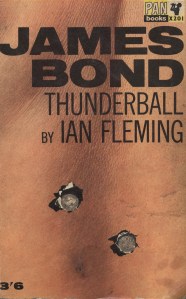
This is an interesting story and the resulting film has perhaps become the quintessential Bond film even more so than Goldfinger. The story is about a criminal underworld organisation (SPECTRE) that steals an aircraft with nuclear weapons and holds the west to ransom threatening to explode the bombs.

Prior to Thunderball, Fleming had been working on a screenplay with two others and when the project fell through, Fleming decided to use the material in his new novel. Later, Kevin McClory and Jack Whittingham, his two erstwhile writing partners, sued Fleming and won rights to certain elements of the story. This enabled them to years later produce the film Never Say Never Again with Sean Connery returning to the role of James Bond.

The book is well put together and as usual I found it a hugely enjoyable read. Fleming once again manages to inject the story with elements of his own life. Bond’s visit to a health clinic was inspired by Fleming’s own similar visit. In the book, Bond’s health record is revealed including details of his large intake of alcohol and cigarettes.

On Her Majesty’s Secret Service
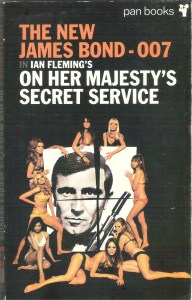
In this book the secret service find that Blofeld, the head of SPECTRE, is trying to assume the identity of the Comte Balthazar de Bleuville. Bond poses as Sir Hilary Bray of the College of Arms in order to meet with Blofeld. Interestingly, Sir Hilary gives Bond a quick resumé of Bond’s family history including the Bond family motto ‘the world is not enough’ which was used by the film producers for the title of a later 007 film unrelated to Fleming’s books.

While taking a break from the search for Blofeld, Bond meets Tracy, the daughter of Marc-Ange Draco, the head of the French criminal organisation the union corse. Draco offers Bond a million pounds to marry his troubled daughter but Bond declines although he agrees to meet with her again. Later she proves instrumental in helping Bond escape from Blofeld.

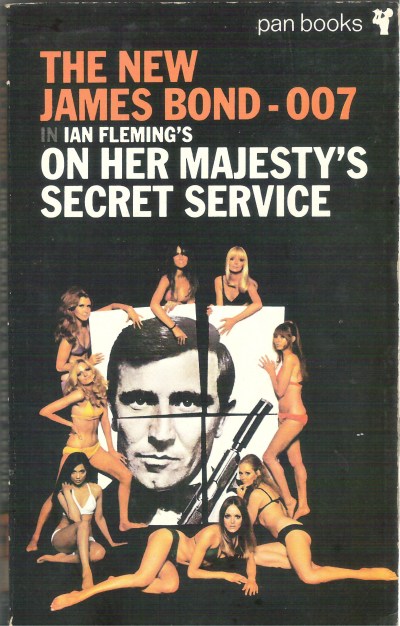
In the film, George Lazenby became the new 007, sadly only lasting for one film after taking advice from his agent who felt the days of the Bond films were over. Former Avengers girl Diana Rigg portrayed Tracy. She and Bond fall for each other and are married but sadly, Blofeld takes revenge and she is murdered. Personally, I’ve always felt that this film was one of the best in the 007 film series.

You Only Live Twice
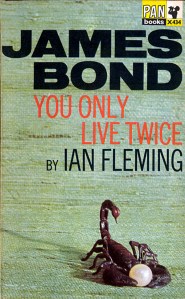
This book follows on from the previous one and we find James Bond depressed and disillusioned with his job after the death of Tracy. M considers sacking Bond but instead sends him on a diplomatic mission to meet the head of the Japanese secret service. The British want access to Russian documents which the Japanese are currently decoding. The Japanese decide to offer this information to Bond if he will assassinate a British resident who has created a garden of death, a garden full of poisonous plants which are attracting many Japanese citizens who want to commit suicide. Bond realises that this man is Blofeld and decides to keep this quiet until after he has killed him.

At the end of the book Blofeld is dead but Bond, who has been masquerading as a Japanese fisherman, is badly hurt and suffering from amnesia. The Japanese woman who has been pretending to be his wife decides to hide Bond in order for him to stay with her. At the end of the book, Bond reads something about Russia which triggers a memory and decides he has to go there.

The only real similarity of the film to the book was that the film was also set in Japan.

The Man with the Golden Gun

This was the last novel in the Bond series and the first Bond book I ever read. It’s a rather disappointing read as Fleming had died before completing his revision of the manuscript.

The novel opens up with Bond reappearing after going missing after his last mission. In fact he has been brainwashed by the Russians into murdering the head of the secret service. His attempt fails but Bond is deprogrammed and M decides to test Bond by sending him after a notorious hitman, Francisco Scaramanga, who has eliminated numerous British agents.

Fleming’s writing process was to create a first draft and then edit and add in more detail with a second draft. Fleming had told friends that James Bond was becoming harder to write and he wanted The Man with the Golden Gun to be his last. He also wanted to finish on a high and was concerned that the book wasn’t good enough for a grand finale. He had told his editor that he had thought about spending another year back at Goldeneye in Jamacia working on the book. Sadly, he suffered a heart attack on the morning of 12th August 1964 and died.

The film version starred Roger Moore playing his usual lacklustre and slightly camp 007 but a memorable screen villain was Ian Fleming’s cousin, Christopher Lee starring as Scaramanga. Britt Ekland joined the ranks of the Bond Girls by playing Mary Goodnight, Bond’s secretary.


What to do next: Here are a few options.

Share this post on your favourite social media!

Hit the Subscribe button. Never miss another post!

Listen to my podcast Click here.

Buy the book! Click here to purchase my new poetry collection.

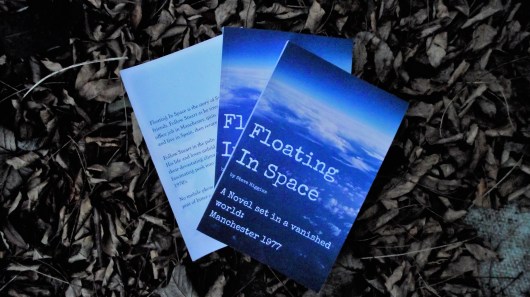
Click here to visit Amazon and download Floating in Space to your Kindle or order the paperback version.

Click here to visit amazon and purchase Timeline, my new anthology.

The Book of the Film or the Film of the Book: James Bond 007 (Part 1)

I originally gave this post the title of Book Bag: Ian Fleming and I intended to talk about the original James Bond books written of course by Ian Fleming. As much as I tried to keep them out, the film versions kept creeping in and so I decided on a quick change to the title, as you can see above. It’s very hard to separate the films from the books especially as I keep reading rumours about the next Bond film in the media. In fact it has just been announced that Steven Knight, the writer who created the TV series Peaky Blinders, has been engaged to write the next film in the spy franchise. Bond appeared to die in the last 007 epic No Time To Die which, certainly for me, wasn’t a particularly great film. I honestly think that the producers have got the character mixed up a little with either Ethan Hunt from the Mission Impossible series, Bruce Willis from the Die Hard franchise or perhaps Jack Bauer from 24. Bond isn’t a rogue agent. He isn’t a maverick cop or spy either. He’s a former naval intelligence officer and a serving officer of the secret intelligence service who is trained to follow orders and use his initiative in certain situations. In order to get back to the original James Bond it’s time to look at the source material, namely the books by Ian Fleming and see how they compare to the films.

Casino Royale

Casino Royale is the first book in the 007 series and it’s a pretty interesting and original one too. ‘Le Chiffre’, a gambler and also a member of SMERSH, a murderous department of the KGB is engaged in a desperate effort to win a great deal of money at the casinos of Royale Les Eaux in France. Le Chiffre is desperate because he has used SMERSH funds for his personal use and his spymaster bosses will not be pleased if they find out. Britain’s secret service happens to find out about this and sends Bond to France to make sure Le Chiffre doesn’t recoup those funds as of course as we all know, James Bond 007 is a bit of an expert with the cards.

The book is interesting in another way too. Ian Fleming sold the movie rights to Casino Royale separately from the rest of the Bond books and this enabled producer Charles K Feldman to produce a movie independently from Eon productions who own the rights to the other books. Feeling that he could not compete with the mainstream movies, Feldman decided to make Casino Royale into a comedy version. David Niven starred as Sir James Bond and ironically, Ian Fleming had mooted Niven as a possible Bond when casting began for Dr No, the first movie in the series.

Eon Productions finally acquired the rights to Casino Royale ready for the debut of Daniel Craig as James Bond. I’ve got to say I didn’t like Craig at first. He didn’t look like Bond and I honestly thought he would have been better cast as one of the Bond villain’s henchmen but I did warm to him eventually and although I didn’t much care for it at first, I really do think Casino Royale is one of the better Bond films. It was released in 2006 and follows the book pretty faithfully which many of the previous films rarely do. Craig’s final Bond film was No Time to Die which I really thought was the poorest of Craig’s five outings as 007.

Live and Let Die

This was the second Bond book to be published and the action takes place in the USA and the Caribbean, which Fleming loved and bought a house there which he named Goldeneye. Live and Let Die and in fact the whole book series were recently reissued with all the politically incorrect stuff removed which makes me wonder whether there was in fact anything left to publish after that process was complete. The book was published in 1953 and comes complete with all the prejudices and sexual and racial intolerances of the era. In one segment when Bond visits Harlem, Fleming tries to reproduces the accents and slang terms of the black people of Harlem and for me it’s not one of Fleming’s best books. In the film version, Roger Moore took over the licence to kill and the result was a very tongue in cheek version of James Bond. Sorry but Roger Moore as Bond just wasn’t for me. The film did feature a great theme song from Paul McCartney which was really a little underused in the film. Another feature of the film was a power boat chase along the Bayous of Florida which was a lot of fun but not entirely serious.
Moonraker

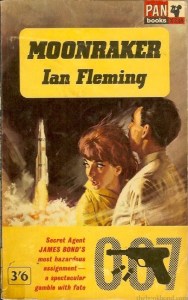
This was the third entry into the 007 series and the action takes place mostly in Dover. Millionaire Hugo Drax wants England to enter the space race and so he spends his own money on a rocket named the Moonraker which he intends to donate to the British government. It turns out that Drax is actually a nazi who wants to avenge defeat in the second world war by arranging for the rocket to destroy London. I read recently that Fleming wrote the book while staying in a cottage situated down by the famous chalk cliffs of Dover which was once owned by Noel Coward and later Fleming himself. It’s not a bad read at all and starts off with M asking Bond a favour as he suspects Drax to be cheating at cards and he wants Bond to see if he can sort things out as at the time, this was the mid-1950s, cheating at cards in London high society could really be a big scandal.
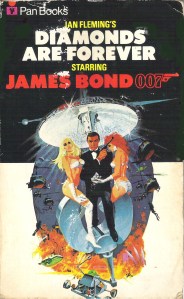
Bond beats Drax at his own game and then finds his next mission is to look into Drax and his Moonraker set up. Interestingly in Moonraker the obligatory Bond girl with the exciting name, in this case Gala Brand, decides not to succumb to Bond’s charms after all.  The movie version was a desperate attempt by the Bond producers to compete with Star Wars and was not my cup of tea at all.

Diamonds are Forever

Fleming wrote this book at Goldeye, his house in Jamaica, after doing a great deal of research about diamond smuggling. Bond’s mission is to investigate a diamond smuggling ring and he does this by impersonating a diamond smuggler called Peter Franks. Franks leads Bond to an American woman called Tiffany Case who he begins to fall for. He tracks the smuggling ring to the American Spang brothers, leaders of the Spangled Mob, a criminal gang. The finale takes place in the Spangs’ restored western town, Spectreville.
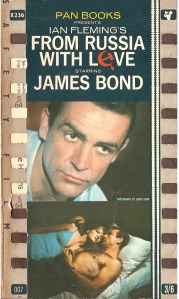
The film version marked Sean Connery’s final outing as Bond, at least in the ‘official’ Bond films anyway. Connery looks bored throughout the film which seems to begin the trend of slightly less than serious films which Roger Moore continued.

From Russia with Love

According to Wikipedia From Russia With Love was inspired by the author’s trip to Istanbul in 1955 to cover an Interpol conference for the Sunday Times. The plot is very similar to the film version and involves the KGB planning to assassinate Bond and also create a scandal involving Bond and the British Secret Service. To do this they persuade a cypher clerk, Tatiana Romanova, to pretend to defect to the west with a Spektor cypher machine. She claims she will only to defect to Bond, having fallen for him after reading his KGB file.
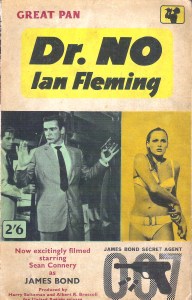
What was interesting about this book was that Fleming had become a little bored with Bond as well as being short of ideas and so he decided to kill off 007 at the end of the book, when he falls victim to KGB agent Rosa Klebb, who stabs Bond with a hidden blade laced with poison. Fleming later developed an idea for the next book and proceeded to revive Bond for Dr No, the next in the series.

The film version closely follows the book but adds the criminal organisation SPECTRE into the mix and is, to my mind anyway, one of the best films in the franchise. Sean Connery made his second appearance as 007 and two excellent portrayals as villains were by Robert Shaw as Red Grant and Lotte Lenya as Rosa Klebb.

Dr No

Prior to the writing of this book, a firearms expert called Major Boothroyd wrote to Fleming explaining that an agent like Bond would never be armed with a Baretta as it was more of a ladies gun. Boothroyd recommended a Walther PPK. Fleming was so impressed he included the new gun in Dr No and also added a new character named Boothroyd as the armourer of the secret service.
In Dr No, Bond is recovering from the effects of poisoning in the previous book and so M, the head of the secret service, sends him on a routine mission to Jamaica where the head of the Jamaica station and his secretary have disappeared. Bond finds that they were investigating the secretive Dr No who owns a private island known as Crab Key. After further investigation Bond finds that Dr No is involved in the practice of ‘toppling’ missiles from a nearby US launch site.

Dr No was made into the very first Bond film in the film series with Sean Connery starring as 007. Fleming was rather apprehensive of Sean Connery at first, actually wanting David Niven to play the part. Later Fleming warmed to Connery, even adding a bit of Scottish ancestry into Bond’s back history in the later books.

Bernard Lee played M, the head of the secret service. He went on to appear in 11 Bond films in total and Lois Maxwell made her first of 14 appearances as M’s formidable secretary, Miss Moneypenny.

Tune in next week to read the concluding part of this post.


What to do next: Here are a few options.

Share this post on your favourite social media!

Hit the Subscribe button. Never miss another post!

Listen to my podcast Click here.

Buy the book! Click here to purchase my new poetry collection.

Click here to visit Amazon and download Floating in Space to your Kindle or order the paperback version.

Click here to visit amazon and purchase Timeline, my new anthology.

Underwater Adventures

This week’s theme is about underwater adventures. I’m come up with a few films, TV shows and books on the subject so, to start, I’ll have to cast my mind back to my childhood and remember what underwater TV series caught my imagination back then.

Stingray

Stingray was a puppet TV series created by producer Gerry Anderson and his wife Sylvia and it was the first of their shows to be filmed in colour. Stingray was a submarine in the service of the WASP, the World Aquanaut Security Patrol and was captained by Troy Tempest and his colleague ‘Phones’ who was a master at using sonar equipment. The duo discover an undersea kingdom where King Titan holds sway over his people, the Aquaphibians. Troy and Phones rescue the mute undersea girl Marina who joins them onboard Stingray. Most of the characters had sea related names like, Marina, Commander Sam Shore and his daughter, Atlanta. Atlanta was voiced by Lois Maxwell who played the original Miss Moneypenny in the James Bond films.

Stingray was probably my favourite of Anderson’s TV shows. I particularly loved the opening sequence in which commander Shore exclaims ‘Anything can happen in the next half hour!’ As a child I used to own quite a few Stingray models. One was a plastic kit I had to put together and another was a plastic Stingray shaped water pistol.

Voyage to the Bottom of the Sea

Voyage started out as a film made in 1961. It had some big stars including Peter Lorre, Walter Pidgeon and Joan Fontaine. I actually saw the film after the TV series so I was never impressed with seeing the submarine Seaview without what was to me, its regular crew of actors. The film and the series were produced by Irwin Allen. The film version is about an amazing new submarine, the Seaview, which travels to the Arctic and finds that the sky is on fire! It turns out that a flaming meteor has set the Van Allen belt on fire and Seaview must fire a nuclear rocket into space to blow out the flames.

That has always seemed a bit silly to me but the TV series was much superior. Richard Baseheart played Admiral Nelson and David Hedison was Captain Crane. The crew met with various undersea aliens as well as sea monsters and many of the episodes had espionage and cold war themes.

In the TV series, the Seaview was equipped with a mini submarine which could also fly and was dubbed the Flying Sub. Looking over on Wikipedia, I see the flying sub only appeared in the later seasons but like Stingray, I also had a plastic model kit of it.

The show lasted for four seasons from 1964 to 1968 and in many ways was a sort of undersea forerunner to Star Trek. Producer Irwin Allen went on to make three other TV sci-fi shows, Lost in Space, Land of the Giants and The Time Tunnel.

The Undersea World of Jacques Cousteau

This was a documentary series about the undersea research done by Jacques Cousteau and he travelled the world’s oceans in his research vessel the Calypso. I remember it from the late 1960’s although over on the internet I see that the series ran from 1968 to 1976. Jacques and his team studied underwater things like sea turtles and coral reefs and I always found it very fascinating. The series was narrated by Jacques himself as I remember it but over on Wikipedia they claim that Richard Johnson narrated the BBC version. Perhaps it was a mix of the two with Jacques stepping in to talk about particular elements.

Thunderball

Thunderball was a novel by Ian Fleming and was one of the adventures of his hero, James Bond 007. The novel and the film were subject to litigation as it was based on a film script on which Fleming had collaborated with Kevin McClory. McClory wasn’t happy that Fleming had used the screenplay for the basis of his novel and the result was that after suing Fleming, McClory won certain rights to the story which is how a rival Bond film came to be made in 1983. Never Say Never Again appeared as a rival to the official Eon production Bond films.

Anyway, in Thunderball, a Vulcan bomber with two atomic bombs on board is stolen by SPECTRE and they blackmail the UK government for their safe return. Bond finds the Vulcan underwater in the Caribbean. SPECTRE agent Emilio Largo has a wonderful boat with an underwater hatch through which an army of frogmen descend on various underwater vehicles to hide the bombs. 007 and his colleagues engage in an underwater battle with Largo and eventually get the upper hand.

The Spy Who Loved Me

This film was the one that appeared in competition to Never Say Never Again. Numerous legal issues surrounded the film as producer Harry Saltzman was in financial trouble. Various issues arose with his fellow producer Cubby Broccoli but eventually the two owners of the Bond franchise managed to come to agreement and Broccoli bought out Saltzman.

Another issue with the production was that Fleming was so disappointed with his original novel he had stipulated that the film producers could use only the title and not the story. Various writers were employed to come up with a new story which eventually revolved around villain Karl Stromberg who wants to create a new civilisation under the sea and at the same time destroy all terrestrial life.

To film this, Pinewood studios created a new stage, the 007 stage in which to accommodate the interior of Stromberg’s super tanker which manages to swallow numerous submarines.

Another interesting element was Bond’s car, a Lotus Elite which was able to travel underwater. This was achieved by the special effects team using various mock ups as well as models. One version was towed out of the water using hidden ropes when Bond, played by Roger Moore, calmly opens a window and drops out an errant fish.

Ice Station Zebra

I’ve written a few posts in the past about the eccentric billionaire Howard Hughes and it just so happens that his favourite film was Ice Station Zebra. Hughes had a projector and watched the film, presumably on 16mm, many times in his blacked out suite in Las Vegas. The film is a cold war story based on a novel by Alastair MacLean about a satellite which crashes in the Arctic and has photographed various secret sites in the Soviet Union as well as the USA and both the Americans and the Russians want the film from the satellite. A major storm has locked in the Arctic so a submarine is sent under the ice ostensibly to rescue anyone stranded at the eponymous research station. Rock Hudson starred as the submarine captain and Patrick McGoohan as an agent whose secret mission is to retrieve the film from the satelite.

20,000 Leagues Under the Sea

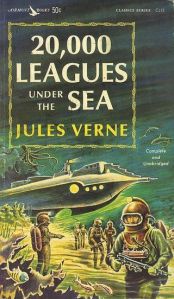
This was a novel by the celebrated author Jules Verne, first published in serial form in a French magazine in 1869 and published in book form in 1871. The book is highly regarded as one of Verne’s greatest works and features a futuristic submarine, the Nautilus, years ahead of its time. The story concerns an American expedition to capture or destroy a huge sea monster terrorising shipping. The expedition meets the monster but professor Aronnax, a French marine biologist and master harpooner Ned Land are thrown overboard only to find the monster is actually a submarine. They are taken aboard and meet the ship’s commander, Captain Nemo.

The novel was made into a film in 1954 starring James Mason as Captain Nemo.

Finally

Many years ago, I decided to try and become a certified scuba diver. I joined a club and went for lessons at Warrington baths in Cheshire. I completed the course and it was a lot of fun, pottering about underwater with oxygen tanks in the baths. The final part however involved taking your mask off underwater, filling it with air and replacing it back on your face. I tried and tried but I could not do it; every time I ended up thrashing about having swallowed half of the water in the swimming pool. I even tried it a few inches under the water in the shallow end but sadly I always managed to inhale water so unfortunately I failed and never managed to gain certification.

Years later I bought one of those little action cams with an underwater housing and managed to make a short film about me swimming, not in a beautiful underwater coral reef location as I would have liked but up and down in a French swimming pool.

I’ve probably only scratched the surface on this fascinating subject. I could have mentioned the films Titanic and Raise the Titanic or even The Abyss. What was your favourite underwater film?


What to do next: Here are a few options.

Share this post on your favourite social media!

Hit the Subscribe button. Never miss another post!

Listen to my podcast Click here.

Buy the book! Click here to purchase my new poetry collection.

Click here to visit Amazon and download Floating in Space to your Kindle or order the paperback version.

Click here to visit amazon and purchase Timeline, my new anthology.

Back to the 1960s

The 1960s seem like a long way off these days. We moved into the 1970s 54 years ago but even so, the 1960s were a revolutionary time in terms of music, the cinema and of course TV. This last Sunday afternoon after a gruelling session of blog writing, I settled down in front of the TV with a cup of tea and a cheese sandwich and what did I find? Well, a whole stack of TV shows from the 1960s still bringing in viewers today in 2024.

So, what did I watch? Well, time to settle back for some serious TV viewing.

Columbo

Columbo, as you probably know, differs from other TV detective shows by showing the viewer exactly who the murderer is and how he, or she, did it. The whole point is not who did it, but how Columbo catches them. The essence then of a great episode comes in the clever way Columbo nails his man, or woman. Sometimes that moment is a bit of a non starter, other times it’s nothing short of brilliant. Sometimes, even if that final moment is not so great, it’s still been a great episode.

The Columbo of the early series is an absent-minded quirky fellow although in later episodes, Peter Falk who plays the detective, seems to downplay that quirky element. The later episodes are still pretty good though and among various episodes on TV today was Any Old Port in a Storm with Donald Pleasance as the guest murderer. Pleasance plays Adrian Mancini, the part owner of a wine producing business. He is something of a wine snob and he has just been voted ‘man of the year’. That was the good news; the bad news is that his half brother is threatening to sell the business. That of course doesn’t go down well so Adrian in a fit of anger bumps him off. A whack on the head didn’t quite do the job so Adrian leaves him to suffocate in his wine cellar. Unfortunately, it happens to be a really hot day which eventually leads Columbo to the clue that bags the culprit.

That was an episode from 1973 but the original Columbo pilot first aired in 1968.

Thunderbirds

Thunderbirds was about a secret organisation called International Rescue that had a small fleet of highly advanced machines and equipment with which to perform rescue operations. Millionaire ex-astronaut Jeff Tracy was the head man and the organisation was secreted in his island home. His five sons were the Thunderbird pilots, John, Scott, Virgil, Gordon and Alan, all named after US astronauts of the 1960s. The genius behind the Thunderbird craft was Hiram Hackenbacker, known as ‘Brains’. Thunderbird’s nemesis was a secret agent known as the Hood because of his talent for disguise and in many episodes the Tracy brothers had to ask their London agent, Lady Penelope, to track him down and sort him out.

Lady Penelope Creighton-Ward lived in a huge mansion somewhere in southern England and her manservant and chauffeur was Parker, a reformed safecracker. The head of ITV Sir Lew Grade saw the first episode and was so impressed that he asked for the episodes to be extended from 30 minutes to a full hour, less TV adverts of course. Gerry wanted Fenella Fielding to voice Lady Penelope but in the end, his wife Sylvia took on the role.

One other thing, I know Thunderbirds sounds pretty sophisticated from those last two paragraphs but it was actually a puppet series aimed at children. The great thing about it and really, the secret of its success, was the highly intelligent scripts which treated its audience of children not as kids but as intelligent young adults.

Two scripts that spring to mind were one called The Cham Cham about a code transmitted on a musical melody and another where Parker was called upon to break into the Bank of England. Later in the episode someone is trapped inside the vault and Parker is asked to break in again to rescue the man before the air is used up in the vault. Parker though thinks that his old mate, a bank robber recently released from prison, is about to complete his life’s ambition to break into the bank and so he tries to slow down his and Penelope’s drive into London. Everything of course comes right in the end though.

Time for a fresh cup of tea and I’m ready for the next programme.

Batman

We are probably all familiar with the modern Batman films which all have pretty grim and dark overtones. Tim Burton directed the first modern Batman film in 1989 which starred Michael Keaton as Batman and Jack Nicholson as the Joker. Back in 1966 however there was a TV series produced by William Dozier which starred Adam West as Batman and Burt Ward as Robin.

The suave Alan Napier played the part of Alfred, the butler to Bruce Wayne (Batman’s alter ego) and numerous guest stars played the villains. Frank Gorshin was a memorable Riddler, Burgess Meredith (remember him as the trainer in the Rocky films?) played the Penguin and Cesar Romero who refused to shave off his moustache played a rather manic Joker. Julie Newmar and Eartha Kitt both played Catwoman. George Sanders and Vincent Price also appeared as guest stars and even Hollywood director Otto Preminger appeared on the show as Mr Freeze. Anyway you look at it, that is an impressive cast list.

The episodes were all two parters and in the UK were aired on Saturday and Sundays; the Saturday episode always left the Dynamic Duo in some impossible situation and the Sunday one showed how they would escape and track down the villains. The series was very light hearted unlike the modern Batman films and in fact played rather like a live action cartoon series.

The series ran for three seasons and a feature film before being cancelled. In the UK episodes are currently being broadcast on the Talking Pictures channel.

Mission Impossible

The TV show was created by producer Bruce Geller and concerned a team of special agents known as the Impossible Missions Force. They are a US government agency which takes on hostile foreign governments, South American dictatorships and criminal organisations.

In the first series the team is led by Dan Briggs played by Steven Hill but he was replaced for season 2 by Peter Graves in the part of Jim Phelps. Other regular team members were Leonard Nimoy, Martin Laudau and his wife Barbara Bain, Greg Morris and Lesley Anne Warren. Each played a team member with a particular skill, for instance Laudau and Nimoy played agents with a talent for impersonation and disguise, Greg Morris played an electronics expert and so on.

Mission Impossible ran for 7 seasons and was cancelled because, according to Wikipedia, the producers at Paramount found they could make more money by syndicating the existing series rather than making new ones.

A revival series was made in the 1980’s also starring Peter Graves. To save money the series was not filmed in Hollywood but in Australia but it only lasted two seasons and was largely unsuccessful.

A great feature of the series was the opening title sequence which involved a match being struck and then lighting a fuse shown over quick clips of the upcoming episode to the sound of the iconic theme tune written by Lalo Schifrin. Next would be Jim Phelps listening to his tape recorded instructions which after being played would then self-destruct. Phelps would then look through his agents’ files complete with photos and choose who he wanted for the mission. Sometimes a guest star would play one of the agents who would be introduced by Jim checking out his dossier. A team briefing would then take place and the mission would get under way.

The IMF used a great deal of gadgets to accomplish their missions; secret listening devices and other electronic hardware as well as incredible masks and make up to impersonate people. One particular episode that I remember was when the team had to retrieve some stolen gold from a South American dictator’s safe. They did it by drilling a small hole in the safe, heating it until the gold melted and ran out down the small hole then a little gadget sprayed the interior of the empty safe to cover the hole. Mission Impossible was staple viewing in our household in the late 1960’s and it was nice to see once again on UK TV.

From Russia with Love

I’m perhaps cheating a little here because this is a film rather than a TV show but what the heck, it popped up on ITV so I thought I’d watch it. Just lately there seem to be James Bond films popping up on TV almost every week. This film was the second in the Bond series, made in 1963 and it’s probably one of the very best. There are no super villains trying to take over the world and the plot is actually pretty sensible. SPECTRE -the Special Executive for Counter Intelligence, Revenge and Extortion- decide to offer British Intelligence a Soviet Lektor decoding machine but the catch is, the lovely Soviet consulate clerk chosen for the mission and based in the Soviet embassy in Turkey will only offer it to Bond himself.

Sean Connery played James Bond of course and the Soviet clerk was Tatiana Romanova played by Italian actress Daniella Bianchi. A great Bond villain was former Soviet agent now a part of SPECTRE, Rosa Klebb played by Lotte Lenya. The best performance though was by Robert Shaw who plays Red Grant, the killer specially trained to eliminate Bond. Bond and Grant have a hugely exciting fight in a railway carriage towards the end of the film which underlines the serious and gritty nature of the film. I don’t think I’m giving anything away when I tell you Grant wasn’t successful but Rosa Klebb nearly gets Bond with a concealed knife in her shoe.

I could have gone on and talked about Star Trek, The Saint with Roger Moore and even The Avengers with Patrick MacNee as Steed and Diana Rigg as Mrs Peel.

Yes, in some ways the 60s are done and dusted but when it comes down to it, you only have to tune in to a few vintage TV shows to relive it all again.


What to do next: Here are a few options.

Share this post on your favourite social media!

Hit the Subscribe button. Never miss another post!

Listen to my podcast Click here.

Buy the book! Click here to purchase my new poetry anthology.

Click here to visit Amazon and download Floating in Space to your Kindle or order the paperback version.

Another James Bond 007 Post

James Bond has been in the news this week. The books by Ian Fleming are apparently being rewritten as they might be considered offensive to a modern generation of new readers and the producers are still looking for a new actor to play their famous secret agent. OK, time for another James Bond 007 post.
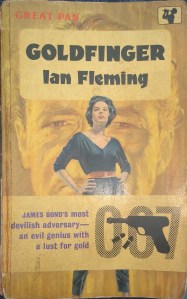
The publishers of the Bond books have decided that it’s time for a reissue of the best selling series with a disclaimer telling readers that the novels use language that may be considered offensive by modern readers. Of course the books were written in the late fifties and early sixties and reflect attitudes of the time. I have the entire collection of Bond books and most of them have a reference on the back saying they are outrageously entertaining, which they are, but take away the outrageous part and they are no longer outrageously entertaining but perhaps just somewhat entertaining. Of course if we begin to tamper with books written in the past where do we stop? Roald Dahl’s books are also in the news as they have been updated by ‘sensitivity readers’ although I’m not sure how these well-read children’s books can upset anyone. James Bond of course is a different matter and any sensitivity readers might have a problem with a book like Live and Let Die which is partly set in Harlem and Ian Fleming uses most of the unpleasant racial epithets which were in use at the time.

I started reading the Bond books when I was a schoolboy and unfortunately the very first one I read was the only one they had in our local library – ‘The Man With The Golden Gun’, one of writer Ian Fleming’s worst Bond books. Fleming used to write his initial drafts of the novels and then write a second one, adding in all the details which make the Bond books so interesting. Things like details of Bond’s clothes, (the Sea Island cotton shirts) his food, (Bond always had scrambled eggs for breakfast) his cars, his cigarettes (the special handmade ones with the triple gold band) and all that sort of stuff. ‘The Man with the Golden Gun’ was published after Fleming had died and sadly, he had not revised his original draft. I persevered though, did some research, found the proper order of the books and began to read ‘Casino Royale’, the first in the series. April this year marks the 70th anniversary of Casino Royale and it is this anniversary which has prompted the Bond books to be reissued, complete with disclaimer.

That first book is a pretty original story. ‘Le Chiffre’, a gambler and also a member of SMERSH, a murderous department of the KGB, is engaged on a desperate effort to win a great deal of money at the casinos of Royale Les Eaux in France. Le Chiffre is desperate because he has used SMERSH funds for his personal use and his spymaster bosses will not be pleased if they find out. Britain’s secret service happens to find out about this and sends Bond to France to make sure Le Chiffre doesn’t recoup those funds as of course, as we all know, James Bond 007 is a bit of an expert with the cards.

The book is interesting in another way too. Ian Fleming sold the movie rights to Casino Royale separately from the rest of the books and this enabled producer Charles K Feldman to produce a movie independently from Eon productions who own the rights to the other books. Feeling that he could not compete with the mainstream movies, Feldman decided to make Casino Royale into a comedy version. David Niven starred as Sir James Bond and ironically, Ian Fleming had mooted Niven as a possible Bond when casting began for Dr No, the first movie in the series.

Eon Productions finally acquired the rights to Casino Royale ready for the debut of new Bond actor Daniel Craig. I’ve got to say I didn’t like Craig at first. He didn’t look like Bond and I honestly thought he would have been better cast as one of the Bond villain’s henchmen but I did warm to him eventually and although I didn’t much care for it at first, I really do think Casino Royale is one of the better Bond films. It was released in 2006 and follows the book pretty faithfully which many of the previous films rarely do. Craig’s last Bond film was No Time To Die which I really thought was the poorest of Craig’s five outings as 007 and Bond has been in the news frequently as writers, journalists, bloggers and everyone and his dog have speculated about who the next James Bond 007 will be.

Will it be the usual upper class white guy or will Bond be black? Will there even be a female Bond? What does a 21st century secret agent look like or act like?

James Bond, the character created by Ian Fleming, was a commander in naval intelligence in World War II. He learned to ski in Kitzbühel in the 1930s and fought in the Second World War. He was an officer and a gentleman. He frequented expensive restaurants and gentlemen’s clubs as well as casinos and card tables. He drove a Bentley, lived alone in a Kings Road, Chelsea flat where he was looked after by an elderly Scottish housekeeper named May. He drank a martini made with three parts gin, one of vodka, a half measure of Kina Lillet, shaken with until ice cold then served with a slice of lemon peel. Bond is a character entrenched in mid twentieth century England so making him into a character from the 21st century will not be easy. What can the film makers do? Well, they could set the Bond films back in the 1960s. That’s one option although I doubt if that will happen. They could go radical and make Bond an ethnic character; I’m forever seeing posts about Idris Elba as the next Bond in my social media feeds but then, the character wouldn’t be Bond, would he?

The first change of Bond actor was from Sean Connery to George Lazenby. I liked Lazenby and his one 007 film, On Her Majesty’s Secret Service, was one of my favourites. Connery returned for Diamonds are Forever and then Roger Moore took over Bond’s licence to kill. His films ranged from bad to supremely dreadful and as much as I’ve always loved Roger, I hated his Bond films.

Timothy Dalton stepped into Bond’s shoes when Moore stood down and made two pretty good films. Legal issues kept Bond off the screen for a long time but when the franchise finally returned it was with Pierce Brosnan as 007. Goldeneye was one of my favourite Bonds but his other films weren’t so good and even looked for a while as if they were going to go down the same road as Roger Moore’s Bonds into slightly ridiculous territory. With Casino Royale though things got pretty serious. The film makers played down the gadgetry which always was a staple of the early Bond films, things like cars with ejector seats, watches fitted with special magnets and belt buckles firing climbing pitons. None of that played any part in the Daniel Craig era but here’s the thing; in the previous films each new Bond has just carried on as before with hardly a nod to the previous actor, although George Lazenby did famously say ‘this never happened to the other fella!’

When Daniel Craig took over the series was to a certain extent rebooted. Bond was new to the 00 section and Casino Royale his first mission. His mission in No Time To Die was also his last, his very last because, and I don’t think I’m giving anything away here, because Bond actually dies. How could the producers start over then with the next Bond? Well, many fictional characters have come back from the dead, most notably Sherlock Holmes who author Arthur Conan Doyle killed off when he got bored with the character.  Holmes perished by falling off a cliff but a few years later Conan Doyle bowed to public pressure and Sherlock Holmes returned. It turned out, he hadn’t really died after all.

image courtesy flickr.com

Ian Fleming didn’t kill off Bond but in You Only Live Twice, Bond is seriously hurt and is rescued by Kissy Suzuki who was posing as his wife while Bond was on a mission for Tiger Tanaka, the head of the Japanese secret service. Bond had lost his memory and Kissy hides Bond away from the authorities. One day though, Bond sees something about Vladivostok in either a newspaper or a book, I can’t remember which, and still suffering with amnesia decides he must go there. You Only Live Twice ends there but in the next book, The Man With The Golden Gun, Bond returns having been brainwashed by the Soviets into assassinating his own boss, the head of the British secret service, known only as M.

The producers never used that storyline in the film adaptations of those two books so if I was the writer of the new Bond movie, that’s exactly how I would start the new era of Bond films off.


What to do next: Here are a few options.

Share this post on your favourite social media!

Hit the Subscribe button. Never miss another post!

Listen to my podcast Click here.

Buy the book! Click here to purchase my new poetry anthology.

Click here to visit Amazon and download Floating in Space to your Kindle or order the paperback version.


Frozen in an F1 Barbecue Summer

When I first started this blog a few years back I used to post pretty randomly but after reading up and subscribing to a few blogging experts I felt that I should decide on a regular time to post. I chose 10am on a Saturday morning. The great thing about having that particular slot is that I can focus my writing towards it, it’s almost like being a professional writer and having a deadline for a newspaper or magazine column. The flip side is that when I’m not so well or haven’t any ideas I start worrying. What will I write about? What if I cant think of anything? So far everything has gone pretty well, the deadline actually gets me motivated to write. Maybe I need a deadline to help me with the follow up to Floating in Space!

Just then the phone rang. I checked my mobile and it was my editor, Issy Readiyet.

‘Issy, how are you?’

‘Steve, I’m great, how’s your new post coming? Is it ready yet?’

‘Well, I’m still working on it Issy, it’s still in the err developmental stage. I’ve got a working title though.’

‘What is it?’

‘Frozen in summer.’

‘What? That sounds a little cryptic. Not sure the readers would go for that. What’s it about?’

‘Well, it’s still a work in progress but it’s summer, and it’s really hot and I’ve got this . . .’

‘What?’

‘Well, I’ve still got a sore shoulder. A frozen shoulder . .’

‘Oh Steve, you’re not still on about that trapped nerve and the shoulder pain? Haven’t you written about that already?’

‘Well, yes but I think there’s still a little mileage in there and I could do with a little . .’

‘Sympathy? Come on, snap out of it Steve. Call yourself a writer? I need some copy and don’t forget we’ve got to sort out the graphics and images and maybe search for some video links. It’s not easy being an editor you know! Get on with it and don’t forget to change that title!’

I would have said ‘bye Issy’ but I was already listening to a dial tone.

Up here in the north west of England it’s been a hot week and last weekend it was one of the highlights of the year for me, the British Grand Prix. Here in the UK Formula One racing can only be seen live on Sky TV. I do have Sky, the basic Sky but being a member of that ancient and revered order, the order of tightwads, I really cannot break my solemn oath and just go and randomly pay for an expensive TV F1 package. The only alternative of course is to watch the highlights on Channel 4, the only terrestrial channel that broadcasts F1.

The big bonus for the British Grand Prix though is that it’s live, yes, actually live on Channel 4, and not only that, they are showing the practice sessions, the qualifying, (my favourite part) the sprint race (something new) as well as the actual race live. It’s the only race Channel 4 are allowed to broadcast live so as I have done a great deal of moaning about only getting to see the highlights I should be happy, shouldn’t I? Finally seeing an F1 race live in this new 2021 season which has been a great improvement on previous rather dull seasons. The flip side to this is that just lately a lovely summer has settled down on us here in the north west of England. Do I really want to be sat inside watching F1? Should I just record it and watch it later? That would defeat the object wouldn’t it? After all, as a true F1 fan I should really be watching it live.

Because of Covid and now also because of my sore shoulder (did I mention the trapped nerve and my shoulder pain?) we haven’t used our motorhome much this year. We did have a run out to Yorkshire a while back and a pub stop over before that but otherwise the only trip was a run out to the garage for the MOT. Liz had bought a small portable gas barbecue ready for our travels and it was lying unused in the corner so we thought it was time to give it a trial run.

(Editor’s note: Barbecues? Where are we going with this?) I do like barbecues but the flip side is that they are dirty and smelly and greasy. I always start off with some dry wood, pack in the charcoal and light up with some firelighters. Sometimes we’ll get a slow burner barbecue so we end up supping too much wine while we wait for things to get going. Other times we’ll get the reverse, a barbecue that catches quickly and voom, goes off in a big hot burn. That’s usually when we are expecting a slow burner and are still finishing off the salad and so when we sit down I realise I’m going to have to slap all the meat on quickly before the coals burn themselves out. The really annoying thing is when we are in the motorhome and I realise that after the barby has finished, I am somehow going to have to clean this horrible, greasy mess and get it packed away so we can move on.

So how have things gone with the gas barby? Pretty smoothly actually. None of that messing about with the coals and lighter fluid. The portable job snaps quickly together, slap in the calor gas cylinder, press the starter and hey presto, we are ready to barbecue. The other great thing about this one is that there is a water reservoir that catches all the grease and fat. Just swill that away somewhere in a corner of the garden, a quick wipe with a paper towel and we are all ready for next time. Barbecuing with gas, I love it!

(Editor’s note: you’re not giving me much here that can be linked to a film clip or video. We need some visual content to liven up this post!) Ok Issy, calm down, how about this: Author Ian Fleming had some trouble with his back and actually incorporated the experience into one of the James Bond books, Thunderball. Bond gets sent to a health farm called Shrublands. There, the inquisitive 007 notices a fellow guest has an interesting tattoo on his hand and decides to contact headquarters to see if they recognise it. The guest overhears this and decides Bond needs to be taught a lesson. The opportunity arises when Bond is placed on a traction machine that is supposed to stretch Bond’s back, just the sort of treatment I need! Anyway while Bond is on the machine it is suddenly ramped up to high speed and nearly breaks Bond’s back. Luckily Bond is rescued in time but later gets his revenge. That traction machine clearly made an impression on Ian Fleming.

I was so engrossed in the easy preparation for our upcoming barbecue I forgot about the Grand Prix. At about 4pm, a full hour after it started I went inside to see what was happening. One of the great inventions in the world of TV has to be hard drive recording. Don’t you just love it? You can actually start watching the race or indeed any programme while it is still recording. I started with the race build up and fast forwarded through all the team baloney about how the mechanics and engineers and everyone back at the factory had done a great job, blah blah blah. Paused for a moment when I thought will anyone actually say anything controversial? No was the answer.

I did stop for a moment with Daniel Riccardo, the Australian driver. Looking at his race team fireproof top and all the advertising on there I started to wonder whether it actually does those advertisers any good, sponsoring an F1 team? I mean who or what is Splunk? What do they do? What product do they make or what service do they provide? I’ve no idea, so do all the millions they pump into McLaren ever get a return? Does anyone think: Daniel had their logo on his shirt, I’ll buy their product? Nah, doubt it.

Ok, they have got their name in front of the public but they need to do a little more to start making use of that.

(Editor’s note: So how was the Grand Prix by the way?) Sorry Issy. After fast forwarding through the usual baloney which I must admit I quite used to like, we finally got to the nitty gritty. The green flag was waved, the red lights went out and Hamilton and Verstappen dived straight away into a great wheel to wheel battle. When they reached Copse corner, the two went for the same piece of tarmac and Verstappen was off into the barrier and Lewis lost his nose wing but managed to continue. That left Leclerc in the Ferrari out in front. Fast forward through all the accusations and counter accusations -Max was too aggressive, Lewis was too aggressive- blah blah blah. Lewis was able to take the restart but Max sadly wasn’t, his car being a total wreck. The race restarted and Lewis chased Leclerc all the way to the end of the race, took a ten second penalty and still won. An OK race and despite fast forwarding through most of it, it was quite exciting although as soon as Lewis took the chequered flag I was off out back to the sun.

Yes, Grand Prix out of the way and it was time to relax. A bottle of merlot had been warming gently in the sun and now it was time to test the wine. Liz poured our drinks and we took a sip, yes it was a cheeky little Spanish number, easy on the palate and just right to serve with steak, sausages, burgers and small kebabs all of which were on the menu that day. The great thing about the small gas barbecue was that instead of having to get up and keeping checking and turning the meat, out new gas barby perched happily on the table top just by Liz so she could easily reach out and turn the kebabs.

Obviously, I would have liked to have done the barbecuing myself rather than be waited on by the lovely Liz, but sadly, being partly crippled by neck and shoulder pain I wasn’t able to assist in the way I normally would. (Editor’s note: Baloney!)


What to do next: Here are a few options.

Share this post on your favourite social media!

Hit the Subscribe button. Never miss another post!

Listen to my podcast Click here.

Buy the book! Click here to purchase my new poetry anthology.

Click here to visit Amazon and download Floating in Space to your Kindle or order the paperback version.

Which Bond is the very Best Bond?

So who was the best Bond? That’s Bond of course, James Bond, licensed to kill.

I’ve had a little time on my hands this week, looking after my elderly mother. Nothing particularly exciting presented itself on terrestrial TV so I thought, the perfect time to pour a glass of red and crank up a few Bond DVDs.
Sean Connery.

The very first Bond movie was Doctor No starring Sean Connery as the very first Bond. Connery was excellent as the suave James Bond, former naval officer and now agent of M16, the Secret Intelligence Service. Bond gets sent to Jamaica to look into the disappearance of the local station head. It turns out he was killed for being far too interested in the very first Bond villain, Doctor No. Throw in some exciting sets, car chases, gunplay and pretty girls and you have the instant formula for a successful film franchise.

Connery plays a great James Bond and he carried on with his portrayal in three subsequent films. After Thunderball he decided enough was enough and packed the job in. Later he was enticed back to play Bond one more time in Diamonds are Forever.

Stevehigginsinslive.com Bond rating: #4

George Lazenby.

George Lazenby was an actor in a TV advert and was spotted by the producers to take on the role of 007. Lazenby was to me, the perfect Bond; rugged and good looking as well as smooth and unruffled. To me he was just how I imagined Bond after reading the Ian Fleming novels as a schoolboy. His one Bond film, On Her Majesty’s Secret Service is one of the best films in the 007 franchise. Diana Rigg is a great Bond lady who, unlike no other Bond girl before or after, actually gets to marry Bond. The film is a fast paced thriller with some great fight and chase scenes including a classic ski chase. Lazenby quit the Bond series after getting some bad career advice and it was such a shame that he did not portray James Bond again.

Stevehigginsinslive.com Bond rating: #1

Roger Moore.

Roger Moore is one of my favourite actors, good looking, smooth and someone who never takes himself too seriously. He was great as Simon Templar and Lord Brett Sinclair in two TV action series but as for James Bond, well I don’t know what went wrong but Moore just didn’t cut it as Bond for me. His first film Live and Let Die was . .well, not bad I suppose but most of the rest were just dreadful, more carry On James Bond than the Bond we, or at least I wanted to see. Sorry Roger, just not my cup of tea at all and as for that underwater car. . . Seriously?

Stevehigginsinslive.com Bond rating: #6

Timothy Dalton.

Relaxing in front of the TV the other day and The Living Daylights popped up on my TV schedule. I’ve never really thought much of this film but actually it was pretty good. Timothy Dalton was a welcome relief after the Roger Moore years; finally, a serious Bond film again. Good film, good music and a great Bond girl who had, unusually, more to do that just look nice. Dalton made two Bond films, the other one being the slightly tedious Licence to Kill. Great song but a film that needed a few kick starts along the way.

Stevehigginsinslive.com Bond rating: #3

Pierce Brosnan.

There was a 6 year gap to the next Bond film due to legal issues. Timothy Dalton declined to star as Bond and the producers gave the role to Pierce Brosnan. Brosnan’s first Bond film was the impressive Goldeneye, one of my personal favourites of the whole series. Brosnan’s Bond is as smooth and stylish as the previous incumbents of the role with the addition of some wry humour in the style of Sean Connery. Goldeneye was the best of Brosnan’s films and the only real dud was Tomorrow Never Dies but even that had its merits. His last Bond film Die Another Day did venture slightly into Roger Moore territory with an invisible car though. Brosnan’s series of films were made all the more impressive by a small company of regular co-stars in particular Judi Dench as a female M, and Samantha Bond as Miss Moneypenny. I have to vote Brosnan in as my second favourite Bond.

Stevehigginsinslive.com Bond rating: #2

Daniel Craig.

Craig made his Bond debut in Casino Royale, actually the first book in Ian Fleming’s series but the last to make it to film, well, in the official franchise anyway. Fleming sold the rights to Casino Royale separately to the rest of books for some reason which is why a comedy version was made in the 1960s starring David Niven as Bond. In fact Niven was Fleming’s personal choice for a film Bond!

Anyway, this series of Bond films brings us to the 21st century version of the British superspy with an accent less on gadgets but heavy on action. The Daniel Craig Bond films are tough and gritty but are all reasonably enjoyable, the best one by far being Skyfall. Craig’s Bond is noticeably more thuggish than his predecessors although he tends to drive a classy vintage 1960s Aston Martin. Interestingly, in the books, Bond’s personal car was a vintage Bentley.

Stevehigginsinslive.com Bond rating: #5


Floating in Space is a novel by Steve Higgins set in Manchester, 1977. Click the links at the top of the page to buy or for more information.


More about James Bond 007, and Me.

I spoke briefly about James Bond in a previous blog and thought I might write a little more about the UK’s most famous secret agent.

I started reading the Bond books when I was a schoolboy and unfortunately the very first one I read was the only one they had in our local library: ‘The Man With The Golden Gun’, one of writer Ian Fleming’s worst Bond books. Fleming used to write his initial drafts of the novels and then write a second one, adding in all the details which make the Bond books so interesting. Things like details of Bond’s clothes, (the Sea Island cotton shirts) his food, (Bond always had scrambled eggs for breakfast) his cars, his cigarettes (the special handmade ones with the triple gold band) and all that sort of stuff. ‘The Man with the Golden Gun’ was published after Fleming had died and sadly he had not revised his original draft. I persevered though, did some research, found the proper order of the books and began to read ‘Casino Royale’, the first in the series. I have loved the books, and the films ever since.

007I didn’t see the Bond films until 1969 when I saw probably my favourite Bond film ever, ‘On Her Majesty’s Secret Service’, at the cinema. It was everything I had imagined it would be and what I liked about George Lazenby, who played 007 in the film, was that he looked pretty much as I had imagined Bond. He had the authentic ‘comma of black hair’ as Fleming had always described Bond having and not only that, Diana Rigg was probably my favourite Bond girl too.
The Bond films were not then a staple of UK TV but there was always a Bond documentary, usually on TV at Christmas time which built up, as it was supposed to do, the public interest in Bond. It certainly built up mine. There was one documentary I remember which showed the viewer how Ian Fleming suffered with back pain and was sent to recuperate at a rest home where they put him on a back stretching machine which he later incorporated into ‘Thunderball’. Aha, I thought, this is how writers think!

Sean Connery was the first movie Bond and he did a great job in setting out the 007 ‘stall.’ The Bond movies are as much about Bond’s colleagues as they are about Bond and in the original films we had some great supporting actors, Miss Moneypenny, played by Lois Maxwell, ‘M’ played by Bernard Lee, and the long serving ‘Q’, played by Desmond Llewellyn. CIA man Felix Leiter was always played by a different actor in each of the movies, which never ceases to surprise me. A good Leiter would have been a pretty good idea for US cinema goers, surely.

George Lazenby was selected to play Bond when Connery tired of the role. However, he was new to the industry and advisers told him that the Bond movies were on the way out. Friction occurred with his movie bosses when he grew his hair long and sported a beard and eventually Lazenby was sacked. Connery returned to the Bond role in ‘Diamonds are Forever’. With Lazenby that would have been such a good movie but Connery played a tired and lacklustre Bond and after the serious and fast moving ‘On Her Majesty’s Secret Service’, ‘Diamonds’ perhaps appears a little tame. Worse was to follow however when Roger Moore was selected to play Bond. Moore plays Bond as a sort of smooth talking fashion icon and some dreadful Bond films were produced in the 1980s.

Timothy Dalton took over for two movies, ‘The Living Daylights’ and ‘License To Kill,’ and after that the film franchise was in limbo until it re started with ‘Goldeneye,’ which after OHMSS is my favourite Bond movie. Brosnan doesn’t overdo the comedy unlike Connery and Moore. He seems like a pretty tough customer yet looks good in a finely tailored suit and, like Sean Connery, he has a wonderful troupe of supporting actors to help him. Judi Dench plays a female ‘M,’ Samantha Bond plays the faithful Miss Moneypenny, and Desmond Lewellyn once again plays ‘Q.’

I was sorry to see Peirce Brosnan go because I can’t really say I’m keen on the latest Bond films although I have seen them all at the cinema except for the latest offering. The aim of the producers was to re-introduce Bond to 21st century moviegoers and to show Bond as the hard man he must really be. My feeling is that they have succeeded too well and the films have a hard edge that I don’t really care for. Let’s have another villain like Goldfinger or Doctor No. Not trying to take over the world perhaps but with a really clever criminal scheme for Bond to sort out. And give me some good espionage gadgets, please! Yes, I’m sorry to say that Daniel Craig isn’t my idea of James Bond. Fleming himself reckoned that Hoagy Carmichael was how he imagined Bond and he wanted David Niven to play the part, which he did although it was in the spoof version of Casino Royale back in 1967. And it’s my considered opinon that Bond was based on one man, yes, none other than Commander Ian Fleming of Naval Intelligence in World war II.

Anyway, it was nice to see that in ‘Skyfall’, a good set of supporting actors was established and instead of one actor departing and being replaced, the introduction of the new ‘M’ was handled well and an interesting element was the story giving some background to the Moneypenny character.

Spectre is the latest Bond movie. It was released in 2016 and although I always try to see the new Bond at the cinema, I somehow managed to miss this one. I have not seen it until now as I recently managed to pick up a cheap second hand DVD version for a few pounds. It’s a very well made glossy movie although it is a little lacking in the story department. Yes, the fights scenes are great, as are the car chases although in recent years the Bond films have stepped away from reality slightly. In one scene Bond and a young lady are having dinner on a train. A Spectre assassin comes to assault Bond and a frantic fight scene ensues in which a great deal of the dining car is destroyed. Bond eventually gets the upper hand but the next morning, Bond and his companion are dropped off at the station as if nothing has happened.

One good thing was the return of Ernst Stavro Bolfeld who comes complete with a backstory linking him to Bond’s earlier life. I suspect somehow that Blofeld will return in another Bond but will Daniel Craig?

One annoying thing about Spectre was I felt that the scriptwriters had somehow confused Bond with the character Jack Bauer from the TV show 24. As you will know, if you’ve ever watched the TV show, Bauer is a sort of maverick agent who disregards any instruction or advice from his superiors, even the President, his commander in chief. He always goes off at a tangent and is a complete loose cannon. That is exactly how Bond starts out at the beginning of this film, he is at odds with ‘M’ the head of the secret service but, just like Jack Bauer, he disappears going completely his own way and later he gets colleagues within the service, like Miss Moneypenny and Q, to follow him just as Chloe O’Brian was an insider for Jack.

Hello, Bond scriptwriter! Just remember who you are writing about, it’s Bond, former English naval officer turned secret agent and not Jack Bauer!

Final result: Enjoyable, good in parts but the next Bond would benefit from a more tangible back story.


If you liked this post, why not try my book, Floating In Space? Click the links at the top of the page or here to go to my Amazon page.

The Saint, James Bond, and a Rather Hot Afternoon.

The Saint and James BondI spent a lot of time last week trolling through my book collection and photographing the books for last week’s post about Marilyn Monroe. It wasn’t quite that easy because since my divorce my books have been boxed up in the spare room at my Mum’s house and it took me a while to search through the boxes and find the books I wanted. The other problem was that being a bit of a book fanatic, I kept coming across books I’d not read for ages or forgotten about and my original task was put on hold while I sat and started reading! I came across my James Bond book collection and as you will know from reading these posts I do love James Bond.

One of the Bond books I found was ‘Live and Let Die’. It’s not one of the best in the book series but it’s pretty good. Roger Moore played Bond in the movie version, in fact it was Moore’s first Bond movie and I have to say, Roger just didn’t do it for me as Bond. He just didn’t look the part unlike the previous 007, George Lazenby, who completely fitted in with the Bond of my imagination.

Live and let DieSadly, Lazenby listened to some poor advice which advised him that secret agent espionage films were on the way out: They weren’t, but it turned out Lazenby was. Sean Connery filled in for one more Bond film, Diamonds are Forever, until Moore took over on Live and Let Die.

Moore was a poor Bond. He looked like a sort of tailor’s dummy all the way through the film and was unable to present that hard edge that a real spy must have had. Don’t get the idea that I don’t like Roger Moore though because the fact is he’s one of my favourite TV and film actors and was great in the TV version of the Saint. His slightly flippant, happy go lucky personality was perfect for Simon Templar, the playboy cum adventurer of the TV series.

I have always loved that opening sequence in the Saint. You know, the bit where he meets some pretty girl, something happens like an attempted robbery or something, Templar saves the day and the girl says, ‘aren’t you the famous Simon Templar?’ Moore then looks up, raises an eyebrow, a halo appears and then we cut into the theme tune and the opening titles.

Funnily enough, The Saint is currently being reshown on ITV4 during the day and as I have come into possession of one of those freeview digital recorders it’s so easy to record all the episodes. Just a touch of the series link button and there they are, queuing up on the hard drive waiting for my viewing pleasure.

I started watching one today; it was an episode about an actress who is what they call today a ‘diva’. The Saint was invited to watch some filming by his old friend Lois Maxwell who would one day play Miss Moneypenny to Moore’s James Bond. The actress threw a bit of a wobbler and retreated into her caravan which was then hijacked right out of the studio and the actress held to ransom. I’m not sure how the episode ended because it was so hot (Tuesday as I write this) I had to get outside for some fresh air.

That’s the thing about the UK. You know how it is -once a year the temperature in Manchester is higher than in Barcelona and the newspapers suddenly revert from Celsius to Fahrenheit because 100 degrees is so much more exciting than 37.7!

The other thing is that in Spain, if it’s too warm you automatically go indoors, because indoors in Spain is so much cooler. In the UK it’s the opposite, it’s warmer indoors!

Looks like I’ll just have to wait for a much cooler evening to find out what happened to the Saint and the actress!


If you liked this post, why not try my book, Floating In Space? Check out the links at the top of the page for more information or click here to go to my Amazon page! Why not take a gander at the video below and hear the author talk about the openeing paragraphs?


8 Things You Didn’t Know about James Bond, 007

bondblogI’ve been a big James Bond fan since I was a schoolboy and you may have noticed a couple of other Bond posts that I’ve written previously. The first Bond book I ever read was The Man with the Golden Gun which is a rather poor entry into the Bond world. Author Ian Fleming wrote the first draft but died before revising the book. His method was to write a first draft and then on the second, add in all the little bits of detail, such as Bond’s meals, drinks, clothing and so on that made the books so fascinating. I persevered, found the correct sequence of the novels, and have been a Bond fan ever since. Anyway, I’m getting away from my theme, eight things you may not know about 007.

1: The Longest Serving Bond.
Roger Moore made the most Bond films starting with Live and Let Die in 1973 and finishing with A View to A Kill in 1985. As much as I love Roger Moore, I really do feel he was the worst James Bond ever, totally unsuited for the role and a prime factor in me stopping watching the films during the 80’s. Adam West, TV’s Batman, Clint Eastwood and Burt Reynolds were all once in the running to play 007 but all declined, believing Bond should be played by a British actor. Cary Grant was also approached but turned down the role believing he was too old.

2: The Shortest Serving Bond.
George Lazenby was recruited to carry on as 007 when original Bond actor Sean Connery left. Lazenby was an Australian actor and the star of The Fry’s Chocolate Cream TV adverts. Lazenby was my personal favourite Bond actor and the one I’ve always felt that most resembled Ian Fleming’s description of Bond. He had the authentic black comma of hair that Fleming described in the books and his one Bond movie, ‘On Her Majesty’s Secret Service’ was one of the very best. Such a pity that Lazenby didn’t go on to make more Bond films. He was given poor advice about the movie business; in particular he was advised that the Bond movies were on the way out. Away from the Bond set Lazenby dressed like a seventies hippy with long hair and a beard, none of which went down well with his movie bosses and PR men so Lazenby was out and Sean Connery asked back for one last 007 movie.

image courtesy flickr.com

image courtesy flickr.com

3: Who wrote the Bond books and where were they written?
Ian Fleming wrote the Bond books. After the war finished Fleming began work as foreign manager for the Kemsley newspaper group and as his contract with them gave provision for three months holiday during the
winter months, Fleming spent the time in Jamaica where he bought a house. He named the house after a wartime operation known as operation Goldeneye. He returned there every summer where he would work on the next Bond book. When all the books had been made into films, Eon productions, the makers of the Bond movies had to create new stories and new plots. The seventeenth Bond film Goldeneye was named after Ian Fleming’s Jamaica home.
Goldeneye the movie marked the debut of Pierce Brosnan as 007 when the movie franchise returned to the cinema screens after a brief hiatus. Apart from a rather silly tank chase, Goldeneye was one of the very best Bond movies.

4: Was there a real James Bond?
Indeed there was a real James Bond. When Fleming was planning his original novel he was looking around for the blandest and most anonymous name he could think of, and that’s when he came across a book called ‘Birds Of The West Indies’ by ornithologist James Bond. In 1964 Fleming gave Bond a first edition copy of ‘You Only Live twice’ inscribed by Fleming ‘to the real James Bond from the thief of his identity.’ When the book was auctioned in 2008 it fetched £56,000.
Many magazines and newspaper articles have put forward theories as to who the real Bond was but the fact is that while many of Fleming’s colleagues in the wartime SOE (Special Operations Executive) may have inspired him, the character of Bond was inspired by Fleming himself. Fleming was a commander in naval intelligence during the war, just like 007, and it was Fleming who drank the vodka martinis that James Bond liked so much. It was Fleming who wore the Sea Island cotton shirts that appear in the novels and it was Fleming who favoured scrambled eggs for breakfast, just like his creation, James Bond.

5: Which was the highest grossing Bond movie?

image courtesy flickr.com

image courtesy flickr.com

It was actually ‘Skyfall’, the 2012 Bond movie starring Daniel Craig as 007. The movie is easily the best of the Daniel Craig Bond films and there are some interesting aspects to the film in particular a visual homage to past Bond movies using a vintage Aston Martin. Until recently the top grossing movie was ‘Thunderball’ with Sean Connery.

6: How did two independent Bond movies come to be made?
Ian Fleming sold the movie rights to Casino Royale separately from the rest of the books and this enabled producer Charles K Feldman to produce a movie independently from Eon productions who own the rights to the other books. Feeling that he could not compete with the mainstream movies, he decided to make Casino Royale into a comedy version. David Niven starred as Sir James Bond and interestingly, Fleming had mooted Niven as a possible Bond when casting Dr No, the first movie in the series.
The other independent movie, ‘Never say Never Again’, came about due to a legal squabble. Fleming began work with producer Kevin McCLory and writer Jack Whittingham on a script which never came to fruition. Like many writers, Fleming was reluctant to waste this material and used it in his book Thunderball but did not credit McClory or Whittingham. McClory sued Fleming and won certain rights to the story. This enabled him to make what was essentially a remake of Thunderball in 1983 with Sean Connery returning for a last bow as 007.

7: Did the author ever kill off 007?
Not exactly but at the end of ‘You Only Live Twice’ in the novel, Bond is presumed dead or missing and M, the head of the secret service and 007’s boss, writes Bond’s obituary for the Times. It is quite interesting to read and M mentions that Bond was born of a Scottish father and French mother. The Bond family motto as we learn from ‘On Her Majesty’s Secret Service’ is ‘the world is not enough,’ a phrase that later became the title for the 19th Bond movie.

8: Bond girls and voice overs.
A quick internet search tells me there have been 75 Bond girls but I’m not sure whether that includes minor flirtations or ladies like the formidable Miss Moneypenny herself. Two Bond girls were veterans of the British TV espionage series the Avengers: Diana Rigg played Tracy in ‘On her Majesty’s Secret Service’ and Honor Blackman was Pussy Galore in ‘Goldfinger.’ Terri Hatcher, formerly Lois Lane in the TV series of Superman played Bond’s love interest in Tomorrow Never Dies and Eva Green played Vesper Lynd in the new version of Casino Royale. The most famous is probably Ursula Andress who played the first ever Bond girl Honeychile Ryder in Doctor No. Interestingly, Ursula Andress’ voice was dubbed in the film by Nikki van der Zyl who did voice overs for many Bond girls. Apparently Ursula Andress was felt by the producers to have had too strong a German accent. Shirley Eaton played Jill Masterton in Goldfinger and it was she who was famously covered in gold paint. Jill’s voice was dubbed by Nikki in order to give her a softer voice. French actress Claudine Auger who played Domino in Thunderball was also dubbed by Nikki.
Miss Moneypenny, M’s secretary is not necessarily considered to be a Bond girl; however, in the films Moneypenny and Bond always have a certain amount of banter. Lois Maxwell played Moneypenny in the first fourteen Bond films. My personal favourite was Samantha Bond who played the role four times in the Pierce Brosnan era. The current Miss Moneypenny has been given a sort of backstory in Skyfall, that of a former field agent assigned to a desk role.

The 24th and latest Bond movie ‘Spectre,’ premiers later this year. Watch the trailer below!


If you liked my blog, why not try my book! Click the icon below to go straight to my Amazon page or click the links at the top of the page for more information.