Return Journey (More Thoughts in my Car)

This week’s post is a sequel to the one last week and I’m going to talk some more about the thoughts and ideas that come to me while driving. OK, I’ve left my house in Manchester in good shape, trimmed the privets, cut the grass and tidied up inside. Final check in the fridge, nothing left behind that is liable to go off. OK, pack the car and let’s get off back to St Annes on the Fylde Coast.

Returning to St Annes is always a nicer journey that the one on the way down. I’m not sure why but perhaps it’s that all the bad traffic areas are closer to Manchester and generally I get them out of the way first and so I can then relax and drive along to some good music. I always tend to return via the M60, the M61, the M6 and finally the M55 motorways. The M60 is always busy around the turn off for the Trafford Centre which is a huge American style shopping mall. I’ve never been that keen on it and on the few occasions when I’ve been there I always have a job trying to find my car again in the huge car parks.

Just as I pass the Trafford centre the signs for ‘Reports of an Accident’ pop up on the VMS (variable message signs). The traffic slows to a crawl and I start to wonder if I should perhaps divert to the M62. I can see the M62 turn off up ahead but I decide to stay on the M60 for a while. When you see Accident on a sign it usually means that is a genuine confirmed accident but when the signs say Reports of an Accident, well there might not be an accident at all. Most of the accident reports come from motorists who dial 999 and tell the police what has happened. The big problem is that a lot of people don’t actually know where they are. They might tell the police they are travelling towards Manchester from Staffordshire and that they are on the M6. The last junction they noticed was junction 16 so they might perhaps reckon they are between 16 and 17 although in fact they might be further up the motorway than they thought. In some cases the informant might even get the motorway wrong saying M6 instead of M60. Anyway, my colleagues and I in the motorway control room would have checked the cameras and maybe we would find the incident on CCTV. We would also task a patrol to run through the area and check.
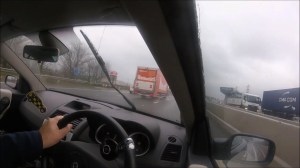
Approaching the Trafford Centre

Of course all that is behind me now. I’m retired. The traffic begins to speed up and soon we are back to normal speed again. It could have been there was no accident at all or sometimes the cars involved just get going again and leave the scene.

In some ways I miss my life at Highways England or whatever name it is going by now. (Actually National Highways.) In other ways I don’t miss it at all.  I had a long drive into work, forty-two miles and I certainly don’t miss that journey although on the positive side, most of my ideas for blog posts used to come to me while driving. Somehow concentrating on driving always seems to free up another part of my brain and lots of ideas will come. I even have a dictation gadget in the car so I can blab my ideas into that and save them for later.

Another thing I used to do was to create a room in my head for those ideas and make sure to leave those ideas in there. That might sound a bit silly but a long time ago I read a book by Jack Black called Mindstore and it involved using various techniques to help the reader. I bought the book to improve my confidence, especially in job interviews. The writer asked his readers to relax and create a house inside one’s own mind. In the house would be various rooms which one could use for different things. A bathroom with a shower that washed away any problems or negative energy and so on. Another was one for rehearsing events in a positive way, like a job interview for instance. You would rehearse the interview in your mind, imagine being successful and then save the result on a big monitor screen. One of my rooms was for storing my blog ideas.

An RTC on the motorway from quite a few years ago.

A big accident hotspot on the M60 motorway is junction 13. The big problem here is that traffic is entering the M60 from the M62 and the M602; this traffic is all merging to the right while traffic already on the M60 wanting to leave at 13, which comes up pretty quickly after junction 12, is trying to go left. I always try to stay in the outside lane and avoid all this although further up the road I’ll need to get over to the left to exit onto the M61.

As I mentioned last week, I’ve copied a whole lot of audio onto the SD card I’m using in my stereo so no need to be constantly changing discs in my CD player. The next item comes up and it’s not music but Dylan Thomas reciting his work. He reads some poems which really is what got me interested in Dylan. I like to read his work but it’s the power of his recitals that really hooked me. Dylan wrote various plays for radio and one of my favourites pops up now. It’s called Return Journey. It’s a brilliant work read by Dylan himself in which he imagines his older self going back to Swansea in search of his young self.
Anyway, time to get over to the left and merge onto the M61. The M61 is a busy road and once you come on to it you have to beware of traffic coming over to the left from the A666. The traffic is heavy but so far it all seems to be moving well.

Return Journey was inspired by the devastation Dylan saw in Swansea after the town suffered the blitz of WWII. His broadcast begins with ‘It was a cold white day in the High Street, and nothing to stop the wind slicing up from the Docks, for where the squat and tall shops had shielded the town from the sea lay their blitzed flat graves marbled with snow and headstoned with fences.’

Later Dylan is in a Swansea pub asking the barmaid if she remembers young Dylan. He describes his younger self to her and she replies ‘There’s words, what d’you want to find him for. I wouldn’t touch him with a barge pole’.

Later he meets the old park keeper in his childhood haunt, Cwmdonkin Park. Does the park keeper remember him as a boy? Of course, replies the man, he remembers all the boys who played there even the ones who would ‘climb the reservoir railings and pelt the old Swans. Run like a billygoat over the grass you should keep off of.’  It’s a very moving piece indeed.

I notice accident signs on the message boards and the traffic begins to slow. Ahead I can see the flashing lights of a Highways Traffic car, slowing the traffic down. A year ago one of my jobs in the control room would be running an incident like this. For a rolling road block the patrol would call for a dedicated radio channel and someone like me would shout up that they were ready to take over. On the M61 the dedicated channel was 28. We had dedicated channels so that any police patrol nearby could also change over and assist us. I’d confirm the patrol were on the channel and drop the speeds down on the motorway signals. The patrol would slow the traffic then sometimes bring it to a stop while they shifted any accident damaged or broken down vehicles to the hard shoulder. A quick sweep of any debris and the patrol would move to the hard shoulder and wave the traffic on.

Me in the Highways Agency Control Room

One particular traffic officer used to make me laugh. When he returned to the main radio channel he would always hail the control room and advise Romeo Echo Three One: Back from the dark side!

As we leave Greater Manchester and enter Lancashire, traffic begins to thin a little although on summer weekends the M6 gets busy with holiday traffic making to the Fylde Coast as well as the Lake District.

I pass a Police car on one of the Police Patrol parking points. They are distributed about on various points of the motorway network. There was a Police desk in our control room and I’m happy to say that generally we at Highways had a good relationship with them. The big surprise to me working with the Police was that I always thought the Police were, well the Police. The thing is, the UK Police are not just one single organisation, they are numerous separate Police Forces that actually all work differently and independently.

Appropriately The Greatest Hits of Sting and the Police starts up on my stereo. I’ve always rather liked the Police and I do love the music of the eighties.

Anyway, getting back to the actual Police, Lancs Police do things differently to Greater Manchester Police and Cumbria do things differently to everyone. Why there isn’t a more centralised Police Force I’ll never know. In our control room the Motorway Police Group is headed by Cheshire Police. They used a computer system that wasn’t compatible to the one used by GMP. When an incident occurred that came from GMP the staff at Cheshire had to copy the incident over to their system. We both used a system called Command and Control. They could then send the incident electronically over to us so we could set the motorway signals and respond with our patrol.

When I left in 2022, Highways had a new system called (I can’t remember!) and Cheshire Police had a system designed by Saab. I know it sounds a little controversial but why don’t all the Police and even other emergency services use the same system? Wouldn’t that be better?

The Police are singing Every Little Thing She Does is Magic just as I take the slip road onto the M55 for the very last leg of my journey. There are roadworks here that seem to have been going on forever. They are making an entirely new junction and of course all the slip roads and overhead bridges have had to have been constructed. A lot of it is nearly ready but it is still a 50mph zone.

Sting is the frontman to the Police and I read somewhere he got the nickname Sting because he used to wear a black and yellow sweater. His real name is Gordon Sumner and I’ve always thought his attachment to the name Sting kind of silly but what the heck, I still like his music. After leaving the Police, Sting went on to a successful career as a solo artist.

Just as I pull up at home, one of my favourite Sting tracks comes on; If You Love Somebody, Set Them Free. I’m tempted to sit and listen to it but I flip back to the beginning and switch off my stereo. Sting will be all ready for me on my next journey.


What to do next: Here are a few options.

Share this post on your favourite social media!

Hit the Subscribe button. Never miss another post!

Listen to my podcast Click here.

Click here to visit Amazon and download Floating in Space to your Kindle or order the paperback version.

Buy the book! Click here to purchase my new poetry anthology.


Thoughts in My Car

Every couple of weeks or so I hop into my car and set off on the journey back to Manchester. I usually have some provisions packed although a lot of the time I will pop into the shops and pick some things up, a loaf of bread, a bottle of milk. I’m a man of simple tastes.

The car starts up fine and I’m off down the drive and heading towards the M55 motorway.

Once I’m moving I crank up the stereo and settle back to drive and listen to my favourite music. I hate adverts. TV adverts are bad enough but radio ads are the ones I really hate so no commercial radio, just CDs. My stereo takes five CDs which is great as sometimes I might get bored with the current CD and I like to click forward to the next one.

Coming along Queensway towards the M55 and there are roadworks ahead. There’s not a great queue but the only other route involves a huge excursion to bypass the area so I reckon I’ll just stick it out.

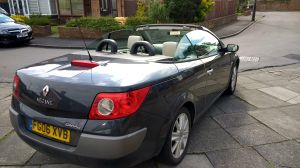
My much missed Renault convertible

My car is a Skoda Octavia Scout 4 wheel drive. It’s not anything I’ve gone out of my way to buy it just happened to be available when I wanted to change cars so I went for it. The only car I’ve ever really gone out of my way to buy was probably my last car which was a Renault Megane convertible. I don’t suppose I took the roof down that much now I come to think of it but a convertible was something I’d always wanted. I really did love driving on a warm summer’s day with the top down. My previous car was a Rover and it had a somewhat old fashioned radio and tape player. Not that I minded having a tape player. Ever since my teenage days I’ve enjoyed copying my vinyl 45s to tape and making what they call these days a mixtape, although back in the mid seventies that wasn’t a phrase I’d ever heard of.

Anyway, I loved tapes and I enjoyed compiling them. If the tape broke: no matter, they were only cheap, throw it away and record another. Bored with a tape? Again, no matter, just record something else over whatever was already on there.

Tape cassette

Finally through the roadworks on down towards the M55 motorway.

When I moved up to the Renault my collection of tapes was consigned to the storeroom and I brought a box of CDs into the car. I wasn’t totally happy but then I realised I could continue in my mixtape recording by just creating collections of my favourite music on CD. I began to copy CDs onto my laptop so I could burn my favourite tracks to new CD collections. I even had a program in which I could digitise some of my very best mixtapes which had clips from TV and film shows and burn them to a new CD.

Finally I turn on to the M55 motorway. I see I’m perhaps a little short on fuel but I’ve got easily enough to get me to Manchester and back. It’s always worth checking your fuel as when I was a motorway traffic officer, running out of gas could be a big problem. So many stranded motorists used to call up and mention they had run out of fuel as if we were going to pop down with a tank of petrol. No, we would be towing their car away and charging them £250 for the privilege, assuming the police didn’t get involved and give them a ticket. Imagine if they had run out of fuel in the fast lane or on a motorway with no hard shoulder; that could be dangerous and even fatal. Always check your fuel before going onto the motorway.

After a while I thought about actually having my original CDs in the car rather than copying and editing them. After all, if you come to a dud track it’s easy to just flip to the next one. So I brought a couple of boxes of CDs into the car, one in the passenger footwell and another in the boot. Every so often I’d rotate them.

Not so long ago I was stuck in a traffic jam. I was a little bored with my current five CD selection and wondering if I should reach over and select some new music from the zip folder of CDs in the glove compartment or even reach down to the box of newer CDs on the floor. We started to move up slowly but just then my eye happened to catch something on the front of the stereo. There was a small slot I hadn’t seen before and was that worn mark the symbol of a SD slot, you know, a slot for a memory card? We started moving and I made a mental note to look into that later.

By now I’d reached the junction with the M6. I took the slip road for the M6 south but I knew that soon I’d have to make another decision. Should I go M61 south and then M60 ring road or stay M6 south and then M56? Decisions. The M61 is not one of my favourite motorways. It always seems to be busy and then there’s the confusing link to the M60 anti clockwise where you have to move over to the right but traffic from the A666 that wants to go M60 clockwise tries to go left. It’s an accident hot spot and I can almost hear myself in former days when I was the radio dispatcher: Romeo Lima three four. Can you make to an RTC southbound M61 just by the junction with the M60 clockwise?

‘State five, Hotel Alpha’ would be the hoped for response, state five is code for enroute to the incident. Hotel Alpha was my call sign. Anyway I decide to stay on the M6 south. It’s a bit of a risk as I know there are roadworks and a 50mph zone but I still reckon it will be better than the M61.

Police and Highways dealing with an incident. This was on the M25

I checked the stereo and guess what? Yes it was a slot for an SD card. Now it just so happens that all the music I have copied and digitised I had already placed on a micro SD card for my MP3 player. I copied all that to a standard size SD card, popped it into my stereo and now I can listen to my entire music collection without changing CDs, without rotating boxes of CDs, without having the footwell of the passenger seat full of CDs. I was feeling pretty pleased with myself. OK, I’d have to copy all the newer CDs in my collection that I hadn’t already transferred to the SD card but even so, I still have a huge collection of music on that card, all of which I like and all advertisement free.

I’d hit the roadworks on the M6 and dropped to 50mph as per the speed restrictions. A lot of people look down on my Skoda but Skoda is actually part of Volkswagen and the engine is basically a Volkswagen engine so really the car is actually a pretty impressive vehicle. I’ve got a cruise control so I set the speed to 52 MPH and glide gently along in the slightly faster moving outside lane. I’m gradually working my way through my SD card and along comes some music I haven’t heard for a while, the soundtrack from the film Aliens.

Sigourney Weaver as Ripley from Alien

Aliens was the James Cameron sequel to the Ridley Scott sci-fi horror film Alien. Alien is a sci-fi classic and I’m never sure which is the better film Alien or Aliens. The other sequels in the Alien series were poor and even the prequels weren’t that good, even though Ridley Scott himself directed them. The first was Prometheus which he followed with Alien Covenant. I tried to watch Prometheus but just got bored with it. Alien Covenant was much the same.

Alien had a top-notch cast including Tom Skerrit, Sigourney Weaver, Ian Holm, John Hurt and others. The actors in Covenant were good but I just didn’t have any interest in them. The plot seemed pretty similar to Alien; a spacecraft receives a distress call and goes to investigate. This involves a long hike through the countryside although why they couldn’t have landed closer, I don’t know. Instead of the eggs and the face hugging parasite from Alien some alien spores are encountered by one crew member. He is taken back to the spacecraft and to the medical bay. One crew member gets locked in with the deteriorating man and guess what, an alien bursts out of his body and attacks the other one although just about then I switched off. Why is Alien so good and Alien Covenant so bad? It’s hard to say. Was it just the charisma free actors in the latter or the slow pace? Alien ticked along fairly slowly too but the director always kept the viewer interested in what was going to happen, plus the actors in Alien were so good.

A dubious area of the M6 is around Warrington where the M62 joins us and things always seem to get busy. There are queue caution signs up but these are automatic signals which are activated by a system called MIDAS. Motorway Incident Detection and Signalling. Slow traffic has been detected but then it is always busy in this area. Things speed up and we are soon over the Thelwall Viaduct and onto the M56.

I click onto the next CD on the SD card and it’s a singer called Rumer. Rumer is a British singer-songwriter with a really lovely voice. I reckon it’s just as good as Karen Carpenter and both have the same smooth and warm tone. The album that’s playing is one that has a fabulous version of a Carpenters classic, I Long to be Close to You.

Listening to the wonderful voice of Rumer, I pass the airport, another incident hot spot, without any problems and soon I’m pulling up at my mother’s house. I’ve got my laptop with me and I’ll have a few days to write a new blog post.

Not sure what to write about though.


What to do next: Here are a few options.

Share this post on your favourite social media!

Hit the Subscribe button. Never miss another post!

Listen to my podcast Click here.

Buy the book! Click here to purchase my new poetry anthology.

Click here to visit Amazon and download Floating in Space to your Kindle or order the paperback version.

More Random Film Connections

Back in the 1970’s. TV presenter James Burke made a TV show called Connections. It was a really fascinating series which connected various historical events to make a sort of chain which led up to something which was pretty unexpected. The episode which stands out in my memory is one about the atom bomb, various unconnected events and discoveries that together, led to the splitting of the atom. I’ve written a couple of posts in which I’ve tried to do something similar but all relating to the world of classic film so here are another collection of film connections which I hope you will find interesting.

Leslie Howard and Gone with the Wind

I thought I’d start with Gone with the Wind and see where it takes me. Gone with the Wind was a major film adaptation of the book by Margaret Mitchell. The book was a huge hit and producer David O Selznick bought the film rights. Production was delayed for a long while as Selznick was determined to get Clark Gable for the part of the roguish Rhett Butler. Another delay was a distribution deal with MGM which couldn’t be finalised until Selznick’s then current deal with United Artists had expired. Selznick used the delay to begin a huge search for an actress to play the part of Scarlett O’Hara, the spoilt daughter of a plantation owner in the deep south of America. Scarlet has a crush on Ashley Wilkes played by British actor Leslie Howard in possibly his most famous role. The film was one of the major hits of 1939 and was the highest earning film up to that time.
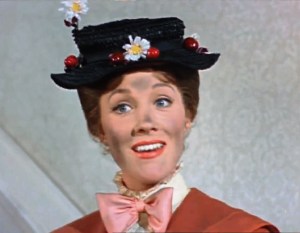
Julie Andrews and My Fair Lady

In 1938 Leslie Howard played the part of Professor Higgins in the film production of Pygmalion based on the play by George Bernard Shaw. A musical version was a big hit on the stage in the 1960s. Julie Andrews played the part of Eliza Doolittle to great acclaim on the stage but when the time came to make a film version in 1964, the producers wanted a major star and so the part went to Audrey Hepburn.
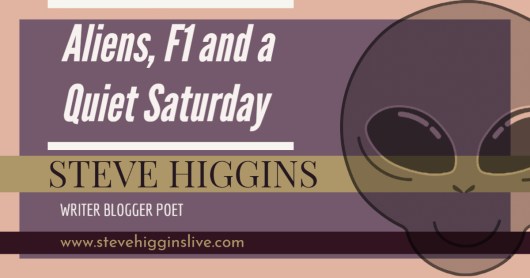
Julie Andrews only had to wait a short time for film stardom though. She appeared in The Sound of Music in 1965. The film was based on the true story of the Von Trapp family singers which was also a hit stage musical. Julie Andrews played Maria, a nun who becomes a nanny to the Von Trapp children, eventually falling for the father of the children played by Christopher Plummer. The film was the hit of 1965 replacing Gone with the Wind as the highest grossing film up to that time. The director was Robert Wise who tried to reduce the amount of sentimentality and sweetness which he had seen in the stage production.

Robert Wise and Citizen Kane

Robert Wise had a great background in the film world. He was a former film editor whose first film as a director was The Curse of the Cat People in 1944. In 1941 he was a film editor at RKO Studios and was the editor on the classic film Citizen Kane.

Orson Welles often boasted about the fabulous contract he had when he arrived in Hollywood. In a BBC interview he stated the terms were not financially brilliant but gave him unprecedented creative powers. His first film for RKO was Citizen Kane. The film opens with the death of Kane, a millionaire newspaper magnate. His last words were ‘Rosebud’. The makers of a cinema newsreel decide to find out what or who Rosebud was.

To do so they research Kane’s life; his inheritance of a huge fortune, his takeover of a newspaper, his great wealth, his power and influence, his marriage and divorce and ultimately his death.

The cinematographer was Gregg Toland, one of the film industry’s top photographers. Toland asked to work on the film and Welles replied ‘Why? I don’t know anything about making films.’ Toland countered that was exactly why he wanted to work on the film because a film by a newcomer would produce something new and original.

There are some fascinating elements to Citizen Kane, especially in the special effects department. A famous one is where the camera flies through a rooftop sign and then drops down through a skylight into a restaurant. The shot was done with a sign that came apart as the camera approached and then a fade from a model shot into the restaurant set disguised in a flash of lightning. Citizen Kane was and is a classic of the cinema.

Orson Welles and Rita Hayworth

Orson Welles in a way experienced his film career in reverse, he started at the top and steadily worked his way down, ending up as an overweight although always entertaining raconteur doing voice overs for Carlsberg TV advertisements.

Welles married Rita Hayworth in 1943. She was one of the great stars of Hollywood’s golden years. She appeared in one of her husband’s films The Lady from Shanghai in 1947 but the film that was considered her greatest success came the year before in Gilda. According to Wikipedia, the film made her into a cultural icon as a femme fatale.

Welles and Hayworth grew apart and finally separated. Rita said that Welles had no idea about married life or even settling down. When she suggested buying a house together, a natural move for a married couple, Welles said he didn’t want the responsibility.

Rita Hayworth as Gilda

After splitting with Welles, Rita became involved with Prince Aly Khan, son of the Aga Khan who later became a Pakistani diplomat. Aly was a socialite and man about town. He and Rita married in 1949 and had a daughter Princess Yasmin Aga Khan. Rita gave up her film career to be with Aly but Khan’s womanising proved fatal to the marriage. Rita moved to Nevada with her daughter in order to set up a legal residence and begin divorce proceedings. The two were finally divorced in 1953. Khan offered Rita a million dollars for her to bring up their daughter as a Muslim but Rita declined.

After her divorce Rita had no income and was forced to return to film acting. Her comeback picture was Affair in Trinidad in which she starred with Glenn Ford. Rita was contracted to Columbia Pictures and fell out with Columbia boss Harry Cohn on numerous occasions during the filming. She was even placed on suspension for a while, however the picture was very successful. Her last picture for Columbia was in 1957 when she starred in Pal Joey with Frank Sinatra. She married again, this time to singer Dick Haymes who was in severe financial trouble. The marriage lasted only a couple of years and ended when Haymes struck her in the face in a Hollywood nightclub. Rita packed her bags and left him.

In the mid 1970’s, Rita’s behaviour began to become erratic. She drank heavily and was even once removed from a TWA flight because of her drinking. It was eventually found that her symptoms were masking the real issue which was the early onset of Alzheimer’s disease. In 1981 when her condition had deteriorated, she was placed under the supervision of her daughter and the two moved into adjoining apartments together in New York. She died aged 68 in 1987. Her former husband Orson Welles, spoke of her in his very last interview, recorded the day before his own death. He called her ‘one of the dearest and sweetest women that ever lived.’

David Niven and Leslie Howard

Just to backtrack a little, in 1958 Rita appeared in Separate Tables. The screenplay was by Terence Rattigan and concerns a group of residents at a small hotel in the south of England. David Niven plays a disgraced former army officer who has been found guilty of apparently sexually harassing young women at a theatre. A news story in the local paper highlights this and he tries to stop the others from finding out, without success. Niven won an Oscar for his performance.

David Niven is one of my favourite actors and he wrote what I’ve always considered to the best book about the golden age of Hollywood, Bring on the Empty Horses.

In 1942 Niven was in England having left Hollywood to sign up with the army. He was asked to appear in what was a propaganda film at the time; The First of the Few, a story about R J Mitchell, the designer of the famous WWII aircraft, the Spitfire. Niven was under contract to Sam Goldwyn at the time but he allowed Niven to appear, in exchange for the US rights to the film. Niven played Squadron Leader Geoffrey Crisp who tells the story of his friend Mitchell beginning with the Schneider Trophy aircraft race of 1922. Later Mitchell visits Germany and sees how the Nazis are rearming and so resolves to design a powerful fighter for Great Britain. Mitchell died just as the government ordered the Spitfire into production and Niven as Crisp, ends his story just as he and his fellow pilots are scrambled into action.

Leslie Howard played the part of Mitchell as well as producing and directing. He was killed when the KLM flight he was aboard was shot down by the Luftwaffe in 1943.

Howard of course played Ashley Wilkes in Gone with the Wind which brings our connections full circle.


Thanks to Wikipedia creative commons for the use of the pictures in this post.


What to do next: Here are a few options.

Share this post on your favourite social media!

Hit the Subscribe button. Never miss another post!

Listen to my podcast Click here.

Click here to visit Amazon and download Floating in Space to your Kindle or order the paperback version.

Buy the book! Click here to purchase my new poetry anthology.

Aliens, F1 and a Quiet Saturday

7.44

My alarm goes off early on Saturday morning as a man from the council is coming to service my boiler. The council have given me an appointment ‘window’ which is from 08:00 to 15:00. Sometime during that window, the gas guy is coming to do the check.

08:00

I’m up and washed and wondering if the guy will actually turn up at 8am. I hang about expectantly in the lounge and by 08:10 I realise he isn’t coming this early, in fact he’s probably still asleep in his bed somewhere. I decide to make a quick breakfast, just a few rashers of bacon and an egg.

08:30

I’ve had my breakfast which was actually a little rushed so as I’m still hungry I think I’ll have a slice of toast and marmalade and another cup of tea.

08:45

I’ve had my tea and toast and I’m still checking the window for the gasman. No show so far. I take a quick look at the internet but I’m worried that I might see something about the qualifying results of the Australian Grand Prix. The qually took place early this morning but is not due on terrestrial UK TV until 11:15 so I don’t look at my notifications and quickly delete any emails that even faintly resemble F1 newsletters.

09:15

Time for another brew. I check the hall as the last time I waited in for the council I happened to pop into the hall and find a card slipped through the letter box which said we called today but you weren’t at home. This was after an entire day sat watching TV with the sound turned low so I wouldn’t miss a knock at the door. As you can imagine I was fuming and sent numerous threatening emails to the council and the next time the guy turned up on time.

Anyway, quick check and no card.

09:30

I decide to check the doorbell and I find that it is making no sound! I change the batteries and all is well, the bell is ringing again.

09:40

Time for another brew. There seems to be nothing on TV so I watch something I taped last night about Bob Lazar. You may have never heard of Bob but he is an American physicist whom claims he worked at Area 51 in the late 1980s to help reverse engineer captured flying saucers. He first appeared in the media with his face and voice disguised using the name ‘Dennis’. Later he went fully public and it was his claims that brought Area 51 into the public eye. Lazar says he worked at an Area 51 facility called S-4 and there were nine captured saucers there. These vehicles were powered by an antimatter reactor and the propulsion was anti-gravity based.

(I just realised I’ve written taped instead of recorded. Do people still say taped or is it just old guys like me?)

Bob says he worked at the Los Alamos National Laboratory but according to the documentary when staff at the lab were questioned, they said that no Bob Lazar ever worked there. However he appears in the lab’s own 1982 phone book as Robert Lazar and a clipping was found from the 1982 Los Alamos Monitor which profiles Bob and his interest in jet cars and mentions he works at the lab as a physicist. Are the authorities trying to discredit Bob or has he made up the whole thing? If he did make all this up, why would he do it?

10:00

I get a notification on my phone and I take a look without thinking. Luckily it’s from WordPress telling me my latest scheduled post has just been published. No more notifications now until I have seen the qualifying.

10:30

I need to use the toilet but I take a look outside and I can see a van arriving with ‘Gas’ on the side. No movement yet so maybe he is just sorting out his paperwork or something. Actually I fully expected him to arrive at five minutes to three. He was originally due last week but I was busy and so I asked my brother to let him in for me. My brother waited in all day only for me to get a call from the council late in the afternoon telling me the guy had called in sick!

10:40

The gasman has arrived!

10:57

Gas check all complete. I actually wanted to ask him something but he shot out of the house like a rocket. Well, it is Saturday, I suppose he was eager to get home and enjoy his weekend.

The documentary shows that Bob Lazar had a polygraph test which he passed with flying colours. His mission seems to be to tell the world there are extra terrestrial beings and the government in the USA is aware of them but for whatever reason is not telling the public. I do love these UFO documentaries. The next one was about people who claim to have been abducted by aliens and tested and probed like guinea pigs. When you come to think about it, the universe is big, really big. So vast it’s silly to think that life exists just on Earth and not elsewhere in the universe.

11:00

Kettle on. Now I can visit the toilet without worrying that the guy is going to knock on the door while I’m otherwise engaged.

11:15

Got myself a fresh cuppa and all set for the Australian Grand Prix qualifying.

The big problem with modern formula one is that a lot of the interviews that precede the big events as well as those that come afterwards are just full of modern PR talk. You know what I mean, the team did a great job, thanks to the guys back at the factory blah blah blah. No one seems to have anything that is actually interesting to say. In today’s broadcast there seems to be a lot of focus on Daniel Riccardo, the Australian driver, who thanks to his sacking is not actually driving this year. He now seems to be a sort of reserve driver for Red Bull but the other day I heard their team boss saying Daniel couldn’t expect a drive even if either of their main drivers were sick or incapacitated. So what is he then, just a test driver? Due to testing restrictions Daniel can’t do much testing except in the simulator. The McLaren he should have been driving isn’t looking that great so perhaps he’s glad not to be driving. I bet he wouldn’t mind a go in the Red Bull though.

11:35

I’m still hungry after this morning’s rushed breakfast. Should I go for a quick toast? Wait a minute, we’re seeing some actual action on TV. Better wait for the adverts.

13:02

Qually over and actually it was a pretty exciting session. These days I really think the qually is better than the race. Max in the Red Bull came out on top but his teammate skidded off at the first corner without even setting a time. He’ll be starting from the back tomorrow. Nico Hulkenberg was looking good in the Haas as was Alex Albon in the Williams. Great to see these drivers doing well in cars that are not really much good. Lewis Hamilton and his team mate George Russell were up at the top too so looks like a good race in the offing tomorrow.

13:04

Time for another brew. Time to do some writing so I can actually call myself a writer. I’ve finished some bits and pieces I’ve been working on as well as tweaking some other things. I had a look through some of my older blog posts looking for inspiration. Didn’t really find any but I took two posts about a similar subject, wove them together and published the result on my Medium page.

(I mentioned to Liz I have a Medium page. She said wouldn’t I be better with an XXL one? She can be a little cheeky.)

14:26

I started looking for a photo I took ages ago which I wanted to use on the Medium post and now realise I’ve spent over an hour trolling through my hard drive for it. Note to self: Start to label your pictures better Steve and add some keywords!

As I’m looking through some old pictures and graphics I thought I’d add some completely random pictures into this post. Here’s a self portrait I used to use on my Flickr page where I showcase my photography. I’ve always liked this picture, it was shot in a mirror and then reversed.
15:00

Time to crank up my microphone and record some audio for a couple of my latest poems. I publish them over on writeoutloud.net where fellow poets can offer their comments. Reading through some of the latest poetry blogs, I see there are some good poems there, well worth taking a look at. I’ve got the TV on in the background without the sound but I see Ancient Aliens is about to start so I think it’s time for another brew and a bit of TV watching. What about a ham sandwich too?

16:00

My brother is due round later on for some food and drink and a bit of a natter so I should start thinking of what to make. I’ve got some beef mince so I’m thinking chilli or spaghetti bolognese or even curried mince. I’m not a great cook by any means and I’m lost without my cookery books. Anyway, out comes the frying pan, in go the chopped onions and mince. I see I don’t have any garlic so I’ll have to do without. Next, throw in the spices including some fresh chillis, then come the tomatoes, a little stock and some tomato paste then I throw the whole lot into the slow cooker and leave it to simmer away. I have a little taste; yes, definitely one of my better ones.

16:26

My brother tells me he has a better offer for tonight but he’ll be round tomorrow. He’s obviously not forgotten about last week’s wasted wait for the gas man. Oh well, dinner for one then.


If you are interested, Max Verstappen won a chaotic Australian Grand Prix after various red flags and restarts. Lewis Hamilton took second place and Fernando Alonso was third.


What to do next: Here are a few options.

Share this post on your favourite social media!

Hit the Subscribe button. Never miss another post!

Listen to my podcast Click here.

Buy the book! Click here to purchase my new poetry anthology.

Click here to visit Amazon and download Floating in Space to your Kindle or order the paperback version.

Take Me To The Pilot

I was watching the TV show Countdown the other day and when the contestants took a short break from their word and maths games, Suzie Dent, the mistress of Dictionary Corner went into her usual talk about words. In this particular episode she decided to talk about the word pilot which inspired me to write this entire blog post on the subject.
The word pilot comes from the French word pilote which in turn was derived from the Latin word pilotus. Back in the 16th century the word pilot denoted someone who steered a ship and the term is still in use today mostly referring to those who fly aeroplanes.

Baron Von Richtofen: The Red Baron

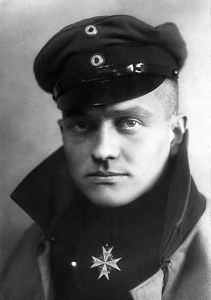
Baron Manfred Von Richtofen was an ace German pilot in World War I. He flew a red triplane and was one of the most feared pilots in the skies. He was born in Kleinburg, near Breslau in 1892 and began the First World War as a cavalry officer serving on the eastern and later western front. Trench warfare soon made cavalry units outdated and Richtofen became bored with dispatch work and applied to transfer to the newly formed German Imperial Air Force.

At the beginning of the war it was felt that officers should not be pilots and Richtofen started his flying career as an observer. Times quickly changed though and after meeting the ace pilot Oswald Boelcke, Richtofen asked to be trained as a pilot. He started out badly crashing on his first solo flight but later Boelcke, who had created Germany’s first fighter squadron, Jasta 2, asked him to join.

Fighter combat in WWI evolved quickly. At first aircraft were used for reconnaissance but then aircraft from opposing armies took pot shots at each other with rifles and then later, fixed machine guns. British aircraft were ‘pusher’ aircraft with a propellor at the rear to push the plane along. This meant that a machine gun could be placed at the front so the pilot could shoot at whatever was ahead. Aircraft with propellors at the front were better and faster but how could a gun shoot through the propellor blades?

In 1915 Fokker produced the first fighter plane with a machine gun synchronised to the propellor so the machine gun could fire through the arc of the propellor. This gave the Germans a considerable advantage in the air.

Richtofen’s first confirmed kill came in September 1916 and he ordered a small silver cup engraved with the date and type of aircraft he had shot down. He continued this tradition with his next victories until he had 60 cups but by then the war had limited supplies of silver in Germany and he had to stop. His kills and victories however went on.

In January 1917 he assumed command of Jasta 11 which came to be known as Richtofen’s Flying Circus and which many celebrated pilots of the time joined. In late 1917 he began to paint his aircraft red and also began to use the Fokker Triplane, one of the most famous aircraft of the period.

Richtofen was shot down in April 1918 and killed. He was flying low while chasing a British Sopwith Camel piloted by rookie pilot Wilfrid May of 209 squadron. May’s flight commander Captain Arthur Brown intervened to help May but the dogfight drifted over British lines and the fatal shot to Richtofen is thought to have come from a machine gun on the ground. The British buried the Red Baron with full military honours.

Amelia Earhart

Amelia Earhart was the first famous female aviator of the 20th century. She was one of the first of many female pilots. She was born in 1897 and in 1920 she paid ten dollars for a ten minute flight in an aeroplane. The short flight changed her life and afterwards she knew she had to be a pilot. She worked at a variety of jobs to fund her flying lessons. In 1921 she purchased her own aircraft and the next year flew up to 14,000 feet setting a new record for a female pilot.

In 1928 she was asked to join the crew of an aircraft that was to cross the Atlantic. The flying crew were a pilot and mechanic and Amelia was basically a passenger and admitted that was the case. ‘I was just baggage’ she told the press. Even so, she was the first female to cross the Atlantic in an aircraft and she and the crew were treated to a ticker tape parade in Manhattan and a visit to the White House to see President Coolidge. Later, in 1932 she flew solo across the Atlantic arriving in Ireland on May 20th. Amelia made many other trips and also competed in long distance air racing. She became a celebrity in America and in 1937 began a round the world flight. Amelia piloted a Lockheed Electra 10E and the only other crew member was navigator Ted Noonan. The pair departed from Miami on June 1 and after numerous stops in South America, Africa, the Indian subcontinent and Southeast Asia, arrived at Lae, New Guinea, on June 29, 1937. The final 7,000 miles would be over the Pacific. The duo left Lae at 10:00 am on July 2nd and were heading for Howland Island, a small coral island in the Pacific. The US coastguard had sent a cutter there to assist with navigation. As Amelia neared Howland Island the coastguard picked up various messages and it became clear that the Electra was lost and could not see the island. The last transmissions stated that fuel was running low and that they were flying at 1000 feet. The coastguard generated black smoke in the hope that the aircraft could see them but the aircraft never appeared. The coastguard cutter initiated a search an hour after the last message but nothing was found. The next day the US Navy began a search which lasted for three days but no trace of Amelia Earhart was ever found. Some thought the aircraft had ditched in the sea and that the crew had drowned. Various other theories were put forward: The two managed to get to Gardner Island but died there or perhaps they were captured by the Japanese and shot as spies. The mystery has continued to this day.
Elton John and Take Me to the Pilot

Take Me to the Pilot was a song written by Elton John and lyricist Bernie Taupin in 1970 and released as the flip side to Elton’s Your Song that same year. Some sources on the internet say the single was a double A side disc but apparently DJs preferred Your Song and that became Elton’s first chart hit.

Neil Armstrong

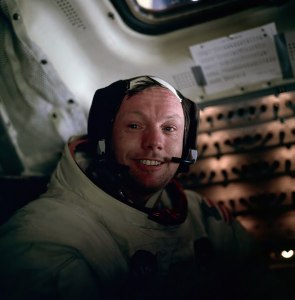
Neil Armstrong was born on August 5th, 1930. He went on to become a pilot for the US Navy and saw action in the Korean War flying aircraft from the aircraft carrier USS Essex. After the war he became a test pilot flying various aircraft including the famous X-15 Rocket Plane. He joined NASA in 1962 and flew into space aboard Gemini 8 in 1966. The flight was a difficult one as the crew were the first to try a space rendezvous. They docked with a target vehicle in space but a faulty thruster caused the Gemini capsule to roll uncontrollably. Fortunately, Armstrong was able to undock from the other vehicle and stabilise the capsule. Too much fuel was used up though forcing the crew to make an early return to earth.

In 1969 Armstrong flew to the moon on Apollo 11 and became the first man to walk on the moon. It was a tricky mission though and during the landing as the Lunar Excursion Vehicle dropped towards the moon’s surface the spacecraft’s computer kept throwing up ‘1201’ and ‘1202’ program alarms. Neither Armstrong nor Aldrin knew what that was but the controllers at mission control knew. The on-board computer which had less memory than a modern mobile phone, could not deal with all the data it was receiving. Armstrong switched over to manual flight, hopped the lunar lander over a rocky area then finally dropped down safely onto the lunar surface with only a scant few seconds of fuel remaining.

Landing on the moon made Armstrong a hugely famous and popular man and that fame was something he and his fellow astronauts were unprepared for. Armstrong later resigned from NASA and took on a teaching position at the University of Cincinnati. He died in 2012 after suffering complications from bypass surgery.

Chesley Burnett “Sully” Sullenberger III

Sullenberger, known as Sully was the pilot of US Airways flight 1549. On take off from La Guardia Airport in New York in January, 2009, his aircraft was hit by a flock of Canada geese and power from both engines was lost. Sullenberger realised that the only thing he could do was to ditch in the Hudson River. He did so and all passengers and crew were rescued safely.

Scott Tracy

Thunderbirds was a TV puppet series from the 1960s produced by Gerry Anderson. The series was part of an entire futuristic world set in the 2060s which other puppet shows in the Anderson canon all became a part of. Puppet series like Fireball XL5, Stingray, Captain Scarlet and Joe 90 were futuristic TV shows all produced by Gerry and his wife Sylvia.

In Thunderbirds, Anderson tells the story of International Rescue, an organisation created by Jeff Tracy with a secret headquarters on Tracy Island. Thunderbird 5 is a space station constantly monitoring the airwaves down on Earth and listening out for calls for help. When an emergency situation is detected, Thunderbird 1, a rocket plane, is immediately despatched to take charge of the situation and its pilot Scott Tracy will find somewhere to set up a mobile control centre and take stock of the situation.

Millionaire Jeff Tracy is a former astronaut (the first man on Mars if I remember correctly) and it is his sons who pilot the Thunderbird craft designed by their technical genius, ‘Brains’. Jeff’s other sons are Virgil, Alan, Gordon and John, all named after US astronauts from the 1960s.

Scott was named after Scott Carpenter and voiced by the actor Shane Rimmer.

The TV Pilot

Another type of pilot is a TV show. Producers often produce a pilot episode for a projected new series and then decide whether to make a full series depending on the success of the pilot. A famous pilot was the one made for Star Trek. In the pilot episode, Captain Christopher Pike is played by Jeffrey Hunter and he and his crew investigate a distress call from an unknown planet.

NBC apparently weren’t happy with the result and asked for another pilot episode and in that one William Shatner made his first appearance as Captain Kirk. Later the original pilot was re-edited into a new two part episode called ‘The Menagerie’ in which a court martial on the Enterprise views footage from the earlier mission.


Thanks to Wikipedia Creative Commons for the pictures of Manfred Von Richtofen, Amelia Earhart and Neil Armstrong.


What to do next: Here are a few options.

Share this post on your favourite social media!

Hit the Subscribe button. Never miss another post!

Listen to my podcast Click here.

Click here to visit Amazon and download Floating in Space to your Kindle or order the paperback version.

Buy the book! Click here to purchase my new poetry anthology.


A Writer’s Life

I often wonder how I might have gone on had I achieved my schoolboy ambition to become a journalist. It’s hard enough writing a new blog post every week but what if I’d have had to have written something for a newspaper every day? That would have been a pretty tall order.

I’ve got nothing in the pipeline for today’s post so I decided to just start writing and see where it gets me. Ok, here we go.

Despite having nothing in the pipeline, I’ve actually done a great deal of writing this week. I always have lots of ideas floating around in my head about all sorts of things and I make mental notes about them but converting those ideas into a novel is a pretty big undertaking.  A better idea I thought would be to perhaps make those ideas into short stories. I could even put together a book of short stories and poems and maybe even some selected blog posts.

As it happens, I was watching a documentary programme the other day about Ernest Hemingway and one of his first publications was a short collection of his stories and poems called not very imaginatively, Three Short Stories and Ten Poems. I’m not sure if it did particularly well but as every writing help blog that I’ve ever read tells us, anything that gets you writing is important.

I also find it well worthwhile to look back at other things I have written. For instance, ages ago I wrote a short script for a script competition. It was about a police officer who has a nightmare about being in an army firing squad. They are about to execute a soldier for some unknown transgression but when the victim is revealed, he is a young boy. Later, the officer comes across the boy in real life as part of his police work. It wasn’t brilliant and disappointingly, it didn’t win me any prizes but later I remade it, rewrote it I should say, as a short story.

Another story I wrote recently was one that combined a lot of my knowledge of France into a story of a young man who meets an interesting lady while travelling in France. I thought it was rather good. I did a bit of research and thought I’d found the perfect magazine to send it to. I checked their website; yes they were in the market for short stories and yes, they were happy to receive submissions. They wanted the stories as a word document. OK. They wanted no headers or footers in the document. OK, remove the headers and footers and finally they wanted the word count in the title of the document. OK, change Isabelle, my short story title to 6348 Isabelle. Happy days. I sent off my short story and only a few days later got a message back saying thanks for your story but it’s too long!

I had another scan through their submission guidelines and yes, they want stories of 2000 to 3000 words! I must have missed that bit. Another search and I found another magazine, this time an online one. They were happy with 6000 plus words but they wanted a £4 submission fee! Oh well, what’s £4 these days. I coughed up and sent off my short story but then thought perhaps that’s how they make their money, waiting for mugs like me to send off their hard earned four pounds!

Another thing I’ve done recently when I’m short of ideas is to take a look at my older blog posts, dust them off, merge them with one with either similar ideas or even think of some new additions, sort out some nice new shiny graphics and pictures and repost the whole thing as a new blog post. I actually thought I’d hit upon a new and revolutionary blogging idea but then I noticed a blog post on another site about repurposing old content! Yes, there’s nothing new under the sun.

One of my most read blog posts lately is this one, it’s called Manipulating The Image and in it, I talk about photo manipulation from Instagram glamour models to Lee Harvey Oswald and what he claimed were fake backyard photos showing him holding his infamous Italian made rifle. I spend a lot of time on my analytics page, both on WordPress and on YouTube and to be honest, I’m not sure any of that helps. Why is Manipulating the Image so popular? It’s great that my readership is booming and that more and more readers are exposed to the availability of Floating in Space, not that many of those potential buyers take advantage of that.

How can I replicate the success of that post though? It’s the same over on YouTube. A video about Manchester I took months working on and perfecting gets few viewers and another in which I walk about Manchester yakking into my camera held in front of me on a selfie stick and spent thirty minutes editing, gets a shed load of views. I don’t get it. Then again, perhaps I don’t need to get it. Maybe I should make more videos of me yakking into a camera or more blog posts about manipulating images. Of course integrity as a writer is important. Do I really care about getting more readers and more likes and better and better stats? Shouldn’t I care more about doing justice to myself as a writer and being true to myself?

Actually, I kind of like getting more readers and more likes.

Images are important to blog posts as well as social media posts. It’s a statistical fact that social media posts perform better with images and better still with video content. I tried the face app that I found when researching the Manipulating Images post but naturally, being the tightwad that I am, I declined to pay for the version that does the best effects. I tried another app recently, one that creates avatars for use in your social media pages. An avatar is essentially a picture, a stylised image that people use on the web. Sadly I found that once again, this new app required me to pay money which naturally, I wasn’t happy about. However, rather than subscribe to the app it was possible to pay a one time fee of £2.99 for 50 avatars. This required me to upload a shedload of pictures of myself, the minimum required was 15 so the app could give the best results. The results weren’t instant, I had to wait most of the afternoon for them to appear and some were a bit naff, in fact there was even a feminine version of myself but there were a couple that made me look like the real tough hombre that I’m actually not.
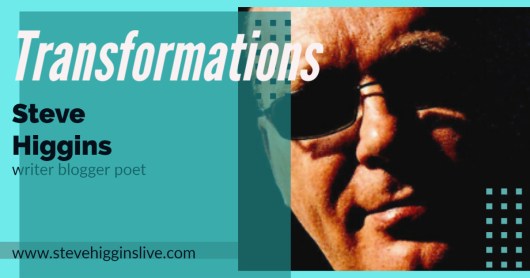
Yes, I might just start using those ones on my social media. Perhaps I might scare up a few new readers.


What to do next: Here are a few options.

Share this post on your favourite social media!

Hit the Subscribe button. Never miss another post!

Listen to my podcast Click here.

Buy the book! Click here to purchase my new poetry anthology.

Click here to visit Amazon and download Floating in Space to your Kindle or order the paperback version.

Transformations

I hit on the theme of transformations whilst watching a film that I haven’t seen for years. It was My Fair Lady so without further ado, let’s get cracking.

My Fair Lady starred Rex Harrison and Audrey Hepburn in the story of how Professor Higgins, an expert in phonetics, tries to turn working class flower girl Eliza Doolittle into a lady. The film is based on the play Pygmalion by George Bernard Shaw. The rude and bombastic Higgins played so well by Harrison enters into a wager with colleague Colonel Pickering played by Wilfrid Hyde White. Higgins boasts that he could pass the lowly flower girl off as a princess and embarks on a wearying schedule of training so Eliza can improve her speech and deportment.

I’m not a great fan of musicals but I’ve always rather liked this film. The songs for the most part are wonderful and the performances excellent. Audrey Hepburn was a controversial choice for the film as the part had been played on the stage by Julie Andrews and as this was before she shot to fame in The Sound of Music, the producers wanted a big star in the role.

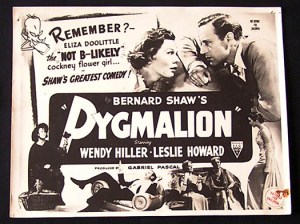
The story had been filmed before of course. There was an earlier version, a non-musical version made in 1938 starring Leslie Howard. Howard is probably most famous for his portrayal of Ashley Wilkes in Gone with the Wind but his version of Higgins was to me, much superior to Harrison’s although I love both. Wendy Hiller plays Eliza Doolittle and she is much more believable as Eliza, no disrespect to Audrey Hepburn in My Fair Lady and Howard is a bright, eccentric Higgins. What is interesting from researching the film on the internet is that a controversial (at the time) line was included in the film: Eliza saying ‘Not Bloody Likely!’ This made Wendy Hiller the first person ever to swear in a British film. Dear me, how times change! That I suppose is a transformation in itself, the language of the cinema becoming ruder and coarser by the day with the F word becoming more and more prominent in film dialogue. These days, ‘Not bloody likely’ is hardly worth a second thought.

The main transformation in both Pygmalion and My Fair Lady is that of Eliza Doolittle from common flower girl to well-spoken princess. She is the butterfly that emerges from Professor Higgins’ training although the experience does not necessarily make her happy. She returns back to Covent Garden and no one recognises her there. She is dressed differently, she speaks differently and no longer resembles the woman she used to be. Her father recognises her though as he has been transformed too. Higgins was so impressed by Alfred P Doolittle that he has written to an American millionaire advising him that Doolittle is one of the great wits and philosophers of the day and the millionaire bestows a large amount of money on him. The result is that friends and family have appeared out of the woodwork all intent on eliciting financial support from Doolittle and the tables have been turned on him. Instead of his previous happy but poor existence, now the the worries of supporting others lay heavily on his shoulders.

I of course have experienced transformations too. Some years ago, I was in full time work, now I am retired. I made the transition slowly. I first opted for semi-retirement and went from working a shift pattern of six days on and three days off, to one of three days on and six off, a much more agreeable working pattern. I had thought that the new working pattern would give me more time to myself, more time to get acclimatised to retirement. Instead, it actually made my working life more difficult. In our hi tech emergency control room, things were constantly changing and I was not always up to speed. I was using old templates when I should have used new ones, using codes that were now obsolete and so on. I missed updates and briefings that happened on my six days off. Looking back, I should have just retired fully and looked for some part time job to top up my cash flow. Anyway, now I am transformed, a retired former civil servant, writing blogs and making YouTube videos.

Age has transformed me too. In the picture over on the right you can see me as I was when I was aged 19 or 20. It was taken in France by my best friend Chris. Now I am older, at least older on the outside. On the inside I’d have to say that I haven’t really changed that much. You might think that now I’m probably much wiser with different ideas and different thoughts. Actually though, I’m pretty much the same on the inside with similar ideas and similar thoughts.

Here’s another film with transformations at its heart, Silence of the Lambs. It was the first horror film to win a best picture Oscar and it was about a serial killer nicknamed Buffalo Bill by the press. The FBI are trying to catch him and send rookie officer Clarice Starling to visit Hannibal Lector, a psychiatrist and murderer, currently detained in a high security prison in the hope that he might give some insight into the current murderer. Lector agrees to talk but only on his terms.

Jodie Foster plays agent Starling. She wants to work in the Behavioural Science Unit of the FBI and Lector, chillingly played by Hopkins, finds her interesting. He seems willing to give his information and insights about Buffalo Bill but in return he wants information about Clarice herself. He initiates a quid pro quo, he gives her information and observations about Bill and in return she must reveals snippets of information about herself, her background and her life. When Starling reveals the murder victims have something inserted into their throats Lector correctly guesses the item is a butterfly. Buffalo Bill, says Lector, wants to transform himself, in his twisted way into a female.

Much of the content of the film is terrifying but at the same time, it is a compelling film and comes together in an exciting climax. Silence of The Lambs won five Oscars.

I wrote in a previous post about another type of transformation, one achieved by using imaging technology to transform one’s own appearance. Using image editors today, it is possible to smooth wrinkled or pock marked skin and to trim away unwanted flesh. Over on TikTok recently I seemed to be bombarded on one particular day by endless videos of women using a filter for video that made them all seem younger and more glamourous.  Here’s an example below from YouTube.

The best transformation though are perhaps the ones that we make ourselves, the transformations that occur on the inside.

Floating in Space was a great achievement for me. I had always wanted to be a writer and finally completing and publishing my book was something very exciting for me. Of course, Floating has never come near to the best seller charts and is not ever likely to. If it did, I can imagine another transformation from quiet part time writer to international author. I could swap my Skoda for a Porsche. Buy some new clothes for my media interviews and join the international jet set. That might be a fun transformation but with my bad back and sore neck, I might have trouble getting into that low slung Porsche. Then there’s my strong northern accent. Would TV viewers be able to understand me? Would I need some vocal training?

Perhaps I should be looking for a Professor Higgins to help me?


What to do next: Here are a few options.

Share this post on your favourite social media!

Hit the Subscribe button. Never miss another post!

Listen to my podcast Click here.

Click here to visit Amazon and download Floating in Space to your Kindle or order the paperback version.

Buy the book! Click here to purchase my new poetry anthology.

Another James Bond 007 Post

James Bond has been in the news this week. The books by Ian Fleming are apparently being rewritten as they might be considered offensive to a modern generation of new readers and the producers are still looking for a new actor to play their famous secret agent. OK, time for another James Bond 007 post.
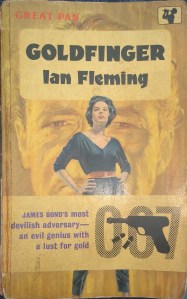
The publishers of the Bond books have decided that it’s time for a reissue of the best selling series with a disclaimer telling readers that the novels use language that may be considered offensive by modern readers. Of course the books were written in the late fifties and early sixties and reflect attitudes of the time. I have the entire collection of Bond books and most of them have a reference on the back saying they are outrageously entertaining, which they are, but take away the outrageous part and they are no longer outrageously entertaining but perhaps just somewhat entertaining. Of course if we begin to tamper with books written in the past where do we stop? Roald Dahl’s books are also in the news as they have been updated by ‘sensitivity readers’ although I’m not sure how these well-read children’s books can upset anyone. James Bond of course is a different matter and any sensitivity readers might have a problem with a book like Live and Let Die which is partly set in Harlem and Ian Fleming uses most of the unpleasant racial epithets which were in use at the time.

I started reading the Bond books when I was a schoolboy and unfortunately the very first one I read was the only one they had in our local library – ‘The Man With The Golden Gun’, one of writer Ian Fleming’s worst Bond books. Fleming used to write his initial drafts of the novels and then write a second one, adding in all the details which make the Bond books so interesting. Things like details of Bond’s clothes, (the Sea Island cotton shirts) his food, (Bond always had scrambled eggs for breakfast) his cars, his cigarettes (the special handmade ones with the triple gold band) and all that sort of stuff. ‘The Man with the Golden Gun’ was published after Fleming had died and sadly, he had not revised his original draft. I persevered though, did some research, found the proper order of the books and began to read ‘Casino Royale’, the first in the series. April this year marks the 70th anniversary of Casino Royale and it is this anniversary which has prompted the Bond books to be reissued, complete with disclaimer.

That first book is a pretty original story. ‘Le Chiffre’, a gambler and also a member of SMERSH, a murderous department of the KGB, is engaged on a desperate effort to win a great deal of money at the casinos of Royale Les Eaux in France. Le Chiffre is desperate because he has used SMERSH funds for his personal use and his spymaster bosses will not be pleased if they find out. Britain’s secret service happens to find out about this and sends Bond to France to make sure Le Chiffre doesn’t recoup those funds as of course, as we all know, James Bond 007 is a bit of an expert with the cards.

The book is interesting in another way too. Ian Fleming sold the movie rights to Casino Royale separately from the rest of the books and this enabled producer Charles K Feldman to produce a movie independently from Eon productions who own the rights to the other books. Feeling that he could not compete with the mainstream movies, Feldman decided to make Casino Royale into a comedy version. David Niven starred as Sir James Bond and ironically, Ian Fleming had mooted Niven as a possible Bond when casting began for Dr No, the first movie in the series.

Eon Productions finally acquired the rights to Casino Royale ready for the debut of new Bond actor Daniel Craig. I’ve got to say I didn’t like Craig at first. He didn’t look like Bond and I honestly thought he would have been better cast as one of the Bond villain’s henchmen but I did warm to him eventually and although I didn’t much care for it at first, I really do think Casino Royale is one of the better Bond films. It was released in 2006 and follows the book pretty faithfully which many of the previous films rarely do. Craig’s last Bond film was No Time To Die which I really thought was the poorest of Craig’s five outings as 007 and Bond has been in the news frequently as writers, journalists, bloggers and everyone and his dog have speculated about who the next James Bond 007 will be.

Will it be the usual upper class white guy or will Bond be black? Will there even be a female Bond? What does a 21st century secret agent look like or act like?

James Bond, the character created by Ian Fleming, was a commander in naval intelligence in World War II. He learned to ski in Kitzbühel in the 1930s and fought in the Second World War. He was an officer and a gentleman. He frequented expensive restaurants and gentlemen’s clubs as well as casinos and card tables. He drove a Bentley, lived alone in a Kings Road, Chelsea flat where he was looked after by an elderly Scottish housekeeper named May. He drank a martini made with three parts gin, one of vodka, a half measure of Kina Lillet, shaken with until ice cold then served with a slice of lemon peel. Bond is a character entrenched in mid twentieth century England so making him into a character from the 21st century will not be easy. What can the film makers do? Well, they could set the Bond films back in the 1960s. That’s one option although I doubt if that will happen. They could go radical and make Bond an ethnic character; I’m forever seeing posts about Idris Elba as the next Bond in my social media feeds but then, the character wouldn’t be Bond, would he?

The first change of Bond actor was from Sean Connery to George Lazenby. I liked Lazenby and his one 007 film, On Her Majesty’s Secret Service, was one of my favourites. Connery returned for Diamonds are Forever and then Roger Moore took over Bond’s licence to kill. His films ranged from bad to supremely dreadful and as much as I’ve always loved Roger, I hated his Bond films.

Timothy Dalton stepped into Bond’s shoes when Moore stood down and made two pretty good films. Legal issues kept Bond off the screen for a long time but when the franchise finally returned it was with Pierce Brosnan as 007. Goldeneye was one of my favourite Bonds but his other films weren’t so good and even looked for a while as if they were going to go down the same road as Roger Moore’s Bonds into slightly ridiculous territory. With Casino Royale though things got pretty serious. The film makers played down the gadgetry which always was a staple of the early Bond films, things like cars with ejector seats, watches fitted with special magnets and belt buckles firing climbing pitons. None of that played any part in the Daniel Craig era but here’s the thing; in the previous films each new Bond has just carried on as before with hardly a nod to the previous actor, although George Lazenby did famously say ‘this never happened to the other fella!’

When Daniel Craig took over the series was to a certain extent rebooted. Bond was new to the 00 section and Casino Royale his first mission. His mission in No Time To Die was also his last, his very last because, and I don’t think I’m giving anything away here, because Bond actually dies. How could the producers start over then with the next Bond? Well, many fictional characters have come back from the dead, most notably Sherlock Holmes who author Arthur Conan Doyle killed off when he got bored with the character.  Holmes perished by falling off a cliff but a few years later Conan Doyle bowed to public pressure and Sherlock Holmes returned. It turned out, he hadn’t really died after all.

image courtesy flickr.com

Ian Fleming didn’t kill off Bond but in You Only Live Twice, Bond is seriously hurt and is rescued by Kissy Suzuki who was posing as his wife while Bond was on a mission for Tiger Tanaka, the head of the Japanese secret service. Bond had lost his memory and Kissy hides Bond away from the authorities. One day though, Bond sees something about Vladivostok in either a newspaper or a book, I can’t remember which, and still suffering with amnesia decides he must go there. You Only Live Twice ends there but in the next book, The Man With The Golden Gun, Bond returns having been brainwashed by the Soviets into assassinating his own boss, the head of the British secret service, known only as M.

The producers never used that storyline in the film adaptations of those two books so if I was the writer of the new Bond movie, that’s exactly how I would start the new era of Bond films off.


What to do next: Here are a few options.

Share this post on your favourite social media!

Hit the Subscribe button. Never miss another post!

Listen to my podcast Click here.

Buy the book! Click here to purchase my new poetry anthology.

Click here to visit Amazon and download Floating in Space to your Kindle or order the paperback version.


Nothing Lasts Forever: A DNA Story

Looking back at the past is always interesting, at least I’ve always found it so. I love reading about history and I watch lots of TV history documentaries. Shakespeare once said ‘what is past is prologue’ and he was right! One area of the past I’ve been looking into recently was my own and my Christmas present to myself was a DNA test.
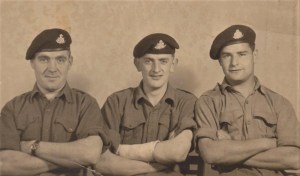
I got the test from the website Ancestry.co.uk and I received my testing kit just before Christmas and sent it off on the 24th December. I kept checking the website to see if the ancestry people had received it yet but nothing came up. Maybe Christmas Eve wasn’t such a great day to post something so important. Anyway, they finally got the sample and to make things exciting, on the ancestry web site you can see how things are progressing with updates like sample received, sample ready for testing, sample tested, DNA extracted, checking DNA and so on.

While I was waiting for all that to happen, I still seemed to be getting nowhere tracing my great grandfather Patrick Henry Higgins. He is mentioned on my grandfather’s marriage certificate of 1920 as being deceased so clearly he passed away sometime before that date. A distant cousin on the Ancestry site seems to think he was born in Roscommon in Ireland. Perhaps so but Patrick Henry Higginses are ten a penny in that part of the world so I turned my attention to my grandmother who was born Ellen Beresford. I vaguely remember my dad mentioning that he had relatives in the Staffordshire area and that Ellen originally came from there. I know from her marriage certificate that her father was George Beresford, a collier and Ellen was born into a mining community in Leycett, Staffordshire.

A few clicks on the internet and I find that the village of Leycett, as well as having a colliery, also had a miners’ institute, a church, a village shop with off-licence, a post office, a butcher’s, and a railway station. They also had a recreation ground built by the miners which had a cricket and football pitch and later tennis courts and a bowling green.

The colliery closed down in 1957 and by the mid-sixties the main part of the village had been demolished. The terraced houses which formed the main part of the Leycett community are now completely gone.

My grandmother Ellen

My father told me that Ellen left Staffordshire and came to Manchester when she was only young. Dad told me she was ‘in service’ to a rich family. In the census of 1911, when Ellen was 15, I found her registered as a domestic servant to the family of Mr Chilton. His occupation was registered as a beer seller and his address was the Queens Arms on Brunswick Street in Rusholme, Manchester. Brunswick Street runs from Rusholme to Ardwick and today has almost been completely redeveloped. No Queens Arms exists in 2023 which is a little surprising. Back in the late 1970’s I used to travel up and down through Ardwick and  Gorton many times when I was a trainee bus driver at the GM Buses driver training school at Hyde Road. The area was in the process of redevelopment back then and many buildings were being knocked down although it seemed to me that the pubs always seemed to escape the destruction. The Queens Arms sadly did not. Ellen and my grandad were married in Gorton Monastery in 1920 and I suppose it is not inconceivable that the two met in the Queens Arms.

I joined GM Buses in 1976 or 77 and little did I know at the time that Hyde Road was an area that my Grandparents were very familiar with.

Looking at the tips for tracing relatives it seems that the main one is talking to older relatives. My dad died in 2000 and my mother is aged 93 and stricken with dementia and is not in a position to tell me anything, although such are the quirks of memory that when I sometimes show her old pictures, she can sometime name those in the picture and tell me a little of the background. My only other relative, my dad’s sister, is someone I haven’t seen for years although I do have Facebook contact with her daughter, my cousin.

Alas, my messages to her on Facebook had not been answered for a long time although happily I did get a reply from her recently. She didn’t have much to add to our family story except she knew that George Higgins worked for the Manchester Tramways Department at Hyde Road and was injured after something hit him on the head. My brother remembered that it was something that connects the tram to the overhead electric cables. As a result of that he suffered with epilepsy for the remainder of his life. George died in 1954, two years before I was born.

Quite often, I try to rack my brains and think about the memories my dad shared with me years ago. I know he mentioned family in Staffordshire which is how I was able to trace my grandmother’s background. On the ancestry site I use, I found a record of her birth and applied to Staffordshire council for a copy of her birth certificate, hoping that might divulge some further information. One interesting thing that it revealed was that her maiden name and her married name were both Beresford

Eventually my DNA results finally arrived. I can now reveal that I am 56% Northern British and European, 19% Irish, 17% Scottish 6% Swedish and 2% Welsh. The site also threw up 24,785 DNA matches, mostly distant cousins although one of my cousins, the son of my mother’s sister, came up as my closest DNA match. Strangely, not a single person named Higgins was on the list although that only means that few on the Higgins side of the family are interested in DNA testing.

I’m not sure why but I actually wondered whether the DNA test might show up some unknown brother or sister. Perhaps I’ve been watching too much of that TV show Long Lost Family.

A lot of this looking back into the past makes me sometimes wonder about how impermanent our existence seems. Dad used to tell many stories about his time in the army. I honestly think his army life was probably the most exciting thing that ever happened to him. He travelled to Germany, Northern Ireland and Hong Kong. Once he mentioned that he and his best mate who went by the name of ‘Lulu’ Lownes (I’m not sure why he was nicknamed Lulu) were in Hong Kong for a night out. They jumped on a bus or tram at the traffic lights. The bus conductor wasn’t happy and when they went to pay asked them for the full fare, even though servicemen were entitled to either free or reduced fare. Lulu was so upset by this he decided to throw a punch at the conductor and the two of them, Lulu and Dad, jumped off the bus and ran off into the night despite the conductor blowing a whistle and calling for the MPs.

Dad on the left of the picture with two of his army mates.

That must have been back in the 1950s and Dad and presumably Lulu are now long gone. Probably the conductor and driver are gone too as well as the MPs who gave chase. The conductor may have reported the incident and the bus company may have in turn reported the matter to the police. The police officers who dealt with the case, if indeed there was a case, are also long dead as well as the Royal Hong Kong Police themselves as back in 1997 control of Hong Kong was returned to China.

It may be then that only myself and my brother are the only ones who know about this event and the only actual record of it may be in this blog post. One day when I am gone WordPress will send a message to my email asking me to pay the small amount for my dedicated website address, stevehigginslive.com. No answer will be forthcoming and stevehigginslive.com will presumably either revert to its original WordPress web address or just vanish into cyberspace.

One day some search engine might flag up this blog post in return to some query about Hong Kong and British servicemen and the researcher will click the link only to find something like ‘502 error: Bad gateway’ or ‘site not found’.

If the researcher is not happy with that, he may wonder who Steve Higgins was and decide to do a further search for Steve Higgins, writer and blogger. Then he might even find my YouTube page. There he will find me, just as I used to be back in the 2020’s asking the viewer to buy Floating in Space or to read my blog posts that may no longer exist.

Nothing lasts for ever.


What to do next: Here are a few options.

Share this post on your favourite social media!

Hit the Subscribe button. Never miss another post!

Listen to my podcast Click here.

Click here to visit Amazon and download Floating in Space to your Kindle or order the paperback version.

Buy the book! Click here to purchase my new poetry anthology.

My Holiday Book Bag: Winter 2023

A long time ago I was reading a biography about Richard Burton called ‘Rich’ by Melvyn Bragg. The book used Burton’s own diaries and mentioned, amongst other things, Burton’s love of books. When Burton went on holiday he looked forward with delight to the contents of his ‘book bag’. I know it’s a pretty tenuous link but one thing I have in common with Richard Burton is a love of books and when I go on holiday, one of the delights of lying under a warm sun on my sun bed is a good, undisturbed read. I read a lot at home and on my lunch breaks at work but it’s a few minutes here and a few minutes there and whenever I get interrupted it kind of breaks the flow. Some books, as we all know, are just made for a really long, uninterrupted read so here are the books I took on holiday with me recently, all sourced from either the internet or secondhand bookshops.

Total Recall by Arnold Schwarzenegger

This book was a Christmas gift from Liz. She knows I’m a big film fan and I do love reading about the background to films and how they are made. Arnold is from Austria and he tells us a little of his life there but mainly focuses on his desire to be a great bodybuilder and to eventually go to America. There is a lot of talk about the process of competitive bodybuilding and the different muscles, muscle definition, reps and squats and all that stuff. Arnold eventually wins various competitions and is wondering how he can compete in the USA when he gets an invitation to do just that. The bodybuilding industry is a close knit one and there seem to be various people welcoming him to California, helping him to find a place to stay and so on. He wins more competitions and makes a little money. He starts a mail order business selling magazines and pamphlets about himself and his body building techniques. He brings one of his Austrian friends over and the two begin a bricklaying and home improvement business. His big break is getting a film part as Hercules and even though the production eventually goes bust it seems to give him a taste of the film business and he wants more. He plays Conan the Barbarian in the film version of a comic book hero and pretty soon he plays the Terminator and goes on to success after success, even becoming governor of California.

I’m not sure I actually came away liking Arnold. I know this is an autobiography but it’s a very me, me, me book and Arnold is constantly bigging himself up. The final chapters about his political career are perhaps the most interesting. He had thought about running for governor but senior republicans seemed to have been more interested in another candidate. However, when Gray Davis was elected in 2000, there seems to have been something of a backlash and there is a curious precedent in Californian politics. The public can demand a recall, a new election in which the public either go for the elected governor or someone new. Arnold entered into the recall and won. He seems to have been in an odd position politically. He was a Republican but had married into the Kennedy family who are Democrats but his success as a politician seems to have come from holding the centre ground in California and bringing Republicans and Democrats and getting them to work together.

At the end of the book Arnold gives us his personal philosophy and his rules for success.

Verdict: I’m not sure whether Arnold wrote this book just to give us his story or to further promote himself but if I had to choose, I’d probably say the latter. Having said that, Mr Schwarzenegger is a man who gets things done and has a positive attitude. Perhaps I should take another look at his rules for success.

Great Expectations by Charles Dickens

This is not a book I brought on holiday but one I found on the shelves of our rented villa in Lanzarote. I started reading it when I got a little bored with Arnold Schwarzenegger and liked it so much I just carried on to the end. It is a real pleasure to read something by a master wordsmith and I enjoyed every minute even though I had read this novel years ago. Young Pip, apprenticed to be a blacksmith, is invited to the home of an eccentric rich woman, Miss Havisham, purely for her amusement. Later in his young life he finds he has ‘great expectations’ and is to inherit a remarkable property. He is taken to London to be brought up as a gentleman and although he is told that his benefactor has asked to remain a secret, he naturally assumes it is Miss Havisham. At the beginning of the book, Pip encounters Magwitch, an escaped convict on the marshes near his home. He compels Pip to bring him some food and a file. He is captured and transported to Australia and later we find, much to Mr Pip’s shock and amazement that Magwitch is the mysterious benefactor.

The book is rightfully one of Dickens’ best loved stories and is a wonderful read. I’ve always thought it had a rather ambiguous ending and in fact in my edition back home, it is one of those with various notes and background information, I am advised that Dickens felt that it was important to assure the reader that Pip had a future with Estella, the spoilt adopted daughter of Miss Havisham and so changed the ending slightly. Pip of course did want a future with Estella but I still feel the book leaves a happy ending slightly uncertain.

Verdict: An absolute classic from a master storyteller.

A Mad world, My Masters by John Simpson

This is a collection of globe trotting stories from John Simpson who has travelled the world as a journalist for the BBC. These though are travel stories with a difference, for instance in the first chapter he talks about airports, not the airports that I generally use, tourist destinations like Spain and Greece. The ones Mr Simpson mentions are airports in war torn Angola and Bosnia, and places like Kabul in Afghanistan and other places where he has had his passport and papers routinely torn up or thrown into a river by laughing revolutionaries and mercenaries. He tells us about headlong dashes to catch flights, including one somewhere in eastern Europe where he was in such a mess after weeks living rough the stewardess was reluctant to let him on board, especially as he had a first class seat. His fellow passenger in the next seat asked to be moved. Luckily John wasn’t flying on a budget airline like the ones I travel with.
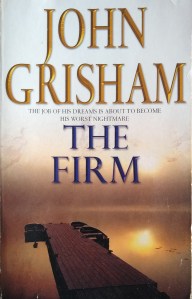
On one occasion in Afghanistan with the Mujahadeen, a bearded man appears dressed in white robes. He tries to get the Mujahadeen to murder Simpson for $500. It later turned out that the man was Bin Laden. Simpson talks nonchalantly about many other encounters with revolutionaries such as Arkan, the Bosnian warlord. There are other chapters on dictators that he has met and other sometimes ordinary people who have impressed him, like the simple village priest trying to make life safer for his fellow villagers in Colombia, one of the great drug producing countries of the world.

Most of his stories are hugely fascinating although the more interesting ones are about people, either the ones he has interviewed or the ones who work with him, his fellow journalists and sound-men, cameramen and so on. Most of this book is about the days when a BBC crew consisted of a cameraman, a sound-man, a producer and sometimes even others. Today, Simpson’s crew would consist of him and one other doing the filming and editing. There are some TV journalists today that even have to film and edit themselves.

The last part of the book where the author talks about his love for middle eastern rugs and antiques and the process of bartering that goes with buying those things was perhaps not my cup of tea. Verdict: A patchy read with some very fascinating chapters as well as some not so interesting ones. Generally, though, this was indeed an excellent read.

The Firm by John Grisham

There is a process by which I choose books to take with me on holiday. I like to think it’s a thoughtful process combining different genres of books, some novels, maybe the odd classic, and some biographies and autobiographies. What actually happens is that the day before our trip I’ll just grab something near to hand that I know I haven’t read yet and shove it in my suitcase. Anyway, that’s how I ended up with the books you see above. Last year I read The Rainmaker by John Grisham and I thought it was a pretty good read. I must have mentioned that to Liz so she filed that away and got me a stack of Grisham novels for my last birthday. The Firm isn’t a bad read and in my case it was a nice change of pace after reading Dickens and John Simpson’s globetrotting memories. It’s a good story but like a lot of Grisham’s works, its more plot driven than character driven. The characters are sort of bland templates that I’ve recognised in a lot of his novels and so far I’ve only read three. Anyway, characters aside, this is a really original story about a young guy who graduates from law school and gets head hunted into a firm he has never heard of but which offers tremendous financial benefits, a brand new BMW, and an ultra cheap mortgage as well as other financial bonuses. The downside as he comes to learn later is that the firm is just a cover operation to launder money for a big mafia crime family and the FBI wants our hero James McDeere, to help them.
Verdict: Highly enjoyable and a great holiday read but nothing more, although that didn’t stop the book from becoming a best seller as well as a hit film in the 1990’s.

The Woman in The Window by AJ Finn

I’m not sure I would normally have picked up this book if I hadn’t run out of books to read. I saw this on the shelf in our rented villa and Liz had read it and mentioned about numerous references to old black and white films which were right down my alley, apparently.

Anyway, I thought I’d give it a go and I’m very happy that I did. It’s about a woman called Anna Fox suffering from agoraphobia who cannot venture outside her house. She is in effect almost imprisoned there but spends her time playing online chess, seeing two therapists, one physical and one psychological as well as taking medication and drinking a whole lot of Merlot. She also spends a lot of time watching old films on TV and DVD as well as watching her neighbours.

She hears a terrible scream one night although no one else seems to hear it. She questions her tenant who lives in her basement but at the time in question he was doing some work while wearing earphones.

She meets Jane Russell from across the road, not the Jane Russell from the films but a pleasant lady whom she invites in and has a glass of wine with. Later through the windows of Jane’s house, she sees her get stabbed.  Anna calls the police and tries to go across to the house but she cannot get over the road due to her agoraphobia and she ends up in the park where she is found by paramedics.

When she surfaces, we find that no one believes her story and also that Jane Russell is still alive, except, she’s a different Jane Russell to the one Anna saw murdered.

The tension builds nicely in this thriller and a number of shocks are dropped in front of the reader along the way as we find out what has caused the agoraphobia and what really happened over the road.

This was also made into a film starring Amy Adams as Anna Fox although I’ve yet to see it.

Verdict: Great read, so much so that when we left the villa, I had to take it with me to finish on the plane home. To be fair I did leave behind The Firm to replace it.


What to do next: Here are a few options.

Share this post on your favourite social media!

Hit the Subscribe button. Never miss another post!

Listen to my podcast Click here.

Buy the book! Click here to purchase my new poetry anthology.

Click here to visit Amazon and download Floating in Space to your Kindle or order the paperback version.