What makes someone want to be a writer? Is it a need to emulate our own writing heroes or something else. I mentioned in a post last week that it’s important to be creative and we can be creative in a huge number of ways, not just in traditional artistic pursuits but also in everyday things, decorating our homes for instance, posting on social media, putting together a CD music mix or many other things.
I’ve always been a writer. As a child I used to scribble stories in notebooks and I even wrote short TV and film screenplays. I used to cast the characters from the film and TV actors of the time and I even remember one in particular. I was fascinated by the espionage fiction of the time, things like The Man From Uncle and James Bond 007 and I wrote about my own secret agent, Agent 80.
I cast Steve McQueen in the role as Agent 80 and put together a dossier on his secret agent character choosing which car he would drive and what sort of a place he lived in, cutting out pictures from magazines to make up the fictional file. Back then I was really interested in espionage and sci-fi and all my writings were pretty much about things like that. Later, as an adult, I started to write about things that happened to me; working in an office and working for the bus company and the pubs and bars I used to frequent. One of my favourite essays that I produced back then was something I wrote while waiting in a pub and I scribbled down notes about two people sat opposite and their smoking ritual involving getting out the packets, taking the cigarettes, flicking the lighter and then lighting up and the way they smoked, the way their hands moved and so on.
These days a lot of people in bars place their mobile phones carefully on pub tables looking over occasionally for messages. Back when I was a young man smokers placed their drinks carefully by their cigarettes and lighters, their table becoming a sort of personal shrine saying this is my space.
Two people who became writing heroes to me were Dylan Thomas and James Hilton. I won’t go on about them too much as I’ve written about both before (click the highlighted links for previous posts) but here are some basic thoughts;
Dylan was a hard drinking, pub going writer and it was perhaps that image which first appealed to me. The other thing which really interested me was the incredible power of his writing but add that to his spirited readings from his work and his radio broadcasts and well, I was totally hooked.
Hilton is the author of one of my favourite books, Lost Horizon and he is also a fellow northerner like myself. Hilton was born in Leigh in Lancashire, now part of Greater Manchester and he made a journey I would love to have taken. He went from Leigh to Hollywood, California and he wrote a number of books and screenplays that were made into classic films. He wrote Random Harvest starring Ronald Colman and Goodbye Mr Chips starring fellow Englishman, also a northerner, Robert Donat who hailed from Didsbury in Manchester.
Dickens is of course a great and famous classic writer. I’ve got to say that some of his books I’ve found a little hard to read. I’ve tried and tried to read Pickwick Papers but I just couldn’t get through it. Not long ago I picked up Bleak House and once again I couldn’t really get started on the book. I have read A Christmas Carol, Oliver Twist, Great Expectations and my absolute favourite, David Copperfield.
My favourite character, apart from Copperfield himself is Steerforth, a friend of David Copperfield but one who ultimately betrays him. The best part in the book probably, for me at any rate, is the storm when David returns to Yarmouth. Dickens builds the storm slowly and each word and phrase adds a new layer to the sense of danger and foreboding and when Copperfield is finally reunited with his old friend Steerforth at the height of the storm’s ferocity, death comes between them and Steerforth is sadly drowned.

My well thumbed copy of David Copperfield
Dickens reveals this in a very unique way, he does not tell the reader Steerforth is dead. He leaves the reader to realise this themselves and, in the process, makes the reader almost at one with the narrative. Throughout the book, Dickens mentions in passing about Steerforth’s habit of sleeping with his head on his arm. It’s referred to many times in the narrative almost as a matter of non interest, something unimportant that the reader doesn’t really need to know, but when David Copperfield spies someone aboard a stricken ship trapped in the fierce storm who evokes some faint remembrance for him, a tiny warning bell is set off.
Finally, when the body of a drowned man is brought ashore and lies mutely on the sand, his head upon his arm, we know just from that simple bit of information, without the author telling us anything more, that Steerforth is dead. The prompts and clues that Dickens has hinted at have paid off for the reader in the most satisfying of ways.
Noel Coward
 Coward has really been a surprising writing hero to me. I’ve been aware of him for years through film and television and his slightly eccentric persona has always been a little amusing to me. I remember once seeing an interview with him on the stage at the BFI, (British Film Institute) Richard Attenborough was interviewing him and seemed to me to be treating him as some sort of God that had been beamed down from the heavens. Coward was puffing away on a cigarette and lapping up all the praise.
A favourite film of mine is Blithe Spirit. The film starred Rex Harrison as a journalist who wants some background for a novel and he invites a medium, Madame Arcarti to officiate at a séance at his house. Unfortunately for Rex, Madame Arcarti evokes the spirit of his dead wife who at first is only visible to him. The film and of course the stage play that came before is a wonderful witty comedy. I liked it so much I wondered if the play or the screenplay was in print. I was happy to find that it was and I bought a paperback copy which also contained two other wonderful plays, Hay Fever and Private Lives. Again, these other plays were outstandingly witty and humorous and off I went in search of more works by Coward. As I write this, I’m currently reading a collection of his autobiographies.
Coward liked to arise early in the morning and then write until lunchtime, after which he would then enjoy his lunch and relax for the afternoon. Not a bad set up really and one I could do with taking up myself. Of course, I’m not so keen on lunch as Noel, I’m more of a late breakfast kind of guy, brunch I think they call it in places like the USA. Also, I don’t get up that early. I have done in the past, in fact I once did a regular 6am shift which meant getting up very early indeed.
Anyway, after writing about these four great authors it’s got me in a creative mood. I’ve done quite a bit of writing lately but I’ve realised that I’ve been neglecting the video producing aspect of my creative side. It’s clearly high time I produced something new for my YouTube page. After all, video is important for plugging my media profile as well as the two books I have for sale on Amazon.
I got out my video camera and thought what could I do. Yes, a piece to camera. I’ve been reading up lately about Marilyn Monroe which is why the late Hollywood star has featured in quite a few recent posts. I decided I could talk about my Monroe book collection and articulate a recent post I did concerning an internet debate about Marilyn’s death. I worked out what I was going to say in my head and then shot the whole thing in one take as a sort of rehearsal. I took off my scruffy polo shirt, changed it for a nice shirt and did the whole thing again. Not bad I thought.
Next I went about editing the video. The light wasn’t good so I upped the exposure and added some contrast. I cropped a few of the shots and closed in to a tighter shot covering me and the books I mentioned in my collection. I added the titles and credits and then settled back to review the entire thing. It was a good few hours work and I was ready to upload to YouTube when I spotted something.
During the video I mentioned a BBC documentary a few times. The documentary was called Say Goodbye to The President but for some inexplicable reason I realised that in the video I had somehow managed to refer to it as Shall We Tell the President, which happens to be the title of a novel by Jeffrey Archer, which as far as I know, has nothing whatsoever to do with Marilyn Monroe.
I wonder if any of the writers mentioned above ever had problems like this?
What to do next: Here are a few options.
Share this post on your favourite social media!
Hit the Subscribe button. Never miss another post!
Listen to my podcast Click here.
Buy the book! Click here to purchase my new poetry anthology.
Click here to visit Amazon and download Floating in Space to your Kindle or order the paperback version.
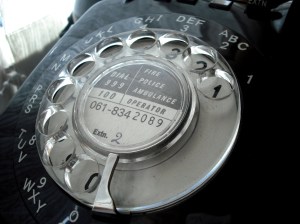
 1977 was a different world. There was no internet and there were no mobile phones. The only phones were landlines and they were big and heavy with great rotary dials with which you had to laboriously dial a number. As more people wanted telephones they needed more numbers and so numbers got longer and longer. 061, the dialling code for Manchester became 0161 and the code for London which was 01 became two new codes 071 and 081
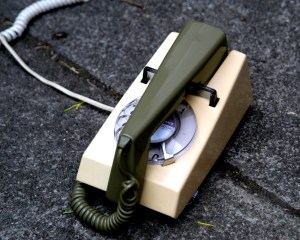 Anyway, time for a 1970’s telephone anecdote:
 Anne was the template for the character of Anne in my book
 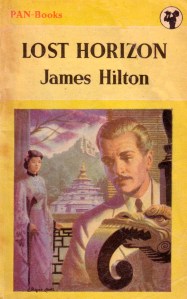 James Hilton is one of my personal writing heroes and yet his name may be unfamiliar to many of you reading this blog. He was a journalist and an author and made the trip from his home in Leigh, Lancashire, (now Greater Manchester) in the UK to the Hollywood hills in the United States to become a screen writer. He is probably more well known for his book ‘Goodbye Mr Chips’ which was made into a film with Robert Donat (actually another northerner from Didsbury in Manchester) but my favourite of his books and quite possibly my all-time favourite book is ‘Lost Horizon’.
 I’ve got a few new books to read but I thought I’d save them for my next holiday. I had an idea recently for a blog about the Carry On films so I picked up this book for a bit of research even though I read it a few years ago.
 Barbara died in December, 2020 but the Carry On films just literally carry on. Most weeks you can find one showing on one of the many TV channels now available. In her book, Barbara has a bit of a moan that despite the longevity of the films, the stars never made a pennly from all the numerous TV repeats of the films. Still, how many people thought the films would be still popular years after their first release? The first film was Carry on Sergeant made in 1958 and the last one, Carry on Columbus was released in 1992. Altogether there were 31 films, four Christmas specials, various stage versions and numerous TV shows. All the main stars, Sid James, Kenneth Williams, Charles Hawtrey, Hattie Jacques, Joan Sims, Kenneth Connor and many others are long gone. The only major star of the films still alive in 2023 is Jim Dale, now aged 87.
 I went to another funeral this week. It was someone I knew only very slightly and in fact Liz knew the deceased much more than me. His name was John and he was a pretty nice guy. The funeral service though seemed to me to be a little bit flat, a little lacking in soul. There was no priest or reverend at the service, just the celebrant. She read out a history of John’s life and family, someone came up to read a sad poem and his Grandson played a tune on his guitar.


 Ida Lupino, like Roddy MacDowell, was born in England, in fact both lived in the Herne Hill area of London. She wanted to be a writer rather than an actress but went into acting as she was part of a theatrical family and it seems that becoming an actor was expected of her. She appeared in many British films before moving to the USA in 1933.
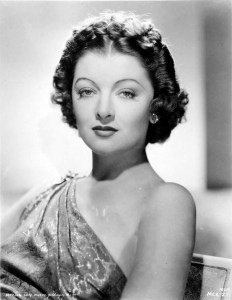 Myrna studied dance in Los Angeles. She had small parts in many silent pictures but some stills of her appeared in Motion Picture magazine and led to a contract with Warner Bros.
 While sorting out my box room this week I came across yet another box of old VHS video tapes. One was marked WFA original footage.
 What attracted me to the persona of Marilyn Monroe? Well, apart from her obvious charms as a very attractive lady it’s her death that has always interested me. I’m a sucker for a modern mystery whether it’s the assassination of JFK, the disappearance of Amelia Aerhart or Marilyn’s own strange death. The obvious solution is that Marilyn committed suicide. She had tried suicide quite a few times before and various people along the years have saved her from death, including her acting coach Natasha Lytess and her third husband playwright Arthur Miller. Suicide is the obvious answer to her death but personally, I’m not so sure.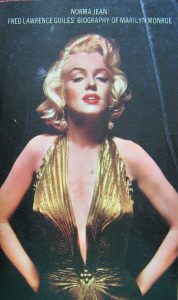


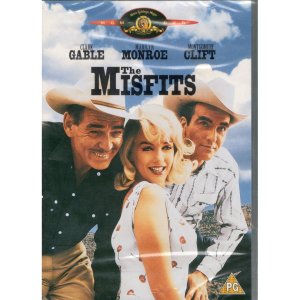
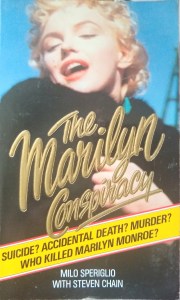

 Norman Mailer’s book about Monroe finished with a photo of Joe DiMaggio, grief stricken on the day of her funeral and he reckons we can perhaps surmise Marilyn’s true worth just by the look on Joe’s face that day. I cannot disagree.
 If I was a professional writer working for a magazine or a newspaper, I reckon that this week I’d be getting a bit of a telling off from the boss as I’ve not really been pulling my finger out. I’ve been feeling a little deflated lately. Maybe it’s an after effect of going to my mother’s funeral or perhaps it’s just a general feeling of disappointment. Every writer wants his work to take off and become a best seller but neither my novel, Floating in Space or this blog, look like hitting the top of the book or blogging charts. Yes, every week brings a new follower and that is good, after all every writer wants an audience, every writer wants readers but a writer needs to produce new content to put before them and just lately I’ve not been delivering the goods. The aim of this blog, as always, is to not only let people know about my books but also to give the reader something interesting enough to make him or her think hey, wonder if Floating is worth buying? (Of course it is, get yourself a copy now!)
 I’ve always been fascinated by transformations either in fiction or in real life but what do I mean by transformations? Well, I have written about transformations before in a previous post. I talked then about Professor Higgins who helped Eliza Doolittle change from a street flower seller to a lady in George Bernard Shaw’s Pygmalion but with this new post I thought I’d start with the story of Dr Jekyll and Mr Hyde.