Marketing, Social Media and the 1970’s.

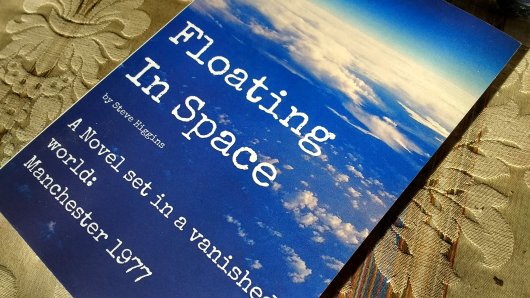
I read a lot about promotions and marketing, all in pursuit of selling my book, Floating in Space, to the unsuspecting public. Many marketeers recommend giving away free copies as a way of driving sales forward. Other marketeers are not so certain. A book is a product of many long hours, even years of hard work and for some, giving it away for free is not an option. For a registered tight wad like me that is something I go along with wholeheartedly.

Another reason is that at the moment I only have one book to sell. It’s not like having a trilogy or a series of books, where giving the first one of the series away will drive sales of the other books. Having said all this, I did run a giveaway lasting for three days in the hope that some new reviews might drive sales up but sales seemed to just run at their normal rate.

Reviews are important to an author. Quite a few readers have given me good reviews on Facebook but where I need them are on my amazon page where the buyers go to look directly at my book.  I suppose not being the pushy type works against me but I have recently added my book to Goodreads where readers with a Facebook profile can log on there and add a review. There are links on my Goodreads author page straight to amazon.

Dear me, bet Charles Dickens never had this trouble!

One of the nice aspects of Floating in Space is that because it has been born out of my past, as well as my imagination, reading it is a rather nice nostalgic experience for me, drawn back into the world of my youth, Manchester in the late 1970’s. Reading the book I can once again soak up the atmosphere of Manchester City Centre and remember those late afternoons and early evenings drinking in pubs like the Salisbury after a day in the office, or evenings playing snooker and pool after a shift going up and down the roads of Manchester as a bus conductor. Sometimes I can almost feel the polished wood of the bar in the working men’s club I used to frequent and even smell the cigarette smoke of the smokers, now a long gone sensation in British pubs. The past is inside all of us and I’m sure many people could do what I have done and take their past life, mix it up with a dash of imagination and some humour and write it all into a book.

So how easy is it to write a book like this? Well, not that easy, I can tell you. However, my book started life as a series of essays about my life in the late seventies. I started to compare the worlds of insurance and accounting and the world of passenger transport. Accounting wasn’t that easy in the seventies. Everything was added up by hand and entered into huge ledgers. There was the rough ledger where all the rough entries and working out and cash balancing was done and then it was all entered neatly into the big blue main ledger.

I am sure that today it’s a much easier process with software that does all the additions and calculations for you. One job that really used to tax me was arranging fire insurance for the offices rented by our tenants. They paid a percentage based on their office space. So for instance, if they rented 50% of the available space, they paid 50% of the insurance. There again, there were other tenants who rented a small office on the ground floor that measured 12 by 8. Now, try converting that into a percentage!

Coming back to the present day, here’s another set of maths questions. If I have 4,619 followers on Twitter, (correct at the time of writing although according to Twitter analytics, I get an average of 4 new followers per day so please make the necessary adjustments when you read this) why then don’t I get that figure following my blog? After all, all my Twitter posts lead, directly or indirectly, to this website. I recently had my Twitter page analysed by one of those writers’ sites that offer stuff like that. This is what they said.

Followers are generally people who just want you to follow them back. There’s no love there or loyalty.
Put it this way. 
Say you had a coffee shop and 2 people walked in:
person a) who is an ardent coffee fan and
person b) who came in basically to get out of the rain.
Who are you most likely to get a sale out of and be able to convince to join your email list to send them more coffee ideas?
Clearly person a) – they already love coffee right?
Person b) – harder work to convince them to do anything. Not impossible but definitely more work.
You need a bunch of person a)’s Steve.
The 2nd thing you may be doing ‘wrong’ is HOW you are going about trying to funnel those blog views. Let me give you some generic advice.
With all due respect nobody is interested in you. 
That’s the bad news.
The good news is that nobody is interested in any of us (so don’t take it personally!)  : )
People are interested in what YOU can do for THEM.

I have to admit, that’s a pretty shrewd assessment of Twitter. Everyone who is on there, with the exception of those who just want to Tweet to their friends about their social life, is out there to sell something, just, as my Twitter reviewer pointed out, as I am. I want people to read my blog and then perhaps think, “hey, this isn’t bad, wonder if its worth buying Steve’s book?” Bingo!

Just one last thought. There was no social media in 1977, the year in which Floating in Space is set but imagine if we tried to do the sort of things then that we do now on Facebook?  Suppose we went for a meal and wanted to share the experience with friends. We had to take a big bulky camera, take a picture of our meal, take the film to Boots or Max Spielmann or wherever, have the film developed, have the prints made and then get copies and send them out in the mail to your friends. By mail of course I mean mail, the Royal Mail, put the picture in an envelope, get a stamp and actually send it after adding a brief message for your followers -I mean friends- such as ‘this looks yummy!’

Social media was hard work in the 1970’s!


If you liked this post, why not try my book, Floating in Space? Click the links at the top of the page for more information.
My Dad, Fletcher Christian and John Lennon

My Dad.

I can’t remember which year my Dad retired from Manchester Corporation. He died in 2000 and he was 72 so I suppose it must have been 1993 or earlier.

Every week day prior to that he rose for work. He had porridge for breakfast, mounted his battered old bike and taking his shoulder bag with his box of sandwiches my mother had made for him and his brew can, he left for the ride to work. He did that every day of his working life and, come rain, snow or sunshine, he rode his bike work. In the mid seventies we moved to a new Manchester overspill estate and the result was a much longer journey for him.

He was a fit man, much fitter than me but sadly he and I wasted such a lot of time when we were younger, not getting on together. One day something tragic happened to me. Perhaps tragic is not the right word although it seemed so at the time. Anyway, I knew I would have to tell Mum and Dad. I couldn’t face Mum so I told Dad. Instead of getting the negative response I expected, my Dad was full of support and from that day on our friendship never looked back.

When he died, those wasted years always seemed to haunt me, but then, we were people from such different generations. Young people and their parents are so much closer these days in terms of cultural identity but for me and my Dad things were not like that. He came from a background where he was given an apple and an orange for Christmas whereas my brother and I, who received a sackful of presents on Christmas Day, were part of a new youth culture involving music, television and film that he struggled to understand.

Dad had served in the South Staffordshire regiment and I remember once my brother did some research and found the regiment had been merged with the North Staffordshire regiment in 1959 and later with other regiments to become the Mercian regiment. He told me that when he had called the regiment to enquire what kind of records were kept, they had asked him various questions. When my brother replied that Dad had done his national service as a private they said rather coldly that records of enlisted men were not kept!

Perhaps then it is only officers that matter to the record keepers of the army. I don’t know why but whenever I think of that phrase ‘enlisted men’, I tend to think of that old film with Clark Gable, Mutiny on the Bounty’ where press gangs roamed Portsmouth to press unwitting men into service with Her Majesty’s Navy.

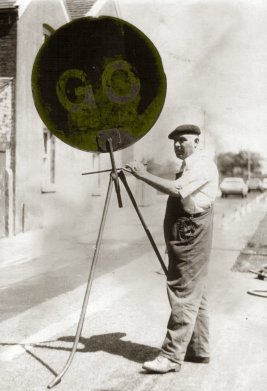
DadHowever they were enlisted, they served and did their duty, just like my dad who was proud of his army service. He served in Northern Ireland, Germany and Hong Kong, and told me many stories about his army life. In fact not long ago when I posted a picture of him at work for the council highways department, one of his old work mates replied mentioning the stories he used to tell his workmates about his army sergeant major.


Fletcher Christian.

There have been so many versions of Mutiny on the Bounty but the one my Dad and I loved was the Clark Gable version. He saw it first time round at the cinema and I saw it on television. If you haven’t seen it, and I can’t for a moment believe you haven’t, it is the supposedly true story of Captain Bligh who so ill-treated his crew that they mutinied and set Bligh adrift on the high seas in a long-boat. They took the ship back to Tahiti, together with some natives and came across Pitcairn island. The island had been marked incorrectly on the British naval maps of the time so they decided to settle there. The ship, the HMS Bounty, was stripped of everything possible and then burned, stranding the mutineers on the island.

The settlement descended into conflict and jealousy with disputes between the mutineers and the natives. The natives resented being treated like slaves and there were further arguments involving the small group of women on the island. Fletcher Christian was reportedly murdered but there were constant rumours he had somehow returned to England.

Whether events happened as they have been portrayed in films is anyone’s guess. Was Bligh’s conduct of his men so poor that they were compelled to mutiny? Or was the truth that the pleasures shown to them on the Pacific island of Tahiti were too good to leave? I have to say that if I had been one of the mutineers, the thought of spending my days on a distant deserted island would have not appealed to me and the burning of the Bounty would have been a disaster, stranding the mutineers on Pitcairn. Fletcher Christian came from Cockermouth in Cumbria and thoughts of returning there must have plagued him or at least arisen in times of quiet consideration.

Sometimes, now I have reached the status of the semi retired, I have wondered about living abroad. France appeals to me greatly. I like the relaxed lifestyle, the wine, the approach to food and restaurants and the cheap property prices. However, my French is very much the French of my schooldays and I often wonder whether I would pine for a pint of Guinness or a Wetherspoons meal on curry night. Similar thoughts arise when I have considered Spain or Lanzarote. My Spanish consists of a few phrases, Buenos dios and la cuenta, por favor (may I have the bill please.) On the flip side many brits live happily in foreign climes and in some places, especially Spain and Lanzarote, English is freely spoken.

John Lennon.

One man who chose to leave his home and live abroad was John Lennon. Lennon, suffocated by the incredible fame of the Beatles, decided to relocate to New York. New Yorkers were not overwhelmed by his celebrity status and he found himself a large apartment in the impressive Dakota Building on the corner of Central Park West and 72nd Street. Lennon lived there from 1973 to 1980 when he was shot to death by a disturbed fan called Mark Chapman. Lennon lived with his wife Yoko Ono and son Sean and retired from public life during his son’s early years. His comeback album Double Fantasy was released in 1980 and Lennon even autographed a copy for his would be assassin just hours before Chapman shot him.

The last vinyl album I ever bought, and the last one that John Lennon made. Double Fantasy. £2.99, what a bargain.

I can imagine Lennon in his room in the Dakota, looking down on New York and reflecting how far he had come. Did he ever think of his home in Liverpool? I am sure he did. He corresponded regularly with his Aunt Mimi who brought him up at their home, Mendips, in Liverpool.

Years ago when I used to work in Liverpool I visited his childhood home. I had always imagined Lennon came from a rough council house background but his former home is in Woolton, a pleasant leafy suburb of Liverpool with semi detached private houses and some rather nice pubs and shops. Not quite what I had expected.

One of the reasons that John Lennon came to mind for the end of this post is that over on Twitter where I spend a lot of time plugging this blog and my book, I’ve been running out of ideas for Tweets. Then I started tweeting a lot of ‘quote’ Tweets, you know the sort of thing I mean, a picture of some celebrity alongside a famous quote from them. I started with writers and various famous people like Einstein and Churchill, then I moved onto musicians like Bob Dylan and eventually John Lennon. Lennon appeared to be a popular choice and his quotes got a high percentage of likes and retweets bringing the words of John Lennon (and my web page) to new readers. My favourite was this one, one I hadn’t even heard of before but I liked it so much I’m thinking of having it as my motto.

Everything will be okay in the end. If it’s not okay, it’s not the end.


If you liked this post, why not try my book, Floating in Space? Click the links at the top of the page to buy or for more information.

Writer’s block, Russian Women, and my In-box.

It’s great to have lots of extra time to myself now I’m semi-retired and for me as a writer, well, amateur writer I suppose, (and blogger) I tend to use a lot of that time for writing. The crazy thing is, when you get a nice quiet day, all your jobs done, they’re the jobs Liz arranged for me before she went out to work, it’s great to fire up the laptop and get cracking. The big problem though is this, what do I write? Yes usually ideas seem to just flow for me, especially when I’m at work and it’s all getting pretty busy.

Now I’m not at work and I’m not really busy, the ideas aren’t coming. I could tell you about my TV viewing but I did that last week. Then there’s dealing with semi-retirement but I did that one the week before. I have actually got twelve posts in my draft box but none of those seem to be calling to me, not one of the twelve is saying “finish me!”

One of the problems of writing on a laptop is that eventually, even if you are beavering frantically away on a new post, the internet will eventually beckon. What has been quite amusing this week is how a shocking and outrageous event on a United Airlines flight has spawned an increasing number of spoofs using footage from the movie Airplane. If you’ve been away holidaying in the jungles of Borneo and have been without wi-fi then you won’t know that on an overbooked United Airlines flight, the staff simply picked a passenger at random and ejected him from the aeroplane! Smartphone video footage of the incident has gone ‘viral’ as they say. How the airline will recover from this PR disaster is anyone’s guess but the poor fellow in question, hauled off a flight because they were short of a seat for the staff, must certainly be considering legal action and American lawyers will probably be queueing up to take on the job. Fame and fortune and an easy legal victory must surely await the man who takes that one into the courtroom!

Anyway, Internet surfing done, next is a ‘quick’ look at my emails. I see I have one from the National Westminster Bank saying there is a problem with my account and I need to click on a link and enter my password to get it sorted. As it happens, I don’t have a Nat West account so whoever you are with your beady eyes on my hard earned cash, this scam didn’t work but people are falling for these scams in increasing numbers. Never click on emails asking for your passwords and if you are not happy with any type of mail you receive, call your bank but don’t use any links or numbers in the suspect e-mail.

This Russian lady is probably an Internet Scammer!

Also in my inbox is yet another e-mail from a Russian lady wanting a relationship with me! Poor girl! I have been targeted lately by numerous Russian ladies and not long ago I e-mailed one of these women back and said, look, I think you have fallen for a scam. I’m not on any dating sites and I’m not interested in you. The lady in question, her name was Kristina and she even enclosed a photograph, wrote back a very long letter telling me about her life in a small Russian village, how she was orphaned as a youngster and how she loved my picture and longed to be with me.

Sometimes, when the light gets me in a certain way and I’m wearing my leather ‘pulling jacket’ I tend to think I look quite good, hardly in the Bruce Willis class but acceptable though hardly deserving of anyone’s longing. Not only that, my picture, as far as I am aware, is not on any dating site, Russian or otherwise. Anyway, I wrote back again, told the lady her dating site was a scam and not to pay them a penny, or a ruble more. She wrote quickly back that luckily she had come into a small amount of money and was ready to fly over to the USA to spend some time with me and although she would be low on funds she was desperate to see me.

Yes, I’ve always wanted to visit the USA but hopefully when it happens I won’t be bumping into Kristina from the Russian City of Izhevsk. Of course she could also be after another Steve Higgins, or even the Steven Higgins from Ventura California, who I am constantly advised by the My Life Backgound Monitor Company Dot Com, that important personal details of mine are freely available on the Internet! No they are not and my name is not Steven and the only person who calls me Stephen is my Mum and even then it’s Stephen and not Steven!

Of course some are my details are freely available, for instance my novel set in 1970’s Manchester! Click the links at the top of the page to find out more. Now, back to this week’s post, what can I write about?

Adventures with a Hard Drive TV Recorder

You may have read in a previous post about the numerous advantages, especially to a couch potato like me, of a hard drive TV recorder. Sometimes, I record things and completely forget about them until the day comes when I am free to sit down with a large cup of tea (mandatory for serious TV watching) a cheese sandwich, a chocolate digestive biscuit and see what television delights await me. Here are some recent highlights!

Rising Damp Forever

I do love a good documentary, especially ones about the making of a movie or TV programme. This last week I’ve watched a two-part programme about the TV sitcom Rising Damp. The documentary followed the story of how a play by Eric Chappell was seen by TV producers who then urged Chappell to make it into a TV series. The result was a sitcom that ran for four seasons and was one of the funniest things on TV in the late seventies. Leonard Rossiter’s performance as landlord Rigsby is nothing short of brilliant; a wonderful comic creation. Frances De La Tour played the spinsterish Miss Jones and the late Richard Beckinsale was a virginal long-haired student who shared a room with an African chieftain’s son played by Don Warrington.

A preview of the show billed the programme as a reunion of the cast members, however, if you know anything about Rising Damp, you will know that of its quartet of stars, Leonard Rossiter and Richard Beckinsale are no longer with us. Frances De La Tour is still alive as far as I know but did not appear in the documentary leaving Don Warrington to mostly chat with himself. The reunion appeared to involve Don, former directors, the former floor manager, a production assistant and the writer, Eric Chappell.

To be fair, the documentary was pretty interesting because I love anything like this, the back room story to a successful film or TV show, especially when we get to see the writer talking about his creation. Also appearing were some former guest stars, as well as Christopher Strauli who played the Richard Beckinsale part in the film version. When he first met Leonard Rossiter, the undoubted star of the show, Rossiter told him ‘We know this works as a TV show so if the film is a failure it’ll be your fault!’ No pressure then!

Among other things the programme revealed that De La Tour and Rossiter were poles apart in real life and did not get on well. Richard Beckinsale had just finished filming Porridge and had short hair so was forced to wear a long wig and the writer, Eric Chappell, based the show on a newspaper article about a bedsit tenant who pretended to be the son of an African chief in real life!

Beckinsale left the cast because he felt he was not being taken seriously as an actor and wanted to pursue more dramatic roles. Sadly, he died of an undiagnosed heart condition not long afterwards when he was only 31. Leonard Rossiter went on to star in the equally wonderful the Fall and Rise of Reginald Perrin but died during a stage performance of Joe Orton’s black comedy Loot.

Yes, remind me to dig out my box set of Rising Damp for my next rainy afternoon off.

The Secret life of Bob Monkhouse.

I have seen this documentary before and last week’s showing on BBC Four was a repeat but a very welcome one. Bob Monkhouse was a comedian who seemed to collect everything and the full extent of his collecting compulsion was only revealed after his death in 2003. He kept all his old scripts, all his old notes, even for things like The Golden Shot. He would make up small cards about the contestants with notes about their backgrounds. Then he would go through his joke notebooks which were indexed for subject and if the contestant was for instance a plumber, he would go down the list, look up plumber jokes and use it during the broadcast.

The other thing about Monkhouse was that he was a serial TV recorder. He bought one of the very first home video recorders when the cost was similar to that of a family car, and he set about recording anything and everything. During the 1980’s he apparently had six video recorders in his home and many of his recordings are the only remaining recordings of various TV shows. He had recorded episodes of the Golden Shot thought to be missing and also the only known recording of Lenny Henry’s TV debut. All in all, Monkhouse amassed 50,000 video tapes and numerous other film and audio recordings, all of which were kept in a temperature controlled unit he had built in his garden which he called the ‘Boardroom’.

Despite a career as a TV star, Monkhouse had a hard life. He was married three times, had a disabled son and another who died from a drugs overdose. He worked hard on the TV show The Golden Shot and was then fired for supposedly plugging a brand name on the show. When Norman Vaughn and later Charlie Williams seemed to struggle with the pressure of the live broadcast, Monkhouse was asked to return and he hosted the Golden Shot until the end of its TV run before moving on to Celebrity Squares.

After his death Bob’s daughter donated his huge video and film collection to Kaleidoscope, a television archive company, dedicated to finding and rescuing ‘lost’ TV shows which were routinely wiped or not recorded at all prior to the 1980’s. Pity Bob wasn’t a Doctor Who fan!

The Magic Box

This is one of those movies rarely, if ever, seen on terrestrial TV. Made in 1951 for the Festival of Britain it starred the Manchester born actor Robert Donat with a whole host of stars playing minor and supporting roles. The technicolor photography by cinematographer Jack Cardiff is excellent and the story of British cinema pioneer William Friese-Green is told in flashback by director John Boulting.

Friese-Green thought his troubles were over when he finally produced a working movie camera but his obsession with the project led to a serious neglect of his photography business which collapsed into debt and bankruptcy. When he died he had only the price of a cinema ticket in his pocket. The Magic Box is something of a sad film but well made and a feast for classic movie fans. Even the portraits on the walls of Friese-Green’s studio were of famous British film stars.

The Persuaders.

Roger Moore and Tony Curtis star in this seventies action and adventure series.  Tony Curtis plays  New York entrepreneur Danny Wilde who teams up with Roger Moore as Lord Brett Sinclair to fight crime. Moore is perfect in the part. Pity he was so poor as James Bond! 

In my favourite episode, Danny and Lord Brett go camping and we see Danny getting up the next morning, emerging from his small one man tent. Lord Sinclair’s tent however, just across the way, is a massive tent worthy of an Arab prince. Danny wanders in to find Lord Brett in a huge fully fitted kitchen. He turns to Danny and remarks, ‘I’ve really enjoyed roughing it for once, Daniel!’

The Invaders.

I still have plenty of episodes saved on my hard drive, ready for viewing, of the 1960’s sci-fi series, the Invaders! Roy Thinnes plays architect David Vincent who becomes aware of an imminent alien invasion. As the narrator said in the opening titles:

The Invaders, alien beings from a dying planet. Their destination: the Earth. Their purpose: to make it their world. David Vincent has seen them. For him, it began one lost night on a lonely country road, looking for a shortcut that he never found. It began with a closed deserted diner, and a man too long without sleep to continue his journey. It began with the landing of a craft from another galaxy. Now David Vincent knows that the Invaders are here, that they have taken human form. Somehow he must convince a disbelieving world that the nightmare has already begun!

The Man From Uncle

Time to open channel D because over on the True Entertainment channel, free view 61, they are showing my school boy 1960’s favourite The Man from Uncle. Yes, Robert Vaughn and David McCallum are back in action fighting the agents of the criminal organisation, Thrush. The last episode I caught was called Discotheque and involved a disco, quite unlike any I have ever visited – everyone wore a shirt and tie and there were mini skirted dancing girls in cages. Secret Agent Napoleon Solo’s oxy-acetylene torch-cum cigarette lighter put James Bond’s gadgets to shame and the lady strapped to a moving channel heading towards a cylindrical saw, provided a great finale. Eventually, super smooth agent Solo, helped ably by colleague Illya Kuryakin, foiled a plot to spy on head of Uncle, Mr Waverley, or was it to obtain secret Thrush files? I forget now but I loved it all anyway.

Love those opening titles with that fabulous theme by Jerry Goldsmith!

Press that pause button, time for another cuppa!


If you liked this post, why not try my novel, Floating in Space? Click the links at the top of the page for more information.

A Monkey, A French Canal Barge and A Million Pound Cheque.

The French Canal Barge.

Money, as they say, makes the world go round. We work day after day to bring home the money so we can pay for our home, our cars, and all the essentials we need and hopefully have something left over for a little luxury. A night out in the pub or a meal at a restaurant. A holiday, a new TV, or even a bigger and better home.

Just lately, I feel fairly flush in the financial department because I’ve joined the ranks of the semi-retired and the lump sum from my pension is starting to burn a hole in my pocket. The problem with coming into money is that for someone like me, I don’t really know how to spend it. I don’t want to waste it and I certainly don’t want to fritter it away. I could do with a new car but a few years down the road my investment will surely have reduced in price, just like all cars do. My present motor, my lovely Renault Megane convertible cost a considerable sum a few years back but now . . . The other day I typed all my car details into the website webuyanycar.com only to be confronted with the measly offer of £398!

Well, thanks for the offer but I think you can keep your £398 and I’ll hang on to my car for a while longer. In fact I fully intend to keep driving it until the scrapyard beckons.

I often wonder what I would do if I won the lottery. Not long ago I received an e-mail from the lottery people heralding good news and urging me to check my ticket. Good job I did because the £3.20 winnings came in pretty handy that weekend enabling me to buy almost a full round of drinks. So what would I do with a really big win? Well, a new car would be nice. Another convertible perhaps or something more in the way of a 4X4? I’ve always fancied one of those Nissan Navara pick-up style motors. I’ve always thought it would be handy for travelling through France – plenty of room to whip a few wine boxes in the back ready for supping back in the UK. I did think of test driving one a while ago but when I climbed into the seat the driving position was not for me, not to my taste at all but I’m confident I could find an appropriate motor, given time.

Next on my purchase list would be a nice house and perhaps a holiday home in France, somewhere towards the south of the country because I really don’t like the cold. Perhaps one of those large French canal barges might suit. I could spend the summer in the lush Loire then chug serenely south when the weather cooled keeping an eye out for suitable bars and bistros along the way. A change of blog might be in order. Letters from an Unknown Diner sounds pretty good!

A million pounds would be a nice tidy sum but just thinking about that figure reminds of a time many years ago when I came into close contact with that very sum.

The Million Pound Cheque.

A long time ago when I was a teenager one of my very first jobs was as an accounts clerk. One day there was the hum of excitement in the office and my colleagues and I were advised of the imminent arrival of a £1 million cheque.  As I was only a mere teenage accounts clerk,  I was running low on the pecking order to see this cheque, although it was actually my job to process it as I did with all the other cheques that came into the department. In due course, one of the very senior managers came down with the cheque and with great reverence it was handed to my boss Mr Ross. Mr Ross perused the cheque for a while along with a small clique of other managers and then conveyed it to the senior clerk, Mr Elliott. After marvelling at this great artefact for a few moments, he then passed the cheque to me. Numerous staff members from our and neighbouring departments also came to take a peek at this financial wonder which I believe, was the result of the company either selling off our sister company, Federated Assurance, or doing some fabulous property deal.

Anyway I did my job and duly entered the cheque into the ledger then put it in the safe ready to go down to banking prior to three PM, as in those days, banks closed at three PM. ‘Good heavens’, declared one of my managers, ‘we can’t just leave the cheque there, think about the interest!’ So I was despatched on a special journey to the bank for this very special cheque. Actually that suited me quite well. After paying the cheque into the local bank I sauntered round the corner to the sandwich shop, ordered sausage on toast and made my way quietly back to work. Just as I arrived back in the office I realised that the senior management staff were  still there, waiting for news. Were there any problems? What had happened? They seemed rather disappointed when I told them that no cataclysm had occurred, the bank had not come to a standstill but the million pound cheque had been routinely deposited. Thinking back, I’m not sure I liked the way they were looking at me, perhaps they knew all along I’d been to the sarnie shop!

Anyway, getting back to the cheque, it was actually not really that impressive. It was not printed but hand written in a very scrawling, looping, and altogether unreadable hand and it occurred to me that the payee, Refuge Assurance Company limited, could quite easily be changed to Stephen Higgins Esquire had there been some  tippex handy. As this was an accounts department you might think we had a great deal of tippex, however tippex was completely Verboten.  Yes tippex was never used, and in the event of a mistake being made, the procedure was to strike a line through the incorrect number, sign your name, date it and then add the correct figure.

The Monkey.

One summer we employed a young lad called Jonathan, fresh from university who had a degree in accounting under his belt and was rumoured by all and sundry to be a candidate for future management. Our boss, Mr Ross, was highly impressed by him and seemed to take every opportunity to praise his achievements to me, the proud possessor of four O’ levels. Personally I thought Jonathon was a bit of a, how can I put this? Plonker, is probably the word I am searching for. Yes, Jonathan was something of a plonker who appeared to me to be easily bored.

One day Mr Ross approached me and after showing me the ledger, asked was this my handwriting? I replied no, it wasn’t. Mr Ross then asked me what I made of some figures at the bottom of the page. I replied that I wasn’t sure although a clear figure was apparent and by figure I don’t mean a numerical figure but something more artistic. Jonathan our new clerk was then asked about the figures. He took a rather long glance at the ledger, thought about it for a while, and then told Mr Ross that the figure in question was in fact a monkey.

A monkey? replied Mr Ross. I say replied, although this is really a quite inadequate word as the phrase ‘a monkey!’ came out in a very distorted, even agonised way. Anyway, after some further thought, Jonathan confirmed he was responsible for the monkey. It was actually quite a good representation of a monkey and it looked quite at home among the accounting and various totals and sub totals. It turned out that in a rather quiet moment in the office Jonathan had idly decided to draw a monkey on the ledger for some reason.

I too, in quieter moments sometimes used to do drawings or write poetry and stories. I tended to use scrap paper or a notebook and perhaps that is why I managed to hang onto to my job somewhat longer than Jonathan hung on to his, despite me not being a university graduate.

That, as you can easily imagine, turned out to be Jonathan’s last day on the job and he was never seen again, although any time I happen to be looking at art and come across something to do with monkeys, I always wonder whether he made his mark in accounting or the art world.


If you enjoyed this post, why not try my book Floating in Space? Click the links at the top of the page for more information.

Things to do when you’re Semi-Retired

Reading.

Yes, I don’t know about you but I have quite a lot of books and quite a few of them are big heavy hardback volumes, totally unsuited to popping in your bag to read at work or taking on holiday. Semi retirement means this is the chance for me to get stuck into William L. Shirer’s History of the Third Reich or the Life and Art of Charlie Chaplin by David Robinson. Yes, all those big chunky hardback books I’ve collected over the years and never read, I can now get stuck into.

Walking.

Exercise is important as we all know and a great way to burn off those extra calories is to just walk. Here in lovely St Annes in Lancashire it’s so nice to walk down to the beach and enjoy the sea and the breeze. Yesterday after walking for about thirty minutes my right knee became sore, clearly not used to this unexpected workout. Happily, on the seafront there are plenty of seats for those old people, like me, who sit and watch the sea. I always thought those old guys who sit and watch the sea were bored. Of course not, they just stopped to rest their sore knees!

TV.

Hey don’t discount the television. Yes there is loads of tripe on TV these days, especially since the advent of reality TV. Someone, somewhere must be watching things like The Only Way is Essex although personally I think the producers are just using new technology to screw with the viewing figures so that the BBC will keep renewing the series! Anyway, with all these extra channels the dedicated couch potato can always find something worth watching. Take full advantage of your hard drive recorder and get those classic movies and TV series from the 60’s and 70’s recorded so when you are faced with a barrage of the Jeremy Kyle Show, The Real Housewives of Orange County, Judge Rinder, Made in Chelsea and other TV delicacies, rebel and crank up The Persuaders, The Prisoner, The Saint or a good old Carry On film! It’s well worth reviewing the movie output for the coming TV week because all manner of hidden gems can pop up unexpectedly on all sorts of oddball channels. I recently recorded the splendid and not often seen movie The Magic Box starring Robert Donat as William Freize-Greene, one of the early cinema pioneers. Not something you will find on Film Four at prime viewing time.

Nights out.

Yes but what about work the following day? What the heck, now I’ve got six days off I can easily go for nights out during the week. I can even spend an afternoon in Wetherspoons drinking and putting the world to rights with some other old guys, many of whom are well versed in the arts of afternoon boozing!

Writing that next novel.

Yes, writing that next novel. Might have to take a back seat for a while. What with all this walking, reading, and boozing, I’m finding myself a little short of time!

Make yet another Video about Floating in Space.

Hey, there’s always time for another Floating in Space video!


If you enjoyed this post why not try my book Floating in Space? Click the links at the top of the page for more information!

Writing, Elvis Presley, and the Year 1977!

This has been an interesting week for me because it has been my first week as a partially retired worker! Yes, instead of the grind of six days on, three days off, I have completely reversed the equation. Now I work three days on and six days off, a much more agreeable working pattern as you can imagine.

This should leave me with more time to relax, more time to drink beer, see old friends, drink beer, have meals out, drink beer and, well, you get the picture! It should also leave me more time to indulge in my favourite pastime; to write. I still have my blogs to produce and one day I hope to actually get round to finishing the sequel to Floating in Space.

The problem which arises there is that I have two favourite places for writing, well, not actually favourite places but places where I seem to be most creative, where ideas seem to flow. One is my car. I settle down in my motor, slip something relaxing in the CD player and after a while something will come to me and I either remember it, or if it’s a little bit more complicated I switch on my hand-held tape recorder and start blabbing away into it. (Just a minute, hand held device in the car, is that still legal?)

The other place is my work desk. As soon as I sit down and start to do some work, ideas start coming to me. Just lately we have had an internet ban at work so I tend to email myself at home with an idea or start off a word document and add to it as the day goes on. Now, as my hours at work have been reduced and correspondingly, my time in my car, I can see my output reducing.

Another issue is that at home, my laptop is at the centre of my universe. I use it for writing, for creating my videos and graphics and for editing my photographs. Now I put that sort of activity down as ‘creative work’. I’m sure you can see where I’m coming from but Liz on the other hand marks it down as ‘twatting about on my laptop.’ Now, you can see how a difference of opinion could occur.

Last week as I mentioned in my previous blog post, my brother and I went into Manchester to chat, have a meal, drink beer, and shoot some video. Now I did have something of a plan for the shoot. Floating in Space is set in 1977 and I wanted to evoke the feel of that particular year by mentioning some of the year’s events and characters. I had not brought my notes with me and relying on my memory was not a great idea. Later I realised I had forgotten to mention the most shocking event of 1977. The death of Elvis, the King of Rock ‘n’ Roll!

Elvis Presley was once one of the most famous people on the planet. He was the man who almost single-handedly started off the modern pop music phenomenon and yet by 1977 he could only really be considered as a sort of easy listening musician. His days at the cutting edge of the music business were long gone. Elvis was a religious man who hated drugs but at the same time was a drug addict, addicted to prescription drugs. In his mind, drugs prescribed by a doctor were something different to illegal drugs. In some ways you can see where he was coming from but he would ask a doctor for a prescription of some pill and the doctor might only prescribe two boxes of the drug. Elvis would then go to another doctor and they, flattered by the situation of having Elvis as a patient, would happily write out another prescription.

Elvis had long lived in a sort of twilight world. He slept all day and was awake all night. A big problem for him was insomnia and he used numerous drugs to help him sleep. Being so famous meant that normal life was  hard for him. If he popped  to the local store he would cause a riot so he did everything at night. If he wanted to see the latest movie, he would pay the manager to open up the cinema during the night. On the day of his death he even paid a visit to his dentist at night, after all, everyone would bend over to help the King and to be on his payroll. Elvis took pills to help him go to sleep and pills to help him wake up.

Elvis’ gifts of cars to friends, family, employees and even fans was legendary. What I think is sad is that when the local car dealers knew Elvis was on a spending spree, they would hike up the prices of the cars to make an even bigger killing. Elvis and his stepbrothers, who worked for him as bodyguards and assistants had a favourite saying, ‘taking care of business’, but it was Elvis himself who took care of business for all his extended family, however, in 1977 his business affairs were looking a little rocky. His records were not selling as well as they used to and he was particularly poorly served by his manager, Colonel Tom Parker who took not ten percent, not twenty percent, but a whopping fifty percent of Elvis’ earnings.

Elvis was beset by numerous health problems and on the night of 16th August, 1977, they finally overcame him. He was only 42 and I remember being very shocked by the news. When told by a reporter about Presley’s death John Lennon could only comment dismissively ‘Elvis? He died years ago.’ Liz was in France at the time and Elvis only warranted a small inch high column in the inside pages of the newspaper. When she mentioned it to the owner of the newspaper he asked ‘who is Elvis?’ Perhaps even his considerable fame had not penetrated to the South of France.

Perhaps I should have talked more about Elvis in my video or more about the other events and characters of that year. Still, if you want to find out more about life in 1977, you could always buy my book!

Anyway, I’ll have to be off now, I need to do some writing  -sorry, some twatting about on my laptop!

Manchester, Metrolink and the Saga of a Mobile Phone

The other day I was staying at my Mum’s house in Manchester. It’s always nice to be back in the old home town. I was meeting my brother in the city centre and he advised me the best way to get there was by using the Metrolink, Manchester’s tram service.

Now, from my Mum’s place to Manchester city centre by car, it takes about twenty to thirty minutes, depending on traffic. The bus which comes down her road takes nearly an hour, why? Because it takes in a tour of various small estates within the larger housing estate of Wythenshawe, then takes another tour around Sharston and Northenden, eventually ending up in Piccadilly.

The tram is no quicker. It too takes the passenger on a tour of Wythenshawe before passing through Chorlton and Trafford and finally ending up in Manchester.

Cornbrook is a place I’ve never heard of before. It’s a remote tram staging post at the outskirts of the city centre. It looks like a vast industrial area where in the recent past, passengers from Manchester airport have to change to get to the city centre. Metrolink have done a lot of advertising recently telling the public that we no longer have to change at Cornbrook for the city centre: Wrong! You can go a stop further to Deansgate, the very edge of the city  but if you want to go to the heart of the city, Piccadilly for instance, you still have to change trams so sorry Metrolink, your publicity is just not true!

I should add that there is a tram every few minutes so it’s not a great inconvenience to have to change but it’s still rather annoying because the trams are always pretty packed. They vary from absolutely jam-packed to pretty busy and it makes you wonder where all these people come from. Are the buses all now running empty? Are there hundreds of cars left at home or have a great load of travelling public suddenly appeared from nowhere? I don’t know but the trams are certainly packing them in.

One other observation about the trams: It is a very impersonal way of travelling. There are no conductors and the driver is shut away in his cab. The passengers are all locked into their smartphones, many with earplugs further blocking out the outside world and passengers have to buy their tickets from a machine by the station platforms.

Anyway, it was nice to be in Manchester again. My brother and I were due to shoot some video of me blathering on about my book, Floating in Space, and once again urging the public to buy it. He however had found a mobile phone, a rather nice Samsung device costing I would guess between 150 to 200 pounds. He went to drop it in at Wythenshawe police station, a new building erected in the last few years. It is pretty big so I assume the local constabulary are expecting a lot of business. Anyway when he went round it was closed, as was another police station he tried. He called the police on the non emergency number but the officer who answered urged my brother to go to the station!

A little frustrated he had brought the phone with him to Manchester and I said we could go to the police station near to St Peter’s square and relax afterwards with a drink in the old pub the Abercromby, a watering house I had not visited in years. Alas, the cop shop was closed down and looked ready for demolition, no doubt ready to make way for a brand new futuristic office block which as we know are in short supply these days, so we took refuge in the pub.

The Abercromby, actually the Sir Ralph Abercromby was one of those pubs that is a little like stepping into a time capsule. The decor was authentic seventies with lots of stained dark wood and leather seats and they served a decent pint. I later read on the internet that it was the model for the pub in the TV show Life on Mars. The former footballer turned property developer Gary Neville apparently wants to knock down not only the pub but an entire block in the area to build two skyscrapers and a hotel. The fact that the pub dates back to the early 19th Century and is the only structure remaining from St Peter’s Field, site of the 1819 Peterloo Massacre clearly means nothing to him or to the council planners.
The mobile phone was locked so we were unable to get access to any stored numbers and we also noticed it was set to silent so it wasn’t easy to pick up incoming calls. Two calls came and went while we chatted, both of us too slow to pick up the call. Eventually my brother answered a call from the owner, arranged to meet him and hand over the mobile. That sorted, we decided to get on with our video shoot.

There was another camera crew in our chosen location in St Peter’s Square. They had an impressive looking camera and tripod but we found ourselves a spot away from them and with my mobile phone sized video camera, hand-held by my brother, we set to work. The result was something vaguely similar to other videos I have made but this time I tried to evoke the spirit of the 1970’s by mentioning people, music and films from the time. For instance, in 1977 (the year Floating in Space is set) the Prime Minister was James Callaghan, the US President was Jimmy Carter, a hit album from Fleetwood Mac was Rumours and so on. I’ll post the result after the usual editing process. (I edit in a way similar to George Stevens, the director of Giant with James Dean and Shane starring Alan Ladd to name but two of his classic movies. I review all my footage, all fifteen minutes of it, and take my time with the final cut. Any similarity to George Steven’s work will probably not be evident!)

The fellow who had lost his mobile duly arrived to meet my brother, said thanks and took away his phone. Now I may sound a little churlish here but my brother had saved the man a good £150 to £200. He had made numerous efforts to hand the phone to the police and had politely resisted my outrageous but not totally serious suggestion to keep the phone for himself. In a similar situation I think I might have offered £10 or even a fiver to the finder of my lost phone for his honesty and efforts.

No such luck on this occasion so whoever you are Mr Recently Reunited with your Mobile Phone -shame on you!


Floating in Space is available from Amazon.co.uk Click the links at the top of the page for more information.

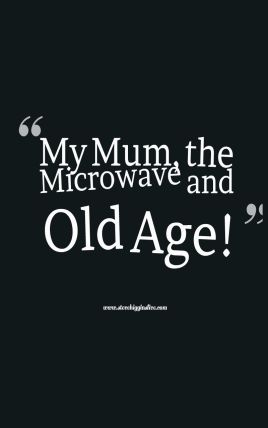
My Mum, the Microwave, and Old Age.

quotescover-jpg-95I wanted to write a post about age and getting older and then I thought to myself, am I the right person to write this? Because of course, I’m only . . . Well, now I mention it I’m actually sixty, yes, sixty years old. Sometimes it’s hard to get my head round that fact because I don’t feel sixty. Well, not inside anyway. On the outside it’s another matter.
You may have seen some of my videos on this site; ones where I talk to the camera and try to encourage people to buy my book. The other week I thought that perhaps it’s time to shoot a few new ones. This time I started with my iPad thinking how much easier it would be. I’ve got a special iPad mounting for my tripod and I can set up the shot easily with the self-facing camera. No need for endless test shots to get the framing right. Anyway, it wasn’t as easy as I had thought because outside on a sunny day it’s hard to see your iPad screen.

Back indoors to check out the finished result and my first thought was what is this? Who is that old guy on the screen? Maybe I need to get down to the gym and get myself toned up a little because for the first time I feel like I really do look my age. So, I may not feel that old on the inside, apart from a few aches and pains in my back but on the outside it’s clearly a different story.

Anyway, no more filming that day but then again, perhaps it was the light. Yes and I have just had a rather short haircut. On a better day I’d probably look more like my normal self. Yes, that must be it!

Still, if I have problems getting to grips with my age, I wonder what it is like for my Mum?

Over forty years ago, when I was a teenager my Mother and I used to have conversations like this:

ME: (Shouting from the top of the stairs) Mum, where are my jeans? (Shouted with an element of frustration.)

MUM: (Shouting from the kitchen where she is either cooking, cleaning or ironing.) Which jeans do you mean? The faded blue ones or the dark blue ones?

ME: (Slightly taken aback, of course I’ve got two pairs, which ones did I mean?) The faded blue ones!

MUM: They are on a hanger in your wardrobe, on the right hand side, next to the black cord trousers. (That son of mine couldn’t find the trousers if they were hanging in front of his face!) The dark blue ones are in a pile waiting to be ironed which I can’t do now because I’m BUSY!

Fast forward forty years and more to 2017. My Mum is 87 years old and we still have similar conversations; only nowadays they go like this:

ME: Have you seen my green top?

MUM: Green top? What green top? I’ve not seen a green top here.

ME: It’s the one I always wear. (I don’t have a lot of clothes at my Mum’s, just a couple of tops, the green one for when it’s warm and the beige one for when it’s cold.)

MUM: No, never seen a green top.

Just then I realised how hot it was in my Mum’s house. I was really sweating so I turned off the heating and dropped the fire down a few notches. OK, it is winter but it wasn’t that cold outside. Anyway, back to the green top search.

I took a look in the washing basket. Not there: Nothing in the washer itself. There is a pile of stuff, mainly towels and things on a small chair by the washer and there I find the green top. Not only that but there is a bag of onions from when we went shopping the other day and I recall the conversation from a few days later when I said ‘where did you put the onions?’ Mum answered that we didn’t have any and we’ll get some next time we go shopping. Yes, there they are, those same onions, languishing, for some reason in a pile of towels.

Just over twelve months ago my Mum was reasonably fit and active. I used to visit her and I’d usually stay for a couple of nights. She always had the two work shirts that I keep at her house ready for me, washed and hung up and she’d usually ask me if I wanted anything in particular for my dinner. I’d tell her either what I fancied, or whatever she had in mind would be fine. I’d usually ask if she want me to get any shopping in, to which she would always say, ‘No. When I can’t get to the shops myself I’m finished.’

In the past she used to trundle off to the shops pushing a little trolley thing that Liz found for her in a house clearance. It’s just a set of handlebars and some wheels with a space to hold your shopping, and it’s good to lean on while you walk. Mum used to potter away trundling ever so slowly with her trolley but she’d take her time, get her shopping and return.

Then the day came early last year when her legs started to fail due to her arthritis and she couldn’t get to the shops. Now, either my brother will do her shopping, or me. When I’m on my way I’ll call her and ask ‘What do you need?’ Mum will usually reply bread, milk and anything I want for myself so I’ll get the requested items and anything else I can think of for our dinner.

Mum’s memory is a little hit and miss these days too because when I arrived there last week, duly laden with bread, milk and other things she had asked me to bring, my brother arrived soon afterwards. He had with him exactly the same food order. Mum had asked us both to bring the same things!

It was also rather hot so I turned the fire down and reset the thermostat to something reasonable. Later, when I was getting myself sorted for work the next day I asked ‘Mum, where are my blue work shirts?’ My Mum replied ‘You didn’t leave any shirts. There are no blue shirts here.’ After a short dispute in which she insisted I had no shirts at her house I went off for a search and I found the shirts hanging up in her wardrobe!

When I came down the stairs to tell her the first thing she said was ‘It’s a little chilly, I’d better put the heating on!’

Not so long ago I bought Mum a microwave for Christmas. A microwave is an indispensable item in a modern kitchen. Microwave meals are easily sorted in a few minutes and items from the freezer are quickly defrosted. I told Mum how to use it and showed her some simple things like how to heat a tub of baked beans in a few minutes. Simple stuff like that.

Her favourite breakfast item is porridge. I explained how easy microwaved porridge can be. Next time I was shopping I picked up a box of those little sachets of oats, showed her how to place them in a bowl, add milk and two minutes later, there is your porridge.

A few days later, I asked her how she was going on with the porridge sachets. She said they were perfect, and told me how easy it was to empty one into a pan, add milk and stir and . . well, a few minutes later, perfect porridge!

You have to laugh, otherwise you’d cry.


What to do next: Here are a few options.

Share this post on your favourite social media!

Hit the Subscribe button. Never miss another post!

Listen to my podcast Click here.

Buy the book! Click here to purchase my new poetry anthology.

Click here to visit Amazon and download Floating in Space to your Kindle or order the paperback version.

8 Great Books from my Formula One Collection

Ayrton Senna
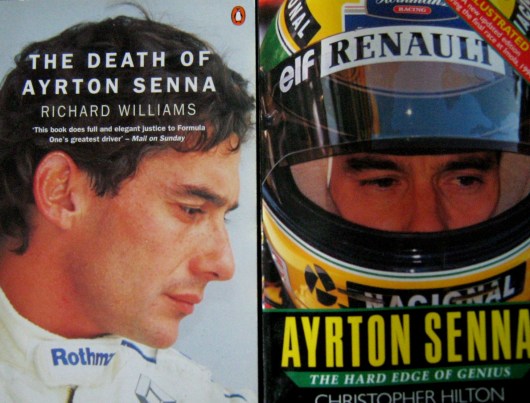
Ayrton Senna is one of the all-time greats of formula one. He is an absolute legend of the sport and I have about 4 or so books about him. The biography by Christopher Hilton, Ayrton Senna, the Hard Edge of Genius, is a pretty good one. A long time ago I ran a shop in Manchester called Armchair Motorsports and although I didn’t make much money, I did do a hell of a lot of talking about F1. I had a number of serious motorsport memorabilia collectors as customers and if they were not on the phone asking me to find a copy of this or that book, they were in the shop gassing about motorsport. One customer wanted a book about Senna and I managed to get him a copy of Hilton’s book. He told me that the most remarkable thing about the book was the list at the back, itemising Ayrton’s race records. The list went like this – 1st, 1st, 1st, DNF, 1st, 1st 1st, DNF. All the way through his career until his formula one days. DNF means did not finish. Senna either won his races or failed to finish which meant either his car failed him, or he crashed. Most of the time he crashed and that gives us an indication of his way of thinking, which must have been win at all costs. It also explains why he was not the most popular of drivers.
I remember visiting Silverstone in the late 1980’s and Senna was profusely booed every time he passed our location. Of course, times change, and now Ayrton is venerated as one of the legends of the sport.
Richard William’s book, The Death of Ayrton Senna, narrates the dreadful events of formula one’s black weekend at Imola, back in 1994. Brazil itself was crushed by Senna’s death and I honestly feel that the reaction of Brazil to the tragedy was even greater than the UK’s reaction to the death of Princess Diana. A fascinating but ultimately sad book.

senna32700905692_o

Murray Walker
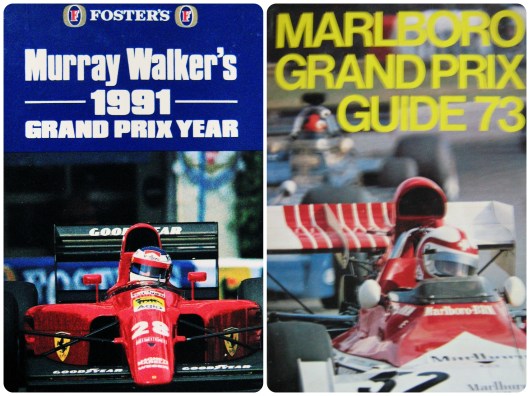
Murray is one of the great characters of F1 racing. Somebody once said of Murray that in his quieter moments ‘he sounds a little like a man with his trousers on fire!’ That certainly sums up his passionate and energetic commentary style. Formula one will never be quite the same without him. Murray has published a number of books about the sport including his autobiography and many titles like the one pictured here.

Marlboro Grand Prix Guide 1973
This is one of the oldest books in my F1 collection. In years gone by Marlboro, the cigarette manufacturers, contributed a lot to motor sport. They sponsored many teams and drivers including the McLaren team, and produced many books and annuals like this one. In the 1970’s they sponsored the Prix Rouge et Blanc, a prize given to the driver voted man of the race by attending journalists. Nowadays we are mostly free of the noxious fumes of cigarette smoke but the cigarette companies did make a substantial contribution to sport in days gone by. On the cover of the guide is Clay Reggazoni driving the Marlboro backed BRM and close behind is Emerson Fittipaldi in his black and gold John Player Special aka Lotus 72. Those were the days . .

picmonkey-collage

Niki Lauda
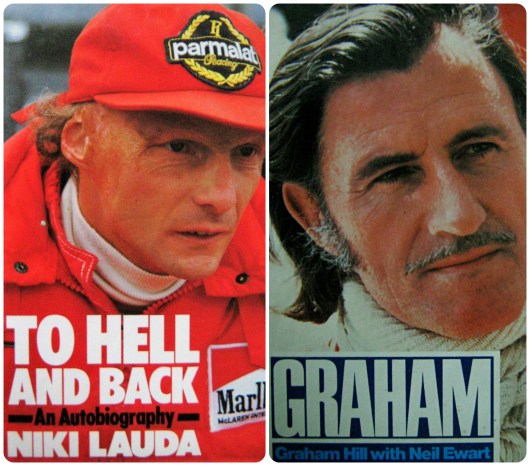
If someone had said to me at the end of 1973 when Jackie Stewart had just retired that Niki Lauda would be the next great champion of formula one, I would have laughed in his face. In my eyes it was obvious who the next great driver was. It was Ronnie Peterson. Had I tested those theories with a substantial cash wager I would have found myself out of pocket because Lauda won two world championships, retired, then made a comeback and won a third championship. The story of Lauda’s dreadful crash at the Nurburgring has been told many times, it’s even been made into the movie ‘Rush’ directed by Ron Howard. To Hell and Back is Niki’s story in his own words and a great story it is too. On his return to F1 at Monza after his terrible crash, Lauda drove out onto the track and was so scared he began to shake uncontrollably. Nevertheless, he carried on, overcame his fears and became a motorsport legend.

Graham Hill
Another of the legends of formula one, Graham Hill, must be one of the great characters of the sport A double world champion and father of future champion Damon Hill, Hill was killed in a light aircraft crash in 1975. He was the only driver ever to win the triple crown of motorsport –the Le Mans 24 hours, the Indianapolis 500 and the Monaco Grand Prix. The book below, written in his own tongue in cheek style is a great read. In the days when I ran my motorsport memorabilia shop as mentioned above, I came across a signed copy of Graham’s previous book ‘Life at the Limit.‘ I was sorely tempted to keep it for myself but I thought no, think about the business, be professional. I sold it to a collector for a fair old sum but every time I read something about Graham I think -what a fool, why didn’t I keep that book!

picmonkeyed-collage

Gilles Villeneuve
In some ways I’ve never really gone along with the hero-worship of Gilles Villeneuve. Then again, some people cannot understand why I think Ronnie Peterson is one of the F1 greats. Each man to his own, I suppose.
Villeneuve was killed in qualifying for the Belgian Grand Prix in 1982. The facts of Villeneuve’s accident are well known -he crashed into a slow-moving car- but his death is perhaps only really explained under close analysis. Villeneuve was on a slowing down lap, on his way back to the pits after a handful of fast qualifying laps but still, he kept the hammer down, his right foot pressed down to the floor when there was no real need for absolute speed. So why? Why was he going so fast?
One answer is simply that was the way he drove; fast. Foot down to the floor. Full stop. Another is that he was still estranged from team-mate Didier Pironi, who he thought had unfairly beaten him in the previous Grand Prix at San Marino in Italy. The two had diced together for the length of the race, team leader Villeneuve thought they were putting on a show, Pironi thought they were racing. When Pironi took the chequered flag it was an act of betrayal, or so Villeneuve thought and when they arrived at Zolder for what would be Villeneuve’s last Grand Prix, Villeneuve was still seething. And so perhaps that state of passion was a factor on his last lap.  Author Gerald Donaldson has produced a great motor sporting read and this is a book well worth looking out for.

Nigel Mansell
I’ve got the oldest book in my collection here so I may as well finish with the newest addition. Staying On Track is an autobiography by Nigel Mansell, who along with Prost and Senna was one of the three top drivers of the 1980’s. The Tifosi, the Italian Ferrari fans, named Nigel Il Leone (the Lion) when he signed up for the Scuderia In 1988, the last driver ever to be personally signed by the Commendatore himself, Enzo Ferrari. Nigel’s nickname was well-earned. He took no messing from anyone, Ayrton Senna in particular, and once famously went wheel to wheel with Ayrton down the long straight at the Spanish Grand Prix in 1991 and it was Mansell who came out the victor. I bought this book, which I must admit I haven’t yet read, on E-bay. It’s a signed edition and I look forward to reading it.

manpicmonkey-collage

Hope you enjoyed this post. If you want to read more why not try my book Floating in Space? It’s not a motor-sporting book but a novel set in Manchester, 1977. Click the links at the top of the page to buy or for more information.