Noel Coward, Pools and Flying Creatures

This could really be a Sun Lounger Post  but for clarity I thought I’d give it the title above because it’s actually mainly about Noel Coward and his autobiographies.

Here in the quiet village of Parçay-les-Pins, Liz and I are having a relaxing time. The weather is good, well actually, it is fantastic. Sunny and warm, perhaps a little too warm but either way, the perfect weather for barbecues, eating outside, reading by the pool and relaxing.

Here’s the itinerary: Up at whatever time we want. Breakfast later, usually before 12 noon but not always, a quick washing up of the pots and then out to the pool. I’ve spent most of this holiday reading the autobiography of Noel Coward and it’s actually three books in one. The first part is his first autobiography, Present Indicative, part 2 is an unpublished segment of his unfinished third autobiography, Past Conditional and finally his second published autobiography Future Indefinite.
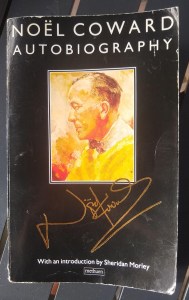
Book one, Present Indicative was published in 1937 and concerns Noel’s early years, his childhood and his first tentative steps into the theatre. It’s an account of a vanished world of repertory companies, writers, actors and actresses who have long gone and whose names mean little today in the 21st century. Even so it is hugely fascinating and interesting and as always enlivened by Noel’s supremely witty text. Noel was a homosexual in a time when homosexuality was illegal and most of his private life he keeps private although armed with a little knowledge of Noel we can read between the lines and assume that Jack Wilson who comes to live with him at his home, Goldenhurst in Kent, was presumably his lover.

It is pretty hot here in Parçay-les-Pins and after a little reading it’s time to slip into the cool waters of the pool and have a swim. Just lately, on a physical level I’ve been very inactive. I keep meaning to cycle or take a walk every day but I can never get around to it and I’m conscious my health is suffering. Now, every 20 minutes or so I slip into the pool and do 8 to 10 lengths and go back to my sun lounger for more relaxation and reading.

Book two, Past Conditional is an unpublished and unfinished autobiography that was intended to fill in the gap between his first two autobiographical books. It starts where the first one finished off, in the early 1930s and differs considerably in tone as it was written much later in the mid-1960s and Noel was able to look back at himself in the 1930s and examine himself from a more in depth perspective. Such a pity it was unfinished.

An interesting segment concerns the death of his brother who is scarcely mentioned in the text as he and Noel were never close. The brother was clearly never part of Noel’s theatrical world and the family sent him off to South Africa only for him to return and die of cancer.

In Parçay-les-Pins, we have been tempted to visit our favourite local restaurant however, a couple of things have stopped us. Firstly, it is very hot and the Station Restaurant is only open at lunchtimes so we have decided to wait until next week when the weather forecast is not looking so good. Why waste all that precious sun-bathing time?

Tea time at Parçay-les-Pins

Round about 6 pm or sometimes later, we tend to move from the pool back to the house and crank up the barbecue and decant some wine and eat in the warm evening. One of the great pleasures in France, at least for me, is to sit outside until the sun slides over the horizon and then in the darkness, a darkness here in the countryside so velvety and complete that the view of the sky and the stars is uninterrupted by any ambient light such as traffic or streetlights. Then I can look up at the great vista of the night sky, the heavens displayed above us in such a way that can never been seen from a great city like Manchester in the UK.

The big problem I have found is that this is just the time for the insects of the night to come out and nibble at my legs. One night Liz mentioned that she had some of those citronella candles that are supposed to deter the bugs so at once I dug a few out and lit them. It was rather nice for a while sat in the dark with the candles fluttering away with a rather nice scent. What happened was that the rather nice scent seemed to encourage even more bugs, especially a great number of what I can only describe as hornets. They were two to three times bigger than a UK wasp and then seemed to be honing in on the scented candles. Luckily, Liz is a master of the fly swatter and after a short while a whole flight of the hornets lay dead on the windowsill although by then, I had shot inside to safety.

The final book in the autobiographical series was Future Indefinite in which Noel recounted his time during the Second World War. He seems like many to have had a very low opinion of Prime Minister Neville Chamberlain, although to be fair to Chamberlain, he was doing his utmost to avoid the horrors of war. Sadly, and clearly unknown to Mr Chamberlain, Adolf Hitler did not want to avoid war, he was in fact wanting war very badly and happily it was Mr Churchill who understood this only too well.

In June of 1939 Noel who was a great globetrotter decided to take a tour of Europe in the light of Mr Chamberlain declaring ‘peace in our time’. He visited Warsaw and Danzig, Moscow, Leningrad, Helsinki, Stockholm, Oslo and Copenhagen. He found that many of the people in those places were just waiting for Hitler to invade, particularly the Poles. In Russia he found a state that declared it had found freedom in Communism but was in fact quite the opposite as the Stalinist regime had choked any kind of criticism or free thinking whatsoever.

When war was declared Noel was asked to be part of an Anglo-French PR unit in Paris which he seems to have enjoyed for a while and then become a little bored with. He was sent on a tour of the USA to gauge opinion there on the war and was on his way back when the Nazis invaded France. He also did a tour of Australia and New Zealand to entertain troops and did charity work for various organisations helping those who were bombed out in London.

By far the most interesting part was his account of the filming of In Which We Serve, a very patriotic film showing the activities of a ship in the Royal Navy and the lives of those who served in her, all the way through to the ship’s sinking. In his very first autobiography, the names of the many actors and actresses he worked with meant very little to me but now I began to recognise a few names, John Mills and Richard Attenborough for instance and David Lean who co-directed the film with Noel although in actual fact, Lean directed most of the film when Coward became bored with the long-winded filming process.

Lying by the pool after a lot of reading and swimming I invariably start to feel tired round about the 4pm mark and tend to nod off although I’m usually awoken by flies buzzing around my ears. What insects seem to find fascinating about my ears I will never know but they always seem to strike just as I am nodding off.

Books, Sudoku and a pool. What could be nicer?

As well as the flies a great horde of swallows seem to be fascinated by our pool and round about 5pm they gather on the telephone line above us, divide themselves into squadrons and make various sorties down to the pool, skimming just above the surface or sometimes dipping into the water with either their wings or their tiny feet. This performance is very remarkable indeed and quite a few times I’ve had to duck as the swallows make their dives from just behind my head.

It actually reminded me about the Dambusters, the raid by 617 squadron of the RAF on the dams of Germany. They had to drop low over the waters of the dams and hit a consistent height of 60 feet before dropping their ‘bouncing bombs’.

Coward goes on to talk about Blithe Spirit, my favourite of Coward’s plays which was made into a film in 1945. Coward was not keen on the resulting film. David Lean added an ending in which Charles Condomine played by Rex Harrison dies and joins his ex-wives in the spirit world. Coward complained that David Lean had f**ked up the best thing I had ever written!  Personally, I loved it.

Final verdict of the Noel Coward biographies; fascinating, always interesting and hugely entertaining.


What to do next: Here are a few options.

Share this post on your favourite social media!

Hit the Subscribe button. Never miss another post!

Listen to my podcast Click here.

Buy the book! Click here to purchase my new poetry anthology.

Click here to visit Amazon and download Floating in Space to your Kindle or order the paperback version.

Writing Heroes and Making that YouTube Video

What makes someone want to be a writer? Is it a need to emulate our own writing heroes or something else. I mentioned in a post last week that it’s important to be creative and we can be creative in a huge number of ways, not just in traditional artistic pursuits but also in everyday things, decorating our homes for instance, posting on social media, putting together a CD music mix or many other things.

I’ve always been a writer. As a child I used to scribble stories in notebooks and I even wrote short TV and film screenplays. I used to cast the characters from the film and TV actors of the time and I even remember one in particular. I was fascinated by the espionage fiction of the time, things like The Man From Uncle and James Bond 007 and I wrote about my own secret agent, Agent 80.

I cast Steve McQueen in the role as Agent 80 and put together a dossier on his secret agent character choosing which car he would drive and what sort of a place he lived in, cutting out pictures from magazines to make up the fictional file. Back then I was really interested in espionage and sci-fi and all my writings were pretty much about things like that. Later, as an adult, I started to write about things that happened to me; working in an office and working for the bus company and the pubs and bars I used to frequent. One of my favourite essays that I produced back then was something I wrote while waiting in a pub and I scribbled down notes about two people sat opposite and their smoking ritual involving getting out the packets, taking the cigarettes, flicking the lighter and then lighting up and the way they smoked, the way their hands moved and so on.

These days a lot of people in bars place their mobile phones carefully on pub tables looking over occasionally for messages. Back when I was a young man smokers placed their drinks carefully by their cigarettes and lighters, their table becoming a sort of personal shrine saying this is my space.

Two people who became writing heroes to me were Dylan Thomas and James Hilton. I won’t go on about them too much as I’ve written about both before (click the highlighted links for previous posts) but here are some basic thoughts;

Dylan Thomas

Dylan was a hard drinking, pub going writer and it was perhaps that image which first appealed to me. The other thing which really interested me was the incredible power of his writing but add that to his spirited readings from his work and his radio broadcasts and well, I was totally hooked.

James Hilton

Hilton is the author of one of my favourite books, Lost Horizon and he is also a fellow northerner like myself. Hilton was born in Leigh in Lancashire, now part of Greater Manchester and he made a journey I would love to have taken. He went from Leigh to Hollywood, California and he wrote a number of books and screenplays that were made into classic films. He wrote Random Harvest starring Ronald Colman and Goodbye Mr Chips starring fellow Englishman, also a northerner, Robert Donat who hailed from Didsbury in Manchester.

Charles Dickens

Dickens is of course a great and famous classic writer. I’ve got to say that some of his books I’ve found a little hard to read. I’ve tried and tried to read Pickwick Papers but I just couldn’t get through it. Not long ago I picked up Bleak House and once again I couldn’t really get started on the book. I have read A Christmas Carol, Oliver Twist, Great Expectations and my absolute favourite, David Copperfield.

My favourite character, apart from Copperfield himself is Steerforth, a friend of David Copperfield but one who ultimately betrays him. The best part in the book probably, for me at any rate, is the storm when David returns to Yarmouth. Dickens builds the storm slowly and each word and phrase adds a new layer to the sense of danger and foreboding and when Copperfield is finally reunited with his old friend Steerforth at the height of the storm’s ferocity, death comes between them and Steerforth is sadly drowned.

My well thumbed copy of David Copperfield

Dickens reveals this in a very unique way, he does not tell the reader Steerforth is dead. He leaves the reader to realise this themselves and, in the process, makes the reader almost at one with the narrative. Throughout the book, Dickens mentions in passing about Steerforth’s habit of sleeping with his head on his arm. It’s referred to many times in the narrative almost as a matter of non interest, something unimportant that the reader doesn’t really need to know, but when David Copperfield spies someone aboard a stricken ship trapped in the fierce storm who evokes some faint remembrance for him, a tiny warning bell is set off.

Finally, when the body of a drowned man is brought ashore and lies mutely on the sand, his head upon his arm, we know just from that simple bit of information, without the author telling us anything more, that Steerforth is dead. The prompts and clues that Dickens has hinted at have paid off for the reader in the most satisfying of ways.

Noel Coward

Coward has really been a surprising writing hero to me. I’ve been aware of him for years through film and television and his slightly eccentric persona has always been a little amusing to me. I remember once seeing an interview with him on the stage at the BFI, (British Film Institute) Richard Attenborough was interviewing him and seemed to me to be treating him as some sort of God that had been beamed down from the heavens. Coward was puffing away on a cigarette and lapping up all the praise.

A favourite film of mine is Blithe Spirit. The film starred Rex Harrison as a journalist who wants some background for a novel and he invites a medium, Madame Arcarti to officiate at a séance at his house. Unfortunately for Rex, Madame Arcarti evokes the spirit of his dead wife who at first is only visible to him. The film and of course the stage play that came before is a wonderful witty comedy. I liked it so much I wondered if the play or the screenplay was in print. I was happy to find that it was and I bought a paperback copy which also contained two other wonderful plays, Hay Fever and Private Lives. Again, these other plays were outstandingly witty and humorous and off I went in search of more works by Coward. As I write this, I’m currently reading a collection of his autobiographies.

Coward liked to arise early in the morning and then write until lunchtime, after which he would then enjoy his lunch and relax for the afternoon. Not a bad set up really and one I could do with taking up myself. Of course, I’m not so keen on lunch as Noel, I’m more of a late breakfast kind of guy, brunch I think they call it in places like the USA. Also, I don’t get up that early. I have done in the past, in fact I once did a regular 6am shift which meant getting up very early indeed.

Anyway, after writing about these four great authors it’s got me in a creative mood. I’ve done quite a bit of writing lately but I’ve realised that I’ve been neglecting the video producing aspect of my creative side. It’s clearly high time I produced something new for my YouTube page. After all, video is important for plugging my media profile as well as the two books I have for sale on Amazon.

I got out my video camera and thought what could I do. Yes, a piece to camera. I’ve been reading up lately about Marilyn Monroe which is why the late Hollywood star has featured in quite a few recent posts. I decided I could talk about my Monroe book collection and articulate a recent post I did concerning an internet debate about Marilyn’s death. I worked out what I was going to say in my head and then shot the whole thing in one take as a sort of rehearsal. I took off my scruffy polo shirt, changed it for a nice shirt and did the whole thing again. Not bad I thought.

Next I went about editing the video. The light wasn’t good so I upped the exposure and added some contrast. I cropped a few of the shots and closed in to a tighter shot covering me and the books I mentioned in my collection. I added the titles and credits and then settled back to review the entire thing. It was a good few hours work and I was ready to upload to YouTube when I spotted something.

During the video I mentioned a BBC documentary a few times. The documentary was called Say Goodbye to The President but for some inexplicable reason I realised that in the video I had somehow managed to refer to it as Shall We Tell the President, which happens to be the title of a novel by Jeffrey Archer, which as far as I know, has nothing whatsoever to do with Marilyn Monroe.

I wonder if any of the writers mentioned above ever had problems like this?


What to do next: Here are a few options.

Share this post on your favourite social media!

Hit the Subscribe button. Never miss another post!

Listen to my podcast Click here.

Buy the book! Click here to purchase my new poetry anthology.

Click here to visit Amazon and download Floating in Space to your Kindle or order the paperback version.


Writing and What Happened in 1977

1977 was a different world. There was no internet and there were no mobile phones. The only phones were landlines and they were big and heavy with great rotary dials with which you had to laboriously dial a number. As more people wanted telephones they needed more numbers and so numbers got longer and longer. 061, the dialling code for Manchester became 0161 and the code for London which was 01 became two new codes 071 and 081

I should tell you that I’m actually quite interested in telephones, especially those big heavy ones with a dial. I used to collect them and in fact I have quite a few; my two favourites are an old Bakelite phone from the 1940s and a Trimphone from the 1970s. The Trimphone was a new style telephone created by BT. It was a wedge-shaped light phone and the handset fitted neatly across the dial. Although it’s a phone I’ve always associated with the 1970’s, it was actually first introduced in 1965 and had a warbling ring tone instead of the traditional bell. The original versions had a green dial which lit up in the dark although this was discontinued due to concerns about radiation as the phosphorous which gave off the green glow was energised by a small tube of tritium gas which was mildly radioactive. Personally, I wouldn’t have thought anything could be ‘mildly’ radioactive but happily my two trimphones do not glow in the dark.

Anyway, time for a 1970’s telephone anecdote:
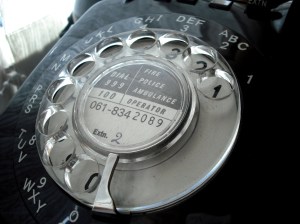
Once in 1977 I had a bit of a crush on a girl named Anne. I was a bus driver and my conductor had gone out with Anne a few times before moving on to someone else. I asked my friend Des for her number and I called her up one evening. I didn’t have a phone so I had to use a call box. I dialled the number and the phone rang for quite a while and finally someone answered.

‘Can I speak to Anne’ I asked.

‘Anne?’ said the voice.

‘Yes, Anne. Tell her it’s Steve.’

‘Steve?’ said the voice.

‘Yes, Steve.’

‘Just a minute.’

I could hear someone in the background asking who is it? And someone saying it’s for Anne and I had the feeling then that Des was playing a trick on me but hopefully the girl, whoever she was, had gone to fetch Anne.

A vintage bakelite telephone bought in France

I waited for quite a while and soon the pips went on the phone and I had to put more money in. I was still hanging on when the pips went again and in went my last coin. After what seemed like ages Anne came to the phone. I told her I didn’t have any money left so I quickly asked her out, she agreed and we set a place to meet, just before the phone finally cut off. When I finally went out with Anne, she told me that the phone wasn’t hers, it was her auntie’s phone and her auntie lived around the corner so Anne’s cousin had to nip round to Anne’s house, tell her there was a phone call and bring her back to the phone!

I remember telling Des about it and he laughed his head off. ‘Why didn’t you tell me it was her Auntie’s phone, you twit?’ I said.  Des just laughed even more.

Anne was the template for the character of Anne in my book Floating in Space. Floating was set in the year 1977 and as I mentioned earlier there was no internet, there were no mobile phones and wireless was an old-fashioned name for the radio. What else happened in 1977?
Jimmy Carter was the 39th President of the USA and he had won the election the previous year, taking office on January 20th, 1977. He was a peanut farmer who defeated President Gerald Ford who had served as President after Richard Nixon resigned in disgrace in 1974. As I write this, Carter is currently the oldest living former President.

In the UK the Prime Minister was Jim Callaghan. According to Wikipedia, he was the only Prime Minister to have held all the four main offices of state; Chancellor of the Exchequer, Home Secretary, Foreign Secretary and of course, Prime Minister.

A previous Prime Minister, Anthony Eden died in 1977.

Today’s blog is my 578th post over here on WordPress. It’s my 578th time of reaching out and showing readers a little of my work and hoping it might stimulate a few of you to click the links above and perhaps buy a copy of one of my books.

Creativity is important to everyone and my creative outlet is here in these weekly pages. For others it might be painting or photography. It might be working on a car or motorbike or even a little woodwork or home improvement. Creativity can take many forms, even making a post on Facebook can be creative. If you are on holiday and take a picture of a sunset and make it into a post, that is creativity. You can even take it further, crop the picture, add a filter to the image. Add a quote, Oscar Wilde is always good for one and so is Noel Coward or the big daddy of the written word; Shakespeare. The more you add the more creative you are. You can even write more on the post, another sentence, another paragraph, even another page. Soon you are on the way to a chapter, then more chapters and in time you will find that you have written a book. You’ve become a writer which, let’s face it, is a big achievement but then you need to write more, you need more pages, more chapters and more ideas.

Some people might write more than 578 posts, others may fall by the wayside after a mere eight, after all we all have things to do, jobs, work, life. All of that gets in the way.

Perhaps it’s time to get back to 1977:

On the 16th August 1977 at 6am, it was time for Elvis Presley to get some sleep. Night and day were reversed in Elvis’ world. He spent most of the night awake doing all the things he wanted to do. If he wanted to see a film at the cinema, he paid the cinema to run a film for him and his friends at night. He ate and played games at night, like the racketball he played with his step brothers and friends before going to bed that morning.

His fiancée, Ginger Alden was with him and Elvis who had trouble sleeping, took his usual assortment of sleeping pills before turning in. Sometime around 9am, Elvis awoke and told Ginger he was going to the bathroom. His bathroom was huge and he had made it into a truly personal and private place. In the bathroom was a circular shower. One wall was mirrored and fringed with those lightbulbs that one sees on the dressing table of a stage or film star and Elvis’ toilet things were clustered around the basin. The room was carpeted in purple and as well as a circular shower there was a couch and a TV set.

Elvis may have been sat on a chair reading The Shroud of Turin by Ian Wilson or he may have been using the toilet however, sometime during the morning he keeled over and fell face down to the floor wearing only a pair of blue cotton pyjamas. Elvis Presley, the King of Rock and Roll had died.

A few months before Elvis died, my friend Chris and I decided to pack in our jobs and travel to Spain and look for work there. His sister had already made the trip and assured Chris that there was a big British contingent and plenty of jobs available in bars and restaurants. Accommodation was readily available too. Chris and I hitchhiked to London where we caught the boat train to Paris. We wandered about in Paris trying to get a ride further south but after waiting for days trying to get a lift, we caught the train down to Spain.

We had a big reunion in a place called Lloret de Mar with Chris’ sister. Two Scots guys fixed us up with a pension, a small place to live and we met them later in the bar and bought them drinks as a thank you. After a while I became a little fed up of buying them drinks, yes, they’d helped us get a place to stay but that didn’t mean I was committed to providing them with free beer for the rest of my life.

I’m not sure they appreciated being told that and afterwards even though Chris got on with them pretty well, I didn’t. The incident contributed towards a certain unpopularity on my part in the local community but at least it kept the cadgers from mythering me. Still, other newcomers to Lloret were pretty popular, they had money in their pockets and the local Brits didn’t.

Quite a few notable people died in 1977. Groucho Marx, Joan Crawford, Wernher von Braun, Roberto Rossellini, Marc Bolan and of course, Elvis Presley.

I stayed in Lloret for two weeks and it was fun. Every night was like a Saturday night but after two weeks I realised I didn’t just want Saturday nights. Sometimes I wanted a normal Tuesday night watching TV. Sometimes I wanted a Sunday night and my mother’s Sunday dinner and sometimes I wanted a rainy Thursday afternoon. After a few weeks in the sun I left Chris in Lloret, hitchhiked north through France and finally back to Manchester.

We didn’t have a telephone at home so I couldn’t call to say I was on my way back. I always remember knocking on the door of our house. Mum opened the door and said ‘What are you doing here? You’re supposed to be gone for six months. ‘It didn’t work out Mum,’ I told her.

‘Well,’ she said, ‘I don’t know what we’re going to do. I threw your old bed out!’


What to do next: Here are a few options.

Share this post on your favourite social media!

Hit the Subscribe button. Never miss another post!

Listen to my podcast Click here.

Buy the book! Click here to purchase my new poetry anthology.

Click here to visit Amazon and download Floating in Space to your Kindle or order the paperback version.

Click here to visit amazon and purchase Timeline, my new anthology.

Re-reading Old Books and Re-watching Old Films

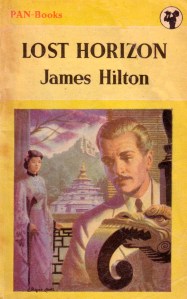
I’ve always been a great reader and even though I look forward to reading something new, I like to re-read my favourite books just like I re-watch my favourite films. The other day I happened to pick up a book that is one of my favourite ever reads, Lost Horizon by James Hilton.

James Hilton is one of my personal writing heroes and yet his name may be unfamiliar to many of you reading this blog. He was a journalist and an author and made the trip from his home in Leigh, Lancashire, (now Greater Manchester) in the UK to the Hollywood hills in the United States to become a screen writer. He is probably more well known for his book ‘Goodbye Mr Chips’ which was made into a film with Robert Donat (actually another northerner from Didsbury in Manchester) but my favourite of his books and quite possibly my all-time favourite book is ‘Lost Horizon’.

Lost Horizon is a book I found in a second-hand shop many years ago. A battered 1940s paperback I paid twenty-five pence for and yet that small investment has paid me back many times over for sheer reading pleasure as Lost Horizon is a book I re-read every year or so and I often pull it down from my bookshelf when a current read fails to entertain me.

Lost Horizon is a completely original idea and is about British consul Robert Conway in the dark days before World War II. Conway is helping his fellow British citizens escape from civil war in China and he and his small party escape in the last plane only to be kidnapped and taken to a distant Tibetan monastery. Conway meets the High Lama and after a time it is revealed that the Tibetans want to preserve the best of world culture and art and make it safe from the coming war.

Hilton is one of those few people who have invented a word or coined a phrase that has become part of the English language. In this case it was the name of the Tibetan monastery, Shangri-la which has since become a byword for a peaceful paradise, a distant haven. Camp David, the US President’s retreat was originally called Shangri-la until renamed by Eisenhower for his son, David.

Hilton’s journey from Leigh to Hollywood must have been a magical one and one I envy, especially as his time in Hollywood was a golden age for movie making. Lost Horizon was made into a movie by Hollywood director Frank Capra and starred Ronald Colman as the urbane British diplomat of the novel. It’s a movie that was restored some time ago and is a great DVD if you happen to see it. Colman also starred in another movie authored by Hilton, Random Harvest, which I mentioned last week in my post about VHS recordings.

Hilton settled in Hollywood and wrote a number of screenplays for classic Hollywood movies such as ‘Mrs Miniver ‘. Sadly he died from cancer in 1954.


All of Me an autobiography by Barbara Windsor

I’ve got a few new books to read but I thought I’d save them for my next holiday. I had an idea recently for a blog about the Carry On films so I picked up this book for a bit of research even though I read it a few years ago.
Barbara Windsor is probably best known as the blonde from the Carry On films. It’s a niche that stuck with her despite her appearances in later years in the TV soap Eastenders. Maybe she liked that, maybe not but either way, she was rather good at what she did. In this book, she tells her life story and it’s very frank and pretty entertaining.

‘Bar’ as her friends called her, doesn’t hold back and basically tells it like it is. She talks about her climb to fame and the husbands she has had along the way. First was Ronnie Knight, an East End gangster and friend of the Kray twins. Ronnie and Bar seemed pretty good together for a while but neither of them were interested in each other’s careers. Barbara would be off filming and Ronnie it seemed wasn’t bothered at all about that. He would be off to sort his nightclub out and Bar would be happy at home having to get up early for a film or rehearsing for one of her many stage roles. On one occasion in the early morning, the police burst in and carted Ronnie off to the nick for armed robbery. Barbara stuck by her man then but soon after, she’d had enough.

After Ronnie got the push, he was involved with a blonde down at his club; Bar moved on to a younger guy and when that didn’t work out, she moved onto an even younger guy. That younger guy, Scott, was still with her a few years ago when Barbara was sadly stricken with dementia and went into residential care.

One surprising aspect of the book is that although I’d always thought of Barbara as a film and TV star, in fact a great deal of her career involved the stage and she appeared in many stage productions including her own one woman show.

This book, written in 2000 is a great little read and well worth picking up if you see it in the book shop. It’s written in a friendly talkative chit chat style, almost as if Bar has dictated it to someone and that’s something I particularly like about the book. The last quarter of the book though feels a little as if it has been tagged onto the end of another book. It mainly concerns her relationship with final husband Scott and is perhaps a little gushing and overly romantic and Woman’s Weekly style but I reckon Bar deserved a little romance in the twilight of her days.

Barbara died in December, 2020 but the Carry On films just literally carry on. Most weeks you can find one showing on one of the many TV channels now available. In her book, Barbara has a bit of a moan that despite the longevity of the films, the stars never made a pennly from all the numerous TV repeats of the films. Still, how many people thought the films would be still popular years after their first release? The first film was Carry on Sergeant made in 1958 and the last one, Carry on Columbus was released in 1992. Altogether there were 31 films, four Christmas specials, various stage versions and numerous TV shows. All the main stars, Sid James, Kenneth Williams, Charles Hawtrey, Hattie Jacques, Joan Sims, Kenneth Connor and many others are long gone. The only major star of the films still alive in 2023 is Jim Dale, now aged 87.

My personal favourites in the franchise were these:

Carry on Cleo was a spoof on the Richard Burton/Elizabeth Taylor film Cleopatra and utilized a great deal of the sets and costumes used in the original. Look closely and you can see Sid James wearing one of Richard Burton’s outfits. There are some great lines in the film especially the one spoken by Kenneth Williams as Julius Caesar, Infamy, infamy; they’ve all got it in for me! I love it.

Carry On Screaming. Sid James was unable to appear so his role was taken by Harry H Corbett, the star of TV’s Steptoe and Son. The sultry voiced Fenella Fielding played a character called Valeria in a spoof on horror films. Kenneth Williams plays a Dracula like character and Corbett was Sergeant Bung, a detective investigating various disapearances.

Carry on Up the Khyber. Kenneth Williams starred as an Indian leader, the Khasi of Kalibar and Sid James is the British Governor, Sir Sidney Ruff-Diamond with Joan Sims as his wife. In my favourite sequence Williams and James have this exchange;

Yes, I think its time for a cup of tea, a cheese sandwich and a watch of whatever Carry On film is currently showing!


What to do next: Here are a few options.

Share this post on your favourite social media!

Hit the Subscribe button. Never miss another post!

Listen to my podcast Click here.

Buy the book! Click here to purchase my new poetry anthology.

Click here to visit Amazon and download Floating in Space to your Kindle or order the paperback version.


Funerals, Marilyn and what to do with those VHS Tapes

I went to another funeral this week. It was someone I knew only very slightly and in fact Liz knew the deceased much more than me. His name was John and he was a pretty nice guy. The funeral service though seemed to me to be a little bit flat, a little lacking in soul. There was no priest or reverend at the service, just the celebrant. She read out a history of John’s life and family, someone came up to read a sad poem and his Grandson played a tune on his guitar.

The big problem though was the heat. Despite hearing for most of the year that a heatwave was coming this summer, most of the time we in the UK have suffered weeks of bad weather. The day of the funeral though turned out to be the hottest for a long time. Sweat poured down my face in the crematorium and when the service was over I had to make a quick exit as I had a doctor’s appointment to get to. It was wonderful to sit down in the air-conditioned surgery and cool down.

Afterwards we drove back to the wake but the venue that had been chosen was a hotel just by the seafront and the sun had brought out the crowds and parking was impossible, well, almost impossible. Luckily a small school next door was good enough to open its gates to the mourners otherwise I could never have parked at all.

At the wake I knew no one except the widow but everyone I did speak to said the same thing, wasn’t it a lovely service? Actually, I didn’t think it was although I would never have said that. Was it because there was no priest or vicar? Did the tributes fall flat because no one there had any faith in anything except the finality of death?

Funerals are odd things; in a way they are not for the dead but for the living, those left behind after a loved one has died and I have to say, not only did I enjoy my mother’s funeral, although enjoy is not perhaps the right word, but it helped me more than anything to say goodbye to her.

Something else that made me think about death this week was reading a blog on Medium.com from an American writer. He had read that in the state where he lives, and I can’t remember which one it was in the USA, he had read that the average life expectancy for a male was 77 years. He was 57 and so he reckoned that on average, he had about 20 years left. 20 years sounds a lot but when it comes down to it, it really isn’t that much at all and if the same thing is true for me, a male living in the north west of England, then I’ve only got about 11 years left.

This week as I write this, is the 61st anniversary of the death of Marilyn Monroe. I wrote about Marilyn a while ago talking about my collection of books about Marilyn and the clippings in my scrapbook. Over on Twitter and Instagram, pictures and clips of Marilyn are still pretty plentiful despite her dying back in 1962. One post I saw on Instagram paid tribute to her memory but at the same time the author decided to take a poke at those who believe Marilyn was murdered by the Kennedy family.

I have to say I don’t believe that, not for a minute, but at the same time I don’t believe Marilyn committed suicide either. I mentioned that on the Instagram post and the author told me there were no credible witnesses regarding her involvement with the Kennedys. Not so I replied, there was Marilyn’s housekeeper and handyman, there was Marilyn’s neighbour, there was Marilyn’s friend Jeanne Camen and of course there was Marilyn’s psychiatrist Ralph Greenson who when pressed about Marilyn’s death answered ‘ask Bobby Kennedy.’

Other people jumped into the argument too, some supported me and some didn’t. Jeanne Carmen was a liar said one, so was Bob Slatzer who has not only claimed Marilyn had been murdered but also that he was actually married to Marilyn for a short time. The studio forced the couple to annul the wedding or so he says. The problem there is that there are no records of the supposed wedding and the dates Slatzer gave were dates when Marilyn was known to be somewhere else.

Walt Schaefer, the head of the Schaefer ambulance company that sent an ambulance to 12305 Fifth Helena Drive, Marilyn’s home, says Marilyn was alive when the ambulance arrived but she died on the way to hospital. How did her body then get back to her home where it was supposedly discovered by housekeeper Eunise Murray later that night?

Here’s another thing: in 1985 a former employee of the ambulance company came forward to say that he was part of the ambulance crew that night. James Hall says Marilyn was found in the guest cottage but CPR was applied and she began to revive, her colour going from blue to normal. A doctor then appeared; he gave Marilyn an injection into the heart which missed and cracked a rib but she then died.

Hall has passed numerous lie detector tests but like many of the stories of Marilyn’s last hours, his story has never been corroborated and no broken rib was reported by the coroner, Thomas Noguchi.

Did Bobby Kennedy visit Marilyn on her last day alive? Yes, as I said earlier there were eyewitnesses to his visit. Did he murder Marilyn? Of course not but whatever happened, Marilyn did not survive that night.

You might be thinking that perhaps I’m getting a little obsessed with the death of a film star who died 61 years ago and actually, you might have a point. The more I read about Monroe and her death the more I want to know the truth but it seems to me that Monroe fans are split on the subject of her death. There are those who think Marilyn took an overdose and there are those who think something sinister involving the Kennedys happened. It’s a little bit like the JFK assassination; some think Oswald did it, some think that something happened involving the CIA, the Mafia, J Edgar Hoover, Cuban exiles or a combination of all those.

There’s a great scene in the Woody Allen film Annie Hall where Woody tries to explain just how all those differing theories and ideas can get on top of you and perhaps it’s time to put my Marilyn murder books away for a while and read something else and watch some different documentaries.

These last few days I’ve spent trying to sort out my huge collection of VHS video tapes. Any films that are likely to be shown again on TV or that I can now buy on DVD I tend to just throw away. Some that are proper commercial recordings I’ve taken to the charity shop but I’ve still got a shed load of tapes of F1 events, TV shows and documentaries. What I’ve tried to do with those is to copy them to DVD as I just happen to have a VHS/DVD recorder combo. One of the videos I found was the 1985 documentary Say Goodbye to the President which was of course about Marilyn Monroe, her involvement with the Kennedys and her last days. It’s a bit sad but films get reshown time and time again but TV documentaries rarely get a second showing.

A few weeks ago I was writing a post about stars who have appeared in Columbo and I knew I had a video of Jane Greer talking about her experiences with Howard Hughes. Could I find it after searching through my cupboards and boxes of VHS tapes? No, of course not. This week when I thought I would carry on with my mission to copy a few more interesting VHS documentaries to DVD, I opened a box and there was the video I’d been looking for. It was a tape marked ‘The RKO Story, the Howard Hughes Era.’ It was an episode from a 1980’s BBC documentary series about RKO Studios which were for a short period owned by Howard Hughes. Jane Greer was finally free of her contract to Hughes and had been signed to RKO and then Hughes bought the studio. I’m not sure if he bought it just to get control of Jane Greer but of course that is what happened.

Hughes told Jane how he knew she wasn’t happy; she told him she was. He wanted to buy her a house; she told him she already had a house and by the way, also a husband and child living there. Hughes was undeterred. He wouldn’t put her in any pictures unless she left her husband which she wasn’t ready to do so he kept paying her wages according to her contract and she just went home, cashed her pay cheque and got on with her life. Her film career of course stalled fatally.

A number of others told a similar story, Janet Leigh was one, another was Jane Russell. Jane had encountered a lot of racy publicity due to the film The Outlaw but as she pointed out, the sexy publicity pictures and film posters were really not representative of how she actually appeared in the film.

The film censors of the day wouldn’t allow the film to be released and Hughes used the ensuing battle with the censors to promote the film. He famously designed a bra for Jane to wear in the film which was intended to look as if Jane didn’t have a bra on at all. Jane Russell refused to wear it, padded her own bra with tissues and Hughes was apparently none the wiser. The film was finally released years after it was made, did very well and was even re-released when Hughes took over RKO.

As I said earlier, any film I have on VHS is not really worth saving as most are easy to find on DVD or on TV but I do have a few that I have rarely seen on the small screen in recent years. One of my absolute favourites is Random Harvest starring Ronald Colman and Greer Garson. I love that film. It’s a bit soppy and sentimental and always brings a tear to my eye at the end. It was written by one of my favourite authors too, James Hilton, who came from Leigh in Lancashire, now part of Greater Manchester. I haven’t seen it on TV since I recorded it on VHS back in the 1980’s. Is it worth copying to DVD? Of course it is, in fact I think it’s time to make a brew, get out the biscuits and the tissues and settle down for a watch.


What to do next: Here are a few options.

Share this post on your favourite social media!

Hit the Subscribe button. Never miss another post!

Listen to my podcast Click here.

Buy the book! Click here to purchase my new poetry anthology.

Click here to visit Amazon and download Floating in Space to your Kindle or order the paperback version.

A Tale of 4 Ships

I started this post by looking at an old one, a post about famous Pilots. That inspired me to make a sort of seagoing version. I started thinking about famous captains but I was struggling to think of any so I went with famous ships. Perhaps I could have stuck with captains after all; Captain Kirk, Captain Ahab, Captain and the Tenille and so on. Oh well, I think I’ll save that for another time so here we go with famous ships.

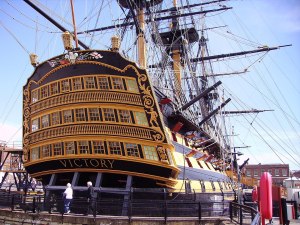
Victory

I should think that almost everyone reading this will know that HMS Victory was Nelson’s flagship at the battle of Trafalgar. The ship was one of 12 that had been ordered by the British government in 1758. The hull was laid down in 1759 and finally launched in 1765. 6,000 trees were used in the construction and 6 foot copper bolts were used to hold the construction together as well as treenails or dowels used to secure lesser elements of the ship. Once the frame was completed it was usual to let the wood dry out or ‘season’ before fitting the ship out further. Due to the end of the Seven Years’ War, the hull was left to dry for three years and the ship was finally launched in May of 1765.

By Ballista – Own work, CC BY-SA 3.0, https://commons.wikimedia.org/w/index.php?curid=749934

The ship had various adventures with the Royal Navy before becoming Admiral Nelson’s flagship in the battle of Trafalgar.

On the 21st of October, 1805, the Victory and the British Fleet began battle with the French. The British ultimately won but a sniper on the French ship Redoutable fired at Nelson hitting him with a musket ball which fatally wounded him. The musket ball was later recovered by the Victory’s surgeon William Beatty and he later had it mounted into a locket which he wore for the rest of his life. On Beatty’s death, the locket was presented to Queen Victoria.

The Victory was badly damaged in the battle and had to be towed back to England. It was repaired but was no longer a first rate ship and was relegated to various duties, even becoming a prison ship at one point. The Admiralty decided to break up the Victory and use her timbers and fittings in other ships. The public outcry was so great that the Admiralty hesitated to go ahead.

To a great extent the ship was abandoned to rot away and in 1922, the ship was found to be in such a state of disrepair that it was moved into a dry dock at Portsmouth, actually dock no 2, the oldest dry dock in the world. Restoration began after an appeal to the public for funding and dock number 2 became the Victory’s permanent home.

Bismarck

Bismarck was the first of two battleships built for Nazi Germany’s navy. Named after Chancellor Otto von Bismarck, the ship was laid down at shipyards in Hamburg in July 1936 and launched in February 1939. Final construction work was completed in August 1940, when she was commissioned into the German fleet. Bismarck and her sister ship Tirpitz were the largest battleships ever built by Germany.

In May 1941 the Bismarck planned to enter the shipping lanes of the Atlantic and attack convoys bringing much needed supplies into Britain. The Bismarck in company with the Prinz Eugen was engaged by the HMS Hood and the Prince of Wales. The Hood was destroyed in the battle while the Prince of Wales was badly damaged and forced to retreat.

The British began a relentless pursuit of the German vessel and two days later she was severely damaged by torpedoes fired by aircraft from the HMS Ark Royal. The rudder had been damaged on the Bismarck and the ship was forced to steam in a wide circle. The battleship came under further attack from the British ships and a major hit on the Bismarck’s bridge killed or disabled Captain Lindemann and Admiral Günther Lütjens. The remaining executive officer ordered the crew to abandon and scuttle the Bismarck in order to prevent the British capturing and boarding the vessel which eventually capsized and sunk.

The entire episode was made into a film in 1960 called Sink the Bismarck. Kenneth More starred as the head of the underground naval operations war room and he and his staff coordinate the hunt for the Bismarck.

Bounty

Another famous seagoing story that has been made into a feature film, several films in fact, is the story of the mutiny on the Bounty. The mutiny occurred in April 1789 and was led by Fletcher Christian who was an acting Lieutenant on board the Bounty. The Bounty’s mission was to sail to Tahiti and collect breadfruits and then deliver them to the West Indies. It may have been that a five month layover on Tahiti, where many of the men formed relationships with the native women, was at the heart of the mutiny. William Bligh, the captain of the Bounty, had at one point been a great admirer of Fletcher Christian, even promoting him to the rank of acting second lieutenant and thereby becoming his second in command. The relationship soured later though and when the ship began the journey home Christian decided to stage a mutiny. Bligh and his supporters were made to leave the ship on the Bounty’s launch, a 23 foot boat and were given food and water for 5 days. Bligh sailed to a nearby island for supplies and then made an astonishing journey in the small boat to Timor where the authorities were alerted to the mutiny.

The mutineers fled in the Bounty and returned to Tahiti but Christian realised that this would be the first place the navy would come to search for them. Sixteen crew members opted to stay on Tahiti, Christian and the rest of the mutineers together with a contingent of Tahitans then tried to settle on another island but the natives there were unfriendly and the Bounty left in search of another island. The mutineers then came across Pitcairn Island and seeing that it was marked incorrectly on naval charts decided to settle there. Numerous disagreements arose later with the Tahitans as many of the British considered them as slaves. Fletcher Christian was later murdered on the island although he was survived by a son and other children.

Today, the descendants of the mutineers still live on the island.

Various film versions of the story were made but the most famous featured Clark Gable as Fletcher Christian and Charles Laughton as Captain Bligh. In the 1960’s a version was made with Marlon Brando and Trevor Howard. Brando was so taken with Tahiti where numerous scenes were shot, he made it his home for many years. Another version, The Bounty appeared in 1984. It was a project originally started by director David Lean and writer Robert Bolt but after various disagreements with the producer, Lean backed out and the New Zealand director Roger Donaldson took over.

Titanic

The story of the Titanic is one that has captured the imagination of many over the years and even today seems to be still in the news after a deep diving mini submersible was crushed in the depths of the ocean while taking sightseers to view the wreck of the great ship.

The ship was the largest afloat and was designed to be the epitome of luxury. It was known as the ‘unsinkable’ ship and made its maiden voyage in 1912 from Southampton to New York in the USA. On the voyage the ship struck an iceberg and the hull was ruptured. The Titanic sank with a great loss of life. A major flaw however was that there were not enough lifeboats for the crew and passengers in the event of a tragedy. Another was that the 16 watertight compartments were not truly watertight and when the first one filled with water, the water then spilled over into the next one and so on until the ship sunk.

Numerous films and TV shows have been made about the sinking. Kenneth More starred in A Night To Remember, a 1958 British film about the Titanic. In the 1960’s the first episode of the time travel TV show The Time Tunnel featured a story about two American scientists who are transported back in time and arrive on board the doomed ship. A more recent film blockbuster was the 1997 Titanic directed by James Cameron. Leonardo DiCaprio and Kate Winslet star in the film that weaves a tragic love story with the fate of the famous ship. Titanic was the most expensive film ever made at the time with a budget of 200 million dollars. A huge reconstruction of the ship was made in Rosarito, Mexico and was built on a lifting platform which was able to tip the ship to simulate the sinking. The film was a great success winning 11 Oscars including one for Best Picture.

Personally I rather like Raise The Titanic, a 1980 British film version produced by Lew Grade and his ITC Entertainment company and based on the novel by Clive Cussler


What to do next: Here are a few options.

Share this post on your favourite social media!

Hit the Subscribe button. Never miss another post!

Listen to my podcast Click here.

Buy the book! Click here to purchase my new poetry anthology.

Click here to visit Amazon and download Floating in Space to your Kindle or order the paperback version.

The Forgotten Stars of Columbo

Famous faces who have appeared in the classic detective series.

If you happen to be a big fan of murder mysteries then Sunday is a great day for you. Over on 5 USA on UK Freeview TV you can watch the classic detective series Columbo to your heart’s content.

Columbo first appeared in the early 1970s as part of the Mystery Movie TV series. Each week followed a different detective trying to track down a murder case, sometimes it was MacMillan and Wife and other weeks McCloud, Banacek or various others. The most popular one by far though was Columbo.

Columbo was a homicide detective for the LAPD and he was played by Peter Falk although the role was originally written for Bing Crosby. Crosby however thought a regular TV slot would interfere too much with his golf so he turned down the role, went back to the fairway and the part went to Peter Falk who made it his own.

If you ever see the original pilot, shot in 1968, you can see how Crosby might have fitted into the part as Falk plays Columbo in a very Crosby like laid back way. The very first guest murderer was Gene Barry who was familiar to TV audiences after playing Amos Burke in Burke’s Law for many years. He also starred in a 1953 film version of War of the Worlds.

The pilot episode also introduced audiences to a particular feature of Columbo in that we see who the murderer is and how he commits the crime first. Then we see lieutenant Columbo gradually solve the clues and get his man, or woman.

Columbo appears to be bumbling along chewing on his cigars and eating chilli but we soon realise that behind this façade and his famous raincoat, is a very shrewd detective.

Roddy McDowell and Ida Lupino

Short Fuse is one of my very favourite episodes and two famous stars make guest appearances. The guest murderer is Roddy MacDowell. Roddy became a child star in the 1940’s appearing in films like How Green Was My Valley and Lassie Come Home. He also played Cornelius in the Planet of The Apes films and in the subsequent TV series. Although he appeared in many films, he also appeared in a huge number of TV series and stage productions. He died in 1998 aged 70.

In the same episode, Ida Lupino plays murderer Roddy McDowell’s aunt, unable to believe that Roddy was the murderer of her husband. She appeared in another episode too, Swan Song, in which she gets bumped off by guest murderer Johnny Cash.

Ida Lupino, like Roddy MacDowell, was born in England, in fact both lived in the Herne Hill area of London. She wanted to be a writer rather than an actress but went into acting as she was part of a theatrical family and it seems that becoming an actor was expected of her. She appeared in many British films before moving to the USA in 1933.
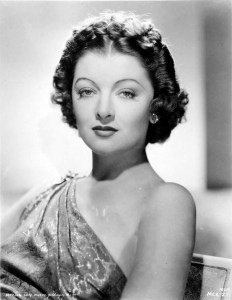
She wasn’t content to just act in films and was very critical of the parts she was offered, being suspended numerous times by Jack Warner, the head of Warner Brothers. She and her husband Collier Young formed a production company called The Filmmakers Inc in 1948. The company produced twelve films, six of which Lupino directed and five of which she wrote or co-wrote. The company closed its doors in 1955 and Lupino began directing for TV. She was one of the very first Hollywood TV and Film directors and was the only woman ever to direct an episode of The Twilight Zone. Ida Lupino died in 1995 aged 77.

Ray Milland

Milland was another British actor who found fame in Hollywood. Milland was born in Wales and served with the British Army. When his army career finished, Milland decided to become an actor. He appeared in several British films before moving to Hollywood in 1929. He worked as a stock actor for MGM then moved to Paramount in 1930. His first lead role was in The Jungle Princess in 1930 with Dorothy Lamour.

He appeared in numerous films but never thought of himself as a serious actor. A great success for him was The Lost Weekend in which he played an alcoholic. The film was directed by Billy Wilder and Milland did a great deal of research for the role and won the Oscar for that year’s best actor, which led to his contract with Paramount being rewritten and making him Paramount’s highest paid actor.

In 1954 he worked for Alfred Hitchcock on Dial M for Murder. Milland decided to retire from acting at one point but soon found he was bored and returned to Hollywood. In 1963 he made the sci-fi film The Man with X Ray Eyes. He appeared in many TV series including of course Columbo.

He was the guest murderer in The Greenhouse Jungle where he plays a man who stages a fake kidnapping of his nephew and then bumps him off to keep the ransom money. In another, Death Lends a Hand, his wife is killed by Robert Culp, one of my favourite Columbo murderers and a classic episode.

Milland died of lung cancer in 1986.

Janet Leigh and John Payne

In 1975 Janet Leigh and John Payne both starred in the episode Forgotten Lady. Both had been stars in a bygone era. Janet Leigh was born in 1927 and made her film debut in 1947. Two notable successes were The Naked Spur and Orson Welles’ Touch of Evil. She appeared with her husband Tony Curtis in Houdini in which Curtis played Harry Houdini.

Another great success for Janet and possibly the film she is most remembered for was the Hitchcock film Pyscho in 1960 however, according to Wikipedia, she was so traumatised after seeing her shower death scene that she avoided showers for the rest of her life.

Clips from one of her films Walking my Baby Back Home, were used in the Columbo episode. She appeared with her daughter, Jamie Lee Curtis in the supernatural horror film The Fog in 1980. Jamie Lee Curtis also had a small role as a waitress in the Columbo episode The Bye Bye Sky High IQ Murder Case.

Janet Leigh died aged 77 in 2004

John Payne appeared in many film noir crime films as well as many 20th Century Fox musicals, his most famous film being Miracle on 34th Street. His final role came in the Columbo episode Forgotten Lady. He died, also aged 77 in 1989.

Myrna Loy

Myrna Loy appeared in the 1972 episode Etude in Black starring guest murderer John Cassavettes. She was born in 1905 in Montana and was the daughter of a Montana rancher. Her father was also a real estate developer and her mother encouraged him to buy land in Hollywood. Some of the land he sold to Charlie Chaplin who built his studio on the plot. The Loy family made a considerable profit on the deal. Myrna’s father took his family back to Montana but when he passed away his widow returned the family to Hollywood.

Myrna studied dance in Los Angeles. She had small parts in many silent pictures but some stills of her appeared in Motion Picture magazine and led to a contract with Warner Bros.

A big success came in 1934 when she appeared in the film The Thin Man with co-star William Powell. The two proved to be a popular screen couple and appeared in 14 films together.

In the late thirties she became one of Hollywood’s busiest and most highly paid actresses but in the 1940s she devoted all her energies to war work and the Red Cross. She was busy throughout the 1950s but in the late 60s began working more in television.

She died in 1993 aged 88.

Jane Greer

Jane Greer was apparently best known for her role as Kathie Moffat in the 1947 film noir Out of the Past. It’s not a film I’ve seen but it does sound like one to look out for. Jane was a beauty contest winner and model and was spotted by Howard Hughes in an edition of Life magazine when she was 18. Hughes became obsessed with the young girl and signed her to a seven year contract. Like many of the girls he had under contract, Hughes had them watched and followed and apart from drama classes, forbade them to go out with anyone except himself.

When Greer decided to ignore Hughes, he bought the studio where she was working, RKO, and continued to try and control her. She married Rudy Vallee and Hughes was still undeterred. She told Hughes she loved Rudy. Hughes replied that she didn’t and she wasn’t going to work until she came to her senses. Jane said OK, I’ll just carry on having babies then.

Hughes later relented and Jane began to work in films again.

She appeared in a number of films in the 1940s and 50s including the 1952 remake of The Prisoner of Zenda.

In television she joined the cast of Falcon Crest and Twin Peaks in her later life before retiring in 1996. In 1975 she appeared with Robert Vaughn in the Columbo episode Troubled Waters in which Columbo finally tracks down guest murderer Vaughn.

Jane Greer died of cancer in 2001 aged 76.


All the images above were reproduced via Wikipedia Creative Commons.


What to do next: Here are a few options.

Share this post on your favourite social media!

Hit the Subscribe button. Never miss another post!

Listen to my podcast Click here.

Click here to visit Amazon and download Floating in Space to your Kindle or order the paperback version.

Buy the book! Click here to purchase my new poetry anthology.


Repurposing Content and Re-Editing the Edit

No work of art is ever finished, only abandoned. I read that years ago, so long ago I can’t even remember who said it, but even though my blog posts and videos can hardly be described as works of art, I still can’t leave them alone.

While sorting out my box room this week I came across yet another box of old VHS video tapes. One was marked WFA original footage.

Back in 1992 I went on a video production course at the WFA, (Workers Film Association) in Manchester and during the course I made a film about taxi drivers in Manchester. I didn’t make it myself, I was part of a team of three and we didn’t have specific roles. Although the taxi idea was mine, I wasn’t the director, we all were, so you can imagine that the final film was one where compromises were made. All three of us I can imagine, if left to our own devices as director or editor, would have all have created a different video.

The original footage ran for over two hours and was shot on super VHS. My video player actually supports super VHS and I was able to digitise the tape and copy it to my laptop. A lot of the footage was not used because of course we were all pretty new to what we were doing. There were plenty of wobbly shots, plenty of blurred ones and even some with bad sound. There is one almost entire interview without sound until the end where someone, I hope it wasn’t me, remembers to either switch on the microphone or plug it in.

I did hope to be able to add a link to this blog post for my new edit, however, an editor needs time to acquaint himself with the footage and get an idea of the finished project in his head. As I am that editor and as I like to edit in a careful organic kind of way (some might say slow) that re-edit, alas, isn’t quite ready yet so I’ll add the link to the old version below.

One of my best videos is one about the graves and cemeteries of World War I and II in northern France. It’s a sad video but the visuals are good and I put together what I thought was a pretty good narration based on some blog posts I’d written previously.

One big mistake was when I edited the video, I started with a shot I’d taken at the beginning of our trip to France. It was shot of a really huge motorhome with a trailer and then I panned over to our much smaller model, thinking at the time I’d add some jokey comment on the lines of what a fabulous motorhome -but this is ours over here!

Anyway, I added the comment and put everything together then uploaded it to YouTube. It seemed to do pretty well getting a lot of views but when I added it to a Facebook page for YouTubers and video producers, expecting a certain amount of praise, one reviewer mentioned that the jokey stuff didn’t really go with the overall tone. Looking back at the video I realised he was completely correct however by then the video had pulled in a few thousand views and I was reluctant to substitute the re-edited version as then I’d lose all those views!

Oh well, there is a much better and substantially re-edited version on Vimeo, alas without so many views.

One video that I have gone back to time and time again is a video about my home town of Manchester. Although I haven’t been into Manchester much lately, in the old pre-Covid days I used to always make time to visit the city. As a matter of fact, I’ve always enjoyed spending time in Manchester. Many years ago, I’d go into town and work my way through various second hand book shops in the older part of the city and then spend far too much time in the old HMV store on Market Street. The store there was huge with sections for CDs and music and another area for DVDs. There was probably a gaming section which is something I’ve never been really interested in but usually by the end of the afternoon I’d have a stack of books, CDs and DVDs to take home and enjoy. I mustn’t forget the other delights of Manchester too, the huge array of pubs, bars and eating places which I always tend to visit.

The narration for that video was adapted from my book Floating in Space and various blog posts I’ve written about the city over the years. In the video I’ve tried to compare the Manchester of 1977, which is when and where the story told in my book takes place, to the Manchester of today. Every now and then I go back to the city, shoot more video and add or exchange a video clip for a better one. In fact, there are probably three versions of the same video over on YouTube. Recently I made a brand-new version but I thought it might be better to perhaps leave my YouTube page as it is. Well, for now anyway.

You might wonder then why is it that TV and motion pictures never get re-edited? Actually in some cases, they have. In 2006 CBS announced that the entire original series of Star Tek was to be digitised and enhanced with new CGI effects. Even the theme music was re-recorded in digital stereo. Star Wars was re-mastered in 1997 using new digital effects and once again in 2019 and a lot of the latest Doctor Who DVD releases feature enhanced special effects.

There are plenty of films that are untouched of course. I’ve always hated the cumbersome model shots and effects in Alfred Hitchcock’s Rebecca. Pity Hitchcock isn’t around to go back and add some better ones.

My blog posts are another creative adventure that are open to a bit of re-editing. Most of my posts come to a successful conclusion but there are plenty of occasions when I realise I could have taken the post a little bit further, especially my early posts from 2014. Back then my posts were substantially shorter. In 2014 a post on my blog was on average 639 words long according to my WordPress stats page. Today, in 2023, my average post length is 1,627 words. Some of my favourite posts I have occasionally used again with the addition of new text and new images and even sometimes a link to an appropriate video. Sometimes, I’ve combined similar posts to create an entirely new one. I actually thought that I was doing something pretty revolutionary in the blogging world but in fact a quick search on the internet will reveal plenty of ‘how to’ posts on ‘repurposing’ content. There is nothing new under the sun.

For quite a while I’ve been trying to flog one of my film scripts over on Inktip, which is an American website where writers can offer their work to a variety of producers who are looking for screenplays. I’ve had a few nibbles and a number of producers have looked at my script. None however have gone as far as actually buying my work and offering to produce it which is a great pity because seeing my work as the basis of a feature film would be a big thrill for me. Anyway, when the renewal came up for my pro membership fee, my inner tightwad denied access to my credit card and my membership was terminated.

What could I do now with my screenplays? Well, one way of using that material has been to make them into something else, in fact I’ve repurposed them into short stories. I don’t tend to publish fiction over here on WordPress although quite a few times when I’ve been wondering what to write about for next week’s post, I have considered it. However, I’ve saved my fiction for my page over on Medium. Click here to take a look.

That’s pretty much it for this look at repurposed content. Just writing this post has made me realise I’ve not done much on my podcast for a while. Perhaps I could make this post into a podcast and then I could use the audio as the narration to a video version. Then I could write a blog post about how I did all that! Wow, that’s proper repurposing.


What to do next: Here are a few options.

Share this post on your favourite social media!

Hit the Subscribe button. Never miss another post!

Listen to my podcast Click here.

Buy the book! Click here to purchase my new poetry anthology.

Click here to visit Amazon and download Floating in Space to your Kindle or order the paperback version.


Marilyn Monroe (and Me)

I was looking through my old scrapbook a while ago. I scanned some pages for my blog post Scrapbook Memories and quite a few of them featured Marilyn Monroe. I put my scrapbooks together years ago and even though I stopped making them in my late teens or early twenties, I continued collecting cuttings from newspapers and magazines, as well as books and videos all on the same subject:  Marilyn Monroe.

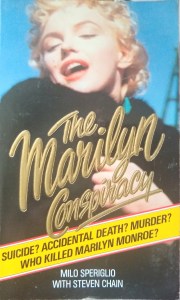
What attracted me to the persona of Marilyn Monroe? Well, apart from her obvious charms as a very attractive lady it’s her death that has always interested me. I’m a sucker for a modern mystery whether it’s the assassination of JFK, the disappearance of Amelia Aerhart or Marilyn’s own strange death. The obvious solution is that Marilyn committed suicide. She had tried suicide quite a few times before and various people along the years have saved her from death, including her acting coach Natasha Lytess and her third husband playwright Arthur Miller. Suicide is the obvious answer to her death but personally, I’m not so sure.
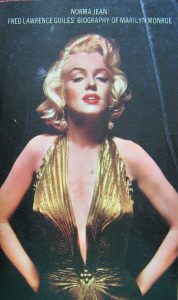
Anyway, getting back to my personal interest in Marilyn, I’m pretty certain the first book about her was what has come to be thought of the definitive biography, the one by Fred Laurence Guiles. Guiles published his book in 1969 and chronicled Marilyn’s life as Norma Jeane Mortensen and then Marilyn Monroe.

Marilyn Monroe

Norma Jeane Mortensen was born on June 1st, 1926. She had a troubled upbringing. Her mother was mentally unstable and was in and out of various institutions leaving young Norma to be taken into care. On one occasion in her late teens Norma Jeane was living with a friend of her mother’s but this friend was moving away and rather than send Norma back into a home an idea came about which seems a little mad in retrospect. The idea was for Norma to get married to a local boy, Jim Dougherty. The marriage went ahead only eighteen days after Norma’s sixteenth birthday.

When war came to the USA in 1941, Jim joined the navy. Norma was working in a war factory when an army photographer called David Conover came round looking for a photo article for a magazine. He asked Norma to pose for him and found that she had a natural affinity with the camera. She began a career in modelling which led her to bit parts in films, then a contract with 20th Century Fox and later to film stardom.

In 1946 she divorced Jim Dougherty and Fox offered her a seven-year optional contract. She changed her name to Marilyn Monroe and began her film career. All didn’t go so smoothly at first. She was dropped from her contract but she did meet an influential Hollywood agent named Johnny Hyde.

I’ve got to say that despite her best efforts I’m not sure my interest in Marilyn had a lot to do with her acting skills as in her early days she wasn’t a great actress. What she did have was looks, looks that could turn the heads of a great deal of men. One of her early film roles came about really because of her growing reputation as a model. She was cast in the last of the Marx Brothers’ films Love Happy and had one scene in which she tells Groucho that “some men are following me.” Groucho explains more in the following video.

That of course was nothing more than a walk on part but she was asked to go on a nationwide tour in the USA promoting the film. Marilyn was determined to get on and be a great actress. She was always having acting lessons, in fact she joined the famous New York Actors Studio. The studio had been founded by theatre and film director Elia Kazan and one of the famous acting coaches there was Lee Strasberg. Both Kazan and Strasberg were interested in ‘the method’, a style of acting initiated by the Russian actor Stanislavsky which involved the actor using his own experience and memories to ‘become’ the role rather than just acting a role. James Dean and Marlon Brando were two of the more famous students of the Actors Studio.

Another of my books about Marilyn was the famous biography by Norman Mailer. Mailer actually used Fred Guiles’ book as the basis of his biography but added his own insight into Marilyn’s story as well as a huge collection of photographs. Mailer was originally hired to write an introduction to what was originally intended to be just a photo album but he was so taken by the subject matter, he wrote more and more and his ‘introduction’ became the book. He later wrote other works about Marilyn.

Marilyn: Norman Mailer

Marilyn on the cover of the celebrated book by Norman Mailer

Johnny Hyde was in love with Marilyn and asked her to marry him many times. She always declined, telling him she did not love him. He continued to press her while working hard on her behalf as her agent. In October 1950 he arranged for a seven year contract at Twentieth Century Fox. He also organised some minor plastic surgery for her, apparently, she had her chin built up slightly and the tip of her nose made smaller. In December that year she was recuperating from the surgery at his Palm Springs home when Johnny died of a heart attack. Marilyn was distraught when she heard the news, even so, his family ordered her out of the house.

She moved in with her drama coach Natasha and one day tried to swallow over 30 Nembutal capsules. Luckily Natasha came home early and found her.

Fox put Marilyn into a number of pictures playing a dizzy blonde type but then she was loaned out to RKO for Clash by Night directed by Fritz Lang. It was the first film with her name over the title.

In 1954 she married baseball star Joe DiMaggio. Maggio had retired from the game that had made him famous and Joe wanted her to settle down with him and retire from the cinema. It might be that Marilyn did intend to one day enjoy a more domestic existence. My feeling though is that she could never ever give up her film star life. It had given her all she had; her fame, her money and her status. She could never say goodbye to her creation, the film star Marilyn Monroe.

In the short autobiography published after her death, My Story, which some say was ghost written or partly written by others, Marilyn said this about her fame:

I belonged to the public and the world, not because I was talented or even beautiful but because I never belonged to anything or anyone else. The public was the only family, the only Prince Charming and the only home I had ever dreamed of.

Would she give up all that for DiMaggio or anyone? I don’t think so.

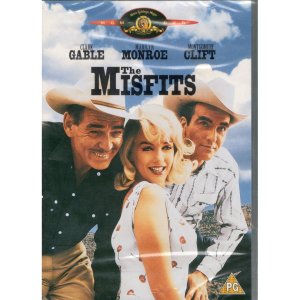
Her marriage to DiMaggio ultimately failed but Joe would continue to be a great friend. It is quite possible that in the last months of her life she was even planning to remarry him. However, before that came marriage and divorce to Arthur Miller. Marilyn idolised men like Abraham Lincoln and Albert Einstein and she put Miller into that same category. They had met years before, even before she married Dimaggio. Miller would write the screenplay for her final completed film, The Misfits, in which she played a character, Roslyn, which was based on herself. She became hugely disappointed in Miller after finding an open diary or notebook of his in which he severely criticised her. They divorced in 1961.

I’ve always thought that The Misfits was her best film and every so often I’ll take my DVD copy and give it a viewing. (I’ve actually only got two of her films on DVD, The Misfits and Some Like it Hot). Misfits was in fact her last completed film. In 1962 she began filming Something’s Got to Give in which she starred with Dean Martin. Marilyn missed a lot of the shoot due to illness and then left for New York where she appeared at a gala performance for the President’s birthday. The President was John F Kennedy and 20th Century Fox was not amused that with their film behind schedule its star had taken time off. They were already having financial problems with another production, Cleopatra. They were paying Elizabeth Taylor the unheard-of figure of one million dollars for her to play the Egyptian queen and their bank account must have been looking distinctly unhealthy. What was the answer? They fired Marilyn.

Fred Guiles first book on Marilyn was published in 1969 and mentions that towards the end of her life she was involved with an ‘easterner’. The man from the east was Robert Kennedy and since then many books and documentaries have mentioned Marilyn’s involvement with both John and Robert Kennedy. The accepted story of Marilyn’s death goes like this. Both John and Robert Kennedy ended their affairs with her, she had been sacked by 20th Century Fox and she became so despondent that she took her own life. Her body lay unclaimed in the morgue until the faithful Joe DiMaggio came and organised her funeral.

In 1966 however, a man call Frank Capell had published a book called ‘The Strange Death of Marilyn Monroe’ which called attention to various things that did not add up. Capell also claimed that Robert Kennedy was with Marilyn on the evening of her death. The FBI forwarded a report of the book to Kennedy who was then still the Attorney General and he asked that Capell’s phone be tapped.

In the 1980’s a number of authors began to look further into Marilyn’s death and one in my collection is The Marilyn Conspiracy. The author, Milo Speriglio was a private detective who was asked by Robert Slatzer to investigate. Slatzer was a friend of Marilyn’s and has even claimed that he married the star only for the two to tear up the marriage licence in case it harmed her career. He said Marilyn had a red diary in which she jotted down notes from her conversations with RFK and contained many things that were secret at the time. Marilyn used to call him from a nearby phone box as she felt that her phones had been tapped.

In 1985 Anthony Summers published the book Goddess: The Secret Lives of Marilyn Monroe in which he also claimed Marilyn was involved with Robert Kennedy. He also explains that Marilyn was not depressed after all. Her dispute with 20th Century Fox had been settled and they had reinstated her to the movie Something’s Got to Give and she was discussing further film projects including a biopic about Jean Harlow.

Summer also collaborated on a BBC documentary film called Say Goodbye to the President in which private eye Fred Otash revealed that he had engaged electronics expert Bernie Spindell to bug Marilyn’s home. The reason? Union leader Jimmy Hoffa who was under investigation by Kennedy wanted derogatory information on RFK that he could use against him.

Eunice Murray, Marilyn’s housekeeper, admitted in an interview in 1985 for the documentary Say Goodbye to the President that Bobby Kennedy was at Marilyn’s house on the day of her death. Eunice’s son in law and Marilyn’s handyman, Norman Jefferies told Donald Wolfe, the author of The Assassination of Marilyn Monroe, that Bobby Kennedy arrived late on the Saturday evening with two unknown men and asked Jefferies and Murray to leave while he spoke with Marilyn alone. When they returned Marilyn was comatose in one of the guest cottages attached to her house. Jefferies and Murray called an ambulance but Marilyn died from an overdose.

I cannot for a moment imagine Bobby Kennedy as a murderer but he certainly would not want to be associated in any way with a movie star suicide. John Bates, a friend of the Kennedy family, claims that Bobby and his family spent the weekend with him at his ranch in Gilroy, south of San Francisco.

Marilyn died in 1962 and she must have something about her because here we are in 2023 still interested in her. In 2011 a film about her called My week with Marilyn was released and in 2022 came Blonde, starring Ana de Armas as Monroe. Blonde was a fictional version of Marilyn’s life. I haven’t seen it but when I looked it up on the internet it didn’t seem to have been rated highly although I’ll be looking out for it on my TV screen in the future.

Norman Mailer’s book about Monroe finished with a photo of Joe DiMaggio, grief stricken on the day of her funeral and he reckons we can perhaps surmise Marilyn’s true worth just by the look on Joe’s face that day. I cannot disagree.

Sources:

The Assassination of Marilyn Monroe by Donald Wolfe

Goddess by Anthony Summers

The Marilyn Conspiracy by Milo Speriglio with Steven Chain

Norma Jeane: The Life and Death of Marilyn Monroe by Fred Lawrence Guiles

My Story by Marilyn Monroe

Say Goodbye to the President: 1985 BBC documentary


What to do next: Here are a few options.

Share this post on your favourite social media!

Hit the Subscribe button. Never miss another post!

Listen to my podcast Click here.

Click here to visit Amazon and download Floating in Space to your Kindle or order the paperback version.

Buy the book! Click here to purchase my new poetry anthology.


More Bits of a Blog (or a Blog of Bits)

If I was a professional writer working for a magazine or a newspaper, I reckon that this week I’d be getting a bit of a telling off from the boss as I’ve not really been pulling my finger out. I’ve been feeling a little deflated lately. Maybe it’s an after effect of going to my mother’s funeral or perhaps it’s just a general feeling of disappointment. Every writer wants his work to take off and become a best seller but neither my novel, Floating in Space or this blog, look like hitting the top of the book or blogging charts. Yes, every week brings a new follower and that is good, after all every writer wants an audience, every writer wants readers but a writer needs to produce new content to put before them and just lately I’ve not been delivering the goods. The aim of this blog, as always, is to not only let people know about my books but also to give the reader something interesting enough to make him or her think hey, wonder if Floating is worth buying? (Of course it is, get yourself a copy now!)
A lot of blogs die a natural death because the blogger gets bored but in the past my deadline, my one and only deadline of 10am on a Saturday morning has actually inspired me to write more. Anyway, this week’s post is a bit of a mish mash of draft posts that I’ve started but been unable to finish. Let’s start off with a look at the weather.

Its H H Hot

Image credit: Daily Express

A few months back I wrote a blog post called It’s C C Cold so as we in the north west UK are experiencing such fabulous weather, it is only fair to write about that.

Over here in the UK we’re not really ready for nice weather. It comes along every now and again, totally unexpectedly and we are all unprepared.

In France, from where I have just returned a few weeks ago, the weather was the same but over there the French have cool houses, protected from the heat by shuttered windows and thick walls. It’s a similar thing in Spain where their whitewashed outside walls reflect away the heat of the sun. Over in the UK our houses are built to keep the heat in and sometimes it’s hotter inside than outside.

Still, I’m certainly not moaning about the good weather. I like the heat and I hate the cold and I’m happy to make sure there are a few cans of Pepsi Max chilling in the fridge. Out have come my shorts and t-shirts and sandals and for the most part Liz and I have been outside in the sun reading and relaxing. Out there in the sun when I put down my book for a moment I’ll start thinking about things to write and it’s there that the ideas for my stories, poems and blogs will come. Yes, retirement has its plus side.

Of course I live in the north west of England, not an area particularly renowned for great weather and after a couple of weeks of really rather nice hot weather, down came the rains. Funny how it always seems to happen when we are all ready for the barbecue. What we perhaps need is one of those big awnings which we could pop out whenever the rain threatens to ruin a good barbecue.

Cinema

In the post I mentioned above, It’s C C Cold, I referenced a few appropriate films, things like Ice Station Zebra which is one of mine and Howard Hughes’ favourite films. As this post is more about heat rather than cold what films could I bring up? Some Like it Hot? Yes, great film but not really appropriate. Lawrence of Arabia? Yes, great film but I’ve written about that one before. Let’s go with the Towering Inferno. Towering Inferno was a film blockbuster produced by Irwin Allen, who also produced numerous 1960s TV shows like Voyage to the Bottom of the Sea and the Time Tunnel. Another film hit for the producer was The Poseidon Adventure, a disaster film in which a cruise liner is overturned by a huge wave and the occupants, still alive on the inverted ship, struggle to survive.

In the Towering Inferno, Allen brought together an impressive cast headed by Paul Newman and Steve McQueen with numerous other stars and famous faces making appearances. It’s a pretty simple plot; a new skyscraper has just been opened named the glass tower but various electrical issues cause fires and people are trapped when the elevators fail. Paul Newman plays the building architect and Steve McQueen is the fire chief who comes to the rescue.

Both Newman and McQueen wanted top billing as well as William Holden. Holden’s request was declined as his star had waned in the previous few years but McQueen and Newman continued to haggle about the billing. The issue was finally settled with a compromise by having their names appear together diagonally with McQueen lower left and Newman top right. Fred Astaire also appeared in the film receiving his only Oscar nomination despite his many classic musical films made in years gone by.

Summer Sport

One feature of the British summer is our great sporting events. Two in particular are Wimbledon and the British Grand Prix. I can’t say I have any great interest in tennis, in fact I have little or no interest in any type of ball game although in the past I have watched some classic Wimbledon finals involving people like Martina Navratilova, Bjorn Borg and so on but the British Grand Prix is a different kettle of fish as I’ve been a fan of Grand Prix racing since I was a child. It would have been nice to have visited Silverstone and seen the race in person but when I made a few tentative enquiries about camping there in our motorhome I soon realised that it would have been cheaper to fly to Barcelona for a week in a top class hotel. Oh well, the good thing was that here in the UK the Grand Prix was live on Channel Four so I was able to settle down and watch the race including all the build up to the big event and all the hoo har and ballyhoo surrounding the race.

I’m not a great fan of Max Verstappen and because he seems to be winning everything lately he has single handedly made Formula One a little boring at the moment. His win at Silverstone was actually the eleventh in a row for the British based, Austrian owned team whose greatest asset is probably the outstanding race car designer Adrian Newey. Adrian’s cars have won championships for his former teams McLaren and Williams and today his current motor car seems unbeatable.

This year’s event was won of course by Verstappen but the McLarens of Lando Norris and former F2 champion Oscar Piastri gave a great challenge to Max and for a moment I thought the Red Bull team were in trouble. At home it was a lovely warm day and I did think about turning off the TV and going outside to enjoy the sunshine but then a huge downpour came down and I just settled down deeper into my armchair, made another brew and enjoyed the race. It was great to watch the race live instead of waiting for the highlights show and trying to avoid social media giving away the result.

Perhaps I should cough up some money and subscribe to Sky sports. Yes I’ve thought about it but happily when I’ve been close to doing just that I’ve managed to get through to the hotline provided by the National Tightwads Society and one of my colleagues there has managed to talk me round! Phew, I reckon I’d be seriously skint without their help. Thanks guys!

And Just Like That.

One of my favourite TV shows has always been Sex and The City. I love that show and enjoy all the stories and relationships of the characters. The show finally finished after six seasons and two feature films. Now the producers have rebooted the series as And Just Like That which just follows on from the last feature film. Sadly, Kim Cattrall who played Samantha declined to appear in the show due to an apparent feud with the main star Sarah Jessica Parker and a desire to move on to other things. Her departure and the addition of several new characters who are not really part of the original quartet of female friends and to be honest, don’t seem as though they ever will be a part, has given the new series a slightly different appeal. Not only that, one of the characters, successful lawyer Miranda, has now come out as gay. She left her husband and has started a relationship with a gay female stand up comedian called Che Diaz and the two have gone to live together in California.

I keep watching even though the show is only a patch on its former witty and vibrant self. Yes, they have added a more diverse cast rather than the previous WASP heavy one but none of the new characters fit in and after watching the first season, I’m still only interested in the three remaining girls and their lives. The other thing is this, I know the series is aimed at women but surely they must realise that a good percentage of viewers are like me, male. I’m interested in the girls but I also like the men. My favourite character, the outstandingly cool Mr Big was killed off in the first episode of season one. I kind of liked Stanforth Blatch played by Willie Garson. Stanforth was a gay icon but I personally saw him as an icon for balding bespectacled men. He always wore such great outfits. another favourite male was Steve, Miranda’s husband who used to be a great counterpoint to the smart and uptight Miranda, has now been relegated to a sort of stand by character who only appears on screen out of absolute necessity.

My other favourite male was Aidan. He was Carrie’s lover and boyfriend before she married Mr Big. The couple were engaged but when Carrie seemed to be reluctant to name the day, he gave her the bullet. He is due to appear soon in Series 2 which I have to say is something that has kept me watching so far.

Final verdict: I keep watching, hoping that things will get better even though I doubt they ever will. If the appearance of Aiden doesn’t improve things, I will soon be unticking the series record button. Still, we all have to let go of things sooner or later and I still have the entire Sex and the City box set on DVD. Maybe the time to uncheck that button has already come.


What to do next: Here are a few options.

Share this post on your favourite social media!

Hit the Subscribe button. Never miss another post!

Listen to my podcast Click here.

Buy the book! Click here to purchase my new poetry anthology.

Click here to visit Amazon and download Floating in Space to your Kindle or order the paperback version.