This is a story about cigarettes. Women come into the picture too but not necessarily whisky. Still, it’s also about pubs and pubs do sell whisky so in a roundabout way that title isn’t such a bad one. Anyway, I’ve made the graphic now and it’s too late to change it so let’s crack on.
 Even on holiday in wonderful warm Lanzarote I’m a man who needs a cup of tea, and by tea, I mean hot tea. Just think of all the workers in far off India who have worked to grow and cultivate tea leaves and package it and send it off to people like me. I wouldn’t dream of insulting those people by drinking a cup of lukewarm or even cold tea. Liz however doesn’t mind cold tea but after chatting further I found our earlier experiences have shaped our attitude to tea. She had a Saturday job working in a café and usually found that she was so busy that she had little time to drink her cuppa and generally picked it up when it was cold.
Once, many years ago, I had a cigarette vending round. I visited pubs in Merseyside, serviced their ciggy machines, filled them with cigarettes and took away the cash. A lot of the time I was in a hurry to get going to the next site. Even so, I would never turn down a cuppa and so many times I would have to drink a steaming hot cup of tea quickly so I could move on. The faster I worked, the earlier I finished and I very soon developed the knack of drinking hot tea,
Some areas of Liverpool were rather dangerous so in places like Kirkby, Croxteth and Anfield, I learned to cultivate the cleaners and find out which ones would come in early so they could in turn let me in to do my job and get going before the villains had time to wake up.
I had a fabulous van, a brand new Ford Transit. On Monday mornings I tried to be the first one in the depot in Warrington. The stock delivery came, I helped sort it out with the other early starters and then I would check my own, sign it off, fill my van and be off for a day of filling machines with cigarettes and taking cash.
I used to park as near as possible to the pub doors and knock on the windows until the landlord or cleaner would appear. A quick check for any villains (Scallies they call them in Liverpool) then I’d whip out my K9 and slip into the pub. A K9 was a big cart on wheels. On the top I would have my paperwork and my numerous keys and inside the cart would be a selection of cigarettes. Each machine usually had a big security bar. I’d insert the key and get that off and then depending on what kind of machine I had, I’d select another key and open it up. A quick clean of the coin mechanism and then I’d count the stock, fill it up and put the cash into a numbered cash bag. Then perhaps I might have time for a cup of tea and a bit of a natter to the staff. If not, I’d be off to the next pub.
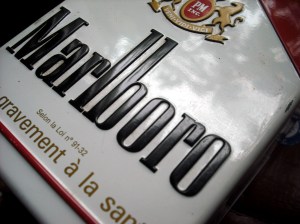
Collectable cigarette item
In Liverpool my top selling brands were Regal King Size and Lambert and Butler although in Manchester their top brand was Benson and Hedges. At the end of the week if I was running low, I’d be swapping cigarettes with Paul who covered Manchester; I’d swap my Bensons for his Regals.
In some pubs I’d be just in and out but in others I became really friendly with the staff. At one pub in Huyton the cleaner was a lovely lady called Marge. She always asked me to call her when I was leaving the pub just around the corner and then she would put the kettle on and slap a couple of crumpets in the toaster. We used to have a nice brew and a natter and then I’d get on with the job of filling the ciggy machine.
Things changed a little when the company was taken over by Imperial Tobacco. I was given new sites to visit and a different accounting system. We had a gadget called a ‘ready’, a little hand held computer which totalled the stock and cash and helped with the accounting. I also got a new van, a Mercedes Sprinter van.
I always wondered at the hold cigarettes had over people. I used to service one pub that the manageress always described as being ‘out in the country’. In fact, it was about 10 minutes from the M62 motorway. Yes, it was down a country lane but it was hardly out in the country. Betty, the landlady, would sometimes call up, seemingly almost in agony because the Lambert and Butler column was empty.
“Steve,” she would wail. “We’re out of Lamberts! Everyone’s desperate, there are no shops nearby!” (Except for Asda, a ten minute drive away, just by the M62!) “We need you round here straight away!”
“I’ll be there this afternoon Betty,” I used to say. When I’d finished my normal day’s run, I’d nip onto the M62 and go round to her pub. Sometimes she would be waiting just by the emergency door and she’d open it and beckon me over.
“The Lamberts have run out Steve. Everyone’s going mad!”
I didn’t ever see any mad queues of people panicking about the lack of cigarettes. Once I went there and Betty was over with her £5.20 for a packet of Lamberts before I had even got my keys out. It turned out that the coin mechanism had been jammed up because some idiot had torn up a beer mat and shoved it into the coin slot. When I showed her, she went bonkers; “I know who that was. The bastard! Wait until I see him tonight!”

cigarette machine
It was funny to see the effect of the cigarette on her. After a few puffs she would start to calm down, the nicotine seemed to relax her and soon she was offering me a cup of tea and laughing about the whole thing. It must have been stressful to be a pub landlady.
Betty was quite a nice looking lady. She was always smart but she was always smoking. I sometimes asked her if she had ever tried to give up smoking but she would always refer to someone, her father or grandfather who smoked so many packets a day and yet lived to be eighty something. Even so, like many smokers she had a sort of grey pallor. I often wonder how she went on with the later pub smoking ban. Did she ever give up smoking? What did she do when the cigarette machine was finally taken away?
I visited another pub nearby. It was in a run down area that looked a little like Beirut. The pub was a square building with a high fence around it. Both the fence and the roof of the pub were covered with barbed wire. The car park entrance was at the back and I used to park up and ring the bell. After a while a little hatch would open and someone would say “Who is it?”
I’d tell them who I was and I’d be let in. I used to visit at about 9am and despite the early hour, the pub would be full of illegal drinkers. I serviced the machine which happily was behind the bar. The first time I went they asked me if I wanted a drink. I said ‘yes please’ and a few minutes later a pint of lager was handed to me! When they mentioned drink, I thought they meant a cup of tea! The landlord, a big sumo wrestler sized thug said “Tea? We don’t serve tea in here!”
I didn’t want to upset him so I drank the beer and left.
A few months later I returned to the pub and it was gone. When I say gone, I mean gone; there was nothing left but a smoking ruin. Later I mentioned it to Betty and she told me that the owners were in a feud with another family. They duffed up a guy from another family and so the other family duffed up a guy from their family in return. Things escalated and the other family torched the pub! Things get serious in that part of Liverpool!
One day I got robbed. Well, an attempt was made to rob my Ford Transit van. Surprisingly, it wasn’t in Kirkby, Anfield or Croxteth, some of the less salubrious areas I used to work in, it was in Haydock. I was near the end of my shift and I was visiting a small pub where I sold very few packets of cigarettes. I returned to my van and the alarm was sounding. Someone had forced open the back doors but sadly for them, just behind the back doors was another security door which they were unable to break through. It was a bit of a bummer for me though because I had to get the doors shut, report to my boss and also contact the police.
The Mercedes Sprinter van I had later had a lot of gadgets including a ‘proximity alarm’. Whenever anyone loitered too close, a voice, an American voice, used to tell people to ‘please step away from the vehicle’. It was very polite but soon everyone in the depot was trying to wind me up. ‘Please step away from the cash machine Steve’. ‘Please step away from the computer please Steve’. That alarm did lose me a lot of sleep.
 I started in that job in the late 1990s and gradually government regulations became more severe. Bar towels and beermats featuring cigarettes were banned. Cigarette advertising was banned on the machines themselves. I had to take out pictures of packets of cigarettes from the advertising panels of my machines and replace them with bland pictures of a match flaring up. I left the job in 2005 and joined the Highways Agency and in 2011 cigarette machines were banned from UK pubs. Nice to see some familiar looking ciggy machines here in Lanzarote though!
In a lot of ways I miss that job. Liverpool may be rough and ready but it was a friendly place and I spent a lot of time chatting with a lot of talkative people.
And it’s where I learned to drink hot tea very quickly.
 Here in our rented villa in Lanzarote it has been hugely relaxing. I did plan to do a lot of writing but instead I’ve been doing a lot of reading, swimming and drinking a lot of wine. To be fair I have done some writing. I’ve started two new short stories, one of which I have the story fully in my head and another that I’m not sure where it will end up. I’ve also worked on a couple of unfinished stories and blog posts. What has been interesting is that one of the books I’ve been reading by author John Grisham was actually John’s first novel and he says in the introduction that he was proud of his first book and also in particular, proud of finishing it as like me, he starts a lot of things but rarely sees them through to the end. Clearly, he’s sorted that problem out because he’s written a number of best selling books and all the ones that I have read, with one exception, have all been riveting page turners.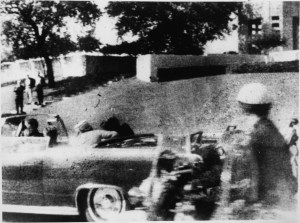
 Mark Lane was actually a lawyer and he defended a magazine which was sued by E Howard Hunt, one of the Watergate burglars, because the magazine claimed that Hunt was part of a JFK assassination plot. In the following trial, Mark Lane won his case and the jurors demanded action by the government to investigate further. Nothing of course happened but that’s hardly surprising according to another book I have just read called Mary’s Mosaic. It’s about a lady who was murdered by the CIA or so the author claims, because she knew too much about the JFK assassination. The book goes on to show how the CIA was able to manipulate the media into not delving too deeply or even not reporting at all, stories like these. I’ll be reviewing the book in more detail in an upcoming Book Bag post.
 It’s that time of the year when Liz and I depart for the substantially warmer climes of Lanzarote. I wrote a post a while ago called
  Four Weddings and a Funeral


 David Niven mentions the visits he had in England from Gable in his book Bring on the Empty Horses. His wife once found Clark in the garden of their small cottage, his head in his hands, crying for his dead wife.
 Back here in Manchester it was nice to have a few days to myself after Christmas and New Year. One thing I tend to eat a lot of when I’m alone is sandwiches. Yes, I’ve always loved the humble sandwich. As a child I took sandwiches to school, either ham, cheese or corned beef, almost always on white bread. Occasionally I’d have a salmon or salmon paste sandwich but generally salmon or any kind of fish just isn’t my cup of tea.
 Tell us about your new book.




 Yes, It’s that time again. As I write this there are only a couple of days left before the big event, Christmas day.
