 Returning home after a holiday is always a let down, even more so when you return to the cold and wet UK after the temperate climate of Lanzarote. One morning I woke to beautiful sunshine streaming in through the window and then went outside to sit in the sun by the pool while I waited for the kettle to boil. The next morning, I woke in a cold house with the wind battering at the window and made my way shivering into the kitchen to once again boil the kettle. In one of the James Bond books 007 calls tea ‘mud’ and claims it was the cause of the downfall of the British Empire. Nothing could be further from the truth because tea, at least for me, is one of the great wonders of British life and whether I am in the cold of a British winter or the warmth of the Canary Islands, I really cannot start my day without a cup of tea.
I had a pretty lazy holiday in Lanzarote. I spent it, like I spend most of my holidays, reading books on my sun lounger, swimming in the pool, having barbecues and enjoying drinks and meals down in the nearby marina.
I did mean, as usual, to work on my writing and as usual, I didn’t. I did manage to write my weekly blog while I was there though. In fact, despite my lacking in the work ethic department, I have managed to produce a post every Saturday for as long as I have been a blogger and this epic you now find before you is my 489th blog post.
A couple of weeks ago I wrote about my childhood. I had quite a few stories to add to that particular post but I always try to keep to about 2000 words or less and here’s one story that didn’t make the final draft.
I wrote about my bike in that childhood post. I loved my bike and I spent a lot of time on it exploring the Cheshire countryside as well as the country lanes that surrounded Manchester Airport where my friends and I would meet by an old WWII pillbox, slurp dandelion and burdock and watch the aircraft come and go.
Back in the 1970’s, the classic, iconic bike of the times was the chopper bike. It had a low slung frame with a seat and handlebars that rose up to the proper level. Back then I had no chance of getting a chopper bike but one thing I could do was get a chopper seat. I saved up and bought one and fitted it to my conventional bike. It looked a bit odd I suppose but I liked it, especially the tall hoop on the back of the seat.
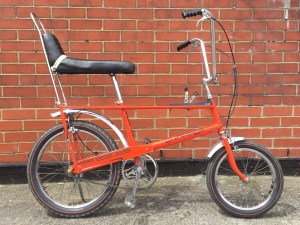
By Raleigh-Chopper – Own work, CC BY-SA 4.0, https://commons.wikimedia.org
One day my dad, who cycled to work every day come rain or come shine, had a problem with his bike. My uncle came round to help him fix it but nothing could be done. It was a Thursday I think and so all dad could do was ask mum to take the bike down to the cycle shop and to borrow my bike to get to work. I did think about telling him about the new seat but I wasn’t sure how to go about it. The next morning, he went out to the outhouse to get my bike and a few minutes later he was back. ‘What’s happened to your bike? Where’s the proper seat?’
The old seat was there in the outhouse but it wasn’t a quick fix. The chopper seat had two arms that came down and were screwed to the back wheel so poor old dad had to tootle off to work with the bike as it was. Mum and I watched him ride away. She turned to me and asked ‘why didn’t you tell him last night so he could have put the old seat on?’
‘I don’t know’ I said. Then again, it was my bike and I didn’t want the old seat back.
I loved that bike but one day I lost it forever. My brother and I were always swapping things; toys, models, books but mostly records. Our musical likes in those days were pretty fleeting. He’d play something that I realised I had to have and after paying his extortionate demands or swapping whatever possession of mine that he wanted, sometimes I’d find a week later that that record really wasn’t the all time classic I thought it was and so we’d either swap back or I’d wait until he wanted something of mine and then I’d insist he take back the record I’d never really wanted in the first place. Sometimes I’d swap my most treasured possession, my bike. The thing was, my brother Colin couldn’t ride a bike so it was a win win situation for me as sooner or later he’d want to get rid of the bike back to me. One day he really got one over on me.
We’d done a swap for something and he had taken my bike. I was going out for a ride but the bike wasn’t in the outhouse. Where was it? What had happened? Had it been stolen?
‘The bike?’ Colin answered blithely. He had sold it to his friend because he wanted money to buy a new LP.
My mother facilitated the removal of my hands from his throat with a firm whack to the back of my head and asked what was going on.
‘He sold my bike!’’ I yelled.
‘Your bike?’ she replied. ‘Didn’t you swap it with him? Isn’t it his bike?’
‘Yes but, yes but,’ was all I could say.
I had taken my video camera to Lanzarote with the vague idea of shooting something, a vlog or a tour of the resort, I wasn’t sure what. Perhaps I could have hired a bike and done a Lanzarote cycling video. I noticed there were electric scooters for hire but at 20 Euros for 2 hours, that wasn’t for me.
In the end I decided to take my camera and my trusty selfie stick and chat away to the camera while taking a walking tour of the marina.
On holiday I don’t watch much TV but back home on a cold December evening I tend to head straight for the TV remote. One show I wanted to watch this week was And Just Like That, a new version of Sex and The City. Now Sex and the City has always been one of my favourite shows. Season 4 was the absolute highlight of the series but the later ones were good too. The first feature film was good but the second one was poor. That’s it I thought, it’s finally finished and rightly so after all, all things must come to an end sooner or later.
The producers thought differently though and minus Samantha, as actress Kim Catrall declined to take part, Sex and the City has returned, thinly disguised as And Just Like That.
A long time ago one of my favourite TV shows was also rebooted for a TV movie special. It was called The Return of the Man From Uncle and despite having stars David McCallum and Robert Vaughn recreate their roles as super cool spies Napoleon Solo and Ilya Kuryakin, the film was dreadful. The slightly tongue in cheek attitude was gone, the music was different, the super cool way they used to cut to the next scene with a whip pan effect, gone also. The producers cut out everything that made the original good.
In And Just Like That the original cast were all there, just a little older, actually, not just older but old, seriously old. Miranda mentioned she was 55 at one point although I had already got her down as being about 65. Charlotte played by Kristin Thomas was reeling from either far too much botox or a seriously bad facelift and only Carrie herself seemed to have aged gracefully. Nothing in episode one, and I do mean nothing, was anything I could relate to despite my undying love of the previous series. One of my favourite characters died at the end of episode 1 so I had to watch episode 2. This featured a non-religious funeral ceremony in some sterile and unwelcoming New York funeral home.
Will I be watching episode 3? Maybe . .
Another TV event this last week was the finale to the F1 world championship. Lewis Hamilton the 7 times world champ was hoping to extend his record breaking run to 8 championships although bad boy Max Verstappen was giving him a good run for his money. The two were tied on points going into this last race and it was pretty clear that the winner would be taking home the 2021 champ’s trophy. The race was pretty exciting but a late race crash brought out the safety car. Max dived into the pits for new tyres but Lewis stayed out, confident that the race would not have the time to restart.
Restart it did though as the race director decided that it might be best for this race to end on a proper racing lap rather than a safety car. So, in came the safety car a lap early and Lewis and Max commenced battle, Max with new tyres, Lewis with old ones and the result naturally was Max taking the win and the World Championship.
It was a poorly mismanaged end to the season, a season that had been one of the most exciting for a very long time. Max and Lewis had fought it out on the race circuits of the world. Max has shown himself to be a talented and very fast driver but one who doesn’t seem to care for any form of driver etiquette. He lunges into the inside of a corner and gives his opponent the choice of either giving way or crashing. Lewis has had the maturity to avoid a crash mostly although the two have had their moments together.
In some ways I’m glad Max has won. It’s been a bit boring when Lewis has won everything and a new World Champion should shake the sport up a little.
Back to the present and after having my Covid booster yesterday I don’t feel particularly well. I feel slightly sick and I’ve got a mild headache. What should I do today then, Christmas shopping? Wrap presents? Slide back under the covers?
Let me see . . .
 Peter Sellers by Alexander Walker
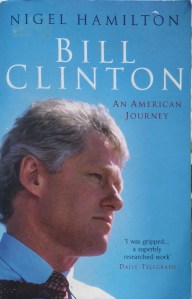 Bill Clinton: An American Journey by Nigel Hamilton
 An Autobiography by Agatha Christie
 I’ve not been at my absolute best this last week. Liz brought the last dregs of a cold over with her from the UK here to Lanzarote and gradually gave it to me. While I’ve been coughing and sneezing I’ve been lacking in a little inspiration for my blog posts and so have just written about our holiday. Two things have given me some ideas. One was a new book I’ve started, the autobiography of Agatha Christie, one of the best-selling authors ever. Her book has so far been a delightful read. She describes scenes and events from her childhood, in the days before Queen Victoria passed away, (Agatha was born in 1890) with great charm.

 As I write this we are on our 5th day in Lanzarote. I do love it here and it was nice to go to our favourite bar and see all our favourite bar staff there. The manager Juan was pleased to see us and greeted us in his usual fashion, calling out good morning as he does, no matter whether it is morning, afternoon or evening.
 Then of course there is the stress of the flight itself. Flying by budget airlines it is easy to see that cramming that extra paying customer on board takes priority over comfort, so naturally we are squashed into our rather small seats, sold microwaved cheese and ham toastie snacks and tea in cardboard cups at ridiculous prices which, outside of the aircraft, one could normally buy an entire box of tea bags, a loaf of bread, and large portions of cheese and ham. After that the staff continually try to flog us perfumes and other duty free goods that we really don’t want.
 As this is my 484th blog post I hope I can be forgiven for tending to repeat myself now and again. I’ve probably said this before but what the heck, I’ll take a risk and say it again; I really don’t like this time of the year. I don’t care for Bonfire Night or Hallowe’en and on top of that I’ve experienced some unmitigated disasters this week involving video cameras and my mobile phone. Anyway, what shall I moan about first? Let’s get Hallowe’en out of the way!
 At Liz’s house she still has an old fashioned coal fire and I have to admit that it’s nice sitting by the fire with a bottle of wine just on the hearth gradually coming up to serving temperature. The big pain is having to go out in the cold and rain to fill up the coal scuttle and to light everything on a cold morning instead of just clicking on the central heating button.
 Things didn’t start well when my GoPro camera wouldn’t charge up. I had my trusty Canon GX7 with me but I had wanted the GoPro to take some additional stuff. Luckily in my bag I had my cheapo action camera with me. It’s a cheap GoPro copy that takes reasonable video. Anyway, the tram arrived which I filmed on my Canon. I nipped aboard and went to a seat at the front where I clipped my handy suction mount to the window and pressed record. Well, I thought I had pressed record but in fact I’d pressed the wrong button and nothing happened, not that I realised it at the time. I left that to its own devices and shot some hand held stuff with my Canon. At the airport I had a wander around and filmed some chatty stuff to the camera then went down the walkway towards terminal 2 which incidentally, in a few short days I’ll be flying from!
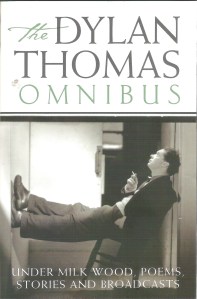 Dylan also is the sort of writer I’ve always wanted to be: A bohemian, pub crawling, boozing writer who fought with himself as he laboured to paint his word pictures. Whether that was really the case I don’t know but Dylan did like his pubs and he did enjoy a drink.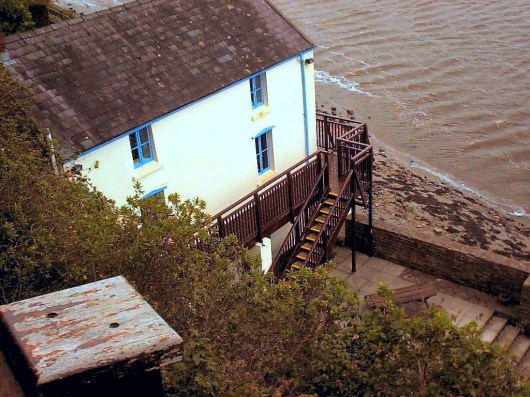
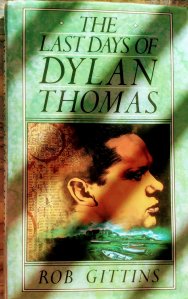 As you might have guessed from reading these posts, I really do love my books. One particular book pictured here, about the last days of poet Dylan Thomas is one I’ve had a long time but have not got around to reading until more recently. I do endlessly peruse our local secondhand shops for books but I have a feeling I bought this one from one of two online bookshops, either Abebooks or Awesome books, both of which I use especially when there is a particular book that I am after.
 I’ve been off work for quite a while with my sore arm and neck and even though I don’t feel quite right I’ve started to think that perhaps I won’t ever be fully ‘normal’ again. I said as much to my physio and he didn’t agree. Keep doing the exercises he reckons and one day I’ll be back to my usual fitness. OK, that’s pretty positive so I’ll just keep calm and carry on, what else can anyone do? Well, I can go back to work for a start, which is what I did this week. It was a little odd at first but by the second day, it felt as if I’d never been away.
 The show debuted in 1951 but the pressure of continually having to produce a new script weighed heavy on Milligan who suffered a nervous breakdown towards the end of 1952. Other writers were drafted in to help with scripts including Jimmy Grafton, (who ran a London pub where the cast originally met) Michael Bentine and others. The members of Monty Python’s Flying Circus all credit Milligan with inspiring them to work in comedy.
 I did a post a while ago about actors who came close to the role of a lifetime but
