To me, one of the great things about a summer holiday are the books I take in my book bag. The chance to relax and read something in a good lengthy book reading session. These are the books I took away to read this summer.
 The Secret Life of Marilyn Monroe by J. Randy Taraborelli.
I’ve always found Marilyn Monroe to be just about the most fascinating of all the great Hollywood movie stars, not only her life and career but also her strange and mysterious death. This book written in 2008 is interesting in that it focuses on her early life as well as her movie career, but also looks closely at her private life and her issues with her own mental health which give us a clue to understanding her unhealthy obsession with drugs and medication. Clearly, as the author shows, it was more than the usual Hollywood addiction to uppers and downers, essential perhaps back then to deal with late night publicity and early film calls but actually for Marilyn a way to deal with the mental anguish that plagued her and her mother for most of their lives.
Marilyn was terrified of ending up like her mother in a mental institution and when in the early 1960’s she was voluntarily admitted to a mental hospital, supposedly for a rest cure, she was terrified to find she had been locked into what she described as a madhouse. Former husband Joe DiMaggio came to her rescue but the experience must have reminded her of her own mother who herself was desperate to escape the institutions she was kept in.
A lot of elements of her early life I wasn’t really aware of until reading this book and also the author makes a good point in showing that Marilyn herself wasn’t always honest about what she told the press and others about herself.
Well written, very interesting and apart from the last chapter on the Kennedys which I think has been dealt with better in some more recent books, a great addition to any Monroe book collection.
 My Turn by Norman Wisdom.
I have to say that until reading this book I had no interest whatsoever in Norman Wisdom. I used to see his films regularly on television as a child but I have to say, I have never found him funny and his slapstick gormless antics have always left me unmoved.
Liz picked this book up for me at a church charity sale and I had a quick look at it one day relaxing in the garden. It sounded pretty interesting and I do love showbiz life stories so I popped it into my holiday book bag and finished it off on holiday.
Norman tells us the story of his early life in which his parents were clearly not happy together. His father was violent and eventually his mother left and divorced her husband. This being the 1930s when divorce was not so prevalent as in the present day she was unable to take her children with her and they were sadly neglected by their father.
He left them alone for long periods and their education and welfare suffered. At one point Norman remembered going to school in bare feet, something not so uncommon he says at the time. His father put Norman and his brother in various foster homes and at one point they even found themselves living on the streets. Norman himself was saved by the army. He joined as a child as a band boy and credits the army and the army way of life as the making of him. After leaving the army he found his father had remarried and went to see him hoping to be taken in. He knocked on the door and a lady answered. Norman told her who he was and she asked him to wait.
Later his father returned and without a thought for his son and his situation, threw him out. He is never mentioned again. It’s amazing that someone who has suffered so much in this way should go on to a career of making people laugh. I did wonder whether Norman, living in a lovely home in the Isle of Man, surrounded by a collection of exclusive motor cars, ever once thought about his father, who incidentally was a chauffeur.
Later he was reunited with his mother and brother and was supported by his mum and her new husband as he made his way into the world of comedy.
The first part of the book is truly sad and at the same time refreshing to see how Norman copes with all this and yet still goes on to fame and fortune. The latter part of the book is not so interesting; more of a list of his numerous successes but one anecdote was rather funny.
Norman was invited to Spain for a film festival where apparently his films were very popular, his visual style of comedy transcending the language barriers. At the festival he is the star attraction and due to go on last but Hollywood star James Mason thinks he should go on last as he is the bigger star. Norman agrees and goes on before Mason. He then wows his audience with a short speech in Spanish, leaves to a standing ovation and poor James Mason walks on to only a trickle of applause!
 Tricks of the Mind by Derren Brown.
This is another book I picked up at a charity book shop. Derren Brown is an enigmatic TV fella whose shows are a sort of combination of magic, psychology, hypnotism and some just general weird spooky stuff. I’m not sure what I was expecting from his book. I suppose I guessed it was a sort of autobiography of sorts but in fact it’s really about the things that interest the author, pretty much in the realms of magic, psychology and hypnotism and have contributed towards his performances both on the stage and on TV.
He starts off with a little background to magic and how it works, things like sleight of hand and then how the magician uses various techniques to divert attention away from something that he doesn’t want you to see to something he wants you to see.
Another interesting technique, vital to a magician is memory. Imagine a magician, or anyone for that matter being able to memorise an entire shuffled deck of cards. Sounds impossible doesn’t it but no, it can be done by using various methods which the author describes which are also pretty good for remembering anything like passwords, telephone numbers or shopping lists for instance. The way to do it is by linking something –whatever it is you are trying to remember- to something you can remember like a really striking image. So when trying to remember the name of a new acquaintance called Mike for instance, we should create an image of someone with a really big nose, shaped like a mic –a microphone.
There are more highly interesting sections on hypnotism, and body language and then the author moves on to discrediting things like mediums who try to contact the spirit world. Everything they do he claims can be done by ‘cold reading’, a way of interpreting not only body language but verbal language tricks too.
Overall a fascinating book but one theme that Derren plays too much with is how he has rejected Christianity because science cannot prove that Jesus was who he says he is, the son of God and has been resurrected. Surely Derren especially should realise that everything is not as it seems.
Floating in Space is a novel set in Manchester 1977. Click the links at the top of the page to buy or for more information.


 Getting a bad review is not nice. That’s the basic fact of the issue. Nobody likes a bad review. The flip side, the good review is just great. You feel good, your writing, your work is vindicated but the bad review, well that gets you right there, right in the solar plexus and depending how thick skinned you are, well, even then it still hurts.
 OK but what about the bad review on Amazon? I know, well here it is:
 I’ve been interested in the
  I’ve always rather liked Kenneth Williams, the slightly over the top star of many a Carry On film as well as numerous radio comedy shows. However, it did feel rather odd reading his private thoughts through his diary. This is not an autobiography where the author tells us the story of his life and keeps things in some sort of order, it’s a diary, a record of the author’s day to day thoughts and sometimes it’s hard to keep track of what is happening. In a lot of the diary entries Kenneth refers to people by their initials rather than their name. The habit of using initials can be rather annoying as the editor will mention in one of the many footnotes that SB for instance refers to his friend and fellow performer Stanley Baxter. Later on SB will turn up again and I find myself flipping back through the footnotes because I have forgotton who SB was.
 Blessing in Disguise by Alec Guinness.
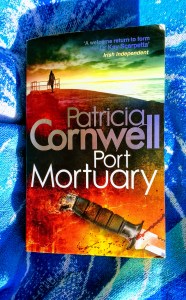 Port Mortuary by Patricia Cornwell.
 A Kentish Lad by Frank Muir.
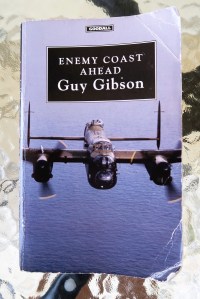 Enemy Coast Ahead by Guy Gibson.
 It’s always a bitter-sweet experience when someone decides to make your favourite book into a film. It doesn’t always work out because maybe it was a big, thick, long book and they have cut out your favourite bit, or perhaps the cast wasn’t the one you imagined. It’s usually just the same in reverse. You see a great film and in the credits it says based on the book by so and so, then you rush out and get the book and it turns out to be a little disappointing. Sometimes it’s even better than the film!
 As you will probably have gathered if you have read more than a few of my posts, I really do love books. There is nothing better than curling up with a good book anywhere, on a bus or train, in a chair, on a sun lounger, anywhere in fact. Books are a tonic for the brain. An education and a cerebral treat, both at the same time. Books enable the reader to travel not only geographically but in time too. Take one of my interests for instance. Classic cinema. Books like David Niven’s Bring on the Empty Horses has taken me on a journey to Hollywood and back to the golden years of classic cinema, the 1930s and 40s. Niven has told me about the Brown Derby, Romanov’s, Schwab’s drug store and Summit drive and a hundred other places I have never visited. But lets not stop there, let’s go even further. Marcus Aurelius’ book Meditations was written by a great emperor of Rome who died in the year 180AD, so his book is at least 1837 years old. Just imagine, the thoughts of a man who lived nearly 2000 years ago, travelling intact to me, the reader, in the year 2017.
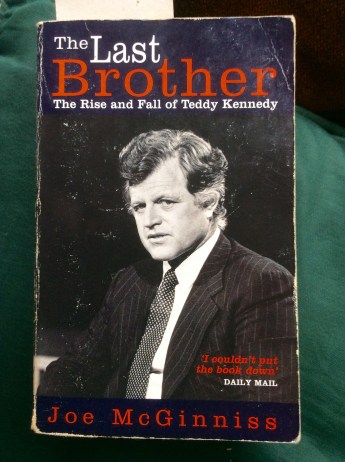 The Last Brother by Joe McGinniss
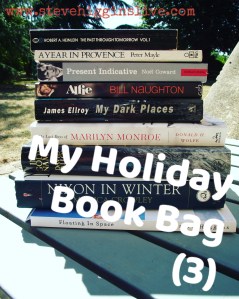 I’m just not into busy, rushed holidays. I prefer the quiet, relaxing type; the ones that involve sunny days, swimming pools and plenty of leisure time to read books. I read at home too but that is a different sort of reading; a few minutes here, a few minutes there. I’ll read on my lunch break at work in between eating my sandwiches and drinking tea but the best way to read, the way to really get into a book is a long uninterrupted read while you lie on your sun lounger with the pool handy nearby for when it gets a little too hot. A quick dip then you are back to the thoughts of your chosen author.
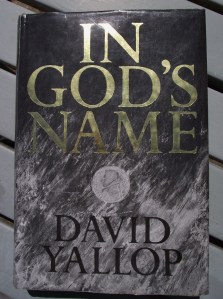 I bought this book originally on the 3rd March, 1987. I know that for a fact because back then I used to write the date on all my book and record purchases. I have read it a number of times and it is a fascinating read. It ticks all my personal boxes of history and modern mysteries. Why, you might ask would anyone want to murder the Pope? Good question and the answer, according to the author is the Vatican Bank. The Vatican, thanks to Mussolini, is a separate independent state and so the Vatican bank, registered in the Vatican state is not answerable to the banking laws and inspectors of Italy. This idea appealed to various unscrupulous individuals, notably Licio Gelli – the head of an illegal and secret masonic organisation known as P2, Roberto Calvi – a banker with ties to P2 and the Mafia, and Michele Sindona, another criminal. Together they engineered the movement of various shares and monies, using the Vatican bank. A man called Albino Luciano, the bishop of Venice, became aware gradually of various wrongdoings in the bank and was particularly dismayed by the action, or inaction of Bishop Paul Marchinkus, the head of the Vatican Bank. In 1978, after the death of Pope Paul VI, Luciano was elected Pope. He was a man dedicated to the ideas of Jesus, a simple carpenter from Nazareth and he wanted the church to follow his example. He did not want a church that had a multi million dollar profit in stocks and shares, he wanted a poor church, a church that properly reflected the feelings of its founder. When he was elected the new Pope, Luciano’s ideas and those of the aforementioned individuals were on a collision course. David Yallop’s investigation is intensive and revealing and I came away from the book feeling an intense sadness that a good and decent man, a man who would have been a great Pope and spiritual leader had been stolen from us by the greed of a few men.
 A Year in Provence by Peter Mayle.
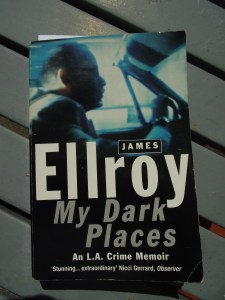 My Dark Places by James Elroy.


 Letters from an Unknown Author!