I was looking through my old scrapbook a while ago. I scanned some pages for my blog post Scrapbook Memories and quite a few of them featured Marilyn Monroe. I put my scrapbooks together years ago and even though I stopped making them in my late teens or early twenties, I continued collecting cuttings from newspapers and magazines, as well as books and videos all on the same subject: Marilyn Monroe.
 What attracted me to the persona of Marilyn Monroe? Well, apart from her obvious charms as a very attractive lady it’s her death that has always interested me. I’m a sucker for a modern mystery whether it’s the assassination of JFK, the disappearance of Amelia Aerhart or Marilyn’s own strange death. The obvious solution is that Marilyn committed suicide. She had tried suicide quite a few times before and various people along the years have saved her from death, including her acting coach Natasha Lytess and her third husband playwright Arthur Miller. Suicide is the obvious answer to her death but personally, I’m not so sure.
Anyway, getting back to my personal interest in Marilyn, I’m pretty certain the first book about her was what has come to be thought of the definitive biography, the one by Fred Laurence Guiles. Guiles published his book in 1969 and chronicled Marilyn’s life as Norma Jeane Mortensen and then Marilyn Monroe.
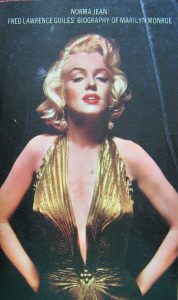
Norma Jeane Mortensen was born on June 1st, 1926. She had a troubled upbringing. Her mother was mentally unstable and was in and out of various institutions leaving young Norma to be taken into care. On one occasion in her late teens Norma Jeane was living with a friend of her mother’s but this friend was moving away and rather than send Norma back into a home an idea came about which seems a little mad in retrospect. The idea was for Norma to get married to a local boy, Jim Dougherty. The marriage went ahead only eighteen days after Norma’s sixteenth birthday.
When war came to the USA in 1941, Jim joined the navy. Norma was working in a war factory when an army photographer called David Conover came round looking for a photo article for a magazine. He asked Norma to pose for him and found that she had a natural affinity with the camera. She began a career in modelling which led her to bit parts in films, then a contract with 20th Century Fox and later to film stardom.
In 1946 she divorced Jim Dougherty and Fox offered her a seven-year optional contract. She changed her name to Marilyn Monroe and began her film career. All didn’t go so smoothly at first. She was dropped from her contract but she did meet an influential Hollywood agent named Johnny Hyde.
I’ve got to say that despite her best efforts I’m not sure my interest in Marilyn had a lot to do with her acting skills as in her early days she wasn’t a great actress. What she did have was looks, looks that could turn the heads of a great deal of men. One of her early film roles came about really because of her growing reputation as a model. She was cast in the last of the Marx Brothers’ films Love Happy and had one scene in which she tells Groucho that “some men are following me.” Groucho explains more in the following video.
That of course was nothing more than a walk on part but she was asked to go on a nationwide tour in the USA promoting the film. Marilyn was determined to get on and be a great actress. She was always having acting lessons, in fact she joined the famous New York Actors Studio. The studio had been founded by theatre and film director Elia Kazan and one of the famous acting coaches there was Lee Strasberg. Both Kazan and Strasberg were interested in ‘the method’, a style of acting initiated by the Russian actor Stanislavsky which involved the actor using his own experience and memories to ‘become’ the role rather than just acting a role. James Dean and Marlon Brando were two of the more famous students of the Actors Studio.
Another of my books about Marilyn was the famous biography by Norman Mailer. Mailer actually used Fred Guiles’ book as the basis of his biography but added his own insight into Marilyn’s story as well as a huge collection of photographs. Mailer was originally hired to write an introduction to what was originally intended to be just a photo album but he was so taken by the subject matter, he wrote more and more and his ‘introduction’ became the book. He later wrote other works about Marilyn.

Marilyn on the cover of the celebrated book by Norman Mailer
Johnny Hyde was in love with Marilyn and asked her to marry him many times. She always declined, telling him she did not love him. He continued to press her while working hard on her behalf as her agent. In October 1950 he arranged for a seven year contract at Twentieth Century Fox. He also organised some minor plastic surgery for her, apparently, she had her chin built up slightly and the tip of her nose made smaller. In December that year she was recuperating from the surgery at his Palm Springs home when Johnny died of a heart attack. Marilyn was distraught when she heard the news, even so, his family ordered her out of the house.
She moved in with her drama coach Natasha and one day tried to swallow over 30 Nembutal capsules. Luckily Natasha came home early and found her.
Fox put Marilyn into a number of pictures playing a dizzy blonde type but then she was loaned out to RKO for Clash by Night directed by Fritz Lang. It was the first film with her name over the title.
In 1954 she married baseball star Joe DiMaggio. Maggio had retired from the game that had made him famous and Joe wanted her to settle down with him and retire from the cinema. It might be that Marilyn did intend to one day enjoy a more domestic existence. My feeling though is that she could never ever give up her film star life. It had given her all she had; her fame, her money and her status. She could never say goodbye to her creation, the film star Marilyn Monroe.

In the short autobiography published after her death, My Story, which some say was ghost written or partly written by others, Marilyn said this about her fame:
I belonged to the public and the world, not because I was talented or even beautiful but because I never belonged to anything or anyone else. The public was the only family, the only Prince Charming and the only home I had ever dreamed of.
Would she give up all that for DiMaggio or anyone? I don’t think so.
Her marriage to DiMaggio ultimately failed but Joe would continue to be a great friend. It is quite possible that in the last months of her life she was even planning to remarry him. However, before that came marriage and divorce to Arthur Miller. Marilyn idolised men like Abraham Lincoln and Albert Einstein and she put Miller into that same category. They had met years before, even before she married Dimaggio. Miller would write the screenplay for her final completed film, The Misfits, in which she played a character, Roslyn, which was based on herself. She became hugely disappointed in Miller after finding an open diary or notebook of his in which he severely criticised her. They divorced in 1961.
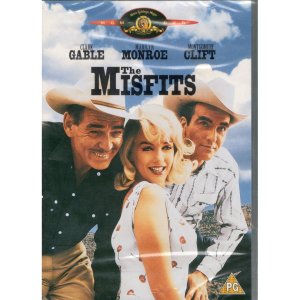
I’ve always thought that The Misfits was her best film and every so often I’ll take my DVD copy and give it a viewing. (I’ve actually only got two of her films on DVD, The Misfits and Some Like it Hot). Misfits was in fact her last completed film. In 1962 she began filming Something’s Got to Give in which she starred with Dean Martin. Marilyn missed a lot of the shoot due to illness and then left for New York where she appeared at a gala performance for the President’s birthday. The President was John F Kennedy and 20th Century Fox was not amused that with their film behind schedule its star had taken time off. They were already having financial problems with another production, Cleopatra. They were paying Elizabeth Taylor the unheard-of figure of one million dollars for her to play the Egyptian queen and their bank account must have been looking distinctly unhealthy. What was the answer? They fired Marilyn.
Fred Guiles first book on Marilyn was published in 1969 and mentions that towards the end of her life she was involved with an ‘easterner’. The man from the east was Robert Kennedy and since then many books and documentaries have mentioned Marilyn’s involvement with both John and Robert Kennedy. The accepted story of Marilyn’s death goes like this. Both John and Robert Kennedy ended their affairs with her, she had been sacked by 20th Century Fox and she became so despondent that she took her own life. Her body lay unclaimed in the morgue until the faithful Joe DiMaggio came and organised her funeral.
In 1966 however, a man call Frank Capell had published a book called ‘The Strange Death of Marilyn Monroe’ which called attention to various things that did not add up. Capell also claimed that Robert Kennedy was with Marilyn on the evening of her death. The FBI forwarded a report of the book to Kennedy who was then still the Attorney General and he asked that Capell’s phone be tapped.
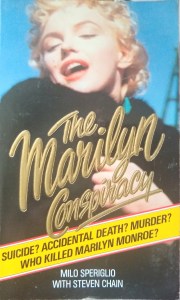
In the 1980’s a number of authors began to look further into Marilyn’s death and one in my collection is The Marilyn Conspiracy. The author, Milo Speriglio was a private detective who was asked by Robert Slatzer to investigate. Slatzer was a friend of Marilyn’s and has even claimed that he married the star only for the two to tear up the marriage licence in case it harmed her career. He said Marilyn had a red diary in which she jotted down notes from her conversations with RFK and contained many things that were secret at the time. Marilyn used to call him from a nearby phone box as she felt that her phones had been tapped.
In 1985 Anthony Summers published the book Goddess: The Secret Lives of Marilyn Monroe in which he also claimed Marilyn was involved with Robert Kennedy. He also explains that Marilyn was not depressed after all. Her dispute with 20th Century Fox had been settled and they had reinstated her to the movie Something’s Got to Give and she was discussing further film projects including a biopic about Jean Harlow.
Summer also collaborated on a BBC documentary film called Say Goodbye to the President in which private eye Fred Otash revealed that he had engaged electronics expert Bernie Spindell to bug Marilyn’s home. The reason? Union leader Jimmy Hoffa who was under investigation by Kennedy wanted derogatory information on RFK that he could use against him.

Eunice Murray, Marilyn’s housekeeper, admitted in an interview in 1985 for the documentary Say Goodbye to the President that Bobby Kennedy was at Marilyn’s house on the day of her death. Eunice’s son in law and Marilyn’s handyman, Norman Jefferies told Donald Wolfe, the author of The Assassination of Marilyn Monroe, that Bobby Kennedy arrived late on the Saturday evening with two unknown men and asked Jefferies and Murray to leave while he spoke with Marilyn alone. When they returned Marilyn was comatose in one of the guest cottages attached to her house. Jefferies and Murray called an ambulance but Marilyn died from an overdose.
I cannot for a moment imagine Bobby Kennedy as a murderer but he certainly would not want to be associated in any way with a movie star suicide. John Bates, a friend of the Kennedy family, claims that Bobby and his family spent the weekend with him at his ranch in Gilroy, south of San Francisco.
Marilyn died in 1962 and she must have something about her because here we are in 2023 still interested in her. In 2011 a film about her called My week with Marilyn was released and in 2022 came Blonde, starring Ana de Armas as Monroe. Blonde was a fictional version of Marilyn’s life. I haven’t seen it but when I looked it up on the internet it didn’t seem to have been rated highly although I’ll be looking out for it on my TV screen in the future.
 Norman Mailer’s book about Monroe finished with a photo of Joe DiMaggio, grief stricken on the day of her funeral and he reckons we can perhaps surmise Marilyn’s true worth just by the look on Joe’s face that day. I cannot disagree.
Sources:
The Assassination of Marilyn Monroe by Donald Wolfe
Goddess by Anthony Summers
The Marilyn Conspiracy by Milo Speriglio with Steven Chain
Norma Jeane: The Life and Death of Marilyn Monroe by Fred Lawrence Guiles
My Story by Marilyn Monroe
Say Goodbye to the President: 1985 BBC documentary
What to do next: Here are a few options.
Share this post on your favourite social media!
Hit the Subscribe button. Never miss another post!
Listen to my podcast Click here.
Click here to visit Amazon and download Floating in Space to your Kindle or order the paperback version.
Buy the book! Click here to purchase my new poetry anthology.
 If I was a professional writer working for a magazine or a newspaper, I reckon that this week I’d be getting a bit of a telling off from the boss as I’ve not really been pulling my finger out. I’ve been feeling a little deflated lately. Maybe it’s an after effect of going to my mother’s funeral or perhaps it’s just a general feeling of disappointment. Every writer wants his work to take off and become a best seller but neither my novel, Floating in Space or this blog, look like hitting the top of the book or blogging charts. Yes, every week brings a new follower and that is good, after all every writer wants an audience, every writer wants readers but a writer needs to produce new content to put before them and just lately I’ve not been delivering the goods. The aim of this blog, as always, is to not only let people know about my books but also to give the reader something interesting enough to make him or her think hey, wonder if Floating is worth buying? (Of course it is, get yourself a copy now!)
 I’ve always been fascinated by transformations either in fiction or in real life but what do I mean by transformations? Well, I have written about transformations before in a previous post. I talked then about Professor Higgins who helped Eliza Doolittle change from a street flower seller to a lady in George Bernard Shaw’s Pygmalion but with this new post I thought I’d start with the story of Dr Jekyll and Mr Hyde.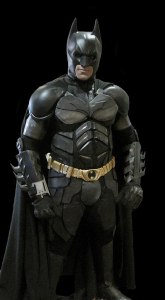


 I thought I’d start with Gone with the Wind and see where it takes me. Gone with the Wind was a major film adaptation of the book by Margaret Mitchell. The book was a huge hit and producer David O Selznick bought the film rights. Production was delayed for a long while as Selznick was determined to get Clark Gable for the part of the roguish Rhett Butler. Another delay was a distribution deal with MGM which couldn’t be finalised until Selznick’s then current deal with United Artists had expired. Selznick used the delay to begin a huge search for an actress to play the part of Scarlett O’Hara, the spoilt daughter of a plantation owner in the deep south of America. Scarlet has a crush on Ashley Wilkes played by British actor Leslie Howard in possibly his most famous role. The film was one of the major hits of 1939 and was the highest earning film up to that time.
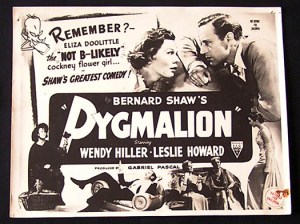
 In 1938 Leslie Howard played the part of Professor Higgins in the film production of Pygmalion based on the play by George Bernard Shaw. A musical version was a big hit on the stage in the 1960s. Julie Andrews played the part of Eliza Doolittle to great acclaim on the stage but when the time came to make a film version in 1964, the producers wanted a major star and so the part went to Audrey Hepburn.
 ge has transformed me too. In the picture over on the right you can see me as I was when I was aged 19 or 20. It was taken in France by my best friend Chris. Now I am older, at least older on the outside. On the inside I’d have to say that I haven’t really changed that much. You might think that now I’m probably much wiser with different ideas and different thoughts. Actually though, I’m pretty much the same on the inside with similar ideas and similar thoughts.
 James Bond has been in the news this week. The books by Ian Fleming are apparently being rewritten as they might be considered offensive to a modern generation of new readers and the producers are still looking for a new actor to play their famous secret agent. OK, time for another James Bond 007 post.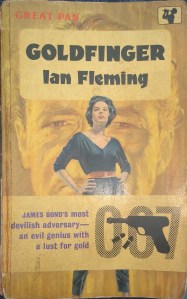


 David was born in 1908 and spent his early life in Croydon (actually 38 Blenheim Crescent, Croydon) until his parents divorced. His father moved out and left the family in 1923 which must have been an upsetting moment in Lean’s young life. Another perhaps more significant moment was when an uncle gave him a camera when David was aged 10 and then Lean began to develop and print his own photographs.
 The film did however win two Oscars for cinematographer Freddie Young and supporting actor John Mills. The poor reception of the film prompted David to meet with the New York critics at the city’s Algonquin Hotel. I’m not sure if David wanted to reason with them or just find out why they didn’t like the film but they spent two hours attacking his production. David came away devastated and would not make a film again until A Passage to India in 1984.
 Frank Sinatra and Die Hard.
 Letters from an Unknown Author!