The Film of the Book: James Bond 007 (Part 2)

This is part 2 of a post about the books and films in the James Bond franchise. It’s recently been announced that Steven Knight, the writer who created the TV series Peaky Blinders, has been engaged to write the next film in the James Bond spy series. Bond appeared to die in the last 007 epic No Time To Die which, certainly for me, wasn’t a particularly great film. I honestly think that the producers have got the character mixed up a little with either Ethan Hunt from the Mission Impossible series, Bruce Willis from the Die Hard franchise or perhaps Jack Bauer from 24. Bond isn’t a rogue agent. He isn’t a maverick cop or spy either. He’s a former naval intelligence officer and a serving officer of the secret intelligence service who is trained to follow orders and use his initiative in certain situations. In order to get back to the original James Bond it’s time to look at the source material, namely the books by Ian Fleming, and see how they compare to the films.

Goldfinger

Goldfinger is probably one of the best books in the Bond series and only the second 007 book that I ever read. (I’ll tell you about the first one later). I was at school at the time and for one of our assignments in English, we were asked to bring in a book which contained a really good description of a character. I chose Goldfinger as in it, Ian Fleming describes Goldfinger as a man who appeared to have been made using bits of other peoples’ bodies. This must have been in the mid-1960s and although the character of James Bond was pretty well known, the films had not begun to permeate down to the television screen.
The book is in three parts, based on a quote from Goldfinger who tells Bond of a saying he learned in Chicago. ‘Once is happenstance, twice is coincidence, the third time it’s enemy action’. In a similar situation to that in Moonraker, Bond is asked to take a close look at Goldfinger by an acquaintance from the first book Casino Royale. The man reckons that Goldfinger is cheating him at cards and asks Bond if he can see how this is being done. M tasks Bond to meet with Goldfinger who is suspected of gold smuggling. Eventually, Bond is captured by Goldfinger who correctly surmises that ‘enemy action’ has begun. Later Bond is taken to the USA where he learns of Goldfinger’s plan to rob Fort Knox.

The film version was hugely popular and to a certain extent became a sort of template for future Bond films.

For Your Eyes Only

Not one of my favourite Bond books, this was a collection of short stories and some of the titles, but not the plots, were used in some of the later Bond films.

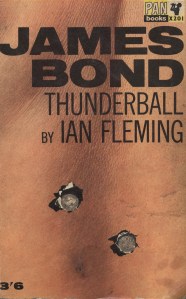
Thunderball

This is an interesting story and the resulting film has perhaps become the quintessential Bond film even more so than Goldfinger. The story is about a criminal underworld organisation (SPECTRE) that steals an aircraft with nuclear weapons and holds the west to ransom threatening to explode the bombs.
Prior to Thunderball, Fleming had been working on a screenplay with two others and when the project fell through, Fleming decided to use the material in his new novel. Later, Kevin McClory and Jack Whittingham, his two erstwhile writing partners, sued Fleming and won rights to certain elements of the story. This enabled them to years later produce the film Never Say Never Again with Sean Connery returning to the role of James Bond.

The book is well put together and as usual I found it a hugely enjoyable read. Fleming once again manages to inject the story with elements of his own life. Bond’s visit to a health clinic was inspired by Fleming’s own similar visit. In the book, Bond’s health record is revealed including details of his large intake of alcohol and cigarettes.

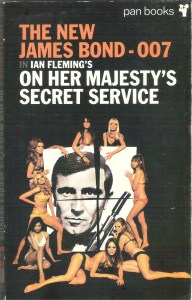
On Her Majesty’s Secret Service

In this book the secret service find that Blofeld, the head of SPECTRE, is trying to assume the identity of the Comte Balthazar de Bleuville. Bond poses as Sir Hilary Bray of the College of Arms in order to meet with Blofeld. Interestingly, Sir Hilary gives Bond a quick resumé of Bond’s family history including the Bond family motto ‘the world is not enough’ which was used by the film producers for the title of a later 007 film unrelated to Fleming’s books.
While taking a break from the search for Blofeld, Bond meets Tracy, the daughter of Marc-Ange Draco, the head of the French criminal organisation the union corse. Draco offers Bond a million pounds to marry his troubled daughter but Bond declines although he agrees to meet with her again. Later she proves instrumental in helping Bond escape from Blofeld.

In the film, George Lazenby became the new 007, sadly only lasting for one film after taking advice from his agent who felt the days of the Bond films were over. Former Avengers girl Diana Rigg portrayed Tracy. She and Bond fall for each other and are married but sadly, Blofeld takes revenge and she is murdered. Personally, I’ve always felt that this film was one of the best in the 007 film series.

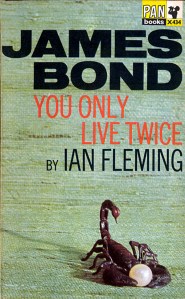
You Only Live Twice

This book follows on from the previous one and we find James Bond depressed and disillusioned with his job after the death of Tracy. M considers sacking Bond but instead sends him on a diplomatic mission to meet the head of the Japanese secret service. The British want access to Russian documents which the Japanese are currently decoding. The Japanese decide to offer this information to Bond if he will assassinate a British resident who has created a garden of death, a garden full of poisonous plants which are attracting many Japanese citizens who want to commit suicide. Bond realises that this man is Blofeld and decides to keep this quiet until after he has killed him.

At the end of the book Blofeld is dead but Bond, who has been masquerading as a Japanese fisherman, is badly hurt and suffering from amnesia. The Japanese woman who has been pretending to be his wife decides to hide Bond in order for him to stay with her. At the end of the book, Bond reads something about Russia which triggers a memory and decides he has to go there.

The only real similarity of the film to the book was that the film was also set in Japan.

The Man with the Golden Gun

This was the last novel in the Bond series and the first Bond book I ever read. It’s a rather disappointing read as Fleming had died before completing his revision of the manuscript.

The novel opens up with Bond reappearing after going missing after his last mission. In fact he has been brainwashed by the Russians into murdering the head of the secret service. His attempt fails but Bond is deprogrammed and M decides to test Bond by sending him after a notorious hitman, Francisco Scaramanga, who has eliminated numerous British agents.

Fleming’s writing process was to create a first draft and then edit and add in more detail with a second draft. Fleming had told friends that James Bond was becoming harder to write and he wanted The Man with the Golden Gun to be his last. He also wanted to finish on a high and was concerned that the book wasn’t good enough for a grand finale. He had told his editor that he had thought about spending another year back at Goldeneye in Jamacia working on the book. Sadly, he suffered a heart attack on the morning of 12th August 1964 and died.

The film version starred Roger Moore playing his usual lacklustre and slightly camp 007 but a memorable screen villain was Ian Fleming’s cousin, Christopher Lee starring as Scaramanga. Britt Ekland joined the ranks of the Bond Girls by playing Mary Goodnight, Bond’s secretary.


What to do next: Here are a few options.

Share this post on your favourite social media!

Hit the Subscribe button. Never miss another post!

Listen to my podcast Click here.

Buy the book! Click here to purchase my new poetry collection.

Click here to visit Amazon and download Floating in Space to your Kindle or order the paperback version.

Click here to visit amazon and purchase Timeline, my new anthology.

The Book of the Film or the Film of the Book: James Bond 007 (Part 1)

I originally gave this post the title of Book Bag: Ian Fleming and I intended to talk about the original James Bond books written of course by Ian Fleming. As much as I tried to keep them out, the film versions kept creeping in and so I decided on a quick change to the title, as you can see above. It’s very hard to separate the films from the books especially as I keep reading rumours about the next Bond film in the media. In fact it has just been announced that Steven Knight, the writer who created the TV series Peaky Blinders, has been engaged to write the next film in the spy franchise. Bond appeared to die in the last 007 epic No Time To Die which, certainly for me, wasn’t a particularly great film. I honestly think that the producers have got the character mixed up a little with either Ethan Hunt from the Mission Impossible series, Bruce Willis from the Die Hard franchise or perhaps Jack Bauer from 24. Bond isn’t a rogue agent. He isn’t a maverick cop or spy either. He’s a former naval intelligence officer and a serving officer of the secret intelligence service who is trained to follow orders and use his initiative in certain situations. In order to get back to the original James Bond it’s time to look at the source material, namely the books by Ian Fleming and see how they compare to the films.

Casino Royale

Casino Royale is the first book in the 007 series and it’s a pretty interesting and original one too. ‘Le Chiffre’, a gambler and also a member of SMERSH, a murderous department of the KGB is engaged in a desperate effort to win a great deal of money at the casinos of Royale Les Eaux in France. Le Chiffre is desperate because he has used SMERSH funds for his personal use and his spymaster bosses will not be pleased if they find out. Britain’s secret service happens to find out about this and sends Bond to France to make sure Le Chiffre doesn’t recoup those funds as of course as we all know, James Bond 007 is a bit of an expert with the cards.

The book is interesting in another way too. Ian Fleming sold the movie rights to Casino Royale separately from the rest of the Bond books and this enabled producer Charles K Feldman to produce a movie independently from Eon productions who own the rights to the other books. Feeling that he could not compete with the mainstream movies, Feldman decided to make Casino Royale into a comedy version. David Niven starred as Sir James Bond and ironically, Ian Fleming had mooted Niven as a possible Bond when casting began for Dr No, the first movie in the series.

Eon Productions finally acquired the rights to Casino Royale ready for the debut of Daniel Craig as James Bond. I’ve got to say I didn’t like Craig at first. He didn’t look like Bond and I honestly thought he would have been better cast as one of the Bond villain’s henchmen but I did warm to him eventually and although I didn’t much care for it at first, I really do think Casino Royale is one of the better Bond films. It was released in 2006 and follows the book pretty faithfully which many of the previous films rarely do. Craig’s final Bond film was No Time to Die which I really thought was the poorest of Craig’s five outings as 007.

Live and Let Die

This was the second Bond book to be published and the action takes place in the USA and the Caribbean, which Fleming loved and bought a house there which he named Goldeneye. Live and Let Die and in fact the whole book series were recently reissued with all the politically incorrect stuff removed which makes me wonder whether there was in fact anything left to publish after that process was complete. The book was published in 1953 and comes complete with all the prejudices and sexual and racial intolerances of the era. In one segment when Bond visits Harlem, Fleming tries to reproduces the accents and slang terms of the black people of Harlem and for me it’s not one of Fleming’s best books. In the film version, Roger Moore took over the licence to kill and the result was a very tongue in cheek version of James Bond. Sorry but Roger Moore as Bond just wasn’t for me. The film did feature a great theme song from Paul McCartney which was really a little underused in the film. Another feature of the film was a power boat chase along the Bayous of Florida which was a lot of fun but not entirely serious.
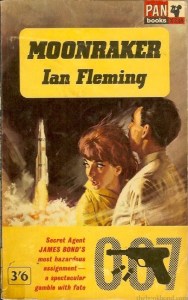
Moonraker

This was the third entry into the 007 series and the action takes place mostly in Dover. Millionaire Hugo Drax wants England to enter the space race and so he spends his own money on a rocket named the Moonraker which he intends to donate to the British government. It turns out that Drax is actually a nazi who wants to avenge defeat in the second world war by arranging for the rocket to destroy London. I read recently that Fleming wrote the book while staying in a cottage situated down by the famous chalk cliffs of Dover which was once owned by Noel Coward and later Fleming himself. It’s not a bad read at all and starts off with M asking Bond a favour as he suspects Drax to be cheating at cards and he wants Bond to see if he can sort things out as at the time, this was the mid-1950s, cheating at cards in London high society could really be a big scandal.
Bond beats Drax at his own game and then finds his next mission is to look into Drax and his Moonraker set up. Interestingly in Moonraker the obligatory Bond girl with the exciting name, in this case Gala Brand, decides not to succumb to Bond’s charms after all.  The movie version was a desperate attempt by the Bond producers to compete with Star Wars and was not my cup of tea at all.

Diamonds are Forever

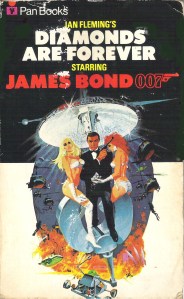
Fleming wrote this book at Goldeye, his house in Jamaica, after doing a great deal of research about diamond smuggling. Bond’s mission is to investigate a diamond smuggling ring and he does this by impersonating a diamond smuggler called Peter Franks. Franks leads Bond to an American woman called Tiffany Case who he begins to fall for. He tracks the smuggling ring to the American Spang brothers, leaders of the Spangled Mob, a criminal gang. The finale takes place in the Spangs’ restored western town, Spectreville.
The film version marked Sean Connery’s final outing as Bond, at least in the ‘official’ Bond films anyway. Connery looks bored throughout the film which seems to begin the trend of slightly less than serious films which Roger Moore continued.

From Russia with Love

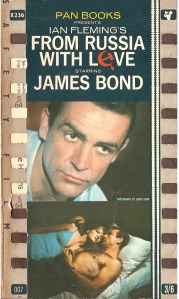
According to Wikipedia From Russia With Love was inspired by the author’s trip to Istanbul in 1955 to cover an Interpol conference for the Sunday Times. The plot is very similar to the film version and involves the KGB planning to assassinate Bond and also create a scandal involving Bond and the British Secret Service. To do this they persuade a cypher clerk, Tatiana Romanova, to pretend to defect to the west with a Spektor cypher machine. She claims she will only to defect to Bond, having fallen for him after reading his KGB file.
What was interesting about this book was that Fleming had become a little bored with Bond as well as being short of ideas and so he decided to kill off 007 at the end of the book, when he falls victim to KGB agent Rosa Klebb, who stabs Bond with a hidden blade laced with poison. Fleming later developed an idea for the next book and proceeded to revive Bond for Dr No, the next in the series.

The film version closely follows the book but adds the criminal organisation SPECTRE into the mix and is, to my mind anyway, one of the best films in the franchise. Sean Connery made his second appearance as 007 and two excellent portrayals as villains were by Robert Shaw as Red Grant and Lotte Lenya as Rosa Klebb.

Dr No

Prior to the writing of this book, a firearms expert called Major Boothroyd wrote to Fleming explaining that an agent like Bond would never be armed with a Baretta as it was more of a ladies gun. Boothroyd recommended a Walther PPK. Fleming was so impressed he included the new gun in Dr No and also added a new character named Boothroyd as the armourer of the secret service.

In Dr No, Bond is recovering from the effects of poisoning in the previous book and so M, the head of the secret service, sends him on a routine mission to Jamaica where the head of the Jamaica station and his secretary have disappeared. Bond finds that they were investigating the secretive Dr No who owns a private island known as Crab Key. After further investigation Bond finds that Dr No is involved in the practice of ‘toppling’ missiles from a nearby US launch site.

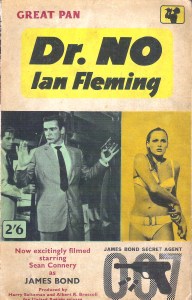
Dr No was made into the very first Bond film in the film series with Sean Connery starring as 007. Fleming was rather apprehensive of Sean Connery at first, actually wanting David Niven to play the part. Later Fleming warmed to Connery, even adding a bit of Scottish ancestry into Bond’s back history in the later books.

Bernard Lee played M, the head of the secret service. He went on to appear in 11 Bond films in total and Lois Maxwell made her first of 14 appearances as M’s formidable secretary, Miss Moneypenny.

Tune in next week to read the concluding part of this post.


What to do next: Here are a few options.

Share this post on your favourite social media!

Hit the Subscribe button. Never miss another post!

Listen to my podcast Click here.

Buy the book! Click here to purchase my new poetry collection.

Click here to visit Amazon and download Floating in Space to your Kindle or order the paperback version.

Click here to visit amazon and purchase Timeline, my new anthology.

Titanic

The story of the Titanic, the ship that hit an iceberg and sank in 1912, is one of those stories which seems to be forever in the news. It’s a story that has caught the imagination of pretty much everyone. Even the other day, just scrolling through the BBC news page, I came across an item about some new digital scan of the Titanic wreck which revealed new information about the disaster.
This week I thought I’d take a look at the story of the Titanic and how it has been represented by television and film, well at least the TV shows and films that made an imopression on me, as well as the actual story of the tragedy.

The Titanic was designed to be the new premier ship of the White Star Line. It had been built by Harland and Wolff in Belfast and built alongside its sister ship the Olympic and was launched on the 31st May 1911 and was then towed to another berth where its engines and superstructure was installed as well as its majestic interior. The sea trials of the ship were undertaken on the 2nd April 1912 just eight days prior to leaving Southampton on its maiden voyage. The Titanic was the largest ship in the world and advertised as having the passenger accommodation of ‘unrivalled extent and magnificence’. It was also billed as unsinkable even though a few days into its first journey it would end up at the bottom of the Atlantic Ocean.

The Titanic on Television.

The Time Tunnel

The Time Tunnel was a sci-fi series created by Irwin Allen in the 1960s. The best episode in the series was probably the very first one. A US senator has come to take a look at a secret time travel project and see if the huge amounts of money being spent are justified. Scientist Tony Newman, fearful that the project will be cancelled, decides to trial the new Time Tunnel apparatus and send himself back in time. He activates everything and transports himself back in time arriving in 1912 on board the  Titanic.

His colleague, Doug Phillips also goes back to the same time zone to rescue Tony. The captain of the Titanic naturally doesn’t believe his ship is doomed to sink and back in the Time Tunnel control room the technical staff have a bit of a problem bringing the two scientists back to the present (actually 1968) but manage to transfer them to another time zone and so the scene is set for the subsequent adventures.

The Titanic at the Cinema.

A Night to Remember (1958)

I’ve always liked this film. It starred Kenneth Moore as the Titanic’s second officer, Charles Lightoller, and was based on a book about the disaster. The film was released in 1958 and tells the usual story about the sinking. The ship sets off but during the journey the overworked telegraph officers fail to pass on a warning about icebergs. The ship hits the iceberg and sinks. Despite a limited budget and only 1950s era special effects, A Night to Remember is actually a really good film.

Raise the Titanic (1980)

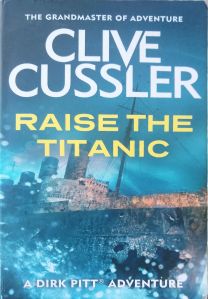
This was a film produced by TV mogul Lew Grade who was wanting to move his TV production company ITC Entertainment into the world of cinema. He had read the original book and thought that it might be possible to make a film series about US government operative Dirk Pitt in the manner of the Bond series.

In the film Dirk Pitt played by Richard Jordan proposes a salvage operation for the Titanic as he is convinced an American named Brewster had discovered a rare radioactive element called Byzanium which was stowed in wooden shipping boxes aboard the Titanic.

A huge undersea search takes place and the Titanic is ultimately found and raised. The Byzanium is not found aboard though although it does finally emerge in a neat twist at the end.

I’ve always enjoyed Raise the Titanic. It was based on a bestselling book by Clive Cussler although the film did not emulate the book’s success.

A great deal of the budget for the film was used to create a 50 foot model which was filmed at a huge water tank at the Mediterranean Film Studios in Malta. Apparently the three million pound model remains there today rusting away although the water tank is in regular use.

Not long after the film was made the real Titanic was located and it was confirmed the ship had broken up and was lying on the sea bed in two separate sections.

Titanic (1997)

Titanic was written and directed by James Cameron. The main thrust of the story is about two passengers from wildly different social classes who fall in love on the ship although one, played by Leonardo DiCaprio, dies in the disaster and the other played by Kate Winslet survives.

A treasure hunter (Bill Paxton) and his salvage team explore the wreck of the Titanic looking for a famous necklace, the Heart of the Ocean. They discover a safe which they bring to the surface to find it only contains a sketch of an unknown woman. After it is featured on TV the woman comes forward and tells the story of meeting Jack Dawson (DiCaprio) and of course of the sinking of the Titanic.

Director Cameron and his producers built a huge outdoor set in Playas de Rosarito in Mexico with uninterrupted views of the ocean and a water tank in which the Titanic set could be tilted to film the sinking scenes. Overall, the production cost was over 200 million dollars making it the most expensive film of all time. Happily for the producers, it also became the highest grossing film of all time until the release of Avatar, another film written and directed by Cameron.

The Novel

Dreaming a story and making it into a novel or a screenplay sounds pretty fantastic but in 1898 an American writer, Morgan Robertson, wrote a story about an unsinkable ship called the Titan which sailed from England to the USA but during the journey hit an iceberg and sank. The story was published fourteen years before the Titanic disaster. I remember reading the story of this writer years ago, even that the writer saw the story played out in front of him like a movie but all the research I did on the internet for this blog seems to imply that the author was a man who knew his business where ships were concerned, felt that ships were getting bigger and bigger and that a disaster like that of the Titanic was inevitable.

Books

I only have one book in my collection about the Titanic. It’s a big glossy picture book, not about the actual ship, but about the shooting of James Cameron’s film. It documents Cameron’s twelve dives in a tiny submersible which gave him the idea of the treasure hunters looking to find the necklace the ‘Heart of the Ocean’ and his realisation as Cameron himself mentions in the book’s foreword that the main thrust of the story should be a love story with the Titanic disaster almost as a backdrop.

The book tells about the numerous models that were built of the ship both as a pristine sea going vessel and as an underwater wreck. The making of the full size set in Mexico which could be dropped via hydraulic pistons into a huge water tank was an immense undertaking and adds immeasurably to the finished film.

So what actually happened to the Titanic?

The Titanic was on its maiden voyage to the USA. It left Southampton on the 10th April 1912 and stopped at Cherbourg in France to pick up more passengers before heading out across the Atlantic to New York. Four days into the voyage it hit an iceberg. Lookouts had been sent aloft to look for icebergs but their task was difficult. It was a moonless night and pitch black. The sea was very calm which meant that the lookouts could not see waves crashing against the icebergs that they had been warned to look out for. When an iceberg was finally spotted the lookouts rang down to the bridge. The officers there ordered the ship to turn hard to port. Some reports say that the engine room was ordered to stop engines which would not have helped the turn. Either way the ship brushed the iceberg and the resulting contact made a gash along the side of the ship and water rushed in.

The ship had been designed to stay afloat with four of her watertight compartments flooded but it could not stay afloat with the flooding of six. Interestingly the compartments were not sealed at the top so that when one flooded, the water tipped over into the next and so on until the ship sank.

The bow of the Titanic courtesy Wikipedia Commons

In another documentary I watched a few years ago a theory was put forward that the three million rivets that held the steel plates of the ship together were made of poor grade metal which became brittle in the freezing sea water. When the ship impacted the iceberg, the heads of the rivets popped off and sea water flooded inbetween the steel plates of the hull.

RMS Carpathia arrived about an hour and a half after the sinking and rescued all of the 710 survivors by 09:15 on 15 April. More than 1500 people died in the freezing waters of the Atlantic.

Titanic in the News.

As I mentioned earlier, the Titanic was in the news again when a new 3d scan of the wreckage of the Titanic was revealed.


What to do next: Here are a few options.

Share this post on your favourite social media!

Hit the Subscribe button. Never miss another post!

Listen to my podcast Click here.

Buy the book! Click here to purchase my new poetry collection.

Click here to visit Amazon and download Floating in Space to your Kindle or order the paperback version.

Click here to visit amazon and purchase Timeline, my new anthology.

Texting and my Brother

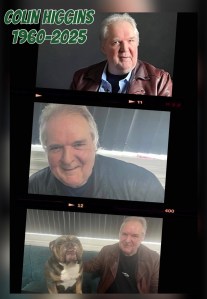
My brother died this week. As you can imagine I’m pretty upset. He was the younger brother so the accepted plan was for me to die first but somehow, things didn’t work out that way. Still, to a certain extent my brother was a burger and pizza eating TV watching couch potato so perhaps him dropping dead like that was not really unexpected. He was a guy that I sometimes wanted to slap and tell him to sort himself out, to clean his flat up and wash the pots and hoover up and get himself off his lazy backside and get a job or do some training or something.
Once I made him a huge roast beef Sunday lunch. I had done loads of food so I plated up an extra portion and told him  to ‘slap this in the microwave and eat it tomorrow’. I called him the next day to remind him. ‘Remember’, I said. ‘You’ve still got that roast dinner in your fridge. Slap it in the microwave tonight.’

‘Oh that’, he said, dismissively. I ate that last night when I got home!’

Despite all that, despite him spending money recklessly, buying numerous leather jackets from catalogues, getting into debt and going everywhere in taxis and eating takeaways when he could have saved money by eating sensibly and eating healthily, Colin, my brother, was a latter day Oscar Madison (remember the Odd Couple) who was happy doing nothing but watching television and old films day after day and paying for the top satellite channels when he had no money. Despite all that and owing money left right and centre, he was my best friend and I loved him and miss him so much.

This next section is something I wrote about him a few years ago. Just reading it brought back our friendship so fully that I almost picked up my phone and texted him there and then.


I’ve written about my mother and father in my blog posts so perhaps it’s about time I wrote about the one remaining family member, my brother. My brother Colin lives in Manchester and we see each other every couple of weeks or so when we meet up in the city centre for a pint or two.

My brother Colin is a very subtle character. He won’t ask me outright if I fancy a pint with him, he’ll tend to text me and his text will usually go something like this:

Meatballs!

You’re probably thinking, now that is subtle; is it a code? No, but the correct answer is this:

Definitely!

Still completely in the dark? Well, I suppose you might not be classic movie fans like Colin and me because a lot of the time we text in movie dialogue.

My brother sent me a text a few days ago; it read simply ‘You don’t remember me do you?

Probably a little confusing to the man on the street but I knew exactly what he meant. I responded with; ‘I remembered you the moment I saw you!

My brother came back straight away; ‘by the nose huh?’

Yes, texting in movie dialogue is what we do. Picked up on the movie yet? That particular movie is one of the movie greats of all time. It starred Marlon Brando in an Oscar-winning performance, much better, much more exciting and above all, much more human than his other Oscar-winning role in The Godfather.

Here are some more texts

ME: Do you remember parochial school out on Puluski Street? Seven, eight years ago?

MY BROTHER: You had wires on your teeth and glasses. Everything.

ME: You was really a mess.

The movie was ‘On the Waterfront’ and it’s probably famous for the double act of Marlon Brando and Rod Steiger playing brothers but there are plenty of other wonderful performances and scenes. My personal favourite is when Brando and Eva Marie Saint walk together in the park and Eva drops a glove which Brando picks up but keeps hold of and eventually pulls onto his own hand and we know that Eva wants it back. The dialogue above comes round about here when Brando, playing the part of Terry Malloy, realises he knew Edie, played by Eva Marie Saint at school. He is trying to communicate with her in his oafish way and Edie begins to realise she actually likes him but, well watch the movie, believe me it’s a great scene. It finishes like this:

MY BROTHER: I can get home all right now, thanks.

ME: Don’t get sore. I was just kidding you a little bit.

I read somewhere that Elvis knew all the dialogue from Rebel Without a Cause, the James Dean movie. If so, my brother Colin and I are in good company because we know the dialogue from that film too, as well as Giant and the aforementioned On the Waterfront. One day I thought I’d try a quote on Colin that he would never get.

ME: I took everything out of that car except the rocker panels!

I sent the text off feeling pretty pleased with myself. He’ll never get that in a million years I thought. My phone bleeped a moment later and I looked down to see:

MY BROTHER:  C’mon Herb, what the hell’s that?

Top marks indeed if you remember that dialogue from The French Connection.

My brother and I do text each other a lot but we also chat on the phone too. The thing is though; we talk on the phone with East European accents. We started doing it one day then began a sort of unspoken contract to carry it on. Sometimes I’ll get a call and he might say, in his best Hungarian accent ‘ Gut Evenink my friend’

‘Gut evenink to you also my friend’ I tend to reply.

East European is the norm but sometimes we use German accents. Handy when we bounce quotes from The Great Escape off each other!

Me: I hear your German is good, and also your French . .

My Brother: Your hands UP!

The Great Escape is a firm TV movie favourite but let me finish with a 60’s classic we also frequently text about:

Me: She’s in beautiful condition!

My Brother: Blimey girl, you’re not as ugly as I thought!

Me: I saw that geezer Humphrey going off. You’re not having it off with him are you?

My Brother: I tumbled at once. Never be cheerful when you’re working a fiddle!

Me: I ain’t got my peace of mind. And if you ain’t got that, you ain’t got nothing.

My brother: It seems to me that if they ain’t got you one way, they’ve got you another.

Got the picture yet? The film is Alfie. It was directed by Lewis Gilbert who also directed some of the earlier Bond films. The script was written by Bill Naughton and adapted from his own book and play. Alfie is a fascinating film on many levels. It’s a peek back at the swinging sixties; it explores the elements of comedy versus drama, something I’ve always loved and which I looked at a while ago in a post about the TV show MASH. The film features great performances from all the principal and supporting actors. One fabulous feature is how Alfie talks directly to the camera and sometimes even says things that directly contradict something he is doing or saying to another character. In the opening sequence, Michael Caine as Alfie, addresses the audience and tells them not to expect any titles. There are none, except for the film title itself and the closing credits which feature photos of the cast and crew.

Many actors turned down the chance to play Alfie on film, including Caine’s then flat mate Terence Stamp who played the part on Broadway. Laurence Harvey, James Booth and Richard Harris all turned down the role and Alfie became a breakthrough movie for Michael Caine.

Now my brother has gone it’s too late to text him one final time. If I could though I’d perhaps text him this:

So what’s the answer? That’s what I keep asking myself. What’s it all about?


What to do next: Here are a few options.

Share this post on your favourite social media!

Hit the Subscribe button. Never miss another post!

Listen to my podcast Click here.

Buy the book! Click here to purchase my new poetry collection.

Click here to visit Amazon and download Floating in Space to your Kindle or order the paperback version.

Click here to visit amazon and purchase Timeline, my new anthology.

4 Bad Films (But I Like Them Anyway)

I am a great film fan as regular readers will know, particularly classic films. I do occasionally watch a film at the cinema but generally I reckon I am really your regular couch potato type of guy who tends to watch films in the comfort of home with a large cup of tea and perhaps a corned beef sandwich nearby.

Most people will have the experience of settling down to watch something good on the TV only to find that the film you have waited for is in fact, a load of old cobblers. What can you do but flip through the channels and try and find something else to watch. The big problem there is if you are watching during the evening, most films start at 9pm so if you have to flip over twenty minutes into a dud film, you’ll have missed the first twenty minutes of the good film that started over on some other channel.

Yes, it can be a hard life for us dedicated couch potatoes, that’s why I like to have a good DVD on standby to rescue the evening if things go sadly wrong.

According to Wikipedia: globally, film production varies significantly by country and year, but in 2023, China produced nearly 780 feature films, while the UK saw 207 films go into production, and the US and Canada saw 569 movies released.

To be honest, looking at those figures it’s hard to understand why a bad film actually gets made. Look at the process a bad film has to go through. Someone has an idea for a film, then they either write a screenplay or pay someone to write one. The screenplay comes to the attention of a producer and he says something like “I bet Brad Pitt would be good in the lead, and, what about Jennifer Anniston for the female lead”.

Scripts are sent out, a budget is raised, directors, cameramen, sound people, set designers and all manner of people come on board. The film is made and released. The critics go to see it and think, wow, this film stinks. Nobody comes to see it and a few weeks later it’s suddenly on Sky cinema with someone hired to write a whole lot of (lying) complimentary stuff about it to make you watch it.

People do watch it, realise it’s bad and twenty minutes later they change channel and are now watching a re-run of Star Trek that was made in 1968. Why didn’t someone way back down the line say ‘hang on, this is rubbish, let’s scrap it and film something else?’

Of course, one man’s Oscar winner is another man’s straight to DVD seriously bad film.

Here’s the crazy thing though, sometimes those bad films are so bad that you actually like them. Anyway, for this week’s blogging entertainment, I thought I’d list a few examples of rubbish films that I kind of enjoy.

Uncle Buck.

Uncle Buck is a complete load of old tosh but I just seem to be drawn to it like a moth to a flame. Never seen it? Really? OK it’s a sort of variant on the film Home Alone and in fact one of the characters is played by that kid from the Home Alone films, Macauley Culkin.

In this film a couple have to leave home because the wife’s father has had a heart attack. Who can they get to babysit the three kids? No one is available so the no-good bum of a brother-in-law is roped in, you guessed it, Uncle Buck.

Uncle Buck is played by the late John Candy and he has to contend with kids he doesn’t even know including, as well as young Mr Culkin, two screen sisters, one of them a teenage girl with a big attitude problem. She is completely embarrassed by her uncouth uncle and his smoke screen producing old banger automobile and even though the film is just a notch above rubbish, it’s actually quite fun in parts.

Buck sorts out ‘Bug’, the teenage girl’s cheating boyfriend and in doing so finally makes friends with his teenage niece. Uncle Buck is a great film to watch when you’re tired and not really paying attention and I always get the feeling it was written by a sort of committee of writers. (Probably the same committee that wrote Home Alone and Three Men and a Baby and so on.)

The thing about Uncle Buck is that the star, John Candy is actually pretty funny (in parts) and there are some actual funny elements to the film. Believe it not, even though I once hated this film, I’m beginning to warm to it.

Robin Hood, Prince of Thieves

There have been numerous film versions of the Robin Hood legend and for me the stand out one is the Errol Flynn version with Errol as Robin, Olivia De Havilland as Maid Marian and Basil Rathbone playing the villain. In this rather dire version made in 1991, Kevin Costner plays the legendary English hero with an accent that would not be out of place on the streets of New York.

Costner, as the noble Robin of Loxley, returns from the crusades to find that his father (not a bad performance by British favourite Brian Blessed) has been hung and his home laid to ruin by the Sheriff of Nottingham, played in a villainous but slightly camp way by Alan Rickman, whose performance was universally praised. Robin was accompanied by Azeem, a Muslim who feels he has to repay Robin for saving his life.

The film featured the hit single Everything I Do, I Do it For You sung by Bryan Adams and also had a small cameo from Sean Connery playing King John. The exteriors were shot in the UK and one particular location was at Sycamore Gap, just by Hadrian’s Wall in Northumberland. The tree used in the sequence became known as the Robin Hood tree which featured in the news in 2023 when it was cut down by vandals.

The film does start out fairly seriously with Robin escaping from capture in the holy lands and then making his way back to England. Alan Rickman’s performance later in the film gives the story a lighter sort of tone and although I’ve always preferred other versions of the Robin Hood legend, over the years I’ve actually begun to like this one.

Ferris Bueller’s Day Off.

So what have we here? A young American lad (Matthew Broderick) decides to have a day off school by pretending to be sick. He calls over his hypochondriac friend Cameron (Alan Ruck) and gets him to call their school with the fake news that his girlfriend’s grandmother has died so she (Mia Sara) can also get a day off and the three decide to have a little fun by going out in Cameron’s father’s beloved Ferrari.

The headmaster of the school (the Principal as the Americans call them) knows something is up and is determined to catch Ferris in the act of truancy.

The whole thing is a load of old rubbish but like the other two films mentioned above, it has somehow wormed its way into my affections.

The Vikings

I thought I might finish with that classic rubbish film, The Vikings. The Vikings is a 1958 epic produced by Kirk Douglas who also starred in the film. Douglas and Tony Curtis star as Viking half brothers and if my memory serves me right, they don’t actually know they are brothers. They do a lot of raiding and pillaging over in England and it turns out Tony Curtis might be the heir to a Kingdom in England and Kirk Douglas might be the heir to the Viking leadership. To be honest I’ve never been really sure what the score is even after looking up the film on Wikipedia but the finale ends with Kirk Douglas about to bump off Tony Curtis but hesitates for a moment having been told Tony Curtis is actually his half brother and then during that second of hesitation Curtis manages to bump off Kirk, or was it the other way round?

Anyway, the whole film is a mildly entertaining load of old tosh and my brother and I used to watch it as children and try to imitate the rather catching musical theme.

Once again, despite this being a completely dire film, I always tend to watch it for reasons completely unknown to anyone, especially myself.

What bad films do you enjoy?


What to do next: Here are a few options.

Share this post on your favourite social media!

Hit the Subscribe button. Never miss another post!

Listen to my podcast Click here.

Buy the book! Click here to purchase my new poetry collection.

Click here to visit Amazon and download Floating in Space to your Kindle or order the paperback version.

Click here to visit amazon and purchase Timeline, my new anthology.

8 Fictional Presidents

Donald Trump, the 47th president of the US, has been in the news quite a lot recently. He’s cutting down on the number of federal employees. He has stopped federal help for electric cars, he’s made it known he wants the USA to take over Gaza and he is also negotiating with Russia to stop the war in the Ukraine. He doesn’t seem to have involved President Zelensky in these talks despite Zelensky being the president of the Ukraine. Trump has even cast doubt on Zelensky’s right to be the president as, because of the war, Ukraine hasn’t held any elections. This is quite rich really as Putin, the leader of Russia, has not only rigged the Russian elections but has changed the law in Russia so he can continue as president and has also allegedly bumped off Alexei Navalny, his major political opponent.
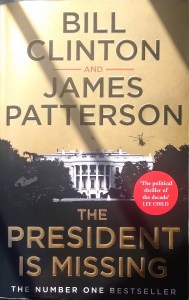
It’s a story that you couldn’t write and that got me thinking about fictional presidents so I thought I’d start with a book I’ve just read here in sunny Lanzarote.

President Duncan

The President is Missing by Bill Clinton and James Patterson has been a good holiday read. A helter skelter fast paced read but moves along quickly and has nicely laid out short chapters to enable me to pause, jump in the pool to cool off and then resume reading.
President Duncan has a lot of problems on his hands. His wife has recently died of cancer and he is suffering from some sort of blood disease. On top of that the Speaker of the House has started hearings regarding rumours that the President spoke to a known terrorist on the phone and even helped him to escape capture.

Not only that but the President agrees to meet an unknown woman who knows a secret password known only to the President and his trusted advisors. She asks the President to meet her colleague at a football game without security and the President agrees and dismisses the Secret Service. Happily the Secret Service are hanging about closely and save the President from an assassin’s bullet but now he has to deal with a threat concerning a computer virus that will shut down every computer in the USA including those that deal with nuclear strikes.

One of the reviews on the back cover was from someone who likened the book to the film Airforce One, and to be honest, I felt the same way, even picturing the President as Harrison Ford, who played the President in that film.

The book was a great holiday read although I did wonder what part Bill Clinton played in the writing process. Did he just provide background to James Patterson or did he contribute towards the storyline too?

Anyway, the book was a great holiday read.

President James Marshall

Clearly I have to follow on with Airforce One, an action packed film starring Harrison Ford as President James Marshall. In this film the President leaves Russia in his aircraft, Airforce One after a joint US/Russian mission to capture a terrorist named General Ivan Radek. Unknown to the President, a group of Radek sympathisers have joined the aircraft posing as journalists. They take over the Airforce One but it looks as though the President has got away in an escape pod. However, the President was unwilling to leave his family behind and he has hidden himself in the cargo hold. The film then unfolds in the manner of a Die Hard film with the President bumping off the terrorists and managing to contact the White House and also to free his colleagues pretty much in the way that Bruce Willis might have done.

Not a great cinema experience but I kind of enjoyed it.

President Jordan Lyman

Seven Days in May was a political thriller released in 1964 and directed by John Frankenheimer. Kirk Douglas plays United States Marine Corps Colonel “Jiggs” Casey who works for Four Star General James Mattoon Scott, a highly-decorated officer played by Burt Lancaster. Jiggs thinks that Scott might be planning a coup to remove the President who has just signed a nuclear disarmament treaty with the Soviet Union, a deal which is highly unpopular with the military. Jiggs discovers that a military group known as ECOMCON has been assigned to seize radio and television networks. He manages to see the President and convince him of the threat. The President, still somewhat sceptical, organises a small group of staff to investigate.

Interestingly, President Kennedy authorised the producers to film scenes at the White House. He had read the book that the film was based on and as he had dealt with critical members of the military himself, was perhaps worried that the fictional scenario could be a real possibility.

The President was played by Frederic March who was one of the great cinema actors of the 1930s and 40s. He was the original Norman Maine in the first version of A Star is Born made in 1936 and even starred with Greta Garbo in Anna Karenina in 1935.

Presidents Palmer, Taylor and Logan

The TV series 24 first appeared in 2001 on US television. Each episode lasted for an hour and is told in real time with a digital clock on screen updating the viewer. The first series is set on the day of the US presidential primary in California. Jack Bauer, a maverick agent of the CTU Counter Terrorism Unit, is detailed to protect presidential hopeful David Palmer from an assassination attempt. Palmer was played by Dennis Haysbert as a potential black US president.

Season 2 details how Bauer, played by Kiefer Sutherland, must prevent a nuclear bomb from exploding and assist David Palmer, now the US president, in finding the culprits. Jack is assisted by a team of agents at the CTU hi-tech control room who are adept at computer manipulation, taking over feeds from CCTV cameras, hacking into other public computers and researching various information to help Jack.

Allison Taylor is the first female president of the USA. She first appeared in the episode Redemption which was a bridging episode between series 6 and 7 as series 7 was delayed due to a writers’ strike in Hollywood. Taylor was played by actress Cherry Jones and almost seemed to be a precursor to a real life female president. As it happened, Hilary Clinton was defeated at the polls and Donald Trump became the president in 2017. (Personally, I always like President Taylor. She always reminded me a little of Captain Janeway from the TV series Star Trek Voyager.)

President Logan was played by Gregory Itzin and first appeared in season 4. He was the Vice President but was later sworn in as President when the previous President was injured in a terrorist attack. As President, Logan becomes involved in the murder of former President Palmer and is eventually forced to resign. Later, he tries to help President Taylor with a peace treaty with the Russians but again, some dodgy dealings lead him to commit suicide. Some thought the character was inspired by real life President Richard Nixon. Whether that was true or not I’m not sure but Logan was a very tricky President indeed.

I thoroughly enjoyed 24. Jack Bauer was an uncompromising agent who was convinced that the end justified the means and would shoot anyone, threaten anyone, good or bad who got in his way. The series was a very slick hi tech espionage show which combined spies, shoot outs and computer science in an exciting TV series.

Presidents Kane and Kennedy

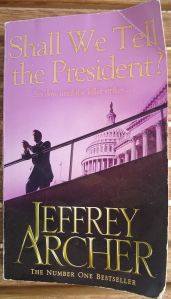
Shall We Tell the President was a novel by Jeffrey Archer first published in 1977. In the book Edward Kennedy has become the US President and FBI agents become aware of a plot to kill the President.

I read this book many years ago but recently came across this new edition, rewritten by the author himself. In real life Ted Kennedy never made it to the White House, his challenge cut short by the ghost of what happened to Mary Jo Kopechene at Chappaquiddick. In this rewrite then, the author puts his own fictional president, President Kane in charge at the White House.

The FBI learn of a plot to murder the President. A Greek waiter, an illegal immigrant, learns of the plot whilst working as a waiter at a restaurant in Washington DC. He calls the FBI and the two agents assigned to the case report quickly to their superior. Soon, one of the agents and their boss, as well as the informant are dead leaving only one agent who by chance has survived a murder attempt. He has six days to track down the assassins.

The book kept me interested but I can’t say it was a great read and I thought some of the dialogue was a little poor, in particular the FBI agent who kept referring to his new girlfriend constantly as ‘pretty lady’ was a little cringeworthy to say the least. Sorry Mr Archer but I’d have to give this one a five out of ten.

Just off the top of my head without using Google, that’s about all the fictional presidents I can come up with for now. Which was your favourite?


What to do next: Here are a few options.

Share this post on your favourite social media!

Hit the Subscribe button. Never miss another post!

Listen to my podcast Click here.

Buy the book! Click here to purchase my new poetry collection.

Click here to visit Amazon and download Floating in Space to your Kindle or order the paperback version.

Click here to visit amazon and purchase Timeline, my new anthology.

Underwater Adventures

This week’s theme is about underwater adventures. I’m come up with a few films, TV shows and books on the subject so, to start, I’ll have to cast my mind back to my childhood and remember what underwater TV series caught my imagination back then.

Stingray

Stingray was a puppet TV series created by producer Gerry Anderson and his wife Sylvia and it was the first of their shows to be filmed in colour. Stingray was a submarine in the service of the WASP, the World Aquanaut Security Patrol and was captained by Troy Tempest and his colleague ‘Phones’ who was a master at using sonar equipment. The duo discover an undersea kingdom where King Titan holds sway over his people, the Aquaphibians. Troy and Phones rescue the mute undersea girl Marina who joins them onboard Stingray. Most of the characters had sea related names like, Marina, Commander Sam Shore and his daughter, Atlanta. Atlanta was voiced by Lois Maxwell who played the original Miss Moneypenny in the James Bond films.

Stingray was probably my favourite of Anderson’s TV shows. I particularly loved the opening sequence in which commander Shore exclaims ‘Anything can happen in the next half hour!’ As a child I used to own quite a few Stingray models. One was a plastic kit I had to put together and another was a plastic Stingray shaped water pistol.

Voyage to the Bottom of the Sea

Voyage started out as a film made in 1961. It had some big stars including Peter Lorre, Walter Pidgeon and Joan Fontaine. I actually saw the film after the TV series so I was never impressed with seeing the submarine Seaview without what was to me, its regular crew of actors. The film and the series were produced by Irwin Allen. The film version is about an amazing new submarine, the Seaview, which travels to the Arctic and finds that the sky is on fire! It turns out that a flaming meteor has set the Van Allen belt on fire and Seaview must fire a nuclear rocket into space to blow out the flames.

That has always seemed a bit silly to me but the TV series was much superior. Richard Baseheart played Admiral Nelson and David Hedison was Captain Crane. The crew met with various undersea aliens as well as sea monsters and many of the episodes had espionage and cold war themes.

In the TV series, the Seaview was equipped with a mini submarine which could also fly and was dubbed the Flying Sub. Looking over on Wikipedia, I see the flying sub only appeared in the later seasons but like Stingray, I also had a plastic model kit of it.

The show lasted for four seasons from 1964 to 1968 and in many ways was a sort of undersea forerunner to Star Trek. Producer Irwin Allen went on to make three other TV sci-fi shows, Lost in Space, Land of the Giants and The Time Tunnel.

The Undersea World of Jacques Cousteau

This was a documentary series about the undersea research done by Jacques Cousteau and he travelled the world’s oceans in his research vessel the Calypso. I remember it from the late 1960’s although over on the internet I see that the series ran from 1968 to 1976. Jacques and his team studied underwater things like sea turtles and coral reefs and I always found it very fascinating. The series was narrated by Jacques himself as I remember it but over on Wikipedia they claim that Richard Johnson narrated the BBC version. Perhaps it was a mix of the two with Jacques stepping in to talk about particular elements.

Thunderball

Thunderball was a novel by Ian Fleming and was one of the adventures of his hero, James Bond 007. The novel and the film were subject to litigation as it was based on a film script on which Fleming had collaborated with Kevin McClory. McClory wasn’t happy that Fleming had used the screenplay for the basis of his novel and the result was that after suing Fleming, McClory won certain rights to the story which is how a rival Bond film came to be made in 1983. Never Say Never Again appeared as a rival to the official Eon production Bond films.

Anyway, in Thunderball, a Vulcan bomber with two atomic bombs on board is stolen by SPECTRE and they blackmail the UK government for their safe return. Bond finds the Vulcan underwater in the Caribbean. SPECTRE agent Emilio Largo has a wonderful boat with an underwater hatch through which an army of frogmen descend on various underwater vehicles to hide the bombs. 007 and his colleagues engage in an underwater battle with Largo and eventually get the upper hand.

The Spy Who Loved Me

This film was the one that appeared in competition to Never Say Never Again. Numerous legal issues surrounded the film as producer Harry Saltzman was in financial trouble. Various issues arose with his fellow producer Cubby Broccoli but eventually the two owners of the Bond franchise managed to come to agreement and Broccoli bought out Saltzman.

Another issue with the production was that Fleming was so disappointed with his original novel he had stipulated that the film producers could use only the title and not the story. Various writers were employed to come up with a new story which eventually revolved around villain Karl Stromberg who wants to create a new civilisation under the sea and at the same time destroy all terrestrial life.

To film this, Pinewood studios created a new stage, the 007 stage in which to accommodate the interior of Stromberg’s super tanker which manages to swallow numerous submarines.

Another interesting element was Bond’s car, a Lotus Elite which was able to travel underwater. This was achieved by the special effects team using various mock ups as well as models. One version was towed out of the water using hidden ropes when Bond, played by Roger Moore, calmly opens a window and drops out an errant fish.

Ice Station Zebra

I’ve written a few posts in the past about the eccentric billionaire Howard Hughes and it just so happens that his favourite film was Ice Station Zebra. Hughes had a projector and watched the film, presumably on 16mm, many times in his blacked out suite in Las Vegas. The film is a cold war story based on a novel by Alastair MacLean about a satellite which crashes in the Arctic and has photographed various secret sites in the Soviet Union as well as the USA and both the Americans and the Russians want the film from the satellite. A major storm has locked in the Arctic so a submarine is sent under the ice ostensibly to rescue anyone stranded at the eponymous research station. Rock Hudson starred as the submarine captain and Patrick McGoohan as an agent whose secret mission is to retrieve the film from the satelite.

20,000 Leagues Under the Sea

This was a novel by the celebrated author Jules Verne, first published in serial form in a French magazine in 1869 and published in book form in 1871. The book is highly regarded as one of Verne’s greatest works and features a futuristic submarine, the Nautilus, years ahead of its time. The story concerns an American expedition to capture or destroy a huge sea monster terrorising shipping. The expedition meets the monster but professor Aronnax, a French marine biologist and master harpooner Ned Land are thrown overboard only to find the monster is actually a submarine. They are taken aboard and meet the ship’s commander, Captain Nemo.

The novel was made into a film in 1954 starring James Mason as Captain Nemo.

Finally

Many years ago, I decided to try and become a certified scuba diver. I joined a club and went for lessons at Warrington baths in Cheshire. I completed the course and it was a lot of fun, pottering about underwater with oxygen tanks in the baths. The final part however involved taking your mask off underwater, filling it with air and replacing it back on your face. I tried and tried but I could not do it; every time I ended up thrashing about having swallowed half of the water in the swimming pool. I even tried it a few inches under the water in the shallow end but sadly I always managed to inhale water so unfortunately I failed and never managed to gain certification.

Years later I bought one of those little action cams with an underwater housing and managed to make a short film about me swimming, not in a beautiful underwater coral reef location as I would have liked but up and down in a French swimming pool.

I’ve probably only scratched the surface on this fascinating subject. I could have mentioned the films Titanic and Raise the Titanic or even The Abyss. What was your favourite underwater film?


What to do next: Here are a few options.

Share this post on your favourite social media!

Hit the Subscribe button. Never miss another post!

Listen to my podcast Click here.

Buy the book! Click here to purchase my new poetry collection.

Click here to visit Amazon and download Floating in Space to your Kindle or order the paperback version.

Click here to visit amazon and purchase Timeline, my new anthology.

Changing the Narrative

Once again as we have for the past ten or so years, Liz and I have escaped the dismal cold of January in the UK and flown over to sunny and warm Lanzarote, leaving behind the dark nights, the cold and the rain.

Noel Coward did a similar thing every winter and went off to the Caribbean or anywhere he fancied really. Perhaps the cold is just not for us writers. Certainly not for me at any rate. Anyway, its nice to think I have something at least in common with a great writer like Coward.

Our day started last Sunday with my alarm going off at the utterly inconceivable time of 5:30am. Well, there was a time when I used to have to get up even earlier, happily, not any more. A quick wash and shower, a much-needed cup of tea and soon our driver was knocking at the door.

A pleasant surprise awaited us at the airport. On previous trips we have had to endure the hell of passing through security, taking out all our numerous electronic devices and putting them in plastic trays to be X rayed. This year, thanks to new technology, we didn’t have to do that. No longer was I running about, beltless, hanging on to my trousers while trying to grab my various belongings from numerous trays and pack them again in my cabin bag. This year the experience was much more civilised.

On the aeroplane I settled down and opened up my book to read. I have, as usual, plenty of reading matter with me but the book I chose to read on the flight was The Best Exotic Marigold Hotel as it was a fairly slim volume and fitted easily into my shoulder bag. I chose this book as it is the basis for the film of the same name, one of my favourite films.

It came as a bit of a surprise then to find that the book was almost completely different to the film. Yes, there is a Best Marigold Hotel just like the film and it is about a bunch of retired British people who take up residence there but after that, the similarity ends.

It’s almost like watching one of those James Bond films where Ian Fleming’s original story has been evolved out of recognition. Take Moonraker for example. The book is about a German officer who has been hospitalised in WWII during the Battle of the Bulge. Some German troops had been dressed in captured allied uniforms to confuse the enemy and Drax was injured while in British uniform. When fully recovered Hugo Drax continues the deception. He builds up a great business empire but decides to take his revenge on Britain by building a rocket, the Moonraker, which he intends to drop on England. In the film Bond investigates the disappearance of a space shuttle only to find Hugo Drax wants to wipe out the earth population and replace it with a master race.

The problem with film is that it is a group project and various people have an input on the final script. Screen writer William Goldman wrote a wonderful book about his screen writing career called Adventures in the Skin Trade. He described a typical screenplay development something like this. I should point out that I’m going by memory only as my copy of his book is thousands of miles away.

Goldman writes a script and gets a director interested in the project. The director likes the idea but he thinks the ending is not right so the author produces a second draft. The director is happy and brings a big star on board. The star likes the screenplay but is not happy that his character is killed at the end. Goldman produces a third draft and the big star is happier but thinks this and that needs changing. Goldman rewrites and comes up with draft number 4. At this point the Big Star decides to sign up with another project and he is out. The director is not happy so he drops out too. Enter director number 2. He likes the screenplay but thinks a few changes are required. The writer comes up with draft number 5. Enter big star number 2. He likes the screenplay but wouldn’t it be better if his character got the girl instead of the other guy? New draft please!

Come to think of it, wouldn’t it be great if we could order a new draft of our lives. Could I rewrite the bit where I spent 17 years working for the bus company? What about the time when I wanted to be a newspaper reporter? Maybe I could have walked down to the Manchester Evening News and perhaps asked if there were any jobs going?

Another production, actually a TV series, is another example of how producers can change the characters from a book. Hamish Macbeth is actually completely different to the books on which the series was based which was a little of a surprise to me and most of the characters in the series are the invention of the TV writers and not M.C. Beaton who wrote the books. I’m not sure how happy I would be if someone made a TV show out of my book and then proceeded to change all the characters, still I did enjoy Hamish Macbeth as a TV show. It was an oddball quirky little drama which ran for only three seasons. Macbeth was played by Robert Carlyle and he is the village bobby in the small fictional village of Lochdubh. Macbeth is a laid-back relaxed character. He is not averse to poaching the odd salmon and he likes to apply the rule of law in his own way. He avoids promotion as all he wants is to remain in his beloved village. Back in 2022 Liz bought me a whole stack of the Macbeth books and they are all an enjoyable and easy read.

Anyway, getting back to the Marigold Hotel. I was rather unhappy with the book at first. It had originally been published under the title These Foolish Things and was written by novelist Deborah Moggach, but to cash in on the success of the film, new editions were published with the film’s title. As I began to get into the book, I actually began to like it. The central theme seemed to be the story of the lady played by Maggie Smith in the film although in the book another layer of her story has been added which the film ignores. She is mugged and goes to see her well off son for help only to find he has been involved in some dodgy deal and has left to escape the police. She refuses to go back home but her doctor recommends a place in India where she can rest and recuperate. In fact, the Marigold Hotel which he has recommended is a business venture in which he is also a partner.

Various other people decide to go and stay in the hotel too. Some correspond to the characters in the film and some do not. All in all, it was actually quite an enjoyable read and kept me entertained during our flight and for my first few days stretched out on my sun lounger enjoying the warm sunshine of the Canary Islands.

Come to think of it, I’ve changed my own narrative too, exchanging the cold of the UK for the warmth of the Canaries.

Now, what can I change next?


What to do next: Here are a few options.

Share this post on your favourite social media!

Hit the Subscribe button. Never miss another post!

Listen to my podcast Click here.

Buy the book! Click here to purchase my new poetry collection.

Click here to visit Amazon and download Floating in Space to your Kindle or order the paperback version.

Click here to visit amazon and purchase Timeline, my new anthology.

Transformations (3)

This the third instalment of a post on the theme of transformations. The very first one (which you can read by clicking here) started off with the transformation of the common market flower seller Eliza Doolittle into a refined lady.  I hope that explains the basic idea so let’s get cracking with a few more interesting transformations.

One that came to me while lying in bed one morning was a story told to me by my mother. Walking down our old street many years ago she pointed out a tall, thin man who we used to let on to whenever we passed. He was, I assumed, very old as he had a great mop of white hair. Mum had lived on that street most of her life. She had come to Nuffield Road with her mother and father as a child and when mum grew up and married they gifted the house to her. She told me that the tall lanky man wasn’t old at all. He had gone away to war in the 1940’s and had been captured by the Japanese. He had endured a terrible time as a prisoner of war and when he returned he was a shattered man and his hair had turned snow white.

Shirley Valentine

Shirley Valentine started life as a play by Liverpool writer Willy Russell. Later the story was turned into a film with Pauline Collins starring as the eponymous heroine. Shirley Valentine was a lonely Liverpool housewife who spent a lot of her time talking to her kitchen wall. Her children had left home, she had lost touch with many of her friends and she felt alone, sitting at home all by herself when her husband was out at work.

Her husband Joe, played by Bernard Hill, demands a steak dinner every Thursday. He sets so much by this that Shirley calls it the 11th commandment; thou shalt have steak on a Thursday. The thing is, Shirley gives the steak to the neighbour’s dog and makes chips and egg for tea. I personally rather like chips and egg. If I am ever on my own on a Saturday, the first thing I think about making is chips and egg. I always think of it as the perfect Saturday evening meal. Shirley’s husband however does not like chips and egg on a Thursday; he likes steak and this is the catalyst for a big row and for Shirley going on holiday with her friend Jane and leaving Joe to fend for himself.

While on holiday Jane deserts Shirley for an affair with a man she meets on the flight over. Shirley however, begins to gain confidence in herself and far from being lonely, she begins to come out of her shell. She meets Costas, a Greek bar owner with whom she has a brief dalliance.

Shirley is at the airport ready to leave when she decides not to go. Returning to the bar she asks Costas for a job. Meanwhile Jane tells Joe that Shirley has been having an affair but she denies this saying the only affair she is having is one with herself.

The film finishes as Joe arrives in Greece to speak with her but she has changed so much he fails to recognise her at first. Shirley has finally found herself.

Educating Rita

This was a breakthrough film for Julie Walters and I remember Michael Caine who also stars in the film saying that this film would do for Julie what Alfie did for him. Maybe it did, maybe it didn’t. The film is about a Liverpool hairdresser played by Julie who wants to better herself. She decides to take an Open University course in English Literature. Her tutor played by Caine is initially confused as he has the name of Susan White on his documents and Susan explains that she has now changed her name to Rita after reading Rubyfruit Jungle by Rita Mae Brown. Frank Bryant (Caine) is not keen on taking Rita on as a student but she convinces him otherwise. Rita finds Frank has ignited her passion for literature but has to contend with her husband who wants her to be a traditional wife and produce babies. Husband and wife finally split leaving Rita to pursue her studies. She moves in with a fellow student and gradually, as she mixes with more students and studies more, she becomes less and less like her former self. Frank becomes more and more fond of her, possibly even in love with her but his position as a university lecturer is compromised by his heavy drinking.

Just like Shirley Valentine, this story began life as a play by Willy Russell and the film shared the same director, Lewis Gilbert, who also directed Alfie, mentioned above. In a lot of ways this is such a good film. Julie Walters is outstanding as Rita and Michael Caine is excellent too. The big problem for me is that while Julie plays Rita as a typical scouser with a superb Liverpool accent, the setting clearly isn’t Liverpool. Not only that but the other accents in the film all grate with Julie’s as they are a mix of various northern accents. Caine of course as the lecturer, doesn’t have to have to be a Liverpudlian but the hotchpotch of brogues, some from Manchester, some from Liverpool just seemed to jar to my ear. The film was apparently filmed in Ireland so why not make Rita and her family Irish? That would have made more sense although filming in Liverpool with a local cast would have been the better option. Perhaps production finances made that impossible.

The Incredible Hulk

Back in the days when I used to read comic books, I used to read plenty of Marvel comic strips and one was the Incredible Hulk. The origin of the Hulk (every superhero has an origin story!) is a story about a scientist called Bruce Banner who is exposed to gamma radiation during an experiment. Gamma radiation featured in quite a lot of the Marvel comics as I remember but, on this occasion, the result of exposure to gamma rays means that when Bruce gets angry, he mutates into a green skinned, muscular giant with incredible strength and while he cannot fly like other super heroes he manages to get about in some incredible jumps or leaps.

Back in the 1970’s there was a TV version starring Bill Bixby as Bruce Banner although for some reason, perhaps because he was travelling incognito, he used the name David. I can’t remember the opening episode but Bruce travels about the USA and gets involved in various incidents. He tells a lot of people to not make him angry as they won’t like him when he is angry but as you can imagine, various people just go ahead and make him angry anyway which turns him into the green skinned monster. Rather than beef Bill Bixby up with green makeup and fake muscles, the production team brought in the already muscular Lou Ferrigno. He appeared as the Hulk and when he calmed down after a good bout of rampaging and smashing stuff up, he morphed back into Bill Bixby again.

The first film version starred Eric Bana as Bruce Banner and was released in 2003. The Hulk himself was a creation of CGI, computer generated images, although director Ang Lee provided the motion capture movements and the voice of the Hulk. This being the early days of CGI the result appeared to be rather cartoon like, at least to me.

The follow up film was The Incredible Hulk starring Edward Norton as Bruce Banner who is on the run from the military and living in Brazil but still trying to continue his experiments. He does so partly by collaborating with an anonymous individual online known only as ‘Mr Blue’.

The military trace Banner to Brazil and try to capture him but fail. It’s a pretty thoughtful and interesting film until the CGI takes over and a character called Emil Blonsky is injected with a substance aimed to produce a ‘super-soldier’ causing him to become a similar mutant like the Hulk. The two engage in a CGI battle which the Hulk wins.

Later Bruce Banner begins to be able to control his mutations into the Hulk and meets with Tony Stark, alias another Marvel super-hero, Iron Man, which preps the viewer for the next super hero film.

All in all it’s not a bad film and much superior to the first one but please, less CGI in future please.

The History of Mr Polly

This is not a science fiction story despite being penned by H G Wells. Our hero, Mr Polly, finds himself in a very dull job with a very dull wife and resolves to commit suicide. Anyway, events unfold and instead of committing suicide, Polly accidentally starts a fire which threatens the whole street and he then mounts a brave rescue of an old lady. Instead of dying, Mr Polly becomes a hero and when the insurance money comes in, he leaves his wife nicely settled with the insurance money, takes a little for himself and departs for pastures new. He sends some money to a post office in another village and gradually meanders in that direction, sleeping in fields and hedges, getting himself a tan. He works occasionally when he wants and sleeps when the mood takes him at other times.

He comes across the Potwell Inn and asks for work and right away finds himself at home. He potters about happily at the Inn, cleaning, serving and doing various odd jobs. One day the landlady’s nephew, ‘Uncle Jim’ appears. He is a violent bully having been in and out of prison for years. He doesn’t like Mr Polly getting in the way so he decides to scare him off. What should Polly do, stay and help or just leave? He decides to stay and after various battles scares off Jim.

Some time later he returns to see if Miriam, his former wife is alright. He finds that Jim has drowned wearing clothes stolen from Polly so now Mr Polly is presumed to be dead. Polly leaves, content with the transformation of his life.

I first read this book many years ago and I’ve always liked its simple philosophy. If you don’t like your situation, change it.

A film version was made in 1949 starring John Mills as Mr Polly and Megs Jenkins as the landlady of the Inn where Polly finds happiness.

I might as well finish with a transformation close to home. Yes, I’m talking about me. Once I was a ‘six shifts on, three shifts off’ motorway Traffic Officer, setting signals in our control room for the travelling public and now I’m retired, a man of leisure whose only worry is ‘what can I write about next week’.

I’ve also used artificial intelligence to transform me further, well, my digital image anyway. That’s me just above, or at least a version of me that’s similar to the original.

What transformations have you experienced?


What to do next: Here are a few options.

Share this post on your favourite social media!

Hit the Subscribe button. Never miss another post!

Listen to my podcast Click here.

Buy the book! Click here to purchase my new poetry collection.

Click here to visit Amazon and download Floating in Space to your Kindle or order the paperback version.

Click here to visit amazon and purchase Timeline, my new anthology.


8 Onscreen Portrayals of Real People

It’s been another cold and wet week and as usual I’ve tended to lie back on my couch and watch a lot of television and not just broadcast TV either. Lots of times when broadcast TV isn’t up to the job of entertaining me, I’m forced to crank up a recording and watch that. Just lately I’ve watched a couple of biopics, films about real people, so for this post I thought I’d continue that theme and look at films and TV shows where the actors have had to portray real people.

Barbara Windsor

One night last week I watched a documentary about the Carry On films. It was really interesting and was titled Secrets and Scandals. It showed a lot of previously unseen interviews in which the stars had a whinge about various things, in particular the fact that they didn’t get paid when the films were reshown time and time again on TV. The producers made a shed load of money but the stars were paid peanuts. One of those stars was Barbara Windsor and after I had watched the documentary, I remembered a TV film called Babs about Barbara’s life. It was made in a really interesting way and involved Barbara in later life, imagining that she was talking to her late father about various things that have happened to her. Events from her life are recreated in front of her and she turns and discusses the incidents with her dad.

Theatre director Joan Littlewood was really impressed by Babs and wanted her to play various parts for her but after working together for a short while, Barbara opted to play a part in Carry on Spying which set up her comedy persona for the rest of her life.

Barbara loved her dad but when he and her mother divorced, Barbara, as a small child, was asked to tell the courtroom about the times he had shouted and sworn and later her dad ignored her when leaving the court. Two actresses played Barbara, Honor Kneafsey in her younger days when she played in her first Carry On films and Samantha Spiro who interacts with her father throughout the film. It’s a really good film and it’s put together in a slightly unconventional way which really works.

I couldn’t find a clip on YouTube but the film can be seen on BBC iPlayer by clicking here.

Jimmy Saville

Another TV film I saw earlier in the year was The Reckoning in which Steve Coogan plays Jimmy Saville. It was another 4 part series which we had to stream and Coogan really seemed to me to capture the essence of Jimmy Saville.

I have to admit I always used to rather like Jimmy Saville. I liked his slightly comic presentations on Top of the Pops and his ‘now then, now then’ act. This film was different though and showed the dark side of Saville and the way he used his pretty considerable fame to abuse women and children and get away with it.

Stan Laurel

Steve Coogan also played Stan Laurel in the film Stan and Ollie, a film which looks at the later years of the famous comedy duo. John C Reilly played Oliver Hardy and the film shows the two when they embarked on a music hall tour of the UK in 1953. They were still hugely popular but the tour had a big impact on them, particularly Oliver Hardy. Coogan does have a look of Stan and the two actors played great parts and even recreated some of their comedy routines on stage.

Lee Harvey Oswald

In the film JFK, director Oliver Stone takes a look at the assassination of John F Kennedy. The alleged assassin was an oddball individual called Lee Harvey Oswald. Oswald in the film is played by British actor Gary Oldman. Oswald was paraded to the press in Dallas on a few occasions after his capture and Oldman perfectly captures his look and speaking voice in the film. Stone apparently urged Oldman to do his own research and he met with Marina, Oswald’s widow and some of their Dallas acquaintances. Strangely, Oswald was interviewed on camera before the assassination talking about Marxism and Communism and the differences between the two. No doubt Gary Oldman watched these too.

Winston Churchill

Gary Oldman also played another historical person in Darkest Hour in which he plays Winston Churchill. A great deal of makeup went in to putting together Winston’s visual appearance and the film looks at the outbreak of World War II and Churchill’s ascent to the premiership. Oldman achieves an interesting approximation of Churchill’s overall look and speech and the film is excellent although whether deposed PM Neville Chamberlain had as strong a hold on the conservative party after Churchill had taken over as the film makes out, is open to question. Interestingly though, even though Churchill became the Prime Minister, Chamberlain retained the party leadership and apparently had thoughts of returning to 10 Downing St in later years. He died of cancer though in 1940.

Cary Grant

Archie is a wonderful four part series and Jason Isaacs plays an outstanding part. He doesn’t try to impersonate Cary but he did manage to create a look of the late star and he caught Grant’s voice and enunciation perfectly. Most of the series follows Cary in later life when he becomes involved with and later marries Dyan Cannon. Dyan was his fourth wife and she was the mother of his only child Jennifer and she and her mother co-produced the series which is definitely well worth watching.

Cary Grant retired from films in 1966, the year his daughter was born and he and Dyan Cannon divorced in 1968. Many tried to bring him out of retirement for various films including his favourite director Alfred Hitchcock but he declined. He must have wanted to keep on working though because he did accept a position on the board of Fabergé.

He died in 1986 aged 82 and left behind an estate reputedly worth around 80 million dollars. Archie is a well made and quite fascinating piece of TV. Look out for it, it’s well worth watching.

Howard Hughes

The Aviator was a film released in 2004 starring Leonardo Di Caprio as the billionaire Howard Hughes. Looking at Wikipedia, the film had an extensive development background with other film makers vying with each other to produce biopics about Hughes. This film however finally came together with Martin Scorsese directing and with a screenplay by John Logan. Hughes famously suffered from OCD, Obsessive Compulsive Disorder and in Hughes the disease manifested itself in a fear of germs and an obsession with cleanliness. Apparently Di Caprio did a huge amount of research on OCD and the film shows how Hughes went from an eccentric millionaire film maker and pilot to someone who finally retreated into reclusive madness.

I enjoyed The Aviator although a better film about Hughes was probably a mini series based on a book by Hughes’ former business manager, Noah Dietrich. The TV mini series was called Howard, The Amazing Mr Hughes and starred Tommy Lee Jones as the famous billionaire. I’ve always thought that Jones’ portrayal was much more convincing than Di Caprio’s but I did enjoy both versions.

An interesting element in the TV show was a recreation of an incident in 1972 when Hughes appeared by telephone live on air, to speak with four journalists he personally knew, in order to denounce fake ‘diaries’ which had been published by author Clifford Irving. On the TV mini series the actual journalists played themselves.

Brian Clough

I’m not a great football fan but not long ago I picked up a DVD from the charity shop. It was The Damned United starring Michael Sheen as the 70s football manager Brian Clough. Clough was famous in the UK in the 1970s and was to be seen regularly on various TV shows and all the top impressionists of the day, people like Mike Yarwood, all did a version of Clough. The film follows Clough as he takes over Leeds United from outgoing manager Don Revie. He denounces the team as unsporting because of their brutal and physical style of play and promises a new start for the team. However, only 44 days later Clough was sacked as manager. Despite not being a football fan, the film recreates the 1970s very well and Sheen’s performance as Clough was an outstanding approximation of the real Clough. Various people sued the production company due to a number of factual errors in the film but as a non-football fan I found the film very convincing and hugely entertaining.

I could go on with many other films. James Stewart for instance played both Glenn Miller and Charles Lindbergh although the end result in both cases was someone who looked and talked just like James Stewart usually does. The same could be said for James Cagney who played George M Cohan in the film Yankee Doodle Dandy. Neither actor even tried to impersonate the real person although Stewart did wear spectacles to play Miller. Anyway, I’ll save those examples for another post.

Have a good weekend and thanks for looking in.


What to do next: Here are a few options.

Share this post on your favourite social media!

Hit the Subscribe button. Never miss another post!

Listen to my podcast Click here.

Buy the book! Click here to purchase my new poetry anthology.

Click here to visit Amazon and download Floating in Space to your Kindle or order the paperback version.