John Lennon shot dead in New York December 8th 1980
 One day in December 1980 I was working as a bus driver and I was driving one of our old half cab buses into Manchester. My conductor, Bob, was kept pretty busy as we took a bus load of passengers into Manchester city centre for their jobs in shops, offices and other places. At one point Bob poked his head through the little window into the cab and told me that he had heard from a passenger that John Lennon had been shot in New York. It was shocking news and when we arrived in Piccadilly, we both ran to the news stand to read the news in the morning papers. There was nothing about Lennon in any newspaper and we wondered if it had been just a mad rumour. Later when we went back to the canteen for our break, we heard the news either on the TV or the radio. Lennon had indeed been shot and was dead.
I can’t claim to be a great fan of John Lennon. I liked him and his music and had a copy of one of his albums, Walls and Bridges and a few years later I bought Double Fantasy, his last album and the last vinyl album I would ever buy but what did happen that day back in December, 1980?
It was a cold day in New York and a man called Mark Chapman took a .38 calibre revolver out of his pocket and calmly fired five shots at John Lennon who had just exited a limo outside his home in the Dakota building, just across from Central Park.
Chapman had a copy of The Catcher in the Rye, a novel by JD Salinger with him when he shot Lennon. In his copy Chapman had signed ‘from Holden Caulfield to Holden Caulfield (a reference to the main character in the story) This is my statement’. He had hung around the Dakota building in New York where Lennon lived with his wife Yoko Ono and son Sean and when Lennon left for the Record Plant recording studio, he had pushed forward his copy of Double Fantasy, Lennon’s latest album, for the singer to sign.

The last vinyl album I ever bought and the last one that John Lennon made. Double Fantasy. £2.99, what a bargain!
Lennon wrote ‘John Lennon 1980’ on the record and handed it back to Chapman asking ‘Is this all you want?’ Chapman took the album back and Lennon jumped into a limo and was gone. A photographer named Paul Goresh was there and snapped a photo of Lennon signing the album. Chapman was excited about it and asked for a copy before Goresh left. Goresh promised to return the next day with a print.
Later the Lennons returned to the Dakota and Chapman was still there waiting. Yoko entered the building and Lennon was following when Mark Chapman pulled out his .38 revolver and fired five times at the ex-Beatle. Lennon staggered into the Dakota entrance saying ‘I’m shot’. Chapman dropped his gun and began reading The Catcher in the Rye until the police came and arrested him. Another Police car arrived and seeing that Lennon was losing a lot of blood carried him to the police car and took him directly to Roosevelt Hospital. Staff there tried to revive Lennon but the wounds were too severe and he was pronounced dead at 11:15pm.
Mark Chapman is still alive today. He is still serving his life sentence in Wende Correctional Facility in New York and first became eligible for parole in 2000. All Chapman’s applications for parole have so far been denied.
King Edward 8th Abdicates December 11th 1936
The story of King Edward VIII and Wallis Simpson remains one of the most dramatic turning points in modern British history. A collision of personal desire, constitutional duty and public expectation. Edward was charming, modern and hugely popular but it seemed to me that he wasn’t strong enough to carry the weight of the monarchy on his shoulders. His deep attachment to Wallis, an American divorcee, placed him on an unavoidable collision course with the Government and the Church of England. At a time when divorce was still not really socially acceptable, the idea of a king marrying a twice-divorced woman was more than a social scandal, it was seen as a direct threat to the stability of the Crown itself.
It was all terribly inconvenient for Edward, who seemed far more interested in cocktail parties and Wallis’s company than in matters of state.
His radio address to the nation was quiet and deliberate with a hint of regret. He emphasised that he could not carry on his duties ‘without the help and support of the woman I love.’ The episode left deep rifts within the royal family and cast a long shadow over the Windsors for decades, a reminder of the delicate balance between individual freedom and constitutional responsibility.
The former King, now the Duke of Windsor, left for France and prepared for his marriage to Wallis, while his shy younger brother suddenly found himself as George VI, the new King. Edward spent the rest of his life swirling around Europe in a haze of glamour, gossip and lingering tension with the royal family. When his mother, Queen Mary, died the Duke was not allowed to bring his wife to the funeral. The next time Wallis came to England was in 1972 for the funeral of the Duke himself. Honestly, it’s one of those moments in history that still feels like a cross between a constitutional crisis and a tabloid love story.
December 16th 1984 Gorbachev visits the UK

Image courtesy Wikipedia creative commons.
When Brezhnev the leader of the Soviet Union died, a succession of old men took over the leadership and within a few years, all of those had followed Brezhnev to the grave. Mrs Thatcher, the British Prime Minister, felt it was time to try and improve relations with the USSR and so she decided to attend the Moscow funeral of Yuri Andropov in February of 1984. To build on this she invited Mikhail Gorbachev to visit the UK. She guessed that Gorbachev might be a possible future leader and a break from the old elderly Soviet leaders of the past.
Gorbachev and his wife Raisa, arrived in the UK on December 16th 1984 and Mrs Thatcher announced famously after their meeting that ‘I like Mr Gorbachev, we can do business together.’ Gorbachev spent a week in the UK visiting places that Lenin and Karl Marx had frequented. Mrs Thatcher later flew to the USA to brief her ally President Reagan who later began his own talks with Gorbachev.
Gorbachev became the General Secretary and leader of the USSR when Konstantin Chernenko died in 1985 and he began a policy of openness (glasnost) and democratisation which ultimately led to the collapse of the Soviet regime.
First episode of Coronation Street 9th December 1960
I thought I might finish with something a little lighter than Lennon and Gorbachev and King Edward 8th and so that brings me to Coronation Street. I can’t say I’m the greatest fan of TV soaps in general although I do watch Coronation Street. When you watch something like Corrie over a long period of time you do get quite attached to the characters. Soaps, I suppose, do have their place in the TV schedules.
Coronation Street was the idea of writer Tony Warren who wrote the first 13 episodes. He based the fictional suburb of Weatherfield on his home town of Salford, just over the river Irwell from Manchester. Coronation Street is a small cobbled street in Weatherfield and the stories of the various residents have entertained many of us over the years. Elsie Tanner, Annie Walker, Bette Lynch, Mavis Riley and the Jack and Vera Duckworth have long gone to be replaced gradually with new characters, some good and some not so good. I like Corrie because Manchester is my home time and it’s nice to hear the characters talk the way I talk although proper Mancunians on the show are sadly becoming fewer. These days Coronation Street is broadcast in three hourly chunks per week and as much as I enjoy it, I doubt we will ever see a moment as memorable as that one back in 1984 when Hilda Ogden returned home from hospital after the death of her husband Stan. She opened a small parcel containing Stan’s effects including his old spectacles and slowly began to cry her eyes out. Probably the saddest thing I have ever seen on television. (For some reason I couldn’t seem to add the video clip of that moment but click here to see it on YouTube.)
 One thing that happened in October was me! I was born on October the 3rd, quite a considerable time ago which is annoying on a number of levels. One, I’m getting a bit knackered. My back hurts, my knees ache. It’s hard to stand up straight but what is a real pain is when you get one of those things on the internet where you have to add your date of birth and I have to scroll back through the 90s, the 80s, the 70s, the 60s and finally to the 1950s.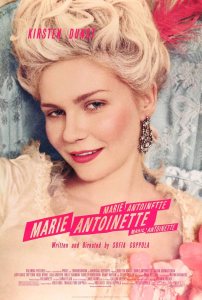
 One day in December 1980 I was working as a bus driver and I was driving one of our old half cab buses into Manchester. My conductor, Bob, was kept pretty busy as we took a bus load of passengers into Manchester city centre for their jobs in shops, offices and other places. At one point Bob poked his head through the little window into the cab and told me that he had heard from a passenger that John Lennon had been shot in New York. It was shocking news and when we arrived in Piccadilly, we both ran to the news stand to read the news in the morning papers. There was nothing about Lennon in any newspaper and we wondered if it had been just a mad rumour. Later when we went back to the canteen for our break, we heard the news either on the TV or the radio. Lennon had indeed been shot and was dead.

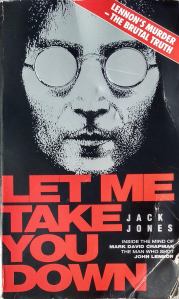 So why did Chapman shoot John Lennon? Apparently, Chapman had been a fan of the Beatles and John Lennon’s solo music but felt that Lennon had become a fake, a ‘phoney’, someone who preached peace and love to the masses while his music made him a multi-millionaire. Chapman signed out of his security job as ‘John Lennon’ on his last day of work so it is even possible that he identified so much with Lennon that the other Lennon, the fake ‘Lennon’ had to die. Chapman also claimed at other times that he shot Lennon to promote Catcher in the Rye.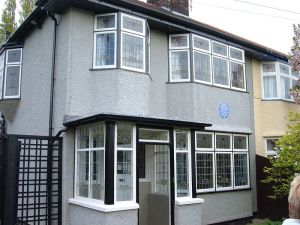
 Quite a while back, probably over two years ago, I seemed to be having problems focussing my right eye. My right eye is actually my good eye, the other, the left one is what my optician has always called my lazy eye. Years ago as a schoolboy I had to watch TV for an hour a day with a patch over my good eye. This was supposed to make my left eye, the lazy one, pull its way a bit more. That was successful to a point but the right one has always been better.
 One day when I had left school and could afford to pay for my frames I bought some aviator styles. I always loved that aviator shape you know, that sort of stylish aerodynamic looking frame. I even had a pair with smoked graduated lenses. That’s just an excuse to show you my favourite picture of myself. I was 21 and had the whole world at my feet. I was in Paris having just packed my job in and I was having the time of my life with one of my best friends, and I loved those glasses. A lot of years later when my optician recommended a pair of reading glasses I had those same aviator frames turned into reading glasses.
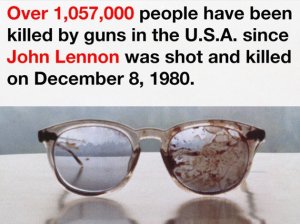 Elton John is probably the most famous spectacle wearer of all time. He even once wore a pair of specs with little windscreen wipers. John Lennon is another famous spectacle wearer. He wore those famous round glasses that you will see if you just type ‘Lennon glasses’ into Google.
 TE Lawrence’s home was a small cottage called Clouds Hill. I read somewhere recently that the house had now been refurbished and open to the public. It is a small place and I remember seeing a TV documentary about Lawrence where someone who visited in the past advised that guests were generally left to their own devices, that food was eaten from tins left in the cupboard and that a lot of classical music was played.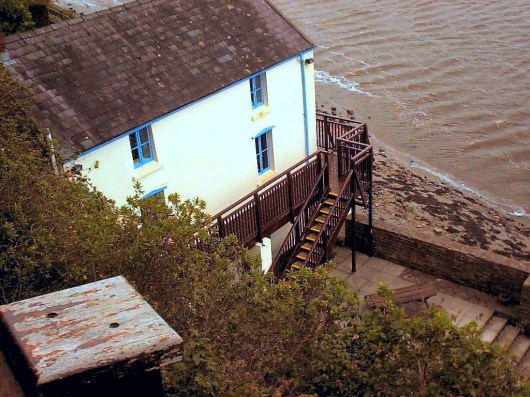
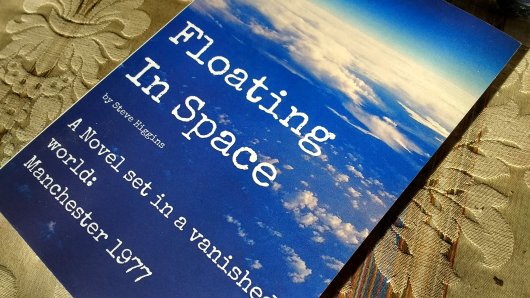
 re’s nothing I love more than a good book and as usual, here’s a quick round-up of the books I’ve taken on holiday to Lanzarote in the Canary Islands. As I’m flying I’ve not brought any hardbacks, just four paperbacks. All my books are usually sourced from the Internet or second-hand book shops but the ones below, with one exception, were gifts.
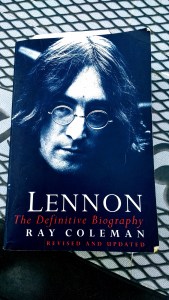 The writer has no time for music journalists who waxed less than lyrical about later Beatles’ records released in the last thirty odd years, things like The Beatles at the BBC released in 1994 or the Beatles Anthology. Reviewers who gave those records a poor reception get short shift indeed and the reader is quickly reminded of their chart topping sales. In their defence though pop music journalists tend to look forward to new music, not back to the old. More scorn is saved for Albert Goldman who wrote the book The Lives of John Lennon. Personally I thought that was rather a good book; it’s certainly more compelling than this one although it tends to focus on Lennon in a negative way whereas this book is very generous towards Lennon. It’s the book of a Lennon fan and focuses on the events in Lennon’s life in a very positive way.
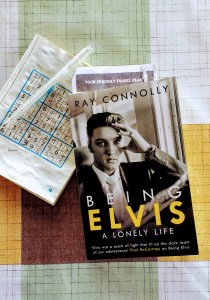 Subtitled A Lonely Life, this is a biography of Elvis Presley by another music journalist, Ray Coleman. Elvis became the King of Rock ‘n’ Roll who inspired Lennon, McCartney and a whole host of others to become musicians and pop stars. I’ve read quite a few biographies of Elvis, all much thicker than this one but this is a great holiday read being both interesting and informative. The foreword to the book was particularly insightful regarding the impact Elvis had on other musicians. The author recounts two phone calls, one to Bob Dylan and one to John Lennon where he happened to mention that he had been to Elvis’ 1968 comeback concert. Both those highly regarded stars bombarded Coleman with a series of questions about Elvis showing that despite their own success and achievements, they were still at heart Elvis fans.
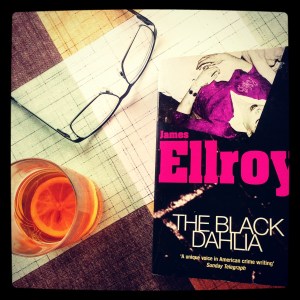 The Black Dahlia by James Ellroy.
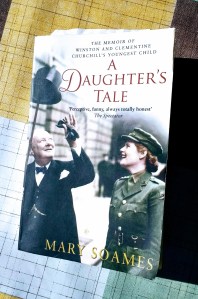 A Daughter’s Tale by Mary Soames.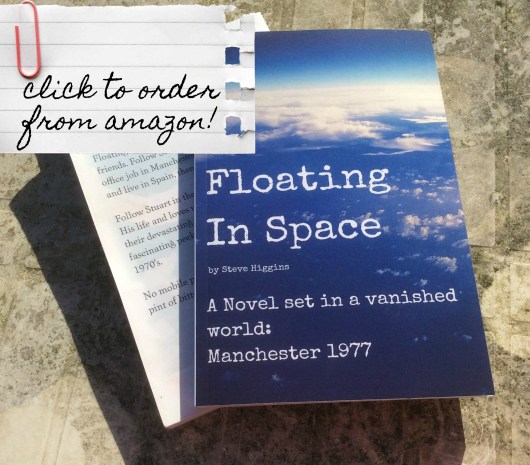
 Stuart Sutcliffe.

 Derek Taylor.
 Letters from an Unknown Author!