 Yes, this post is about me, because believe it or not, I am a self-published author. The digital world of the 21st century has given me a chance that was unheard of before now. In the pre-digital world, writers like me would be prostrating themselves before the publishers of the world, trying to get them to accept our offerings, publish them and pay us royalties. Now, even professional writers, not just lowly amateurs like myself, are turning to self-publishing. The digital age has turned the publishing world on its head.
Of course, publishing is one thing but then there’s another stage, something that a publisher would consider part of his job: Marketing. How do the book reading public know about our books? How do they know what is available, what to read, where and why to buy? Yes, marketing provides the answer. A book must be marketed, brought to the attention of the public and, using all the slippery tools of the marketeer, the public must be made to want the book, and then actually buy it!

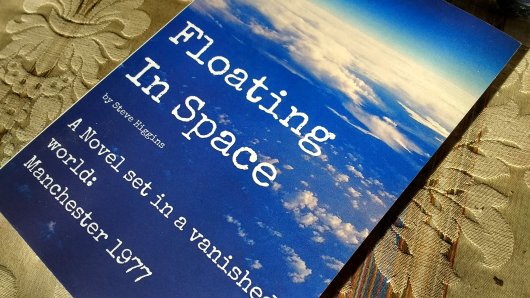
Oops, yes, that was the copy that turned out too big!
I completed my book about a slice of 1970’s working class life some years ago. Three publishers had rejected it when I decided to self-publish. I was disheartened by those rejections I must admit, but in the world of publishing, twenty, thirty or more rejections for a new author are commonplace. I used Createspace and Kindle Direct Publishing, both part of the Amazon empire to platform my book. The paperback was produced using Createspace and the Kindle version with Kindle Direct.
Producing my book online was fairly simple but the process was one which actually underlined how much work was still required on my manuscript, which until then I had foolishly thought was complete. The first version for which I ordered a test copy was far too big, which I only realised once the finished product was in my hands. I ordered another version which again I wasn’t too happy with and after untold issues with fonts and formatting I finally produced a version that I thought was ready for the reading public. I explain things more in the video below;
I feel I now know something about writing a book but as for marketing, well, I’m just a beginner. I started this blog on wordpress for the prime reason of telling the public about my book but then immediately I was faced with a similar problem. How do I get the public to read my blog? It’s like one of those trick photographs you see, someone holding a picture of themselves and in the picture they are again holding a picture and it’s repeated into infinity. I had to create an Internet presence so I started selling myself on Google+, Facebook and particularly Twitter. I began a campaign of Tweeting; Tweeting my book, my posts, my photographs and my videos. I followed everyone who has followed me and gradually I have built up a pretty big following going from 90 followers to over 3000 in just over a year. That would be nice if all my followers bought my book, however, many are in a similar place to me, wanting to sell their book or video or music track or whatever, so not only are they not interested in Floating In Space, they see me as a potential customer of theirs!
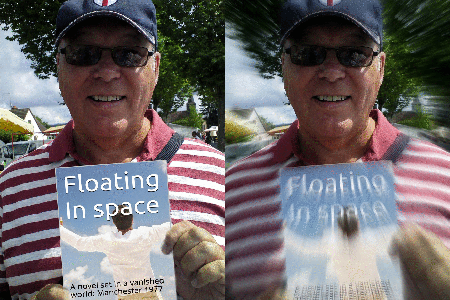 Yes, the writer of the 21st century is free of the restrictions of previous times. He is not beholden to or waiting on the attentions of a potential publisher but he has his own set of unique problems: He must be not only be a writer but also a marketeer. And he needs to have some graphic design ability and perhaps some photographic and video skills too! On top of that, most of my videos are me talking to the camera so a degree of TV presenting skill must be thrown into the mix also!
Sometimes I think about those heady days some years ago when I decided to self publish. Yes, the lure of fame as a writer, the interviews I expected, the potential trappings of success. Yes, that spurred me on to take my unfinished novel that had lain unread and unnoticed on a collection of floppy disks for many a year. To take it and bring it back into the modern cyber world, to re-write it, update and finally finish it for all those hungry fans of kitchen sink working class drama. (Yes, where are you, hungry fans of kitchen sink drama?)
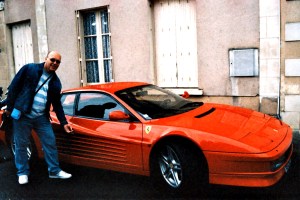
Whoops! Not quite ready to order that new motor!
Eventually of course, reality stuck its ugly size 12 boot in the door: My book isn’t yet a best seller. The TV channels are not begging for interviews. The megabucks are not rolling in: Not sure if the guys at Ferrari were too happy when I asked them to put on hold the order for a new Ferrari I had tentatively made. In fact, the meagre pittance I have spent on a few facebook and twitter ads has far outstripped my royalties from Amazon. Still, who knows, maybe the next youtube video will go viral. Some random BBC producer may notice my blog and read my book and think ‘hey, this would make a great TV film!’ (Just in case, I should mention here that I do have a ‘Floating In Space’ film script draft!)
Of course, all writers are dreamers, that is why we write but if you too have aspirations of publishing success, be prepared to wait a while!
If, after reading this post you feel the urge to read my book, click on the links at the top of the page for more information or click the icon below to visit my Amazon page!


 How not to be a writer!
 I’m not a great sports fan but I do like my motor sport. I first started following Formula One back in 1970 when I was a school boy.
 Back in the early 70s there wasn’t great TV coverage but I do remember watching the Monaco Grand Prix live on the BBC and I will always remember that moment when the potential winner, old hand Jack Brabham, slipped into the barrier on one of the last corners letting Jochen Rindt through to win.

 Neil Armstrong, the commander of
 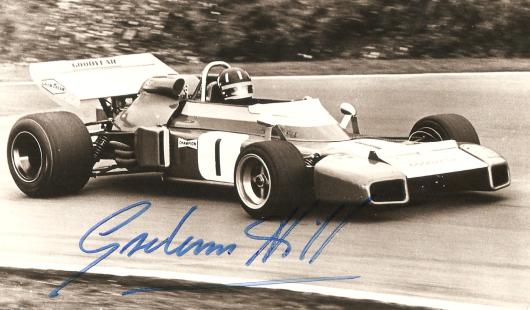 Graham Hill can’t really lay claim to being the greatest driver ever, but without a doubt he is one of the greatest motor sporting personalities to ever grace the racetrack. I wrote to him in the seventies and he responded with a card and his signature and it’s one of the prize autographs in my collection.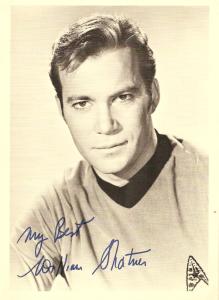

 You might be thinking, and believe me I can understand it if you are, what have Cillit Bang, Doctor McCoy and the launch of Thunderbird 3 got in common? Well it is simply this; together they are three small mysteries that have annoyed me for a while and in the case of Thunderbird 3, a very long time. Please read on . . .
 The Launch of Thunderbird 3.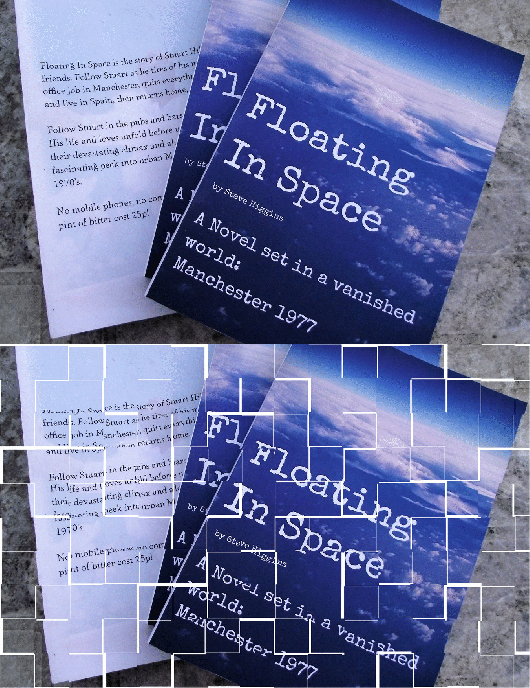
 OK, That was the intro copied from my earlier post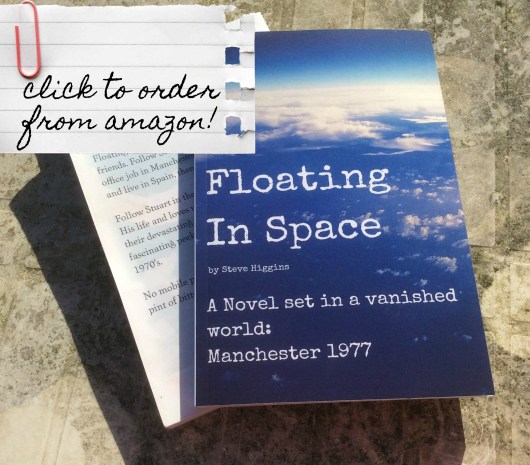
 MASH has always been one of my very favourite TV comedy programmes. You may have read in another post about how I used to
  Now, you might be wondering about that other part of this post’s title, the bit about the emotional indicator. Yes, I thought you might. It’s not so easy to explain but here goes. Most TV shows and movies have a sort of standard emotional indicator that stays pretty constant throughout the show. Take a look at the graph over to the left and let’s put some numbers up. Say a baseline of zero for a standard, calm emotional level. Now, when the show gets funny that level goes up to something like 15 for instance and I’d even say that in a movie like Police Academy that 15 or higher would be a constant throughout the film, well for me certainly. The original Police Academy movie is one of my favourites and I tend to start laughing round about the start of the film with the scene in the parking lot where Steve Guttenberg says the parking lot is full and then the guy comes in and says ‘park the car dirt bag!’ I usually stop laughing round about the end credits but on a normal film there’s a constant up and down: up when the film gets funny and down to nil when we get back to normal.
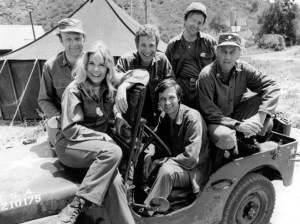 Mash ran for 11 seasons and an incredible 256 episodes. Trapper, played by Wayne Rogers, was my favourite character after Hawkeye and he left the series after season three to be replaced by Mike Farrell playing new doctor B J Hunnicut. Colonel Blake (McLean Stevenson) also left at the end of season three. His character was discharged but right at the very end of the episode news came through to the MASH that the Colonel’s aircraft had crashed with no survivors. This episode prompted an outpouring of grief and resentment from fans at the death of the character. I could understand perhaps Colonel Blake dying part way through the episode and the second part showing the sadness and grief of the rest of the characters but it seemed to me that Colonel Blake’s death was almost an afterthought, just tagged on to the end of the episode. As time went on many of the other series regulars left including Gary Burghof (Radar) and Larry Linville (Frank Burns) and for me personally, the series was never the same.

 I really do love books, especially second hand books. I think that what is so wonderful about a second hand book is that the book has told its story before to someone else, and now if you have just bought it, its going to tell it’s story to you. I spend a lot of time browsing in book shops, both physically in actual shops or on-line in virtual book stores. The thing about on-line book stores is that you have to have a starting point, it’s no fun browsing through lists of books so I tend to browse on-line only when there is a particular book I want. In an actual book store I scan through the various sections and although I tend to linger on biographies and books about film, anything can catch my eye. A while ago I was reading a book by movie director Michael Powell called ‘A Life in Movies.’ It was a pretty thick book and took a fair old while to read and when I got the end there didn’t seem to be any indication there was another volume.
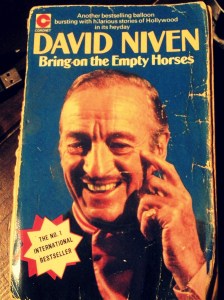 You might be thinking, looking at the picture here: Couldn’t the author have found a better picture? Looking at the picture again I suppose that particular copy is just a little tatty. That’s because it’s my travel copy. I’ve got another copy, a much nicer version that resides in my bookcase that I browse through now and again. The reason I’ve got two versions is because my travel copy goes all over the place with me. If I’m travelling somewhere on the bus or train, that slightly tatty copy goes easily into my pocket or my bag because I can read it time and time again. Not only is it the best ever book written about the golden age of Hollywood, it’s also by far the most accessible and readable book on the subject ever.
 Letters from an Unknown Author!