This could really be a Sun Lounger Post but for clarity I thought I’d give it the title above because it’s actually mainly about Noel Coward and his autobiographies.
Here in the quiet village of Parçay-les-Pins, Liz and I are having a relaxing time. The weather is good, well actually, it is fantastic. Sunny and warm, perhaps a little too warm but either way, the perfect weather for barbecues, eating outside, reading by the pool and relaxing.
Here’s the itinerary: Up at whatever time we want. Breakfast later, usually before 12 noon but not always, a quick washing up of the pots and then out to the pool. I’ve spent most of this holiday reading the autobiography of Noel Coward and it’s actually three books in one. The first part is his first autobiography, Present Indicative, part 2 is an unpublished segment of his unfinished third autobiography, Past Conditional and finally his second published autobiography Future Indefinite.
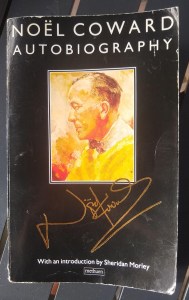
Book one, Present Indicative was published in 1937 and concerns Noel’s early years, his childhood and his first tentative steps into the theatre. It’s an account of a vanished world of repertory companies, writers, actors and actresses who have long gone and whose names mean little today in the 21st century. Even so it is hugely fascinating and interesting and as always enlivened by Noel’s supremely witty text. Noel was a homosexual in a time when homosexuality was illegal and most of his private life he keeps private although armed with a little knowledge of Noel we can read between the lines and assume that Jack Wilson who comes to live with him at his home, Goldenhurst in Kent, was presumably his lover.
It is pretty hot here in Parçay-les-Pins and after a little reading it’s time to slip into the cool waters of the pool and have a swim. Just lately, on a physical level I’ve been very inactive. I keep meaning to cycle or take a walk every day but I can never get around to it and I’m conscious my health is suffering. Now, every 20 minutes or so I slip into the pool and do 8 to 10 lengths and go back to my sun lounger for more relaxation and reading.
Book two, Past Conditional is an unpublished and unfinished autobiography that was intended to fill in the gap between his first two autobiographical books. It starts where the first one finished off, in the early 1930s and differs considerably in tone as it was written much later in the mid-1960s and Noel was able to look back at himself in the 1930s and examine himself from a more in depth perspective. Such a pity it was unfinished.
An interesting segment concerns the death of his brother who is scarcely mentioned in the text as he and Noel were never close. The brother was clearly never part of Noel’s theatrical world and the family sent him off to South Africa only for him to return and die of cancer.
In Parçay-les-Pins, we have been tempted to visit our favourite local restaurant however, a couple of things have stopped us. Firstly, it is very hot and the Station Restaurant is only open at lunchtimes so we have decided to wait until next week when the weather forecast is not looking so good. Why waste all that precious sun-bathing time?

Tea time at Parçay-les-Pins
Round about 6 pm or sometimes later, we tend to move from the pool back to the house and crank up the barbecue and decant some wine and eat in the warm evening. One of the great pleasures in France, at least for me, is to sit outside until the sun slides over the horizon and then in the darkness, a darkness here in the countryside so velvety and complete that the view of the sky and the stars is uninterrupted by any ambient light such as traffic or streetlights. Then I can look up at the great vista of the night sky, the heavens displayed above us in such a way that can never been seen from a great city like Manchester in the UK.
The big problem I have found is that this is just the time for the insects of the night to come out and nibble at my legs. One night Liz mentioned that she had some of those citronella candles that are supposed to deter the bugs so at once I dug a few out and lit them. It was rather nice for a while sat in the dark with the candles fluttering away with a rather nice scent. What happened was that the rather nice scent seemed to encourage even more bugs, especially a great number of what I can only describe as hornets. They were two to three times bigger than a UK wasp and then seemed to be honing in on the scented candles. Luckily, Liz is a master of the fly swatter and after a short while a whole flight of the hornets lay dead on the windowsill although by then, I had shot inside to safety.
The final book in the autobiographical series was Future Indefinite in which Noel recounted his time during the Second World War. He seems like many to have had a very low opinion of Prime Minister Neville Chamberlain, although to be fair to Chamberlain, he was doing his utmost to avoid the horrors of war. Sadly, and clearly unknown to Mr Chamberlain, Adolf Hitler did not want to avoid war, he was in fact wanting war very badly and happily it was Mr Churchill who understood this only too well.
In June of 1939 Noel who was a great globetrotter decided to take a tour of Europe in the light of Mr Chamberlain declaring ‘peace in our time’. He visited Warsaw and Danzig, Moscow, Leningrad, Helsinki, Stockholm, Oslo and Copenhagen. He found that many of the people in those places were just waiting for Hitler to invade, particularly the Poles. In Russia he found a state that declared it had found freedom in Communism but was in fact quite the opposite as the Stalinist regime had choked any kind of criticism or free thinking whatsoever.
When war was declared Noel was asked to be part of an Anglo-French PR unit in Paris which he seems to have enjoyed for a while and then become a little bored with. He was sent on a tour of the USA to gauge opinion there on the war and was on his way back when the Nazis invaded France. He also did a tour of Australia and New Zealand to entertain troops and did charity work for various organisations helping those who were bombed out in London.
By far the most interesting part was his account of the filming of In Which We Serve, a very patriotic film showing the activities of a ship in the Royal Navy and the lives of those who served in her, all the way through to the ship’s sinking. In his very first autobiography, the names of the many actors and actresses he worked with meant very little to me but now I began to recognise a few names, John Mills and Richard Attenborough for instance and David Lean who co-directed the film with Noel although in actual fact, Lean directed most of the film when Coward became bored with the long-winded filming process.
Lying by the pool after a lot of reading and swimming I invariably start to feel tired round about the 4pm mark and tend to nod off although I’m usually awoken by flies buzzing around my ears. What insects seem to find fascinating about my ears I will never know but they always seem to strike just as I am nodding off.

Books, Sudoku and a pool. What could be nicer?
As well as the flies a great horde of swallows seem to be fascinated by our pool and round about 5pm they gather on the telephone line above us, divide themselves into squadrons and make various sorties down to the pool, skimming just above the surface or sometimes dipping into the water with either their wings or their tiny feet. This performance is very remarkable indeed and quite a few times I’ve had to duck as the swallows make their dives from just behind my head.
It actually reminded me about the Dambusters, the raid by 617 squadron of the RAF on the dams of Germany. They had to drop low over the waters of the dams and hit a consistent height of 60 feet before dropping their ‘bouncing bombs’.
Coward goes on to talk about Blithe Spirit, my favourite of Coward’s plays which was made into a film in 1945. Coward was not keen on the resulting film. David Lean added an ending in which Charles Condomine played by Rex Harrison dies and joins his ex-wives in the spirit world. Coward complained that David Lean had f**ked up the best thing I had ever written! Personally, I loved it.
Final verdict of the Noel Coward biographies; fascinating, always interesting and hugely entertaining.
 What makes someone want to be a writer? Is it a need to emulate our own writing heroes or something else. I mentioned in a post last week that it’s important to be creative and we can be creative in a huge number of ways, not just in traditional artistic pursuits but also in everyday things, decorating our homes for instance, posting on social media, putting together a CD music mix or many other things.
 Coward has really been a surprising writing hero to me. I’ve been aware of him for years through film and television and his slightly eccentric persona has always been a little amusing to me. I remember once seeing an interview with him on the stage at the BFI, (British Film Institute) Richard Attenborough was interviewing him and seemed to me to be treating him as some sort of God that had been beamed down from the heavens. Coward was puffing away on a cigarette and lapping up all the praise.
 1977 was a different world. There was no internet and there were no mobile phones. The only phones were landlines and they were big and heavy with great rotary dials with which you had to laboriously dial a number. As more people wanted telephones they needed more numbers and so numbers got longer and longer. 061, the dialling code for Manchester became 0161 and the code for London which was 01 became two new codes 071 and 081
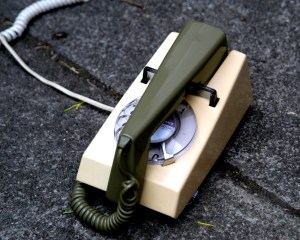 Anyway, time for a 1970’s telephone anecdote:
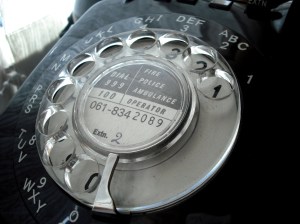 Anne was the template for the character of Anne in my book
 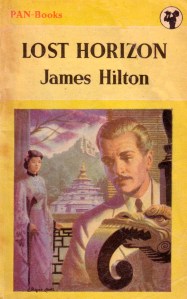 James Hilton is one of my personal writing heroes and yet his name may be unfamiliar to many of you reading this blog. He was a journalist and an author and made the trip from his home in Leigh, Lancashire, (now Greater Manchester) in the UK to the Hollywood hills in the United States to become a screen writer. He is probably more well known for his book ‘Goodbye Mr Chips’ which was made into a film with Robert Donat (actually another northerner from Didsbury in Manchester) but my favourite of his books and quite possibly my all-time favourite book is ‘Lost Horizon’.
 I’ve got a few new books to read but I thought I’d save them for my next holiday. I had an idea recently for a blog about the Carry On films so I picked up this book for a bit of research even though I read it a few years ago.
 Barbara died in December, 2020 but the Carry On films just literally carry on. Most weeks you can find one showing on one of the many TV channels now available. In her book, Barbara has a bit of a moan that despite the longevity of the films, the stars never made a pennly from all the numerous TV repeats of the films. Still, how many people thought the films would be still popular years after their first release? The first film was Carry on Sergeant made in 1958 and the last one, Carry on Columbus was released in 1992. Altogether there were 31 films, four Christmas specials, various stage versions and numerous TV shows. All the main stars, Sid James, Kenneth Williams, Charles Hawtrey, Hattie Jacques, Joan Sims, Kenneth Connor and many others are long gone. The only major star of the films still alive in 2023 is Jim Dale, now aged 87.
 I went to another funeral this week. It was someone I knew only very slightly and in fact Liz knew the deceased much more than me. His name was John and he was a pretty nice guy. The funeral service though seemed to me to be a little bit flat, a little lacking in soul. There was no priest or reverend at the service, just the celebrant. She read out a history of John’s life and family, someone came up to read a sad poem and his Grandson played a tune on his guitar.


 Ida Lupino, like Roddy MacDowell, was born in England, in fact both lived in the Herne Hill area of London. She wanted to be a writer rather than an actress but went into acting as she was part of a theatrical family and it seems that becoming an actor was expected of her. She appeared in many British films before moving to the USA in 1933.
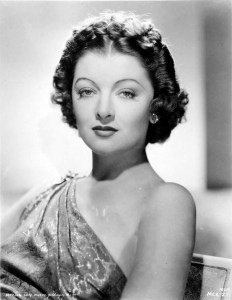 Myrna studied dance in Los Angeles. She had small parts in many silent pictures but some stills of her appeared in Motion Picture magazine and led to a contract with Warner Bros.
 While sorting out my box room this week I came across yet another box of old VHS video tapes. One was marked WFA original footage.
 What attracted me to the persona of Marilyn Monroe? Well, apart from her obvious charms as a very attractive lady it’s her death that has always interested me. I’m a sucker for a modern mystery whether it’s the assassination of JFK, the disappearance of Amelia Aerhart or Marilyn’s own strange death. The obvious solution is that Marilyn committed suicide. She had tried suicide quite a few times before and various people along the years have saved her from death, including her acting coach Natasha Lytess and her third husband playwright Arthur Miller. Suicide is the obvious answer to her death but personally, I’m not so sure.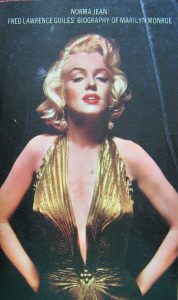


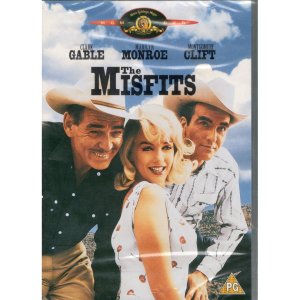
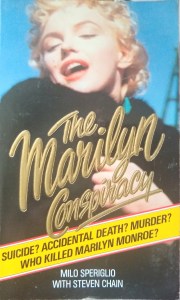

 Norman Mailer’s book about Monroe finished with a photo of Joe DiMaggio, grief stricken on the day of her funeral and he reckons we can perhaps surmise Marilyn’s true worth just by the look on Joe’s face that day. I cannot disagree.
 If I was a professional writer working for a magazine or a newspaper, I reckon that this week I’d be getting a bit of a telling off from the boss as I’ve not really been pulling my finger out. I’ve been feeling a little deflated lately. Maybe it’s an after effect of going to my mother’s funeral or perhaps it’s just a general feeling of disappointment. Every writer wants his work to take off and become a best seller but neither my novel, Floating in Space or this blog, look like hitting the top of the book or blogging charts. Yes, every week brings a new follower and that is good, after all every writer wants an audience, every writer wants readers but a writer needs to produce new content to put before them and just lately I’ve not been delivering the goods. The aim of this blog, as always, is to not only let people know about my books but also to give the reader something interesting enough to make him or her think hey, wonder if Floating is worth buying? (Of course it is, get yourself a copy now!)

 Letters from an Unknown Author!