Every couple of weeks or so I hop into my car and set off on the journey back to Manchester. I usually have some provisions packed although a lot of the time I will pop into the shops and pick some things up, a loaf of bread, a bottle of milk. I’m a man of simple tastes.
The car starts up fine and I’m off down the drive and heading towards the M55 motorway.
Once I’m moving I crank up the stereo and settle back to drive and listen to my favourite music. I hate adverts. TV adverts are bad enough but radio ads are the ones I really hate so no commercial radio, just CDs. My stereo takes five CDs which is great as sometimes I might get bored with the current CD and I like to click forward to the next one.
Coming along Queensway towards the M55 and there are roadworks ahead. There’s not a great queue but the only other route involves a huge excursion to bypass the area so I reckon I’ll just stick it out.
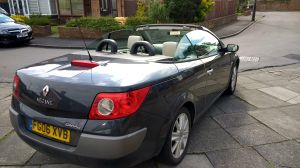
My much missed Renault convertible
My car is a Skoda Octavia Scout 4 wheel drive. It’s not anything I’ve gone out of my way to buy it just happened to be available when I wanted to change cars so I went for it. The only car I’ve ever really gone out of my way to buy was probably my last car which was a Renault Megane convertible. I don’t suppose I took the roof down that much now I come to think of it but a convertible was something I’d always wanted. I really did love driving on a warm summer’s day with the top down. My previous car was a Rover and it had a somewhat old fashioned radio and tape player. Not that I minded having a tape player. Ever since my teenage days I’ve enjoyed copying my vinyl 45s to tape and making what they call these days a mixtape, although back in the mid seventies that wasn’t a phrase I’d ever heard of.
Anyway, I loved tapes and I enjoyed compiling them. If the tape broke: no matter, they were only cheap, throw it away and record another. Bored with a tape? Again, no matter, just record something else over whatever was already on there.

Tape cassette
Finally through the roadworks on down towards the M55 motorway.
When I moved up to the Renault my collection of tapes was consigned to the storeroom and I brought a box of CDs into the car. I wasn’t totally happy but then I realised I could continue in my mixtape recording by just creating collections of my favourite music on CD. I began to copy CDs onto my laptop so I could burn my favourite tracks to new CD collections. I even had a program in which I could digitise some of my very best mixtapes which had clips from TV and film shows and burn them to a new CD.
Finally I turn on to the M55 motorway. I see I’m perhaps a little short on fuel but I’ve got easily enough to get me to Manchester and back. It’s always worth checking your fuel as when I was a motorway traffic officer, running out of gas could be a big problem. So many stranded motorists used to call up and mention they had run out of fuel as if we were going to pop down with a tank of petrol. No, we would be towing their car away and charging them £250 for the privilege, assuming the police didn’t get involved and give them a ticket. Imagine if they had run out of fuel in the fast lane or on a motorway with no hard shoulder; that could be dangerous and even fatal. Always check your fuel before going onto the motorway.
After a while I thought about actually having my original CDs in the car rather than copying and editing them. After all, if you come to a dud track it’s easy to just flip to the next one. So I brought a couple of boxes of CDs into the car, one in the passenger footwell and another in the boot. Every so often I’d rotate them.
Not so long ago I was stuck in a traffic jam. I was a little bored with my current five CD selection and wondering if I should reach over and select some new music from the zip folder of CDs in the glove compartment or even reach down to the box of newer CDs on the floor. We started to move up slowly but just then my eye happened to catch something on the front of the stereo. There was a small slot I hadn’t seen before and was that worn mark the symbol of a SD slot, you know, a slot for a memory card? We started moving and I made a mental note to look into that later.
By now I’d reached the junction with the M6. I took the slip road for the M6 south but I knew that soon I’d have to make another decision. Should I go M61 south and then M60 ring road or stay M6 south and then M56? Decisions. The M61 is not one of my favourite motorways. It always seems to be busy and then there’s the confusing link to the M60 anti clockwise where you have to move over to the right but traffic from the A666 that wants to go M60 clockwise tries to go left. It’s an accident hot spot and I can almost hear myself in former days when I was the radio dispatcher: Romeo Lima three four. Can you make to an RTC southbound M61 just by the junction with the M60 clockwise?
‘State five, Hotel Alpha’ would be the hoped for response, state five is code for enroute to the incident. Hotel Alpha was my call sign. Anyway I decide to stay on the M6 south. It’s a bit of a risk as I know there are roadworks and a 50mph zone but I still reckon it will be better than the M61.

Police and Highways dealing with an incident. This was on the M25
I checked the stereo and guess what? Yes it was a slot for an SD card. Now it just so happens that all the music I have copied and digitised I had already placed on a micro SD card for my MP3 player. I copied all that to a standard size SD card, popped it into my stereo and now I can listen to my entire music collection without changing CDs, without rotating boxes of CDs, without having the footwell of the passenger seat full of CDs. I was feeling pretty pleased with myself. OK, I’d have to copy all the newer CDs in my collection that I hadn’t already transferred to the SD card but even so, I still have a huge collection of music on that card, all of which I like and all advertisement free.
I’d hit the roadworks on the M6 and dropped to 50mph as per the speed restrictions. A lot of people look down on my Skoda but Skoda is actually part of Volkswagen and the engine is basically a Volkswagen engine so really the car is actually a pretty impressive vehicle. I’ve got a cruise control so I set the speed to 52 MPH and glide gently along in the slightly faster moving outside lane. I’m gradually working my way through my SD card and along comes some music I haven’t heard for a while, the soundtrack from the film Aliens.

Sigourney Weaver as Ripley from Alien
Aliens was the James Cameron sequel to the Ridley Scott sci-fi horror film Alien. Alien is a sci-fi classic and I’m never sure which is the better film Alien or Aliens. The other sequels in the Alien series were poor and even the prequels weren’t that good, even though Ridley Scott himself directed them. The first was Prometheus which he followed with Alien Covenant. I tried to watch Prometheus but just got bored with it. Alien Covenant was much the same.
Alien had a top-notch cast including Tom Skerrit, Sigourney Weaver, Ian Holm, John Hurt and others. The actors in Covenant were good but I just didn’t have any interest in them. The plot seemed pretty similar to Alien; a spacecraft receives a distress call and goes to investigate. This involves a long hike through the countryside although why they couldn’t have landed closer, I don’t know. Instead of the eggs and the face hugging parasite from Alien some alien spores are encountered by one crew member. He is taken back to the spacecraft and to the medical bay. One crew member gets locked in with the deteriorating man and guess what, an alien bursts out of his body and attacks the other one although just about then I switched off. Why is Alien so good and Alien Covenant so bad? It’s hard to say. Was it just the charisma free actors in the latter or the slow pace? Alien ticked along fairly slowly too but the director always kept the viewer interested in what was going to happen, plus the actors in Alien were so good.
A dubious area of the M6 is around Warrington where the M62 joins us and things always seem to get busy. There are queue caution signs up but these are automatic signals which are activated by a system called MIDAS. Motorway Incident Detection and Signalling. Slow traffic has been detected but then it is always busy in this area. Things speed up and we are soon over the Thelwall Viaduct and onto the M56.
I click onto the next CD on the SD card and it’s a singer called Rumer. Rumer is a British singer-songwriter with a really lovely voice. I reckon it’s just as good as Karen Carpenter and both have the same smooth and warm tone. The album that’s playing is one that has a fabulous version of a Carpenters classic, I Long to be Close to You.
Listening to the wonderful voice of Rumer, I pass the airport, another incident hot spot, without any problems and soon I’m pulling up at my mother’s house. I’ve got my laptop with me and I’ll have a few days to write a new blog post.
Not sure what to write about though.

 I thought I’d start with Gone with the Wind and see where it takes me. Gone with the Wind was a major film adaptation of the book by Margaret Mitchell. The book was a huge hit and producer David O Selznick bought the film rights. Production was delayed for a long while as Selznick was determined to get Clark Gable for the part of the roguish Rhett Butler. Another delay was a distribution deal with MGM which couldn’t be finalised until Selznick’s then current deal with United Artists had expired. Selznick used the delay to begin a huge search for an actress to play the part of Scarlett O’Hara, the spoilt daughter of a plantation owner in the deep south of America. Scarlet has a crush on Ashley Wilkes played by British actor Leslie Howard in possibly his most famous role. The film was one of the major hits of 1939 and was the highest earning film up to that time.
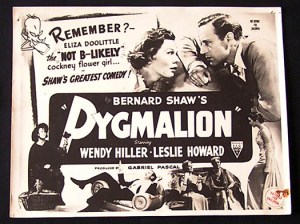
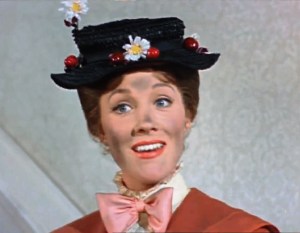 In 1938 Leslie Howard played the part of Professor Higgins in the film production of Pygmalion based on the play by George Bernard Shaw. A musical version was a big hit on the stage in the 1960s. Julie Andrews played the part of Eliza Doolittle to great acclaim on the stage but when the time came to make a film version in 1964, the producers wanted a major star and so the part went to Audrey Hepburn.
 As I’m looking through some old pictures and graphics I thought I’d add some completely random pictures into this post. Here’s a self portrait I used to use on my Flickr page where I showcase my photography. I’ve always liked this picture, it was shot in a mirror and then reversed.
 I was watching the TV show Countdown the other day and when the contestants took a short break from their word and maths games, Suzie Dent, the mistress of Dictionary Corner went into her usual talk about words. In this particular episode she decided to talk about the word pilot which inspired me to write this entire blog post on the subject.
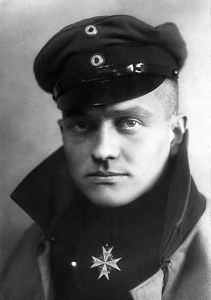 Fighter combat in WWI evolved quickly. At first aircraft were used for reconnaissance but then aircraft from opposing armies took pot shots at each other with rifles and then later, fixed machine guns. British aircraft were ‘pusher’ aircraft with a propellor at the rear to push the plane along. This meant that a machine gun could be placed at the front so the pilot could shoot at whatever was ahead. Aircraft with propellors at the front were better and faster but how could a gun shoot through the propellor blades?
 In 1928 she was asked to join the crew of an aircraft that was to cross the Atlantic. The flying crew were a pilot and mechanic and Amelia was basically a passenger and admitted that was the case. ‘I was just baggage’ she told the press. Even so, she was the first female to cross the Atlantic in an aircraft and she and the crew were treated to a ticker tape parade in Manhattan and a visit to the White House to see President Coolidge. Later, in 1932 she flew solo across the Atlantic arriving in Ireland on May 20th. Amelia made many other trips and also competed in long distance air racing. She became a celebrity in America and in 1937 began a round the world flight. Amelia piloted a Lockheed Electra 10E and the only other crew member was navigator Ted Noonan. The pair departed from Miami on June 1 and after numerous stops in South America, Africa, the Indian subcontinent and Southeast Asia, arrived at Lae, New Guinea, on June 29, 1937. The final 7,000 miles would be over the Pacific. The duo left Lae at 10:00 am on July 2nd and were heading for Howland Island, a small coral island in the Pacific. The US coastguard had sent a cutter there to assist with navigation. As Amelia neared Howland Island the coastguard picked up various messages and it became clear that the Electra was lost and could not see the island. The last transmissions stated that fuel was running low and that they were flying at 1000 feet. The coastguard generated black smoke in the hope that the aircraft could see them but the aircraft never appeared. The coastguard cutter initiated a search an hour after the last message but nothing was found. The next day the US Navy began a search which lasted for three days but no trace of Amelia Earhart was ever found. Some thought the aircraft had ditched in the sea and that the crew had drowned. Various other theories were put forward: The two managed to get to Gardner Island but died there or perhaps they were captured by the Japanese and shot as spies. The mystery has continued to this day.
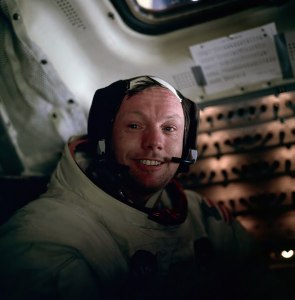 In 1969 Armstrong flew to the moon on Apollo 11 and became the first man to walk on the moon. It was a tricky mission though and during the landing as the Lunar Excursion Vehicle dropped towards the moon’s surface the spacecraft’s computer kept throwing up ‘1201’ and ‘1202’ program alarms. Neither Armstrong nor Aldrin knew what that was but the controllers at mission control knew. The on-board computer which had less memory than a modern mobile phone, could not deal with all the data it was receiving. Armstrong switched over to manual flight, hopped the lunar lander over a rocky area then finally dropped down safely onto the lunar surface with only a scant few seconds of fuel remaining.
 Despite having nothing in the pipeline, I’ve actually done a great deal of writing this week. I always have lots of ideas floating around in my head about all sorts of things and I make mental notes about them but converting those ideas into a novel is a pretty big undertaking. A better idea I thought would be to perhaps make those ideas into short stories. I could even put together a book of short stories and poems and maybe even some selected blog posts.
 Images are important to blog posts as well as social media posts. It’s a statistical fact that social media posts perform better with images and better still with video content. I tried the face app that I found when researching the Manipulating Images post but naturally, being the tightwad that I am, I declined to pay for the version that does the best effects. I tried another app recently, one that creates avatars for use in your social media pages. An avatar is essentially a picture, a stylised image that people use on the web. Sadly I found that once again, this new app required me to pay money which naturally, I wasn’t happy about. However, rather than subscribe to the app it was possible to pay a one time fee of £2.99 for 50 avatars. This required me to upload a shedload of pictures of myself, the minimum required was 15 so the app could give the best results. The results weren’t instant, I had to wait most of the afternoon for them to appear and some were a bit naff, in fact there was even a feminine version of myself but there were a couple that made me look like the real tough hombre that I’m actually not.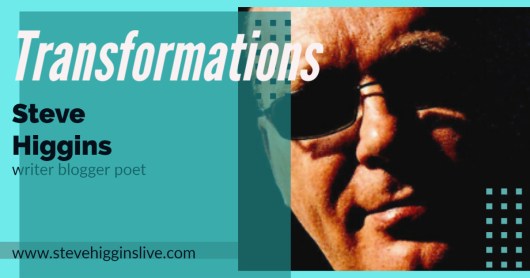
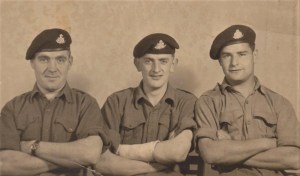
 ge has transformed me too. In the picture over on the right you can see me as I was when I was aged 19 or 20. It was taken in France by my best friend Chris. Now I am older, at least older on the outside. On the inside I’d have to say that I haven’t really changed that much. You might think that now I’m probably much wiser with different ideas and different thoughts. Actually though, I’m pretty much the same on the inside with similar ideas and similar thoughts.
 James Bond has been in the news this week. The books by Ian Fleming are apparently being rewritten as they might be considered offensive to a modern generation of new readers and the producers are still looking for a new actor to play their famous secret agent. OK, time for another James Bond 007 post.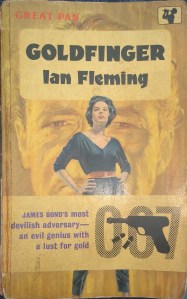


 Looking back at the past is always interesting, at least I’ve always found it so. I love reading about history and I watch lots of TV history documentaries. Shakespeare once said ‘what is past is prologue’ and he was right! One area of the past I’ve been looking into recently was my own and my Christmas present to myself was a DNA test.
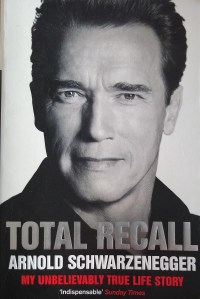 This book was a Christmas gift from Liz. She knows I’m a big film fan and I do love reading about the background to films and how they are made. Arnold is from Austria and he tells us a little of his life there but mainly focuses on his desire to be a great bodybuilder and to eventually go to America. There is a lot of talk about the process of competitive bodybuilding and the different muscles, muscle definition, reps and squats and all that stuff. Arnold eventually wins various competitions and is wondering how he can compete in the USA when he gets an invitation to do just that. The bodybuilding industry is a close knit one and there seem to be various people welcoming him to California, helping him to find a place to stay and so on. He wins more competitions and makes a little money. He starts a mail order business selling magazines and pamphlets about himself and his body building techniques. He brings one of his Austrian friends over and the two begin a bricklaying and home improvement business. His big break is getting a film part as Hercules and even though the production eventually goes bust it seems to give him a taste of the film business and he wants more. He plays Conan the Barbarian in the film version of a comic book hero and pretty soon he plays the Terminator and goes on to success after success, even becoming governor of California.
 This is not a book I brought on holiday but one I found on the shelves of our rented villa in Lanzarote. I started reading it when I got a little bored with Arnold Schwarzenegger and liked it so much I just carried on to the end. It is a real pleasure to read something by a master wordsmith and I enjoyed every minute even though I had read this novel years ago. Young Pip, apprenticed to be a blacksmith, is invited to the home of an eccentric rich woman, Miss Havisham, purely for her amusement. Later in his young life he finds he has ‘great expectations’ and is to inherit a remarkable property. He is taken to London to be brought up as a gentleman and although he is told that his benefactor has asked to remain a secret, he naturally assumes it is Miss Havisham. At the beginning of the book, Pip encounters Magwitch, an escaped convict on the marshes near his home. He compels Pip to bring him some food and a file. He is captured and transported to Australia and later we find, much to Mr Pip’s shock and amazement that Magwitch is the mysterious benefactor.
 This is a collection of globe trotting stories from John Simpson who has travelled the world as a journalist for the BBC. These though are travel stories with a difference, for instance in the first chapter he talks about airports, not the airports that I generally use, tourist destinations like Spain and Greece. The ones Mr Simpson mentions are airports in war torn Angola and Bosnia, and places like Kabul in Afghanistan and other places where he has had his passport and papers routinely torn up or thrown into a river by laughing revolutionaries and mercenaries. He tells us about headlong dashes to catch flights, including one somewhere in eastern Europe where he was in such a mess after weeks living rough the stewardess was reluctant to let him on board, especially as he had a first class seat. His fellow passenger in the next seat asked to be moved. Luckily John wasn’t flying on a budget airline like the ones I travel with.
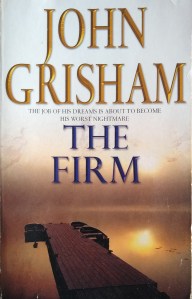 There is a process by which I choose books to take with me on holiday. I like to think it’s a thoughtful process combining different genres of books, some novels, maybe the odd classic, and some biographies and autobiographies. What actually happens is that the day before our trip I’ll just grab something near to hand that I know I haven’t read yet and shove it in my suitcase. Anyway, that’s how I ended up with the books you see above. Last year I read The Rainmaker by John Grisham and I thought it was a pretty good read. I must have mentioned that to Liz so she filed that away and got me a stack of Grisham novels for my last birthday. The Firm isn’t a bad read and in my case it was a nice change of pace after reading Dickens and John Simpson’s globetrotting memories. It’s a good story but like a lot of Grisham’s works, its more plot driven than character driven. The characters are sort of bland templates that I’ve recognised in a lot of his novels and so far I’ve only read three. Anyway, characters aside, this is a really original story about a young guy who graduates from law school and gets head hunted into a firm he has never heard of but which offers tremendous financial benefits, a brand new BMW, and an ultra cheap mortgage as well as other financial bonuses. The downside as he comes to learn later is that the firm is just a cover operation to launder money for a big mafia crime family and the FBI wants our hero James McDeere, to help them.
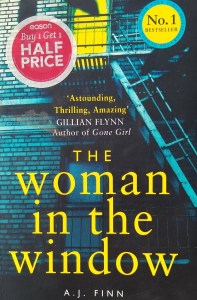 I’m not sure I would normally have picked up this book if I hadn’t run out of books to read. I saw this on the shelf in our rented villa and Liz had read it and mentioned about numerous references to old black and white films which were right down my alley, apparently.