 By the time you are reading this, Christmas and New Year will all be over. We’ll be fed up of turkey and sprouts and thinking about taking down the Christmas decorations. So before Christmas becomes a distant memory here’s a quick look at 6 Christmas films that were all shown, with perhaps just one exception, over the last few weeks.
It’s a Wonderful Life
It’s always surprised me that this film was apparently a box office flop but gained success in later life through numerous television showings. The film is a Christmas fantasy drama directed by Frank Capra and it’s about George Bailey, a small town business manager played by James Stewart who has ambitions to travel the world but due to various circumstances, never leaves the small town of Bedford Falls.
When George is first about to leave Bedford Falls he is shocked to find that his father has died. His father was the manager of the Bailey Building and Loan company and the company is about to be swallowed up by the town’s richest man, Mr Potter. George gives an impassioned speech to the assembled boardroom and they decide to keep the company going only if George stays on as manager. George of course stays on and all his dreams of travel seem to melt away. He supports his younger brother through college and employs his eccentric uncle Billy but on Christmas Eve 1945 everything goes wrong and George contemplates suicide. His guardian Angel arrives to help and decides to let George see what his life would be like if he had never been born.
The film tells the story in flashback as Clarence, the trainee angel, is shown what has happened to George and the secret of this film is, I think, the fact that despite the fantasy premise of the story everyone plays their parts as if they were in a serious drama. The result is that the drama and emotion of the situation rise to the surface and we are left with a vibrant and dramatic piece of cinema. It never fails to bring a tear to my eye.
A Christmas Carol
A Christmas Carol was published over a hundred and seventy years ago. It’s a wonderful story by that master storyteller Charles Dickens. Within six days the entire print run of 6,000 copies had sold out and within six weeks theatre adaptations had hit London’s theatres. In many ways the book is Dickens’ defining vision of a Victorian Christmas.
There are a whole lot of film and TV versions of a Christmas Carol, 73 in all according to a BBC news item I saw a while ago but the definitive version is the one with Alastair Sim as Ebenezer Scrooge. That film was released in 1951 and called Scrooge after the main character, Ebenezer Scrooge, who was played by that comedy master Alastair Sim. Various other familiar names appear in the cast such as Michael Hodern, Kathleen Harrison, George Cole, Jack Warner and Mervyn Johns.
Scrooge did well at the box office in the UK but gained popularity in later life through television.
One thing that I find rather annoying is that some years ago I picked up Scrooge on DVD only to find that it was a very poor quality version. Recently the film was remastered and the version shown on the BBC in 2024 had an image quality much superior to my copy. I think it might be time to clear that old DVD out and buy a new remastered version. Then again, films are shown and reshown on TV so many times, do I really need a DVD?
Home Alone
Home Alone is one of those films that has slipped into the TV cultural canon whether you personally asked for it or not, and yes, I get why; it’s engineered to delight kids while adults half-watch with a glass of something festive. Macaulay Culkin’s cherubic menace is undeniably effective, and the slapstick booby-trap ballet has a cartoonish precision that is likeable. Still, once the sugar rush fades, it’s hard not to notice how thin the whole thing is; a single joke stretched to feature length, padded out with shrieking villains and a weirdly sentimental shrug at the end. It’s not that Home Alone is bad, it’s just a film you accept as part of the holiday furniture, even if you’d never choose to sit on it for too long.
Die Hard
Around this time of year there are so many posts on social media about whether or not Die Hard is really a Christmas film. Well, we always like a good action film on the box at Christmas, don’t we?
Die Hard is set in the Nakatomi Tower in Los Angeles which is taken over by terrorists during the staff Christmas party. Bruce Willis plays New York cop John McClane who sorts out the bad guys with a smile on his face most of the time, unlike in the later follow up films where his face wears nothing but a grimace.
There’s a lot of shooting and blowing up stuff but I’ve always liked it. Like they say, it’s not Christmas until Hans Gruber falls off the Nakatomi tower!
Love Actually
I know some people love it, but this film has just never really done it for me.
The story follows the lives of eight different couples in the weeks leading up to Christmas, all slightly intertwined in a very cheesy way.
It’s got a great cast and I do actually like one or two of the stories but Hugh Grant as the Prime Minister? No, I’m just not having it. And as for the story about the guy who is best man at the wedding and actually secretly fancies the bride, well that’s just plain weird. The centrepiece of the film is probably the moment when Emma Thompson opens a Christmas present from hubby Alan Rickman in the sure knowledge that it’s a necklace that she knows he has bought but then finds its only a CD which means of course that he has bought the necklace for someone else. It’s a sad moment but to be honest, what happened after that I don’t really know, I was probably flicking through my emails towards the end of the film.
Overall, I’d give Love Actually 2 out of 5 stars and I know it’s a firm favourite with some people, just not me.
White Christmas
Time to finish off with what must surely be the ultimate Christmas film, at least it certainly is for me. I’m not sure how youngsters would view it these days but for me it just brings back memories of childhood Christmases in Manchester. I can just see myself now, lying on the rug in front of the fire. My father reading the newspaper but still watching the film and crooning along with Bing Crosby. My mother making tea and my brother and Bob, our dog, both wanting my place by the fire. Eventually I’d get up to drink tea or eat Christmas cake and my brother would nip into my spot and then Bob would usually squeeze in between him and the fire. Bob would adopt a thoughtful look and gaze into the coals until my mother would tell him off and drag him away. When she would go back to the kitchen Bob would slip back into his spot and resume station.
To get back to the film, Bing Crosby is joined by Danny Kaye and the two are theatrical producers and performers and they take off to Vermont following two girls that they have become romantically attached to. Rosemary Clooney and Vera-Allen are the girls in question and together they find that the hotel where they are staying is run by Danny and Bing’s wartime general. They decide to put on a show to help his ailing business and they all sing some wonderful songs, all penned by Irving Berlin.
Talking of Berlin. My dad always used to listen to White Christmas and inform me and my brother that the writer was that famous songwriter Ivan Berlin! No dad, it’s Irving, we would all say but he wouldn’t believe us. Did he know it was really Irving or was he just having fun?
What is your favourite Christmas film?
 In March I was getting a little stuck for ideas and I had to recycle an old post,
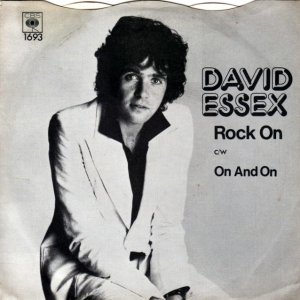
  I’ve written many posts about books and a regular series is one in which I compare books to their filmed counterparts. In August I added a post about one of my favourite book/film series,
 One day in December 1980 I was working as a bus driver and I was driving one of our old half cab buses into Manchester. My conductor, Bob, was kept pretty busy as we took a bus load of passengers into Manchester city centre for their jobs in shops, offices and other places. At one point Bob poked his head through the little window into the cab and told me that he had heard from a passenger that John Lennon had been shot in New York. It was shocking news and when we arrived in Piccadilly, we both ran to the news stand to read the news in the morning papers. There was nothing about Lennon in any newspaper and we wondered if it had been just a mad rumour. Later when we went back to the canteen for our break, we heard the news either on the TV or the radio. Lennon had indeed been shot and was dead.

 I do find it really strange that the F1 season should still be going on in December. Still, the F1 season these days is a long one. It starts off in March and winds its way around the world until it ends up in Abu Dhabi at what is essentially a twisty turny mickey mouse sort of track in the middle east.


 It’s cold, in fact it’s bloody cold and it’s no secret that I hate the cold. I could write about the cold I suppose but then
  In the latter part of the book Mia talks mostly about Woody Allen with whom she started a relationship with in 1980. I’m a huge fan of Woody and his films. The two met in 1979 and were introduced to each other by Michael Caine. Woody invited her to his New Year’s Eve Party and later, in April of 1980, Mia received a call from his secretary asking if Mia would like to meet Woody for lunch.
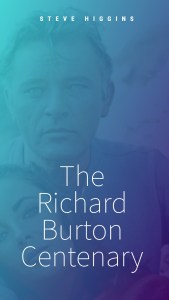 This week I’ve noticed quite a few items about Richard Burton on the BBC iPlayer. I wasn’t sure why at first but it turns out that this year, 2025, is the centenary of Burton’s birth. He was born Richard Jenkins on November 10th 1925.
 Some years ago I read Melvyn Bragg’s biography of Richard Burton and that book was based partly on these diaries which have now been published and are available to everyone.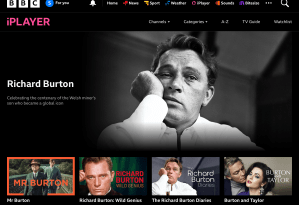


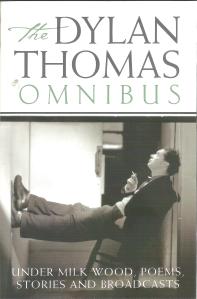 He had travelled to the USA before and on his penultimate visit had become romantically involved with a lady called Liz Reitel who worked for Brinnin at the poetry centre. When Dylan arrived for what would be his last visit Reitel was shocked to see the poet looking poorly and not his usual self.
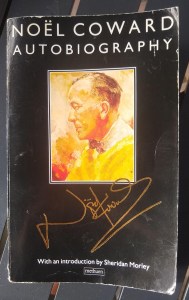
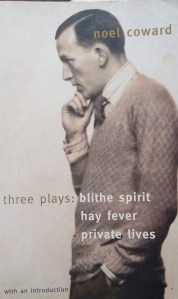 By far the most interesting part was his account of the filming of In Which We Serve, a very patriotic film showing the activities of a ship in the Royal Navy that was eventually sunk and the lives of those who served in her. In his very first autobiography, the names of the many actors and actresses he worked with meant very little to me but now I can recognise a few names, John Mills and Richard Attenborough for instance and David Lean who co-directed the film with Noël although in actual fact, Lean directed most of the film when Coward became bored with the long-winded filming process.
 The book is a huge volume and the editor has woven Noël’s letters with some interesting text about what was happening to Noël in between his letter writing. In 1941 Noël was invited to stay at the Welsh resort of Portmeirion where, many years later, the famous TV show The Prisoner starring Patrick MacGoohan would be filmed. His friend, Joyce Carey was hoping to write a play away from the bombs that were dropping on London. Her play never materialised but Noël wrote Blithe Spirit during the five days that he was there.




 Letters from an Unknown Author!