 Papillon by Henri Charrière
Papillon is a book by Frenchman Henri Charrière. It is an autobiographical novel about Charrière’s imprisonment in the French penal colony of French Guiana and covers a period of about fifteen years. The original novel was written on a series of exercise books and is presented in just that way. Charrière describes his experience of imprisonment as a terrible one. He escaped and was recaptured many times and ended up in solitary imprisonment twice. The first time was for two years and he was kept in solitary for 24 hours a day. In his second bout of solitary a new officer takes over the running of the area and prisoners are let out for exercise every day. At one point in his escape Charrière encounters a tribe of Indians and joins them for many months, even marrying one of the Indian girls but despite finding this apparent paradise, he leaves and is imprisoned again. He eventually escapes from Devil’s Island by jumping into the sea aboard a sack filled with coconuts. The book is an incredible read and I found it one I just couldn’t put down. It is filled with action and adventure but also with thoughtful observations about the human condition and there are many moments when simple acts of kindness stand out to the author against a background of cruelty and inhumanity.
The book was an instant hit when it was published in France in 1969 and the author, Henri Charrière, nicknamed Papillon because of a tattoo of a butterfly on his chest, became a French celebrity. He died in 1973 but always maintained the book was true and based on his own recollections despite claims to the contrary. Whatever its origins the book is a true classic adventure story.
The Film
On paper this should have been a brilliant film; Steve McQueen and Dustin Hoffman star, there was a screenplay by Dalton Trumbo and Lorenzo Semple Jr and music by Jerry Goldsmith. The director was Franklin J Shaffner, who I’ve not heard of but there are plenty of big names involved who would normally guarantee a great film. They even had author Henri Charrière who acted as an advisor to the production. Somehow though, they managed to turn out something of a dud. It’s hard to put the finger on what went wrong but reviewer Robert Ebert said the big flaw was that the audience failed to gain interest in the McQueen and Hoffman characters. I think the big problem was that the book was a long book, packed with incident and instead of trying to cram the whole book into a film, perhaps the producers should have concentrated on just a part of it. Steve McQueen was a reasonable actor and he was good in basic action roles but I just don’t think he was good enough to play Papillon. The film skips over many interesting elements of the book and at the end of the film when Charrière is imprisoned on Devil’s Island, McQueen appears to be an old man which wasn’t the case in real life. My advice: Don’t bother with the film, read the book.
 The Wooden Horse by Eric Williams
I’ve been trying to remember which came first for me, the book or the film. After some reflection, it was probably the film but I read the book soon afterwards. I found a copy in a box of paperbacks someone had given to my Father. The book is a classic escape story from World War II. It’s a great read and the story starts with a usual day in the POW camp which consists of tea making, cooking and cleaning and exercising by walking a circuit around the camp. The author, real life escapee Eric Williams, tells the reader about the everyday problems of living in a hut full of bored officers looking forward to either red cross parcels, letters from home or escaping. The problems of escaping are many. The soil is soft and sandy meaning that a tunnel would be liable to collapse and the soil cleared from underground is different to the grey topsoil making it difficult to hide from the German guards. The main problem is the distance from the huts to the camp perimeter but the author and a friend hit on the idea of taking a vaulting horse and placing it near to the perimeter fence and having a tunnel dug from there with the prisoners exercised by vaulting over the horse and masking the escape operation. The POW camp, Stalag Luft III was also the same camp where the events depicted in The Great Escape took place.
The Film
The film is pretty faithful to the book and stars the usual stalwarts of British films in the 1950’s, actors like Leo Genn, Anthony Steel and David Tomlinson. It’s a nicely paced film showing the boredom of camp life and then the idea for the vaulting horse and its preparation and use. Various problems have to be overcome including tunnel cave ins and disposal of the resulting excavated sand but all goes well. The two escapees decide to add another man to their escape team and one night the three emerge from the tunnel into freedom. Of course the escape is not over; two of the men make their way to the Baltic port of Lubeck and manage to escape to neutral Sweden with the help of the Danish resistance by stowing away on a Danish ship. The third escapee also makes his way to freedom separately and all three meet up in neutral Sweden.
 On her Majesty’s Secret Service by Ian Fleming
This book as you probably know is one of the James Bond series of books and is one of the last in the series. As usual, the book is well written and James Bond 007 is on the lookout for Ernst Stavro Blofeld whose fiendish plot was thwarted by Bond in the previous book, Thunderball. In this one Bond is close to resigning but after being given some holiday leave from work, meets a young girl, Tracy, who appears to be suicidal. After saving her from one such attempt Bond is introduced to her father Draco, who is head of a Corsican crime syndicate. Draco gives Bond a lead on Blofeld who appears to be trying to establish that he is in fact a baronet. Anyway, without going on and explaining the plot in detail, the book is an excellent read, one of the best in the Bond series.
The Film
The film was notable for being the first in the film franchise without Sean Connery as James Bond. Connery was tired of playing the part and so a search for a new Bond had begun. The new actor chosen was George Lazenby whose only claim to fame at the time was appearing in a TV advertisement for a Big Fry chocolate bar. For me, Lazenby was the perfect Bond. He looked the part, in fact I’ve always thought that he fitted Ian Fleming’s description perfectly. The film is a fast paced thriller and is one of the more serious of the Bond films. Diana Rigg plays Contessa Tracy Di Vincezo who Bond saves from a suicide attempt, just as he does in the book. Tracy’s father Marc Ange Draco who happens to be an underworld boss, gives Bond a tip as to Blofeld’s whereabouts. Bond, masquerading as Sir Hilary Bray, a representative of the College of Arms meets Blofeld in Switzerland on the pretext of confirming Blofeld as a baronet. Bond arrives at the ski resort of Piz Gloria and finds Blofeld is engaged on a new plot against the UK. The film throws in some great fight scenes, car chases and also an exciting ski chase sequence. It was directed by Peter Hunt and is still a favourite today amongst Bond fans. Sadly Lazenby decided not to play Bond again and Sean Connery returned for another outing as 007 in Diamonds are Forever.
Hamish Macbeth
This last entry is a little of a cheat really as the Hamish Macbeth series of books were made into a TV series rather than a film but here we go anyway.
Robert Carlyle played the eponymous TV police officer in the BBC series which first aired in 1995. The series is about a local Bobby based in the village of Lochdubh in the Scottish Highlands. Macbeth applies the rule of law in his own way and dispenses his own brand of laid back justice. Although successful at solving numerous crimes Macbeth avoids promotion in order to stay in the village.
Three series of Hamish Macbeth were produced with six episodes each. Although the series was based on the books by MC Beaton, the TV series differs greatly from the books, with new characters devised by the TV producers and various other aspects changed. I enjoyed the series enormously and even once visited Plockton, the Highland village that doubles for Lochdubh on television. MC Beaton, whose real name is Marion Chesney, apparently hated the TV production which I can understand as they changed her work considerably, adding and changing characters. I have to say though, I’ve always liked it.
 Death of A Dreamer by MC Beaton
I picked up this copy of one of MC Beaton’s books in a second hand bookshop in Skipton. At first I wasn’t sure if it was a book for me but I soon settled into the story and it bumbles along nicely with a few twists and turns on the way. A lady artist, Effie Gerrard, arrives in the village and develops an obsession with another artist named Jock. Later Effie is found dead. Was it a suicide or was it murder? The police decide it was suicide but Hamish is not so sure and he decides to make further investigations.
In the books Hamish has a dog and a wild cat as pets unlike the TV show where his only pet is ‘Wee Jock’, a highland Westie dog. The book is heavy on dialogue and light on descriptive passages but it was an easy and enjoyable read and I liked it immensely. The only annoying thing was that after finishing the book, the first chapter of the next book had been added to tempt the reader I suppose into buying that one. I read that and found myself wanting the next book in the series so it might be time to begin scouring the bookshops of St Annes for more books in the series.
 It’s been a while since I’ve done one of these sun lounger posts. The simple reason is that just lately I’ve not been anywhere near a sun lounger to have any sun lounger thoughts. However, the sun has finally appeared over North West England, the temperature has gone up and finally it has been time to drag the sun lounger out from its winter hiding place. As the lockdown is still ongoing despite a recent thaw it has not been possible to drive over to France or fly to Lanzarote and take in some sun so the only sun lounging I’ve been doing lately has been in our own back garden, thinking idly back to those halcyon days before Covid 19 when Liz and I were free to roam the continent in search of wine, bread, French restaurants, Spanish Tapas, the sea and the quiet of the French countryside.


 One day in December 1980 I was working as a bus driver and I was driving one of our old half cab buses into Manchester. My conductor, Bob, was kept pretty busy as we took a bus load of passengers into Manchester city centre for their jobs in shops, offices and other places. At one point Bob poked his head through the little window into the cab and told me that he had heard from a passenger that John Lennon had been shot in New York. It was shocking news and when we arrived in Piccadilly, we both ran to the news stand to read the news in the morning papers. There was nothing about Lennon in any newspaper and we wondered if it had been just a mad rumour. Later when we went back to the canteen for our break, we heard the news either on the TV or the radio. Lennon had indeed been shot and was dead.


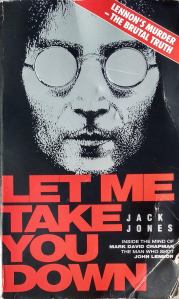 So why did Chapman shoot John Lennon? Apparently, Chapman had been a fan of the Beatles and John Lennon’s solo music but felt that Lennon had become a fake, a ‘phoney’, someone who preached peace and love to the masses while his music made him a multi-millionaire. Chapman signed out of his security job as ‘John Lennon’ on his last day of work so it is even possible that he identified so much with Lennon that the other Lennon, the fake ‘Lennon’ had to die. Chapman also claimed at other times that he shot Lennon to promote Catcher in the Rye.

 I do love my music. At home when there is nothing much on the TV I like to flip through the recommendations that come my way on Spotify. In my car I listen to CDs. I have always told myself that my precious CDs were too good to be dragged about in my car so I lovingly copied them to writeable CD discs, carefully, in most cases editing out the tracks I didn’t like. I’d be my own invisible DJ making up new CD albums with a track from here, another from there and so on. Lately, I haven’t done that so much and seeing that I don’t play my CDs much at home, I decided not to copy them just to bring the original CDs themselves into my car.
 The lockdown has almost come to an end here in the UK this week. There are still some restrictions and it’s still advisable to continue wearing a mask in public and to keep washing your hands. If anything, at least we may benefit from the increased hygiene standards in future. I’m lucky in that I haven’t had the coronavirus but not only that, the winter is usually a bad time for me because I always, always end up with the flu or at least a very bad cold. This year I haven’t and that must surely be due to the continued hand washing and mask wearing.


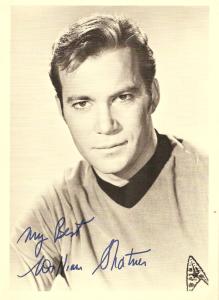 As a schoolboy I wrote to Desilu studios where I believed Star Trek was made, based on credits shown at the end of the show. After a while I received a set of glossy pictures of the show’s stars. They were all signed by the various actors, Shatner, Nimoy and so on but the signatures, I have long suspected, were made by a machine.
 When I used to work a nine to five job, I always looked forward to a bank holiday. It meant only working four days instead of five. Nowadays when I work shifts, I sometimes end up working the bank holiday but when it comes down to it, I don’t really care. It’s actually nicer having a break when the holiday resorts and seaside destinations are not packed. This bank holiday I wasn’t working but the weather in the UK, at least in the northwest where I live, was dreadful. It was cold and did nothing but rain so I spent the day watching TV.
 Last week I wrote a blog post about my life with

 Quite a while back, probably over two years ago, I seemed to be having problems focussing my right eye. My right eye is actually my good eye, the other, the left one is what my optician has always called my lazy eye. Years ago as a schoolboy I had to watch TV for an hour a day with a patch over my good eye. This was supposed to make my left eye, the lazy one, pull its way a bit more. That was successful to a point but the right one has always been better.
 One day when I had left school and could afford to pay for my frames I bought some aviator styles. I always loved that aviator shape you know, that sort of stylish aerodynamic looking frame. I even had a pair with smoked graduated lenses. That’s just an excuse to show you my favourite picture of myself. I was 21 and had the whole world at my feet. I was in Paris having just packed my job in and I was having the time of my life with one of my best friends, and I loved those glasses. A lot of years later when my optician recommended a pair of reading glasses I had those same aviator frames turned into reading glasses.
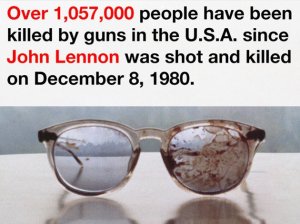 Elton John is probably the most famous spectacle wearer of all time. He even once wore a pair of specs with little windscreen wipers. John Lennon is another famous spectacle wearer. He wore those famous round glasses that you will see if you just type ‘Lennon glasses’ into Google.
 I really do love books and reading. My idea of heaven is lying by a pool in somewhere like Lanzarote with the sun shining and a book in my hand. What is important for a good read is time. It’s alright to read a book on your lunch break or on the bus travelling home after work but to really get into a book, some uninterrupted time is important. So, what is really so good about reading? You, the reader must like reading otherwise you probably wouldn’t be reading this but for me reading is about connecting with worlds I will never see and connecting with my own world too; finding that I’m not as unique or as different as I had thought and that other people have had similar experiences to me.
 The Wooden Horse was written by one of the actual escapees, Eric Williams. He was an RAF pilot shot down over Germany and imprisoned in 1942 and in 1950 the book was made into a classic WWII film.
 Under normal circumstances I might go on to talk further about my favourite books but I have done that already. I think I did my top
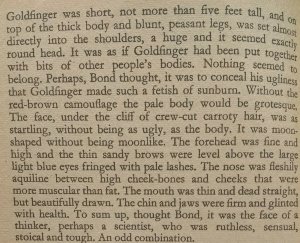 At school in English class our teacher had asked us to bring in a book with a vivid description of someone and my choice was Goldfinger. The book is about a man called Auric Goldfinger, a rich businessman who is suspected of smuggling gold. Bond is tasked to find out more and Fleming gives the reader a particularly compelling description of Goldfinger. Fleming describes him as having a body seemingly put together with parts of other people’s bodies. I always thought that was pretty good. Fleming used to write his first drafts of a book and then add in all sorts of details afterwards like the vodka martinis that James Bond liked so much and the Sea Island cotton shirts that Bond favours in the novels. It was actually Fleming who wore those particular shirts and who drank vodka martinis and also preferred scrambled eggs for breakfast. Many people have speculated who Bond was based on and my feeling has always been that in fact it was Ian Fleming himself.
 My current read is a book I mentioned last week, Charlie Chaplin and his Times by Kenneth S Lynn. Chaplin was a music hall entertainer working for the great impresario Fred Karno. Karno regularly sent teams of entertainers to the USA and while there Chaplin was invited to make a film for Mack Sennett, the famous producer of comedy films. Chaplin’s films proved to be enormously popular and so Chaplin moved on to different studios, all for better and better money until he established his own studio. I’ve always found the early days of Hollywood to be fascinating and this book is no exception.