November is not my favourite time of the year. It’s getting colder and dark evenings are drawing in. Anyway, I got to thinking about things that have happened in November in the past and so here are four things that came to mind.

The Armistice of November 1918
The Armistice that ended the First World War was signed in Compiègne in France on the 11th November, 1918. It was signed aboard a famous railway carriage in a forest clearing. The railway carriage was designated 2419D and was part of Marshal Foch’s personal train. Foch decided on the spot for the surrender as he wanted to keep the negotiations away from the prying eyes of the press. The negotiations began on November 8th and were finally finished and the document of surrender signed at 5:45am on the 11th November, 1918.
The surrender came into force at 11am and fighting continued until that time with 2,738 men dying on the last day of the First World War.
The railway carriage went back into regular service for a while but was then attached to the French Presidential Train. Afterwards it was put on display in Paris until 1927 when it was returned to the glade at Compiègne.

Marshall Foch. Photo by the author
The Second World War began in 1939 when Hitler and the Nazis invaded Poland. The railway carriage was still in Compiègne on the 22nd June, 1940 when Hitler ordered it to be brought from its shed back to the glade and it was there that he and his generals accepted the surrender of the French. Three days later the site was demolished on the orders of the Führer and the railway carriage was taken to Berlin. A statue of Marshall Foch installed years earlier by the French was left standing intentionally, so that it would appear to stand in honour of a wasteland.
After the war, the site was restored by German prisoners of war and in 1950, an identical carriage was returned to the site. Carriage number 2439 was built with the same batch as the original and was also part of Marshall Foch’s train in 1918.
The carriage is housed in a small museum and when I entered early one Saturday morning back in 2022, I was the only visitor present. The staff asked me my nationality and when I stepped into the main area, a recording began telling the story of the site in English. It was really fascinating and as I walked around, I started up my camera and took numerous pictures and video.
Outside in the Glade, the statue of Marshall Foch is still there and today looks down on a beautiful clearing. It was a calm and peaceful place and it was strange to stand on the spot where Hitler and his Nazi cronies once stood.
The Death of Dylan Thomas 1953
Dylan was a slow worker when it came to writing and there was always something, usually a pub, to draw him away from his work. In his last days he was concerned that his talent, or his inspiration, had gone and that all his best work was perhaps behind him. He was short of money as usual and so he decided to accept an offer to go to the USA on a poetry tour. It was Canadian poet John Brinnin who made the offer to Dylan. Brinnin was the director of a poetry centre in New York and the trips Dylan undertook there were very lucrative for the always hard-up poet. Thomas had a number of wealthy patrons, in fact his famous house in Laugharne was bought for him by an admirer.
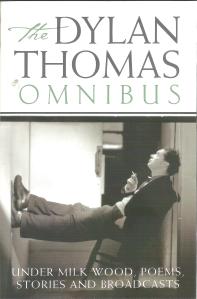 He had travelled to the USA before and on his penultimate visit had become romantically involved with a lady called Liz Reitel who worked for Brinnin at the poetry centre. When Dylan arrived for what would be his last visit Reitel was shocked to see the poet looking poorly and not his usual self.
Over the next few days Dylan’s mood alternated between being tired and poorly and getting drunk with some moments of normality in-between.
I get the impression from the book The Last Days of Dylan Thomas that Dylan liked attention, he liked admirers and although he was in the middle of an affair with Liz Reitel, he was not averse to enjoying the attention he received from other women.
At the poetry centre preparations were under way for a recital of the newly finished Under Milk Wood for which Dylan had produced some new edits and updates. The recital went well and was in fact tape recorded by someone at the time with Dylan taking the part of the narrator.
Liz called a doctor when Dylan became unwell again and the doctor gave Dylan an injection of morphine sulphate which may or may not have helped him.
After a night of drinking at the White Horse Tavern in Greenwich Village, Dylan returned to the Chelsea hotel claiming famously that he had downed ‘eighteen straight whiskies. I think that’s the record!’
Dylan’s breathing became difficult later in the evening and an ambulance was summoned. He slipped into a coma from which he never awoke and later died on the 9th of November, 1953. He was only 39 years old and died with assets of only £100.
I was always under the impression that Dylan had drunk himself to death but that may not be the case. The autopsy did not find any evidence of liver cirrhosis and his death may have been due to a combination of pneumonia and bronchitis.
The Assassination of President Kennedy, 22nd November, 1963
The graphic murder of President Kennedy was the cataclysm of our age, imprinted on the minds of a generation by the flickering incarnation of amateur cine film. Despite two official investigations which concluded that Lee Oswald killed Kennedy, doubts still remain even after 62 years. Did Oswald act alone? Was he a patsy as he himself declared?
So what are the facts of the assassination? Perhaps the only undisputed fact to emerge from the tragedy was that John F. Kennedy, the thirty-fifth president of the United States, was shot in the head and killed. President Kennedy was hit by rifle fire in Dealey Plaza, Dallas, while riding in an open topped limousine, part of a motorcade that had just turned onto Elm Street by the Texas School Book Depository. Almost every other fact, every statement, every report, every document, every exhibit, every disclosure, is open to question. Were there three shots or four? Were there more? Was the President shot from behind or from the front? Was he shot from the sixth floor of the book depository or from the so called ‘grassy knoll’? Did twenty-four-year-old ex-marine Lee Harvey Oswald fire the shots? Was he alone or were there other assassins? Why did Jack Ruby, a local night club owner subsequently shoot Oswald? Was it to silence him, to stop him from telling what he knew? Did Ruby act out of rage or was he part of a conspiracy? Was he in the pay of the Mafia? Was the CIA involved? The questions are endless, the answers are few.

A frame from the famous Zapruder film
The President was shot at 12.30 pm, but Lee Oswald, who worked at the Texas School Book Depository, was seen by witnesses in the second floor lunch room as late as 12.15, which left him only fifteen minutes to ascend to the sixth floor, produce his rifle and take up position. Of course fifteen minutes might have been enough time for a cool and organised killer, but the President was actually due to arrive at a reception at the Dallas Trade Mart at 12.30, which meant he would pass through Dealey Plaza at about 12.25, giving Oswald only ten minutes to be in place, and he had no way of knowing the President would be late. Immediately after the shooting, patrolman Marrion Baker entered the Book Depository, drew his gun and with building superintendent Roy Truly hot on his heels, confronted a young man in the lunchroom calmly drinking a coke. Truly explained that this was Lee Oswald, an employee. Had Oswald rushed down from his ‘snipers lair’ on the sixth floor or had he been in the lunch room all the while?
Perhaps the strongest evidence linking Oswald to the murder was the supposed murder weapon, a 6.5 mm Mannlicher-Carcano bolt action rifle, a World War II vintage carbine found on the sixth floor of the book depository at 1.22 pm, almost an hour after the assassination. The officer who first found the rifle, Deputy Constable Seymour Weitzman, identified it as a 7.65 mm Mauser, and was confident enough to make a sworn affidavit to that effect. The day after the shooting, November 23rd, District Attorney Henry Wade also described the weapon as a Mauser at a televised press conference. How then does a 7.65mm Mauser become a 6.5mm Mannlicher-Carcano? I personally know nothing about guns at all but I have seen enough war films to know that a Mauser is German, and stamped clearly on the side of the Mannlicher-Carcano are the words ‘MADE ITALY’ and ‘CAL 6.5’. And surely a police officer, particularly an American policeman, would know what he was talking about concerning guns?
There is much more to talk about in the assassination, the Zapruder film, the murder of police officer JD Tippet, secret service men on the grassy knoll when no secret service men were deployed there. Was the assassin in the Texas School Book depository or was he on the grassy knoll? Were there multiple shooters?
In recent years the US authorities have been reviewing the final records ordered to be released by President Trump. Will anything be released that will prove conclusively who shot the President? I doubt it. Did Lee Oswald do it or was he like he said himself, just a patsy? Your guess is as good as mine. (Click here for a full post about the assassination.)
The Fall of the Berlin Wall 1989
It’s hard to imagine now, but for nearly three decades, the Berlin Wall divided a city and a country in two. Built in 1961, it stood as this cold, grey symbol of the divide between East and West, communism and democracy. Then, in November 1989, everything changed almost overnight. Word spread that East Germans would be allowed to cross freely into the West, and people rushed to the checkpoints. At first, the border guards didn’t even seem to know what to do, they just opened the gates. Suddenly, crowds poured through, cheering, crying, hugging strangers. Some climbed up on top of the wall, hammering at it with whatever tools they could find, breaking off chunks to keep as souvenirs.
The fall of the Berlin Wall didn’t just mark the end of a barrier; it marked the end of an era. Within a year, Germany was reunited, and the world felt like it was shifting into something new and hopeful. People around the globe watched those scenes on TV. Who brought the wall down? Well, it was US President Ronald Reagan who called for Mikhail Gorbachev to bring the wall down but really the wall came down because the East Germans wanted it down. Long time hardline East German leader Erich Honecker had died and new leader Egon Krenz decided to open the border with Czechoslovakia.
In Berlin on the 9th of November 1989, crowds gathered at the checkpoints urging the guards to open up. Eventually, overwhelmed by crowds of people, the checkpoints were opened and people began to pass through. I remember watching on TV over the next few days, Germans knocking down parts of the wall and it was only nearly a year later, on 3rd of October 1990 that East and West Germany were reunited.
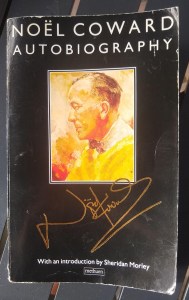
 By far the most interesting part was his account of the filming of In Which We Serve, a very patriotic film showing the activities of a ship in the Royal Navy that was eventually sunk and the lives of those who served in her. In his very first autobiography, the names of the many actors and actresses he worked with meant very little to me but now I can recognise a few names, John Mills and Richard Attenborough for instance and David Lean who co-directed the film with Noël although in actual fact, Lean directed most of the film when Coward became bored with the long-winded filming process.
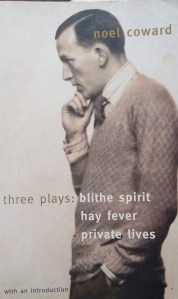
 The book is a huge volume and the editor has woven Noël’s letters with some interesting text about what was happening to Noël in between his letter writing. In 1941 Noël was invited to stay at the Welsh resort of Portmeirion where, many years later, the famous TV show The Prisoner starring Patrick MacGoohan would be filmed. His friend, Joyce Carey was hoping to write a play away from the bombs that were dropping on London. Her play never materialised but Noël wrote Blithe Spirit during the five days that he was there.



 After graduating, Scott joined the BBC as a set designer and director, working on popular series such as Z Cars and The Troubleshooters. His time in television taught him the mechanics of production and in 1968, he left the BBC to establish Ridley Scott Associates (RSA), a commercial production company. Over the next decade, he directed hundreds of adverts, developing a style of lighting, atmosphere and composition, qualities that made his transition to cinema with The Duellists (1977) both natural and visually striking.
 One thing that happened in October was me! I was born on October the 3rd, quite a considerable time ago which is annoying on a number of levels. One, I’m getting a bit knackered. My back hurts, my knees ache. It’s hard to stand up straight but what is a real pain is when you get one of those things on the internet where you have to add your date of birth and I have to scroll back through the 90s, the 80s, the 70s, the 60s and finally to the 1950s.
 Just to backtrack a little, we rented this same house back in May and usually, the only time I put the TV on is to watch F1 racing. May is the usual month in the calendar for the Monaco grand prix, one of my favourite races of the year. There is actually plenty of talk recently about cancelling the race as nowadays, the F1 cars are faster and much bigger and so there is very little room left to overtake.

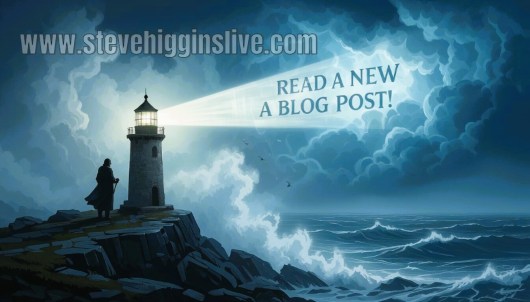

 In the end I thought what about just using the ball without the tennis player? That turned out to be much easier.


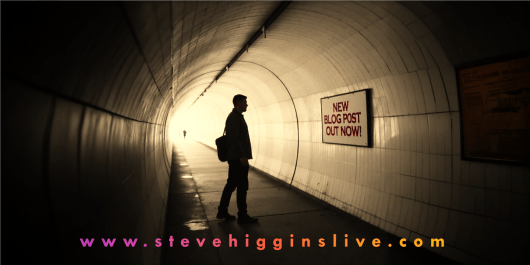 Many of these images I use in my promo videos which can be found in places like Facebook and X. Here’s a recent example.


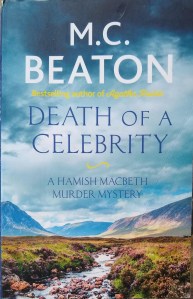 Death of a Celebrity by MC Beaton
 Stalin became one of the leading providers of funds for the revolutionaries. He did this by masterminding numerous bank robberies and sending the funds on to Lenin.
 Just now we have finished our touring part of the holiday and we have come to our rented gîte where we have parked the van and are spending time in this wonderful house that we regularly rent just outside the small village of Parçay-les-Pins.
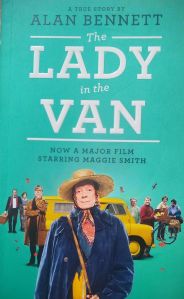 I saw the film version of this a few years ago which was pretty good, if a little odd. It was presented in a very peculiar way in that the author, Alan Bennett, is portrayed as two people, one as himself as he appears in the story and two, as himself as he writes the story. That oddity aside it was really a rather good and original film. When I heard there was a book version I quickly went to one my usual internet book stores and promptly bought it.
 Liz and I always visit a village fête at the weekend, usually those with a vide grenier or brocante attached. A vide grenier is just a car boot sale which we both love. I usually pick up connecting leads for my laptop or iPad, after all, you can never have enough electrical leads. Brocantes are more like flea markets or antique fairs. Just the kind of place to pick up those old telephones that I still love, especially those Bakelite ones.
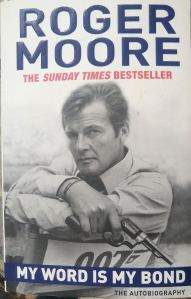 I picked this book up ages ago and thought it would be a good holiday read. I’ve always liked Roger Moore even though I absolutely hate his James Bond films. I love Moore’s self-deprecating humour, plenty of which is evident in this book. The first part of the book was really interesting and entertaining but like a lot of celebrity autobiographies, this one just gets a little tedious when Roger just seems to list the films and locations and other celebrities he seems to know. On the back of the book was a review claiming this to be the best film autobiography since David Niven’s
  We came over on the ferry from Portsmouth to Caen after spending the night in a small pub called the Jolly Boatman somewhere in the south of England, actually Kidlington, I think. We have visited this pub once before back in May and it was nice to find that the staff remembered us even after just one visit. The trip over on the ferry was good. We paid a little extra for a top of the range cabin and it was well worth it. We had a little balcony, a tv, kettle and various cold drinks in the fridge. After a bit of a sleep and a shower, we awoke refreshed and ready to find a place to stop for the night in France.
 To be honest, I do use ai, not to write posts but to make the quirky memes and graphics that I use to promote my blogs. This is one over to the right. I had never even thought about using ai to actually write a post. Even so, I thought as I was a bit low on ideas it might be interesting to ask ai what I should write about. It came up with a plan for a post asking me to answer various questions about my work. Anyway, here are a few of them.
 Letters from an Unknown Author!