The Good the Bad and the Sequel

The first thing to remember about films is this, they are not a public service, they are made to make money. They start life as a business proposition. Producers start by asking would the public want to see this? Would they pay to see this? Suppose we got famous film star Mr X to star opposite film actress Miss X? One sure fire way of making the public want to see something is by making the film again. How can they make it again? By making the sequel! Sequels can be good, they can be bad but sometimes they can be downright ugly . .

Let’s start with the good.

The Godfather

The daddy of all mafia movies, this film by Francis Ford Coppola is one of the great films of all time. Based on the book by Mario Puzo and with a script by Coppola and Puzo himself it excels in just about every area of film making. The acting (Al Pacino, Marlon Brando, James Caan, Robert Duvall and many others) is excellent as is the photgraphy, the editing and the soundtrack. Coppola fought to have Brando play the title role and even had to make a screen test before Paramount executives would accept Marlon as Don Vito Corleone.

The original book was too big to be filmed so only part of the story is used. Don Corleone meets with fellow mafioso Sollozzo who asks for the Don’s help in a drug smuggling enterprise, hoping to enlist Corleone because of his political connections. The Don declines to get involved as this would risk alienating those same political connections. Sollozzo’s answer is to assassinate Corleone, however his attempt fails.

Michael Corleone then murders Sollozzo but Is forced into hiding in Sicily. The murder causes an all out mafia war. In an attempt to make peace Don Corleone meets with the other mafia Dons. The peace is made but Corleone realises that it is Don Barzini who is the true enemy.

After Don Corleone passes away Michael wins a final victory by murdering all his opponents.

The film was the highest grossing movie of 1972 and won Oscars for Best Picture, Best Actor (Brando) and Best Adapted Screenplay.

Godfather Part II

As I said earlier, the original novel was too long to fit into one film so Part II features a leftover narrative from the book, told in flashback and the continuing story of Michael as the new Godfather.

Robert De Niro plays a young Vito Corleone who emigrates to America to escape the vendetta that has left him an orphan and that story runs parallel with Michael Corleone’s plan to move his family from New York to Las Vegas. Michael suspects financier Hyman Roth to be behind a failed assassination attempt but decides to travel to Havana and meet with Roth to discuss a deal involving Cuban casinos. The revolution happens while they are there and Michael escapes from the island but discovers that his own brother, Fredo, is the one who has betrayed him.

The young Vito Corleone’s story continues in flashback. Having set up a successful business in New York, Vito finds that Fanucci, a local gangster wants a pay off. Vito’s colleagues are fearful and decide to pay off Fanucci but Vito persuades them to let him settle the matter. He will make Fanucci an offer he cannot refuse he says. Later, he secretly murders Fanucci and afterwards finds himself both feared and respected as the Godfather.

Michael is subjected to a Senate investigation into his activities but avoids prosecution by bringing the brother of the star witness into court. The suggestion is clear; the witness must decline to give evidence or his brother will die.

As Vito becomes more successful, he returns to Sicily to seek vengeance for his family and murders the Sicilian Don responsible for their deaths.

Michael has Hyman Roth murdered as well as his own brother Fredo, who betrayed the family.

Once again the performances are superb and one of particular note is that of veteran acting coach Lee Strasberg. He is excellent in this one off film performance as Hyman Roth. Strasberg’s workshop, the Actor’s Studio, once taught Brando, Clift and Monroe the ‘method’, the technique of acting devised by the Russian actor Stanislavski. Strasberg brought the method to the persona of Hyman Roth and created an outstanding if slimy character.

Godfather Part II won 6 Oscars and became the first sequel to ever win the Best Picture statuette.

Here’s the bad . .

Bridget Jones’s Baby

A film I’ve seen on TV during the lockdown was Bridget Jones’s Baby. The film is the third film in the Bridget Jones series following on from Bridget Jones Diary and Bridget Jones: The Edge of Reason. The film, like all the others in the series, was based on the book by Helen Fielding. The original film was pretty amusing, not completely my cup of tea but I enjoyed it.

The second, The Edge of Reason, was again, pretty amusing. Both films concern the adventures of young Bridget Jones. In the first film she works in London for a publishing company, has an affair with her boss and then leaves for a career in TV. Her parents set her up for a date with a guy called Mark which doesn’t work out but towards the end of the film Mark comes back for a second try and Bridget has to work out who she really wants to be with. The Edge of Reason was pretty much more of the same.

When I came to watch Bridget Jones’s Baby earlier this year I was surprised to hear the TV announcer warning me of some ‘highly offensive language’ used in the film. Bridget Jones? Offensive? Really? Yes really! Even a scene with a child swearing. OK I do swear myself now and again but some of the language in this film was actually just as the announcer suggested and was highly offensive. The other thing was that most of the actors looked really old, really haggard. Now this may have been that we were watching on our new smart TV and the picture quality is just so good these days that it can appear daunting. Sometimes, when Liz and I are at our local pub quiz, Liz will ask why am I watching the TV when it’s tuned to Sky Sports news when I don’t even like sport? Well, a lot of the time I am just amazed that I can see some football pundit’s pores or some hair that has escaped his razor. Still, the original film in the Bridget Jones series was made in 2001 while Baby was from 2016 some fifteen years later.

Film tends to freeze an actor in time and when you see them on TV talk shows plugging their new film it can be surprising to see just how old an actor has become. A while back I was watching Tom Hanks on the Graham Norton show and he had grey hair! Tom Hanks? Of course, not long prior to that, I had watched Apollo 13 which was made in 1995, 25 years ago!

Bridget Jones’ Baby finally settled down but I wasn’t totally impressed. In fact, I’d have to put it into the bad category.

Wall Street.

Wall Street was a 1987 film by one of my favourite directors, Oliver Stone. It was a big hit for Stone, in fact an iconic film really. Michael Douglas was brilliant in the role of Wall Street tycoon Gordon Gekko, a man who is happy to manipulate the stock market for his own ends. Charlie Sheen is pretty good too. Sheen plays Bud Fox, a young stockbroker who is anxious to, in his words, bag the elephant, set up a deal with his hero, Gordon Gekko.

Fox’s father played by Sheen’s real life father, Martin Sheen, lets on to son Bud that Blue Star Airlines where he works as a union rep is about to receive a favourable ruling in a ongoing legal case. The ruling will free up Blue Star to expand into new routes. Bud manages to wangle a meeting with Gekko in which he lets slip about Blue Star.

Gekko calls Bud and buys stock in Blue Star and Bud’s star as a stockbroker begins to rise. Later Gekko wants more information and Bud decides to invest in an office cleaning company so he can spy and find more insider information. Bud makes more and more money and moves into an expensive apartment. Later, the relationship between Bud and Gekko sours when Bud finds out that Gekko is planning to dissolve Blue Star and sell off the assets. Bud strikes a deal with rival investor Sir Lawrence Wildman to steal the company away from Gekko.

The film shows the world of stocks, shares and investments in minute detail, the camera moves relentlessly among the young wheeler dealers watching the stock options and moving in for the kill. The character of Gordon Gekko, indeed the entire film has become an icon for yuppies and the eighties ethos of making a quick buck. A phrase of Gekko’s ‘greed, for lack of a better word, is good’ has become synonomous with eighties success and was inspired by a real speech from an investor to the 1986 graduating class of the U.C. Berkeley School of Business Administration.

Michael Douglas won the Oscar for Best Actor for his portrayal of Gordon Gekko.

Wall Street: Money Never Sleeps

Money Never Sleeps was a 2010 sequel directed once again by Oliver Stone with Michael Douglas returning to his role as Gordon Gekko. Gekko is released from prison following his conviction for insider trading and securities fraud. Gekko’s estranged daughter Winnie is involved with Jacob Moore, a trader at KZI Investments. The company suffers in a recession predicted by Gekko and the managing director commits suicide. Jacob meets with Gordon Gekko and promises to help him rekindle his relationship with Winnie and in return Gekko will search for information about Bretton James who blocked help for KZI Investments.

It all gets a little complicated here but Gekko has hidden 100 million dollars in a trust fund account for Winnie. The money is freed up for Gekko to invest on her behalf but then Gekko does the double cross and exits with the 100 million in his pocket. After using it to set up his own successful company he hands the 100 million back but the whole thing is so complicated I found it hard to follow. I had thought that perhaps the Charlie Sheen character would play a big part in the film but Sheen only has a small cameo as Bud Fox. Shia LaBeouf plays the part of Jacob Moore but somehow never looks convincing, he never seems to fit in. The character of Jacob was supposed to be similar to that of Bud Fox in the original but the actor just doesn’t really look comfortable in the part. Douglas is good as Gekko once again but the whole film suffers from a lack of pace which is not helped by the complicated nature of the plot. Carey Mulligan plays Gekko’s daughter Winnie who once upon a time featured in one of my favourite episodes of the BBC sci-fi series Doctor Who.

Ultimately, an interesting film, not good, not ugly but I have to put it in the bad category.

Get Shorty

Get Shorty is a 1995 film based on the book by Elmore Leonard. The book is a fast paced read about a shylock, a loan shark called Chilli Palmer. In the film he’s played wonderfully well by John Travolta. Chilli has a couple of run ins with fellow mobster Ray Bones in which both times Bones comes off the worse. Chilli’s mob boss dies and Ray’s mob boss takes over the business and suddenly, Chilli finds himself working for Ray Bones.

Ray sends Chilli off to find out if a recently deceased client has left any money behind to pay off his loans. Chilli finds out that in fact the client is still alive after failing to board an aircraft that later crashed and killed all on board. Finding himself suddenly ‘dead’ the client takes off to Vegas with a suitcase of money to live the high life. Chilli goes off to find him but is asked by a casino owner to pay a call on producer Harry Zimm who also owes a great deal of money. Finding Zimm in Hollywood, Chilli, who is a big movie fan, pitches an idea to Zimm, a thinly veiled story of his life coupled with that of the client who missed the fatal aircraft flight.

Gene Hackman plays the producer Harry Zimm who also owes money to a drug dealer and Chilli offers to sort out the drug dealer in return for being part of a new project called Mr Lovejoy. Suddenly, Chilli is in the movie business.

Travolta is just brilliant as Chilli Palmer easily switching from friendly movie fan to hard faced loan shark. Look at me is the catchphrase Chilli uses to impress himself on a client. I love the way Chilli pops a cigarette into his mouth with accustomed ease and takes a smoke confidently enjoying the nicotine. There’s also a great scene where Chilli shows actor Martin Weir (Danny De Vito) how to act ‘tough’.

Get Shorty is funny and dramatic with tons of witty dialogue lifted directly from Elmore Leonard’s book. It’s a joy to watch and Travolta and Hackman are excellent as are Rene Russo as Zimm’s actress girlfriend and Delroy Lido as the gangster who has invested in another of Zimm’s films.

Get Shorty was a great success so fast forward 10 years to 2005 and cue Be Cool.

OK, time to reveal the ugly . .

Be Cool

Be Cool once again stars Travolta as Chilli Palmer only this time Chilli has become bored with the movie business and decides to move into the music industry. The film starts off well with the shooting of his friend Tommy Athens. Chilli offers to help Tommy’s widow (Uma Thurman) who now owes money to hip hop producer Sin Lasalle.

I enjoyed the action packed start but then just got bored watching some of the other stuff.  Linda Moon is a singer and Chilli decides to take over as her manager. Why, I don’t know because her singing isn’t that great. Her old manager might be Nick Carr played by Harvey Keitel. A guy called Raji could also be Linda’s manager or have a stake in her contract (I lost the plot somewhere about here) and he hires a hit man to take out Chilli. The hitman kills another hitman instead of Chilli and later a bunch of gangsta rappers appear wearing those crazy jeans that hang off their backsides. How they all managed to stuff handguns back there I don’t know.

The result is a dreadful dull film. I bought it on DVD ages ago on the strength of Get Shorty. I couldn’t really remember it, I’d clearly blocked it out of my memory so I watched it again for the purpose of this blog post otherwise I might have been tempted to press the eject button a lot earlier than I did. Even John Travolta, so good in the original cannot save this movie.

Take a look at the video below for a hint at how good the original was.


What to do next:

Share this post on your favourite social media!

Hit the Subscribe button. Never miss another post!

Buy the book! Click here to visit Amazon and download Floating in Space to your Kindle or order the paperback version.

Writing, Blogging and making those Ch-Ch-Changes

I sometimes wonder why I go to all the effort of banging out a new blog post every weekend. My words like those of many others go forth into the internet and some multiply in terms of ‘likes’ and followers and some fall on stony ground. Still, what do I care? I have enjoyed the process of writing and have done ever since I was a child. I’ll go on banging out blog posts until the day when, well, the day when I don’t want to bang blog posts out anymore, when presumably I will either have found something more enjoyable to do or just shuffled off into the next world.
Of course I do want people to read my work and every time I get a new comment or a new ‘like’ it feels good, in fact it feels very good indeed, even though my blog is probably out there on the lower rung of popular blogs. Some of my WordPress colleagues have huge followings and I have to admit to a feeling of envy when I see their posts with lots of comments and lots of likes.

One of my fellow bloggers has a large following even though he posts things that wouldn’t look out of place on a Facebook status post. Things like My favourite Bowie song is ‘Changes’. Now that particular post, which garnered about 80 likes last time I looked, took very little effort even though there wasn’t a picture of David Bowie or a link to a music video which he could have easily added, like this:

I do spend a lot of time on my posts and my deadline of 10am on a Saturday morning keeps me on my toes. It makes me write when I could very easily be watching TV and sometimes, a lot of the time in fact, I do need a hefty shove to get going. Some of my posts have been written with a sense of urgency on a Thursday afternoon or even Friday night and strangely, those last minute posts always seem to do well. A while ago I published a post about Watergate which I researched very thoroughly, reading various Watergate books and watching a few documentaries on the subject. The resulting post which I personally loved, didn’t get a great reaction from the blog reading public.

On the other hand, 3 Films about Films, which I wrote on a Thursday when I knew I would be busy Friday and Saturday did very well indeed. There was minimal research because I wrote about three films that I loved and have seen many times and apart from checking a few dates and spellings online, I knocked the post out in one fell writing swoop.

3 Films About Films netted about three times my usual readership and the annoying thing is that I don’t know why. It was lovely to have that extra readership and I’m glad readers liked it but I still wonder why my Watergate post didn’t go down so well. Perhaps, unlike me, people aren’t really interested in Watergate. Perhaps I didn’t include the right keywords in the title or use the most appropriate tags or just made some elementary blogging mistake. Those little blogging mysteries do make me wonder.

Every week I seem to pick up the odd new follower here and there and one day, hopefully I may move up into the stratosphere of popular blogs. I do like writing and blogging and that is the reason I keep on going, as well as to publicise my book Floating in Space for which, as usual, you will see a short plug down at the bottom of this post. Floating came from a love of writing too and I enjoyed writing it even if no one ever buys or reads a copy. The fact that people have bought a copy and read it and enjoyed it is a great feeling, even if my plans for using the proceeds to buy a penthouse in Barcelona have been put on hold for now.

This in some ways might be a breakthrough week for me as a writer. I have to stress the phrase might be though. A while back when I hit a bit of a blank wall whilst writing, I decided to look back at some of my older work. A few years ago I wrote a script  which went from psychological drama to murder mystery and while reading it I thought of a great idea for an alternative ending. I re-wrote the ending (added some ch-ch-changes) and thought great but what can I do with the script now?

Well I decided to list the script on Inktip.com a US site that puts together a newsletter that is read by many film industry professionals, at least that’s what they say. It was a mere $40 to list my script on the newsletter and all I had to do was create a logline, a short phrase that encapsulates the whole scenario. OK, that was sorted but then I find that the log line has to link to a script or synopsis and to add that it’s another $60. OK I sorted that but then it turns out your script has to be registered. Registered how? Well you can register a script with the Writer’s Guild of America which ensures no one can steal your ideas. I registered the script and that was another $20. If any film producer decides to option my script I’ll let you know. That could well be a hundred and twenty dollars (£92) well spent, on the other hand . . Well, I might just keep my options open on that Barcelona penthouse, you never know.

Getting back to my blog and Floating in Space, I do wonder about views and likes. Perhaps I need proof that I’m doing things right or that my work is engaging. Over on Twitter I have roughly 6500 followers but most of those are bloggers and authors and amateur video makers just like me and only a small portion of that following has ever bought Floating or even followed me here on WordPress. Sometimes I wonder just what is the point of Twitter? Is it just a collection of thoughts and comments that go off into cyberspace never to be heard of again, unless of course you are someone the world seems to takes notice of. I was thinking perhaps of Donald Trump whose Tweets seem to be reposted and commented on endlessly. Then again, maybe that isn’t really a good example but Trump really seems to have cracked what I might call the Twitter bubble.

I spend a lot of time wondering not only about my posts but also about my book. Who is buying it and why? How can I sell more books? Should I perhaps edit it again or perhaps do more advertising or make more promo videos?

I have to admit to making some elementary mistakes in self publishing. A while back I made a big update to Floating and rather than getting an increased readership, sales dropped back to nothing. After a couple of months I did a check on Amazon and found that due to a slip of the keyboard Floating was retailing for £70.10 rather than £7.10! That mistake was quickly resolved and sales gradually began to move again but I felt like such a fool.

A few weeks ago I had a message from an old schoolfriend saying she had read Floating in Space and how much she had enjoyed it. The lady in question was (all names have been changed to protect the innocent) a girl called Stella Smith. Now Stella and I were in the same class together in Junior school and High school and except for a few chance meetings here and there, I don’t think we have have ever met up since our schooldays.

Stella was a popular girl and it was nice to talk to her again via the internet. When we had finished talking about schooldays and Manchester I asked her how come she had bought Floating? Had she seen one of my Tweets? Caught one of my YouTube videos? Had she seen one of the occasional advertisements I have tried on Google? No. None of these. She had been told about the book by another schoolfriend, a guy called Laurence.

I didn’t know Laurence or at least didn’t remember him but Stella mentioned that he had ‘friended’ her after talking on a Facebook page dedicated to our old school, Sharston High.

I joined the Sharston page and looking through it I found a number of interesting posts relating to old teachers and pupils and so on. After I had posted something myself Laurence commented on it and we got talking. It turned out he was in the year below me which is why I didn’t remember him. He mentioned how much he had enjoyed Floating. How had he heard about it I asked? Facebook? Youtube? No, he had been told about it by his old friend Eddie White.

Eddie wasn’t a former pupil, he was a colleague from my bus driving days. He and I were in the bus driving school together and while we weren’t great mates we were friendly. Eddie was a mate of Brian, another busman who I am still friends with today. Brian had told Eddie about the book, Eddie told Laurence and Laurence had told Stella.

Holy smoke, am I wasting my time with YouTube and Twitter! Perhaps I need to make some marketing ch-ch-changes . . .


What to do next:

Share this post on your favourite social media!

Hit the Subscribe button. Never miss another post!

Buy the book! Click here to visit Amazon and download Floating in Space to your Kindle or order the paperback version.

Book Bag Edition 12 2020

I would normally have called this my Holiday Book bag but despite being away from work for many weeks, it has hardly been a holiday. Still, I’ve managed to spend some time in the sun reading and here are the books from my book bag. As usual, me being a confirmed tightwad, they were all sourced from charity shops and second hand book stores.

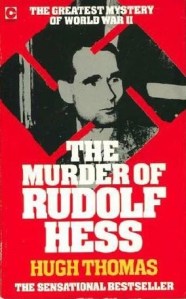
The Murder of Rudolf Hess by W. Hugh Thomas

I really do love a good modern mystery. The JFK assassination, Watergate, the disappearance of the Romanov royal family and the many mysteries of World War Two. Chief among that latter subject was the mystery of Rudolf Hess.

Hess was once the Deputy Führer, number 2 to Adolf Hitler. He joined the Nazi party in 1920 and henceforth he was always at Hitler’s side. He was with Hitler at the failed beer hall putch of 1923 when Hitler attempted to seize power. The attempt failed and Hitler was imprisoned at Landsberg prison. There Hitler dictated his memoirs and political ideals to Hess which became ‘Mein Kampf’, -My Struggle- which later became the bible of the Nazi party.

So what was the big mystery then? Well in 1941 when the UK and Nazi Germany were at war Rudolf Hess decided to fly directly to the UK on what seemed like a mad mission to secure a peace with Britain. Hess knew that peace was not an option for Churchill who had recognised that Hitler was an evil tyrant and wanted to smash his regime. Hess apparently thought that there was a faction within Britain that could both arrange peace terms and remove Churchill.

Hess had already sent letters through an intermediary to the Duke of Hamilton in the belief that he was communicating with the leader of an anti-war party. The King, so Hess seemed to think, was opposed to Churchill and would remove him from office if given the chance.

Despite not receiving a reply from Hamilton, Hess decided to fly direct to Scotland to begin talks with Hamilton. He baled out from his Messerschmitt over Scotland and landed safely by parachute and demanded to see Hamilton. When he eventually did get to see Hamilton, his ideas for ending the conflict seemed rather woolly and disjointed. Hess was imprisoned for the rest of the war and then in 1945 sent to Nuremburg for the war crimes trials of the captured Nazi leaders. They all presumably thought Hess to be the real Hess although Göring taunted him asking him to reveal his ‘secret’.

Göring was sentenced to death at Nuremburg and Hess to life imprisonment.

So still wondering what was the great mystery? Why did Hess fly to Scotland? Who was the man who claimed to be Hess? Was it the real Hess or as some have claimed, a substitute, a fake?

The author of this book was once a medical officer in Spandau, the Berlin prison where Hess and others served their sentences. He had examined Hess as part of his routine duties and found that he had no wounds in the chest area despite records detailing chest wounds sustained in the 1914-18 conflict. The entire premise of the book is based on this one meeting between author and prisoner. It all sounds good and the author has done extensive research not only on Hess’ medical records but also on Hess’ flight from Germany. The thing is, if the real Hess started off in Germany and a fake Hess landed in the UK, who made the substitution? Britain or Germany? Why?

The book was an interesting read but I’m not sure if I’m completely convinced. Hess committed suicide in 1987, although some have claimed that British secret agents murdered him. Interestingly when the allied leaders met in the past to discuss Hess, the Soviet Union always vetoed Hess’ release. When Gorbachev took over as leader of the USSR he agreed to release Hess. That was when the UK decided to use their veto and so Hess lingered on in Spandau until his eventual death.

As Spandau prison had then become empty, its prisoners either dead or released, the allies destroyed the building. Over on Google I found an article in the New Scientist which claimed DNA evidence proved Hess was really Hess after all so that’s another conspiracy theory out of the window. Click here to read moreI

The Lost Symbol by Dan Brown.

Dan Brown is a major best selling author and if you haven’t heard of this book you must have read, or seen the film, or at least heard of the Da Vinci Code, Dan’s most famous work. The Da Vinci Code was a cracking read and one I really just couldn’t put down. The flip side of the book’s success is that in one of the local charity shops in St Annes there is a whole shelf full of copies of this book in the window and a notice saying’ We’ve got enough Da Vinci Codes. We don’t want any more!’

The Lost Symbol continues the adventures of Dan’s character Robert Langdon this time in the US capital Washington. You wouldn’t think there were any ancient mysteries in a modern state like the USA would you? Think again as Langdon uncovers a trail of secret codes, secret societies and a mysterious pyramid all a stone’s throw from the White House.

The secrets of the ancient Masons, well some of them anyway are deciphered by symbologist Robert Langdon in a race to find the secrets of a pyramid hidden by the fathers of the American nation. Apart from a crazy guy intent on murder it’s all pretty interesting and the story is told from various angles so just as we encounter something incredible, Dan Brown sweeps the rug from under our feet and returns to another angle.

Fairly well written but not quite with the intensity of the Da Vinci Code, author Dan Brown steers us through various puzzles and secrets to a somewhat understated finale. The last part of the book is sort of preachy where Dan seems to be telling us the Masons’, or perhaps his, understanding of God; God as the human mind. Interesting stuff . . .

Here’s an interview with Dan I found on YouTube talking about this very book . .

Empire of the Summer Moon by S.C. Gwynne

This is a book about the American Indian and is very much in the style of Bury My Heart at Wounded Knee. It’s a story about the Parker family and about the Commanche tribe. As the new white settlers advanced westwards they encountered the Commanche tribe. They were Plains Indians who were horsemen, in fact the book mentions that many viewed them as the greatest horsemen ever seen in the Americas. They hunted buffalo and used its meat in their cooking and its hides they tanned and preserved for clothing and for warmth.

For a while, particularly during the civil war, they were successful not only in halting the westward advance of the settlers but in fact pushed the settlers back more than two hundred miles. They were great fighters with the gun and with the bow but it was the new repeating rifle that finally beat them.

The Commanche fought other Indian tribes too and in defeat, they murdered and raped, they scalped their victims but the young children that were left they took with them and were assimilated into the tribe. One young woman captive was Cynthia Ann Parker. She was absorbed into the  tribe and even bore children to a Commanche warrior. During a raid by the US Cavalry she was freed and taken back home but by then she was a Commanche and wanted only to go back to her people. She left behind a son, Quannah Parker who grew up to be a chief of the tribe. Not only that but in later years he tried to accept life on the reservation and even charged the cattle men to run their herds through his land. His story is quite an incredible one and the author recreates the frontier life of Indian villages, buffalo hunters and war dances with great style. This book was nominated for the Pulitzer prize for non fiction and it is not hard to see why.

As usual there is a video version of this post however, for reasons I won’t go into here (although the phrase complete cock up does come to mind) a slightly different selection of books is used.


What to do next:

Share this post on your favourite social media!

Hit the Subscribe button. Never miss another post!

Buy the book! Click here to visit Amazon and download Floating in Space to your Kindle or order the paperback version.

3 Films about films

Every now and then, the film industry will make a film about itself, yes, a movie about the movie industry. There a quite a few I could include in a post like this but here are three of my favourites.

A Star is Born

I’m not sure how many times this film has been remade, the simple answer is plenty. There was the original 1937 version with Janet Gaynor and Fredrick March, the 1976 version with Kris Kristofferson and Barbara Streisand and there was even a 2018 version with Lady Gaga and Bradley Cooper. My favourite is the version from 1954 with Judy Garland and James Mason. What a cracking film! In case you don’t know the story, it’s pretty simple, famous film star on the way out helps unknown star who is on the way up.

Judy Garland plays Esther Blodget, an unknown singer who meets drunken film star Norman Maine played by James Mason. Esther comes to Norman’s aid when he drunkenly wanders onto a stage where she is performing and pretends that Maine’s drunken behaviour is all part of the act. Maine later watches her perform at an after hours club and urges her to pack the band in and come to Hollywood.

The film shows Hollywood in the 1950s and the studio machine in action as it tries to remodel Esther into a movie star, with make up and costume teams, writers, publicists and of course a name change: Esther becomes Vicki Lester, only finding out about her name change when she goes to pick up her pay check.

Norman gets the studio boss Oliver Niles to listen to her singing and as a result Vicki is cast in a top Hollywood musical and becomes a star. She marries Norman but his drunken antics get worse. I won’t tell you the end in case you haven’t seen it but be prepared for great performances from both Mason and Garland. Judy was in fact nominated for an Oscar losing out to Grace Kelly.

The Bad and the Beautiful

This is one of my absolute favourite films and tells the story of a producer who wants to make it big in Hollywood. Kirk Douglas plays the part of Jonathan Shields, the son of a producer dumped by the industry who was so unpopular that Jonathan had to hire extras to come to his funeral. As the film opens, Shields has made it big but cannot get financing for a new project without the help of three former friends, actress Lana Turner, screen writer Dick Powell and director Barry Sullivan. None of them want to be involved but producer Walter Pidgeon asks them to listen to a call from Shields. As they await the call, their stories and former involvement with Shields are told in flashback.

Barry Sullivan plays director Fred Amiel who works closely with producer Shields. They make a great producer/director team but when a big break comes for the partnership, Shields betrays Amiel and gives the directing chair to a big name director. Amiel refuses to work with Shields again.

Shields works with alcoholic actress Georgia Lorrison and builds her confidence to take on a big role in one of his films. Georgia falls in love with Shields but even though he is not interested in her romantically, he strings Georgia along so she can complete her performance in the film. She is distraught when she finds out the truth but he releases her from her contract and she has great success at another studio. There’s quite an interesting moment when Shields wants to be alone after the completion of the film. The ending of a production always brings on a deep depression for him. I have to say I always feel that way after putting the finishing touches to one of my YouTube videos!

There is a third sequence involving writer Dick Powell’s character and the film ends on an interesting note; will the three collaborate with Shields for one final film? The film really brings home the background work done on a film, the writing, the production and all the other elements that make a picture. The film was directed by Vincente Minelli who went on to marry Judy Garland and became the father of Lisa Minelli.

Sunset Boulevard

Directed by Billy Wilder and starring William Holden and Gloria Swanson this is one of my all time favourite films. Holden stars as down and out screen writer Joe Gillis. He narrates the film from the opening sequence, where we see Joe’s dead body floating in a pool, right to the dramatic end.

Gillis finds his car about to be repossessed so needing money fast He heads to the Paramount lot where he tries to sell an old script. He Has no luck there but the repo men are hot on his tail. He tries to evade them by hiding in an abandoned Hollywood mansion. The mansion it turns out is not abandoned; former silent star Norma Desmond (Swanson) lives there and hires Gillis as a script doctor to work on a screenplay she has written for her comeback.

Gillis isn’t sure who she is at first but then recognises her: Cue the famous lines:

GILLIS: You’re Norma Desmond. You used to be big!

DESMOND: I am big, it’s the pictures that got small!

The dialogue is brilliant as is the whole film and it’s interesting too to see the old locations such as the Paramount Studios entrance, Schwabs drugstore (8024 Sunset Boulevard) that was once frequented by Hollywood actors and extras and many other places. Wilder also cast former silent director Erich Von Stronheim to play Norma Desmond’s former husband and director, now relegated to manservant and chauffeur. Stronheim himself actually directed Swanson in some of her silent fims.

Cecil B De Mille even makes a fascinating guest appearance as himself as does columnist Hedda Hopper. Look out for Buster Keaton in a small part too.

OK, that’s my three films. All of them show the glamour of film making in the 1950’s. The big cameras, the behind the scenes action, the PR men and the Hollywood studio system. It’s sad to see most of that has gone. These days you could probably make a motion picture with just a small digital camera, maybe even the Canon G7X that I use for YouTube videos. Maybe I should be dusting off my scripts and looking for my cast!

What are your favourite films about film making?


What to do next:

Share this post on your favourite social media!

Hit the Subscribe button. Never miss another post!

Buy the book! Click here to visit Amazon and download Floating in Space to your Kindle or order the paperback version.

A Bit of a Blog or a Blog of Bits . .

This week I’ve been focussed on other things rather than blogging so I decided to take a few half finished posts and stitch them into one. Maybe it’s worked, maybe not. Here we go . . .

All of Me an autobiography by Barbara Windsor

Barbara is probably best known as the blonde from the Carry On films. It’s a niche that’s she stuck in despite her appearances in later years in the TV soap Eastenders. Maybe she likes that, maybe not but either way, she’s rather good at what she does. In this book, she tells her life story and it’s very frank and pretty entertaining.

‘Bar’ as her friends call her, doesn’t hold back and basically tells it like it is. She talks about her climb to fame and the husbands she has had along the way. First was Ronnie Knight, an East End gangster and friend of the Kray twins. Ronnie and Bar seemed pretty good together for a while but neither of them were interested in each other’s careers. Barbara would be off filming and Ronnie it seemed wasn’t bothered at all about that. He would be off to sort his nightclub out and Bar would be happy at home having to get up early for a film or rehearsing for one of her many stage roles. On one occasion in the early morning, the police burst in and carted Ronnie off to the nick for armed robbery. Barbara stuck by her man then but soon after, she’d had enough.

After Ronnie got the push, he was ‘aving it off’ with a blonde down at his club; Bar moved on to a younger guy and when that didn’t work out she moved onto an even younger guy. That younger guy, Scott, is still with her today and was in the news recently as Barbara has sadly been stricken with dementia and may have to go into residential care.

One surprising aspect of the book is that although like fellow Carry On star Kenneth Williams, I’d always thought of Barbara as a film and TV star, in fact a great deal of her career involved the stage and she appeared in many stage productions including her own one woman show.

This book, written in 2000 is a great little read and well worth picking up if you see it in the book shop. It’s written in a friendly talkative chit chat style, almost as if Bar has dictated it to someone and that’s something I particularly like about the book. The last quarter of the book though feels a little as if it has been tagged onto the end of another book. It mainly concerns her relationship with final husband Scott and is perhaps a little gushing and overly romantic and Woman’s Weekly style but I reckon Bar deserved a little romance in the twilight of her days. Nice read and a book well worth picking up.

Chaplin directed by Richard Attenborough

Searching through my old VHS videos the other day, I came across Chaplin, a film about the great silent comedian, directed by Richard Attenborough. I can’t say I’m a great fan of Attenborough as a director and this film showing us the life and times of Charlie Chaplin is lacking in many ways, but having said that it’s a pretty good film in many other ways.

I’ve often thought that if I could go back in time to any era, I’d go back to Hollywood in the 1920’s, the time of silent films. Someone, and I forget who it was, discovered that Hollywood had the perfect climate for making movies. Great weather, plenty of sun, all the requisites for making silent movies. Films back then were shot either outdoors or with basic sets without a roof, all lit by the relentless Californian sun. You didn’t need a degree to be a director in those days, just confidence and the ability to put a film together, not only in your head but to transfer it to film.

I don’t think Charlie Chaplin was really that funny, certainly not as funny as Laurel and Hardy for instance but he was the first film comedian to do more than link a series of funny images or sketches together. He added a little pathos, made the viewer feel for the character, care about the character as well as laugh at him.

Chaplin is loosely based on Charlie’s own autobiography, with a fictional editor played by Anthony Hopkins trying to add in all the bits that Chaplin didn’t want to write about, his various young wives for instance. Robert Downey Junior plays Chaplin and Geraldine Chaplin, Charlie’s real ife daughter, plays Chaplin’s mother who sadly descended into madness. Chaplin brought her to America and looked after her although he visited her infrequently.

The great loves of his life were his mother, his brother Sydney and his great friend Douglas Fairbanks. Sadly, Chaplin emerges  from his autobiography and from this film as essentially a sad fellow, someone in a way unfulfilled, although his films indeed changed the course of cinema history. In his time he was probably the most famous person in the world, his silent films were unrestricted by the restraints of language and his fame covered the entire globe, anywhere in fact that had a projector and a screen.

There are some great performances in this film, Kevin Kline is good as Douglas Fairbanks as is Dan Ackroyd playing the part of producer Mack Sennet. Robert Downey isn’t so bad either in the title role. I read somewhere that the film was a disaster at the box office. Pity. Personally I really enjoyed it.

Annoying Things Part 17

I was saving this for an ongoing blog post about annoying elements of the 21st Century which I update every now and then but instead here it is now. Having been cooped up at home for over 12 weeks I called into work ready to get back to my desk but apparently the Human Resources Department (years ago we used to call them ‘personnel’) decided I couldnt go back until August 1st. As a lot of the lockdown has eased we decided to have a trip out in the motorhome.

We found a nice spot to stop and set up our little camp, part of which involved a ground sheet. Now a ground sheet is something used by campers to lay down on the ground. It came in a smart plastic case and we unfolded it, spread it out and spent a considerable amount of time in the sun on it, lying around, reading, sunbathing and so on.

Later on when we packed up, I folded the ground sheet up but somehow it must have grown or stretched because no matter how I folded it, and I did do it according the still visible folds on the sheet itself, no way would it ever go back in that case. A similar thing happened the other week when I bought a hair cutting kit. It came in a box, the electric hair cutters, various length combs, a plug and so on. After I had performed my post lockdown personal haircut would that lot fit back in the box? Of course not! I’m sure one of the main design factors in these items is to make the box so small that the items will only ever fit in once and even then only in a certain way.

Of course I could put the hair cutters in the plastic bag from the groundsheet and then just tie up the ground sheet with an old belt. Result!


What to do next:

Share this post on your favourite social media!

Hit the Subscribe button. Never miss another post!

Buy the book! Click here to visit Amazon and download Floating in Space to your Kindle or order the paperback version.

I Hope The Train Breaks Down.


I hope the train breaks down

Before the end of the line.

Then again, that’s a bit of a foolish thought

For sooner or later

We’ll get to the end,

In time.


I’m not in any hurry

To get to my destination.

I might even change trains at the next station

I’m not quite ready

For the end of the line,

This time.


So I’ll carry on with my trip

And I’m enjoying my travels

Plenty of stations to call at

While life unravels.

I’ll get to the end of the line,

Sometime.


Steve Higgins is the author of A Warrior of Words, a new poetry anthology. To buy or for more information click the links at the top of the page.

Reputations and Points of View

Now that lockdown is easing I’ve spent quite a bit of time at my mother’s house in Wythenshawe which is a suburb of south Manchester. Wythenshawe is the site of a huge council estate once known as the garden estate because each house had a front and back garden unlike the terraced houses in Hulme and Salford where most of Wythenshawe’s tenants came from back in the 1920’s and 30’s when the estate was first started.

My mum went into a care home just after Christmas. She had been in hospital since early December suffering from a bad chest infection. For the past two or three years dementia has taken its toll on her but her increasing immobility had make it much harder for me and my brother to look after her despite having the assistance of carers coming at various times throughout the day.

Anyway, I tidied the garden of her house up as best I could and made a start on sorting out mum’s things ready for the inevitable time when we must give the house up. Recently I came across a plastic handle of some sort that was incredibly familiar but I couldn’t work out what is was. Later I found a blue plastic brush which fitted on the handle and it was then I realised this was a back brush that has always lived in our bathroom for as long as I can remember. When that memory came back to me I felt reluctant to throw the brush away. After all, I’m sure we had that brush in the bathroom when I was a schoolboy in the 1960s making it something over fifty years old.

Wythenshawe doesn’t have such a great reputation but from my point of view it isn’t really such a bad place. It isn’t, as far as I know, a haven of drug dealers and gangsters and the streets are fairly safe to walk, even late at night but when a place gets a bad reputation it’s hard for some people to see past that. I’m not sure what kind of reputation Manchester itself has in the world at large. Personally I think it’s a great city but then again, on a recent episode of the TV show Come Dine With Me, the announcer mentioned that Manchester had been voted the UK’s rudest city! Oh well.

Years ago I worked in Liverpool servicing and repairing cigarette vending machines. It was actually a pretty good job except that I had to get up early every day. The machines were all sited in pubs and bars so I tried to do the majority of my work before the pubs opened as naturally, I didn’t want everyone and his dog knowing what I was up to and that I had a van full of cash and cigarettes.

The cigarette machines were fairly reliable but they did break down now and again but as long as they were kept in good order callbacks as we called them, were minimal. At least they were on my round. I discovered early on that the big problem with vending machines are coins. Coins are dirty and greasy and sometimes sticky and every time a coin goes through the coin mechanism, it leaves behind dirt. That dirt will build and build until one day the machine just won’t work and then an irate pub landlord would be on the phone saying ‘Steve, we’ve got a big night on tonight, you’ll have to come out and sort the machine!

What I used to do on my regular visits was spend a few moments at each machine and give that coin mechanism (coin mex is what we used to call them) a quick check and clean and those few extra moments prevented the dreaded callbacks.

Every fourth week I had to work a weekend for my team mates and cover any problem calls that came in. I rarely had callbacks, they were always for my team mates who couldn’t be bothered to clean those machines. One weekend I got a call from some pub in the outskirts of Liverpool. I can’t remember exactly where it was but it was a semi country area, off towards Ormskirk I think. This was pre-google maps so I had to troll through my A to Z and find it. I remember cursing my team mate Joey about it. I had called him to have a moan and he said I had to be there before 11am or the Landlord wouldn’t let us in until the pub was open. I got there in time but it turned out the landlord was on holiday and the relief manager, actually a manageress, was a pretty amenable lady.

We chatted as I struggled to get the jammed coins free and she said it was clear from my accent I wasn’t from Liverpool. It turned out we were both Mancunians and she asked me whereabouts in Manchester I hailed from. When I said Wythenshawe she nearly fell over. ‘Oh my God’ she said, ‘it’s rough round there!’

I spent some time trying to reassure her about Wythenshawe and explain that it wasn’t such a bad place. Trying to change the subject I asked her where she hailed from and she replied ‘Moss Side’. ‘What!’ I exclaimed. Here was someone who thought my home town was bad when she comes from a place that makes it look like paradise!

Moss Side is an inner city area of Manchester and quite frankly, it is a very rough area indeed with more than its fair share of villains, drug dealers and other unsavoury characters.

Back in 1992 I studied video production and media techniques at the WFA media centre in neighbouring Hulme, and when I say neighbouring I really mean next door. We were in teams of three making short videos and after a week or two of filming in Manchester we moved on to editing. I loved editing and we spent a lot of time in the basement working in what was then state of the art editing suites. After further work there we had to put together a rough cut to show the rest of the school. Our video rough cut went down pretty well. It was a short documentary about taxi drivers in the city centre. One driver who we interviewed mentioned that certain places in the city were dangerous to visit, especially late at night. Places he said like, wait for it, Moss Side!

We were on a small stage and my two colleagues had nominated me to answer questions as the taxi idea had been mine. One woman condemned the taxi driver immediately for being racist as Moss Side does have a large black and Asian community but be fair I said, there was no mention of race, just people who did a runner when they arrived at their destination, people who wanted a taxi ride for free which obviously, didn’t go down well with the taxi drivers.

We weathered the storm which was only minor anyway and went back to our editing. My colleagues wanted to cut out the offending taxi driver but I wanted to leave him in. I can’t remember if I got my way but here’s the finished video if you want to check.

Nowadays, Moss Side has been regenerated and looks much nicer than it used to. Is it still a rough area of the city? Maybe yes, maybe no. Looking at the screenshot further back up the page about a Moss Side shooting I’m not so sure. I suppose it all depends on your point of view. Even though, I wish I could show the video to that Merseyside pub manager!


What to do next:

Share this post on your favourite social media!

Hit the Subscribe button. Never miss another post!

Buy the book! Click here to visit Amazon and download Floating in Space to your Kindle or order the paperback version.

The Ramblings of a Locked Down Blogger

I thought for a minute of changing the title of my whole website to that which you can see above: The Ramblings of a Locked Down Blogger. Maybe even the crazy ramblings! Still, in a few weeks or perhaps months, the lockdown and Coronavirus will just be a bad memory. In fact, my first post lockdown restaurant visit has already been booked and my table and meal are actually only a matter of hours away.
It will be nice to socialise again and also to dress up. I’ve spent the last two months wearing the same small selection of jeans, shorts, tee shirts and sweaters. Will I still be able to fit into my smart shirts and trousers I wonder? Well, I’ll soon find out.

I have been watching a quite inordinate amount of TV during the lockdown. That has not been any hardship on my part, in fact it could be argued that watching TV is my default position. I do love TV but not any TV; I am quite choosy in what I watch. I love films and only a small fraction of the films I love have I seen at the cinema. The other 99% I have seen on my television set with constant supplies of either tea or red wine near at hand.

At my mother’s house where I come to tidy up and keep the garden in order, I have just recently been trying to sort through my vast supplies of VHS video tapes. Any VHS films I have can be just junked as they will be either shown again on TV or are available on DVD.

Documentaries are a different matter. Films are shown time and time again but great documentaries are seldom shown again. It’s the same with made for TV films. A great film I have on VHS is Across the Lake, a made for TV film starring Anthony Hopkins as record breaker Donald Campbell. I have not watched it for ages but it’s a great film, well written and with an excellent performance by Anthony Hopkins documenting Campbell’s last and fatal attempt at the world water speed record. Why the BBC don’t think of showing these outstanding made for TV films again I really don’t know.

You can see the entire film on YouTube but here’s a short clip:

One thing I love in films is originality. There are a thousand films with car chases and shoot outs and murders but it’s great to see something new. One DVD I watched recently is The King of Comedy. Even though it’s directed by Martin Scorcese it’s not a gangster film, it’s something very different. Robert de Niro stars as a wannabe stand up comedian who wants to get on a show hosted by Jerry Lewis. Jerry plays a TV comedian who is pretty much Jerry Lewis himself. He turns in this outstanding performance as a TV host who is kidnapped by De Niro and held hostage in return for De Niro getting a stand up spot on Lewis’ show. De Niro is helped by a Jerry Lewis obsessed fan played by Sandra Bernhard turning in another great performance. This is a film that is funny, dramatic and completely original. Keep a look out for it on your favourite TV film channel.

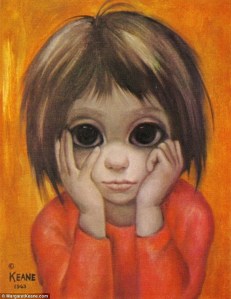
Another original film I saw lately was Big Eyes. It’s based on a true story of an artist, Margaret Keane, who turns out some popular and charming pictures, all of people with big eyes. Margaret is a woman who can paint but is not so good at selling and marketing her work. She meets future husband Walter who seems to be a bit of a whiz at the promotion lark. He decides to rent space on a local nightclub wall to get attention for both Margaret’s and his paintings. Surprise, surprise, it is Margaret’s paintings of the doe eyed girls that get all the attention but Walter decides to play the part of the artist as some people have mistakenly thought that anyway. Margaret plays along but gradually becomes very unhappy having to constantly deny her own work.

Big Eyes is, incredibly, a true story. Margaret eventually leaves Walter and has to sue to be finally acknowledged for her own talent. Margaret’s paintings are captivating although art critics are divided on her true worth as an artist. It’s worth noting though that Andy Warhol said this about her work: ‘It has to be good. If it were bad, so many people wouldn’t like it.’

I’ve also been editing my own films during the lockdown. My friend Steve and I made a video about Manchester Airport in 1986 and it’s my second most watched film on YouTube with 16,000 viewings. In 2018 I realised that if I took out all the pop music used on the soundtrack the video would be eligible for monetising, that’s YouTube’s word for getting royalties from your video. I added some copyright free music, tidied a few bad cuts in the video and reposted it to YouTube. Rather annoyingly, YouTube decided just then that video producers have to have a minimum of 1000 followers to get royalties and as I only have about 220 that’s another income stream that has been denied to me.

When trolling through my VHS tapes I found another version of that same video. Yes, even 30 years ago I was still tinkering with my videos and re-editing them. Anyway, I took this one and re-made it again adding some sound effects and new music. Could YouTube stand a third version of the same video? I’m not sure but then again, some mainstream directors like to tinker with their own work when the time comes for the DVD version. I’ve got quite a few ‘directors cut’ DVDs in my collection like Aliens and Apocalypse Now to name but two.

During lockdown I’ve also been listening to my favourite podcasts. The BBC Radio 5 Live F1 podcast is a constant disappointment. When F1 races are on, the 5 Live people assume that listeners know what happened in the race. That’s not the case, I usually listen when I’ve missed the Channel Four broadcast on TV so I listen in for a race report not a load of F1 chit chat. When there are no races, like during the lockdown, I actually do want to hear some F1 chit chat, some gossipy stuff about which driver’s contract is about to expire, which designer is moving teams, will Vettel retire or go to the new Aston Martin F1 team? Stuff like that. No, they don’t even bother to do a podcast when there is no racing.

Instead I’ve been listening to my new favourite podcast, The Slowdown, a poetry podcast that usually lasts about 5 minutes, not too long, not too short. The presenter, US poet Tracy K Smith has such a wonderful voice she seems to make any poem sound good. Wonder if I could get her to read one of mine?


What to do next:

Share this post on your favourite social media!

Hit the Subscribe button. Never miss another post!

Buy the book! Click here to visit Amazon and download Floating in Space to your Kindle


My Lockdown Book Bag 2020

Things don’t always go as planned, especially when an unexpected pandemic hits the country so instead of presenting what might have been another holiday book bag, here’s the pandemic version instead:  A review of the books I’ve been reading lately, all sourced as usual from second hand book shops or the internet.

A Right Royal Bastard by Sarah Miles.

Sarah Miles is a famous actress from the 60s and 70s. She appeared in films like Ryan’s Daughter and The Servant. A Right Royal Bastard is the first volume in her autobiography and is mostly about her childhood. I suppose normally you might expect a film star to devote a chapter or two to his or her childhood but here Sarah gives us pretty much a complete volume devoted to hers.

After the opening chapter I expected the book to move on but no, Sarah Miles tells us everything she can think of about her childhood and her schooling as well as her background and her family. I have to say I was getting a little bored but after a few chapters the book finally began to get interesting.

It’s a very frank book indeed and I wonder if it was a confessional experience for the author. Sarah tells us about her first period and then later about her first sexual experience. The story about when she was almost raped was shocking but then she proceeds to tell us about the time she shared a flat with a prostitute. One memory from that time was when she agreed to hide in a wardrobe during one her flatmate’s encounters with a male client. Sarah and that particular lady later have a bath together and Sarah soon begins to suspect that perhaps someone has got the hots for her.

Later she falls in love with James Fox. He is in the army at the time and when he goes off to join his regiment Sarah finds she is pregnant and suffers a dreadful back street abortion.

Sarah emerges from these pages as utterly different from what I had imagined, she always looks so prim and proper in her films. The book finishes with her first big part in a film and I have to say, I did find myself wishing I had the second volume. I’ll have to look out for it.

Alan Turing: The Enigma.

I’ve been reading this book for a long time and the lockdown was the perfect opportunity to finish it off and finally put it aside. This book is well researched which must have been difficult as Turing was not well known or even famous during his lifetime and his greatest achievements were made in the greatest of secrecy during wartime. The first part of the book I found slow but tedious and it finally livened up when Alan Turing joins the staff at Bletchley Park and sets about decoding the secret messages from Nazi Germany; then it gets interesting.

Turing joined the Government Code and Cypher School in 1938 which was the UK’s code breaking organisation. In 1939 the British cypher experts were given details of code breaking by their Polish colleagues including details of the Nazi Enigma code machine and their methods of decoding the Enigma messages.

Turing recognised the importance of a machine the Poles used to help break the codes and he designed and made his own improved version known as the Bombe. In 1941 Turing and his colleagues appealed directly to Winston Churchill for more resources to help their work and Churchill, recognising the importance of what they were doing responded immediately. As a result, more than 200 bombe machines were in operation by the end of the war.

German naval Enigma messages were even more difficult to break and Turing worked hard on these codes, finally breaking them with a statistical technique that was later known as sequential analysis. It was later estimated that the work at Bletchley Park shortened the war by 2 years and saved countless lives.

Turing worked at Manchester university after the war. In 1952 he became involved with a young unemployed man named Arnold Murray who was later involved in a robbery at Turing’s home in Wilmslow. During the inquiries Turing acknowledged a homosexual relationship with Murray and was prosecuted, homosexuality being illegal at the time. He was found dead two years later in 1954 and it is thought he took his own life using cyanide although it may have been that his death was accidental.

Apart from the wartime work decoding Enigma messages I actually found this book rather heavy going. Towards the end when Alan is working in Manchester I found myself skipping through long passages about mathematical theory but I was glad to have finally reached the end. One interesting thing was that Alan lived in Wilmslow during this latter part of his life. I once lived in Wilmslow too and travelled into Manchester every day on the bus, a journey of about an hour. Alan did the same journey by bicycle so he must have been pretty fit.

Over on Goodreads readers seemed to be all in favour of the book but sadly it just wasn’t my cup of tea.

Khrushchev Remembers.

This book has a remarkable history. Khrushchev was ousted from the Soviet leadership in 1964 in favour of Brezhnev and he was retired to a small dacha with a pension. There Khrushchev fell into a deep depression but his son suggested he record his memoirs on audio tape which he did. The KGB kept an eye on Khrushchev and demanded he turn the tapes over to them which he also did. His son however had copies secretly smuggled into the west and they were published in the form of this book. My copy is quite an old one and has a commentary by Edward Crankshaw putting Khrushchev’s memories into perspective.

The book is a fascinating read and the author takes us through his early life and we see him move ever closer to the centre of power which in Khrushchev’s early years meant closer to Stalin. Khrushchev in some ways thinks of Stalin as a good comrade and communist but in others as what he really was, a ruthless dictator. Khrushchev survives the years of Stalin’s purges when many disappeared after a knock on the door in the middle of the night. Khrushchev defends the Nazi-Soviet pact saying the Soviets knew it would never last but that it gave them time to build up defences against Hitler. Hitler finally attacked Russia with Operation Barbarossa in 1941 and for a time Stalin disappeared from view. He was finally urged into action by his generals and I have read elsewhere that when they first approached him he asked ‘have you come to arrest me?’

It would have probably been better for the Soviets if they had but they rallied around their leader and went on to defeat Hitler, and Stalin consolidated even more power. Stalin died in 1953 and he was left lying on the floor for a day as his staff were too scared to approach him. Beria, head of Stalin’s secret police initially grabbed power but Khrushchev was able to overcome him and have him arrested by the military.

In 1964 it was time for Brezhnev to snatch power himself. Khrushchev did not resist. His contribution he said, was the smooth change of power without murders or arrests.

‘Could anyone have dreamed of telling Stalin that he didn’t suit us anymore and suggesting he retire? Not even a wet spot would have remained where we had been standing. Now everything is different. The fear is gone, and we can talk as equals. That’s my contribution. I won’t put up a fight.’

Brezhnev reversed many of Khrushchev’s reforms and the world and the Soviets had to wait for Gorbachev for more enlightened leadership. To sum up, this was a great read and very interesting but one in which I was glad of the commentary to put the author’s views in perspective.

That was my lockdown book bag. What books do you have in yours?


What to do next:

Share this post on your favourite social media!

Hit the Subscribe button. Never miss another post!

Buy the book! Click here to visit Amazon and download Floating in Space to your Kindle

More Letters to Younger Selves

Wait just a minute! Letters to Younger Selves? Haven’t we had this post already I can hear you thinking? In fact not just once; there was Letters to My Younger Self and then we had A Video to My Younger Self? Hasn’t this guy got any new ideas? OK, I know where you’re coming from but bear with me for a short while. I did do a post a while back which was about me writing a letter to my younger self. Then the other week I told you about how I put together a video version for my YouTube channel. This week I want to tell you about what happened when I actually uploaded the video.

Now I did say the original letters post wasn’t my own idea. I got it from one of those blog writing prompts that can easily be found in either Google or your search engine of choice. After uploading my video I always do a search for it and if it comes up near the top of the search then I’ve feel I done a pretty good job in terms of tags and meta data (all that technical stuff) and choosing a good post title. A search for A letter to My Younger Self gave up some surprising results, in fact it seemed to me that everyone and his dog had been making a short video on this same subject. Even more surprising was that a lot of these short videos were by Formula One drivers. I’m guessing that at some time there was some kind of trend for this subject, perhaps a promotion around the hashtag #DearMe but when it comes down to it, I might as well admit, I don’t know.

Anway, I thought it might be interesting to showcase a few of the videos I came across so let’s start with Fernando Alonso, frustrated former Ferrari driver who jumped ship thinking Honda were going to create a world beating engine for his new Mclaren team, only they didn’t. Hard luck Fernando.

(I should point out here that F1 being the multi million dollar global industry it is, they wouldn’t for a minute let these videos play on my cheap nasty amateur blog post. Press play then you have to click the button that says ‘Play on YouTube’. Annoying I know but hey, that’s big business for you.)

Many people think that Fernando is one of, if not the greatest driver of all time. Those people are of course completely wrong and this then is the perfect time to introduce someone who actually is the greatest driver ever. Jackie Stewart, winner of 27 Grands Prix from 99 starts, three World Championships and now one of the Formula One world’s elder statesmen.

South African Jody Scheckter was once the enfant terrible of Formula One, especially when he spun and caused a huge pile up at the beginning of the British Grand Prix back in 1973. A lot of people weren’t happy but Scheckter went on to drive for Ferrari and win a World Championship in 1979.

Emerson Fittipaldi was one of my favourite drivers of the 1970’s. He took over from the late Jochen Rindt at Lotus and won three world Championships before electing to drive for his brother’s new F1 team. Things didn’t work out so well for the Fittipaldi brothers and Emerson retired for a while but then made a comeback in American Indycars winning the Indycar title in 1989.

Someone who did what Emerson did, only in reverse, was Mario Andretti. He was a champion in the US and had a few one off drives for Colin Chapman, head of he Lotus team who tried numerous times to lure Andretti over to F1. Andretti finally dipped his toe into F1 and won the world title for Lotus in 1978. He was the last American to date to win an F1 race. He won numerous races in all types of racing disciplines in the USA including 4 Indycar championships and numerous other races and awards. He is probably as synonymous with motor sport in the USA as Stirling Moss was in the UK.

I think that’s probably enough from the F1 world so I’ll finish with some other famous people. The first non F1 person I came across was Caroline Kennedy, the daughter of the assassinated president. It’s pretty brief and the good news is that all these next videos can be played within this post!

Still with the Presidential theme here’s something from former first lady Michelle Obama.

Art Garfunkel, former singing partner of Paul Simon did one too . .

And finally, here’s one which isn’t by a celebrity. I came across this one after hours of trolling through Google and YouTube. Many videos I found were of young people talking to their even younger selves so really they didn’t have much to say. I think that the whole theme is better suited to someone older, someone in their later years looking back to their youth. Anyway, here’s a pretty inspiring video.

Finally it’s time to plug my own video once again. Here’s a slightly edited version with a few subtle sound effects added . .


What to do next:

Share this post on your favourite social media!

Hit the Subscribe button. Never miss another post!

Buy the book! Click here to visit Amazon and download Floating in Space to your Kindle or order the paperback version.