Dealing with that Bad Review

Getting a bad review is not nice. That’s the basic fact of the issue. Nobody likes a bad review. The flip side, the good review is just great. You feel good, your writing, your work is vindicated but the bad review, well that gets you right there, right in the solar plexus and depending how thick skinned you are, well, even then it still hurts.

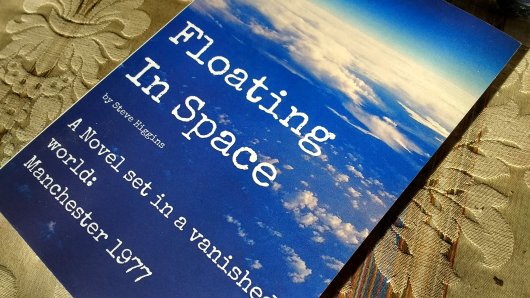
I have a number of reviews of Floating in Space on my Amazon page and they are all pretty complimentary.

The first one was written some years back by my friend Andy. We used to work together until I changed shifts. I thought I was going to progress from deputy manager to full-time manager but it didn’t work out but well, that’s another story.

I enjoyed working with Andy because he and I were just sympatico. We like a lot of the same things such as music, films, and books. We have the same sense of humour, have similar viewpoints on life and just, well, generally get on well.

I remember once on a dull night shift I decided to compile a list of my top 20 favourite singles but it expanded and expanded until it became my top 100. I showed it to Andy and he began compiling his own version. We compared notes and found that there was so much music that we both liked that our compilations overlapped in so many area. There were, of course, some areas of music that Andy liked which didn’t appeal to me but there was much more that we had in common. Andy though had quite a few artists and songs on his list that I had never heard of and as we talked and pulled out more and more tracks from our memory banks, I became desperate for something that I liked but would be new to him and so I started racking my brains for something he would never have heard of.

After a few moments I remembered an artist so obscure that Andy would never have heard of in a month of Sundays.’ Andy,’ I told him. ‘I’ve got one record that I really don’t think you’ll know. It’s by a Japanese percussionist.’

Andy thought for a moment and said ‘you don’t mean Stomu Yamashta!

He and I both roared with laughter. It’s not totally inconceivable that two middle-aged men with similar likes should both have bought albums by the same obscure artist decades ago but it seemed so funny to us that we both howled with laughter. I remember one of our team mates coming over and asking what the joke was. When we had recovered sufficiently to tell her, she looked back at us blankly and went back to her desk. Clearly she thought we were both bonkers.

I’m not sure Andy was too keen on looking at my book with a view to reviewing it. He’d looked at my blog posts and he wasn’t a particular fan. Anyway, eventually he succumbed to my constant mithering and one day decided to take my review copy home.

He came back to work saying he had really liked the book and even went so far as to buy his own paperback version. That was another satisfied reader and a great feeling for me to have a friend like my work. Andy, as I said earlier, wrote me a pretty good review.

Another short but good review came from my old friend Brian. Brian actually features in Floating in Space, thinly disguised as a character called Billy Mallet. Billy, and Brian, were both great jokers and were always quick with a funny response for any given situation. I remember once going into a pub with Brian where he was due to have a game of pool with someone and it was something of a grudge match if you know what I mean.

Anyway, we walked into this pub. The atmosphere was not good and someone shouted out to him. I don’t actually remember what the remark was, it certainly wasn’t of a complimentary nature but Brian, without missing a beat called to the guy and said ‘hey, fancy going around with a face like that and no dog licence!’ which brought the house down and cleared the atmosphere. Brian and his mate had the pool match, Brian won, money was exchanged and we left in search of more congenial surroundings.

Brian’s review was short and sweet but positive.

Another review came from one of my WordPress fellow bloggers who decided to see what all the fuss was about on my web page, which as you may know is full of posts, pages and videos praising this relatively unknown literary masterpiece. That review was very, very kind indeed and compared FIS to similar works like the Reggie Perrin books and writers such as Stan Barstow, Alan Sillitoe and Bill Naughton.

So now it’s about time we came to the bad review. It wasn’t a nasty review, it wasn’t one of those internet things where someone just starts having a go at you. Come to think of it, not long ago on YouTube, someone commented on one of my promo videos that Floating was ‘a rip off and a sad copy of Life on Mars!’

Life on Mars if you remember, was a TV show in which the main character wakes up in 1970’s Manchester where he is a police detective. Well, I don’t know where that guy was going with that one because FIS is nothing like Life on Mars although it is of course set in Manchester in 1977. I pointed that out to my random YouTube commenter but he never replied and after about a month I deleted his comment as it annoyed me every time I happened to see it.

OK but what about the bad review on Amazon? I know, well here it is:

I got this for my oh (other half?) to read as he was at uni in the 70s. But he wasn’t interested, so I read it myself. It wasn’t my cup of tea. I found it boring, lacking in real story and about free sex and booze.

Free sex and booze! I don’t remember writing anything about free sex but then again, then was some sex. It’s a book about young men and young men like young women and, at least back in the seventies, young men and women liked having a drink and a dance and they enjoyed the subtle and not so subtle arts of the ‘chat up’!

I like to think that FIS observes young men up close in pubs and clubs and I wrote, quite accurately I thought, about beer and cigarettes, about banter and chat up lines, pints of lager and Bacardi and cokes and the smoky background of 1970’s jukebox music.

The reviewer mentions university so perhaps life was different for students in the 70’s. Perhaps for them it was all red wine and progressive rock, cannabis and sex. (But not free sex, clearly.)

Still, there are a number of things to remember about reviews, especially bad reviews.

Firstly: Even the very best of the best authors get them because not everybody will like your book.

Secondly: It’s not a personal affront; the reviewer just didn’t like my book. When it comes down to it, I don’t care for every book I read, do I?

Thirdly: Look at the review objectively. Are they any comments I can use to improve my next project?

Fourthly: Pick yourself up and carry on. OK, give yourself time to perhaps eat chocolate, drink beer or even have a moan to friends but then pick yourself up and move on!

Here are a couple of posts on the subject of bad reviews that helped me.

Click here for one and here for the other.


Floating in Space is set in Manchester 1977. It’s about beer and cigarettes, banter and chat up lines, pints of lager and Bacardi and cokes and the smoky background of 1970’s jukebox music. Click the links at the top of the page to buy or for more information.

F1 2019 and the Sky TV Era

The start of a new formula one racing season is always an exciting time. Drivers have settled into their teams, the testing of the new cars is over, the journalists are busy making their predictions and we, the fans and viewers, can finally settle down to watch the first race.

Photo by Ajeet Mestry on Unsplash

Great, but this year is the start of a new era in television. Live F1 has vanished from terrestrial TV and if you want to see the races and their qualifying sessions live you must now cough up £10 per month to subscribe to F1 on Sky and that’s on top of the charge for the basic Sky TV service. Just to rub that fact in, the very first advertisement shown on the first ad break on the qually show on terrestrial TV’s Channel 4 was an ad for Sky TV’s F1 coverage!

Today we are in a sort of elitist TV age where those willing to spend a great deal of money can see all the latest and trendiest TV shows whilst the rest of us have to make do with whatever the BBC, ITV, Channel Four and all the other Freeview channels can offer.

I have heard that Game if Thrones is something pretty exciting, in fact the other day one of my work colleagues told me she was ‘obsessed’ by the show. As far as I know it’s some kind of sci fi fantasy show with a liberal handful of sex thrown in but sadly, as it’s not available on terrestrial TV, I am not one of the lucky few who can watch it.

In a few years’ time we might get a rerun on the BBC but by then all the fuss and excitement will be over and some new show will be in the limelight. I can just imagine perhaps turning to that same work colleague and saying something about a Game of Thrones and her replying, ‘Game of what?’

Ah, the fickle nature of TV. Anyway, back to the F1 season and you might perhaps be thinking if this guy is so keen on F1 why not cough up the dough and subscribe to Sky? Subscribe? Pay for TV that traditionally has been free? My generation can of course remember the days of black and white TV, the days of only two or even one channel. TV to us is like free school milk, the NHS, the number 17 bus. TV is something one takes for granted and as for actually paying for it, surely that’s undemocratic, unBritish and simply unacceptable!

So what is happening then in the world of F1? Are Mercedes and Lewis Hamilton still at the top? Are Ferrari still challenging? Of course they are. The big story for me was the ninth place qualifying spot of Lando Norris in the McLaren. McLaren were once one of the giants of the sport but in the last few years they have slid down towards the back of the grid. Their relationship with Honda fizzled out but when they strapped a Renault engine to the back of their car they still found themselves under performing and that excuse of blaming the Honda engine was no longer acceptable. Either way, it was enough for star driver Fernando Alonso to throw in the towel and say ‘I’m off!’

Hopefully McLaren have started down the road which may one day return them to the winners circle. Another once great team, Williams are not looking good either. Paddy Lowe who contributed so much to the success at Mercedes has not been able to work the same technical magic at Williams and they have found fundamental issues with their new car, so much so that Paddy has had to take a break from the team for ‘personal reasons’.

Only Ferrari seem to have been able to keep their team viable across the changing vista of Formula one. Lotus, Brabham and many others have come and gone. Will Williams and McLaren be able to carry on? Only time will tell. Neither team finished in the points in Australia but at least the performance of McLaren was encouraging. Williams though were not looking good. During the interviews from the paddock the shouts of the fans praising F1 returnee Robert Kubica were quite evident. Kubica’s story is one of those great F1 success stories. Kubica, a rising star and Grand Prix winner had turned to rallying prior to the beginning of the 2011 season but was involved in a terrible crash in which his right arm was partially severed. Surgeons were able to sew the arm back on but the terrible injuries left Robert with reduced mobility in his hand. Now, many years later, Kubica is back on the F1 grid and with a few adjustments to his Williams steering wheel, he is back racing once again. Sadly, he is driving a car not worthy of his talents but with his feedback and the talents of the Williams engineers, maybe things can be turned around. Everyone loves a comeback story.

Valtteri Bottas took Mercedes back to the winners’ circle once again and brought home an extra point for fastest lap. That single point incidentally is something new for 2019, a point for the fastest lap. So, we might find that no longer will drivers decide to rest their engines on the final laps, in fact they will be putting the hammer down in an effort to bag that one extra point for fastest lap.

Getting back to Valtteri, the Finnish driver didn’t have such a good season last year so this win was exactly what he needed. The Ferrari’s took fourth spot for Sebastian Vettel and he didn’t look too happy about it but things could have been a lot worse.

The Red Bull team came home in third place with a great drive from Verstappen in their new Honda powered car. It looks as though Honda might be finally getting things together.

Yes, I may moan about Formula One and pay per view TV but I did manage to get to the 2pm Channel Four broadcast time without finding out who the winner was. I had steered clear of the Internet, no mean feat for cyber geek like me. I didn’t even look at my emails because that could have given rise to the possibility of seeing an e-mail about the event. I subscribe to a number of F1 web sites and their e-mail newsletters always have the winner’s name in the subject so e-mails and Internet were a no-no. TV news? No, kept well away from that too.

Yes, I managed to stay well away from the media and as a result the race was almost as enjoyable as watching it live.

Well, almost but not quite.


Floating in Space is a novel by author Steve Higgins set in Manchester, 1977. Click the links at the top of the page to buy or for more information.

The Self Published Writer’s Guide to the Radio Interview

A great opportunity to promote my work came my way this week. I’d like to be able to say that it was an opportunity that I created because I’m a top-notch marketeer and all round internet savvy guy. As it happens it was something that happened quite by chance. It turns out that one of my fellow northern bloggers thought that I’d be an ideal interviewee for her husband who happens to be a radio DJ. It was also an ideal opportunity for me to rabbit away on radio about my books, (ok, book!) blogs and YouTube page and generally promote myself with the possibility of flogging a few more copies of Floating in Space and maybe even getting a few more followers on my various internet pages.

I have to say I’ve always fancied being a radio DJ. I’ve always liked Paul Gambacinni whose smooth transatlantic tones used to tell us all about the US chart placing on his BBC radio show and he is still broadcasting today on BBC Radio 2. Another favourite DJ was Adrian Juste, who back in the 70’s and 80’s did a BBC radio show which combined music and comedy clips. Sadly he was sacked by the BBC when the new Radio 1 controller made some sweeping changes in the 1990’s. Shame really because Adrian was doing something very different on the radio, combining music and comedy. I loved his show.

Now my adventure on radio wasn’t exactly Radio 1 or even Radio 2 for that matter. In fact it was on Salford City 94.4 FM, a community radio station and the DJ was a really nice guy called Allan Shalks. Salford City Radio, according to their website blurb is . .

‘a multi award-winning non-profit community radio station brought to you by more than one hundred local people every week.

We encourage new, unique and innovative radio with a local feel and local relevance. All our shows are produced and presented by volunteers and we offer Salford a unique service that promotes local news, people, topics and events.

We are also famous for our fantastic and varied taste in music. We cover everything from unsigned bands and new artists to specialist genres.’

Writers, even those of the self-published variety have to cope with various things in their writing lives; book signings and stuff like that. A particular milestone for me was my first media interview. How did it go? Well it went something like this:

I wasn’t sure exactly where the radio station was so I did a recce the day before and I arrived early. Allan Shalks, the DJ who had kindly offered to have me on his show was there waiting and we had a quick chat, settled on some writer and blogger friendly topics and we were all set.

I was a little surprised because I had imagined that a radio station was full of young media students eager to climb the ladder of media success and get something down on their CVs before sending in their applications for Radio One.

Actually, Salford City was a pretty laid back environment staffed with people of a similar age to myself, in fact I could even imagine myself in the DJ seat, turntables at the ready, earphones in place, ready to knock out a few tunes for the Salford populace. I brought along my trusty video camera hoping to put together a video to record this momentous occasion in the life of a blogger. Record book sales of £25 in one month and now radio fame! Whatever next!


Floating in Space is a novel by Steve Higgins available as a Kindle download or traditional paperback. Click the links at the top of the page to buy or for more information.

A kind of Foodie Sort of a Blog Post

Ok. It happens to all bloggers and all writers. Even the greats like Hemingway and Dickens, they too had a moment when the blank paper stared back and them and nothing, just nothing came back.

Of course in the case of both Hemingway and Dickens, whatever moments they had in the course of writing, they overcame them, they wrote and went on to ever greater success, which is why many years later here we are talking about them.

These days one way to beat the blank screen problem is to do a search in your favourite search engine and look for blog prompts. Yes, there are plenty of those blogs around that tell us amateurs how to blog and how to write and just what to write about. I searched and found a post that gave me 189 creative blog post ideas. 189, pity they couldn’t have rounded it off at 190 or even 200 but hey, that’s just me being picky.,

A lot of those 189 blog ideas I have already done, and I had come up with the ideas all by myself with no help from ‘how to’ blogging sites but ideas 151 through to 162 actually got me thinking. They were all about food so without further ado, here’s a few thoughts on food:

Blog idea 156: How did I start cooking?

The first dish I ever made was probably soup. Now I don’t mean that I actually made the soup, after all, I was only about 6 so give me some credit. No what I actually did was I opened a can of tomato soup, warmed it up on the hob, poured it into a dish, got myself a spoon and sat down and ate and felt, well, pretty proud of myself. These days some 56 years later, tomato soup is still one of my favourites. It’s a sort of comfort food I suppose, tasting the same taste from all those years ago is a soothing relaxing feeling, a feel good, comforting feeling. I even choose soup today in restaurants and one of my favourite soups is from our local Italian restaurant here in sunny St Annes, Allegria. They do a lovely tasty minestrone soup with lovely chunks of vegetables in there. One important accompaniment to soup is tasty fresh bread. Which reminds me, I do have my very own bread making machine on top of the cupboard and it’s high time I pulled it down and made some bread.

The first actual cooking I ever did was a boiled egg but I don’t think I ever really did anything more about cooking until I left home and was forced to fend for myself.

Blog post idea 151: share a regional recipe.

Bacon and eggs hot off the Higgins grill!

Well, I’m not sure about that but here is a recipe regional to anyone in the UK, bacon and eggs. Now bacon and eggs is just one of my favourite meals ever and just recently I happen to have started producing a top-notch plate of this dish by digging out my George Foreman fat-free grill. Yes, I bought one years ago just before my divorce and my grill has lain untouched in a box in my mum’s spare room for many a year until on one epic search of my ‘stuff’ -I was actually looking for a VHS video but that’s a whole other blog- I came across my grill.

So here’s what you do. Crank up the grill, this is easy, just plug it in. Open it up and slap on a sausage. (OK that makes it bacon, sausage and eggs!) Give it a chance to get going and make sure (big tip coming up) your little fat collector is in place at the bottom of the grill otherwise your kitchen top is going to get covered in fat. After a while do a visual check on the sausage and when you think it is beginning to look good, slap in a couple of rashers of bacon. At the same time, get the kettle on because that boiling water will come in handy soon.

Check those rashers and flip them over and then get a pan filled with boiling water from the kettle. This is also a good time to get the teapot warmed. Next step, get that water to a good simmer, give it a stir and drop in your egg.  Check those rashers and sausages, if they are looking good, switch off your grill but just leave everything in there to keep warm. Make the tea. Pour. Serve your eggs and bacon when ready and if you have a tomato handy, slap that in the grill round about the time you dropped the egg  into the water. Serve with fresh bread or toast. Season to taste. Result, perfection on a plate.

Blog Post Idea 162: Share a post about a cooking experience that failed.

Hey I’m writing a blog post here, not a book. How long have you got?

Blog Post 153: Talk about the History of a Dish.

Well, one of my favourite dishes is chilli, or chilli con carne to give it its proper name. It originated in Mexico. Chilli spread to San Antonio in Texas and as the town was a tourist destination the dish spread rapidly through the area. In 1977 it was designated as the official dish of Texas but how it got to the UK I haven’t got a clue.

I started making chilli in the 1980’s and I like to think I make a pretty mean chilli. In fact, I think it’s high time I nipped down the supermarket, picked up the ingredients and got a smokin’ hot chilli cranked up!

When I moved into a new house in a small avenue in Merseyside in the 1990’s all our neighbours were about the same age and all nice and friendly people, or so we thought. My next door neighbour invited us for a barbecue and I noticed that by the barby was a large pan of chilli bubbling away. My neighbour’s wife commented ‘don’t go near that, it’s just the rubbish that Mike cooks!‘ However it turned out I had met a fellow chilli lover and Mike and I regularly swapped chilli recipes and tasted each others new batch of the dish.

Yes, how things changed in that street! We fell out with next door (number 2) because of a crazy incident involving cats. You can read all about it in this post about the Cat Wars where it turned out Stella’s cat was spending far too much time at Mike’s. Mike didn’t like it that we had told Stella (number 8) but actually we told Elaine (number 3) across the road and it was she who had told Stella. Elaine didn’t like it that we had told Mike that she told Stella and that was another friendship out of the window.

One day we went to a barbecue at Shirley’s (number 6). It was not a great affair and they soon ran out of lager. Dan, Shirley’s husband asked for a whip round to get some lagers so I chipped in a fiver. ‘What do you want?’ he asked. ‘Anything but Carling’ I replied as Carling is my least favourite beer. 15 minutes later Dan was back with the lagers. It was a really hot day and I had been keeping the barby going while Dan was away. He handed me a lager in a glass which was strange because up till then we had been drinking out of cans. I took a long slurp of the beer and it was not nice, not nice lager at all. Turns out, Dan had bought a crate of Carling and thought he could fool me with the lager in a glass trick so then he and I got into a dispute as I had specifically requested him not to buy me any Carling. I demanded my fiver back (naturally under the circumstances) and after some heated words we left when Shirley gave me a refund. That was another neighbour we fell out with. No wonder they all later moved away. Pity really because not long after I found this great new chilli recipe that I wanted to tell Mike about.

159. Review a Cook Book

I do have quite a few cook books and I think I really have to thank Ken Hom for my interest in cooking. Back in the 1980’s I became really hooked on his quick stir fry methods of cooking and I bought a wok and started stir frying. In recent years one of my favourite TV chefs is probably Jamie Oliver. OK, sometimes he comes across as a bit of a lad, a bit of a geezer as they say but at the heart of what he does is a love of good food, fresh produce and healthy eating. He produced a great chilli recently on one of his 15 minute meal shows and his cookery programmes, like his books are snappy and vibrant. I own a couple of his books and they are always handy when I want to cook something new or even just for a few tips when I’m in a culinary quandary.

Blog Idea 158. Try Something New (And Write Your Thoughts About It)

Not so long ago, Liz and I stayed in Edinburgh. We weren’t in the centre, we were parked down by the sea front in a spot where motorhomes could park for free. It was well away from the centre of the city and we knew we were in for a walk or a bus ride to get to a restaurant however, just by the parking area was a rather nice restaurant. It appeared to me to be rather focussed on fish, not my favourite food by any means but we decided to give it a try. Liz chose something thoroughly fishy and I had calamari (OK some fishy things are acceptable if not too fishy) and followed it up with a lentil curry. The waiter assured me I would love the dish and it was nice, in fact it tasted more like a chilli than a curry to me. Now I think of it, add a little more chilli and some meat and it would have been perfect!

Blog Idea 190: Plug your book and Sign Off.

Floating in Space is a novel set in Manchester, 1977. Click the links at the top of the page to buy or for more information.

Supermarkets, Stan Laurel and the Crazy Bee Hive Lady

I actually really quite like supermarkets. Yes, really! Unusual perhaps for a man but I do like wandering about a good supermarket. It’s nice to go around the food section and plan a meal as I go around, choose some nice ingredients, some fresh vegetables and fresh bread and so on. Of course, I must first take a look round the other sections.

Picture courtesy Unsplash.com

There is the book and magazine section which is an absolute must. Then perhaps over to the menswear section. To be fair, the menswear section does present a problem because what looks good on a shop dummy or on advertising images does not necessarily look good on me. An outfit that looks good on someone else might tend to make me look like Oliver Hardy after one of his rough and tumble adventures with his partner Stan Laurel.

Stan Laurel was English as you may know. He was a music hall performer and first went over to America with Charlie Chaplin on a tour for the famous Fred Karno. Karno regularly sent his comedy troupes across the Atlantic to the USA. Both Chaplin and Laurel stayed on in America and both made it to Hollywood and went on to star in the new movie business. Stan was signed by the Hal Roach Studios who teamed him with Oliver Hardy. Stan was actually planning to concentrate on writing and directing in Hollywood but it was clear that the duo had a great comedy chemistry together so he continued as a performer although he contributed greatly towards the writing and direction of their films. A great blow to the duo came when they signed for 20th Century Fox who made it clear Stan could not contribute to the writing, directing or editing.

Chaplin was a very canny individual who thought his success might not last long so he began to demand not only the most enormous salaries but also some very lucrative deals which saw him owning the rights to all of his films and negatives. At the time in the early 20th century, films had a shelf life of about 3 to 4 weeks but later, in the TV age, Chaplin’s ownership of his films began to pay off handsomely. Perhaps Stan and Ollie could have done with some of Charlie’s business acumen because they made no such deals despite being one of the great comedy duos of all time.

After the death of Ollie in 1957, Stan lived out his life in humble surroundings in a small apartment in Hollywood and there, comedy actor Peter Sellers who was a great fan, sought him out and made friends. Peter used Stan as a model for one of his last film characters, that of Chancey Gardener in the film Being There.

Fred Karno with Charles Chaplin and Stan Laurel. Image courtesy Wikipedia Commons.

Okay, getting back to the supermarket, after the menswear there is the music section and though CDs are a little old hat in this age of downloading and streaming I do like my CDs.

Moving on to the electronics section there is always some handy lead or connector that I need or might need, then finally I will make time to get in a few essentials like food.

The big problem in any supermarket for me is that no matter what, some strange force will unerringly guide me to the totally wrong till. Now, I won’t just jump onto any till. I will observe closely, check out the options and then choose the wrong one.

Here’s a for instance, yesterday at Asda. All the main tills were full of people with a huge trolley of goods, enough to last me about a month so I ignored those and went on down to the basket section. Two tills were open here, one with about four people ahead of me, the other with about ten. A no brainer I thought, go for the one with four people. I just managed to nip in before a crazy looking lady with a failed 1960’s style beehive hairdo. She waited behind me for a short while before bailing out in favour of aisle 2.

Now my usual tactic is not to unload any stuff until I am sure of the lie of the land but on this day I felt confident enough to do so. Big mistake. On till number 2, weird looking crazy beehive lady seemed to be moving forward at a fair old speed while my till wasn’t doing much. Strange because the four people in front of me had only a sparse collection of goods and in till number 2 each of their people had a good selection of items.

Shortly after, crazy beehive woman seemed to be pretty much on a par with me and moments later was actually ahead. That checkout girl in aisle 2 was certainly doing the business. Up at the front of aisle 1 my checkout lady was far too chatty but not only that, something seemed to be going on up there and our checkout girl called over the checkout girl from aisle 2 to assist.

This didn’t go down well with the people from aisle 2 and crazy beehive lady clearly wasn’t happy as she was now stalled only a matter of feet from the till and freedom. Over on my side there was a battle under way to remove the security tag from a bottle of spirits, possibly vodka, but sadly checkout lady 2 gave up and returned to her till while we waited for the manager to sort out the security tag.

I felt like saying come on, do you really need a bottle of vodka at 2 in the afternoon but I kept silent and moments later, crazy beehive woman was off although not before shooting me a victorious look which seemed to say ‘that’ll teach you to nip in front of me at the checkout!’

Eventually, our till got sorted, the vodka bottle was freed up for sale and we moved on. Just as the lady in front of me got to the checkout she exclaimed, ‘I’ve forgotten the milk, can I just nip back for one?’

If she had asked me I would have declined but our checkout lady clearly thought we were happy standing there while the entire day ebbed away before us.

The lady shot off to get a bottle of milk while I and the other shoppers behind me shuffled about, checked our Facebook statuses and thought about what items we had neglected to buy.

I knew that till was going to be a big mistake!


Floating in Space is a novel by Steve Higgins set in Manchester, 1977. Click the links at the top of the page to buy or for more information.

10 Books Rejected by Publishers!

Harry Potter and the Philosopher’s Stone by JK Rowling.

Harry Potter and the Philosopher’s Stone had been written in Edinburgh cafes while author JK Rowling and her daughter lived on benefits. The book was rejected 12 times and was only published when one publisher’s daughter read the first chapter and then begged her father to produce the book so she could read the rest. The series may now have finished, but the Harry Potter franchise continues. Eight films, one theme park, and countless video games, board games and products later, Harry Potter is one of the highest grossing franchises of all time. Rowling is no longer living on state benefits and is reputedly worth 700 million pounds. I have to admit I have never read the Harry Potter books but I salute an author that has given the gift of reading to a new generation of young readers.

Gone with the Wind by Margaret Mitchell.

A number of searches on the internet brought up the magic rejection number of 38 for this novel. Rejected 38 times? Well I also found an interesting post by author Brenda Coulter in which she claimed the novel was never rejected. Margaret Mitchell apparently felt the novel would have little interest outside the South but happened to meet with someone from the MacMillan publishing group who immediately bought the publishing rights, much to the author’s surprise. The writer of the blog post went on to say this about publishing:  It just isn’t true that every talented writer will eventually be published if she works hard enough and waits long enough and believes. Novels don’t get published because their authors have faithfully paid their dues and waited their turn. Publication isn’t a bus that anyone can catch as long as they have the correct fare and show up at the right stop at the scheduled time. A novel is accepted only when some publishing house believes it can make money on the book. Period. So the difference between a published author and an unpublished one does not always boil down to talent and experience. Sometimes the difference is, quite simply, marketability.

Lolita by Vladimir Nabokov.

Lolita was rejected 5 times. One publisher wrote that the book was “…overwhelmingly nauseating, even to an enlightened Freudian … the whole thing is an unsure cross between hideous reality and improbable fantasy. It often becomes a wild neurotic daydream … I recommend that it be buried under a stone for a thousand years.” I read the book a few years back after reading a blog post about classic books I must read. I felt a little like a sort of voyeur reading the novel which is about one man’s passion, lust even, for a young girl. It was an interesting read and the excellence of the writing seemed to jar a little with the subject matter. ‘A neurotic daydream’ is probably a good description of the book.

Moby Dick by Herman Melville.

Again, this is not a book I have read but I have seen the film starring Gregory Peck. Moby Dick was initially rejected by publishers Bentley and Son who wrote back to Melville asking: “First, we must ask, does it have to be a whale? While this is a rather delightful, if somewhat esoteric, plot device, we recommend an antagonist with a more popular visage among the younger readers. For instance, could not the Captain be struggling with a depravity towards young, perhaps voluptuous, maidens?” Melville decided to keep the whale although the young voluptuous maiden idea surely has it merits. .

The Wonderful Wizard of Oz by L Frank Baum.

It’s hard to say how many times this book was rejected but the author did keep a journal he called ‘a record of failure’ detailing all his rejections. The book was first published in 1900 and by 1938 had sold over a million copies. The book was illustrated by W W Denslow and both he and Baum claimed credit for the book’s success. The publisher only agreed to publish the book when the manager of the Chicago Grand Opera House, Fred R Hamlin, committed to making The Wonderful Wizard of Oz into a musical stage play to publicize the novel. The book was famously made into a film in 1939 starring Judy Garland.

Day of the Jackal by Frederick Forsyth.

The novel was turned down by the first four publishers the author approached. Eventually Harold Harris of Hutchinson decided to take a chance on a modest print run of 8,000 copies. The Jackal became a sensation and only two years later Fred Zinneman was directing the movie version. Forsyth was a journalist in Paris in his mid-twenties and was aware of the controversy over the granting of independence to Algeria. He had befriended some of President De Gaulle’s bodyguards and had even reported from the scene of a real life failed assassination attempt, in fact an account of this real incident opens the novel. What would happen, thought Forsyth, if the terrorist group the OAS decided to employ a hitman to murder the President? The resulting novel has a gritty documentary style of realism that would influence a new wave of thriller writers.

Carrie by Stephen King.

Stephen King apparently received 30 rejections for his book before dejectedly tossing it into the trash. His wife Tabitha fished it out and urged him to try again. The book was published and became a classic of the horror genre. At the time back in 1973, King and his wife were living in a trailer, he taught English at a private school and his wife worked in ‘Dunkin Donuts’ as well as them both moonlighting in various part time jobs. Sales of the book were boosted by the film version and the paperback sold over a million copies in its first year.

The Time Traveler’s Wife by Audrey Niffenegger

This book was rejected by 25 agents but was finally published in 2003 after the author sent the manuscript to a small San Francisco based publisher where the work found its way into the hands of a sympathetic editor. I have to say that this was an odd novel and took me quite a while to get into the book and understand the fractured timeline of the time traveller. However, it was an interesting and enjoyable read although a somewhat quirky addition to the sci-fi genre. Having said that, some reviewers regard the book as more of a romance than a work of sci-fi.

Roots by Alex Haley.

Alex Haley spent eight years writing the book and received 200 consecutive rejections or at least that is what some internet sites say. Others say Haley may have had 200 rejections but that includes his other work as well. His novel Roots finally became a publishing sensation, selling 1.5 million copies in its first seven months of release and going on to sell 8 million. Such was the success of the book that The Pulitzer Prize awarded the novel a Special Citation in 1977. Again, this is another book I have yet to read but I do remember the TV series from 1977.

Floating in Space by Steve Higgins. I sent my book off to 3 traditional publishers who all declined to publish it. To be fair, my manuscript was not in great shape but I have beavered away and every now and then updated the book so now I like to think the manuscript is pretty reasonable. After those three knockbacks, paltry compared to some of the rejections mentioned above, I chose to self-publish at Amazon. Should I perhaps have tried harder, spent more time on my covering letter, sent out the manuscript to more publishers? Still, just like Brenda Coulter says: Publication isn’t a bus that anyone can catch as long as they have the correct fare and show up at the right stop at the scheduled time. It’s about marketability!

Floating in Space is a novel set in Manchester, 1977. Click the links at the top of the page to buy or for more information.

The Long and Dusty Road of Life

Updated version with new video . .

Steve Higgins's avatarLetters from an Unknown Author!

A short road, a long road,
A travelled-only-once-road
It’s the long and dusty road of life
It’s heartache, happiness, and strife

A happy road, a clean road​
Is the road that I desire
A cheerful road, a sweet singing music road,
Free from muddy mire

Let my road be a long road,
A fondly remembered high road
And don’t let me detour at a crossroads,
Or linger on a lonely road

One day I’ll need a fast road, a rushing road
A quickly time is running out road
And I’ll breathe my last in a quiet road, a by road
An end of the line side road

For journeys end is a sad road
A goodbye and thanks for all you’ve done road
A cul de sac, an avenue, a long gone distant road,
And as time passes it soon becomes a travelled-long-ago road.


Steve Higgins is the author of…

View original post 30 more words

Gregory’s Girl and Memories of Schooldays

There are two films in particular that bring back memories of my schooldays. One is the classic movie Kes and the other is a film that I watched last Sunday night; Gregory’s Girl.

Gregory’s Girl was a low-budget movie made in 1981 and was written and directed by Bill Forsyth. The film is a gentle comedy about a young lad who fancies a girl who has just joined his school football team. The film was one of those special films where so many things come together to make a truly great and memorable film, in fact it is ranked number 30 in the British Film Institute’s list of the top 100 British films.

It reminds me so much of my own schooldays in so many ways. The hairstyles in the film were similar to those of myself and my friends back in 1973, the year I left school (armed with only four O levels to take on the world). The school ties and jackets were similar to mine, the classrooms and desks were also similar and lead actor John Gordon Sinclair’s gaudy and shy manner both on and off the football field was just like mine.

The scene where Sinclair, playing the part of Gregory, asked Dorothy for a date brought back memories. I remember asking some long forgotten girl out once. I had planned what to do and what to say but nothing came out. The girl, perhaps recognising my situation asked me ‘would I be going down the shops tonight?’

The shops, yes that’s where my school friends used to congregate of an evening and we didn’t do much except talk and wander about. Sometimes there would be a ball game, other times, just like Gregory, we’d go down to the chip shop and eat a bag of chips. We did talk, that long forgotten girl and me, but that was about all we did, after all we shared our ‘date’ with about six other people!

On Gregory’s date he borrows his friend’s jacket and my friend Chris also had a jacket which he loaned to his friends. It was his number two jacket, not quite as smart as his number one jacket and when Chris used to take us to places where we could ‘chat up’ the girls I would always get friends and acquaintances asking me ‘is that Chris’ jacket?’ I would always deny it but that jacket was pretty well known!

In the early seventies fashions were different and I was famous at my school for having the biggest and fattest tie, just like my hero, flamboyant TV detective Jason King. Back then my school pals and I all loved Jason King and his trendy outfits and we went out of our way to get a giant tie knot, just like the one Jason had in ‘Department S.’ Most of the kids got the big knot by tying their ties way down at the fat end of the tie making their ties short but at least with a big knot. I got some help with my tie from an unexpected source: My Mother!

We were watching Department S one day and I was wishing out loud for a big fat tie like the one Peter Wyngarde who played Jason King was sporting and she said to me “You could make one yourself. It’s easy.”

“Easy!” I said. “How?”

“Well, all you need is another tie to go inside the first one and make it bigger.” Sounds good I thought but how do you get one tie inside another? My Mum showed me how with a big safety pin! What you had to do was get your second tie, the one that needs to go inside the other, pin the safety pin to it and then you can thread it through the other one, manipulating it along with the safety pin which you can feel through the material.

I dug out an old tie and threaded it through my school tie, took out the safety pin and then tied my tie in the usual way. Result-one huge knot that Jason King himself would be pleased with.

The next day I went into school wearing my new fashionable tie and half the school–or so it seemed to me-were stunned by my trendy new school tie. Where did I get it from? How did I get such a knot? Did I tie it in a special way?

I remember once after games, getting changed in the changing rooms and everyone turned to watch as I fastened my tie. There was me, fastening the tie in the mirror with all my school mates watching. I had become a sort of mini school celebrity: The kid with the trendy tie!

“Here it comes,” said someone as I made the final tie of the knot, “Super knot!”

Well, my fifteen minutes of fame came, went, and vanished as other people worked out how to make their own special ‘super knots.’ Jason King went on to star in his own spin-off TV series then he too vanished into TV’s Golden past. Fashion moved on and in the eighties ties went the other way; narrow thin ties were the norm. Trousers lost their flares, jacket lapels slimmed down once again. ‘Penny round’ shirts were forgotten but then, that’s the great thing about old movies like Gregory’s Girl, whenever they pop up again on TV you can experience everything all over again!

Another movie that reminds me of schooldays, although in a different way, was Kes. Kes was a 1969 film directed by Ken Loach and based on the book A Kestrel for a Knave by Barry Hines. It’s about a teenage schoolboy in a deprived part of Yorkshire. The boy comes from a dysfunctional family and he is bullied by his older brother. He fares badly at school and has few friends but seems to find a direction in life after finding a baby kestrel and he decides to care for and train the bird.

It’s a gritty film that pulls no punches and it’s shot in a realistic documentary style using a lot of local and amateur actors as well as professionals. One sequence that stood out for me was about a group of boys who are outside the headmaster’s study awaiting punishment. Another lad who comes along with a message for the head finds himself caught up with the guilty boys and given a few strokes of the strap as a result. When they shot the scene, director Loach assured the boys they would not be strapped and he would call ‘cut’ just in time. He didn’t and the result, seen in the film is for real.

My own headmaster was very like the head in the film. He used to give these long elaborate morning assemblies and talk, quite eloquently about some subject or other, the Vietnam war being one of his favourites and then, right in the middle of speaking he would burst out in a complete frenzy, shout at some boy or other to remove himself and wait at his office for punishment for talking during assembly. Why he couldn’t just make a note of the offenders and seek them out later or arrange for one of his teachers to direct the boys to his office I don’t know.

Looking at the trailer above there were some great performances from both amateur and professional actors. Brian Glover, a familiar face to British TV viewers played the aggressive football master and Colin Welland played one of the more sympathetic teachers. He was a veteran of the TV show Z-Cars and went on to write the screenplays for the movies Yanks and Chariots of Fire for which he won an Oscar.

Two movies then, both completely different in tone and outlook. Both wonderful viewing but one makes me look back and think ‘thank God my school days are over’. The other allows me to look back warmly and remember the good times. School days are important and I made such a lot of mistakes back then, mistakes that changed my whole life. If only I’d chosen my subjects better, if only I’d been more determined to be a writer back then and hadn’t had my head set so firmly in the clouds. Maybe I could have trained as a newspaper reporter and actually written for a living.

Either way, I’d probably still be here, still writing this blog although perhaps with a better title: Letters from a Northern Reporter sounds good . .


Floating in Space is a novel set in Manchester, 1977. Click the links at the top of the page to buy or for more information.

Star Wars, Remakes and Dealing with Man-Flu

Our motorhome was looking a little forlorn lately, parked up on the drive all packed up ready to face the winter. The thing is, just lately the weather has been rather mild and Liz felt that we should perhaps unpack the motorhome and give it a winter drive out. So we set off for Southport, a small seaside town just a short 90 minute drive away. We parked up the motorhome, put on our glad rags and went off to dine and generally make merry.

It just so happened that this particular night turned out to be the coldest in modern UK history. Well, at least it was in Scotland so it was lucky we weren’t staying there. Southport was much warmer and our heater worked a treat. However, having to get underneath the van in the cold and rain and empty the water system wasn’t so nice, in fact I reckon that’s where I caught a chill which was soon to develop further into a major man-flu episode.

A couple of days later I was back at work. On the first day I felt fine and I wasn’t too bad when I went in on the second day but by the end of the shift I was coughing and sneezing like nobody’s business. By day 3 I was feeling so poorly I had to throw a sick note in. Anyway, home on a cold day with no energy to do anything except cough and sneeze, what was there to do but watch TV.

On a Sunday on UK TV there is always a choice of Columbo episodes because they are shown on two rival channels, ITV3 and 5USA. Which one should I watch though? Luckily, the first one started on 5USA at one o’clock and the other over on ITV3 at five past. Just enough time to start the first one, see if it was a good one then quickly check out the other one to see if that was more interesting . The 5USA one was the one for me, a classic 70s episode guest starring Robert Culp as the murderer.

A couple of hours and a hot lemon drink later Columbo had his man and it was time for a change of channels. I switched over to ITV2 to watch the first Star Wars film. I’m tempted to call it Star Wars 1 but just to confuse you, the first Star Wars film was actually the fourth episode in the series. The second and third films, all made in the late seventies are all actually pretty much more of the same thing although not quite as good as the original.

Later on writer and director George Lucas decided to make episodes 1, 2, and 3 which were actually films 4, 5, and 6. Now those latter three films were, and I don’t want to put too fine a point on this, a load of old tosh. Even if I was on my last legs I wouldn’t sit and watch any of those movies. In 2015 JJ Abrams was tasked to make a new movie following on from episode 6 which reunited the original cast of Carrie Fisher, Mark Hamilton and Harrison Ford (who I must nominate as one of the worst movie actors ever along with the equally dismal Richard Gere.)

The result seemed to me pretty much a remake of Star Wars 1 (I mean 4). It was the usual thing, droids on an unknown planet with info which the Empire wanted, or maybe the new Empire wanted because the original Empire had been defeated in the previous Star Wars film. The droids and their human helpers escaped in Harrison Ford’s old ship the Millennium Falcon and then, well, I don’t know what happened then because I either mentally or physically switched off!

Getting back to Star Wars 1, or episode 3 or whatever, I’d not seen the film for a long while and I enjoyed the sending of the droids to seek out Obi Wan Kenobe, the appearance  of Luke Skywalker, the hiring of Hans Solo and his Millennium Falcon and the trip to the rebel alliance planet, Alderon. The truth is, just like when I watched Star Wars 7, I actually got a bit bored with the whole thing and decided to change channels. Star Wars isn’t a bad film but like all the rest in the franchise they seem to flatter only to deceive.

Over on the Paramount film channel they were showing a bunch of Steve Martin films and the first up was Roxanne. While not exactly brilliant it was actually a pretty good film and despite the continual coughing and spluttering I still managed to enjoy the proceedings. Roxanne was based on the 1897 play Cyrano De Bergerac and it’s about, as you may have guessed, a man with a big nose.

(Short break here while I sort out another hot lemon drink this time with a small shot of -purely medicinal- whisky.)

Paramount decided to follow this up with ‘The Out of Towners’, which was a remake of a 1970 Neil Simon film. Sadly, the Out of Towners wasn’t that great a film and I can only hope the 1970 original was much better. The fact is, it’s hard to understand the motivation behind remaking a very average film. Do they hope to make a better version? Do they think with better actors and updated film making techniques the film will be better or funnier? The fact is that if you remake an average film you will still get an average film as the result. Not long ago I saw the new version of Flight of the Phoenix. It was OK, although I switched channels after about thirty minutes. Then again, the original version starring such heavyweight actors as James Stewart, Richard Attenborough, Hardy Kruger and Peter Finch wasn’t that brilliant either although I have watched that version through to the end.

Still, does that mean we should only remake classic films? I can’t really imagine any new version of Casablanca, for instance, bettering the original. Who could take the place of Bogart? Who could replace Ingrid Bergman? Yes, there is always the chance a mediocre movie could be remade better, I suppose.

A lot of film franchises are pretty much just a series of remakes. That is true of the Star Wars series as I have already mentioned but take a look at the Rocky films. Rocky 2 was pretty much another version of Rocky and while Rocky was a great movie, Rocky 2 was just, well, Rocky 2. Towards the end of the series Rocky star Sylvester Stallone made Rocky Balboa which was a fitting end to the series. Rocky has retired and is running his small Italian restaurant. His wife has succumbed to cancer and then he gets the chance to be involved in a computer fight with the current champion Mason ‘the line’ Dixon.

I did wonder when I saw the film whether writer and director Stallone was inspired by the 1970s computer fight between Muhammad Ali and Rocky Marciano. My dad, a great boxing fan and a great fan of Marciano was outraged by the fight as the result was a win for Ali. My dad loathed Ali even to the extent of always referring to him by his former name of Cassius Clay. When I looked up the fight on the internet I discovered that only European viewers saw Ali win the fight. American viewers saw a version in which Marciano emerged as the victor in the 13th round. I know which version my dad would have prefered.

Getting back to remakes, after a short pause for another whisky and hot lemon: Which films would be good candidates for a remake? Well, there are two that I can think of. The first is Desperately Seeking Susan, an 80’s film starring pop singer Madonna in a small role, that of an independent young girl who travels the country but keeps in touch with her friends using the personal ads in a newspaper. Step in bored housewife Rosanna Arquette who follows the personal ads, even to the extent of watching Madonna from afar when she meets with her boyfriend. There is a lot more to it of course, memory loss, mistaken identity and stolen jewels but it’s a great film and here’s the thing; substitute personal ads with modern-day social media and the film is perfect for a 21st century remake! Casting might be an issue though, after all, who could replace Madonna?

One last film that I’d remake: Capricorn One. Now you may remember in an earlier post I wrote about watching an old VHS tape of the film and finding, sadly, that the tape ran out before the end. Now the more I thought about the film it made me remember that I had the full film on VHS somewhere and after a long and dusty search of my mother’s house I finally found it, a proper VHS shop bought, full version of Capricorn One. If you haven’t seen the film and I have to say, I haven’t noticed it on the TV schedules for a long time, the film is about the first manned voyage to Mars. On launch day the crew are removed from the spacecraft and it blasts off without them. They are then taken to an abandoned air force base and find that the plan is to fake the mission using a TV studio.

Why, you may ask? Well this is where the film falls on a little shaky ground. The space missions are in danger of losing funding from the government and as the life support system has been found to be faulty, this would be a good reason for the program to be cancelled. To prevent this, this fake mission is the course of action chosen by the top brass at NASA to keep the Mars program going.

Yes, not sure that NASA would really do that sort of thing. Perhaps if they threw in something else, some sort of conflict between Russia and America where winning the Mars race was of vital political importance, well then perhaps it would be more believable.

Later on during the mission Elliot Whitter, a member of staff in mission control, discovers that the TV signals supposedly coming in from the spacecraft are coming in ahead of the spacecraft telemetry. Of course they are! They are being beamed from a TV studio out in the desert. OK, this guy has to be got rid off so how do the NASA people do it? Nab him on his way home? Grab him somewhere at Mission Control? No, they wait until he is in the middle of a pool game in a bar with his best mate, a TV news journalist played by Elliot Gould. The journalist takes a call at the bar and when he returns, two minutes later, his mate has vanished! Something fishy going on here thinks the journalist.

Although the TV journalist eventually solves the case there is no real link as to how he does it, just guesswork really so in the remade version maybe Elliot Whitter made a computer disk that leads to the TV studio at the abandoned air force base, the TV journalist gets hold of it, finds the astronauts who are now virtual prisoners and hey presto we have a proper ending to the film.

Don’t miss Capricorn One if it ever gets shown on TV because it really is a great film despite me criticising it. And if any wily film producer is thinking about a remake, my updated re written script is available, whenever you are!


Floating in Space is a novel set in Manchester, 1977. Click the links at the top of the page to buy or for more information.

Memories of 1968

I have a lot of memories of childhood, like everyone I suppose but a lot of those memories, certainly my earlier ones, I would be hard pushed to link them to a certain date or time. The first memories in which I can actually do that are those from 1968. Surprisingly for someone who has never even visited the USA, a lot of my 1968 memories concern, yes, the USA. Lyndon Johnson was the President of the USA in 1968. He had inherited the presidency from John F Kennedy on that fateful day in Dallas in 1963 when Kennedy was cut down by an assassin’s bullet. He won the election in his own right in 1964 easily beating Republican opponent Barry Goldwater.

1968 was different though. Johnson’s domestic policies and reforms known as the Great Society had been overwhelmed by the Vietnam War. People were looking at the casualties and asking what is going on? Why are we even in Vietnam?

In 1963 President Kennedy stated in a TV interview with respected TV anchor Walter Cronkite ‘in the final analysis, it’s their war; they are the ones that have to win it or lose it.’ He was talking about the Vietnamese not the USA. Kennedy later issued NSAM (National Security Action memorandum) 263, in which he approved the implementation of plans to withdraw 1,000 U.S. military personnel by the end of 1963.

On November 26, 1963, only four days after taking office in the most tragic of circumstances, President Johnson approved NSAM order 273 reaffirming the U.S. commitment to Vietnam. Johnson unlike Kennedy, was not withdrawing troops, he was sending more.

Perhaps Kennedy was backing away from Vietnam, perhaps not. Historians differ on their assessment of what Kennedy would or wouldn’t have done. Either way, the Johnson Administration became more and more involved in the war, sending more and more troops into South East Asia. The country became split over the issue. Students were protesting, university campuses became battle grounds between Police and students. Vietnam was a big issue at school over in the UK as I remember. Many of our morning services talked about the issue and I vividly remember one morning when our headmaster played a pop tune over which were read the names of soldiers killed in Vietnam.

Johnson had won by a huge majority in 1964 and appeared confident of winning again in 1968. However a shock awaited him in the first primary in New Hampshire on March 12th when anti-war candidate Eugene McCarthy won 42 percent of the vote to Johnson’s 49 percent, a shockingly strong showing against an incumbent President.

McCarthy’s campaign was boosted by thousands of young college students who shaved their beards and cut their hair to be ‘Clean for Gene’. Those students organised voting drives, rang doorbells, distributed McCarthy buttons and leaflets, and worked hard in New Hampshire to bring the vote home for McCarthy.

Robert Kennedy was a notable critic of Johnson’s policies and he had initially declined to run against the President but seeing the success of McCarthy he announced his candidacy for the Presidency on March 16th.

Over on the Republican side, Richard Nixon, the big loser in the election of 1960, had staged a major comeback and was the front-runner in the Republican Primaries ahead of his closest rival Governor Ronald Reagan.

On March 31st President Johnson made a televised speech to announce he had cancelled all bombing of North Vietnam in order to help ongoing peace talks. At the end of his speech he dropped a political bombshell by announcing he would not run for President in 1968. Some have said he was scared of losing to Kennedy, some have said he was just tired and was worried about his health. In fact he died only some five years later on January 22nd, 1973.

On April 4th Martin Luther King was shot dead in Memphis, Tennessee. He had made a speech earlier that day in which he spoke of his happiness at reaching the promised land.

“Like anybody,” he had said, “I would like to live a long life. Longevity has its place. But I’m not concerned about that now. I just want to do God’s will. And He’s allowed me to go up to the mountain. And I’ve looked over. And I’ve seen the promised land. I may not get there with you. But I want you to know tonight, that we, as a people, will get to the promised land! And so I’m happy, tonight.”

Robert Kennedy heard the news of the murder when he arrived in Indianapolis that night. He was scheduled to give a speech in a predominantly black neighbourhood and the Police tried to dissuade him from speaking saying that they could not protect him in the event of a riot.

Kennedy announced the death of King and those assembled for the speech were understandably shocked and grief-stricken but Kennedy went on, speaking only from a few notes he had jotted down during the ride from the airport.

‘For those of you who are black and are tempted to be filled with hatred and mistrust of the injustice of such an act, against all white people, I would only say that I can also feel in my own heart the same kind of feeling. I had a member of my family killed, but he was killed by a white man.’

His speech was credited with preventing rioting in Indianapolis on a night when riots broke out in many other parts of the country.

Many in the Democratic Party felt that Kennedy had only entered the election when McCarthy’s performance showed there was support for an anti-war campaign; nevertheless, he won a number of the primaries although he was defeated by McCarthy in Oregon.

In the UK it was a hot summer as I remember and I went with one of my friends to see the movie 2001: A Space Odyssey. It was a stunning visual feast although I later had to buy the book by Arthur C Clarke to understand a lot of it. My Mother was amazed. I can still hear her now: ‘A beautiful hot day and you have spent it in the picture house?’

On June 4th Kennedy beat McCarthy in a close contest in California. After a brief victory speech at the Ambassador Hotel he was shot by an assassin shortly after midnight on the 5th. I was 11 years old at the time, an English schoolboy a thousand miles away in England and I was shocked by the news. I remember hearing about the shooting on television sometime in the afternoon or early evening. It was a Wednesday, not that I remember that, I had to look it up, and I slipped out into the garden to say a silent prayer for Kennedy hoping he would live. He died in hospital some hours later.

Robert Kennedy’s funeral mass took place on June 8th and then his body was taken by train to Washington. Thousands of mourners lined the tracks to pay homage as the funeral train passed by.

On August 20th Warsaw Pact forces invaded Czechoslovakia and Premier Alexander Dubcek was deposed. Dubcek had initiated a series of reforms that became known as the Prague Spring. The Soviet Union was nervous of his reforms and the invasion was designed to return the country to its previous oppressive regime. Dubcek was eventually replaced by Gustáv Husák. He returned firm party rule to the country and ‘normalised’ relations with the Soviet Union.

On the 28th August the Democratic National Convention opened in Chicago and television viewers were shocked to see Chicago Police brutally beating anti-war protestors with clubs and tear gas. The crowd chanted ‘the whole world is watching’ as the violence went on.

Hubert Humphrey won the Democratic Party nomination but on the election day of November 5th it was Richard Nixon who emerged triumphant. He would be forced to resign in 1973 because of the Watergate Scandal.

On December 24th, Christmas Eve, the Apollo 8 spacecraft made a TV broadcast from lunar orbit. The crew of Borman, Lovell and Anders were the first in history to leave the planet Earth for another celestial body and the first to see the phenomenon of earthrise. In 1968 a number of things were the focus of my life. One of them was science fiction but here was something not so different but factual, not fictional.  I was glued to the BBC broadcasts by Cliff Michelmore and James Burke. On the TV transmission Commander Borman introduced his crew before they took turns to read from the book of Genesis. He finished by saying ‘And from the crew of Apollo 8, we close with good night, good luck, a Merry Christmas and God bless all of you—all of you on the good Earth.’

Even today, years later, if I ever hear those words on some documentary programme or a YouTube video, I am transported back to 1968, listening with wonder that men could reach the moon, that space travel was possible and that the things I had seen in 2001: A Space Odyssey could one day come true.


Floating in Space is a novel set in Manchester, 1977. Click the links at the top of the page to buy or for more information.